Amazing Auckland, Day Two

One of the many reasons we thoroughly enjoy Road Scholar trips is their high quality lecturers. Wednesday morning, New Zealand journalist and author, Gordon McLaughlin, gave us a brief overview of this very young nation. Some interesting facts and figures:

New Zealand is the last land mass to be inhabited, settled by the Maori about 800 years ago. DNA analysis has proven that the Maori migrated from Taiwan, providing a perfect example of Darwin’s theory of survival of the fittest. The long ocean voyage was an endurance test that only the strongest, biggest and fittest could pass.

In the 1840’s, the Maori were joined by settlers from the United Kingdom, with the those of European descent now making up the majority of the population. About 3.5 million live on the North Island, mainly in Auckland, with about 1 million inhabiting the South Island.

New Zealand was the first country to allow women to vote, in 1893; at one time the top three government positions were held by women.

In 1898, New Zealanders instituted an old age pension, with free health care since 1938. Seems Kiwi are not horrified by the thought of “socialized medicine”. And it doesn’t seem to have impacted their quality of care because their life expectancy exceeds that of US males by 3 years, and a year and a half for females.

Both countries have similar percentages of those over 65, and under 15. Education is free, including some university and trade schools. Pensioners also enjoy a variety of freebies, such as train and boat transportation, admission to museums, etc. So how do they pay for all of the free services?

The top tax rate is 35%, with a 15% GST (goods and services tax) built into their prices. So, when dining out, a menu item priced at $25 means that you actually PAY $25. Tax has been included and the wait staff has been paid a reasonable wage, so tipping is only for extraordinary service, and even then is about half of what is customary in the USA. I guess if you are not bristling with weaponry and fighting senseless wars, you have money for such things.

New Zealand is geologically young –a mere 12 million years old. If you have ever walked along the Trail of Time in the Grand Canyon’s South Rim, you may recall that equates to only 12 of the trail’s 2,000 footsteps. If you haven’t been there, each footstep represents a million years. Samples of rocks from that particular era exhibited along the trail–starting 2 billion years ago, which is the age of the oldest rocks in the canyon.

Years ago, there were no mammals on New Zealand, so the birds had no predators, which resulted in flightless birds, like the Kiwi.

Sitting atop two tectonic plates, New Zealand has an abundance of hot springs, geysers, and mud pools, all of which we will see when we visit Rotorua. But for our second day in Auckland, we are scheduled to sail in Waitemata Harbor.

View of Auckland from the water.

20131106-080557.jpg
It looks like it is going to be a tight squeeze under the bridge. That’s our North island site coordinator, Albert.

20131106-080720.jpg
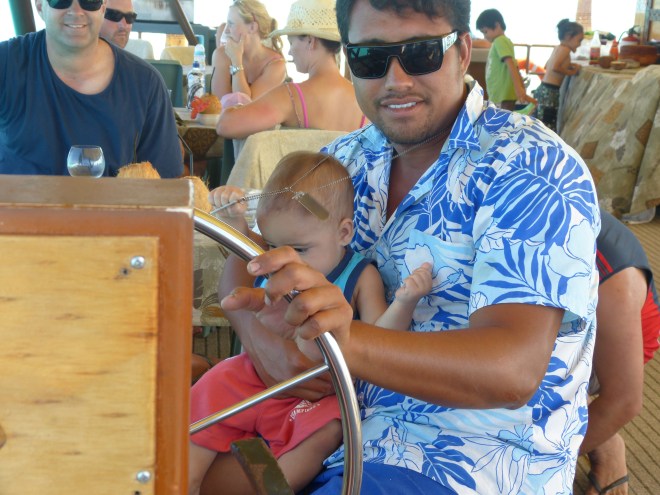
Not to worry, there is an experienced skipper at the wheel.

20131106-080915.jpg
Is that a concerned look on that passenger’s face?

20131106-080956.jpg
This lovely young woman is a marine biologist.

20131106-080937.jpg

Amazing Auckland, Road Scholar Day One

The Road Scholar portion of our journey began on Tuesday, October 29, with a walking tour of downtown Auckland. This city has lots of interesting architecture, much of it newly constructed, so that it is earthquake-proof.

20131104-061455.jpg

20131104-061850.jpg

The sky tower is visible from just about everywhere in Auckland, but during our stroll we managed to catch someone jumping from the tower.  See that little black speck in the lower right hand corner?  That’s him, and yes, it IS an approved activity.  The Kiwi are very big on bungee jumping.   And no, I had absolutely no desire to “give it a go”, as they say down here.

20131104-061957.jpg

We ended our walk at the Art Museum, which has a wonderful gallery of Maori portraits.  We weren’t allowed to take photos there, but this postcard gives you an idea of what a tattooed face looks like.

image

As one might expect, the facial swelling from face carving is fairly severe.  the guide showed us a large funnel, which functioned as a feeding tube while the facial wounds healed.

I as quite captivated by the flower sculpture hanging from the ceiling in the entryway.  The petals move!

image

Auckland has a number of incredibly beautiful parks.  The museum is next to one–Albert Park has this interesting entryway, and we did a quick walk by after our excellent lunch at the museum cafe.

20131104-062013.jpg

Our hotel has two things going for it: a great location near the harbor, and a spectacular view from the restaurant on the 13th floor.

20131104-062038.jpg

20131104-062051.jpg

I told told you you could see the sky tower from everywhere!

20131104-062106.jpg

We had just enough time for a brief walk around the waterfront before joining our group for dinner.  This picture is for our former host, Norman, to show him that we actually DID see some tall ships!

20131104-062124.jpg

New Zealand is an amazing country with many things the USA could learn from, but their wifi isn’t one of them. It is very limited, and blogging is a challenge. So, uploads are being done on the fly, and proof reading is a luxury to be reserved for better connections and more time. Typos will become a regular feature!

Kiwi Hospitality

Lonely Planet has proclaimed that Auckland is one of the ten best places in the world to visit in 2014. Although I concur with their choice, I would have moved Auckland to the number one spot. But then, Mike and I had something Lonely Planet didn’t– New Zealand’s best tour guides, Norman and Davina, which definitely influenced my rating.

Let the tour begin!
Let the tour begin!

It’s hard to believe that we spent only four days with these very gracious hosts, because we saw and did so much. It was all wonderful: breathtaking scenery, with beautiful beaches, but what made it extra special was the time we spent with their wonderful family, which gave us the opportunity to experience Kiwi culture and daily life.

This post is my way of saying thank you to Davina and Norman for a fantastic visit. I can’t capture ALL of the high points of our time together–there were just too many, so I’m limiting myself to 10 memories. Here they are, not in any particular order.

1. One Tree Hill

Auckland, Viewed from One Tree Hill

The Auckland area has more than 50 extinct volcanoes. This is a relatively young crater, a mere 500 years old.

You can go into this Volcanic Crater

2. The “Bach”
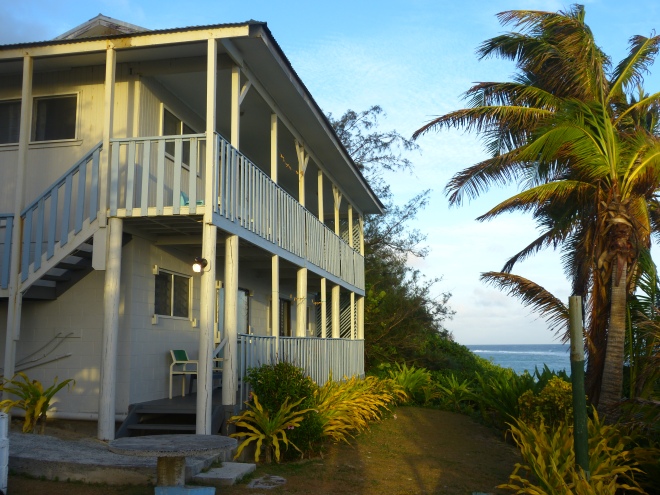
According to Wikipedia, the term originated from “bachelor pad”, but it has now come to mean a New Zealand summer home for family vacations. We stayed at our hosts’ family bach.

The bach
The bach

New Zealanders welcome drop ins, (or at least Davina, Norman and their friends do. I really shouldn’t generalize that ALL New Zealanders are like them, because they are rather special). Anyway, we got to see yet another bach, in Whitianga, right on the beach, when we popped in to visit their friends.

The view from the Bach living room

3. Whangamata
No only did we visit this lovely seaside resort, we also leaner how to pronounce its name. The Maori way sounds like this: Fong-ahh-mat-AHHH.

20131028-202037.jpg

Strolling along the beach

I’ve never used a public toilet that had piped in music and recorded instructions for locking the door, including a warning that you had best be done within 10 minutes. I thought it might be a New Zealand thing, but no–so far, it has only been a Whangamata experience.

4. Farmers’ Markets
Had I known that I could get a haircut by the side of the road, I wouldn’t have been in such a rush to get a trim before we left.

Farmer's market,on the way to Whangamata
Farmer’s market,on the way to Whangamata

5. New Chums Beach
I don’t know if this is the most beautiful beach in New Zealand, because EVERY beach I’ve seen so far has been rather wonderful. I think we just TOLD ourselves that it was the most beautiful because we had to walk over rocks and through rain forest growth for about 30 minutes to get to it.

How much further????

20131028-202340.jpg

It DID have a rather nice swinging rope, though.
image
6. Saturday Night at “The Club”
In the USA, we don’t have anything quite like a New Zealand club. Take a casino, a restaurant, a pool hall, a sports bar, a cocktail lounge, a dance hall– mix it all together, but make it family friendly and voila, you’ve got yourself a New Zealand club. Best of all, members of one club can use any other club. Sounds good, doesn’t it?

The club in Whangamata

20131028-202123.jpg

7. Lost Spring Thermal Pools, Whitianga
No photos for this one. We sat in a natural hot spring surrounded by lush foliage and beautiful flowers. You’ll just have to take my word that it was quite glorious.

8. Waihi Picnic
We were only in Waihi a short time. Just long enough for us to have a great picnic lunch atop a hill, check out the gold mining operation, and for me to buy a Kiwi cap.

Trucks appeal to boys of all ages

9. Karangahake Gorge
A bike path runs through this area. Biker chicks, take note!

Gorgeous Gorge
Gorgeous Gorge
New Zealand - Clean and green
New Zealand – Clean and green

10. Family, Friendship, Fun
Spending time with Norman and Davina’s family made our time before the start of our Road Scholar trip extra special.
I had a chance to see how “socialized medicine” works, when I accompanied Davina to Taylor’s visit to the dentist. The offices are located on school property, and there is no charge for the visit. Brig, clean offices, a short wait, at no cost. What’s not to like.

Davina and Taylor
Davina and Taylor
Pippa, explaining the rules of the game
This is one creative little girl
This is the "walking school bus"
This is the “walking school bus”

So what do you think…Auckland #1 spot?

New Zealand

Time to hit the road again! For years, Mike and I have wanted to visit New Zealand, but we knew that a twenty hour plane ride could only be justified by a loooong stay. So, visiting that wonderful corner of the world had to wait until my retirement. Although I had been able to get away for three weeks while working, SIX weeks didn’t seem do-able.
Mike and I were so lucky to meet Davina and Norman on a river cruise in 2008. Our fellow cruisers were were almost evenly divided into thirds, from the USA, Canada and Australia, with Davina and Norman being the sole Kiwis. It was during a presidential election year, which made dinner discussions VERY interesting.

I’m amazed at how well informed other citizens of Planet Earth are! Makes me want to listen to the BBC more frequently, so I don’t embarrass myself with my ignorance of events outside our borders. Of course, Ted Cruz has done a good job of making me embarrassed by what has happened INSIDE our borders!

And yes, there actually IS a reason for that digression. Mike and I will be staying with Davina and Norman in Auckland for several days before our Road Scholar trip commences. I’m excited about spending time with them again, and have been blown away by their gracious hospitality. Davina offered to pick us up at the airport at the ungodly hour of 6 AM! And she has planned several days of sightseeing for us.

Getting maps into WordPress is a multi step process, easier done from my computer than iPad, so I figured I’d get it completed before we head to the airport.
First a map of the ground we will be covering during our Road Scholar trip.

Our New Zealand Adventure

At the end of that trip, Mike heads back to the USA and I start a three week project with Global Volunteers in the Cook Islands. So, where ARE the Cook Islands, you ask?

The Cook Islands
The Cook Islands

Because I will be crossing the date line, I’ll be arriving before I leave. Given that I have always been calendar challenged, this will not be a problem for me.
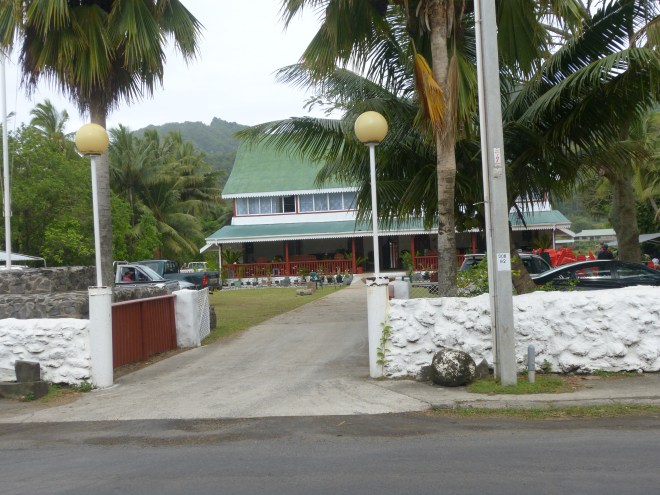
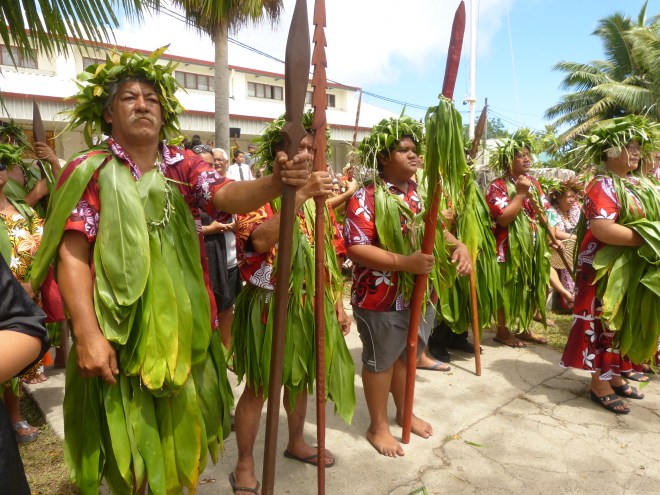
If you look at a map of the world, the Cook Islands show up as fifteen tiny dots, so here’s a close up of “my” island.

My home for three weeks

I’ll be staying in Rarotonga, the largest of the islands, which has a population of around 9,000. That’s about twice as many people as my home town.

I found this description of Rarotonga on the internet:
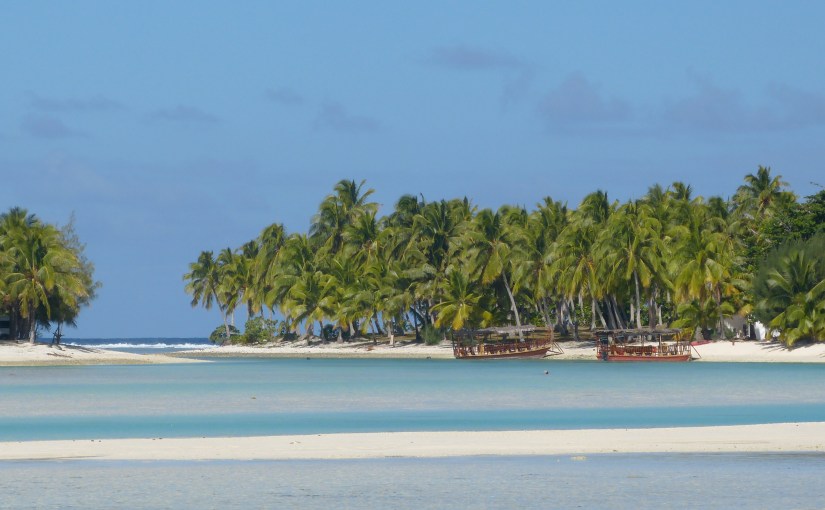
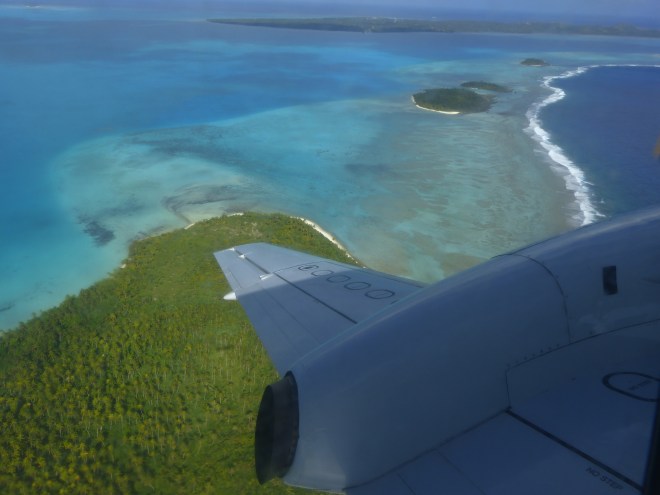
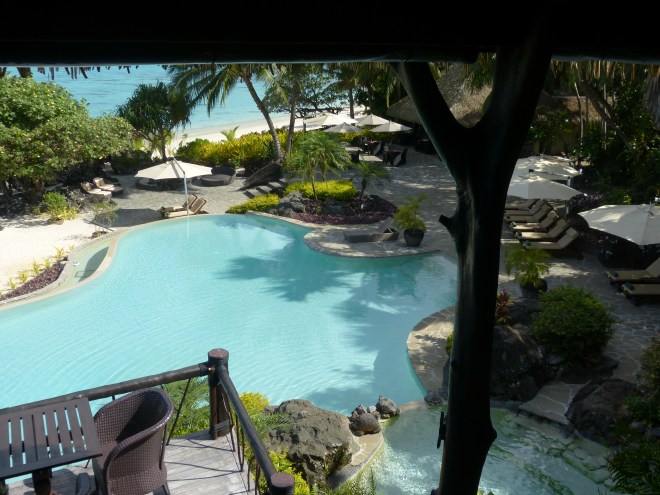
“The island is one of the most beautiful in the South Pacific making it popular with around 90,000 visitors each year. The volcanic peaks and white sandy beaches with overhanging palm trees, inside a coral reef make Rarotonga a paradise island.
Pretty tough duty, wouldn’t you say?

So, over the coming weeks, Mike and I will be hanging out in gloriously beautiful places, and I will be doing my best to capture all that fantastic beauty for your viewing pleasure. Who knows…maybe a contest down the road?

Come on along! And feel free to comment, so I stay connected with everyone!

Grander than Grand

Magnificent!  Spectacular!  Those adjectives are far more accurate descriptions of the natural wonder that we call The Grand Canyon.   It is very difficult to capture in a photograph the enormity of this “hole in the ground”.

An early explorer, with the catchy name of James Christmas Ives, was unimpressed.  He dubbed it a “profitless locality”  and predicted  “the Colorado River, along the greater portion of its lonely and majestic way, shall be forever unvisited and undisturbed.” Had cable news been around during his day, he might have had a brilliant career as a pundit. (I leave it to you to decide which station would hire him).

After meeting at the Scottsdale Cottonwoods Resort in Scottsdale, our group of 35 headed off to the Hualapai Lodge in Peach Springs via Sedona and Flagstaff.   Our hotel is on the reservation, right by the railroad tracks.  Somehow that image didn’t make it into the hotel’s decorative window.IMG_0253It occurred to me that the trains’ engineers might have been a little annoyed that they were working while others were sleeping.  That’s the only explanation I can come up with for blasting the horn multiple times as they approached the town.  And yes, there were many, many trains–about 1 every 15 minutes. Made me feel really sorry for the people who live in the Peach Springs.

The big attractions for the western Canyon were the helicopter rides down to the canyon’s bottom, river rafting to Lake Mead on the “snout rigs”, and the Sky Walk.

First the Sky Walk.  It wasn’t quite what I had envisioned.  We didn’t go out on it, but we saw it from the top of the canyon,

View of the Sky Walk from the rim

then later from our river raft.  It’s that silver oval, jutting out from the top of the photo. What do you think? Worth an additional $70?

View of the Sky Walk from the Colorado River

We didn’t think so either.

Back to the western canyon–here’s the view from the rim–very subdued colors, with a sediment laden river (that very brown ribbon) winding along the bottom. The Colorado River is quite low because of 12 years worth of droughts and the additional water needs of the area’s growing population.
P1000247Mike and I were in the last group of chopper riders, so we had time to become “one” with the landscape and to take pictures of our new friends as they climbed aboard.

The flat Colorado Plateau gave no hint of what was close by

P1000281

P1000271

I was lucky enough to get a front seat.IMG_0650

Prior to this trip, we had toyed with the idea of rafting and camping through the canyon. Our ride on the snout rig absolutely settled that issue!
IMG_0692
I’ll let you in on a little secret. Those rigs are not the most comfortable way to travel. And if you are seated in the front, you are guaranteed to get wet, even when there are no rapids. Guess what–the water is COLD.

Our land transportation, on the other hand, was luxurious. Good thing, because we traveled from one end of the canyon to the other:  from Lake Mead to Lake Powell, logging many hours on that bus.P1010290
Our next stop was the one most visited by tourists–the south rim. The advantage to going a little later in the season was that the park was not crowded. Fortunately, we didn’t go TOO late. Had we waited another week, we would have found the park closed, thanks to our fine congressmen. But that’s another story.

There are so many possible captions for this next photo. “Death Wish”, “Just one more step back, honey”,  “Did you send the check to the insurance company?”…

No, they were not with OUR group!

For the more adventurous, the South Rim offers the opportunity to hike (or ride) along Bright Angel Trail.
P1010058Dinner at El Tovar was not part of our tour package, but we decided to forgo the Maswick Cafeteria and enjoy that beautiful setting.

Mike and Augusta on the porch at El Tovar

The next morning, while my two favorite traveling companions caught up on their beauty sleep, I returned to the edge of the rim to catch the sunrise.

P1010043I had the view pretty much to myself.

P1010023Our last leg of the journey was to Glen Canyon where we enjoyed another raft trip and a tour of the dam.

View of the dam from the river

If you look closely at the next photo, you will see our rafts on the left hand side of the river. We get there via a two mile tunnel carved through the rock.

View of river from the dam

Drew, our fantastic river guide, kept us informed and entertained, as he guided us down the river. A former Marine and lawyer, he chooses to spend his days piloting rafts on the river, and we all benefited greatly from that decision.
P1010217

Drew explained the significance of the petroglyphs, including the “modern” one. Can you make out the word “Trent” carved into the rock? it seems Trent just had to leave his mark, and in doing so, he also contributed many dollars and hours of community service for defacing a historical site. Yep, he got caught.

Petroglyphs
Petroglyphs

Some people never learn. Once again, I sat in the front. Once again, I got SOAKED from head to toe.
IMG_0940
We spent our final night in Marble Canyon.

Here it is--the town of Marble Canyon
Here it is–the town of Marble Canyon

The best part about being in such a remote area is the skies are magnificently dark. We were lucky enough to have a professional astronomer with us–Mike gave us a wonderful impromptu lecture on the heavens.  It was a great finale to a fantastic trip!P1010353

Off to The Grand Canyon

Colin Fletcher called the Grand Canyon a “huge natural museum of the earth’s history”. Okay, so I didn’t know who Colin Fletcher was either, until I signed us up for this Road Scholar trip. Now that I am a retiree (excuse me, “lifestyle manager”), I have time to actually READ the suggested background materials.

Colin Fletcher wrote “The Man who Walked Through Time: The Story of the First Trip Afoot Through The Grand Canyon”. Given that the canyon was inhabited by Native Americans for about 10,000 years before the first Europeans arrived, it isn’t hard to imagine that one or two of them might have sauntered from one end of the canyon to the other before he did, but then again, THEY never published their adventures and thoughts. I shouldn’t be too hard on Mr. Fletcher, though. After all, his book was written in the early 1900’s; half a century later, when I was in school, we still were being taught that Columbus “discovered” America, as if it were completely devoid of human inhabitants when he arrived.

So, now that I’ve gotten beyond the title, what did I learn from his book? Other than that I would never, ever even CONSIDER hiking through the canyon, I learned that you can tell the age of the rocks from their colors. I created this little chart so I’d know what I was looking at when we get there, starting from the rim and moving on down to the bottom:

Rock Color Thickness Age
Limestone White 400 feet 225 million years
Sandstone Pale brown 350 feet 250 million years
Shale and Sandstone Red 1,000 feet 275 million years
“The Esplanade”, Limestone Blue gray, stained red 800 feet 450 million years
Bright Angel Shale Layered greenish gray and purple 600 feet 475 million years
“Tonto Platform”Tapeats Sandstone Brown 225 feet 500 million years
Schists Dark gray with granite Depth is unknown Almost 2 billion years

Okay, so I have no concept of what 400 feet (or any of the other number of feet, for that matter) looks like–but when I get there, and take photos, and post them, well, then we’ll ALL know. And we’ll also know how long those bloody rocks have been plopped there.

I do better with visuals. So here’s a picture of where we will be for the week, starting and ending in Phoenix.

grand canyon

This trip will have an added element of adventure. The original plan was that this trip would be my father’s day present to my dad. He and Mike were going to room together, and I would be rooming with my “childhood” friend, Augusta. My dad’s knee became uncooperative, causing him to have to cancel out. Well, I notified Road Scholar and told them to change my roommate to Mike. I then learned that doing so would mean that Augusta might be assigned a female roommate, which wasn’t quite what she’d had in mind. So, Mike being an all around wonderful guy, decided to ‘take one for the team’ and agreed he’d be the solo traveler. No, that doesn’t mean HE gets the female roommate. He will only be matched up if there is another solo male traveler. The adventure part? We won’t know how this will shake out till we arrive tomorrow night.

Just think of the possibilities… Mike’s assigned roommate is a Sean Connery look alike, who gazes upon the lovely Augusta and is immediately smitten, causing us to swap roommates faster than your average college freshman. Beautiful sunsets, the canyon as a backdrop..could this be a made for TV movie, or what? Lifetime channel, perhaps?

More likely, Mike will be roommate-less. Hmmm. Maybe we shouldn’t mention that we’ve been married for 37 years. That way, if I am spotted doing the “walk of shame” out of his room some morning, it might liven up breakfast discussions.

So, which part of the blog did YOU find more interesting– rock colors and ages or the possibility of “seniors gone wild”?

Retirement Redefined

P1030219

Sometimes the most valuable insights are the ones you stumble upon.

I’ve been very fortunate to be able to spend time in other countries, learning about different cultures, values and philosophies.  Doing so brought American culture into sharper focus, but what really helped me examine our way of life from a different vantage point was a piece written by Dr. L Robert Kohls, the Director of International Programs at San Francisco State University.  Entitled “Why do Americans Act Like That”, it was intended to help international students deal with culture shock.

Here comes the insight part.  It struck me that four of Kohls’ thirteen points provide a great explanation of American attitudes toward retirement.  See what you think.  I’ve changed the order of the points  and slightly shortened some of them, but otherwise directly quoted.

Action/Work Orientation

“Don’t just stand there, do something!”  This expression, though normally used in a crisis situation, in a sense describes most Americans’ waking life, where action – any action – is seen as superior to inaction.  Americans routinely schedule an extremely active day.  Any relaxation must be limited in time and aimed at “recreating” so that they can work harder once their “recreation” is over.  Such a “no nonsense” attitude toward life has created a class of people known as “workaholics” – people addicted to, and often wholly identified with, their job or profession. The first question people often ask when they meet each other in the U.S. is related to work: “what do you do?”

Self-Help Initiative

Americans take credit for only what they accomplish as individuals.  In an English-Language dictionary, there are more than 100 composite words that have the word “self” as a prefix: self-aware, self-confident, self control.  The equivalent of these words cannot be found in most other languages.

Time and Its Control 

Time is of utmost importance to most Americans.  It is something to be on, kept, filled, saved, used, spent, wasted, lost, gained, planned, given, even killed.  Americans are more concerned about getting things accomplished on time than they are with developing interpersonal relations.  Their lives seem controlled by the little machines they wear on their wrists.

Future Orientation

Americans value the culture and the improvements the future will surely bring.  They devalue the past and are, to a large extent, unconscious of the present.  Even a happy present goes largely unnoticed because Americans are hopeful that the future will bring even greater happiness.

Wow.  That sure got ME thinking!  Or should I say, becoming more “self aware”?

When I announced my intention to retire, the most frequent question I was asked  (can you guess?) was  “what are you going to do all day”.   There you have it–the perfect display of our “work/action orientation”.  I’ll admit that after almost 40 years of “to do lists”, objectives, project plans and performance reviews, it took a while for me to truly realize that I don’t HAVE to do anything.  A day can be perfect even if at the end of it, I can’t point to a single significant accomplishment. Okay, did you just get a mental image of me plopped on the couch, glassy eyed, with remote in one hand and cheese doodles in the other?

If your ‘self worth” is defined by what you have “made” of yourself,  which is generally taken to mean what occupation you have, then retirement can indeed feel like a loss of identity.  Couple that with our notions of time and our future orientation, and it becomes clear why many Americans fear the unstructured time that retirement provides.

I realize how fortunate I am to have been able to  choose to retire, rather than having retirement thrust upon me because of poor health or job elimination.  But for those of you with negative stereotypes about retirement, well, maybe the term “retirement” needs a make-over.  Hey, I’ve spent the last 6 decades being bombarded by advertising.  I know  Madison Avenue can help with this.  So, here’s how Peggy Olsen and Don Draper would wordsmith my answer to the question, “what do you do”?

I am the CEO of Destination Now, (well, as its only employee, I am also its receptionist, administrative assistant and janitor, although my husband Mike might argue that last job title belongs to him.  But hey, this is MY blog so I get to say what I want) a “lifestyle management” company (whose only customers are Mike and me, although occasionally my bossiness–I mean “management skills”– expand to engulf close friends, sisters and cousins).

Our current projects include containing health care costs,  (Okay, so we go to the Y regularly, and I cook healthy meals–no high fructose corn syrup for us, and I swear the red wine and dark chocolate are only consumed for their health benefits)  supporting the global economy,  (I take my obligation to buy from local vendors very seriously when we travel.  That’s where my contest prizes come from!) and promoting early childhood literacy (this last one is real).  How’s that?  Better?

Now, about that “Future Orientation”…this blog is entitled “Destination Now” to remind me that I have arrived.  The first 30  years of my life was preparation: getting educated, finding a life partner, starting on a career path, becoming a mother.  The next 30 was implementation: putting all that preparation to work.  And now it is fruition: enjoying all of the fruits of prior labors, focusing on the here and now, making the most of every day, even if that means allowing the day to unfold without any plan or need for accomplishments.

Way back during my high school days, one of my closest friends shared with me this definition of success.  (Maybe Emerson was the author, maybe not, but does it really matter?)  I think it is the perfect ending to today’s post.

Success

To laugh often and love much; to win the respect of intelligent persons and the affection of children; to earn the approbation of honest citizens and endure the betrayal of false friends; to appreciate beauty; to find the best in others; to give of one’s self; to leave the world a bit better, whether by a healthy child, a garden patch or a redeemed social condition; to have played and laughed with enthusiasm and sung with exultation; to know even one life has breathed easier because you have lived—this is to have succeeded.

Home Town Hero

Every town should have its very own super hero. Henry Huttleston Rogers was Fairhaven’s.  If you’ve never heard of him, that’s an indication that you don’t live in Fairhaven  and you probably took I-195 from Providence to Cape Cod, instead of the more scenic Route 6. Sure, I-195 will get you to the beach faster, but what you miss is a chance to see the impact one of Standard Oil’s “robber barons” can have on a sweet little town.

Henry Huttleston Rogers Memorial on Huttleston Avenue

After you clear the bridge from New Bedford, the highway’s name changes to Huttleston Avenue, and if you look to your left, you’ll see one of the many reasons the town has chosen to honor its home town hero.

Fairhaven High School

The gorgeous Elizabethan stone structure, completed in 1906, is actually Fairhaven High School, Henry Huttleston Rogers’ last gift to the town before his death in 1909. I have never been inside–I attended a regional high school–but my sister Sue (the source of all my inside information) tells me the school has marble floors, wood paneling, and carved gargoyles in the auditorium.  The adolescent version of me probably wouldn’t have noticed these grand architectural features anyway.  I would have been too busy hoping one of the other auditorium “creatures” would ask me out after the assembly ended.

I DID pass many afternoons during my teen years as a volunteer at Our Lady’s Haven.

P1000086

Completed in 1905, the building was originally known as the Tabitha Inn.  Designed to resemble a Shakespearian era Inn, it was described as the grandest hotel outside of New York and Boston.  Samuel Clements, better known as Mark Twain, was one of its frequent guests. It became a home for “the elderly and infirm” after it was purchased by the Catholic Diocese in 1944.

I stopped in to say hello and to take a look around the lobby.  Back in my day, it was run by the Carmelite nuns, but today only one nun remains.  Lovely Sr. Eileen from Ireland is now running the show, making sure Fairhaven’s senior citizens receive tender loving care.

Next to the Tabitha Inn is  a red brick schoolhouse, another gift from Rogers.  The school’s last class graduated this year, and the building is now closed, so all future students will be studying in a more modern building.

Rogers Elementary School, closed in 2013

From June through September, on Tuesdays and Thursdays, the Fairhaven office of tourism offers 90 minute guided tours, starting at 10 AM  from the town hall — and yes, Rogers donated that too.  Click on this link for more information about the tour and the town.

Fairhaven Town Hall
Fairhaven Town Hall

I wasn’t crass enough to photograph the interior of Our Lady’s Haven, (not everyone enjoys getting their image blasted into cyberspace) but the interior architecture of the town hall is very similar…so you get the idea of how lovely both places are.

Town Hall Interior--grand staircase, with arches and carved wooden railings
Town Hall Interior–grand staircase, with arches and carved wooden railings

My very special childhood place is across the street from the town hall.  The Millicent Library was built in 1890 as a memorial to one of Rogers’ daughter’s, who was 17 when she died.

Millicent Library
Millicent Library

I don’t think this is a statue of Millicent.  Pretty racy for a small town in the 1900’s, wouldn’t you say?

Statue in the library reading room

My summer days were spent in the children’s reading room, where  I discovered that “The Wonderful Wizard of Oz” was only the first in an entire series L Frank Baum wrote about the magical land of Oz.  Those books kept the 9 year old me entertained for an entire summer!

As I was leaving the library, one of the friendly residents (did I mention that Fairhaven people are VERY friendly?) asked whether I had noticed Dante atop the library.  I never had before–but here he is, for your viewing pleasure.

P1000079

So, who was Henry Huttleston Rogers–and how did he amass such a huge fortune? Rogers got his start in Pennsylvania, where, in 1861, he and a partner started a small business refining oil. By 1885, he had joined with John D Rockefeller, eventually becoming one of the three key men of Standard Oil. Known as “the Brains of Standard Oil Trust” and “Hell Hound Rogers”, he was a captain of industry.

He was also a generous man who befriended Booker T Washington and paid for Helen Keller’s Radcliffe education.

The “giving” tradition continued with Rogers’ granddaughter, (official name when she died: Mary Millicent Abigail Rogers von Salm-Hoogstraeten de Peralta-Ramos Balcom, but she went by Millicent Rogers–and who can blame her?) who founded the Millicent Rogers museum in Taos, New Mexico to house native American art.  The daughter of Rogers’ only son, she was quite a fascinating character–but that’s a subject for another time.

Visitors to Fairhaven should stop at Margaret’s or Elizabeth’s for a great meal. The restaurants are side by side, near the waterfront.  If you are lucky, you might get lovely Kristen for your server, and Kevin may be your chef!


Day Trippin – Sunfish Pond

Our son Greg recently spent 10 days on the Appalachian Trail, hiking through Virginia. Yesterday was a beautiful day, so the three of us decided to wander along a small portion of the trail where it crosses from Pennsylvania into New Jersey.  After the Delaware Water Gap, the Appalachian Trail passes through Worthington State Forest, and intersects with those trails near Sunfish Pond.   

Appalachian Trail Marker
White Appalachian Trail Marker on tree

Greg and I had read Bill Bryson’s book, “A Walk In the Woods”., which describes his Appalachian Trail Endeavors.  Unlike Bill (and Greg on his solo trip across Virginia),  we did not  experience the silence of the forest.  Instead, Bollywood music from a parking lot party accompanied us part of the way, and when that sound faded, it was replaced by a hiking family’s boom box playing Asian music.  Sometimes you get a multicultural experience when you least expect it.

We're off. only 1,500 feet up, and 2.5 miles to go!
We’re off.  Only 1,500 feet up, and 2.5 miles to Sunfish Pond!

It was the perfect day.   Not too hot — not too cold, with only one small stream to cross and just a few feet of muddy trail on either side.  

It took about an hour to get to Sunfish Pond.  At first we were admiring the view of the lake while we watched the huge blue dragonflies whipping through the air, doing their best to keep the mosquito population under control.  

Darn dragonfly was moving too fast --but at least the lake is pretty
Darn dragonfly was moving too fast –but at least the lake is pretty
These guys really move--it was hard to get a clear shot.
Finally one stopped for a second so I quickly (and unsteadily) shot.

Then we noticed what initially looked like bumps on a log.  These guys were  basking in the sun, right by the shore.

P1000027

It took a while for us to realize we were being watched by lots of eyeballs.  Once we started looking though, we saw them everywhere!

P1000028

The hike down was actually trickier than the way up, because loose stones can cause you to lose your footing. One advantage was it forced you to go more slowly and look more carefully.  I hadn’t noticed these tiny mushrooms on the way up.

P1000040I am in awe of the through hikers that tackle the trail — including, and especially, my son.  After yesterday’s five miles, Mike and I’d had  quite enough, and were glad we would be returning to a full refrigerator, indoor plumbing, screens on windows and comfy beds!

Home Town Tourist

Whenever we travel to another country, we pay close attention to everything the area has to offer. We ogle the architecture, read all the signs at monuments (well, Mike does) visit museums, battlefields, parks, churches–anything and everything that could possibly be of interest.

But what about our own surroundings? I realized that I certainly take them for granted. Now that I am a retiree, however, I have the wonderful gift of time, so I can slow down, and really LOOK at everything I never fully noticed before. Mike and I won’t be traveling for a few more months, so in the interim, I’m going to be a “day tripper”, a local tourist.

First stop, my childhood town of Fairhaven, Massachusetts.

In 1775, shortly after the battles of Lexington and Concord, General Gage sent the British ship Falcon to Martha’s Vineyard to rustle up some food and supplies. Something tells me he left his MasterCard at home, figuring this “shopping excursion” would indeed be price-less, or at least payment-less.

When the Fairhaven militia discovered two of the Falcon’s tenders anchored off nearby Buzzards Bay, they grabbed their muskets, set sail and returned with “more than 25” members of His Royal Majesty’s marines as their captives. According to local lore and immortalized on a stone tablet, this was the first naval battle of the revolution. Would it not therefore be the first naval battle of what would eventually become the United States of America? Why didn’t THAT fact make it into the history books? We Americans are inordinately fond of firsts. So, we Fairhavenites should all feel rightfully proud!

The Fairhaven locals soon realized they needed to protect their harbor and nearby New Bedford, so they spent the next two years building this fort.

P1030225

General Gage, understandably miffed at the township for the ignominious defeat his mighty navy suffered at the hands of the Fairhaven militia, waited till the fort was finished. In September of 1778, he returned with 4,000 troops to set the town and its ships aflame. He really must have been intimidated by those plucky militia men, because it was highly unlikely that the entire Fairhaven population back then was anywhere close to 4,000–even counting the chickens and cows.

Although the vengeful Gage succeeded in destroying the fort and, in general, creating a huge mess, he was stopped from sacking Fairhaven by a great soldier with an even better name. Major Israel Fearing marched 15 miles from Wareham to save the day–and the town. Try as I might, I couldn’t get a head count for Major Fearing’s fighting force. But I DID confirm the distance between Wareham and Fairhaven with Mapquest, so it has to be right. Funny, as a kid, I always thought Wareham was a lot further away than a mere 15 miles. Maybe it only FEELS further on a Sunday drive, when you are sitting in the back seat, being tormented by your younger brother. P1030227

You can’t keep a Fairhavenite–or a fort–down, so in record time, like the mythical Phoenix, it arose from the ashes, ergo its name. Despite living in Fairhaven for over 20 years, I never made the connection until I read yet another on site stone tablet. P1030239

Right by the fort is another important protective structure, the hurricane dike. It might not be as big as the Great Wall of China, but like that other wall, you can stroll along it to get a view of the surrounding area and watch the fishing boats sail through.

P1030229

The dike also allows you to peer into the back side of the stately old homes near the Fort. The one below has”widow’s watch”, a small room at the top of the house with windows on all four sides. The story goes that back in the whaling days, the lady of the house would scan the horizon, watching for her husband’s ship.

P1030240