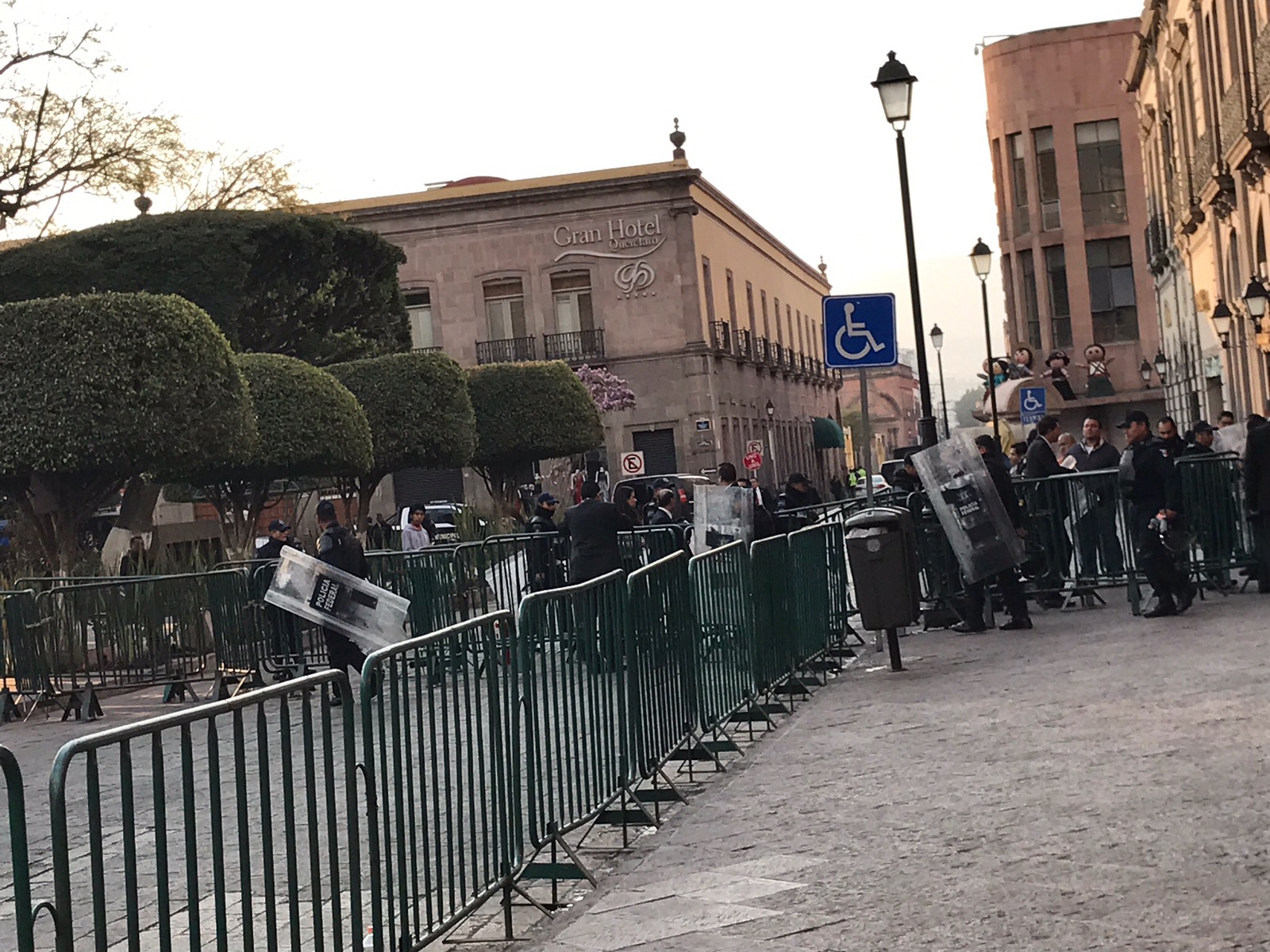
Global Volunteers are exhorted to “expect the unexpected”. That was good advice indeed, because we certainly didn’t expect to see the federales and military in riot gear a block away from our hotel when we arrived!
We learned the streets were blocked in anticipation of their president’s visit the following day. February 5th commemorates the day the Mexican constitution was signed and is a national holiday. This year was the 100th anniversary of that momentous occasion, and since it was signed in Queretaro, what better place for the president to visit?
Although initially the sight of all the guns was disconcerting, we had nothing to worry about. Everyone was peaceful and friendly. My “broken” Spanish was sufficient to get us across the barriers to the ATM in the restricted area, not once, not twice, but three times. (I escorted several of my fellow volunteers — and after the second time, I didn’t need to explain. They saw me coming and smiled as they opened the gate.). It was just a minor challenge to our getting settled and was easily overcome.
Remember in the last post I said that the Hidalgo is an older hotel? And that you can buy just about anything in Queretaro? Well, both are true statements. The “authenticity” of the hotel means that some purchases might make your stay more comfortable. Fortunately there ARE stores nearby.
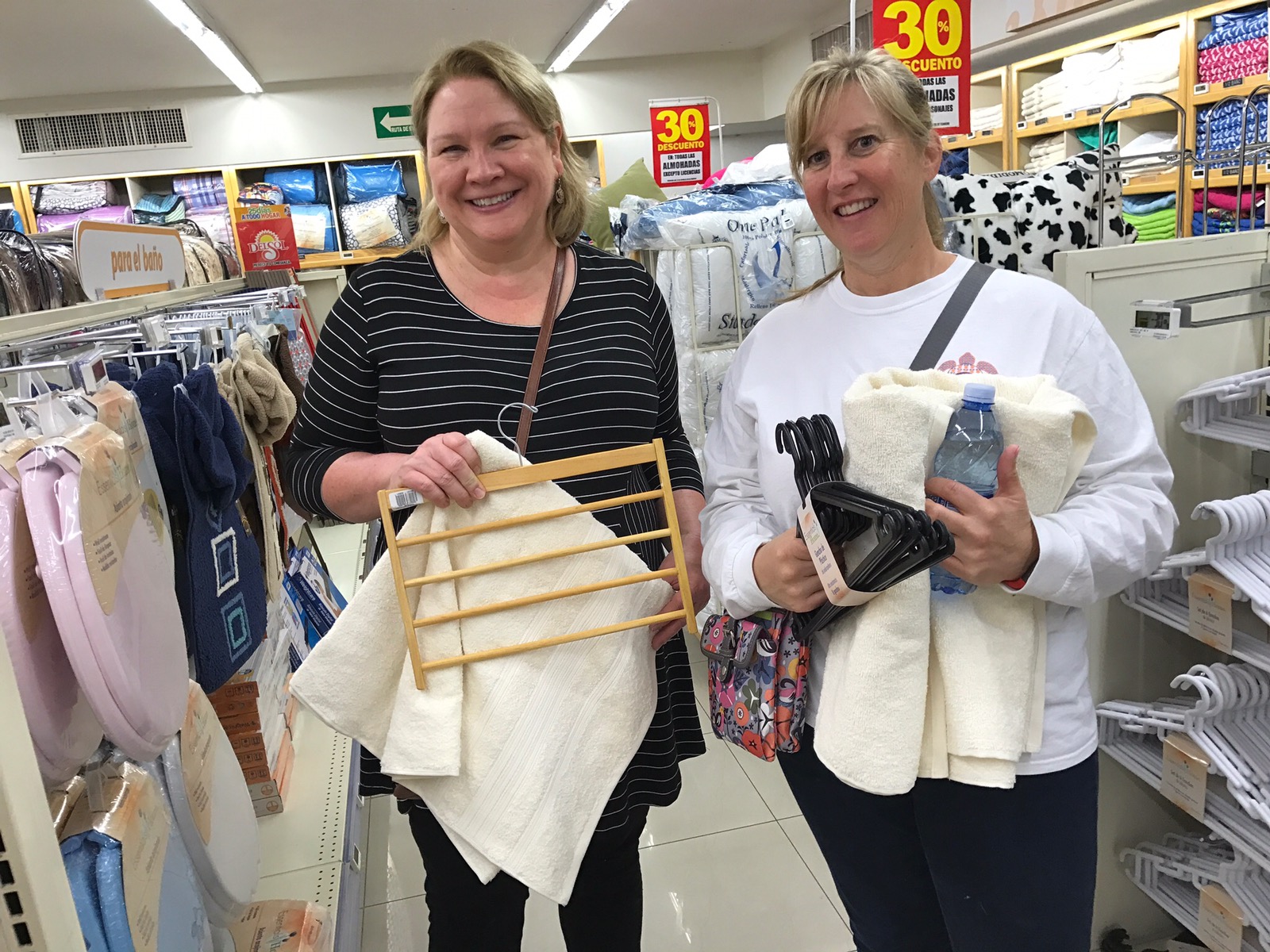
Sally and Kristy in Del Sol
We all decided jumbo towels were a great solution for unheated bathrooms. And you can never have too many hangers.
Some objects were a little more challenging to find.
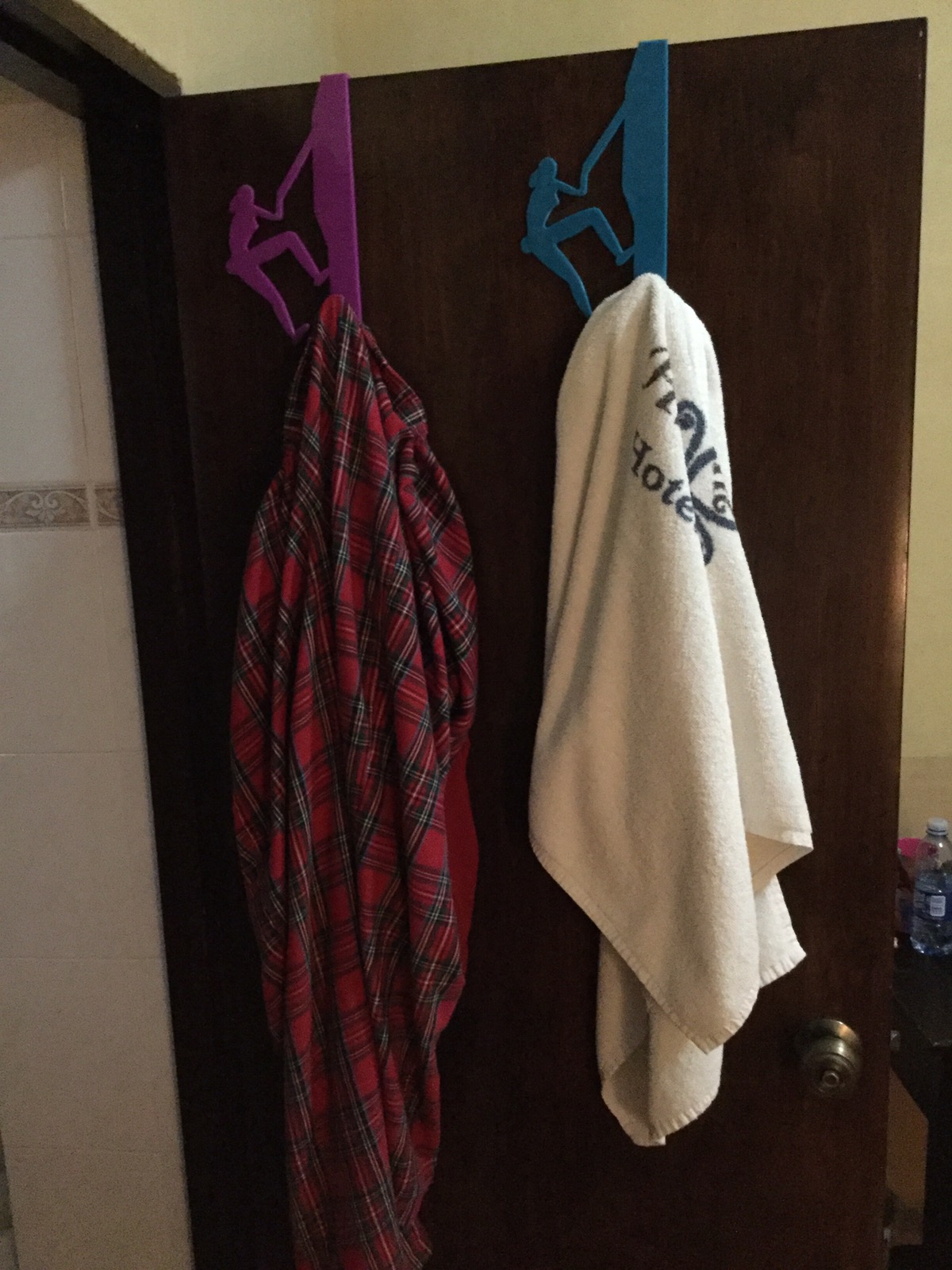
The one hook in Sally’s bathroom is strategically placed, right over the toilet. What could possibly go wrong with THAT? It only took ONE day to convince Sally that she needed another option for her towel. So, we embarked on a ‘find the hook that can be placed over the top of the door’ quest. Sounds simple enough, right? It wasn’t. Our search for a “gancho de ropa sobre la puerta” took FOUR determined women TWO whole days!
We hit Woolworth’s, del Sol, several sewing shops, the open air market. We even resorted to showing random passers-by a picture of what we wanted, downloaded from the Internet.
Leave it to first time volunteer, Kristy.
She not only convinced us to check out Waldo Mart, but she was also able to locate exactly what we needed amid the hodgepodge of goods. And yes, you did read that right. Much to our amusement, we discovered the Mexican version of a dollar store, really is called Waldo Mart.
How perfect are these?
The Hidalgo is in an ideal location, in the historic district with restaurants, museums, beautiful gardens and squares close by. It has lots of charm, but what it DOESN’T have are rooms with lots of light.
This time, Woolworth’s came to the rescue.
For about $10, Sally and I were able to buy small lamps. (Light bulbs, we discovered, are sold in the pharmacy down the street ). It might not look like much, but that little lamp makes a huge difference!
I just set it atop my closet and it illuminated my desk (and dressing) area perfectly.
The Mexican workers have been very helpful, friendly and oh so patient with my Spanish. I speak like a toddler, but like a toddler, I keep trying, without embarrassment. I THINK i said to the cashier “I only know some words. But I try to learn. Please speak slowly.” But then again, I might have said something else, because after my little speech she didn’t say anything. She just reached over, hugged me and kissed my cheek.
Our shopping was not limited to dry goods.
Because the University offers classes from 7 AM till 9 PM, our schedule varies. Some days we make our breakfasts and bag lunches at the hotel, and go out for dinner. When the classes are in the evening, we eat those two meals out, and pack our dinner. I volunteered to be the fruit purchaser, recruiting my three amigos to be my helpers.
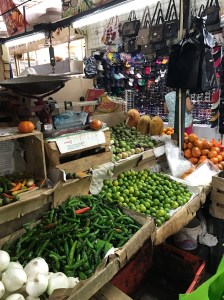
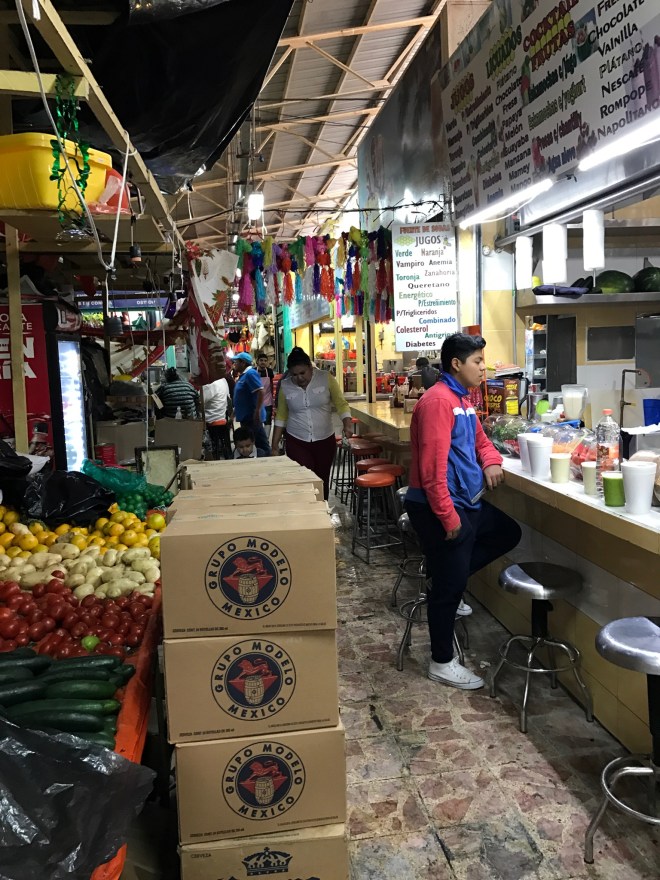
Because WordPress is being a bit balky, I need to end this post and what better way than with some shots from the market?
With so many fantastic places to visit, it is highly unusual for me to return somewhere, but that is exactly what I am doing next week.
I visited Querétaro in February, 2015 as a member of a Global Volunteers’ team. Was it the work, the city, the food, the students, or our wonderful leader, Pam, that is drawing me back? Short answer–all of the above. What will make THIS trip even more special is that my cousin Kristy and two friends that I met on other Global Volunteer projects (Jeanne and Sally) will be joining me.
At first, I was going to just write an email to my travel buddies, sharing what I remembered from my prior experience, but then I thought why not blog so that the information is available to anyone contemplating volunteering?
In getting ready for the trip, I also realized just how much I had forgotten–and how helpful it was for ME to go back and look at my old posts to see what I was wearing, which luggage I took etc. When the space between my ears fails me, which happens quite frequently these days, I am glad to have an electronic memory to supplement the “organic” one.
Getting Ready
The Hotel Hidalgo was once the finest lodging in Queretaro. It was so grand that in 1848, Santa Anna stayed there prior to signing the Treaty of Guadalupe with the USA. As one might expect of a hotel built in 1825, there is no elevator. There is also no staff to carry your luggage up the 31 stone steps to your room. (Yes, I DID count them the last time I was there).
I actually LIKE having a built in stair master. It’s a great way to work off all the excellent Mexican food I’m looking forward to eating.
Fortunately, there are only two floors! Still, you can get quite a workout climbing up those stone steps multiple times a day.
It is always wise to travel light, and this trip is no exception. The good news is there is a laundry right around the corner from the hotel. You drop off your clothes one day and pick them up the next evening. The bad news is you may experience all three seasons in ONE day. So, the tried and true travel advice works here: Dress in layers. One clear advantage of being older–your days of making a fashion statement are a VERY distant memory. Clothing is chosen for comfort and utility.
In case you’re wondering what I am bringing, here’s a visual:
I will wear the heavy tan sweater and blue fleece on the plane, but everything else goes in my bag: Hair dryer (they are not supplied by the hotel), toiletries, long underwear (can double as pajamas when the one pair I’m bringing is at the laundry), 5 pants, 4 long sleeved cotton shirts, 1 long sleeved knit top, 3 short sleeved shirts, 1 long skirt, 1 windbreaker with hood, enough underwear for 8 days, hat, small purse, and travel meds (Airborne, Neosporin, motrin), 1 pair of sandals. I will wear sneakers on the plane.
My routine (as you can see) is to lay everything out on the bed, then determine whether I can get it all into my carry on. Total weight: a manageable 24 pounds
Yep–it all fits, with room to spare. for any last minute toss ins, like scarfs and jewelry.
My backpack will hold my iPhone, iPad, chargers, money, credit card, passport, index cards, tissues, hand sanitizer, erasable markers for white boards (Pam tells me she has a good supply from volunteers leaving them behind, so no need to bring more), pens, notebook, facecloths (used to erase the white board), tea bags (water coolers on each floor of the Hidalgo dispense both hot and cold water) water bottle, and snacks for the flight.
There is no heat, so the rooms get a bit cool at night and in the morning. You can request an extra blanket for sleeping, but you need something warm for when you get out of the shower. A bathrobe is too bulky to pack, so I buy an inexpensive one in Queretaro, and leave it behind when I head home. That’s one of the advantages of being in a city. You can buy just about anything you need at either Del Sol or Woolworth’s (Yes, Woolworth DOES still exist. Just not in the USA). For me, the problem is I am WAY bigger than the average Mexican. This time around, I’m going to try shopping in the men’s department!
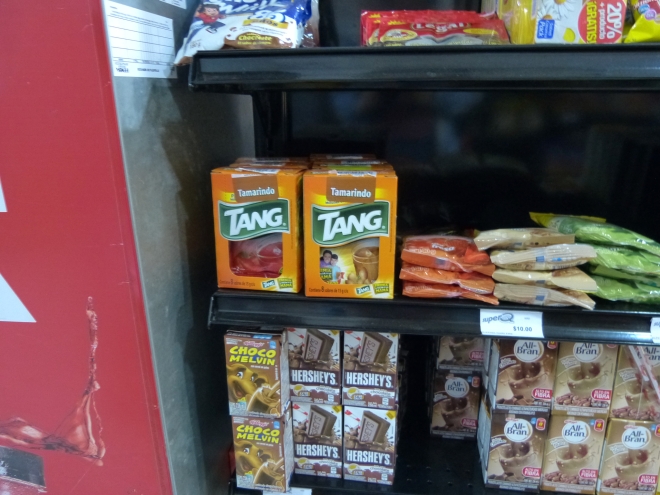
The stores carry just about everything, including products that you would never in a million years buy!
The high altitude dries your skin, but lotion is available everywhere, so I didn’t bother packing it in my toiletries bag. There is no need for insect repellant. I never saw a bug the two weeks I was there. A hat is important, because the sun is strong.
The hotel uses the same kind of plug and the same current as the USA, so no need for an adapter and converter. Even so, I’m bringing my trusty little gadget that I bought at Staples, because most rooms only have one electrical outlet. Notice the two USB ports, plus one regular plug? This little treasure allows me to charge iPhone, iPad and camera all from one socket!
USB slots , with the C adapter extended.
Arrival
If you are arriving at the start of the program, Pam will arrange for your transportation. I like to go in a day or two early, so I handle my own transportation to the hotel. It was 350 pesos to get to the historical center, (about $17 US). There is a booth in Queretaro airport, just outside immigrations and customs that helps with getting a taxi. I recently learned that Queretaro now has Uber service, but I think I’ll stick with the taxi to get to the hotel.
Money
You don’t need to bring much money with you. There are ATMs at the airport and in town, so it is easy to use your debit card to get pesos. For those that want to exchange dollars, there is an office around the corner from our hotel, but ATMs are so abundant, I find it more convenient to just tap into my checking account.
Because the program fee covers room, board and transportation, you only need cash for shopping or if you plan on traveling on the weekend. Even then, credit cards are widely accepted.
The Project
Pam, our terrific leader, contacts all volunteers in advance of the trip. She explains that we will not be working with the same group of students every day. Instead, when we arrived at the school, we go off with whatever teacher we are assigned to. The students could be beginners, intermediate or advanced. Some teachers will tell you what they want you to work on–others will tell you to do whatever you want. This is where an iPad comes in handy. Last time, I took photos of common household objects so we could practice “what is this”, “this is a —“. For the more advanced students, we were able to talk about what was important to them: dating, family, work, food, entertainment, travel.
One of the photos on my iPad used for a beginning lesson.
Because there are also evening classes, our hours vary. Some days we start early and end early, with a nice break before we get back together for dinner. Other days we have our mornings off, but pack food for dinner and arrive back at the hotel around 9 PM. I thoroughly enjoyed the varied schedule. It gave us a chance to experience the city of Queretaro, although I have to tell you — not much is going on before 10 AM!
I bring my backpack to school every day. It holds my meal (lunch or dinner), extra layers of clothing, teaching aids, hand sanitizer and toilet paper (there are no paper products in the ladies’ room) and water bottle. It also serves as my luggage for my weekend excursion.
backpack and carry on
Free Time
Global Volunteers have their weekends free. You can book trips on the Primera Plus bus at the travel agency around the corner from the hotel (in 2015, it was open from 10-2 and 4-7). Last time, we took the 8 AM bus on Saturday to Guanajuato, returning on Sunday’s 3:30 bus.
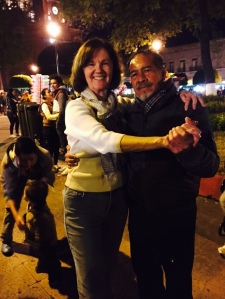
This time, Jeanne, Sally and I plan to visit San Miguel de Allende on the weekend between our two work weeks. Pam, the GV team leader, warned us that we needed advance reservations in San Miguel if we wanted to stay in the town center at a reasonably priced hotel. Good thing she did! There weren’t a lot of choices left when we made our reservations a few weeks ago. Once again, we will head out early Saturday morning and be back in time for dancing in the town square on Sunday night. Maybe Uber will be a good choice for getting between the bus station and hotel.
Wonder if I’ll run into my dance partner again?
That’s all I can think of. I hope it is helpful, especially for my travel buddies Sally, Jeanne and Kristy.
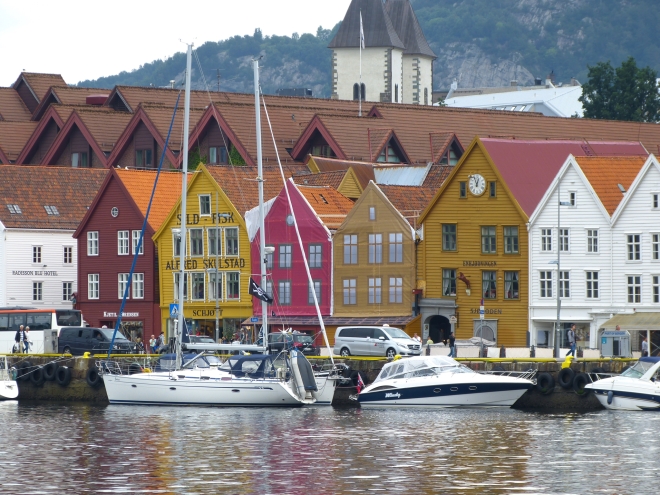
I am ending my Viking Ocean Cruise narrative the way I started it oh so many months ago, with a photo of Bergen’s colorful harbor houses.
What wasn’t apparent to me when I downloaded Viking’s promotional photo was that some of the facades were fake. See the red and tan canvas coverings draped over two of the building fronts? They are concealing extensive restoration work currently taking place. What an ingenious way to preserve the beauty of the waterfront!
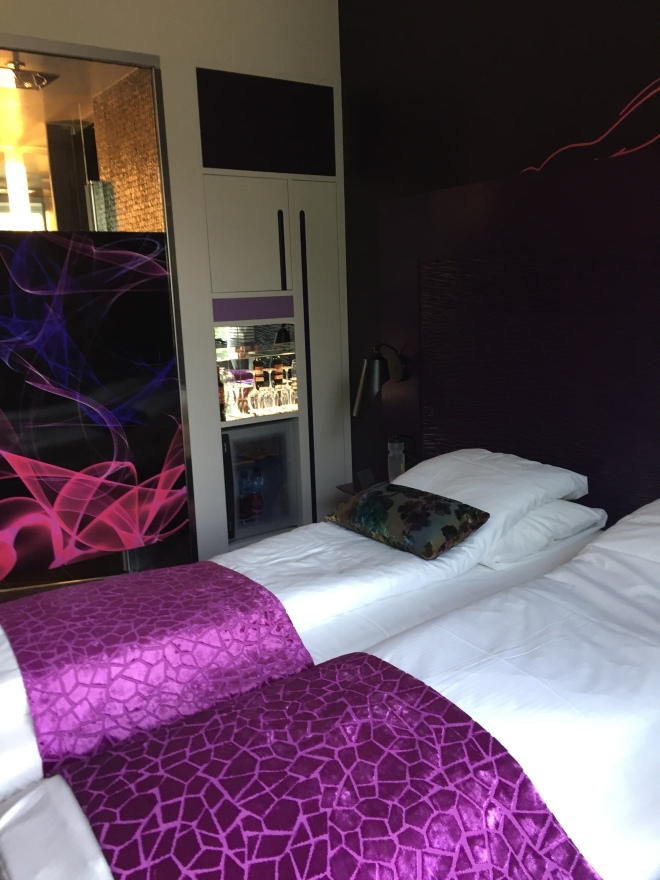
We had decided to extend our stay in Bergen for two post-cruise days. Trip Advisor helped us find the Oleana, a wonderful little boutique hotel just a couple of blocks from the waterfront. It was compact, but very well designed. That area to the left of the refrigerator and bar, behind the colorful, abstract graphic, is the bathroom. The graphic hides the more interesting parts of your anatomy from any viewers in the room while you are showering, but you can still smile and wave.
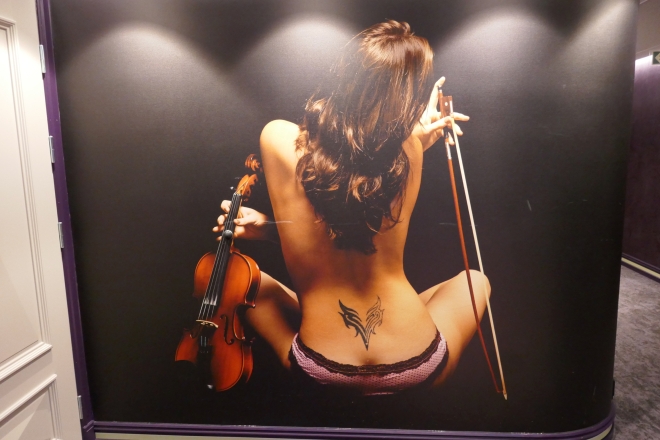
In addition to the delicious free breakfast, The Oleana offers afternoon waffles. Wifi is free, the port is just a couple of blocks away, it is reasonably priced, and it has character, full of memorable art–see for yourself. What’s not to like?
Bergen is a lovely town, but I was unable to fully enjoy it because I was very concerned about my main man. He was badly bruised from the the spill he took coming down the mountain in Flam, however the worst part was what was unseen, and not discovered till we got home. He managed to crack three ribs when he fell, which made him quite uncomfortable–no only for our three days in Bergen, but also for the following several weeks. Although we DID manage to get out and about, we were not able to explore to the extent that we had in other ports.
Normally, we hit every possible overlook wherever we go. But not this time. We didn’t make it to the top of Mount Floyen on the Floibanen. Instead, we took short walks in the port area.
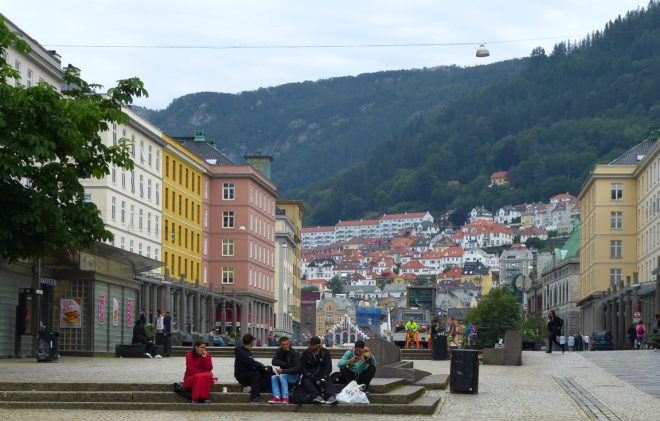
Notice the funicular at the top of the photo. Also notice how clean the streets are!
Fortunately, it is great place to hang out, full of little shops and restaurants, plus a huge outdoor market. There is something for just about every taste.
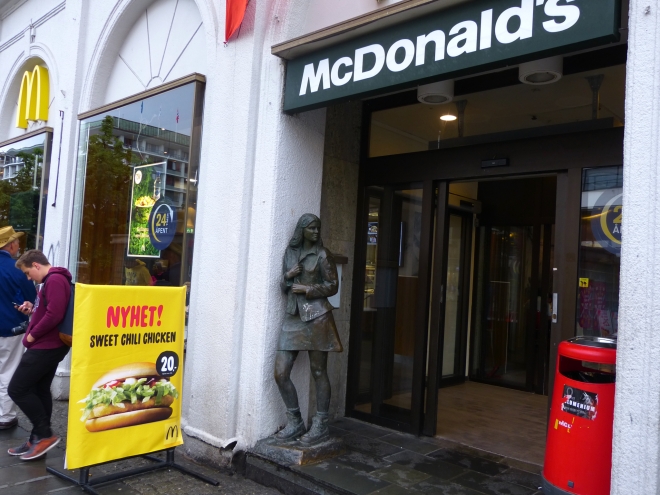
For those with less adventurous palates, not to worry. You can always dine in splendor at what our Danish guide called “the American embassy”.
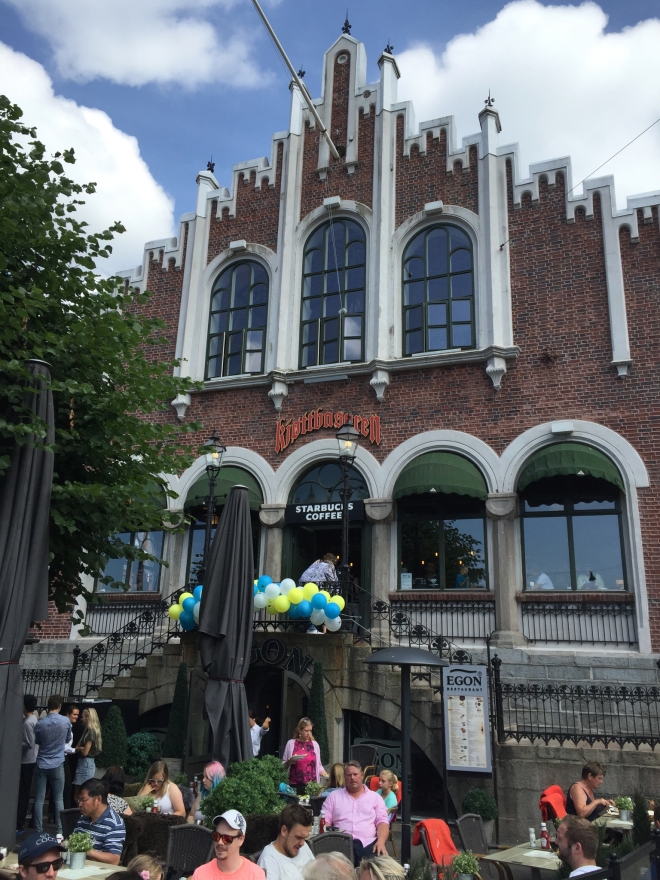
Believe it or not, we passed up eating at Mickey D’sWe DID visit Starbucks. It provided the perfect shelter when we got caught in a brief cloudburst.
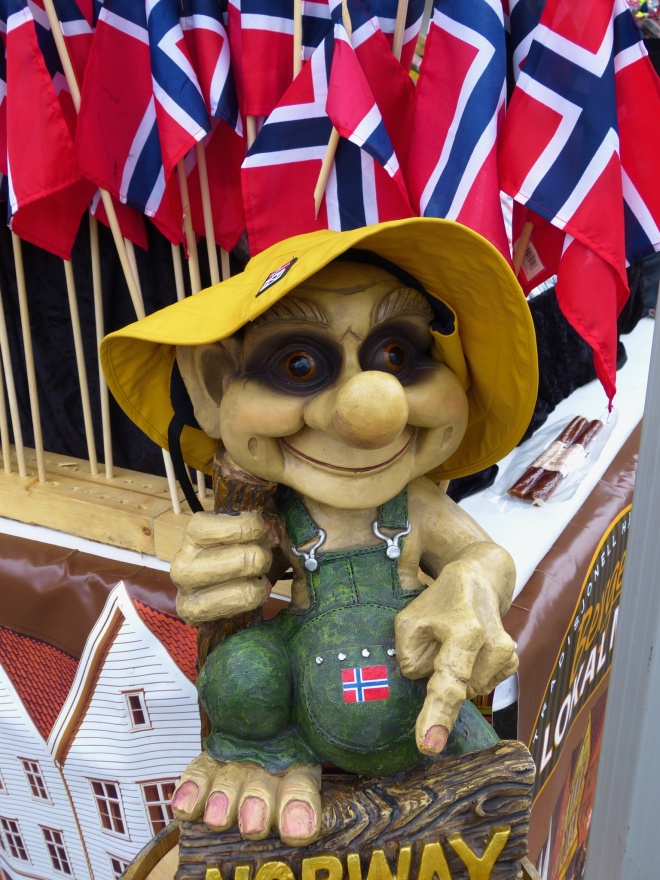
The outdoor market was quite colorful, with lots of flags and trolls. I wish I could have brought this guy home with me. I know two little girls that would have loved to have him in their back yard!
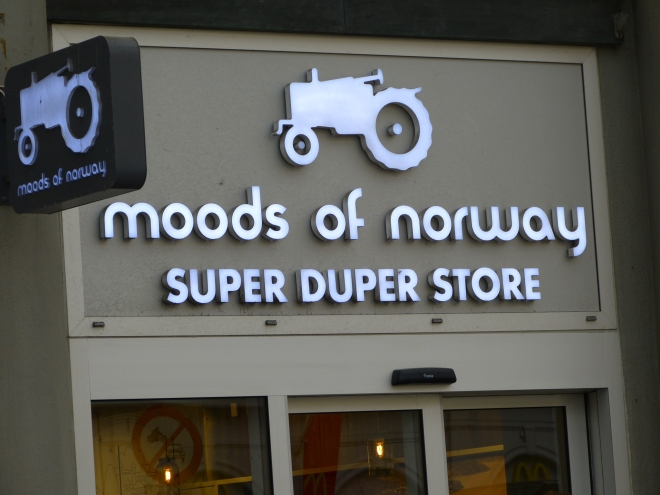
The side streets have stores with more traditional goods, just in case you are in the market for a new tractor.
Only kidding. This “super duper” store actually sells clothing. Sorry, I have NO idea why there is a tractor on their sign!
Just a few more photos from our rambles before we bring our Viking Adventure to a close.
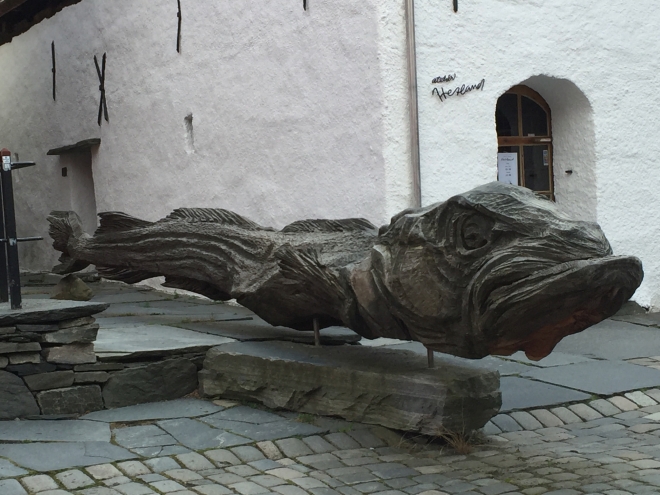
Bergen’s public art pays tribute to an important source of the population’s livelihood.
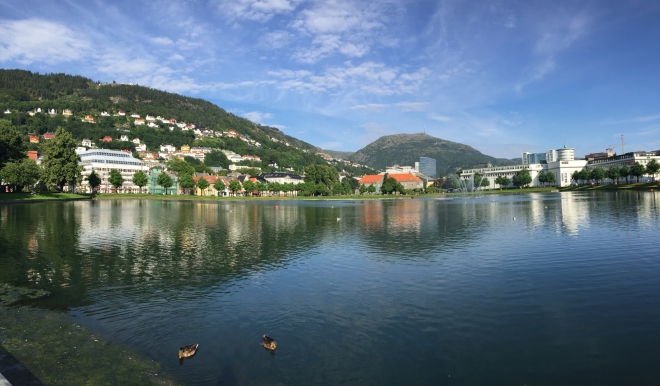
Another lovely, clean side street in the port area.The lake and park near the port
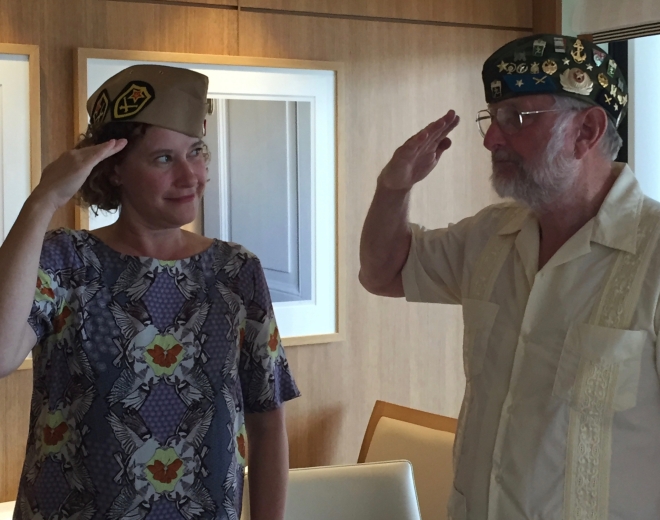
What better way to sign off, than with a photo of two of travel buddies modeling their St. Petersburg purchases at our last dinner on board the Viking Star?
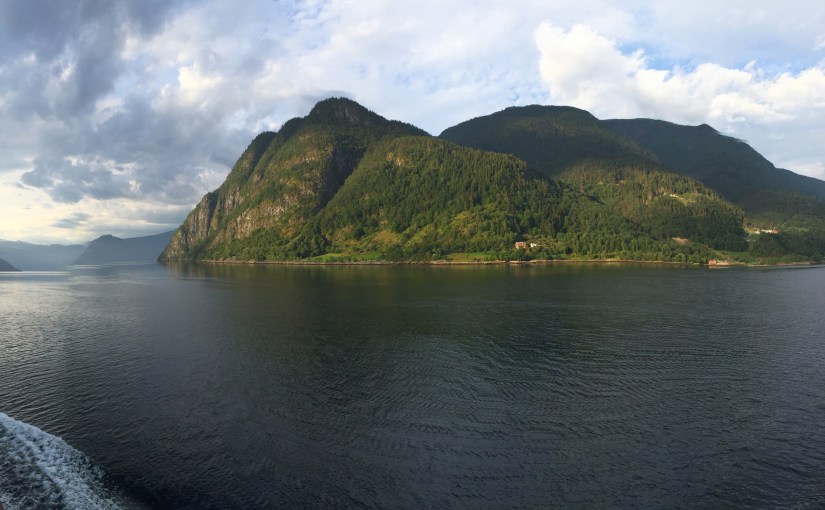
Imagine waking up to THIS spectacular scenery! Ahhhh…
If you did, you would be just outside the little village of Flam. It is peaceful, majestic, quiet and breathtakingly beautiful.
There isn’t much in the center of town–just a few shops and a train station, where you can buy tickets for one of the most scenic rides on this planet.
Viking offered a combined bike/train experience for $179 per person. You take the train up the mountain and part way down, then get on a bike and glide the rest of the way into town.
I tried repeatedly to enroll us in that excursion, but the website consistently listed it as sold out. Damn, I was deeply disappointed. That disappointment lasted about 15 minutes. Then I decided to do something about it, so I took to the internet.
Eventually, after much hunting and more than a few pokes around Trip Advisor and Cruise Critic, I discovered Cafe Rallaren. Located in Myrdal, the last stop for the Flamsbana train, it not only supplies food (that’s the cafe part), but also offers bikes for rent. You can ride the 12.5 miles down the mountain, then leave the bike in town. No need to lock the bike, you just leave it there. In town. What a concept. Try THAT in Boston or San Francisco!
Total cost for the train ticket plus bike (and helmet) rental for both of us was $161.50. Sold!
A closer look at Flam
We chose the 11:05 departure, which gave us time to enjoy a leisurely breakfast on the ship, and wander through the town. We would arrive in Myrdal at noon, just in time for lunch at the cafe. We were the only ship in port that morning, so Flam wasn’t crowded at all. That was about to change.
When our train pulled into Flam, literally thousands of tourists came rushing off–perhaps heading for the bathrooms? To get a window seat on one of the tour buses in the parking lot? Who knows? It was a Chinese tour group, so we weren’t able to ask anyone why they were in such a hurry or where they were coming from.
The good news is OUR ride up the mountain wasn’t crowded at all, and we all had our choice of seats.
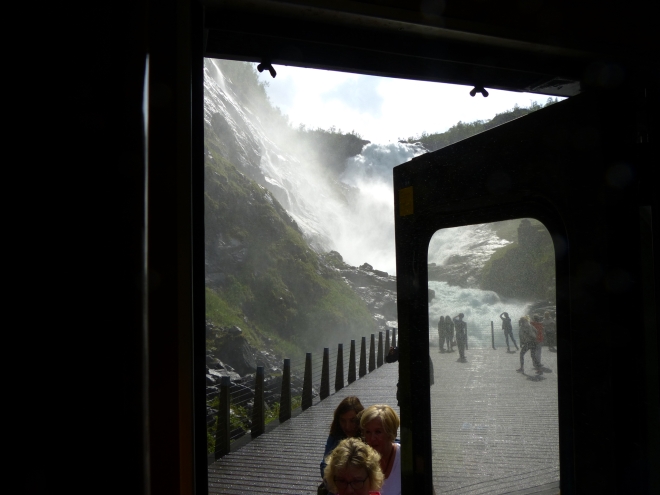
The train makes a stop at a waterfall, so the obligatory photos can be taken. That spray was COLD and powerful, so after about 10 seconds spent admiring the falls’ grandeur (and getting damp), I quickly reboarded the train to photograph the waterworks from the doorway. I know. I’m a wimp. I just hate discomfort of any kind. Especially when it is self inflicted.
What I didn’t see, but Mike (who is made of much stronger stuff) did, was the water nymph who appeared alongside the falls, waving her arms to the tourists. He took the next two photos.
Can you spot her?
How about now? Don’t you love a zoom lens?
Getting our bikes and helmet at the cafe was easy and uneventful. Not so for the rest of the trip. So how was it? It was incredibly beautiful.
It was incredibly steep, and rather rocky, for the first mile,
One of the many hairpin turns on our rideWe are smiling now, because we are standing on one of the flatter stretches during that first mile.Check out the rocks and ruts. Hitting one of those the wrong way while hurtling down a steep slope could be quite uncomfortable. See the drop on the left side of the road?
Best strategy? Walk your bike down the steep sections of that first mile. Unfortunately, Mike didn’t, and took a bad spill. He injured himself enough to made him uncomfortable for the rest of the cruise. To make matters worse, shortly thereafter, his bike got a flat tire. He soldiered on, NOW walking the bike. What else could he do? You don’t see any cell towers in these photos, do you? No houses or cars either. Put it all together and you end up with no bloody way to get help. It was bad, but it would have undoubtedly have been far worse if the drama queen member of our duo had gone down. (That would be me. Mike, on the other hand, never complains…)
Eventually we reached a more inhabited area, where both Mike and the bike were rescued and given a ride back to the ship.
The ship sponsored bike trip started at the flatter, paved section, about half way down the mountain. That’s something to keep in mind for the less adventurous. Unfortunately, I can’t give future Flam visitors any information on how THEY could get in touch with that particular bike vendor. I just spotted a trailer by the side of the road, with lots of bikes loaded onto it, but no signs or identifying information.
Of course, if you decide to do it on your own from the top of the mountain, you DO have the option of walking your bike down and around the hairpin curves. That worked quite well for other bikers (such as me).
I was in a bit of a hurry to get back to the ship to make sure my guy was doing okay, so I didn’t take many more photos.
In the US, we have speed bumps. Here in Flam, they have speed goats.
Although we didn’t encounter any Trolls, we met more than three Billy Goats Gruff
This guy either took a shine to me, or thought I was the “other” character in the fairy tale. All I know is he was repeatedly butting against my leg and followed me a while!
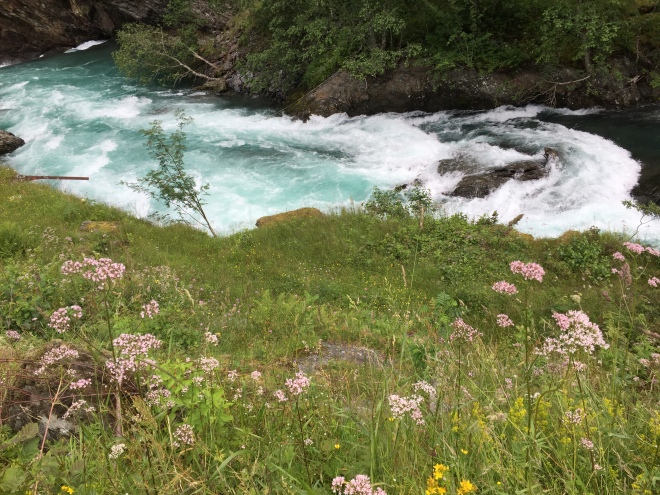
Beautiful flowers and clean water along the way. The perfect photo for a happy ending
Yes, there was a happy ending. Mike visited the ship’s doctor, who after determining that nothing was broken, sent him on his way with some happy pills.
No, we are NOT still on that Viking cruise we embarked upon last July. I am just a very lazy blogger, who only puts fingers to keyboard when the spirit moves me, and there clearly hasn’t been much movement lately. But this epic narrative will end shortly. Only one more country — Norway — and three more ports left, starting with Stavanger.
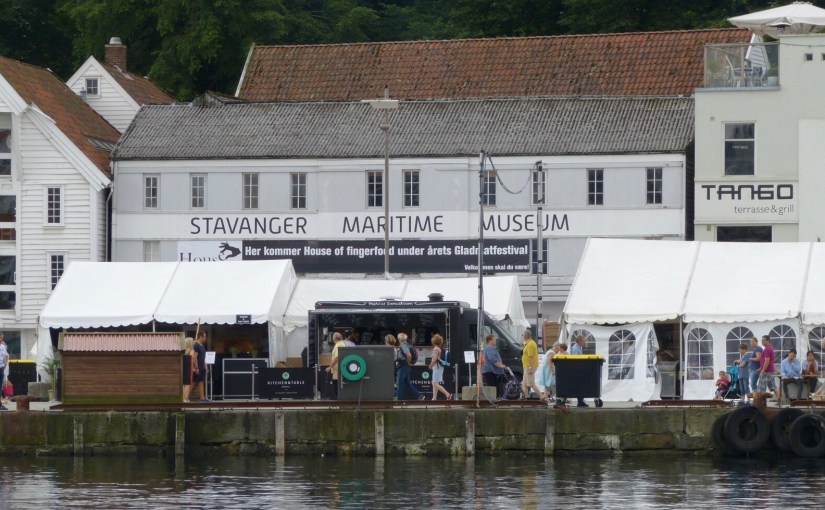
This lovely town features a Maritime Museum which could possibly be spectacular. I have no idea whether it is or it isn’t, because we didn’t get around to visiting it.
The port area is very pleasant for strolling and people watchingThe port of Stavanger as seen from town
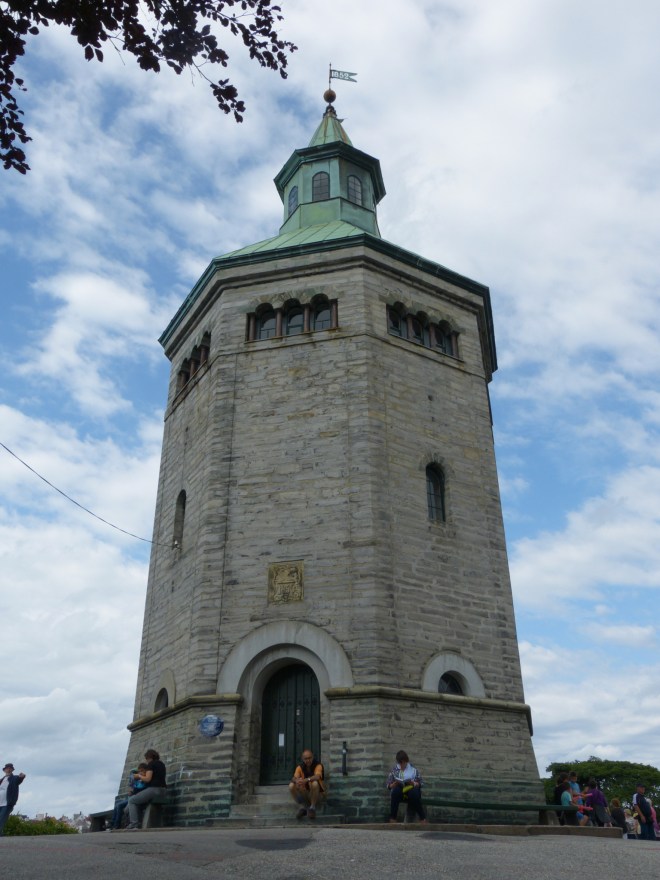
Can you make out the white tents around the harbor in the above photos? They were booths for the food festival that was in full swing the day we were in port. Given the abundance and the quality of the food on the ship, eating was the last thing on our minds, so we didn’t experience THAT either. What we did instead was climb the hill into town to get a better view of the harbor (seen from above) and the tower (seen from below).
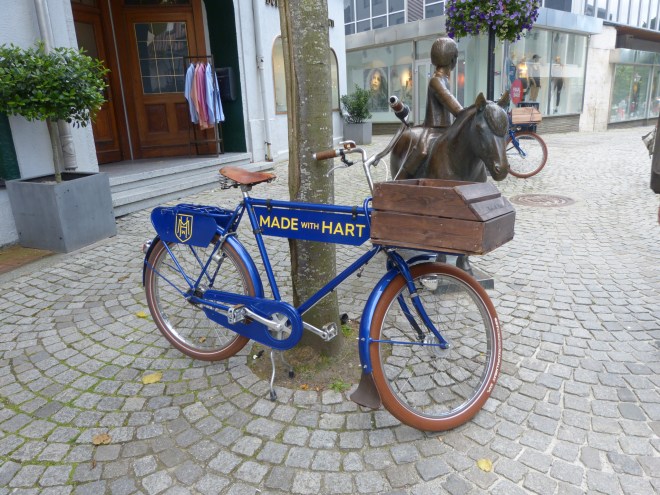
Every town needs a lookout tower.Is this a sculpture? Or is it a loaner for anyone in need of transportation? I think the latter, given the lack of locks and another identical bike in the background.
As usual, Viking offered an array of excursions, including a free walking tour of the port. Our choice was one of the other options: cruising Lysefjord and seeing the famous Pulpit Rock.
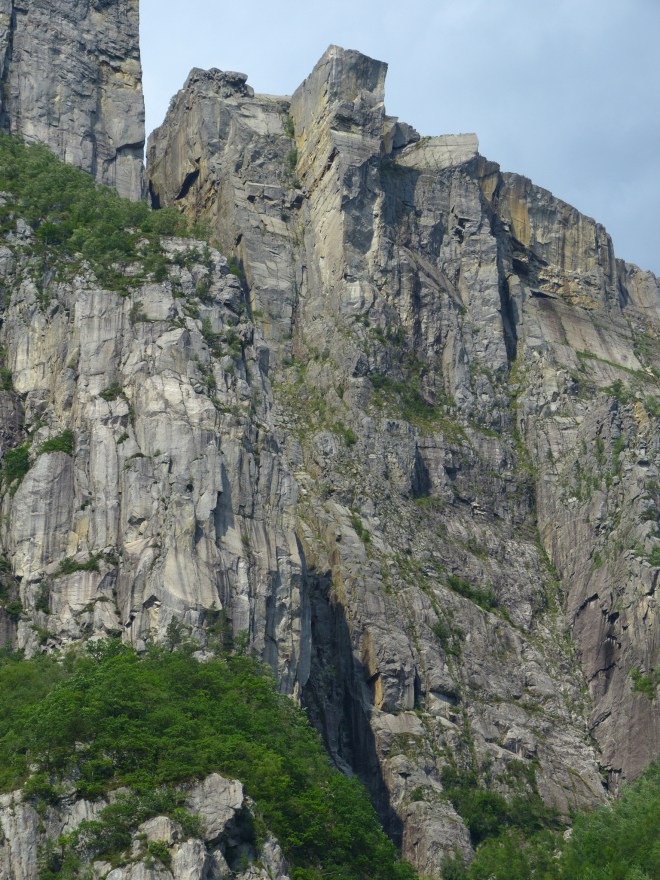
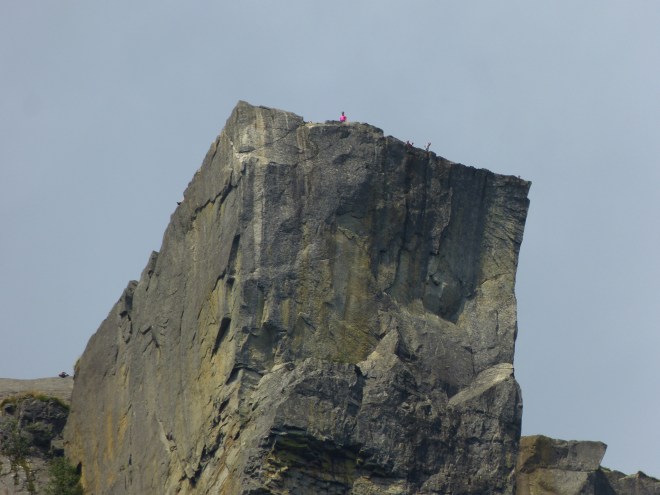
I had briefly considered hiking up Pulpit Rock, but was dissuaded by the comments from bloggers that had gone before. And boy oh boy, I’m so grateful they convinced me to sit this one out. Take a look!
That rectangular outcropping? THAT is Pulpit Rock. And that sucker is WAY high!My telephoto lens was able to confirm that there WERE some successful climbers
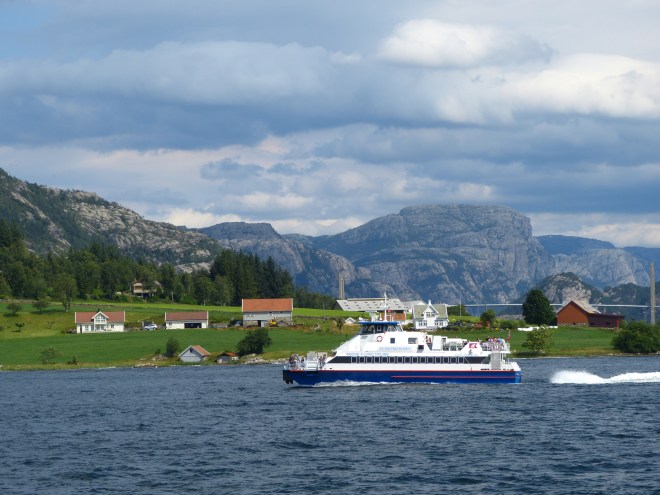
Here’s a tip for future cruisers visiting Stavanger. The Viking sponsored cruise to Pulpit Rock cost $149. per person. Instead, before leaving home, we booked directly with Rodne for $60 per person. (Clicking on the blue link will get you directly to their website). The ferries were identical, the routes were identical, only the price differed. I don’t mind a cruise line making a little money on the trips they put together, but this mark up seemed a bit excessive. I was a little concerned about the distance from our ship to the ferry, but the port is so small, it was a short distance to the boarding area, which was clearly marked.
We discovered we would have been able to buy a ticket at the Rodne office in the harbor, however even if I had known that, I probably would have bought the tickets in advance. We were only in Stavanger one day, so I wasn’t willing to take a chance that the time we wanted was sold out.
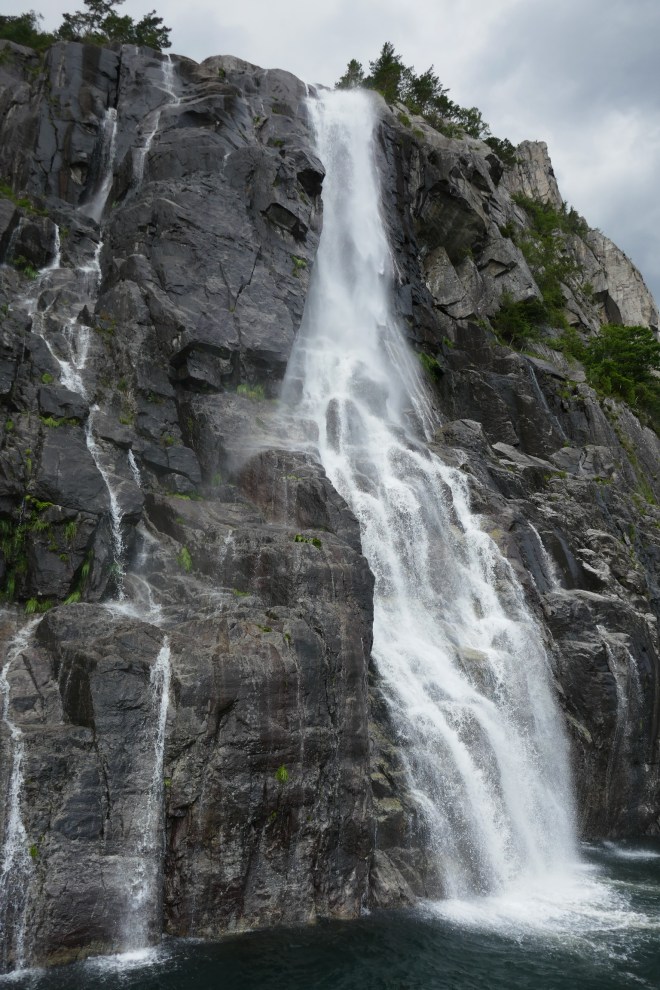
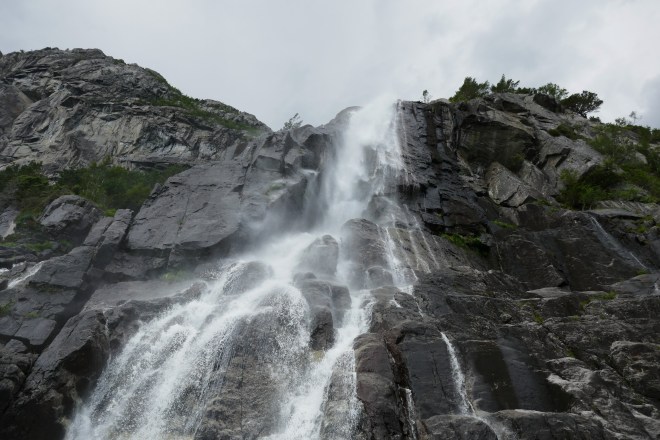
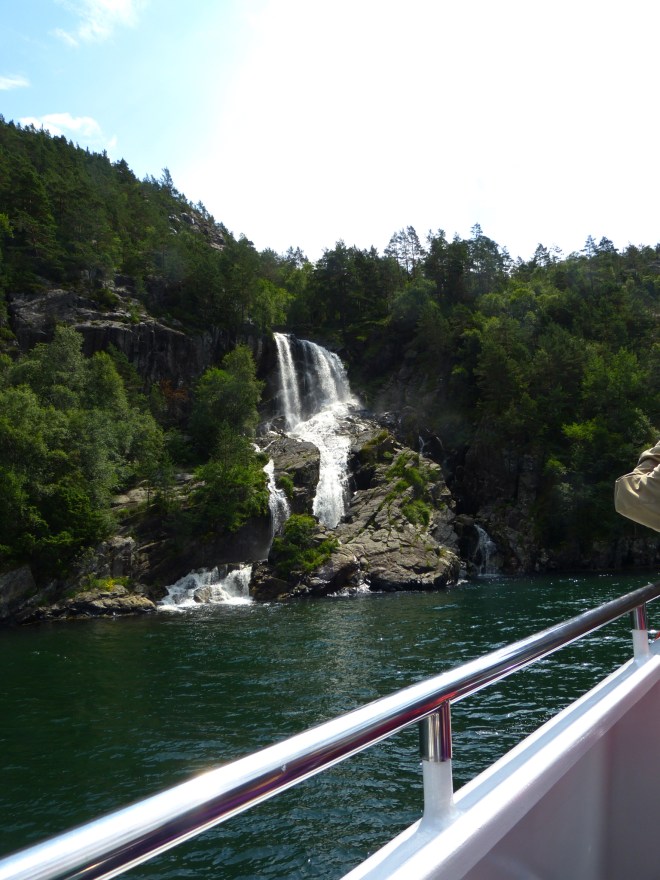
During our trip, we passed several Rodne ships identical to the one we were on. This photo gives you an idea of the ship’s size.Get in line early if you want a seat on the top deck, or a prime spot for photographyLots of waterfalls!Did I mention that there were lots of waterfalls?
Yet another advantage of cruising? You visit ports that you probably would not have found on your own. We had never heard of Aalborg before our Viking cruise.
Is Aalborg Europe’s happiest city? The tourist board certainly thinks so and after spending the morning with Jane, our cheerful–and informative– tour guide, I think it might just be.
Jane told us residents are happy because they feel safe and they have what they need. Although taxes are high, there is no charge for education, pensions are universal and health care is provided. University students live in cheap apartments, get a stipend and have free tuition. In Denmark, Jane told us, people are cared for.
What I found interesting is that although mothers get one year paid maternity leave, and families receive a per child payment, the average family size is less than two. Especially with those long winter nights…
Aalborg is a lovely little city, very clean, artistic, and orderly, with a nice mix of old, preserved buildings along more modern edifices.
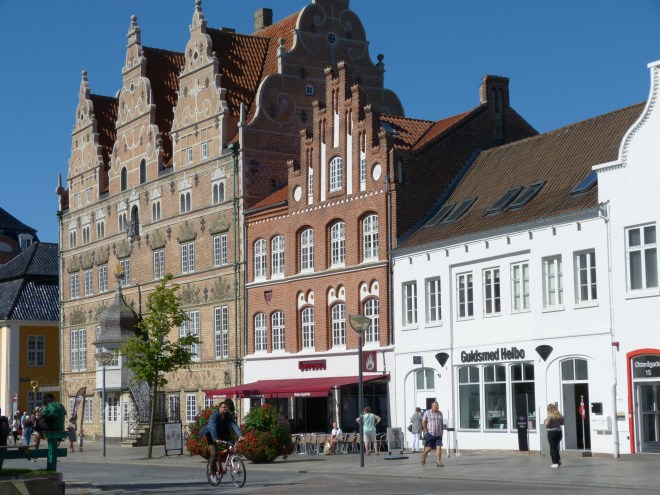
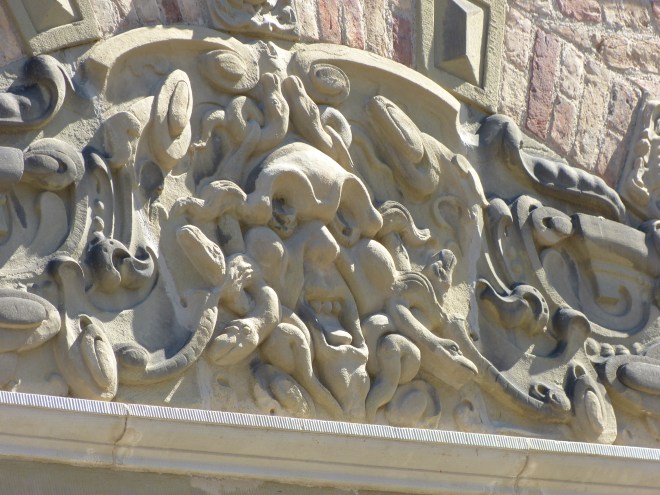
The Jens Bang house (on the left) was built in 1624. Mr Bang was a very successful merchant, but unfortunately was never accepted by the power structure.
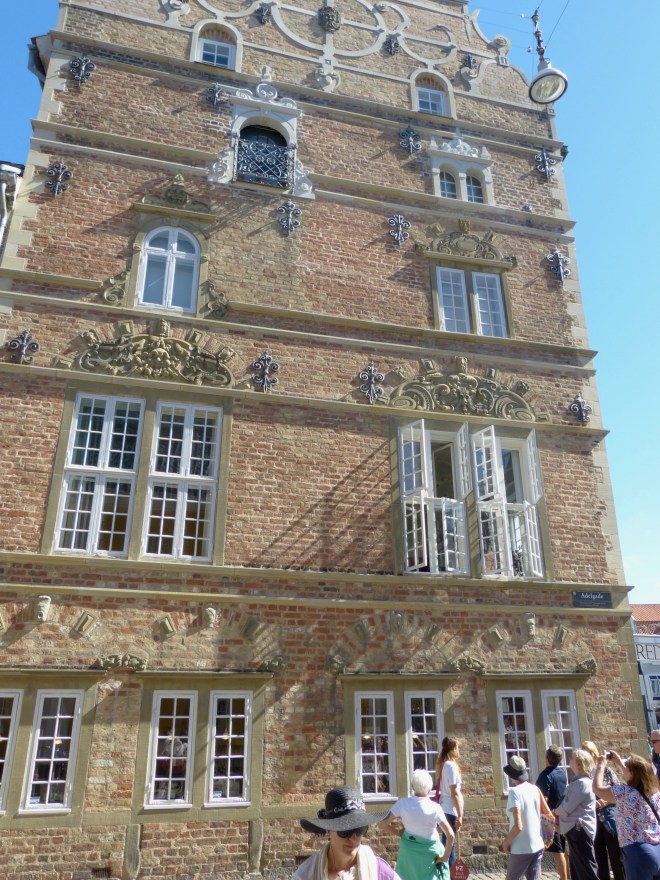
He took architectural revenge, however, by decorating the side facing city hall with these grimacing creatures, who are sticking their tongues out at the politicians of the day.
Here’s a closer look.
The rather irreverent Danish sense of humor continues to this day, as displayed in these figures found in a gift shop.
No, I didn’t buy any presents here.
Our tour included a visit to the monastery/nunnery, where proximity led to a flurry of construction. It seems that in the 1400’s, unplanned pregnancies were resolved by bricking up the nuns (into walls) where they (and their unborn children) were left to die.
What a difference a few centuries can make!
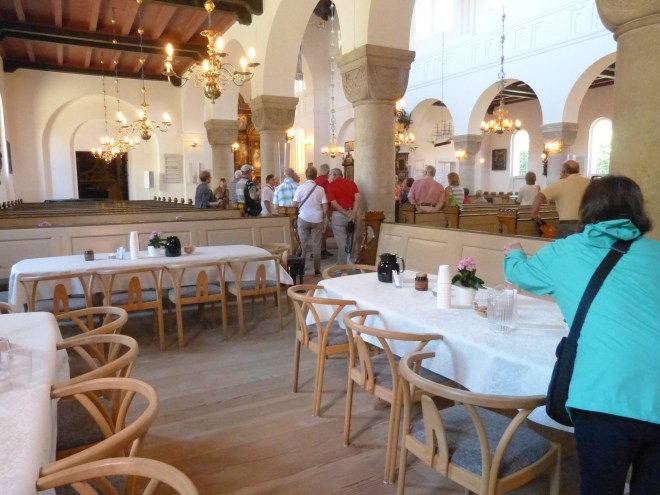
We also visited the local churches where we saw something rather novel: refreshments being offered in the church proper. They really ARE a very welcoming community!
Sign posted outside a church. I guess when you feel happy an cared for, that feeling can be extended to others that are less fortunate.
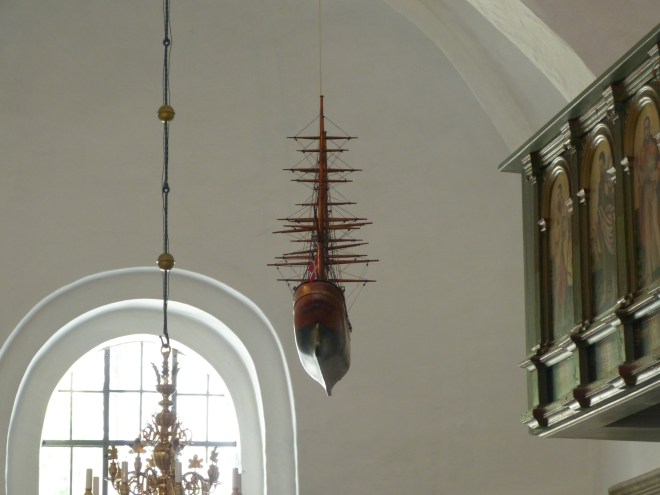
As with other Scandinavian churches, this one had a ship hanging from the ceiling, which we were told is meant to symbolize passage from this world into the next.
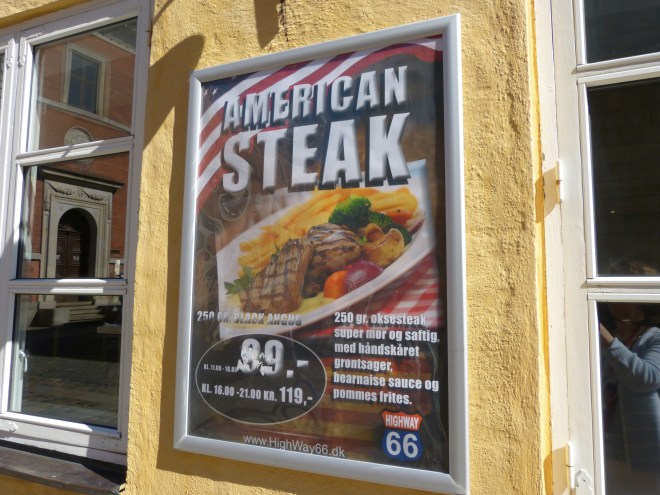
If you happen to visit Aalborg and have a hankering for some good ol’ American fare, not to worry. This wonderful town has you covered.
On our way back to the ship we were treated to a “reenactment”, something those of us in the northeast are all quite familiar with.
As the ship pulled out of port, residents gathered to bid us farewell, waving flags while loudspeakers broadcast Danish music.
Yep, they sure looked happy. And we were too, after spending the morning with them!
The great thing about cruising? You get to sample lots of different places without having to pack and unpack. The downside? Your stay in a fantastic country like Denmark is way too short. Not only that, but you are doing so much and seeing so much, your blogging gets delayed till you get home. Then, if you are me, months later you start looking at photos and trying to decipher your notes only to realize how much you have forgotten.
Our Viking itinerary included two stops in Denmark–a full day in Copenhagen and a half day in Alborg. For both stops, we opted to take the included Viking tours, and we were quite happy with our decision.
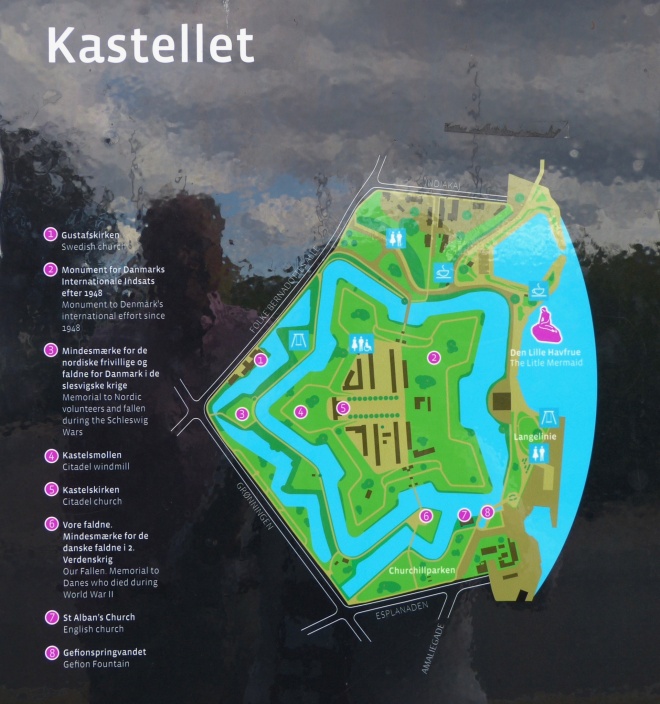
Of course, we knew we HAD to see the iconic Danish landmark, The Little Mermaid, which was within walking distance of our ship.
What was surprising to me was how close she is to the shore. It was possible to climb out to join her on the rock, an impulse our guide requested that we resist. Other tourists, however, did not feel so constrained. I’m thinking that I probably shouldn’t have waited till they cleared off to take my shot. It might have been a far more amusing photo to see them cavorting alongside her.
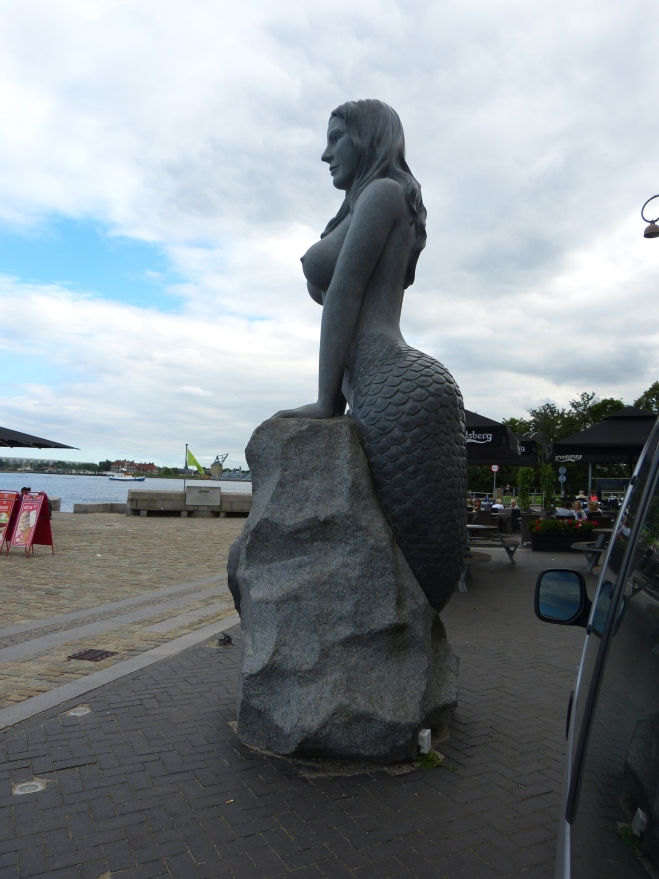
Our guide mentioned that the mermaid has a less famous sister down the road a bit, who is affectionately known as the “Dolly Parton version”. Hmmm, wonder why Walt Disney didn’t include HER in his movie?
Also alongside the harbor is the Opera House, a gift from Maersk Mc-Kinney Moeller, the Danish shipping magnate. The building design has been compared to a spaceship, the grill of a 55 Pontiac and a fly. Maersk Mc-Kinney Moeller’s response to suggestions for modifications? “I’m giving you a gift, not a gift certificate.”
The Danes are rightfully proud that the harbor is so clean that you can swim in it. In fact, someone used the roof of the opera house as a diving board to prove that very point. (Was it Maersk Mc-Kinney Moeller? Unfortunately, I don’t remember — but I DO remember that Maersk lived 98 years, so maybe. I certainly had fun envisioning the old guy balancing on the roof’s edge. )
Copenhagen is a lovely city with the requisite number of palaces, towers, forts, churches and statues. Here are just a few of the images from our city tour.
This horseman is surrounded by four identical buildings, all housing members of the royal family.Notice the three crowns atop the tower. If my memory is accurate (and that is a pretty big “if”), they represent the three countries of Scandinavia.A profound quote from our former president, is as relevant today as it was a half century ago.
We were getting close to experiencing sensory overload, so after the tour concluded, we returned to the ship for lunch. The fortress was within walking distance of the ship and was the perfect place to spend the rest of our time in port.
Who knew that a fortress could be so peaceful?
Another beautiful departure, as we headed for our next stop: Aalborg.
Berlin showed up on our Viking itinerary as one of the ports of call. Geography never was my strong suit, but even I knew that Berlin has no oceanfront property. Although Viking arranged free transportation by train to Berlin, we decided that we didn’t want to spend approximately 6 hours traveling back and forth. Besides, we will probably never get back to Rostock and Warnemunde, but a few days in Berlin may indeed be in our future.
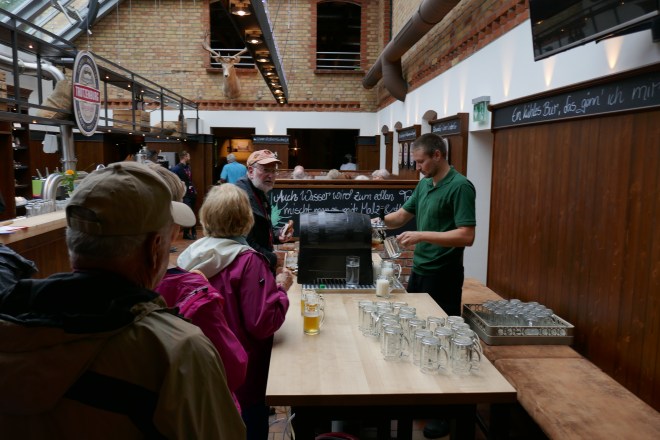
We did not regret our decision. Our day started with a German breakfast of pretzels and “liquid gold”, the German invention we Americans call beer.
Our brewery tour included a choice of light or dark beer.
Our guide, Enrico, shared lots of fun facts about 9th century beer consumption:
Beer was given to children because it was cleaner than the available water
It was drunk warm, like soup from a bowl
The monks consumed beer during their fasts; apparently it didn’t count because you didn’t chew it?
Beer was also thought of as liquid bread.
Fast forward to modern times:
Germans consume approximately 30 gallons of beer per person per year.
You can buy beer anywhere and consume it anywhere. It is okay to be intoxicated in public, just as long as you don’t do something stupid. (A drunk person doing something stupid? How often does THAT happen?)
Beer isn’t taxed, and the drinking age is 16. Sorry kiddies–that’s the down side of having access to clean water.
The last two weeks of September is Oktoberfest in Munich, where the locals don their Bavarian costumes and yodel a lot. If Enrico explained why Oktoberfest occurred in September, I have completely forgotten it. That’s what happens when you write a post months after a trip occurred!
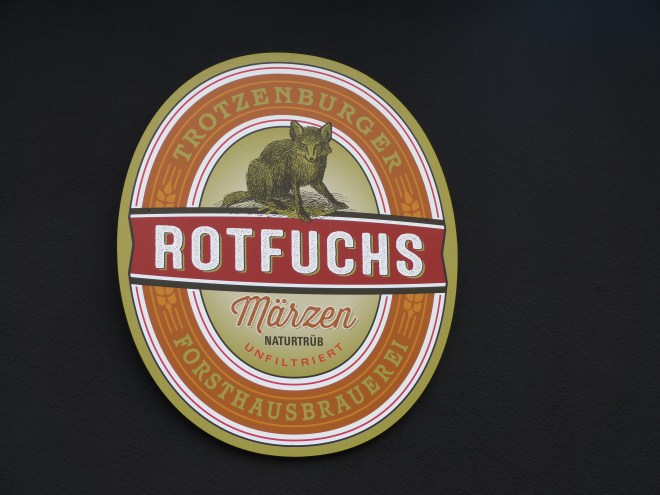
The beer labels at this brewery were quite interesting
Clearly this beer is not one that would be a huge success in the USA
Next stop was the lovely little town of Rostock, formerly part of East Germany. Enrico told us that on November 9, 1989, the citizens of Rostock danced on the wall in celebration of the peaceful revolution. Germans commemorate October 3rd, 1990 as their reunification date, with a festival at the Brandenburg Gate.
We didn’t see the Brandenburg Gate on THIS trip, but we DID see Rostock’s Stone Gate.
Enrico pointed out that there are no pigeons hanging out in this particular tower. The reason? The bricks were drenched with bulls’ blood. Why that makes a difference, I don’t know. I also don’t know whether cow’s blood–or any other animal’s blood would also do the trick. After my beer breakfast, my mind wasn’t sharp enough to ask such insightful questions.
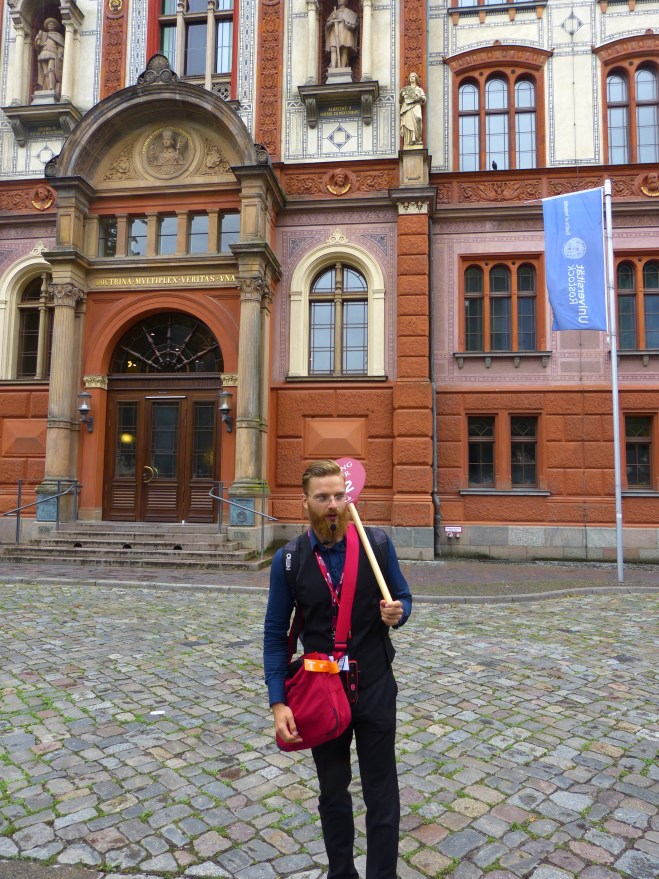
Other highlights of Rostock were its public University
Enrico in front of Rostock University, which was established in 1419.
Its lovely town square, surrounded by beautiful medieval buildings,
and playful fountains.
Kids enjoying the fountain in the town square
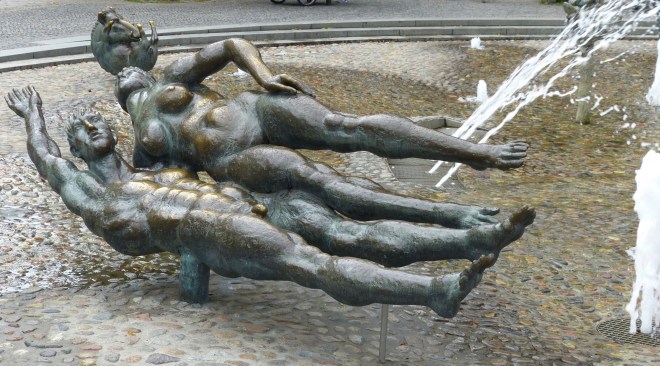
The Germans, like many Europeans, have a more open attitude about bodies and sexuality, as demonstrated by this bench in the fountain. (Yes indeed, it was IN the fountain)
What better way to follow up our time by the fountain than with a visit to St. Mary’s Church? Construction of this church initially took place in the 13th century, with renovations and restorations repairing subsequent damage that war and religious differences wreaked.
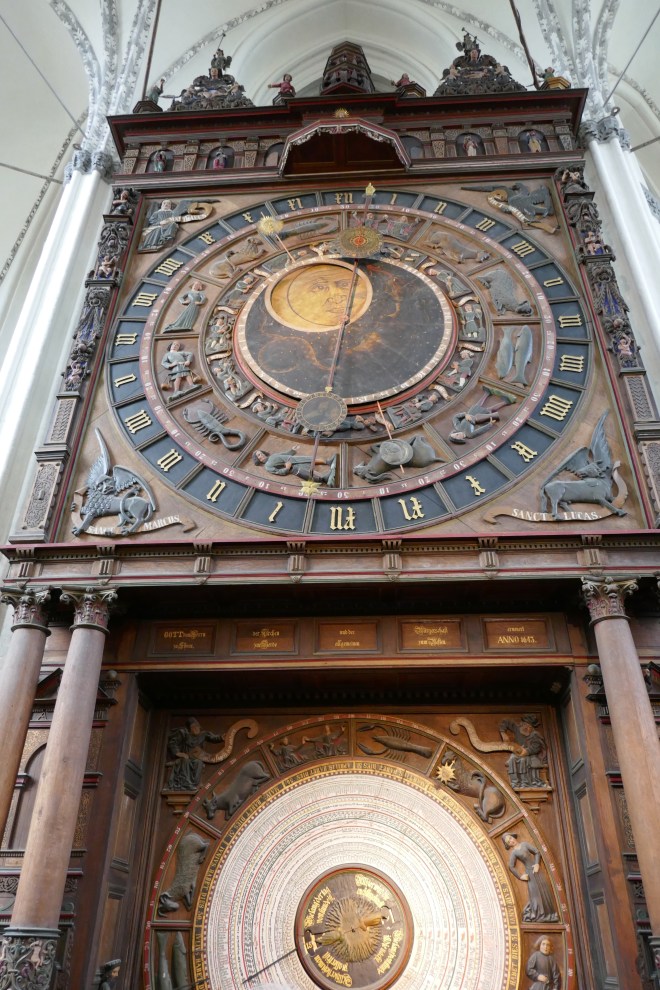
This was the first time we saw a ship dangling from a church ceiling, but it wasn’t the last.This clock inside St. Mary’s Church is incredible. The craftsman ship is amazing. So much detail!
We were fortunate to have a guide who is getting his degree in education. And what a wonderful teacher he will be. He shared information about German culture and society. Food in German is inexpensive, education is free and health care is free. The state pays 185 Euros per child per month to parents. All this is funded by a 35% income tax, with additional funding from taxes generated by exports.
One of the advantages of travel is learning how different societies address their problems. Enrico’s thesis is on what he termed America’s fascination with guns. As a contrast, he explained that 95% of the German police never fire their guns during their entire career. When they do, they aim for the culprit’s leg.
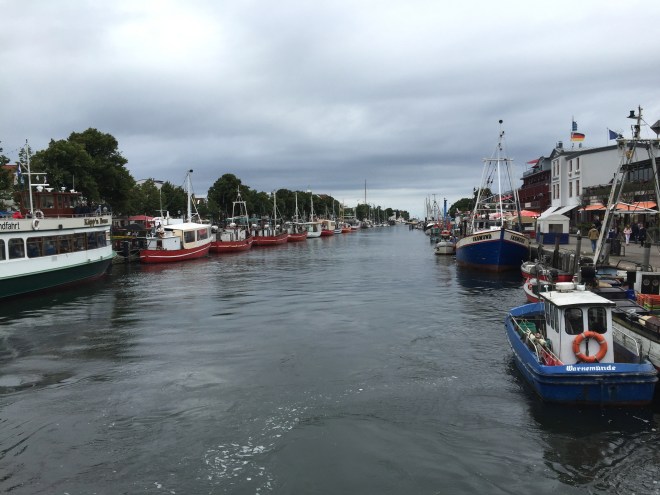
Our return to Warnemunde was via a ferry. Although the weather wasn’t the best, we wandered around this little seaside town, enjoying the sights.
WarnemundeWith skies like these, we decided not to linger
The best part of our decision to stay local was we had the rest of the afternoon to enjoy the beautiful Viking ship. We were welcomed back with open arms, and with glasses of champagne.
Another bonus? It was easy to get a reservation at The Chef’s Table, our favorite specialty restaurant.
Okay, just ONE food photo. This first of five courses, beef carpaccio, gives you an idea of the artistry of the Chef’s Table’s offerings. And yes, that red goblet by the plate is indeed a paired wine.
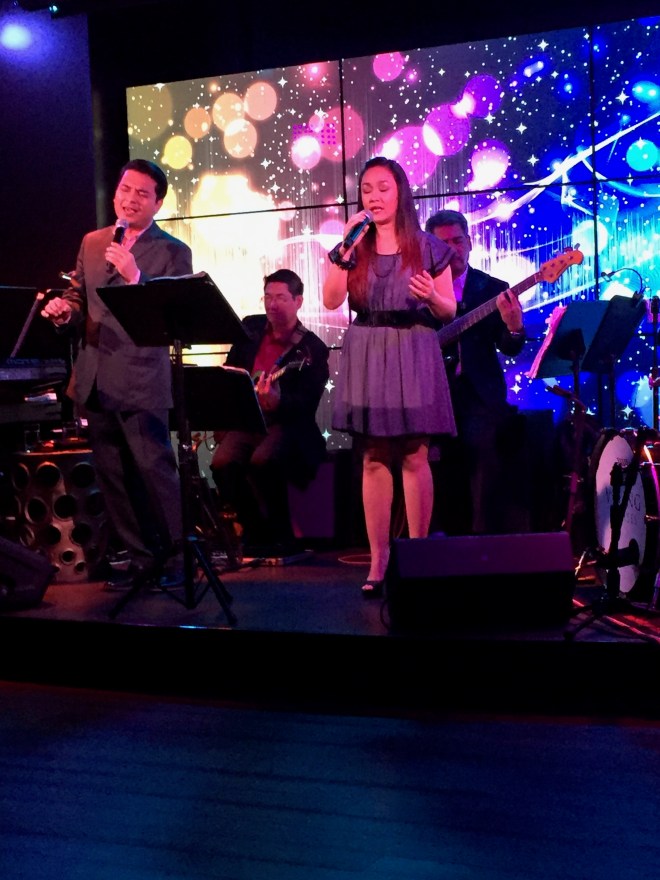
Because we weren’t exhausted from a long trip to Berlin, we had enough energy to visit Torshaven, Viking’s cozy little nightclub. Here’s the band belting out some Gloria Estevan songs that they learned at the request of our friend, Jeanne.
Our Viking tour had us scheduled for only a half day in Poland. We docked in Gdynia, which just happened to be the departure port for my husband’s grandmother, who was pregnant with his mother when she left Poland in 1923, searching for a better life in the USA. So that was kinda cool.
The tour choices were limited–a free city tour of Gdansk, or the optional tours to Stutthof Concentration Camp or Malbork Castle. Given that we had never been to Poland before, we chose the Gdansk city tour.
I’ll confess that I didn’t expect much. Squished between the two warring superpowers of Germany and Russia, it had been a battleground more times than I cared to count. Here’s what Gdansk looked like in 1945, after the Russians got through with it.
First surprise was the 45 minute ride to Gdansk. The main road was clean and green, with lovely trees, flowers and public buildings along the way. We stopped briefly at the Oliwa Cathedral, (which didn’t much impress me), drove by Lech Walesa’s house (I don’t think he was home), then arrived at the city that for a brief period was known as Danzig. (Until we arrived there I hadn’t made the connection. I really should have paid closer attention in World History, Freshman year.)
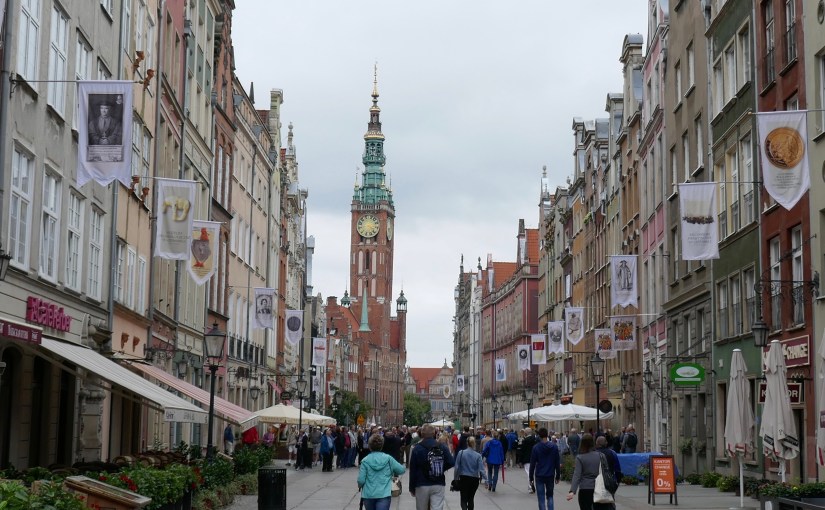
“Amazed” doesn’t quite capture what I felt when I saw how this city had been restored to its former glory. It is incredibly beautiful!
I love the pedestrian walkways in the old section of the city.
It was not too crowded, because it was relatively early on a Sunday morning
I also wasn’t aware that Daniel Farenheit was born in Gdansk– are we starting to see a trend here? In my defense, however, he lived most of his life in the Dutch Republic. Still, Gdansk is where he got his start and the city is rightfully proud of him.
Tribute to Farenheit in Gdansk
Another of Gdansk’s claims to fame is the 14th century human powered crane that was used to load and unload cargo, and is still in working condition. If you walk along the river, you will come to the brick building that houses the crane and its giant treadmill.
Here’s a scale model of the crane, the way it would appear from the river, a vantage point I didn’t have for my photographs.Workers would be strutting their stuff, inside this giant wheel shaped treadmill, which powered the crane. Am I the only one that sees a great opportunity for an exercise video? Just add music and spandex!
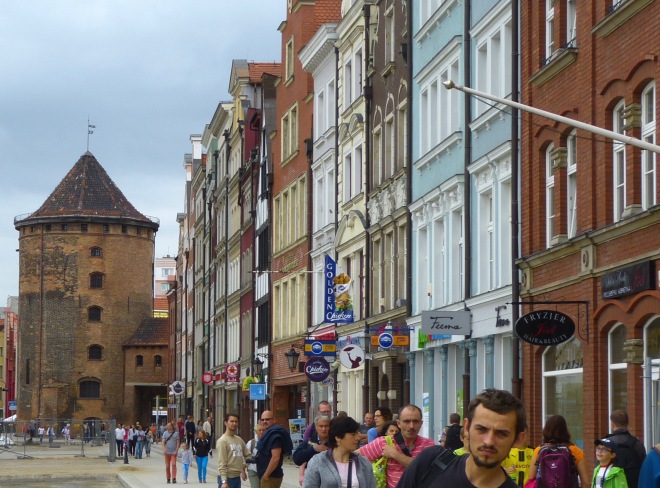
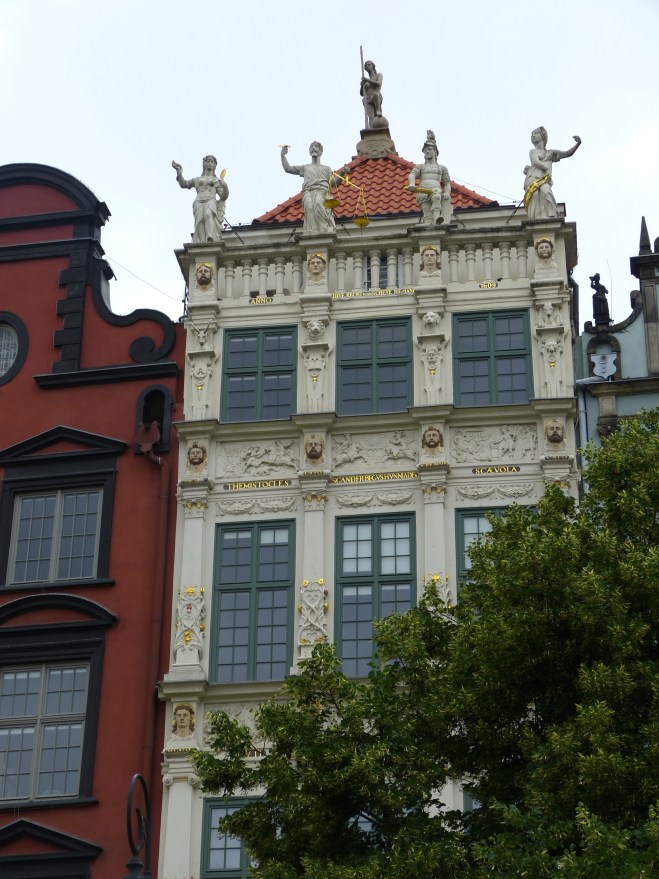
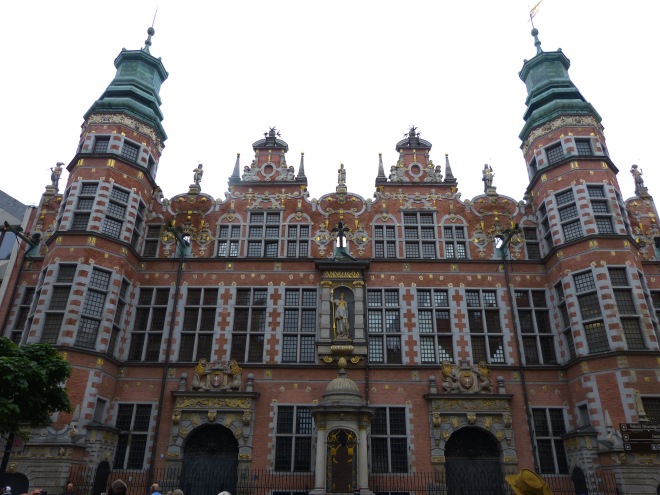
I loved the architecture–the attention to detail. Check out these beautiful buildings.
The building fas seen from a distanceA up close viewThe scales of justice appear atop several buildings
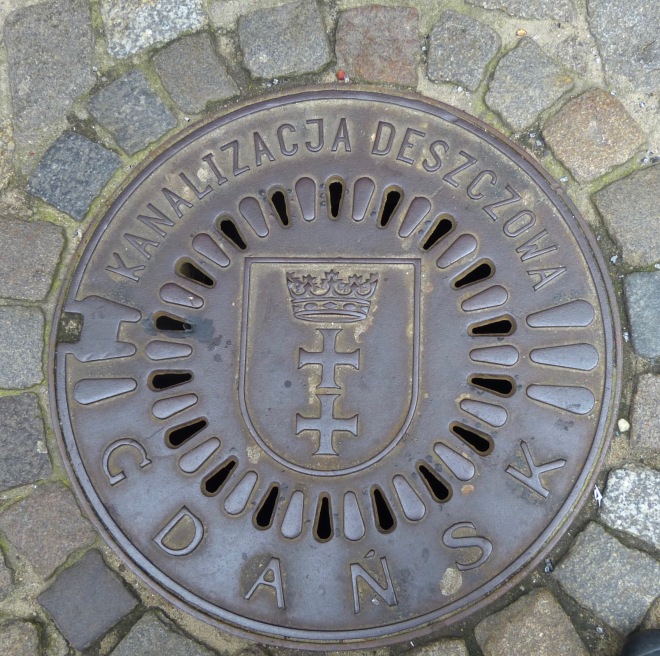
Everywhere you looked, you saw something beautiful. Even the sewer covers were artistic! If you click on the individual photos you should be able to get it to enlarge.
This restored building was originally built in 1605.
One of several gates to the city
And if you don’t think all of this is pretty bloody amazing, take another look at the 1945 photo to see the city after the Russians got through bombing it to kingdom come. The Poles have a lot to be proud of. (And I have a lot of Polish friends and relatives!)
Despite being well fed on the ship, we stopped in a little outdoor cafe, where I had the most incredible hot fudge sundae EVER. Now I’m regretting not taking a picture of it — it was so gorgeous, not to mention delicious. Oh well, you’ll just have to trust me on that one–till you can visit Gdansk and experience it for yourself.
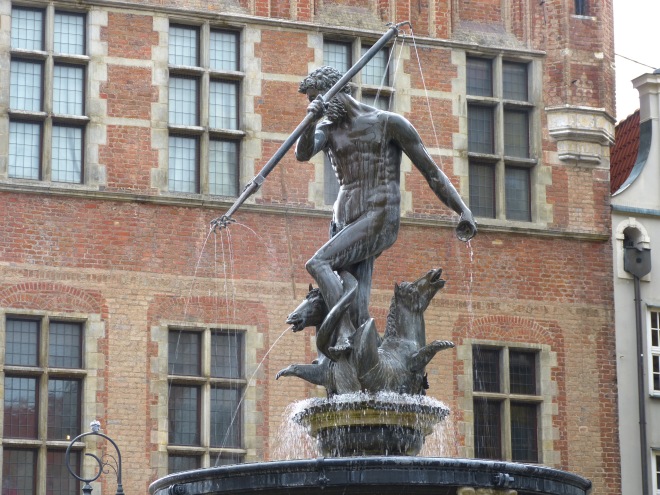
One last sight before I end this post. Neptune’s fountain. It is definitely worthy of multiple views.
One thing about the free Viking tours–it truly is the luck of the draw. We drove right by the Solidarity Monument without stopping. Friends that were on a later tour were able to get off the bus for a closer look, something that I would have liked to have done.
The take away? I have a much greater appreciation for Poland and all it has to offer. The great thing about a cruise is it helps you identify the places you want to visit again and linger.
Tallinn was the perfect respite from the opulence and grandeur of St. Petersburg. We boarded a bus early in the morning for Viking’s included walking tour of the old town. Our ship wasn’t scheduled to depart until 9 PM that evening, so my thinking was that the tour would give us an overview and we would return later to visit the sights that most interested us. At least that was the initial plan.
I don’t know whether it was the dreary weather, or the lingering effects of sensory overload from St. Petersburg, but after the tour concluded, WE concluded that the afternoon would be best spent partaking in some of the delights aboard our lovely ship. Still, we have a few photos to share:
Notice the umbrellas in the foreground. It rained off and on during the tour.View of the medieval “lower town” from a lookout in the “upper town”.
Cars and buses are not allowed inside Tallinn’s old town, so we followed the city wall down the hill to the town square,
main square
where we found an abundance of shops, cafes, and a medieval pharmacy, which is still in operation today.
We didn’t need to replenish our supply of wood louse infusions, earthworms in oil, or dried deer penises, so we left the pharmacy empty handed.
The Estonians seem to like three dimensional advertising. Here are just a few examples.
I loved the fire breathing dragon with the crown on his head, and the maiden advertising the “super sale”? She had lots of similarly attired companions scattered throughout the square.
That evening, we had dinner at one of Viking’s specialty restaurants, The Chef’s Table. This is a five course fixed menu, with wine pairings. That evening we enjoyed the “Asian Panorama” menu. The fixed menus change every three days, and we sampled three of them!
We started with chilled king crab made with coconut foam and curry, followed by lobster and chicken shu mai, which was a soft dumpling. Now ordinarily, I am not a fan of either of those seafood items, but these were delicious.
Next up was a lemongrass and red chili granita with lychee foam (there was a whole lot of foaming in this restaurant), followed by the main course–Peking duck with a mandarin pancake. Dessert was an Asian trilogy of chocolate banana spring roll, green tea cheesecake and yuzu creme brulee.
Unfortunately, I didn’t photograph the food–I was way too busy eating, drinking and talking, but if I had, you would have seen that the portions weren’t huge. At the end of the meal we were satisfied, not stuffed!
Our happy traveling companions, at the end of our dinner, after lots of wine!







































 Destination NOW