Mr Toad’s Wild Ride

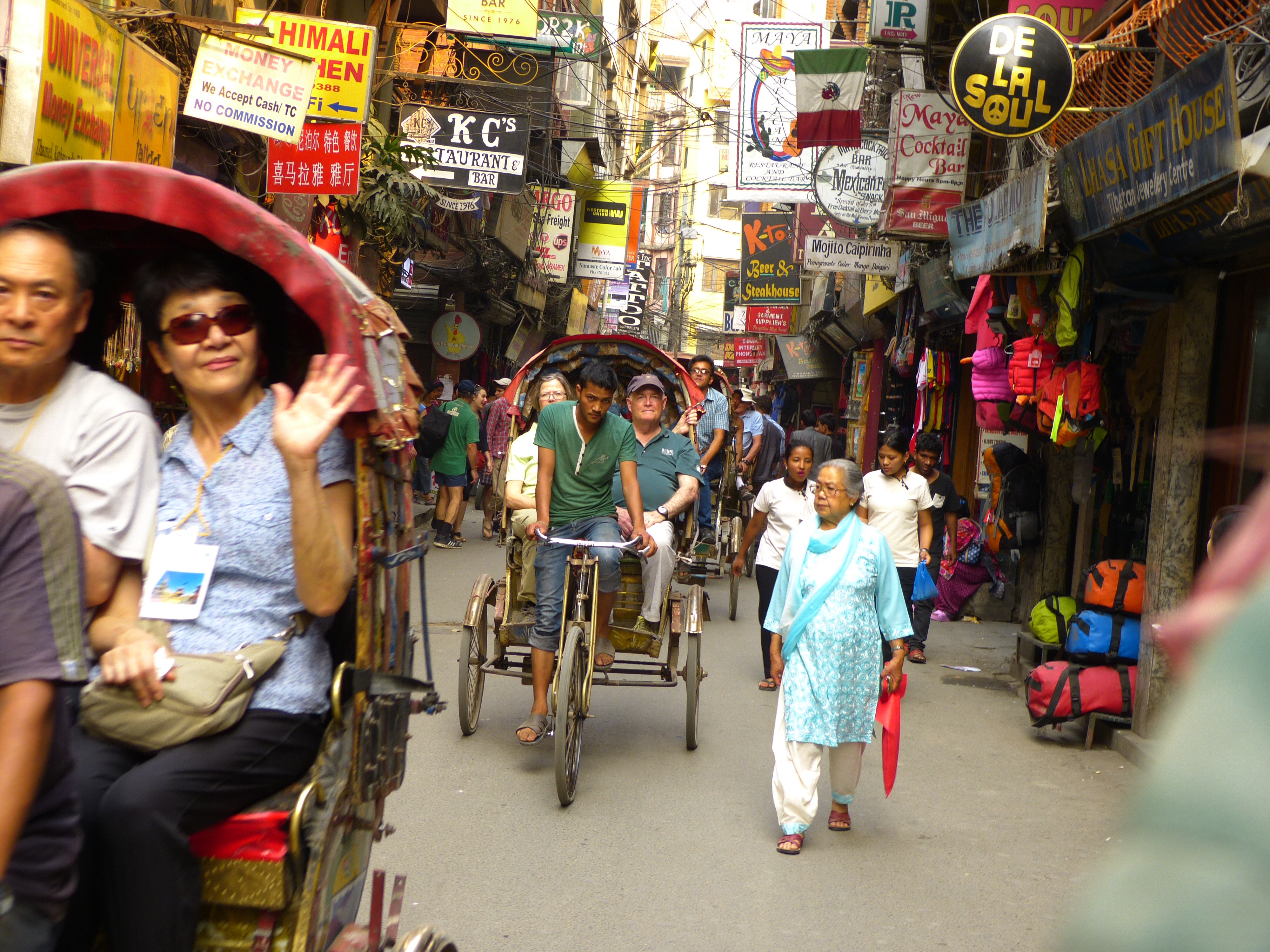
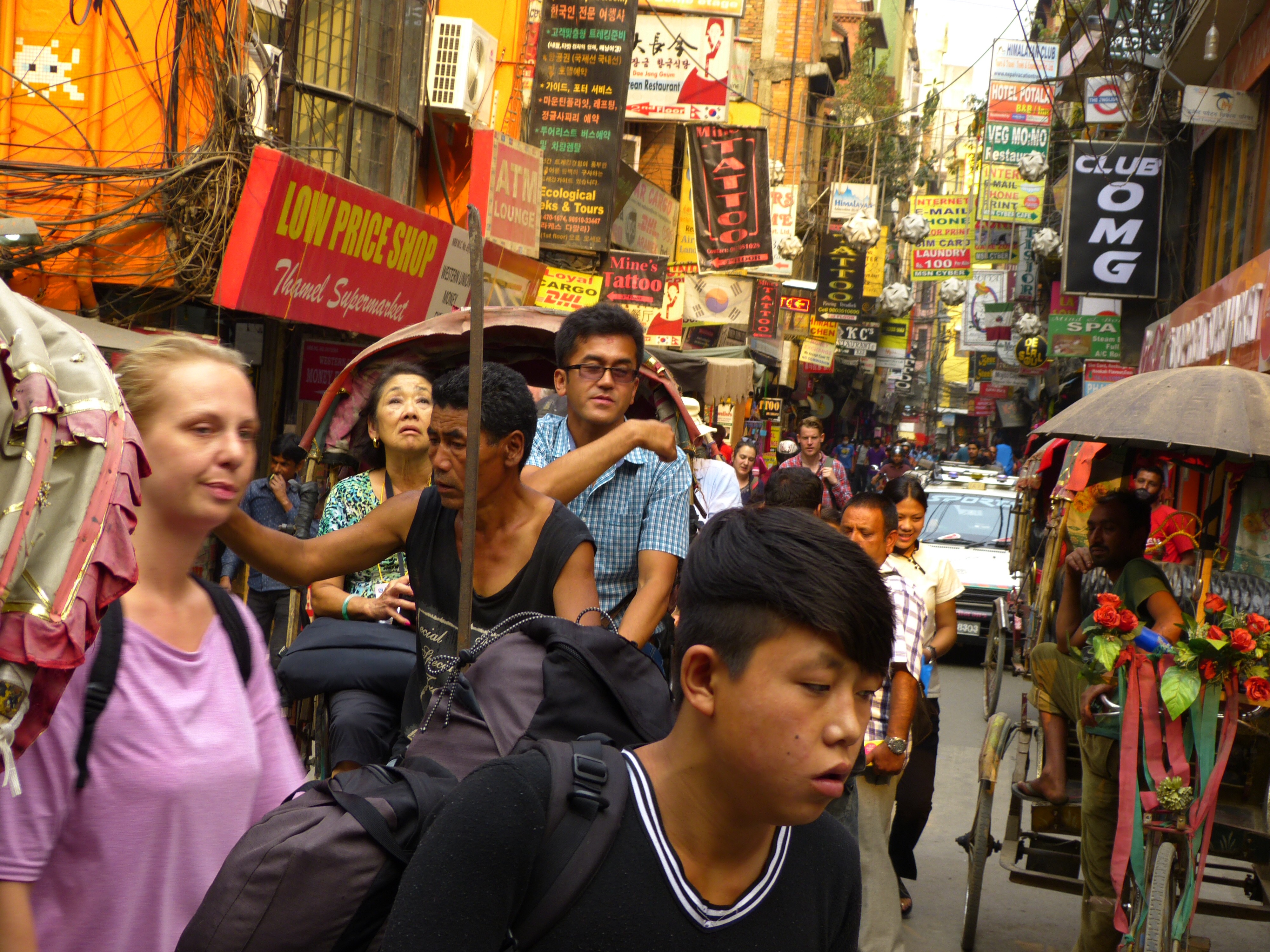
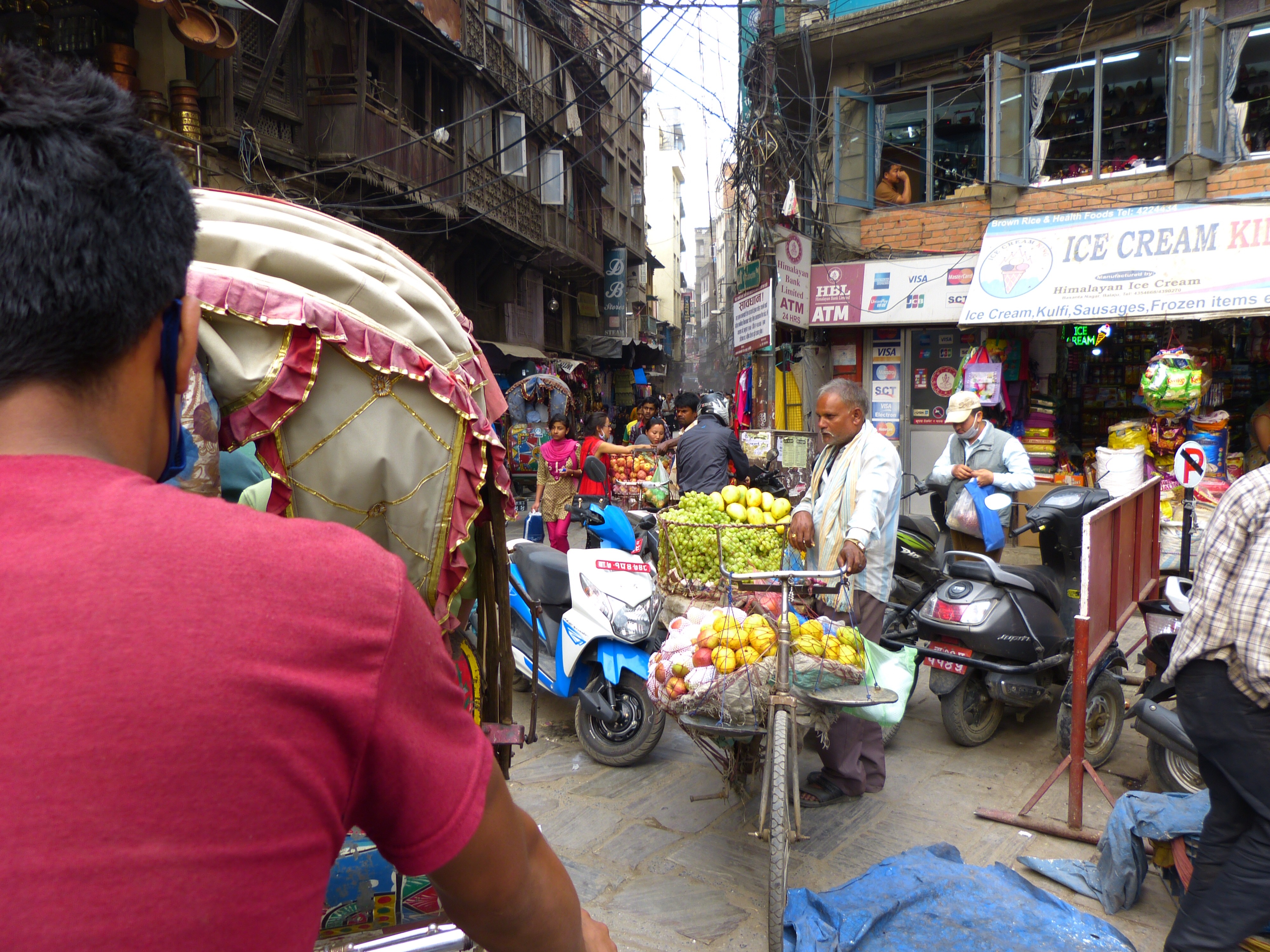
Not even a pedicab ride through Hanoi’s old town could prepare me for the rickshaw tour of Thamel, the tourist section of Kathmandu.  There is no way these photos can capture the experience–the bumpy roads, the breakneck speed, the sounds and smells.  It was quite a ride!  

My view
Eugenia and Karl in front, Peter and Marie close behind
Marilynn and our guide Binoy
My driver–i survived, and am still smiling!

Heavenly Himalayas

It’s a 17 minute flight from Kathmandu to Pokara if the planes are able to take off.  Otherwise, it is a 5 hour drive on bumpy mountain roads.  We were in luck.  After a 45 minute delay, it was clear enough to fly.

We stopped at the Pokhara office to load what we would need for the next three days into the OAT supplied duffels, leaving our big bags behind.  After lunch atop a mountain, we drove for about an hour, then hit the trail, to walk the last three miles to our lodge.

image
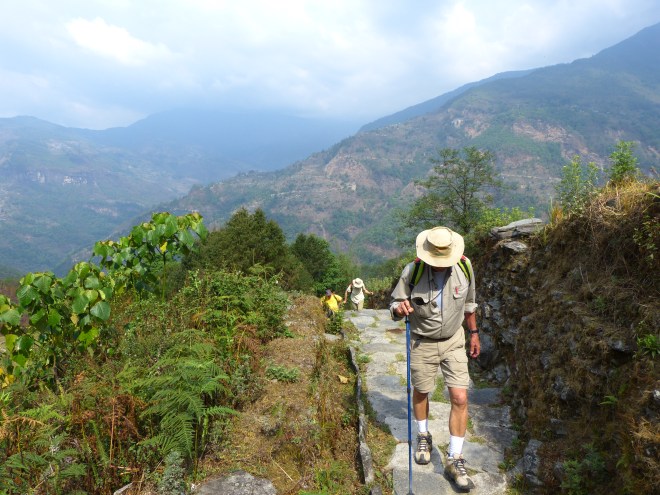
Could this be what the OAT description means by “uneven steps”?

As I was walking up and down the mountain trail, I was thinking about my gym buddies at Somerset Hills Y.  Knowing that they would all be in class was the extra motivation that got me to Zumba, AOA, Yoga and Barre— and boy oh boy, were those classes necessary.  Our treks were far more enjoyable because I’d been “training” for the past 6 months.   It also helped that the heavy lifting was done by village women, who carried our bags in baskets on their backs, attached to a strap across their foreheads.

image
That’s our luggage inside those baskets!

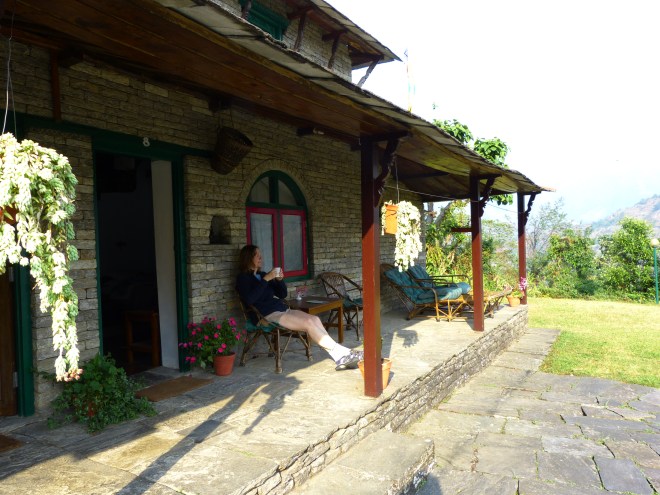
After the chaos of Kathmandu, we were so very ready for the beautiful and peacefully remote Gurung Lodge in Annapurna.  And what a fantastic lodge it was.  Our clean, comfortable rooms were stocked with umbrellas, warm hats and gloves, a north face parka, flashlight, and crocs.   The lounge chairs on our front porches were perfect for naps after our hikes through the villages, to the school, the mother’s cooperative, the museum  and the two room health center.

image.jpeg
Okay, no comments about the white legs.  In some parts of the world, pasty white skin is considered quite beautiful.  So there, Sue and Sandy.

During our stay, smoke from wildfires in India caused the sky to cloud up, so we only occasionally got a glimpse of the Annapurna Mountains.  Despite the clouds and mist, the view was still jaw dropping.   It was impossible to capture the magnificence of this mountain range in a photo, although we all tried. As with so much in life, you just had to be there.

image
The view from our cabins

Our lodge had electricity for a few hours every day, just long enough to charge our camera batteries.  Solar power heated the water, so we took our showers in the afternoon.  As for our hair, the only blow dryer in the camp comes courtesy of the afternoon breeze.
Despite a complete lack of so many of the modern conveniences that we take for granted, we had tasty and healthy meals.  I so appreciated how hard the villagers and the lodge staff had to work to ensure that we were well fed and comfortable.

We got a little surprise on our village trek.  When we arrived, we were greeted by this group of women.  It took us a while to realize that ONE of them looked VERY familiar.

image
Can you identify the nurse from San Francisco?


image.jpeg
Here’s a clue

Marilynn, our power walker, had arrived far in advance of the rest of our group, so the village ladies decided to dress her up and make her part of the welcoming committee.

image
A flower garland and “Namaste”

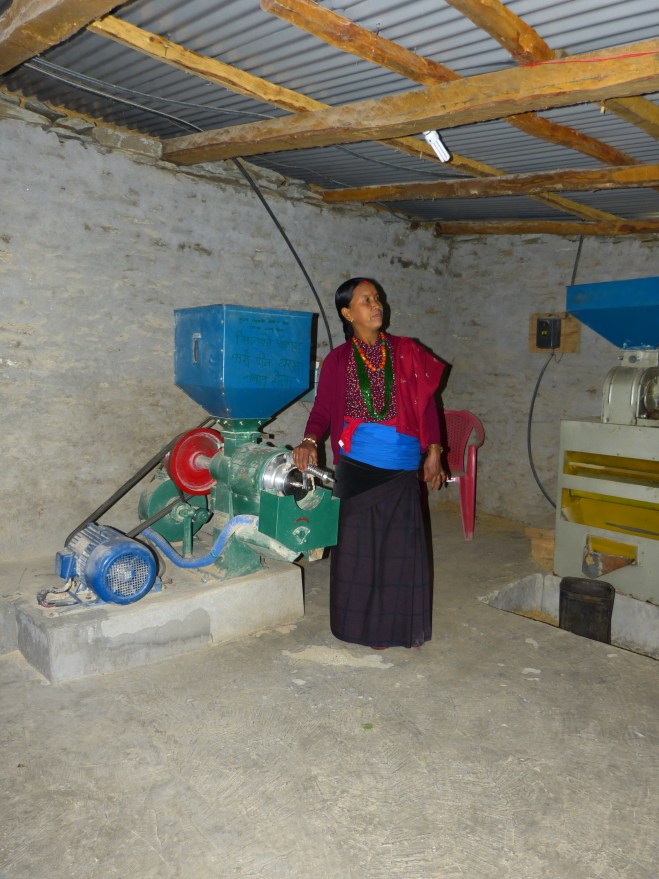
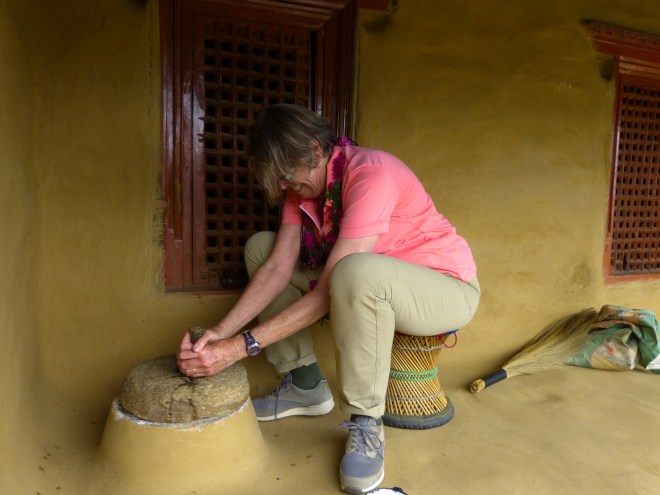
It made me feel good to see how our contributions to the OAT Foundation are making life easier forthe communities we visit.   Before OAT donated the machinery, grain was ground by hand.  Not an easy task, as Marie is demonstrating.

image

image

If my iPhone counted  accurately, the walk to the village is the equivalent of 103 flights of stairs ONE WAY!  And we couldn’t get the ladies to carry us in their baskets for the return trip.

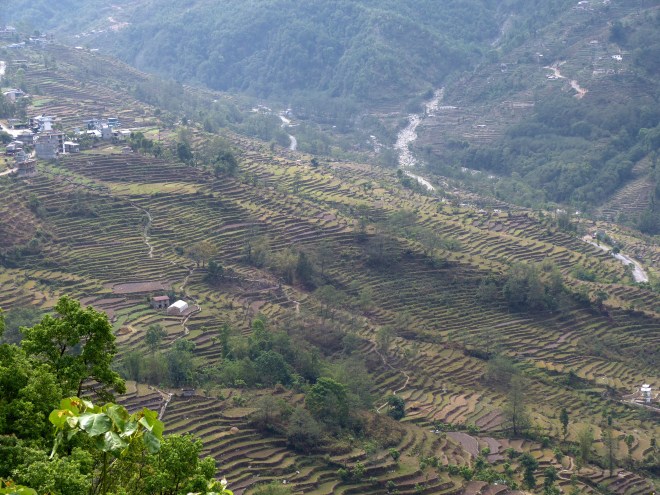
But it was worth it, because the scenery was spectacular!

image

image.jpeg


Three Days in Kathmandu

Kathmandu assaults your senses.  It is dusty, dirty, noisy, chaotic, crowded.  Take a deep breath and you will get a lungful of incense, enough to keep you coughing for a few minutes.

We toured the three major cities of the ancient Malla kingdom: Kathmandu, Patan and Bhaktapur.  (That’s what happened when you had three sons–you split up your kingdom so they could each have a place to rule. )

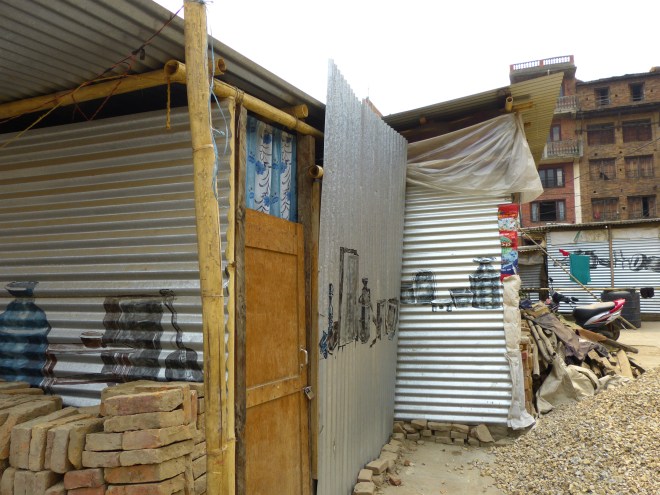
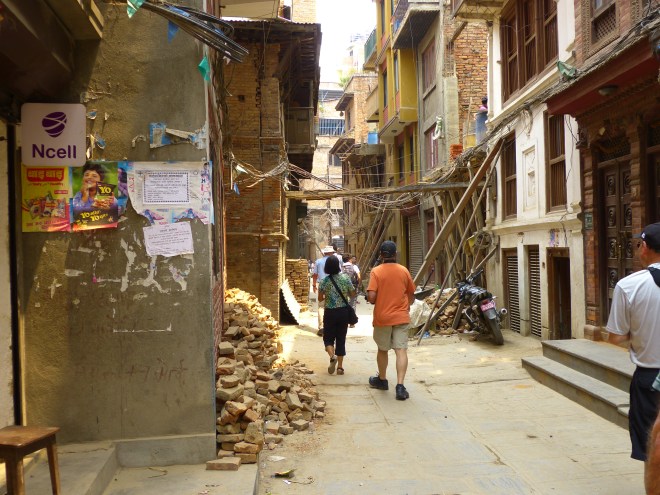
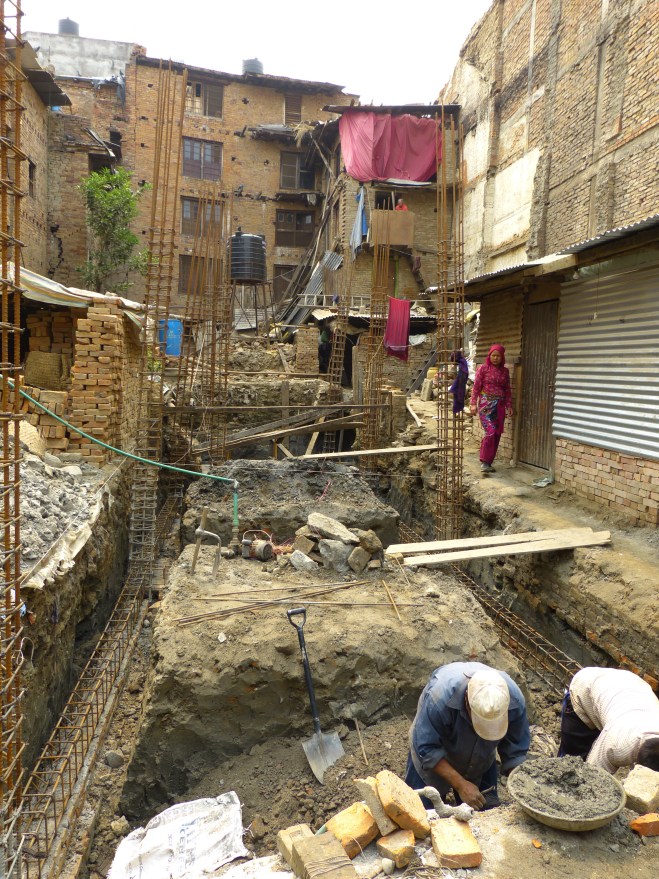
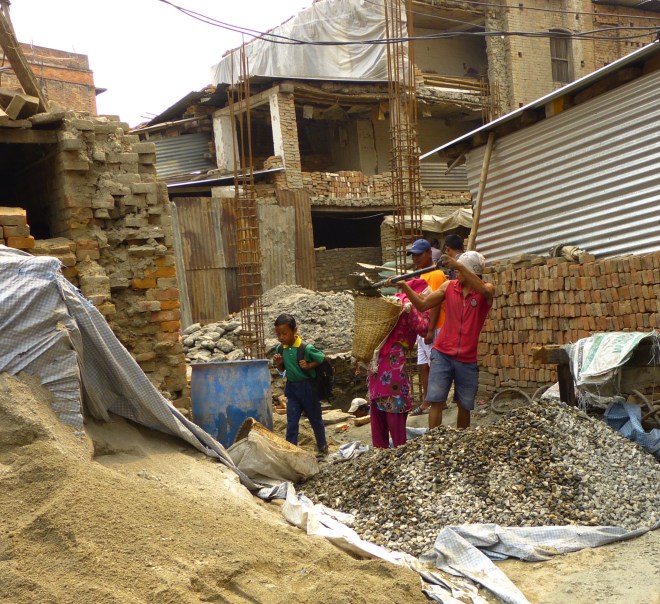
We saw the impact of the earthquake everywhere.  It is heartbreaking  to see that one year later, people are still living in makeshift shelters.

Home for a family
Home for a family
Boudhanath Stupa
Boudhanath Stupa
Timber supporting Kathmandu buildings
Bhaktapur
Bhaktapur
Rebuilding by hand
Rebuilding by hand

Still, there are parts of the cities that were not damaged, allowing you to experience their grandeur and the beauty.

image
Plaza in Bhaktapur as seen from the balcony of the New Cafe Nuatapola, where we had a delicious lunch
image
The Five Level Temple
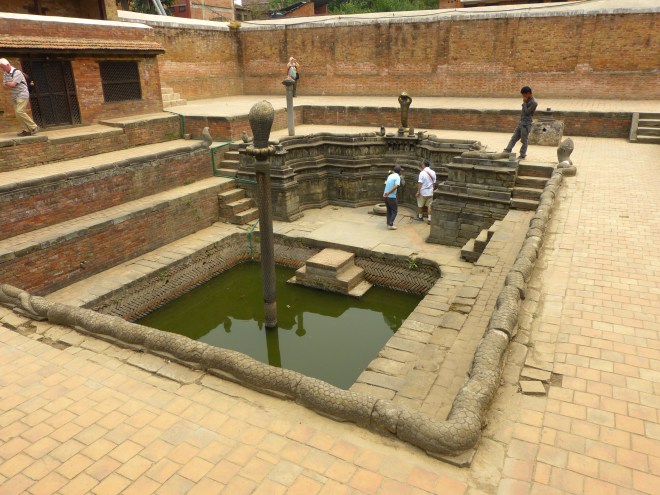
The royal family's bathtub
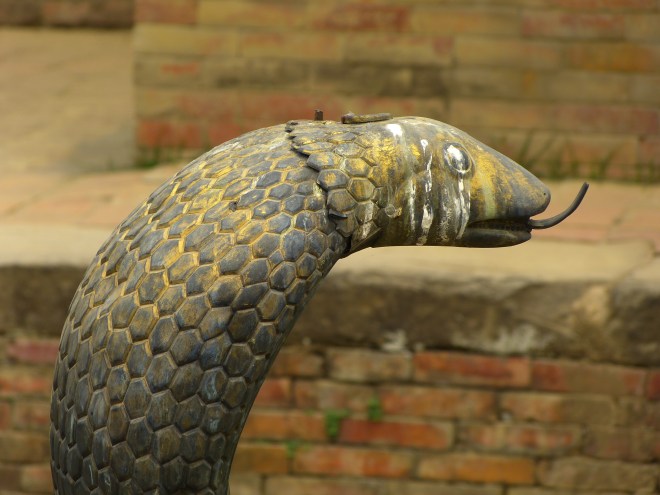
The royal family’s bathtub
Complete with snake sculptures

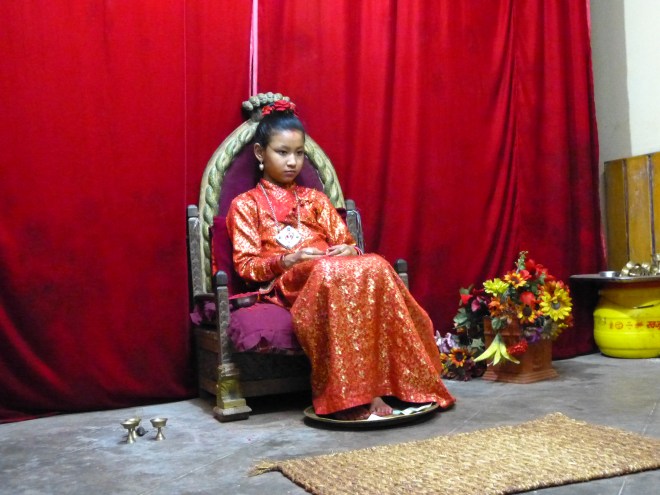
While preparing for this trip, I read about the living goddesses, known as the Kumari.  (The post  “Follow the Yellow Brick Road, Part Two has more information about the goddess.)

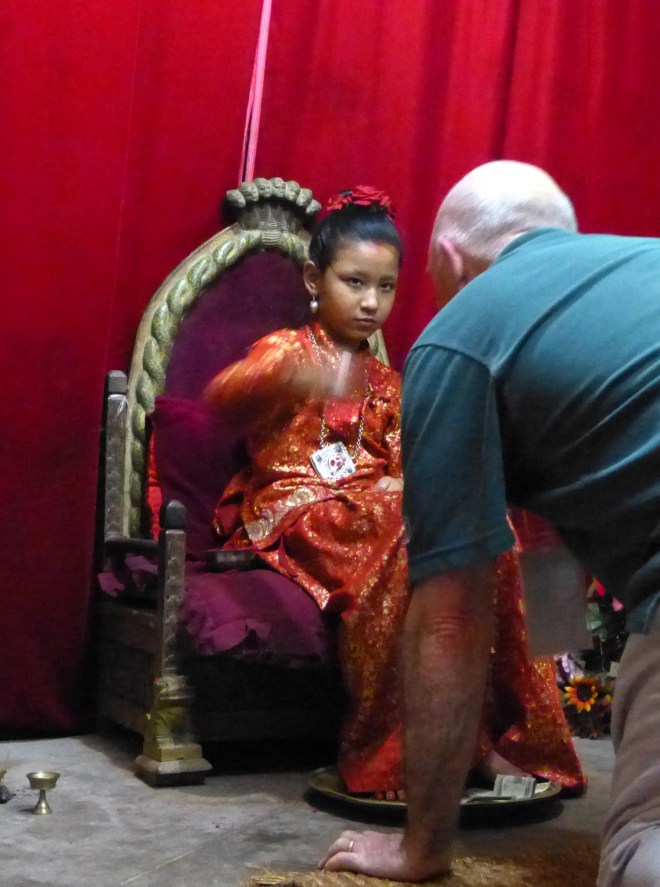
After our visit, all of the women in our group felt so sorry for this sad looking little girl, who was chosen when she was three years old.  I couldn’t help but compare her to my happy, active nieces.  Of course, we don’t know what other options were available to her.  Maybe sitting on a “throne” placing tikkas on the foreheads of gawkers was the better alternative.

The Kumari is not allowed to walk
Peter is receiving her blessing.

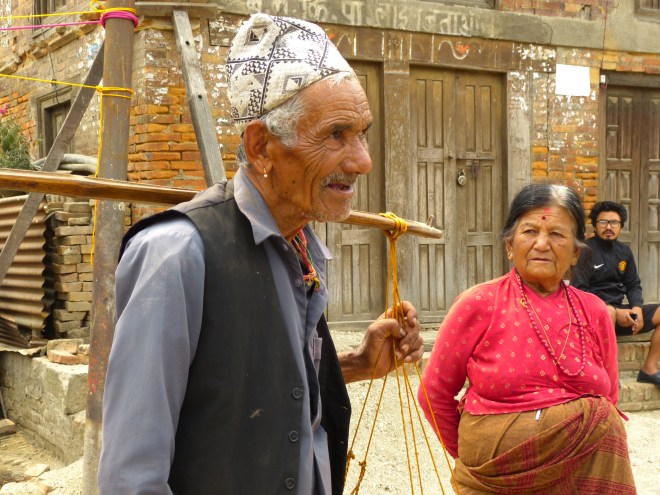
Despite the hardships they have endured, the Nepali people’s beautiful spirit shines through.

image

image

image

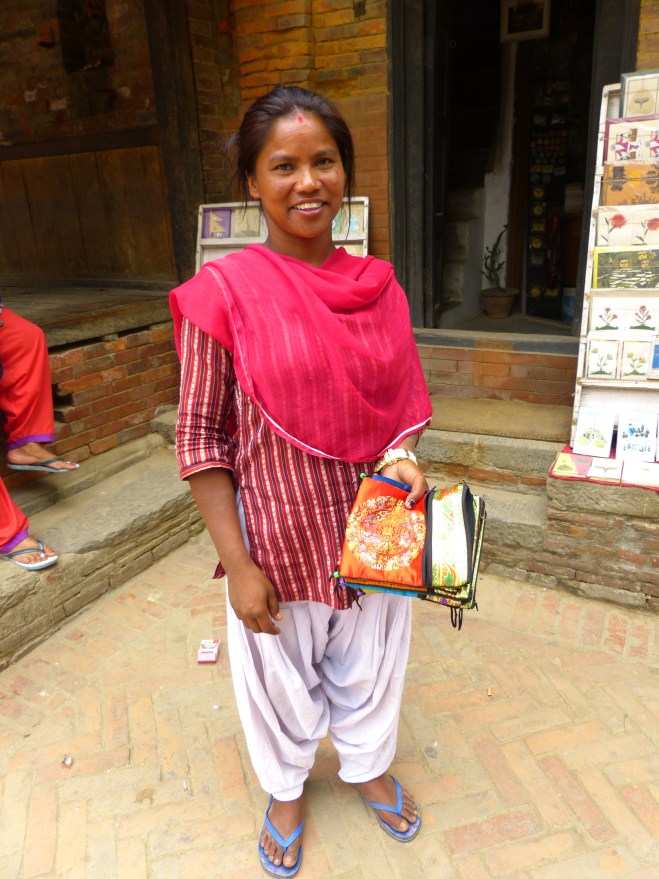
The hawkers are everywhere.  The problem is if you buy from one, you are mobbed by many others.  Still, I couldn’t resist this woman’s sweet  smile, especially after she told me if  I wanted to buy more than one, there would be no problem.

image

Okay, so I bought more than one.  Sisters, cousins, nieces, friends…you know the drill…gifts are coming your way, but you may have to earn them.  There may be a quiz!

This next one was more of a hard sell.  “Madam, blessings for you, blessings for me”, chanted continuously while she walked beside me for the equivalent of five city blocks.

imageOkay, so I got blessed.  I now own the necklace the lady on the right is holding.  I expect those blessings to be coming my way!

Six Days In Happy Land

We are now in Nepal; quirky Internet connectivity made it difficult to do justice to beautiful Bhutan, so this post will be a quick collection of photos and memories of Happy Land.

THIMPHU

A few years ago, Rio’s Christ the Redeemer was chosen as one of the seven new wonders of the world.  Thimphu’s gigantic Buddha didn’t exist at that time.  If it had, I’m convinced Buddha would be giving Rio’s statue some serious competition.

image
Buddha sits atop a mountain overlooking Thimphu

The base of the statue contains a temple, filled with hundreds of thousands of smaller Buddhas, butter lamps and butter sculptures. Yes, you read that right–sculptures are made of colored butter!

image
Just the artwork on the base would get MY vote

Dedicated to teaching Bhutanese arts and crafts, this school focuses on 18 traditional crafts including painting, woodcarving, metal work and embroidery.

image

image

Whenever I visit a country, particularly one whose economy is dependent on the tourist trade, I like to drop some dollars by buying gifts, so a stop in the school’s small shop was a definite requirement.

Handmade paper is another traditional Bhutanese craft.  We watched the entire process: the raw materials being delivered, heated, compressed, made into sheets and dried.

image

image

Notice how hard these young women are working?  They were all smiling as they were lifting those heavy bundles!  And yes, I most certainly did make a purchase at their tiny gift shop.

The modern world is rapidly creeping into Bhutan.  Construction is everywhere.  But it isn’t just new buildings and new technology.  Since the introduction of television in 1999, the western world has slowly been influencing Bhutan’s youth.

Thimphu’s clock tower plaza, right beside our hotel was the site of what looked like an  auto exhibit, but it was a whole lot more.image

Young Bhutanese shed their traditional clothes, donning jeans and tee shirts to dance to Lady Gaga’s “Poker Face”.   Unfortunately, my camera’s software is incompatible with my iPad, so you won’t be able to see the beautiful young girls I videoed dancing, but with any luck, I’ll be able to link a YouTube video of the boys doing their hip hop routine when I get back home.
image

You may be wondering what kind of audience the entertainment drew. Well, wonder no more, because when my personal paparazzi used his long lens to capture me unawares, he also photographed the crowd.

A bit sparse, no?

PUNAKHA

Much of the road between Thimphu and Punakha is under construction, making travel slooooow and very dusty.  We stopped at the Dochula Pass on the way to and from Punakha.

image
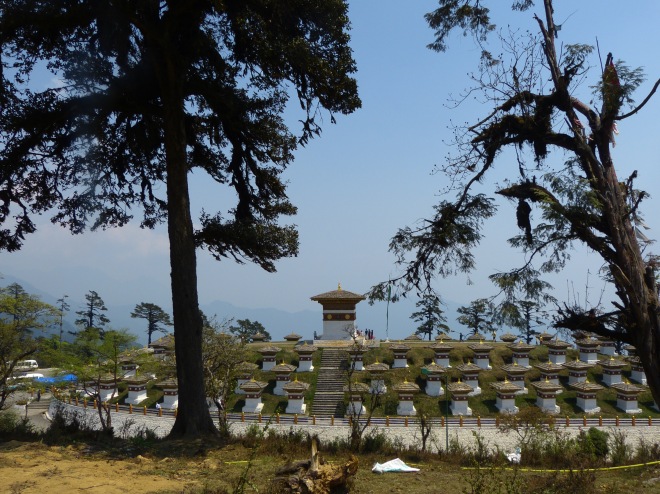
108 Stupas of the Dochula Pass

The Dochula Pass memorial honors the 15 Bhutanese that were killed fighting the Indian separatists from Assam.  The separatists were creeping across the Bhutanese border, creating training camps.  The fourth king actually led his troops into battle and was victorious.  No wonder he is so beloved!

The pass is 10,000 feet above sea level, so Tashi thought it would be good practice for the Tiger’s Nest if we took a hike in the Royal Botanical Park that adjoins the memorial.

image
The rhododendron were in bloom–they weren’t bushes, they were trees.

The jacaranda were also in bloom, outside the Palace of Great Happiness.

image
Notice the covered wooden bridge in the distance.

This is the entrance to the Palace’s temple.  Inside Tashi gave us a fantastic lecture about Buddhism, using the artwork that covered the temple walls as an ancient Power Point Presentation.image

image
I was so glad to see these monks, enjoying themselves by the river bank outside the Palace of Great Happiness.

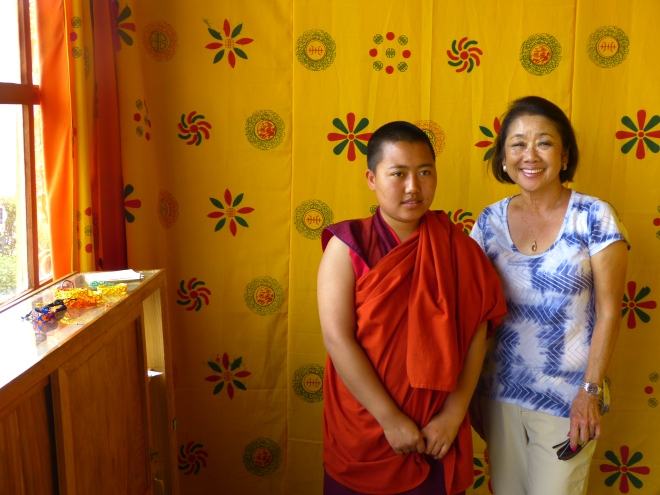
We also visited a nunnery located atop a mountain, where I purchased some bracelets from this sweet 21 year old nun, who spoke perfect English.

image
Marilynn from San Francisco on the right, bracelets on the window sill on the left.

No visit to Punakha would be complete without a stop at the Chhimi Lhakhang Monastery.  To get there you need to hike through rice fields, a village and up a hill.

image
The shingles on roofs are held down with stones instead of nails.
image
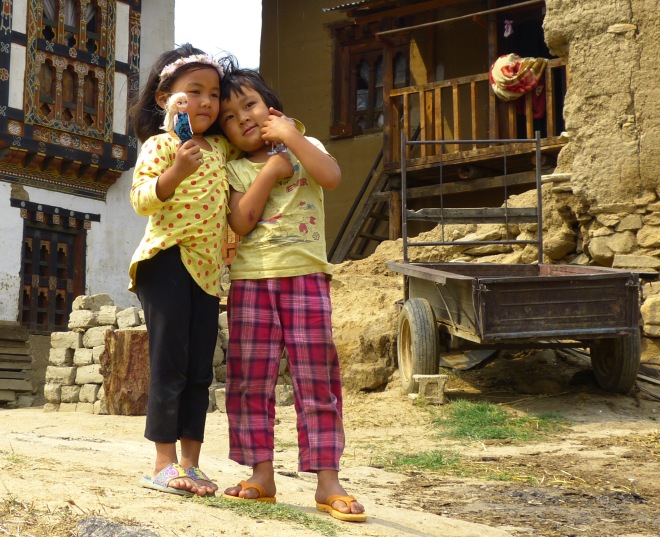
These sweet villagers were happy to pose for me
image
Christmas presents for everyone!

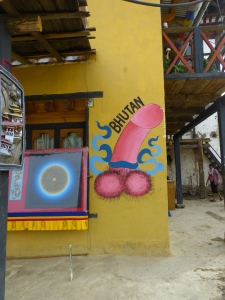
imageThis monastery was founded by Drupka Kinley, the Divine Madman, whose “Thunderbolt of Wisdom”, also known as his “Flaming Thunderbolt” , brought his own special form of enlightenment to local women.  Infertile couples visit the monastery where the woman is doinked on the head with a huge wooden “thunderbolt”.  Could that be the Bhutanese version of IVF?

The Divine Madman is the inspiration behind the artwork that festoons the area’s houses.

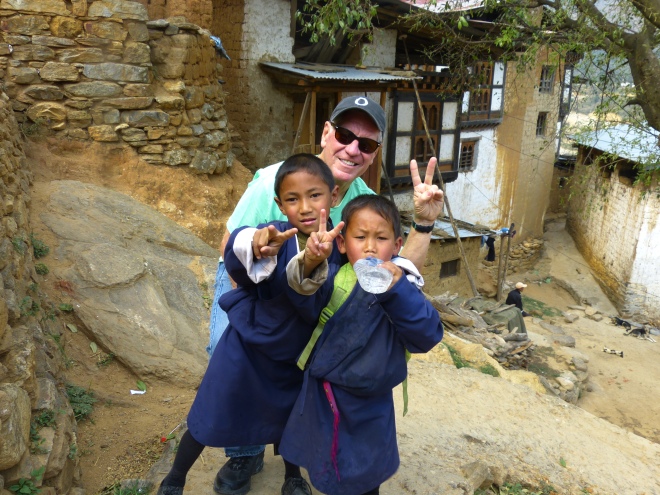
Although not part of the “official” itinerary, our wonderful guide thought we might enjoy a visit to the 17th century village of Rinchen Gong.  These villagers are definitely not used to having visitors!  Our arrival was quite an occasion, especially for the children, who chased our van up the steep dirt road.

Like me, Jim enjoys photographing the locals
These boys loved seeing their pictures
Shy at first, they warmed up when they saw the shots.

Our last stop was in Paro, where we climbed to the Tiger’s Nest and visited Bhutan’s  very first temple.  It was built in the 7th century by Tibet’s great ruler, Songtsen Gampo, and it is where he pinned the left foot of an ogress who once covered all of Bhutan and part of Tibet.

image
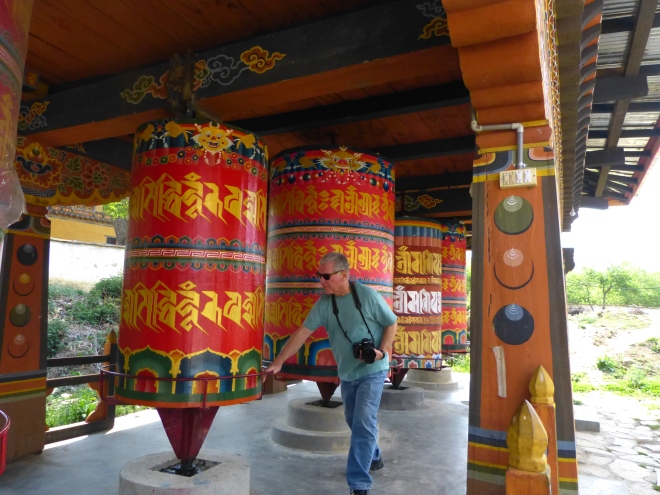
Jim, spinning the prayer wheel outside the sacred Kyichu Lakhang


Druk Yul, Land of the Thunder Dragon

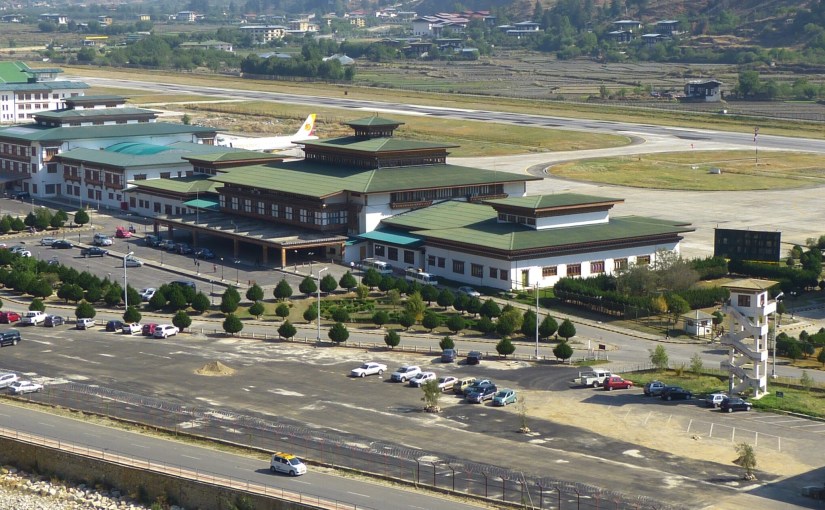
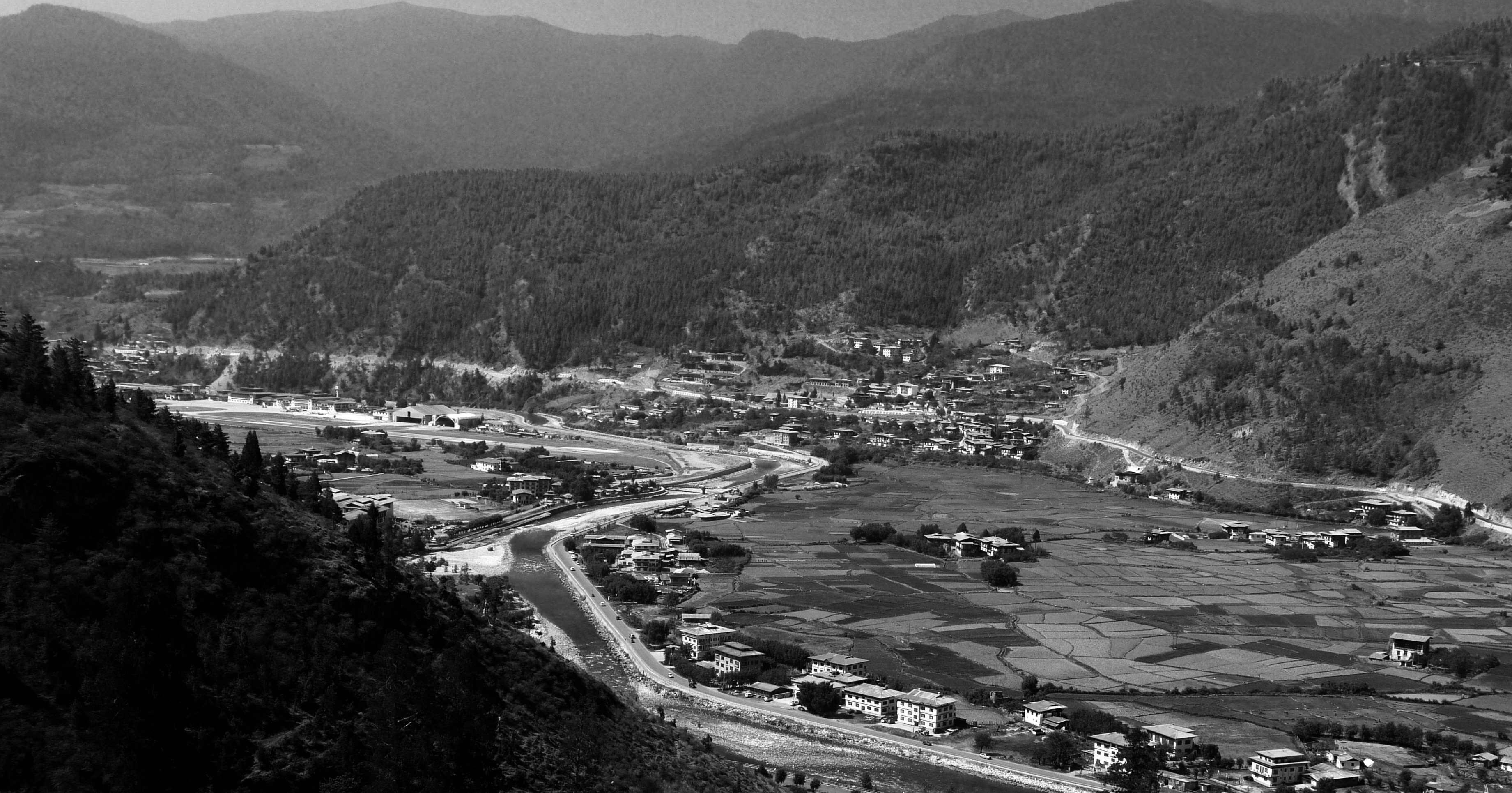
Bhutan’s airport looks like it was designed by Walt Disney.  The buildings are covered with carvings of dragons (Druk means dragon in Bhutanese) and the windows are highly decorative.  It is the country’s sole airport, because Paro is the only area flat enough to accommodate a runway.  It’s a very SHORT runway, but a runway nonetheless.


The mountains that surround the runway make landing quite exciting.  So exciting, that only 8 pilots are skilled enough to fly into and out of Paro.  Fortunately one of those 8 was flying our plane today.

The airport is on the left. Take a look at those mountains

Tashi, our guide, and Gembo, our driver were waiting for us outside the terminal, ready to get this party started. First stop, Paro’s dzong. Every city/community had its own dzong. Back in the day when the Tibetans’ favorite leisure activity was invading their neighbors, the dzongs were fortresses. Today they have been repurposed into administrative and religious buildings.  

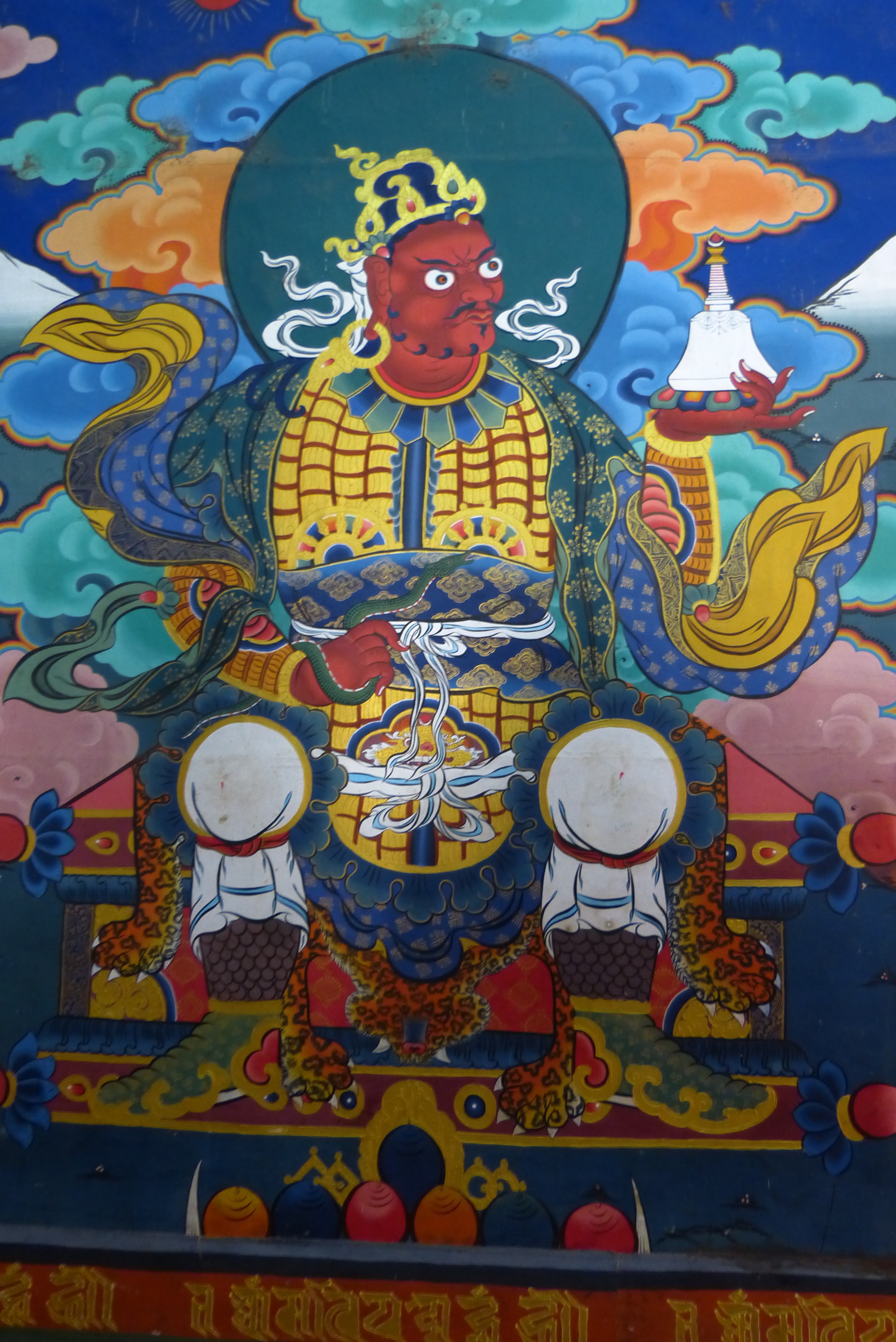
the demon of the west
The dzong courtyard
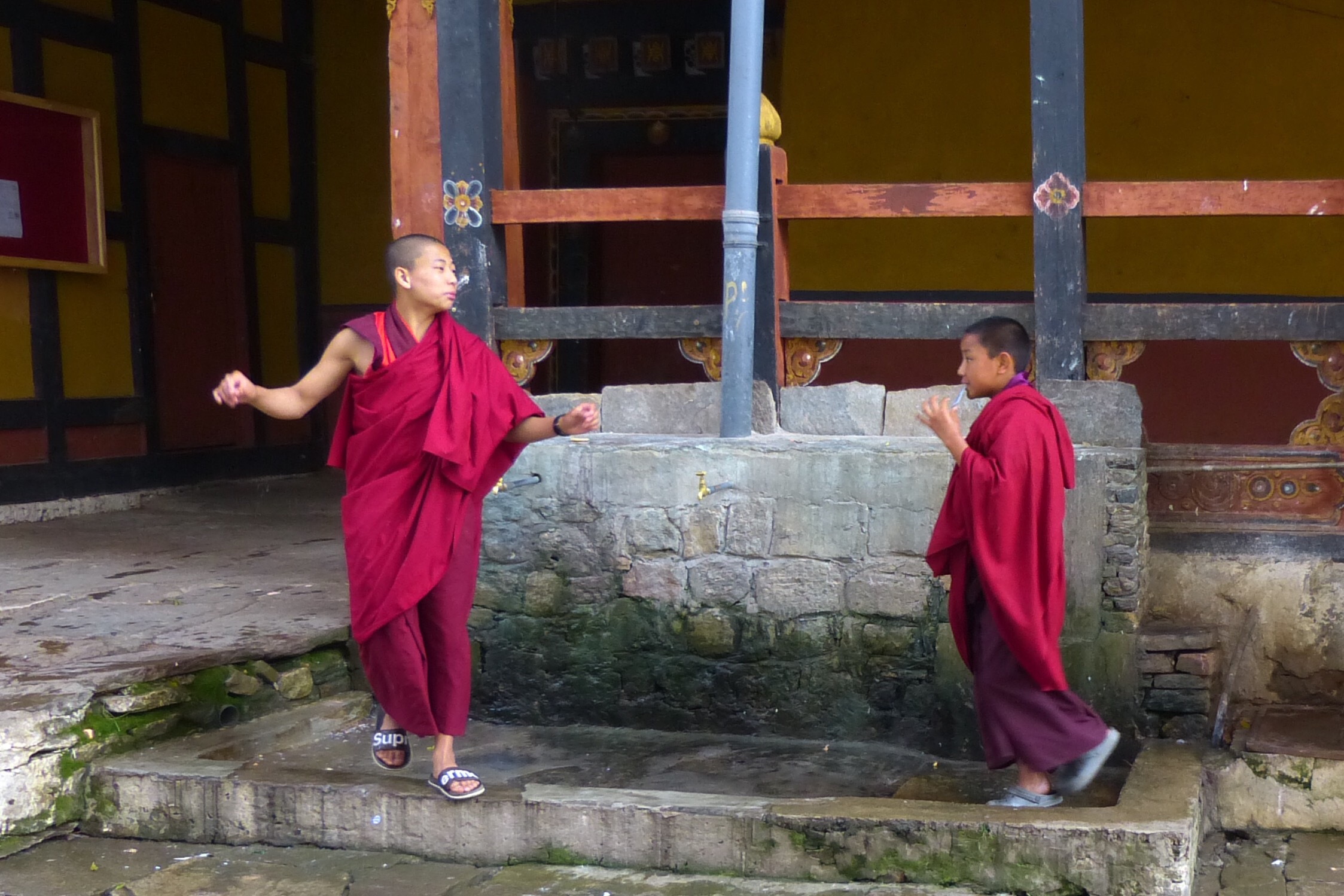
Young monks

Anyone thinking about visiting Bhutan should take a close look at those stairs.  They are steep, uneven, and lacking handrails.  And they are everywhere!
 

good thing i spent time at the Y before this trip!


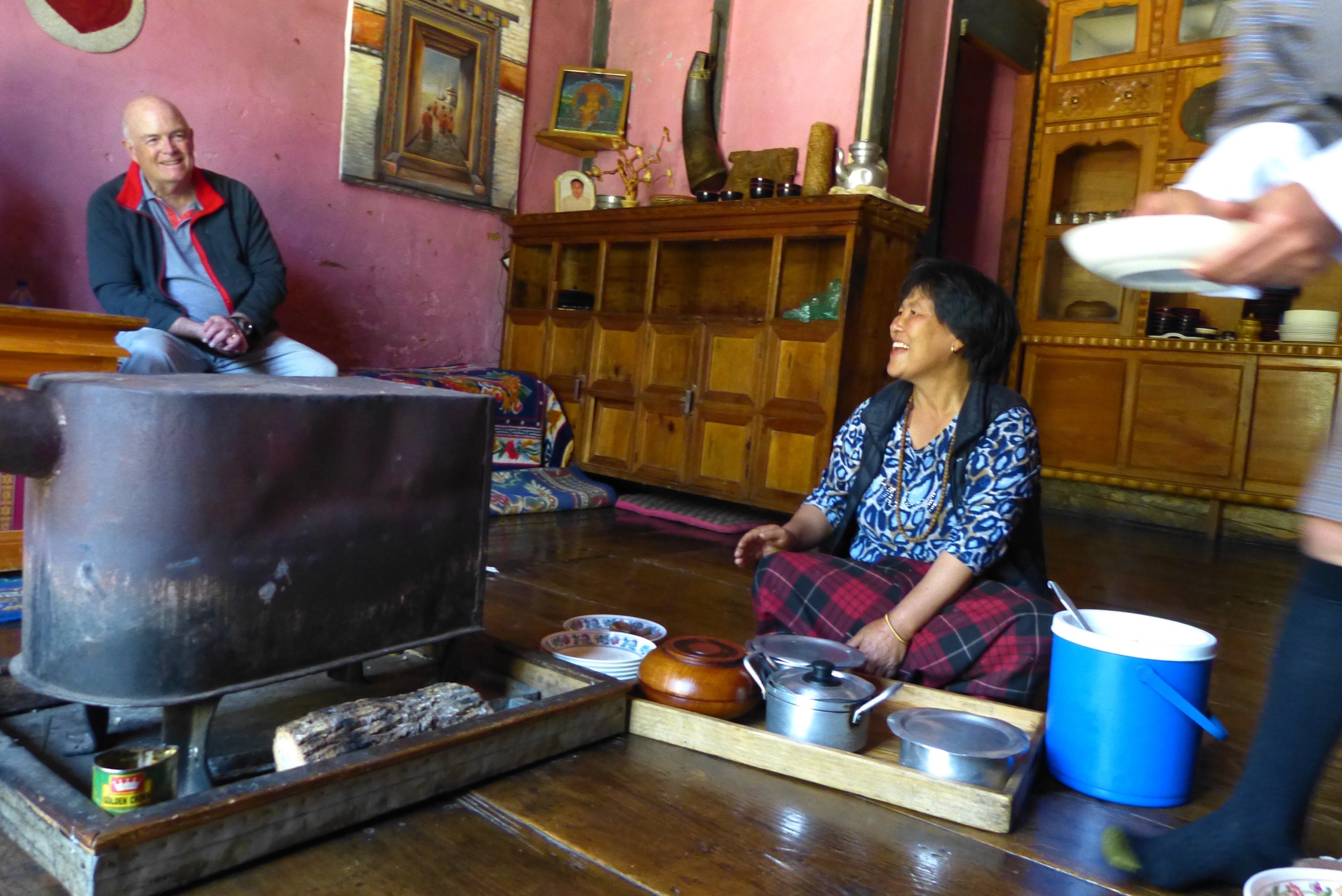
After touring the dzong and the national museum, we stopped for lunch at a typical farmhouse.   In a “typical farmhouse” the ground floor is where the cows sleep.  They are protected from predators, yes, but this arrangement is multipurpose.  They also act as the home’s furnace, generating heat (among other things) for the floors above.  The second floor is used for storage, mainly food.  The room we viewed was loaded with drying rice.  The top floor contains the bedrooms, the kitchen/gathering spot and the altar.  

check put the floor boards!


Our hostess served us a delicious meal, complete with butter tea, into which you tossed grains of toasted rice. Okay, so maybe that last part wasn’t so delicious–at least not to me–but the fresh spring asparagus was particularly wonderful.

Benches were provided for thise that didn’t want to sit on the floor


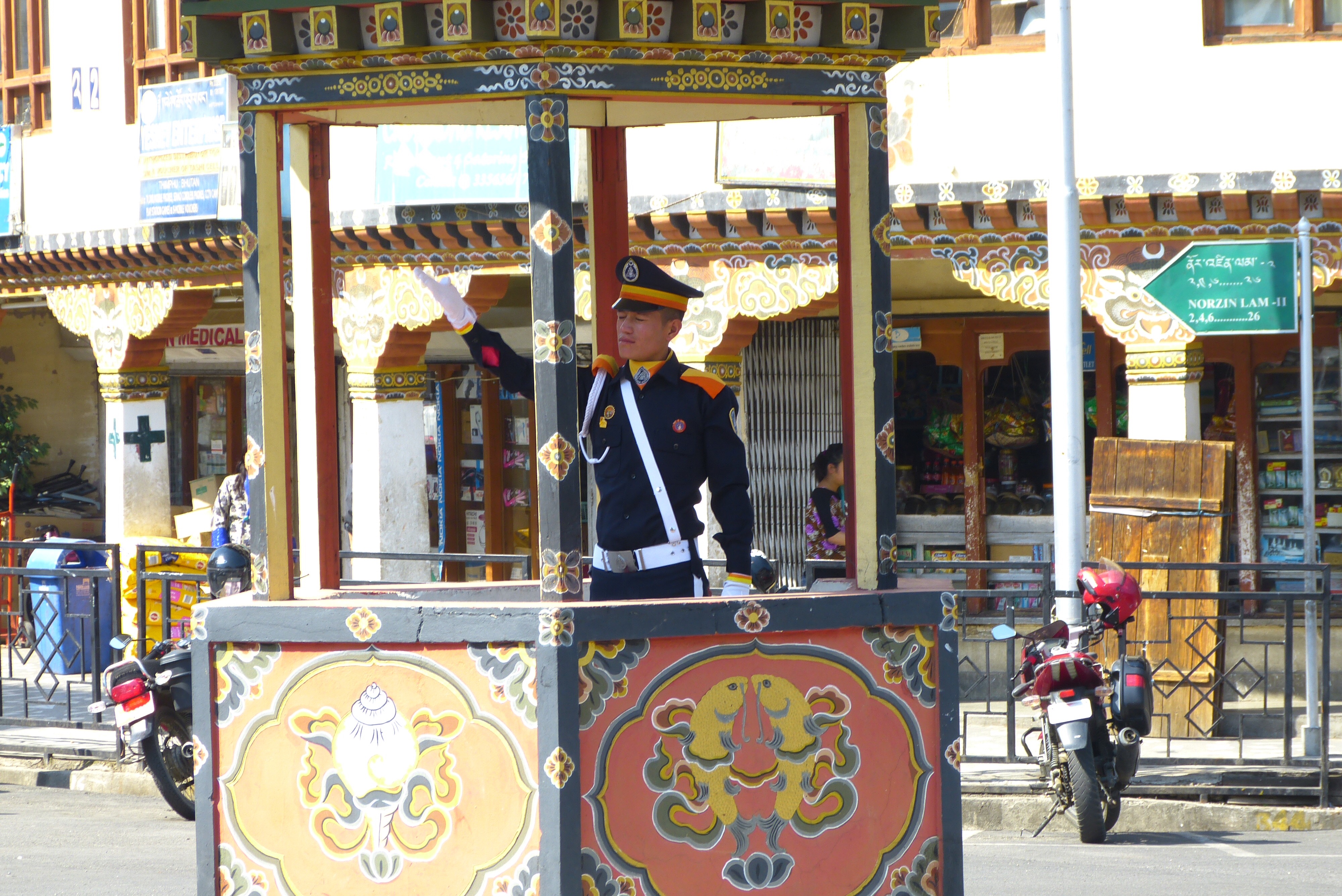
Our hotel, the Thimpu Tower, is smack dab in the center of town, right by the historic clock tower.  It was very easy to stroll through the capital city and check out  their version of a traffic light.  

Bhutanese traffic light
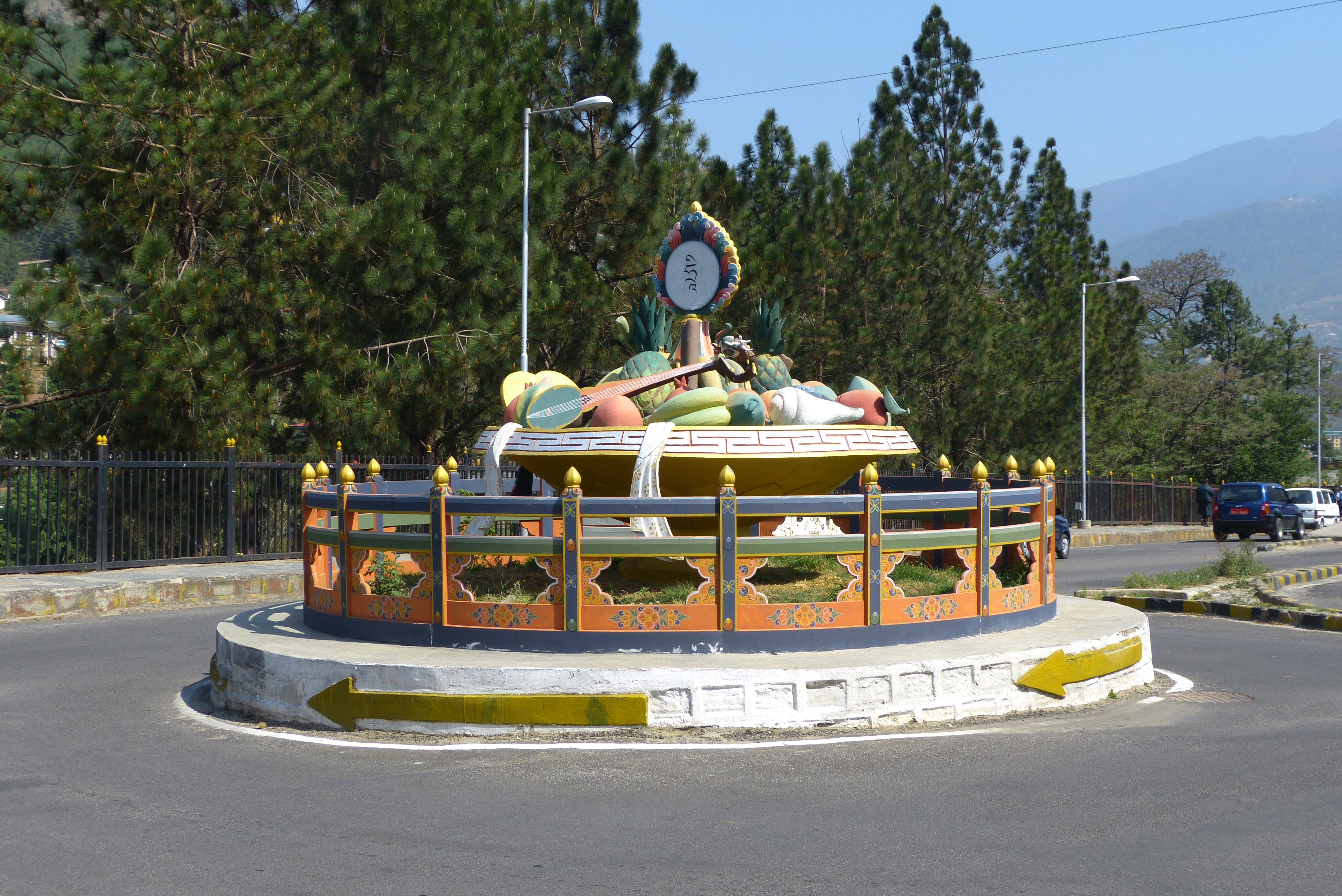
the rotary


By the way, that’s the ONLY “traffic light” in Thimphu.  Like Massachusetts and New Jersey, they DO have “rotaries”, but their traffic circles are a bit more decorative.  

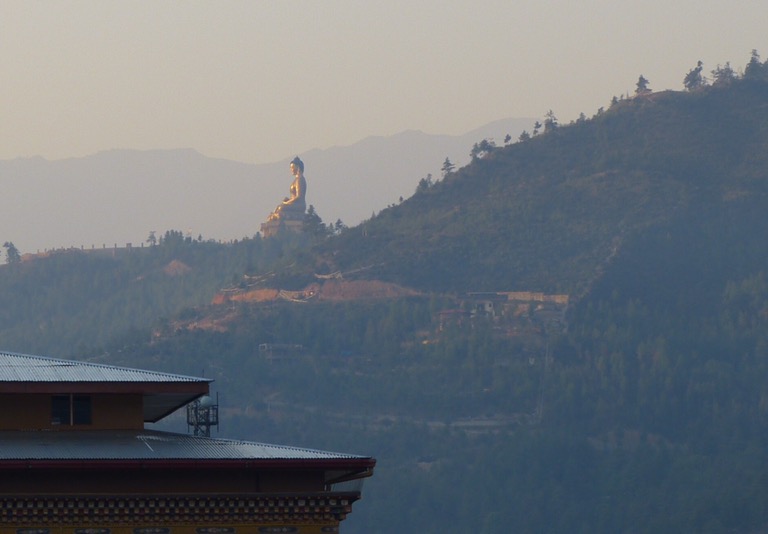
My lovely room overlooks the “clock tower plaza” and from my window, you can see the largest Buddha (in that particular contemplation pose) in the world.  Tashi tells us its construction is being completely funded by Asian Buddhists from Singapore, Thailand, China and Indonesia.  A much more up close and personal view will follow.  


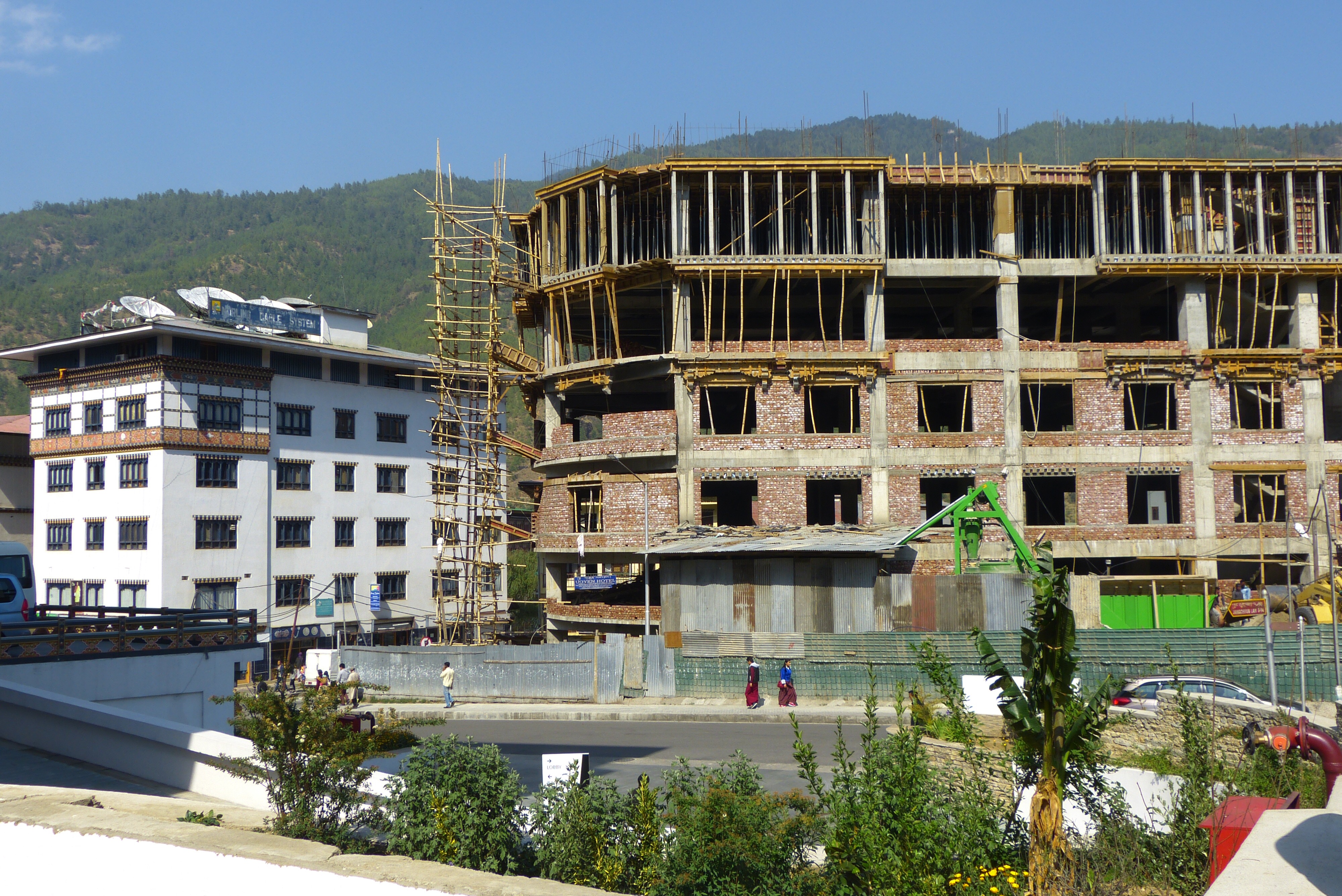
There is construction everywhere in Thimphu. I needed to watch my step at all times to avoid the uneven pavement and the frequent holes in the sidewalks.  (I sure was missing Mike, who normally does all the watching for me, making sure I don’t trip over my own feet or fall into one of those holes!)

i wouldnt want to depend on THAT scaffolding


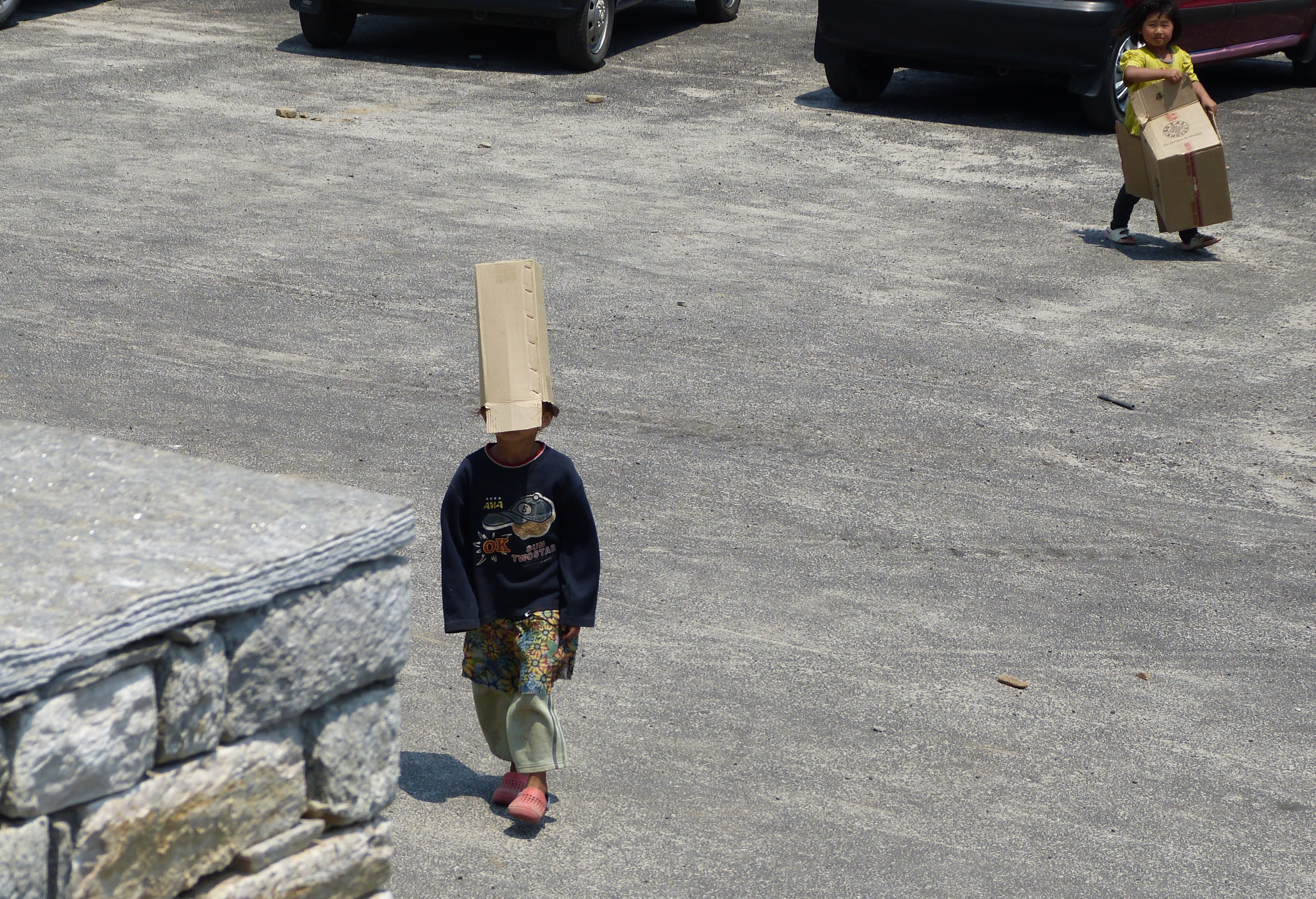
The kids roam freely in the land of gross national happiness.  These two were moving so quickly, I couldn’t get a good shot, but you’ll get the idea.  What better toy than a box and paper bag?  They were having a blast!  

The Ultimate Packing Challenge

Ultimate packing challenge???  Well, at least it is for me.  I’ll be gone for a month, visiting countries that have temperatures ranging from Lhasa’s average low of 31 F  to an average high of 105 F in both Delhi, India and Chitwan National Park.  Fortunately, I “met” a new virtual friend via OAT’s Forum.  She gave me lots of helpful hints, and most importantly, clued me into the existence of laundry facilities that are plentiful and cheap.  Thanks to her advice, I am able to be safely under the airlines’ 44 pound checked luggage maximum.

In the spirit of giving back, this post is all about what I’m packing.  Maybe a future OAT traveler to Bhutan, Nepal and Tibet will find my information as helpful as I found Janet’s.

There’s nothing like a visual, right?  P1140314

Being your obsessive compulsive kind of gal, I start packing many days before departure, loading articles on the bed in our spare room.  I use a paper list and check off as I go.

One of the many nice things about OAT trips is no one cares what you look like.  No one dresses to impress–it is all about comfort and adventure, so you will notice a total absence of makeup, jewelry, fancy clothes and dress up shoes.  But then, my family would tell you that’s how I normally roll.

Checked luggage:

Toiletries:  toothbrush, paste, floss, shampoo, conditioner, brush, comb, moisturizer, deodorant, soap, face cloth.  

I’m not bothering with a hair dryer because some of the places we will be visiting won’t have electricity.   I let my hair grow just for this trip, so I can pull it back and forget about it.

Miscellaneous: binoculars, sunscreen, Insect repellant, anti itch gel, lip balm, lotion, Ibuprofen, Pepto bismol, gasex, Imodium, Hydrocortisone, Bandaids, bonine, moleskins, z-pak, granola bars, small duffel (supplied by OAT).

I’m hoping I won’t need any of the medications.  Whatever I don’t use on the trip, I’ll give to the trip leader.  Might as well have someone make use of it before the expiration dates.

Clothes:  Rain jacket, down jacket,  Sun hat, Sweater, Underwear  (14 days),
socks (10 ), long underwear (2), Pajamas (2), Shorts (2), Short sleeve tops (7), long sleeve tops (5), Long pants  (4), capris (1), Sneakers, flip flops, keens, bathing suit, buff, chill band.

For the colder parts of the trip, I figure  I can wear long underwear beneath my lightweight pants.  No need for corduroys.  I’m counting on layers to keep me warm.

My goal is to get by for at least a week, maybe two, without having to do laundry.  I may have packed more  than I need; I will report back after the trip is over, identifying anything I took that I didn’t need, and anything that I didn’t take, but wished I had.

As with other OAT trips, we will be visiting a local family, so I packed gifts.  Our guide told me that warm socks are always appreciated for the cold winter months, something I never would have thought to bring.  Of course, I had to include toys for the kids, plus an inflatable globe.

IMG_2380

On our OAT trip to Africa, we discovered that a duffel holds more than we ever imagined  possible.  We also learned there is no need for those fancy packing cubes.  My jumbo zip lock bags work just fine, allowing me to pull out only what is needed.   Take a look.

P1140315

Shoes in the bottom, along with items I expect to need at the end of the trip.    P1140320
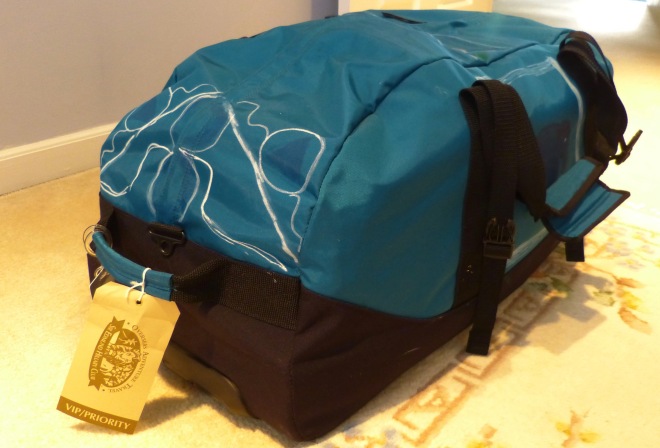
Yep. It all fit and I even have a tiny amount of extra room.

I know you’re wondering, so yes, that white decoration on my teal LL Bean duffle was my very own creation.  Nobody is walking off with MY bag and claiming it was a mistake!

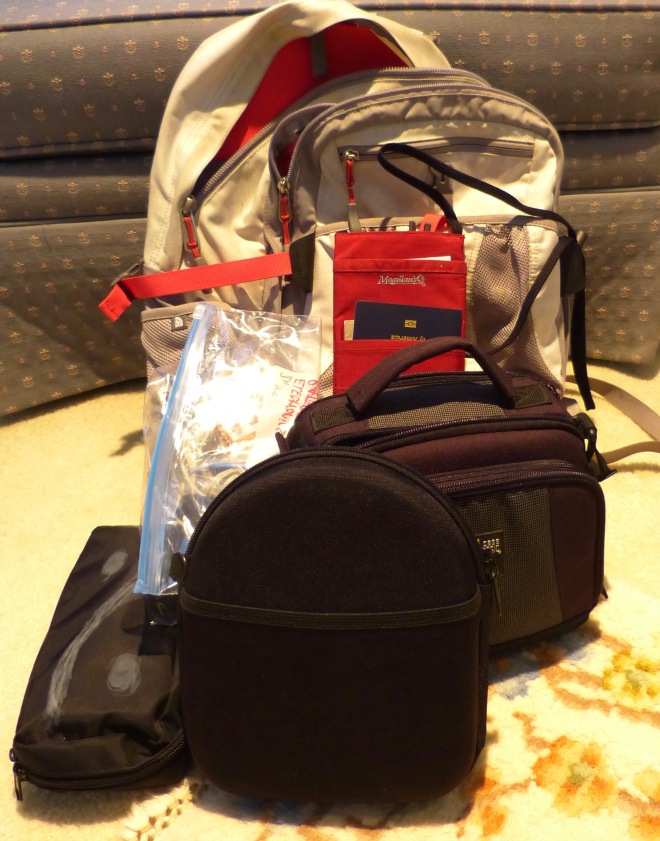
Because I have a direct flight to Delhi, I don’t need to pack a change of clothes into my carry on.  Here’s what’s going inside.

Backpack:  Money, credit card, passport, etickets, travel info,  camera, batteries, charger, iPad connector, iPad, ipod, Bose headset, sleeping aid, Wipes, hand sanitizer, Glasses  & case, water bottle, cell phone, pens, pencils, notepad, gum, cough drops, copy of passport.
P1140319

 That little black bag with the white decoration?  That’s my “comfort case”, which holds the small items –cough drops, pens, gum, etc. so that I don’t have to rummage through the many pockets of my back pack.

The good news?  I did indeed score the first class upgrade I requested back in November, so I probably won’t need to be digging into that comfort case the way I would have if I were back in economy.  United, you have been forgiven.

The sad news?   Because of some late breaking events, Mike and Greg won’t be able to come on this trip.  Thank heavens for trip insurance!
Follow the Yellow Brick Road to the Roof of the World – Part 3

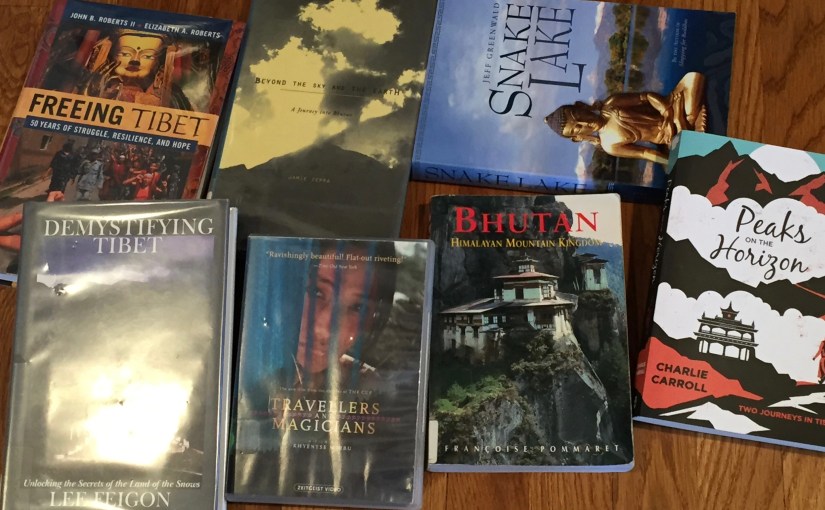
When you hear “Seven Years in Tibet” what comes to mind?  The movie starring Brad Pitt?

Well, I never saw the movie but I HAVE read the book  by Heinrich Harrer, and I must say, it was pretty phenomenal.   Harrar escaped from a British POW camp in India during World War II.  Interestingly enough, POWs back then were able to keep their money and  supplies, so when he escaped, he had a rucksack, some provisions, and enough money to trade with Tibetans as he made his way through the Himalayas to Lhasa.

The Tibetans were gracious hosts, providing Harrer and his traveling companion,  Peter Aufschnaiter (another escaped POW) with shelter and, when they ran out of money, gifts of food.  Harrer and Aufschnaiter were able to repay this kindness by generously sharing their scientific and engineering knowledge with a country that at that time was closed off to the rest of the world.  In addition to helping with flood control, translating foreign news, providing agricultural advice, they also introduced  the Tibetans to a new sport,”walking on knives”, what we call ice skating.    Eventually, Harrer met the young Dalai Lama, becoming a trusted friend and tutor of the isolated adolescent.  Harrer not only oversaw the construction of a movie theater in the Dalai Lama’s summer palace, he also created the films that were shown there, using a 50’s era movie camera to photograph Tibetan festivals.

After Charlie Carroll discovered Seven Years in Tibet in his elementary school library, he became fascinated with this remote Himalayan kingdom.  It was a bit like me and the Wizard of Oz, except HE could actually visit HIS magical kingdom.  And he did, in 2009.  The end product of his journey is the wonderful narrative Peaks on the Horizon.  Two parallel stories alternate chapters, chronicling Charlie’s travels, and that of a young Tibetan refugee he met just before leaving the country.

Seven Years in Tibet and Peaks on the Horizon are great introductions to Tibetan religion, history and culture.  Although I quickly skimmed through  Demystifying Tibet by Lee Feigon and Conversations with the Dalai Lama by Thomas Laird, I found them more difficult to get through and not as entertaining.  I’ll admit it.  I’m a sucker for the personal narrative.

So, if you have been following along The Yellow Brick Road to Asia, you know that now is the time for ten very random, fun facts uncovered through reading about Tibet:

  1. At 13,000 feet above sea level, Tibet’s nickname, “The Roof of the World” is fitting.  It is the highest inhabited area in the WORLD.  Yikes.  I’ve packed a supply of Diamox to make sure I don’t have a problem with the altitude.  
  2. The first major character in its recorded history is Songtsen Gampo, who conquered and united a multitude of tribes to create the nation of Tibet.  Sources claim he became king at the age of 13.  I guess during the the seventh century, they dealt with adolescent angst by sending the boys off to pillage, plunder and start a new nation.  Before he died in 649, he managed to acquire one wife from China, one from Nepal and four from among the local girls.  There are two versions of the Chinese bride story.  Songtsen Gampo  ordered the king of China to send him one of his daughters and when his “request” was refused,  he attacked and pillaged.  Version two describes Songtsen Gampo as a lovesick warrior who became a vassal of the Chinese emperor to obtain his lovely wife.  See if you can figure out which explanation belongs to which nation.
  3. But it wasn’t ALL fun and games.  Songtsen Gampo is also credited with bringing Buddhism to Tibet (and to Bhutan).  He built the first Buddhist temple in Tibet, the Jokhang, to house the statue of the Buddha his Chinese wife, Wencheng,  brought from China as part of her dowery.  One account mentioned that the Nepali wife also brought a Buddha with her, but the Chinese one appears to be more sacred and more famous.  it will be interesting to see what we are told when we are in Lhasa.
  4. There was a gap of almost a century until the next important emperor came on the scene.  Trisong Detsen (755-797) conquered the areas along the Silk Road.  But he too was more than just a warrior.  He also  built Tibet’s first monastery at Samye and invited Padmasambhava (Remember him from the Nepal post?  Also known as Guru Rimpoche, he emerged from a Lotus in a lake) to come to Tibet to help spread the word about Buddhism.
    Unfortunately, Trisong Detsen met an untimely end.  Rumor has it that he was 
    poisoned by his wife, who may also have disposed of her son in a similar manner a mere two years after he was crowned.   Talk about dysfunctional families.  Even Dr. Phil would have had trouble fixing THEIR problems.  
  5. The next notable character appears in 838.  Lang Darma joined with members of the Bon religion to strangle his brother, the current king.  He tried to reinstitute Bon, the local religion, by suppressing Buddhism.  Here’s the interesting part. Lang Darma was thought to be a devil, complete with horns on his head.  After forcing girls to comb his hair, he used his horns to kill them, then ate them.  Lhalung Palgyi Dorje, a monk, came to the rescue, killing Lang Darma by shooting an arrow through his heart.   
  6. Remember Ghengis Khan and the Mongol Hoards?  I sure do.  I have a strong visual of him and his buddies, galloping across the steppes, flags flying in front, long hair streaming behind.  So, what has that got to do with Tibet, you ask?  Well, bet you didn’t know that the term “Dalai Lama” came from the Mongols.  I certainly didn’t.  Altan Khan, who ruled Mongolia in the 1500’s (yes, we’re skipping WAY ahead!) invited Sonam Gyatso, the abbott of Tibet’s largest monastery, to his country to spread Buddhism throughout Mongolia.  Dalai Lama is the Mongol translation of Sonam Gyatso’s name, which in English means “Great Ocean”.  Tibetans, however, refer to their their spiritual leader as “Kundun”, which means “the presence of Buddha”, but since I’m not Tibetan,  I’m going to stick with Dalai Lama.
  7. Tibetans believe they are descendants of Chenrizi (also spelled Chenrezi, Chenresig and Chenrezig, depending on the source), who took the form of a monkey to seduce a demon.  The demon gave birth to six “long haired children” complete with tails (the first Tibetans) that disappeared when they grew to adulthood.   The Tibetan creation story explains human behavior by uniting the pure (Chenrizi is the Buddha of compassion) with the animalistic (the demon/ogress).  And all we westerners get is a talking snake and an apple.  I like their story better!  It even has evolution going for it.
  8. The current Dalai Lama is believed to be the fourteenth reincarnation of Chenrizi.  The THIRD Dalai Lama was the first granted the title by Altan Khan.  That Dalai Lama decided to declare his two deceased predecessors as the first and second Dalai Lamas.  After the third Dalai Lama’s  death,  Altan Khan’s grandson (surprise, surprise)  was declared to be next reincarnate — the fourth Dalai Lama.  He didn’t last long–he was dead before he was 28.
  9. The NEXT Dalai Lama was a powerhouse. The “Great Fifth” started construction of the Potala, Tibet’s iconic building.  He died before the building was completed, but his death was kept a secret for 10 years to ensure that construction would continue.  This huge complex is 13 stories high and contains color coded administrative (red) and religious (white) sections, which include the winter quarters for the Dalai Lama,  prison cells, torture chambers and stupas where prior Dalai Lamas are entombed.
  10. Yaks are as important to the Tibetans as Buffalo were to the Native Americans.  Yak butter is the main ingredient in yak tea, which is consumed by everyone, many times every day.  Yak butter is also used for the candles that are burned throughout all three Himalayan countries.  Yak dung is burned for fuel and is also used as an ink substitute.  The burnt yak dung becomes soot, which was used as ink for books during Heinrich Harrer’s seven years.  By the time Charlie Carroll visited a few years ago, Yaks had become endangered.  What is common now is a cross between a yak and a cow, called a dzo.  

How’s that for random facts?

There is so very much more to say about Tibet, but as with the posts on Bhutan and Nepal, I need to save something for when we are there, don’t I?

Follow The Yellow Brick Road- Part Two

You ready to climb aboard the bookmobile express for a trip to Nepal?

A few years ago, when Borders broke my heart by going belly up, I softened the blow just a tad by randomly grabbing books from the travel section, one of which was Snake Lake by Jeff Greenwald.  At that time, I had no idea the book was about Nepal. Not only that, but the thought of visiting Nepal never crossed my mind.  I didn’t even have the vaguest idea of where it was. As I mentioned in the last post, elementary school KILLED any interest in geography.  Good thing I’m a firm believer in lifelong learning!

Snake Lake is about Nepal’s political turmoil, starting with the student riots in 1979, thru India’s 1989 trade embargo, ending with the April 6, 2000 protest at Ratna Park.  It’s about more than just politics, though.  This very personal account has it all— romance, loss, and a spiritual journey that allows you to view Buddhism through Greenwald’s American eyes.

Two Australian writers, Amy Wilsee and Mark Whittaker, were fascinated by the 2001 murders and suicide of Nepal’s royal family.  Their quest for the back story leading to that gory night is documented in Life and Death in Kathmandu.  What I found most compelling, however, wasn’t the main event,  but two of their interviews:  one with a former Kumari (a living goddess- more on that later) and the other with a Maoist guerilla.  Initially, the Maoists were a group of committed idealists, focused on stopping the corruption and violence inflicted on villagers by the power structure.  Over time, as more joined the movement, the Maoists devolved into an unruly mob that inflicted as much violence and terror as they had initially fought against.

Although Jeff Rasley’s book  Bringing Progress to Paradise raises some interesting questions about the ethics of culture change and the impact first world intrusion into third world has on these remote villages, I don’t recommend the book.  Much of it chronicled his trek to the remote village of Basa and quite honestly, I thought he was a bit of a jerk to the friends that made the trek with him.

Little Princes by Conor Grennan, is a better choice if you want to learn how good intentions can sometimes lead to undesirable consequences.   After graduating from college, Conor decided to volunteer in an orphanage outside of Kathmandu.   Over time, he was surprised to discover that the children actually weren’t orphans at all.  

During the political turmoil, the Maoists had been entering the villages, abducting children and forcing them to fight.  When approached by a man who offered to bring their child to safety, families scraped together money, selling what little they had.  Unfortunately, the man who promised to care for their children was a trafficker who either sold them to be servants, or forced them to beg on the streets of Kathmandu.  The children were told that their families had all been killed.   Little Princes describes Conor’s efforts to return the children to their remote villages so they could be reunited with their families.  The book also made it clear that well-meaning tourists can inadvertently contribute to the problem by giving money and clothing to the child beggars.  Many times the children are forced to turn everything over to a trafficker, so the tourists are unwittingly contributing to child trafficking, making it profitable for the trafficker to continue.  Little Princes was a thought-provoking book that gets to the heart of the issue that many travelers to third world countries face–how to help without creating unintended negative consequences.  

So, what did I learn from my Nepali reading?  Well, I’ll share 10 of my discoveries now, again, not in any particular order–just random facts that caught my attention.  There’s much more, but  like my Bhutan post, I will save the rest for when we are on site.

  1. Nepalis believe the goddess Taleju takes up residence in a young girl (who then becomes known as a Kumari ), until the girl reaches puberty.  At that time, the goddess moves on to inhabit the body of another pre-pubescent girl.  What happens to the dethroned goddess, the young child, who had been taken from her family, placed in a palace, her feet not allowed to touch the ground, carried through the streets during festivals, decked out in red, with a third eye painted on her forehead?  Why she becomes mortal again, returns to her family and is expected to live a normal life, happily (?) ever after.
  2. What are the job specifications to become a goddess, you might ask?  Well, for starters, this 2 or 3 year old girl needs to have: a neck like a conch shell, a body like a banyan tree, eyelashes like a cow, thighs like a deer, a chest like a lion, a voice soft and clear as a duck’s…there’s more, but you get the idea.
  3. While in the Kathmandu area, we will be staying at the Gokarna Forest Resort.  Gokarna Forest used to be the hunting reserve for the Nepali royal family.  Not only that, but at the entrance to the Resort, there is a 200 year old pipal tree, where, in the very sappy movie, Little Buddha, under that very tree, Keanu Reeves was tempted by the demon Mara.
  4. Yes, I did indeed borrow the Little Buddha DVD from the library, and sat through the whole thing, including Keneau Reeves portrayal of Buddha, complete with his pre-enlightenment long, stringy hair.  What can I say?   It was a cold gray day.  I had nothing better to do.  The sad part?  I didn’t learn about the pipal tree until AFTER I had seen the movie, and trust me, I wasn’t going to go back to look for it.
  5. Swayanbhunath, also known as the Monkey Temple, is one of the oldest Buddhist sites in Nepal.  As you might guess, wild monkeys have inhabited the temple complex for many years.  And why not?  The food offerings that the pilgrims leave are mighty attractive.  Unfortunately,the temple was damaged by the 2015 earthquake, so I don’t know whether we will have the opportunity to visit it when we are in Kathmandu.
  6. Speaking of offerings at Swayvanbhunath  pilgrims always leave a portion for Hariti, the world’s grandmother and protector of children. Legend has it that Hariti originally was an ogress who lived during Buddha’s time.  To feed her 500 children,  she kidnapped other people’s children and turned them into dinner.  Buddha decided to teach her what it felt like to lose a child, so he kidnapped her youngest.  (With 500 kids, I wonder how she realized one was missing–but maybe that’s just me?) After Hariti learned her lesson about compassion, Buddha returned the child, then helped Hariti with her food problem by sharing with her the offerings from  his followers, the start of the practice that continues to this day.  
  7. Another Buddhist legend tells the story of the birth of Padmasambhava, who was also known also known as Guru Rinpoche.  Padmasambhava means “lotus born” because he emerged fully formed from a red lotus blossom that appeared in the center of a lake. The Lotus is the symbol of enlightenment.  Preview of coming attractions:  You will hear about Padmasambhava again when we get to Bhutan.
  8. The oldest Hindu Temple, Pashupatinath, fortunately was not damaged by the earthquake, so if we visit it, I’ll be sure to look for the magnificent sculpture of Nandi, the bull that Shiva rides.  Hindus come to this temple when they are ready to die, believing that dying on this sacred site guarantees that they will be reborn as a human.  Cremations take place on banks of the Bagmati River, which flows by the temple.
  9. The royal family’s palace is now open to the public.  It is a rather dismal abode, with lots of animal heads hanging from the walls.  (Most likely the animals they killed in their royal preserve at Gokarna Forest, which would seem to be a violation of Hindu–and Buddhist beliefs.)  Anyway, the palace sounds like a major disappointment–sorta like Graceland, not at all what you would imagine– which may be why it didn’t make it into our itinerary.
  10. Chez Caroline’s, a restaurant that was mentioned in one of the books I read (I can’t for the life of me remember which one), still exists.  According to the internet, the restaurant is in a “historic Rana Palace”.  I sure hope it isn’t the one with all the stuffed dead animals!  Who knows, maybe on one of “dinner on own” evenings, we’ll venture there.  If we do, I’ll be sure to report back.

Well, I warned you these were random facts that caught my fancy.

Our last and final stop along the yellow brick road will be Tibet.  Hope you come along!

Getting All Charged Up!

IO Magic, from Staples

Wouldn’t it be nice if every country in the world had identical electrical outlets, so us wanderers could plug in anywhere, without any problem?  I can dream, can’t I?

Up until now, we have always carried a bunch of different adapters.  Although this worked, we were always afraid of losing one, or leaving the exact one we needed at home.

Recently, I came across this little beauty.  It’s compact, lightweight, and claims to work in over 150 countries.

The little green tab slides down to release one of the four plug options, which the manufacturer claims correspond to what the  World Standards has designated as A, B, C and D   type plugs.

USB slots , with the C adapter extended.
USB slots, with the C adapter extended.

I’m not so sure about that–the pictures on the website look different from the plugs in my gadget, but I guess I’ll find out.  What I like best is the addition of  two USB ports.  This allows me to charge an iPhone, an iPad and my camera battery–all at the same time, using just one outlet.

Because one of the included plugs is designed for use for the USA, I decided to take it for a spin while still at home, and yay, it worked beautifully.  All three items charged quickly.

I got mine at Staples, because I had a coupon, (I do so love a bargain!) but you can also buy direct from the manufacturer via the internet.  Either way, it will cost about $30.

By the way, this is NOT a converter, so if your appliances can’t accept a variety of voltages you will need a converter along with your adapter.  My iPhone and iPad so far have worked quite happily in the US (120 volts) and everywhere else I’ve plugged in, like Slovenia and Zimbabwe (220), South Africa and Italy (230).  I have no idea what that all means–I just know if the volts don’t get along, you end up with a fried appliance–and I have the hair dryer to prove it!

The Skies May Be Friendly, But United Sure Isn’t!

Our 40th Anniversary trip starts with a multi-day adventure, known as “getting there”.

For the first leg of the trip, OAT’s proposed itinerary included a stop in Dubai, landing in Delhi after being in transit for 18 hours.  Not what I call ideal, particularly when I saw our return flight would depart at 4 AM.

Letting my fingers flutter over my keyboard, I was thrilled to discover that United has a direct flight between Newark and Delhi for about the same price, but only (!?!) 14 hours travel time.  Best of all, the return flight departed at 11:30 PM.  So, instead of sitting miserably at the airport, waiting to board that 4 AM flight, we’d leave the night before, and would be several hours into winging our way home.  Sweet!  Not only that, but for years, I had been hoarding frequent flier miles for an occasion exactly like this.  Business class, here we come!

EXCEPT

When I tried to upgrade on line, I got a message that we were put on a “waiting list”.  How could that be? The flight was five months out, and our flight’s seat maps showed only one seat in business class was occupied.  Clearly not a lot of OTHER frequent fliers had already upgraded on OUR flight.  I thought it was strange that the same seat was occupied, coming and going, so I did a little checking.  Seat 5D  was the only one occupied on every flight that I checked.  Perhaps reserved for a member of the crew?   Well, I was confident that a quick call to United’s customer service would fix everything right up.  Did I mention that I’m a hopeless optimist?

Here’s what happened.  The customer service rep confirmed that we were indeed put on a waiting list.  Okay.  When I asked how many others were on the list, he explained he couldn’t tell me for “security” reasons.  (Security??? I didn’t want to know names or home phone numbers.  Just tell me where I am in line so I can figure the odds of getting the bloody upgrade!)  He also was going to charge me $20 for the pleasure of speaking with him, but after we exchanged “pleasantries”, he thought better of it.

Those frequent flier miles that we accumulate, expecting one day to trade in to make a long trip both pleasant AND affordable?  Well, it appears that United reserves the right to let us know at the very last minute whether or not they are going to allow us to redeem the miles, perhaps because they MIGHT be able to sell the seat we covet for the full price. They just don’t know yet.   By the way, in addition to redeeming 140,000 miles, our roundtrip upgrades weren’t free.  We paid an additional $2,400 for them.  To me, that’s a whole LOT of money!  

United took our money and deducted the miles from our account, which sure felt like we had purchased seats, EXCEPT we couldn’t choose which ones they would be.  We will find out the day of the flight whether or not we get the upgrade, and where we will sit.  There is no guarantee that we will even be next to each other.  Normally that would not be a big deal, but 14 hours is a long time.  Call us crazy, but given the price we paid (in dollars and miles) we’d like to be able to choose who we sleep with.  If we don’t get the upgrade,  United WILL refund our money and will redeposit our frequent flier miles, without charging a penalty.  (Yes, the representative actually did say that.)  If we had paid for the tickets with a United credit card, would they also refund any interest?  I think we all know the answer to that one.

As luck would have it, at the end of December, I received an email “signed” by Sandra Pineau-Boddison, the Sr. Vice President of Customer Relations, asking for feedback on a United flight we’d just taken.  Now that I had a name, it wasn’t difficult to find her personal email, so I shared my tale of woe with her.  How about that?  FREE feedback from a long time former Continental Airlines frequent flier.  No need to hire a market research company or do a focus group to find out how they are doing.

So what happened?  Nothing.  After almost two months.  Not even an automated acknowledgement.  From the SR. Vice President?  Of Customer Relations?  That speaks volumes.

Let this serve as a precautionary tale to all you Mileage Plus Members out there.  United doesn’t care a bit about you or your miles or your loyalty.  Think about that the next time you book a flight or get a solicitation for a United credit card that offers points for “free” travel.

But if anything changes between now and our flight, I’ll certainly let everyone know.  Come on Sandra, do your job!