To GO or Not TO GO, THAT is the Question

In September of 2018, we signed up with Overseas Adventure Travel for a March 2020 trip to Morocco. Why plan so far in advance? We wanted to travel with friends, OAT limits their groups to 16, and popular trips sell out quickly. We had no difficulty recruiting 11 friends to go on the tour with us. So far so good. Fast forward to today, with departure date rapidly approaching. As my favorite philosopher, John Lennon, once said, “Life is what happens when you’re busy making other plans.”

Well ol’ John was right. “Life” has certainly jumped up and slapped us in the face. Within the last two months three travel buddies had to drop out. One member of a couple was diagnosed with a serious medical issue, then another fell and fractured her knee. Their future absence made us realize how much we were looking forward to spending time with them.

Because the trip is so popular, their spots were quickly taken by other OAT travelers –also known as friends we haven’t met yet. So, there will still be 16 of us on the trip. But wait, we aren’t finished. Unless you are in a coma, you have probably heard about the coronavirus. So far, none of us has allowed it to disrupt our plans.

Fortunately, according to our State Department, Morocco is looking safe. Still, we have to fly to get there and back, and our plans include a three day stopover in Paris before we enter Morocco. Although the State Department hasn’t identified France as a “do not travel” country, another source indicated that several cases have popped up in France.

What to do? Sadly, we have to acknowledge that being over 65, we have aged into the “at risk” group. Fortunately, we are relatively healthy, and are up to date on all of our shots. Still, we recently experienced another country’s health care system, and although the outcome was positive, visiting my spouse in the Alice Springs Hospital was not a high point of our trip to Australia. (Clearly, it wasn’t my spouse’s either.) On a positive note, although we learned just how wonderful our medicare supplement coverage is when we are outside of the USA, we hope to never have to use it again!

As of today, according to the US State Department, Morocco and Paris have only the usual warnings about terrorist activities, but that is the world we live in. Given our record of gun violence in schools, churches, shopping malls, movie theaters, we could just as easily be mowed down by a home grown terrorist shooting his assault weapon. I refuse to let terrorists, either here or elsewhere, win. A virus, however, is another matter.

As of today, Morocco has reported its first case of the coronavirus; its victim, a man who returned from a visit to Italy, is being treated in a Casablanca hospital.

In Paris, a protest by workers closed the Louvre for two days, until the Museum staff assured the workers that “proper measures” to ensure their safety were being taken.

What happens if we get to Paris, and Morocco decides not to let anyone into the country from France –or from the USA? Let’s face it, several states have reported outbreaks, with many of the victims having no known source of contact. Our response is being managed by Mike Pence, who is not noted for his expertise in the medical and scientific arena. Maybe other countries will view US as being problematic? What if we make it to Morocco, an outbreak occurs and we can’t fly home? What if we catch a cold or some other nasty thing on the flights, either to or from our destination and we have to be quarantined until we are tested and certified as okay? So many “what ifs”. One thing that’s certain, if we go, my plan to travel with “carry on only” has been abandoned. I want to be sure we have enough clean clothes to get us through any “what ifs” that come our way.

In addition to cancelling all trips to China, South Korea and Mongolia, OAT has allowed travelers that signed up for their Italy trips the option to cancel right up to the date of departure, choosing either to apply their payment to a future OAT trip or to get a refund, minus a small processing fee. That gives us peace of mind.

What will we do? We will prepare as if we are going to take the trip, watch the news, check the internet and wait to see how it all unfolds.

Car Buyer or Cult Member?

Am I having a midlife crisis? Or did I just join a cult? I’m way too old for either, but here we are.

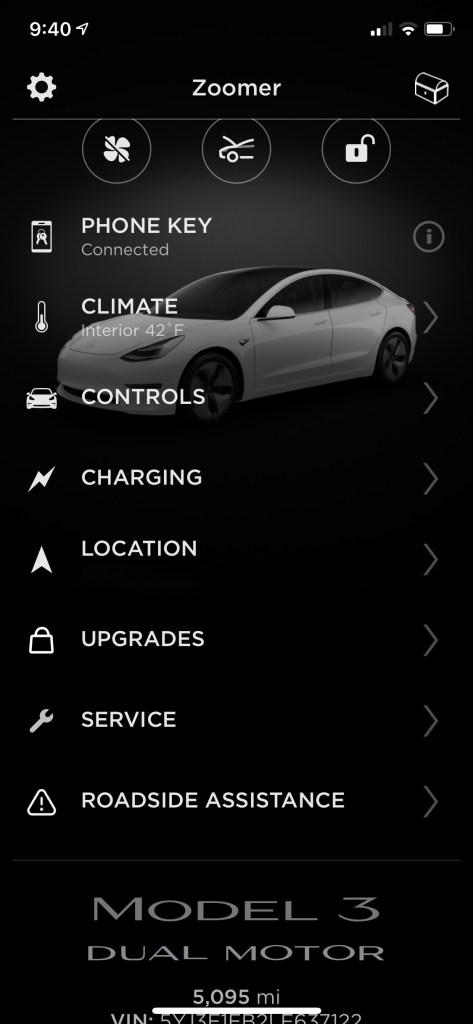
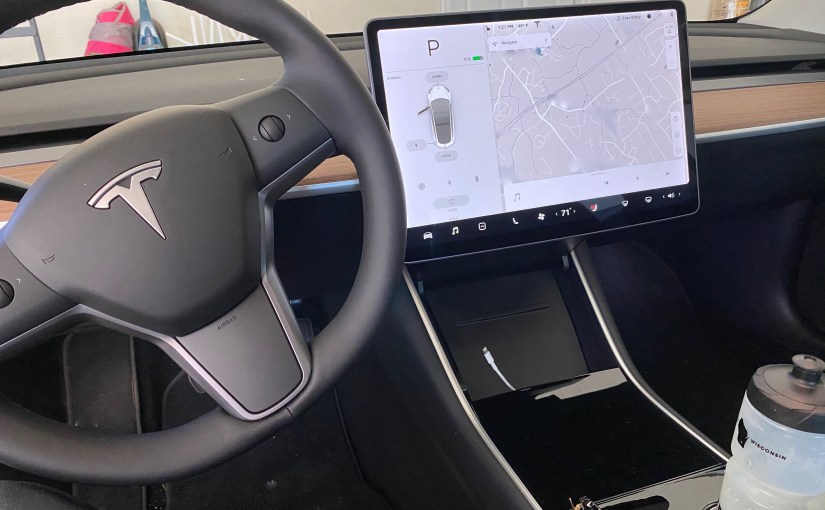
I feel like I have done the car buying equivalent of bungee jumping, except I haven’t jumped YET. I’ve been strapped in, led to the edge, and am waiting to either jump or be pushed. My emotions keep swinging from exhilaration to terror. What have I done? The bigger question: Does every future Tesla owner go through this while awaiting delivery?

First, let me say that although I am still in shock that a car can cost almost as much as our first house, I didn’t buy one of the super expensive Teslas. And our little first house, bought decades ago, was in Ohio, a much cheaper area of the country. Still, for someone who views a car solely as a means of transportation, it’s a LOT of money, even for the Tesla 3, which is the least expensive model. (I DID spring for the mid priced 3–the one with the battery that lets you go a longer distance. The top of the line, the Performance 3 is DEFINITELY for those with a need for speed.)

So, how did this happen? How did a non-car aficionado end up ordering a cool set of wheels? Simple. My son guilted me. He took the number of miles that I drove last year plus the amount that I spent on gasoline, and converted it into how much carbon I released into the atmosphere. Not as much as most, because for the last 11 years, I’ve driven a Prius. Even so, he calculated that in 2019, I was responsible for one TON of emissions. He’s an electrical engineer, so the odds are good that his calculation was accurate. But then again, he knows I don’t have the skills needed to check his math.

He knows my vulnerabilities. I am passionate about protecting the environment. For years, I’ve carried a reusable water bottle, reusable grocery bags (including reusable produce bags). I recycle, reuse and refrain whenever I can to minimize my carbon footprint. Because I love to travel, I figure I need to do whatever I can to offset my the carbon from the flights I take.

I also really liked the Tesla’s safety features, such as blind spot monitoring, and assisted cruise control. For an additional $7,000, I could have had the self driving feature. I didn’t get it, and not just because of the cost. Quite honestly, when I tried it out, I was terrified. What is REALLY cool, however, is that all of Tesla’s model 3’s (built after 10/2016) have all of the sensors, cameras and radar needed for self driving already built in. Should I become comfortable enough to add that feature in the future, all I have to do is pay for it, then download the software via wifi. And that’s another cool thing: Tesla updates the software regularly, so once you own a Tesla, you benefit from the updates that flow over your wifi network. Sometimes a blessing, sometimes a curse. Only time will tell.

But back to those safety features. Even if you don’t spring for the super duper self driving feature, you still get “auto pilot”. If you are like me, and get into your zen mode while listening to the radio, you know that sometimes your foot gets heavy and you lose track of space and time – or maybe just the speed at which you are traveling. Am I right? Auto Pilot KNOWS the speed limits of the road you are zipping along, and will limit you to a number that you choose ( like +5 MPH over the limit). You can override the limit, but usually my problem comes from going too fast, not too slow.

Anyway, I am 4 days away from picking up the car that I ordered 5 weeks ago. What have I done while waiting? I’ve been reading the manual. Mike has been busy too. He oversaw turning our garage into a charging station. His mission was accomplished today.

Meanwhile, I’ve been hanging out on the Tesla Message Boards. I wanted to find out things like, does it get hot in the car because of the glass roof? Approximately how far can you go on 1 Kilowatt of electricity? (And is it a Kilowatt or a Kilowatt hour? ) How much does it cost to use a Tesla Supercharger? Stuff like that. Instead I found posts like this one, chosen at random and cut and pasted:

I have a pair of Model S non-P caliper in my garage just for that purpose. However, I’m on the fence about it once I did more research. The big gain for the RB S caliper option is the increase thermal capacity of the larger and thicker rotor. On the other hand, the P3D pad is slightly larger than S pad. And there are already a number of track oriented pad on the market for P3D. Whereas the S pad is available in street pad only, the only other car that uses the same pad shape is Chevy Cruise econobox.

Did it scare me. You bet. Even though I am generally fluent in English, I had no bloody idea what that post was about! But then I realized that many of the Tesla buyers are engineers or car enthusiasts — most likely both. I am neither. I’ll stick to reading the manual. And keep my fingers crossed. Four more days, but who’s counting.

The Land of Oz

As a kid, I was always fascinated by the Wizard of Oz. In addition to watching the movie multiple times, I read every single Oz book our library carried. So, I was quite excited when I stumbled upon the PBS series entitled The Magical Land of Oz . To my surprise, it wasn’t about Dorothy or the wizard at all, but was instead three wonderful shows about Australia, where we will be heading shortly. (No tornado required, and, I hope, none expected).

Why is Australia called the Land of Oz? I didn’t know, so I asked Mr. Google, the source of much of my wisdom. Turns out, it has to do with the way it sounds when you say the first three letters of the continent’s name. Give it a try. Anyway, the shows are visually spectacular, much better than anything I can hope to capture with my photos.

Speaking of photos, this is the first trip I will make without bringing a camera. Yes, I will still take photos, but I will be using my new iPhone 11 pro. After our son sent us photos he had taken with the wide angle, telephoto and regular lenses, and showed us what the camera can do with night shots, I was intrigued. It was definitely worth a trip to the nearby Apple store to just take a look. Silly me. I really thought I would be able to leave the store without making a purchase!

Another purchase for the trip was a “lipstick” charger from Amazon. My friend Sally had been using one on our recent bike trip and I was quite taken with the little gadget. Even though the iPhone 11 is supposed to have a robust battery, I didn’t want to take a chance of running out of juice should I encounter a once in a lifetime photo op.

Of course, that wasn’t the only gadget that captured my attention. I also HAD to have the Lencent adaptor I stumbled upon when purchasing the lipstick charger. They both come with cute little storage sacks and don’t take up much room in my gadget bag.

Because my replaced iPhone is few generations old, I decided not to turn it in, but instead plan to purchase a prepaid sim card for use in Australia. (Yes, my buying frenzy continues). After learning that, like New Zealand, free, unlimited WiFi isn’t widely available in Australia, I figured it was worthwhile to give a foreign sim card a try, using THAT older phone for accessing the internet. (An idea I picked up from one of the travel forums I follow).

Here’s what my research uncovered: you need to pay attention to “credit validity”, which was a new term for me. I have since learned that it refers to the number of days the prepayment option has purchased, starting from the day you first use it. So, if you purchase a card with a credit validity of 7 days, and you use it on the 1st of the month, regardless of the gigabytes purchased, you are done on the 8th, and need to “recharge” (pay more).

Why not go with Verizon’s travel pass? Well, if you use the internet ONCE during a 24 hour period, you get charged $10 for that day. It seemed like a better deal to get a prepaid sim card for 28 days for $30 Australian dollars (about $20 US, or two days worth of Verizon Travel Pass.

Why wouldn’t I just use the Australian sim card, in my new iPhone, you ask? Good question. Here’s why: I know myself well enough to recognize that it is entirely possible for me to lose my original sim card, a significant concern.

There are three mobile phone networks in Australia. Telestra, Optus and Vodaphone all offer coverage in the most traveled parts of Australia. Of the three, Optus is the only network that has a store in Melbourne Airport. So, given that this is a new experience for me, I decided that I wanted to interact with a human rather than purchase a card in advance from the internet (Amazon)and hope for the best. That way, I can have someone exchange the cards for me, and make sure that the phone is functioning correctly before we leave the airport.

Thanks to the internet, I was able to check the coverage map for Optus, where I learned that coverage varies by type of device, something I never would have considered. It appears that the iPhone 7 may not have great coverage throughout Tasmania and parts of the interior where we will be visiting. Big decision: will I decide to be without WiFi when in those uncovered areas? Or will I trust myself not to lose my original sim card and just use my new iPhone? Bet you can’t wait for this cliff hanger to be resolved in a future post.

Another cliff hanger: Will we get off the wait list for an upgrade to United’s business class? Here’s the deal. A free round trip ticket would have cost 240,000 miles each, whereas an upgrade is only 60,000 miles each, plus the price of an economy ticket and an additional cash payment. Given that we had nowhere near the miles needed for a free ticket, we opted for the upgrade, resulting in our waiting to see whether United can sell those seats for more than what we paid in cash and miles. It’s a gamble–one that does not make me a happy, loyal United customer. BUT, the other option would have been paying almost $8,000 each for business class. Of course, we could always stuff ourselves into economy for 6 hours to LA and 16 more hours to Melbourne. Yeah, we sure HOPE that’s not happening.

Finally, we learned from our trip leader that during our tour, we can expect temperatures to vary from a potential low of 30 F to highs in the 90’s, with varying degrees of humidity. Hey, its a big continent, and we are covering a lot of ground. That makes packing even more of a challenge. This time, I’m using different packing cubes for cold, temperate and hot areas.

Theoretically, the blue cubes can be compressed. Realistically, the plastic compression bags do a much better job so that’s what I used for my jacket. It is great for travel because the lining zips out, transforming the shell into a light weight rain jacket. Plus, the lining can be worn alone for cool days and shell plus lining will keep me toasty during those 30 F days and nights. Yes, it all fit into my duffel, was under 50 pounds, PLUS my backpack (carry on) had plenty of room to spare.

Here’s the route we, and 10 other travelers, will be taking on our Overseas Adventure Travel (OAT) tour. Six of us have opted for the pre trip to Tasmania.

See you in Oz!

Western Pennsylvania’s Surprises

Do you know where you find a section of the Berlin Wall, Peter Fonda’s motorcycle with Captain America helmet, Steve McQueen’s airplane, the Fort where the French and Indian War started, several Frank Lloyd Wright masterpieces, and a five diamond restaurant? Hint: check out the map above, specifically the Ohiopyle area. It doesn’t look like there is much in the area, does it? At least that’s what I thought till I got there.

Did you ever plan a trip, thinking that it would be all about a particular site, then discover that the area had a whole lot more to offer? Enough for two posts, even?

We were drawn to the area by a newspaper article I had clipped about Frank Lloyd Wright’s Fallingwater decades ago. It sat in my “Fun Things To Do” folder until earlier this year, when I figured we either needed to visit the damn place or throw out the clipping. If I had done the latter, you wouldn’t be reading this post.

A quick internet search uncovered a special Fallingwater experience–a sunset tour, lasting three hours, ending with appetizers on one of the decks. The tours are only offered on Friday and Saturday nights, are limited to 10 participants, allow interior photography, and include parts of the house not shown on the other tours. For $150 per person, you can pretend that you are a guest of the owners. Just our kind of gig.

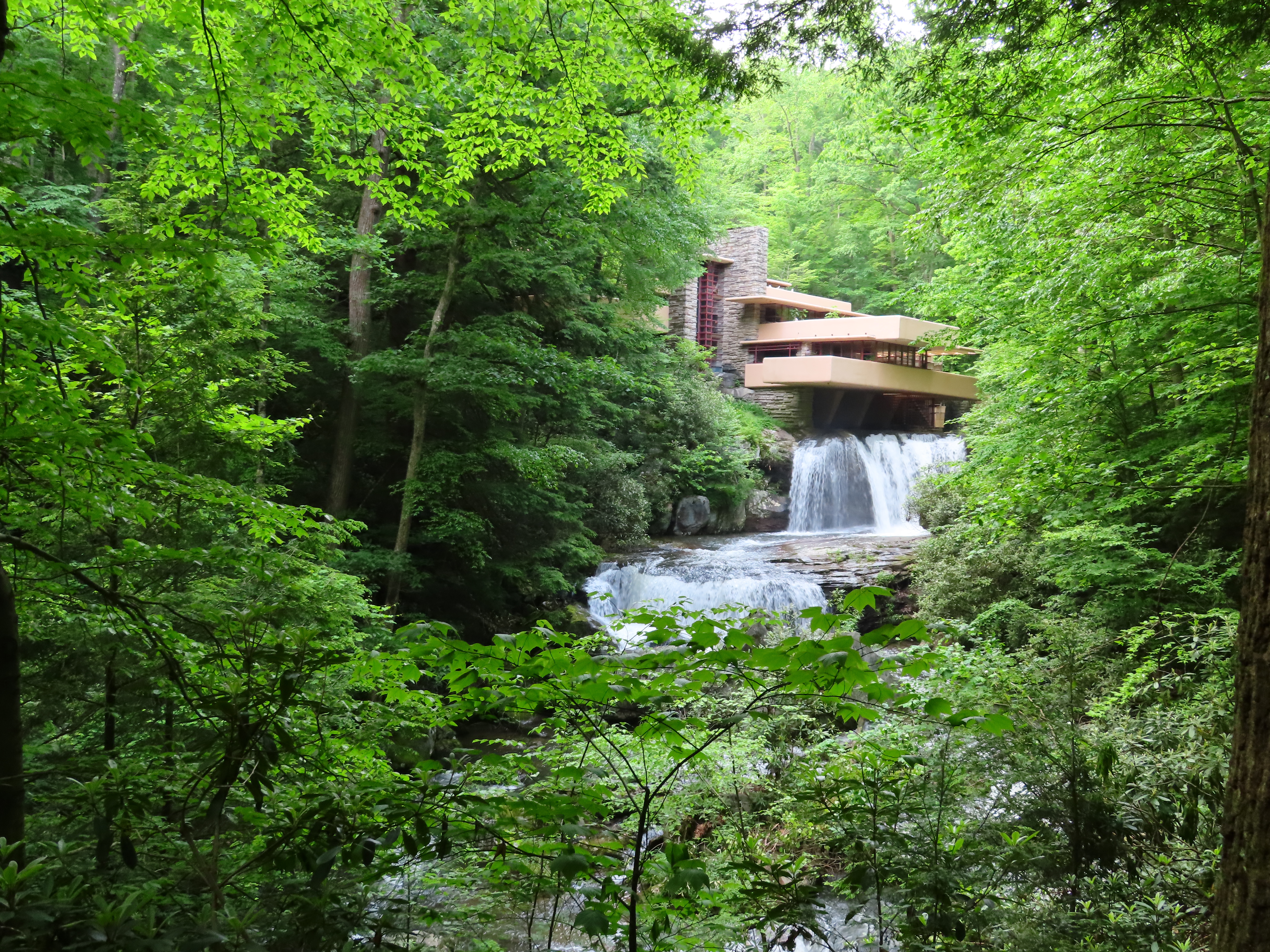
The newspaper article included a photo similar to this one

So how was it, you ask? Well, the house was quite fascinating, especially given that it was completed in 1937. As you can see from the photo above, the house was built over a waterfall. When the windows are open, you can definitely HEAR that water falling! Closing the windows successfully shuts out most of the noise…and also the cooling breezes. Fallingwater, you see, is not air conditioned. Did they even HAVE AC back in the late ’30s?

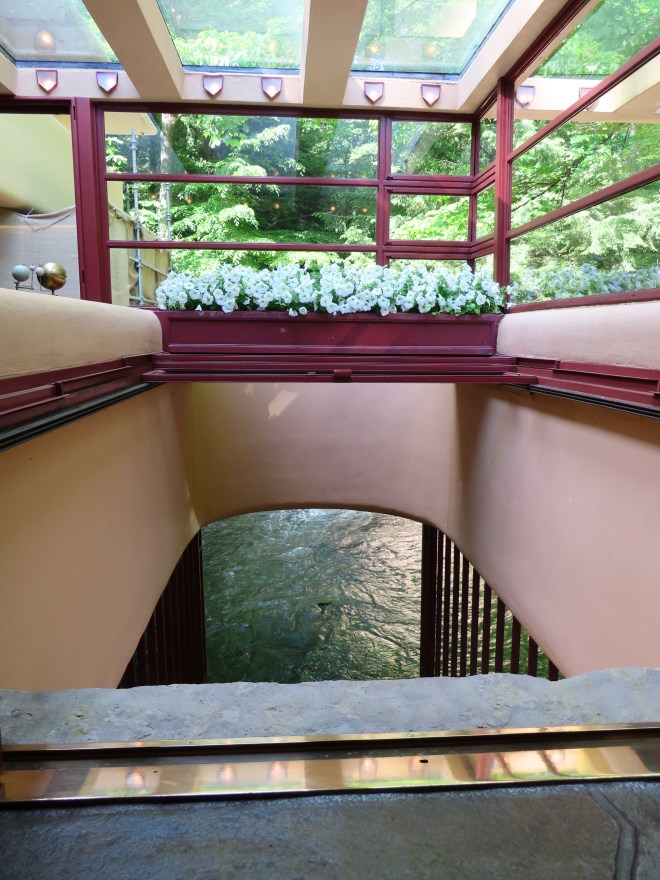
You’re probably thinking “What’s the point of living over a waterfall if you can’t stick your 10 little piggies into it”? Right? Well, Frank was also thinking just that, so here’s what he did.

The stairway leading down to the water is pretty cool, but what is even more impressive is the way the glass panels slide away.

Do you think he accomplished his goal, which was to bring the outside in?

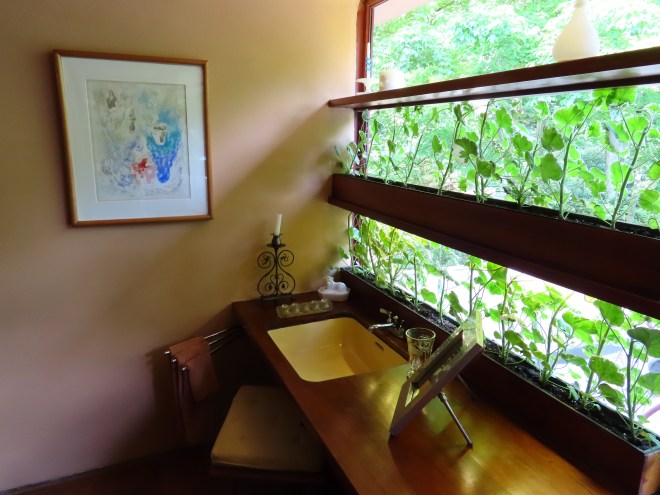
Here’s another example. You are out in the middle of nowhere, so window coverings are not needed, but in the bathroom, why not have planters built into the window to form a natural curtain?†

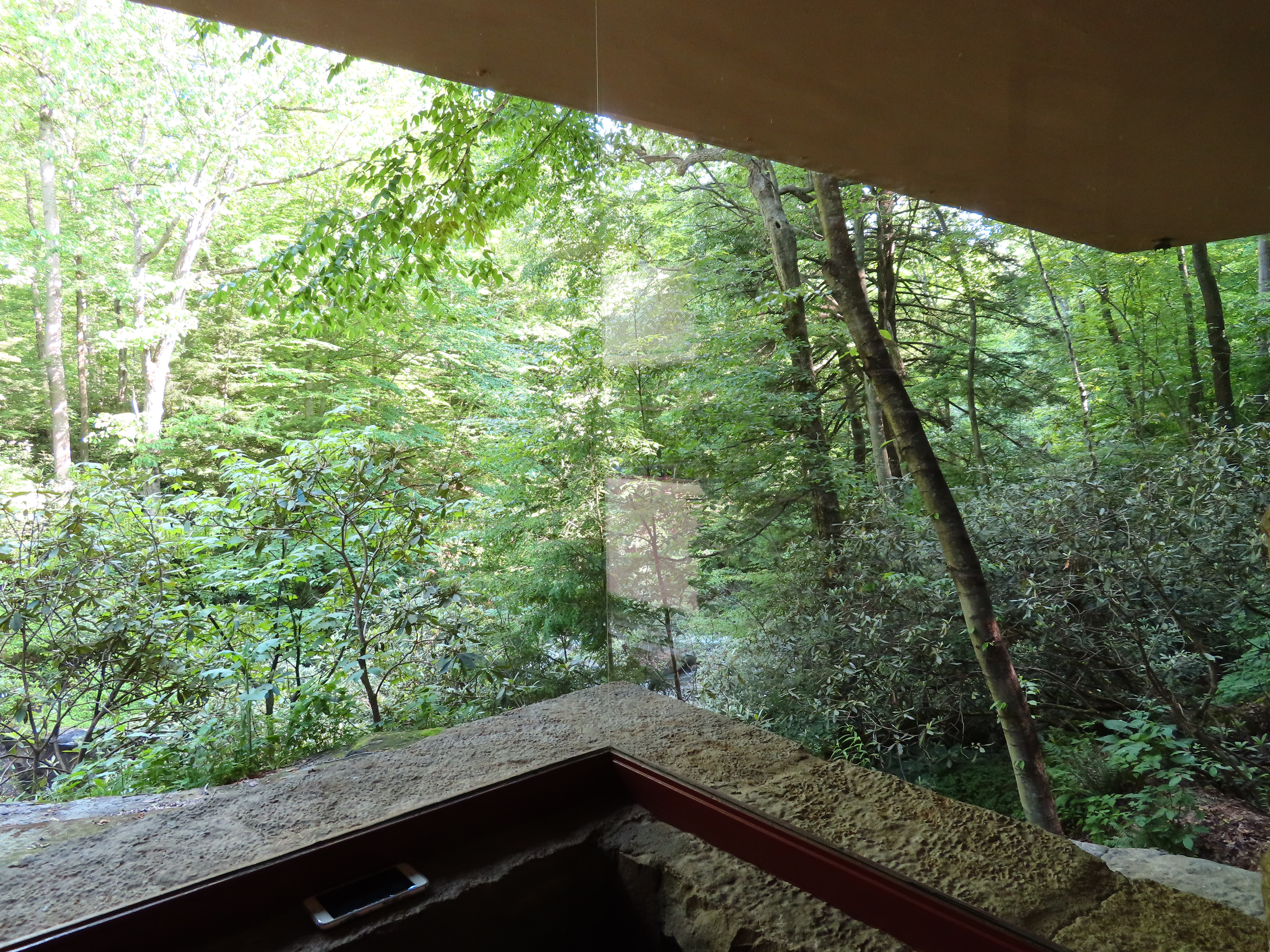
When we first entered the living room, it looked like the corner was completely open. It took a while to see what is obvious from the reflection on the window–that two panes of glass are joined in the corner.

Wright not only designed the building, he also created all the furniture throughout the house. I was surprised to see a king sized bed in the master bedroom. Our guide explained that it was actually two twins pushed together and united by a single headboard and bedspread, something TV in the 1950’s would never have shown. (It isn’t that visually interesting, so I didn’t bother posting a photo of it–everyone knows what a king sized bed looks like.) How surprising that it took about three decades for that great concept to catch on!

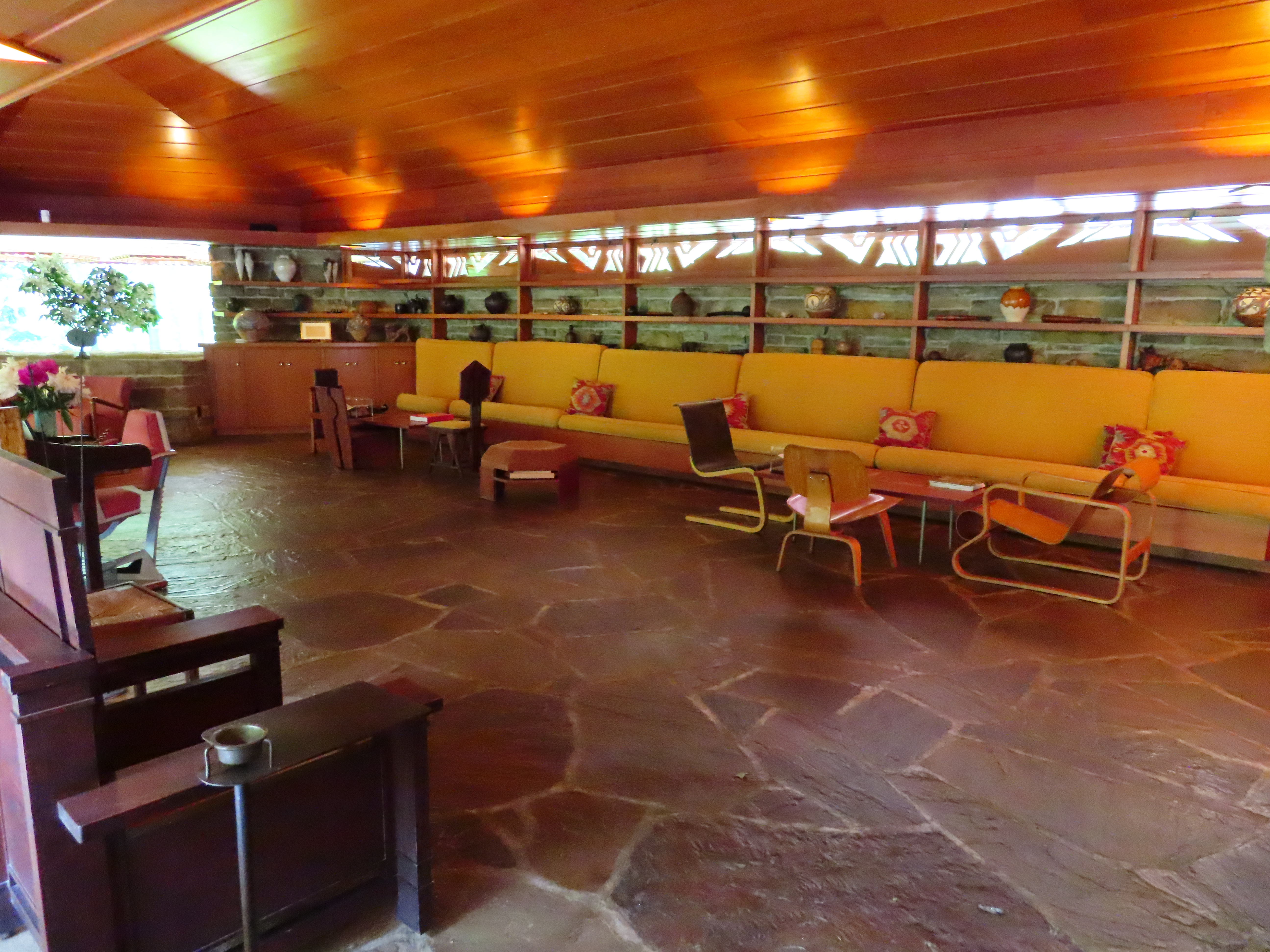
The kitchen, bedrooms and bathrooms are all very small. The focus is on the large living/dining room and the outside balconies. Check out the banquettes in the living room. Not what I consider the most comfortable seating, but maybe if you imbibe enough from those nearby bottles, you won’t notice.

At the other end of the living room is the dining area. Are you expecting the tour to turn left or right into the kitchen? Well, it doesn’t. The kitchen is a tiny space down a flight of stairs and through a very narrow hallway. The owners clearly didn’t spend much time there. That was the domain of the servants. There are no photos, because the kitchen was so tiny, I couldn’t figure out how to frame it.

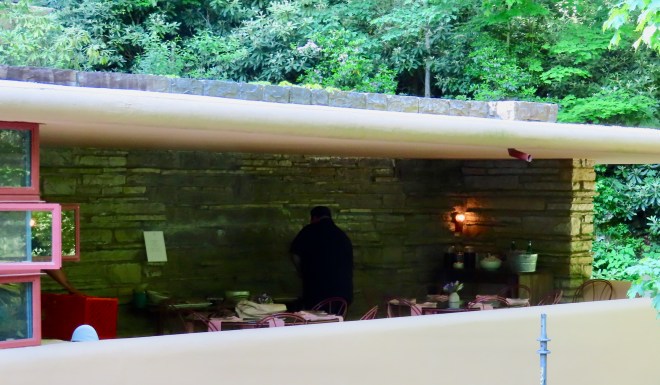
I was quite happy that our appetizers were not served in the dining room; instead, we enjoyed our hummus, crackers, cheese and veggies on one of the decks.

A staff member was getting everything ready for us. You can see from that blue pole in the foreground of this photo that necessary repairs are being made on the building.

While enjoying our appetizers, one of the other guests strongly recommended that we visit another of Wright’s nearby buildings. Kentuck Knob was built about 20 years later, for friends who were frequent guests of the Kaufmann family, the owners of Fallingwater.

Okay, so I know this is heresy, but I actually liked Kentuck Knob BETTER than Fallingwater. It has all of the usual Wright features, but it just seems more LIVEABLE. Interestingly enough, it is considered “usonian” (Frank’s term for his “middle income” houses.) This “middle income’ house was built for the Hagans, the owners of the ice cream company in Uniontown PA, and was sold to its current owner, Lord Peter Palumbo, who, since 1996, when not using it as his vacation home, opens it to the public.

A photo of the Lord and Diana (wearing her “screw you, Charles” dress) appears in the house. I grabbed this from the internet

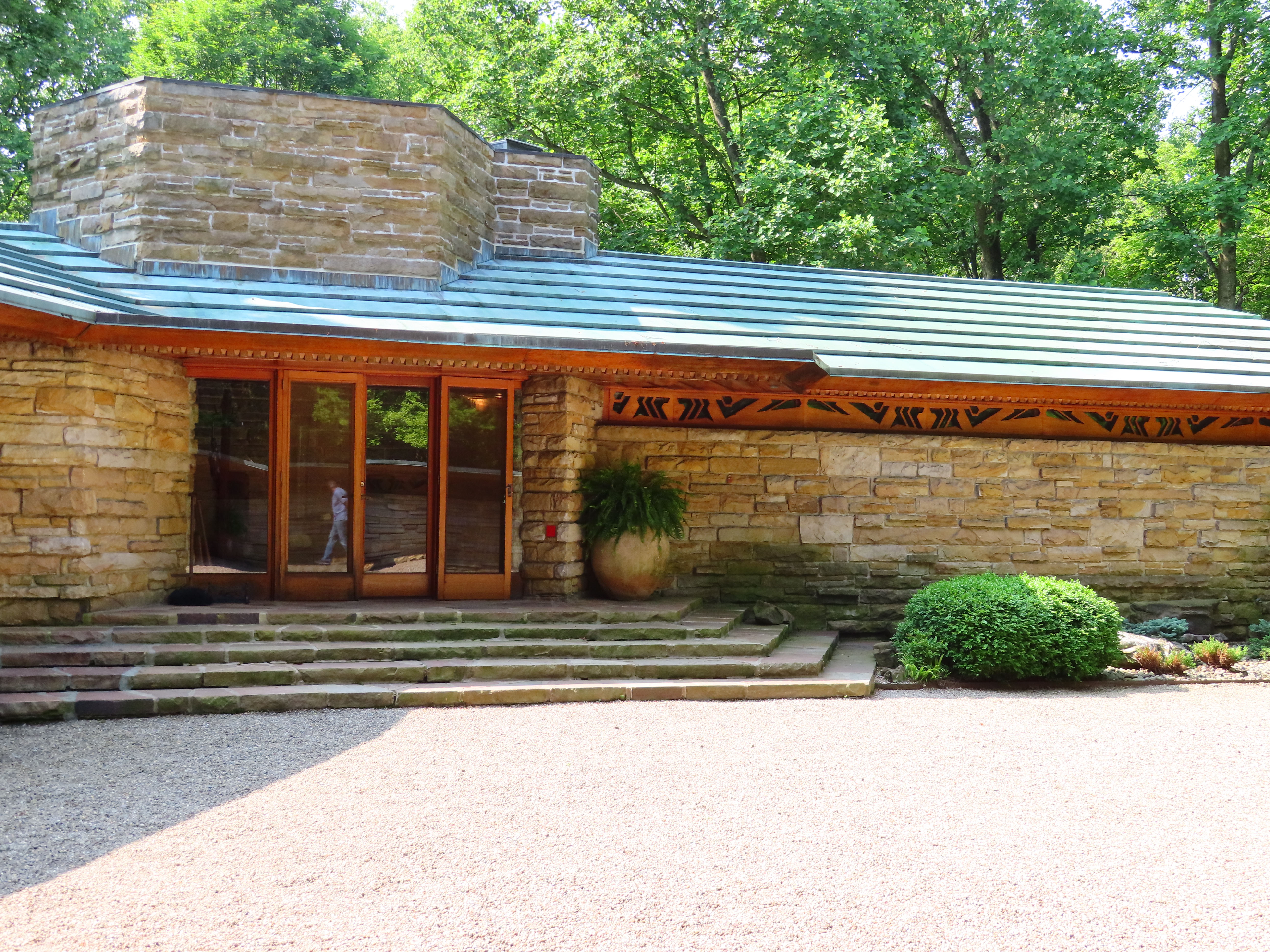
Take a look at the cutouts under the eaves. They are a source of light into the living room and supposedly repeat design elements found in the building. (I’m taking that on the guide’s word. I couldn’t spot any of those elements.)

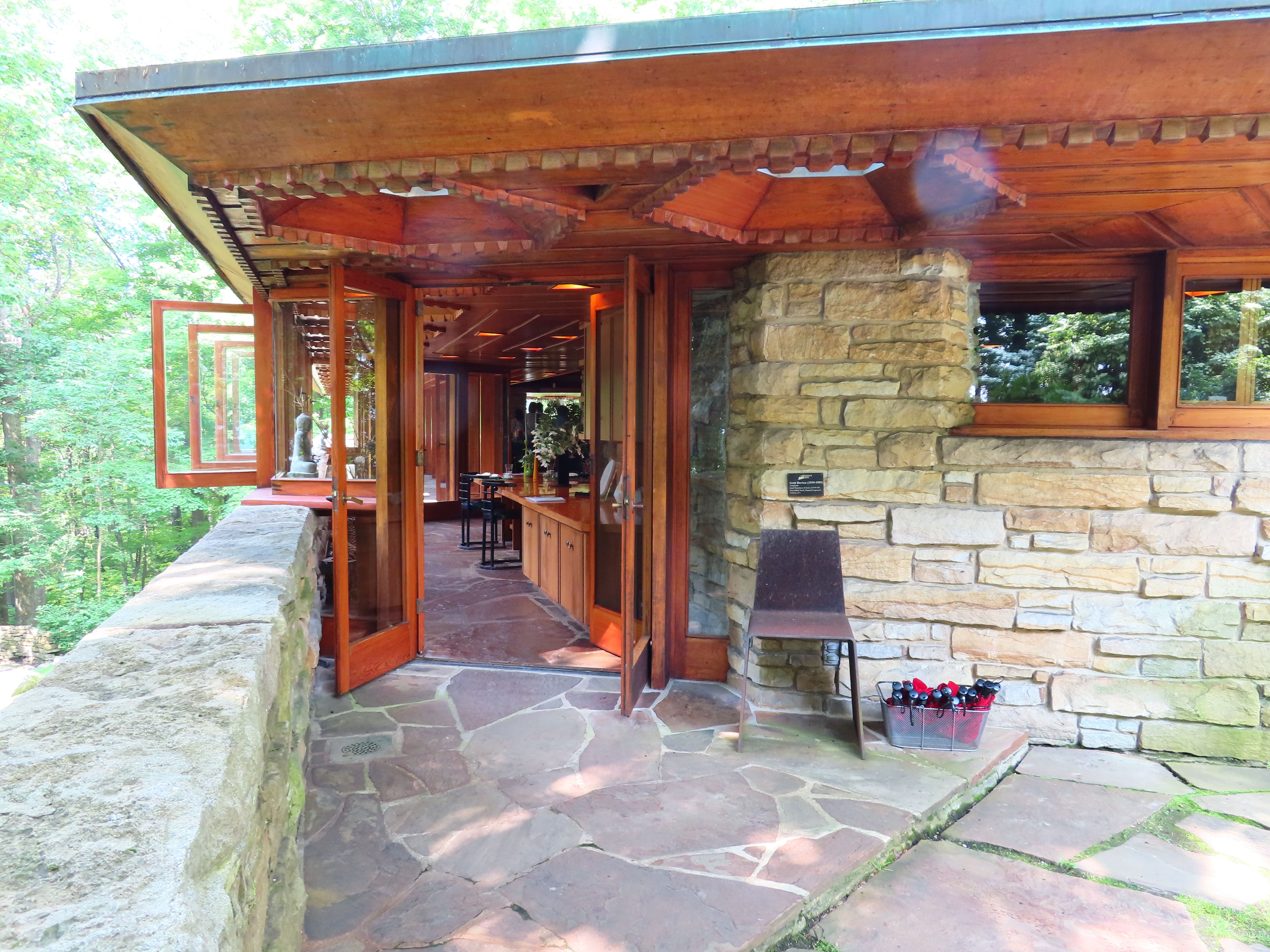
Notice how the carports–Wright’s invention — are nestled into the landscape. The hill behind forms a partial roof.

Although we weren’t allowed to take photos INSIDE the house, there was no rule against shooting through the windows into the interior, which is what I did.

Now take a look at the role the cutouts play in the interior space.

The wall opposite the banquettes is all windows and glass doors, offering access to a walkway and a spectacular view of the valley below.

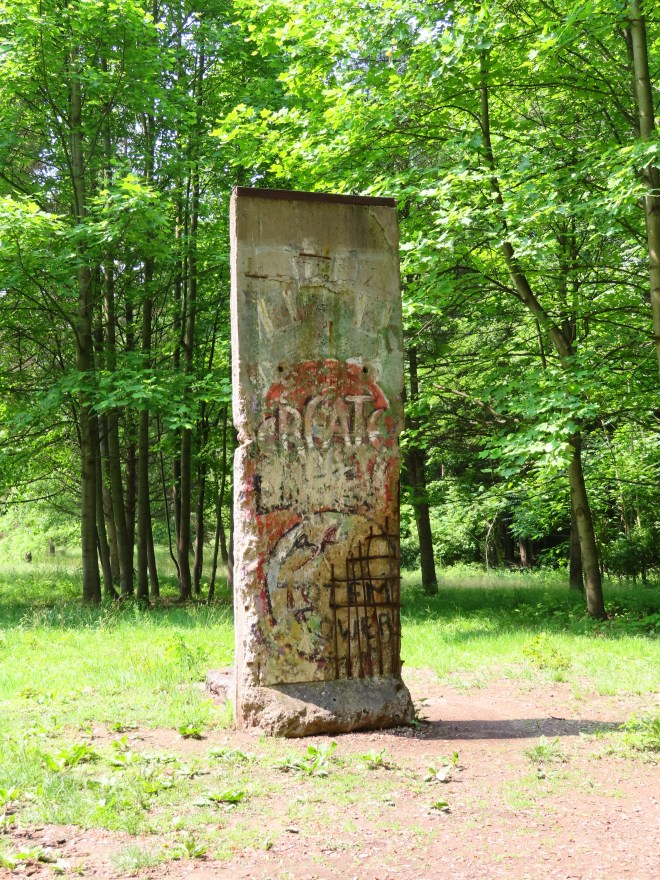
The price of your admission allows you to wander through Lord Palumbo’s spectacular sculpture meadow. I was particularly taken with the part of the Berlin Wall. His collection also includes three red British phone booths at the visitors center.

I’m tired of writing and you are probably tired of reading so the rest of the area attractions I promised in the first paragraph will have to wait until the next time I post.

Patagonia – Our Final Days

I’ll admit it. I am a lazy blogger. It seems it always happen this way. I start out with great intentions, keeping friends and family updated as to our whereabouts, but toward the end of every trip, I run out of steam. Then, re-entry into our world takes a few weeks. So here we are, back home, reliving our wonderful time in Patagonia via photos.

Our last several days have not been recorded, so let’s start there. If you recall the map from the Punta Arenas post, you’ll remember that we had some very long travel days.

With a bus like this, however, you travel in comfort, and you really get to experience the countryside. There were only 12 travelers (plus guides) on a bus that could carry over 40 passengers! With multiple interesting stops along the way, time passed quickly.

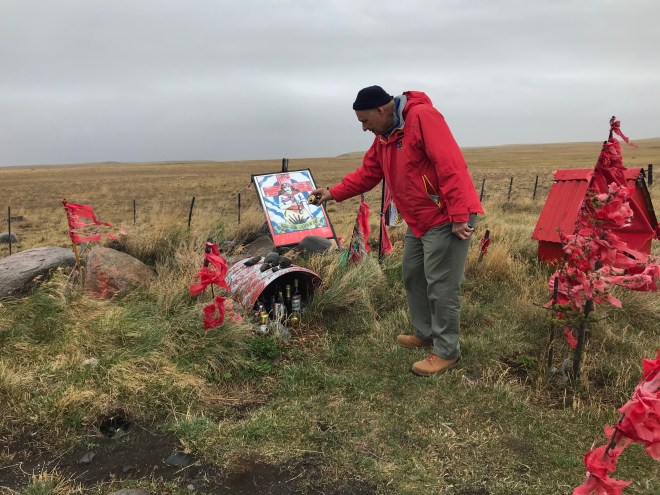
On our way to cross the border back into Argentina, we stopped to pay tribute to Gauchito Gil.

Here’s his story: Gil joined the Argentinian army to fight against Paraguay. He returned to his village as a hero, but soon after, the Argentine Civil War broke out. He refused to fight against his countrymen, so he deserted. He was found in the forest, by the police, who tortured him and hung him upside down from a tree. As a policeman was about to kill him, Gil said, “your son is very ill. If you give me a proper burial and pray to me, your son will live. If not, he will die.” Despite the prediction, the policeman cut Gil’s throat. When he arrived home, the policeman discovered his son was indeed very ill, so he heeded Gil’s prophecy–gave him the proper burial, said a prayer or two, and (wait for it–dramatic pause) the son was CURED!

SO, today’s travelers offer a beer or some other tribute to Gil, as an extra insurance policy for a safe trip. As you can see, we were no exception. Hey, why not.


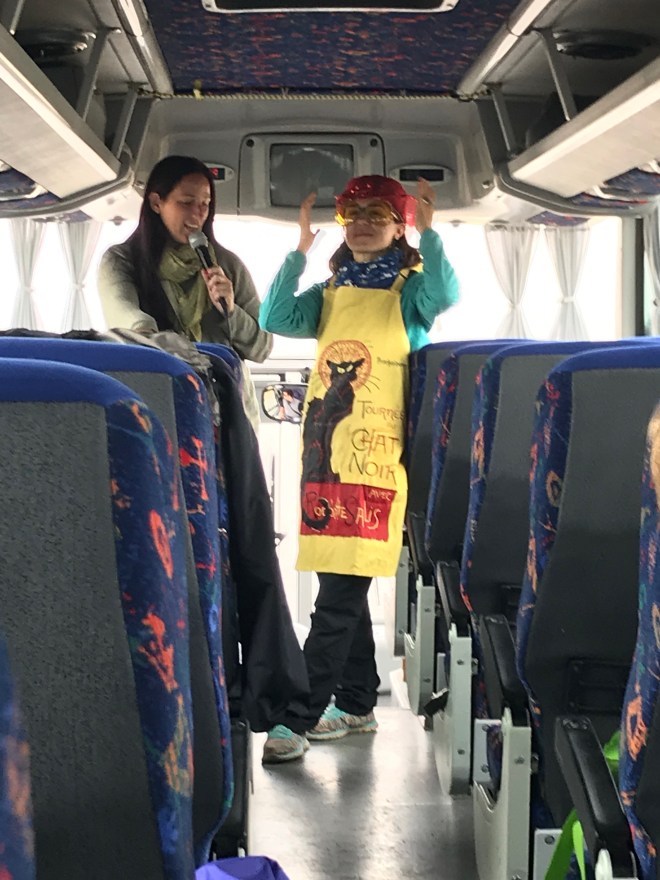
In addition to educational stops along the way, our guides kept boredom at bay by entertaining and feeding us. Laura, our guia excelente, donned that costume before she served us a wonderful treat. Yeah, I forgot what it is called, but I certainly remember the wonderful taste.

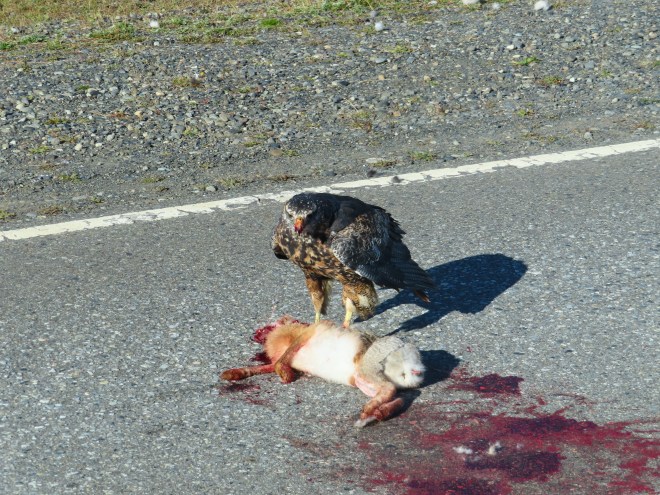
We were not without our national Geographic moments. As we drive the highways and by ways, we noticed several eagles and other large birds of prey sitting on fence posts. Were they watching the cars go by, as an avian form of TV? No, they had figured out that it was just a matter of time before some tasty road kill would make their grocery shopping much easier. Take a look.

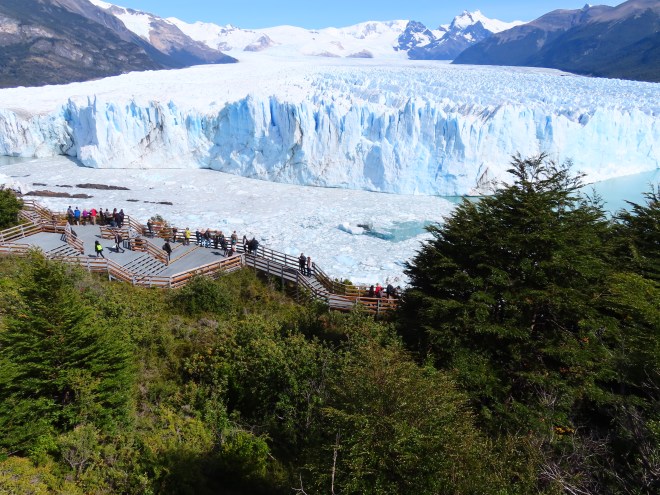
Before we knew it we were in El Calafate, Argentina. The main purpose of our 2 night stay here was to view the Perito Moreno Glacier in the National Park.

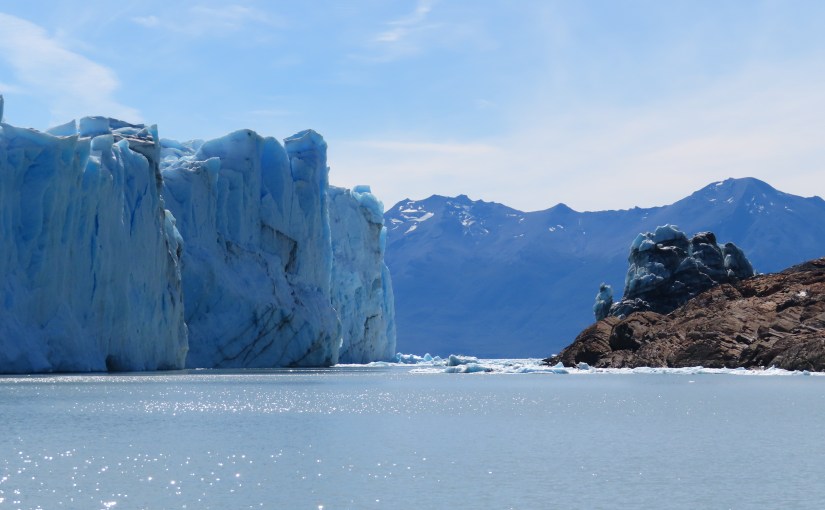
We certainly did that, both from a ship and from land. It was quite a majestic sight. The experience wasn’t just visual, however. It was also auditory. We could actually hear the glacier groan and thunder, as parts of it crashed off into the sea below.

While in El Calafate, we stayed at the Kauyatun, a gorgeous hotel reincarnated from a former sheep ranch. Best of all, it is within walking distance of El Calafate’s charming center.

Our trip ended in Buenos Aires, where we had our farewell dinner, then flights home the next afternoon.

A toast to Laura

Saying goodbye is never easy, especially when you have such an interesting, caring, informed, fantastic guide like Laura. We all truly appreciated how hard she worked to make this trip extra special for all of us. Her energy was amazing!

We also felt so fortunate to be a part of an extraordinarily compatible group. Our hope is that this will not be the last time we see these wonderful, smiling faces!

The terrific twelve

Towers of the Emerald Blue

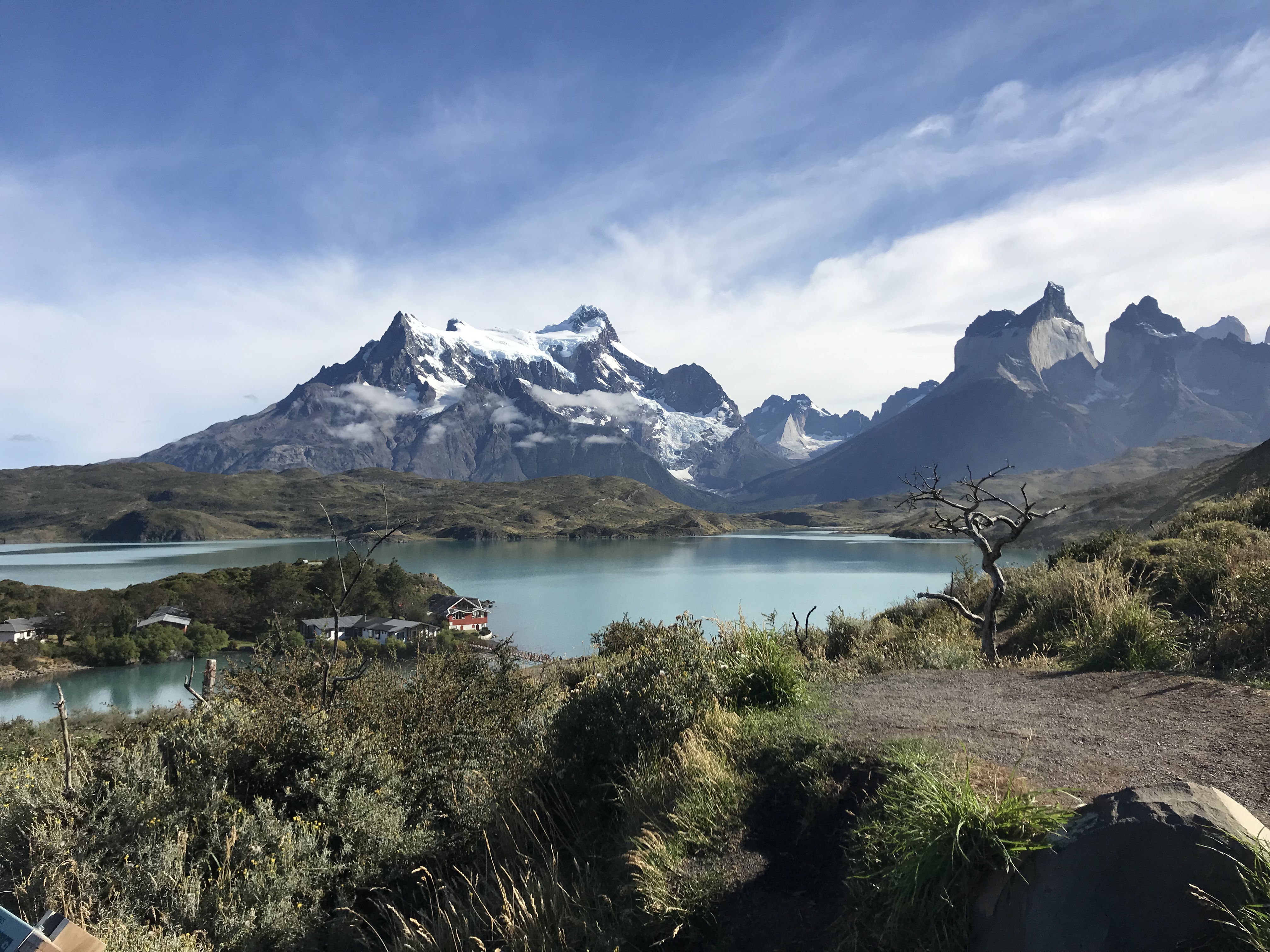
“Paine” is a Mapuche word meaning emerald blue, or, if you prefer, blue green. So “Torres del Paine” gets its name from the towering, unusually shaped mountains and the icy clear Lake Pehoe.

Normally, this area is buffeted by high winds and lots of rain. Laura and Maria, our guides, have reminded us how very fortunate we are to be experiencing this incredible weather. It could change at any moment, but so far we have beaten the odds.

Last night we took advantage of having an astrophysicist in our midst and persuaded Mike to give the group an impromptu lecture on the southern skies. We were so very lucky: the phase of the moon was perfect for viewing. It wasn’t so bright that it obscured the stars. We saw the Milky Way and the Magellanic Cloud, a rare treat. Too dark for photos–you just have to take my word that it was magnificent. And Mike was really pretty amazing too.

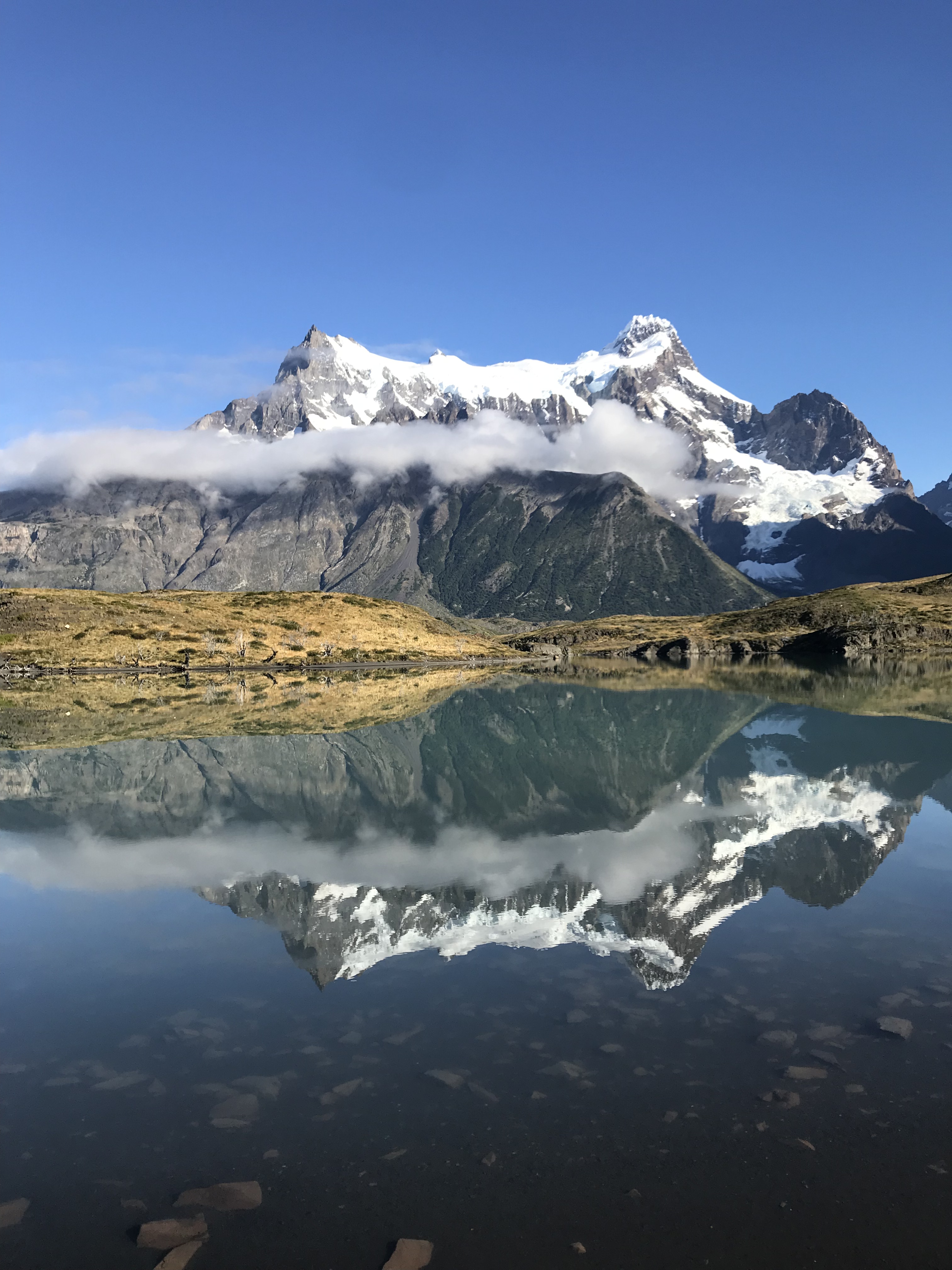
I DO have other photos that will give you an idea of the grandeur and beauty of this National Park.

During yesterday afternoon’s first hike, we battled head winds that made those two miles feel a whole lot longer.

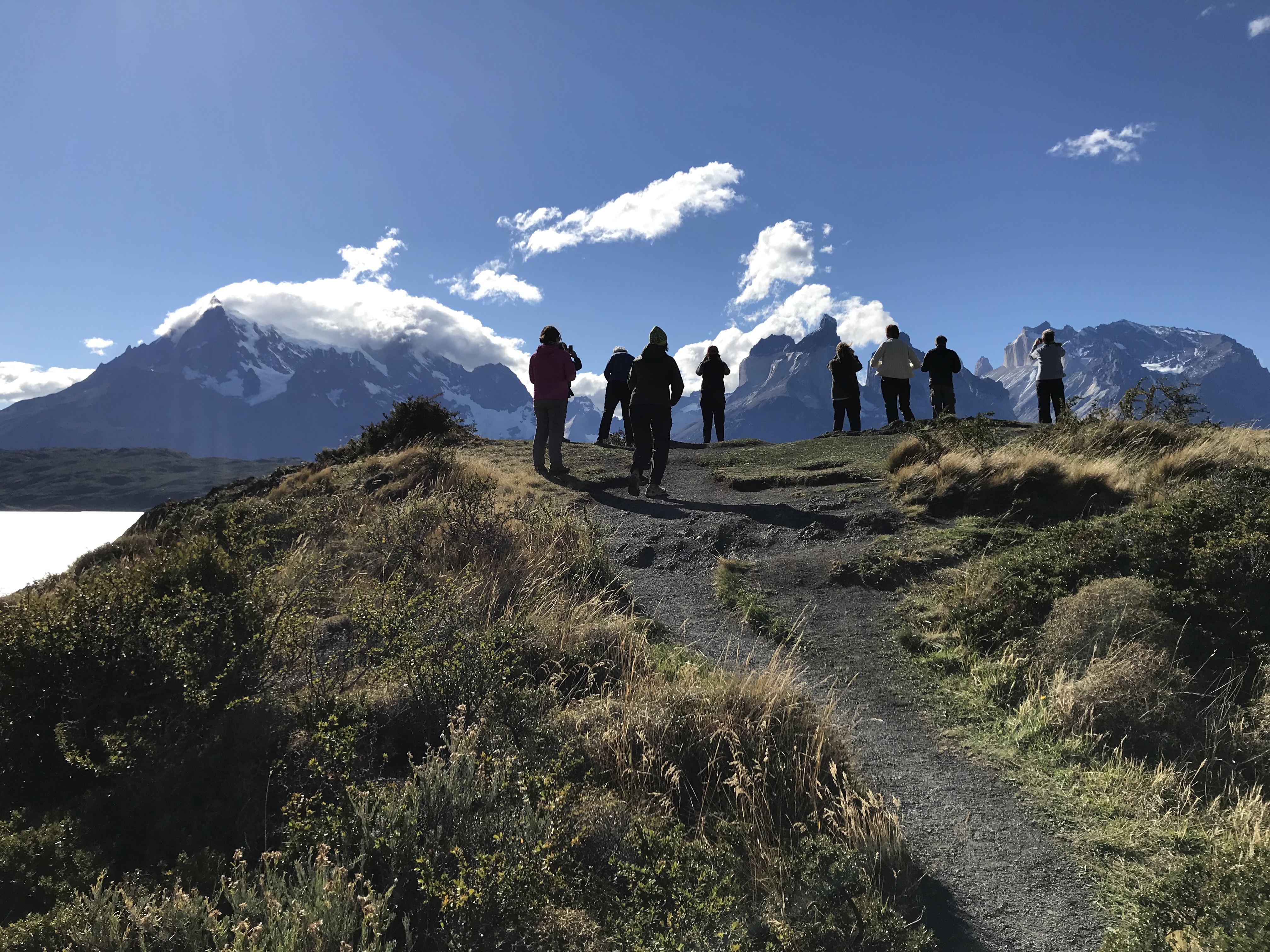
The sun wasn’t in the best position for photos, but I liked this shot of some of our group admiring the view.

One advantage of staying at one of the three hotels within the park was getting an early start. THAT allowed us to hike to the perfect spot so we could catch this gorgeous reflection on the lake.

It was a 4 mile hike that, according to my Fitbit, was the equivalent of climbing 43 flights of stairs. Believe it or not, it was a much easier than yesterday’s shorter hike because the wind wasn’t blowing.

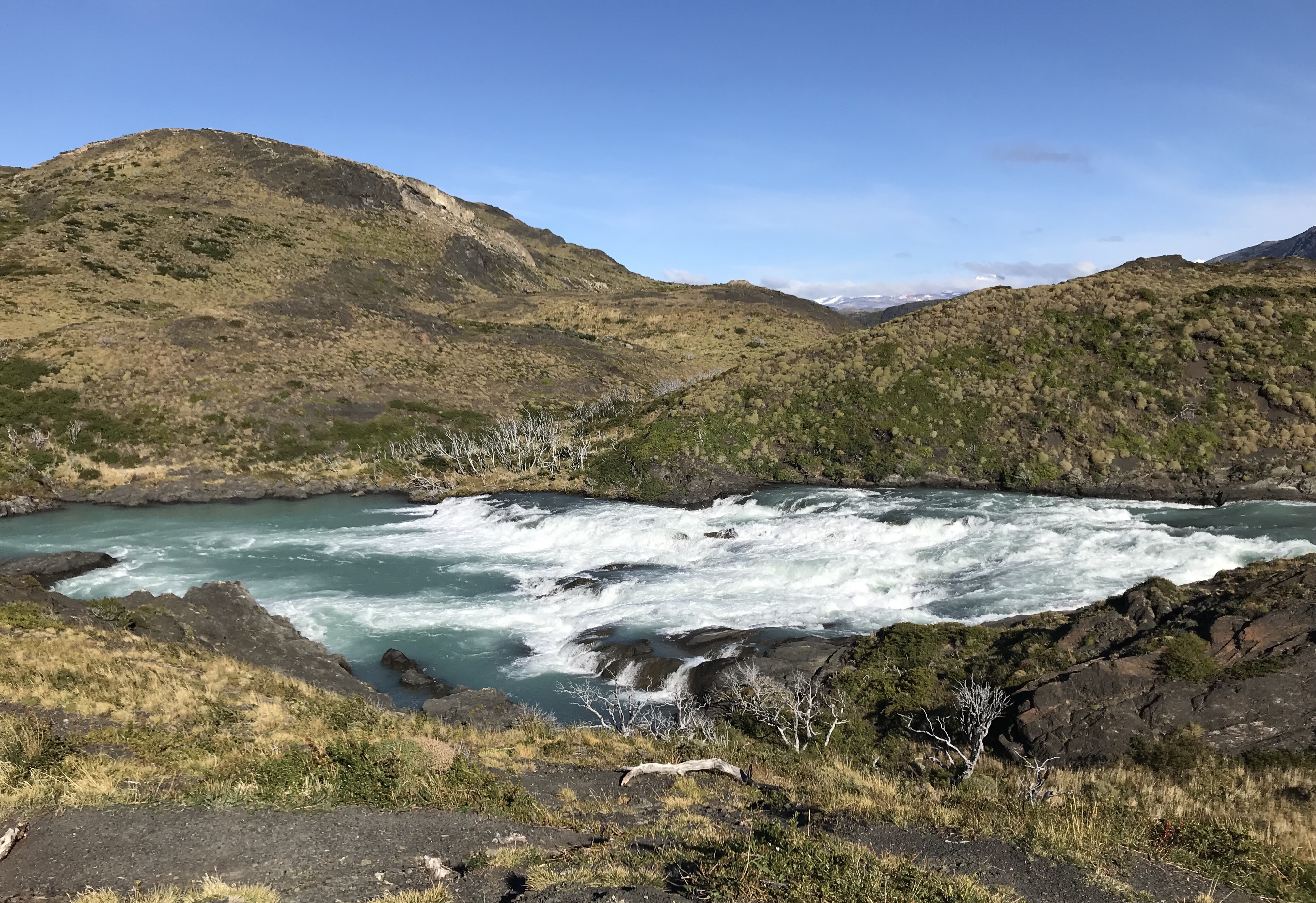
We were able to see this waterfall from a distance AND up close.

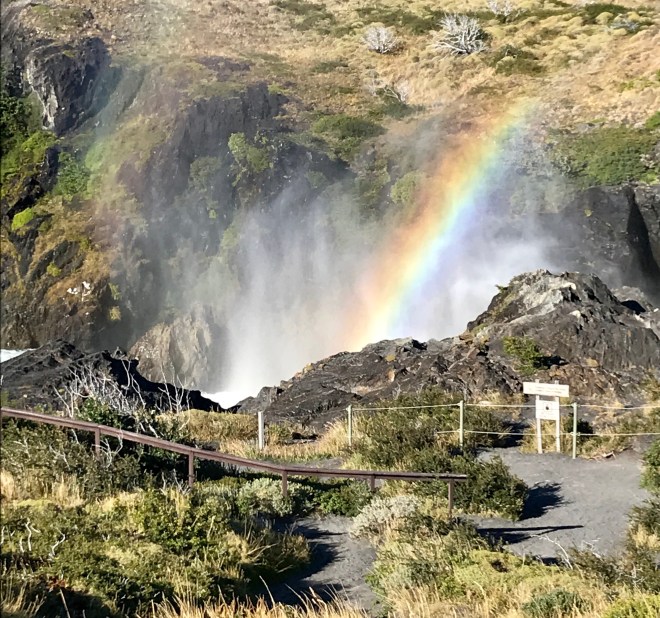
Once again, our timing was perfect. On our return trip the light was just right for the mist to create rainbow after rainbow.

Okay, so the surrounding area wasn’t picture perfect, but that was the best angle to capture the rainbow.

Another amazing day in Patagonia, and it’s not even over yet. One more hike this afternoon.

Punta Arenas

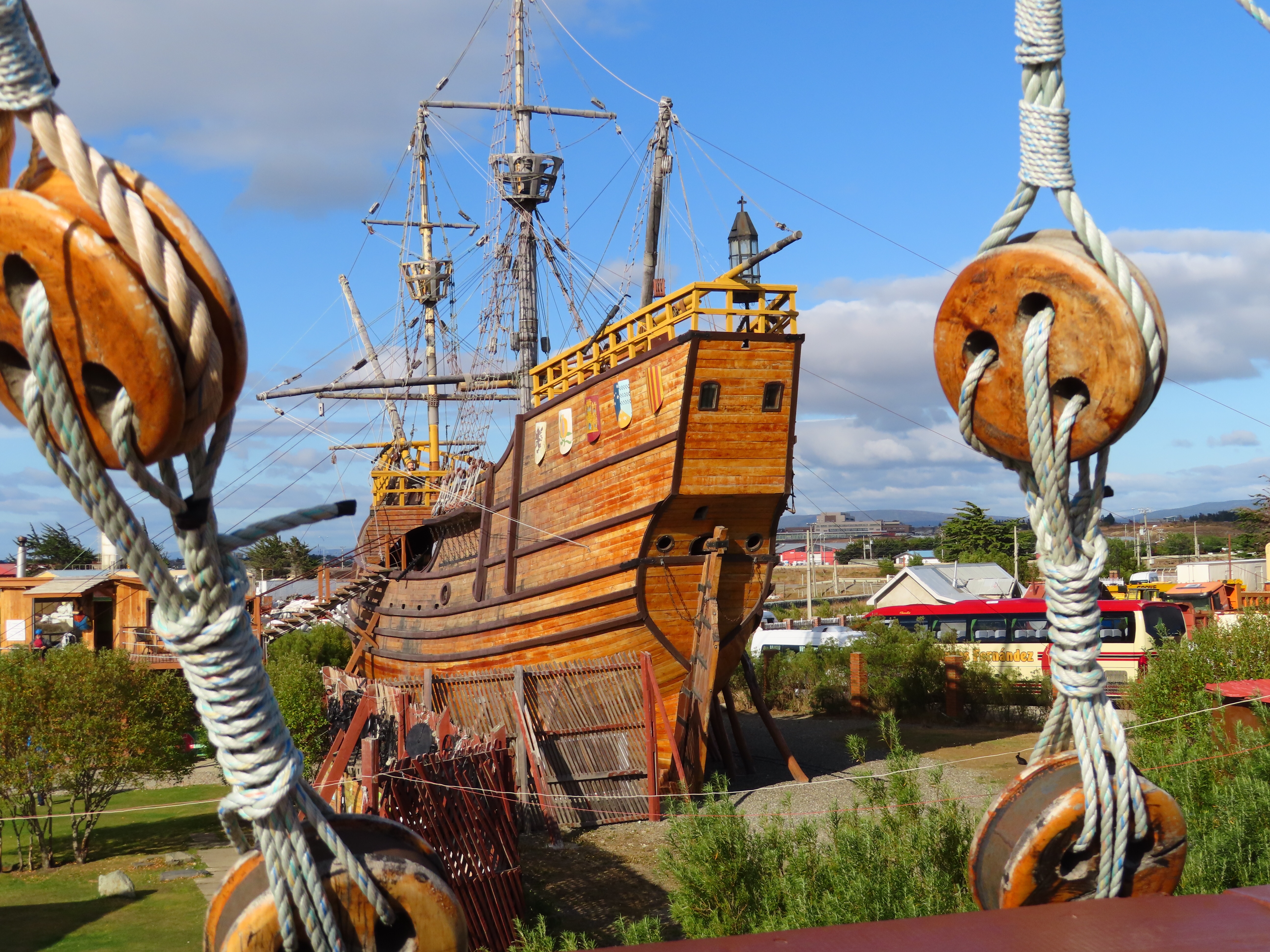
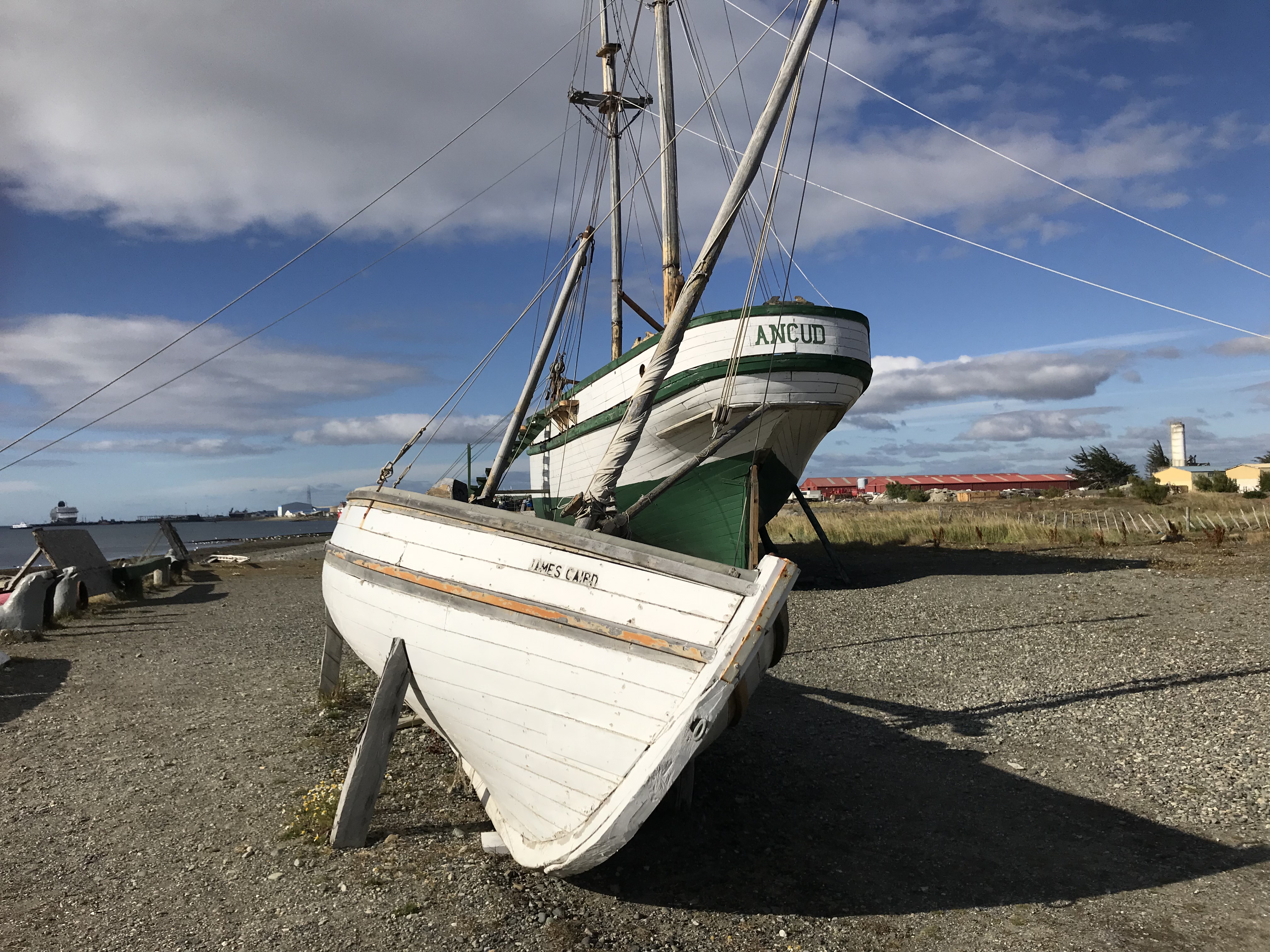
Trivia question for you. Where can you find replicas of the ships of Magellan and Darwin, the ship used to claim this area for Chile, and the lifeboat that Shackleton used to get to the mainland to get help for his crew stranded in Antarctica? I’ll give you a hint. It’s the title of this post.

Magellan’s ship, Victoria

Darwin’s ship, The Beagle.

The small boat in the foreground was the one Shackleton used after The Endurance sank. The bigger one got the Chileans to this area so they could claim it for Chile.

Other notable images from Punta Arenas follow:

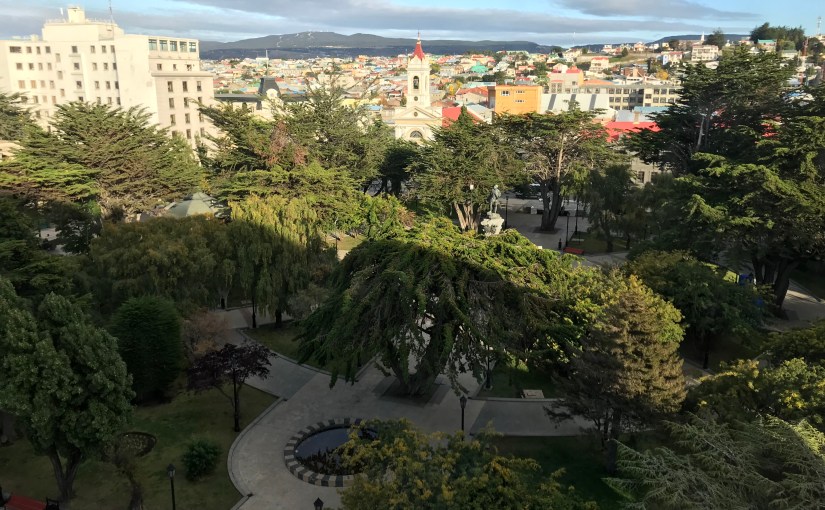
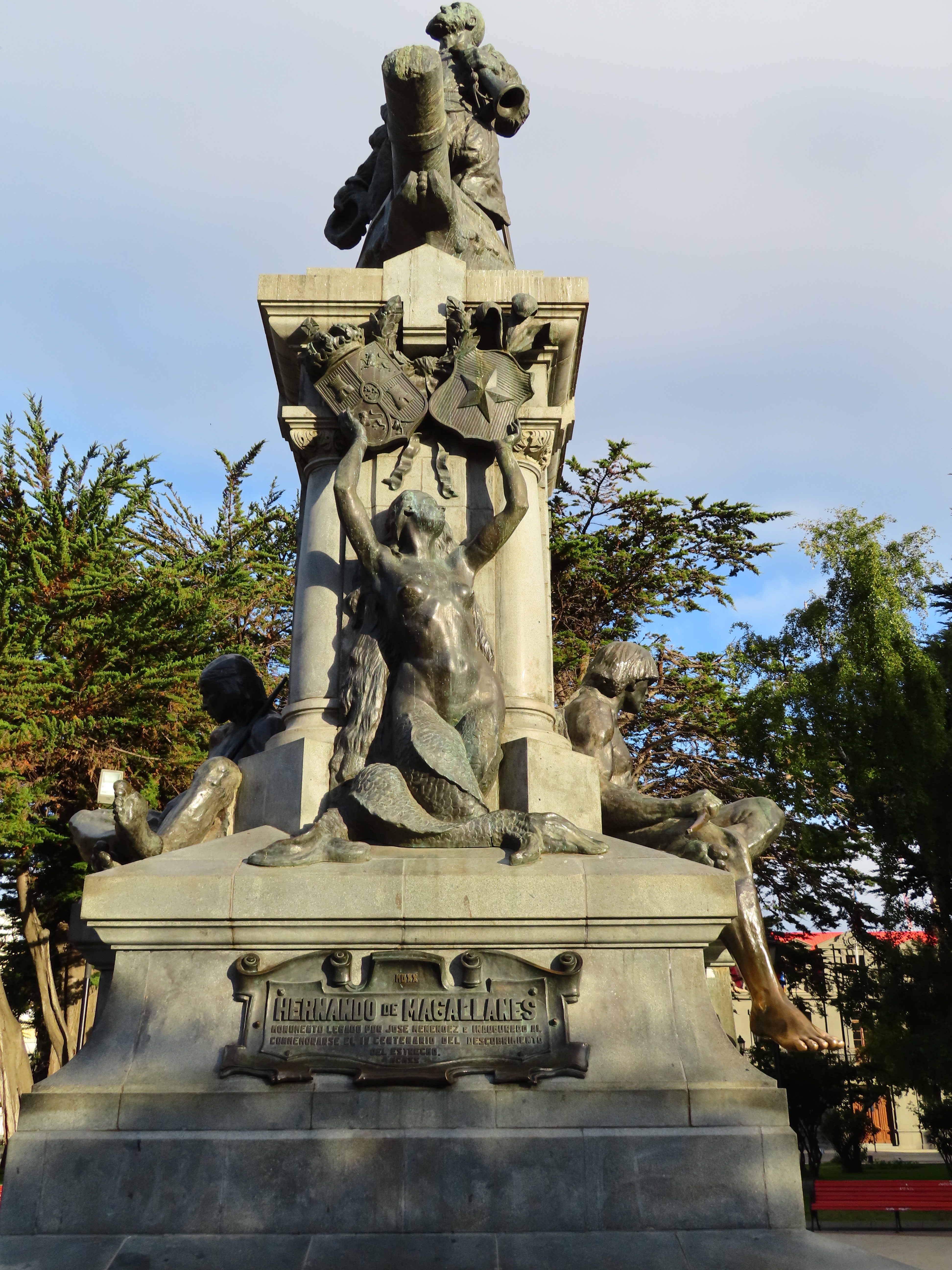
The huge monument to Magellan in the main square across from our hotel has carvings on all four sides, with a rather arrogant Magellan atop.

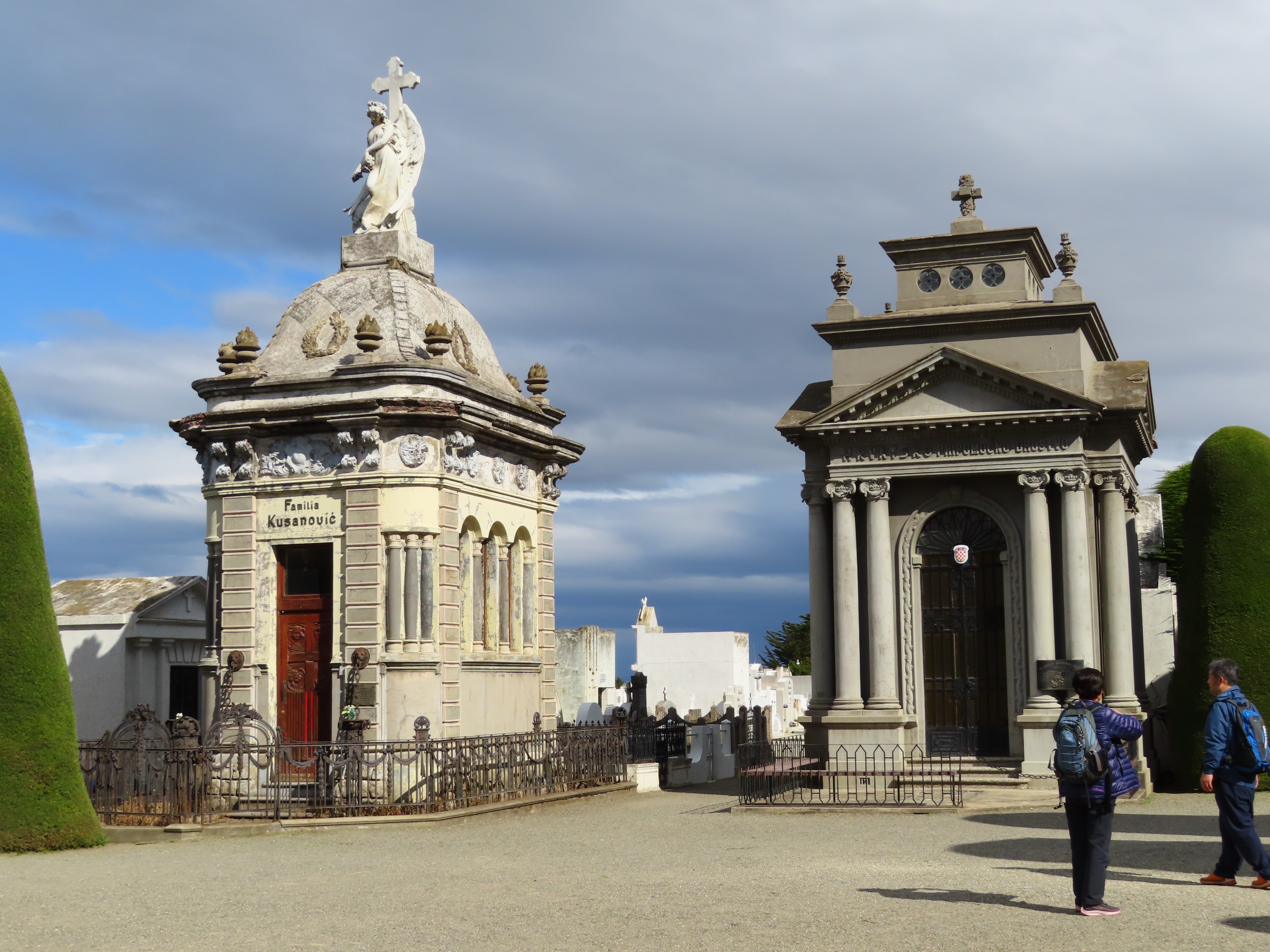
Punta Arenas was a very wealthy area at one time, and the cemetery reflects that abundance.

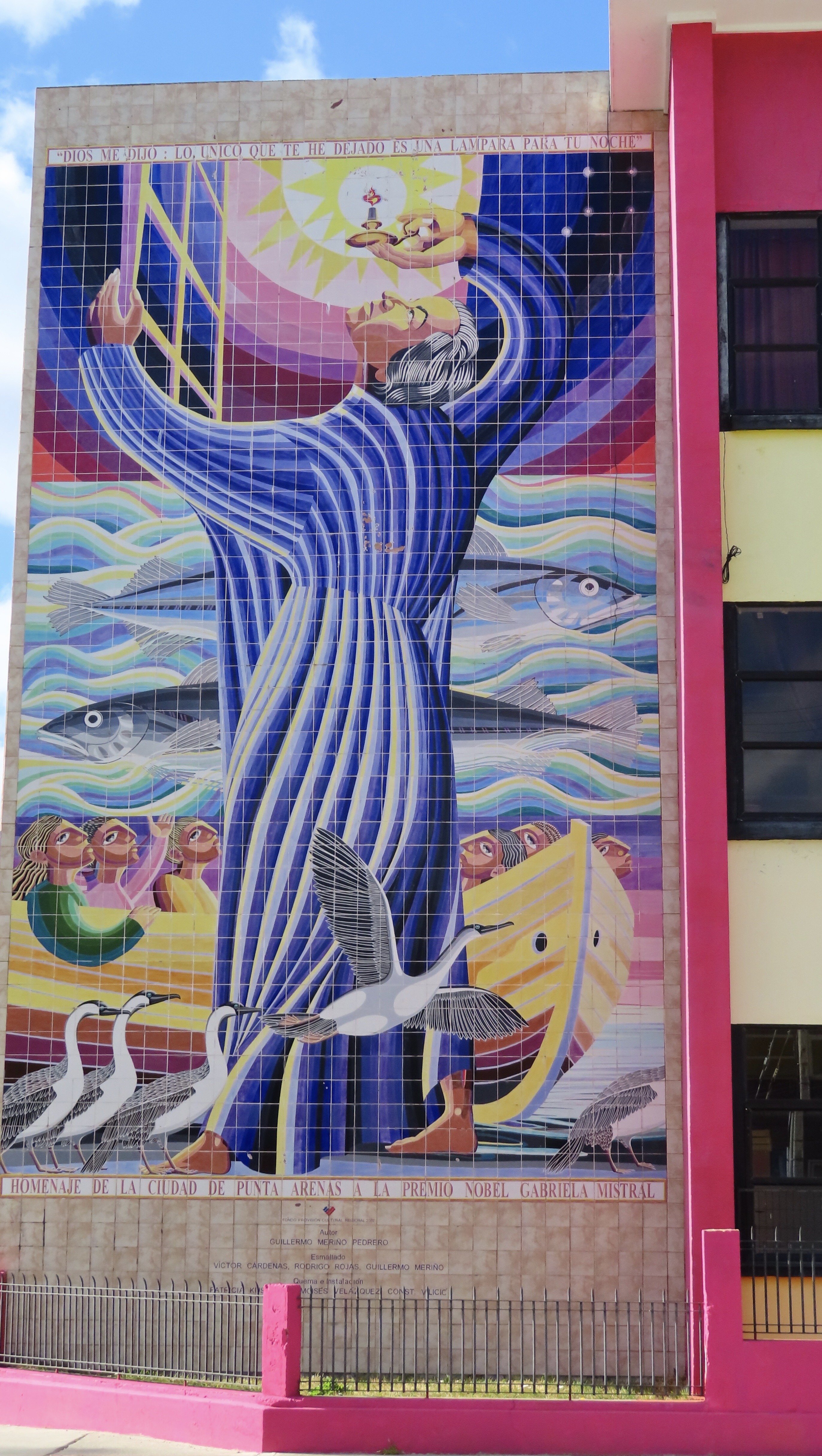
This mural honoring Gabriela Mistral is on the side of the school she founded (more about her later)

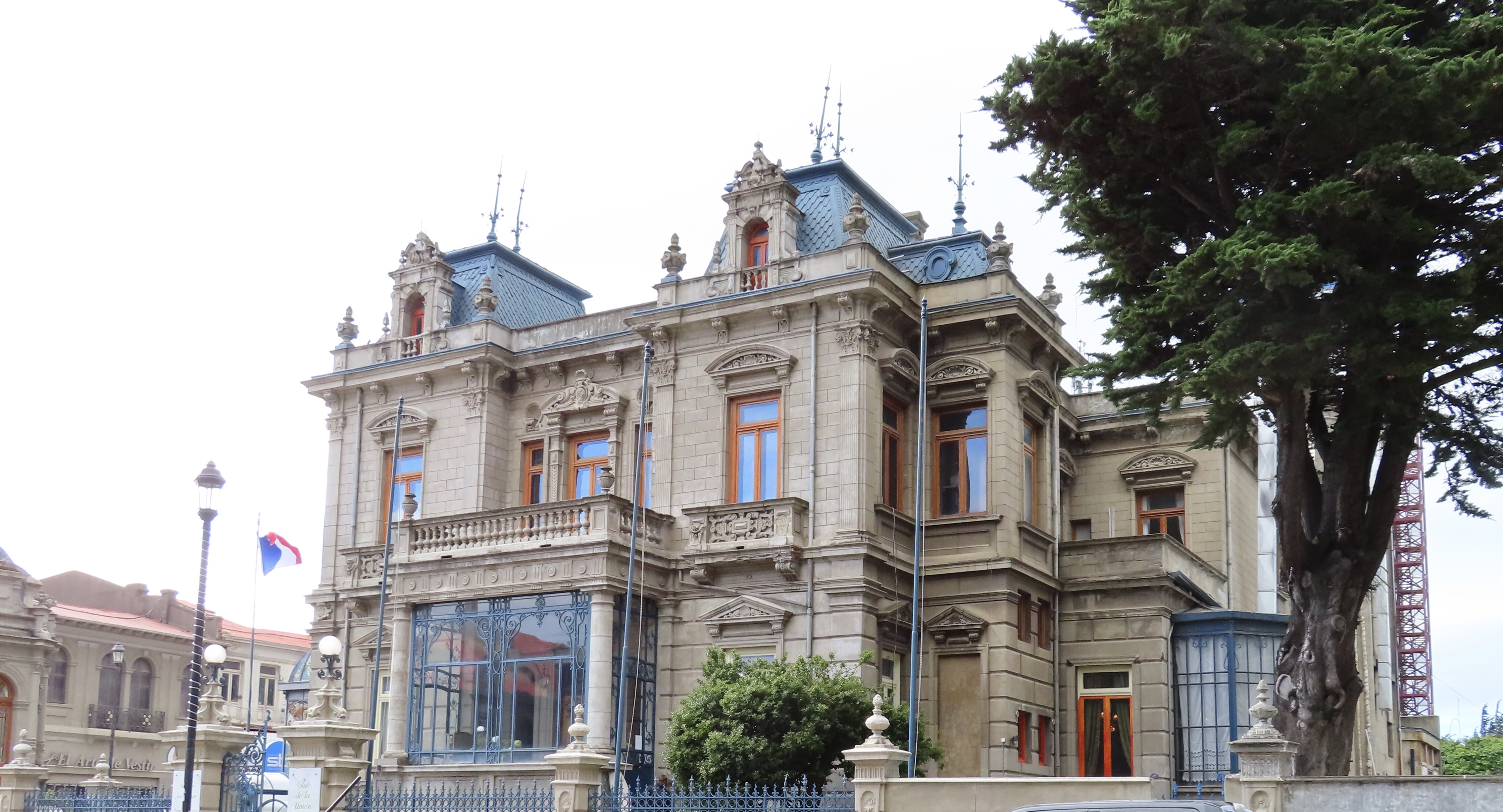
Sara Braun’s mansion faces the main square. This is ANOTHER good story that has to wait till I get home.

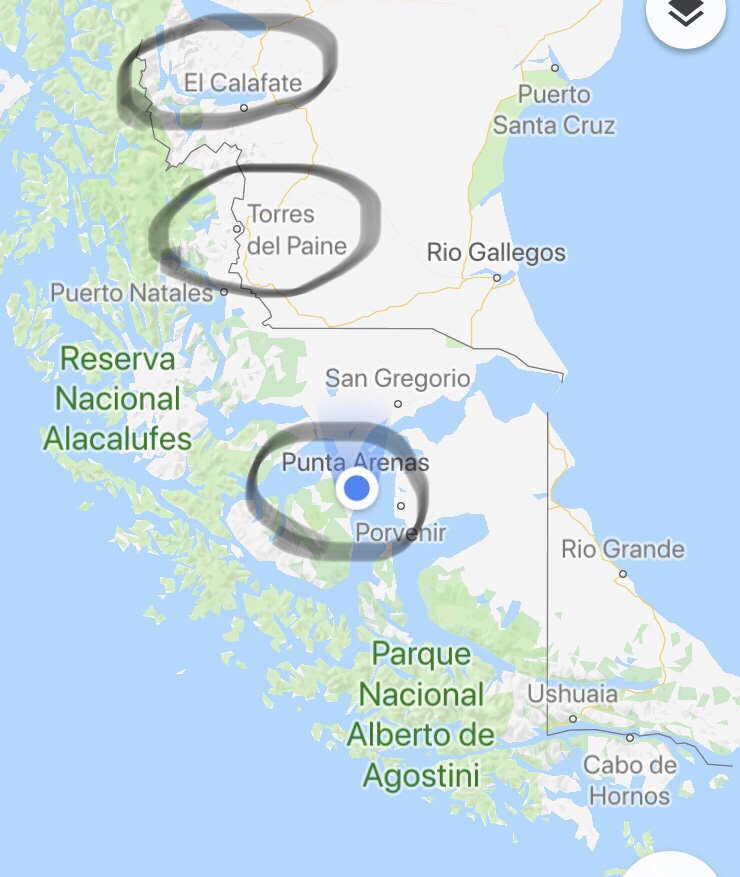
This morning, we are heading to remote areas where Wi-Fi could be nonexistent.

Although the distances don’t appear to be great, this appearance definitely IS deceiving. We will spend most of today traveling to Torres del Paine, stopping along the way for a hike, weather permitting.

Two days later, we will be on a longer drive, to El Calafate. From there we fly to Buenos Aires.

For all the map lovers, that one is for you. ❤️

The ADVENTURE part of Overseas Adventure Travels

There is no such thing as bad weather, only bad clothing” according to Laura, our wonderful guide.

Were we prepared for our walk in the rain forest? Thanks to Laura’s excellent instructions, we most certainly were.

We are wearing our waterproof pants, boots, ponchos and parkas.

Puerto Montt is usually very rainy, and today was no exception. That means we had an authentic experience, which got even MORE authentic as the day wore on.

First, we had an interpretive walk through Chile’s first National Park, Vicente Perez Rosales. The water is normally a clear blue, but rain and wind has carried volcanic ash into the water resulting in this brown color.

My new partner in crime, Janis, is another Massachusetts gal.

In other parts of the park, however, the water was a beautiful clear greenish blue.

While we were sauntering through the park, a light rain was falling. That changed to a torrential downpour while we were at lunch. But I’m getting ahead of myself.

Lunch was quite a novel experience. First, it was a short boat ride away.

Second, lunch was in a private home in the middle of the National Park. How a private home ended up in the middle of a private part, I could probably remember if I hadn’t had that second glass of wine. But the “how” is not essential to the rest of our story.

What started as an Overseas Adventure Travel home hosted meal became so successful, the host built this addition on to his home, and transformed the addition into a restaurant, now open to other travelers.

Third, the menu consisted of whatever our host caught. For us, today it was rainbow trout.

And yes, it was every bit as good as it looked.

By the time lunch was over, the rain had let up a bit, but our adventure was far from over. You see, there is only ONE road into and out of the park, and when there are torrential rains, THIS is what could (and did) happen.

The guys in the foreground are on OUR side of the street. The ones in the background are where we need to be. And in between? Well take a good look.

Remember our motto “expect the unexpected”? Well, once again, we weren’t disappointed.

My new friend Janis, also known as my “partner in crime” and I were first off the bus to size up the situation. Braving rain and wind, we returned with this video.

Fortunately, heavy equipment magically appeared to do whatever heavy equipment does,

and within two hours we were on our way. I’m thinking Janis and I have a future in cable news. Whadda ya think?

What a great group to travel with! No one complained. Here are some of fellow travelers’ comments: “How lucky are we to be in such a warm, comfortable bus”, ” Good thing we used the baño before we left the restaurant”,”It’s an adventure!”

I LOVE this group!

Here’s how our day ended.

The lake across the street from the Radisson Hotel.

Tomorrow we hit the road again, so I will hit “publish” and hope for the best!

Santiago, Day Two

We started our second day in Santiago by congratulating ourselves on our wise decision to take it easy on day one. It’s amazing what a good night’s sleep can do for a pair of weary travelers.

First on our list was La Chascona, one of the three homes of Pablo Neruda. Don’t feel bad if you don’t know who he is. I certainly didn’t, and this is the second time I’ve been in Santiago. Not only was he a Nobel prize winning poet, but he was also a politician, and a very quirky collector. What did he collect, you ask? Well, clearly houses, given that he had three of them, all kinds of art, books, knickknacks and women. I’ll let you read about the women and all the steamy stuff on your own. I’m doing this post on an iPhone so have to stick with the essentials, because I am so high minded.

La Chascona is now a very well run museum, complete with a short, but very informative video about Neruda’s life. You also get one of those “press the button” audio guides, which explains what you are seeing as you move from room to room. What makes this house so fascinating is it was built according to Neruda’s specifications and it is multi level.. Big deal, you might be thinking. LOTS of houses are multi level. Yes, but do you have to go outside to get from one level to the next?

No ranch style living for THIS aging Chilean!

We weren’t allowed to take photos inside the house, but I was able to get this shot of the dining room from outside. The table is very narrow, to facilitate conversation and extends almost the entire length of the room.

What I loved most about the dining room is something I unfortunately couldn’t photograph—the back wall. The left side was occupied by a hutch containing china and crystal. what looked like paneling on the right was actually a door to a secret passageway, with a spiral staircase leading to Neruda’s bedroom. The treads on the staircase were so small, I was afraid by very tall, very big footed husband wouldn’t be able to climb it, but he did. For him, the outside staircases were far easier to navigate.

See, I wasn’t kidding about multiple levels!

La Chascona is close to Cerra San Cristóbal, so even though we fully expected it to be a tourist trap (thank you, Esther, for the warning)it made sense for it to be our next stop. We rode the funicular to a viewing area for a look at the HUGE metropolitan area of Santiago. I knew the city was big, but didn’t know HOW big till then.

At the summit is an enormous statue of Mary. It appeared some sort of religious service was taking place there, so we climbed the 6o steps (yes, I counted) to ride the cable car. Although you get even more views of the city, to me it wasn’t worth waiting in line. And yes, the hill IS a bit of a tourist trap, although most of the tourists appeared to be South American.

On our return trip, I noticed a couple of clearly North American ladies in our funicular car. What are the odds, that among all the thousands of visitors to Cerra San Cristóbal, those two random strangers we encountered would be two of the other five travelers on our OAT trip? A quick question got us the answer. It was 100%. They too had come in a day early, and had been touring via the Hop on Hop Off bus.

Returning to the hotel, we met the remaining three OAT travelers who had arrived at the normal start date. Our guide took us on a short walking tour, which ended at Chile’s “ground zero”, the Plaza de Armas, where the Spaniards initially settled. At one corner of the square is a statue of the Moche’s leader, Caupolicán,

and diagonally across is Pedro de Valdivia, the Spanish conquistador.

Isabel Allende’s wonderful book “Inés of My Soul”, gives a historically accurate, but fictionalized account of the founding of Chile, as told by Inés Suárez, the only known female conquistador, and mistress of de Valdivia. It is well worth reading.

Our day ended with a fabulous welcome dinner at Casa Lastarria. We were the only patrons because we were dining at the ridiculously early hour of 7 PM, to make it easy to get up for our 6:45 AM departure for Easter Island.

Pisco Sours for all!

And if all goes well, my photos will upload.

Santiago, Chile

Expect to find these words carved on my tombstone: “She never passed up the opportunity to use a clean bathroom”. Good thing, because it took us two and a half hours to get our butts off the plane, thru Santiago airport and into a taxi. The airport’s long lines would have been even more of a challenge with a full bladder.

One reason it took so long was the computers at passport control went down for 30 minutes. Can you imagine what the crowd would be like if that happened in a NY airport? But here, everyone chilled. No groans, cursing or eye rolls. Free Wi-Fi helped. It gave everyone an opportunity to check in with friends and family.

Was this a regular occurrence? We will soon find out, because over the next six days we will be experiencing Santiago airport three more times: back and forth to Easter Island and to Buenos Aires.

Another reason for the long lines is Chile seriousness about not allowing agricultural products into the country. If the dogs don’t get you, the scanning equipment will, so there were no nuts or granola bars in OUR luggage.

We followed our tour guide’s instructions, paying for our taxi inside the airport. 20,000 pesos sounds like a lot, but it is only about $30, and they accept credit cards, so I didn’t need to stop at the ATM to the right of immigration, but I did anyway.

Although we don’t usually stay at Crowne Plaza Hotels, I signed up for their loyalty program when I made our on line reservation. Not only do loyalty members get free Wi-Fi, they also can request early check in. By the time we arrived at 10 AM, we were pleasantly surprised to learn that our room was ready.

A less pleasant surprise was how very tired we were. Or maybe we are just having to acknowledge that we no longer have the stamina that we did in our younger days. Back in “the day”, we would have ignored our weariness and started checking things off our (actually MY) list. Instead, our goals for day 1 are: eat, walk a bit, rest, get acclimated to the new time zone. That was ONE To-Do list we completely accomplished!

By 1 PM, we were so hungry that we ended up having pizza and beer at La Junta, a bar with outside tables. I tell you the name so that if you are ever in Santiago, you will avoid it. The only problem with outside dining—that’s where all the smokers hang out. We ate inside.

Yeah, it was every bit as bad as it looks.

Thanks to the OAT Forum and Trip Advisor, we fared MUCH better for dinner. Both recommended Boca Nariz, a wine bar offering tapas and entrees.

If you don’t have the time or the energy to tour a Chilean vineyard, this is a great alternative. Here, you can choose from a wide variety of wine flights. We opted for wines from the Pacific coast and were pleased with our choice.

Although it looks empty, that appearance is deceiving. Those empty tables are reserved. If you plan to visit, it is wise to make a reservation. We lucked out. Initially the hostess seated us at the only available table, one designed for munchkins. Poor Mike looked like he was at an elementary school parents’ night, sitting at his kid’s desk. The hostess took note and moved us to the big kid’s table as soon as one opened up.

Once again, my blogging is lagging behind our experiences. More about Santiago next time we encounter cooperative Wi-Fi