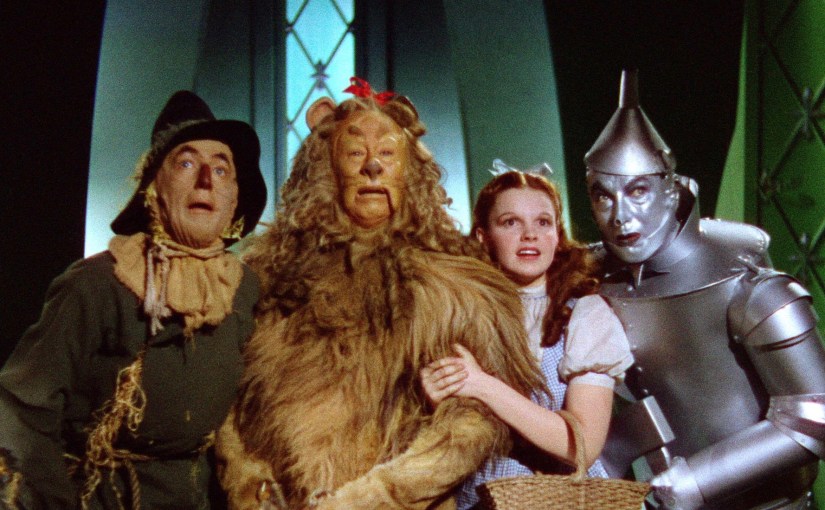
Follow The Yellow Brick Road, Part One

I’ve been traveling all my life.  I can’t remember whether my first trip was to Neverland or to Oz, but I DO know that I returned to both places countless times.

For many, many years all my travel took place solely between my ears.  Although school did its best to smother any interest in geography by forcing us to memorize products, capitals, and other bone crushingly boring trivia, I never lost my enthusiasm for the exotic places I discovered through our local library.  Books were my magic carpet, whisking me to wondrous places a small town girl like me never dreamed she’d ever be able to actually visit.

Maybe that’s why today, before I set foot in another country, I try to read as much as I can about its culture, religion, politics, history and yes, even geography.  I want to experience in it my head first.  It sounds crazy, even to me,  but a place seems more REAL if I have read about it.

Our next trip will be to the Himalayan countries of Bhutan, Nepal and Tibet.  Here’s a map courtesy of Overseas Adventure Travel, roughly showing where we will be easin’ on down the road. Notice the red line stops at the Seti River?  That’s where the rafting starts, because there ain’t no road to get where we are going, yellow brick or otherwise.

Overseas Adventure Travel Itinerary


So about those books I’ve been reading– lets start with Bhutan.

My interest in that country began several years ago when I stumbled across The Geography of Bliss by Eric Weiner.  It introduced me to Bhutan’s concept of Gross National Happiness.   Also around that time, we’d had the good fortune to meet and travel with Dr. Peter Steele.  In 1967, at a time when it was closed to most of the western world, he and his wife were invited to visit Bhutan by the royal family.  After reading his account of the trip, Two and Two Halves in Bhutan, I became even more interested in visiting that fascinating country.

OAT provides a list of “additional resources” for each country on the tour.  That list was my starting point, supplemented by what I could find on Overdrive, an online resource available through our library and of course, by random internet searches.

What follows is nothing even close to a book report, mainly I am somewhat lazy, but also because you will get better summaries by clicking on the blue words in this post.  The Amazon and Good Reads reviewers will do a much better job filling you in than I would have done.

I had no idea that in addition to Peter Steele, Shirley Maclaine also visited Bhutan in the ’60s.  In her 1970 autobiography, Don’t Fall Off the Mountain,  she explains that she had gone to India to learn to meditate, and while there met the new Prime Minister, Lhendup Dorji.  He had assumed that position after the prior Prime Minister (his brother) was assassinated  by a member of the military.   She accepted Dorji’s invitation to visit Bhutan, but unfortunately there was still political unrest in the country, so her visit was cut short.  Still, she was there long enough to give me a feel for what Bhutan was like during that period.  Plus, she DID make it to the famous Tiger’s Nest Monastery in Paro.  And so will I.

Jamie Zeppa’s book, Beyond the Sky and Earth is a wonderful description of life in Bhutan during the late ’80s.  She spent two years as a teacher, first with elementary students in a remote village, then teaching college students at Sherubtse College near Trashigang. Yeah, I’d never heard of those places either.

Jamie married one of her students,Tshewang Dendup. Why did I feel compelled to tell you his name?  Well there is a reason.  In 2003,  he had a starring role in the lovely Bhutanese movie, Travellers and Magicians.  I got the DVD from my library; it’s a great way to  sneak a peek at the beautiful Bhutanese scenery (and to check out Jamie’s ex- husband, if you are so inclined.)

Lisa Napoli”s book, Radio Shangri-La  is about her volunteer work at Kuzoo FM, Bhutan’s “youth based” radio station.  Established in 2006 as one of the king’s projects, Kuzoo broadcasts in both Dzongkha and English.  Lisa’s several years with NPR made her a valuable resource for this young radio station.

Those 4 books gave me glimpses of Bhutan’s evolution from a closed Himalayan kingdom of the ’60s up to around 2009.  What did I learn from my reading?

Ten Fun Facts About Bhutan (Not in order of importance, or any other kind of order, for that matter)

  1. Bhutan is also known as Druk Yul, the Land of the Thunder Dragon
  2. Marijuana grows wild in Bhutan, and is fed to the pigs because (surprise, surprise) it increases their appetite.
  3. Ara is the local moonshine; its a clear wine made from rice. ( Now that we’ve gotten the local stimulants out of the way, let’s move on)
  4. All doctors visits and health care is free
  5. Drukpa Kinley, a Tibetan monk who lived in the late 1400’s,  made his way to Bhutan.  He was also known as the Divine Madman who used his “flaming thunderbolt” to bless women and to bestow “enlightenment”.   He was so successful in his endeavors, he became the patron saint of fertility.
  6. Thanks to the Divine Madman, many Bhutanese houses sport paintings and sculptures of phalluses.  Who knows, photos of the artwork may be a coming attraction of this blog.
  7. Jigme Singye Wangchuck, the 4th king of Bhutan, voluntarily gave up absolute power in 1998.  (When does THAT ever happen??)  He guided the nation from a hereditary monarchy (which had been established in 1907) to its current status as a parliamentary democracy.
  8. Okay, so now the”People Magazine” type information: The 4th king had 4 wives, all of them sisters.
  9. His son, the 5th king, Jigme Khesar Namgyel Wangchuck, was crowned in November of 2008.  That king has only ONE wife, who he met at a picnic when he was 17 and she was 7.  According to legend, he said  ‘When you grow up, if I am not married and if you are not married, I would like you to be my wife, provided we still feel the same.’
  10. Men wear the Gho, and women wear the Kira; these two articles comprise Bhutan’s national dress.  Jamie’s book mentions that all Bhutanese were required to wear the national dress.  This dress code was an issue for the Nepalese immigrants living in the southern part of the country.  I don’t know whether the requirement still exists today, but it will be pretty apparent once we get there whether it does or not.

I actually learned a whole lot more, but I have to save SOMETHING for when we get there, right?

Next stop on our book tour – Nepal.
 

The Final Ingredient for a Happy Retirement

Okay, so far, we’ve talked about sufficient financial resources, good health and strong personal relationships as being three essential ingredients for a happy retirement.  What’s left?

Drum roll, please…

According to  Viktor Frankl, the key is finding meaning in life.   Some lucky individuals find meaning in their work, and are able to make a living following their bliss.  They aren’t interested in retiring.  And why should they?  How great is it to get paid for doing what you enjoy?  They will continue to “work” for as long as they are able. But this post isn’t about them.  It’s about the rest of us, primarily motivated by the bimonthly love notes that appeared in our bank account via direct deposit, for whom retirement is a welcome change from the 40 to 60 hours we spent toiling away.

If “finding meaning in life” sounds a bit too lofty, how about this?  Let’s call the fourth critical ingredient  “oomph” or “pizzazz” or whatever term you bestow on that special something that makes you want to jump out of bed in the morning.

Some embark on a second career, working fewer hours, but because they are doing what they thoroughly enjoy, it doesn’t FEEL like work.  When he retired, my husband started making violins.  Although he has sold a couple, and given away even more, the end product is not the point.  A researcher who loves learning and sharing knowledge with like minded individuals, he’s focused on decoding Stradivari’s secrets and reproducing the sound and appearance of a master violin.

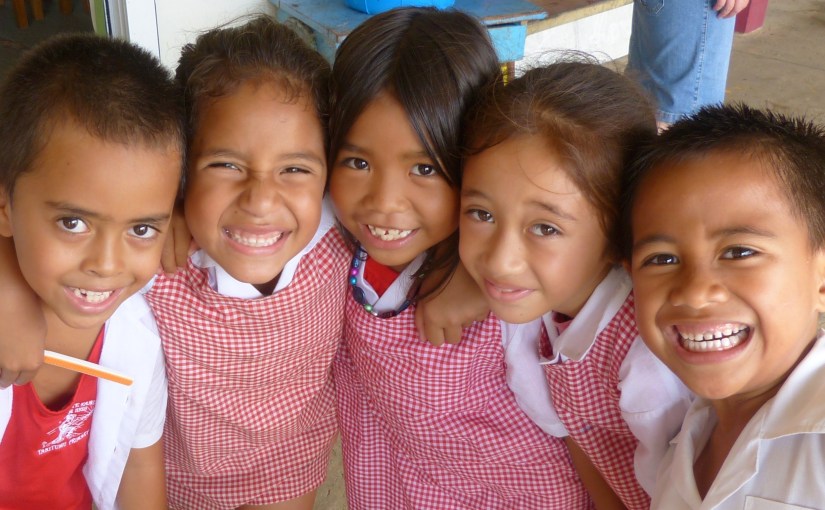
As for ME, my favorite things happen to dovetail nicely with ingredients 2 and 3.  I’m now doing all of the things that I wanted to do during my work life, but rarely had enough time for:  Exercise, book clubs, social events, travel, spending time with my family, Global Volunteer projects (The photo atop this post is from my time in the Cook Islands.  Who could resist those beautiful children?), cooking — the list goes on and on.

My guess is that we all have different “oomph” factors.  What’s important is to start thinking about what your special something is LONG before your last day at work.  How you plan to structure your days during this wonderful stage of life’s journey is almost as important as financial planning.  In fact, the two are directly linked.  If you have expensive habits and desires, then you’d best be building a BIG nest egg.  If you are a minimalist, however, then you don’t need as much.

So, there you have it.  Simple to say, harder to execute–but SO worth the effort.  Happy trails to all you current and future retirees.

Please feel free to share what is working for YOU!


“All You Need Is Love” The Beatles

“Love is all you need”.   Turns out, those four British boys were definitely on to something.

This blog post is about that THIRD essential ingredient for a happy retirement — strong personal relationships.  Nothing new or revolutionary about that.  Erich Fromm’s book, “The Art of Loving” published more than 50 years ago, informed us that the key to a happy life is love and work.  (We’ll address the “work” part in the next post)

Fast forward to 2016.  Robert Waldinger’s excellent Ted Talk describes findings from a 75 year Harvard study on adult development.  Guess what?  Researchers discovered the most important factor in determining whether someone is happy is not fame or wealth, but the quality of their relationships.  Not only were people with strong, positive relationships happier, but they were healthier–both physically and mentally.

During the 30+ years I was in the workforce, I was lucky enough to have jobs that paid me for establishing positive relationships with other people.  (Which, of course, is very different from being paid to have relations with other people.  Not that I’m judging…)  So, when I retired, I was not only saying goodbye to my co-workers, but also to customers that, in most cases, had become friends. Unfortunately, most of them are long distance friends.  And are still working.

Although I still think of my husband as my “boyfriend”, I don’t expect him to fill all of my companionship needs.   Perhaps part of the reason we are still going strong after 4 decades together is we both understand our mutual need for other interests and for time apart. Our relationship is very much like a Venn Diagram–my interests – his interests, with a nice big intersection of OUR interests.  Surprisingly, I have encountered people that find this a bit strange.  So, when I read this  Wall Street Journal article shortly after retiring, I was pleased to find that there are others out there like us.  Why I find it gratifying to discover that we aren’t so different is probably a subject for a therapist, or at least a future post.  But I digress.   Which happens a lot.  

Anyway, I have spent the last four years figuring out how to exchange “work mates” for “play mates”, and I’m happy to share what I learned with you, my newly retired, soon to be retired, or hoping to one day be retired readers.

Here’s what’s been working for me:

  1. Meet-Ups This on-line application allows you to select by  geographic area and areas of interest.  After you make your selections, you get notifications of gatherings of like minded individuals.  You can get even more specific, narrowing it down by age or marital status.  I’ve made friends via book club, biking, and boomer dining meet-ups–and there are lots of other options.  Plus, if you are so inclined, you can start your own meet up group.
  2. The Local Y   It is indeed fun to go to the YMCA!  But don’t just  hang out on the treadmill.  Join classes, and attend regularly.  And don’t worry about being out of shape.  There are no mean girls here!  The women (and most of the class attendees ARE women) are friendly, welcoming and caring.  In many ways, the Y “family” has been a wonderful substitute for my workplace “family”.
  3. Volunteer I’ve made some incredible friends during my Global Volunteer Projects. See the world, make new friends, learn about another culture!  Check out that wonderful organization!
    If you prefer something local, AARP offers an on-line application designed to link retirees with nearby organizations in need of their skills, and aligned with their interests.
  4. The Local Library  Mine offers an array of programs, including book clubs and educational seminars.
  5. Welcome Wagon  Yes, I know, this is supposed to be for newcomers.  BUT the local contact can be a great resource for area clubs and gatherings.  It took me 32 years before I stumbled across our Neighbors and Newcomers Club, but I’m so glad I did!
  6. Reconnections  Maybe you have been too busy to stay in contact with friends from high school or college.  Why not reach out?  I attended my first college reunion five years ago, and am looking forward to the next one this spring.  It was a wonderful trip down memory lane, an opportunity to reconnect with old friends and a chance to make new ones.  Ditto for high school.
  7. Travel  Okay, so this probably isn’t going to help you with day to day connections, but we met some fantastic, fascinating people on our trips with Road Scholar, OAT, and Grand Circle.  In 2016, our new Zealand friends will be visiting us and we will be taking a trip with friends we met in Peru and on a Global Volunteer experience.
  8. Virtual Buddies I put this one last, because a computer relationship is no substitute for face to face, hand to hand connections.  Still, email, facebook and blogging can be wonderful ways to complement your other relationships.  I loved having pen pals back in the dark ages when I was a child.  My Blog Buddies to me are the 21st century version of pen pals. The best part, however, was when I met a blog buddy when we both happened to be in San Francisco, visiting our kids.  With luck, she and I will be able to synchronize travel again.

What about YOU?  What has helped YOU make the social transition from workto retirement?

“Get On Your Feet” Gloria Estefan

No, this post isn’t about Gloria Estefan’s Broadway musical, although that may be a future post, if I make my way into NYC to see it.  Nope, this  is about that second essential ingredient for a happy retirement:  Good Health.

Yes, we all SAY we want good health, but what do we DO?  We overeat, and what we are stuffing into our mouths is usually the worst possible choice.  We smoke (well, I never did, but I am related to people that still do.  Yeesh.)  We act like The Cat in the Hat children.  “All we could do was sit, sit, sit, sit”.  We keep on electing NRA sponsored candidates that refuse to do anything about crazy people owning weapons of mass destruction, also known as assault weapons.  (Whoops, got carried away by current events–that too belongs in a different, possibly future, post.)

Yes, it helps to be born with the right genes, but research continues to uncover the very strong link between lifestyle and good health, which is something that we “lifestyle managers” believe and preach enthusiastically to anyone that will listen.

About those genes: If our parents’ lifespans are any indication, there is a strong probability that Mike and I have inherited “longevity genes”.  His made it into their ’90s.  Mine are close to that milestone.  But what about the quality of those later years?   I’ve seen first-hand what lack of exercise can do to a person–both mentally and physically, and it isn’t pretty.

So, why wait for the calendar to flip to do something wonderful for yourself?   Who says resolutions can only be made on New Year’s?

Full disclosure.  I hate the thought of exercising.  During my college years, I cut more of the required gym classes than I attended.  Lucky for me the gym teacher sucked at taking attendance.  So, when even an external requirement couldn’t get me into the gym in my younger days, how do I now get my sagging butt out the door?  Major psych up.  I tell myself I’m doing my part to keep Medicare costs down.  (You’re welcome, Gen X,  Y, and Millenniums).  I remind myself of the places that I want to visit and the things I want to do once I get there.  (Bhutan, Nepal and Tibet in the spring.  Yeah baby).   I look at what the total absence of exercise has done to my mother, and realize that I wouldn’t want my one child to have the responsibilities for care that are currently being shared by me and my siblings.

During my work years, I had a community of co-workers and a structured week.  By joining the YMCA, I discovered the retirement equivalent of both.  The variety of classes offered provides structure, and the friendly and welcoming  attendees (mostly women) have become part of my community.

Notice I didn’t mention six pack abs in my reasons for exercising.  Truth be told, if those three words appeared in a sentence about me, it would be this one.   “Check out her abs–looks like she drank a whole six pack in one sitting”.  No,  at my age, exercise isn’t about looking better.  It’s about staying the same.  And that’s a great goal for someone who will be 70 in 4 years!

How about you?  Wanna join me?  I’m off to zumba right after I push the publish button.


Mix These Four Essential Ingredients to Cook Up a Happy Retirement

Recently I attended a colleague’s retirement party.  It was the first time I had seen many  co-workers since I left the workforce four years ago.  I was surprised that so many of them were surprised by how happy and relaxed I appeared.  Several asked me what “my secret” is.  I didn’t have an answer then, because I hadn’t given the matter much thought.  But given my current abundance of free time,  I’ve been able to ponder the subject deeply and have come to the conclusion that the “secret” isn’t so secret at all.  It all boils down to four really simple ingredients.  I hope you are enjoying the cooking analogy–after years of “on my radar, teeing things up, drilling down, hitting the ground running, and pushing the envelope”, I figured it’s time for a change.

You ready?  The essential ingredients for a happy retirement are:

  • Strong personal relationships
  • Adequate financial resources
  • Good health
  • Oomph

I told you it was simple, but hey,  Tom Jefferson got a lot of mileage out of stating ‘self evident’  truths, so let’s see how it will work for me.  Besides, ‘knowing’ and ‘doing’ are two very different things.  I think we all know that family and health are important, but how do we behave?   I certainly was guilty of letting the work day spill over into family and friend time.  I skipped exercising and ate far too many fast, easy (and less nutritious) meals.  So, today’s post will start with the ingredient that has a tendency to crowd out the others:

Adequate Financial Resources
Isn’t that the reason we put in all those hours–to ensure that we have “adequate financial resources”?   Over time, I learned that the most important word in that phrase is “adequate”.

Although I benefited greatly from working for insurance companies that regularly flooded me with information about financial planning, saving, & pensions, what was probably most helpful was a wonderful book by Joe Dominguez and Vicki Robin, “Your Money or Your Life”.   This easy to read book helps you become aware of the trade offs that you unknowingly make by overspending. My favorite quote:

Rich only exists in comparison to others, but financial independence means that you have enough and then some.

Without trying hard, I’ll bet we can easily think of someone that has greater financial resources than 95% of the world’s population, but they always seem to want more.  They haven’t quite grasped the concept of enough.

Two of my closest friends have traveled all over the world on very little money.  For example, they managed to spend a month in Greece and two weeks in Ireland on what they had saved from two years of Peace Corp salary!  They know what is important to them, and their spending reflects what they value.

When I was growing up, my dad  used to tell me  “Your wants are many, but your needs are few”.  He was so right.

So, for all you young ‘uns out there, before you slap down your credit card, you might want to take a minute to think about to how you are allocating your dollars and your “life’s energy”, as Dominguez and Robin put it.

How did we get those resources?
I’ll admit it–we have been lucky.  We haven’t had any major illnesses or financial catastrophes.  And, although we both were impacted by mergers and acquisitions, we were able to find other employment relatively easily.

We also decided to give Lady Luck a helping hand.  As our incomes rose, we didn’t increase our spending.  Instead we opted to increase our contributions to our no-load mutual funds.  We didn’t run up credit card debt, only charging what we could pay off by the time the bill arrived.  We saved so that we could pay cash for our cars, maintained them and kept them well past their first decade.  Instead of a monthly car payment, we made those “payments” to ourselves, so we weren’t paying interest, we were earning it.  And guess what?  We never felt deprived.

It all goes back to knowing what is important to you, and making sure that your behavior aligns with your objectives.  Simple in concept, sometimes challenging to do.  But SO very worth it!

Next post–Good Health!

Just what exactly does a Lifestyle Manager DO?

On December 1, 2015 I started my fifth year as the CEO of Destination Now, a Lifestyle Management company.  In honor of this milestone, I thought I’d create what in the business world might be known as an annual report.  Except in THIS case, there are qualifiers: I didn’t do one for the past four years –so much for annual–I and don’t expect to do another one ever again. Plus it is REALLY, really short.  You ready?

Mission statement: To make the most of every day, occasionally to enjoy both walking down memory lane, and peering into the future, but to stay fully focused on and present in the PRESENT.
Number of Employees: ONE (that would be me)
Customers:  One MAIN customer (my loving husband), plus a very select group comprised of family and friends (who are willing to let a control freak take charge)
Revenue:   Cash: $0.00;
In Kind: Caboodles of wine, dinners, memories and friendship (all tax free!)

P1000549

Okay, so that’s a long winded way to say that I’ve been retired for 4 years, and am having a fantastic time planning and executing fun, food, and travel for my husband, my family and friends.  It’s just that occasionally, when asked the inevitable question “what do you do”,  I feel compelled to get creative.  Be honest–which version did YOU prefer?

More free time has allowed me to become more self aware, and I have to acknowledge that I do better with goals and objectives.   Before I retired, I took to cyberspace to see what I could learn from those that had trod that path ahead of me, and I benefitted greatly from their words of wisdom.  So, over the coming weeks, as a way to ‘pay it forward’,  I have set a goal to post more regularly, sharing what I have experienced/learned over the past 4 years, in the hope that doing so will help others more easily transition to this new life stage. As a bonus— we will ALL learn whether I can emulate the discipline shown by some of my favorite bloggers who post regularly.


“A Joy That’s Shared is a Joy Made Double”

Nothing would have made me happier than to have all my favorite people with me on this trip. Although I was unsuccessful in recruiting all of you (not from lack of trying), I DID manage to convince our good friends, Owen and Shirley to “double our joy”.  For those of you that are making the journey with us via this blog (especially my sister, Sue, who refuses to fly), I’m so glad to have you riding along.image
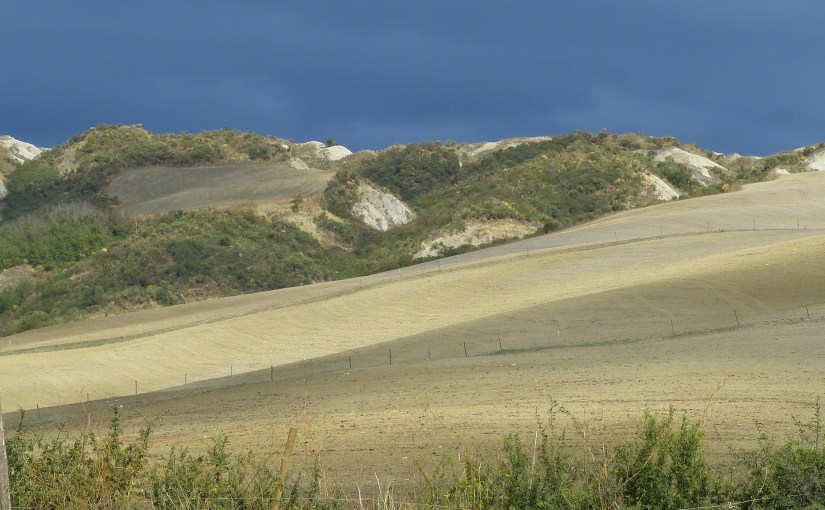
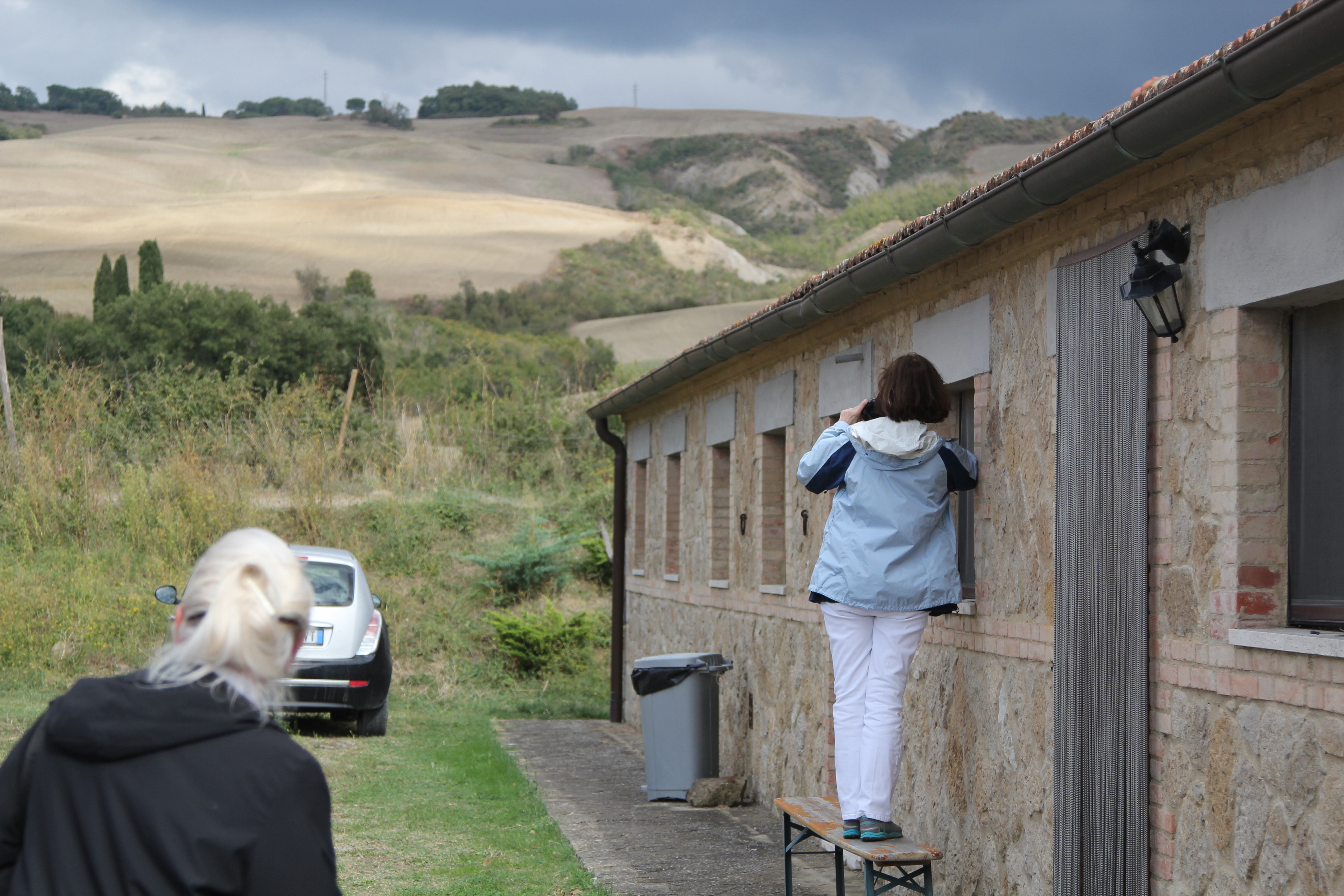
Now, back to our first full day in Tuscany. After Radicofani, we made our way to Giuseppi’s (Pepe’s) sheep farm. Unfortunately, according to Pepe the sheep had a  “party” five months ago, which resulted in a lot of very pregnant sheep, so for a reason I have since forgotten (but was definitely connected to the party) the sheep were all in the barn. Too bad. It would no doubt have made for a lovely photo op.  Instead, the photo at the top of this post just shows you the picturesque fields.  Take a look at the lengths I go to so you don’t have cars or garbage cans cluttering up your view.

image

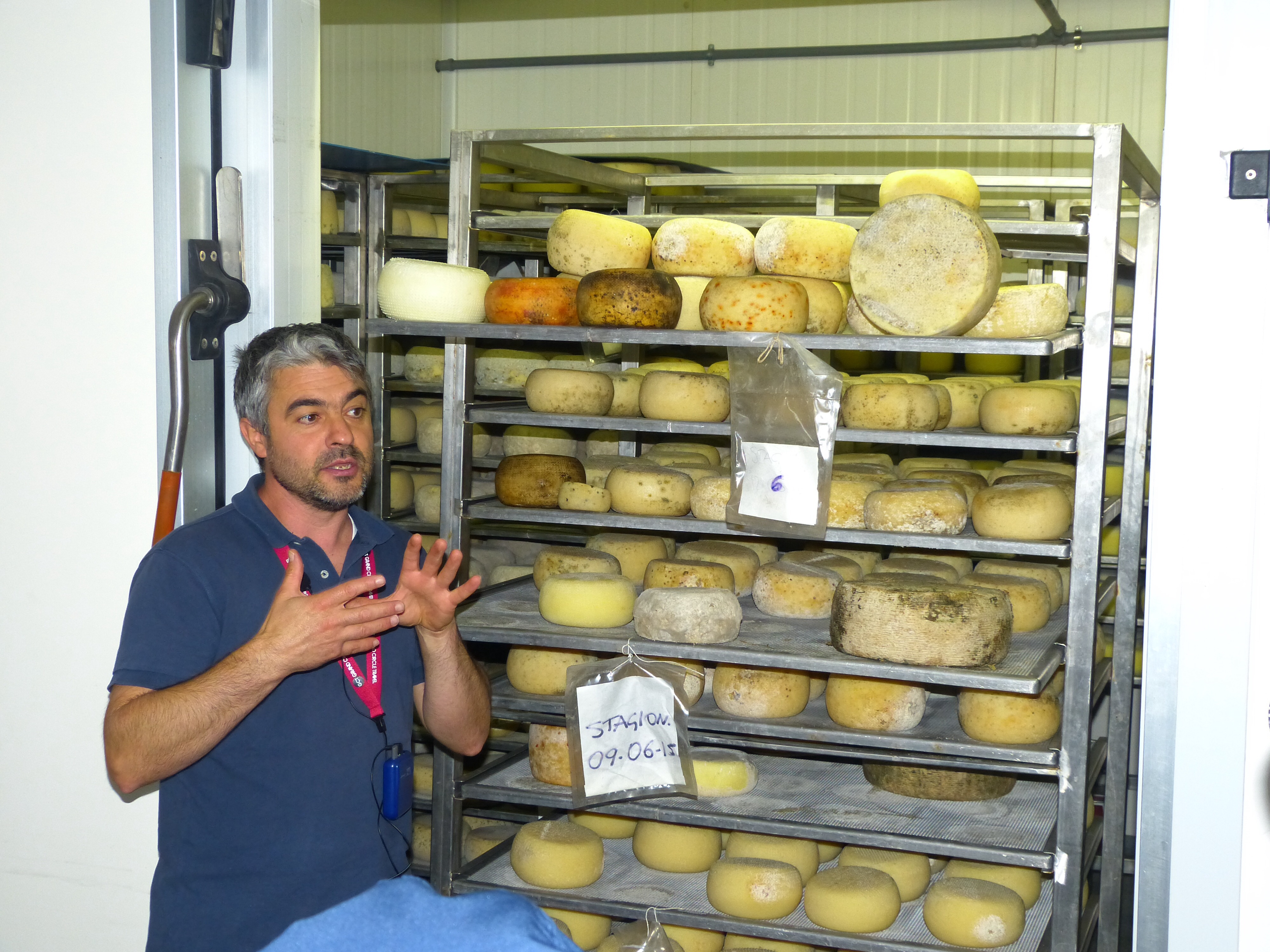
Back to the sheep that we didn’t see.  They are Sardinian sheep, because that breed produces the milk that makes the VERY best pecorino cheese.  In case you haven’t guessed, Pepe and his family are from Sardinia.  Like Silvana, Pepe was highly amusing and quite informative.

image

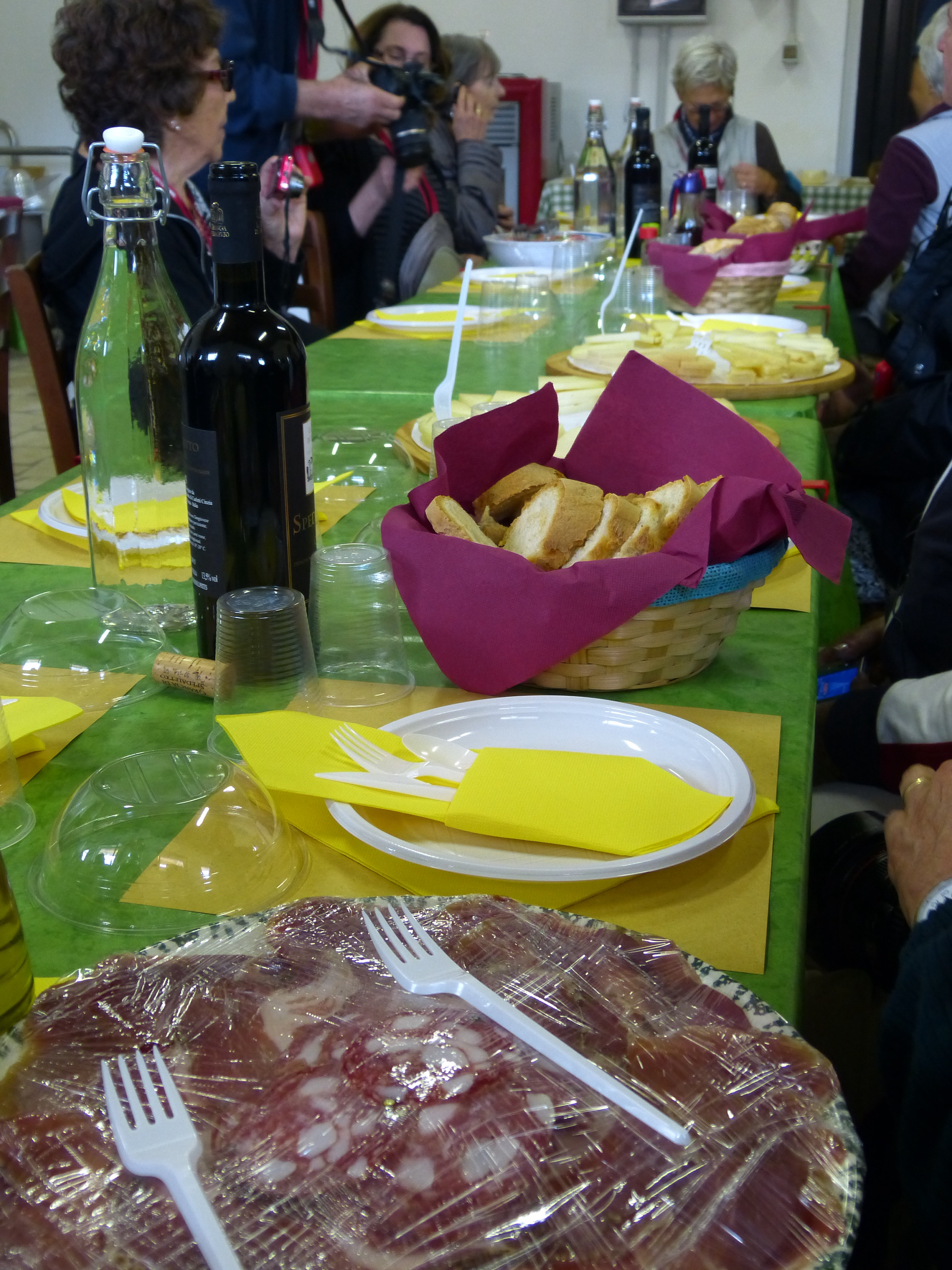
Of course we had to sample some of that wonderful cheese.  Eight different kinds.  Washed down with wine, accompanied by prosciutto and salami and bread.

image

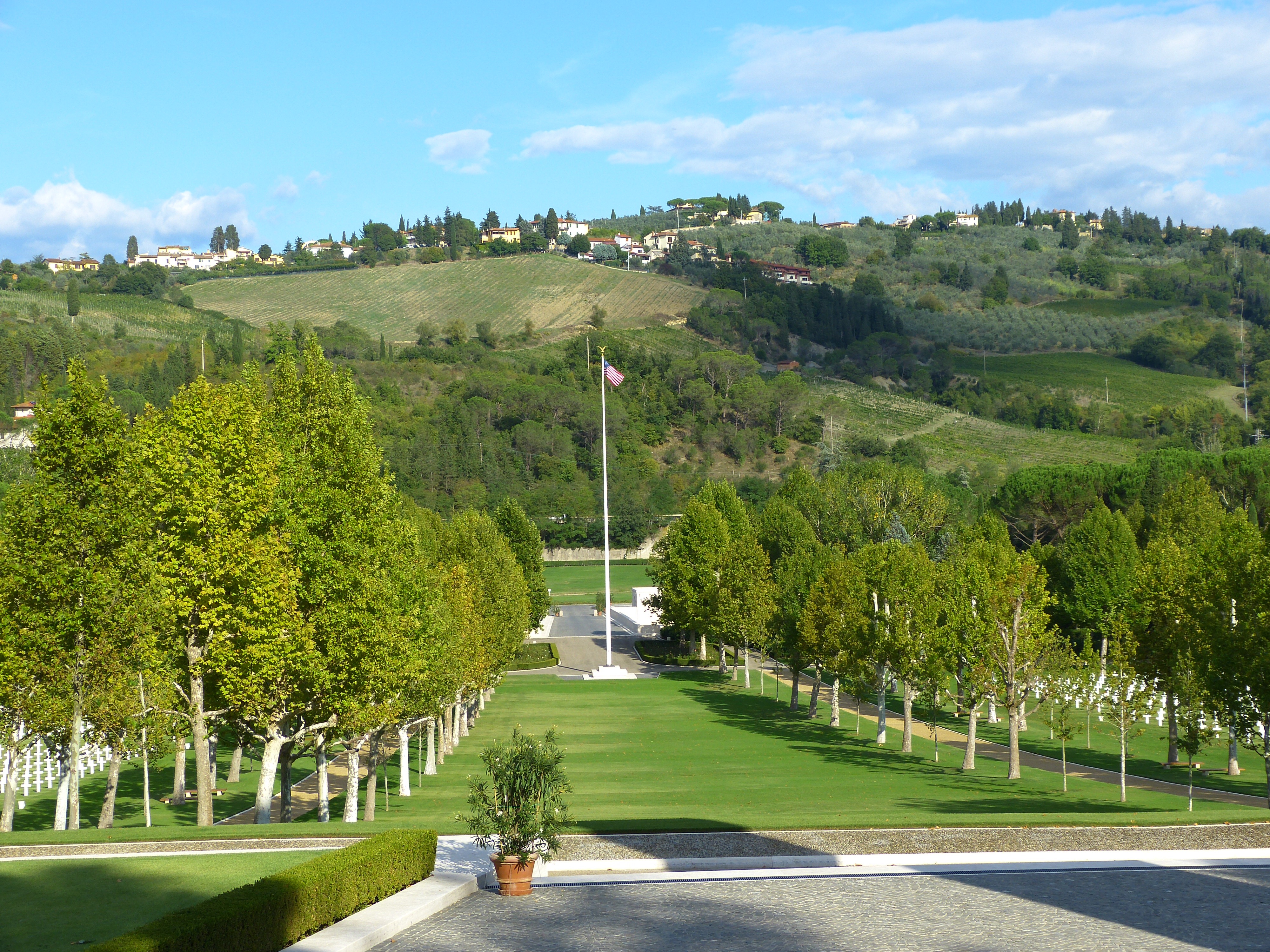
According to the official itinerary, we were done for the day, but Anna had a little surprise for us.  We stopped at a cemetery for Americans killed during World War II, just in time for a brief lecture about the military campaign, the men buried there and  the MIA.  After taps, the flag was lowered.  A very sobering experience, especially given the recent wars in Afghanistan and Iraq.  It made me think about the differences: WWII was the pain and sacrifice was shared by all.  The recent wars are so very different.  A small percentage of our population is giving so much, while the rest of us go about our normal lives.

image image

Normally I like to end on an upbeat note, but for this post all I can say is “Thanks for your service”.


Chianciano Terme–“The place to cure your liver”

That’s right. That’s the slogan for Chianciano Terme, our home for the next six days. Although my liver doesn’t need to be cured–at least not yet, if it ever ails me, I’m definitely coming back to this sweet Tuscan hill town. Twenty years ago, before socialized medicine stopped covering spa treatments, people came here for a week or two to drink and soak in the mineral waters. One hopes they were not drinking the water they were sitting in, but who knows? For some reason, once the treatments were no longer free, business dropped off dramatically, so now it is a much quieter place, which suits us just fine.

Our family owned and operated hotel is cute and comfortable. If you are wondering why I am including the following photo, it is because the shutter visible on the top of the door to the balcony rolls up and down with the press of a button, just like a garage door opener.
image
I don’t know why, but I find that enchanting.

This time, we didn’t win the room assignment sweepstakes. Our balcony overlooks the parking lot, while those on the other side view the rolling hills. But no matter. Our bus rides offer us views aplenty.

image

The first half of our trip focuses on hilltop towns of Tuscany.  First up is the lovely hilltop town of Radicofani, a stopping place for pilgrims enroute to Rome.

image

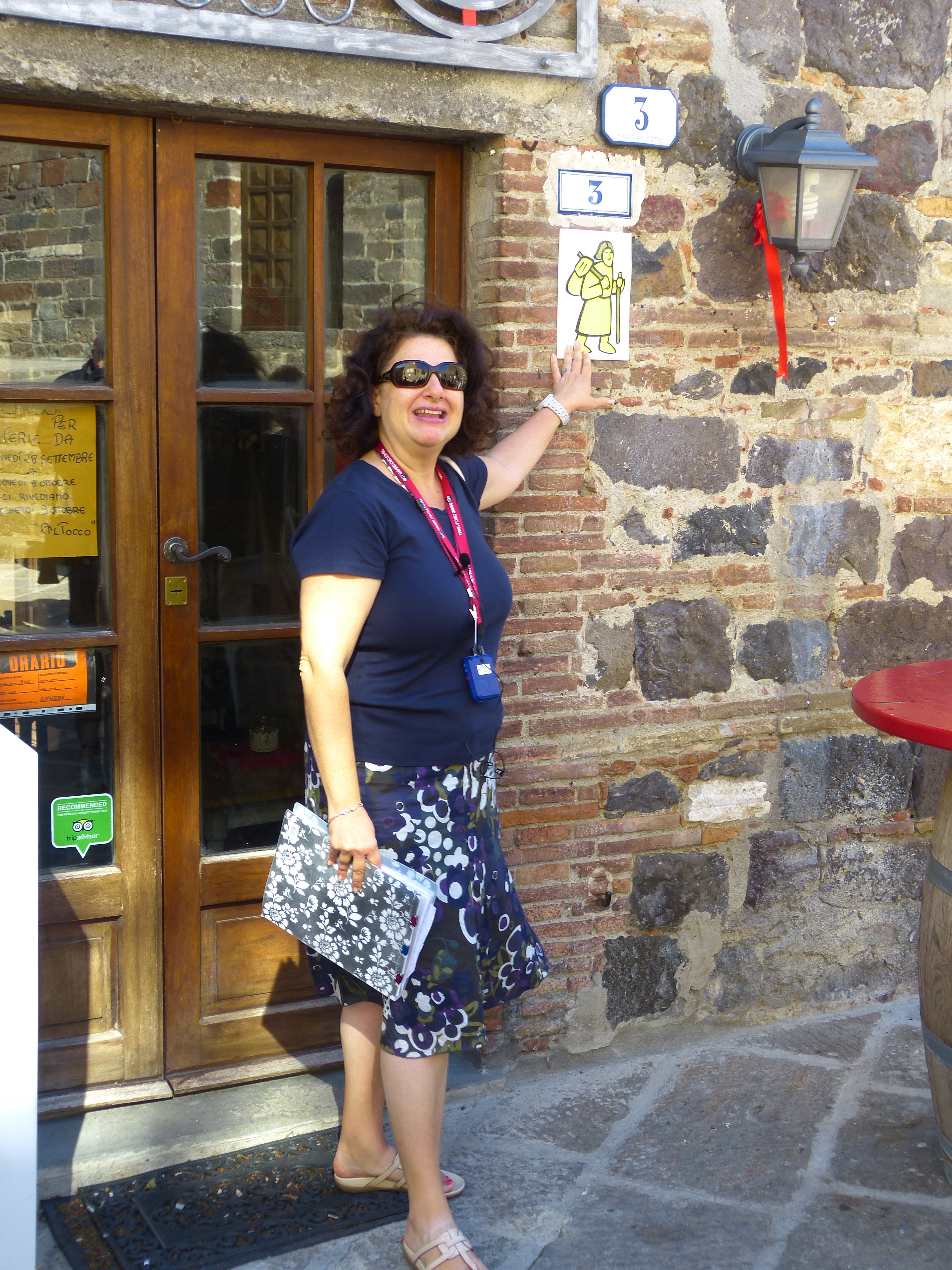
Here’s Anna, our wonderful guide, pointing out the Pilgrim icon on the side of one of the buildings.

Ghino di Tacco, Radicofani’s most famous resident made his living robbing those pilgrims, but he did it with class. He made sure he left the poor ones enough to eat.  But still, he was a robber.  So how come he is immortalized with a statue on the outskirts of town?

Ghino di Tacco
Ghino di Tacco

All was forgiven after he kidnapped an Abbott, who had digestive problems (perhaps on his way to Chianciano Terme to get a liver tune up?).   Instead, after living on bread, water and dried beans, the Abbott was miraculously cured of whatever ailed him, was released, made his way to Rome, and convinced the pope to make Ghino a knight of the Order of St. John.  Who says crime doesn’t pay? 

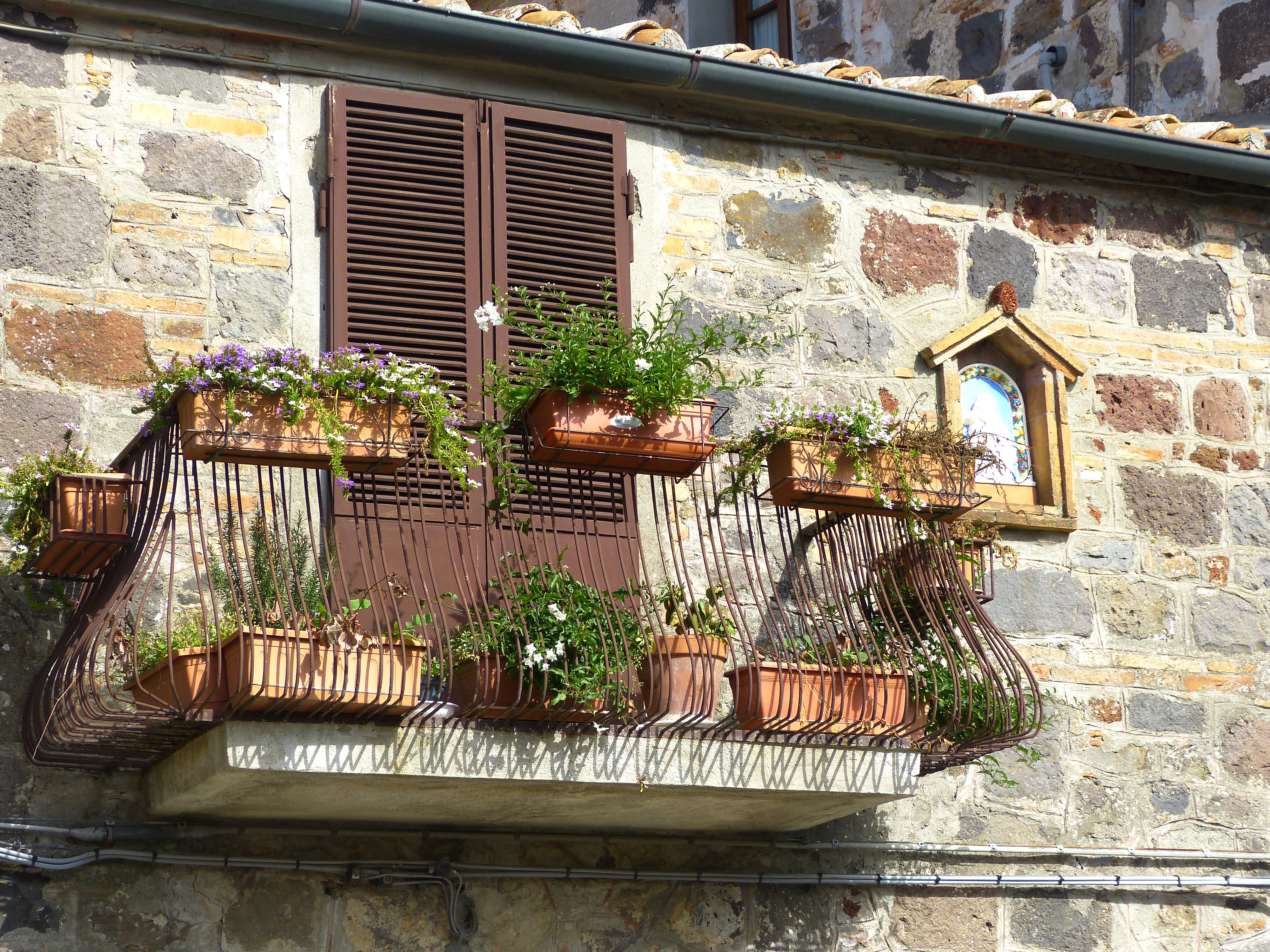
Here are a few more images of this hidden gem of a town.image

image

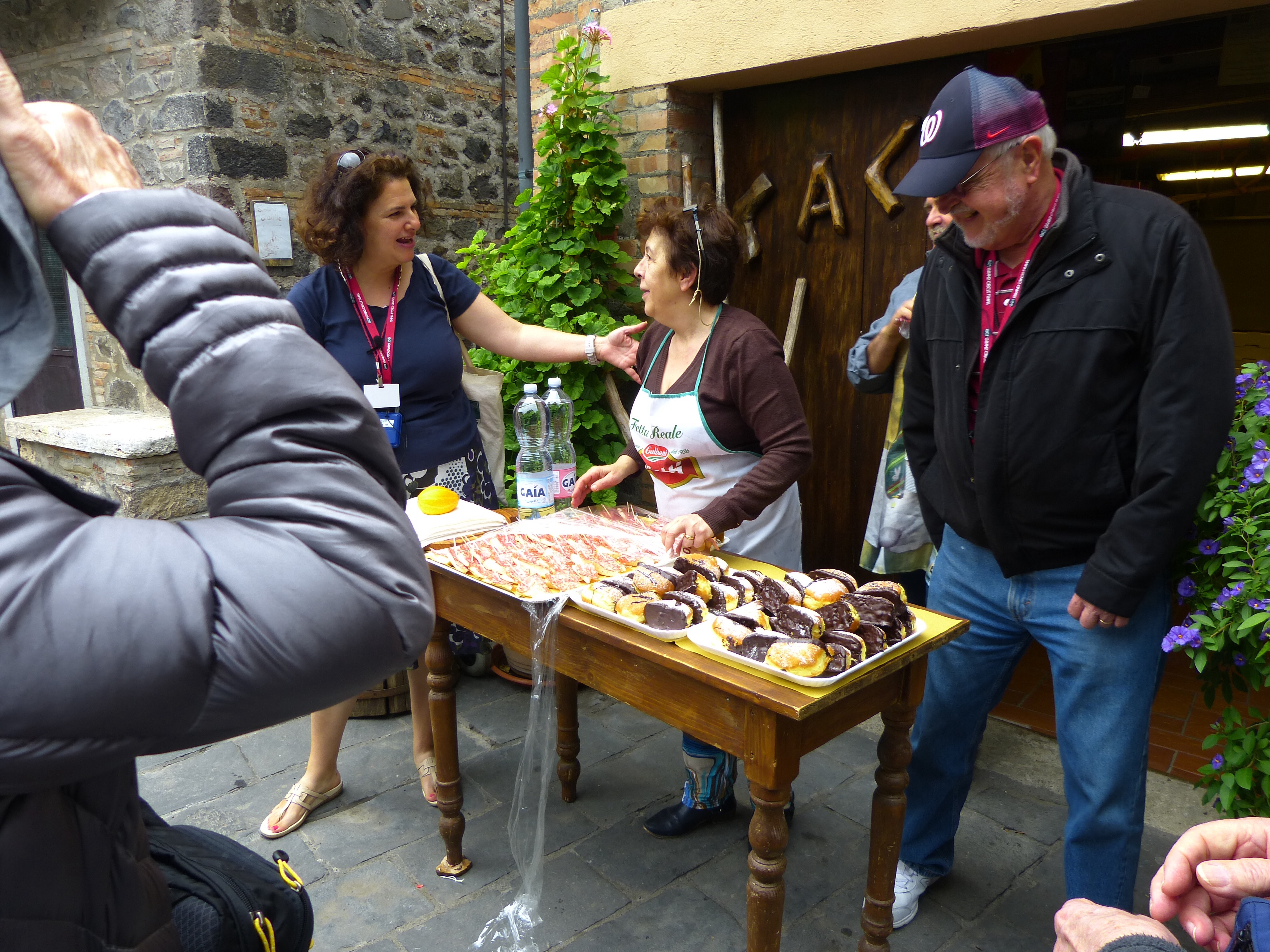
One of the many reasons I’m loving this tour  with Grand Circle is because of the experiences I never would have had if we were on our own.  Silvana is one of those experiences.  We stopped for a snack at her shop.  Silvana not only fed us, she kept us entertained with a monologue (translated by Anna) that Jerry Seinfeld would have envied.

Anna, our fantastic tour guide, and Radicofani's delightful shopkeeper.
Anna with Silvana, Radicofani’s stand up comic.  Check out those pastries!

Silvana is the youngest resident of Radicofani. Her 78 year old mama is still working, taking care of 5 of her “elderly” neighbors.

Mama, saying hello from the window over the shop.

Our trip to the sheep farm will have to wait till tomorrow, or I’ll never get this post finished!

A Tale of Two Cities, Part One

“It was the BEST of times…”  Charles Dickens

That’s it. There was no “worst of times”.  Lucky me.  But good times do not make good novelists, so fortunately I’m content to be a sometimes blogger.

My other posts have all been about Querétaro, a delightful historic city–and I am far from done talking about it.  But this post is about  a SECOND undiscovered gem.  Undiscovered by most USA tourists, that is.

Global Volunteers are free on the weekend, so several of us took a bus to Guanajuato,  a two and a half hour ride from Querétaro.

And what a bus it was!  I only wish airplane seats were so comfortable.  Imagine being able to recline your seat without incurring the wrath of the person behind you.  How about having a foot rest so you can stretch your legs out, just like you are in your favorite Lazy boy.  Throw in free movies on your individual TV.  Of course, you have to watch Renee Zellweger speaking Spanish,  with her very full lips out of synch with her words.  That’s the Premiera Plus ( the name of the bus company) experience.   I preferred watching the countryside flash by, but that’s generally how I roll.  

The bus stations In both cities had snack bars, clean bathrooms (the 5 peso entry fee gets you the best seat in the house, toilet paper, soap and paper towels),  and comfortable waiting rooms, for those of you that care about such things.  (I’m definitely in that category.)

Taxis to the historic center were plentiful and inexpensive — 50 pesos, or a little more than $3.00 –got us delivered to our hotel off La Plaza de La Paz.

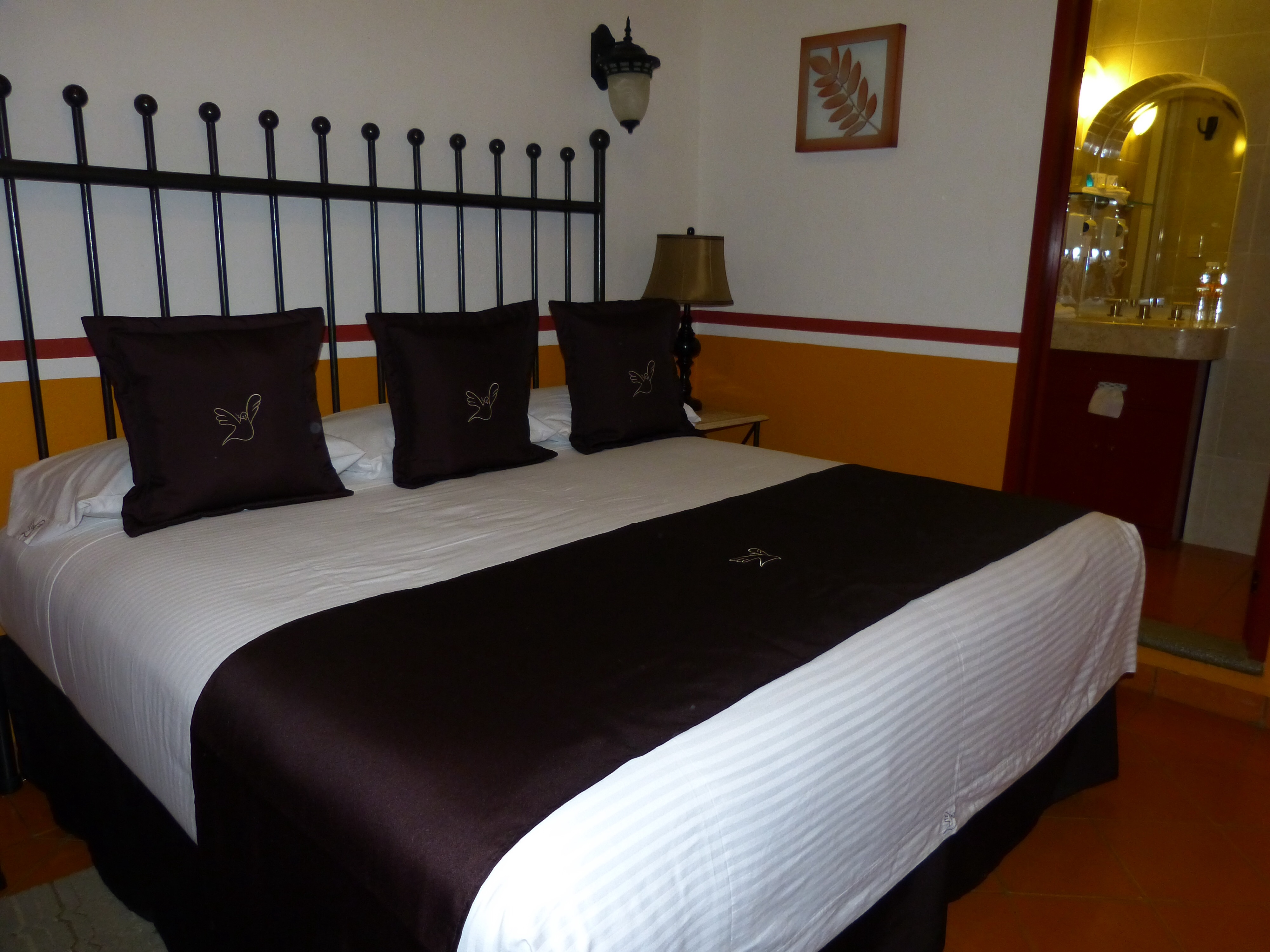
Check out my luxurious room.  The bathroom was also beautiful--complete with hair dryer, and huge towels.
Check out my luxurious room. The bathroom was also beautiful–complete with hair dryer, and huge towels.

Like Querétaro, Guanajuato is safe, clean, inexpensive, beautiful, friendly, musical, historic—AND it has a miradora–a panoramic view, something I can’t resist.

The pale blue building to the left of the yellow/orange cathedral is our hotel.  The hotel de la Paz
The pale blue building to the left of the yellow/orange cathedral is our hotel. The hotel de la Paz

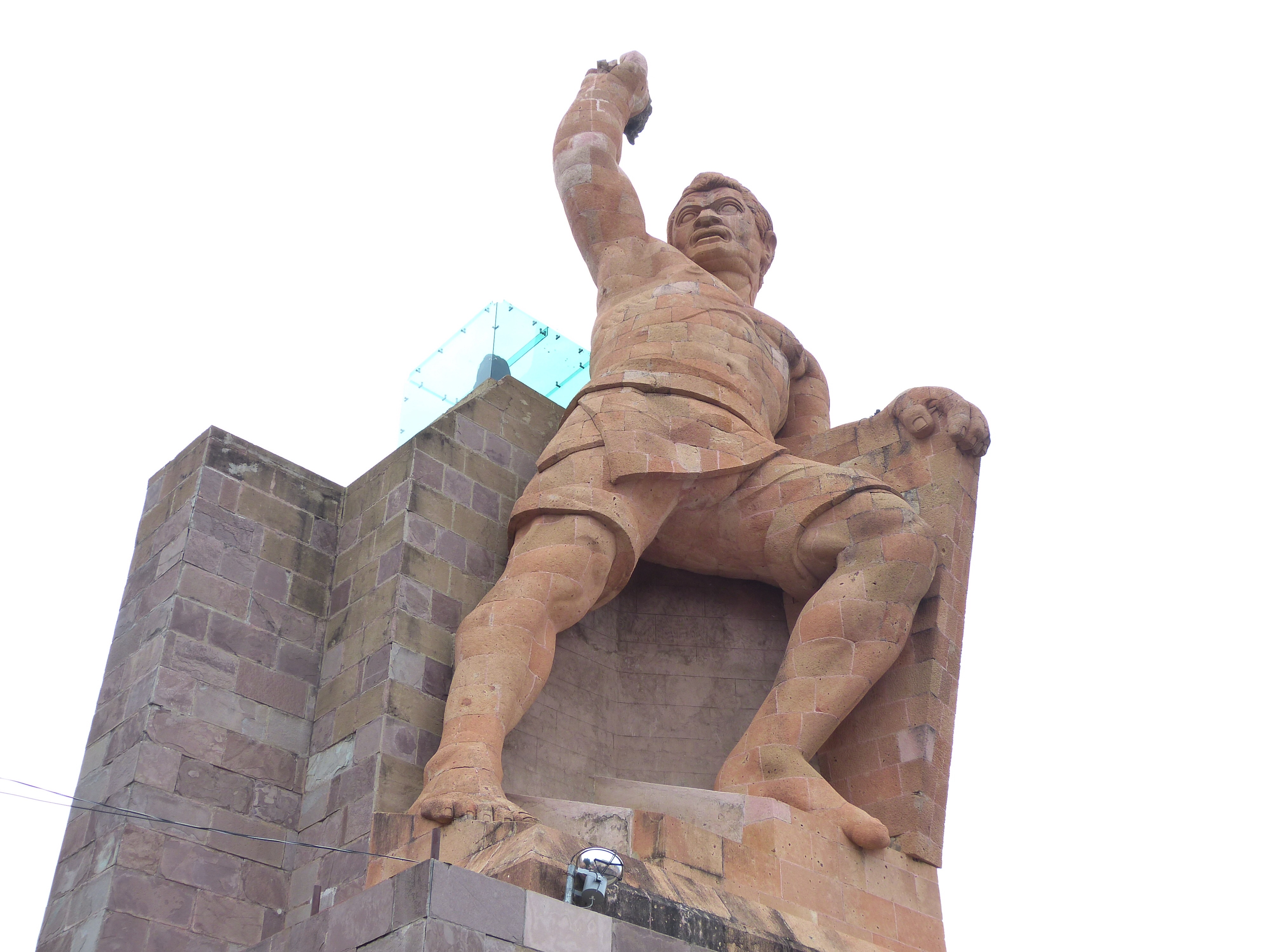
I rode the funicular to the top of the hill, the site of the statue of el Pipila, who is clearly visible from just about everywhere in the city.

El Pipila
El Pipila

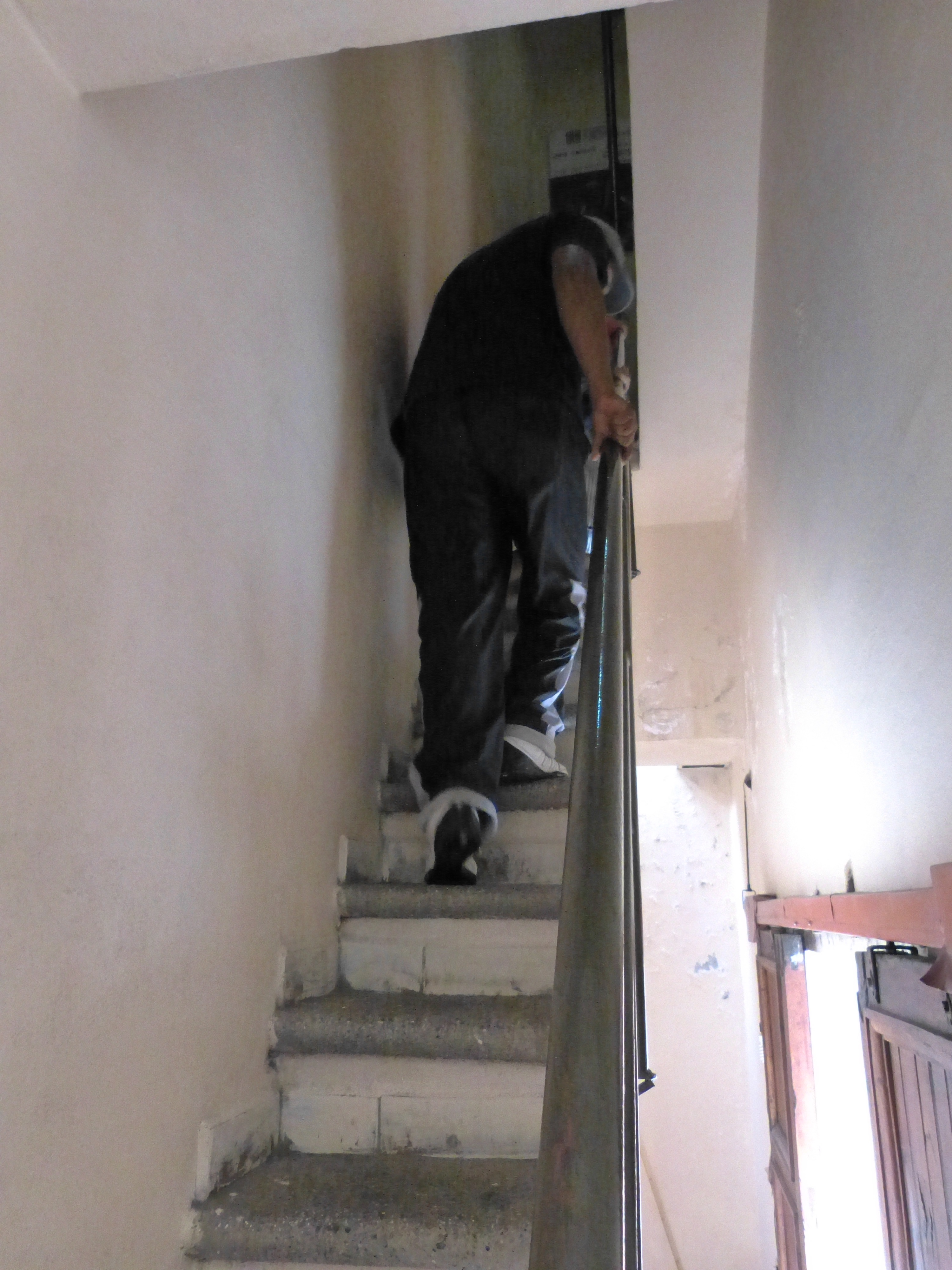
Those so inclined can climb inside, sorta like the Statue of Liberty. I decided to take one for the team, so I climbed to the top, and I’m going to tell you–the view’s not worth it.
image
See how narrow the stairs are? The ladder to the top is even narrower, and just a tad scary.
So, how did el Pipila get his very own statue at summit of Guanajuato?  Are you getting tired of the history trivia? I hope not, because I’m going to tell you.

The Mexicans decided they had had quite enough of Spanish rule, so they started a rebellion (actually this is more of a Querétaro story, which will be a future post, but I’m drinking wine while I’m writing this, so let’s just go with it. Okay?)
El Pipila put a flat stone on his back to protect him from the Spaniards, who were holed up in a granary and tossing dreadful, dangerous things at him. He set fire to the door of the granary, which allowed the Mexicans to enter, slay with Spaniards and win the battle. Oh my God. Am I REALLY talking about battles and wars? Has it come to that?

Time to change the subject.
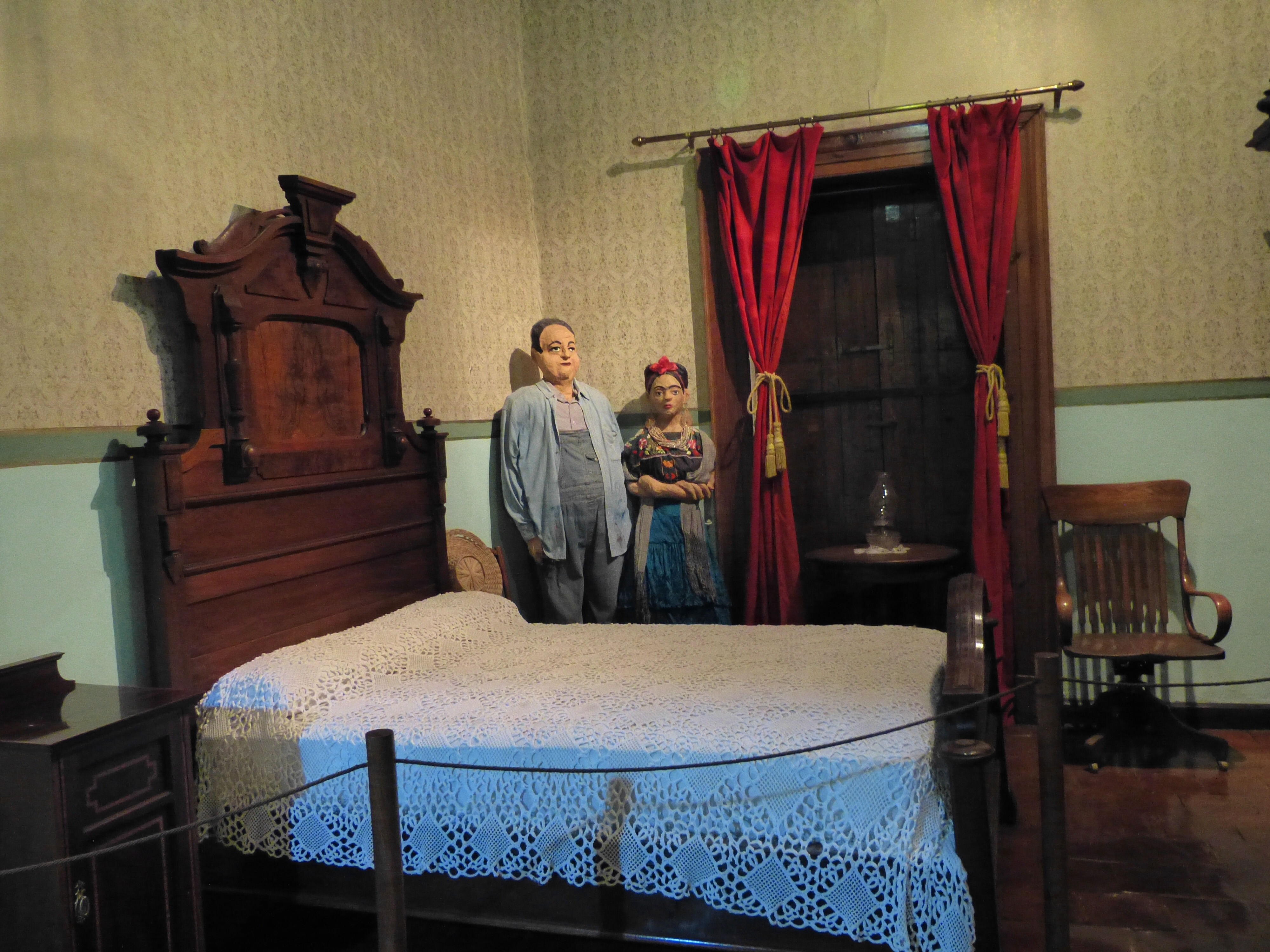
Guanajuato has an abundance of museums, and I was able to visit several of them. The things hanging on the walls were all very lovely, but what floats my boat are the buildings that house the exhibits. The Diego Riviera Museum is his childhood home.

image

I don’t know whether he and Frieda actually slept there, but who cares? The architecture is fantastic, and the cutouts weren’t half bad.
Guanajuato has its fair share of churches, and if there is a wedding happening, I never miss an opportunity to crash it. This lovely bride’s veil was pinned to her groom’s shoulder. After the ceremony was completed, they were unpinned. Don’t know the background, but I thought it was an interesting custom.

imageWhat else can I tell you about Guanajuato?  The food was excellent.  The Mexican wine was delicious, and of course I felt compelled to take photos of everything, so you can see for yourself.

This bread was AMAZING!


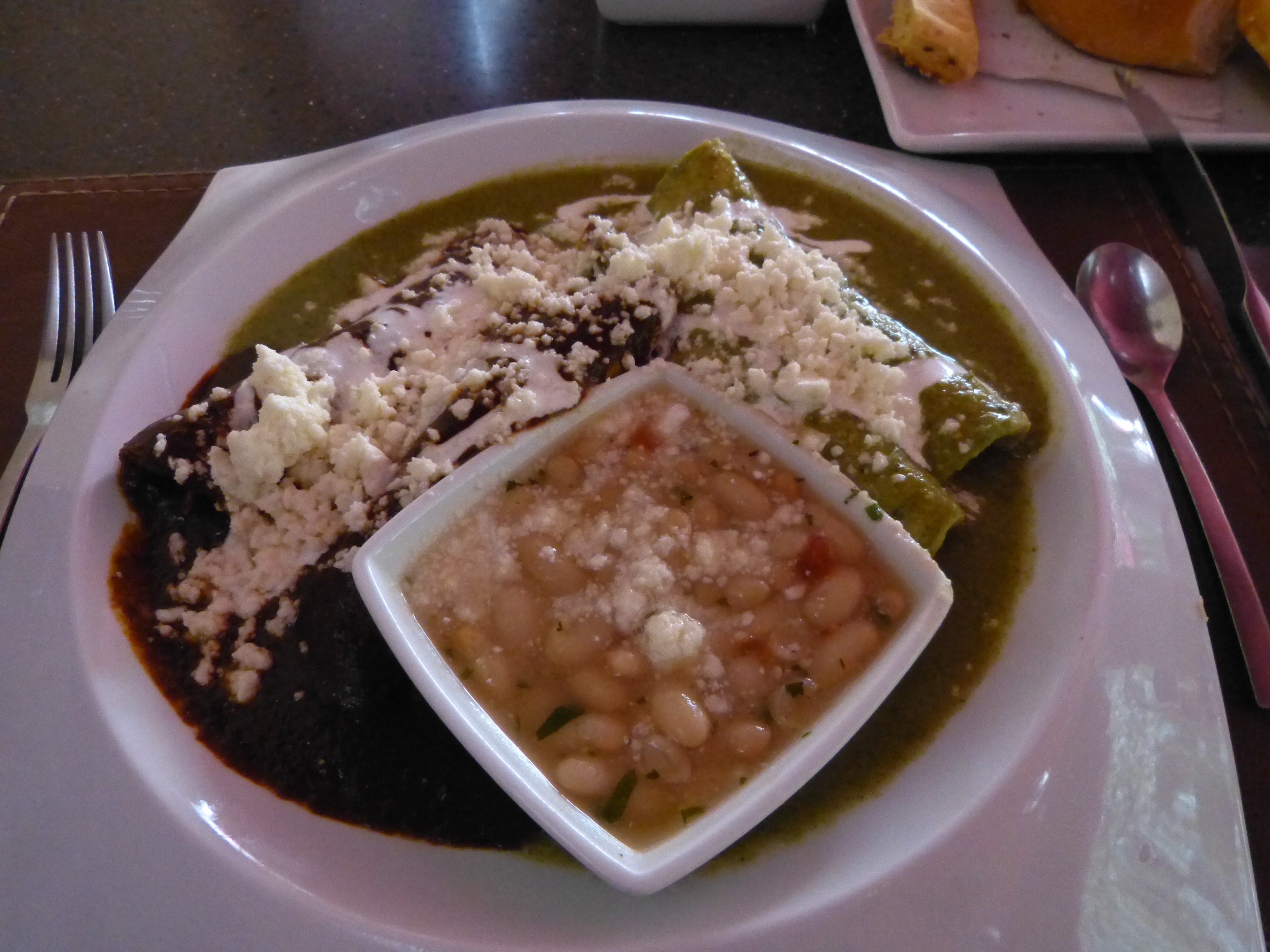
Enchiladas with mole (my guy's favorite) and green sauce, with frijoles.  For less than $12...including that great bread Nd a cappuccino!
Enchiladas with mole (my guy’s favorite) and green sauce, with frijoles. For less than $12…including that great bread and a cappuccino!


Mexican wineries?  Who knew their wine could be so delicious?
Mexican wineries? Who knew their wine could be so delicious?

I could keep posting photos till your eyes roll back into your heads. But I won’t. I’d encourage you to enjoy visiting this amazing city and will leave you with just two more photos.

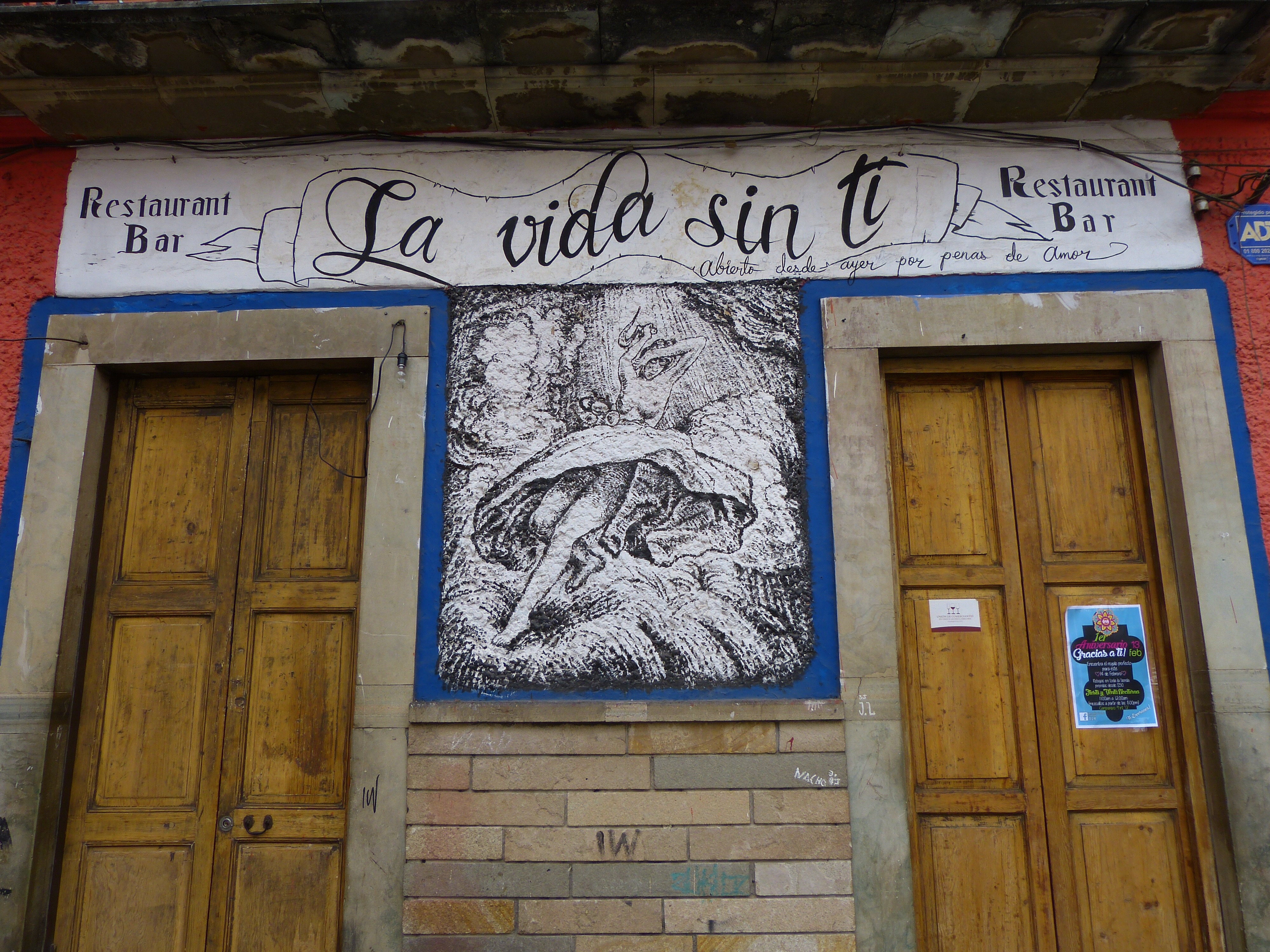
One of many bars in the town.


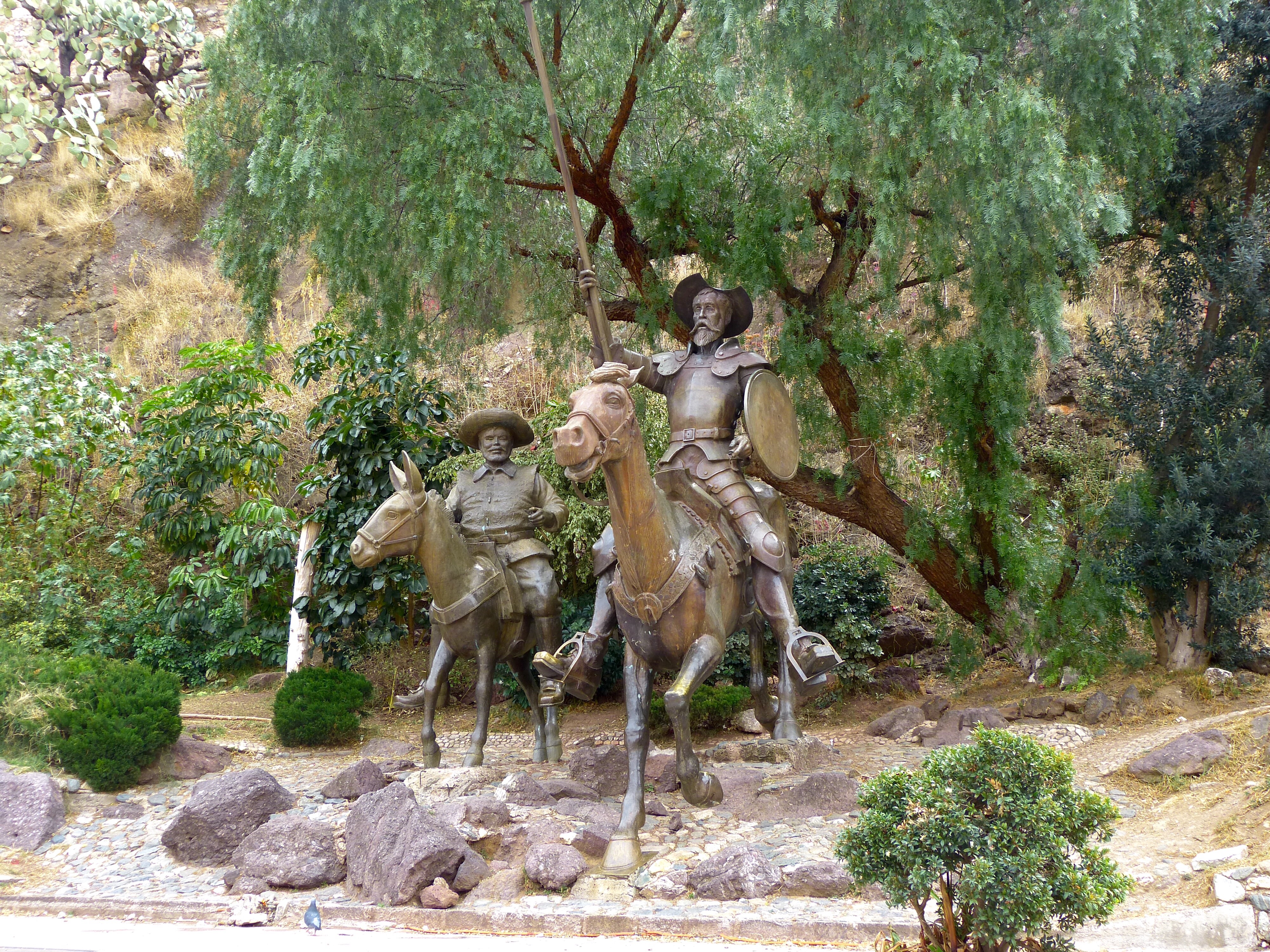
I'm not sure why Don Quixotes is so big in Guanajuanto.  That's my Ssignment for my next visit.
I’m not sure why Don Quixote is  is so big in Guanajuato. That’s my assignment for my next visit.

I’m almost out of power, so I’ll post. Please forgive the typos…drink a little wine, and this will all make sense to you. Visit this wonderful city and fall in love with it!

Santa Anna Slept Here

Yes, THAT Santa Anna.  The one who inspired the classic phrase, “Remember the Alamo”.  The one who, when he lost a foot and part of his leg in battle, gave it an elaborate military funeral.

Fun fact for those of you planning a trip to Springfield, Illinois.  After his foot’s funeral, Santa Anna had a cork prosthetic leg made.  That very leg was captured during the Mexican-American War and is currently on display in the Illinois military museum.   If you are anything like me, you are probably wondering just HOW Santa Anna’s leg happened to be separated from his body.  Well, thanks to wikipedia, I can tell you, and the truth isn’t anyway NEAR as interesting as what my mind conjured up.  From the military museum’s website:

In 1847, Illinois soldiers “came upon General Santa Anna’s abandoned carriage and found gold worth $18,000, a roast chicken lunch, and his artificial leg. They turned in the gold, ate the chicken and kept the artificial leg as a souvenir. 

So, why am I telling you all this?  Well, it just so happens that Santa Anna and I have something in common.  No, I do not have an artificial leg on display in a museum.  At least not yet.  We BOTH have slept at the Hotel Hidalgo.  But just to be clear, not at the same time.

Built in 1825, the Hidalgo Hotel was the first, and by definition, the best, hotel in Querétaro.  During the war, “the refinement of the hotel made it a favorite choice” for Santa Anna.  His stay ended with the signing of the Treaty of Guadalupe, “which gave more than half of Mexico’s territory to the USA.”  (Actually, they didn’t GIVE it to us; we paid $15 million for it.  More expensive than Manhattan or Seward’s ice box?  I’ll let you be the judge.)

How do I know all this? I’d like to be able to claim that my attentiveness in history class and my truly amazing memory are responsible, but anyone that knows me would never swallow THAT tall tale.  Nope, the source of my hotel knowledge came from this mural in its entry.

image
As one might expect of a hotel almost 200 years old, it has its quirks. For example, the size of the showers would lead you to believe that they were not a common feature back then.
As with people, each room has its strengths and drawbacks. But with the right attitude, these quirks can become rather endearing. Plus, the staff is wonderful, the rooms are very clean, it costs less than $40 per night, and the location is absolutely ideal.

If, however,  you prefer to sleep in a convent, or in the house of a dead Marquesa, those options are also available.  Those of you who have been reading along may recall the snarky comment I made a while back about La Casa de la Marquesa probably paying Google to show up on its maps. Little did I know that the Casa, like the Hotel Hidalgo, is a historical site with its very own legend.  And you, dear reader, will soon read all about it.

It seems that Don Juan Antonio, the Marques, although a married man, had a yen for a nun, Sister Marcella Nasturtium.  The good sister, despite remaining true to her vow of chastity, was still able to persuade the Marques to build an aqueduct to bring fresh water into the city, and to build the most beautiful house in Querétaro, which he then gave to his wife.
image

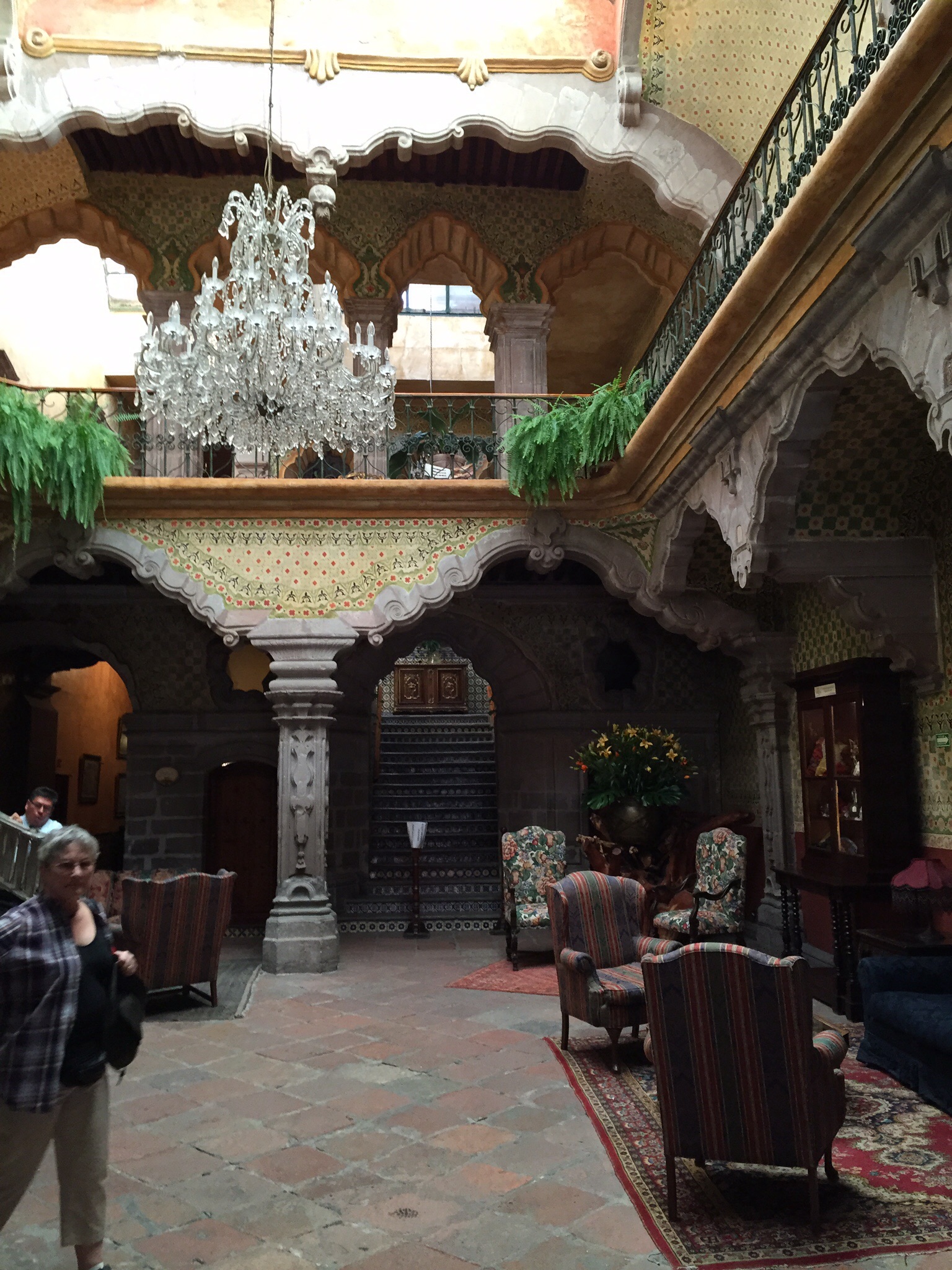
Lobby of the Casa de la Marquesa

One more hotel story then I’ll end this post. It seems that being a nun in the days of old was not a bad gig, if you managed to be born to the right family. One rich man built a convent for his daughter that was the grandest in a city filled with grand convents. The Convent of Santa Clara had its own orchards and gardens, and the rents it collected allowed the nuns to live in private houses with their own servants. Wow.

Fountain outside the convent
Hotel detail.  What do you expect?  It WAS a convent?
Hotel detail. What do you expect? It WAS a convent!

Courtyard inside the convent/hotel

And to think that YOU could sleep in ANY of these buildings! Is this not a cool city?!!