My Tesla’s First Long Distance Road Trip

I had no idea when I picked up my “long distance” Tesla Model 3, on March 6, 2020, that it would be 5 months before I found out how far I could drive without stopping to recharge. In the 22 weeks that I have owned my hot wheels, I’ve driven less than 1,500 miles, which averages out to less than 10 miles a day. Our longest excursion, so far, has been our drive to the Delaware River, which is about 70 miles round trip.  Yes, I lead an exciting life.  

But all that is about to change. Shortly, my Tesla and I will be embarking on our very first long distance drive. Let me stop you before you conjure up a coast to coast road trip. In the age of covid, I define long distance as any drive that requires recharging somewhere other than our garage. My first trip will be to visit family in Massachusetts. That was the main reason for purchasing the long distance Tesla– my frequent family visits.  

Foolishly, I thought a range of 322 miles meant that I could drive the 260 mile trip on one charge.  Nope, the 322 miles is the EPA estimate, and like all the EPA estimates you see stuck on new car windows, it doesn’t consider speed, hills, weather, use of air conditioning, etc.  Knowing my  tendency to press the pedal to the metal, even starting fully charged,  I would expect a 260 mile trip to require a stop.  

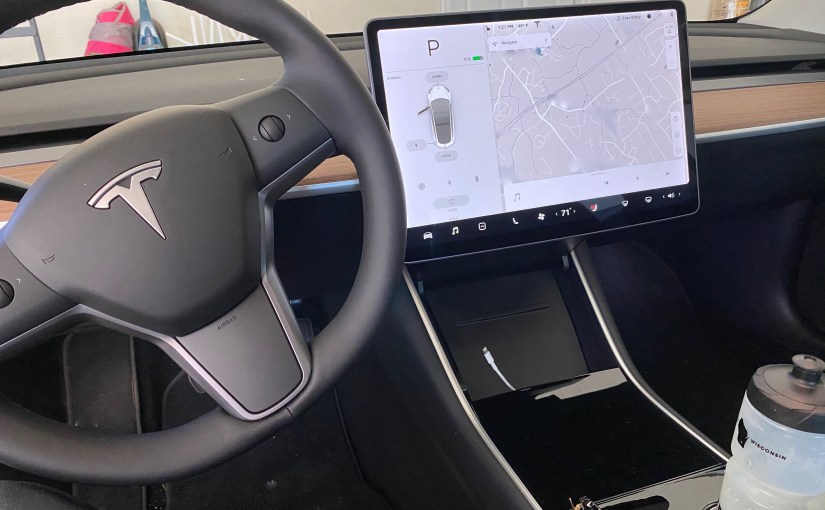
First let me confess that prior to purchase, I was very concerned about the availability of charging stations. That fear was put to rest when my friend Laura gave me a tutorial from the front seat of her Tesla Model S.  She showed me that all you need to do is type in your destination on your display, and the computer not only maps out the route, but it also tells you where to stop to recharge, how LONG you will need to stop at the station, and how much of a charge will remain once you reach your destination. You want to see what the display looks like?  Check out the header photo of this post, which maps a route from home to the Fairhaven Library, assuming a starting charge of 80%. (WordPress just “improved” its software, so in the off chance that you can’t see the heading, here it is again.)

As of March, 2020, Tesla had 25,000 charging stations in the USA. Only Tesla owners are able to use these stations, which generally are located along major highways, and in places where you would want to stop, with bathrooms, food and/or shopping. But Tesla owners are not restricted to just these superchargers. The Tesla comes equipped with an adapter ( CHAdeMO –no I have NO idea what that means — just think of it as a piece of equipment named Chad) which allows you to connect at OTHER public charging stations that use”Chad” for hooking up.

Because there are a couple of EvGo stations  that are located more conveniently than the Tesla Supercharger, in the area I’ll be visiting, I signed up for an EvGo account. I found the EvGo website VERY user friendly and informative, especially for a non-engineer like me.   After reading its tutorial, I finally understood the three different levels of charging–which was formerly a mystery to me. 

EvGo offers two plans: a monthly membership, or a pay as you go option. You also can choose between “super fast” or  “faster than plugging into a standard wall outlet” chargers.  Obviously, the faster one is more expensive.  These numbers are approximate, calculated from the estimates on the EvGo page: $.30 per minute or $18 per hour for 180 miles of charge ($.10 per mile) versus $1.50 per hour for 20 miles of charge (or $.075 per mile).  Because no one in my family has a charging station (or a garage), I expect to be using that EvGo charging station at least once while in Massachusetts and will describe the experience in my usual painstaking detail.    

Back to my obsessive compulsiveness.  As my friends and family know, I am a planner, at least when it comes to travel.  Although I can do many things from my phone’s Tesla App, it doesn’t allow me to do any navigation or trip planning.  That can only be done from the car’s display. Maybe some people enjoy sitting in a parked car, but I don’t happen to be one of them.  Fortunately, the Tesla Motors Club website has very helpful and friendly posters who directed me to A Better Route Planner (which can be downloaded to your phone from the app store, or even viewed on your desktop.) Let me tell you, it’s much more fun planning imaginary trips from the comfort of your couch than from the front seat of your car!  At least it is to me. 

The information on ABRP (A Better Route Planner)is much the same as what you get from the Tesla Display, except that it also includes public charging stations, and provides estimates of cost and length of time for charging.  You start by inputting the your destination, % of charge (called “SOC” or state of charge), and the application does the rest.  Here’s a screen shot from my phone.  


You can include the desired “SOC” for  when you arrive at your destination, and can plot out your stops for your return trip, but you’ve seen enough shots of screens, haven’t you?    

For some reason that is clear to the technical members of the family, but not to me, the battery should be kept between 20% and 80% charged.  I don’t need to know why.  I went to Catholic school.  I do as I’m told.  Well, most of the time, or maybe some of the time, and this was one of those times.  Tonight, however, that sucker is getting charged all the way up to 100%, so tomorrow, I’ll be charged up and raring to go.  

Trip Insurance Update

Was it only four months ago that I questioned whether trip insurance was worth the cost? The world was a different place back then, wasn’t it?

Over the past two months, most of us have learned more than we ever wanted to know about insuring our adventures. When we buy a policy, we usually look at the summary of benefits–how much coverage is offered for trip cancellation, trip interruption, medical expenses, lost luggage etc. But how many of us take the time to read the exclusions? Let’s face it, it isn’t easy to get to the exclusion section, let alone the complete policy.

Even if you do decide to try to read the policy on line, it is likely that you will have to click through several screens to get there. Once you arrive, you will find that the list of exclusions is fairly universal among travel insurers. They include things like attempted suicide or other self inflicted harm, criminal acts, pre-existing conditions (unless certain specified rules are followed) AND something that never concerned me before — epidemics.

I have never purchased the more expensive “cancel for any reason” policies so I can’t speak to what those exclusions would be. I assume that it wouldn’t matter. If your spouse was incarcerated for robbing a bank, I imagine you could say that you are canceling because you just didn’t want to go on the trip. But we have no plans to test out my hypothesis.

Right now, so many flight and trip cancellations are truly putting the travel industry under tremendous strain. What happens when the travel company cancels the trip? When an airline cancels your flight? When you cancel and then a few weeks (or days) later, everything is cancelled? What if you cancel far enough in advance that the travel company’s policy is to give you your money back less a change charge, but the company changes their policy? What if the company doesn’t survive? We are all slowly learning the answers to those questions.

But enough of the anxiety provoking questions. Time for some good news and some praise for a company. For the first time ever, I decided to rely on my Chase Sapphire Reserve card to cover our trip insurance needs. Because the Chase Sapphire Reserve card has a rather significant annual charge of $550, (an increase of $100 from when I originally bought it)I had never considered trading in my Chase Sapphire Preferred card (no fee, probably because I had owned that card for more than 15 years, well before they started charging $90 per year). What changed my mind was a post in the Overseas Adventure Travel Forum. One of the posters alerted me to the fact that the Reserve card credits back $300 if you spend that amount on travel, something that we easily do, most years. So, the net cost for the card is actually $200 per year. We clearly could never get trip insurance for $100 per person, per year, so it was time to look a little more carefully at the plan provisions.

Because we have an excellent Medicare supplement, I wasn’t concerned about the skimpy medical coverage of $2,500. It would more than cover any deductible or copay from our Medicare supplement carrier. It also offered $100,000 in emergency evacuation and transportation not already covered by our Medicare Supplement. I also wasn’t concerned about replacement for lost luggage. I never check anything valuable anyway. What REALLY interested me was trip cancellation and trip interruption coverage.

After reviewing the provisions, I felt comfortable that this plan offers coverage as good as I would get elsewhere. The exclusions were standard, but it did have annual maximum benefits of $10,000 per person, $20,000 per trip (since it is only my husband and me, that works) and a maximum payment of $40,000 per year. Our travel expenses easily fit within those parameters. And if it appears that we would be exceeding those amounts, I would simply purchase a supplemental policy. As noted in my prior post, I had always purchased trip insurance from insuremytrip.com and had been pleased with the results. Our cost for very good coverage ranged from $250 per person to a high of $500 per person, which was significantly less expensive than what was offered by the travel company. Still, $0.00 per person seemed like a better deal to me, and that was what we relied upon to cover our costs for our planned Morocco trip the end of March.

In early March, we learned that my husband had a medical condition that was not life threatening, but needed attention, so we canceled. Two weeks later, our travel provider canceled all March and April departures, offering credits toward a future trip. Because our reason for canceling was not due to the epidemic, we were able to get a complete refund from our Chase insurance. And, because treatment has been delayed, I canceled a subsequent trip in June, and the cancellation penalty has also been refunded.

So what do I have to say about my experience with Chase Sapphire Reserve’s vendor, Allianz? Nothing but high praise. Claims can be submitted through their website, by regular mail or by email. The process is EASY and it was FAST. It only took two weeks from the time we submitted the physician’s statement until the time I had my check in hand. Pretty amazing given what has been going on in the travel insurance world.

So, my earlier advice still stands. Do your research, know what you need, and what you are buying when you are able to travel again. I hope it will be soon!

Confessions of a Tes-Lover

In late February, when I wrote my post about ordering my Tesla 3, the world was a different place. Although we vaguely knew there was something going on in China, back then, it didn’t seem like it was going to have much of an impact on us.

Boy were WE wrong.

There are plenty of posts, news items, tweets about the Coronavirus already, so no need to say more. Instead let’s focus on the positive: My induction into the Tesla Lovers’ Club. (Cult? Club?? You be the judge.)

As of today, I have owned my Tesla for one whole month. When I picked it up, my plan was to drive it short distances for a week, get used to its differences and features, then take it for its first long journey: a trip to Massachusetts and back, to visit my family. I had every intention of describing my experience of recharging on the road.

That plan, along with MANY other plans, went poof. Still, there is no shortage of things to say about my new “hot wheels”. Here are some things I have learned, after driving a total of 356 miles (but who’s counting?).

Things I Didn’t Know Before I Ordered
*There is no spare tire. If you have a flat, you call Tesla Roadside Assistance, which is available without charge for the duration of your warranty — 4 years or 50,000 miles, whichever comes first, and at the rate I’m going, we know which one it will be. The Tesla shop sells two different tire repair kits ($25 or $80). I’ve got 4 years to determine whether or not I need to have a do-it yourself option stored on board.

*When your car gets dirty, you have to find either a “touchless” car wash to protect the sensors and cameras, or you’ll be hand washing the exterior yourself. No problem yet. It’s hard to get a car dirty when it spends its days sitting in the garage.

*My (no longer owned) Prius and my husband’s Camry both had built in garage door openers. That feature is not included with the Tesla, but it can be purchased for an additional $300. Even if you purchase it in advance, however, “HomeLink” is not installed when you pick the car up. The good news–when I finally get HomeLink (because I DID buy it)–the garage door will know I’m arriving (or departing) and will automatically open (or close) for me. The side mirrors will fold in, giving me additional space on either side of the garage. I’m sure I’ll appreciate this feature even more when I’m in my 80’s. Let’s hope Homelink gets installed before then.

*Your smart phone functions as your car key, plus you receive a credit card sized back up “key” in case your battery dies. You can also purchase a key fob for $150. So far, the phone has been working just fine for me. I feel like I’m going through a second adolescence, though. My phone has almost become a part of my body. These days, I need to know where my phone actually IS, because you can do so many Tesla functions remotely, using it.

Starting Out
The interior looks VERY different from every car I ever owned. If you’ve never been inside a Tesla, here’s what awaits you. Instead of the usual dashboard, Teslas have a touchscreen that looks very much like an iPad. (Oh yeah, you can buy a charging pad, so you don’t have to have your charger sticking up on the console. )

The glove compartment includes two manuals: one with safety information, and one on the proper way to be towed, should the need arise. What it did NOT have was what one (“one” in this case being ME) would consider a standard user’s manual. Instead, the manual is “on line”, accessed by pressing the Tesla logo on the top of your touch screen.

If you long for the comfort of those printed pages, you can always download a manual from the internet and print the 230 pages yourself.
I was okay with reading it on-line. And that is what I did, for the five weeks between ordering and delivery. I was like a new mom, awaiting the delivery of her first born, preparing by reading everything available. I must confess, I was almost as excited about THIS delivery as the birth one, plus it was a whole lot less painful, but equally expensive.

What was NOT clear from the manual was how many “self driving” features were included with my long distance model 3, versus the $7,000 upgrade package. Let’s just say that I was pleasantly surprised that I have more features than I expected, which means there were just enough to only mildly terrify me. Of course, you can operate it without activating any of the self driving features, but what fun would THAT be? Here’s a cool example: if I have Assisted Cruise Control activated, and am stopped behind a car at a red light, when THAT car goes, so does my Tesla, without my having to put my foot on the accelerator. Was I surprised the first time that happened? Hell ya.

The Learning Curve
Almost EVERYTHING in a Tesla is different: Opening the car doors, working the radio, adjusting the heat and side mirrors, opening the glove compartment, using–or not using –the brakes, stopping the car from “farting” after you activate that fun feature…

Think I’m exaggerating? Take a look at the recessed door handle. It took me a while to coordinate the “press and pull” maneuver.

And once you’re inside? How do you get OUT? Take a look. Can you find the handle? If you figured out you press that single button on the top of the door, you’re smarter than I. Of course, the flash on my iPhone helped by making the interior look grey. It is actually black, so locating that little button was a bit of a challenge for me– a challenge that I am proud to say I have since mastered.

Almost everything else is controlled by the touch screen to the right of the steering wheel. Some functions can be accessed directly, but others are hidden behind drop down menus. As with everything else, once you learn the menu options, it’s easy. But imagine if you haven’t driven for a while, perhaps because you have been “sheltering in place” for three weeks. What do you think might happen? If you’re like me, your right back well below the midpoint of that learning curve.

Still, it only takes a little practice. Like using the brakes. Or NOT using the brakes, because you don’t have to very often. You just take your foot off what I used to think of as the “gas pedal” and if you had been going slowly, you stop. Right away. If you were whipping along at a nice clip, you slow down a little more gradually. But most of the time you stop without braking at all. As you are slowing down, you are also recharging the battery.

Okay, so I’ve held you in suspense long enough. The farting? All Teslas come with something called “Easter Eggs”. These are little toys that I’ll bet the engineers had great fun creating. Our son, during his elementary school years thought that whoopee cushions were the funniest thing ever. Clearly, so do some of the Tesla engineers, because one of the “Easter Eggs” gets the car to sound like a passenger has eaten three cans of beans. Being the mature adult that I am, I felt compelled to demonstrate this particular feature to a friend. That’s when I discovered how difficult it was to make it stop! But enough of the bathroom humor.

Bottom Line
I LOVE my Tesla. I love that software updates regularly occur over wifi. I love the smooth ride, the amazing acceleration, the ability to warm (and cool) it remotely via my iPhone, the security features, the entertainment options, the maps directing you to charging stations, the list goes on and on. I am looking forward to the day when I can actually GO someplace with it.

Stay safe and sane everyone, and remember all of those who are working every day under very stressful conditions, providing medical care and essential services to us all. Love and virtual hugs all around.

What a Difference Eleven Days Make!

It’s hard to believe that only eleven short days ago, we were weighing the pros and cons of canceling our trip to Morocco. Unless you are living in a cave, on an island, without cell reception, you know how the world has been turned upside down by the CoronaVirus. The tragedies in China, Iran and Italy are all heartbreaking and sobering.

On March 4th, when I last posted, the conventional wisdom (and internet info) said that if you washed your hands, didn’t touch your face, stayed six feet away from sneezers and had a relatively robust immune system, then you were in good shape to win the CoronaVirus battle. Okay, then. The more cautious (or as my mother used to say–the more REASONABLE) member of this traveling duo voted for immediate cancellation, while the other advocated to “wait and see”. My family has absolutely no problem figuring out who was who.

Ultimately we did both. We waited five more days, then canceled. It seemed like every hour, we were getting notified that something else was being postponed or canceled, like basketball, political gatherings, Broadway shows, our speaker series. As it turns out, a few days later, our tour company, Overseas Adventure Travel announced that ALL March and April departures were canceled. Those who had not yet canceled could get a voucher for a future trip.

Some friends are currently out of the country. I just heard from one in Egypt. She said that OAT is cutting her trip short because of all the flight cancellations. Her group will be getting a pro-rated refund. Talk about a positive attitude–the group is already thinking about when they will be able to return. Another friend made it to JFK, then learned that Argentina had closed its borders to all travelers from countries with CoronaVirus outbreaks. HER trip ended before it even started.

We are concerned about the impact this is having on the wonderful tour guides we traveled with over the past several years. We hope that they, especially the ones in Italy, are safe and are not economically hurt too badly by this slow down in tourism.

So, where are we now? For the past few days, we have been practicing “extreme social distancing”. Today, we were notified that our local Y is closing for two weeks. We had stopped going two days ago, not because we are panic stricken, but because we wanted to do our part to help keep our community safe. Let’s hope that together we can all take the necessary steps to “flatten the curve”.

To GO or Not TO GO, THAT is the Question

In September of 2018, we signed up with Overseas Adventure Travel for a March 2020 trip to Morocco. Why plan so far in advance? We wanted to travel with friends, OAT limits their groups to 16, and popular trips sell out quickly. We had no difficulty recruiting 11 friends to go on the tour with us. So far so good. Fast forward to today, with departure date rapidly approaching. As my favorite philosopher, John Lennon, once said, “Life is what happens when you’re busy making other plans.”

Well ol’ John was right. “Life” has certainly jumped up and slapped us in the face. Within the last two months three travel buddies had to drop out. One member of a couple was diagnosed with a serious medical issue, then another fell and fractured her knee. Their future absence made us realize how much we were looking forward to spending time with them.

Because the trip is so popular, their spots were quickly taken by other OAT travelers –also known as friends we haven’t met yet. So, there will still be 16 of us on the trip. But wait, we aren’t finished. Unless you are in a coma, you have probably heard about the coronavirus. So far, none of us has allowed it to disrupt our plans.

Fortunately, according to our State Department, Morocco is looking safe. Still, we have to fly to get there and back, and our plans include a three day stopover in Paris before we enter Morocco. Although the State Department hasn’t identified France as a “do not travel” country, another source indicated that several cases have popped up in France.

What to do? Sadly, we have to acknowledge that being over 65, we have aged into the “at risk” group. Fortunately, we are relatively healthy, and are up to date on all of our shots. Still, we recently experienced another country’s health care system, and although the outcome was positive, visiting my spouse in the Alice Springs Hospital was not a high point of our trip to Australia. (Clearly, it wasn’t my spouse’s either.) On a positive note, although we learned just how wonderful our medicare supplement coverage is when we are outside of the USA, we hope to never have to use it again!

As of today, according to the US State Department, Morocco and Paris have only the usual warnings about terrorist activities, but that is the world we live in. Given our record of gun violence in schools, churches, shopping malls, movie theaters, we could just as easily be mowed down by a home grown terrorist shooting his assault weapon. I refuse to let terrorists, either here or elsewhere, win. A virus, however, is another matter.

As of today, Morocco has reported its first case of the coronavirus; its victim, a man who returned from a visit to Italy, is being treated in a Casablanca hospital.

In Paris, a protest by workers closed the Louvre for two days, until the Museum staff assured the workers that “proper measures” to ensure their safety were being taken.

What happens if we get to Paris, and Morocco decides not to let anyone into the country from France –or from the USA? Let’s face it, several states have reported outbreaks, with many of the victims having no known source of contact. Our response is being managed by Mike Pence, who is not noted for his expertise in the medical and scientific arena. Maybe other countries will view US as being problematic? What if we make it to Morocco, an outbreak occurs and we can’t fly home? What if we catch a cold or some other nasty thing on the flights, either to or from our destination and we have to be quarantined until we are tested and certified as okay? So many “what ifs”. One thing that’s certain, if we go, my plan to travel with “carry on only” has been abandoned. I want to be sure we have enough clean clothes to get us through any “what ifs” that come our way.

In addition to cancelling all trips to China, South Korea and Mongolia, OAT has allowed travelers that signed up for their Italy trips the option to cancel right up to the date of departure, choosing either to apply their payment to a future OAT trip or to get a refund, minus a small processing fee. That gives us peace of mind.

What will we do? We will prepare as if we are going to take the trip, watch the news, check the internet and wait to see how it all unfolds.

Car Buyer or Cult Member?

Am I having a midlife crisis? Or did I just join a cult? I’m way too old for either, but here we are.

I feel like I have done the car buying equivalent of bungee jumping, except I haven’t jumped YET. I’ve been strapped in, led to the edge, and am waiting to either jump or be pushed. My emotions keep swinging from exhilaration to terror. What have I done? The bigger question: Does every future Tesla owner go through this while awaiting delivery?

First, let me say that although I am still in shock that a car can cost almost as much as our first house, I didn’t buy one of the super expensive Teslas. And our little first house, bought decades ago, was in Ohio, a much cheaper area of the country. Still, for someone who views a car solely as a means of transportation, it’s a LOT of money, even for the Tesla 3, which is the least expensive model. (I DID spring for the mid priced 3–the one with the battery that lets you go a longer distance. The top of the line, the Performance 3 is DEFINITELY for those with a need for speed.)

So, how did this happen? How did a non-car aficionado end up ordering a cool set of wheels? Simple. My son guilted me. He took the number of miles that I drove last year plus the amount that I spent on gasoline, and converted it into how much carbon I released into the atmosphere. Not as much as most, because for the last 11 years, I’ve driven a Prius. Even so, he calculated that in 2019, I was responsible for one TON of emissions. He’s an electrical engineer, so the odds are good that his calculation was accurate. But then again, he knows I don’t have the skills needed to check his math.

He knows my vulnerabilities. I am passionate about protecting the environment. For years, I’ve carried a reusable water bottle, reusable grocery bags (including reusable produce bags). I recycle, reuse and refrain whenever I can to minimize my carbon footprint. Because I love to travel, I figure I need to do whatever I can to offset my the carbon from the flights I take.

I also really liked the Tesla’s safety features, such as blind spot monitoring, and assisted cruise control. For an additional $7,000, I could have had the self driving feature. I didn’t get it, and not just because of the cost. Quite honestly, when I tried it out, I was terrified. What is REALLY cool, however, is that all of Tesla’s model 3’s (built after 10/2016) have all of the sensors, cameras and radar needed for self driving already built in. Should I become comfortable enough to add that feature in the future, all I have to do is pay for it, then download the software via wifi. And that’s another cool thing: Tesla updates the software regularly, so once you own a Tesla, you benefit from the updates that flow over your wifi network. Sometimes a blessing, sometimes a curse. Only time will tell.

But back to those safety features. Even if you don’t spring for the super duper self driving feature, you still get “auto pilot”. If you are like me, and get into your zen mode while listening to the radio, you know that sometimes your foot gets heavy and you lose track of space and time – or maybe just the speed at which you are traveling. Am I right? Auto Pilot KNOWS the speed limits of the road you are zipping along, and will limit you to a number that you choose ( like +5 MPH over the limit). You can override the limit, but usually my problem comes from going too fast, not too slow.

Anyway, I am 4 days away from picking up the car that I ordered 5 weeks ago. What have I done while waiting? I’ve been reading the manual. Mike has been busy too. He oversaw turning our garage into a charging station. His mission was accomplished today.

Meanwhile, I’ve been hanging out on the Tesla Message Boards. I wanted to find out things like, does it get hot in the car because of the glass roof? Approximately how far can you go on 1 Kilowatt of electricity? (And is it a Kilowatt or a Kilowatt hour? ) How much does it cost to use a Tesla Supercharger? Stuff like that. Instead I found posts like this one, chosen at random and cut and pasted:

I have a pair of Model S non-P caliper in my garage just for that purpose. However, I’m on the fence about it once I did more research. The big gain for the RB S caliper option is the increase thermal capacity of the larger and thicker rotor. On the other hand, the P3D pad is slightly larger than S pad. And there are already a number of track oriented pad on the market for P3D. Whereas the S pad is available in street pad only, the only other car that uses the same pad shape is Chevy Cruise econobox.

Did it scare me. You bet. Even though I am generally fluent in English, I had no bloody idea what that post was about! But then I realized that many of the Tesla buyers are engineers or car enthusiasts — most likely both. I am neither. I’ll stick to reading the manual. And keep my fingers crossed. Four more days, but who’s counting.

Trip Insurance–Is it Worth It?

Here’s the Cliffs Note version: It all depends. For some, trip insurance is definitely worth it. But there are caveats. Know what you need, know what you are buying, choose a reputable company, consider other options.

If you read my Australia blog posts, you will recall that my husband had a freak accident, which put him in the Alice Springs Hospital for three days. We missed several days of our trip, but were grateful that everything ultimately turned out well.

Tips for Filing a Claim

  • Notify the insurance company as soon as you realize you will be submitting a claim. They can email you the claim form, tell you what to include when you submit your claim and provide moral support. The medical team at AIG Travel Guard was wonderful. Although I didn’t need their help, it was nice to know they were available, if I wanted them to check up on me and my husband.
  • Keep ALL receipts. I immediately bought a spiral bound notebook and scotch tape, so that I could enter every receipt, by day, into the notebook, with notations indicating what the expense was for. It is very easy to lose small pieces of paper, like taxi receipts.
  • If you can, pay everything with one credit card. It makes documentation much easier. If you are in a foreign country, your credit card statement will have a record of the currency exchange rate for that item. You simply match the receipt against the credit card charge, and you save the claim examiner that extra task, which brings me to the next point.
  • Make it as easy as possible for the claim examiner to pay the claim. A claim for trip interruption is far more complicated than one for trip cancellation, so more information was needed to process our claim.
  • I created a “claim package”, with a cover letter and a table of contents. I explained what was being provided and identified the attached exhibits. I also created a spreadsheet showing what I expected to collect. It took me a day to get everything organized, but I didn’t have any back and forth with either insurance company.
This will give you an idea of the paperwork I submitted. Can you see why I wanted to help the claim examiner out?

Know What You Need
Medicare does not cover you when you are out of the USA, so for some people, the main reason for buying trip insurance is to get medical coverage. We are fortunate enough to have a very generous medicare supplement, which DOES cover us for emergency services wherever we are in the world. So, for that reason, I chose the AIG policy that offered minimal medical and dental coverage, and the medical coverage was secondary. (That means they will pay after other insurance has paid first. So, you need to submit to your primary carrier, and then whatever isn’t covered, you would submit to the secondary carrier.) If your health plan has a high deductible, and high out of pocket maximum, then you may want or need more generous travel insurance benefits.

For some people, “cancel for any reason” protection may make sense. This might be true for someone still in the work force, who may have to change vacation plans because of work responsibilities.

Our main concern has been trip cancellation for health reasons (either ours or a family member), or trip interruption. Remember when the volcano in Iceland erupted and people were unable to continue with their original travel plans? That’s the sort of thing that worries me.

You can get plans that offer trip interruption at 100% of the cost of the trip (the amount you are insuring) or 150% of the cost of the trip. Why would you want to purchase coverage for more than the cost of the trip? Well, if your trip is interrupted, you may have to stay in another country longer than planned or you may have to change flight arrangements (which could be very expensive).

But what if you are not on a group tour? What if you are traveling on your own, to hotels that allow you to cancel within a day or two of arrival? You may not need any trip insurance at all.

Know What You are Buying
I use Insuremytrip.com to compare various travel insurance options. There are other companies, such as Squaremouth.com, but I’ve had good luck with Insuremytrip, so they are the only company that I have had experience with.
Others may be more comfortable using an insurance agent to find the plan that best meets their needs. If you DO decide to do it on your own, be sure to download the complete policy and read it carefully so that you know exactly what you are getting.
Things to look out for: Pre-Existing condition exclusion clauses, what qualifies as a covered reason for trip cancellation, what level of coverage is offered for things that are important to YOU and is that coverage primary or secondary?
For example, I never check anything valuable when I travel, so I don’t care about the level of coverage for lost luggage. The airlines offer some coverage for delayed or lost luggage, and the airline is usually considered primary.
If you are uncomfortable purchasing a plan from the internet, you can speak with a representative for Insuremytrip.com. They are not paid commissions, so they do not have a financial interest in your choice of plan. That may be true of similar companies.

Choose a Reputable Company
Take the time to read the reviews. Insuremytrip, for example, includes Better Business Bureau ratings, AM Best ratings, years in business, and reviews by users for each of the companies offered, and allows you to do a side by side comparison of the plans. You can also do a google search.

Other Options
Check your credit card for any coverage they might offer. You need to read the booklet that they give you when you first enroll, or compare the benefits of the various companies on line.
I had never considered the Chase Sapphire Reserve card, because of its $450 annual fee. Then I read a post from a fellow traveler who explained that Chase reimburses you up to $300 for any travel expenses you incur during the year. They also offer trip interruption and cancellation insurance up to $10,000 per person and $20,000 per occurrence, with a $40,000 per year maximum. That coverage is easily worth the remaining $150 per year charge to us.
Some of my friends swear by one of the premium American Express cards. It is also possible that Citibank has something competitive, but I have had no experience with either.
You may also consider purchasing the insurance that your tour group offers. I always take a look, but so far, have been able to find more attractive options. That may change as we get older.

Bottom Line
It all comes down to how risk averse you are, what you want to spend, what coverage is important to you, how much time you want to spend researching alternatives.
Every situation is different. Make sure you choose the best option for YOU.
Please feel free to share YOUR experiences and trip Insurance knowledge with the rest of us. Happy travels!

Melbourne, Part Two

Okay, I’ll admit it, I felt really, really guilty, when I learned that while I was having a grand old time on the Great Ocean Road, my beloved husband was suffering in a Melbourne hospital, as I confessed in my last blog post.

After seven days in a town that is hotter than hell ( well, maybe not hell, but definitely purgatory), I feel my penance has been completed and I am free to share the rest of the photos from our glorious time in Melbourne.

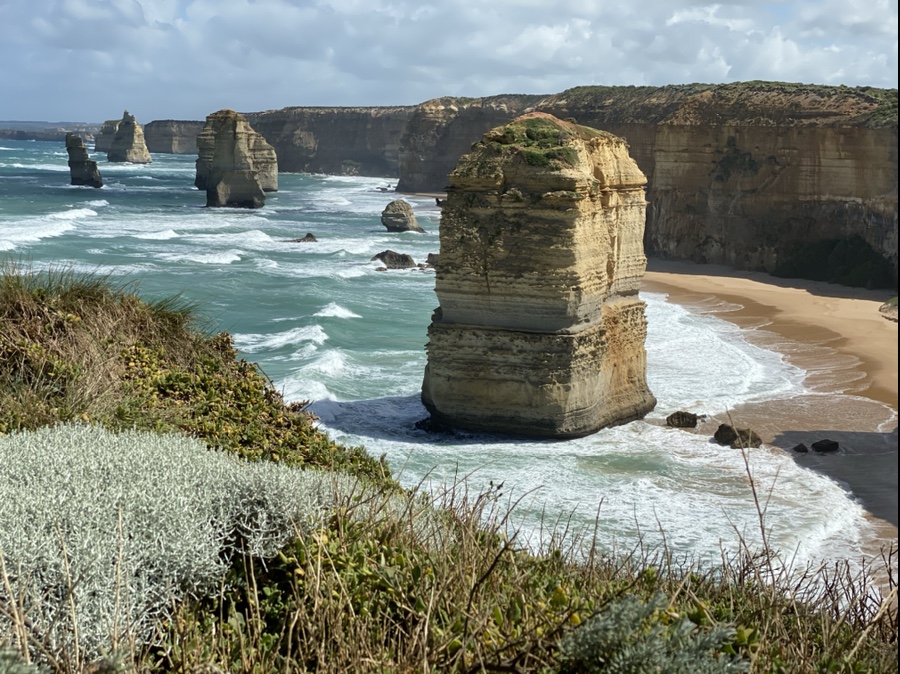
Originally called The Sow and the Piglets, these rock formations were wisely renamed The Twelve Apostles, despite their originally being only nine of them. One has since crumbled, so now there are only eight. I spent most of my career in marketing, so hey, I get it. Nine was close enough, if you just round up.

Not surprisingly, the gambit worked, and the rest is history. The Apostles are definitely a beloved Australian tourist attraction.

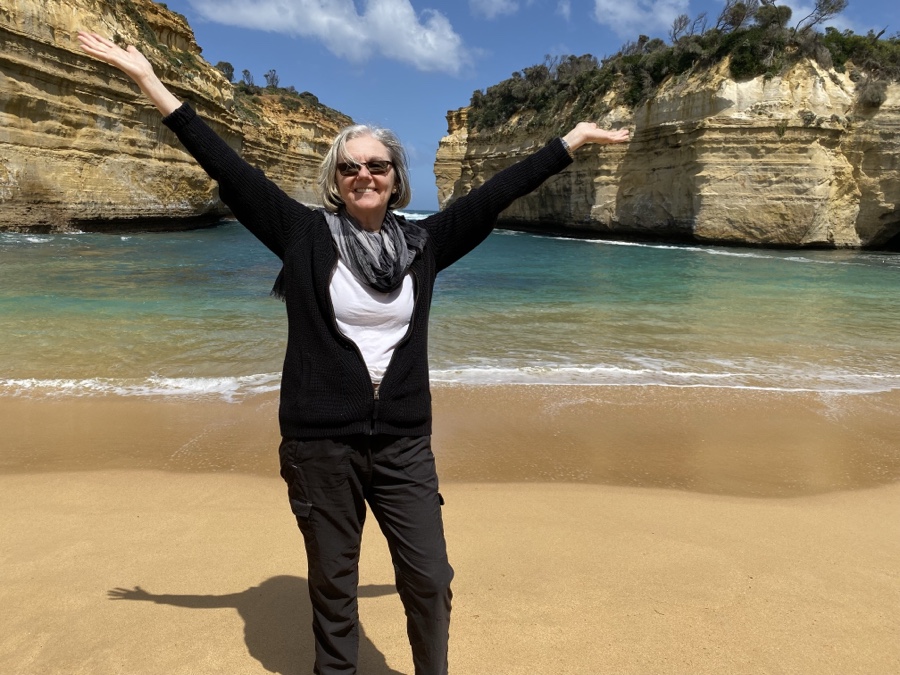
The beach is lovely too, and if you are willing to walk down (and climb back up) eighty steps, you too can get your picture taken on this gorgeous beach.


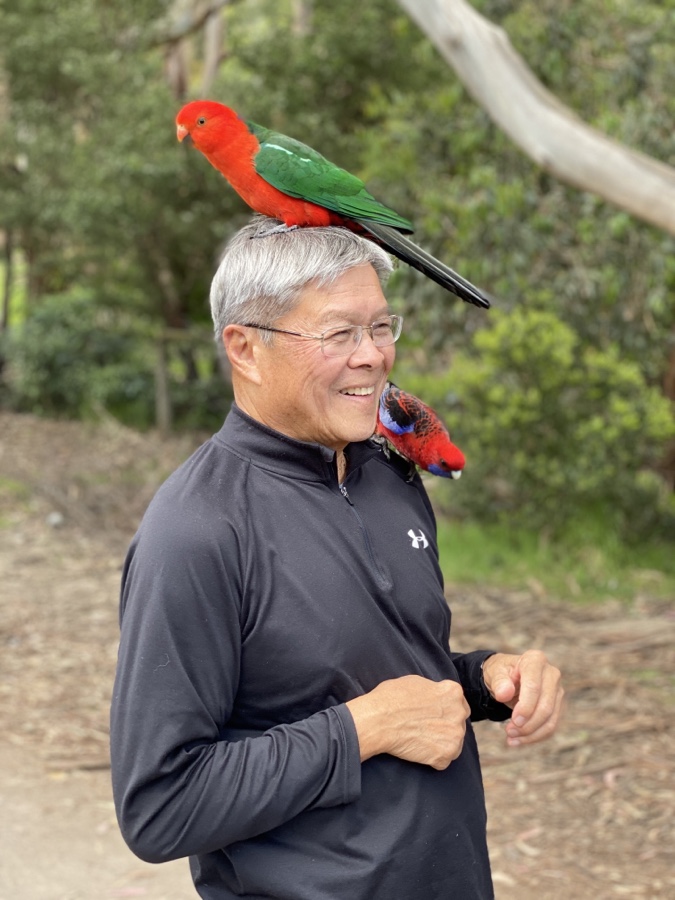
I was definitely game. My favorite photographer was otherwise occupied, but one of our fellow travelers offered to take my picture. Foolishly, I neglected to check my phone until I got all the way back to the top, only to discover a technical glitch. No photo. Andy, who you will soon meet, wearing a bird for a hat, offered to go back down with me, so he and I got to climb down (and UP) 160 steps!


Given that I’m looking a bit chunky, that extra exercise was probably a GOOD thing!

Our stop at the bird hangout was great fun, although I will admit it’s a bit of a jolt when one of these guys unexpectedly lands on you, but Andy took it all in stride.

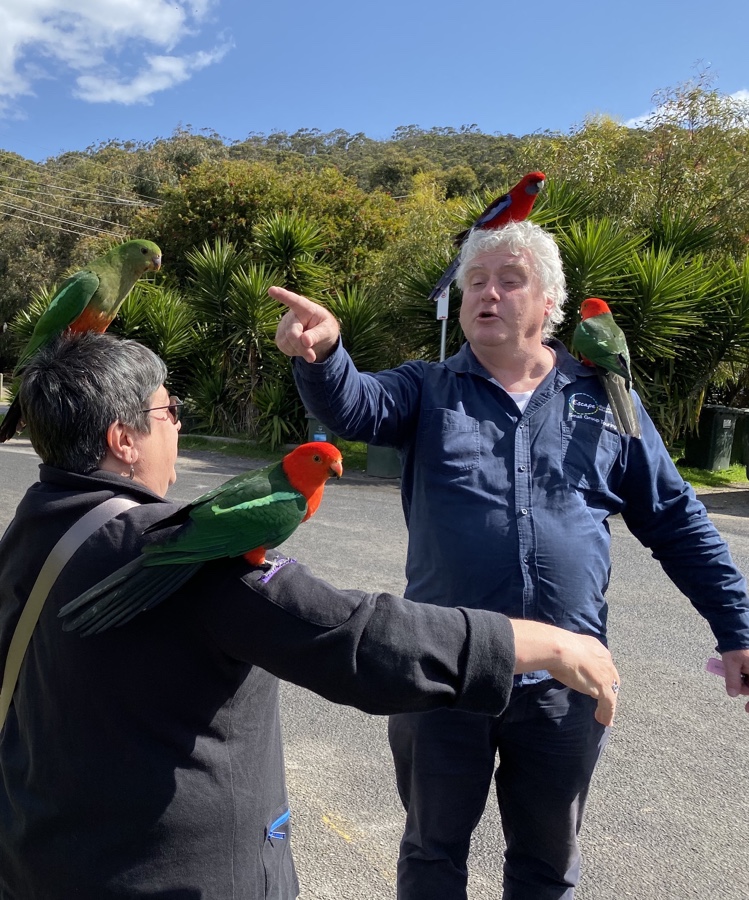
Paul, our tour guide, (shown instructing Jenny, a member of our OAT group) , kept us enlightened and entertained during our entire day together.

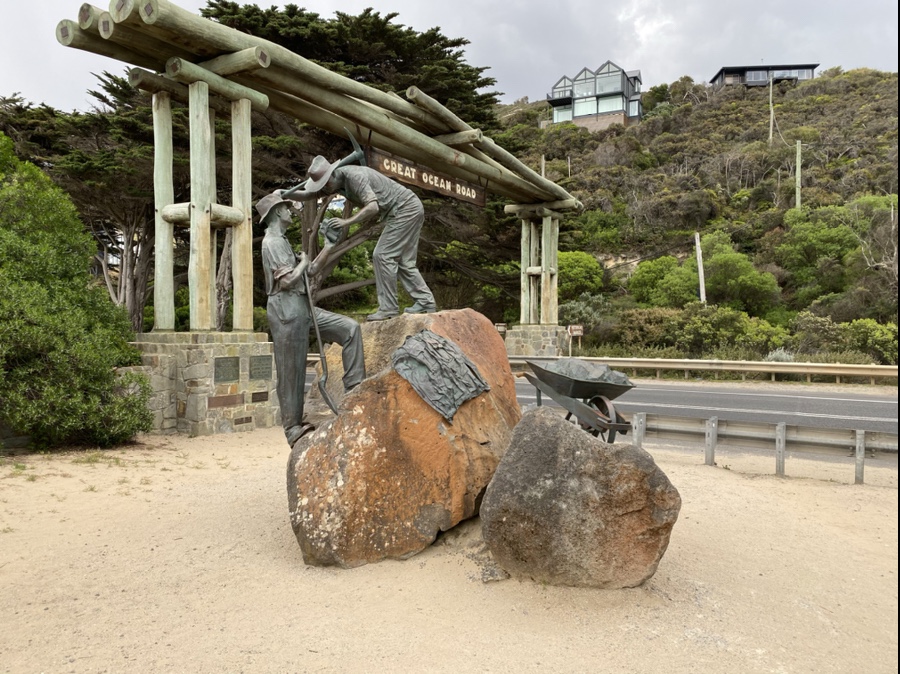
He told us The Great Ocean Road was built to employ returning war veterans. (Sorta like FDR’s CCC during the Great Depression).

About 3,000 former soldiers labored to build the road for almost thirteen years. Because of what we now call PTSD, dynamite couldn’t be used to break through rock; construction was done with pick and shovel.

This war memorial was built to honor the thousands who never came back from the war.

Other highlights from our time in Melbourne included a visit to the Mornington Peninsula, where we visited the Moonlit Sanctuary.

Unlike the Tasmanian Koala, this guy was awake. These animals sleep twenty hours per day, so somehow we managed to time it just right.

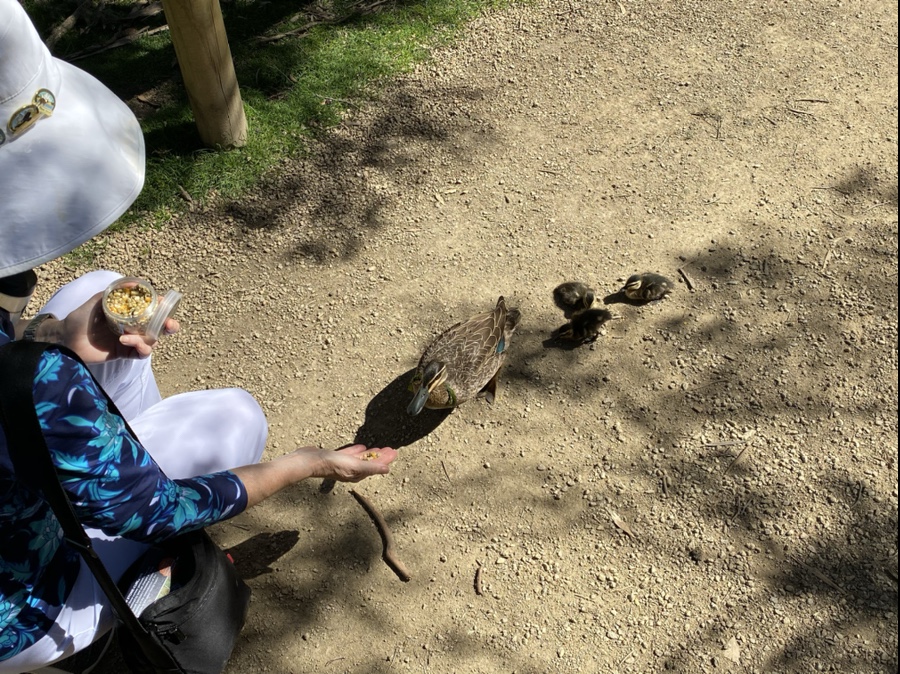
We didn’t have as much luck with the wallabies and kangaroos. They clearly were used to being fed frequently, and weren’t motivated to hop over for a snack. But the ducks and birds were quite happy to take a handout.

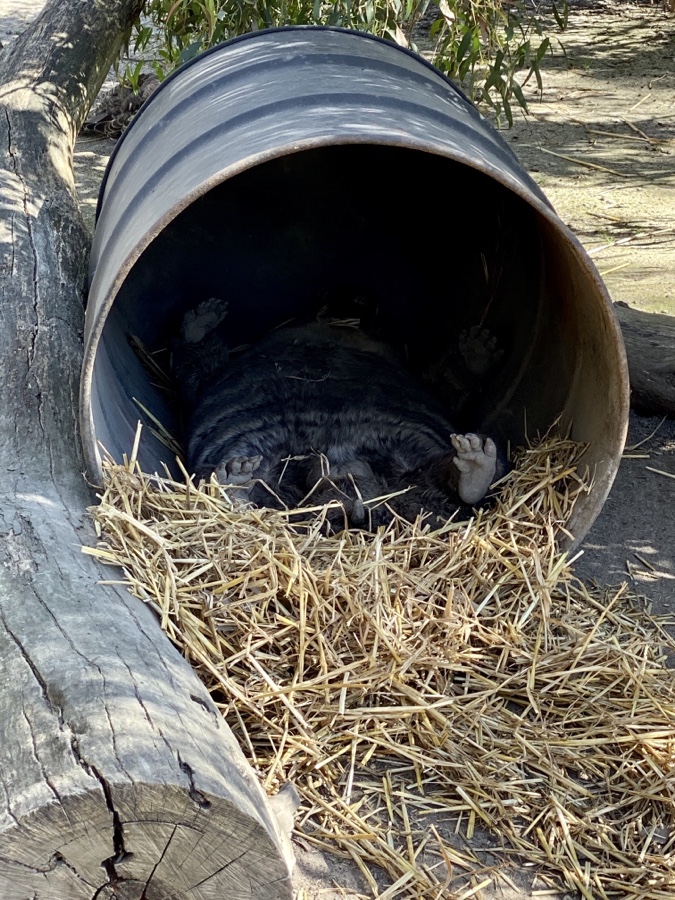
And this wombat? All we could see were his feet and hands! I think he had a “Do Not Disturb” tag hanging on his barrel!


Another notable visit was to the Abbotsford Convent. Now art studios and an educational center, it was once a “Magdalen Asylum” where up to 400 women and girls were sheltered. They were either orphans,”fallen women” or had no where else to go. They were also a source of free labor.

For “three hots and a cot”, they worked doing laundry for hotels and the weathy of Melbourne. As you might expect of a Catholic institution, prayer and chapel attendance were mandatory, as was penitence. This went on until 1975.

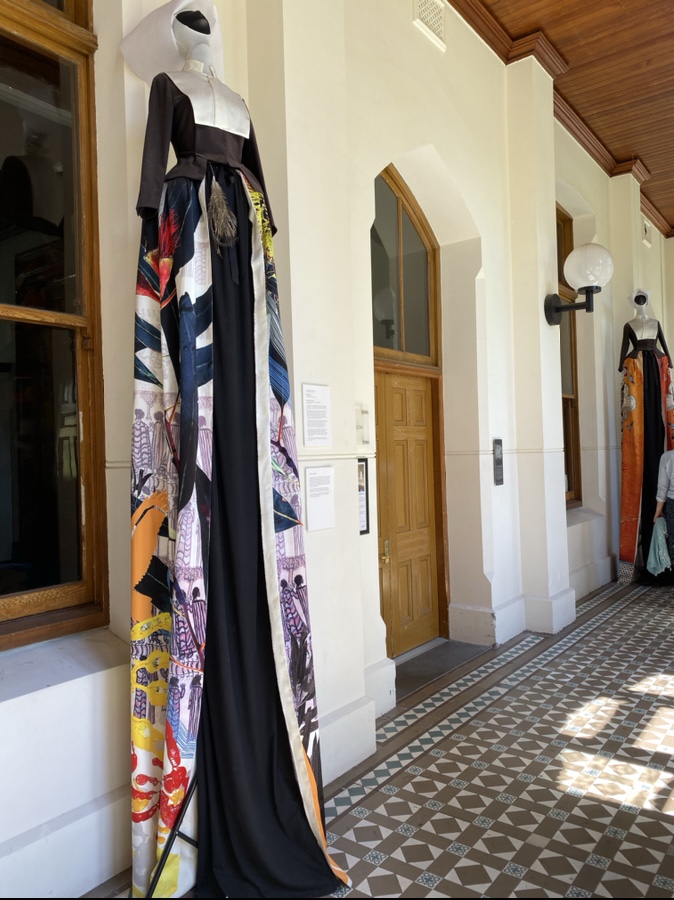
Today, the convent is beautified by art. I was particularly intrigued by these hand painted fabrics, which were very creatively displayed. I leave it to your imagination as to what this artwork symbolizes. It certainly has meaning for ME.

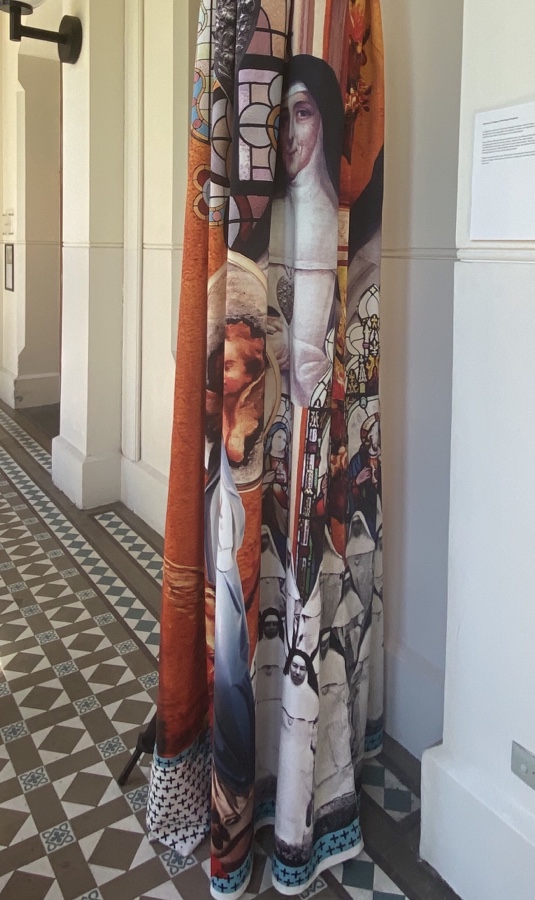
Here’s a close up of one of the fabrics. They were all different and were all exquisite.

Tomorrow we head for Sydney, our final destination on this slightly modified tour of our seventh continent, so I’ll leave you with one last example of what my new iPhone 11 camera can do.

Alice Springs, Australia

In the early ’80s I was captivated by a Masterpiece Theater Miniseries, “A Town Like Alice”, so much so that I read the book upon which the series was based. Who knew that about 35 years later we’d be spending two nights in this “bonza” town in the Northern Territory, right after our stay in Melbourne.

There is still so much more to say about Melbourne, and I will eventually get to that, but first, I bring you Alice Springs with a summary of why this is a town we will never forget.

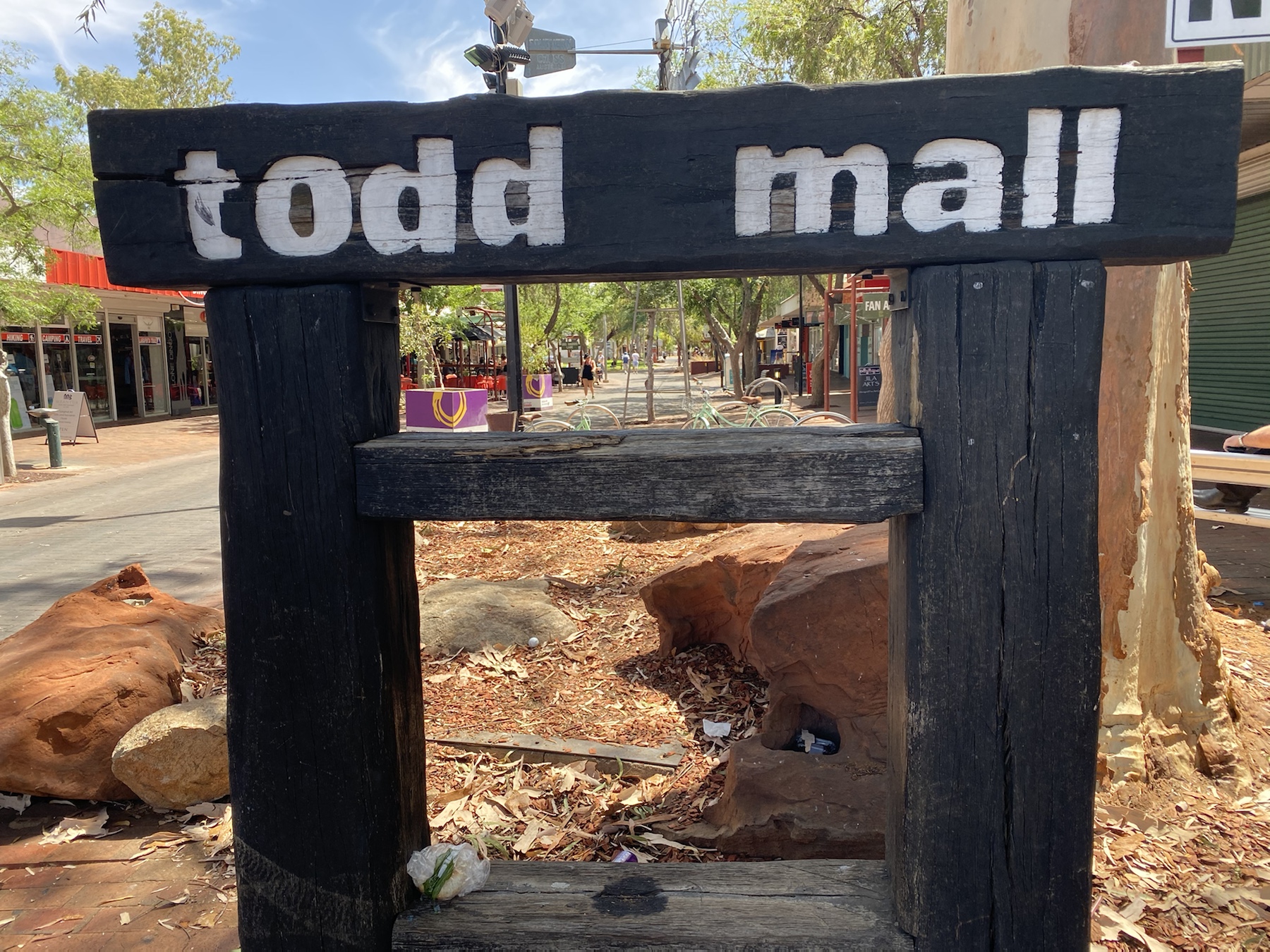
Our hotel, the Doubletree, is located right across from the Todd River. Both the river and the mall (among other things) are named after Sir Charles Todd, who brought communications to the area by constructing telegraph wires or stations or something along those lines. (Clearly I wasn’t all that interested). His wife’s name was Alice, and I’m guessing that at one time the area had a lot of natural springs?

Check out the Todd River.

What, you’re having trouble finding it? That may be because the “river” is bone dry. You see, this area can go for YEARS without rain. It actually looks a whole lot better on Google maps, portrayed as a blue ribbon surrounded by green borders. But no. It is all brown and dry. But the walkway is nice.

So, why did Mike and I decide to skip Uluru and the Great Barrier Reef to spend an additional five nights ( count ’em, FIVE nights !!!) in Alice Springs?

It was a nose bleed. Yes, you read that right. But WHAT a nosebleed! Enough to warrant a 3AM ambulance ride, a hospital stay of three nights, with a trip to the operating room thrown in for good measure. Thanks to the wonderful doctors and nurses in Alice Springs, our hero is out of the hospital and on the mend. But he needs to rest up, so we are hanging out in Alice Springs for those extra days, then flying to Sydney, where, if all goes well, we will be able to rendezvous one last time with our wonderful group before we all fly home.

Exactly HOW did Mike get that geyser of a nosebleed?

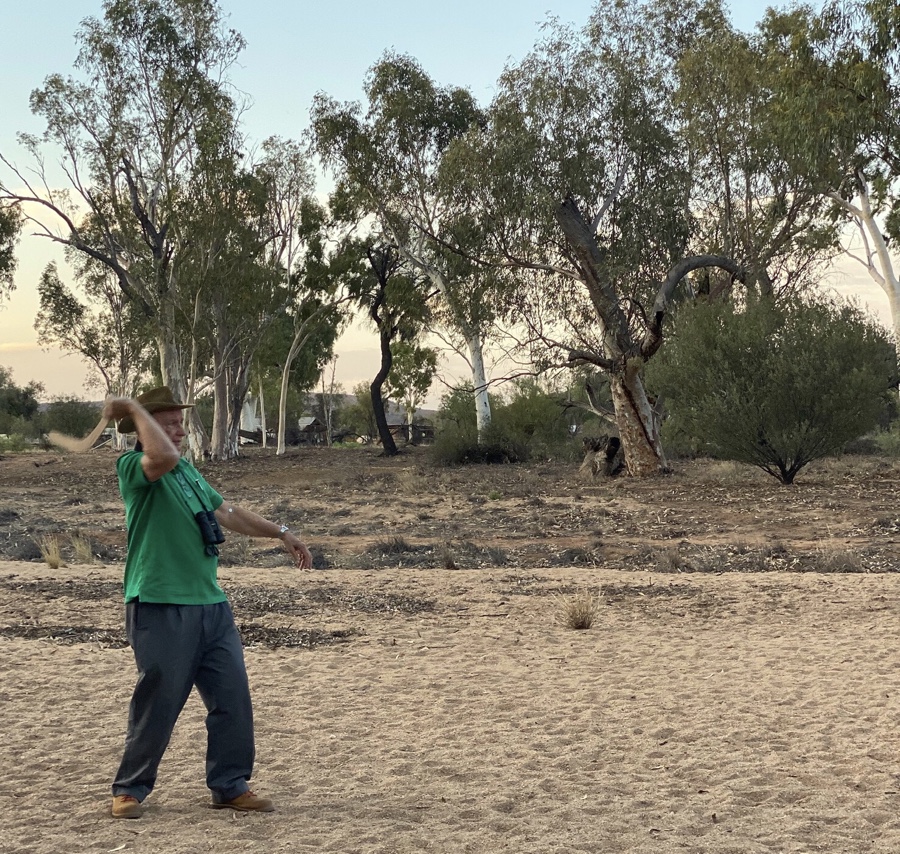
No, his boomerang did NOT circle back and whomp him in the nose!

It all started in Melbourne. He awoke very, very early with what he thought was strep throat. (It wasn’t). Being the considerate, resourceful guy that he is, he didn’t want to wake me or our tour guide, so he surfed the net to find St Vincent’s Hospital was close by. (Bad idea). I woke as he was headed out the door, unfortunately not alert enough to shout “NOOO. Don’t do it.” But then I figured he knew what he was doing, he’d get his antibiotics, then return to the hotel to spend the rest of the day sleeping off his illness.

While I was enjoying the magnificence of the Great Ocean Road, Mike was having his nasal passage assaulted. A nurse decided to ram a swab up his nose to do a flu test. That caused his FIRST nosebleed. (The afore mentioned nosebleed in Alice Springs was the SECOND one). The doctor cauterized the wound, (but not well enough) kept him in the hospital overnight and discharged him early Saturday morning, clearing him to fly to Alice Springs.

Although if we’d had our druthers, Mike would have skipped learning about another country’s health care system, however there WERE a few positives.

  • We felt lucky we weren’t in a remote area devoid of medical facilities AND grateful we both understood the local language (sort of).
  • We HAD purchased trip insurance plus we have high spending limits on our credit card, so we were okay paying (charging) up front.
  • We learned more than we ever wanted to know about travel insurance, electronic devices (phones, SIM cards, hot spots) which provides me with lots of material for future blog posts.
  • The hospital was only a mile away, so I got plenty of exercise walking along the “river”, from hotel to hospital and back, a couple of times a day.
  • I was able to download “A Town Like Alice” to my phone and reread it while waiting for Mike to get out of surgery. I had forgotten that I had liked the miniseries so much more than the book. Still it was a good distraction and it reintroduced me to the word “bonza”. What do YOU think it means?
  • We discovered how tuned in Australians are to what is happening in America, and how well informed they are about Trump, Pence, even Mike Pompeo! Some of them probably know more than many Americans. The nurses were curious about what Americans think of Trump, so we gave them our views and others’ views. Being liberals, that’s what we try to do. Present the facts. We had no idea how much other countries are counting on us to vote him out, something we heard frequently on our trip.
  • The hotel has a pool, so I could imagine I was taking a “sit in the sun and do nothing” kind of vacation. It didn’t take long for me to remember why I never go on that kind of vacation any more!
  • So, that’s why I haven’t been posting much these past few days. I know. A blog is an unusual way to inform friends and family of a somewhat traumatic event. (Mike’s nose was traumatized, as was my psyche).
  • Thankfully, all is well now. Happier posts will follow with better photos!
  • Magnificent Melbourne

    What can I say about this glorious city? The OAT Australia itinerary was recently changed to include an extra day in Melbourne and I’m so glad it did. We could have easily spent a week here and not run out of things to see and do. No matter what interests you, you’ll find it in Melbourne!

    Incredible Architecture

    Melbourne has it all: the old, the new, and everything in between.

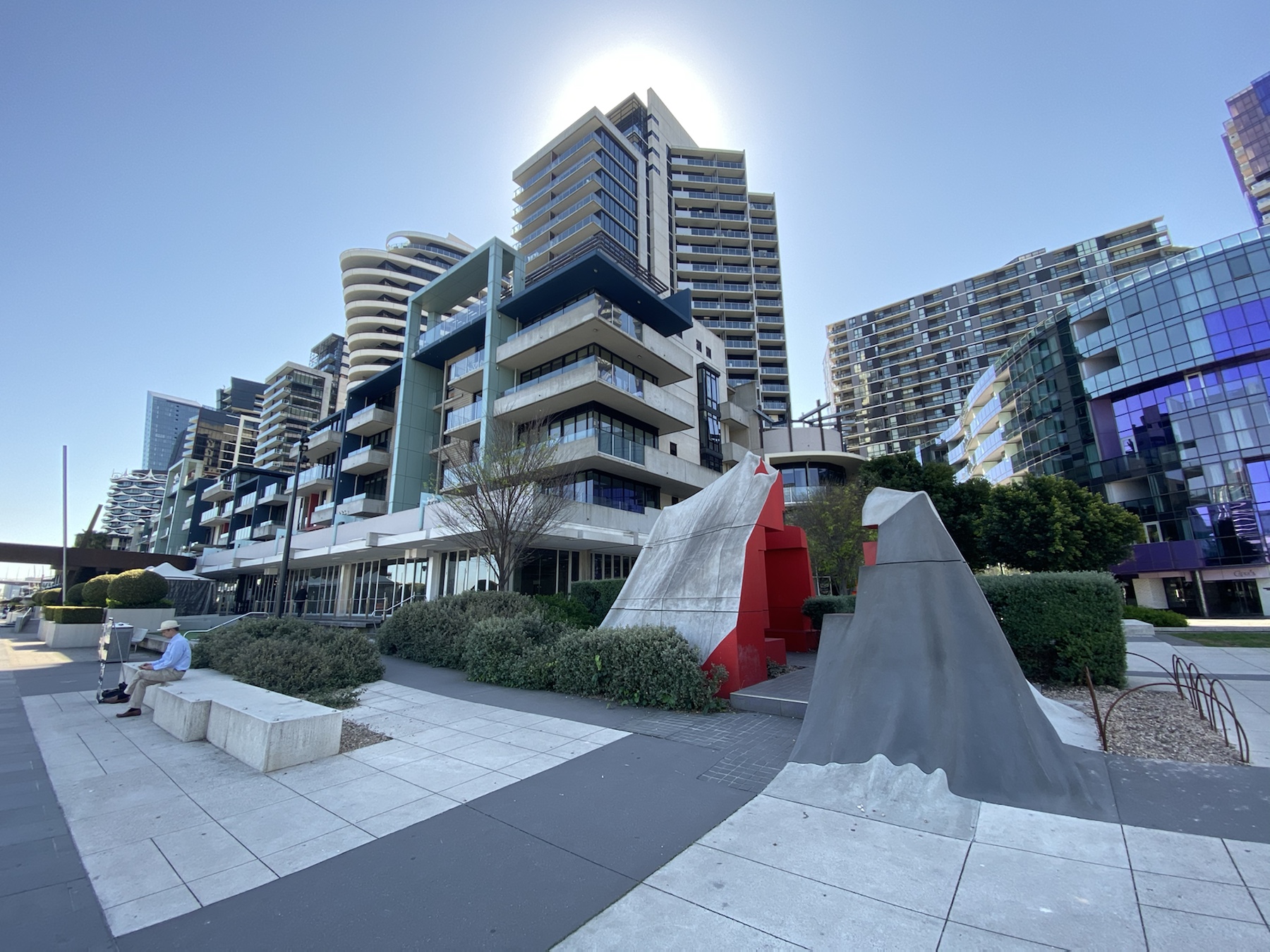
    This photo of the very futuristic buildings in the Docklands area was taken with the wide angle lens of my iPhone 11, without any editing. The sun just happened to be in the perfect spot.

    The beautiful reading room at the Melbourne Library is best viewed from the 6th floor.

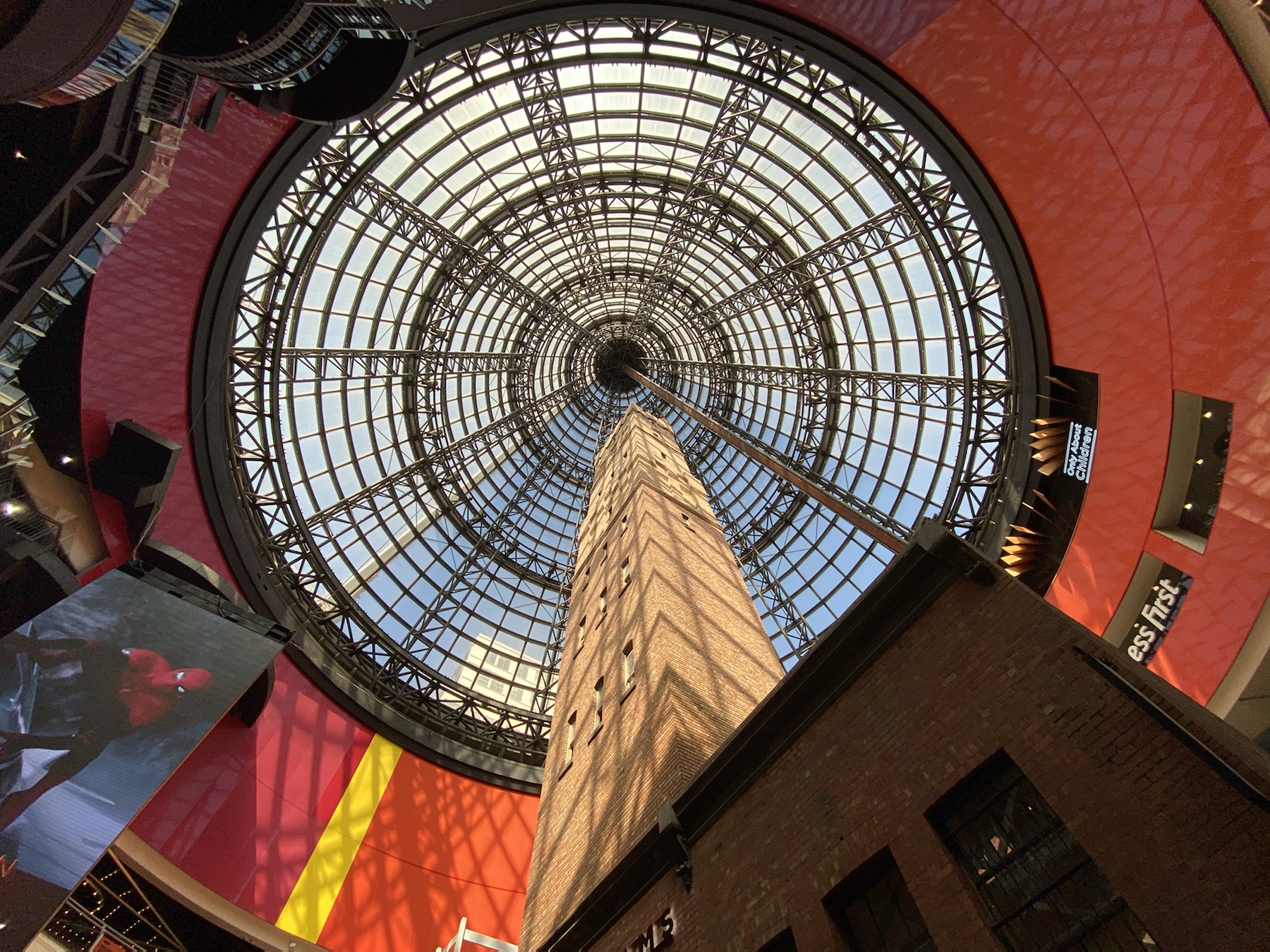
    Where else can you find a shopping mall built around a preserved tower, where ammunition was once made?

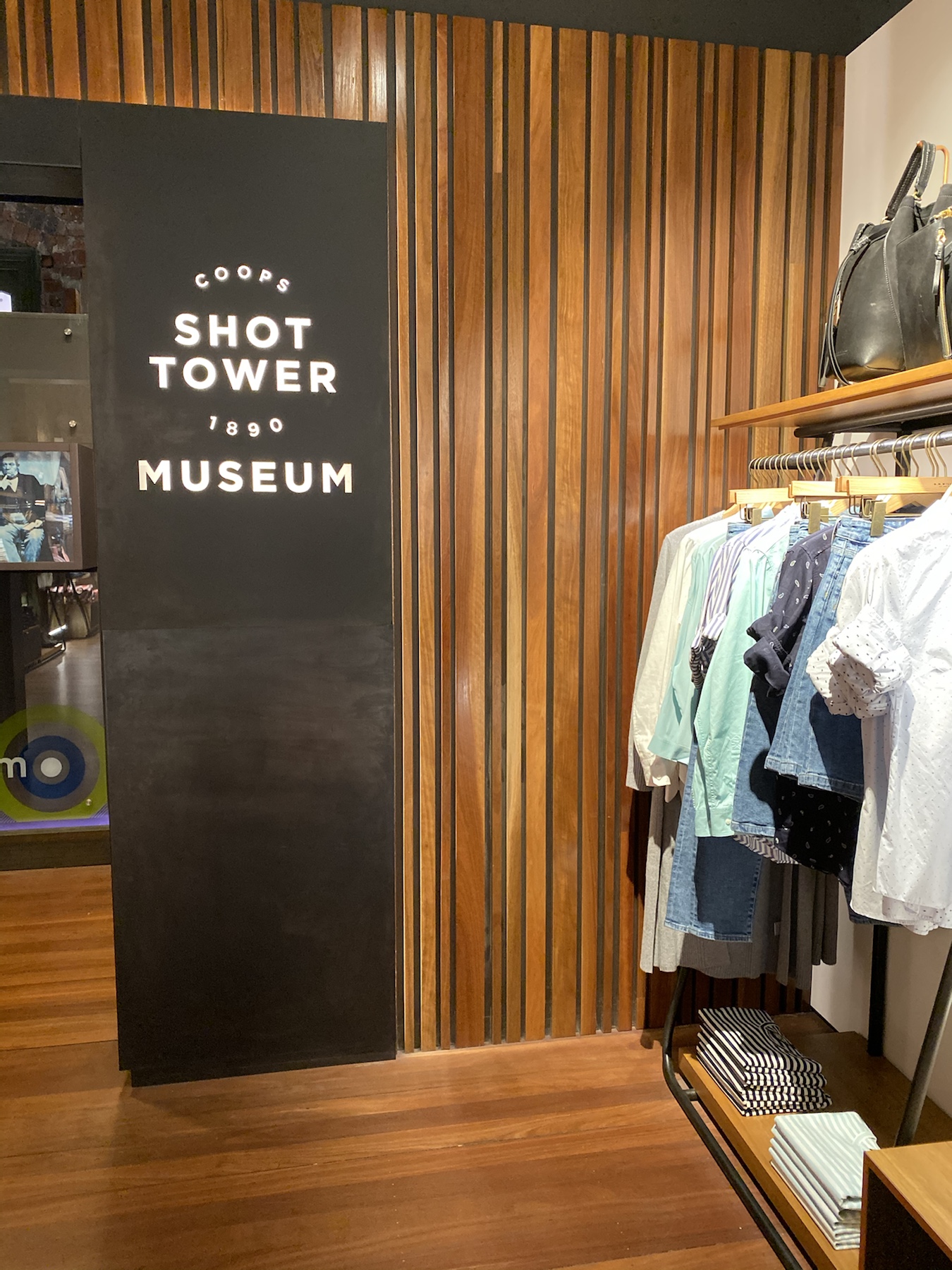
    For those yearning to learn more about 19th century ammunition, you can duck through one of the clothing stores in the mall to visit this Museum.

    Is this a cool city or what?

    Glorious Gardens

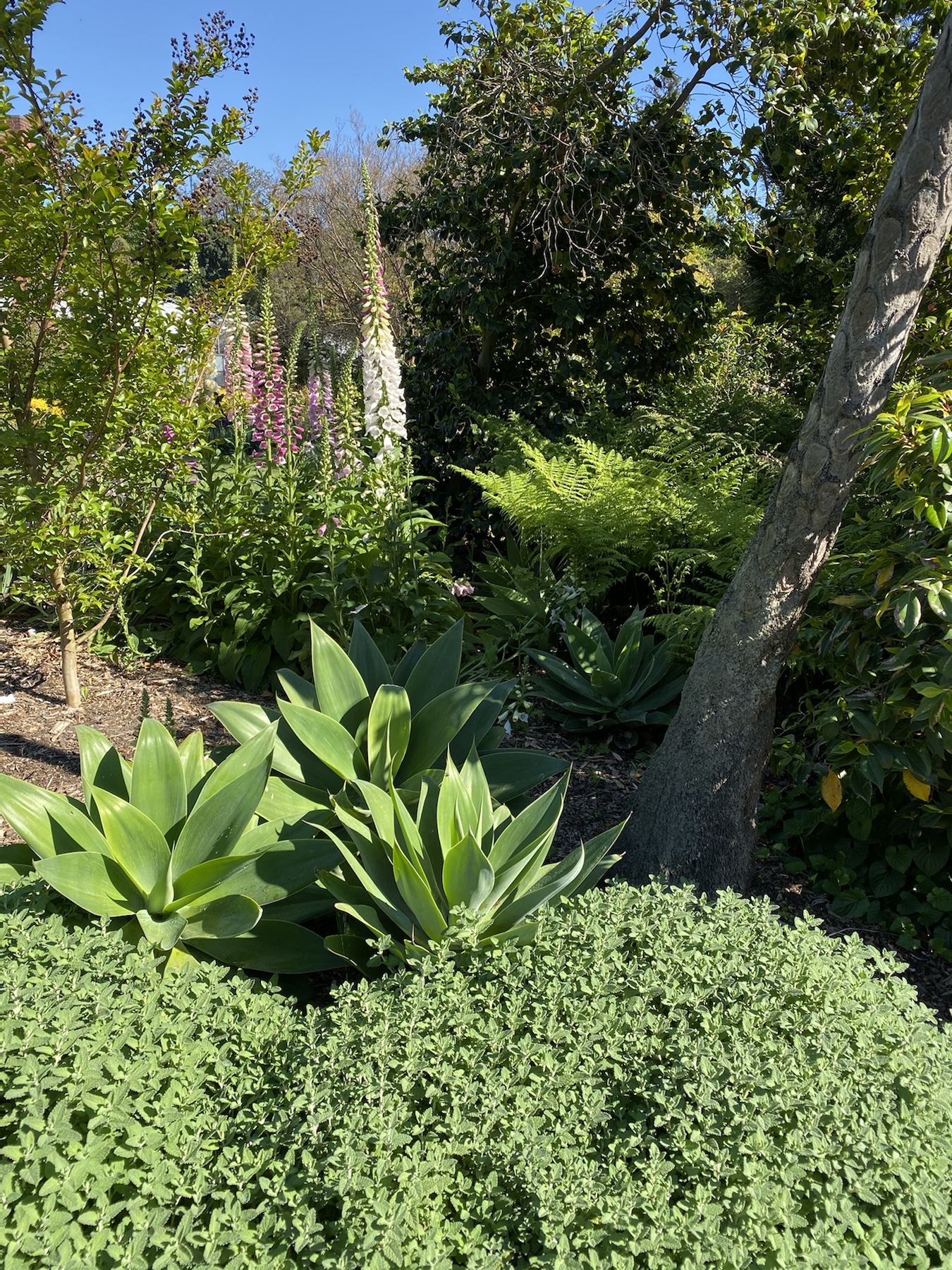
    It seems like everywhere I looked, there was a park, a square or a garden with jaw dropping plants and flowers. MY digitalis never gets this tall!

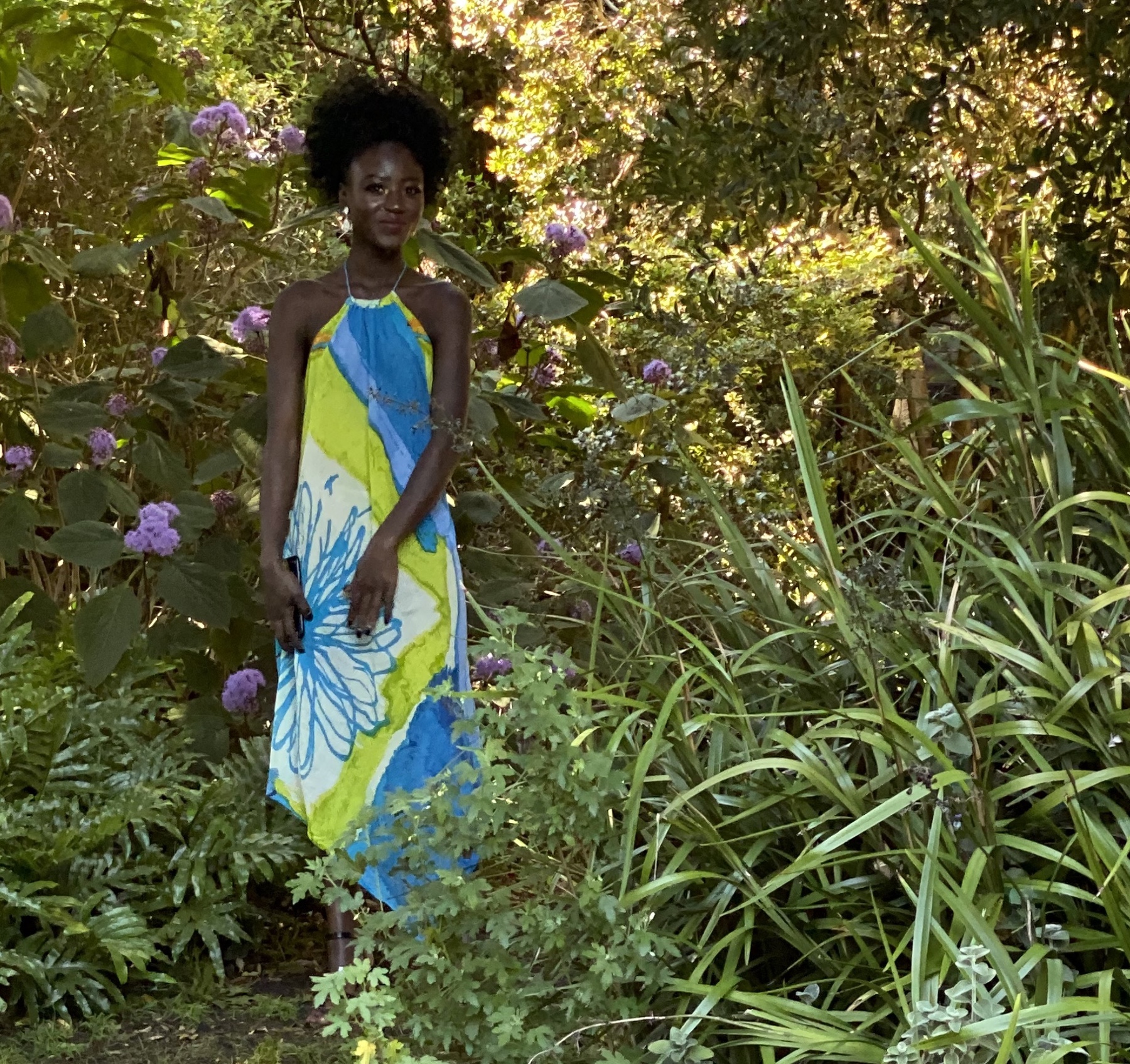
    The Royal Botanic Garden truly is a special place, which is why it was not surprising to stumble onto this photo shoot. The model was as gorgeous as the setting. once again, my iPhone rose to the occasion and handled very trucky lighting quite well.
    Street Art

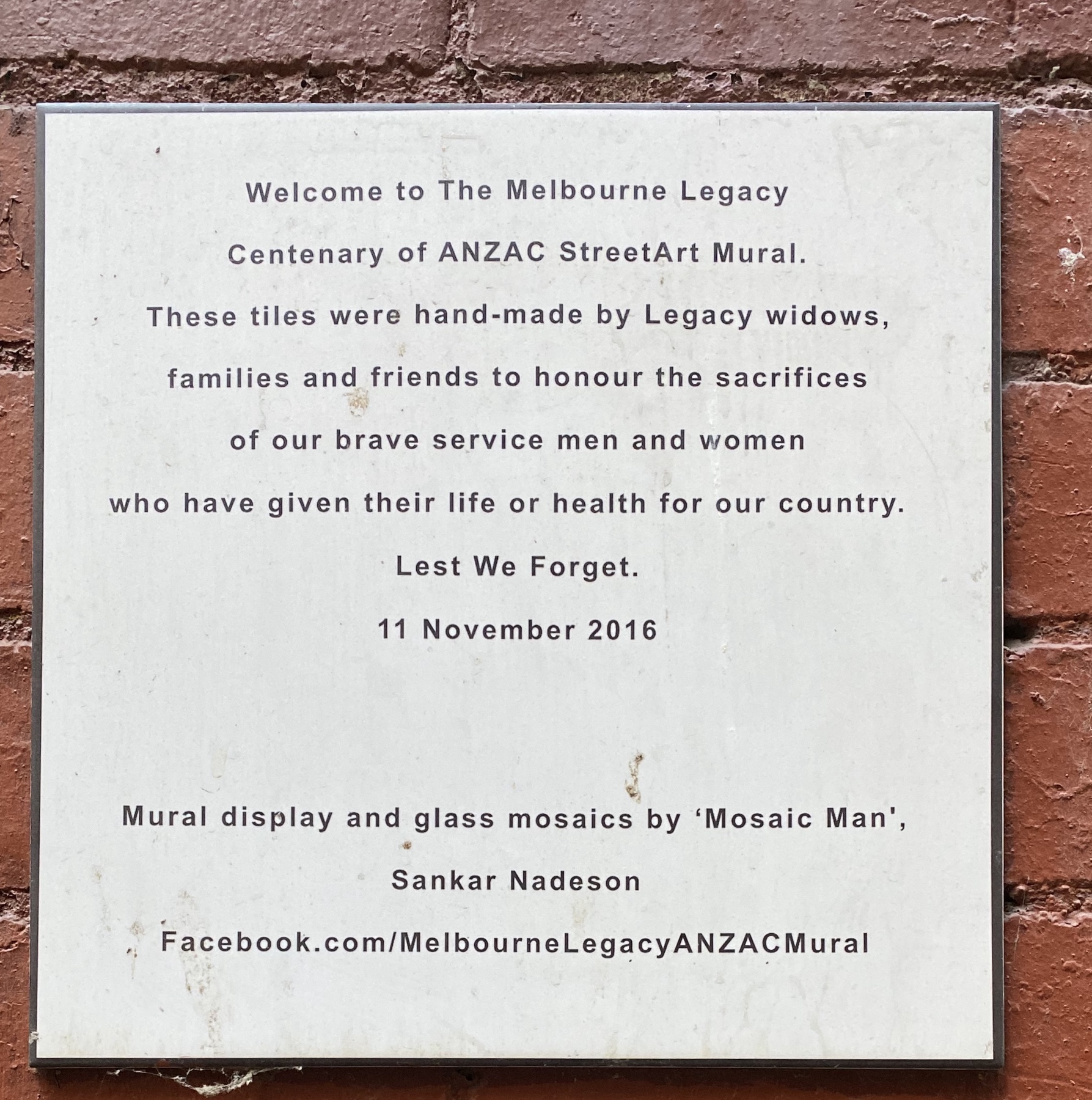
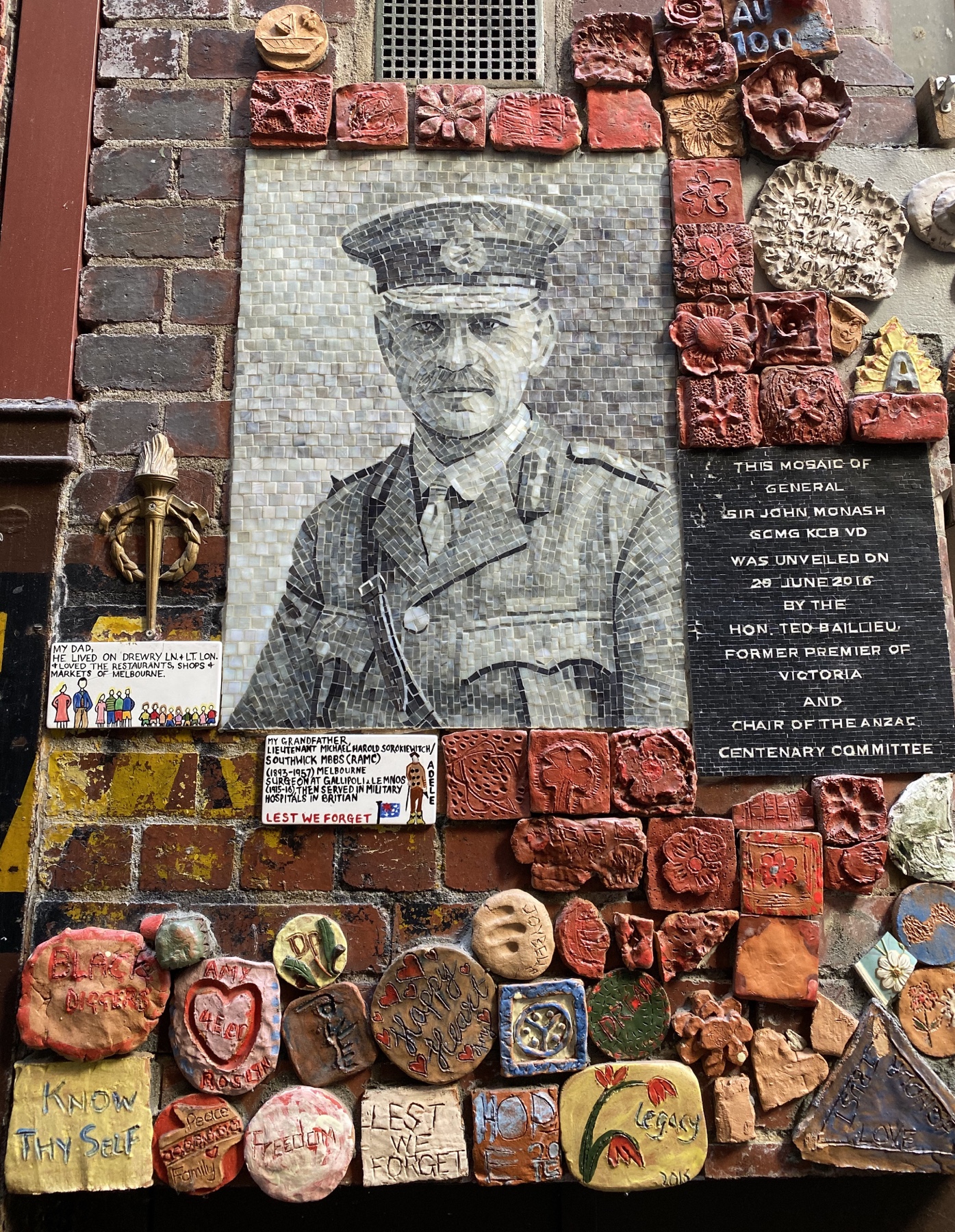
    Walking through a random alley, we came across this wall of remembrance. The plaque tells the story better than I could.

    Churches

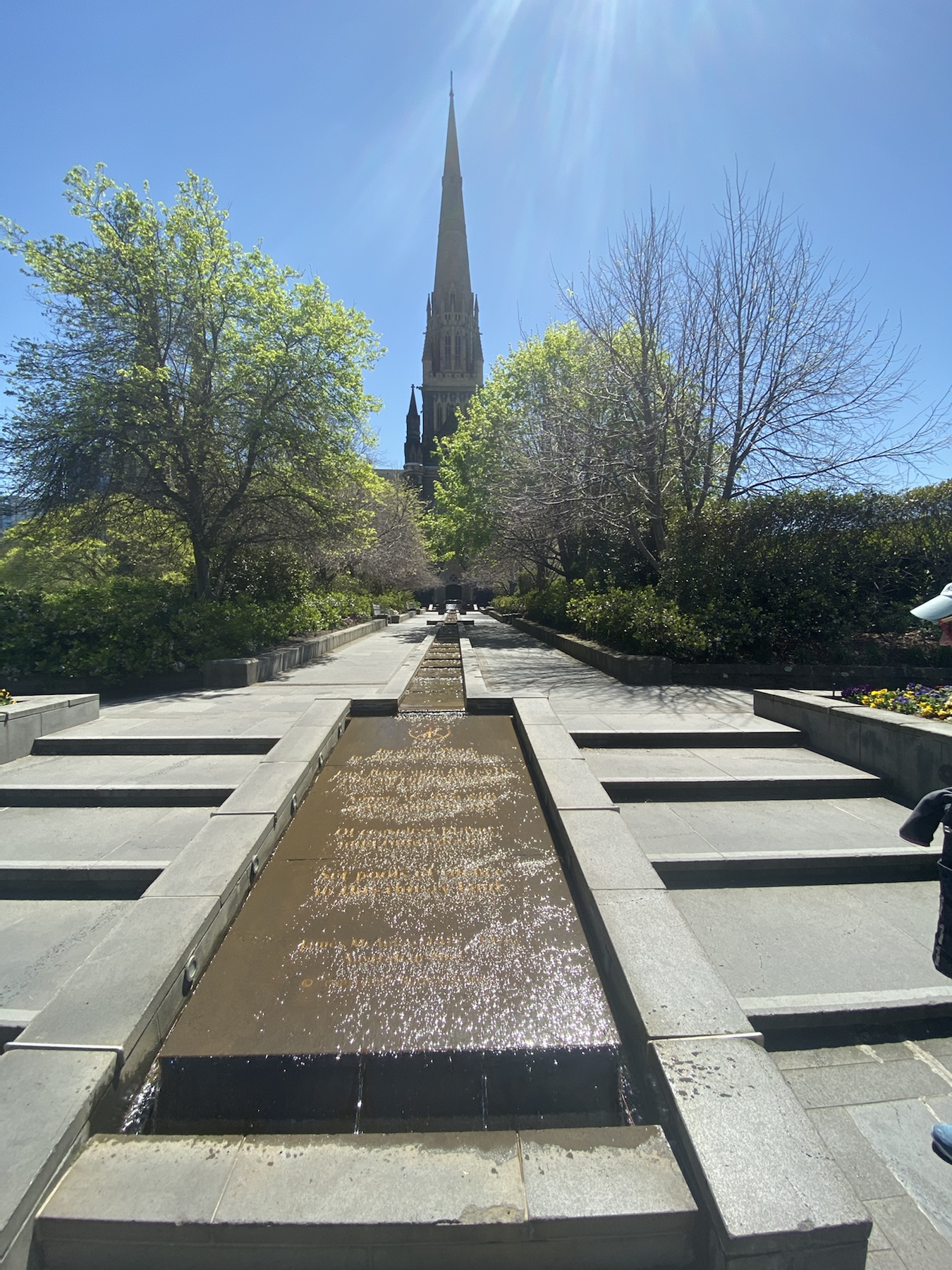
    After traveling for a few years, and making the mandatory church visits, the interiors all start to look alike– but Melbourne’s St Patrick Cathedral had something I’d never seen before–a spectacular entrance–with a water feature.

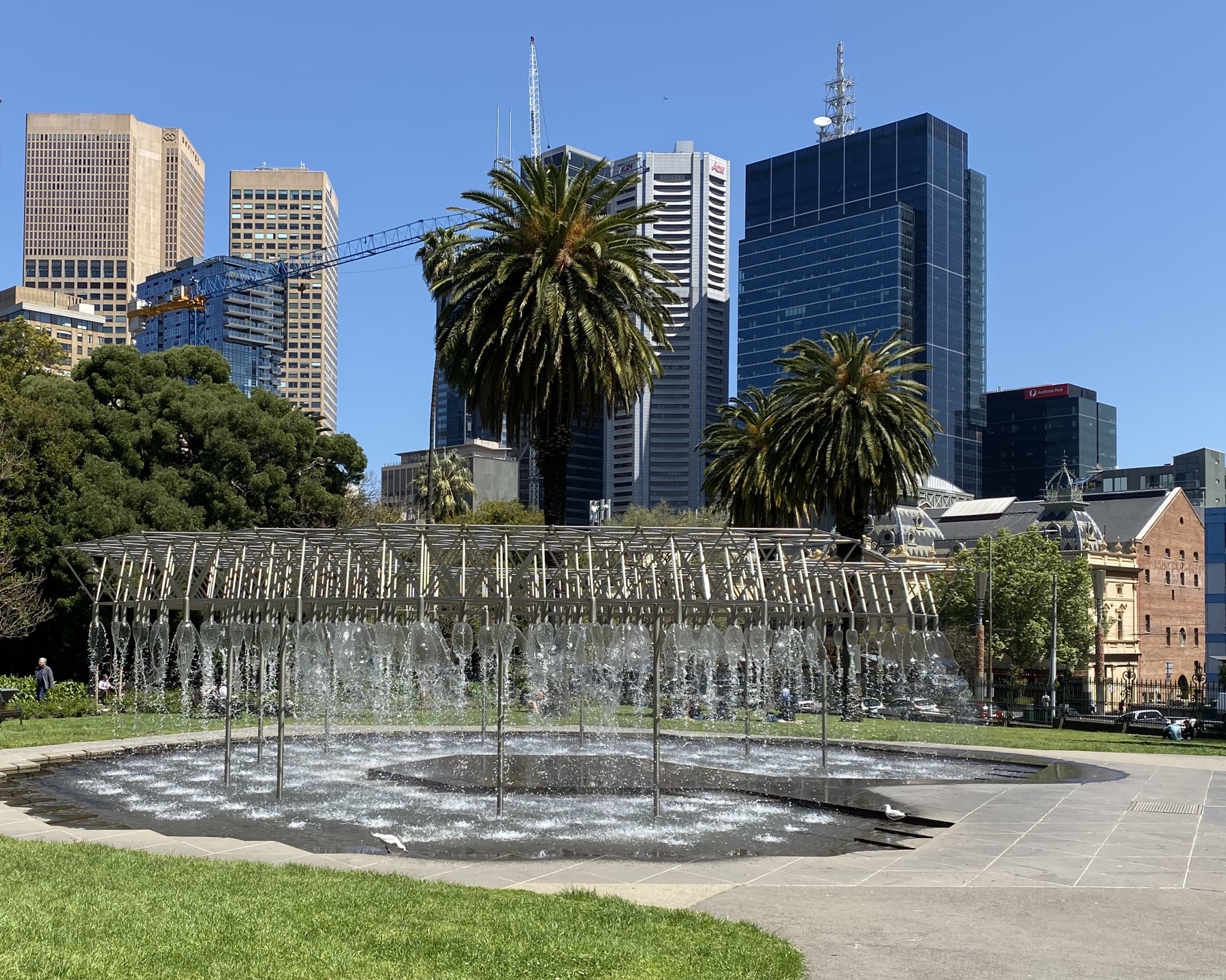
    What I’m calling a “water playground” is right nearby the church. Can’t you picture the kids running through the fountains in their Sunday best, right after Mass?

    You all know what food looks like, so I won’t share photos of our meals. Let’s just say Melbourne is like a giant Alice’s Restaurant. “You can get anything you want” as Arlo Guthrie so aptly sang.

    There’s more to say about our stay in the Melbourne area, but that will have to wait till the next post.