
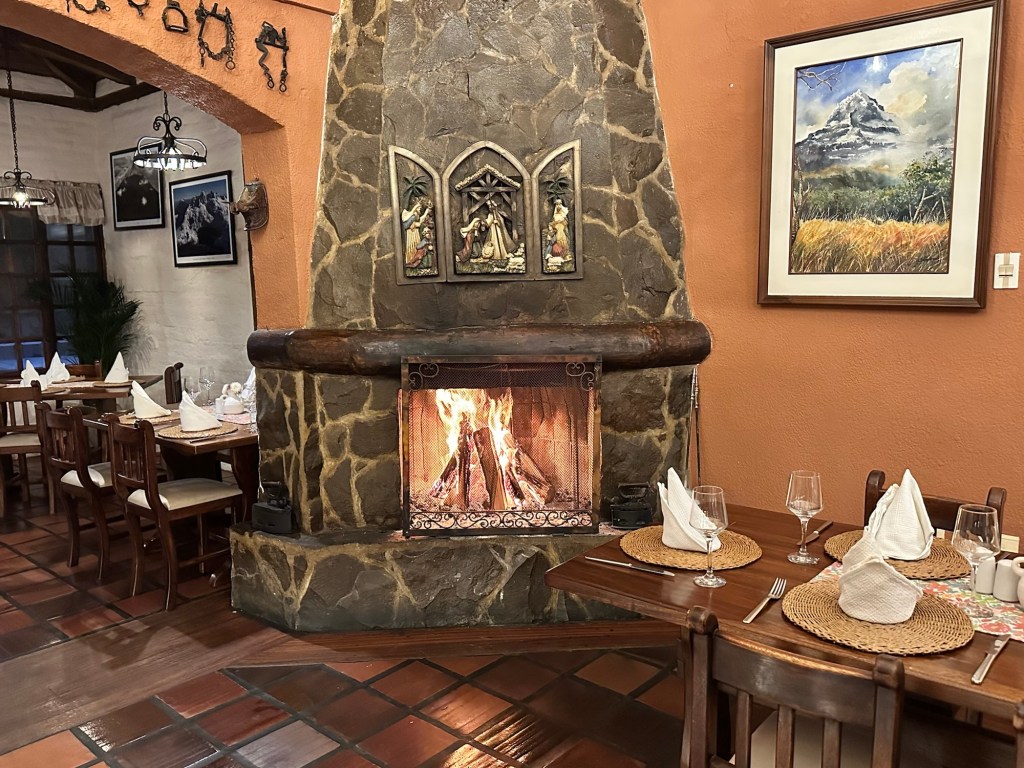
By the end of Day 2 of our Ecuador post trip, we had arrived at the Hacienda Abraspungo, the second of our one night stays—not to be confused with one night stands—which if that’s what you were expecting this post to be about, you’ll be very disappointed.
For the remainder of our week in Ecuador, we will be spending three nights in Cuenca, then flying back to Quito for our final two nights.
Getting from Cartagena to our hotel in Quito was a whole day slog, not made easier by our stop at Bogota airport, where clear signage in either language was sadly lacking.
At Bogota airport, I managed to get separated from my fellow travelers, however I know enough Spanish to say, “please, can you help me? Where is the gate for the flight to Quito”. The bad part was the people I asked thought I was fluent, so they launched into this rapid explanation, using BIG words. Fortunately, when I told them I only knew a few words and understood Spanish like a 3 year old child, they switched to body language, which I have completely mastered.
By the time we arrived at our Quito hotel, around 8 PM, we were all pretty tired, so barely had enough energy for dinner.
Although we had two more transit days, they have been in a very comfortable, small bus. We made multiple, interesting stops along the way, and the scenery has been spectacular.
We were incredibly lucky to be able to clearly see Cotopaxi, the highest active volcano in Ecuador. Much like Mt Fuji (and me) it usually has its head in the clouds. Our excellent bus driver knew the exact spot for a great photo op and that’s what you’re looking at atop this post.
Our drive along the PanAmerican Highway was lovely. Did you know you can get from Alaska to Tierra del Fuego by driving its full 16,000 miles? We are only doing a short stretch, along the Avenue of the Volcanoes (there are about 250 volcanoes in Ecuador; fortunately most are inactive).

The countryside is beautiful, but I was unable to capture the grandeur of the mountains, volcanoes and rolling emerald colored hills from the bus. Too many reflections from the windows. Just imagine driving through the Rockies on a perfect spring day.
This photo was taken when we stopped to get a shot of Chimborazo, which rises 20,000 feet above sea level. I know, it looks a lot like Cotopaxi, but for us, it was a real thrill.

Like the Road Scholar trip Mike and I took to Ecuador in 2012, OAT itineraries include a visit to a rose farm. With 12 hours of direct sunlight most days, Ecuador is able to produce a mind boggling variety of incredible, long stemmed roses.

Rose exportation provided (for the first time) employment to many Ecuadorian women. They are able to bring their children to the worksite, which provides daycare. They are paid the minimum wage, which is $470 per month. The US dollar is Ecuador’s currency, so no “exchange math” is required to figure out that’s not a whole lot of money.
The first rose variety I saw on our tour was named Sandy, so I immediately thought of the wonderful sister I had lost, and although it was a struggle, I managed to hold back the tears.
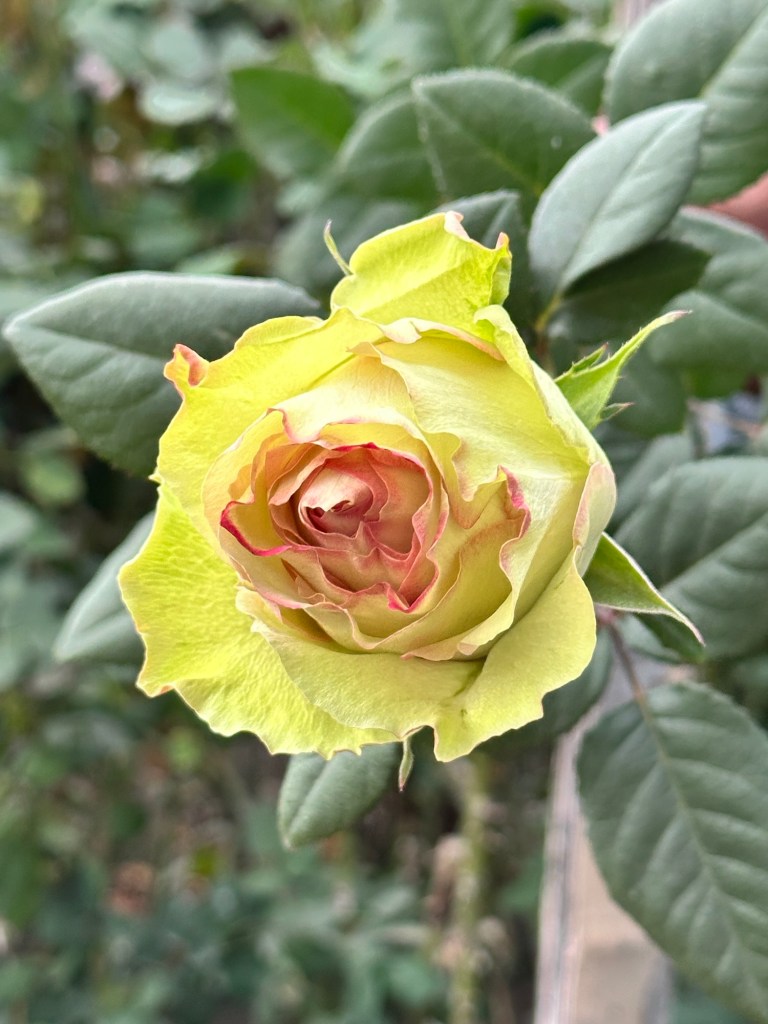
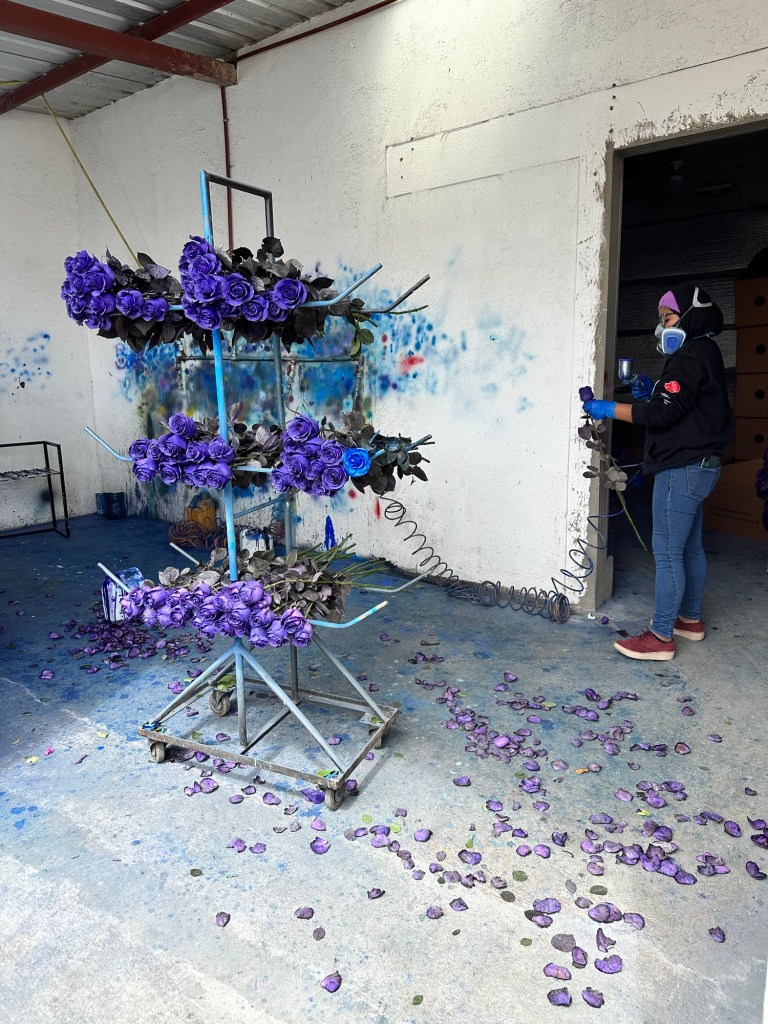
If you’re having a special event and can’t find a hue that compliments your color scheme, no problem. The roses can be sprayed to your specifications. Think I’m kidding? Take a look.
We met indigenous people at our next stops. The first is an artist, who, like Grandma Moses, is self taught. We were all given the opportunity to paint on goatskin, and once again, I produced a masterpiece I think is worthy to hang on the wall in any second grade classroom.

Notice the two condors, representing the heavens, and the snake, representing the underworld. Where’s the representative of the earth—the puma—you ask? Well, sadly the puma didn’t move fast enough, so he’s buried under the lava flow.
Take another look at the photo of Chimborazo. That’s where this man and his donkey climb twice a week to carve huge blocks of ice, which they carry down the mountain and sell to businesses in nearby Riobamba. When we were there, the volcano was hidden by the clouds.
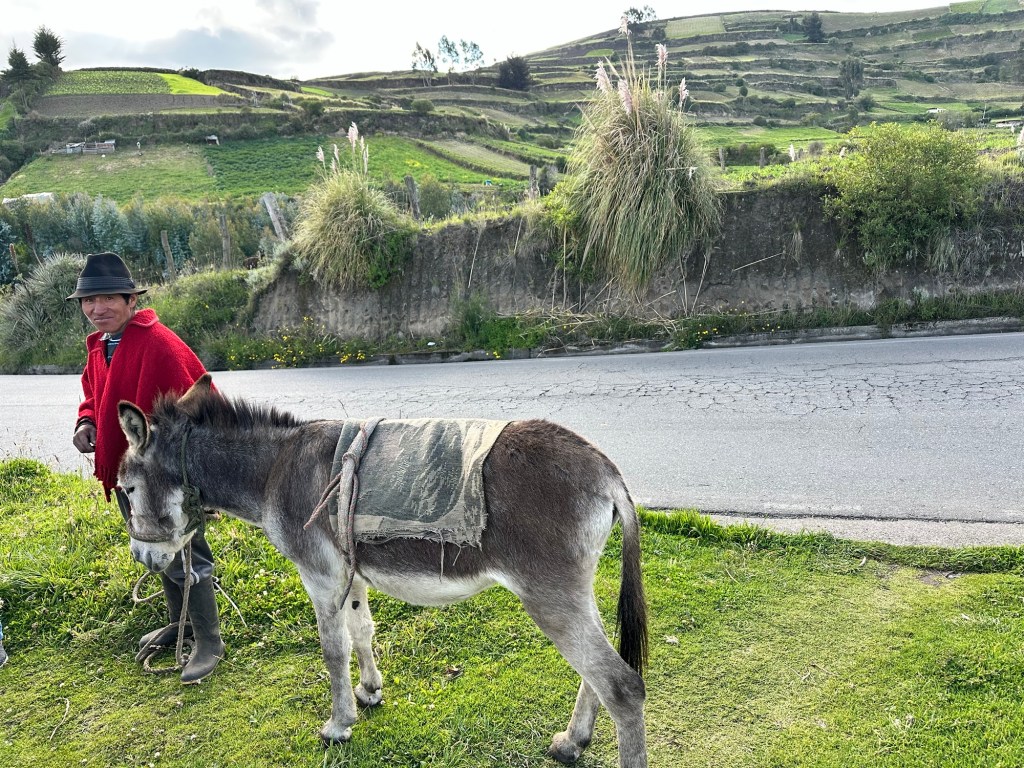
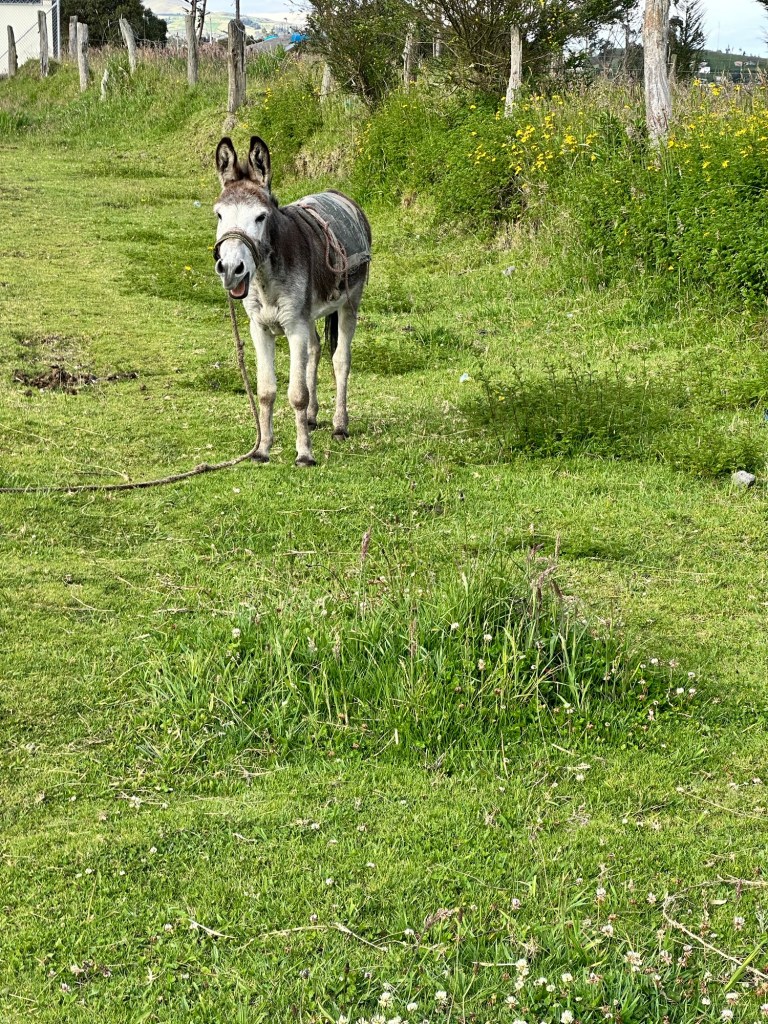
There is no such thing as too many donkey photos, is there? I should have done a video because he was braying loudly.
The Spaniards brought Catholicism to the areas they conquered, because that’s what Jesus told them to do in his sermon on the Mount. It went something like this:. “Blessed are they who steal the gold from the people they enslave, for they get to be heroes in their home land.”
Unfortunately, Jesus didn’t warn them about the Evangelicals from the US. The Evangelicals built schools and clinics; they translated the Bible into the native language. They also gave free radios to all indigenous, so they could easily preach and be heard by all. Most of the locals converted, which is probably why this church had to get creative when they found the collection plates contained more dust than dollars.
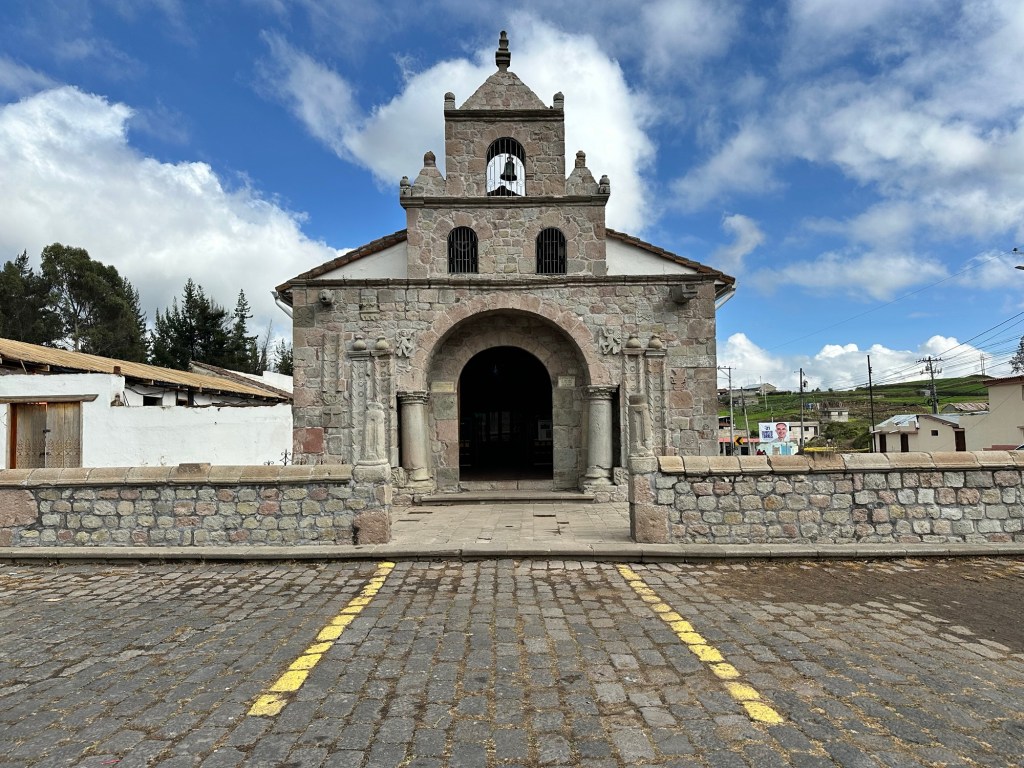
Built in 1534, it was the very first church the Spaniards built in Ecuador. Take a look inside.
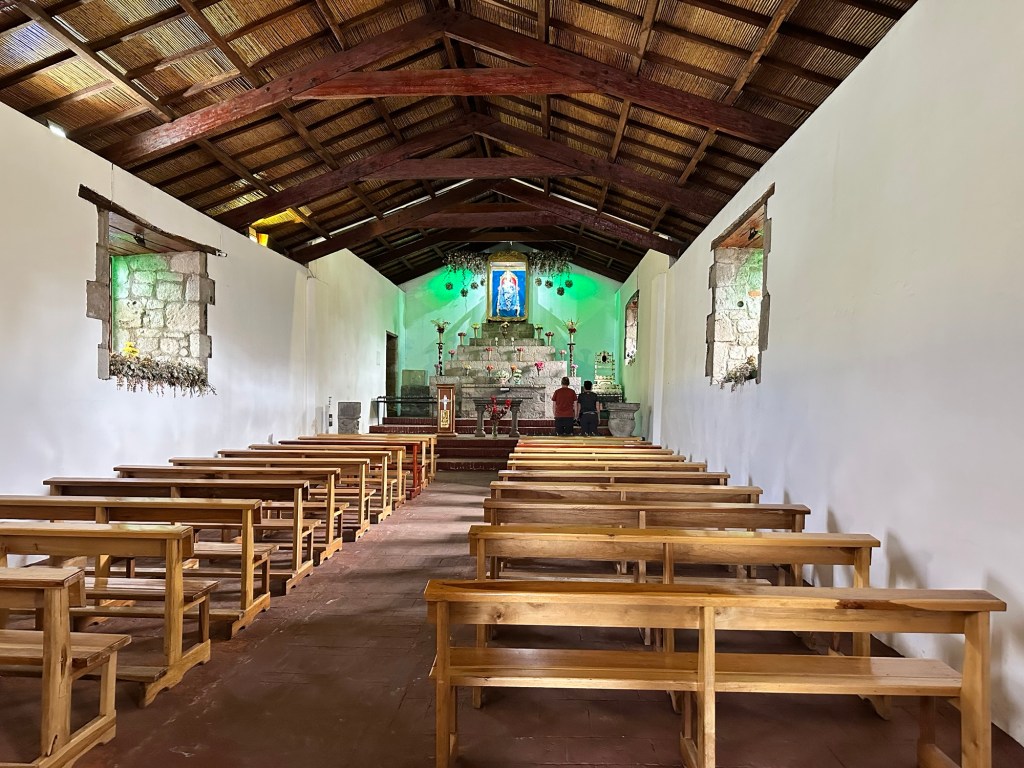
Looks pretty standard, right? But wait. You haven’t seen the vestibule yet. This is the creative section.

Those of you with sharp eyes have probably noticed the coffee pot in the lower left hand corner. My lens wasn’t wide enough to capture the tables and chairs directly across.
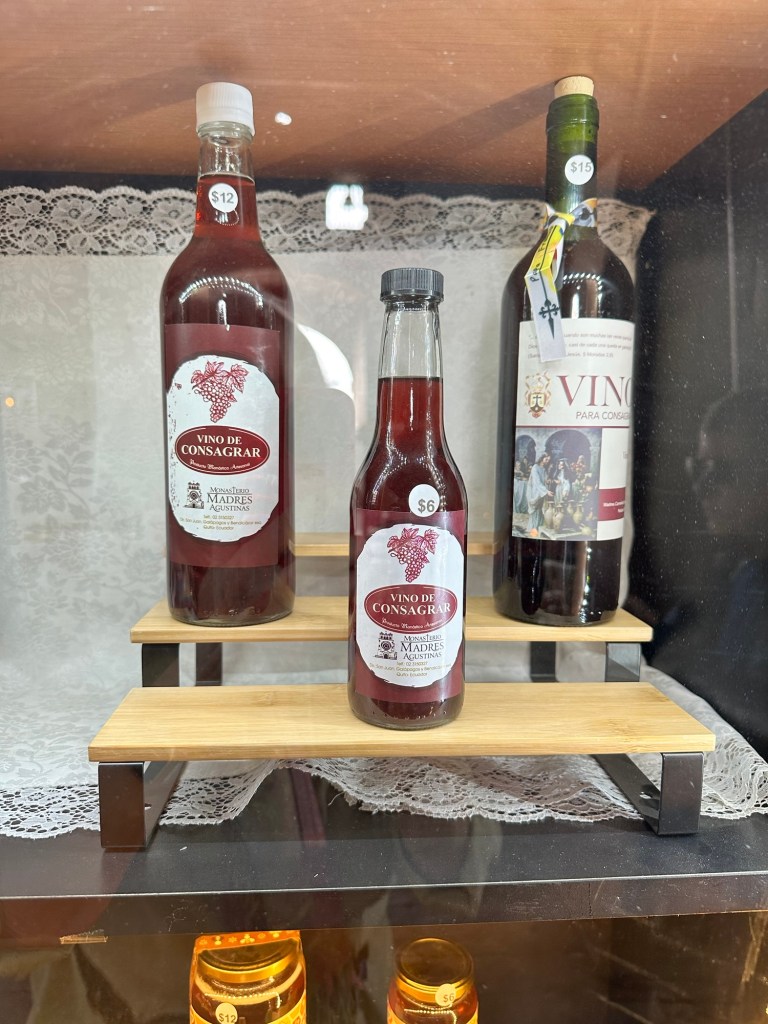
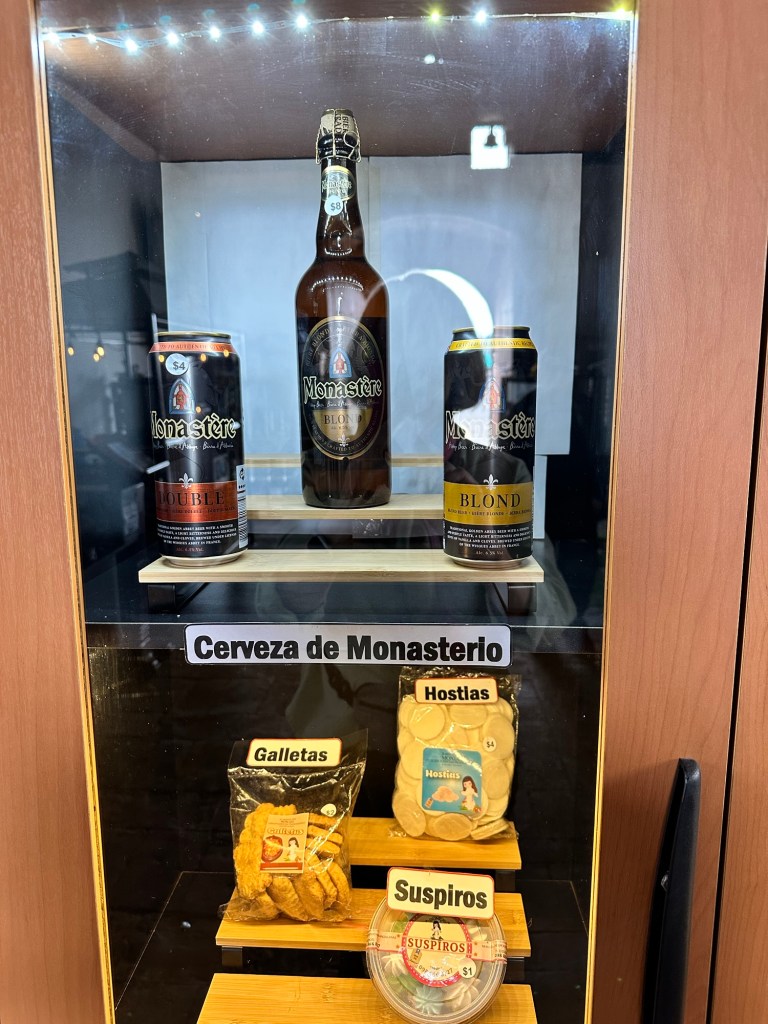
But if you need more than coffee to get you through Mass, not to worry. There are OTHER beverages from which you can choose.
In addition to beer and wine, you can also buy “holy water” . You all know what bottled water without a label looks like, so I didn’t bother to include a photo.
Before the animal lovers get their shorts in a knot over this next photo, let me remind you, Costco uses a similar cooking method, they just rotate chickens instead of guinea pigs. And they remove the heads first.
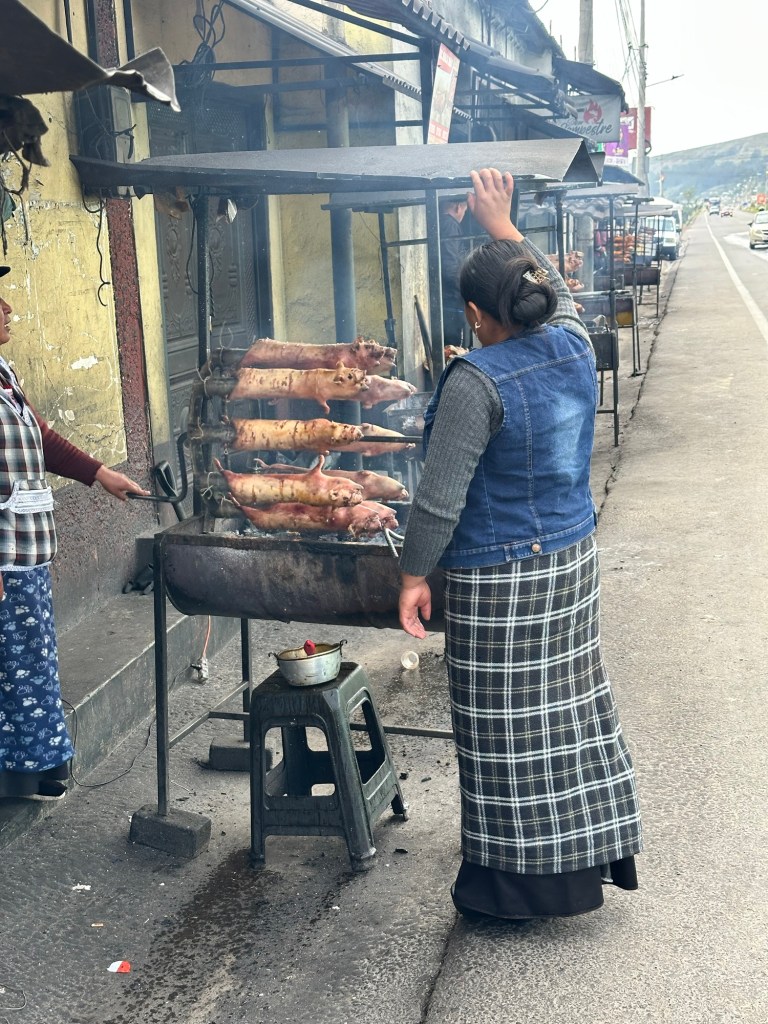
This road side cuy producer sells about 40 cooked guinea pigs a day! Cuy is considered a delicacy here in Ecuador, and will set you back about $50 if you ordered it in a restaurant.
After Covid, Ecuador’s railroads went out of business, including the famous one that traveled up the devil’s nose.
We visited the now closed train station in Alausi, then proceeded up the mountain, into the clouds, for lunch with the indigenous people.
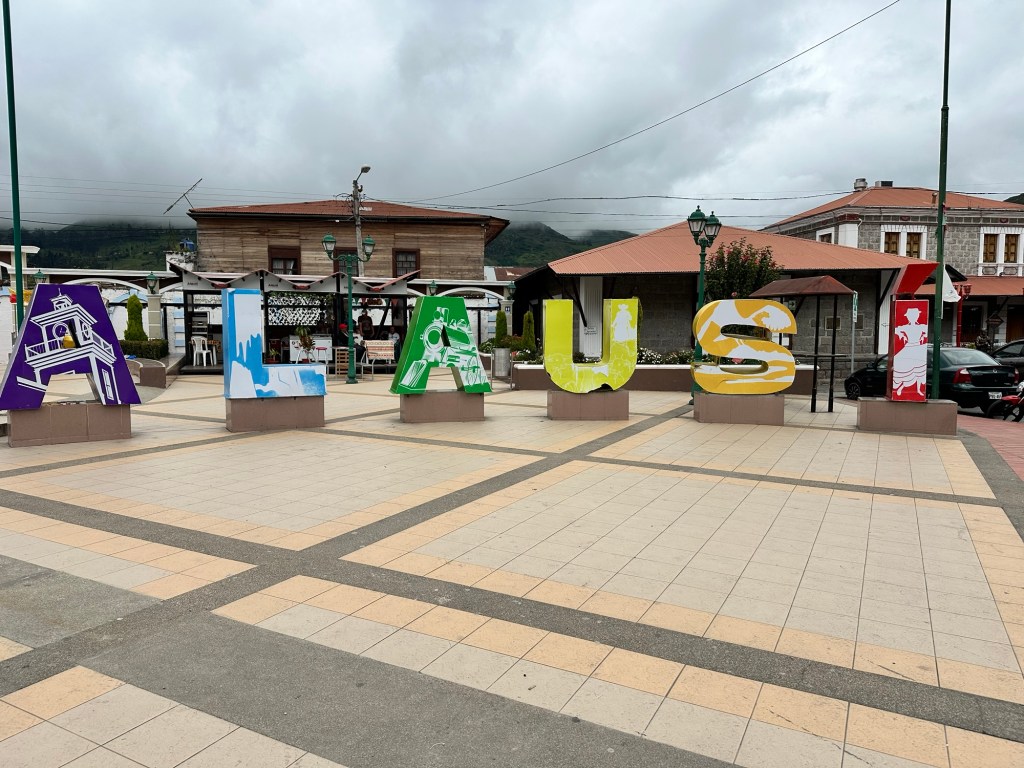
As we climbed higher and higher, the cloud cover was so complete, I was convinced we wouldn’t be able to see El nariz del Diablo (the devil’s nose), but we continued to have phenomenal luck. Not only did we see the Devil’s schnoz, ( it’s the mountain on the right)

we also saw the train tracks leading up to the zig zag route.

We have been rocking and rolling along mountain roads, so once again, I will push PUBLISH and hope for the best.


I love read your comments about your OAT trips.
LikeLike
thanks so much, Donna.
LikeLike
Thanks for sharing this wonderful blog, Shelley. I loved my Road Scholar trip to Ecuador and the visit to the rose farm. Never knew roses could be so interesting! I’ve enjoyed the rest of your blog too. Thanks again.
LikeLike
It’s great to hear from you Nancy. I haven’t been getting any notifications about new posts from your blog for a while now. When’s your next trip?
LikeLike
I posted from Tuscany in September- my wonderful 75th birthday gift from my daughter who travelled with me.
Next up – a short photography trip in early June to shoot gannets in the Gaspé region of Quebec. Then I’m taking my 10-year-old grandson on a Road Scholar inter-generational tour in the Canadian Rockies in July, and I’m waiting to find out if Road Scholar can split an available double into two singles for their 4 Nordi capitals tour – Copenhagen, Oslo, Stockholm and Helsinki – in August. I was too late to book a no-single-supplement spot for a Canadian Arctic tour, so I am going to pounce on one for 2026 as soon as it is available!
I’ve been enjoying reading all your travel blogs. Keep up the good work!
LikeLike
Such a colorful post….loved the panoramas …but the guinea pigs…eeek…finally got my password to work – hope there is one more post before you return home….
LikeLike
Oh there definitely will be another. I have an internal flight on Thursday, and time at the airport in Saturday. Couldn’t sacrifice shopping time to blog, now could I?
LikeLike
SUCH a colorful post. Loved the panoramas but the roasting guinea pigs – eeek… Finally got my password to work- hope there is one more post coming before you return home…
LikeLike
Your description getting separated at the airport made me want to give you a hug. You are such a trooper handling travel’s misadventures with grace . The Sandy rose is beautiful and a lovely reminder of your sister. We have been traveling in our travel trailer to Southern California the last few days and I’ve often thought of you as we’ve navigated some frightening weather, wind and harrowing roads and misadventures . You would have somehow found humor in it so I’ve tried to do the same.
Diana
LikeLike
Hi Diana, I’m so glad you two are able to travel now. I hope that there were enough positive experiences during your trip in southern California to outweigh the negative weather.
One of my nieces is getting married in Santa Barbara in October, so I’m planning on flying to San Francisco. Greg and I will drive there and back, stopping along the way. Did you have any favorite areas?
LikeLike
Another fabulous post from the road, Shelley! Did you get an explanation of exactly why they disbanded the railroad (rather than just halting service temporarily)? Any plans to bring it back?
LikeLike
Hi Janis, Covid had a devastating impact on Ecuador’s economy. It was the reason given for the railroad closing down. It probably won’t reopen because the Ecuadorians hav found that other modes of transportation, like buses and cars, is cheaper and more efficient. Sadly, some the neighborhoods in different cities have also suffered from covid’s impact. Shops have closed in parts of Quito and in some areas, the nightlife isn’t what it once was (pre-covid). Not that I would have noticed…I was usually asleep well before 10PM!
LikeLike