The Tiger’s Nest

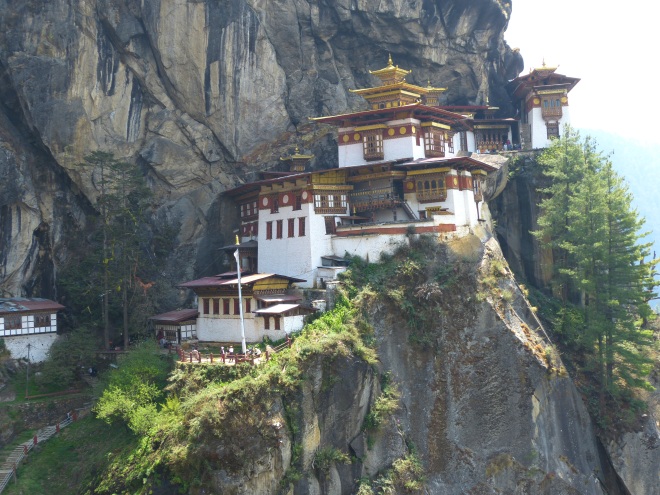
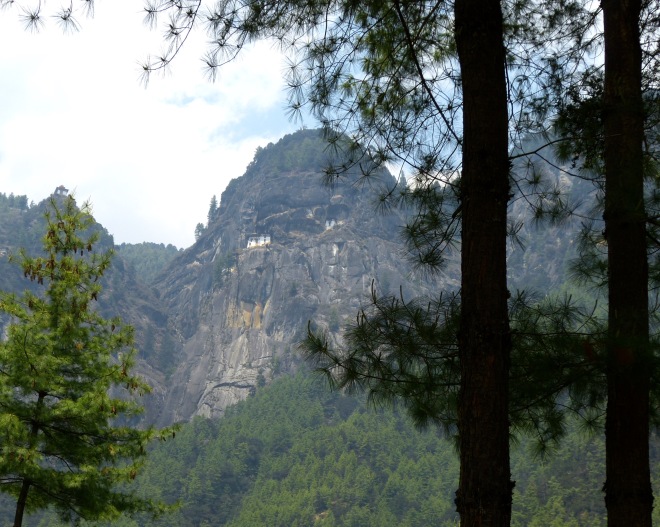
What a great way to end our stay in Bhutan–by hiking to Taktshang Monastery, more popularly known as The Tiger’s Nest.

image
The Tiger’s Nest

If you were following Kate’s and William’s recent visit or happened to catch Bill Weir’s CNN show about Bhutan on The Wonder List, this will be a familiar sight.

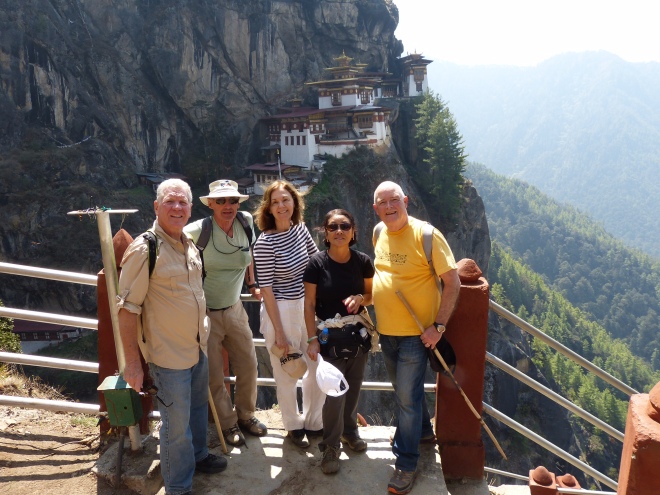
What  you HAVEN’T seen is THIS shot.

image
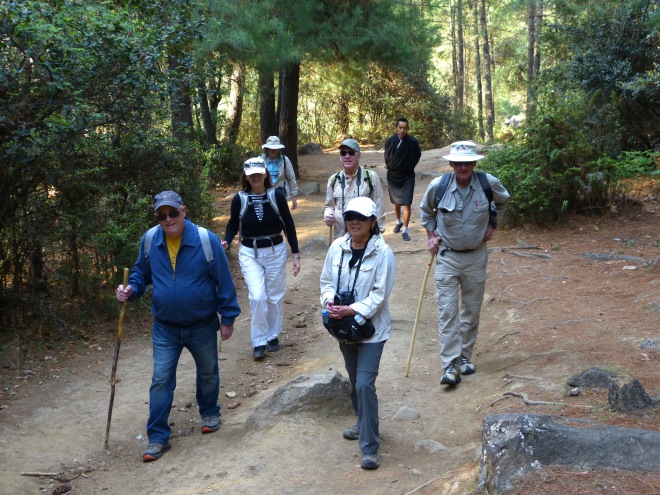
We range in age from 64 to 80, and the 80 year old could walk circles around the rest of us!

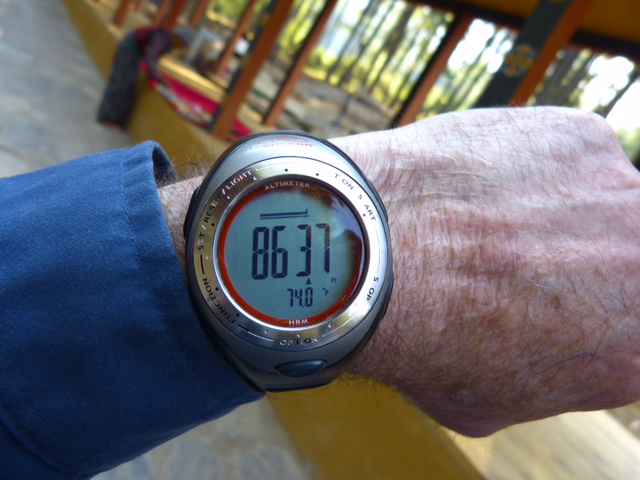
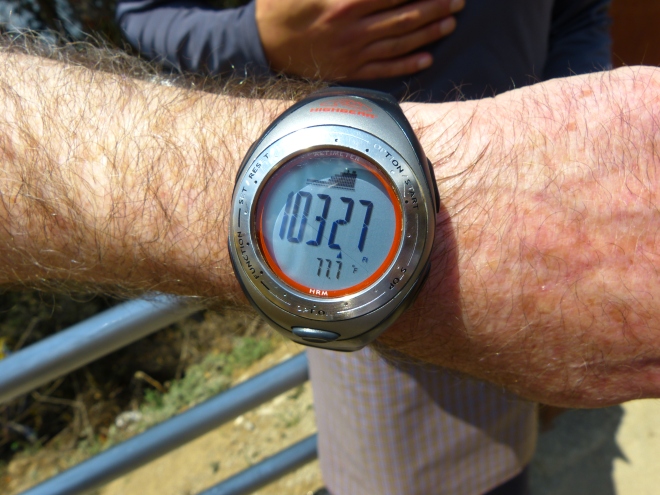
Peter’s watch has a cool feature.  It records the altitude, so these were our starting and high points.

image.jpeg
Our version of base camp


image
The high point

So what’s the back story?  Whenever Tashi, our guide, relates a local legend to us, he starts it off by saying “It is believed”, so I will too.

It is believed that in the eighth century, the king of Bhutan was possessed by a demon. Padmasambhava, the great Indian Guru, who was visiting the king of Tibet at that time, heard about the demon. He turned his consort into a flaming tigress, flew to the mountain on her back, and converted the demon to Buddhism. After his exorcism, the king converted all of his subjects to Buddhism.

His work done, Guru Rimpoche, (Padmasambhava’s more easily pronounced name) meditated in a cave for either three years, or three months, or three years, three months, three weeks, and three days, depending on who is telling the story. He prophesied that a magnificent temple would be built on the site of the cave.

It took until the 17th century for the prophesy to be fulfilled, but it was well worth the wait.  In 1998, the temple complex was destroyed by fire, and was subsequently rebuilt.

The Tiger’s nest is Bhutan’s version of Mecca.  Most Bhutanese try to make a pilgrimage to the Tiger’s nest at least once in a lifetime.  It is believed that you shed your sins along the way.  Let me tell you, you shed SOMETHING as you make that climb.

Although there is an alternate mode of transportation,

image.jpeg
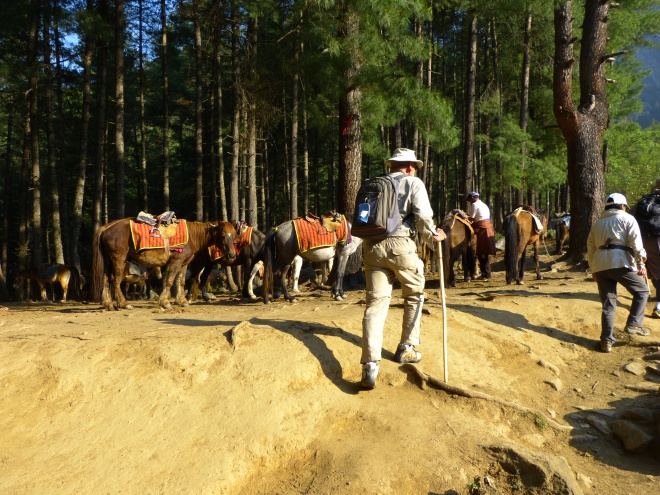
You could ride one of these guys to the top–BUT they tend to favor the edge of the road.

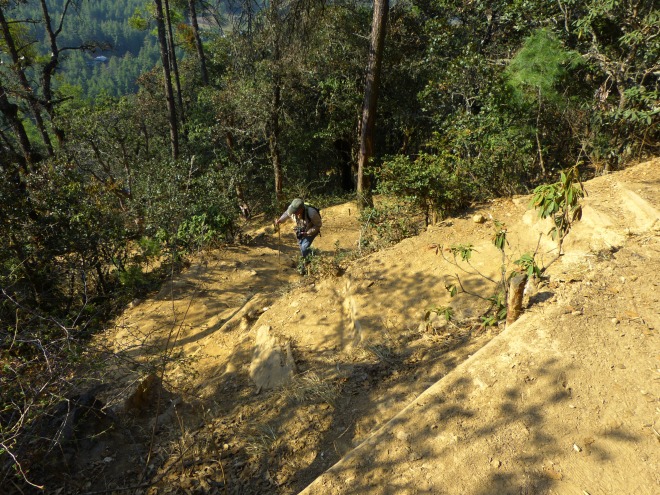
we chose the path most taken. It starts out wide, and then gets progressively narrower.

image

image

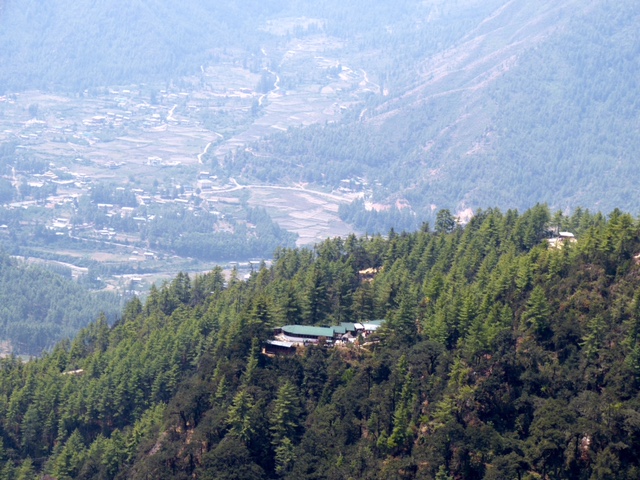
There is a cafe located part way up the mountain, a good resting spot, or the end of the journey for those that find the altitude or the climb too strenuous.

image.jpeg
The view of the cafe from the Top

Was it a spiritual experience?  You bet!

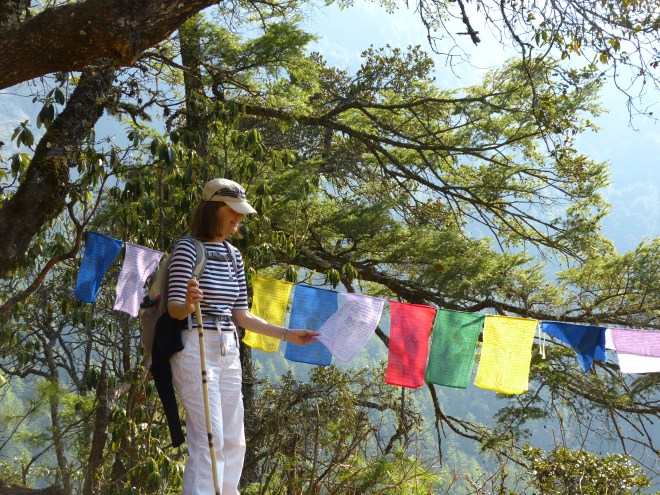
Prayer flags
Prayer flags
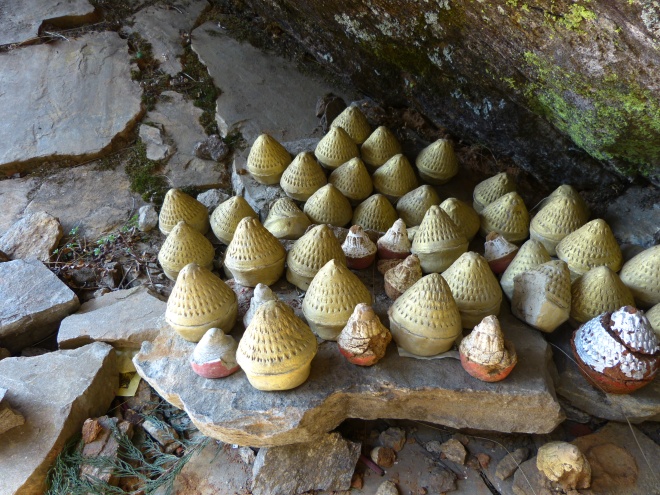
I have no idea what these are
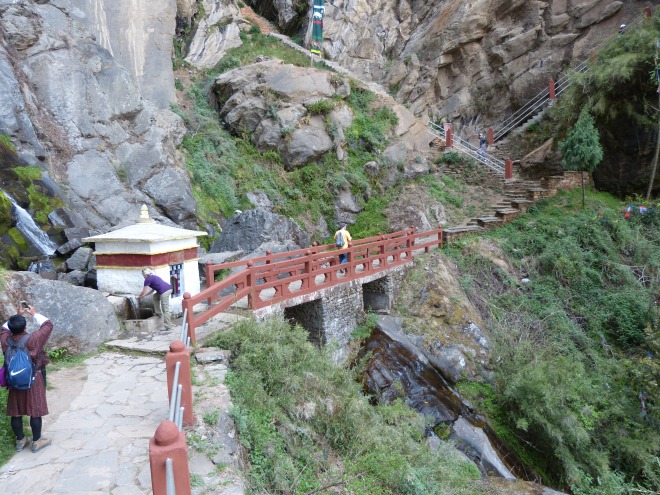
Peter crossing the bridge
Our departing view
Our departing view


The Cast of Characters

The Cast of Characters
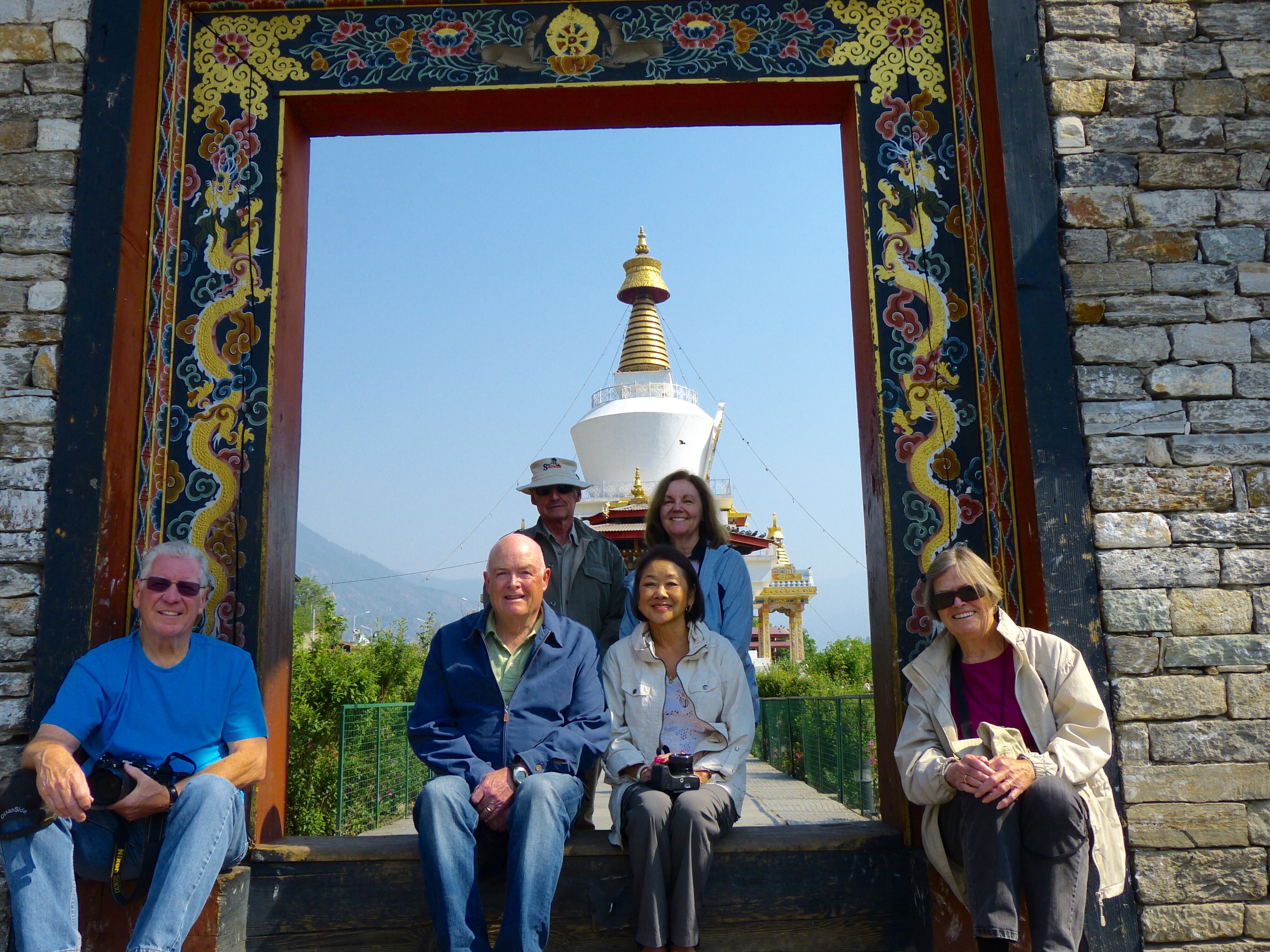
For those of you who expressed concern about my traveling alone, after Mike and Greg had to cancel, have no fear. I now have five new friends. Here we are at the National Memorial Chorten, which was built to honor Bhutan’s third King, Jigme Dorji Wangchuk .

first row: Jim, Peter, Marilyn, Marie. Back row, Dick, me

Jim is a former hotel and restaurant owner from the greater San Diego area. His family used to own Marty’s restaurant and hotel, an establishment frequented by yestereyear’s stars, such as Lucy and Desi, Frank Sinatra, Dean Martin.

Peter and Marie are from the greater Boston area. They retired from the financial industry, and have been traveling the world ever since. Prior to arriving in Delhi, they had taken another OAT tour through the Balkans, then spent a few days in Dubai. Jim, Peter and Marie will be heading home after Nepal.

Marilyn, a retired nurse from San Francisco, is like the little energizer bunny. She walks faster than I do!

Dick, from Seattle, retired from Boeing. He’s the most widely traveled of our group, having been on 27 OAT trips, plus tours with numerous other companies. Marilyn, Dick and I are the only members of the group that will be visiting all three countries. In Nepal, we will be joined by three new travelers.

Although not actually traveling with us, we see the royals EVERYWHERE.  Photos of them are on hotel and restaurant walls, on the sides of buildings, in museums and temples.   This official portrait is of the fourth King, known as the “Royal Fourth” with his four wives ( all sisters), the ten children they produced, (including the “Royal Fifth”) and the first grandchild. Since that photo was taken, the Royal Fifth has married.  He and his stunningly beautiful wife have produced an heir,  the Royal Sixth.

Tashi has identified which member of the royal family is in the motorcade when they go whizzing by.  So far, we have seen one of the four queens, and a royal uncle.

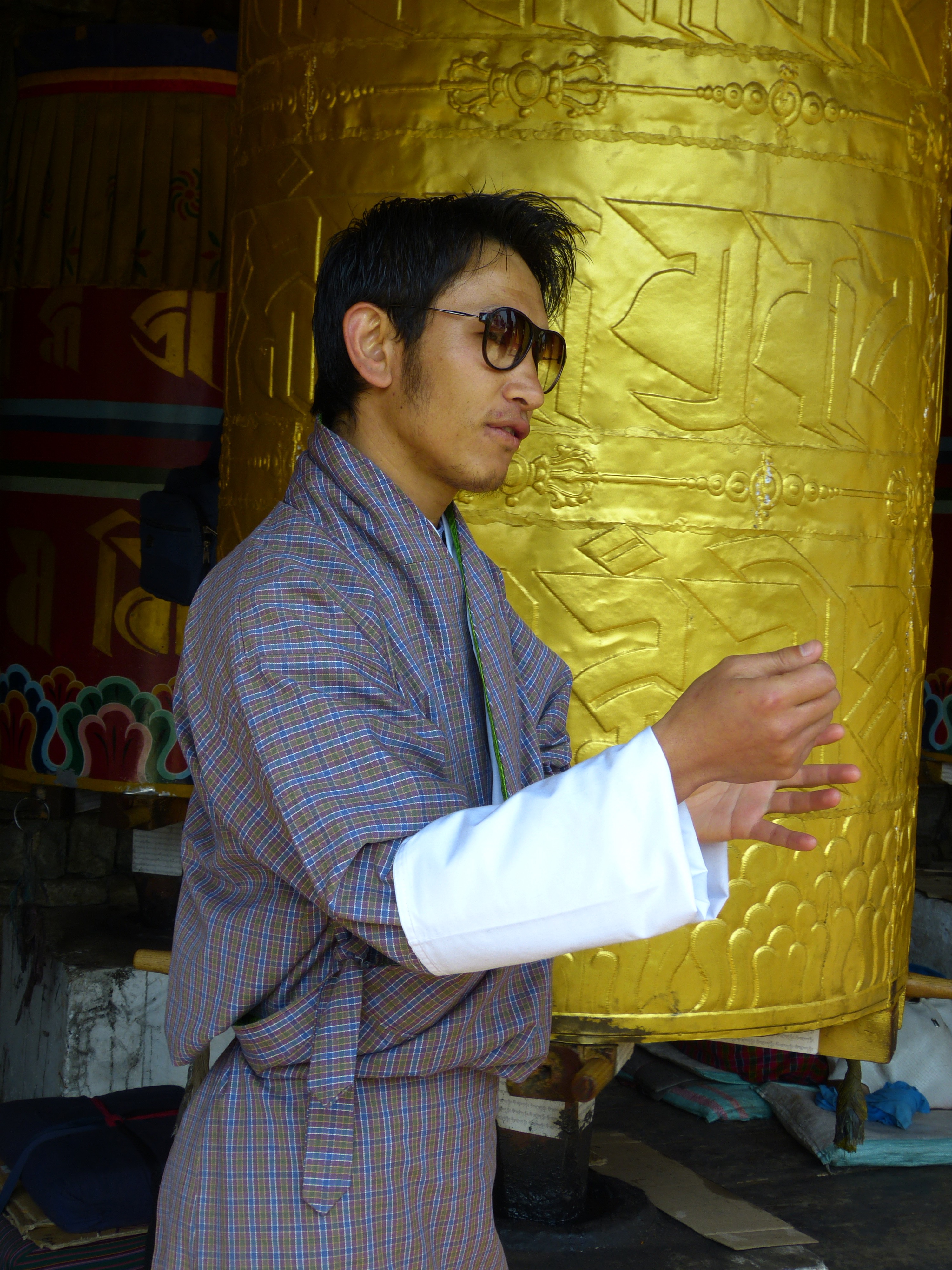
This photo of Tashi was taken at the Memorial Chorten.  He’s  instructing us on the proper way to circumambulate a prayer wheel.  Walking in a clockwise direction, you give each wheel a good spin as you pass by.  If we had been carrying rosaries, we would be using them to keep track of our prayers while we walked.

Tashi

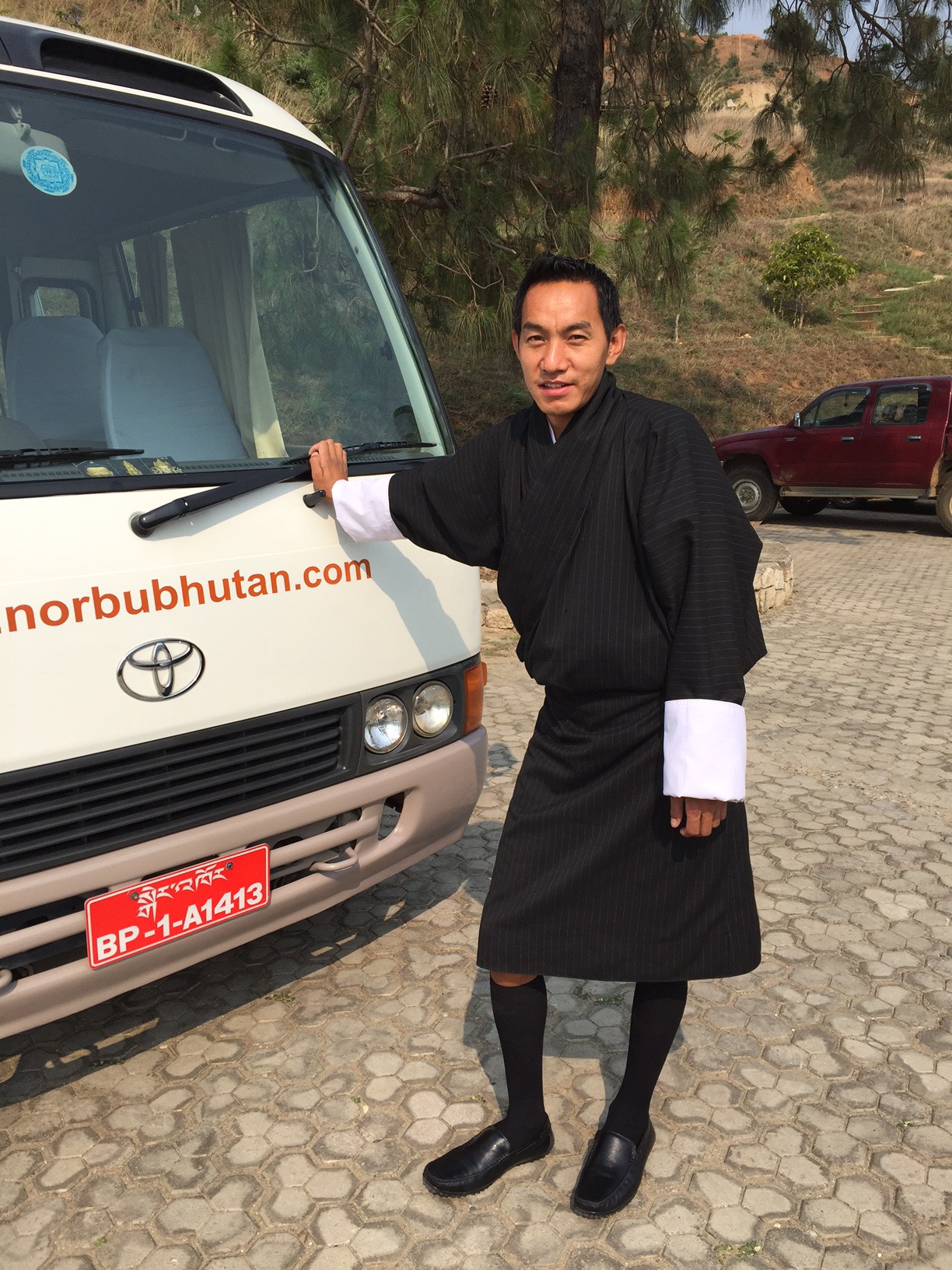
As with all mountain roads, Bhutan’s have their fair share of hairpin turns.  What they don’t  have are guard rails.  This tour is NOT for the faint of heart or the queasy stomached.  We have come so close to passing vehicles, we could have flossed the other driver’s teeth.  What a relief to have an excellent driver like Gembo getting us to the top of the mountain and back down again.

Gembo, our very skillful driver

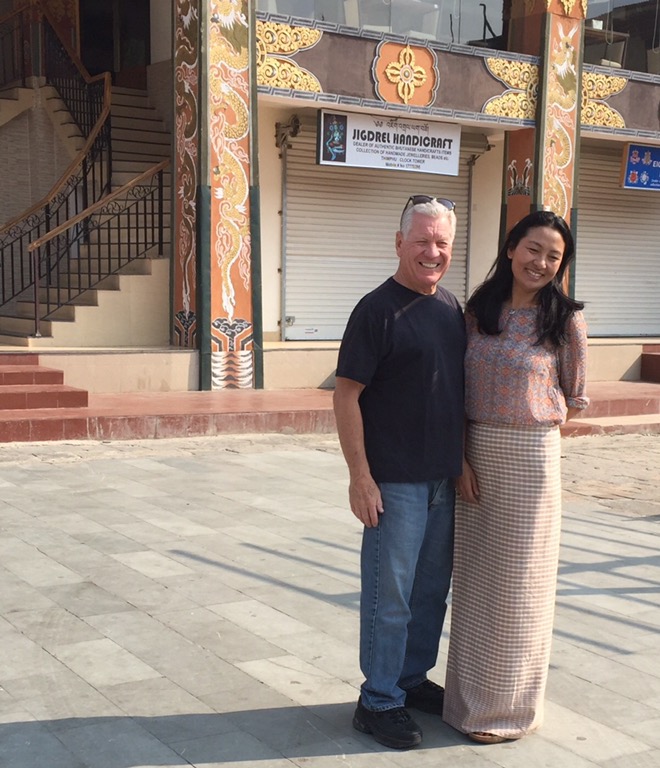
An unexpected delight was the owner of our hotel in Thimphu.  Her story deserves an entire post, but that will have to wait till I get home, or until YOU stay at the Thimphu Tower.

Jim and Tshering, the owner of Thimphu Tower


Druk Yul, Land of the Thunder Dragon

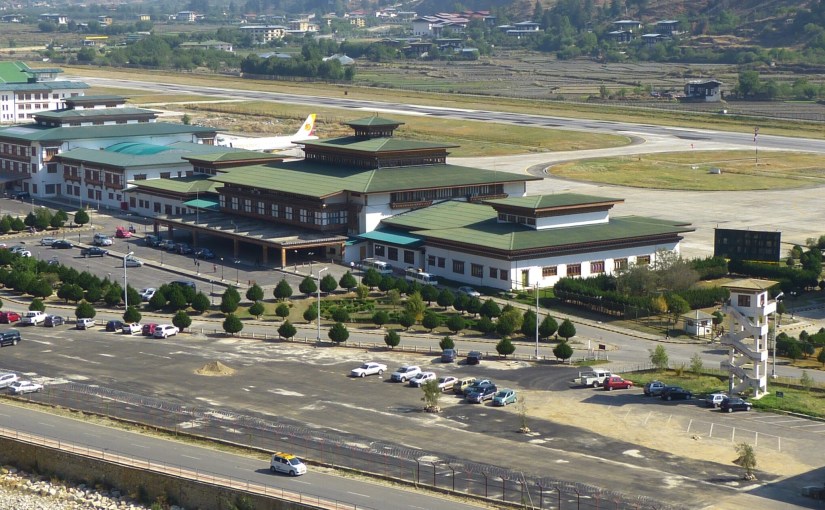
Bhutan’s airport looks like it was designed by Walt Disney.  The buildings are covered with carvings of dragons (Druk means dragon in Bhutanese) and the windows are highly decorative.  It is the country’s sole airport, because Paro is the only area flat enough to accommodate a runway.  It’s a very SHORT runway, but a runway nonetheless.


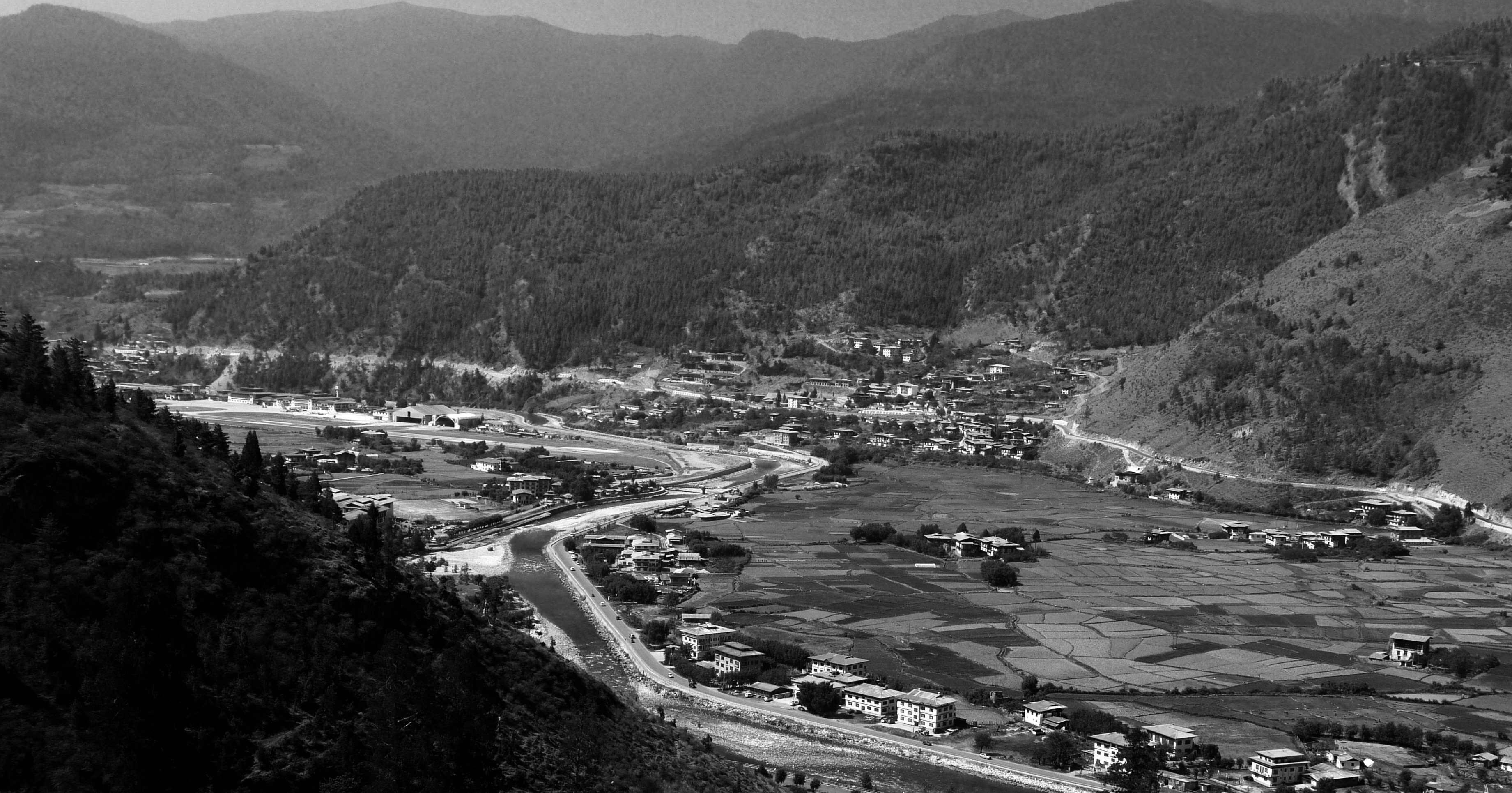
The mountains that surround the runway make landing quite exciting.  So exciting, that only 8 pilots are skilled enough to fly into and out of Paro.  Fortunately one of those 8 was flying our plane today.

The airport is on the left. Take a look at those mountains

Tashi, our guide, and Gembo, our driver were waiting for us outside the terminal, ready to get this party started. First stop, Paro’s dzong. Every city/community had its own dzong. Back in the day when the Tibetans’ favorite leisure activity was invading their neighbors, the dzongs were fortresses. Today they have been repurposed into administrative and religious buildings.  

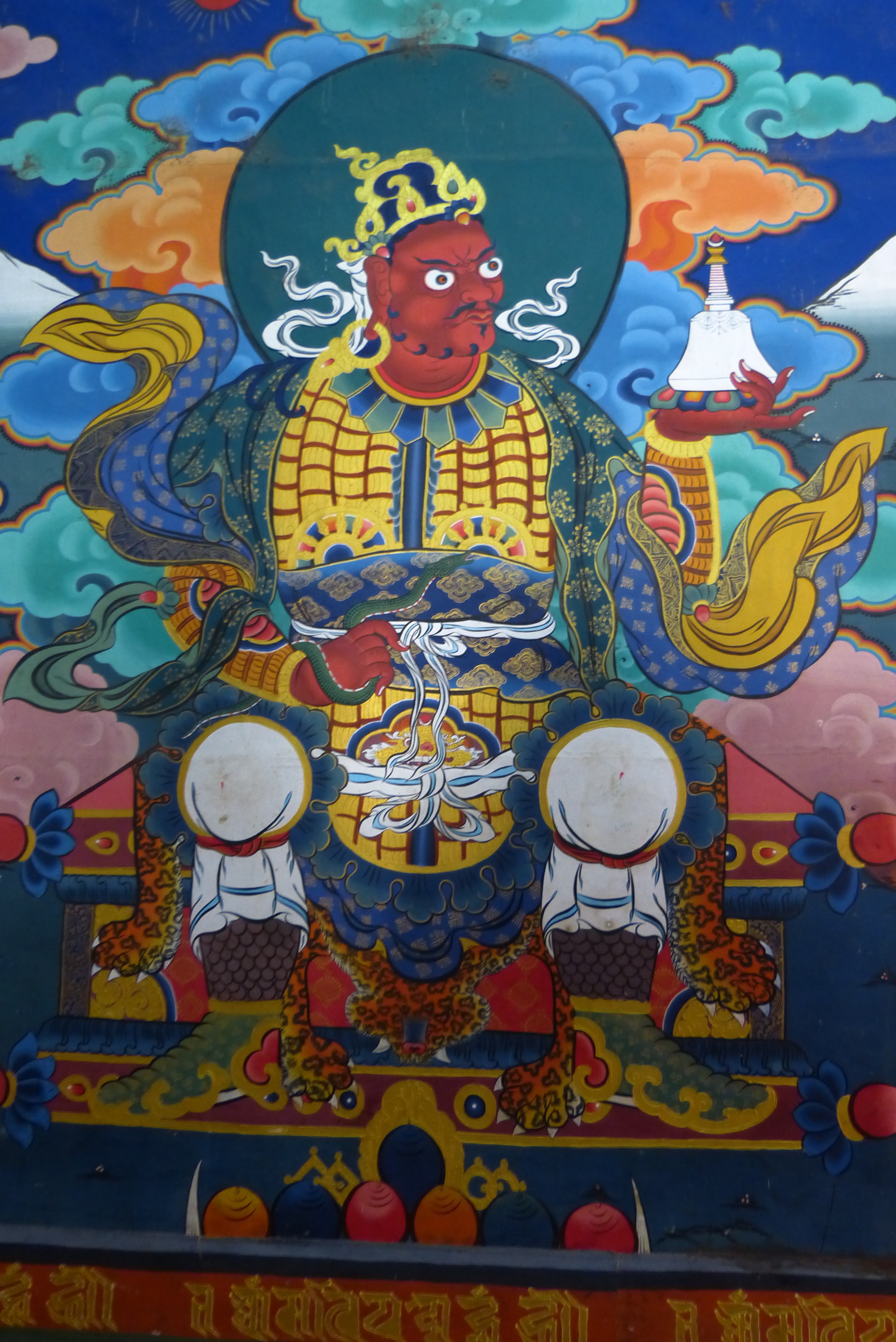
the demon of the west
The dzong courtyard
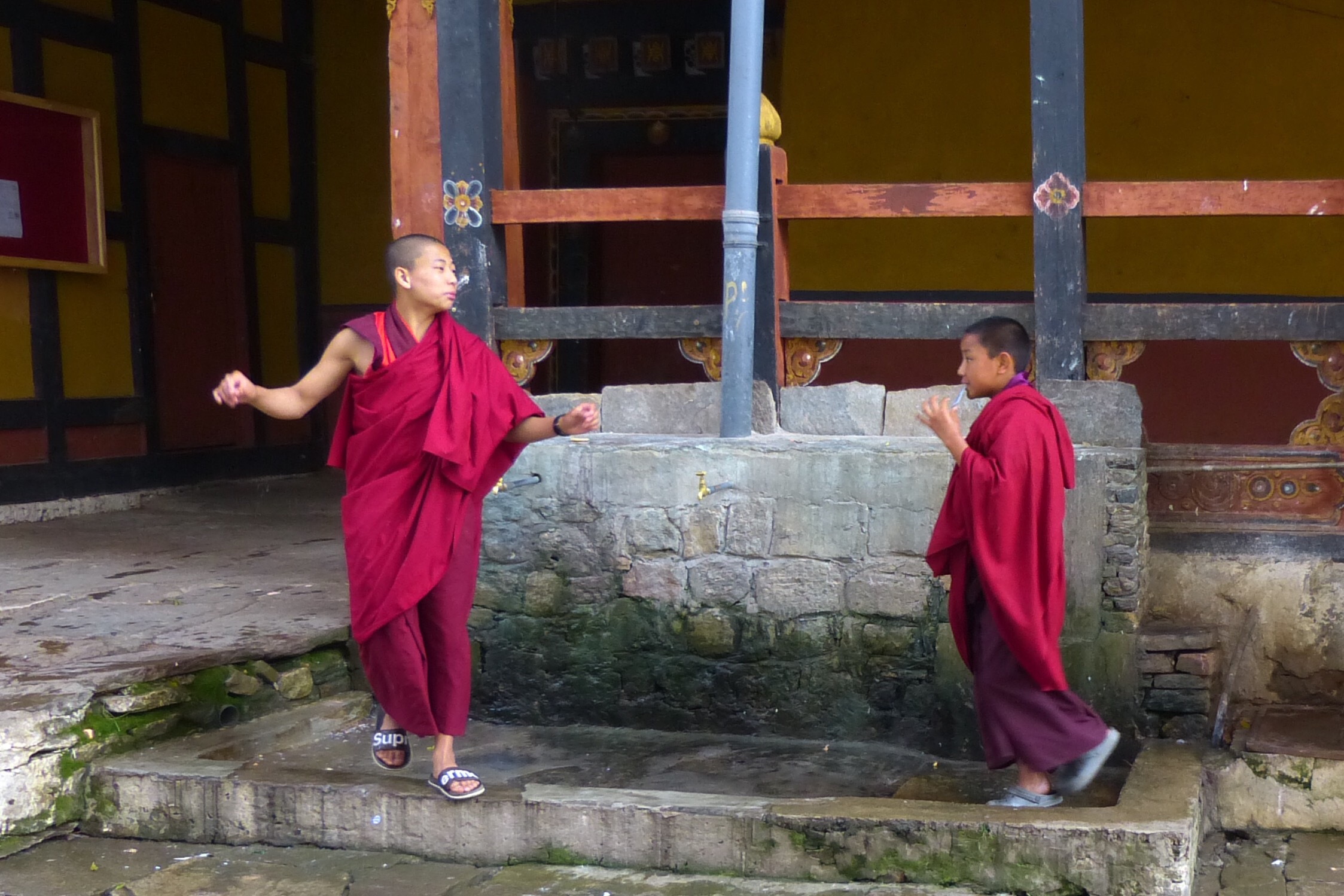
Young monks

Anyone thinking about visiting Bhutan should take a close look at those stairs.  They are steep, uneven, and lacking handrails.  And they are everywhere!
 

good thing i spent time at the Y before this trip!


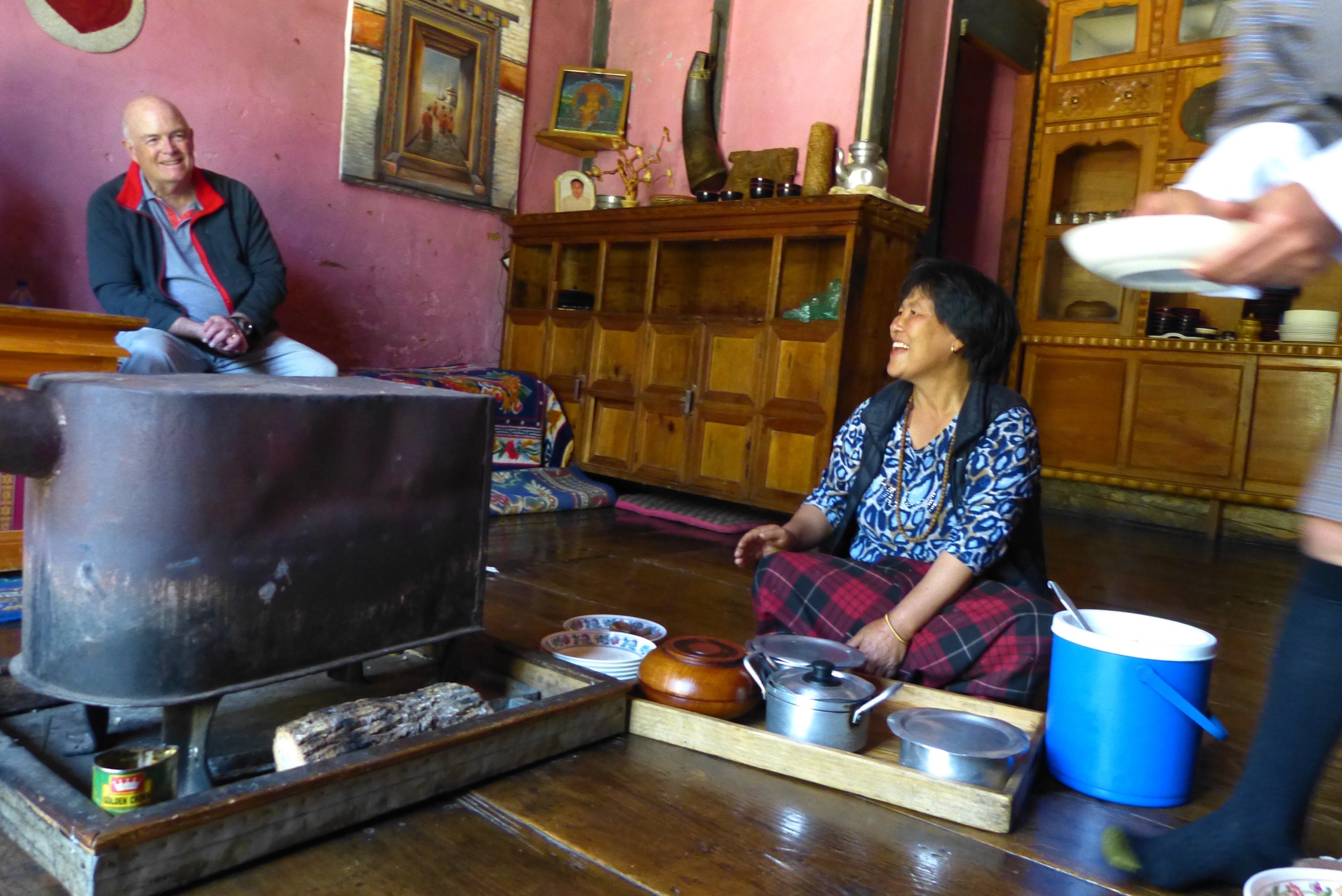
After touring the dzong and the national museum, we stopped for lunch at a typical farmhouse.   In a “typical farmhouse” the ground floor is where the cows sleep.  They are protected from predators, yes, but this arrangement is multipurpose.  They also act as the home’s furnace, generating heat (among other things) for the floors above.  The second floor is used for storage, mainly food.  The room we viewed was loaded with drying rice.  The top floor contains the bedrooms, the kitchen/gathering spot and the altar.  

check put the floor boards!


Our hostess served us a delicious meal, complete with butter tea, into which you tossed grains of toasted rice. Okay, so maybe that last part wasn’t so delicious–at least not to me–but the fresh spring asparagus was particularly wonderful.

Benches were provided for thise that didn’t want to sit on the floor


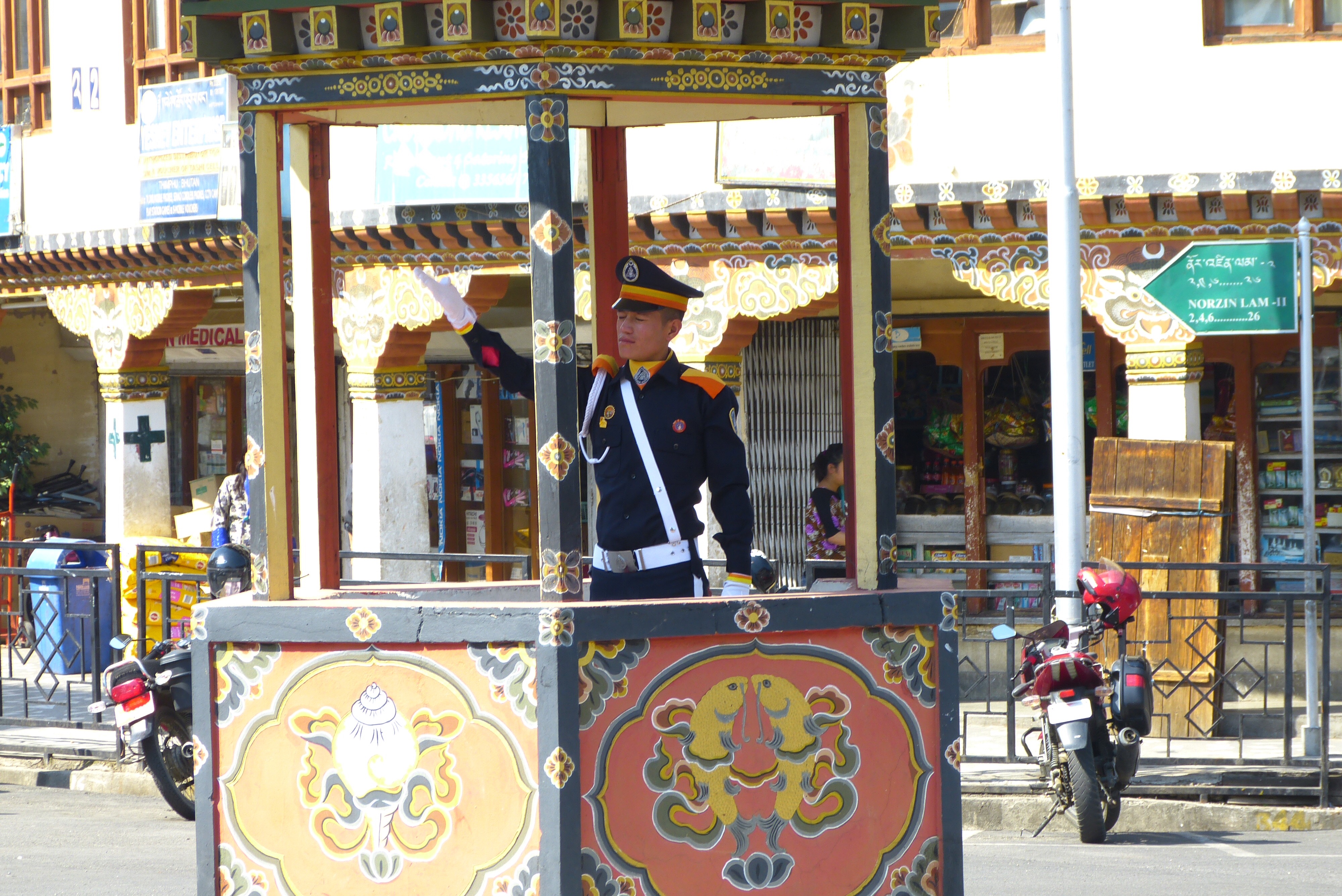
Our hotel, the Thimpu Tower, is smack dab in the center of town, right by the historic clock tower.  It was very easy to stroll through the capital city and check out  their version of a traffic light.  

Bhutanese traffic light
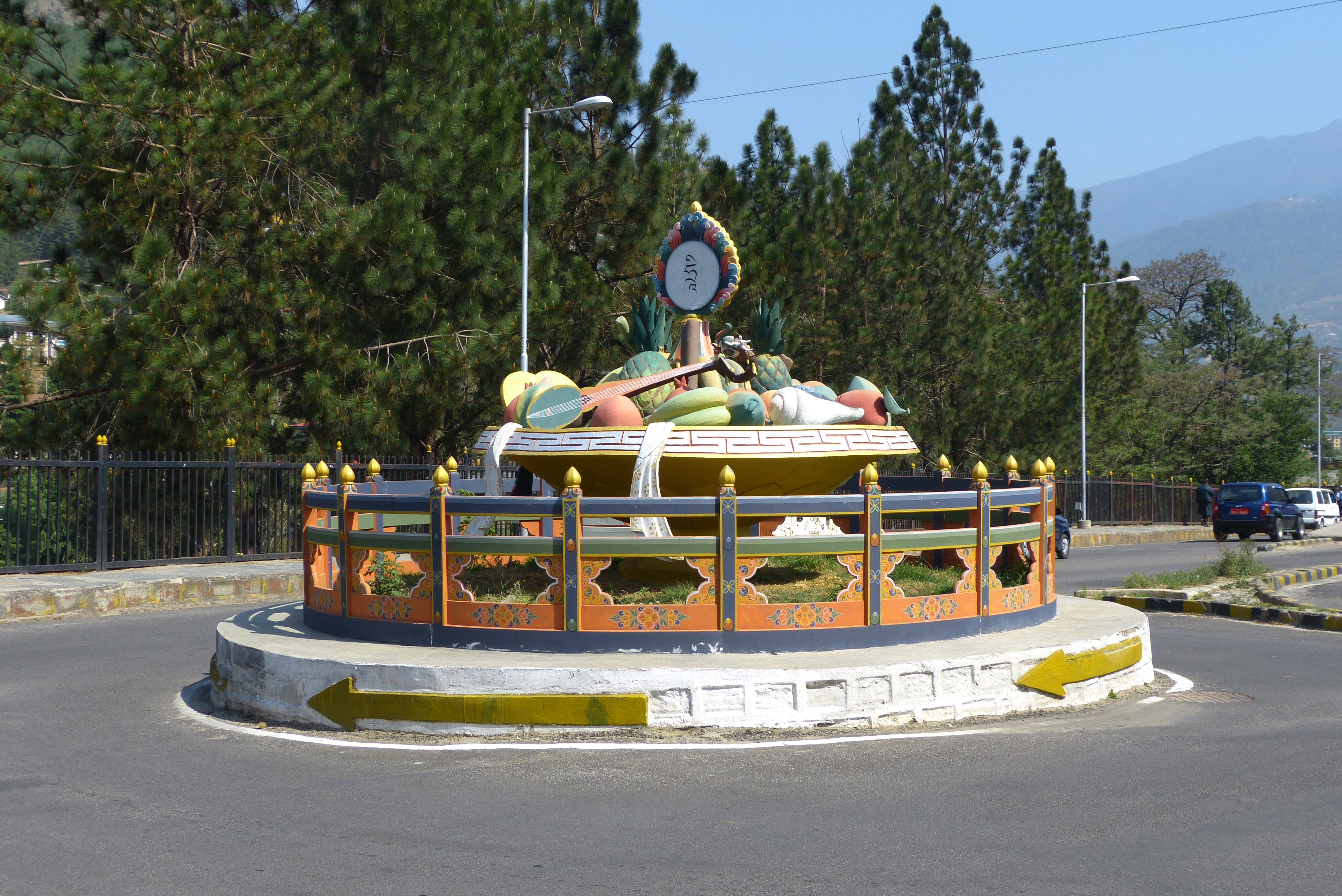
the rotary


By the way, that’s the ONLY “traffic light” in Thimphu.  Like Massachusetts and New Jersey, they DO have “rotaries”, but their traffic circles are a bit more decorative.  

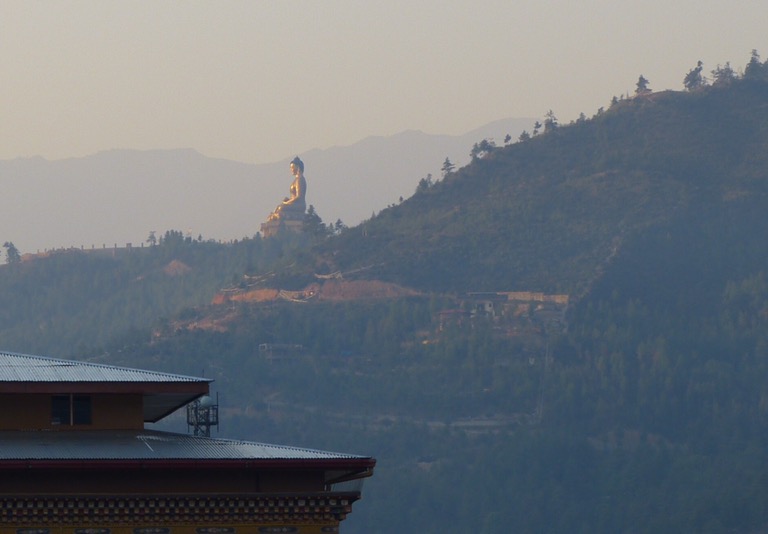
My lovely room overlooks the “clock tower plaza” and from my window, you can see the largest Buddha (in that particular contemplation pose) in the world.  Tashi tells us its construction is being completely funded by Asian Buddhists from Singapore, Thailand, China and Indonesia.  A much more up close and personal view will follow.  


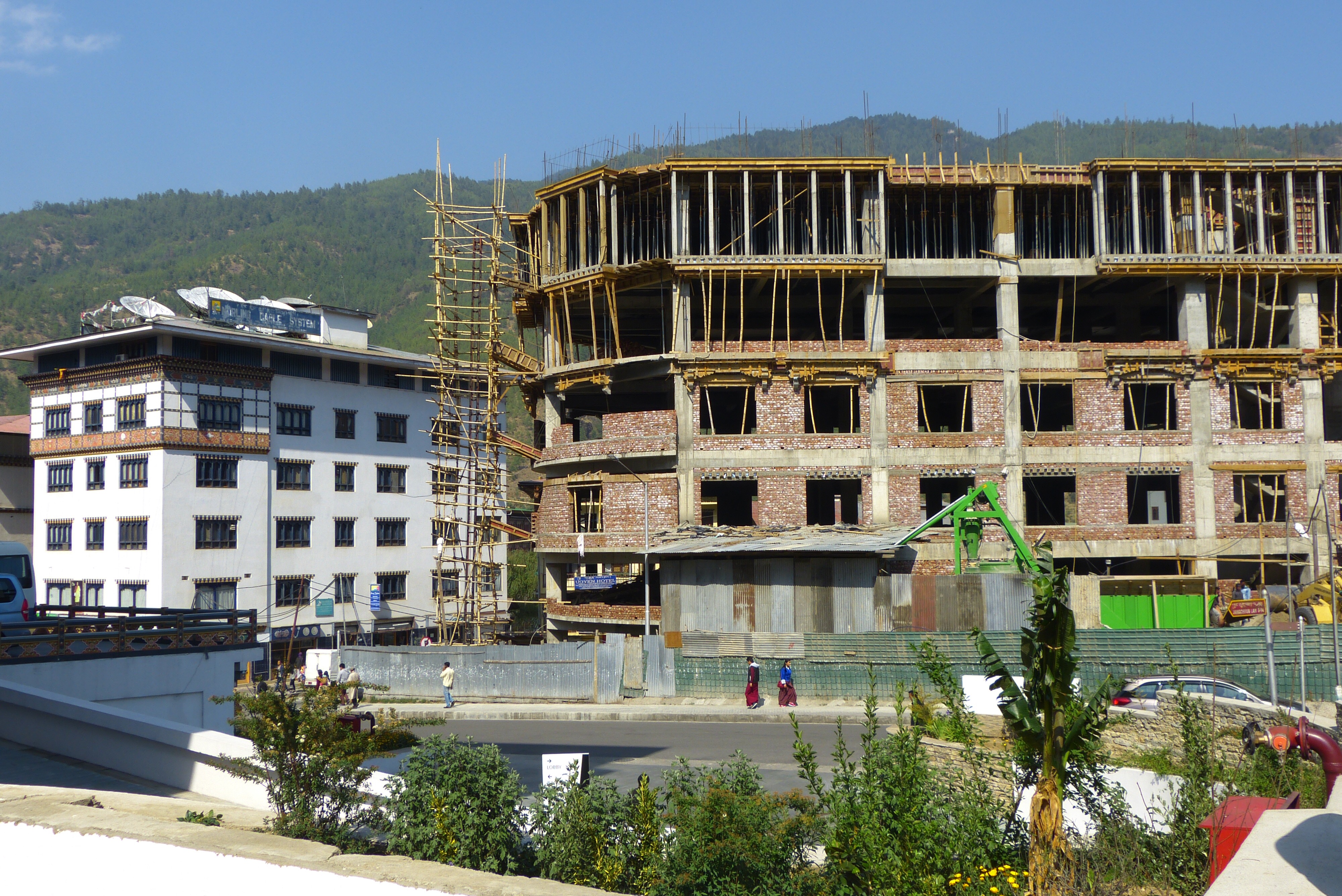
There is construction everywhere in Thimphu. I needed to watch my step at all times to avoid the uneven pavement and the frequent holes in the sidewalks.  (I sure was missing Mike, who normally does all the watching for me, making sure I don’t trip over my own feet or fall into one of those holes!)

i wouldnt want to depend on THAT scaffolding


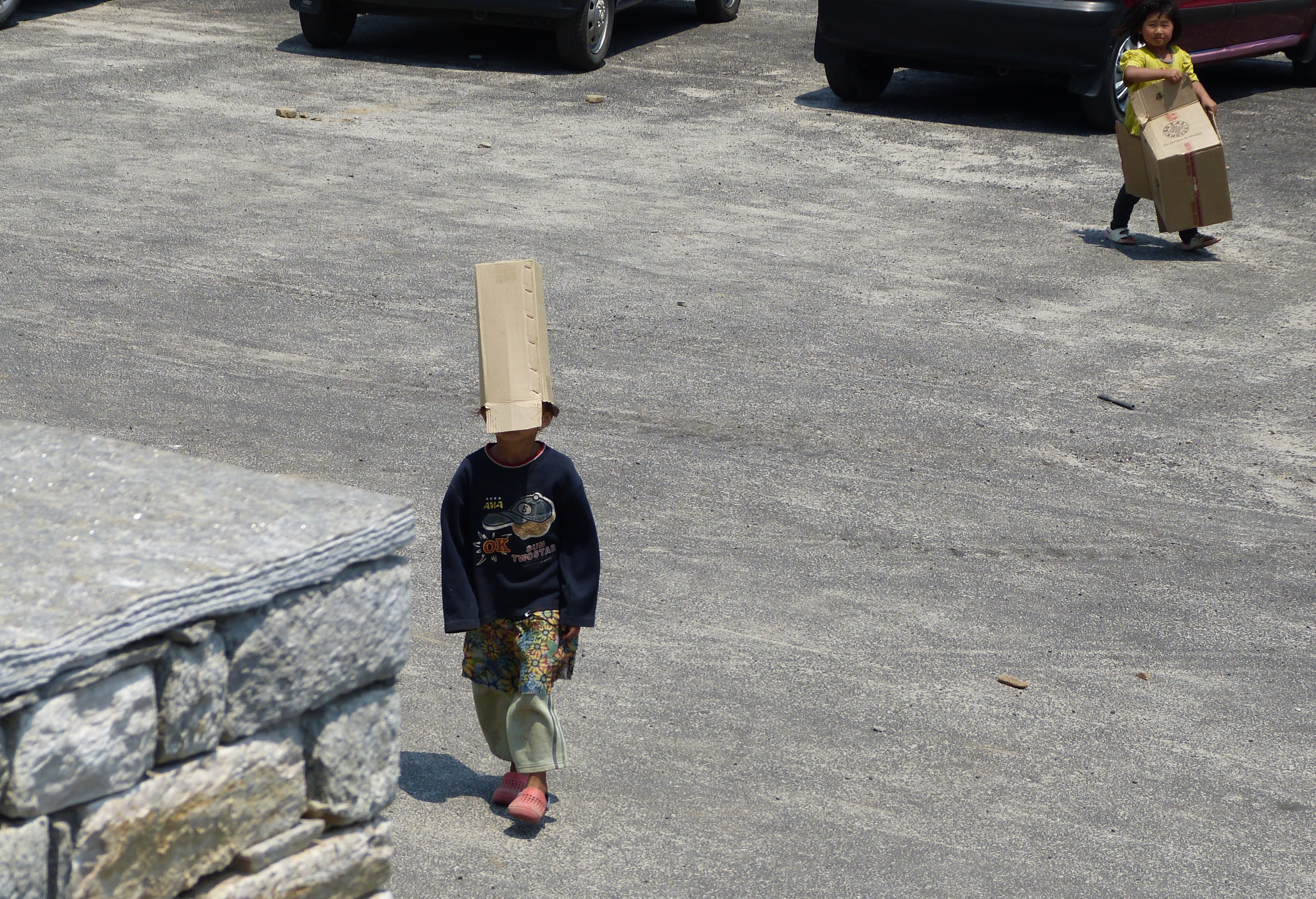
The kids roam freely in the land of gross national happiness.  These two were moving so quickly, I couldn’t get a good shot, but you’ll get the idea.  What better toy than a box and paper bag?  They were having a blast!  

A Day in Delhi

 Might one of those peaks be Mount Everest?   Your guess is as good as mine.  One thing I know for certain, those babies ARE the Himalayas and the view from the left side of the plane, even from my middle seat over the wing, was majestic.  But I’m getting ahead of myself.  This post is supposed to be about Delhi, so I need to back up a little.  Truth is,  I just wanted to use the photo.

On my flight to Delhi, my intention was to get to sleep as fast as possible.  That quickly changed when I realized my seat mate was quite fascinating.   He was starting a speaking speaking tour in several cities throughout Asia about the “soft side” of medical care.  If that weren’t interesting enough,  his son, Ashok Rajamani, wrote “The Day My Brain Exploded”  a memoir about his stroke at age 25 and his come back when he emerged from a coma.   The end result?  I got so engrossed in our conversation, it became too late to take a sleeping pill, so I landed in Delhi a bit more jet lagged than I’d hoped.

For those of you that view me as being organized, I have a confession to make.  I forgot to bring my hotel confirmation with me, so I didn’t have its exact address.  I figured that would be no big deal, given that the Pride Plaza Hotel was right at the airport.  Wrong.  The cab driver had no idea where it was, so he stopped periodically to ask random people for directions.  You might suspect it was a ploy to run up the meter, but the fare was prepaid.  What’s going through my jet lagged, brain while we are driving aimlessly around, chatting up strangers?   I’m thinking it’s a good thing I’m not in The Amazing Race.  For sure, I’d be hearing Phil say, “you are team #10, and I’m sorry to tell you, you have just ‘bean’ (yes, that’s how he pronounces it) eliminated.”

When we finally made it to the hotel, I was pleased to discover that it was quite lovely, and I congratulated myself on my decision to arrive in Delhi a day before the start of the OAT tour, to allow myself time to acclimate.  I am very aware that a well rested me is a happier me, and an overtired me, well, let’s just say it isn’t pretty.

Delhi is chock full of amazing temples, tombs, museums, bazaars, historical and cultural sites.  One could easily spend a day visiting  Humayun’s Tomb, the India Gate, the Lotus Temple, the Red Fort –the list goes on.

I did none of that.

One huge benefit of retirement is I finally figured out I don’t have to cram everything into one day.  No,  I have EARNED the right to be selective and to do fewer things, but to choose the things that put a smile on my face.

So, what did I choose?  Well, I toddled over to the Delhi Dance Academy’s Gurgaon location to shake, shake, shake in my best Bollywood fashion with my charming dance instructor, Vishnu.  Marcus, Pride Plaza’s very knowledgeable concierge, arranged for a hotel driver to take me to Gurgaon, wait the 2 hours I was there, and bring me back–all for about $25.  After the night before’s taxi experience,  I figured it was the best, nay, the ONLY way to travel.

Next question– how’d it go?  Well, although I had thought I would be joining a class, I discovered that the Delhi Dance Academy had arranged for a private lesson.  For about $30, I got a welcome ceremony, refreshments, instruction in three different dances, and lots and lots of laughs.  I’m supposed to get a video of my endeavors within the next couple of weeks.   I’ll be sure to post it so everyone can share in the fun.

And now some lessons learned,  for future OAT travelers taking the Bhutan, Nepal, Tibet trip.

  1. Prepay for your taxi inside the terminal.  It is a whole lot easier if, unlike me, you have the actual address with you.
  2. i wasn’t the only one with a clueless cabbie.  Even WITH the hotel address,  one of the other travelers had a similar experience, stopping several times to ask for directions to a hotel that was in the bloody airport area.  Don’t panic if it happens to you.
  3. The ATMS in the terminal are not as user friendly as they are in other countries.  At least they weren’t for me.  After having difficulty with two different ATMs, I ended up using the currency exchange at the airport.  Not the most cost effective choice.
  4. I probably COULD have paid for the taxi with dollars.  The guy at the terminal’s taxi desk told me he would have given me a much better exchange rate.  Who knows?
  5. Our flight to Bhutan was scheduled for a 5 AM departure.  We had to be in the hotel lobby at 2 AM to be sure we’d get through passport control and security in time.
  6. if you CAN go a day early, it is well worth the additional cost of the hotel room.  And the hotel can help you do whatever puts a smile on YOUR face.


The Ultimate Packing Challenge

Ultimate packing challenge???  Well, at least it is for me.  I’ll be gone for a month, visiting countries that have temperatures ranging from Lhasa’s average low of 31 F  to an average high of 105 F in both Delhi, India and Chitwan National Park.  Fortunately, I “met” a new virtual friend via OAT’s Forum.  She gave me lots of helpful hints, and most importantly, clued me into the existence of laundry facilities that are plentiful and cheap.  Thanks to her advice, I am able to be safely under the airlines’ 44 pound checked luggage maximum.

In the spirit of giving back, this post is all about what I’m packing.  Maybe a future OAT traveler to Bhutan, Nepal and Tibet will find my information as helpful as I found Janet’s.

There’s nothing like a visual, right?  P1140314

Being your obsessive compulsive kind of gal, I start packing many days before departure, loading articles on the bed in our spare room.  I use a paper list and check off as I go.

One of the many nice things about OAT trips is no one cares what you look like.  No one dresses to impress–it is all about comfort and adventure, so you will notice a total absence of makeup, jewelry, fancy clothes and dress up shoes.  But then, my family would tell you that’s how I normally roll.

Checked luggage:

Toiletries:  toothbrush, paste, floss, shampoo, conditioner, brush, comb, moisturizer, deodorant, soap, face cloth.  

I’m not bothering with a hair dryer because some of the places we will be visiting won’t have electricity.   I let my hair grow just for this trip, so I can pull it back and forget about it.

Miscellaneous: binoculars, sunscreen, Insect repellant, anti itch gel, lip balm, lotion, Ibuprofen, Pepto bismol, gasex, Imodium, Hydrocortisone, Bandaids, bonine, moleskins, z-pak, granola bars, small duffel (supplied by OAT).

I’m hoping I won’t need any of the medications.  Whatever I don’t use on the trip, I’ll give to the trip leader.  Might as well have someone make use of it before the expiration dates.

Clothes:  Rain jacket, down jacket,  Sun hat, Sweater, Underwear  (14 days),
socks (10 ), long underwear (2), Pajamas (2), Shorts (2), Short sleeve tops (7), long sleeve tops (5), Long pants  (4), capris (1), Sneakers, flip flops, keens, bathing suit, buff, chill band.

For the colder parts of the trip, I figure  I can wear long underwear beneath my lightweight pants.  No need for corduroys.  I’m counting on layers to keep me warm.

My goal is to get by for at least a week, maybe two, without having to do laundry.  I may have packed more  than I need; I will report back after the trip is over, identifying anything I took that I didn’t need, and anything that I didn’t take, but wished I had.

As with other OAT trips, we will be visiting a local family, so I packed gifts.  Our guide told me that warm socks are always appreciated for the cold winter months, something I never would have thought to bring.  Of course, I had to include toys for the kids, plus an inflatable globe.

IMG_2380

On our OAT trip to Africa, we discovered that a duffel holds more than we ever imagined  possible.  We also learned there is no need for those fancy packing cubes.  My jumbo zip lock bags work just fine, allowing me to pull out only what is needed.   Take a look.

P1140315

Shoes in the bottom, along with items I expect to need at the end of the trip.    P1140320
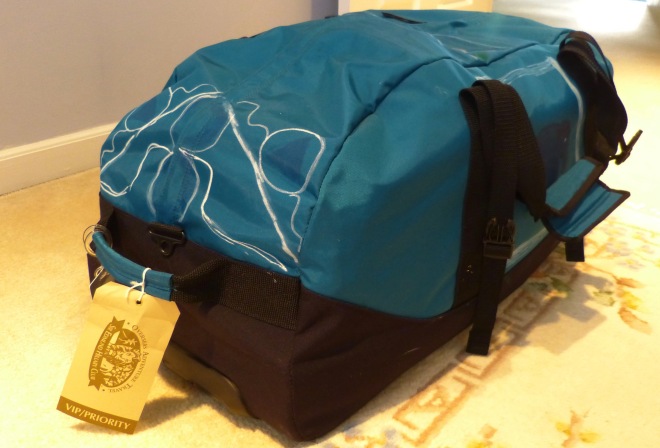
Yep. It all fit and I even have a tiny amount of extra room.

I know you’re wondering, so yes, that white decoration on my teal LL Bean duffle was my very own creation.  Nobody is walking off with MY bag and claiming it was a mistake!

Because I have a direct flight to Delhi, I don’t need to pack a change of clothes into my carry on.  Here’s what’s going inside.

Backpack:  Money, credit card, passport, etickets, travel info,  camera, batteries, charger, iPad connector, iPad, ipod, Bose headset, sleeping aid, Wipes, hand sanitizer, Glasses  & case, water bottle, cell phone, pens, pencils, notepad, gum, cough drops, copy of passport.
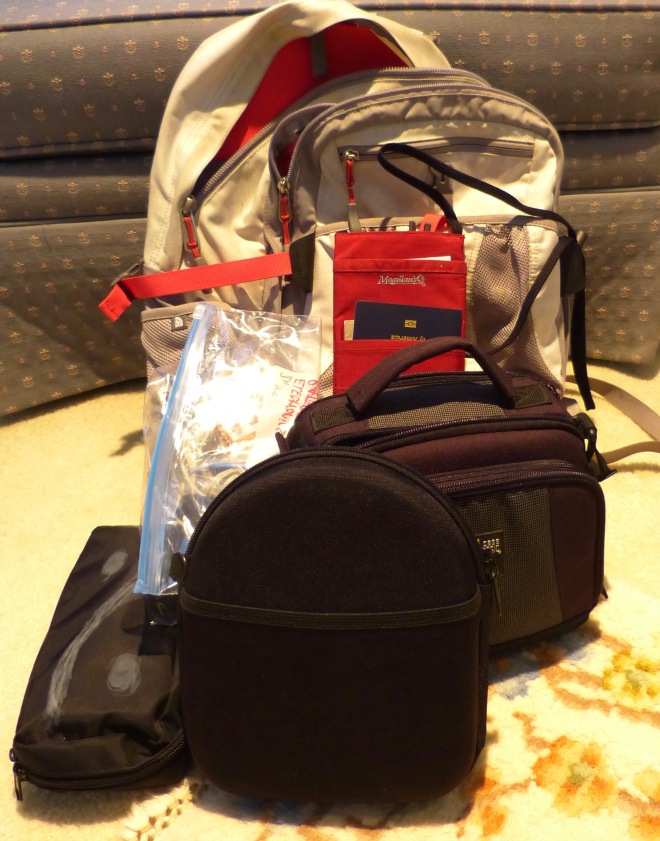
P1140319

 That little black bag with the white decoration?  That’s my “comfort case”, which holds the small items –cough drops, pens, gum, etc. so that I don’t have to rummage through the many pockets of my back pack.

The good news?  I did indeed score the first class upgrade I requested back in November, so I probably won’t need to be digging into that comfort case the way I would have if I were back in economy.  United, you have been forgiven.

The sad news?   Because of some late breaking events, Mike and Greg won’t be able to come on this trip.  Thank heavens for trip insurance!

Follow the Yellow Brick Road to the Roof of the World – Part 3

When you hear “Seven Years in Tibet” what comes to mind?  The movie starring Brad Pitt?

Well, I never saw the movie but I HAVE read the book  by Heinrich Harrer, and I must say, it was pretty phenomenal.   Harrar escaped from a British POW camp in India during World War II.  Interestingly enough, POWs back then were able to keep their money and  supplies, so when he escaped, he had a rucksack, some provisions, and enough money to trade with Tibetans as he made his way through the Himalayas to Lhasa.

The Tibetans were gracious hosts, providing Harrer and his traveling companion,  Peter Aufschnaiter (another escaped POW) with shelter and, when they ran out of money, gifts of food.  Harrer and Aufschnaiter were able to repay this kindness by generously sharing their scientific and engineering knowledge with a country that at that time was closed off to the rest of the world.  In addition to helping with flood control, translating foreign news, providing agricultural advice, they also introduced  the Tibetans to a new sport,”walking on knives”, what we call ice skating.    Eventually, Harrer met the young Dalai Lama, becoming a trusted friend and tutor of the isolated adolescent.  Harrer not only oversaw the construction of a movie theater in the Dalai Lama’s summer palace, he also created the films that were shown there, using a 50’s era movie camera to photograph Tibetan festivals.

After Charlie Carroll discovered Seven Years in Tibet in his elementary school library, he became fascinated with this remote Himalayan kingdom.  It was a bit like me and the Wizard of Oz, except HE could actually visit HIS magical kingdom.  And he did, in 2009.  The end product of his journey is the wonderful narrative Peaks on the Horizon.  Two parallel stories alternate chapters, chronicling Charlie’s travels, and that of a young Tibetan refugee he met just before leaving the country.

Seven Years in Tibet and Peaks on the Horizon are great introductions to Tibetan religion, history and culture.  Although I quickly skimmed through  Demystifying Tibet by Lee Feigon and Conversations with the Dalai Lama by Thomas Laird, I found them more difficult to get through and not as entertaining.  I’ll admit it.  I’m a sucker for the personal narrative.

So, if you have been following along The Yellow Brick Road to Asia, you know that now is the time for ten very random, fun facts uncovered through reading about Tibet:

  1. At 13,000 feet above sea level, Tibet’s nickname, “The Roof of the World” is fitting.  It is the highest inhabited area in the WORLD.  Yikes.  I’ve packed a supply of Diamox to make sure I don’t have a problem with the altitude.  
  2. The first major character in its recorded history is Songtsen Gampo, who conquered and united a multitude of tribes to create the nation of Tibet.  Sources claim he became king at the age of 13.  I guess during the the seventh century, they dealt with adolescent angst by sending the boys off to pillage, plunder and start a new nation.  Before he died in 649, he managed to acquire one wife from China, one from Nepal and four from among the local girls.  There are two versions of the Chinese bride story.  Songtsen Gampo  ordered the king of China to send him one of his daughters and when his “request” was refused,  he attacked and pillaged.  Version two describes Songtsen Gampo as a lovesick warrior who became a vassal of the Chinese emperor to obtain his lovely wife.  See if you can figure out which explanation belongs to which nation.
  3. But it wasn’t ALL fun and games.  Songtsen Gampo is also credited with bringing Buddhism to Tibet (and to Bhutan).  He built the first Buddhist temple in Tibet, the Jokhang, to house the statue of the Buddha his Chinese wife, Wencheng,  brought from China as part of her dowery.  One account mentioned that the Nepali wife also brought a Buddha with her, but the Chinese one appears to be more sacred and more famous.  it will be interesting to see what we are told when we are in Lhasa.
  4. There was a gap of almost a century until the next important emperor came on the scene.  Trisong Detsen (755-797) conquered the areas along the Silk Road.  But he too was more than just a warrior.  He also  built Tibet’s first monastery at Samye and invited Padmasambhava (Remember him from the Nepal post?  Also known as Guru Rimpoche, he emerged from a Lotus in a lake) to come to Tibet to help spread the word about Buddhism.
    Unfortunately, Trisong Detsen met an untimely end.  Rumor has it that he was 
    poisoned by his wife, who may also have disposed of her son in a similar manner a mere two years after he was crowned.   Talk about dysfunctional families.  Even Dr. Phil would have had trouble fixing THEIR problems.  
  5. The next notable character appears in 838.  Lang Darma joined with members of the Bon religion to strangle his brother, the current king.  He tried to reinstitute Bon, the local religion, by suppressing Buddhism.  Here’s the interesting part. Lang Darma was thought to be a devil, complete with horns on his head.  After forcing girls to comb his hair, he used his horns to kill them, then ate them.  Lhalung Palgyi Dorje, a monk, came to the rescue, killing Lang Darma by shooting an arrow through his heart.   
  6. Remember Ghengis Khan and the Mongol Hoards?  I sure do.  I have a strong visual of him and his buddies, galloping across the steppes, flags flying in front, long hair streaming behind.  So, what has that got to do with Tibet, you ask?  Well, bet you didn’t know that the term “Dalai Lama” came from the Mongols.  I certainly didn’t.  Altan Khan, who ruled Mongolia in the 1500’s (yes, we’re skipping WAY ahead!) invited Sonam Gyatso, the abbott of Tibet’s largest monastery, to his country to spread Buddhism throughout Mongolia.  Dalai Lama is the Mongol translation of Sonam Gyatso’s name, which in English means “Great Ocean”.  Tibetans, however, refer to their their spiritual leader as “Kundun”, which means “the presence of Buddha”, but since I’m not Tibetan,  I’m going to stick with Dalai Lama.
  7. Tibetans believe they are descendants of Chenrizi (also spelled Chenrezi, Chenresig and Chenrezig, depending on the source), who took the form of a monkey to seduce a demon.  The demon gave birth to six “long haired children” complete with tails (the first Tibetans) that disappeared when they grew to adulthood.   The Tibetan creation story explains human behavior by uniting the pure (Chenrizi is the Buddha of compassion) with the animalistic (the demon/ogress).  And all we westerners get is a talking snake and an apple.  I like their story better!  It even has evolution going for it.
  8. The current Dalai Lama is believed to be the fourteenth reincarnation of Chenrizi.  The THIRD Dalai Lama was the first granted the title by Altan Khan.  That Dalai Lama decided to declare his two deceased predecessors as the first and second Dalai Lamas.  After the third Dalai Lama’s  death,  Altan Khan’s grandson (surprise, surprise)  was declared to be next reincarnate — the fourth Dalai Lama.  He didn’t last long–he was dead before he was 28.
  9. The NEXT Dalai Lama was a powerhouse. The “Great Fifth” started construction of the Potala, Tibet’s iconic building.  He died before the building was completed, but his death was kept a secret for 10 years to ensure that construction would continue.  This huge complex is 13 stories high and contains color coded administrative (red) and religious (white) sections, which include the winter quarters for the Dalai Lama,  prison cells, torture chambers and stupas where prior Dalai Lamas are entombed.
  10. Yaks are as important to the Tibetans as Buffalo were to the Native Americans.  Yak butter is the main ingredient in yak tea, which is consumed by everyone, many times every day.  Yak butter is also used for the candles that are burned throughout all three Himalayan countries.  Yak dung is burned for fuel and is also used as an ink substitute.  The burnt yak dung becomes soot, which was used as ink for books during Heinrich Harrer’s seven years.  By the time Charlie Carroll visited a few years ago, Yaks had become endangered.  What is common now is a cross between a yak and a cow, called a dzo.  

How’s that for random facts?

There is so very much more to say about Tibet, but as with the posts on Bhutan and Nepal, I need to save something for when we are there, don’t I?