Angers

Sometimes I don’t know I want to visit a place until I get there. That certainly was the case for Angers. I know, I know, the name of the city sounds like a hostile emotion. But the French don’t say it the way it’s spelled. THEY say “Ahn-geee”. Better, right?

Our three days in this very walkable city whipped by, and was a very nice balance between included activities and free time. After a guided tour of the city, during our free afternoon several of us decided to go rollin’ on the river.

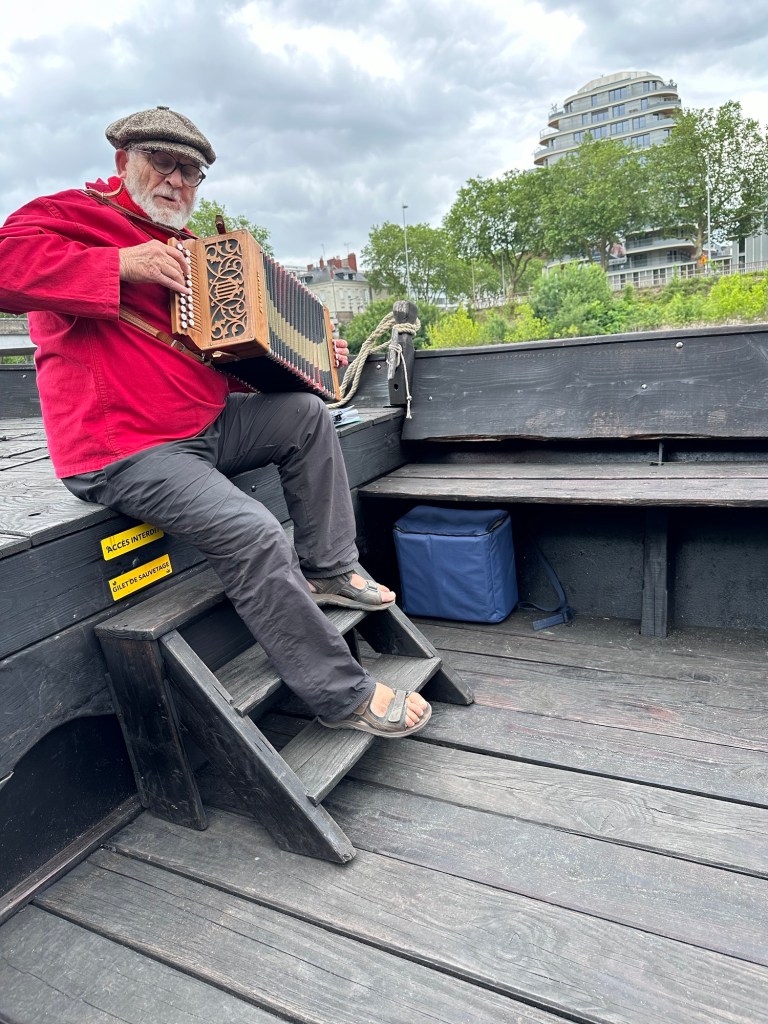
In addition to champagne (some of us had TWO glasses) our ride included entertainment. This fine fellow serenaded us while playing his vintage accordion.

We didn’t have the river to ourselves. Because the Olympic Torch was passing thru the city, four military boats were on patrol. We saluted each and every one of them with champagne glasses held aloft.

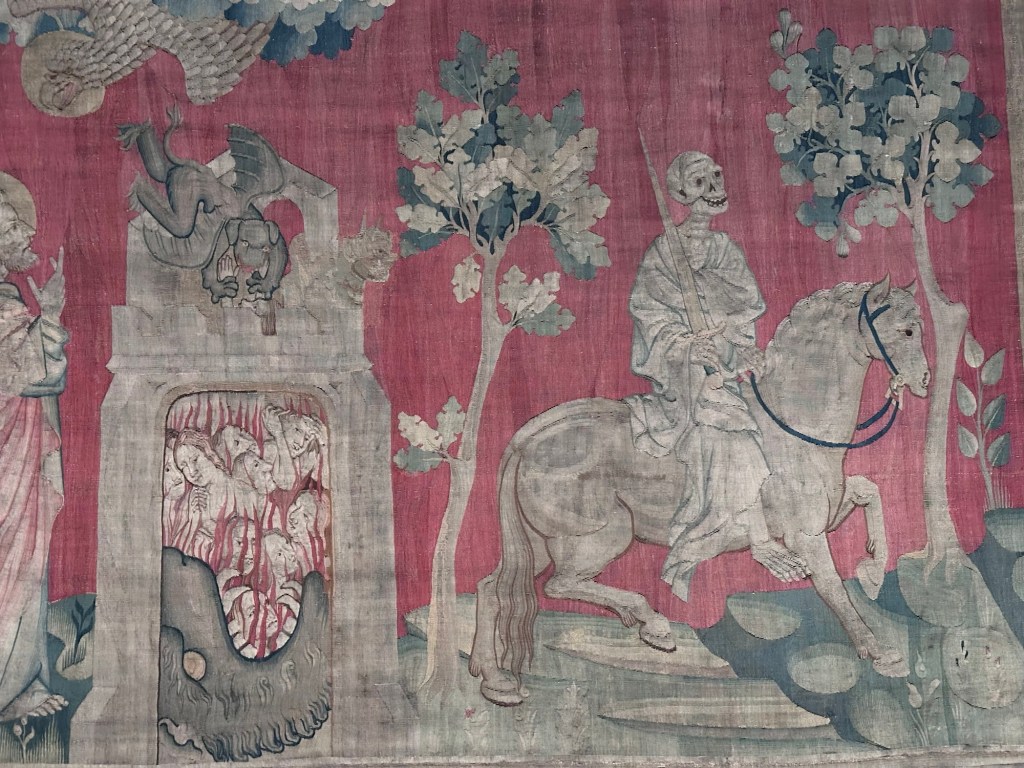
Finishing our ride across from the fortress/ castle, made it very easy for us to fit in a visit to the famous Apocalypse Tapestry.

Yes, another huge tapestry, but this one really IS a traditionally constructed piece, unlike the one in Bayeux. A predecessor to today’s comic books and graphic novels, it relates the battle between good and evil from the last book of the Old Testament to a largely illiterate population.

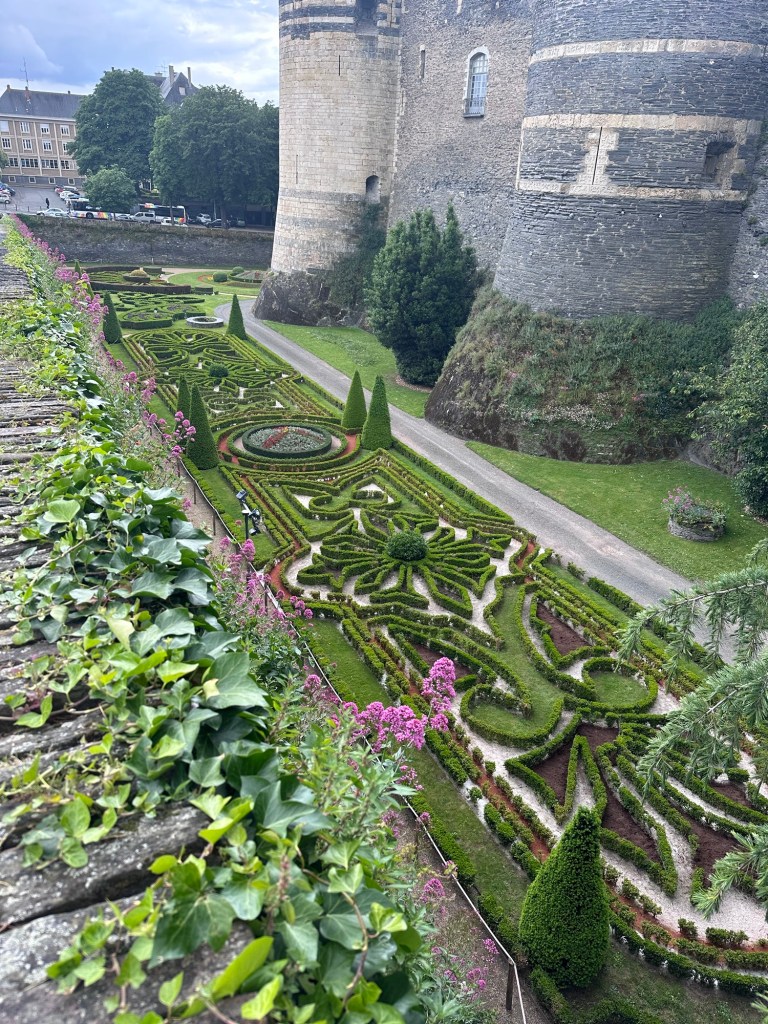
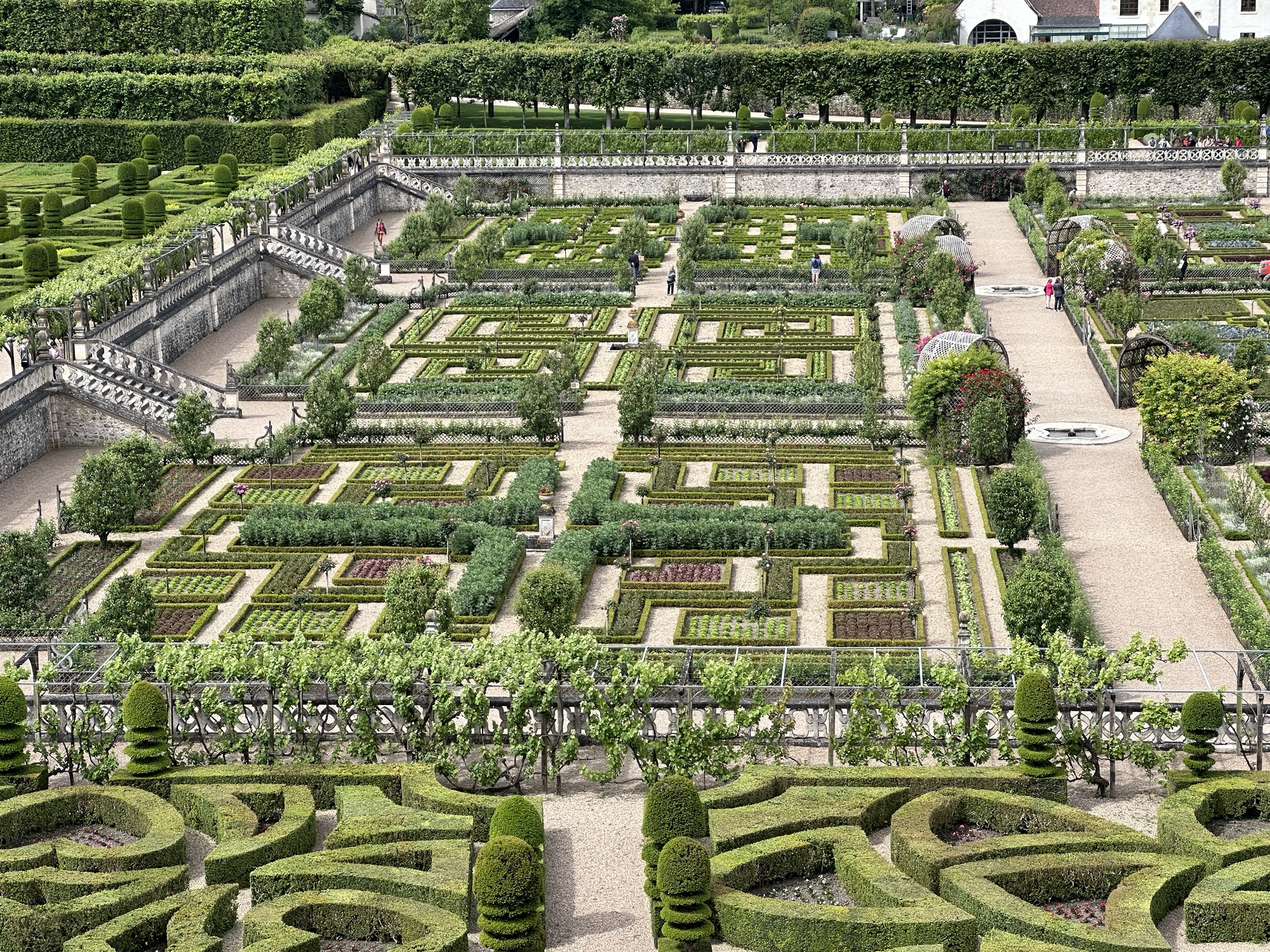
I was impressed with the beautiful gardens surrounding the castle, but these were nothing compared to the ones at the Chateau Villandry. The following photo shows only a small portion of the Chateau’s beautiful gardens.

If given the choice, I think I would have much preferred to be a Noble instead of a king. The nobles and ministers’ homes were much more “livable”, at least to me.

Although it isn’t obvious from the above photo, the Chateau de Villandry is surrounded by a moat.

Villandry has been in the same family since 1906, when it was purchased by Joachim Carvallo and wife Ann Coleman Carvallo. They met in a Paris research laboratory. Ann, an American heiress from Lebanon, Pa, supplied the funds for the purchase and modernization of the chateau.

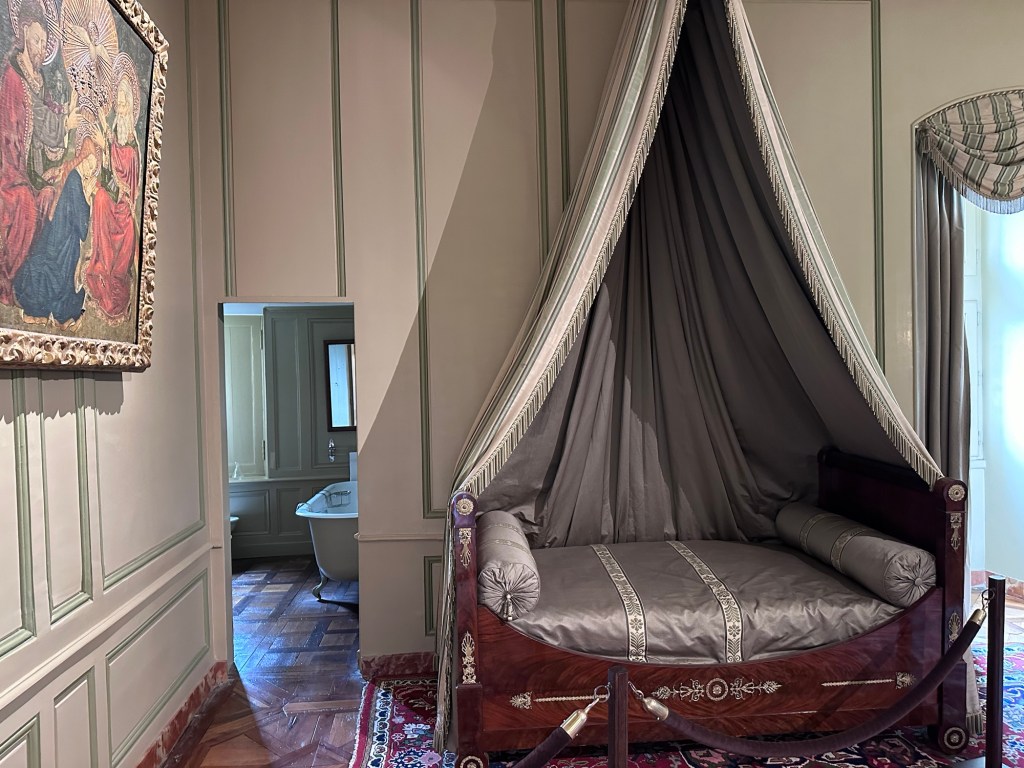
Unlike Fontainebleau, you didn’t walk through one room to get to another, and this one was modernized to include bathrooms off the bedrooms.

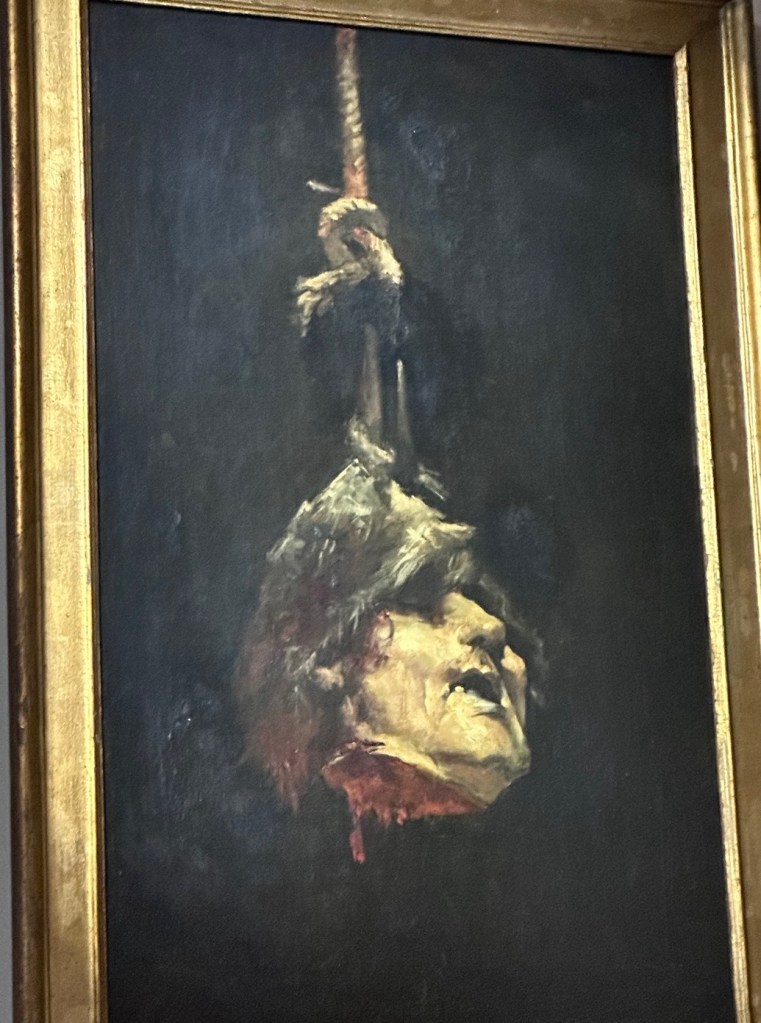
Art from Joachim’s homeland, Spain, was exhibited throughout the chateau. How many museums have portraits of a severed head? Fortunately, this picture was not hanging in a bedroom!

Before we departed Angers, we were able to witness the Olympic Torch being carried through the city.

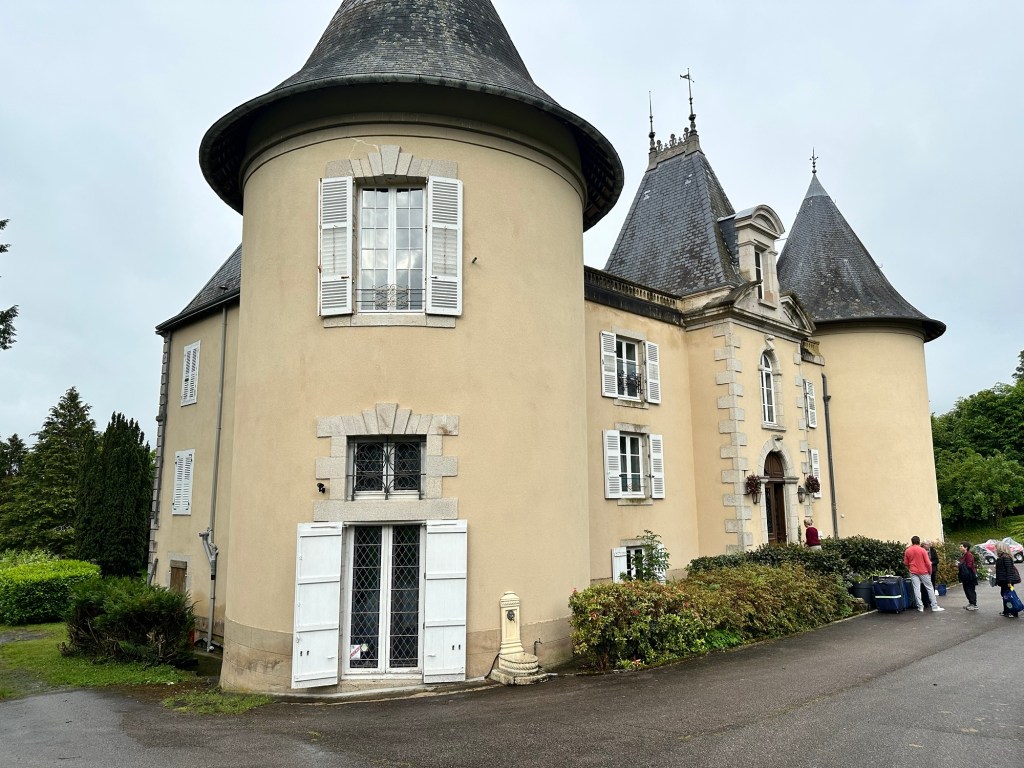
Our luck continued… we got to stay overnight in an honest to goodness, genuine chateau that was built in 1790 by the Duke of Limousin!

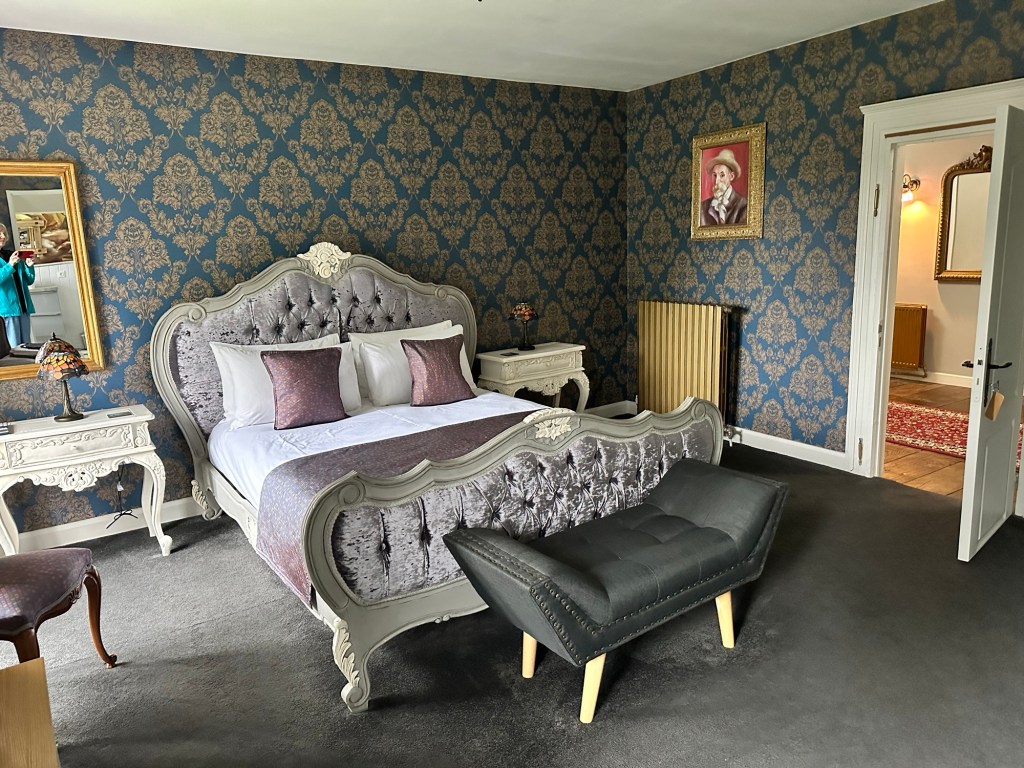
My room was the very comfortable Renoir Suite on the third floor. How gorgeous is that?!

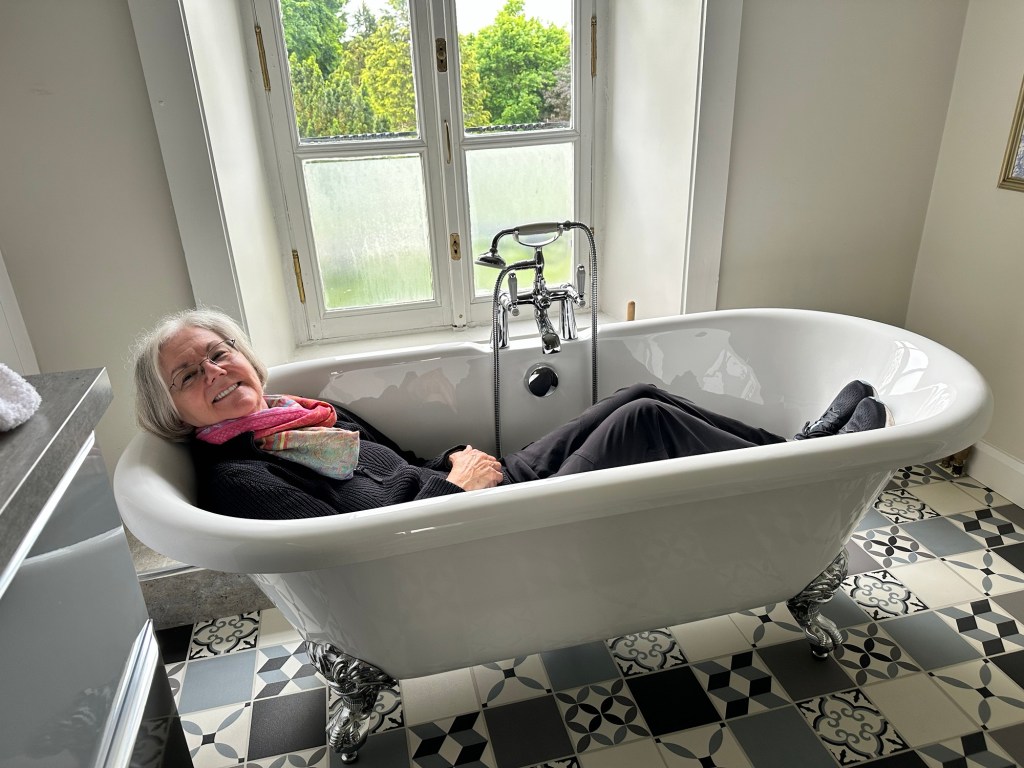
Fortunately, the suite was updated to include walls and a door, plus a modern bathroom with both tub and shower.

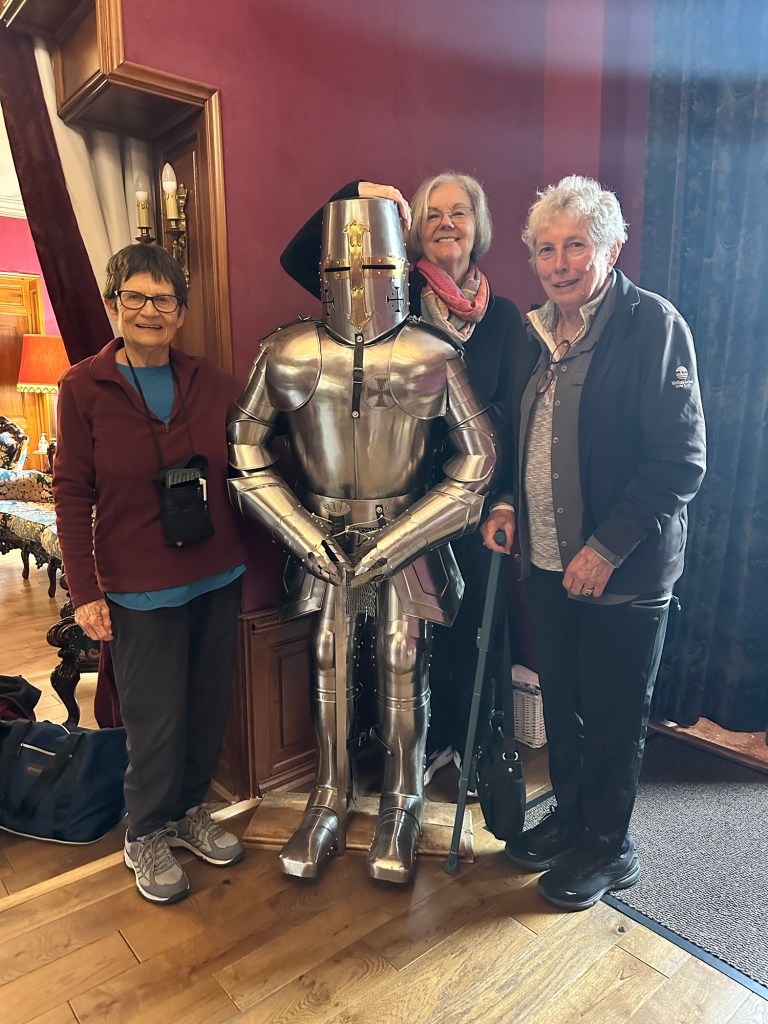
My new friends, Garry and Donna posed with me for a photo with our knight in shining armor. I decided to name him Walter the Bold, although Walter the short would have worked too.

This was our only “one night stand”. We are now on our way to Sarlat, a medieval town known for great food and fine wine.

Kyoto, On Our Own

First, let me say “on our own” is a misnomer. I COULD have been on my own during “free” time, but Mori was working overtime, organizing wonderful activities for us. I will admit, I skipped two evening activities because I needed a rest. (Damn, we were ACTIVE during the day!) I believe the Energizer Bunny’s Team of Renee, Ruth, and Janis did EVERYTHING, but unfortunately they’re not writing this blog, so you’ll only see and hear about the activities I took part in.

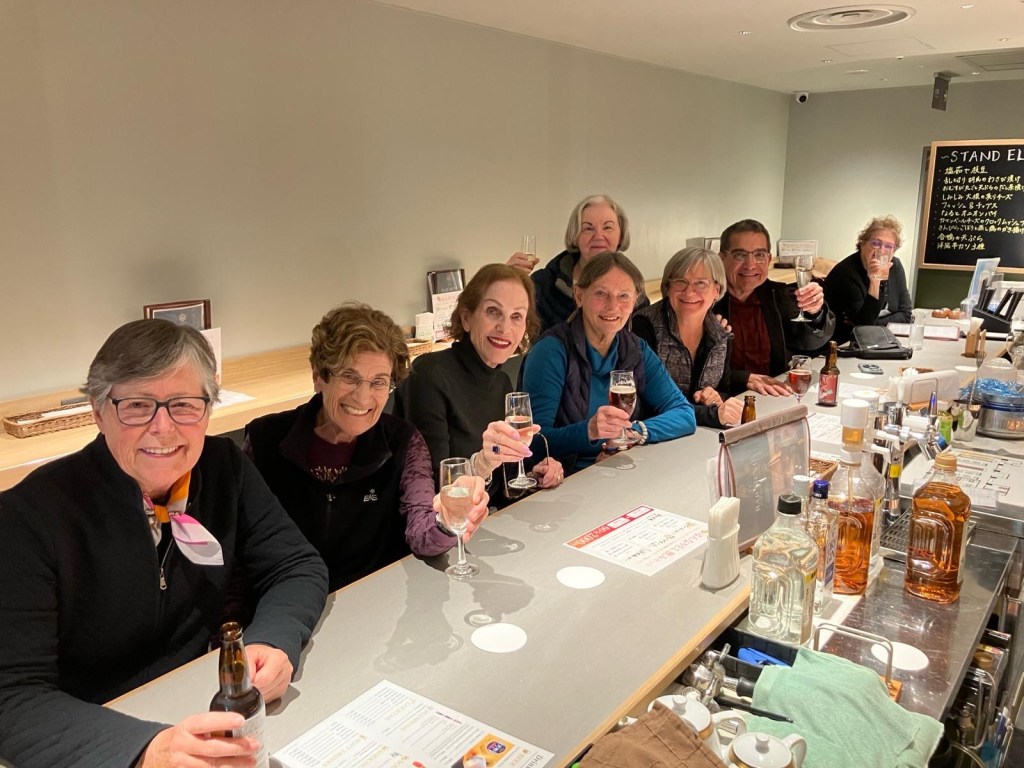
Our first night adventure in Kyoto started in the hotel bar. It was a rainy night, so we correctly figured we needed some fortifications before our tour of the train station.

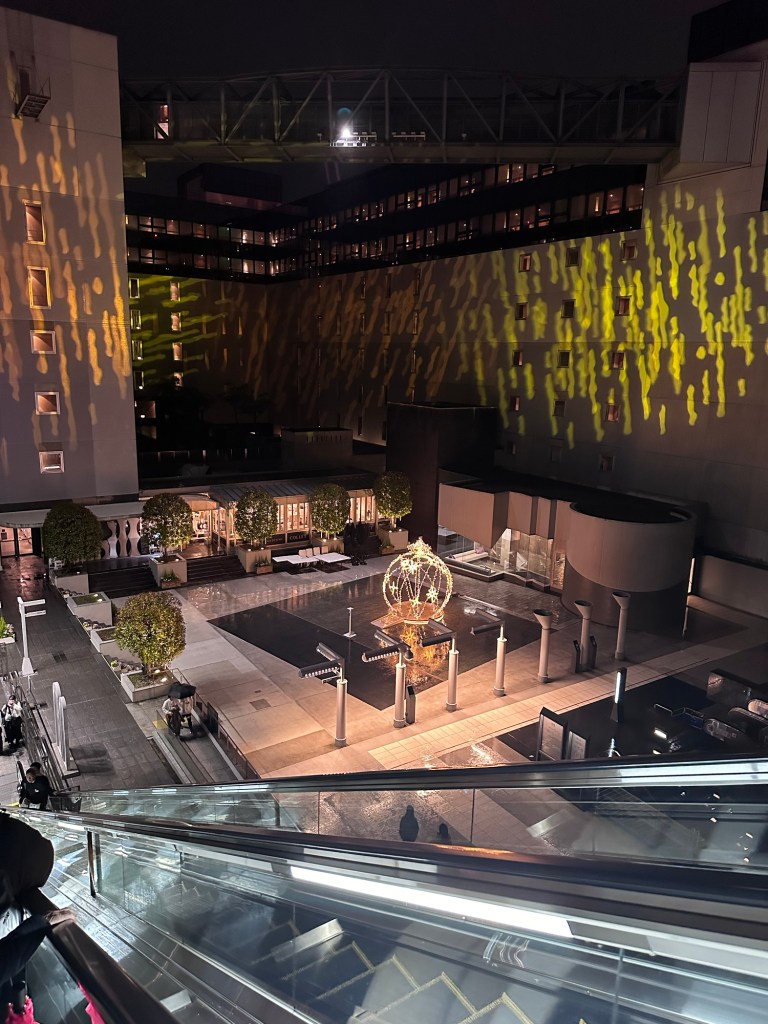
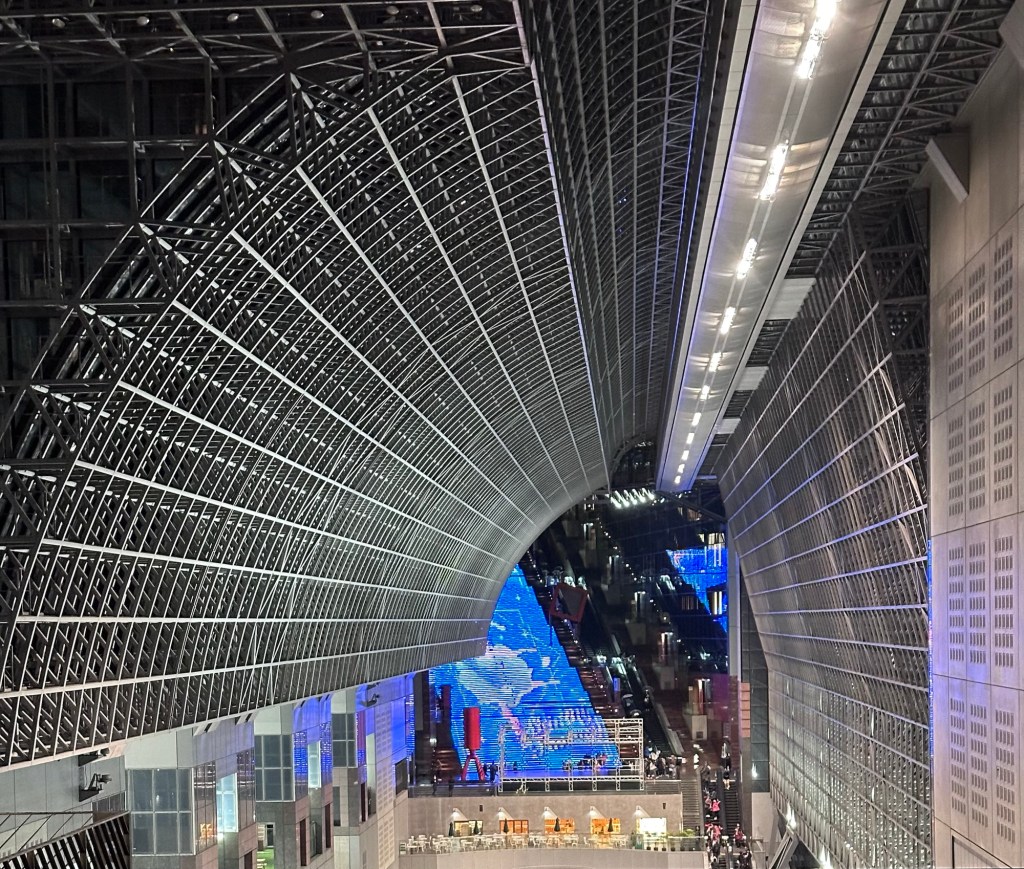
During my lifetime, I have certainly been in many train stations, but never have I seen seen anything quite like this one! The architecture is stunning, the lighting is spectacular—it is a visual feast!

Unlike most escalators, which require you to walk around to the opposite side on each floor, this one went straight up, and parts of it were outside the building.

Notice how clean everything is? No trash ANYWHERE!

We were able to see the Kyoto tower from the covered part of the rooftop. I thought that the raindrops on the window gave the tower an impressionistic feel.

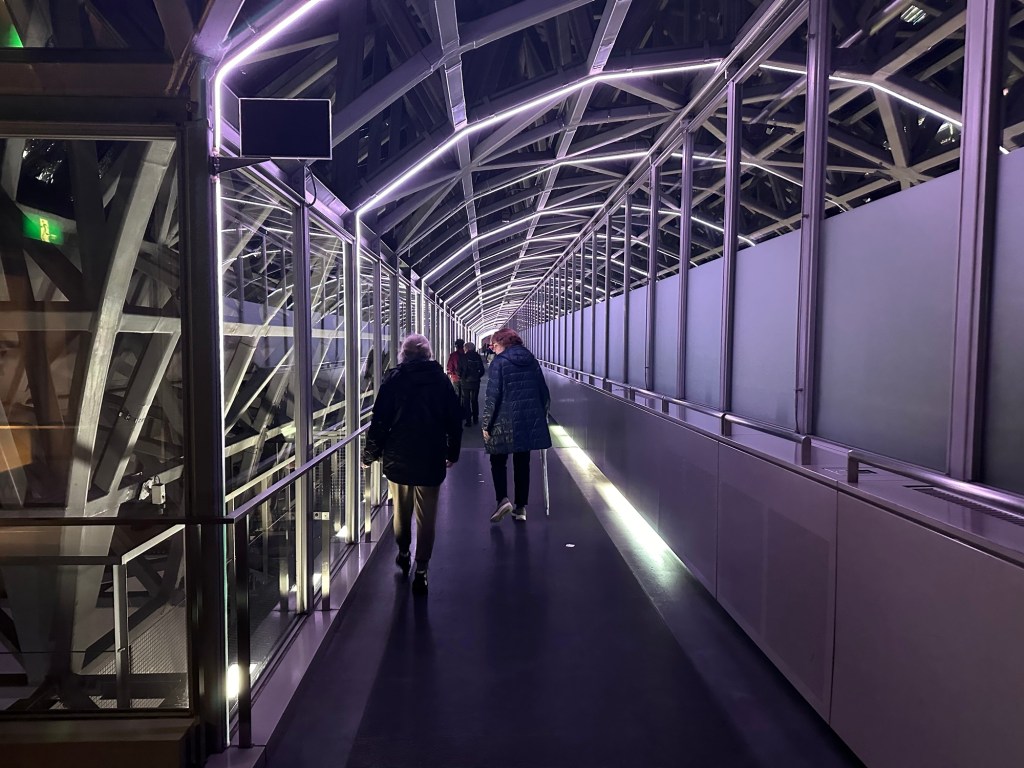
It isn’t obvious from the still photos, but we were treated to a light show as we walked along the corridor.

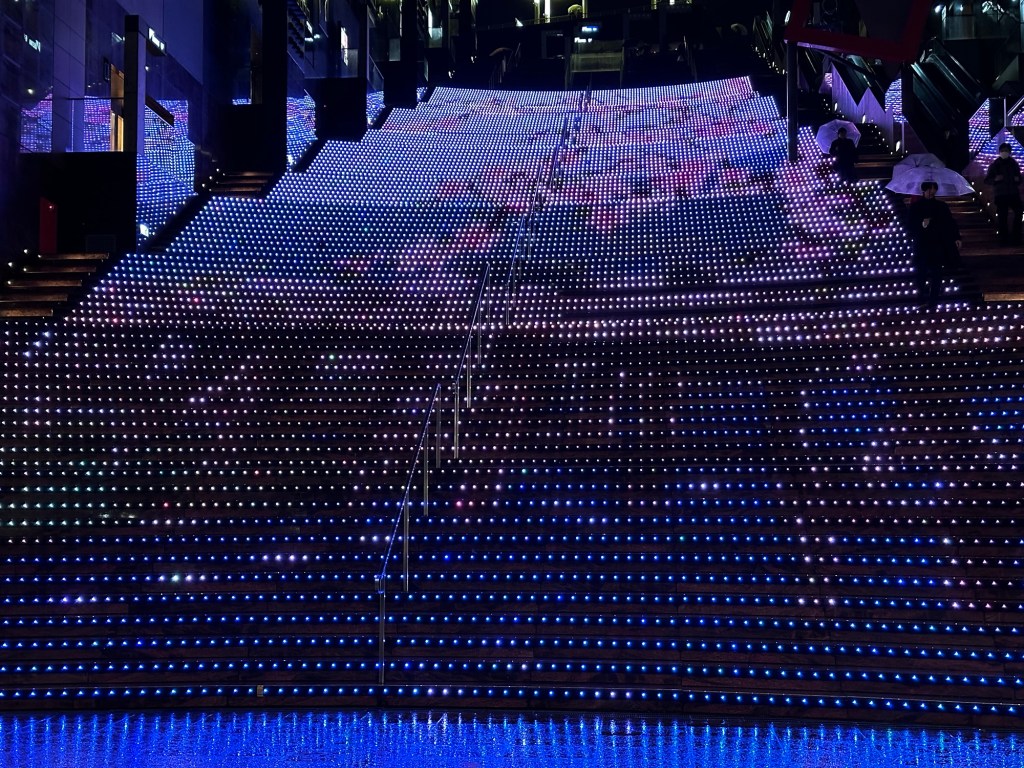
Can you see the two people walking down the stairway upon which images are being projected? Here’s a hint–look for the umbrellas.

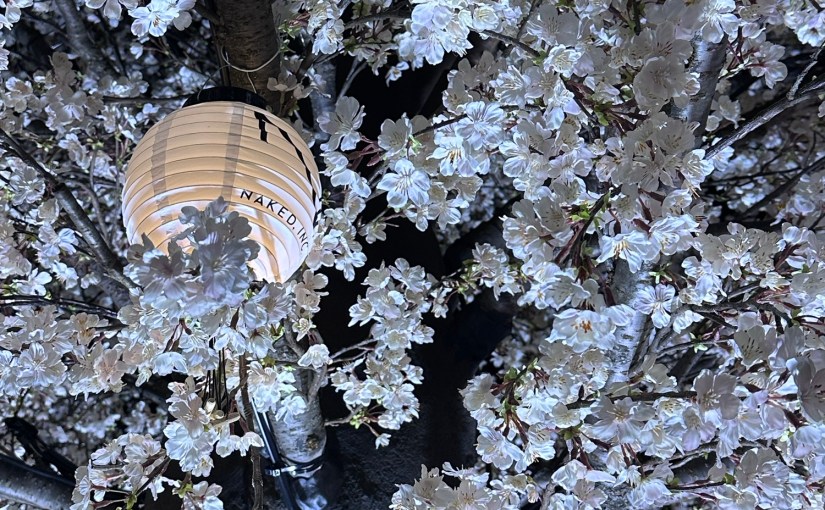
This is the site of one of twenty one immersive multimedia installations created by Naked, a digital art collective. If you want to learn more, check out their website: https://en.japantravel.com/kyoto/naked-garden-one-kyoto/69924

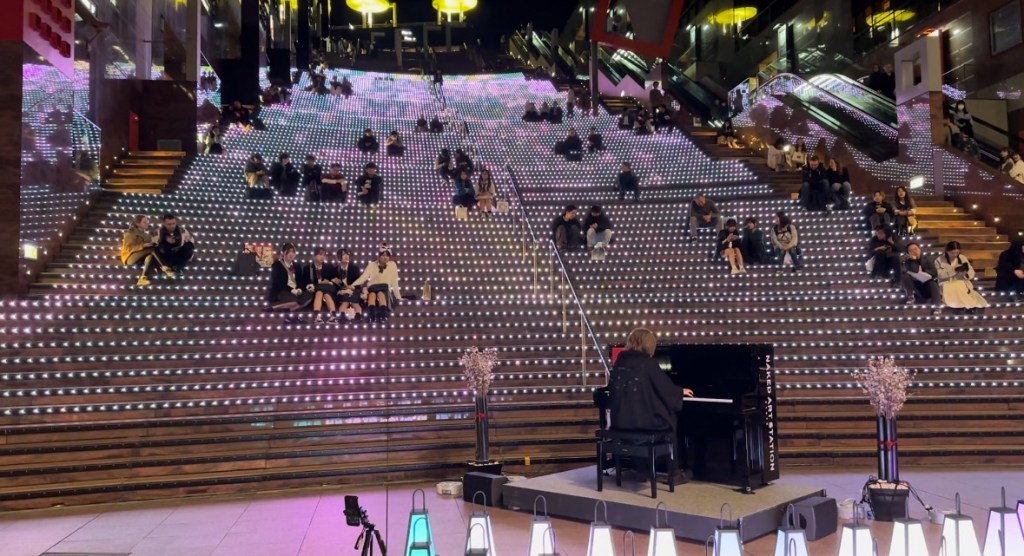
We returned the following night, when the weather was better, to listen to the pianist while we watched the light show. If you would like the full effect, just hop over to YouTube to watch and listen to the video. (Click on the underlined word)

The photo is a screen shot from the video and admittedly is a poor substitute, but uploading a video into WordPress takes forever.

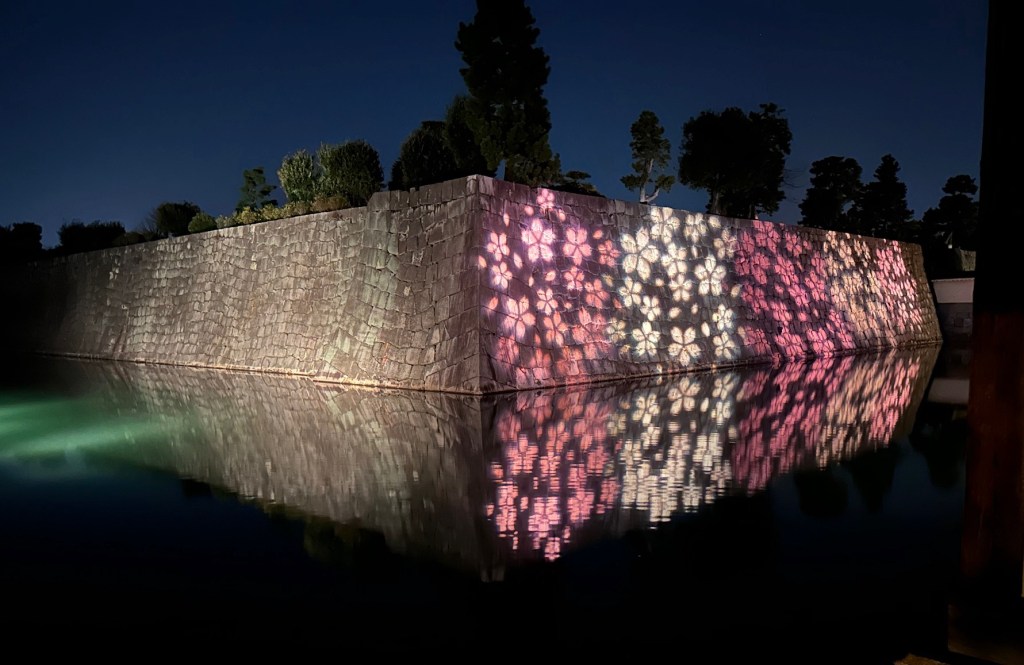
In the previous post I mentioned that Nijo Castle was also a site for a Naked installation, and THIS one was even more sensational!

The castle walls became digital displays with changing graphics. You know the drill: if you want to experience the full effect of the “Naked” show, click on YouTube.

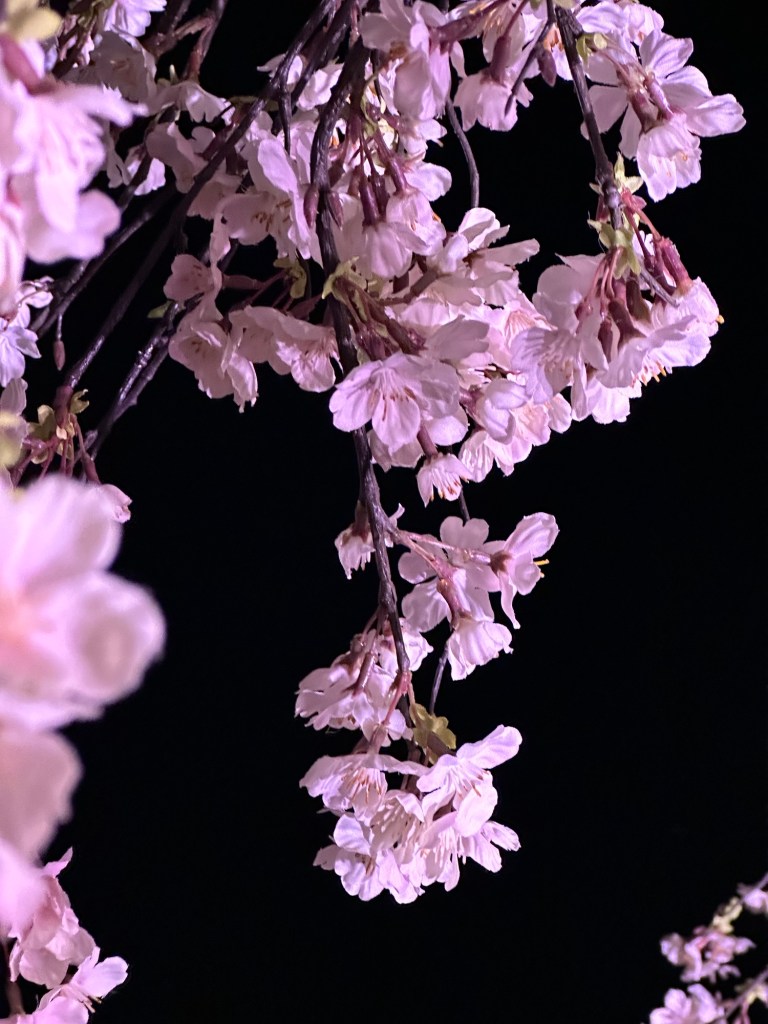
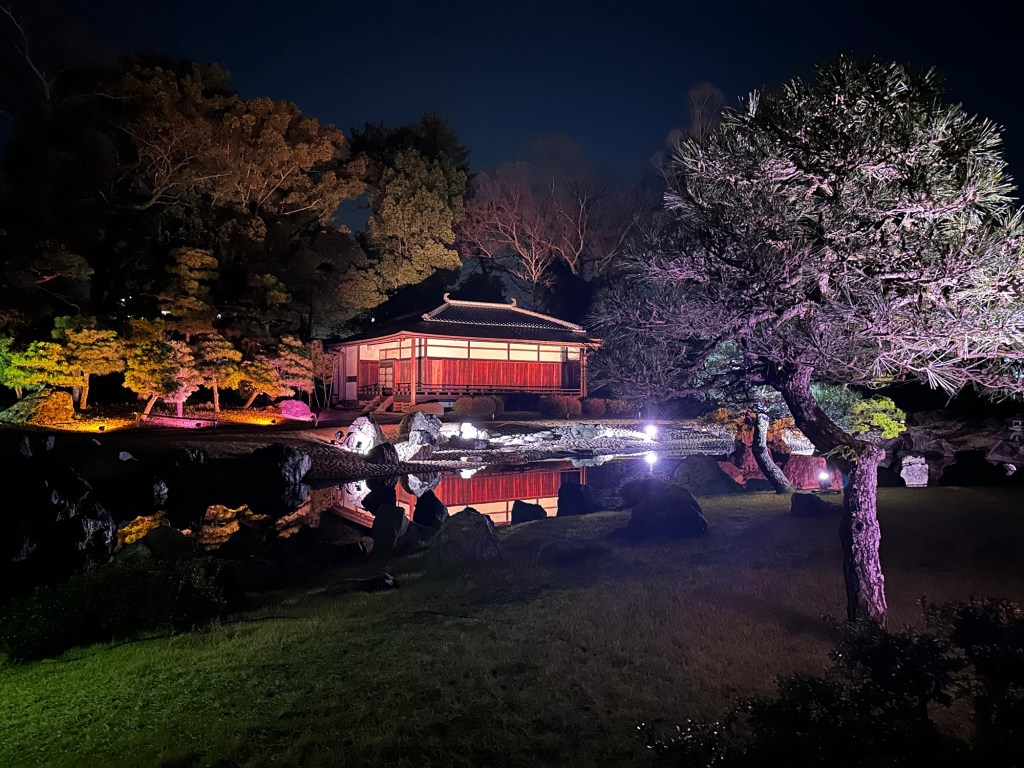
But wait— there’s more! The garden and the buildings were also beautifully illuminated.

There were so many gorgeous sights–it was hard to decide which ones to include in this post.

And if that wasn’t enough, there was even a “ special effects” machine, pumping out fog.

Our extras weren’t just limited to night time activities. We also had adventures with Mori during free afternoons. Sometimes, the bus drivers recommended stops along the way at places they thought we would enjoy.

That’s another wonderful aspect of Japanese culture. People take pride in their work, regardless of what it is. Everyone’s contribution is valued.

Earlier in the trip, we stopped at a store selling fruits and vegetables. On the wall were photos of the farmers who grew the store’s products. Talk about a personalized approach!

Notice the white gloves our bus driver is wearing and how he is dressed?

This particular driver suggested these two additional stops enroute to a planned activity. I won’t bother with the names of the temples because they are long and totally forgettable, at least by me. But what is seared into my brain are the temple grounds with its flowering trees.

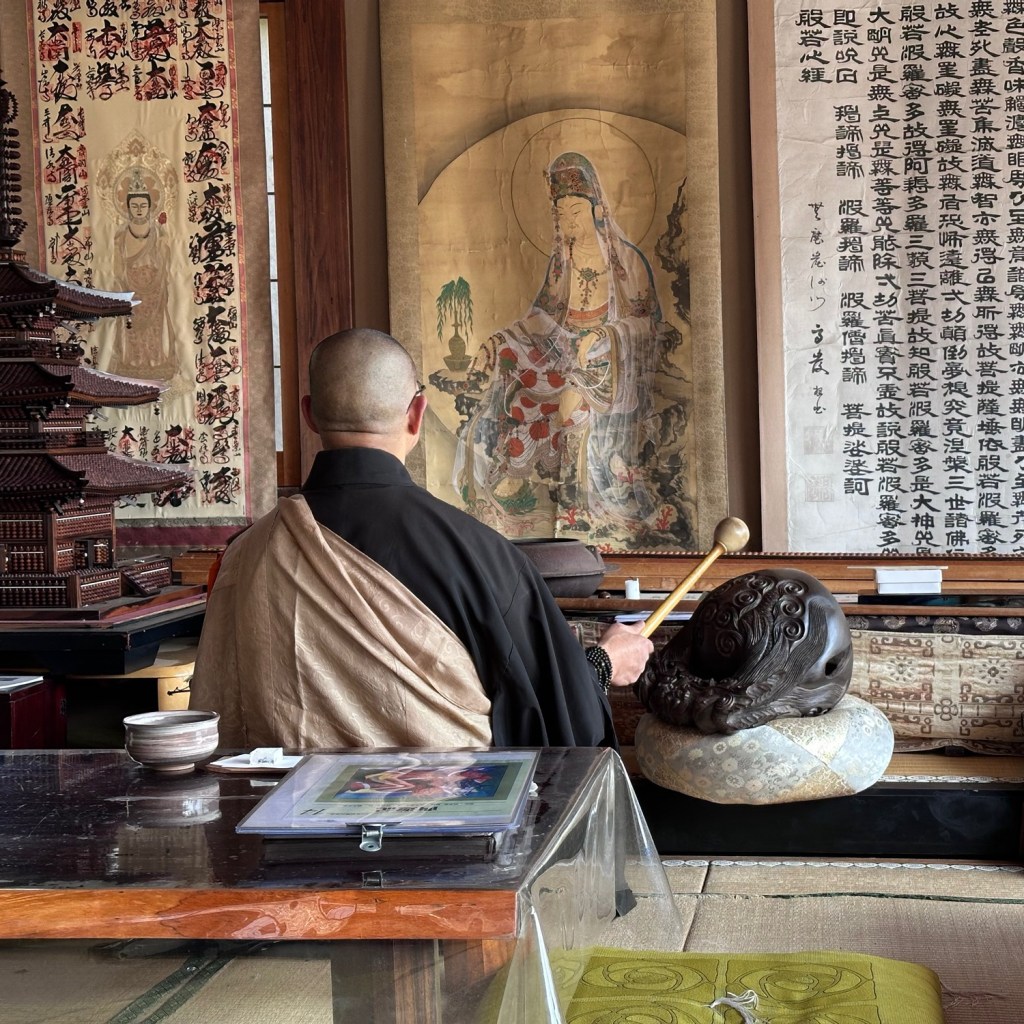
We didn’t have time to participate in the Buddhist ceremony, but I peeked inside and was impressed that they thoughtfully provided chairs for those unable to sit on the floor.

The second temple contained 1001 statues of the Buddhist Deity Kannon. What is interesting is that all of the statues are slightly different, which initially led me to believe that the statues represented DIFFERENT Buddhas. Then I read the brochure.

Here’s what else I learned. 124 of the statues were made in the 12th century, when the temple was founded and the remaining 876 were made in the 13th century when the temple was renovated. The statues are all made of Japaneses cypress, so I’m guessing they have been covered with gold leaf.

We weren’t allowed to take photos inside the temple, but hanging on a wall outside was this poster,

which will give you a very rough idea of what the temple was like. It was slightly longer than a football field (According to the brochure, the length is 120 meters, for those of you fluent in metric). We walked in front of the statues, along a PACKED narrow corridor. It wasn’t tragic that I couldn’t take a photo inside–it would have been an impossible shot anyway.

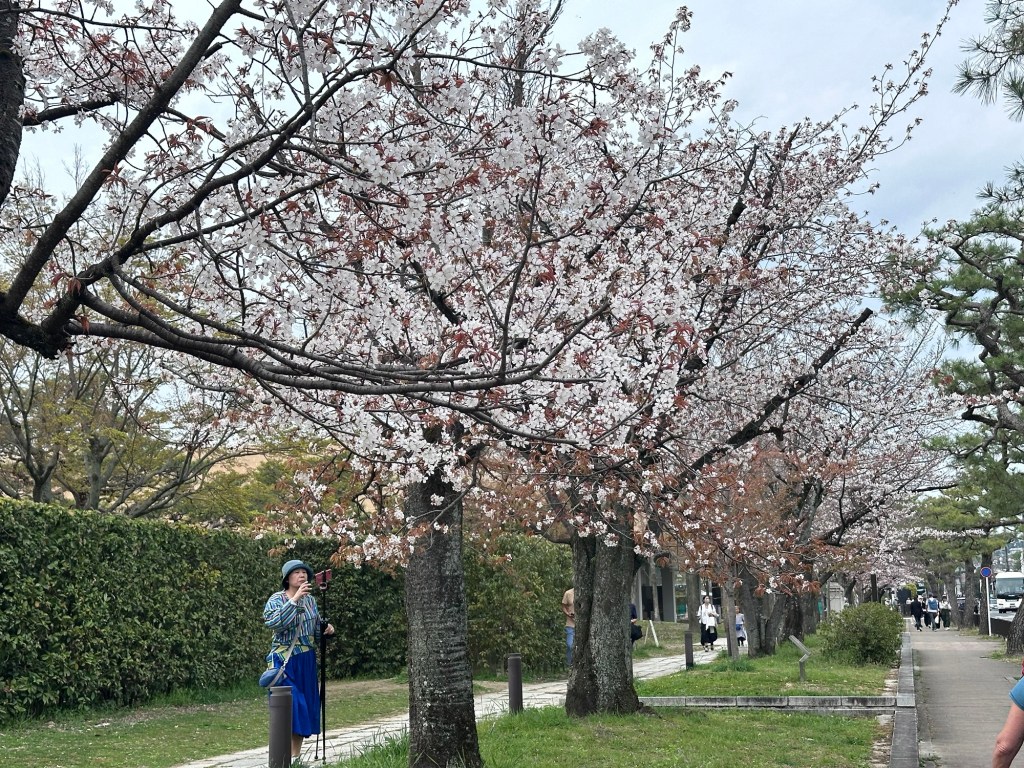
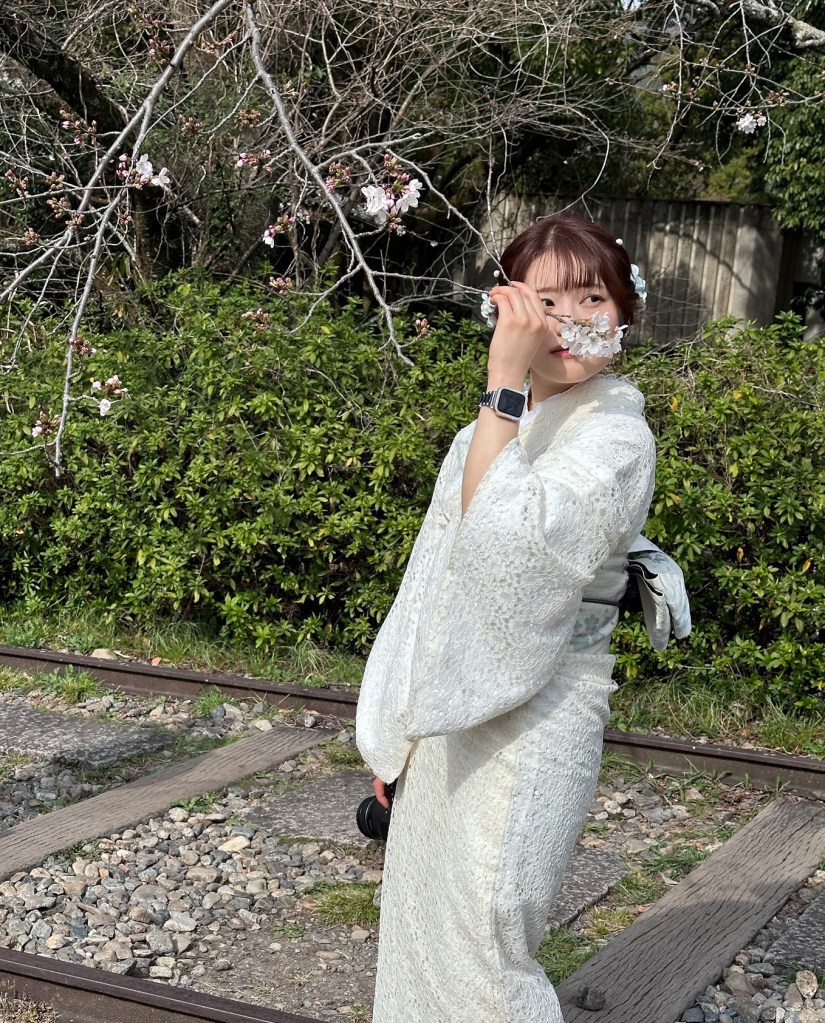
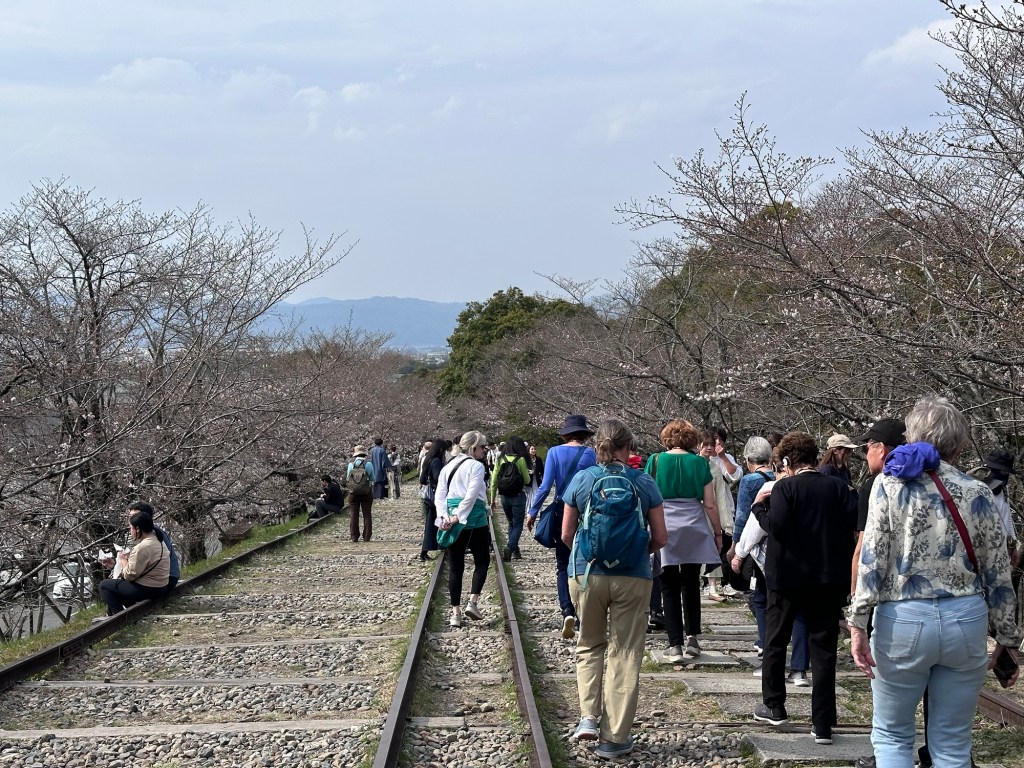
On our last afternoon in Kyoto, we set out for the Philosopher’s Path. Although we never made it there — we got a little lost– we instead had a had a delightful adventure, walking along an old railroad track, during which we saw an abundance of blooming trees and Japanese taking advantage of the photo ops the beautiful day offered.

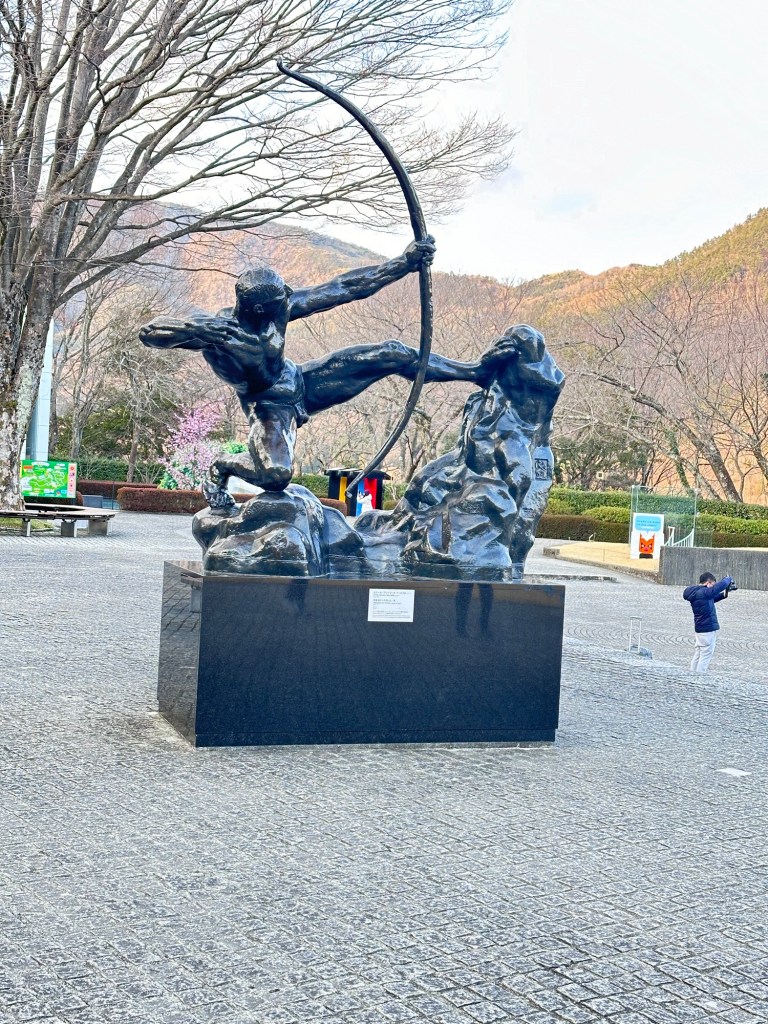
As Mori was trying to figure out how to get us back to the hotel, some of us wandered around and discovered this rather unusual sculpture in front of one of the art museums. Sorry, there wasn’t enough time to figure out what it was trying to communicate, but then, it is ART. It can be anything you want it to be.

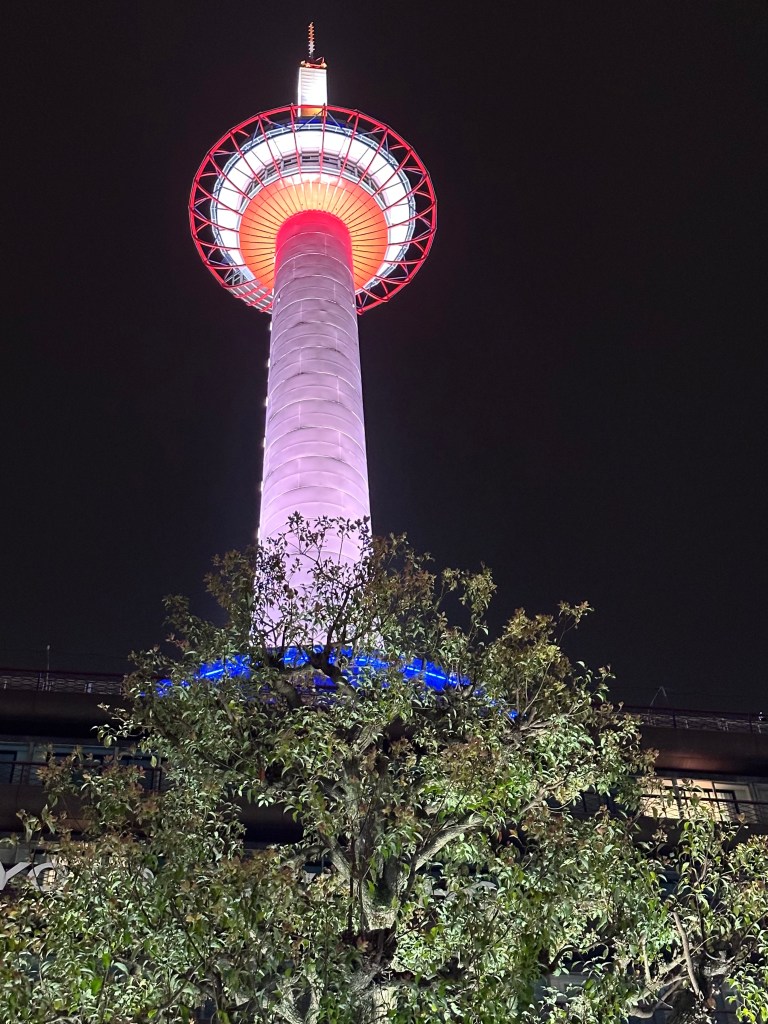
Next stop: Hiroshima, for the ten of us taking the post trip, but before we leave, here’s one last photo of the Kyoto tower when it WASN’T raining.

OAT’s Kyoto Itinerary

There was so much to see and do in Kyoto, I decided Kyoto required two posts. This one describes the “official” OAT activities. The next post is all the “extras” sweet Mori made sure we experienced.

After Covid cancelled my 2020 Japan trip, I comforted myself with an on-line “tour” of Kyoto. From that, I got the mistaken impression that Kyoto was a rather compact city with all of the sights clustered together.

I was TOTALLY unprepared for how big Kyoto is and how scattered the points of interest are.

My iPhone photos will give you a rough idea of how much ground OAT’s itinerary covered during our 5 day stay. I was very grateful that Mori handled all of the logistics.

The Shinkansen brought us swiftly and smoothly to Kyoto. Because we had ridden the bullet train from Tokyo to Kanazawa, we were familiar with the drill: you pack a small overnight bag to tide you over until the larger luggage ( which was shipped) arrives a day later. The bullet train is super comfortable, but storage space is quite limited.

I was glad that I was traveling with only a backpack, because unlike our arrival in Kanazawa, in Kyoto we had to swim through an ocean of humanity to get through the train station.

I’m wondering what was easier to follow—Taco, or my gray head sticking up above the crowd.

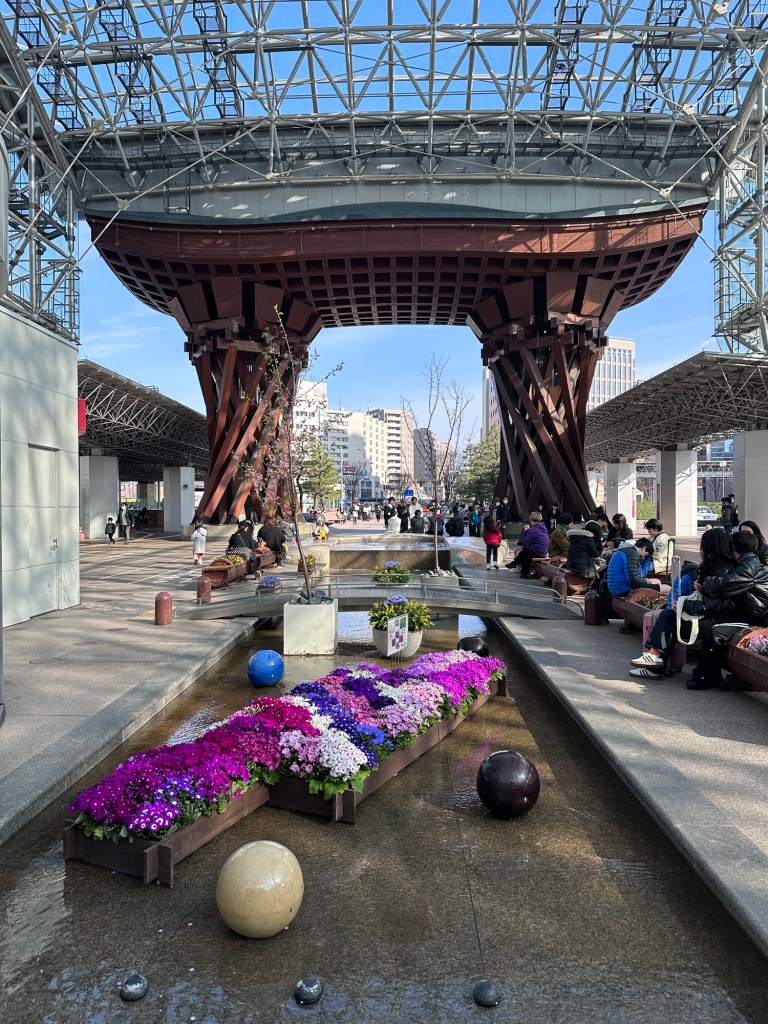
What a multisensory extravaganza the Kyoto train station was! We were bombarded with sounds, sights and wonderful smells, but as you’ll see in a later post, it is even more thrilling at night, so no more daytime station photos.

But first, here’s a whirlwind tour of my favorite things on OAT’s itinerary, which successfully hit Kyoto’s traditional hot spots.

The majestic Arashiyama Bamboo Forest

It is hard to describe the peaceful feeling one gets while walking through these towering plants.

Cemetery beside the bamboo forest

The Tenryu-ji Temple

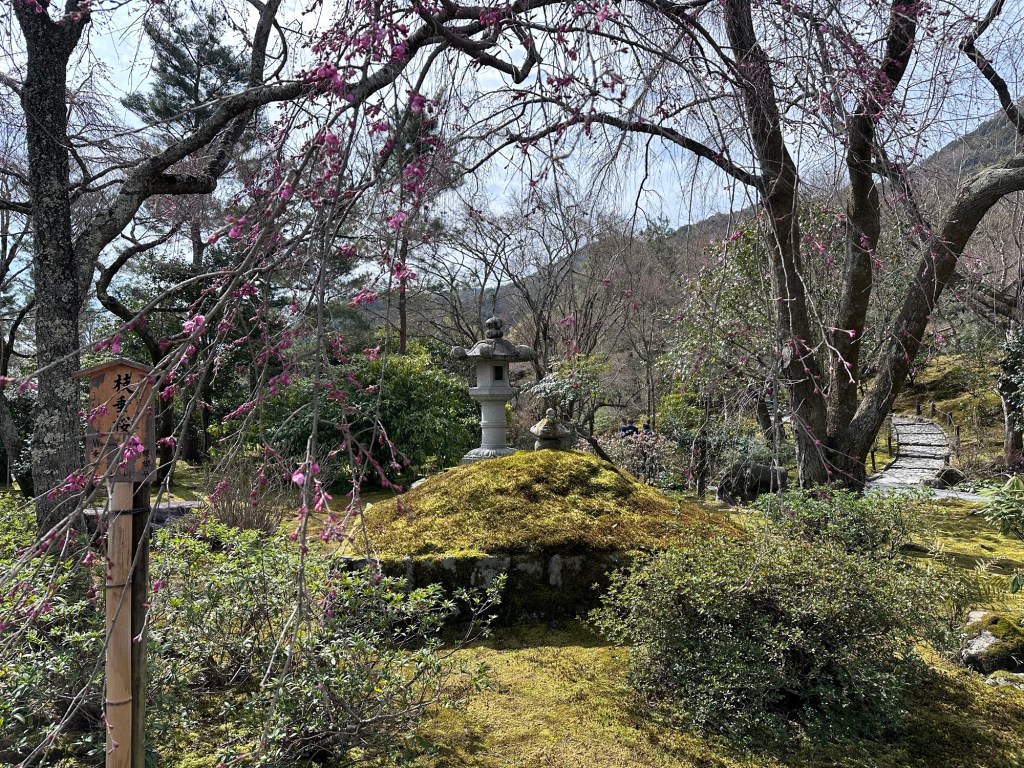
A brief stroll away from the forest was a beautiful garden and Buddhist temple. We were so excited to see the cherry blossoms were starting to open.

I managed to pitch a coin right into the ring in front of the frog. I keep making the same wish. One of these times it should work.

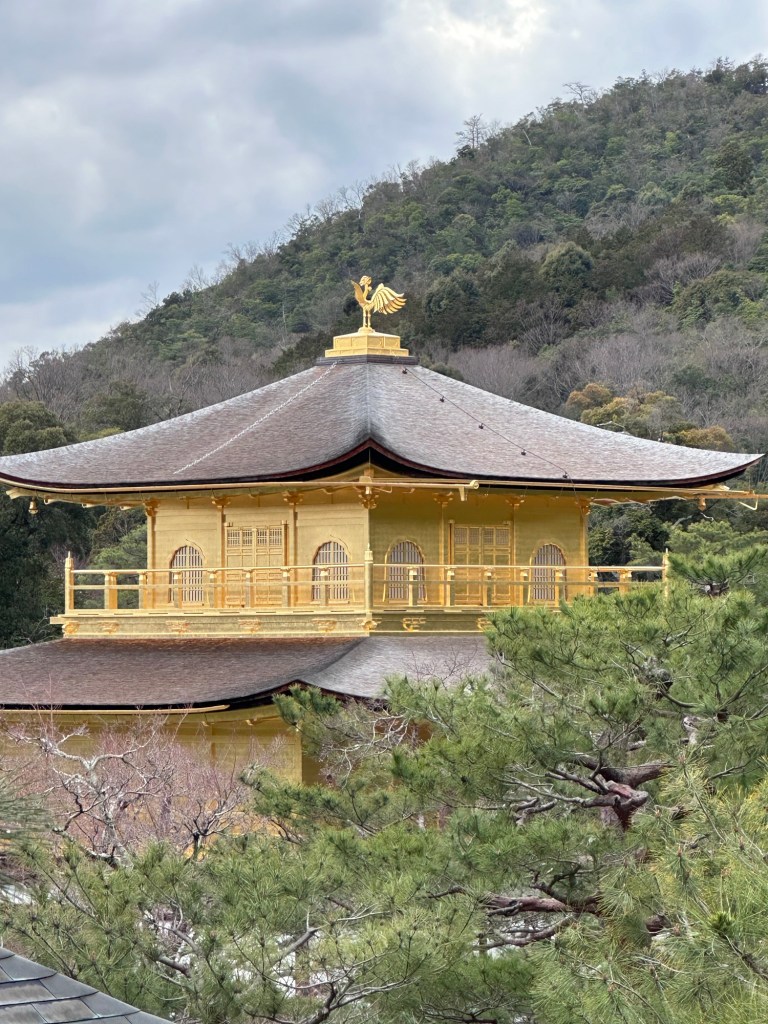
Kinkaku-ji Temple (Temple of the Golden Pavilion)

The original temple was constructed around 1400, but was rebuilt in the 1950’s after it was burned to the ground by a crazed monk.

Wasn’t it fitting that the phoenix atop the temple was the only part of the original that managed to arise from the ashes of the burned building?

Nijo Castle

We toured the interior of Nijo Castle, but we weren’t allowed to take photos. That’s okay. I found the exterior far more compelling—especially at night (and yes, you are going to have to wait for a future post to see how glorious it is).

Nara

India has its sacred cows; Japan has its deer.

Kathleen is bowing to the sacred deer

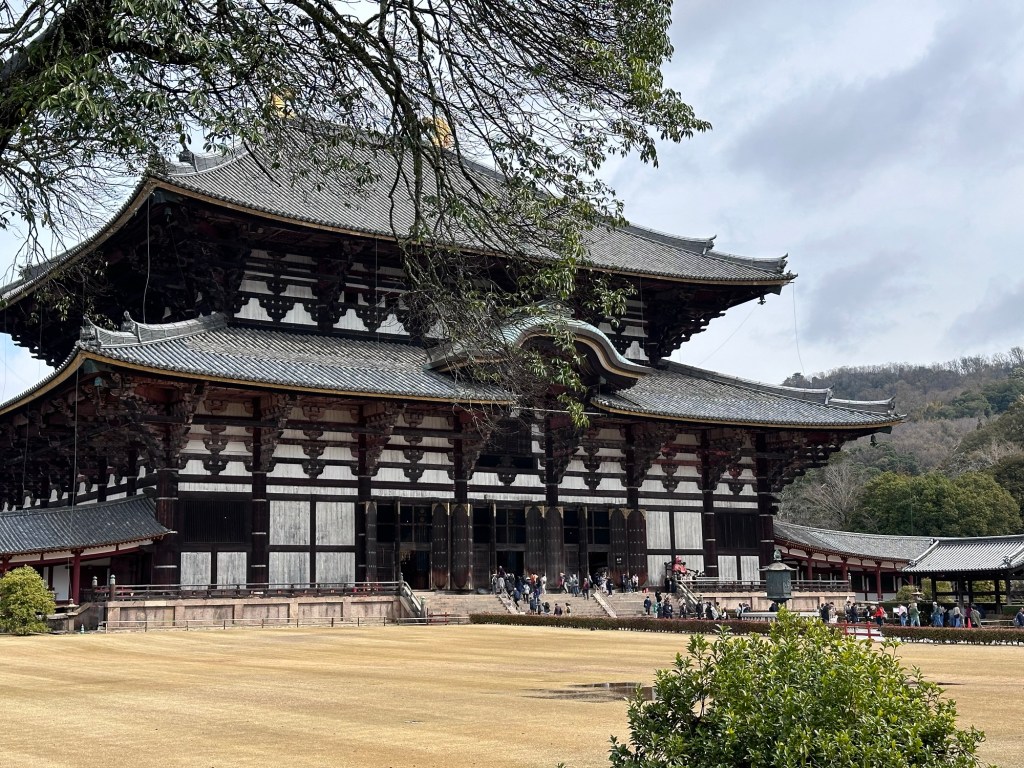
Todaiji Temple

This is the home of the world’s largest wooden Buddha.

He was so enormous, it was difficult to photograph him. Besides, we’ve all seen Buddha photos.

As you may have noticed from earlier posts, I’m rather fond of the Guardians. Even though this one has a fierce facial expression, he’s holding a scroll and pen, so how scary can he be? Maybe his message is “the pen is mightier than the sword”?

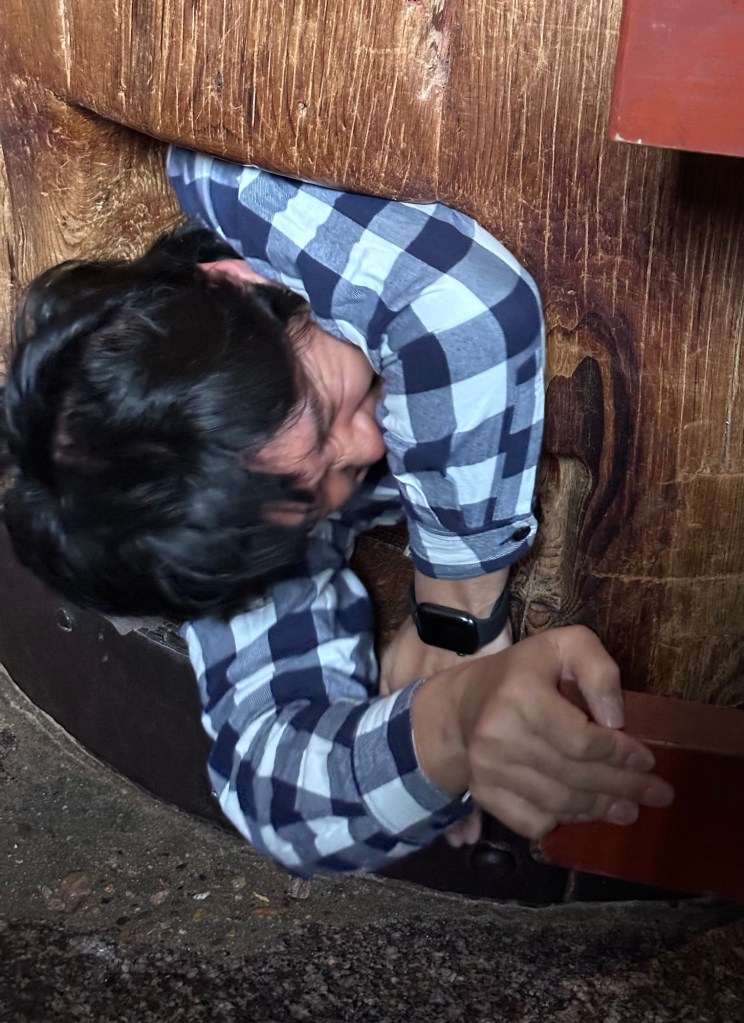
This next photo requires an explanation, but first take a look and see if you can figure out what is happening.

There is a wooden block in the temple, with an opening that supposedly is the size of Buddha’s nose (the statue, not the human). The belief is that anyone able to squeeze through Buddha’s nose (or the passage) would have a good life. I’m pleased to say that although he initially struggled, Mori made it thru.

Zen Temple

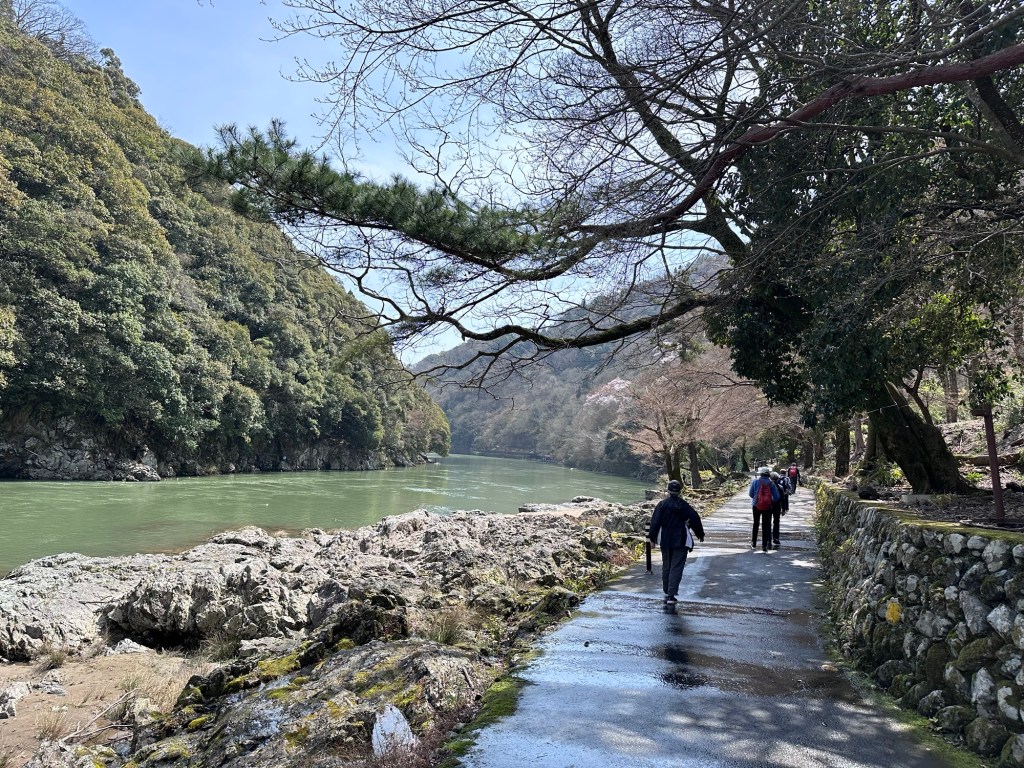
After walking alongside this beautiful river, we climbed 200 steps ( I didn’t count; I took Mori’s word for it) to meet a zen master, with whom we meditated.

We left, totally at peace, feeling “zero”. It’s fortunate that l learned to let go, because that hat on my head and I were soon to go our separate ways.

Fushimi Inari Shrine

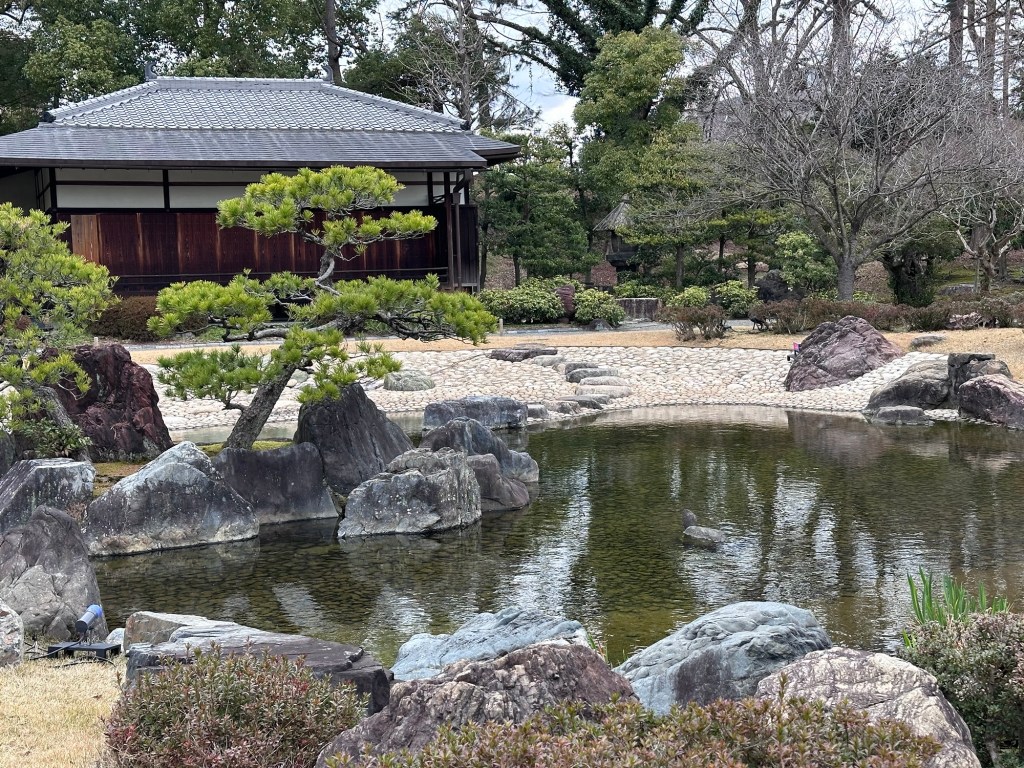
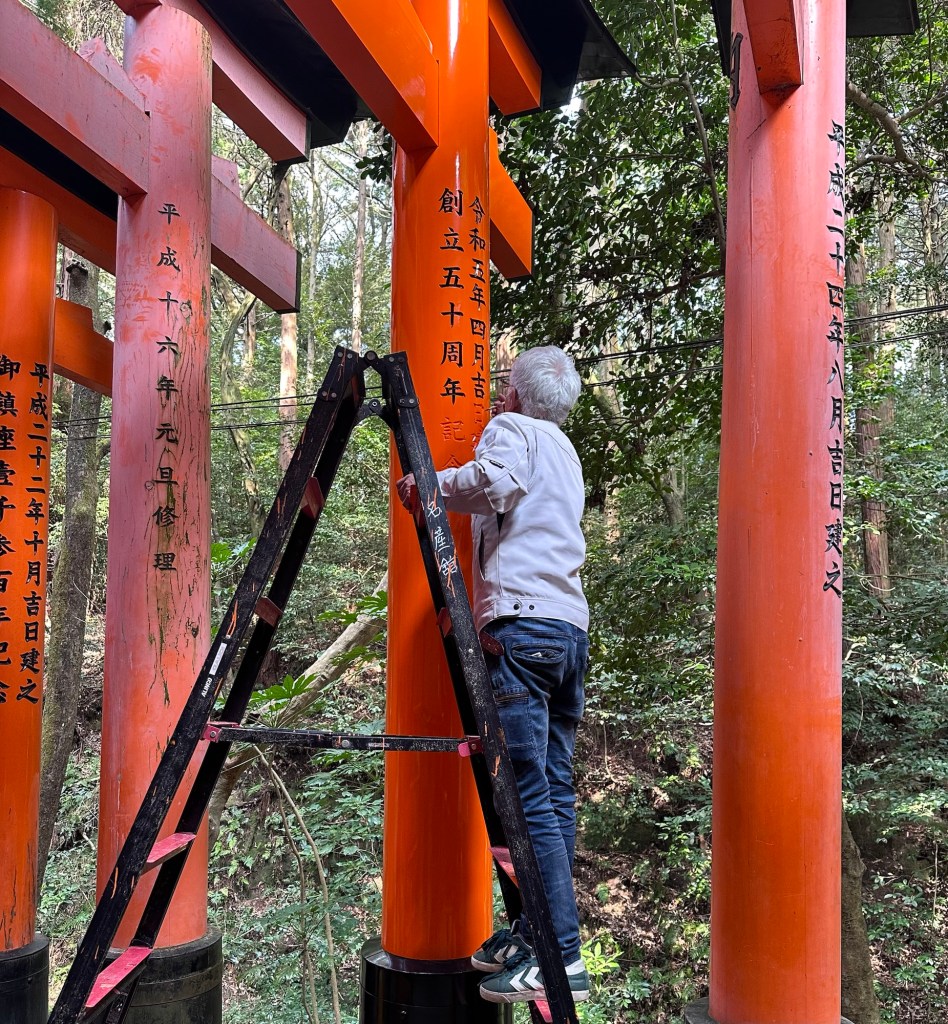
After experiencing Buddhism, we moved on to the famous Shinto shrine with its beautiful vermillion Torii Gates.

We didn’t have time to climb to the top, so this map will have to suffice to give you an idea of the immensity of the shrine.

When Christo did “The Gates” in NYC’s Central Parking 2005, Mike and I spent an enjoyable February afternoon strolling through them. Could Christo have gotten his inspiration from Japan? I think he did.

Sushi Making

I will say up front that raw fish wrapped in seaweed does not meet my definition of delicious. Still, I was determined to keep an open mind. I was quite happy to learn that we had a vegetable option.

My son Greg would have loved the discussion about knives and whet stones.

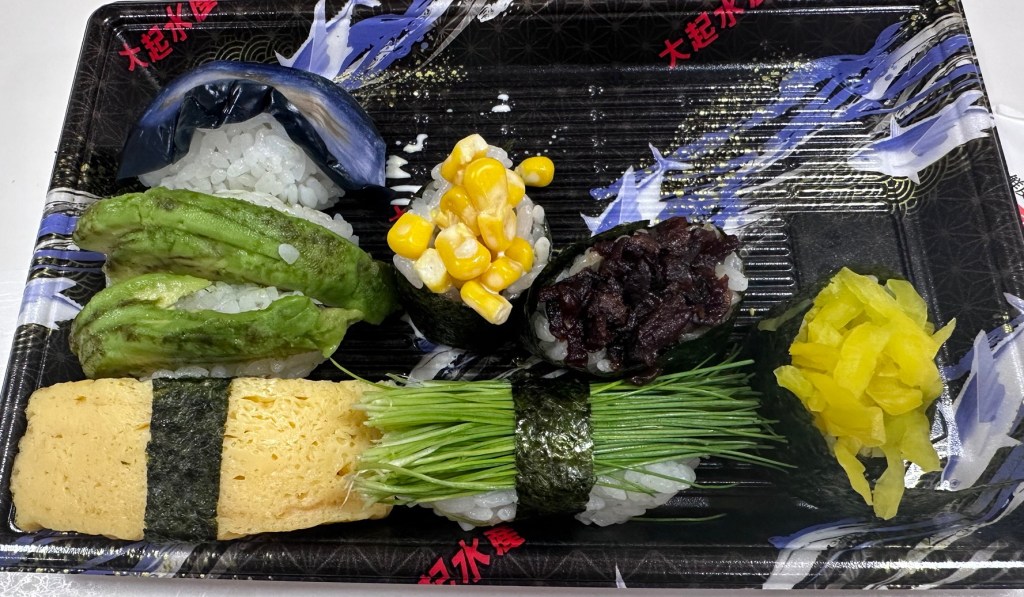
Okay, so maybe it didn’t look like much, but it sure was tasty.

What better way to end this post than with a photo of a beautiful blossom…

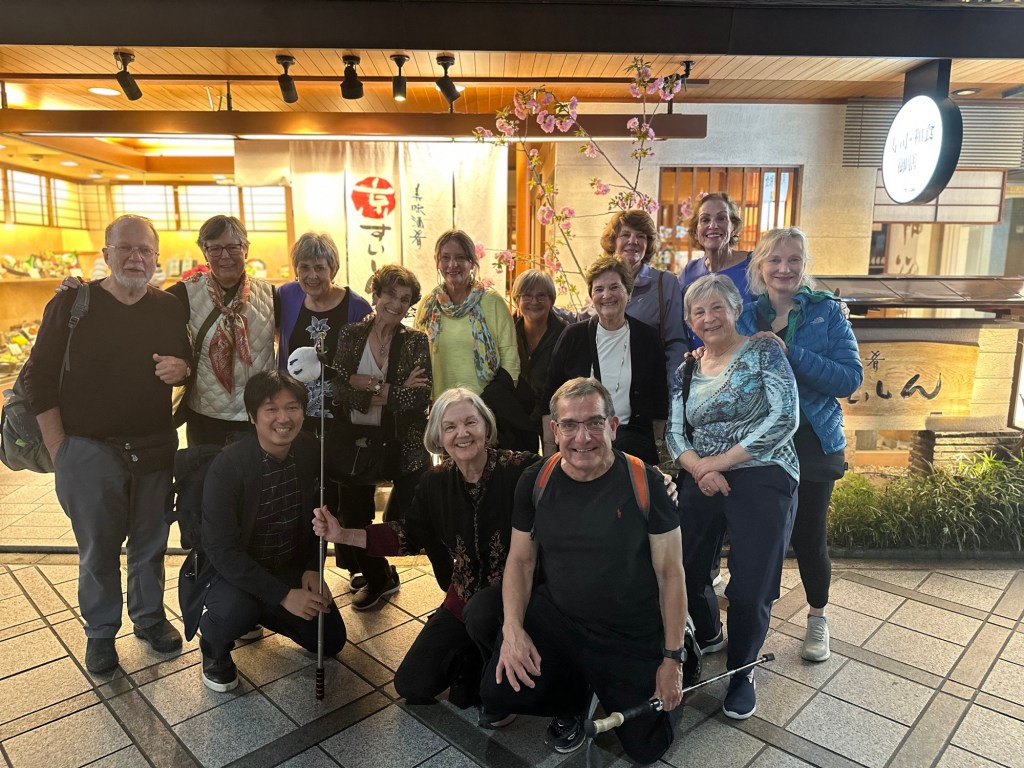
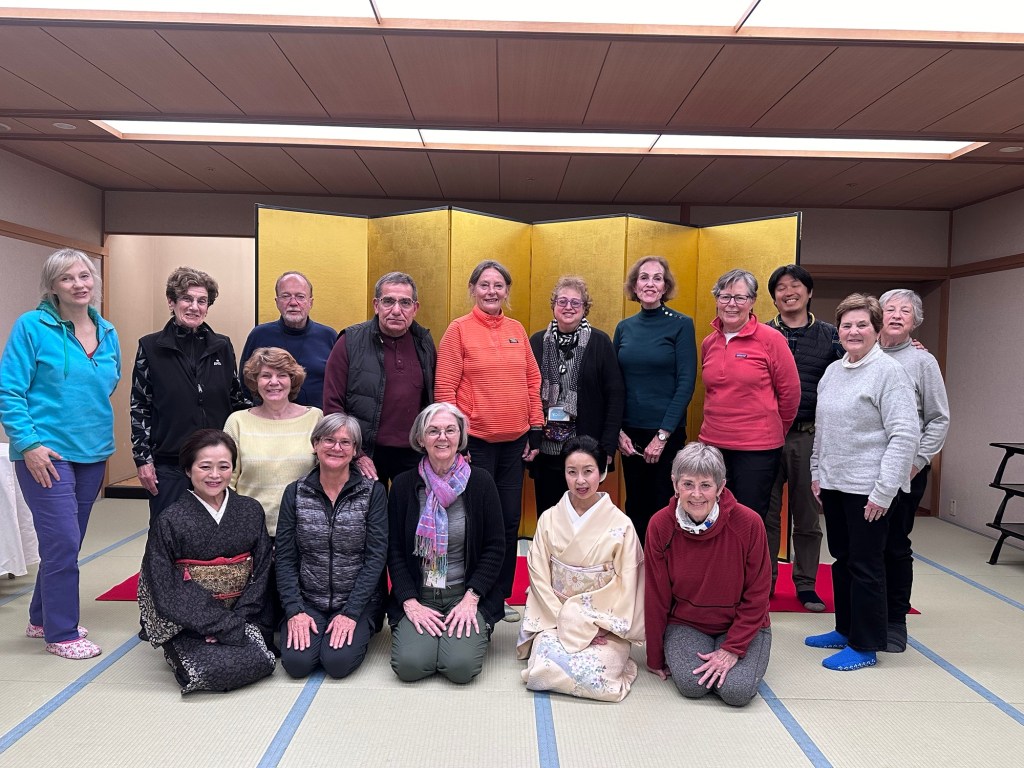
and a group shot taken after our farewell dinner. Sadly, Mary, Jim, Kathleen and Cathy, weren’t joining us on the post trip to Hiroshima.

Three Nights in Kanazawa

Initially, I expected to do one post for both Kanazawa and Kyoto. I had never heard of Kanazawa before, so hadn’t realized how much there was to see in that lovely little town. Everywhere I looked, there was something that was jaw dropping gorgeous.

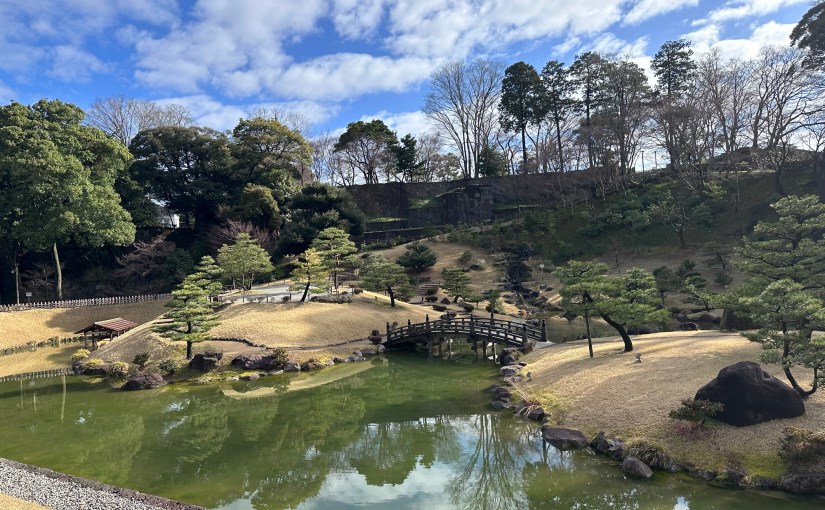
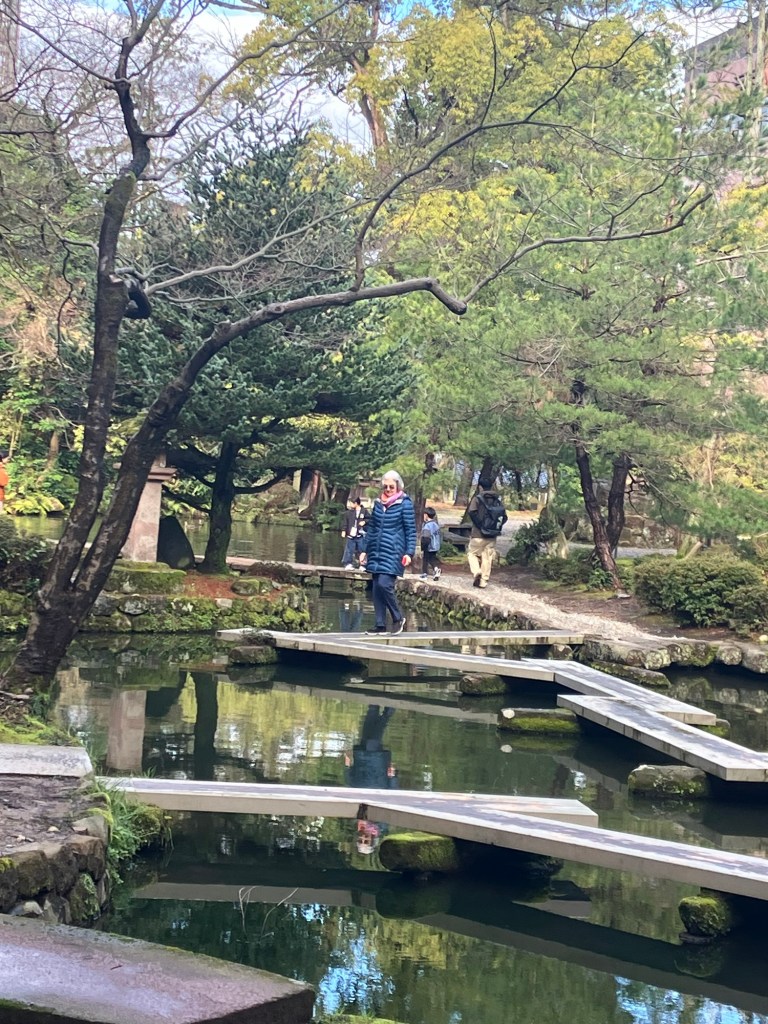
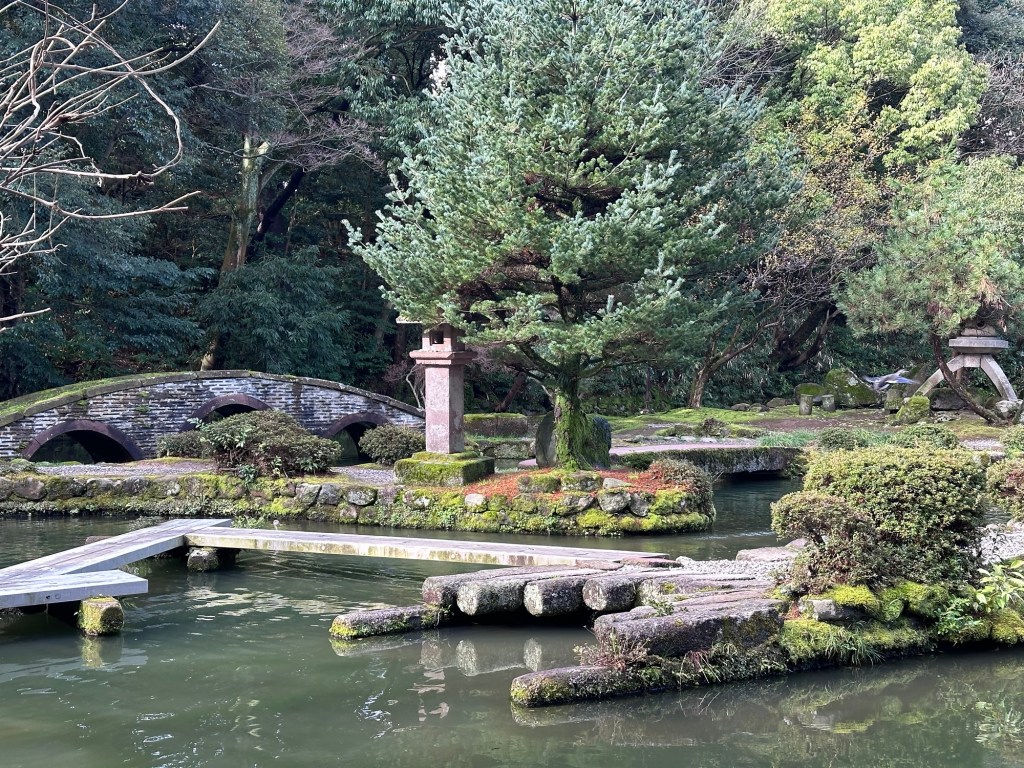
It was raining off and on, but that minor inconvenience didn’t dampen our enjoyment of the beautiful Kenrokuen Gardens.

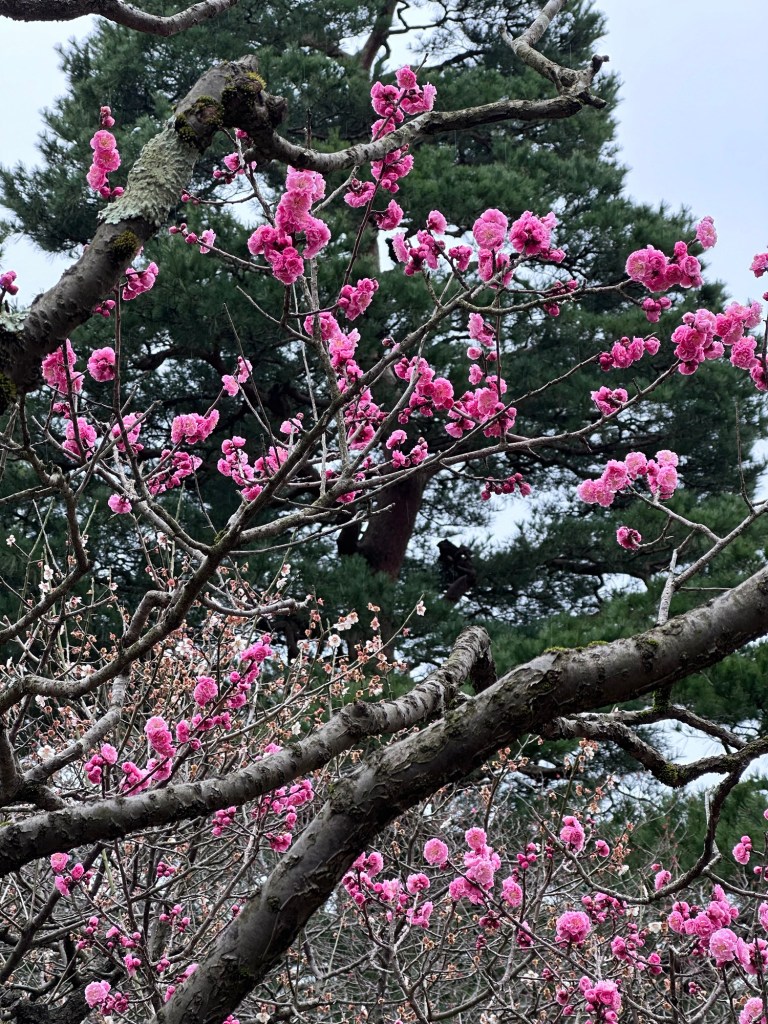
Although it was too early for Kanazawa’s cherry blossoms, the plum trees were a brilliant rosy pink, contrasting nicely against the gray skies.

We realized how lucky we were to view the gardens with such perfect lighting. A sunny day would have washed out the contrast.

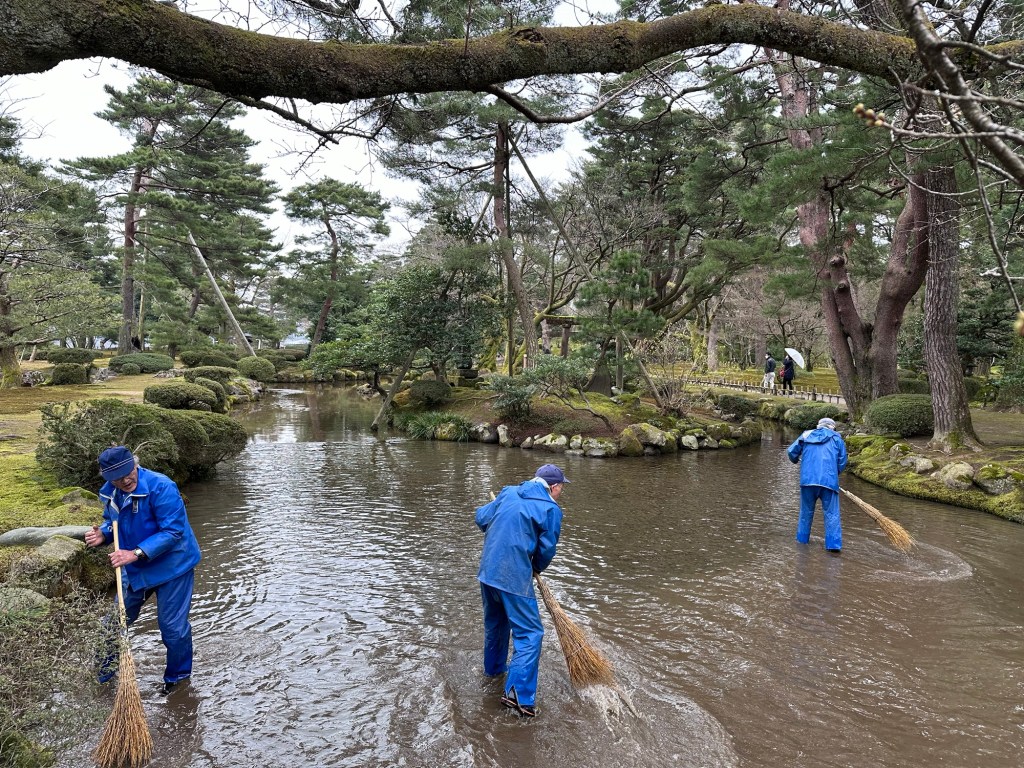
How does it stay so pristine, you ask? Different cultures have different priorities. The Japanese value beauty, harmony, and cleanliness. Shared spaces are important to them. As you can see, their resources align with their values.

We are lucky that photography is one of Mori’s interests. He was always scouting out great locations for group photos.

One of the many things I love about our group is the way we all look out for each other. Notice how Mike and Bobbi are making sure Cathy doesn’t fall off the bridge. At least I think that’s what they were doing. Either that, or their attempt to push her into the water was unsuccessful.

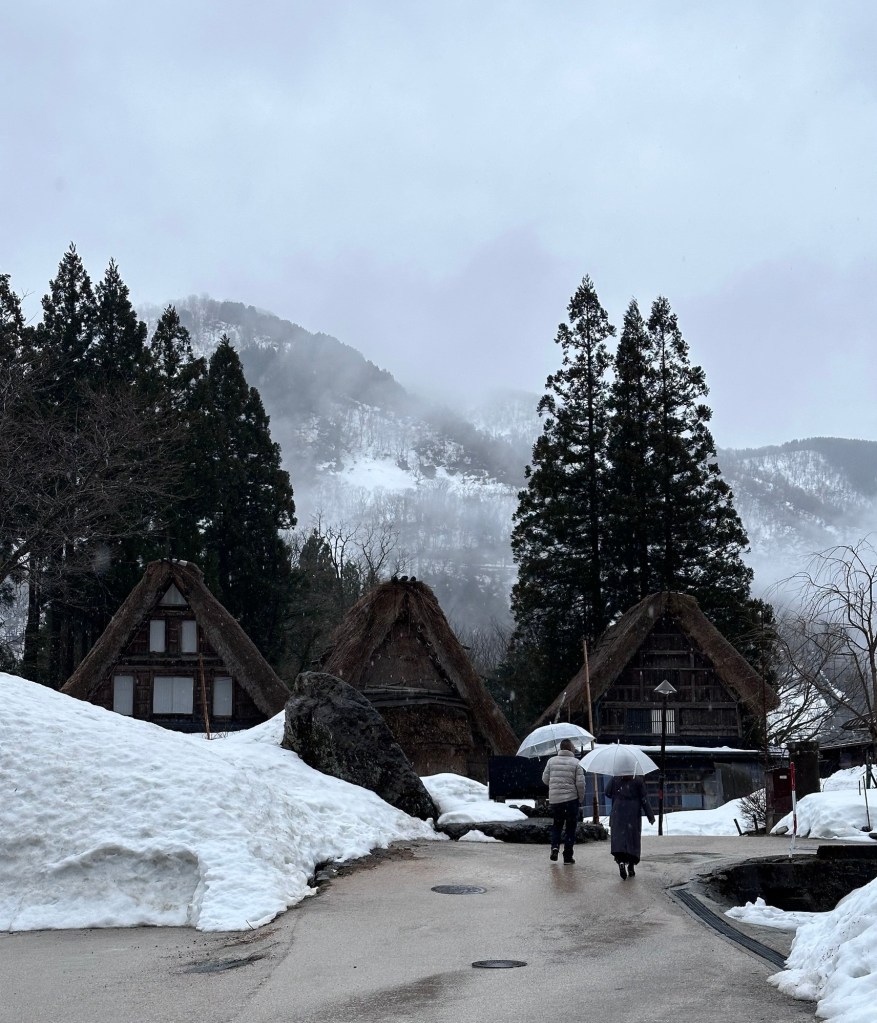
For one of our “Kanazawa” days, we were given the option to visit Gokayama, which is about an hour’s drive away, up into the snowy mountains. The view was lovely and the gift shop was even lovelier, which is good news for the folks back home.

After visiting this village, we spent the rest of the day making ( and eating) mochi, learning how to make traditional Japanese paper, and watching a traditional dance.

I hope my exquisite creations survive the trip home.

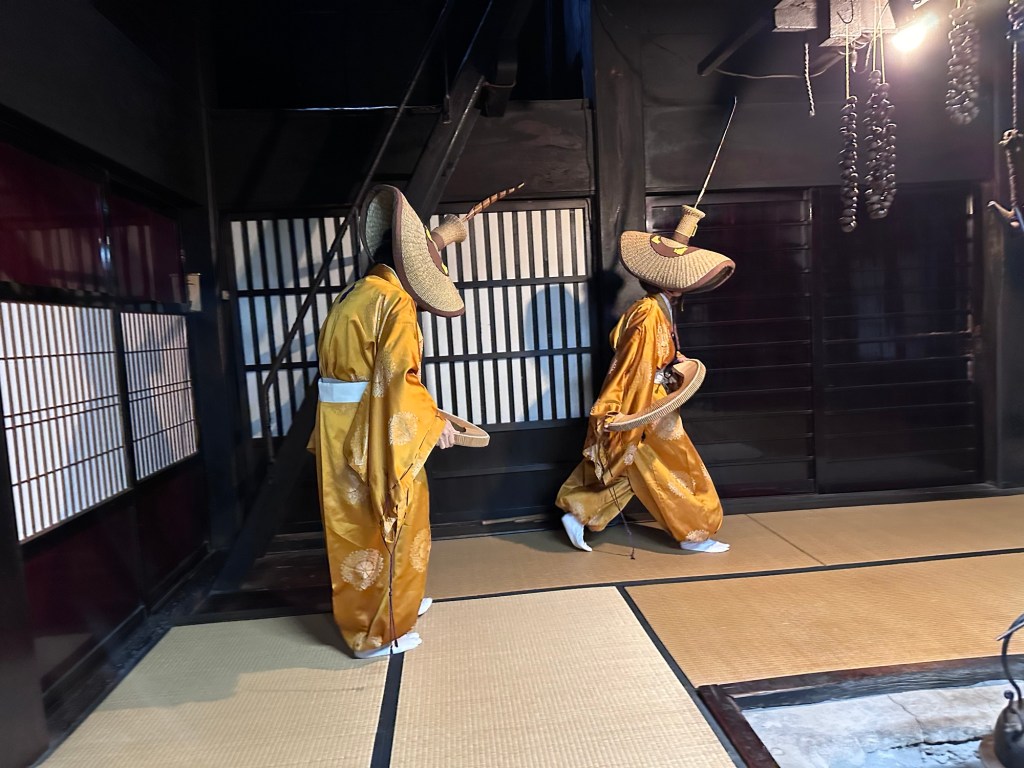
The traditional dance performance was set in an authentic, historic Japanese house. Yes, I know that house had an intriguing history, however, it was so bloody cold in there, all I could think about was getting back on the bus. Sorry. You’re not getting any house history from me.

The traditional dance

Mori managed to find us fantastic restaurants everywhere we went, and Kanazawa was no exception. We liked shabu shabu so much, we were delighted to experience it again. This sweet TINY restaurant was quiet, beautiful, inexpensive, and best of all, the food was delicious.

Ruth, Renee, Janis and I had this little alcove all to ourselves.

That evening was an “on your own” dinner, so feeling adventurous, Kathleen and Cathy opted for a restaurant with a more esoteric menu.

Before leaving Kanazawa, we split into four groups to visit the home of a Japanese family, where we were treated to different activities, like calligraphy, and origami. Some groups sampled saki and tried on kimonos. The luckiest groups managed to do all of the above.

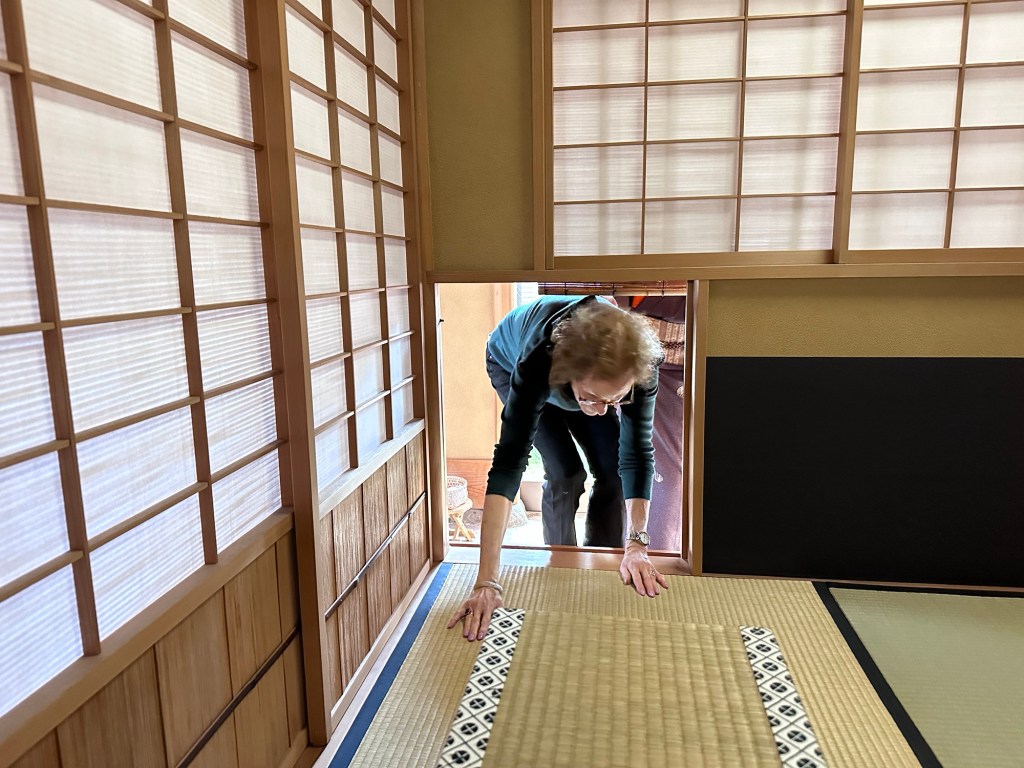
My group experienced the formal tea service at an authentic tea house. We entered the room the way the samourai did, crawling through a tiny space that we dubbed the “doggie door”.

Here’s Patsy, demonstrating the graceful way to enter the tea room. Like the Samourai, the door’s size forced her to leave all her weapons behind.

We had just enough time before we took the bullet train to Kyoto to visit the shrine a few blocks from our hotel. As usual, the paparazzi was stalking me as I strolled the park.

Photo by Bobbi

Some of the group went with Mori to visit the shrine the night we arrived. I was too exhausted, so I was glad that I had time for this early morning visit.

I’ll end with this photo of the Kanazawa train station. and if you think this station is beautiful, you ain’t see nothin yet! Just wait till my Kyoto post!

Japanese Cultural Experiences in Tokyo and Hakone

When you think of Japan, what comes to mind? For me, it was all about the cherry blossoms and the Geishas. Sumo Wrestling? Drumming? Karaoke? Not so much. But I kept an open mind, and I’m so glad I did. Frequently, on OAT trips, I didn’t know I wanted to see something until I got there.

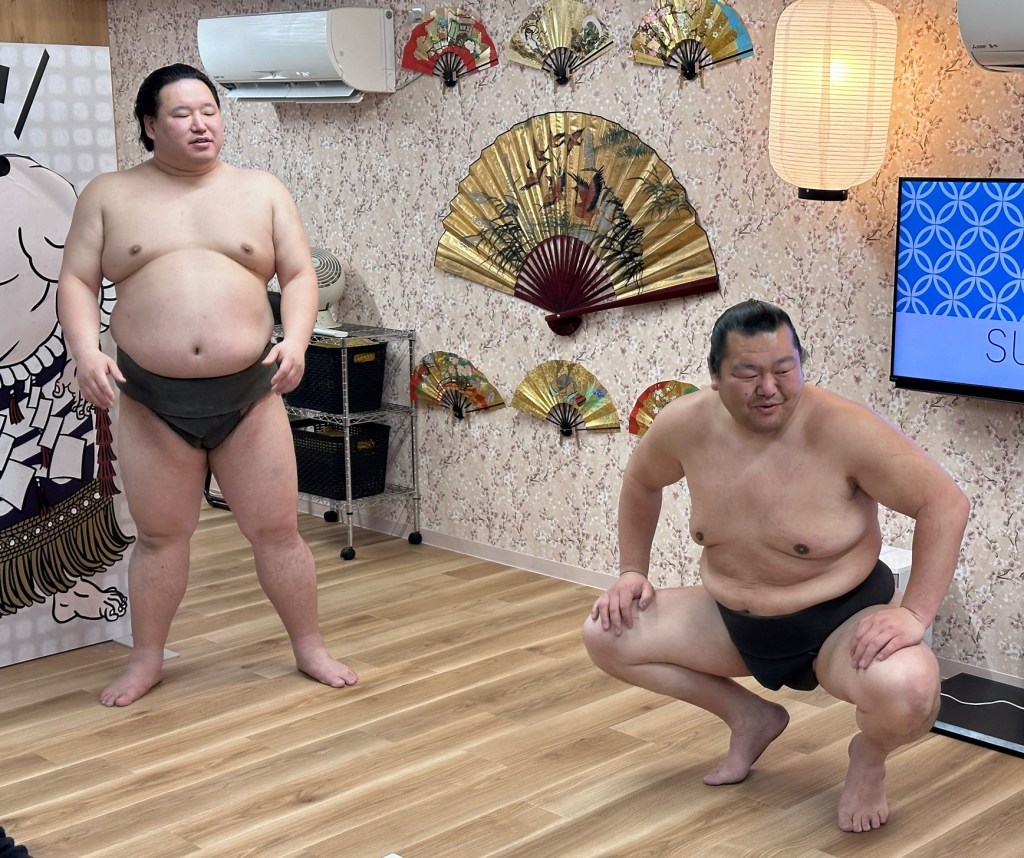
Take, for instance, sumo wrestlers. These guys put on quite a show for us. I hadn’t expected them to be so funny! While demonstrating the forbidden moves—poking their opponent’s eyes—a fake eyeball popped out and rolled on the floor.

It wasn’t just laughs, though. We also learned quite a bit about the sport. Some of the sumo wrestlers are recruited from the ranks of “troubled” boys, usually around the time they turn 15, providing a constructive use of all that testosterone.

Their careers last about 20 years, which means they retire from wrestling in their mid to late 30’s, similar to the career span of professional athletes in the USA.

Renee and I (because of our insurance backgrounds) immediately had questions about the impact of all that extra weight on life expectancy. We learned that sumo wrestlers, on average, live 10 years less than most Japanese. As one would expect, diabetes, joint problems, head injuries and other medical issues are responsible for decreased longevity.

Like our time with the wrestlers, we were offered a “hands on” experience at a subsequent cultural event —drumming. And boy, did we get into it! We were like a bunch of pre-teen boys, wildly pounding away.

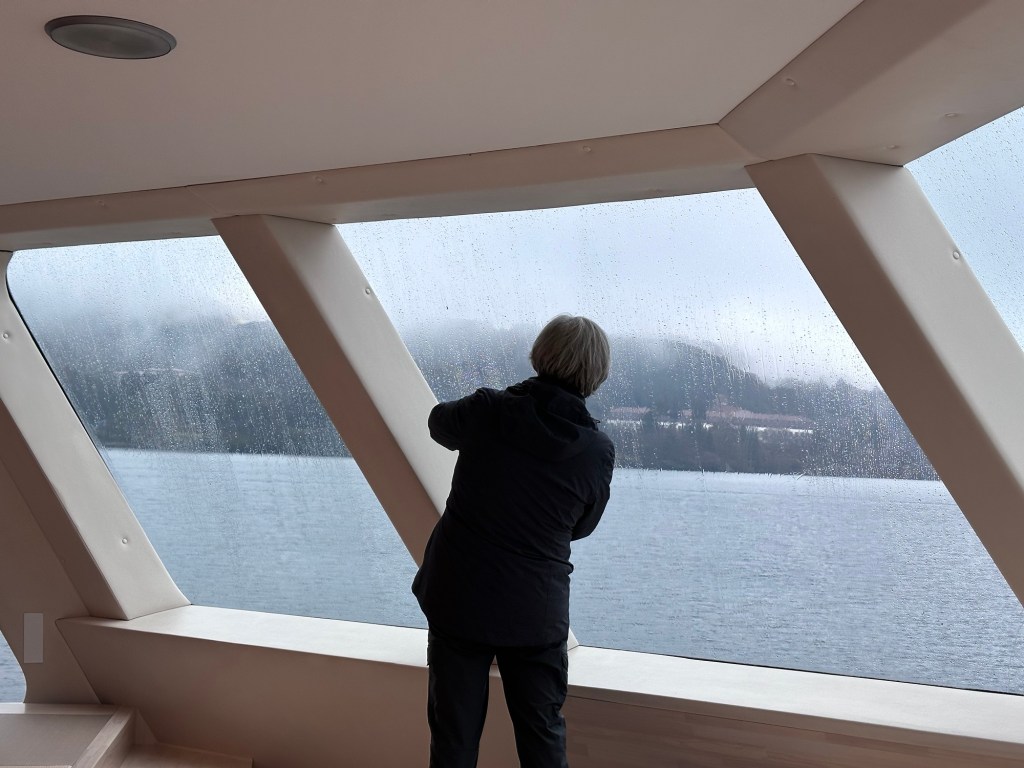
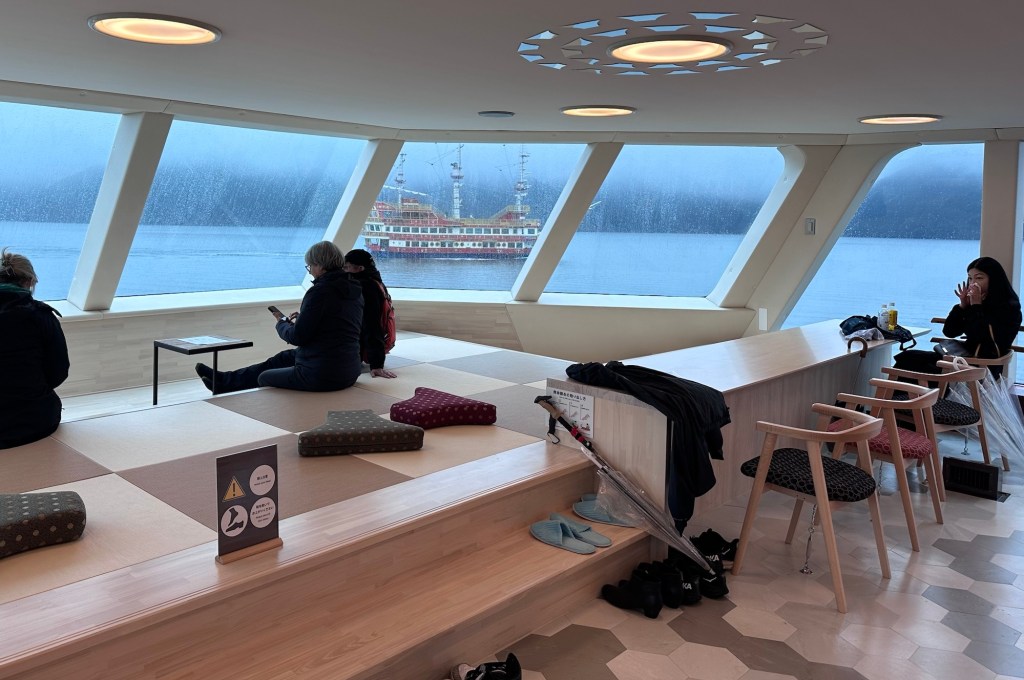
It was raining off and on during our second day in Hakone, but we didn’t mind. Our day was filled with indoor cultural experiences, starting with a boat ride across the lake to visit a woodworking master.

I’m not normally a shopper, but this master craftsman’s work was so exquisite and so unusual, I had to buy a couple of his smaller pieces. Partly because of the prices and partly because traveling with carry on, my purchasing power was severely limited.

Next up was shabu shabu for lunch ( Japan’s version of fondue),

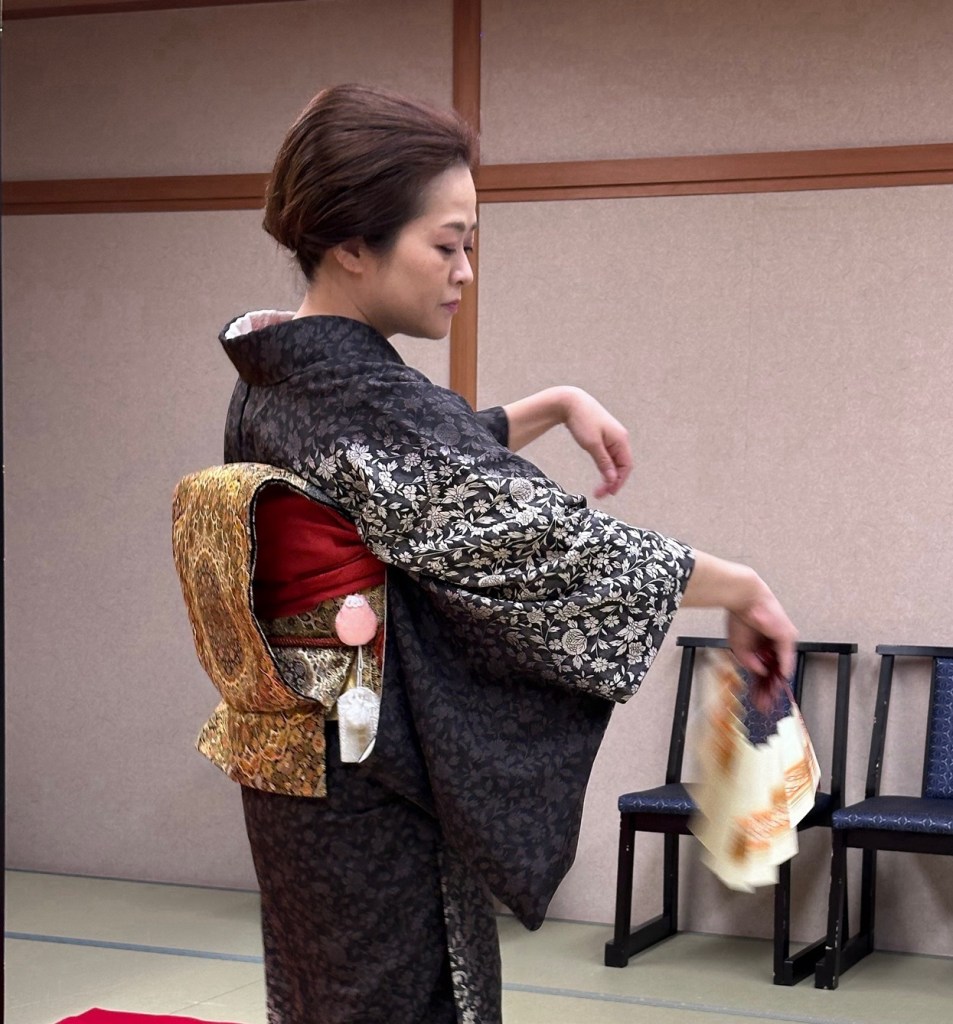
followed by a delightful encounter with these two lovely geishas, who danced and played a traditional instrument to demonstrate how they entertain clients.

During the question and answer period, they dispelled many misconceptions about geishas.

Unlike the book and movie “Memoirs of a Geisha” would have you believe, geishas are not prostitutes, nor are young girls sold to geisha houses. Although they admitted those things might have happened many years ago, the practice was not widespread even back then.

I never would have guessed there is a geisha union that clients contact when they want to book a geisha for an event. Geisha musicians are the highest paid, and if a client wants them to paint their faces white, and don wigs to create that traditional hairdo, it costs extra. An event normally lasts about two hours, with geishas sometimes attending two parties per night.

Curious about that big padded thingie on their back? I sure was. Well, they don’t carry a purse, so they need SOME PLACE to store their cell phone, right? Think of it as a Geisha backpack. I couldn’t believe all the stuff they pulled out to show us!

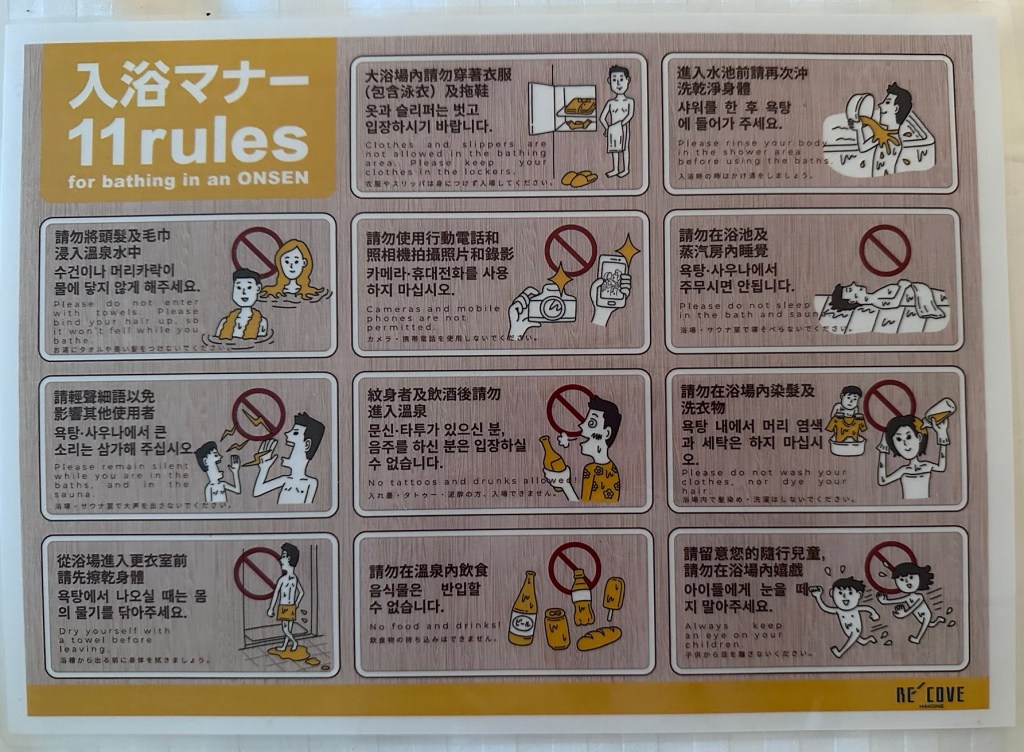
Because Hakone is noted for its hot springs, many hotels have onsens on site, and our hotel was no exception.

Men and women have separate areas, because everyone is naked in the onsen. During our stay, Kris , Janis and I experienced different pools, both inside and out, during our multiple visits. Since this is not an X-rated blog, there are no photos of the three of us frolicking in the onsen. Plus it’s against the rules. . .

Did I mention Japanese are very good at following rules? They are much better than Americans, which is probably why the laminated card in our rooms included English translations.

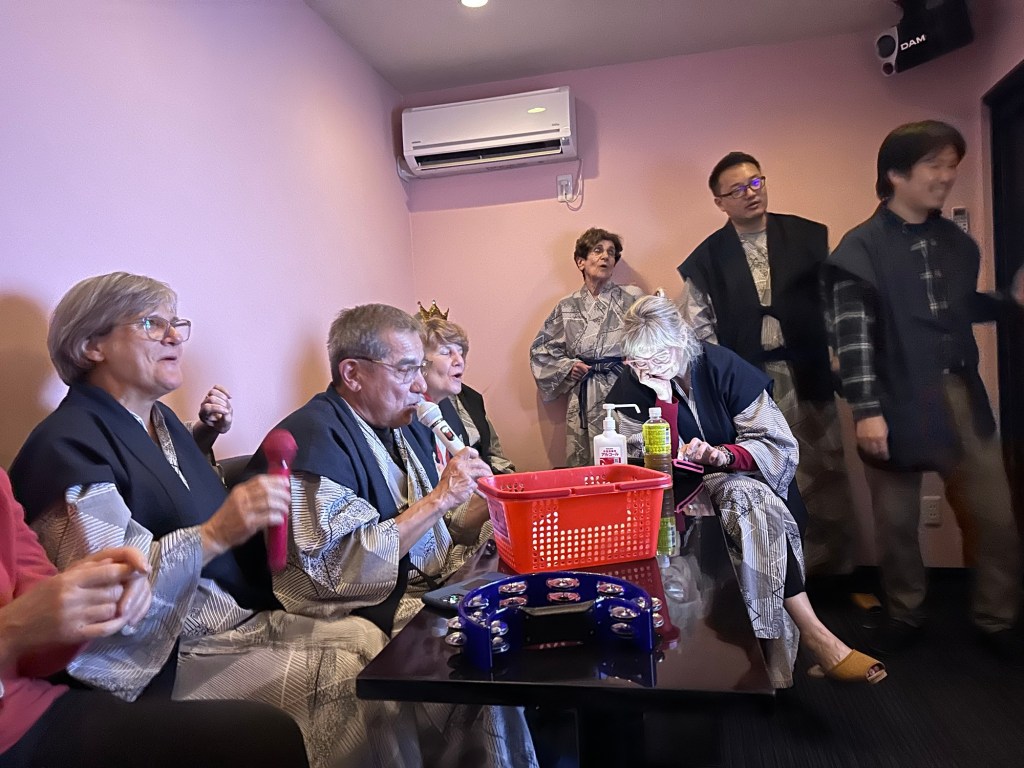
I’m going to end this post with our final Hakone activity—karaoke. My only prior experience with karaoke was at a bar, where individuals performed solo. The Japanese do it differently. It’s a group sing-along in a tiny room. Yep, the room isn’t much bigger than what you see in the photo below.

What a bonding experience! I’ll admit, it helps if you downed some sake (or wine) beforehand, which we all did, to celebrate Kathleen‘s birthday.

Wondering about that red basket? It held the microphones.

Hakone, Part 1

Every time I think this trip couldn’t possibly get better, it does.

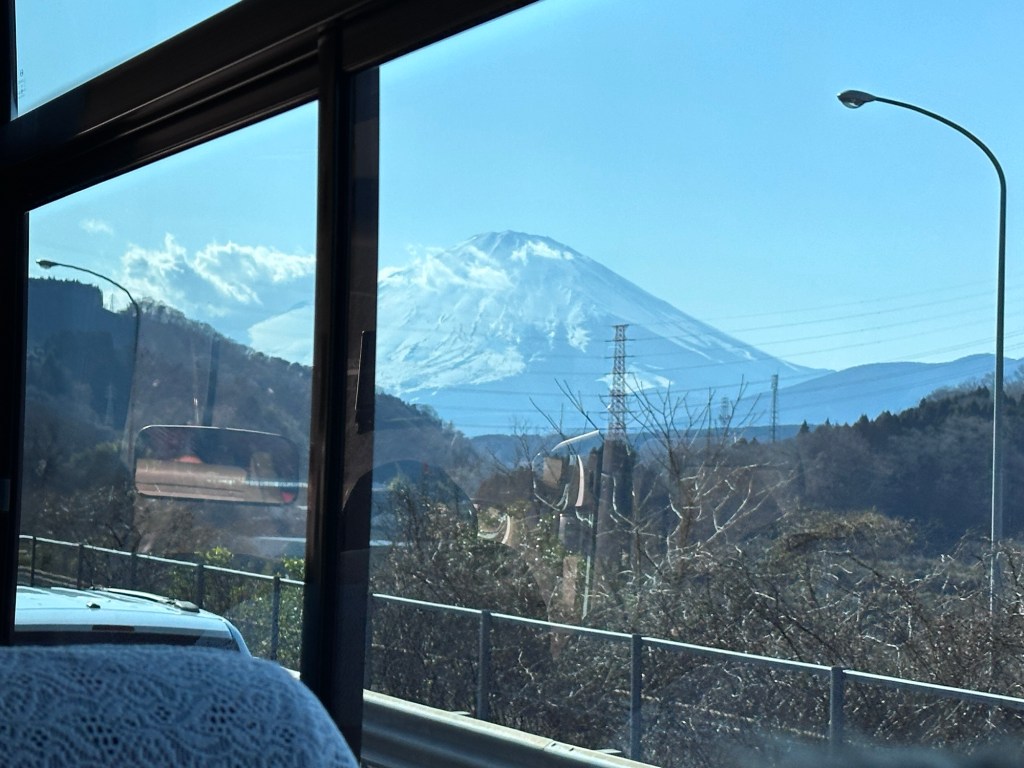
On our bus ride to Hakone, we were treated to multiple views of the elusive Mt Fuji. We watched as it progressed from crystal clear to cloudy.

10:30 AM at the rest stop
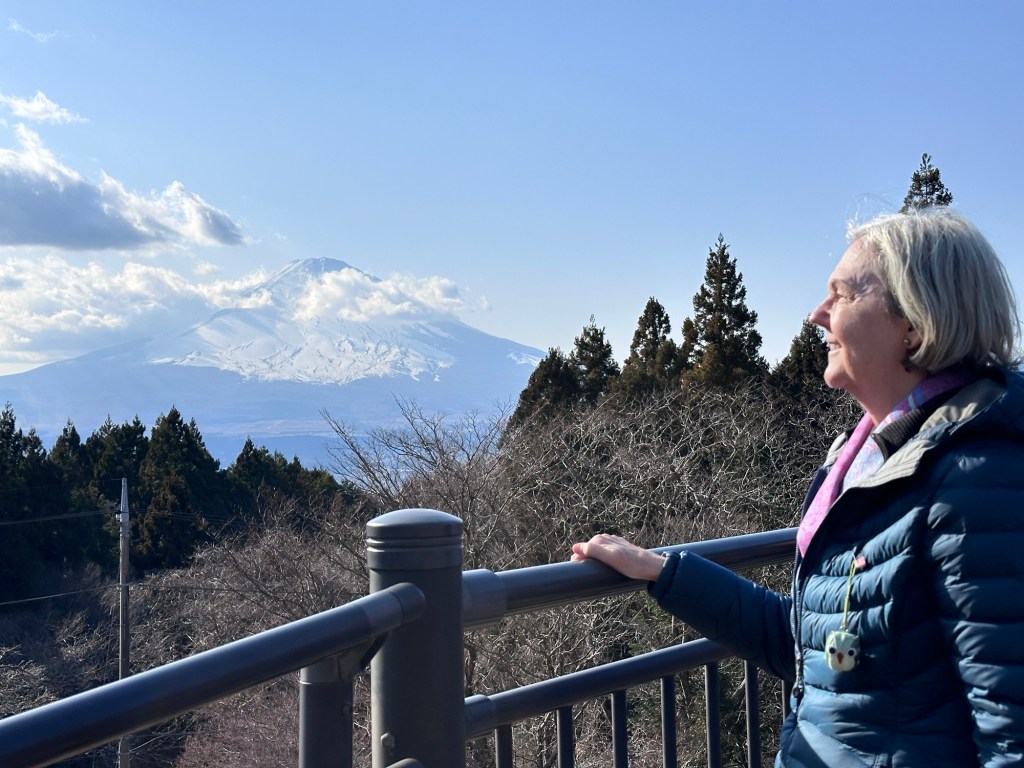
The clouds started rolling in around 3 PM.
3:30 PM. Our driver took us to this special look out that gave us a phenomenal view of the mountain.

Although it is wasn’t on the itinerary, I had told Mori I really wanted to experience the Open Air Museum in Hakone and he made it happen. Turns out 12 out of the 14 of us wanted to visit. We made the most of our hour at the museum. Here are a few of my favorites.
It may not look like much from the outside but wait till you step inside.

But there was so much more to see, like this piece which was inspired by the myth of Narcissus.

The sculpture was trying to view her reflection in the water, but her tears were blurring her image.
Can you believe how perfectly balanced that sculpture is? And check out the gorgeous setting.

We lucked out with the weather because our second day in Hakone was rainy.

On My Own in Tirana, Albania

I spent the majority of my first full day in Tirana walking around the city, exploring two of the attractions recommended in my OAT Final Documents booklet. First stop was at the Komiteti-Kafe Museum for an “American coffee” and a look at what was described as Soviet Era artifacts. I don’t know whether what I found qualified as Soviet “stuff”. It appeared much too whimsical and colorful, two adjectives that I suspect were never used to describe the USSR.

I probably wouldn’t put the coffee shop on a list of top attractions, but the walk getting there and back was fun. Tirana has lots of green space, bike lanes and pedestrian walkways— and I do love to explore on foot.
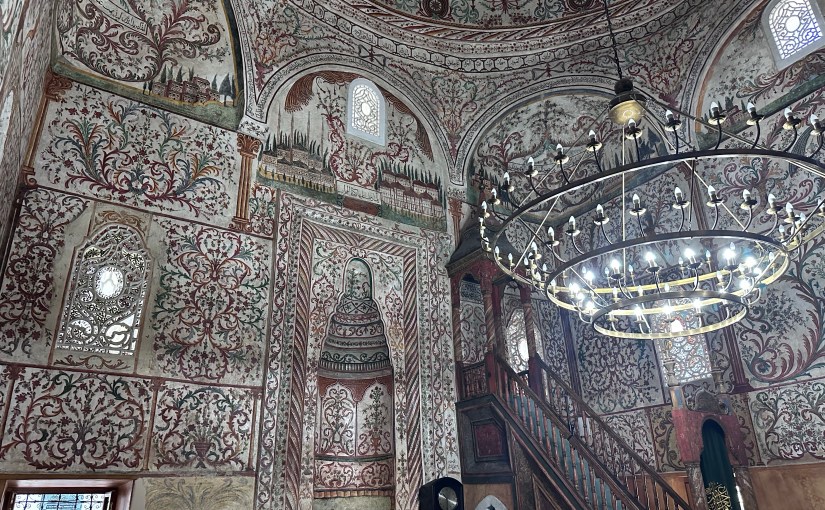
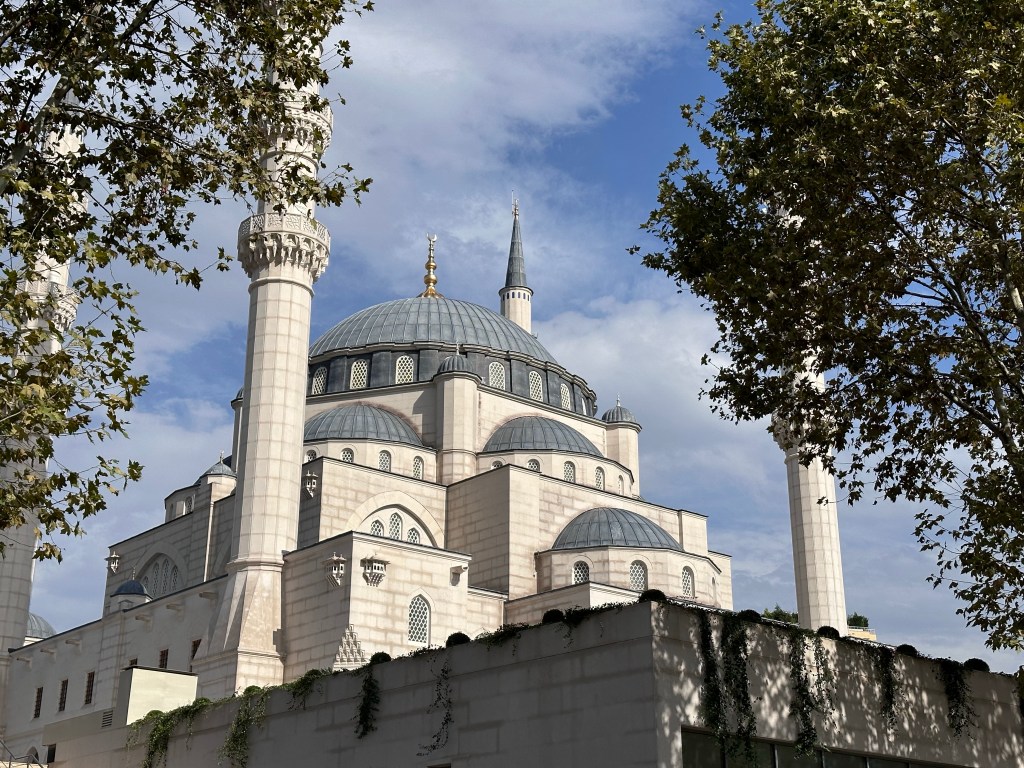
I had to get closer to the beautiful mosque appearing in the distance. A gift from the Turkish government, it is, and will remain, closed until Erdogan arrives for a dedication ceremony.

Man oh man, Tirana is BOOMING! Lots of new construction everywhere. During the ride from the airport, I noticed the very drab, but functional architecture, presumably from the Soviet era. The current construction is colorful, joyous and oh, so interesting!

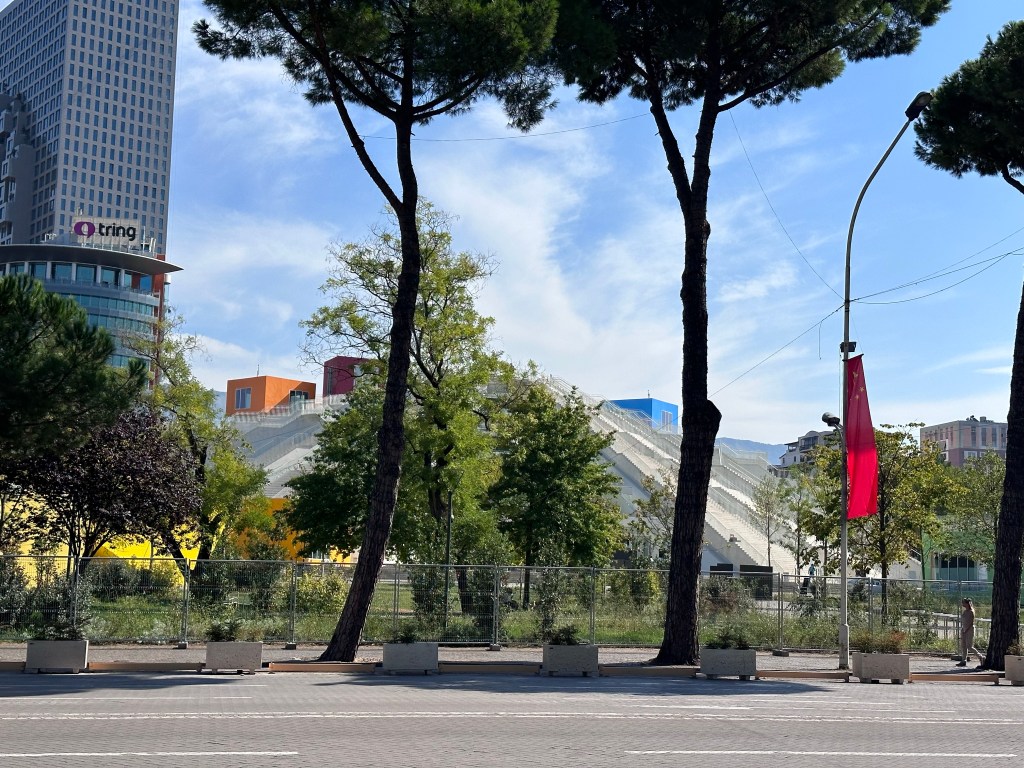
I had no idea what this building would become until our tour on my second day with our pre-trip guide. Ilir took us along a different street. He told us the colored squares will become classrooms in this future digital center.

It is difficult to see the pyramid behind the trees. If you’d like a better view and a history of the pyramid, click here. https://en.m.wikipedia.org/wiki/Pyramid_of_Tirana. The steps were added to allow people to safely climb to the top. Previously they were clambering up the smooth sides, then sliding down!

One advantage to being on your own is you can stop to take photos whenever you like, and I liked to do that a lot. I loved this bridge. While on it, you have access to free wi-fi, which I didn’t need because I had switched to TMobile. Unlike Verizon, international access is free for everything except voice calls. (Thanks to the Facebook page “Friends of OAT” for educating me about internet access outside of the USA). Knowing I could consult google maps whenever I wanted enabled me to wander freely without fear of getting lost.

As I made my way to the Sali Shijaku House (OAT’s other recommendation), I walked thru Tirana’s Castle, which was taken over by the Topani family in 1798. I had seen the Topani name everywhere, most prominently at the nearby mall entrance, and wondered what the word meant. A plaque before the castle explained that Topani is the name of a noble family “rich and educated with strong ties to the Ottoman Empire and the west which they used to help the country while it took the independence road.” The plaque goes on to explain the rivalry between the Topanis and the Barginis which was ultimately resolved by intermarriage. Just think, if the Montagues and Capulets had used intermarriage to resolve their disputes Shakespeare wouldn’t have had material for Romeo and Juliet.

Not much remains of the original castle structure other than these walls and something called a “Bailey”. (You won’t see a photo of the Bailey because I have no idea what it is). Walking thru that arch brings you to a walkway with lovely shops and an abundance of restaurants, one of which I chose for lunch.

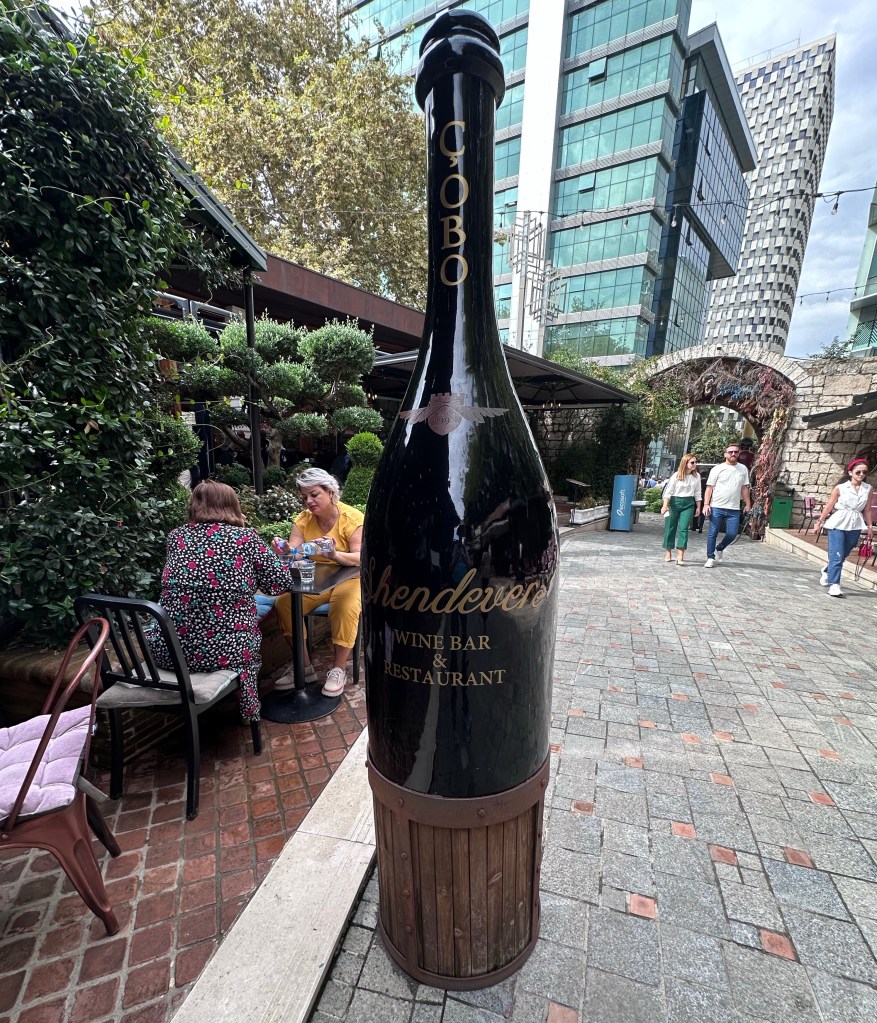
I had a wonderful inexpensive lunch with a glass of sparkling wine at this restaurant.

But back to the home of the artist Sali Shijaku, my second destination. After exploring his residence, which is filled with his paintings, I sat in the garden and enjoyed the ambiance while sipping a cup of tea. It’s hard to believe that over the years, this 300 year old structure has been a hospital, women’s prison and military building.

Some other sights from my walk thru Tirana:

Topani Mall across from our hotel.
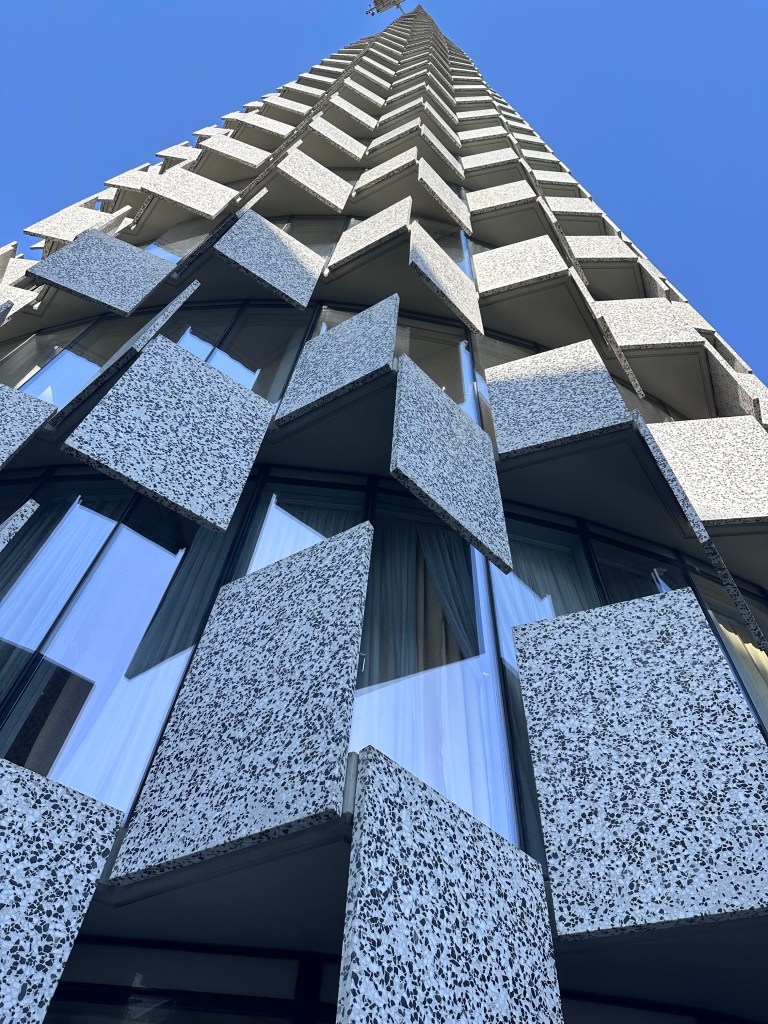
Although not colorful, this building’s three dimensional structure appealed to me.
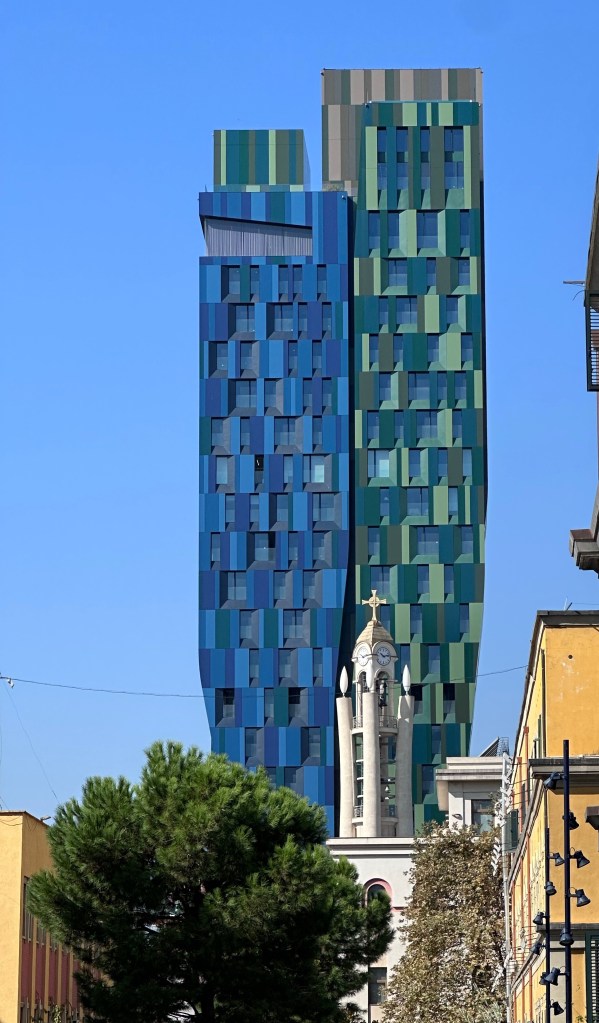
The new building towers over the old church tower.

After exploring, I returned to the hotel to meet 4 of my traveling companions. After a brief walk with our guide, we got to know each other over dinner at Roxana Tuna House. As is often the case on OAT trips, they are all friendly and so very interesting. That’s another reason I enjoy traveling with OAT—congenial companions. We will meet the last couple tomorrow because they encountered flight delays.

Time to stop babbling about this wonderful city and get some rest.

Ouarzazate

I know you are probably wondering how in the world to pronounce the name of this Moroccan city. Well, wonder no more. “Ou” sounds like our “W”, so when you come to Morocco and want to stay near the movie set for Game of Thrones, book a riad in “ WAR-za-zat”.

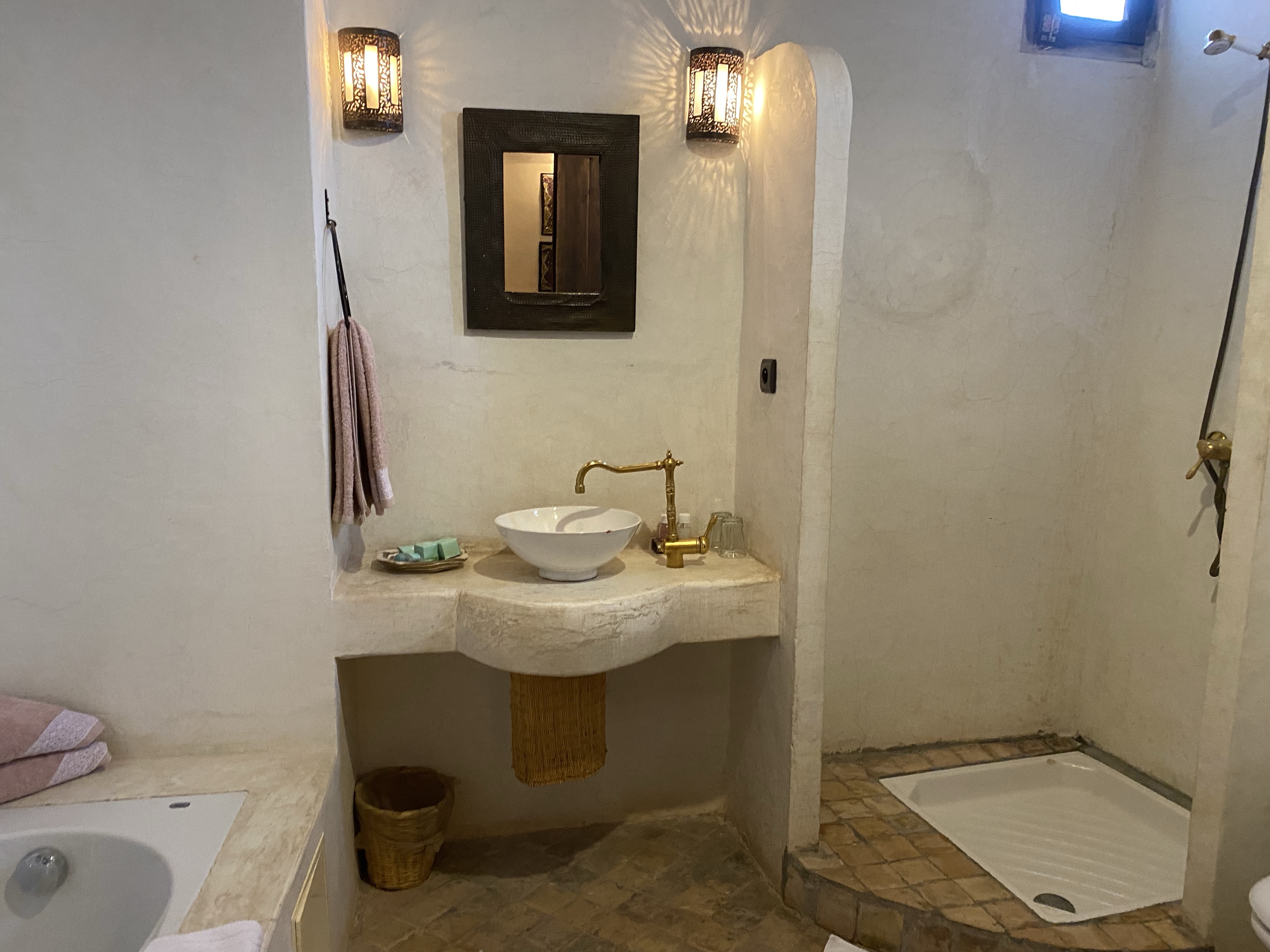
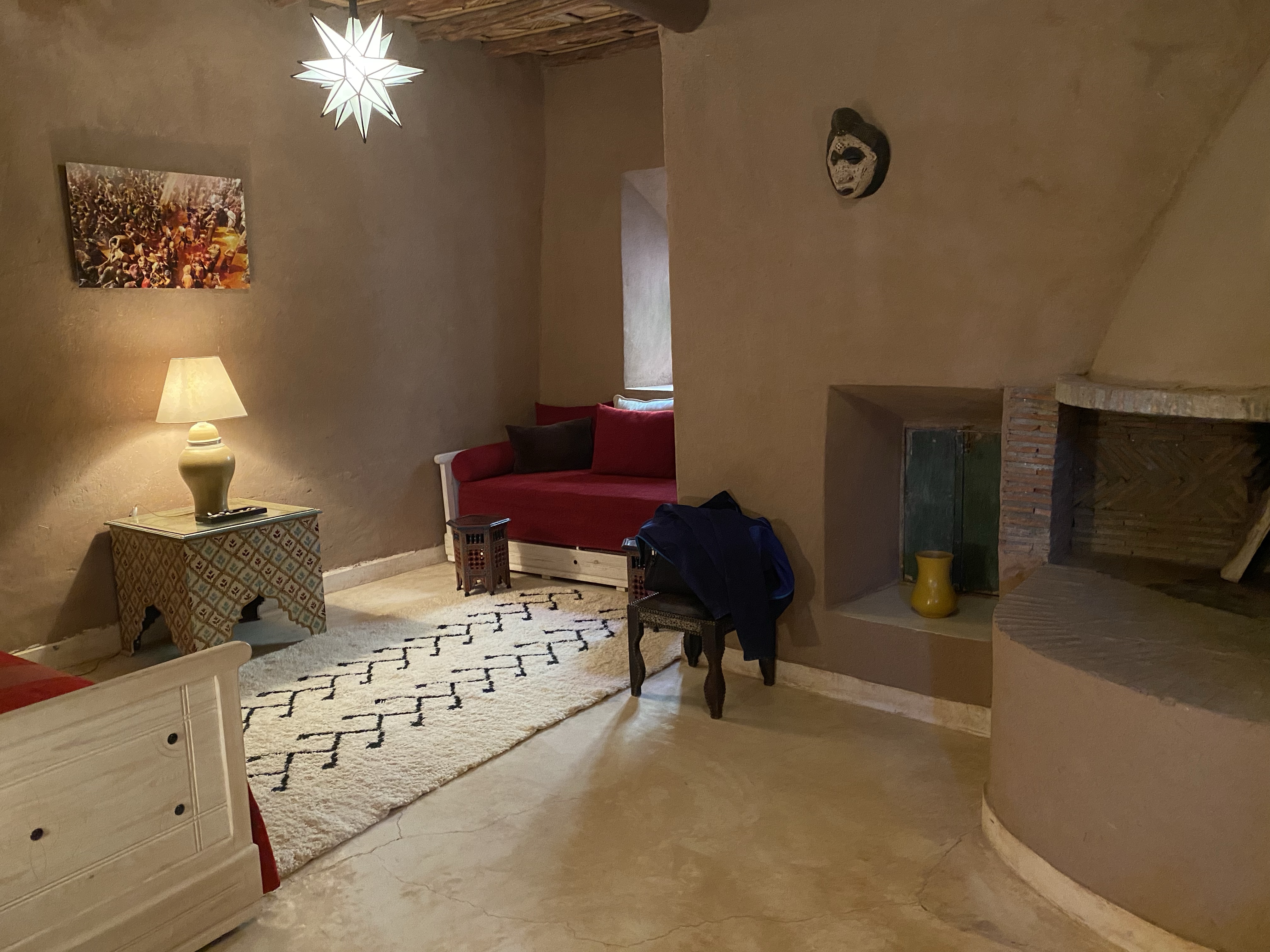
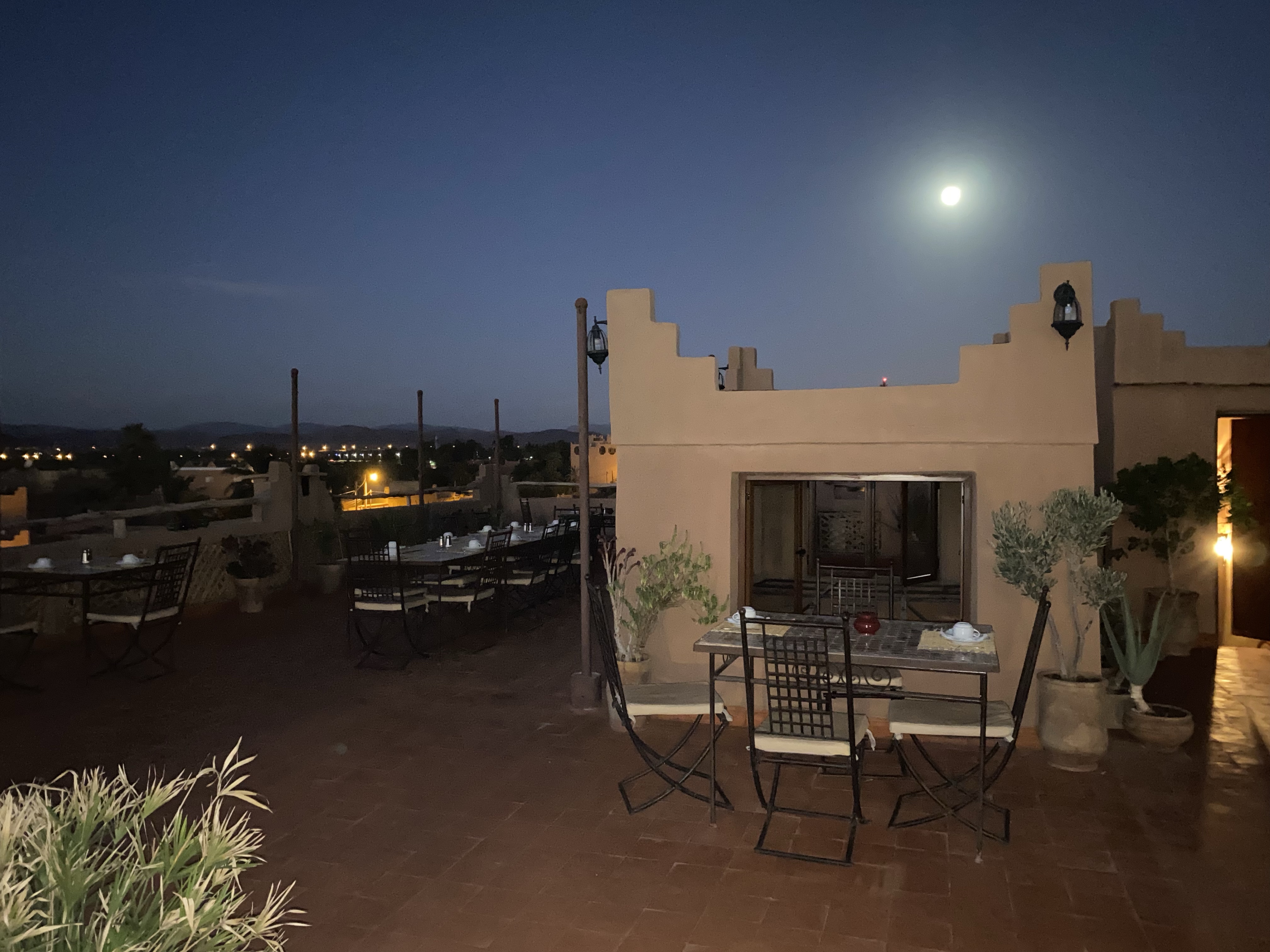
We spent two nights in Ouarzazate, staying at the beautiful Dar Kalifa. During the 1900’s our riad was the court house of Pasha Glaoui. This very powerful Bedouin chieftain was France’s ally against Sultan Mohammed V, and was instrumental in getting the Sultan exiled to Madagascar in 1953.

Unfortunately for France and the Pasha, the Sultan was beloved by many Moroccans. His removal resulted in unrest and uprisings in Morocco. As a result, de Gaulle reinstated Mohammed V (who changed his title from sultan to king) in 1956; simultaneously Morocco gained its independence. Pasha Glaoui had clearly made the wrong choice. So what became of this traitor? He traveled to Paris, knelt at the feet of in submission to Mohammed V, who forgave him. Their actions reunited the warring factions and made it easier for Mohammed V to regain his throne. Glaoui died of cancer in 1956, Mohammed V died in 1961.

I have to admit, it was pretty thrilling to think about all the history that must have taken place within the walls of our riad. It isn’t easy to find—you walk along some narrow passages to get there, but it is worth the walk to discover this spectacular dwelling.

Be forewarned: there are MANY steps in Dar Kalifa, and they all seem to be a different size.

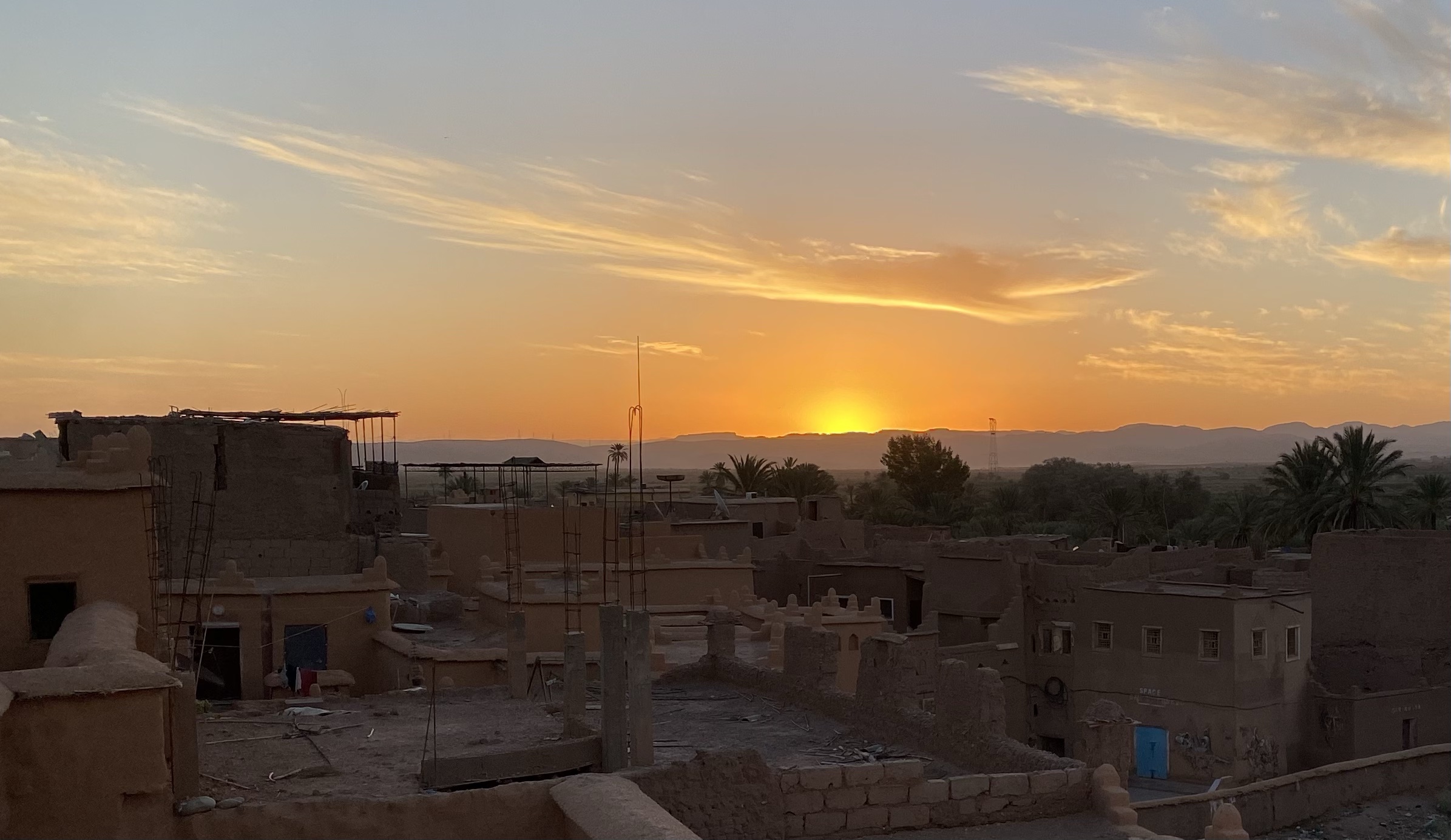
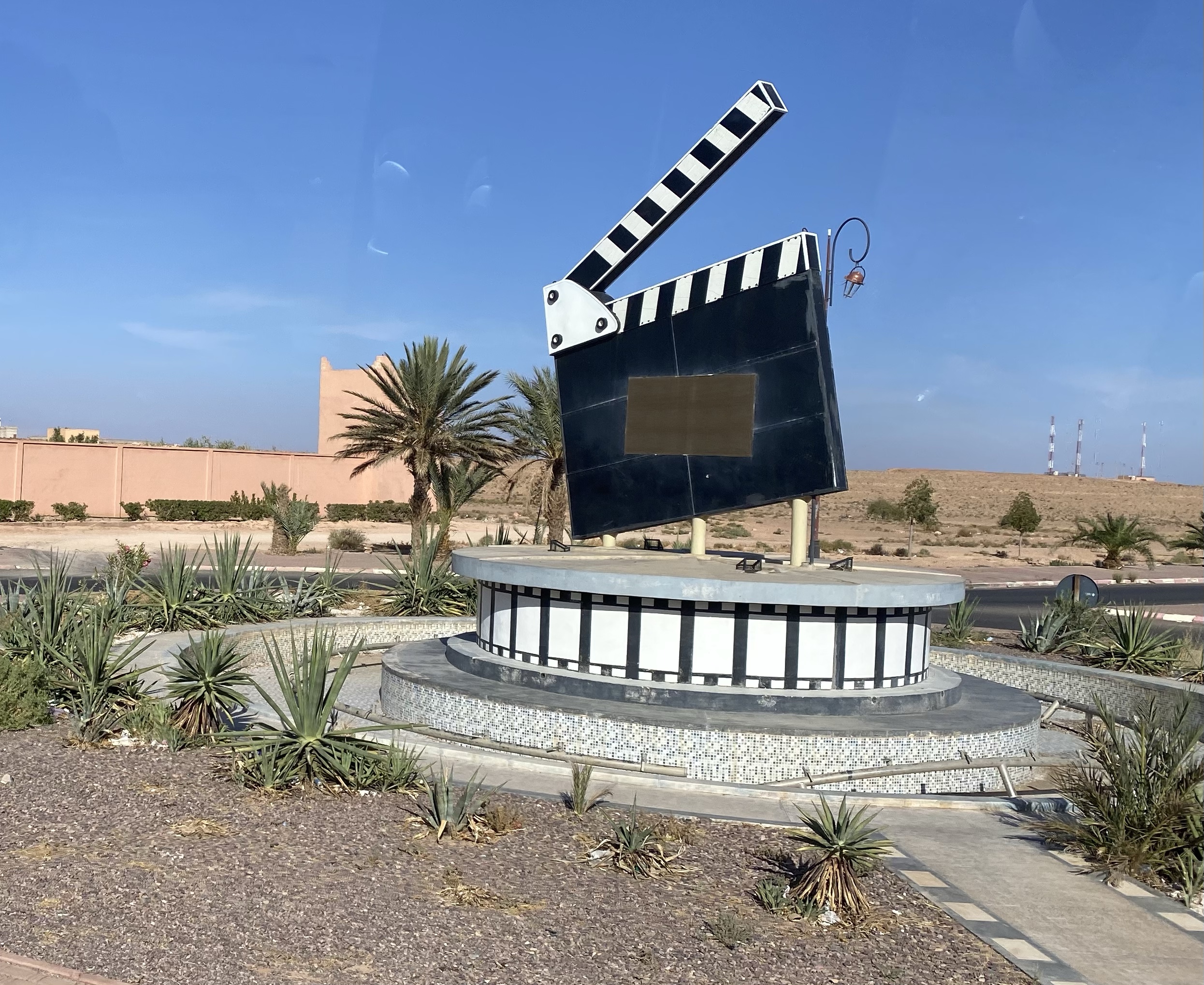
Can you guess why Ouarzazate’s nickname is WallyWood? The dramatic scenery and the perfect lighting from sun filled days have made it a favorite spot for film makers.

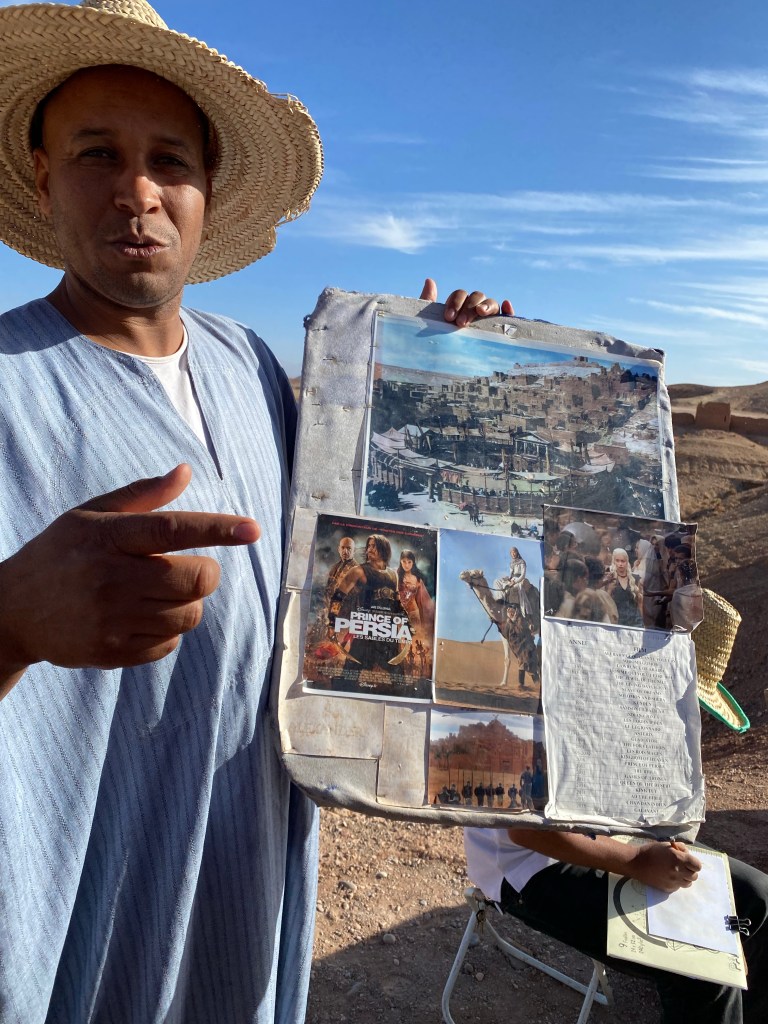
Many of the locals work as “extras” in movies like Gladiator. Our local guide, Mohammed has been in several movies. Here’s his picture, so you can look for him in Season 4 of Game of Thrones.

Mohammed with his visual resume

Mohammed never had the opportunity to attend school. He spent his childhood ferrying tourists across the river on his donkey. Although he was never taught to read and write, he became fluent in English, French, Spanish and a few other languages, by listening to tourists he transported. I find that amazing—what an impressive and intelligent man!

Mohammed’s children: 2 girls, aged 13 and 6 and 1 boy aged 10, all attend school, and are teaching their dad to read. Mohammed told us he thought his family was complete, but his “coronavirus baby” arrived 8 months ago!

Most tourists visiting the area want to spend time in Ait Benhaddou, stopping at one of the two studios in town. Before Covid, Mohammed told us during high season Ait Benhaddou received more than 1,000 tourists per day.

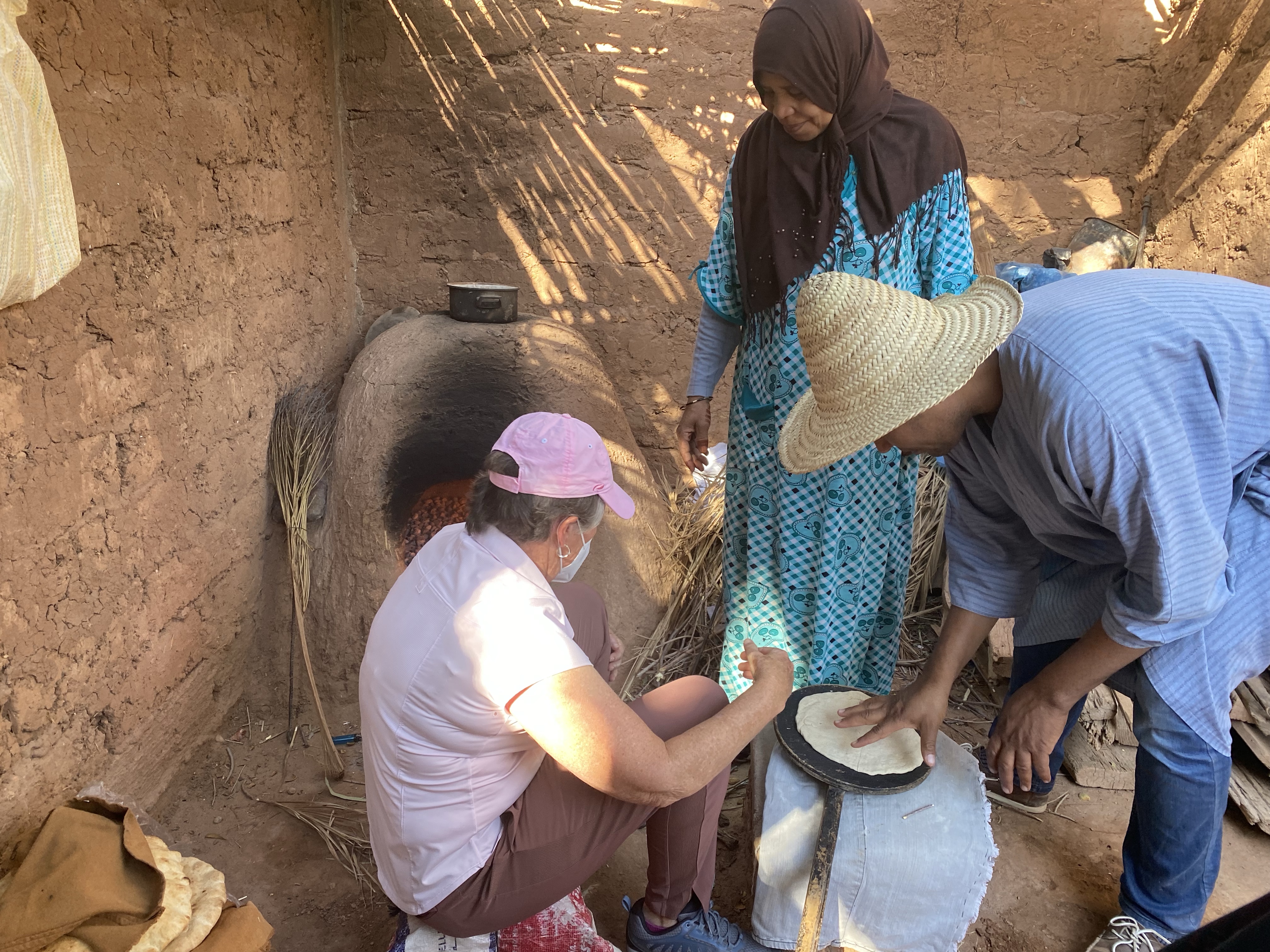
Instead, we visited Asfalou Village, for what OAT calls “A Day in the Life”. There, we spent the morning with an extended family, visit their home, learning how the women make bread and the men make bricks.

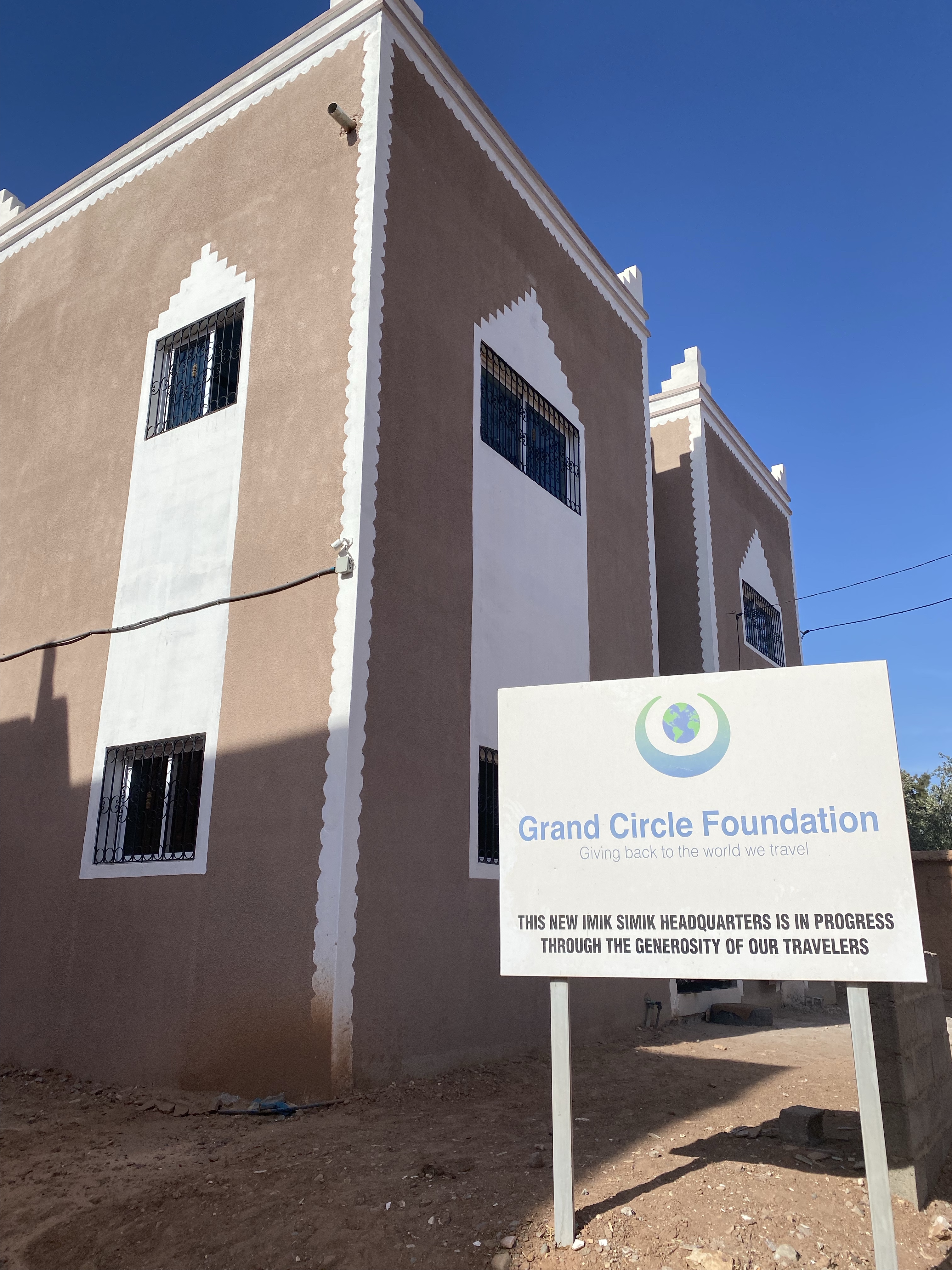
For the afternoon, we visited the Women’s Association, a beneficiary of the Grand Circle Foundation. The Association’s objectives are to build women’s self confidence and to empower them. The women learn to bake cookies, which are sold to hotels and to tourists. We sampled some during our visit and they were so delicious, we all bought more.

While there, we all decorated our bodies with henna—even the men.

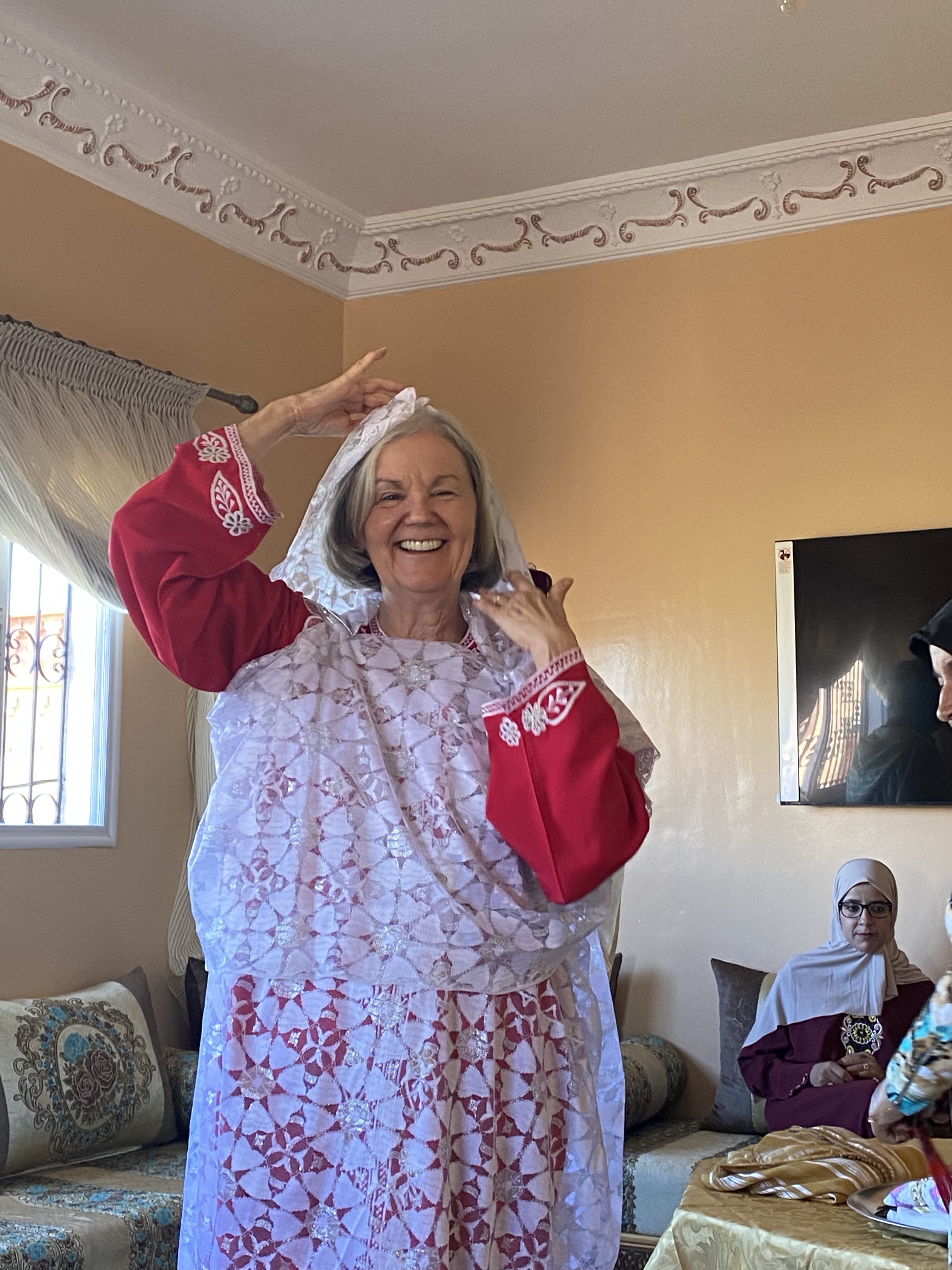
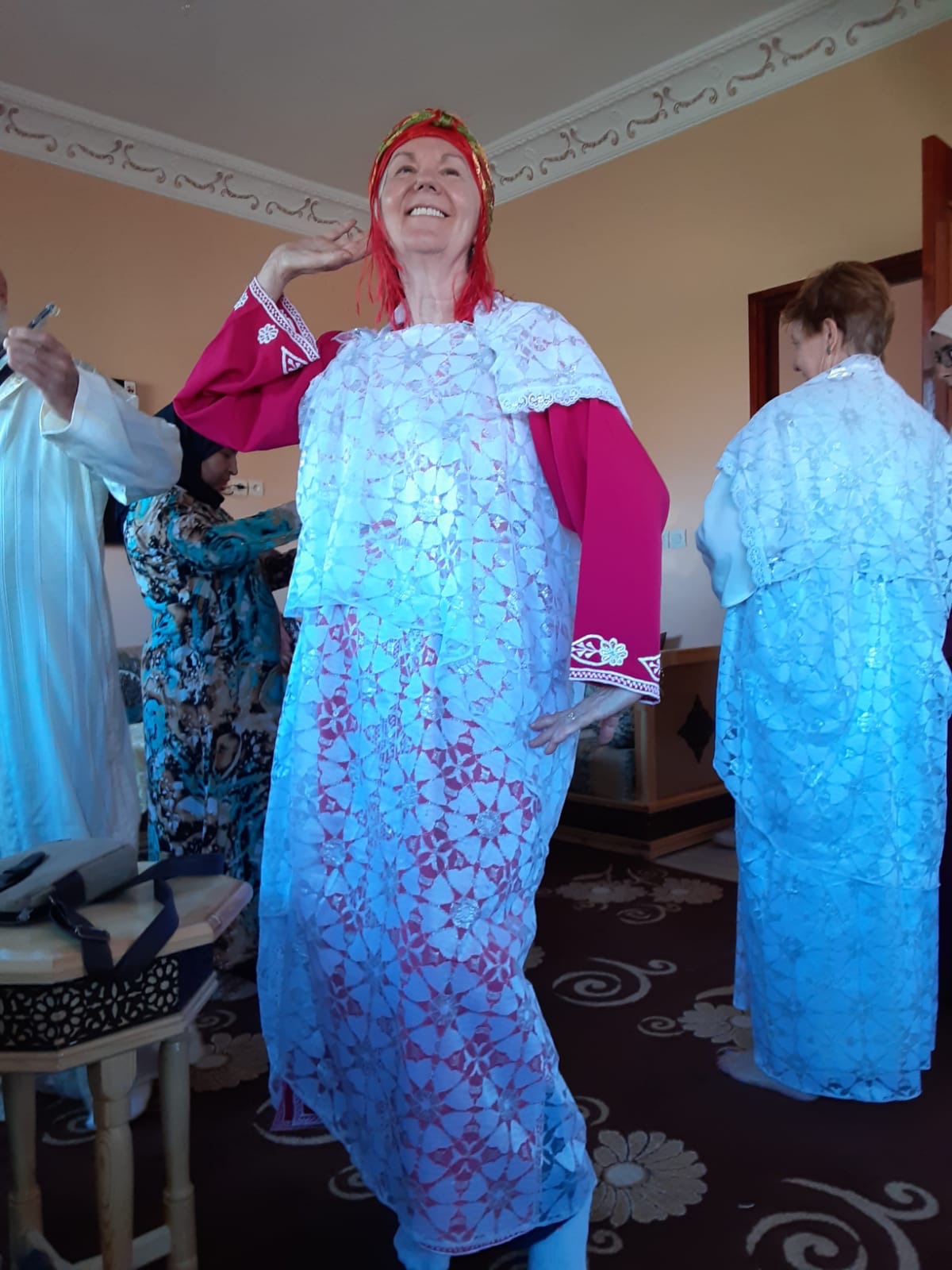
But the highlight, for me at least, was playing dress up. Unfortunately, my first choice for spouse was feeling under the weather that day, so I had to go with a substitute for this Berber wedding.

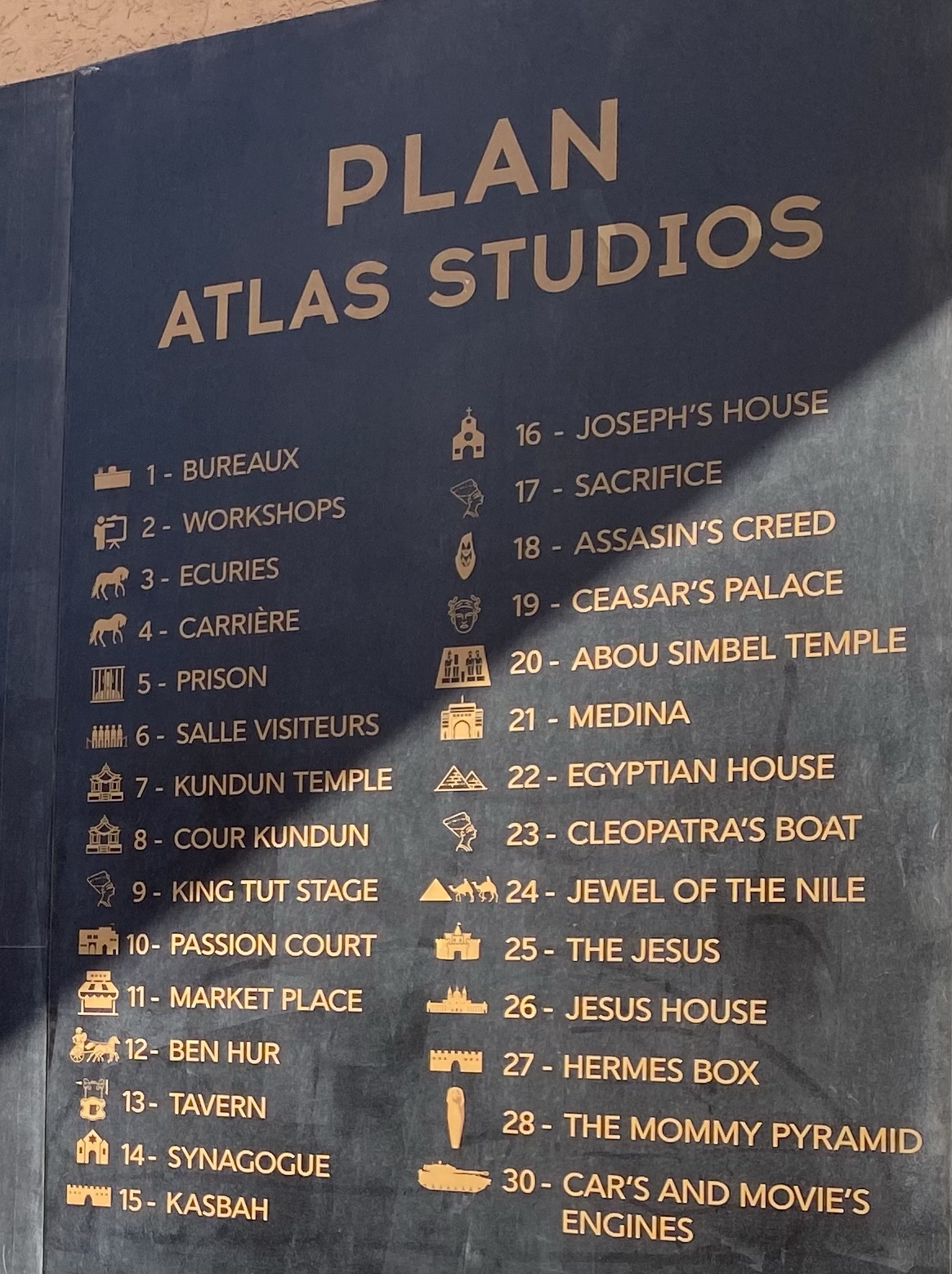
For you movie buffs, I’ll end with a list of some of the movies and TV shows filmed in this area.

  • Lawrence of Arabia (1962) Sodom and Gomorrah (1962) The Man Who Wished To Be King (1975)
  • The Message (1976)
  • Jesus of Nazareth (1977) Bandits, Bandits (1981)
  • The Diamond of the Nile (1985)
  • Killing is not playing (1987) The Last Temptation of Christ (1988)
  • Tea in the Sahara (1990) Kundun (1997)
  • The Mummy (1999)
  • Gladiator (2000)
  • Alexander (2004)
  • Kingdom of Heaven (2005) Babel (2006)
  • Prince of Persia: The Sands of Time (2010)
  • Game of Thrones (season 3, 2013)
  • Game of Thrones (season 4)

For the curious—the photo at the top of this post shows the artist doing paintings using a sort of “invisible ink”. He heats the paper over the flame to make the colors appear. This “invisible ink” , used for secret messages sent during French occupation, has been repurposed!

The Sahara

Once again, my image of what the Sahara Desert would be like only slightly reflects reality.

I didn’t expect to find this very productive farm amidst sand dunes.

The farmer’s father, once a member of a nomadic tribe, used ancient techniques to find water. The family hand dug two wells: one with salty water and the other with “sweet” water for drinking. They combine water from both wells for irrigation and livestock.

Farmer and friends. How many do you recognize? One outfit (caftan and scarf) was purchased in the Rissani market for about $20 US.

You might recognize Goldie from an earlier post. She given to me by Bonnie, my grand-niece, before the start of our trip. Photos of Goldie’s escapades have been making their way back to Massachusetts on a regular basis.

As you can see, one of the farmer’s goats was quite taken with Goldie.

Our camp was very comfortable. Although we didn’t have Wi-Fi, cellular service surprisingly, is available in the desert.

I expected the sunrises and sunsets to be jaw dropping, and they were. What I didn’t expect was to be drinking wine while watching the sun go down.

Mike went to another dune to take this shot of our group
Kris, Burke and Mike after the sun had set.
Sunrise, by the camp

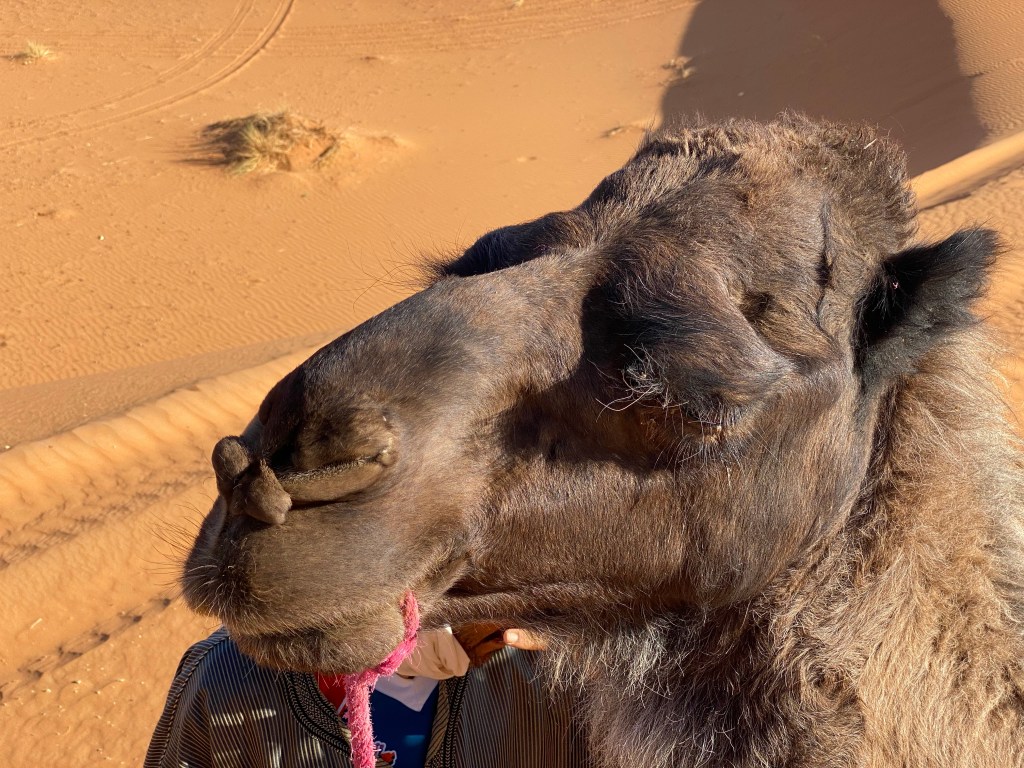
Of course, a visit to the Sahara wouldn’t be complete without a camel ride.

Check out the eyelashes!

But who would have expected to find this swimming pool in the desert?

For 100 dirhams you can use the pool, get a non-alcoholic drink and use a towel.

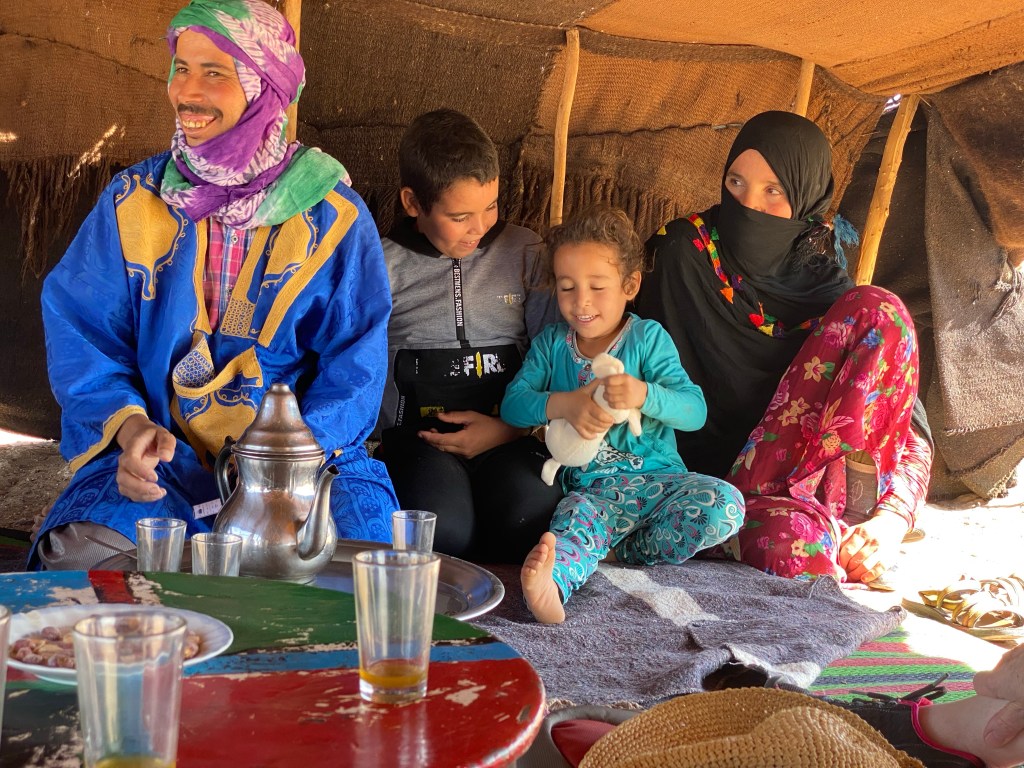
We also visited another nomadic family. Unlike the farmer, this family doesn’t own the land they are living on.

According to Moroccan law, if someone can find 12 witnesses to attest that the family has lived on the land for 10 years, then the squatters become landowners. The catch? The 12 witnesses have to be around when the 10 years commence.

Say good-bye to Goldie. She found a new little girl to love.

There is so much more to say about this incredible experience, but I’m going to stop now and invite you to put the Sahara on YOUR bucket list.

On The Road Again

Who knew that driving all day could be so delightful? The scenery between Fes and the Sahara is varied and spectacular. It also doesn’t hurt that the nine of us are traveling in a bus that could transport more than forty passengers. We are up high, so we all get panoramic views.

This photo was taken from the window of the bus.

We had several stops along the way, including an opportunity to stroll through a forest.

Mike provides scale, to give an idea of the size of this Lebanon cedar.

My favorite stop, however, was our visit with the Barbary monkeys.

Don’t even THINK about touching that tangerine!
This monkey was much friendlier. She was fine as long as I was at her level, but when I stood up, I frightened her and she scampered off.

The hotel where we stopped for lunch had this beautiful map, which included our departure and destination, and stops along the way. I’d mark our route out for you, but it is too difficult to do on an iPhone. But I’ll give you a rough idea of our route: we started at Fes, on the top, by the palm trees and ended in what the map calls ‘Arfoud’, (Erfoud) near the bottom. Ultimate destination: off the map on the bottom, near the camels.

Outside of major cities, Morocco has few traffic lights. Instead, they have numerous traffic circles, (if you’re from Massachusetts the correct name is ‘rotaries’. We Massachusetts natives have our own special language).

I particularly liked the circle in Midelt, which highlights their #1 product. Can you guest what it is?

If you guessed “surgical masks” , you’d be wrong. Mostafa had our driver (Mohammed) go around the circle twice so we could all snap a photo of the “Big Apple”.

Our stay was at a lovely hotel close to the Sahara Desert. Although I am so sorry for the Moroccans working in tourism, I must confess it HAS been rather nice having these beautiful hotels and pools all to ourselves.

Most people would be delighted to see that huge, luminous full moon. Not us. Why? We were hoping for dark desert skies for our resident astronomer’s lecture the following night.

If you’re wondering why in the world I’m blogging rather than experiencing the majesty of Morocco, fear not. This is being written while on the bus heading to Ouarzazate. I’m using Verizon’s Travel Pass for internet connectivity. And I’m looking up from my phone frequently. And yes, as usual, my blog is several days behind our experiences.