Cairo

Cairo is a complete sensory assault, especially after the serenity of Petra. The noise of thousands of horns blaring reminds me of a Las Vegas casino. Smoking is allowed EVERYWHERE, so the smell of cigarette smoke is omnipresent. On the positive side, however, the people are quite lovely and gracious, going out of their way to make us feel welcome. In this Muslim country, we were frequently greeted on December 25th with “ Merry Christmas”. If one must stereotype huge populations of individuals, why not picture Muslims the way we are experiencing them on this trip — as friendly, kind, helpful and warm, instead of envisioning all of them being like the small minority we see on the nightly news?

But enough of that. Let’s get to the magnificent sights from our first full day in Cairo.

Unfortunately, the GEM, the new museum, is still not finished. It was started in 2010, but has been delayed by wars, covid, the Arab Spring. The Egyptians were hopeful that it would be completed by November 2022, the 100th anniversary of the discovery of King Tut’s tomb. Maybe next year? Or the year after?
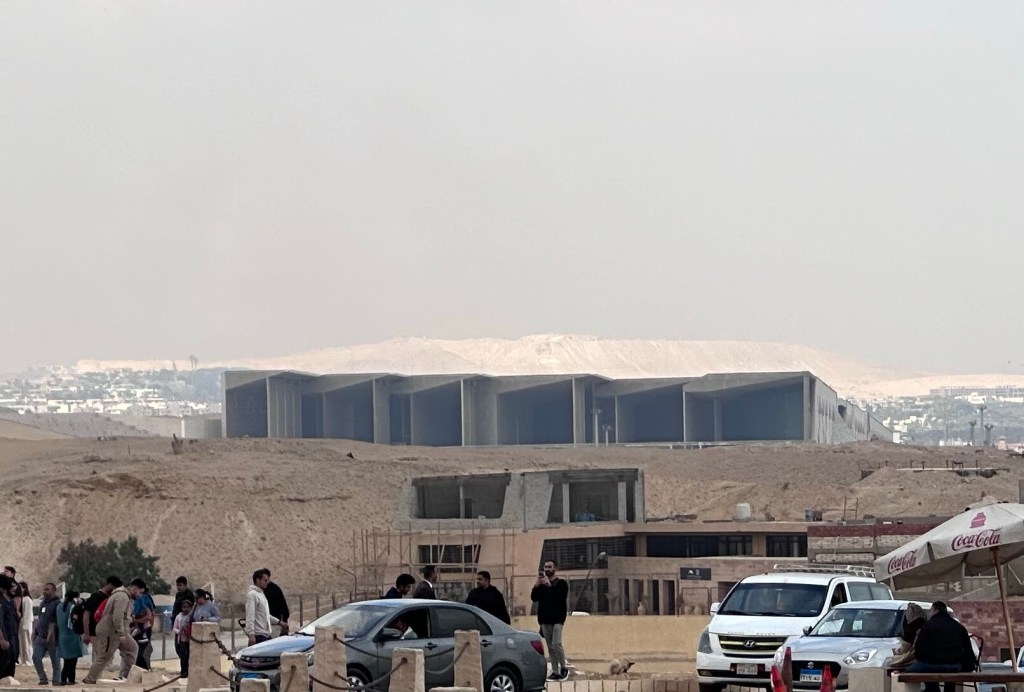
The new museum, as seen from the pyramids. These two major attractions are within walking distance of each other.

Many treasures have been removed from the “old” Cairo Museum to the “new”, unfinished one. Still, there was no shortage of truly spectacular objects in the old museum. In fact, it was hard for me to imagine how more artifacts could have fit into the available space. I actually was glad that there was less to see; it was less overwhelming.

After having the sites pretty much to ourselves in Jordan, we weren’t used to having to wait to view or get a clear shot of a particular object. Even so, it wasn’t bad because the number of visitors was about a third of the normal amount for this time of year, according to Mohammed, our guide.

Once again, I’m not going to post the usual photos of famous items everyone has already seen, like Tut’s gold death mask. Instead, these are a select few of the objects that caught MY interest.

How in the world did they ever get those tomb paintings to line up so perfectly? Well, this unfinished segment shows us. This is the Egyptian equivalent of our graph paper, but drawn on the wall. By the time the wall is completed, those guide lines will have been covered up, painted or plastered over.

Talk about aging well! This papyrus, found in one of the tombs is thousands of years old. The colors are vibrant and the papyrus shows absolutely no sign of wear.

Ever wonder about those strange “things” hanging from the pharaohs’ chins? I sure have. Mohammed explained they are made from goat hair, and held in place by strings attached to the headdress. Why? Well, because the ancient Egyptians thought the gods had similar beards, and the pharaohs wanted to appear Godlike. (Interestingly enough, the Egyptians refer to their leaders as Kings; pharaoh is just one of the king’s 5 titles).

In case you’re wondering, this is King Khafre, the builder of the middle pyramid in Giza.

From the side view, you can see Horus, the falcon god, spreading his wings around the king’s head to protect him.

Carved on the side of the throne are papyrus and lotus which symbolizes the unification of the upper and lower kingdoms of Egypt.

The statue below represents a member of the working class. Look carefully. In addition to carrying something in his hands, he’s also wearing a backpack! I’ll bet it was this planet’s first.

One more photo, before we move on to the pyramids in Giza. Take a look at the eyes of the “seated scribe”. They are made of crystal and are amazingly lifelike, when you see them “in person”. This statue and the one above are carved from wood.

We ended our first full day with a delicious dinner at a restaurant across the street from our hotel. I was particularly grateful for our guide and our security guard who helped us avoid getting run over on our way back to the hotel. No photos of that particular adventure, but I did take one of the view from our restaurant.

Old and new structures separated by the Nile.

Our last day in Cairo was spent visiting the pyramids at Giza in the morning and at Saqqara in the afternoon. We were supposed to have the afternoon free, but because all 9 of us wanted to see Saqqara, Mohammed changed the itinerary to accommodate us. Now, that’s a great guide.

Everyone has seen Cheop’s pyramid, which is the largest of the three great pyramids of Giza. But those aren’t the ONLY pyramids—just the most spectacular. They aren’t even the only tombs. Take a look at these, which are close to the great pyramids. These tombs were for lesser beings, like the pharaoh’s administrators.
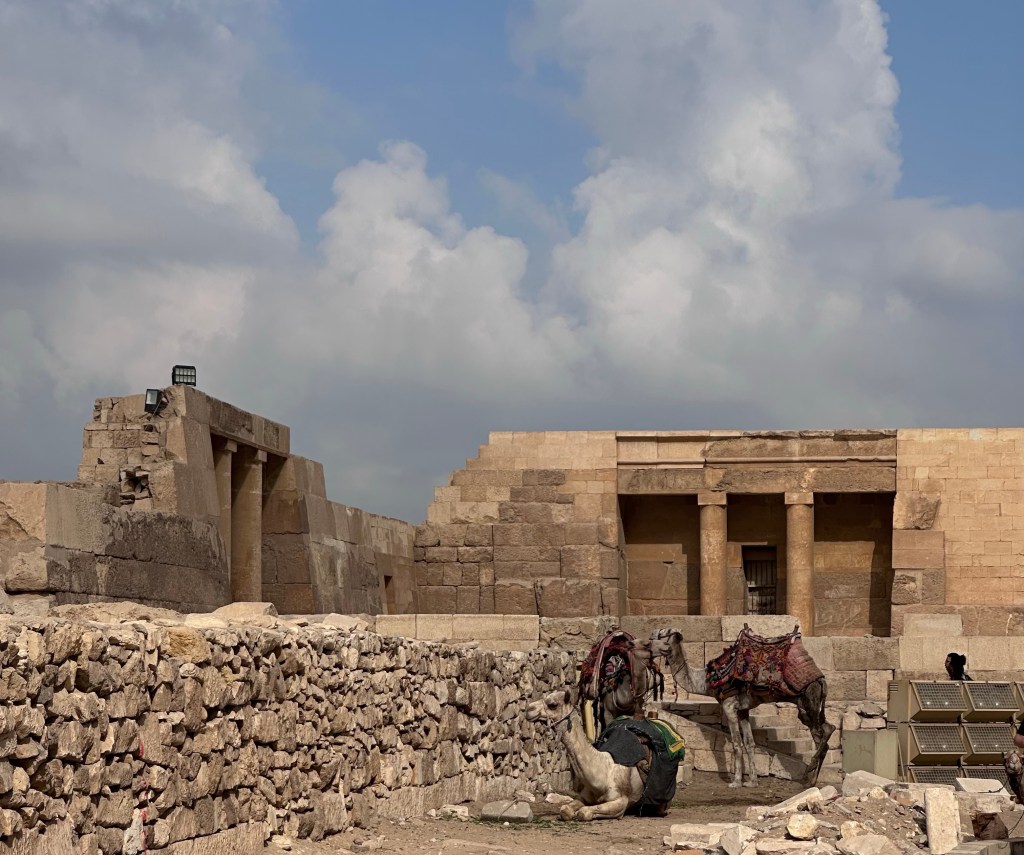
I found myself quite taken with the camels and spent as much time gazing at them as I did at the pyramids. They have such expressive faces!

Check out the tattoos on the camel on the right. these two were engaged in some very deep communication

Giza was even more chaotic than Cairo. Fortunately Mohammed prepared us for what to expect. He explained that the helpful men who offer to take your photo expect to be paid. There were so MANY of them! It was hard for me not to engage with the friendly young men, but I heeded Mohammed’s warning. Most wanted me to hold my hand up so that it looked like I was touching the pyramid’s top.

When we moved away from the craziness of Giza to get a panoramic view at a quieter site, we discovered this young man taking a more creative approach.

Our final stop before heading back to our hotel was to view Egypt’s very first pyramid, the step pyramid at Saqqara. We didn’t have much time at the site so we had to choose between entering the pyramid or visiting Serapeum, the tomb for the sacred bulls. I chose the latter.
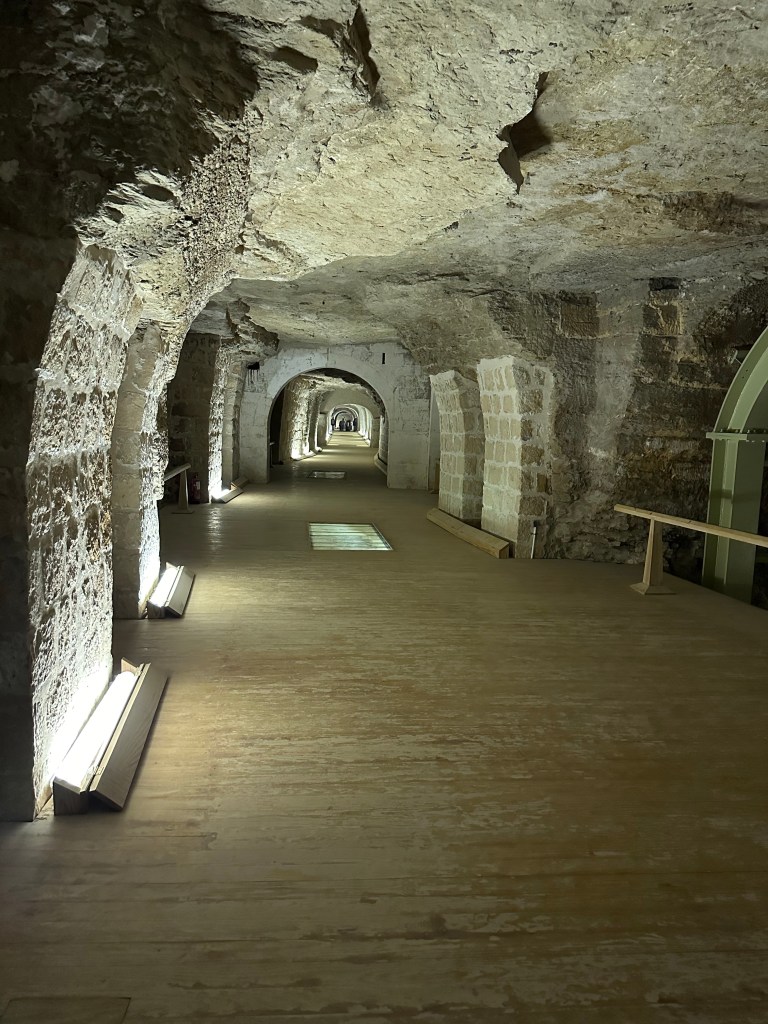
The serapeum is an underground structure with huge sarcophagi located in each alcove.

The Egyptians worshiped one bull at a time. When it died, it was mummified and placed in one of the 24 sarcophagi. Unfortunately, the site had been looted, so there is nothing left to see other than the immense sarcophagi.

The step pyramid as seen from the serapeum

It was a tiring day, and we have to be on the van at 4:45 tomorrow morning to catch our flight to Luxor, so it is time to press “publish” and hope for the best.

Petra

Just about everyone has seen a photo of Petra’s Treasury. To be honest, that structure was my #1 reason for visiting Jordan. And yes, the Treasury is quite magnificent. But there is SO much more to Petra. So, despite taking many photos of the Treasury, I’m not going to post any in this blog. If you want to see what it looks like, just ask Ms. Google.

The Treasury is a little more than a mile from the entrance. Although there are several options for getting there—golf cart, horse or donkey—Hisham, our guide, told us the very best way is on foot. That way, you can take your time and truly experience Petra’s magic. There are incredible rock formations everywhere, both naturally occurring and man made. Hisham did an excellent job drawing our attention to both, like this formation that resembles an elephant,

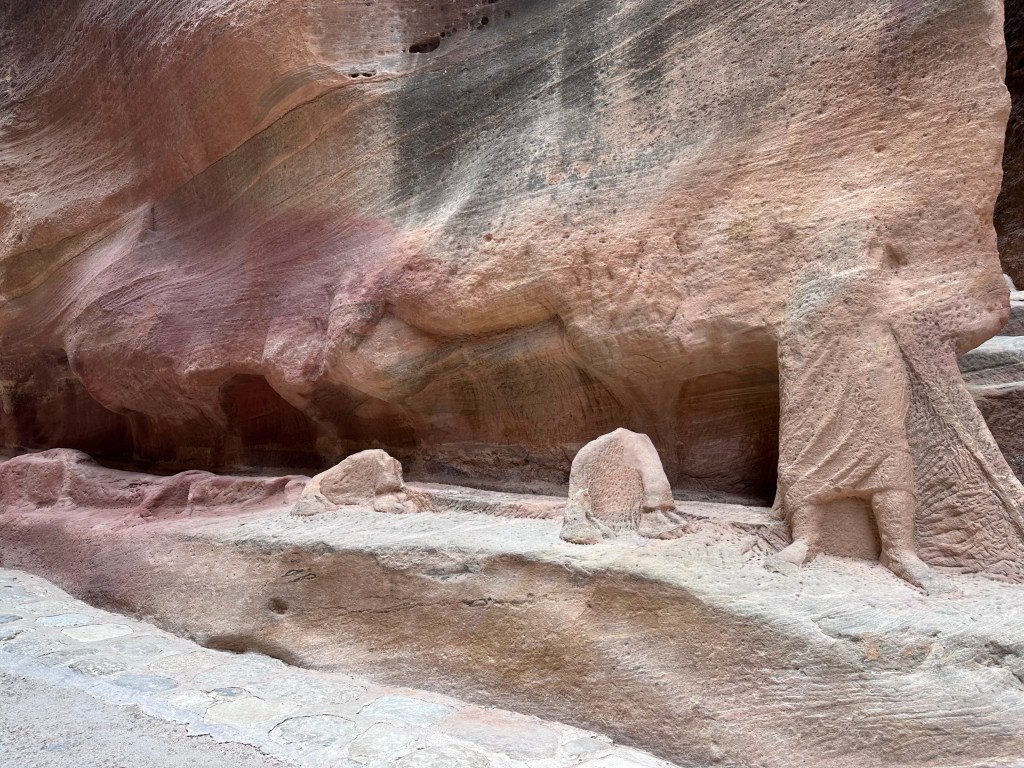
and this Nabatean carving of a camel driver leading his herd into the city. All that remains are the legs of the man, and some parts of the camels, still it was wonderful to see. And look at those glorious colors!

Can you spot the camels feet ( Hooves? Paws? Whatever camels have at the end of their legs)?

I could go on and on about Petra, and I will. For a little while, at least. It is far, far bigger than I ever expected.

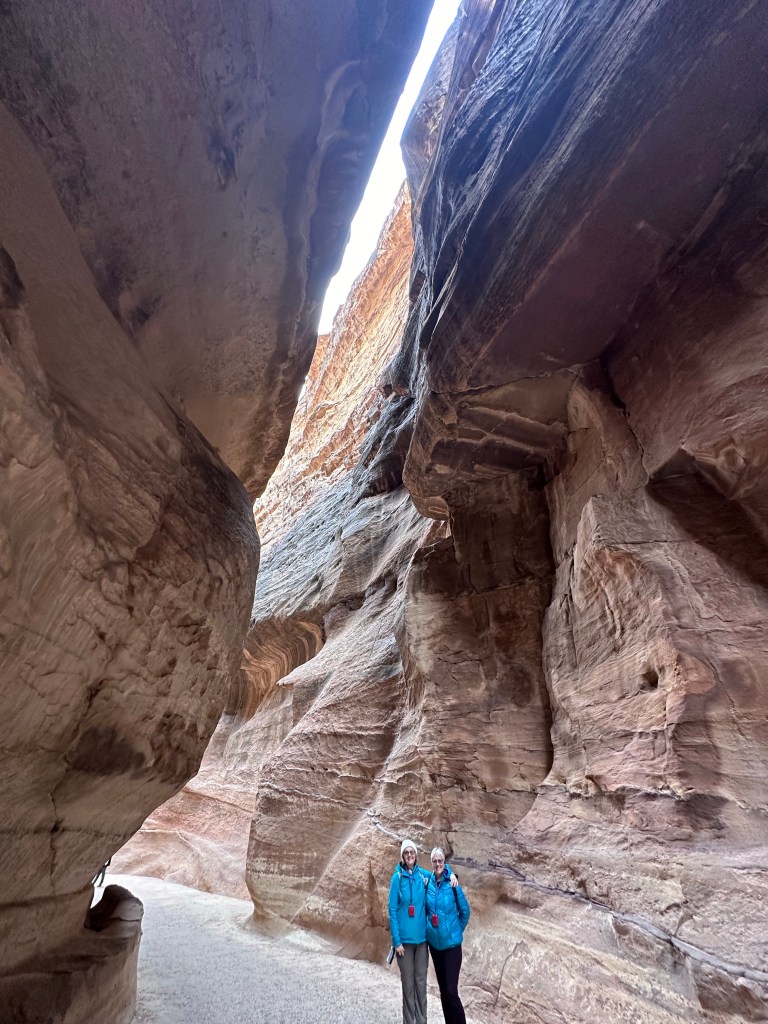
In the morning, it was cold enough for jackets, sweaters and hats, but by afternoon, Jeanne and I had shed a couple of layers.

Two members of our group, Paulina and Bill are travel guides in Moab, Utah. In fact, if you want to see the highlights of Arches, Canyonlands and Dead Horse Point, contact Paulina (moabinaday.com)—it’s her company, and she’s terrific. There WILL be a Moab visit and blog post before the end of 2024. I promise.

But back to Petra…even Paulina, who lives in Moab, ( and is a geologist) was blown away by the colors, the canyons, the enormity and the unbelievable carvings of Petra. Now that’s saying something.

I love the color of this structure!

Petra is strategically located between the Mediterranean, the Red Sea, and Yemen, which places it right smack dab in the middle of both the Silk and Spice Roads.

The Nabateans could offer the caravans food, shelter and safety. And the traders could make the Nabateans very wealthy. The Nabateans had a good thing going, at least until the Romans came along in 106 AD, and conquered them. As usual, the Romans had to leave their mark, so of course Petra has Roman ruins. Yet another fact that I never knew. I hope it comes up in Trivia one of these days.

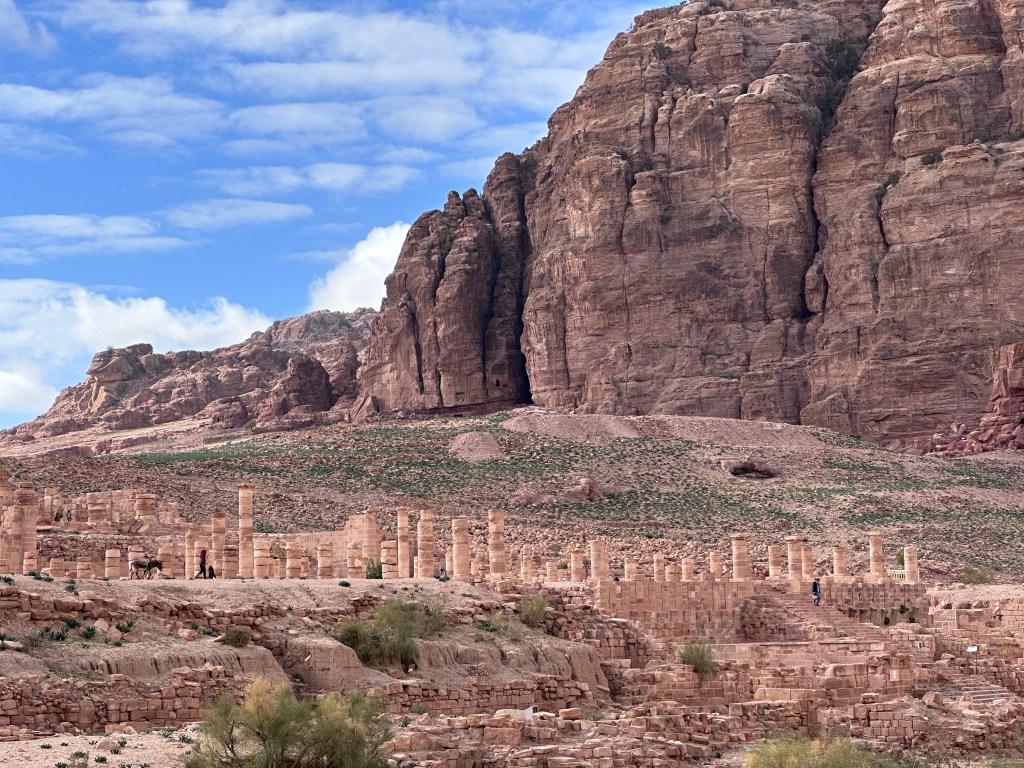
Roman Temple

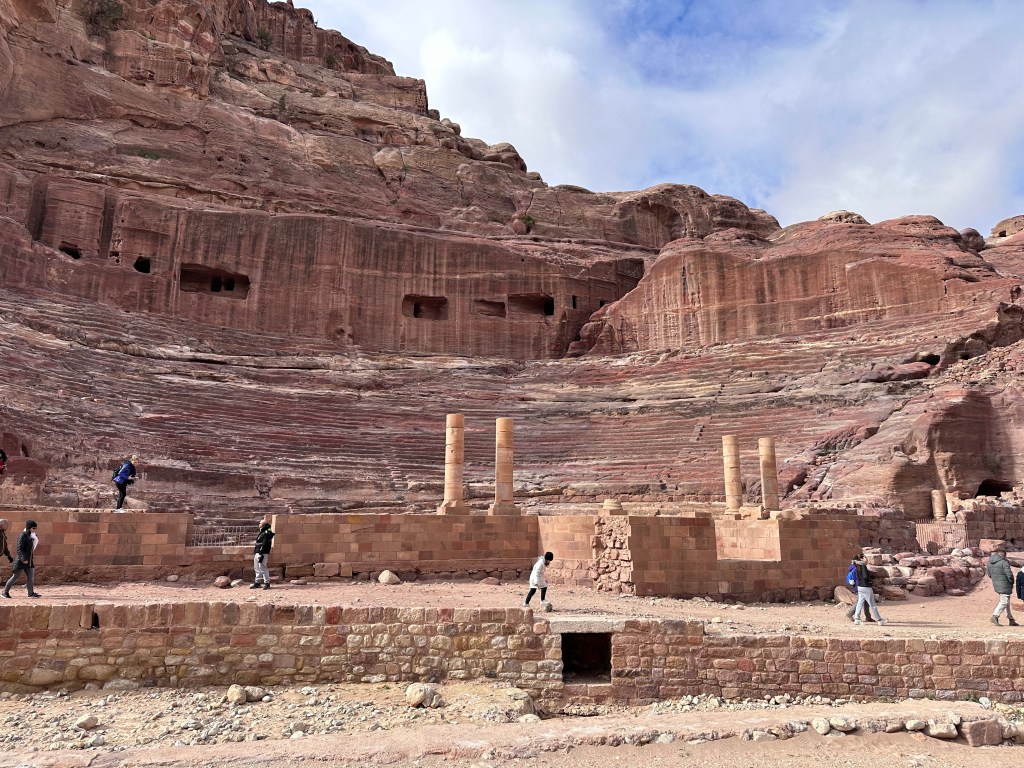
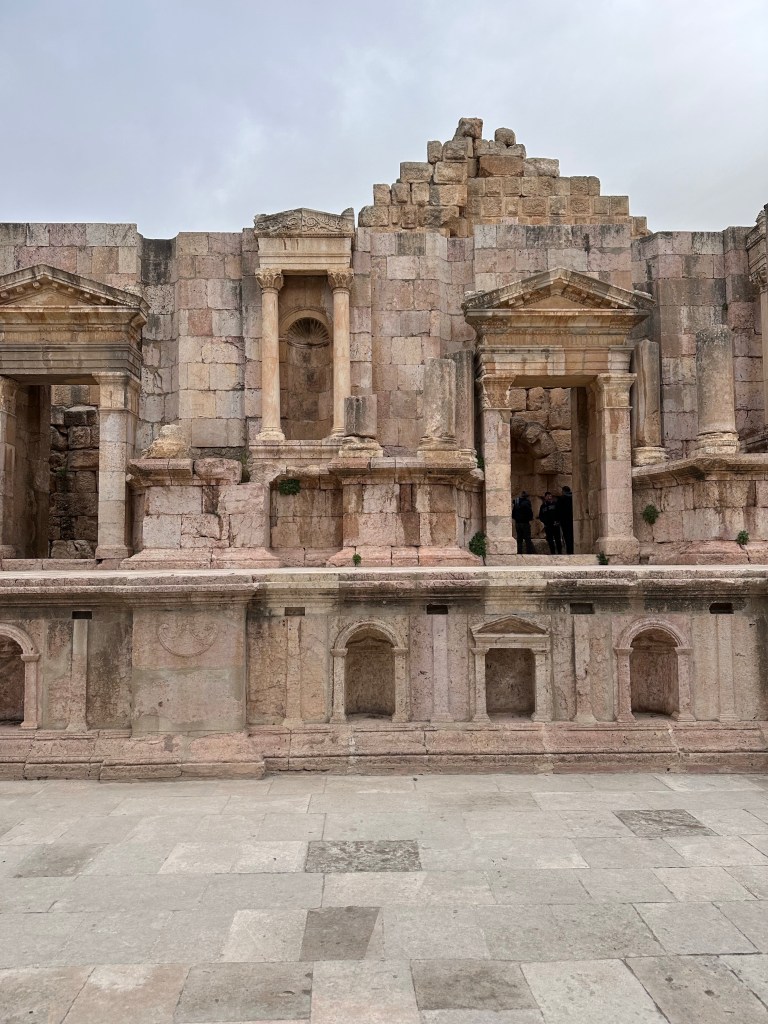
This was a Nabatean theater, which the Romans took over. Did they add the columns? I forgot to ask.

After lunch, we were given several options. We could go back to the hotel or climb to the monastery, the Royal Tombs or the High Place of Sacrifice. The Monastery was 950 steps. I don’t remember how high the other two were, just that they were significantly less than 950. I knew we still had to walk almost 3 miles to get back to the hotel, so the Royal Tombs it was.

It was impossible to get all of the royal tombs into one shot, so the photo atop this post gives you a view of another section.

Before your eyes glaze over, I’ll post one last photo of Petra then move on to some of the other fantastic, but little known (at least to me) highlights of Jordan.

The view from the Royal Tombs

When we left Amman, Hisham gave us the option of following the regular itinerary or paying a bit more, and making a detour to the Dead Sea. Our very compatible group unanimously opted for the Dead Sea detour. But first, we followed the proscribed itinerary, stopping to view the mosaic on the floor of St George’s Church in Madaba.

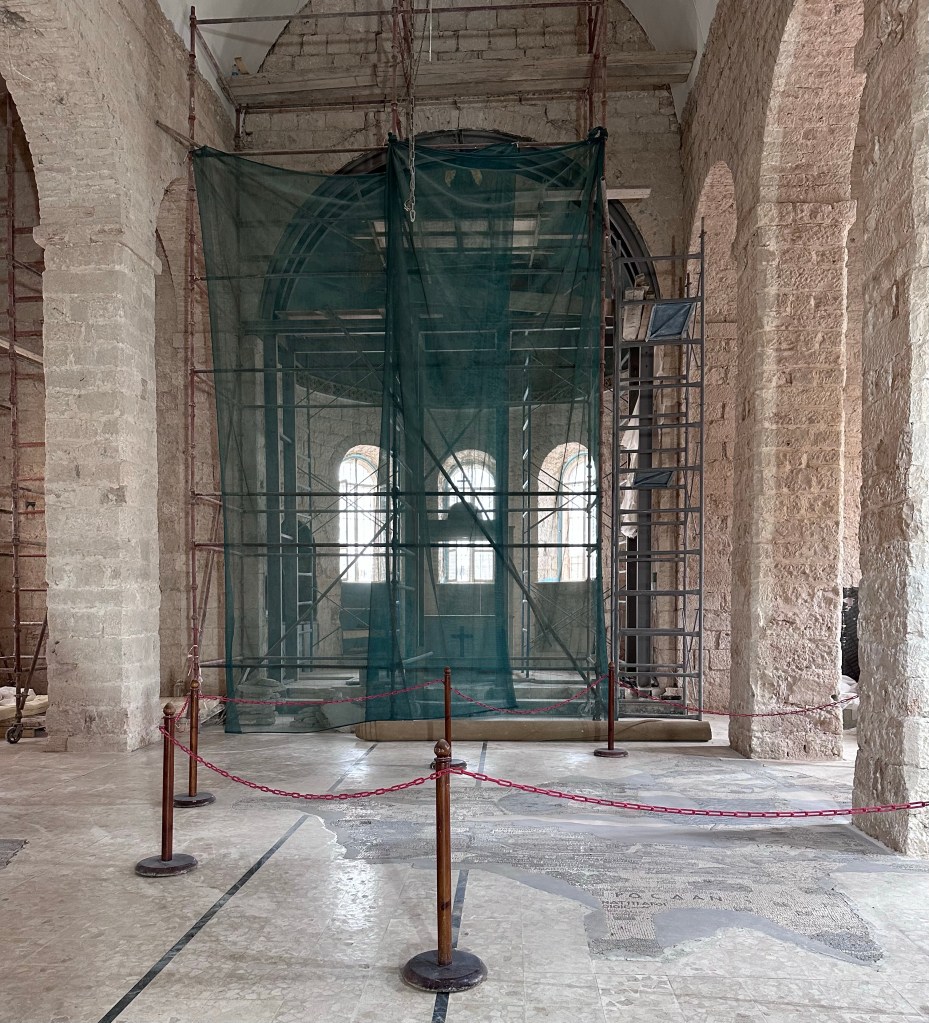
The church is being renovated, but we were still able to view the mosaic, which is encircled by the red chain. Fortunately, the graphic of the map, in the visitor’s center was much easier to read, perhaps because there weren’t columns in the middle of it.

Hisham, explaining the significance of various sites in the map.

Next stop was to a mosaics workshop where we watched items being created. .

In ancient times, the craftsmen scoured the area, searching for rocks of the right colors; these days, it’s much easier. They simply visit the granite countertops place, and collect the scraps.

For the rest of the day, I felt like we were journeying through the Old Testament. Take another look at the names on the map above. Am I the only one who kept hearing “Joshua at the battle of Jericho, and the walls came tumbling down” over and over in my head?

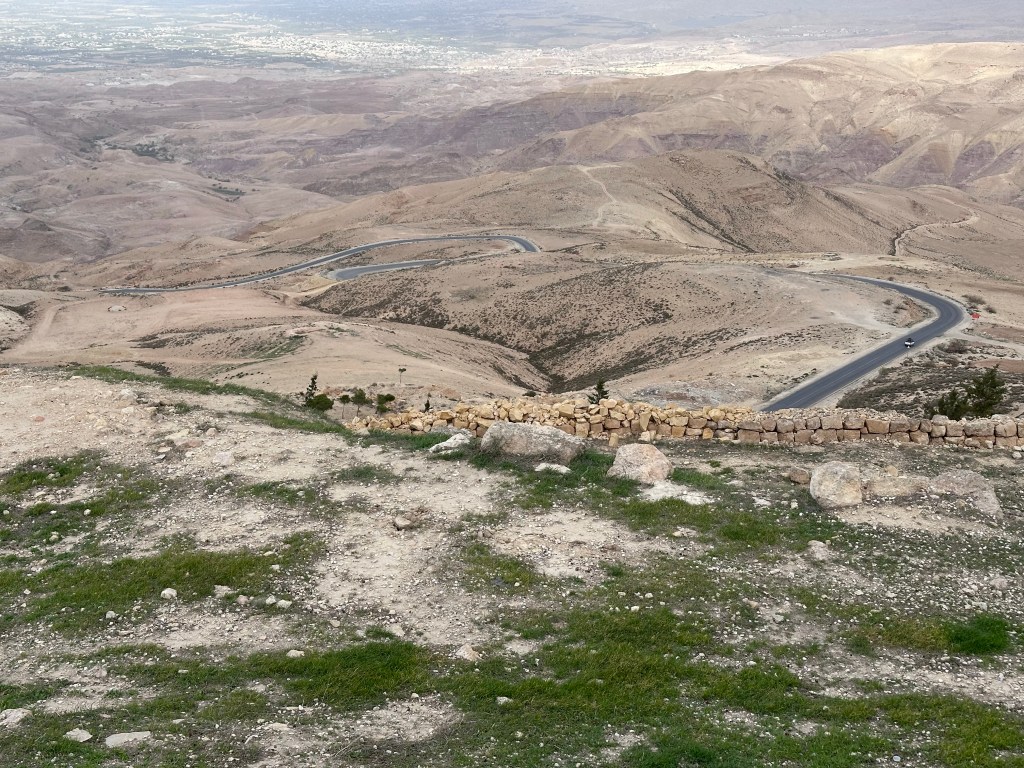
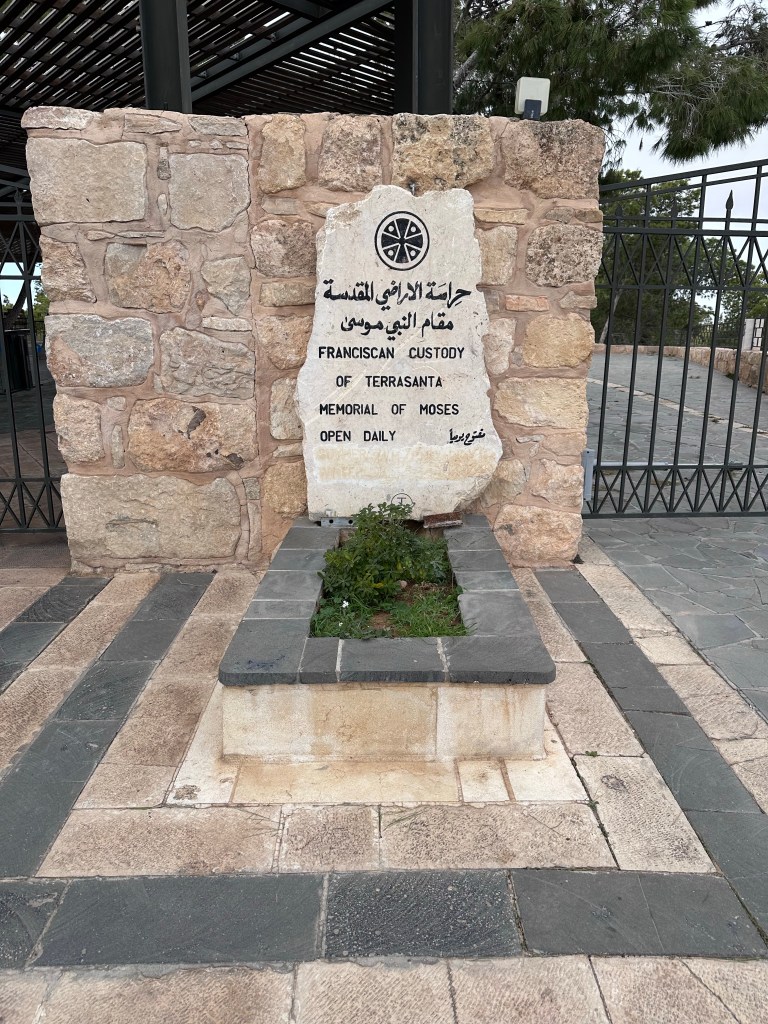
Just like Moses, we were able to gaze at the land of milk and honey from Mount Nebo, except back then, there wasn’t t a road running thru the landscape. Maybe it looked more promising thousands of years ago.

It was incredibly windy atop the mountain,

and that wind was responsible for the whitecaps on the Dead Sea. It was so rough, we weren’t allowed to go into the water. Undaunted, I decided to sit on the little pier, dangle my legs, and take a photo. I’m a Massachusetts girl, so I mistakenly thought the tide was creating the waves and the “tide” was going out. Suddenly a strong gust of wind pushed the water over the pier. So, no photo. Luckily, the lack of moisture in the air meant my pants dried rather quickly.

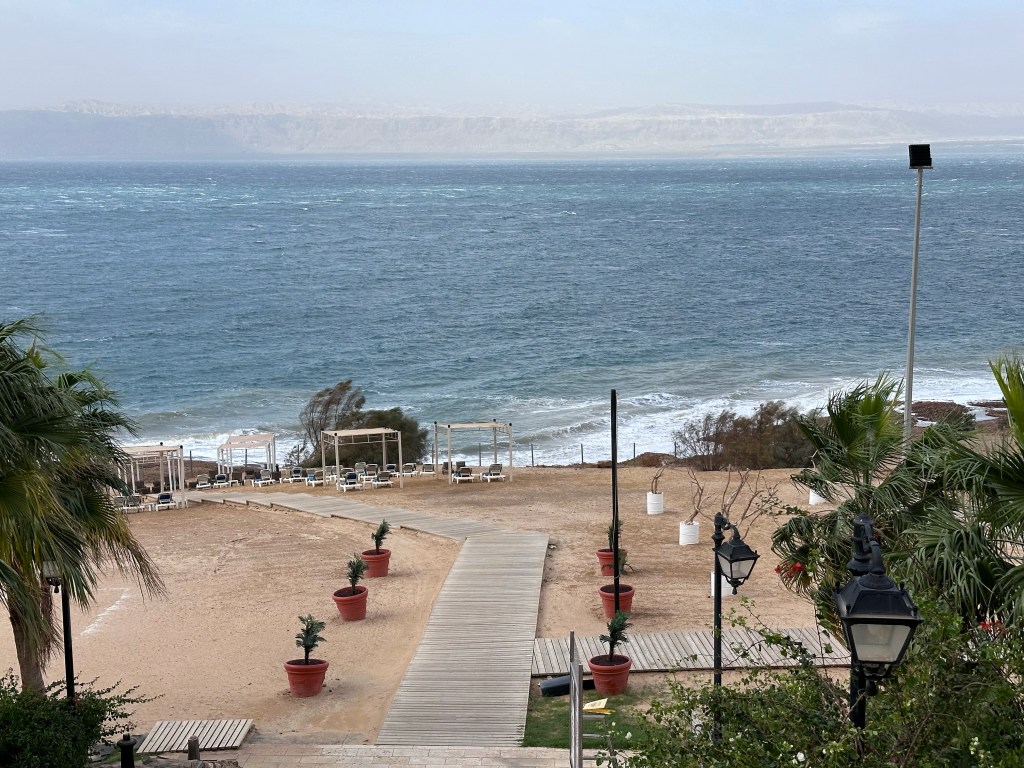
Although we weren’t able to go into the sea, we DID experience what it would have been to float in it like when we used the salt water pool in the Crown Plaza resort. It was quite an experience! Again, no photos, except this one of the view of the Dead Sea from the resort patio.

We took an elevator down to the beach, but still had to walk down—and then up— the equivalent (according to my Apple Watch) of 9 flights of stairs

The rest of the drive, through the Jordan Mountains, was gorgeous.

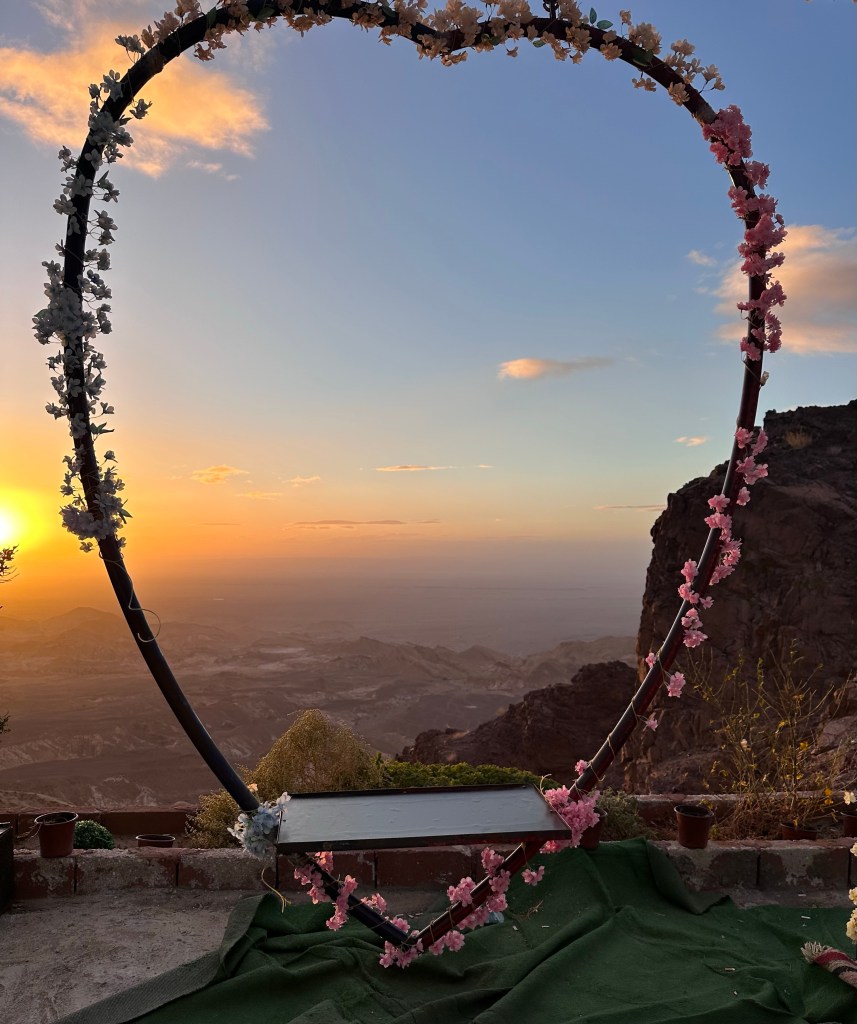
Roadside stop. For 1 dinar, you can sit on the swing and get your photo taken. I preferred the view of the sunset.
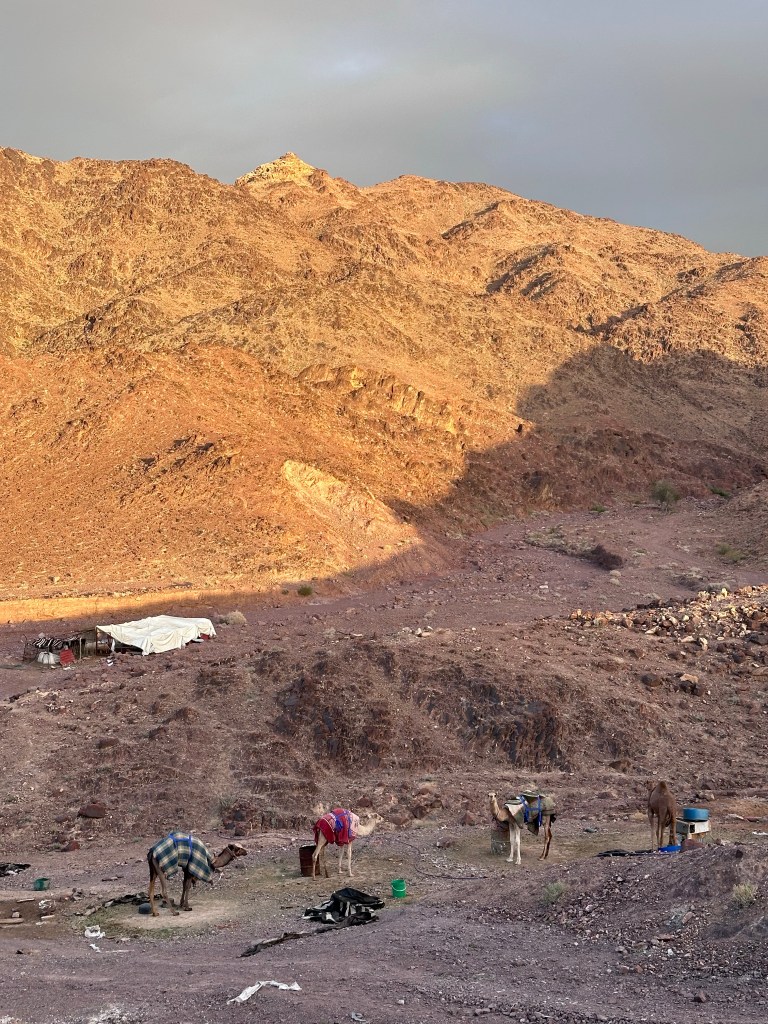
Bedouin camp

This morning, We departed from our hotel at 4:30 AM for the 3 hour drive to the Amman airport. We should be in Cairo before 1 PM today.

The van has WiFi, so I’m writing this as we bump along dark deserted streets toward the King’s Highway. Nothing to see, except the glow from my fellow passengers’ iPhones.

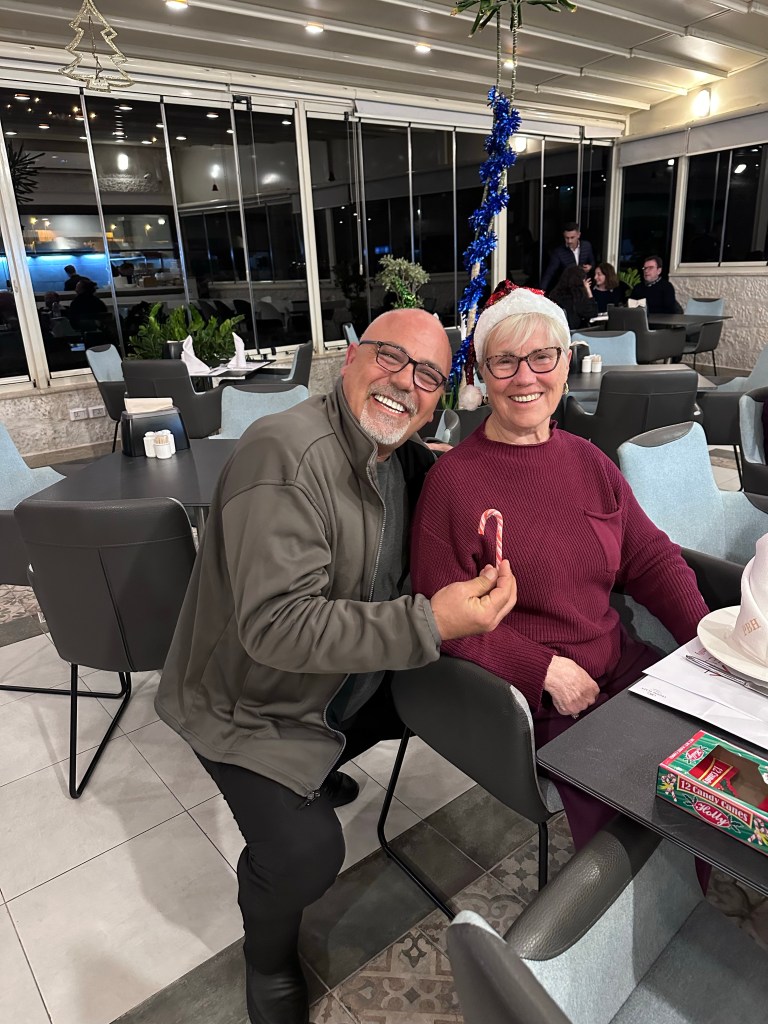
Merry Christmas to all!

Three Days in Amman, Jordan

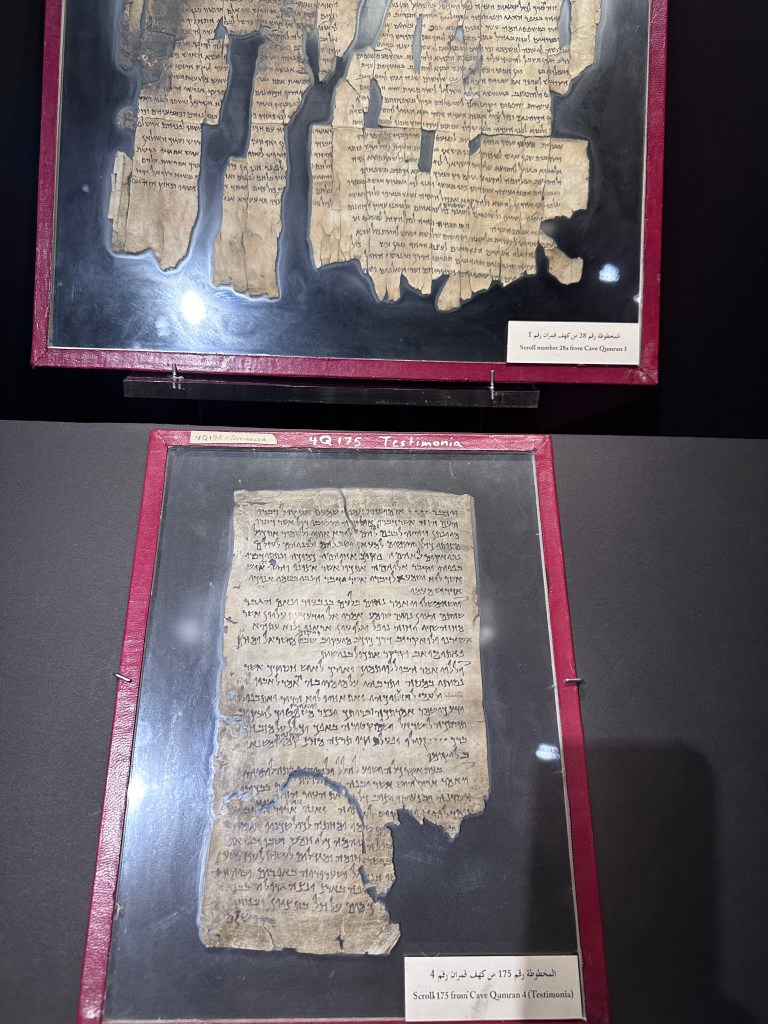
Remember learning about the “Dark Ages” in school? Well, come to find out, it wasn’t dark everywhere. In the Muslim world, for instance, the “Golden Ages” is a more apt description. Don’t believe me? Then come to the magnificent Jordan Museum. In addition to archaeological treasures, like Dead Sea Scrolls, the museum has a wonderful short video about the many significant contributions Muslims made to the world during Europe’s dark days, plus several interactive, multi-media displays.

Even if Amman isn’t on your bucket list (although Jordan should be) you can still experience some of the museum’s wonders by visiting this website ( if the link doesn’t work type in 1001inventions.com. )

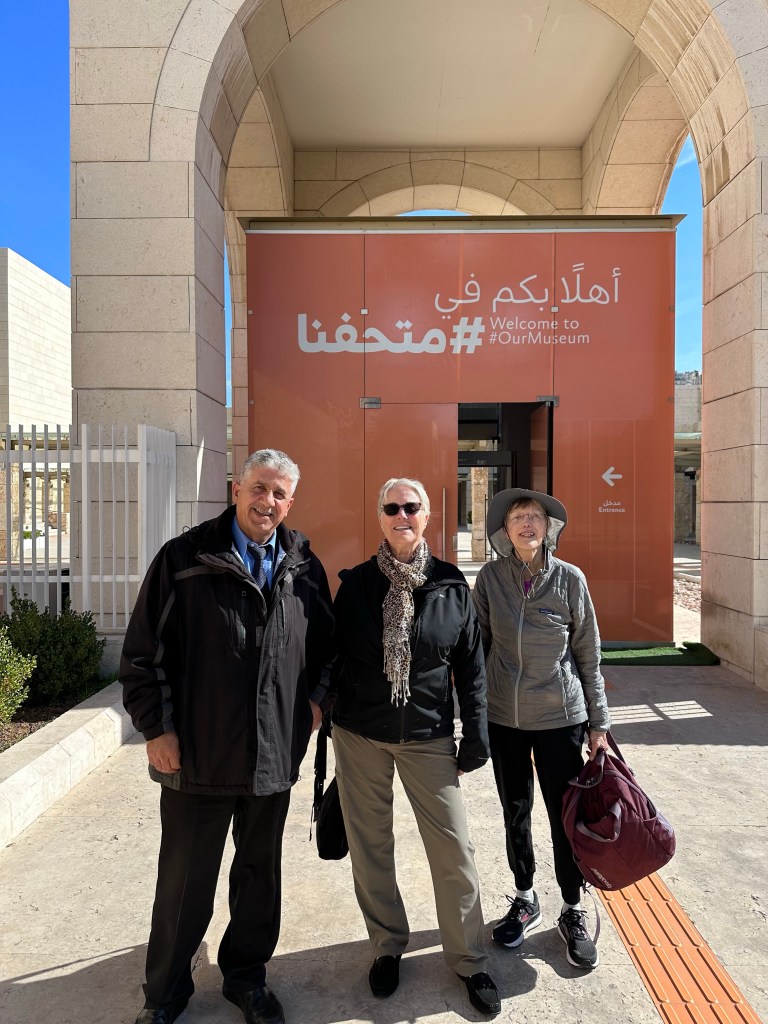
The Jordan Museum was not part of the OAT tour, however my friend Jeanne and I arrived a day early, so we had free time to explore before we met up with Hisham, our trip leader. My virtual travel buddy, Esther, who I hope to meet in person someday, had highly recommended the Jordan Museum, and I’m so very glad she did.

For those who like antiquities, the first floor has plenty of pottery and jewelry, plus something you don’t see in most museums— Dead Sea Scrolls

The upper floor has the video and the interactive displays that delighted me. Bet you can’t guess what this elephant contraption is.

Believe it or not, this is a replica of an 800 year old clock. “ The large clock uses Greek water-raising technology, an Indian elephant, an Egyptian phoenix, Arabian figures and Chinese dragons, to celebrate the diversity of the world”. ( description courtesy of the website).

The Crowne Plaza Hotel linked us up with Sam, who drove us to the museum, waited for us for over an hour and drove us back, for about $45 total. Best of all, there was no extra charge for Sam’s great commentary, delivered on the way to and from the museum.

Sam, Jeanne and Bobbie

The area around our hotel is definitely NOT conducive to walking, however that didn’t stop Bobbie and me from venturing out for lunch at Kabob Express, where our language barrier resulted in our ordering one lunch instead of two. (It turned out fine, because there was still food left over even after we’d both had our fill). Would I recommend it? Well, it was close to the hotel, they accepted credit cards, you got a lot of satisfying food for your money— and as my dad used to say, “it filled the hole”.

Jeanne, Bobbie and I met the remaining 4 travelers at our dinner, in the hotel restaurant. One of the reasons I enjoy traveling with OAT is the small group size allows you to really get to know your traveling companions, who are usually interesting, curious, friendly and seasoned travelers. This group is certainly all that, and more.

On our tour’s first full day, we visited Amman’s most important sites: the Citadel, which is located atop one of Amman’s seven hills, and the Roman theater; both have on site museums, which we explored.

The sites weren’t crowded at all, so you could take your time perfecting your next instagram post. And believe me, this couple did.

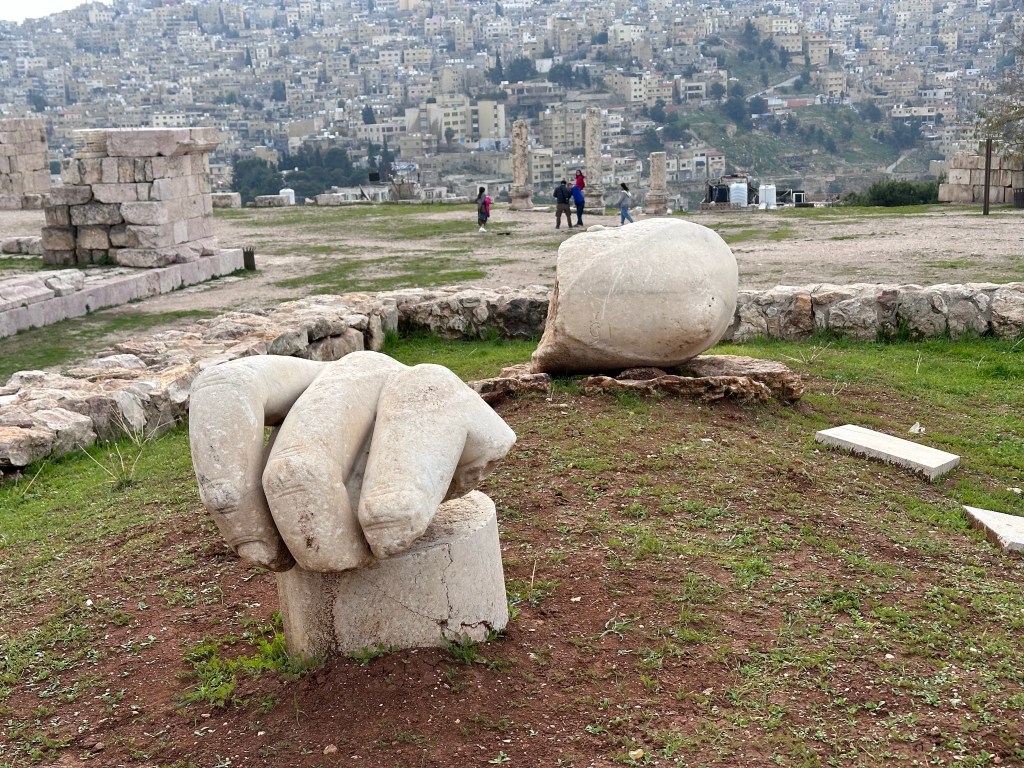
It was easy to get whatever shot you desired, like these fingers and an elbow from what was once a 42 foot statue of Hercules. You can also get a feel for the old section of Amman, which appears in the background.

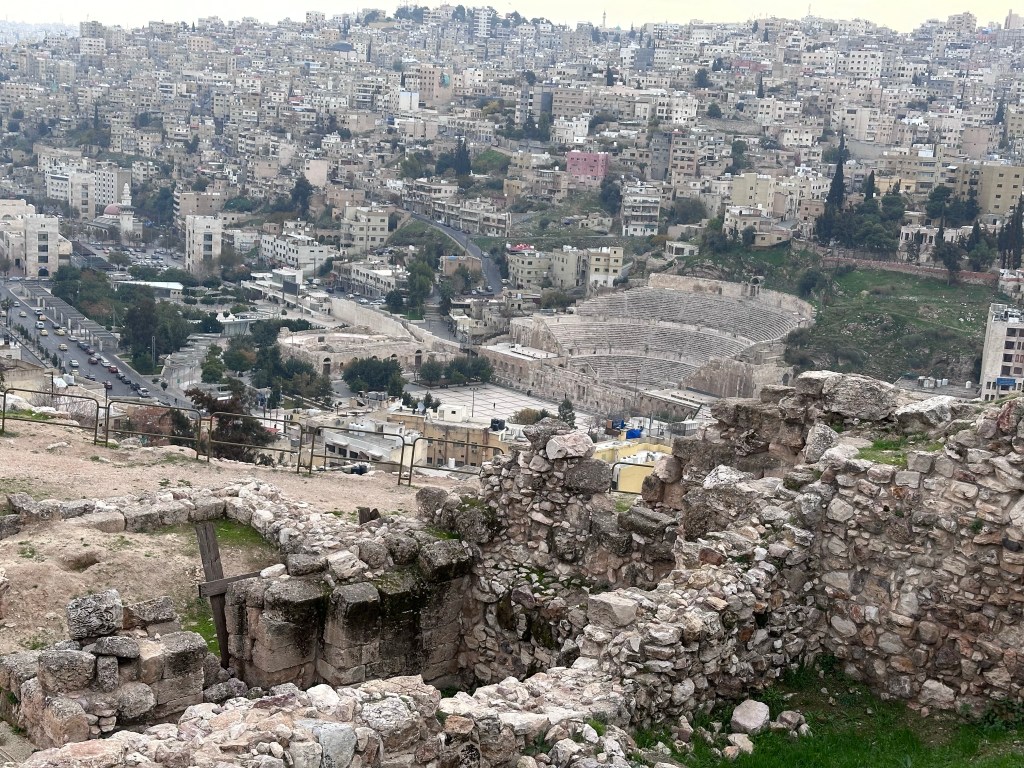
Check out this great view of the Roman theater from the Citadel. The theater is so large, this was the only way to get all three tiers of it into one shot.

Here at the theater, the preferred photo op was to plop your toddler atop the front pedestal and then give the child directions on exactly how to pose. This little girl was having none of that.

Notice the special seats carved from stone in the first tier, right behind her? Those were the royals’ (Caesar’s) box seats. Way up high, in the nose bleed seats was where the women and slaves were relegated.

So, of course we ladies had to do something about that!

We spent our last day in Amman driving about an hour north to Jerash. Don’t feel bad if you’d never heard of it. Neither had I, before this trip.

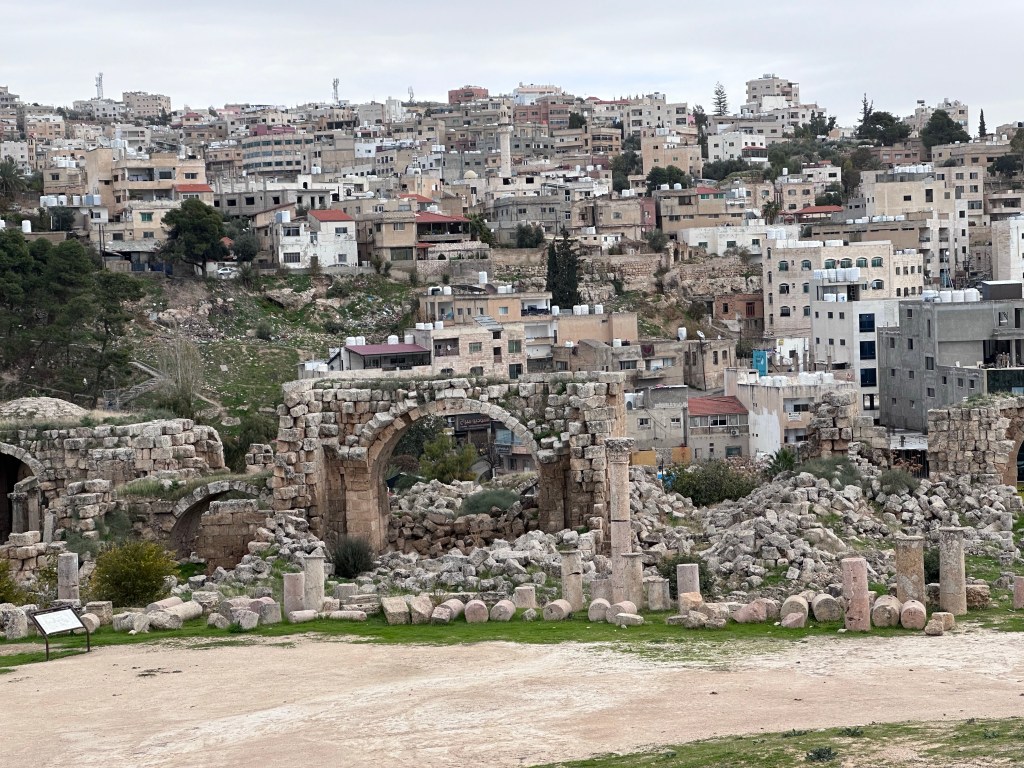
Despite having been partially destroyed by the earthquake of 749, it is still one of the best preserved Greco-Roman cities, as interesting as Ephesus to me.

This is normally the high season, with thousands of daily visitors, but because of the fighting between Israel and Hamas, we had the site almost to ourselves. Although I am so sorry for the Jordanian people who make their living in the tourist trade, I am even more sorry for all the Palestinian and Israeli victims of this horrible war.

Hadrian’s Gate, outside of the city
Still a work in progress, these stones are sitting on the ground, waiting to be fitted together.
View of the oval forum from one of the temples
The theater, with incredible acoustics brought about by the series of niches. They didn’t need microphonesGood thing because they hadn’t been invented yet.

We will be leaving shortly for our dinner with a Jordanian family in their home. Tomorrow we travel to Petra, stopping at the Dead Sea along the way.

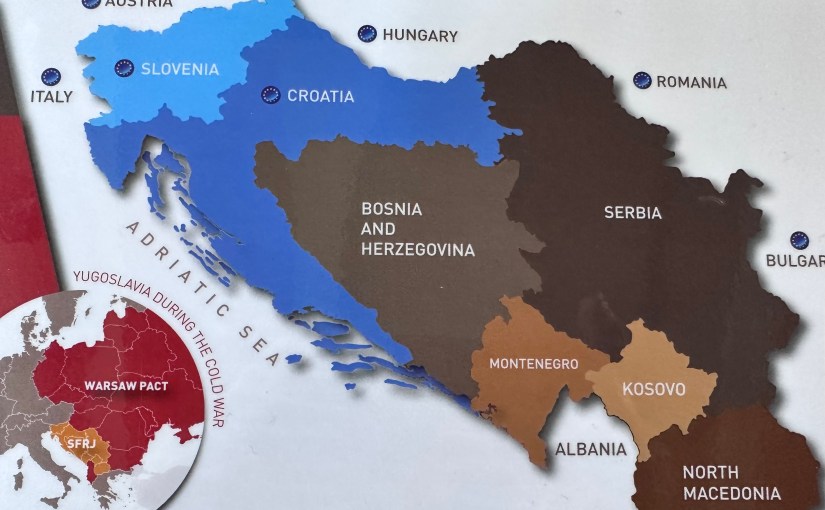
Croatia, formerly part of Yugoslavia

Thanks so much for the words of encouragement from all who commented on my last post, either here, on Facebook or on LinkedIn. It was great to hear from so many friends. I had no idea you were reading my blog, because unless someone comments, I don’t know who my audience is. Your very kind messages motivated me to continue writing about October’s trip.

Yugoslavia was once made up of 6 countries, and on my recent Overseas Adventure Travel (OAT) trip, I visited four of them: Croatia, Montenegro, Bosnia &Herzegovina and Slovenia. I tell you–we are SO very lucky to be able to travel in the USA for thousands of miles without ever having to show our passport. On this trip, we had multiple border crossings, and although our guides knew the tricks to make it as painless as possible (which crossing was less busy, what time is best to cross), it still was an inconvenience that I’m glad is not part of our daily lives.

After 7 of us finished the pre-trip to Albania, we drove through Montenegro to a parking lot by the border where our Albanian guide said goodbye, and Antonia, our guide for the main trip, greeted us (literally) with open arms. How lucky were we to get this dynamo for our tour leader! She was funny, creative, attentive, and so very joyous. She started out by giving us the good news that we were staying at a different hotel in Dubrovnik, a five star, because our original (4 star) hotel was still being renovated. As the millennials would say, “OMG”! The Valamar President Hotel was truly magnificent–right on the ocean, with spectacular views of the sunset. Here’s an example of one. 

Scott and Gretta, two of my favorite fellow travelers. Scott had the foresight to bring a corkscrew and glasses on the bus so that we could enjoy the wine we bought along the way. It made those very long bus trips quite entertaining!

Prior to embarking on the trip, I had googled the original hotel’s location (I know, I’m obsessive/compulsive) and was slightly disappointed because it seemed quite far from the old city.  I got over that disappointment real fast, because it was so easy to get to and from our new, improved hotel, (which happened to be in the same area as the original one). We were given a free pass, the buses ran frequently, and we got off right in front of our hotel. By the way, did I mention our hotel was magnificent? 

When we arrived at the hotel, we were joined by the 9 remaining members of our group who opted not to take the pre-trip, including my dear friend Augusta.

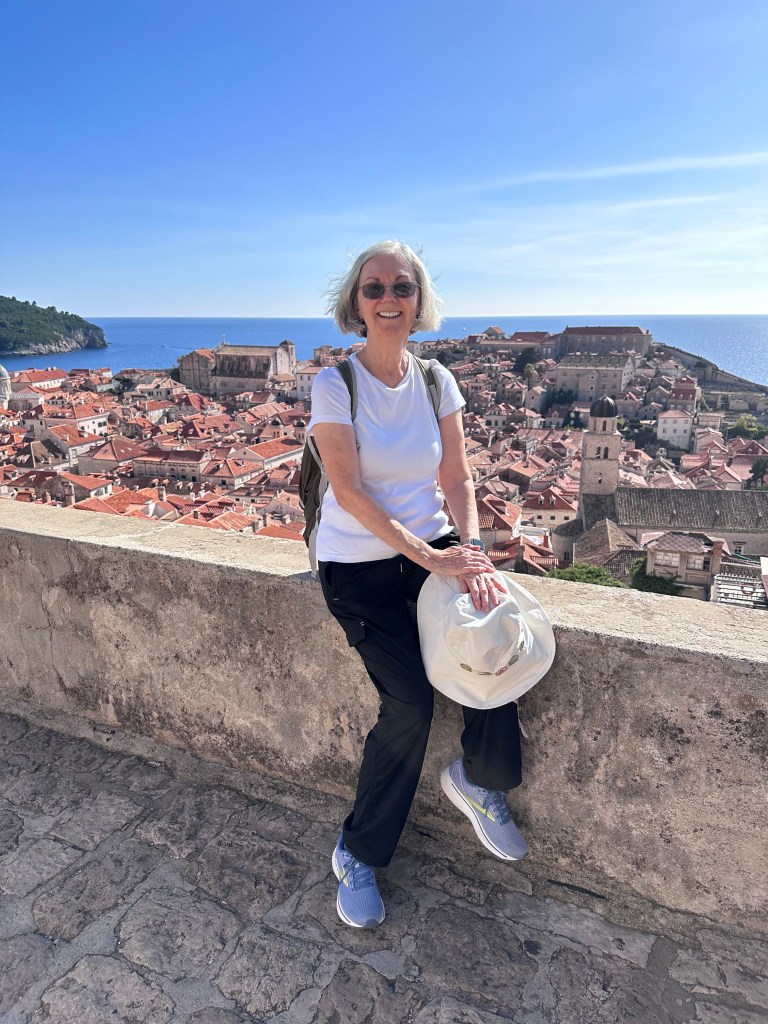
One of Dubrovnik’s big attractions is walking along the city walls, which we did on our second day in the old town. 

It isn’t obvious from this photo, but there was a lot of up and down along the wall, with very uneven steps. But don’t let the following photo dissuade you from exploring the ramparts. One of our fellow travelers, who is in her 80’s, managed to climb up and down without a problem. I found that truly inspiring–and very encouraging for someone who is hoping to be traveling well into HER 80’s. (In case you have’t guessed, that someone would be me).

walls 0f Dubrovnik

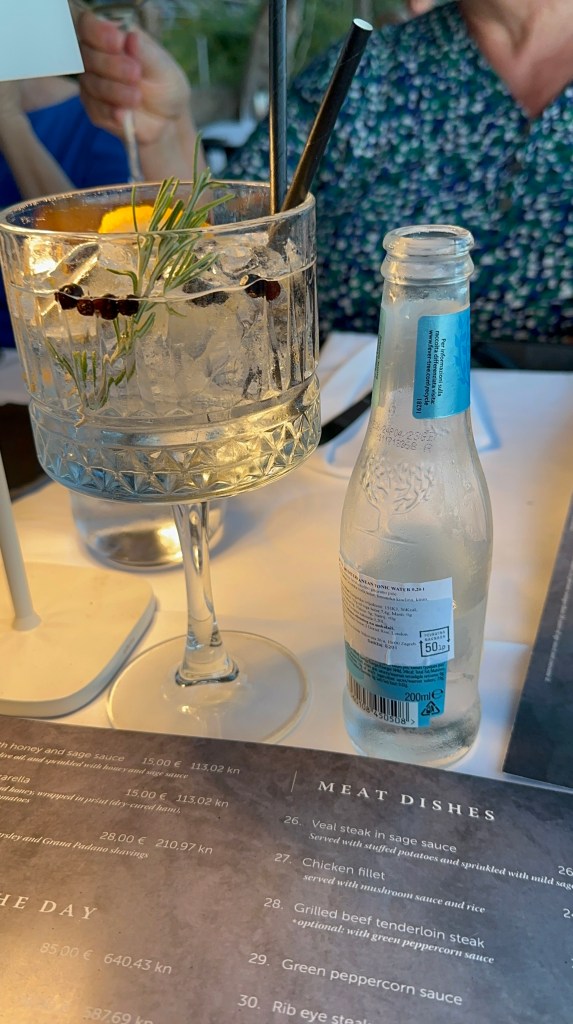
That evening, dinner was “on our own”. Antonia walked us along a beautiful path that hugged the ocean which was lined with fantastic restaurants, telling us a little about each as we passed. When she said, “This one makes the best gin and tonics in all of Croatia”, Augusta and I knew we had found our place. What made it the best? Not only was the drink served in a beautiful glass, but the creation of it was something to behold. (click on the underlined words if you want to watch our waiter construct that masterpiece).

Dinner by the sea was delightful, and the Croatian sunsets were consistently magnificent.

But the most memorable part of our time in Croatia was the talk given by a woman who had lived in Dubrovnik during the Balkan war. At that time, she was in her early 20’s. Overnight, her life changed. She had been a carefree young woman until, after a night on the town with friends, she was awakened by the sound of bombs dropping. One might expect her talk to have been depressing. It was not. It was actually an inspiring story about the resilience of the Croatian people as they learned how to survive for three months without water and electricity. She told us she quickly learned what was really important, and it wasn’t money. ”What good was it to have money, if there was nothing you could buy”, she asked.  

Photo by Mark Burgunder Sr.

Her talk took place in what was once Napoleon’s fort, and is now a museum housing memorabilia and information about the Serbian and Montenegrin attacks on Dubrovnik, a World Heritage site. 

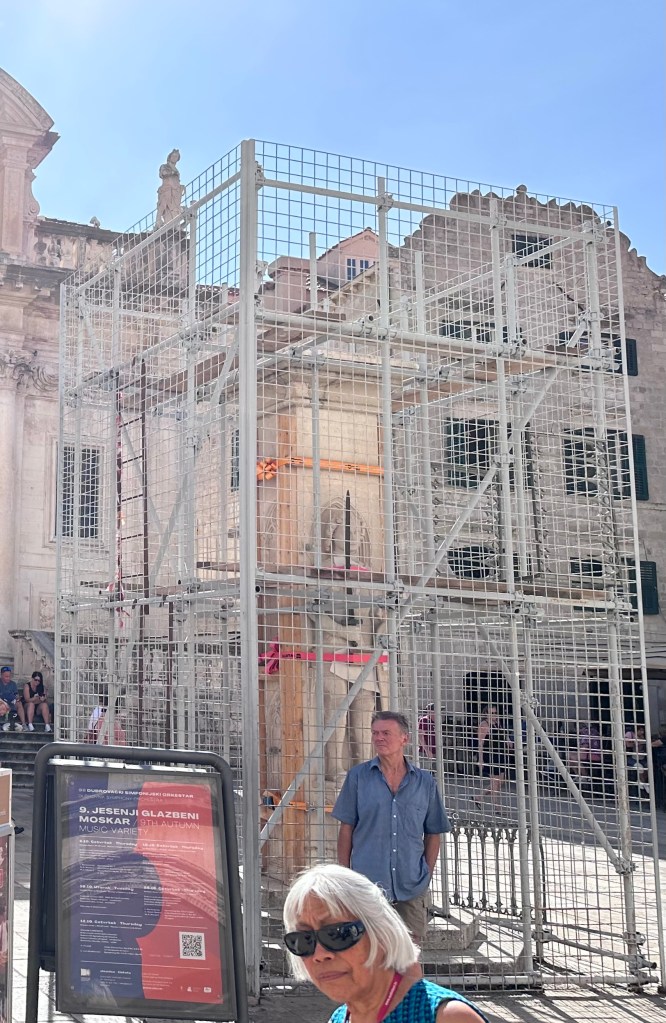
In case you’re wondering about the picture of the soldier on her right, that’s Orlando. His statue currently is located in the main square, where in days of old, decrees were read and citizens would gather to be entertained by watching the bad guys get their just punishment. (Don’t judge–they didn’t have TV or the internet back then).

This is what Orlando looks like now. It’s hard to see him, or his all important elbow, because there is a protective barrier surrounding the statue. At some point, he will be removed to have the statue version of a spa treatment, and will be returned, thoroughly restored and rejuvenated.. 

So who was he, and why did I mention his elbow? Well, legend has it that Orlando was a nephew of Charlemagne. Perhaps you know him by his alias, Roland? More importantly, his right arm, from fingertip to elbow, was used to measure fabric, which was traded in that very square. Why his forearm? I have no idea. It certainly makes as much sense as the inches, feet and yards WE use. By the way, there are only three non-metric countries on this planet: the USA, Liberia and Myanmar (so we are in good company, indeed). Saturday Night Live did a hilarious skit about our use of the “imperial” system. But I digress…

Our return to Dubrovnik’s center via the tram gave us this phenomenal view. By the time we made it to town, however, I had seen enough of the walled city and was more than ready to return to relax on our hotel’s private beach. Little secret: it’s hot in town, and crowded, so I was grateful for free time, my bus ticket and my luxurious hotel.

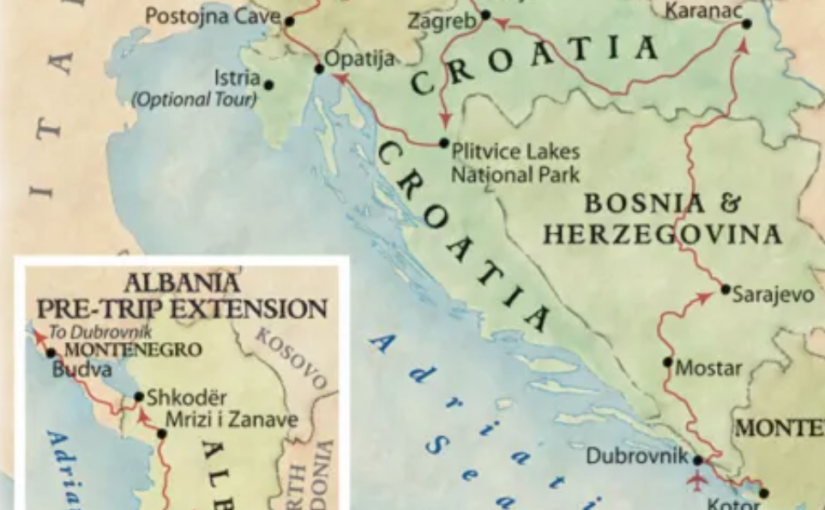
It may be difficult to see on the map atop this post, but Croatia is rather oddly shaped. The non-French say it is shaped like a bird in flight. To the French it looks like a croissant. To me, it resembles a gerrymandered voting district. Can you see that little gap that gives Bosnia & Herzegovina access to the ocean? Because of that gap, someone traveling just a few miles north from Dubrovnik could be subject to TWO border crossings: leaving Croatia to enter Bosnia, then again when reentering Croatia, and it would happen again when they did their return trip. 

While in Dubrovnik, we took a day trip to lovely Kotor, Montenegro, then headed for three nights in Sarajevo, Bosnia, after which we returned to Croatia for 6 more days before heading to Slovenia, for three nights, then heading home. Got that? I don’t have the energy to fit all of that into one post, and you probably wouldn’t want to read one that long anyway, so this post only focuses on Croatia and Montenegro.

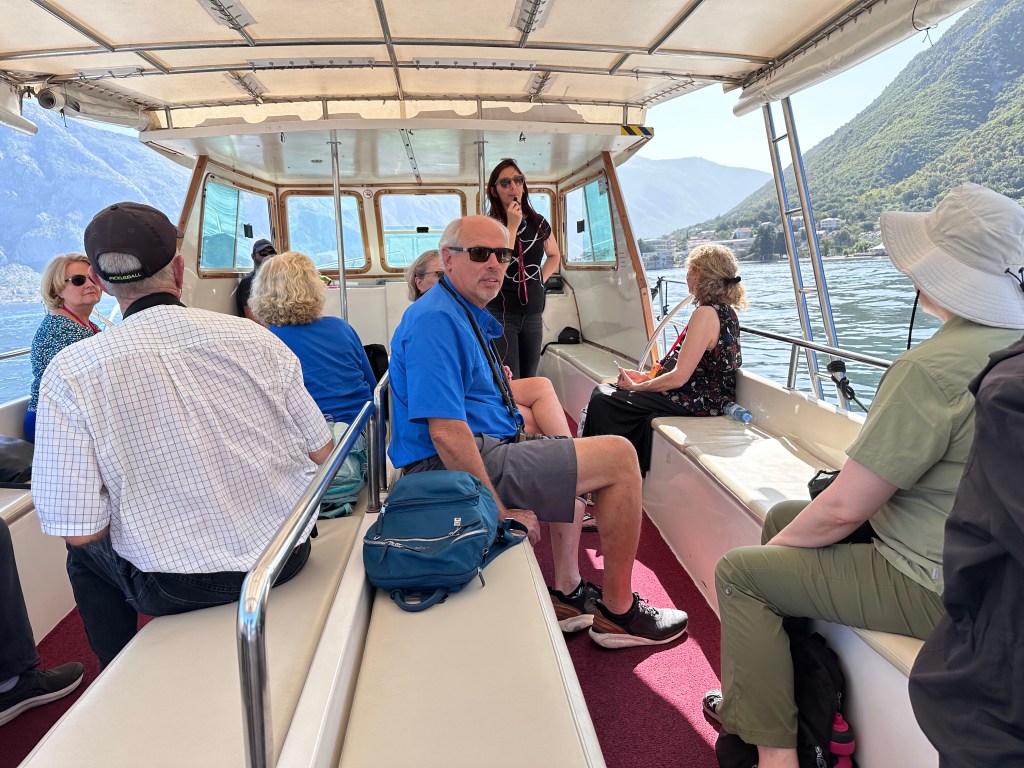
Our day trip to Kotor started with a breathtakingly beautiful ride on our private boat. I think it was during that ride that someone dubbed Antonia “the child with power”. 

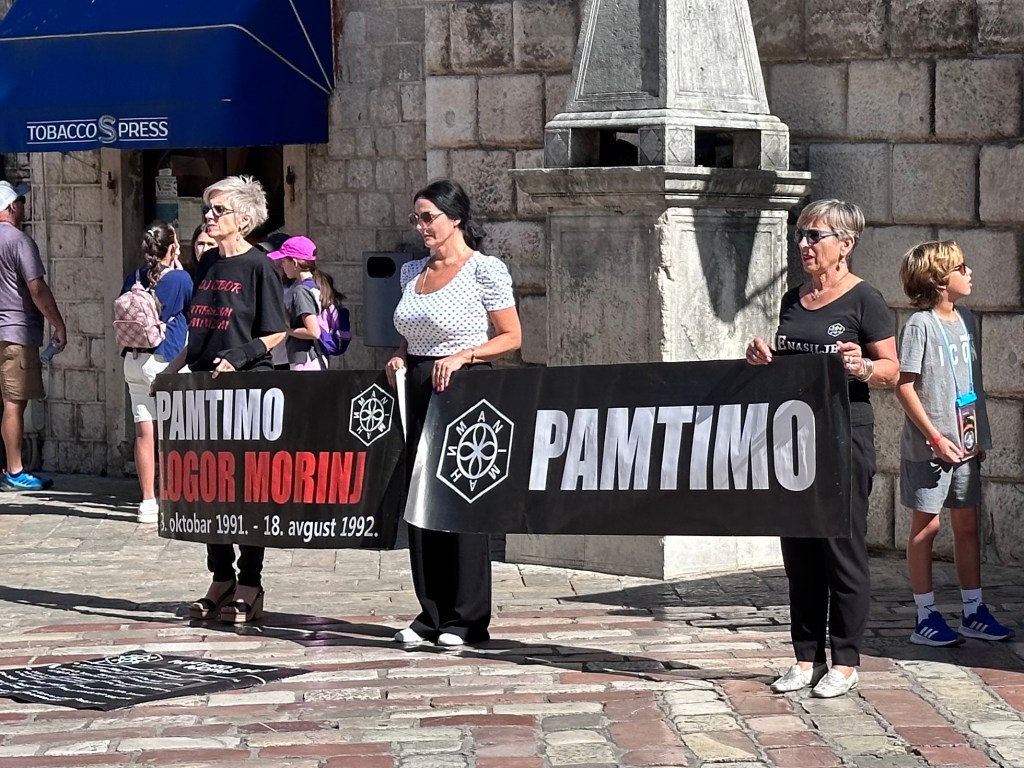
Kotor is a lovely medieval city with palaces, restaurants, gift shops, and like other medieval towns, it had its share of stories and legends, which I promptly forgot. What I didn’t forget was the women we encountered, holding the banner that says “We remember the Morinj camp”, which is where Croatian prisoners were held in deplorable conditions from 1991 until 1992. The banners act as an acknowledgement and an apology for Montenegro’s role in the Balkan War. I found that rather refreshing. 

Are you ready for a break from war talk? Instead, let me tell you about Karanic, the Croatian village we visited on our way to Zagreb. OAT trips usually include”a day in the life” of the country’s inhabitants, but this was the first time the “day in the life” included an overnight stay. These encounters are designed to provide an opportunity to see non-tourist areas and get exposure to different aspects of the local culture.

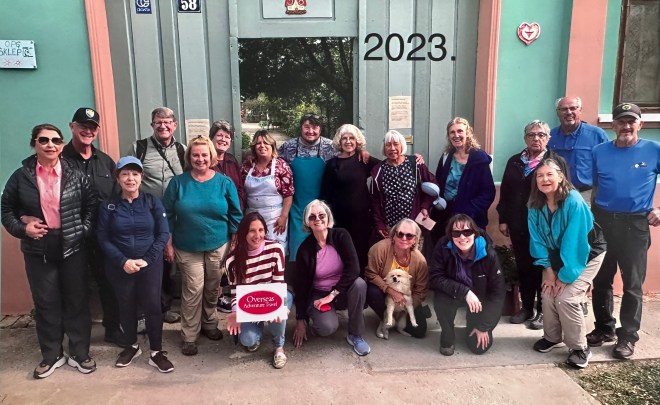
Our group, at Karanic, with Dennis, our host.

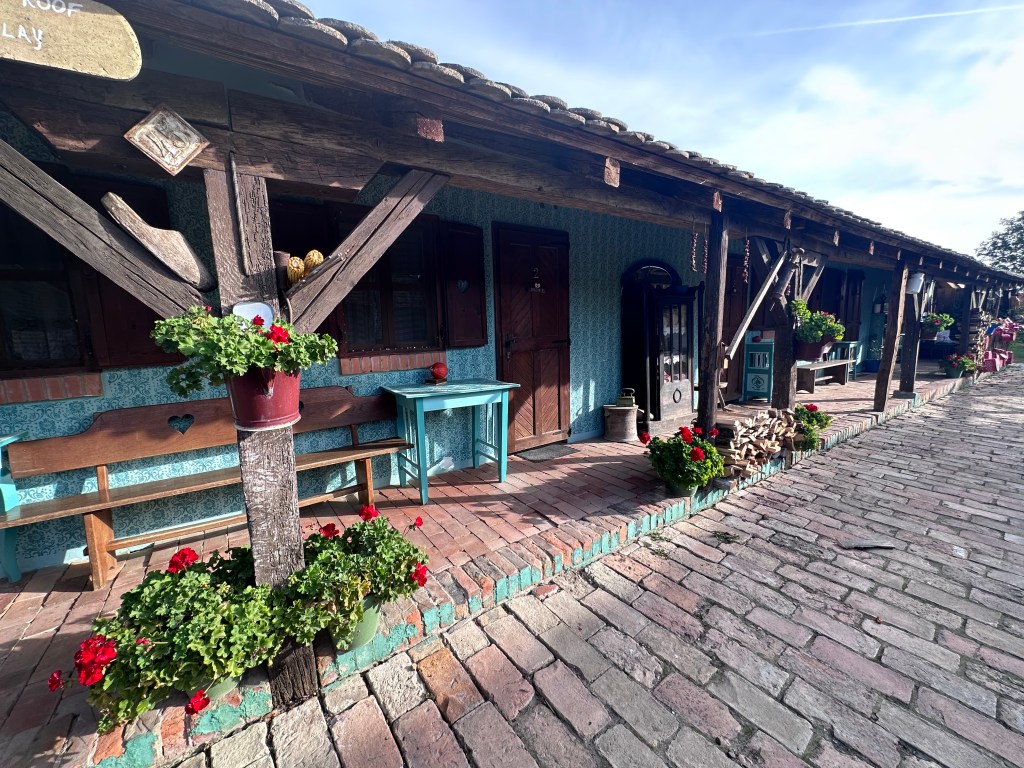
I wasn’t quite sure what to expect, but our accommodations exceeded anything I could imagine. The home had sufficient rooms for us all, each with a private bath (whew). 

The food was delicious. Some of us helped with the cooking–others captured the moments via cell phone photography.

Karanac was a nice interlude before our stay in Zagreb. When we arrived at our hotel, we noticed it was filled with men wearing team shirts. Unbeknownst to me, we were sharing the lobby with the 2018 World Cup champion football team. This became apparent when we passed a building that was plastered with a photo of the guys we had just seen in the lobby. If only I were a sports fan…


Zagreb had experienced an earthquake in 2020, so some of the buildings were still being repaired. Still, as you can see, the city offers something for everyone. I can’t offer commentary on these attractions, because I didn’t sample any of them. 

What I CAN tell you is the Bornstein Winery is not to be missed. It was educational, delicious, and oh so much fun! Six of us visited there during our free time. Who knew that a Croatian immigrant took zinfandel vines to California many years ago?

There is a whole lot more I can say about Croatia, and the other countries on this fabulous trip. Maybe someday I will, but right now, it’s time to prepare for the next adventure. I hope you’ll come along!

Jordan Adventure

Timing is everything in life, and right now, the jury is still out as to whether my timing is extremely foolhardy or rather brilliant.

I booked the Overseas Adventure Travel (OAT) trip to Egypt in late February of 2023. For years, I’ve wanted to visit Petra, and OAT’s trip offered the opportunity to spend five nights in Jordan, prior to the start of the main trip in Egypt. OAT limits their trips to a maximum of 16 travelers, and their single rooms get snapped up quickly, so I knew if I hesitated, I would lose out. I also knew that it would be wise to spend the my first holidays without Mike, Sandy, and my dad away from home.

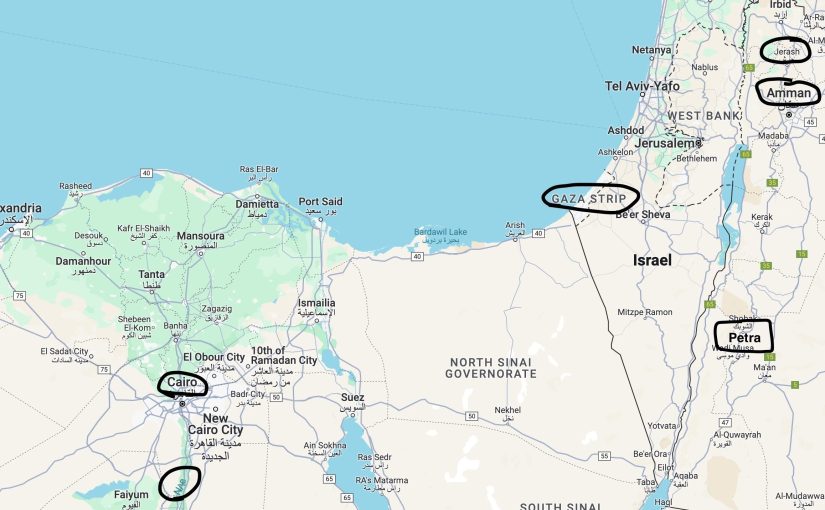
You’d have to be living in a cave on a deserted island not to know that things changed in the Middle East rather dramatically on October 7, when Hamas attacked Israel. Given Jordan’s proximity to Israel, one might question the wisdom of traveling so close to a war zone. In fact, MANY questioned that decision. So, I figured I’d share my thought process. (Yes, I actually DID put some thought into the decision to “stay the course”.)

Take a look at the visual atop this post. You will see (as I did, because I did indeed look) that Jordan is on Israel’s eastern border, and the Gaza Strip is on the west, with quite a few miles separating Gaza from Amman and Petra. Here’s a more detailed view of where we will be while in Jordan.

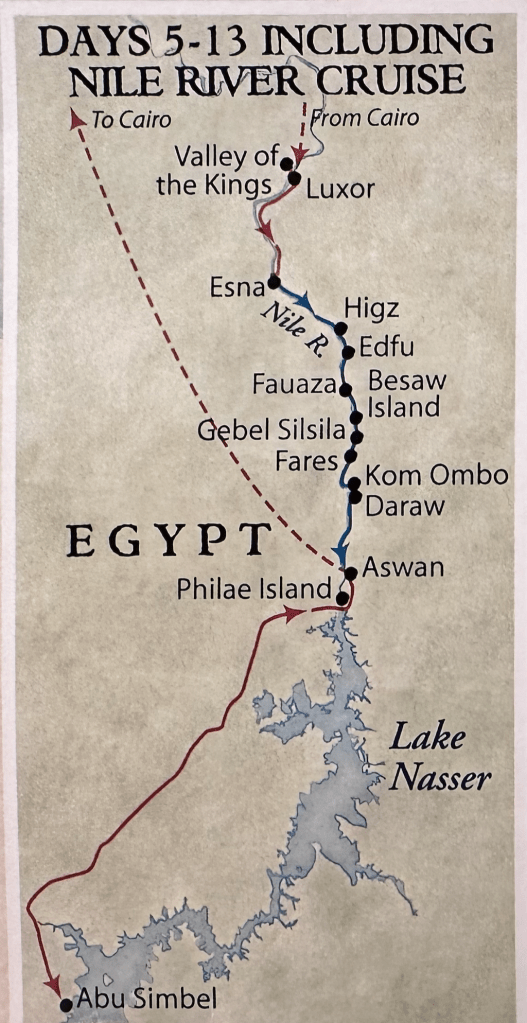
The parts of Egypt that I will be visiting are even further away from the action. The following map provides an overview of the main trip, including the two internal flights and the Nile cruise.

These are all familiar places, but for those interested in more detail, check out the map below. Lots of new names!

I’m comforted by the knowledge that OAT has, in the past, canceled trips whenever there is even a remote chance for danger. In fact, this particular trip offered a choice of two pre-trips, either Jordan or Israel. Not surprisingly, the Israel pre-trip has been canceled.

The wonderful members of the Facebook Group, “Friends of Overseas Adventure Travel”, who have recently, or are currently following my itinerary have been posting photos and urging us future travelers not to cancel. They feel safe and welcome. An added bonus? They have reported that the sites are not crowded!

I’ll confess, getting to Amman is no picnic. Departure day started with NPR announcing flight cancellations at JFK and Newark airports, then the neighborhood Facebook forum was full of inquiries about flooded roads. I kept a careful eye on my United app, which assured me that everything would go as planned. And it did.

I left Newark at 7:30 PM to arrive in Frankfurt a little after 9 AM, which to my body is 3 AM. Normally, l prefer to travel with carry on only. But not when the Frankfurt airport is part of the itinerary. Every time I’ve flown into Frankfurt, the plane has parked in East No-Jetway-land and this trip was no exception. We carried our luggage down the stairs, then crammed into a bus that deposited us at one of the Terminal 1 concourses. Sometimes it’s the concourse you want, sometimes it’s not. This time it was not. It took a while for me to figure that out, because the gate for my flight to Amman was not showing up on the board. Eventually, I learned that I needed to get into the VERY long line for (what else) the bus to concourse B, and then walk down two flights, with my blessedly light carry on bag slung over my shoulder.

Fortunately, OAT was offering reasonably priced business class flights. Business class usually comes with lounge access, so while at home, I checked out their lounge using this helpful link that a member of Friends of OAT sent. Hanging out for 6 hours in the airport didn’t seem so bad given the showers and sleeping facilities the link promised.

Guess what? That lounge was a HUGE disappointment. Yes, there were 4 leather “beds” but there was no door to the room, and based on the clanging noises, I suspect it was near the kitchen. Still, I was able to get about an hour’s rest. It was downhill after that. The shower room was frigid — I didn’t want to remove my sweater, never mind the rest of my clothes—and that lounge had the WORST food ever! I actually left the lounge early to hang out at the gate instead. Maybe the good stuff is all in the First Class lounge?

Business class between Frankfurt and Amman is nothing special. The middle seat is unoccupied, so you at least get a little more room. I guess this explains why business class was so affordable. But enough of the bitchin’ and moanin’. In a little more than 4 hours, I’ll be in Jordan!

On My Own in Tirana, Albania

I spent the majority of my first full day in Tirana walking around the city, exploring two of the attractions recommended in my OAT Final Documents booklet. First stop was at the Komiteti-Kafe Museum for an “American coffee” and a look at what was described as Soviet Era artifacts. I don’t know whether what I found qualified as Soviet “stuff”. It appeared much too whimsical and colorful, two adjectives that I suspect were never used to describe the USSR.

I probably wouldn’t put the coffee shop on a list of top attractions, but the walk getting there and back was fun. Tirana has lots of green space, bike lanes and pedestrian walkways— and I do love to explore on foot.

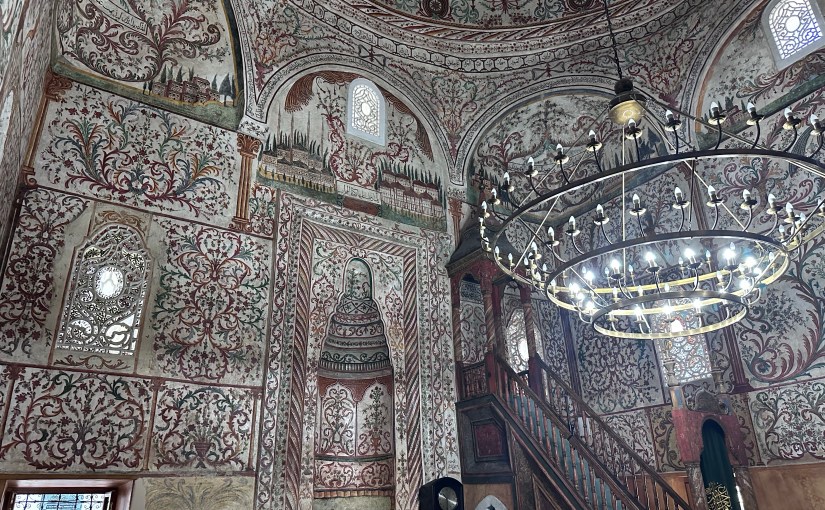
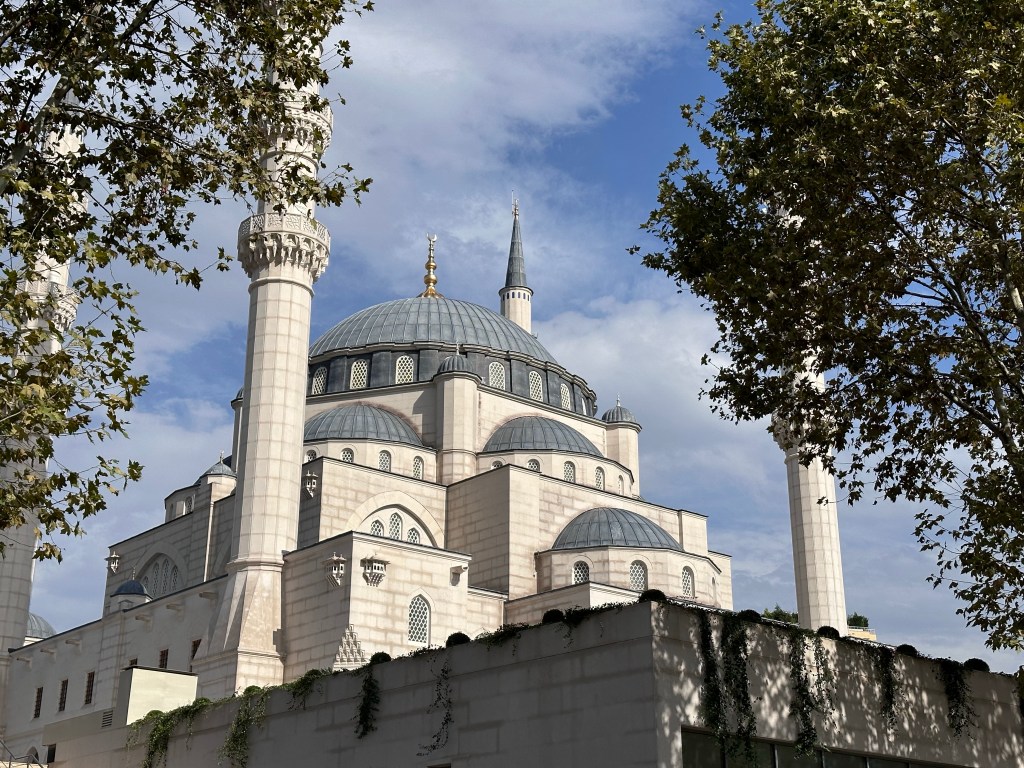
I had to get closer to the beautiful mosque appearing in the distance. A gift from the Turkish government, it is, and will remain, closed until Erdogan arrives for a dedication ceremony.

Man oh man, Tirana is BOOMING! Lots of new construction everywhere. During the ride from the airport, I noticed the very drab, but functional architecture, presumably from the Soviet era. The current construction is colorful, joyous and oh, so interesting!

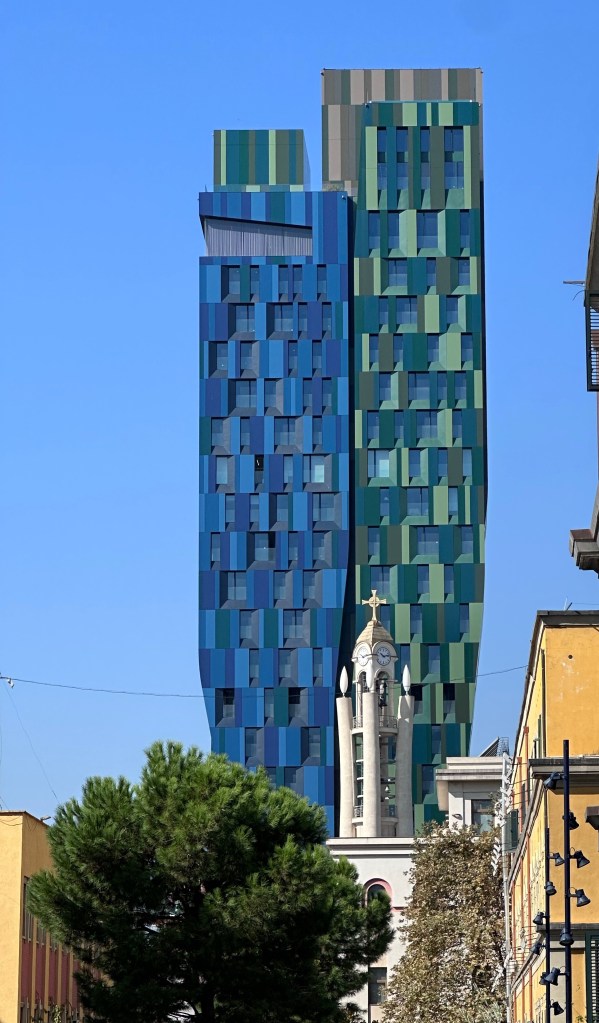
I had no idea what this building would become until our tour on my second day with our pre-trip guide. Ilir took us along a different street. He told us the colored squares will become classrooms in this future digital center.

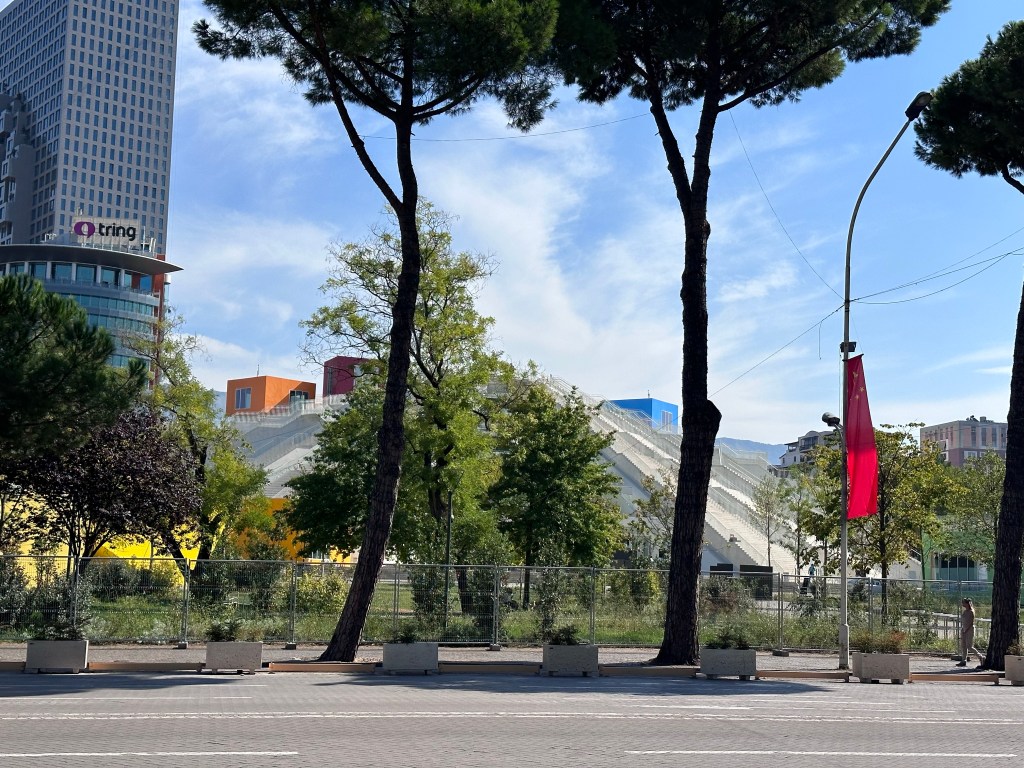
It is difficult to see the pyramid behind the trees. If you’d like a better view and a history of the pyramid, click here. https://en.m.wikipedia.org/wiki/Pyramid_of_Tirana. The steps were added to allow people to safely climb to the top. Previously they were clambering up the smooth sides, then sliding down!

One advantage to being on your own is you can stop to take photos whenever you like, and I liked to do that a lot. I loved this bridge. While on it, you have access to free wi-fi, which I didn’t need because I had switched to TMobile. Unlike Verizon, international access is free for everything except voice calls. (Thanks to the Facebook page “Friends of OAT” for educating me about internet access outside of the USA). Knowing I could consult google maps whenever I wanted enabled me to wander freely without fear of getting lost.
As I made my way to the Sali Shijaku House (OAT’s other recommendation), I walked thru Tirana’s Castle, which was taken over by the Topani family in 1798. I had seen the Topani name everywhere, most prominently at the nearby mall entrance, and wondered what the word meant. A plaque before the castle explained that Topani is the name of a noble family “rich and educated with strong ties to the Ottoman Empire and the west which they used to help the country while it took the independence road.” The plaque goes on to explain the rivalry between the Topanis and the Barginis which was ultimately resolved by intermarriage. Just think, if the Montagues and Capulets had used intermarriage to resolve their disputes Shakespeare wouldn’t have had material for Romeo and Juliet.

Not much remains of the original castle structure other than these walls and something called a “Bailey”. (You won’t see a photo of the Bailey because I have no idea what it is). Walking thru that arch brings you to a walkway with lovely shops and an abundance of restaurants, one of which I chose for lunch.

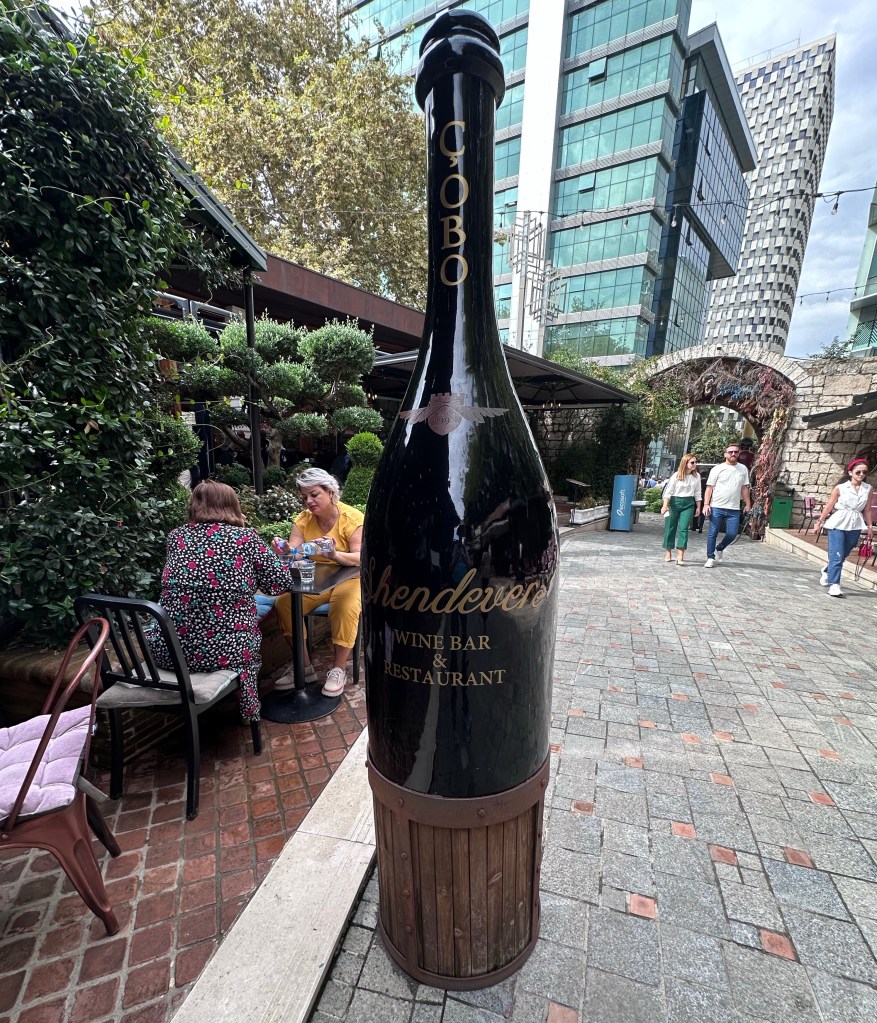
I had a wonderful inexpensive lunch with a glass of sparkling wine at this restaurant.

But back to the home of the artist Sali Shijaku, my second destination. After exploring his residence, which is filled with his paintings, I sat in the garden and enjoyed the ambiance while sipping a cup of tea. It’s hard to believe that over the years, this 300 year old structure has been a hospital, women’s prison and military building.

Some other sights from my walk thru Tirana:

Topani Mall across from our hotel.
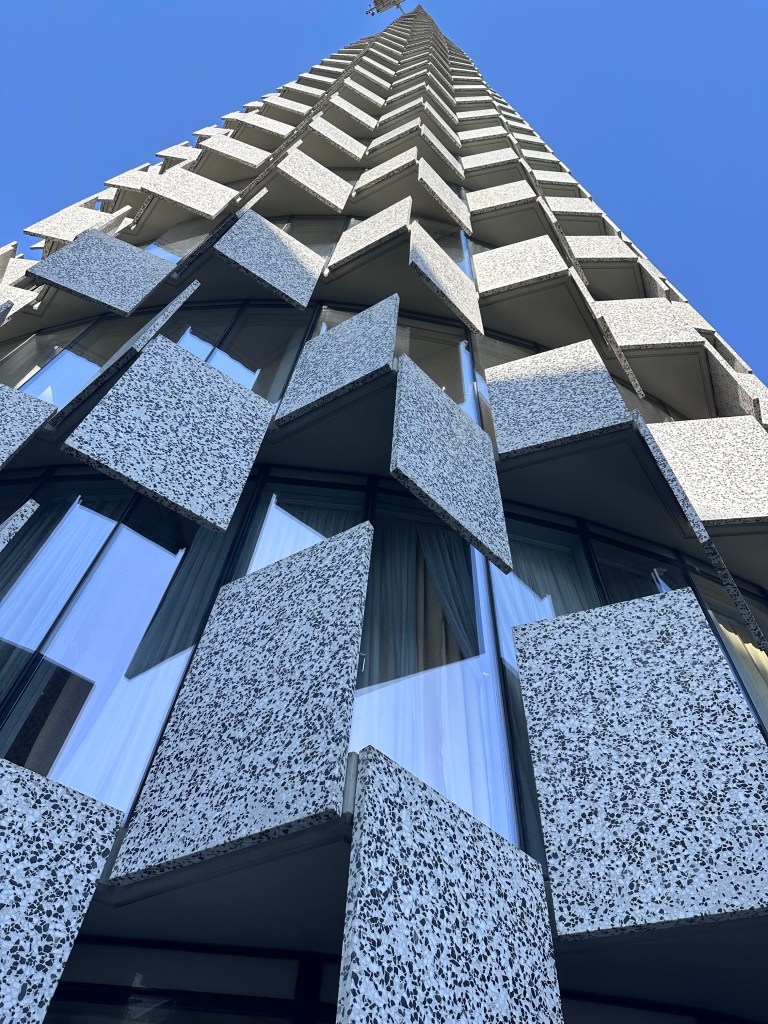
Although not colorful, this building’s three dimensional structure appealed to me.
The new building towers over the old church tower.

After exploring, I returned to the hotel to meet 4 of my traveling companions. After a brief walk with our guide, we got to know each other over dinner at Roxana Tuna House. As is often the case on OAT trips, they are all friendly and so very interesting. That’s another reason I enjoy traveling with OAT—congenial companions. We will meet the last couple tomorrow because they encountered flight delays.

Time to stop babbling about this wonderful city and get some rest.

Tirana, Albania

2020 was supposed to be Mike’s and my biggest travel year ever. It feels like a lifetime ago that we booked trips to Croatia, Germany, Japan and Egypt. We (more likely the optimist of this twosome) were so confident that covid would be over in several months that we didn’t take a cash refund. Instead we opted for travel credits with bonus incentives.

Fast forward three and a half years. I’m now working my way through those credits, beginning with this trip to Eastern Europe, which starts with OAT’s pre-trip to Tirana, Albania.

One of the many reasons I enjoy traveling with Overseas Adventure Travel (OAT) is the ability to customize my trip. I figure if I’m going to subject my body and my money to a cross Atlantic flight, I’m going to stay for as long as I can, so in addition to the pre-trip, I decided to fly in a day early to get acclimated.

So far, everything has gone smoothly, starting with a great experience on Austrian Air. Passport control at Tirana’s airport was incredibly efficient. You scan your passport, which opens a gate, then get your picture taken, which opens a second gate and you’re DONE. It was so FAST. But the time I gained at passport control, I lost in bumper to bumper traffic on the way to the Oxford hotel. It took over an hour to go 11 miles, making me feel like I was back in Houston, Texas. The timing actually worked out fine, because by the time I got to the hotel, I only had to wait about 10 minutes for my room to be ready.

The room is small, but lovely, with a shower that makes the standard size in cruises look huge by comparison. I suspect I’ll be missing Mike even more than usual tomorrow morning, because when we traveled, he always showered first, figuring out how the fixtures worked, and setting the temperature just right for me. (It’s always those little things that do you in when you lose your spouse).

Take a look—no need for a bidet in this bathroom. All you have to do is swivel and lift your butt. That is, if you can figure out which faucet turns on which of the two shower heads. Yes, tomorrow will indeed be interesting because there’s not a lot of room for error. Fortunately we learned the ‘towel on the shower floor’ trick because I’ll bet that marble makes the floor extremely slippery when wet! I just hope that floor drain isn’t clogged!

But enough bathroom humor. What about the town, you ask? I remember Laura, our guide in Patagonia telling us, “There’s no such thing as bad weather; only inappropriate clothing choices.” Fortunately, I packed appropriately, and checked the weather so I wasn’t daunted by the rain. It also helps that the Oxford is perfectly located—right across from a mall ( where I bought 3 liters of water for less than $1), close to ATMS, cafes and restaurants, squares and sights. I love the art on the sides of buildings.

Wonder which of these books would be banned in America?
This is a very strange image. What is the artist trying to say?

I was surprised that George W Bush had a major street named after him in Tirana. I recall the people in Africa revered him because of his involvement during the AIDS crisis. But Albania? Clearly he has his admirers—and some detractors— who covered his name with stickers.

Tirana is full of surprises—here’s another: The Italian Institute of Culture building. I know from experience that Albanians make fantastic Italian food. My favorite Italian restaurant is run by Albanians. Clearly there is a bond between those two countries that I will explore with my guide when I meet him tomorrow.

What’s with that zig-zaggy structure in front of the building? Is it a picnic table? A runway? An altar for sacrificing virgins?

This area was once part of the Ottoman Empire, so I was not surprised when I passed a mosque just in time for the call to prayer. If you want to check out the weather and share in the mosque experience, here’s the YouTube link. I wasn’t successful uploading the video to WordPress. Maybe this will work. https://youtube.com/shorts/RXIjSq3ElqM?si=BxfwMJnXN6hBMHFd

On the MAIN trip, which starts on Sunday, we will travel to Croatia, Montenegro, Bosnia & Herzegovina, ending up in Slovenia. My friend Augusta will be joining me in Dubrovnik for the main trip. She frequently traveled with Mike and me in the past, prompting one of our fellow travelers to dub Mike “the man who travels with two wives”.

Below is a visual of our journey through some of the former Yugoslavian countries.

Tomorrow or Wednesday, I will connect with the 6 travelers that opted for the pre-trip, then on Sunday, we will join with the remaining 9 travelers in our group of 16.

Leaving Northern Ireland

On our return to the Republic of Ireland, we made one last stop in Northern Ireland, to the walled city of Derry, where we visited the Museum of Free Derry for a history lesson.

On January 30,1972, inspired by the civil rights marches and peace protests that occurred in the USA, about 15,000 Catholics staged a march to call attention to the discrimination they were experiencing. British soldiers shot indiscriminately into the crowd, killing 14 unarmed protesters. The day after what became known as Bloody Sunday, 2,000 men joined the IRA, which up until that time had not been very active.

Although attempts were made to portray the peaceful marchers as terrorists, a film crew was there, recorded what actually happened, and smuggled the film out (in their underwear!) to the Republic of Ireland where it was broadcast around the world. Despite the visual evidence to the contrary, the false narrative that some march participants were terrorists persisted until 2016, when an inquiry finally revealed the truth. The result was a long overdue apology by Britain’s prime minister, David Cameron. An excellent video in the Museum shows the huge emotional impact that historic apology had on the people of Derry. Sadly, the guilty soldiers still have not been brought to justice.

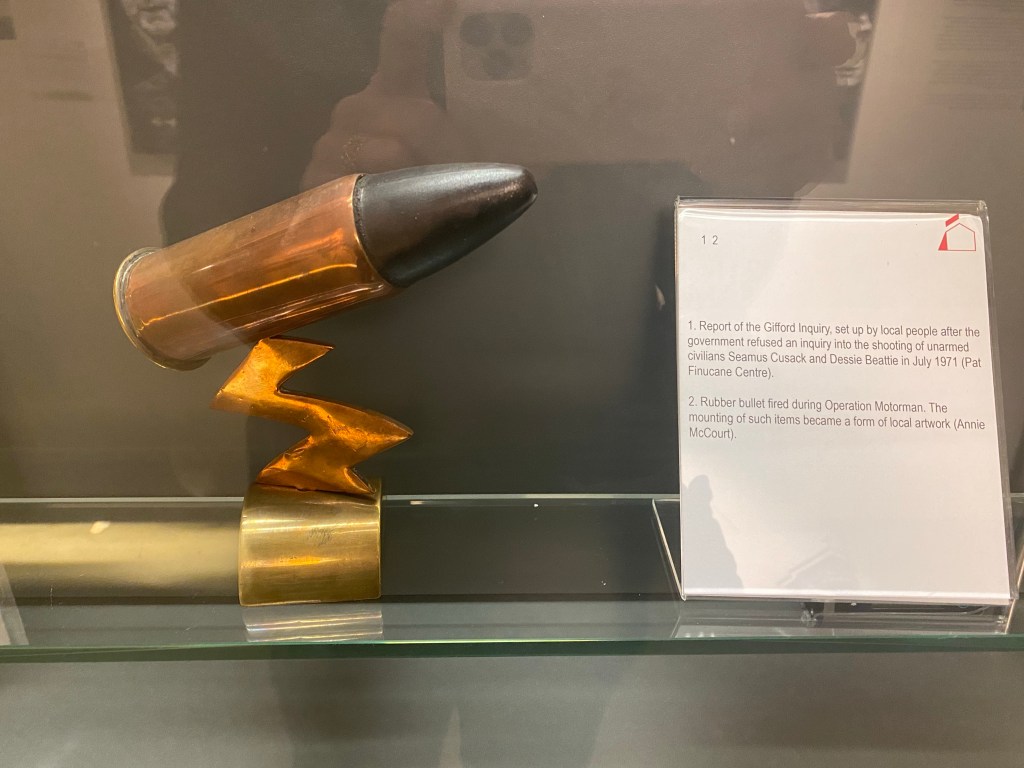
While on the Black Cab tour in Belfast, our driver showed us the size of rubber bullets that were used for crowd control. These were fired on Bloody Sunday, and contributed to the injuries many protestors suffered. Can you imagine being hit by one of these?

We couldn’t leave Derry without touring its city walls, and learning about its history, most of which I promptly forgot. Of course, the wall had the requisite cannons, strategically interspersed.

Our border crossing into the Republic of Ireland was seamless. No check points, no guards, no showing of passports, just a change of currency, back to the Euro. Ireland has sworn that it will never have a border dividing it again. Boris Johnson declared the Irish Sea will be the border, but many wonder exactly how that will work post Brexit. No one quite knows.

And now for a little perspective: the population of Northern Ireland is a wee bit under 2 million. The population of The Republic of Ireland is almost 5 million. Compare that to the population on NYC, which is over 8 million, and you can understand why much of this glorious island is comprised of rolling green hills and picturesque landscapes, perfect for raising sheep.

Typical view from my bus window.

Which brings me to the next subject: the Irish Diaspora. We all know that millions of Irish left during the potato famine, but I never knew that many lost their homes when they were evicted.

This beautiful castle was built by John Adair, who evicted 244 of his Irish tenants because he thought raising sheep would be more profitable than allowing his tenants to continue farming. By the way, the Irish became tenants on their own land, after Oliver Cromwell conquered them, and seized their property so he could use the land as payment to his soldiers.

Adair was the first of three owners of Glenveagh. The third, Henry McIlhenny, was an Irish American. His grandfather, John McIlhenny settled in Philadelphia, where he became very wealthy from his invention—the coin operated gas meter. Henry was an art aficionado, who donated his family’s extensive collection to the Philadelphia Museum of Art. His generosity extended to Ireland, when he donated the castle and its gardens as a gift to the nation. It is now a national park.

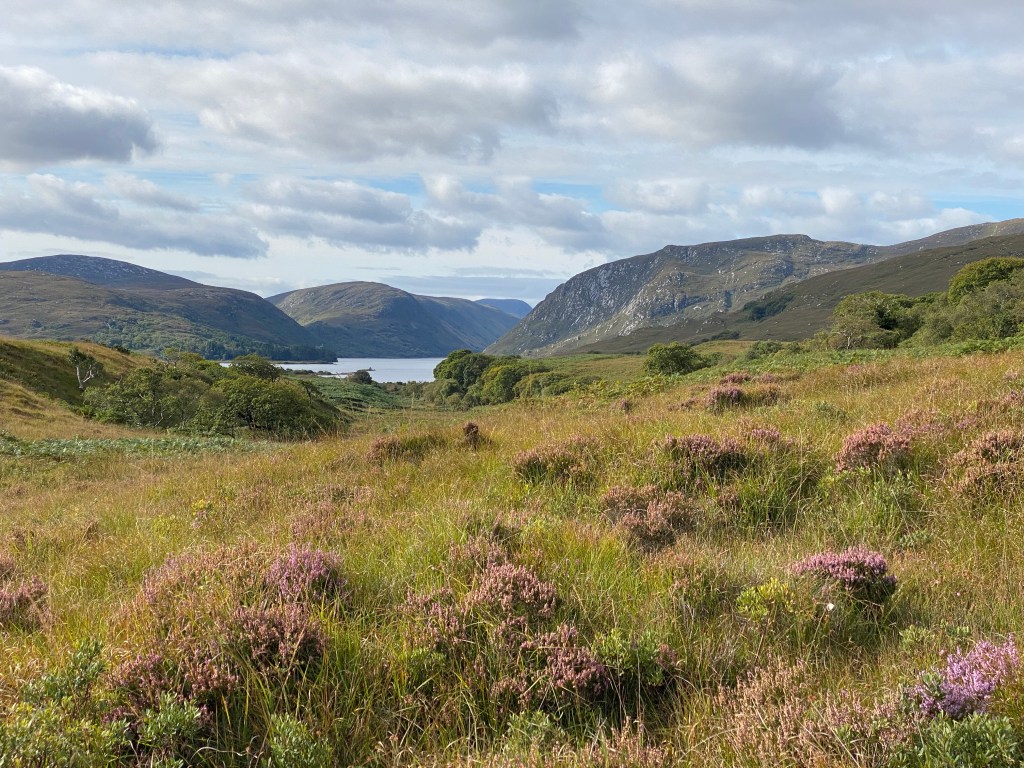
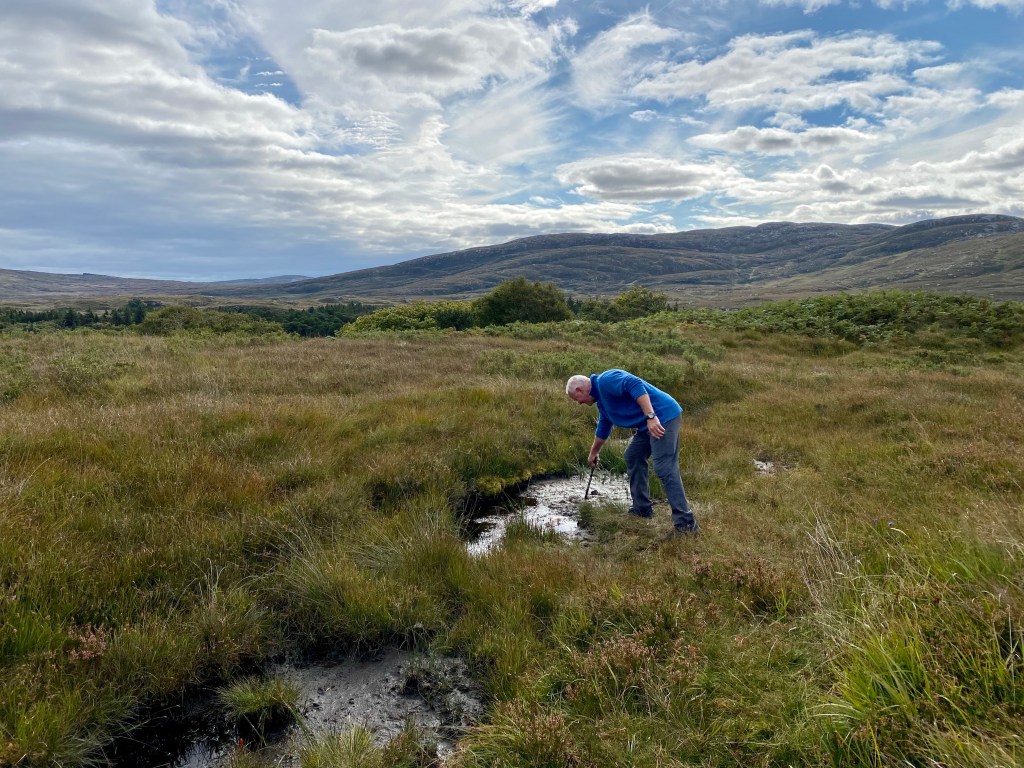
Touring the grounds of Glenveagh with a naturalist, who demonstrated the depth of the bogs, and explained why the people sacrificed in the bogs were so well preserved.

I had originally planned to write a bit about Donegal, but that will have to wait for a future post, because I have run out of time.

From Ireland’s Capitols to its Countryside

We’ve thoroughly enjoyed our time in this island’s two capitols: Dublin and Belfast. But now it’s time for a change of pace, so we hit the road to experience the castles and cliffs of the beautiful Irish countryside.

We departed from Belfast by way of the “leafy suburbs”. As is the case in most countries, the wealthier areas were spared the violence and disruption of “the troubles” discussed in earlier posts. The beautiful homes facing the water were much like those in many of the wealthier neighborhoods in the USA.

At one time, oh so many years ago, I could never have imagined that I’d be taking a bus tour. But let me tell you, at this stage in my life, it’s a great way to travel. No getting lost, no speeding tickets, no fruitless searches for rest rooms. It’s all taken care of. All I have to do is sit back, gaze out the window and chat with my fellow travelers.

Our group

We really lucked out, with a huge, comfortable bus for only 11 of us, and a delightful driver, Michael, who clearly loves his job. The repartee between Joe and Michael keeps all of us entertained and laughing.

Our drive to Ballycastle was broken up with multiple stops. At the first one, Joe, our guide, pointed out that this white rock is composed of the exact same material as the White Cliffs of Dover. About 350 million years ago, this very rock was being formed somewhere south of the equator. I don’t know about you, but I find that little fact fascinating. I’m sure my geologist neighbor, Ed, would agree. He would undoubtedly have been able to identify the dark streaks in the rock as flint, which was highly prized for its sharpness, and its fire making properties.

Our route along the Antrim coast took us past picturesque little fishing villages like this one.

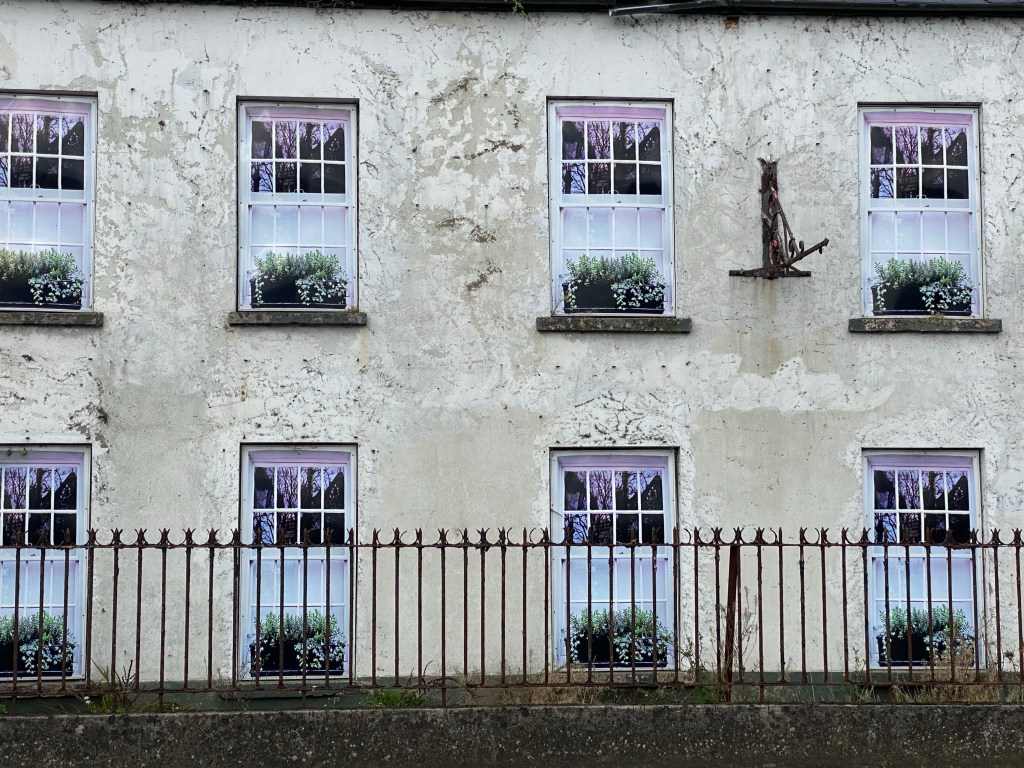
I loved that the windows of this vacant building were painted to look like they were festooned with flower boxes.

Our final stop before Ballycastle was at the Glenariff Forest Park, which gave us the opportunity to get out of the bus and stroll along the river to our restaurant.

One of the waterfalls in Glenariff Forest

Ballycastle’s Marine Hotel was a bit quirky, but the entire staff was so friendly and accommodating, and the location across from the beach was fantastic.

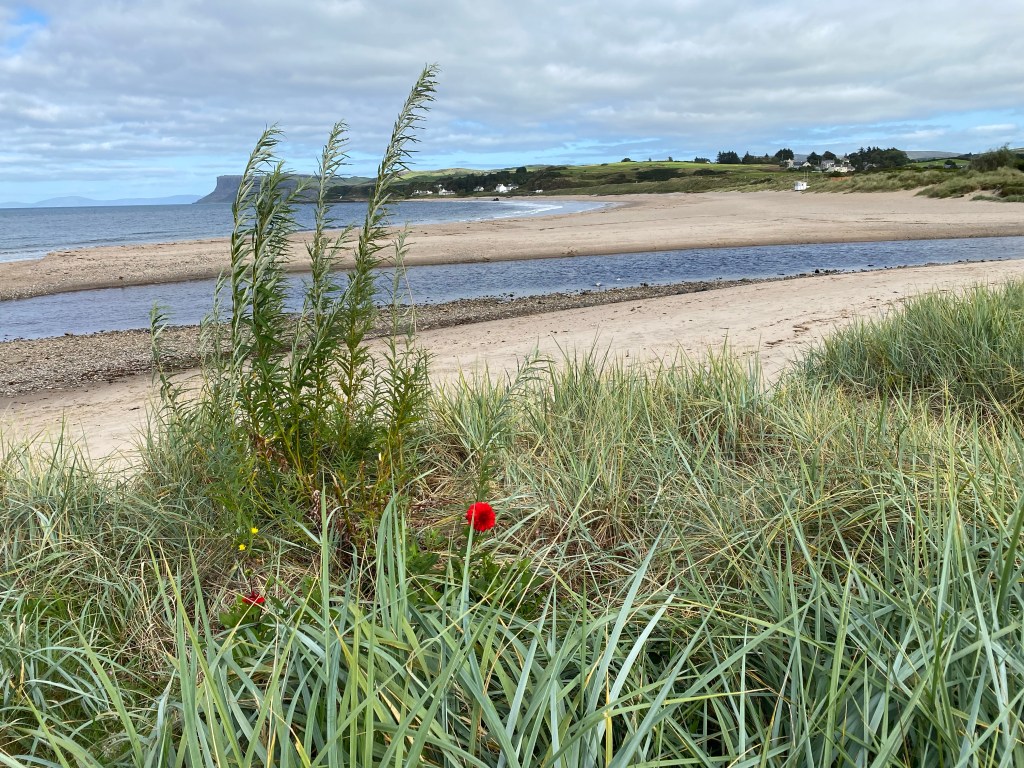
Because the weather was so wonderful, we couldn’t resist a walk along the beach, before we strolled into town for a delicious and inexpensive dinner at the Anzac Restaurant.

Ballycastle was the perfect jumping off point for the following day’s excursions to Dunluce Castle and The Giants Causeway. Although Dunluce Castle is in ruins, you get a feel for what life was like way back in the 1600’s. The castle was built high on a cliff, surrounded by water, with access only via a drawbridge. Clearly, those were scary times!

Joe quickly figured out that Janet and I are the walkers in this group, so he always made sure to tell us about more challenging hikes. The Giant’s Causeway offers several trails, plus a shuttle bus for those who prefer to ride. We chose the red course, labeled the most difficult, because of the spectacular views Joe promised us. He was right!

Even if you do opt for the easier trail, the scenery is still pretty dramatic, especially if you are intrigued by rocks, volcanic activity and ocean views.

Our last stop in Northern Ireland will be Derry —or Londonderry, if you are aligned with the British, or the Protestants, before heading back into the Republic of Ireland and to our hotel in Donegal.

Belfast: The Troubles and The Titanic

We left the Republic of Ireland, crossing into Northern Ireland two days ago, just in time to get our first experience with legendary Irish weather. Our walking tour was soggy, and although we were undaunted, we were grateful when our Tour Leader took us on a quick detour into the nearby mall. Not only did we get a chance to dry off, we also ascended to the mall’s top floor to take in this magnificent view.

Okay, so maybe THAT day’s view wasn’t all that magnificent, but you have to admit, it is pretty cool to have a glass dome atop a shopping mall.
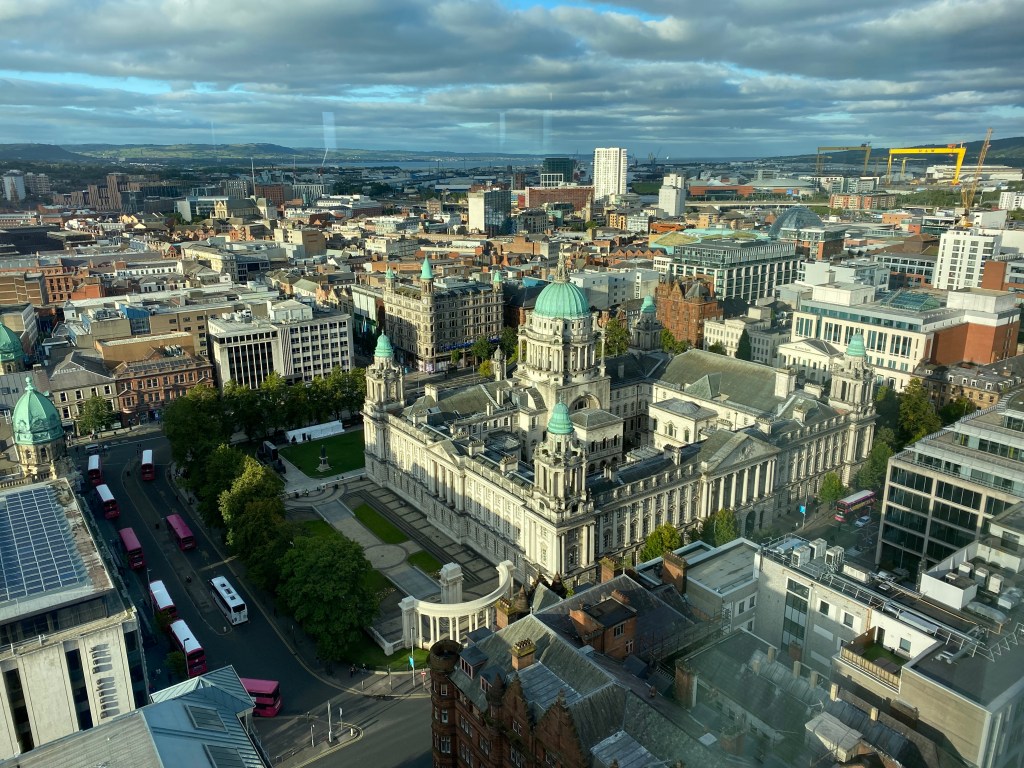
The next day’s panoramic view was significantly better because we were higher up, and the weather cooperated.

This photo was taken from the Grand Central Hotel’s cocktail lounge. No, we didn’t have a drink there, because I suspect the cost of a cocktail would have been as much as our full dinner at a nearby pub. Joe, our tour leader, took us there for a “ gawk”, and that’s exactly what we did.

Although the city is lovely, and I have many photos to prove that, the real highlight of our time in Belfast was our visit to The Felon’s Club. We spent the morning with three men who, back in the day, were formerly enemies: a loyalist, a British soldier, and an IRA member. They each told us a little about themselves, their backgrounds, their activities during “the troubles”, their time in prison and what their lives are like today. It was a riveting discussion that was particularly relevant now, given the divisiveness we are currently experiencing in our own country. What was encouraging was where they are NOW. All three have been working toward reconciliation and educating others about “the troubles”. All three are committed to the peace process.

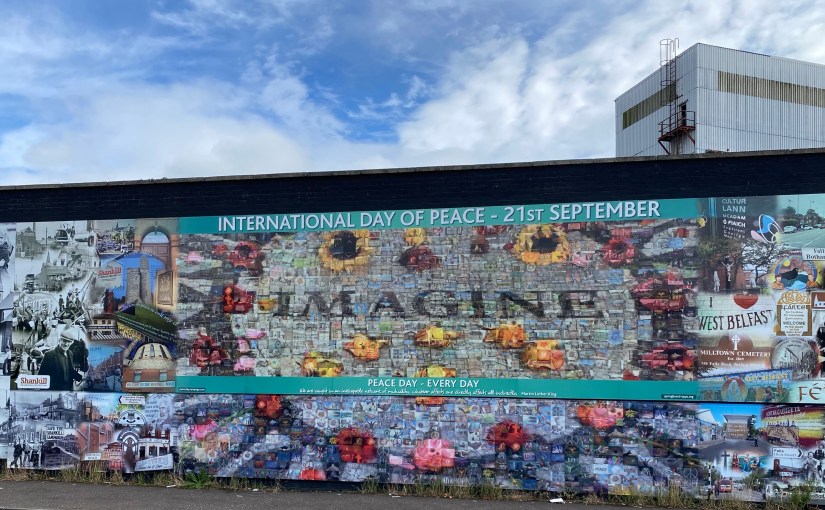
I had forgotten the important role George Mitchell and Bill Clinton played during peace negotiations. One key element of the negotiations was a referendum (with no date specified) on whether or not Ireland should be reunited. When asked if the referendum were held today, only the former member of the IRA was able to say for sure how he would vote. The other two wanted to know more about the impact the change would have on their lives. Their focus was on the issues, not on former identities as a member of a particular group. I would have loved to spend more time with them, but our Black Cab Tour was scheduled, so off we went to view the murals painted on Belfast’s walls.

During our tour, the final song from the Broadway musical “Hamilton” kept playing in my head: “Who lives, who dies, who tells our story”.

In the photo below, our cab driver is holding a rubber bullet, to show us how huge they were. He then pointed out the names of civilians, carved into the wall, who died after being hit by rubber bullets. By telling their stories, the black cab drivers and the members of the Felons Club are keeping their memories alive.

The afternoon was spent at the Titanic Museum, an experiential museum, where another sad story was told—not only about those who went down with the ship. We also learned about the workers who built the ship.

It was a rather poignant day, so we were only too glad the sun was shining as we walked back to our hotel.

We are all quite happy that we were leaving Belfast BEFORE King Charles III arrived. Yes, I know it is a historic event, but the crowds and traffic might have made it difficult to see as much as we did.