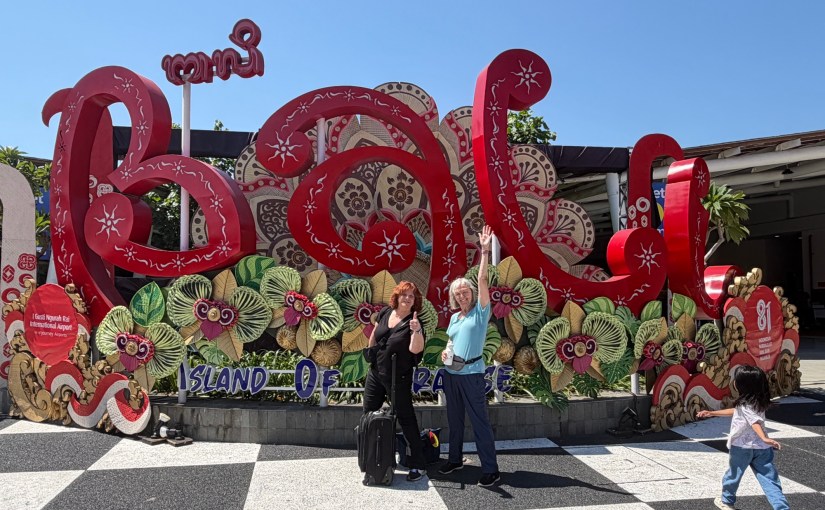
Our main Indonesian trip started in the most congested city (Jakarta) then became less and less crowded, as we progressed to Bali. We were all happy to learn that the Eastern area of Bali is far less developed than Ubud. That’s where we spent the last four days of the main trip, before 8 of us headed to Komodo Island for the post trip. The remaining 8, including Micki and Jeanne, headed either for home or for independent travel.
Initially, I thought I’d do one post for Candidasa and Sanur, but that was before I got there and discovered how amazing both places were. They EACH deserve their own post!
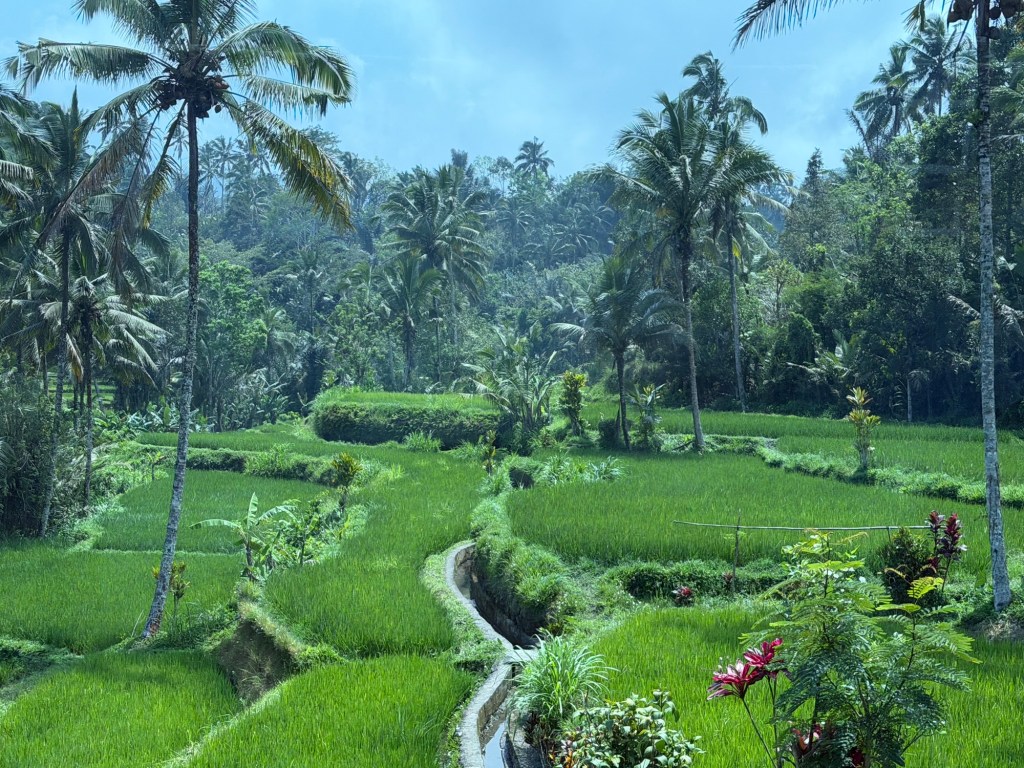
THIS was the first time we didn’t have to fly to our new location. Traveling by bus allowed us to enjoy the view of the countryside.
Taken from my window on the bus
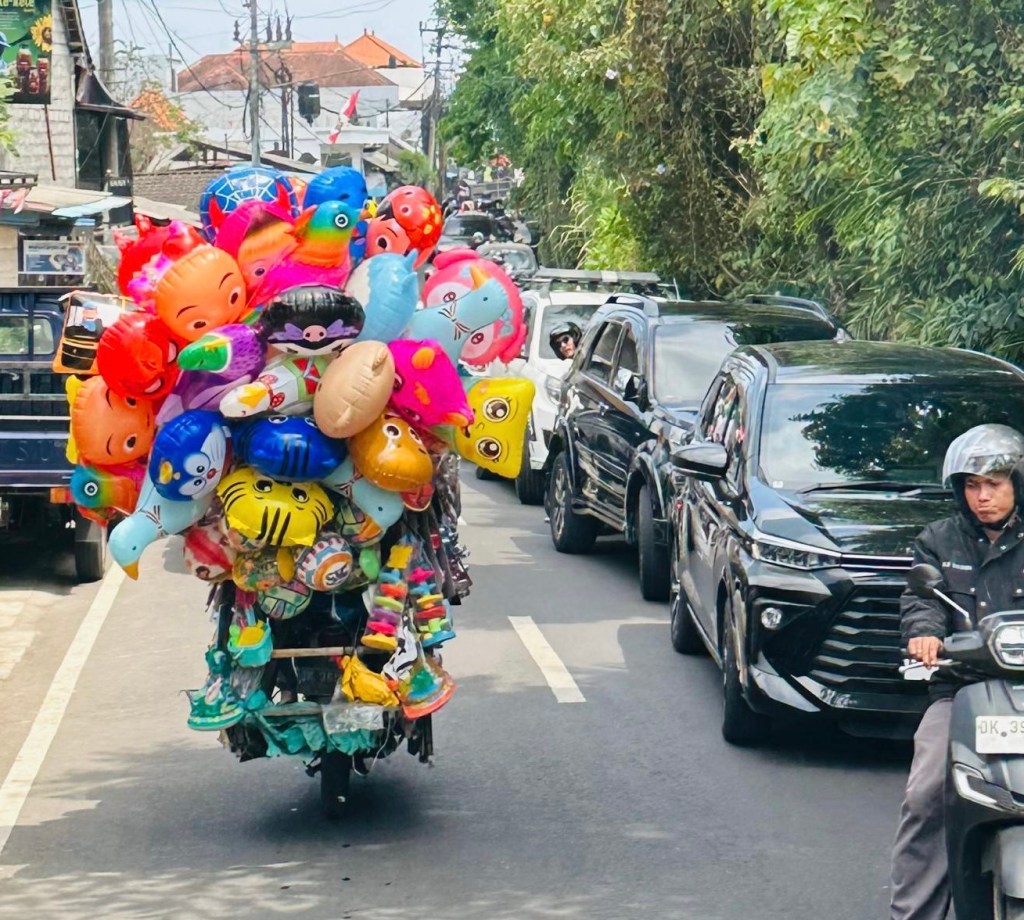
But it wasn’t ALL palm trees and rice fields. We also encountered the occasional traffic jam.
Photo by Shoshana
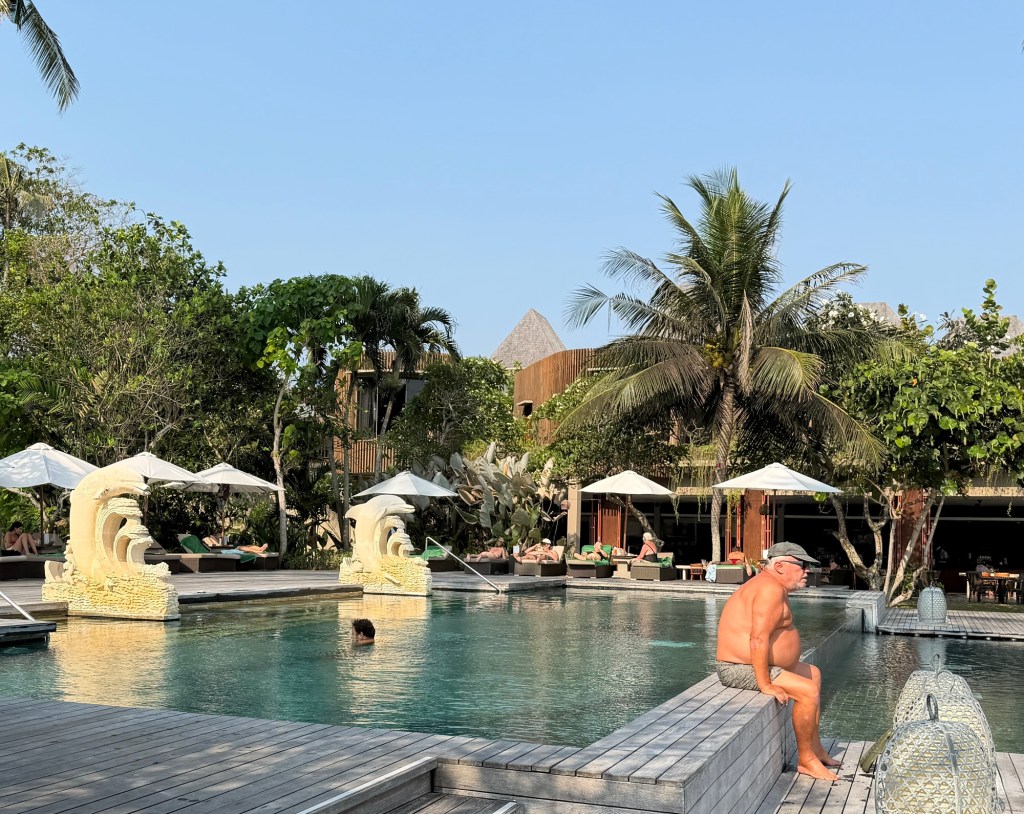
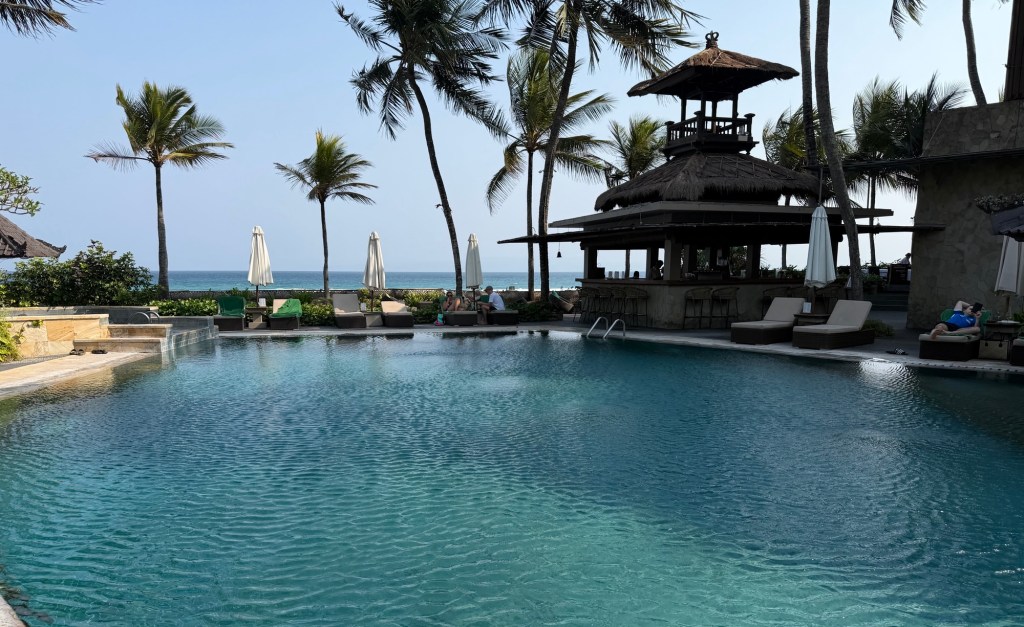
So what did the group think of Candidasa? O.M.B (which means “oh my Buddha”), what a glorious hotel! Despite being right on the ocean, it has two beautiful pools, both allowing easy access to the poolside bar.
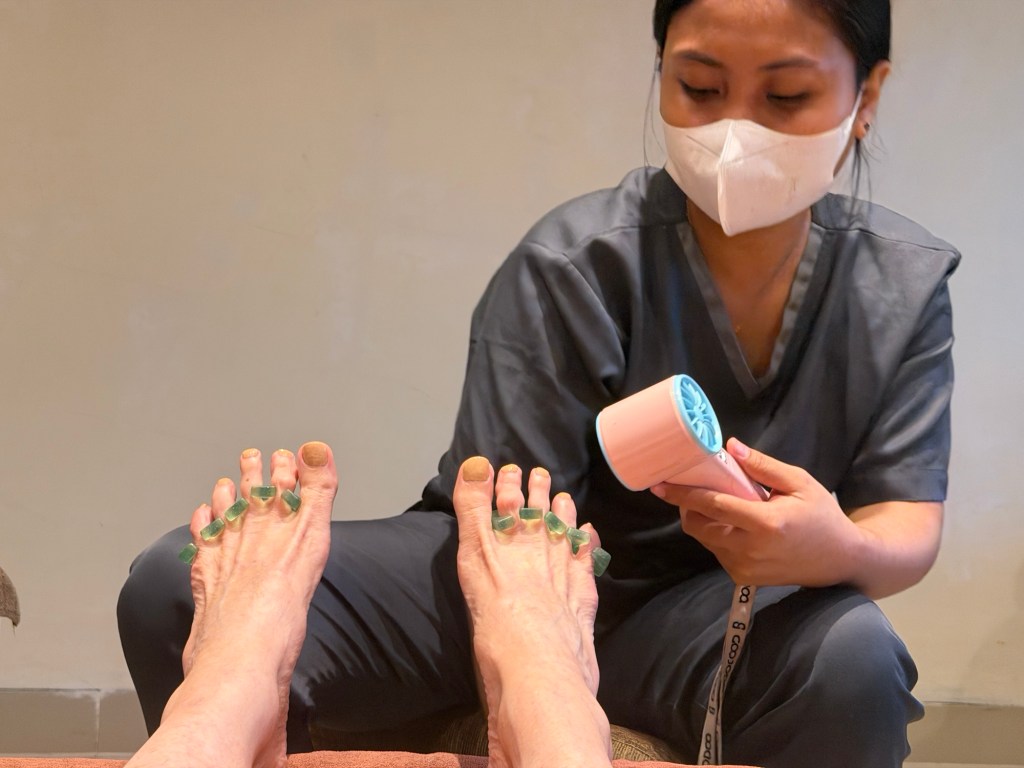
Although our hotel offered on site spa services, we chose to ease on down the road to the Malini Day Spa, where we enjoyed a foot massage and a pedicure lasting NINETY MINUTES, for less than $20. ( I checked my credit card on line, because I didn’t believe the exchange rate app could have possibly been accurate! ). Of course, we all gave a hefty tip in Indonesian currency.
Notice the equipment being used to dry my toes.
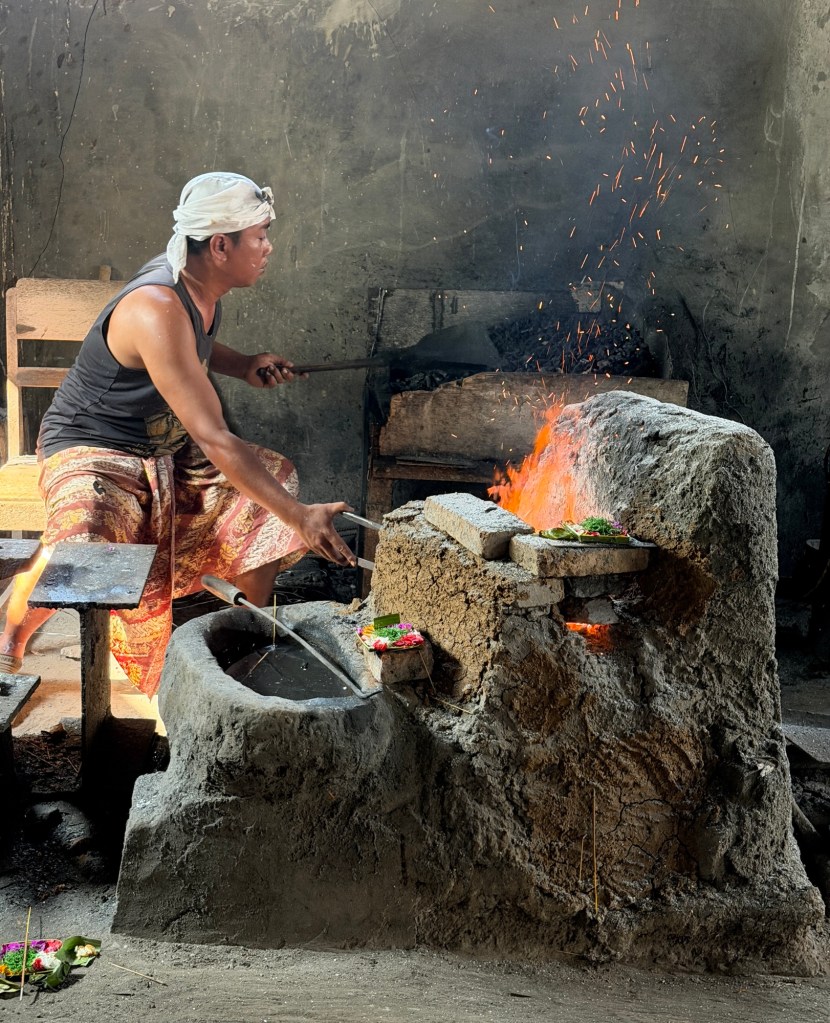
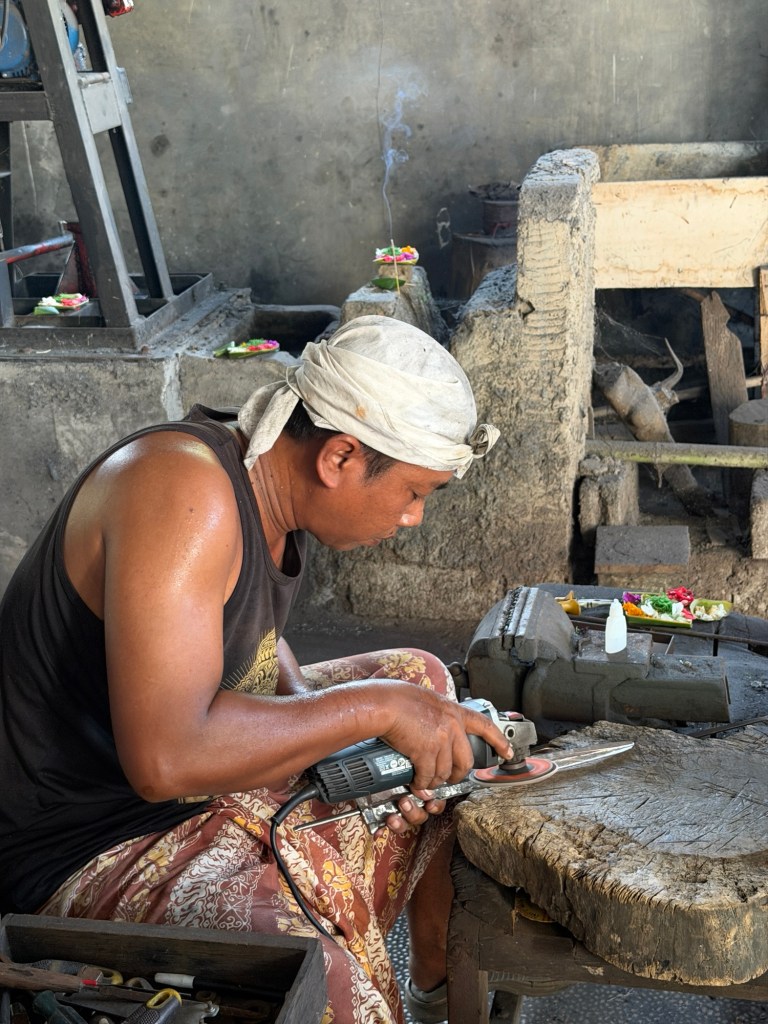
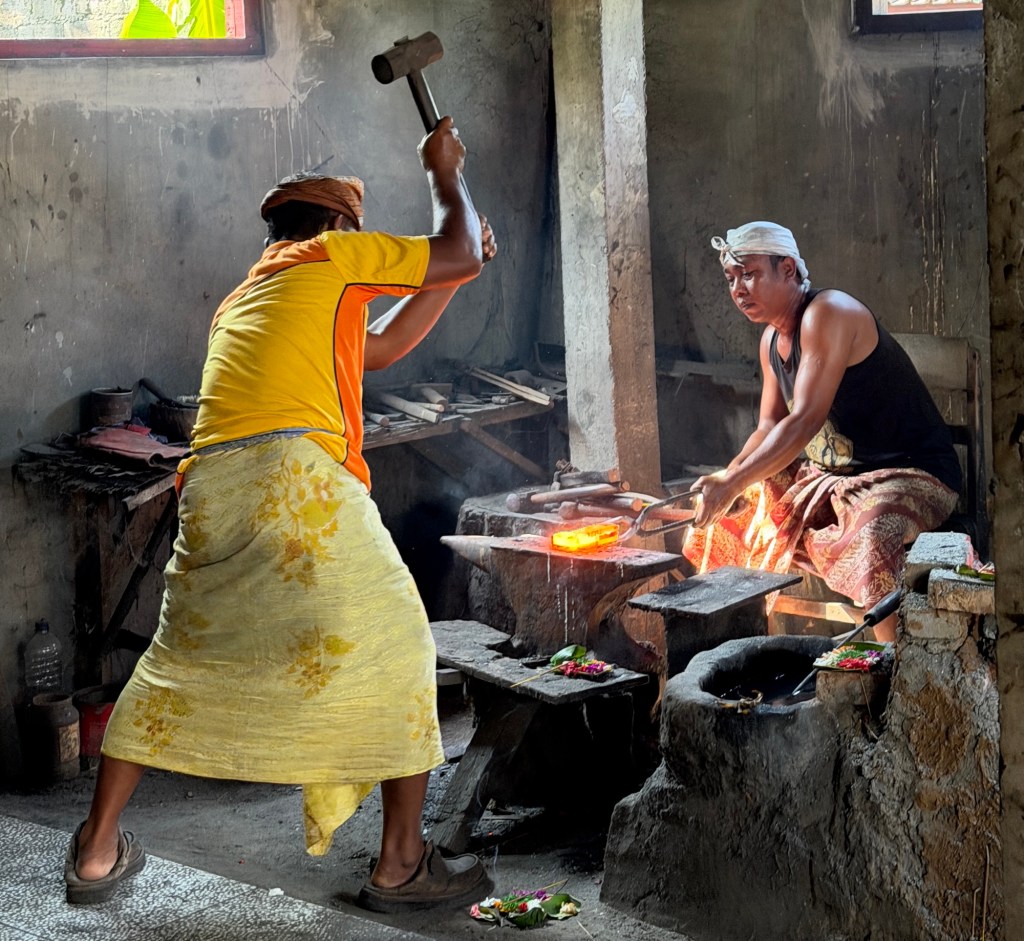
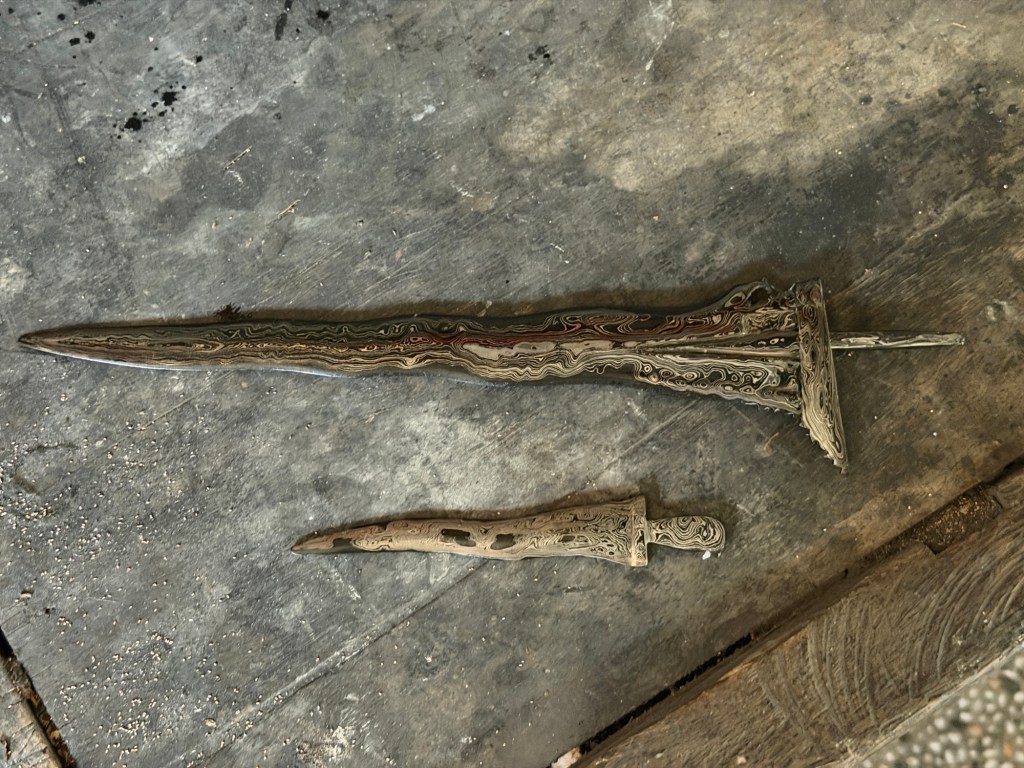
As with all OAT trips, we visited local craftsmen, like these blacksmiths who demonstrated the traditional way to create a Kris (dagger)
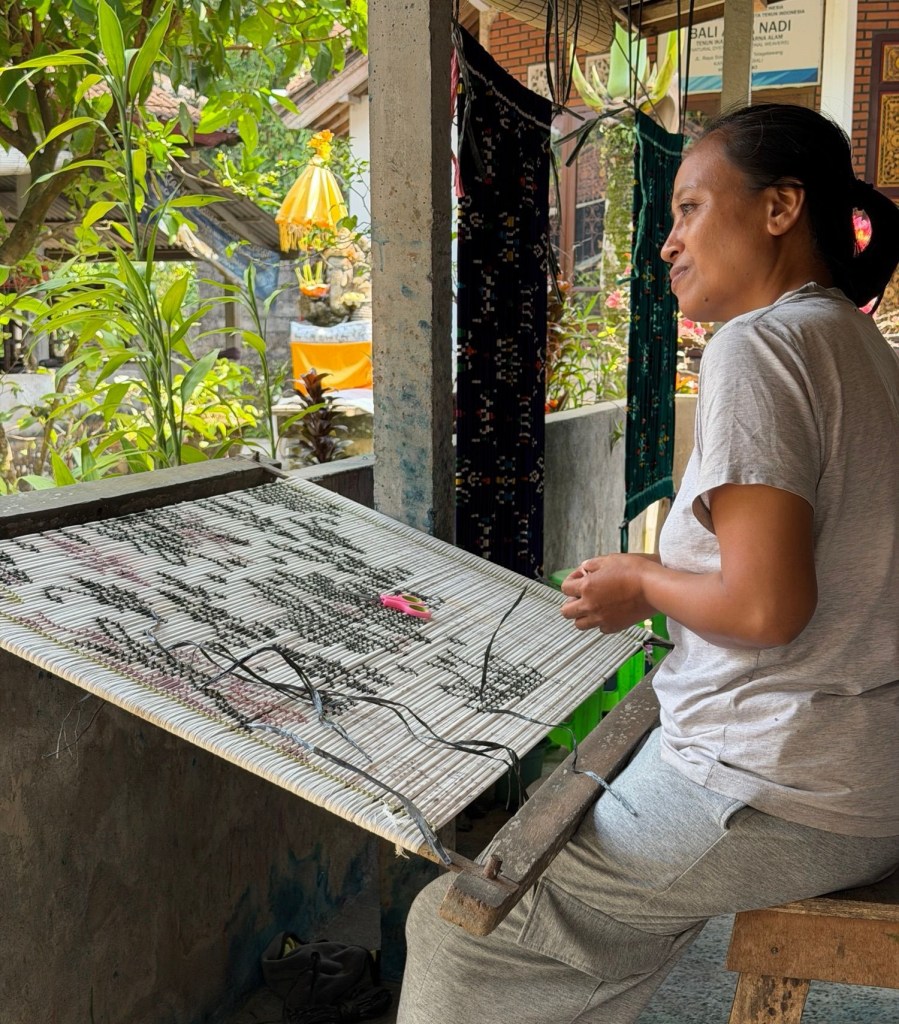
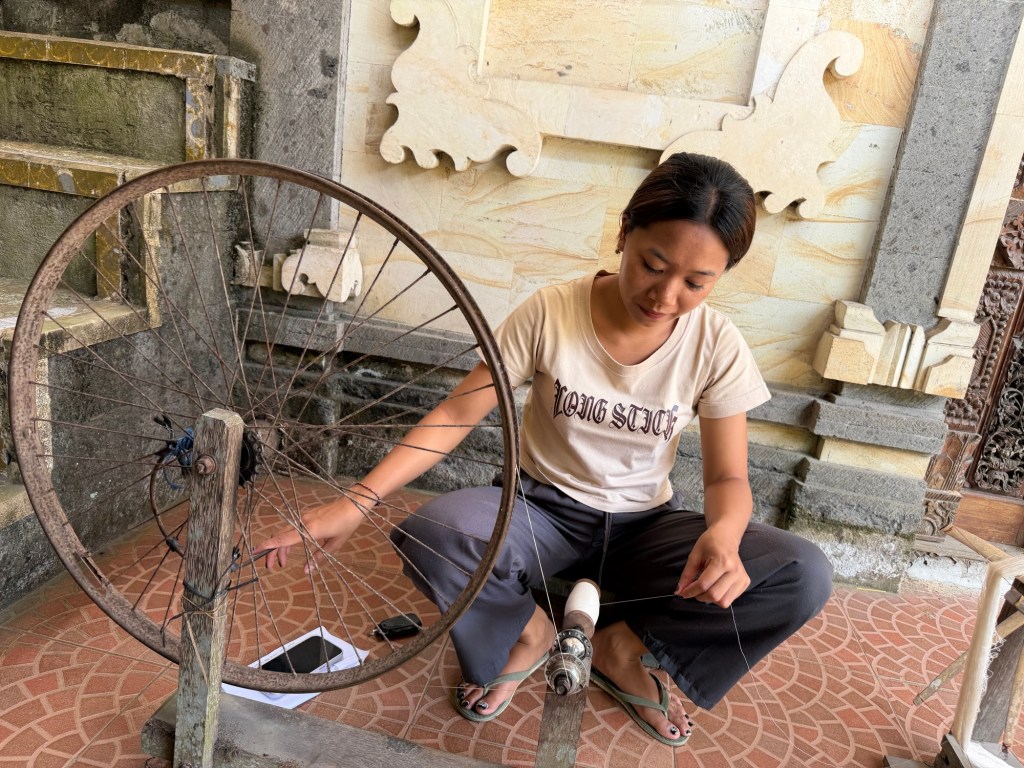
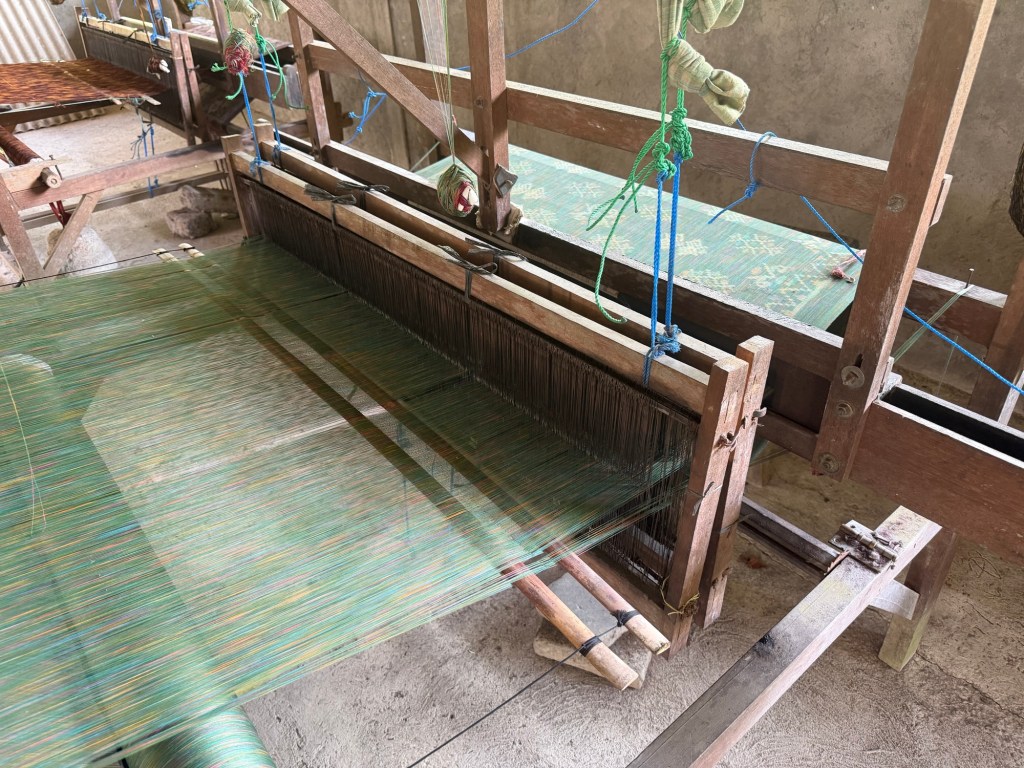
Followed by a stop at a women’s weaving cooperative, where our group made several purchases of the beautiful fabric.
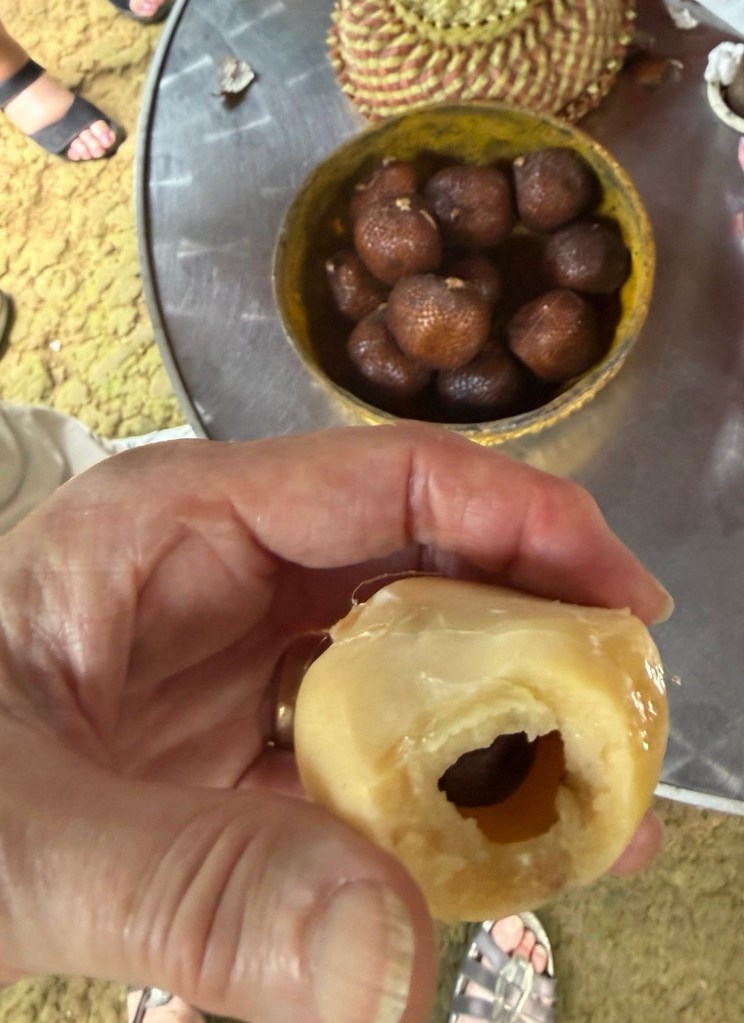
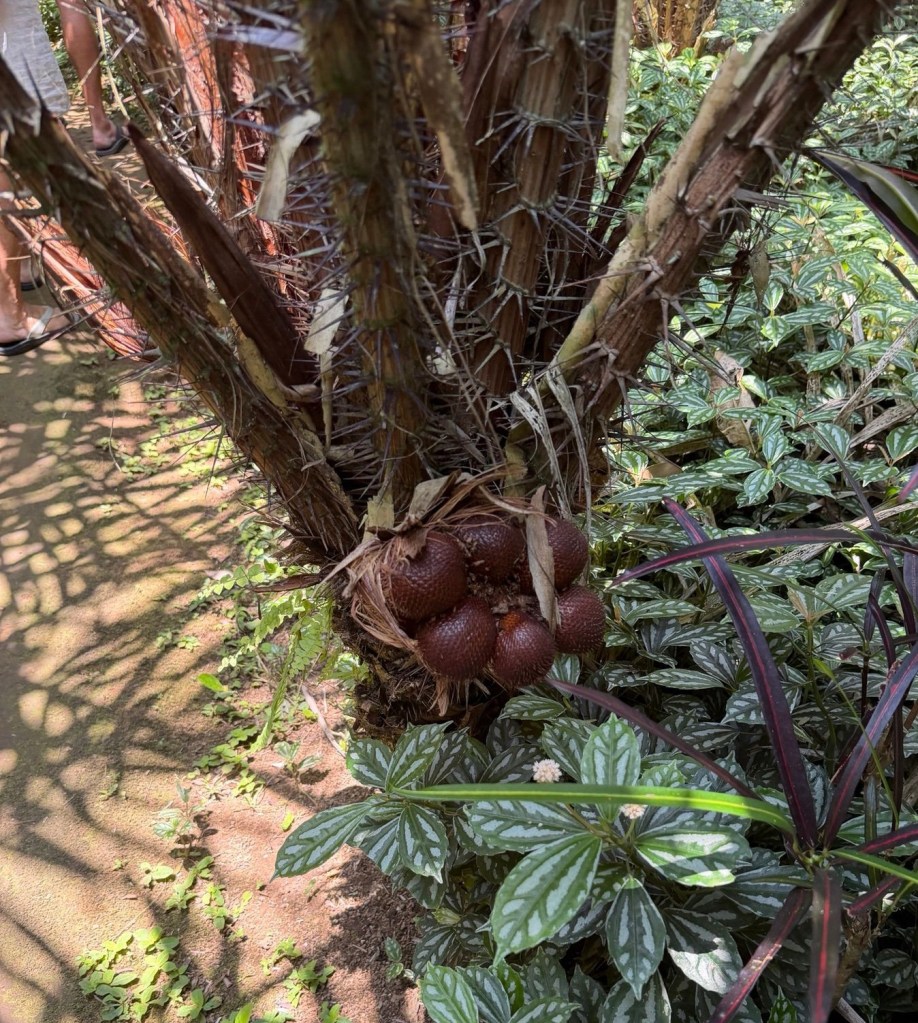
Our final stop was at a salat farm, where we toured the property. All of us, except Cheryl, were careful to avoid the sharp barbs of the salat fruit. Her arm became Exhibit 1 of the damage those barbs could inflict.
The hard outer shell is removed, to reveal the light edible part. The inner seed is discarded. Can you see those sharp barbs on the tree?
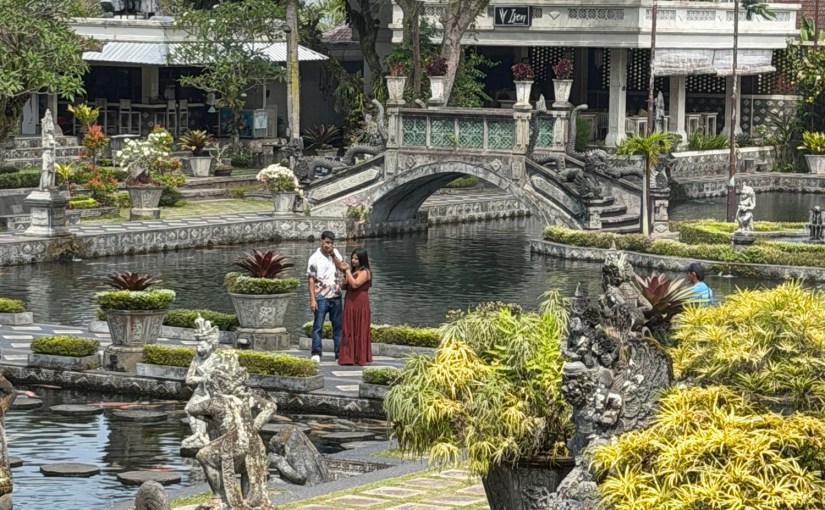
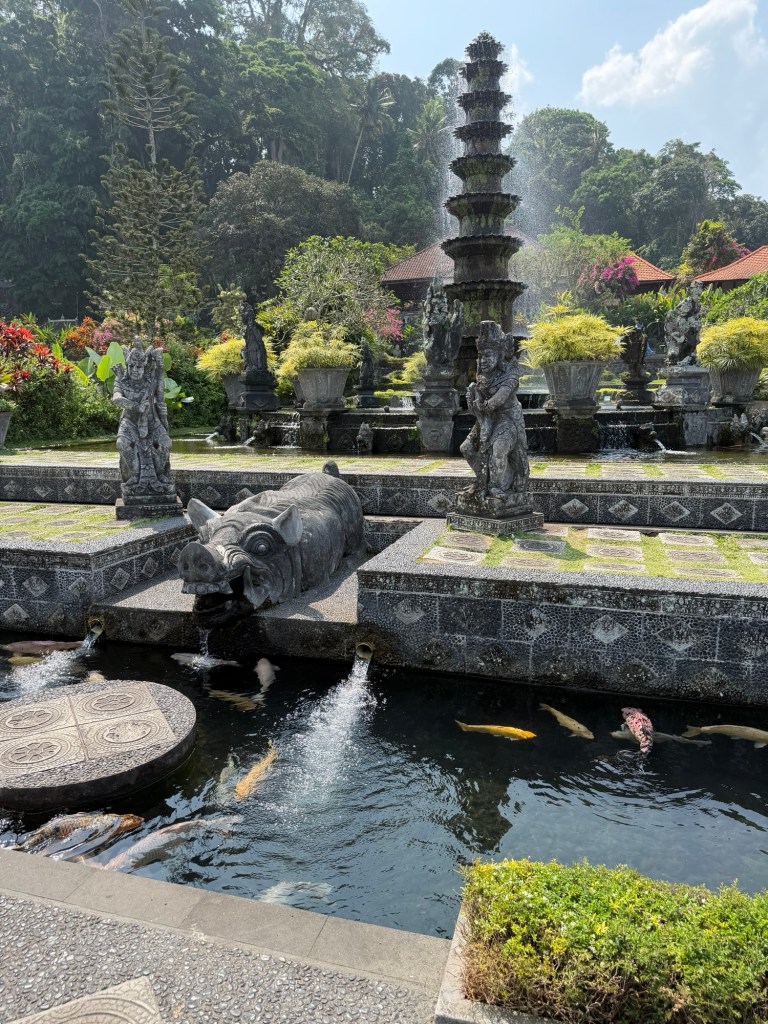
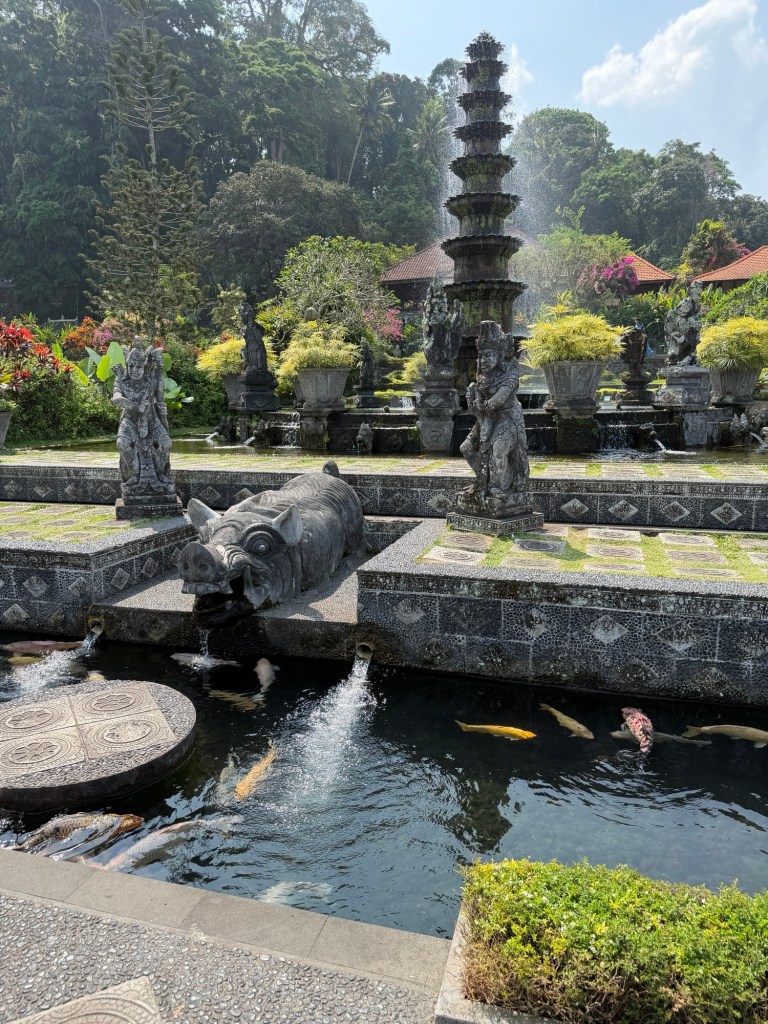
I absolutely LOVED our visit to the water palace.
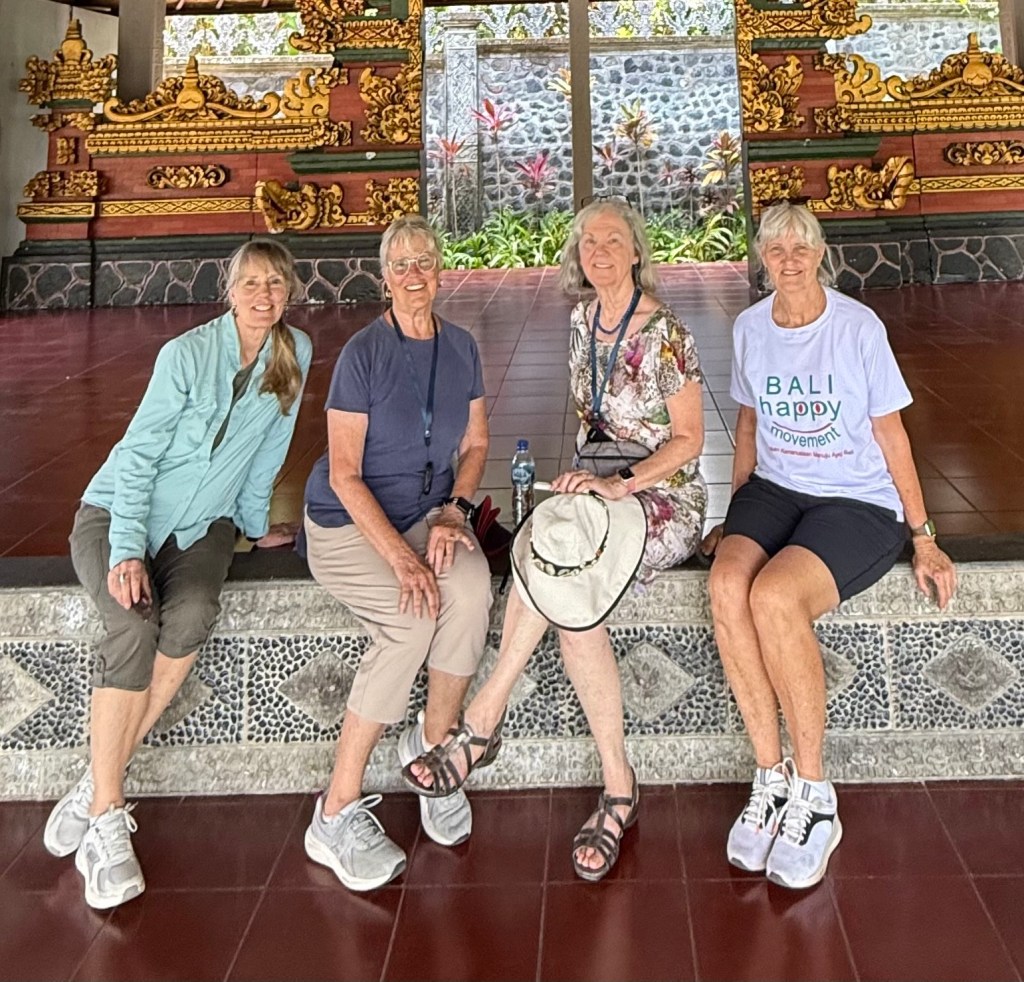
Micki, Jeanne, me, Laurie
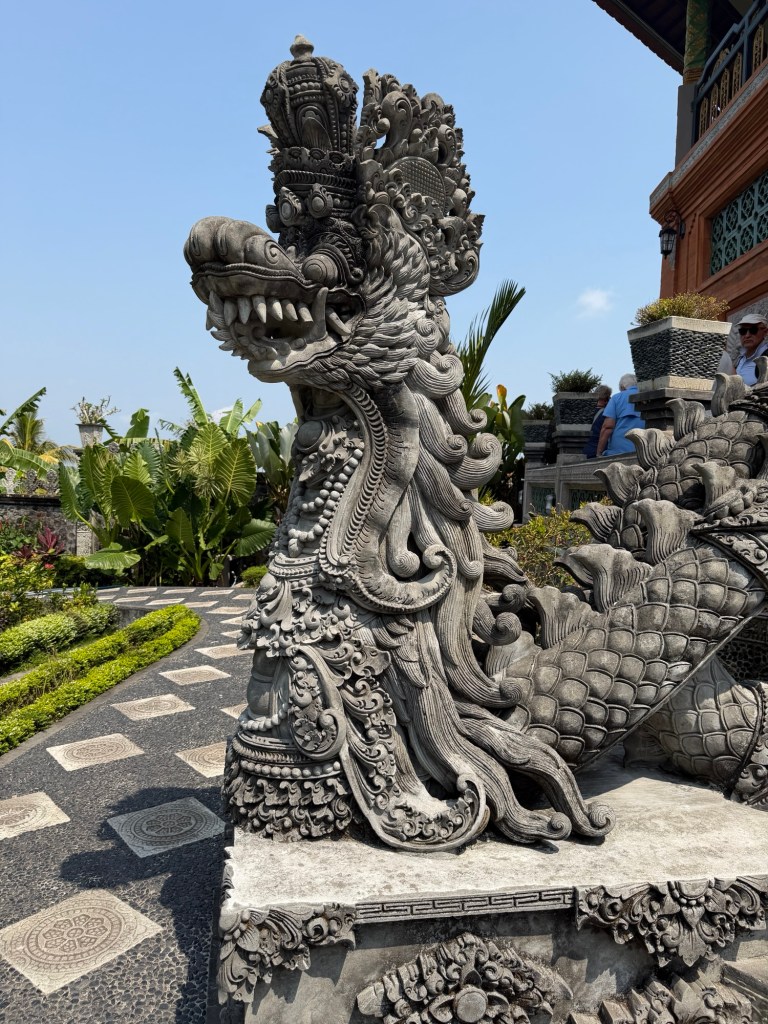
It was impossible to take a bad photo of this glorious palace.
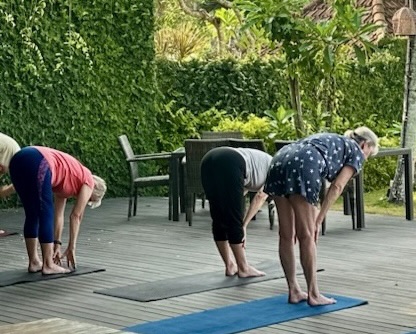
The hotel offered early morning yoga, which Jeanne, Micki and I decided to take advantage of. We were surprised by this photo Shoshana took; she was equally surprised to see that she could identify participants in her “random” photo.
Did Elizabeth Gilbert’s book “Eat, Pray, Love” ruin Bali? The jury is still out. She definitely increased the number of tourist visits, especially around Ubud, which depending on your point of view, could be good or bad. The city sprawl appears endless; the main streets are jam packed with shops. Uneven doesn’t begin to describe the “sidewalks” and don’t get me started on the traffic! Crossing the street deserves a “profile in courage” award. To me, it is actually scarier than Hanoi.
I read Gilbert’s book about 20 years ago, when, while on a business trip, I was as stuck at Providence airport because of bad weather.
Because I knew this adventure would include several days in Bali, I packed the book to reread the Indonesia section. This time, my focus was different from my first reading. I was FAR more interested in the cultural and historical information than her description of her romance with the man who became her second husband. What a difference 20 years makes!
The Broadway play, South Pacific, was my only other source of info about Bali. I was too young to see the play, and I don’t think I ever saw the movie, (which was filmed in Hawaii, NOT even in Bali) but I remember the songs: “ I’m gonna wash that man right out of my hair” and “Bali Hai”. We are definitely not experiencing Bali HIGH, because on the flight to Bali, we were informed that if we trafficked in drugs they would KILL us by invoking the death penalty. That announcement came right after we were exhorted to fasten our seatbelts, and it was stated in exactly the same matter-of-fact way.
So what did we do during our three days in Ubud? EVERYTHING worth doing.
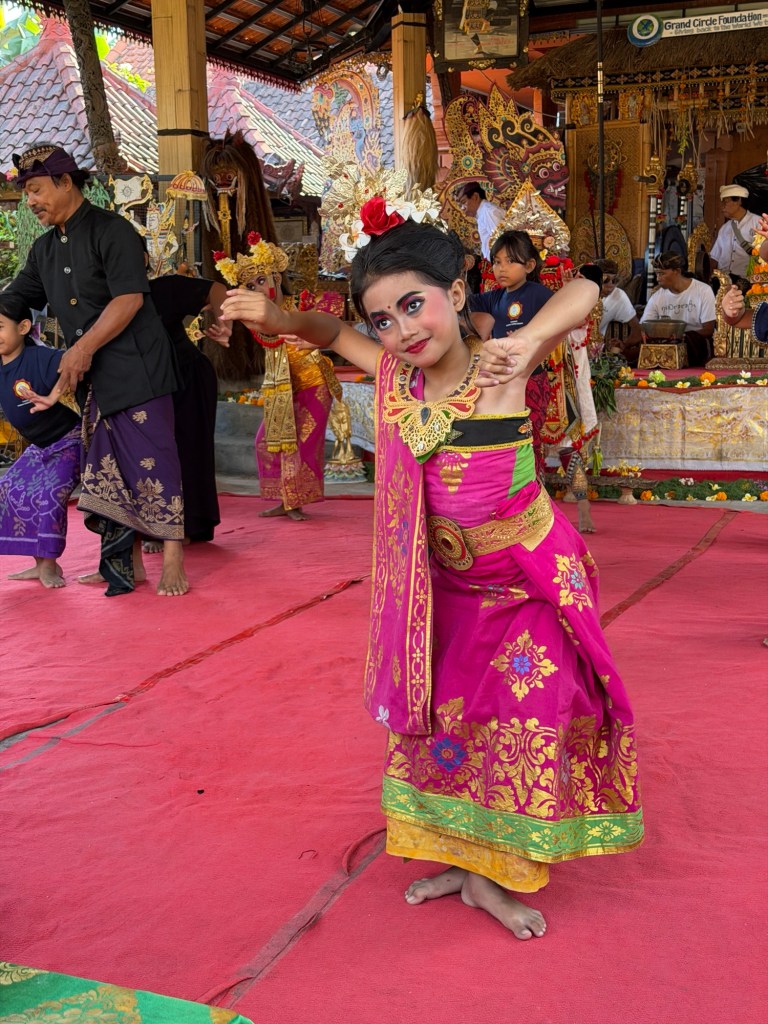
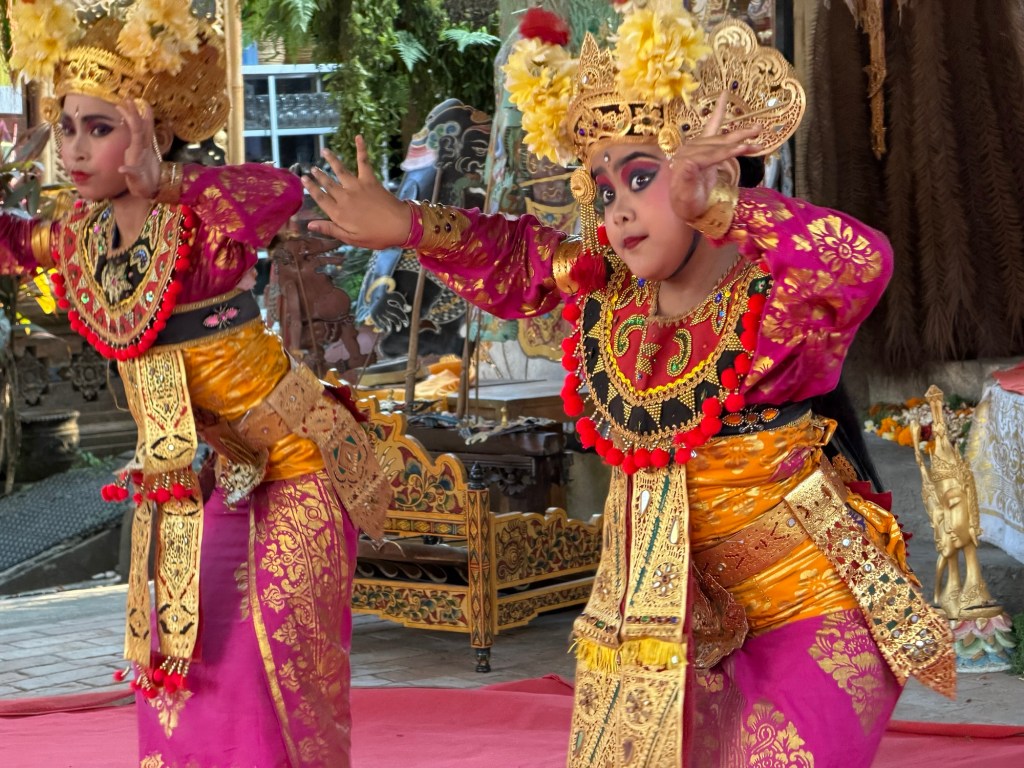
We visited the dance school that the OAT Foundation supports, where the adorable children performed for us. After their excellent show, none of us had any desire to watch a “professional” performance.
After they finished, we were invited to join the children, so we could experience how hard it is to do the traditional dance correctly. I’ll be honest. It was definitely a humbling experience!
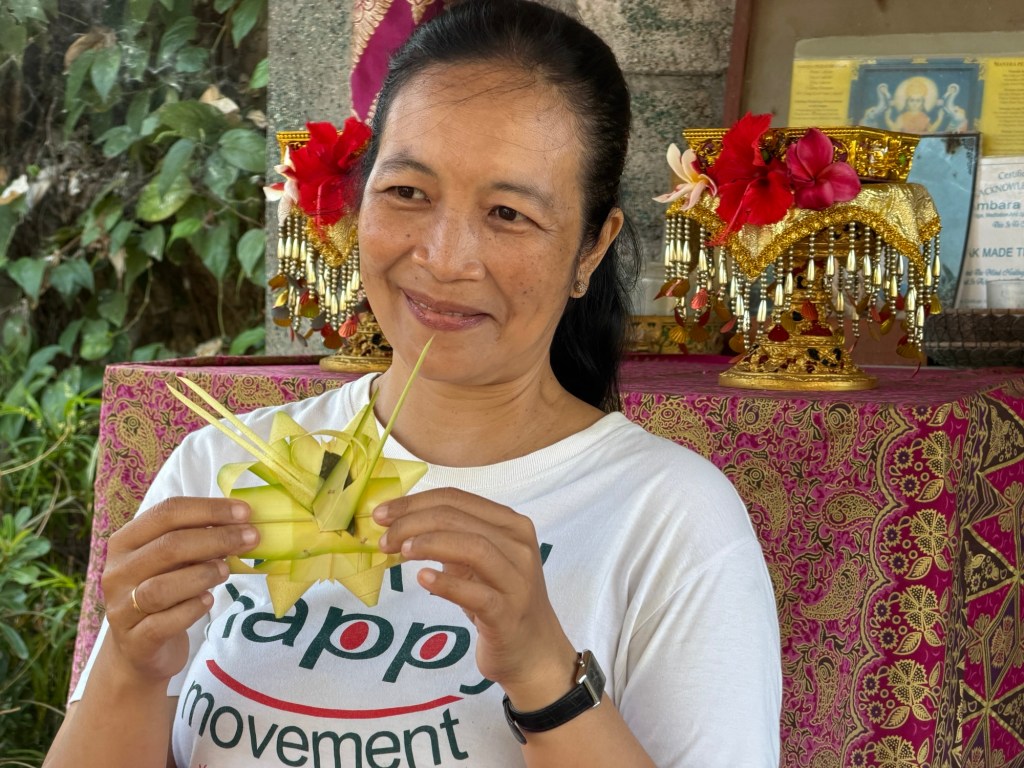
We did far better doing “Happy Yoga” with the seniors, where we all learned the five different ways to laugh, and which part of the body each particular laugh strengthens.
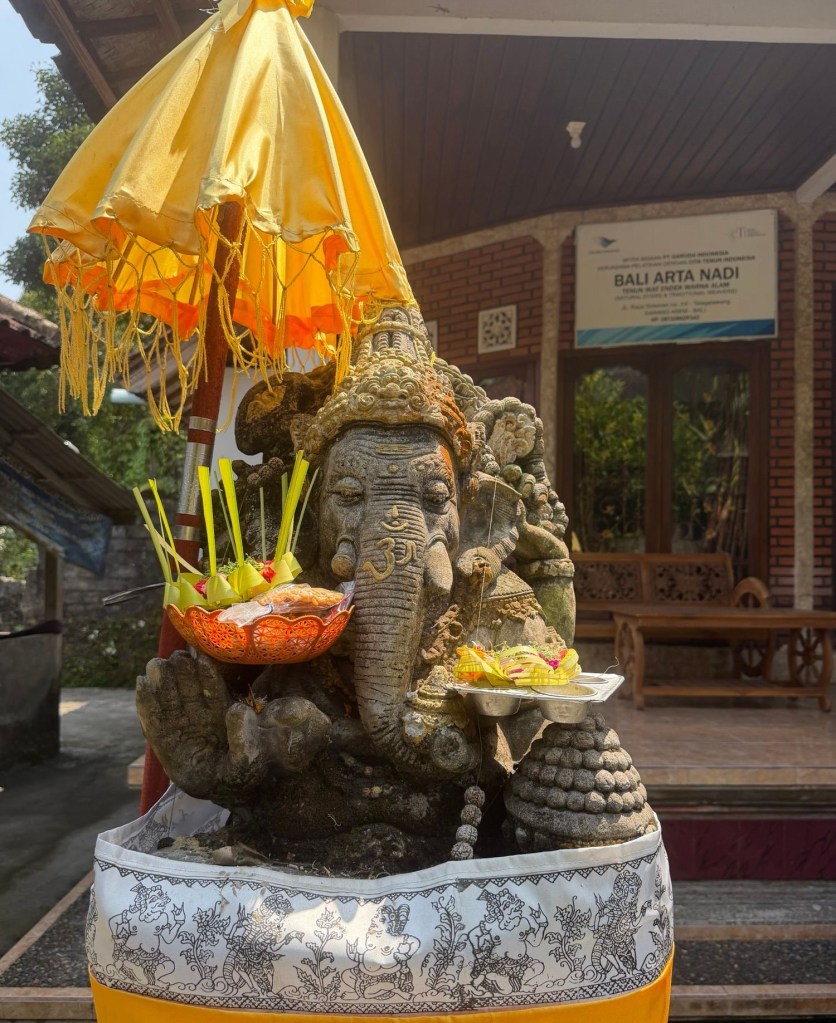
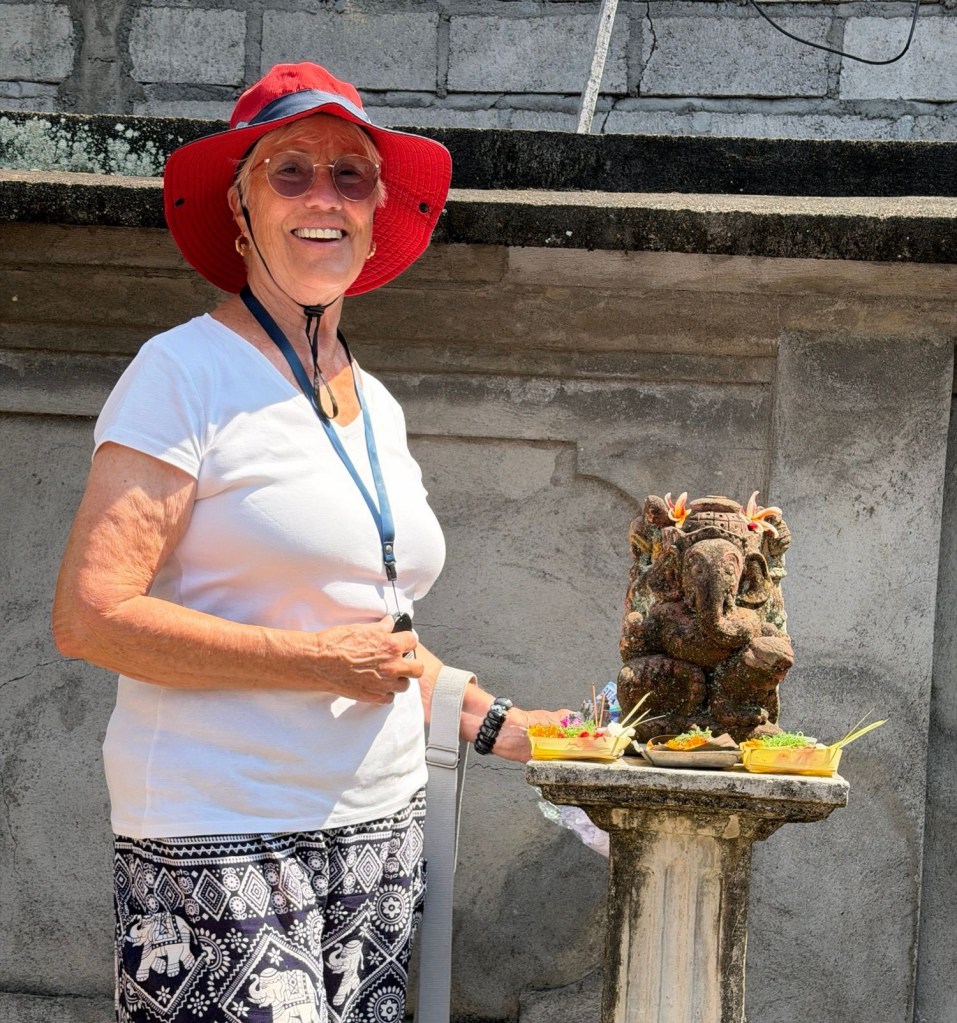
We also learned how to make little containers from palm leaves for the daily offerings to the Hindu gods.
One of three shapesJeanne and Ganesh
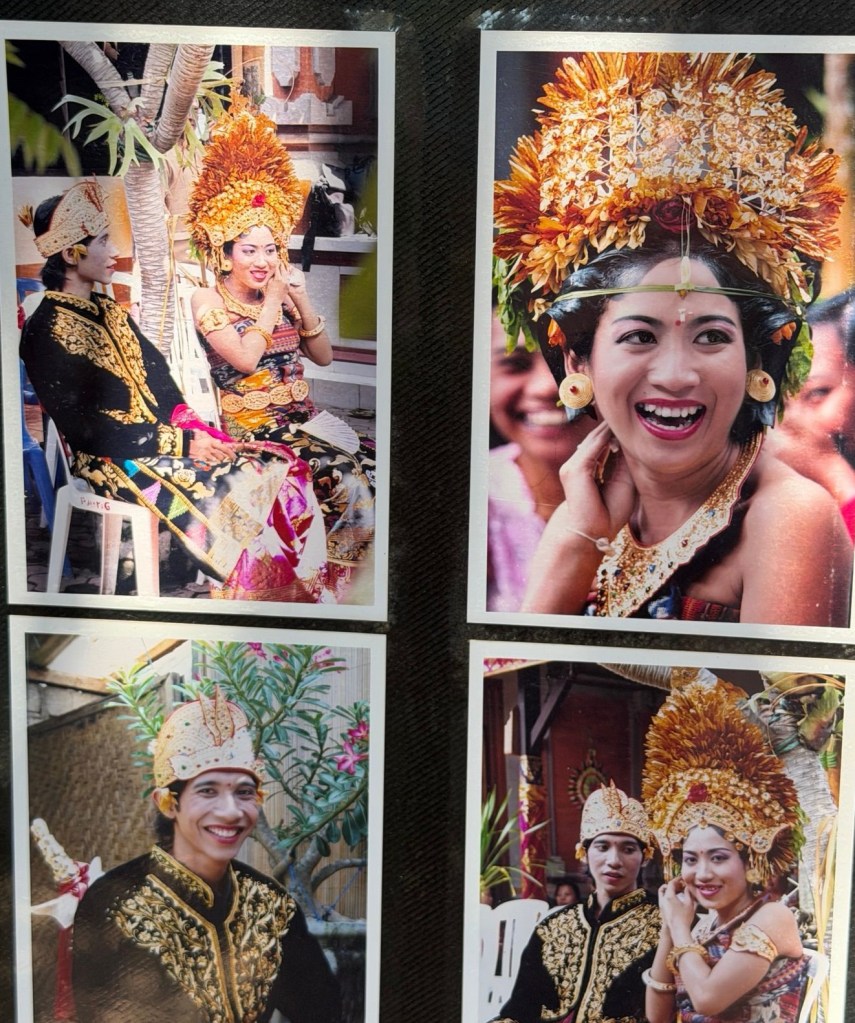
OAT has three unique features: dinner with a local family (home visit), “A Day in the Life” (usually a local village, farm or winery) and “controversial topics”. For THIS trip, our controversial topic was supposed to be the caste system. We met a man from the lowest of the four Indonesian castes ( a farmer) who married a woman of the highest caste (Brahmin, comprised of priests and scholars) and were able to learn about their secret courtship and elopement. Their marriage caused the woman to be estranged from her family for years. To this day there are rigid rules the wife’s parents have to follow, such as they can’t visit their grandchildren until after sunset.
The wedding album
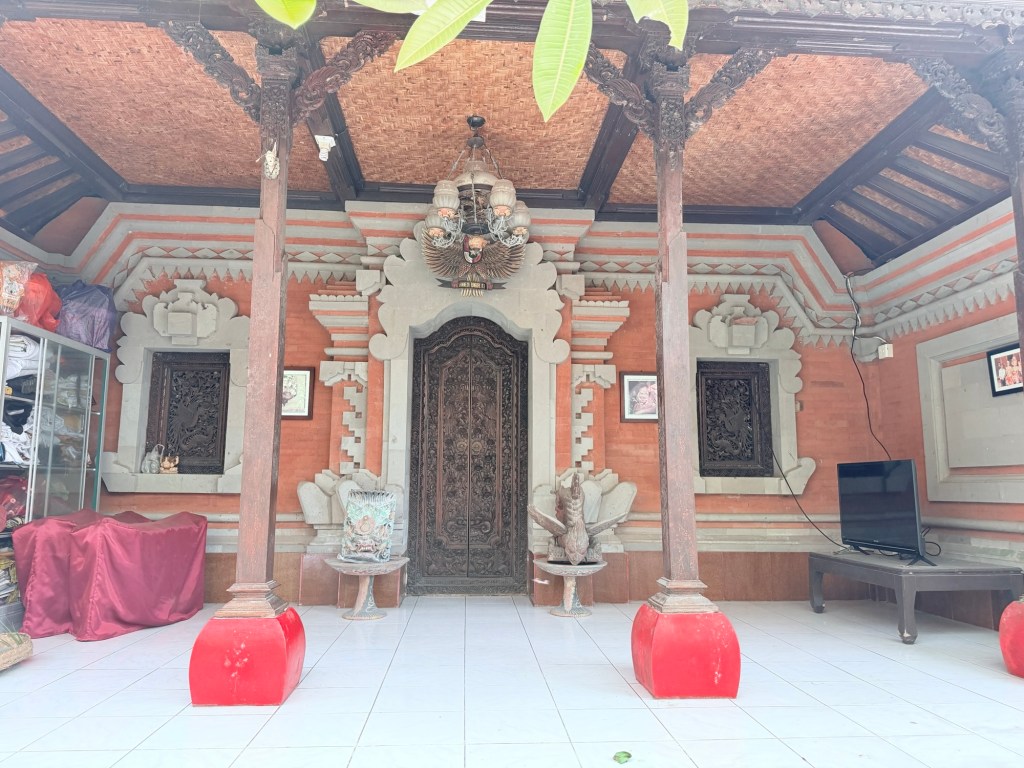
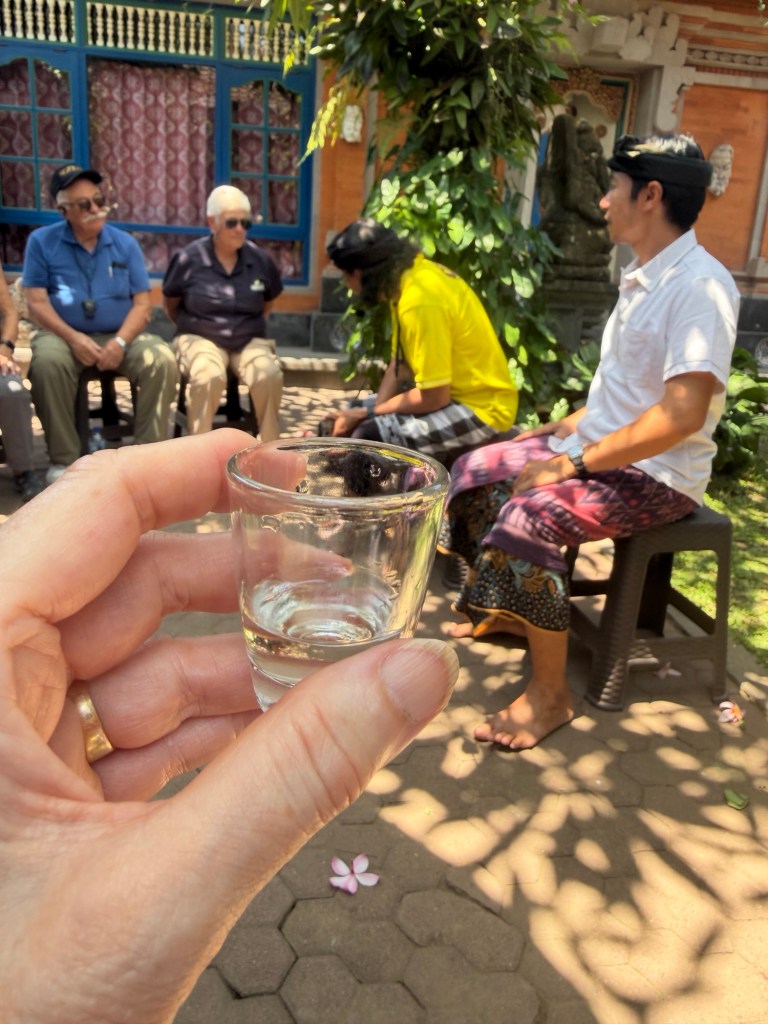
But that was not the only “ controversial” topic! It seems the Balinese believe all sexual activity ceases after age 60, which is why THIS room has been designated as a “sex free zone” , used by only those over the age of 60. EVERYONE in our group has long passed that particular milestone, and that pronouncement was met with bursts of laughter. Maybe we were practicing what we learned during our “happy yoga” session, maybe it was because of this alcoholic beverage we shared? Who can say for sure?
If you’re under 60, keep out! Home brewed Arak
Remember how I started this post with the NEGATIVE aspects of tourism? The Buddhist in me feels compelled to offer this yang to offset that ying.
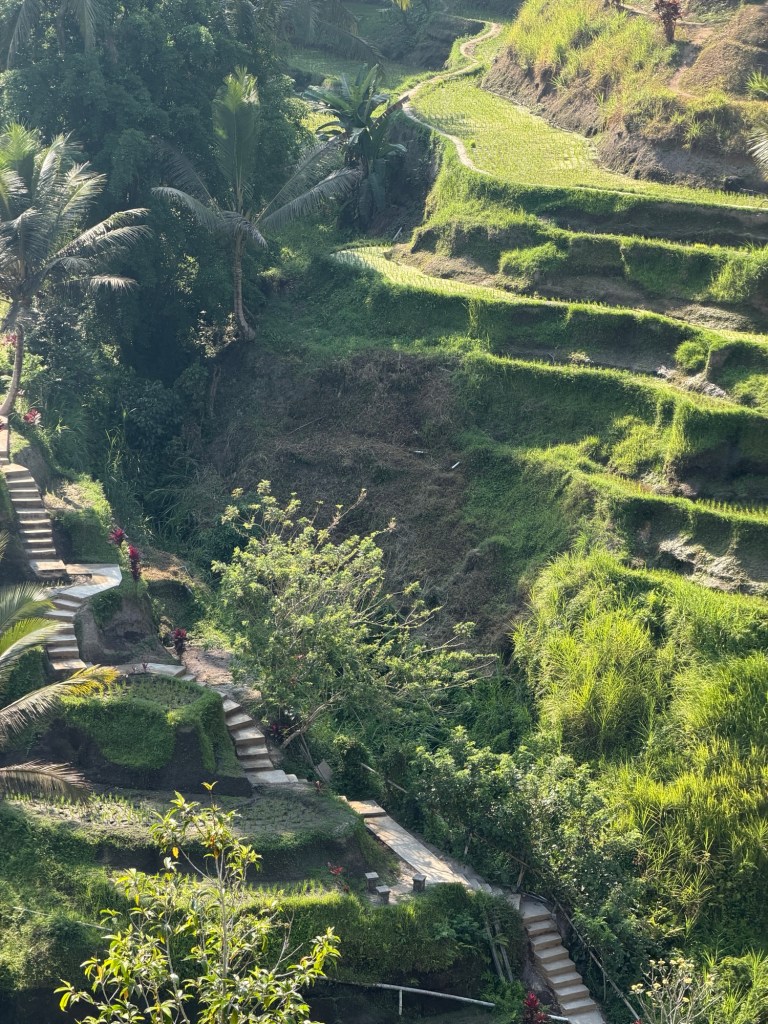
Tourist money allowed this beautiful vista to be preserved.
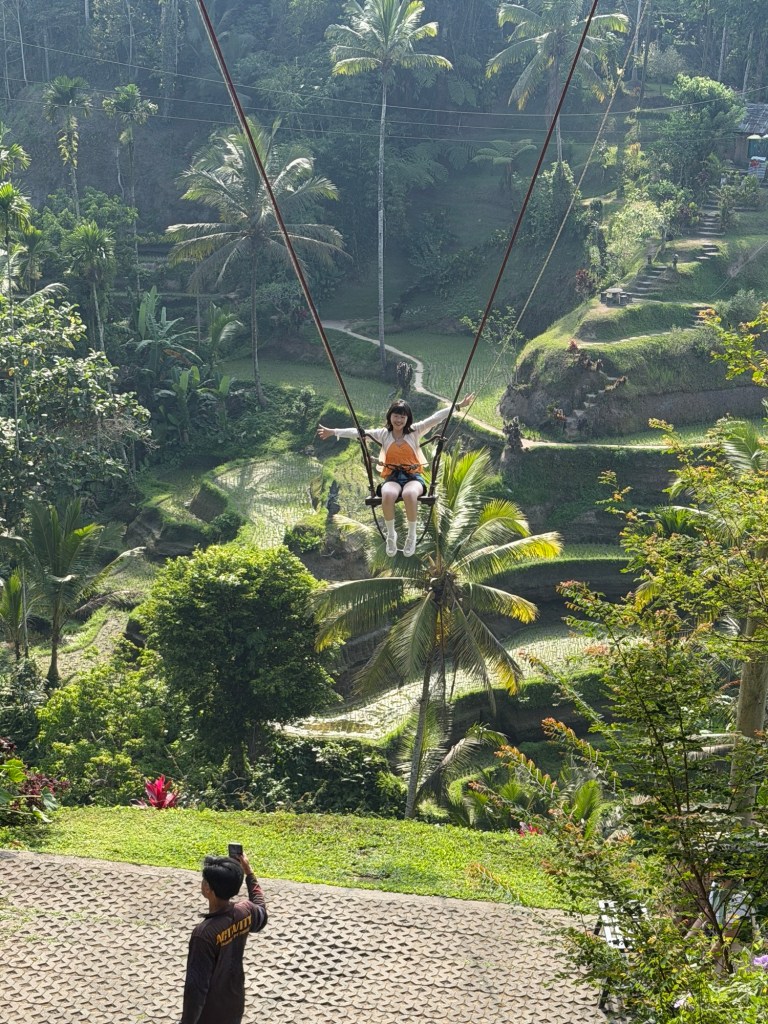
For a fee, you can zip line or swing across the rice paddies.
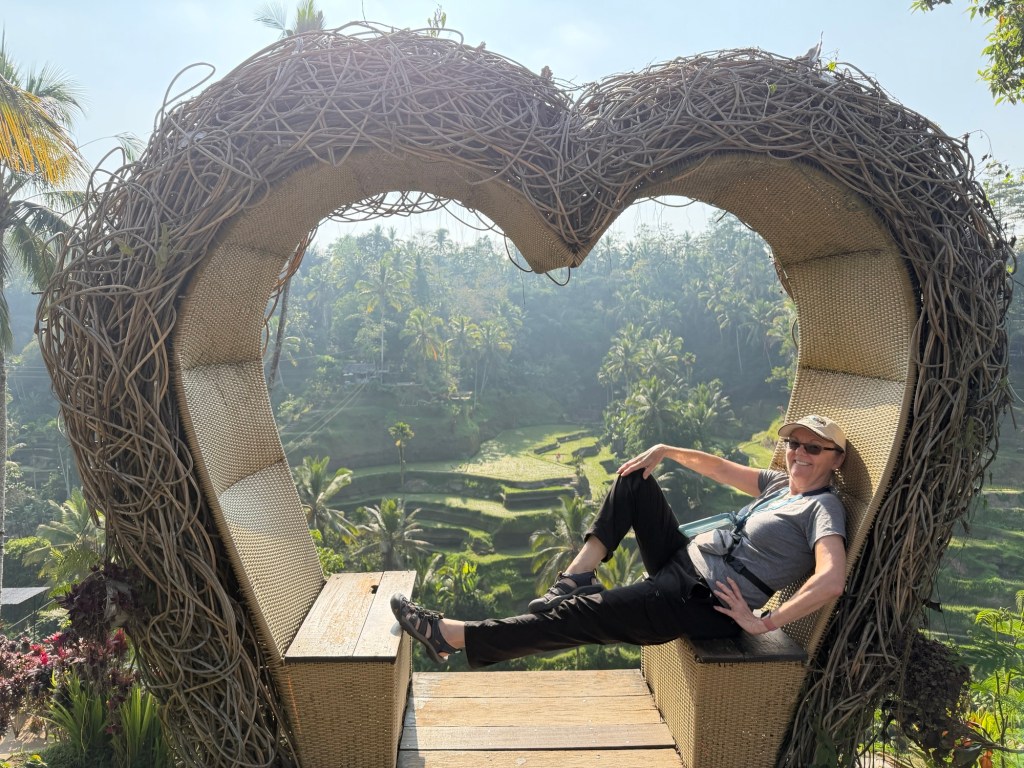
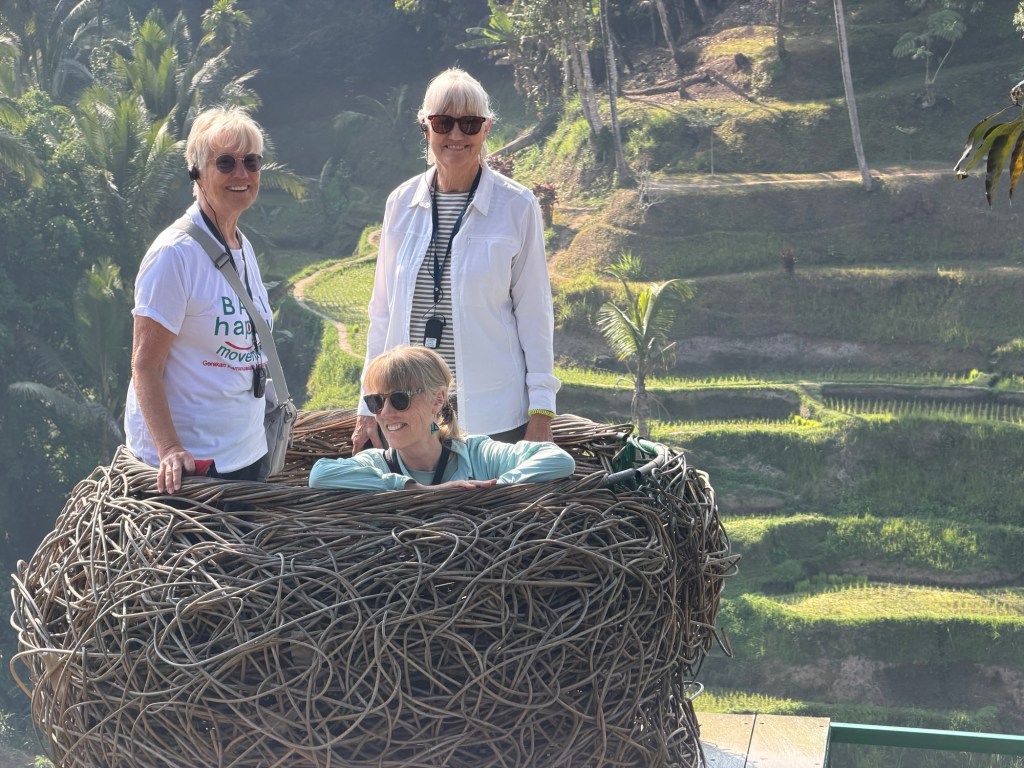
We didn’t have time for either, so had to content ourselves with the free photo ops,
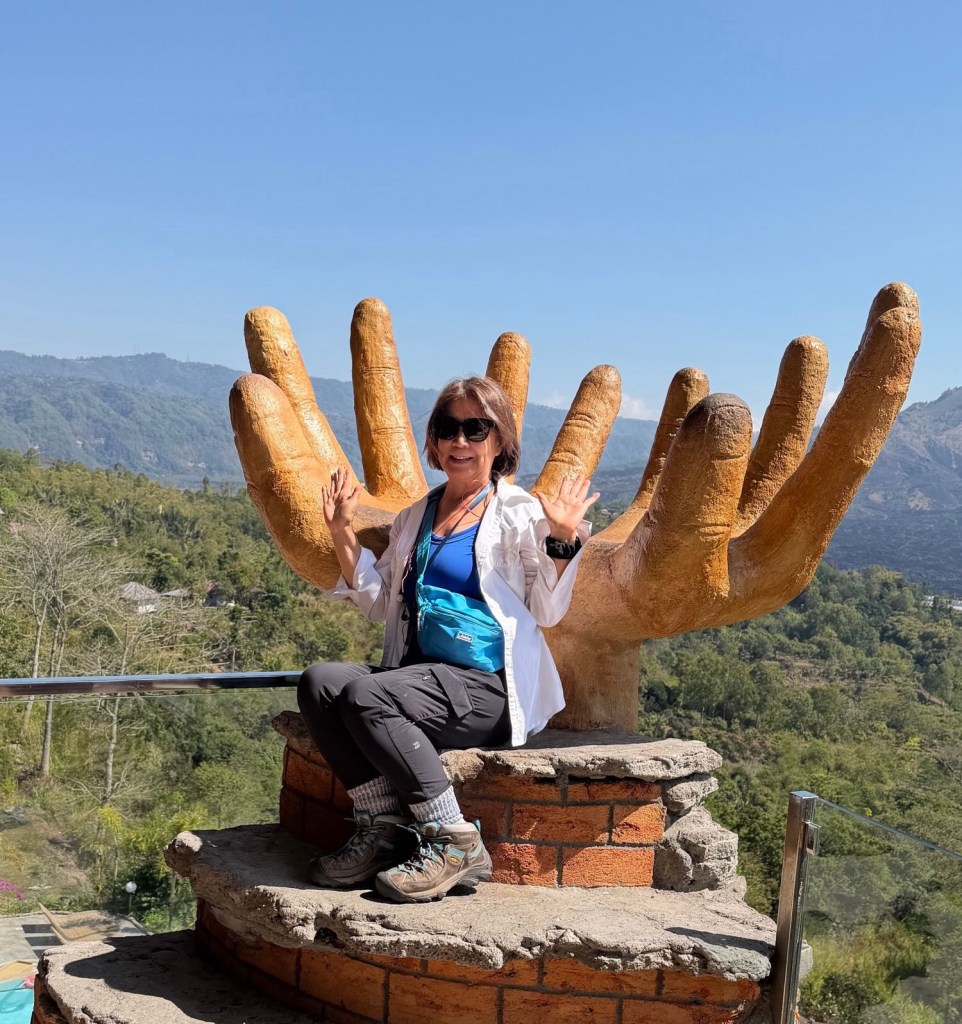
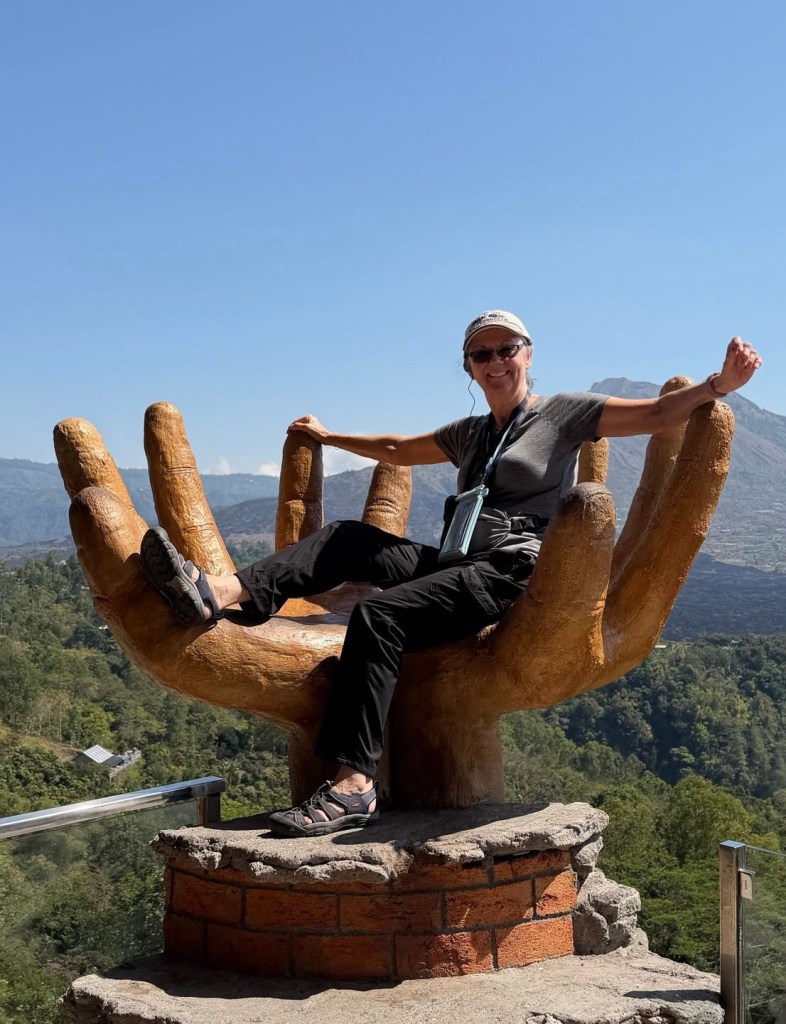
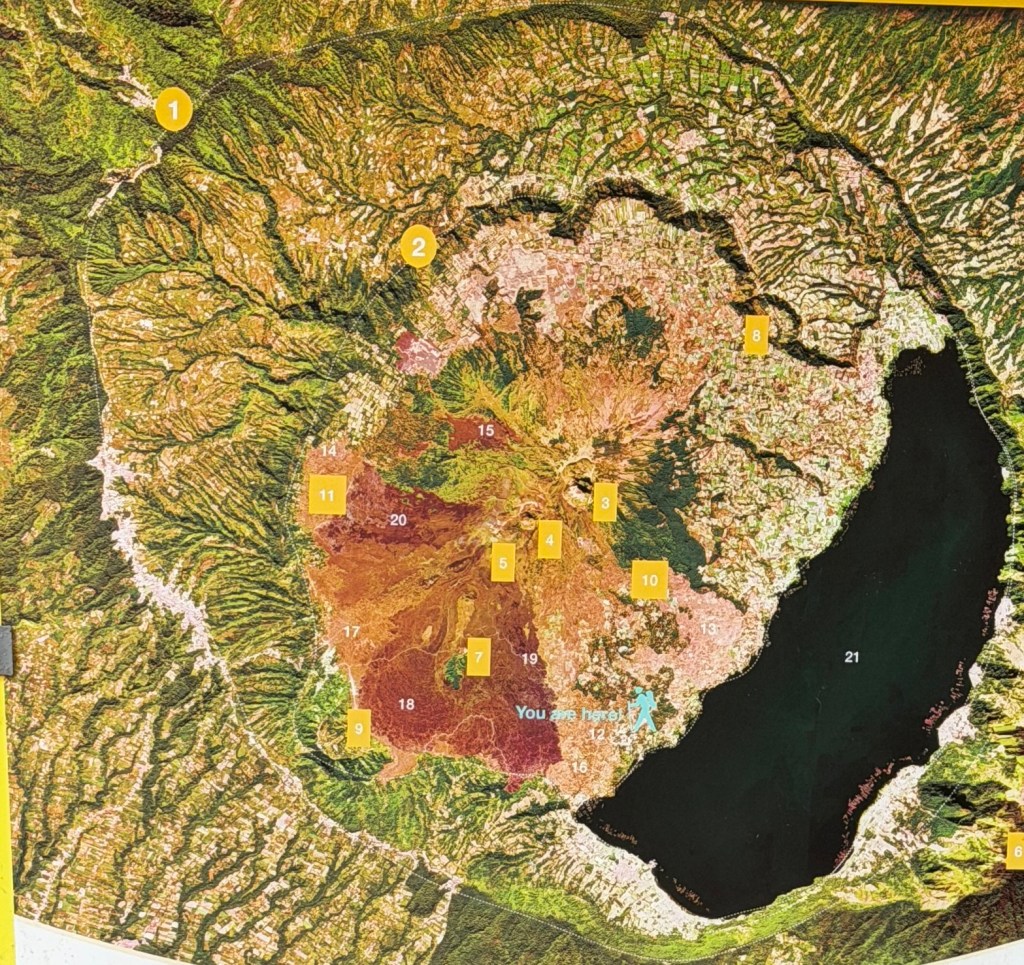
because we had more wondrous things to view, like the volcano’s crater, and more photo ops to experience.
Jeanne #2I have no fear of heights
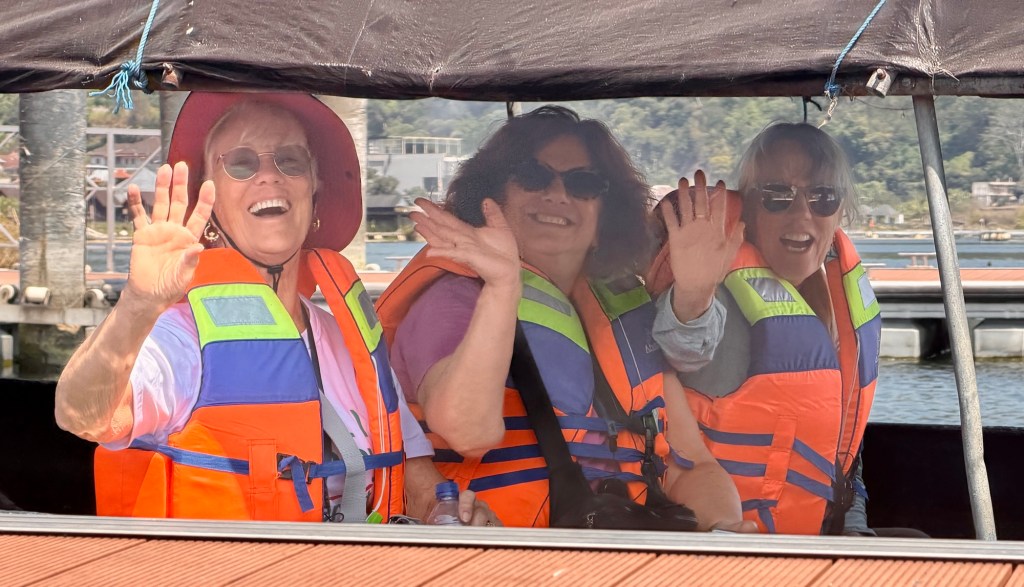
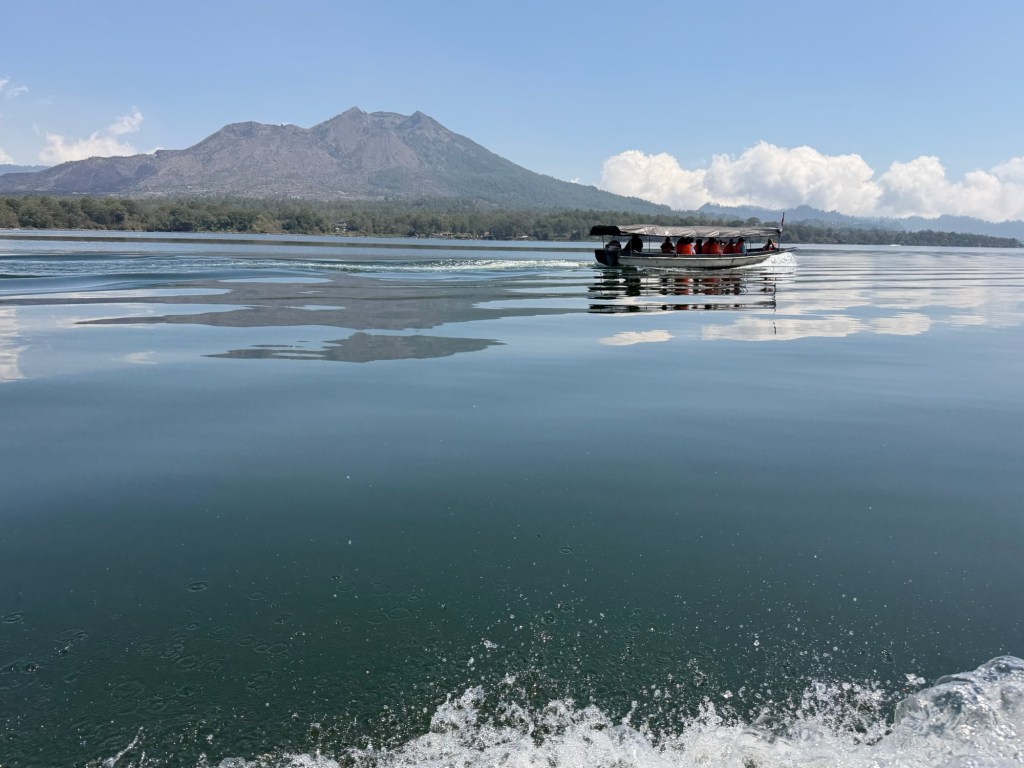
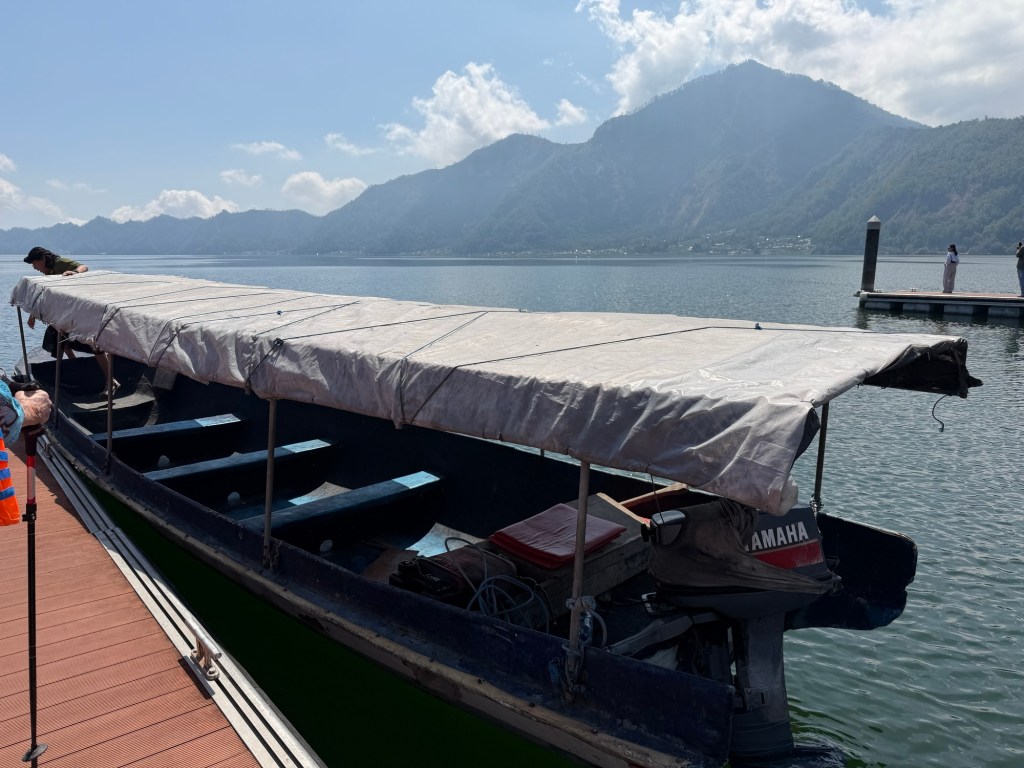
Luckily the lake wasn’t too choppy, so we were able to visit the tiny ancient village located a half an hour away by boat.
Jeanne#1, Shoshana, Laurie
The ancestors of the current 1,000 residents have lived in this isolated village for about 1,000 years. They like being cut off from the rest of the world.
Average life expectancy is approximately 67 years, but the chief told us the oldest villager made it to 120(?!)
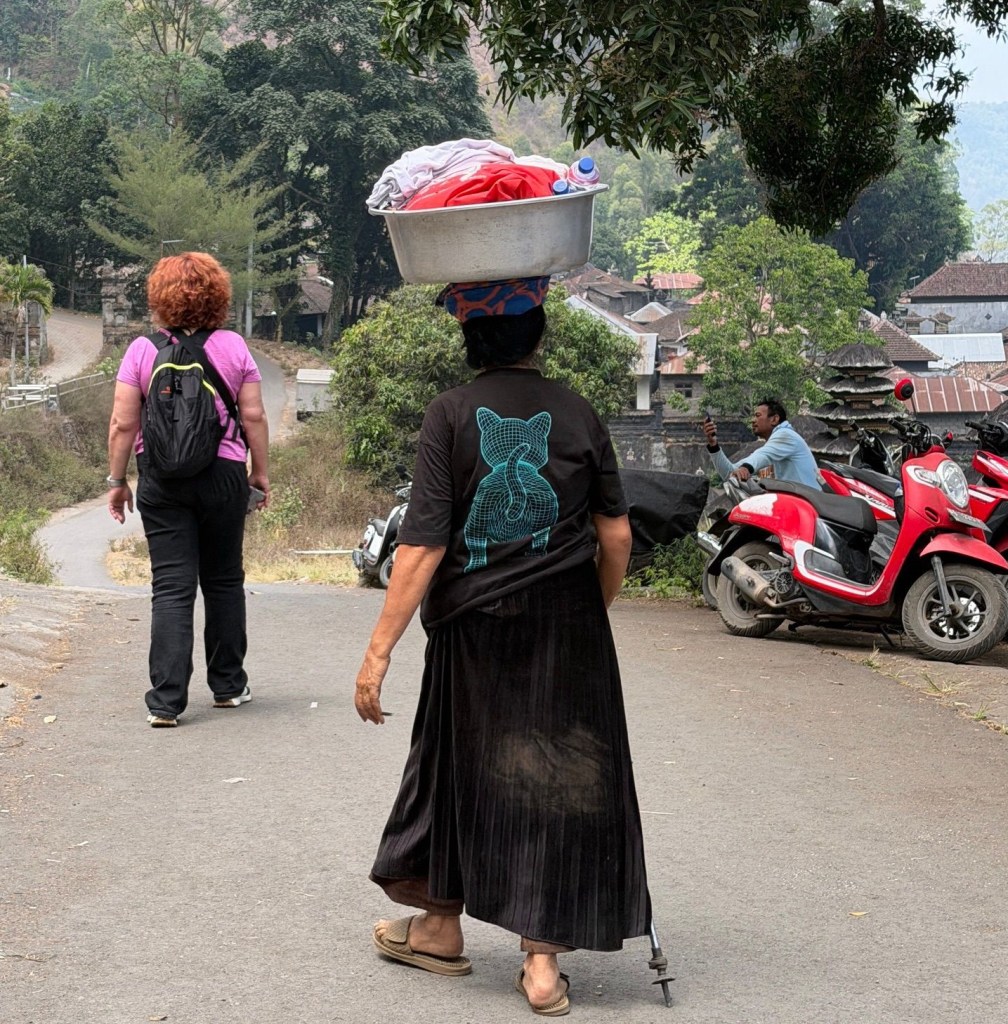
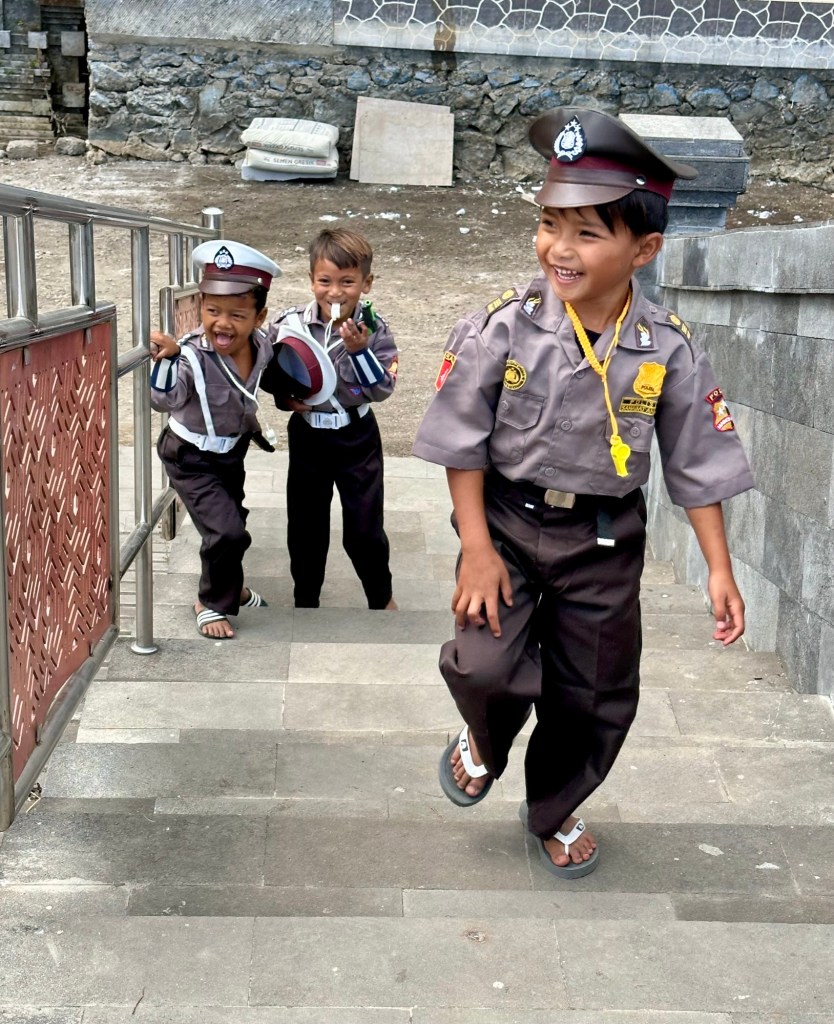
What makes the better carrier? Backpack or head?The volcano’s craterShoshana took this photo of these cute village boys.
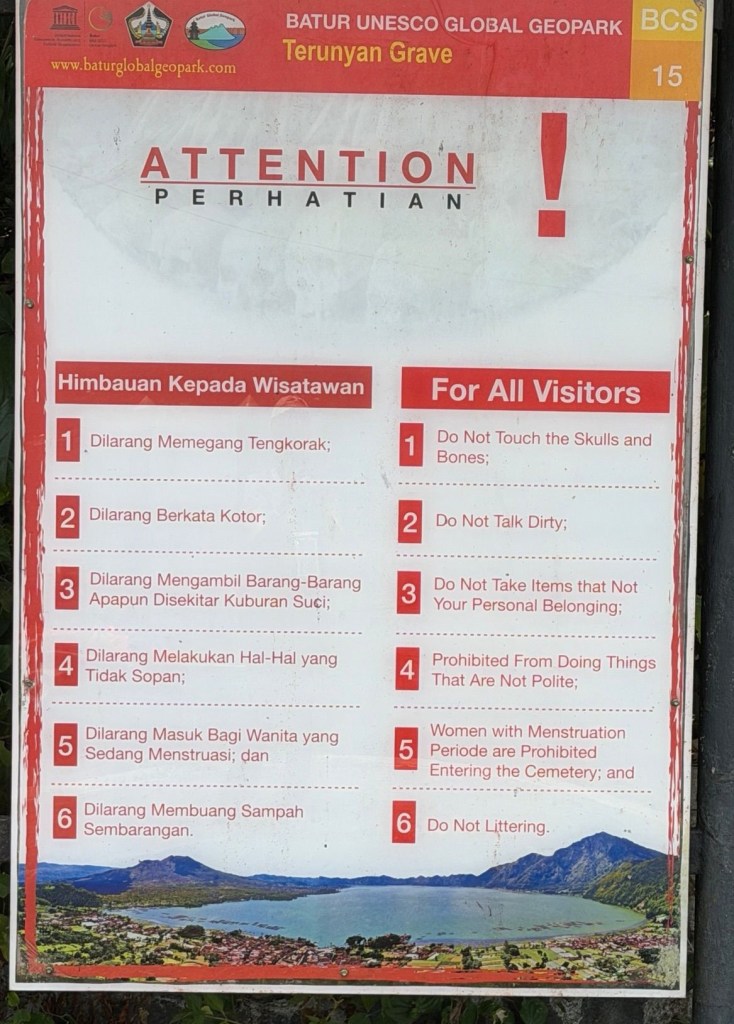
Our final stop, before heading back across the lake was to the cemetery, where we read the rules before entering.
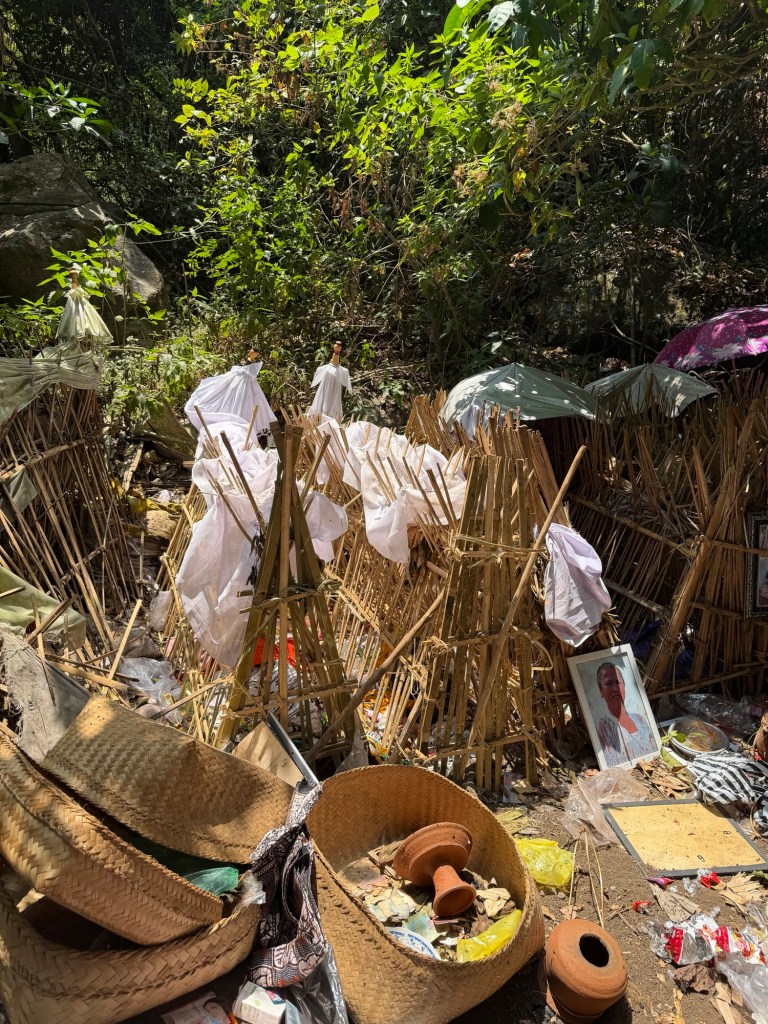
I don’t know whether the locals talked dirty or were impolite, but they sure ignored the rule against littering! There was trash all over the ground.
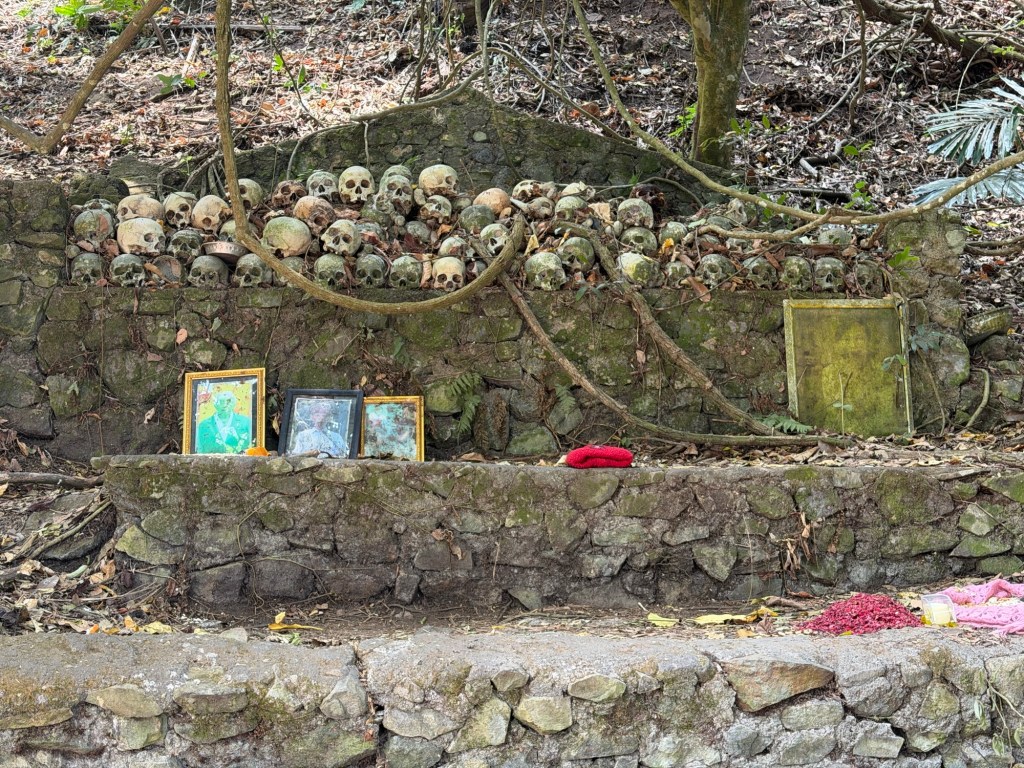
One rule they keep is not posted. THAT rule prohibits more than 11 people at a time from being “buried” in the cemetery. When the 12th person dies, then whoever has been in the cemetery the longest is removed and their skull (if decomposition occurred ) is placed on the altar. Until the skull can be easily detached, the body is dumped aside till ready.
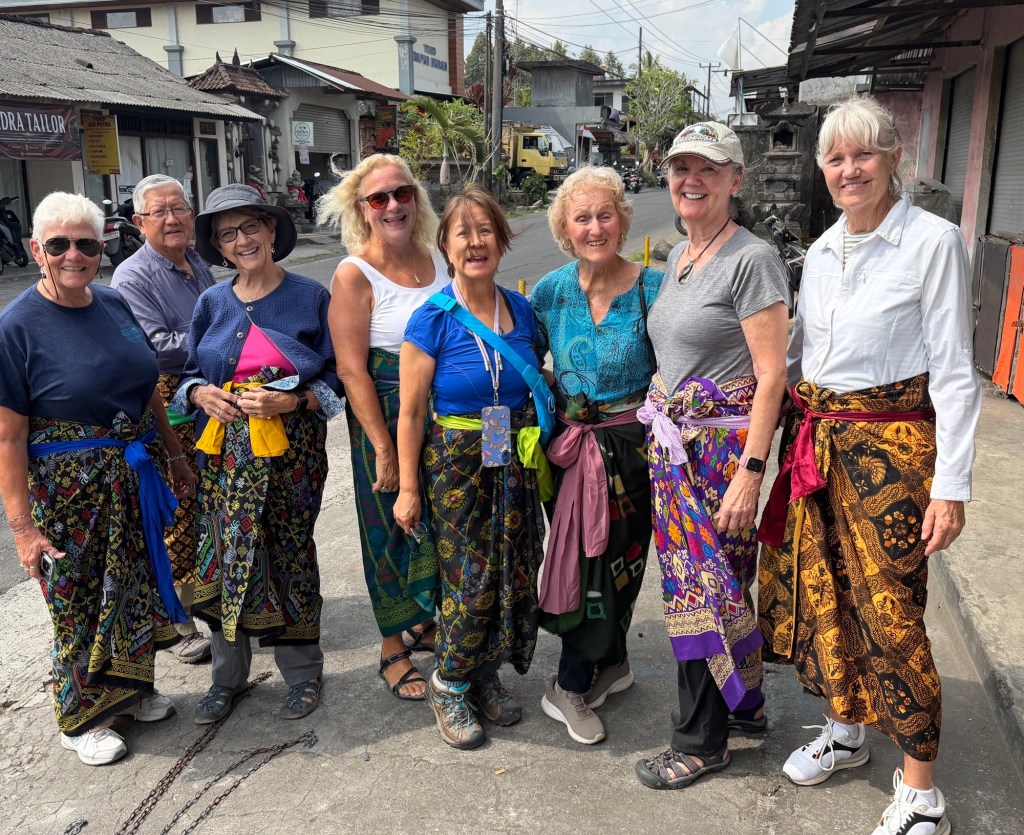
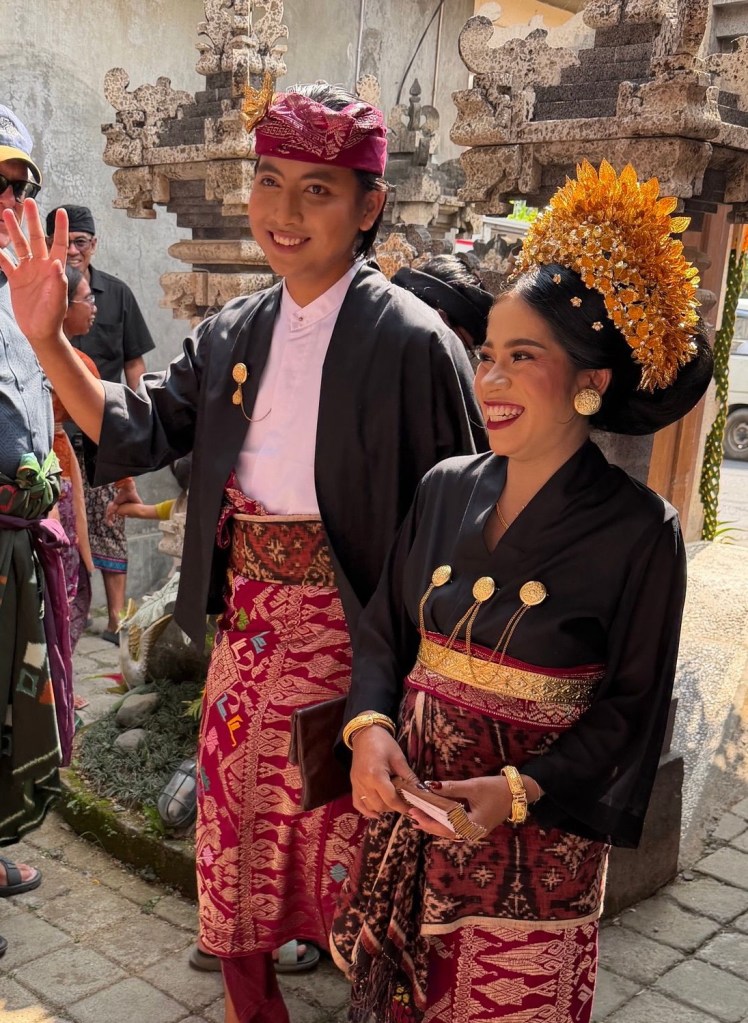
On the way back to the hotel, we stopped to crash a wedding.
Widi travels with a supply of sarongs, just in case he encounters a local opportunity like this. (Is he an amazing trip leader, or what?)
The traffic we encountered on the way back to the hotel forced us to be flexible. Rather than returning before 3 PM, we arrived around 5 PM. Thanks to Steve Jobs, I am never without a book, camera, and access to email and texts, so delays are never a problem for me.
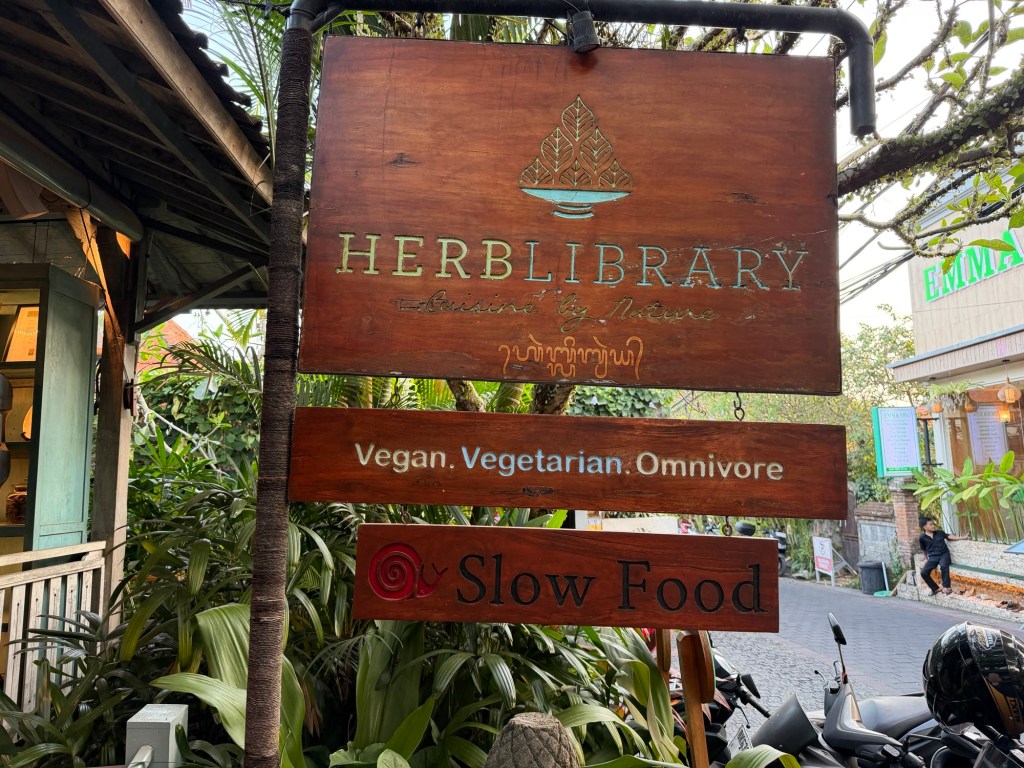
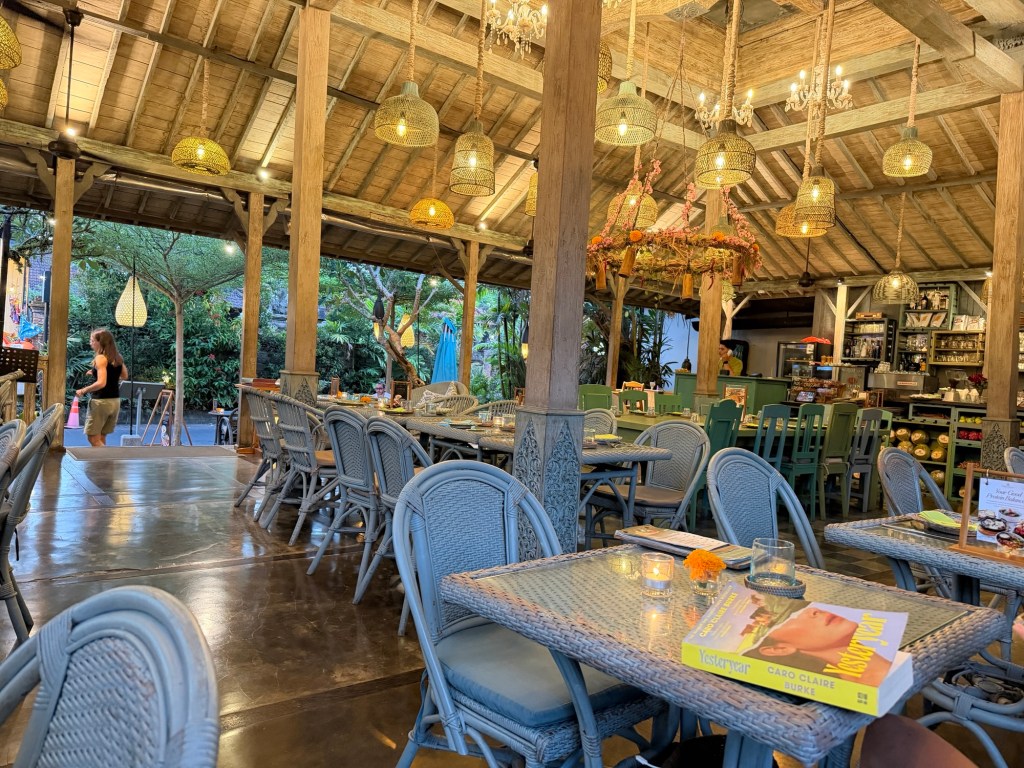
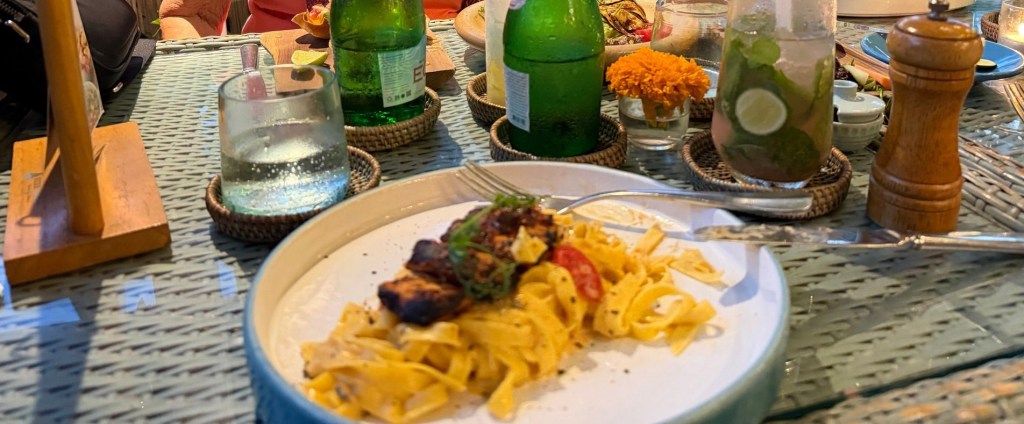
We wanted to have an early dinner anyway, so we left for the fabulous Herb Library, (a restaurant recommended by Laurie’s nephew), shortly after our return.
Yes, chicken and beef options are on the menu
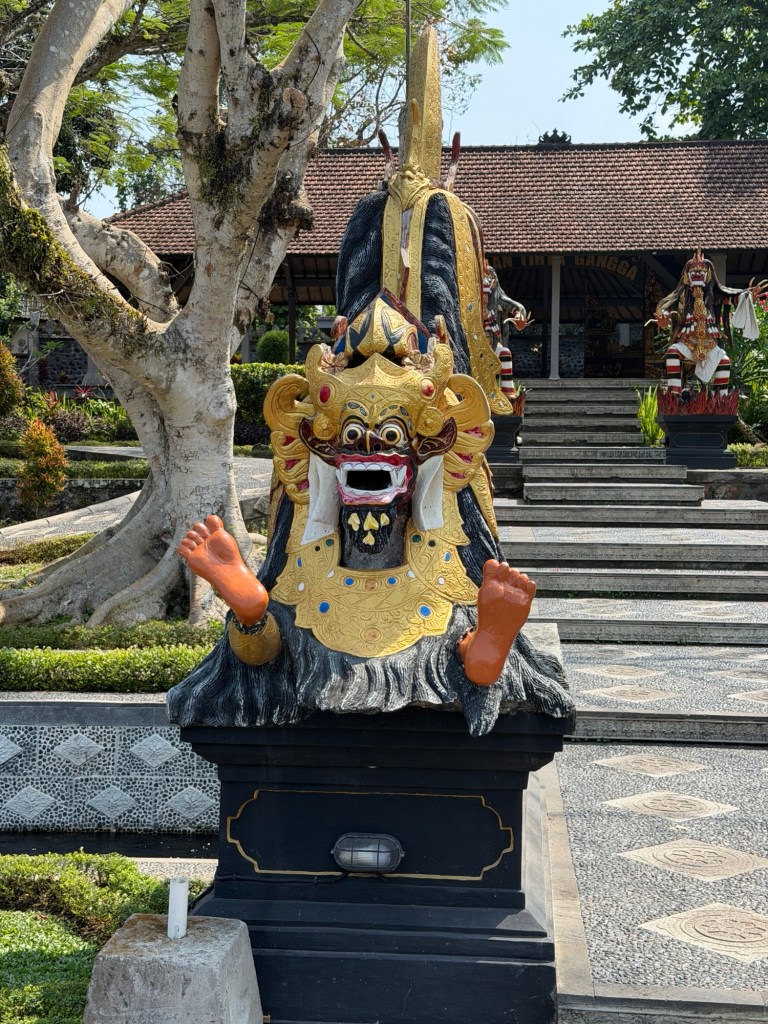
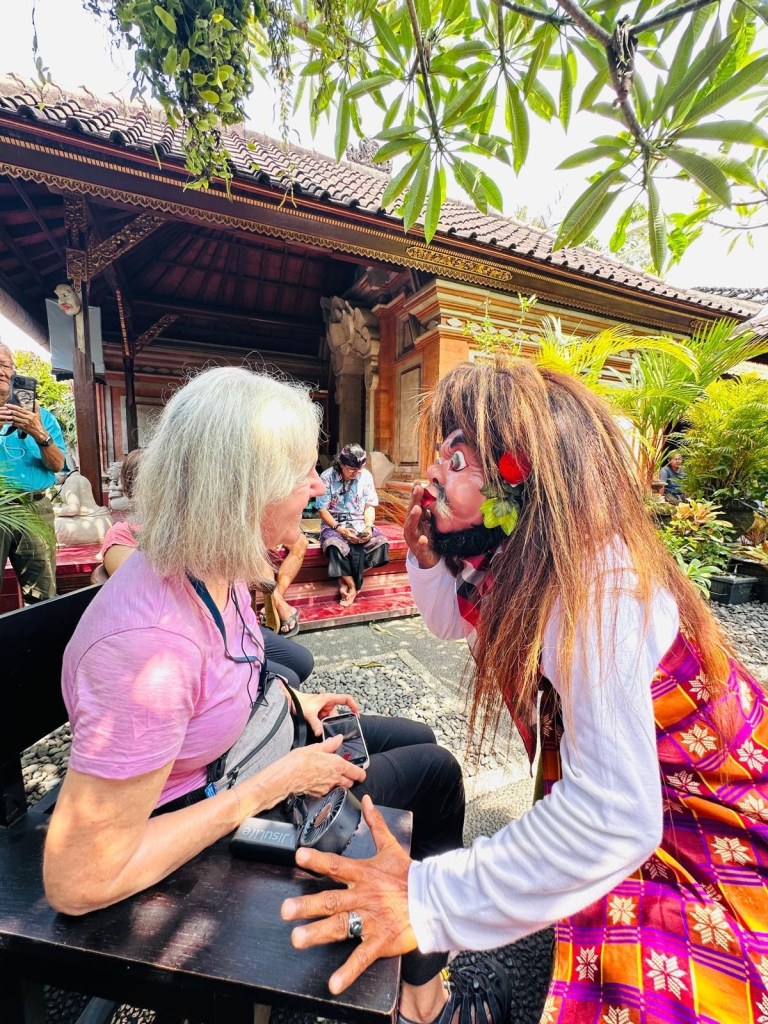
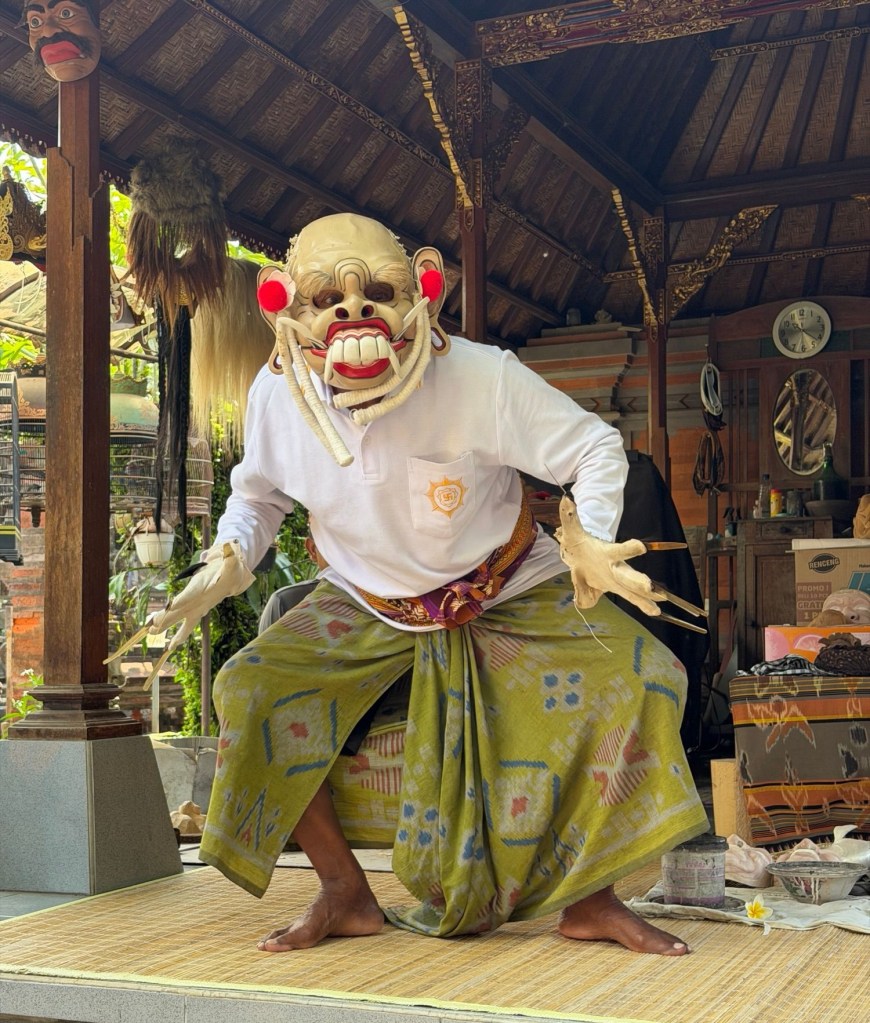
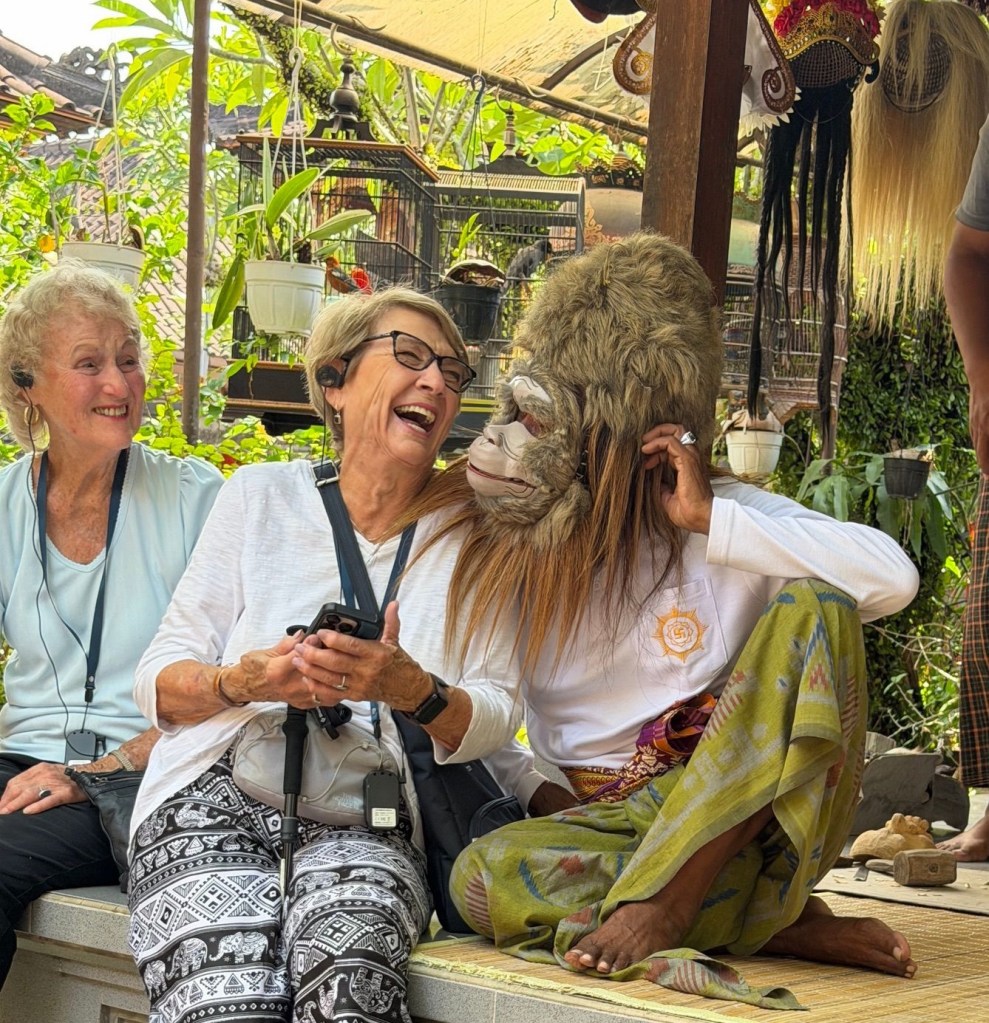
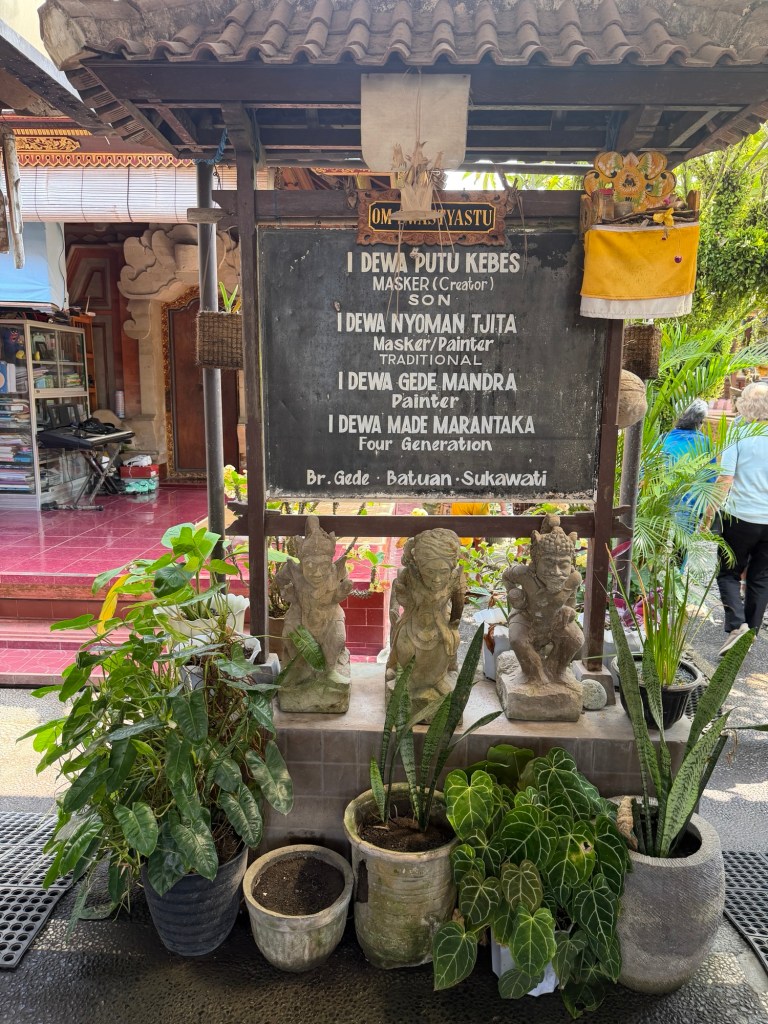
Finally, leaving Ubud, on our way to Candidasa, we stopped to visit a mask maker’s studio, where we watched the masks come to life via dance.
Photo by ShoshanaMarian, Nancy & DemonSeveral generations of mask makers.