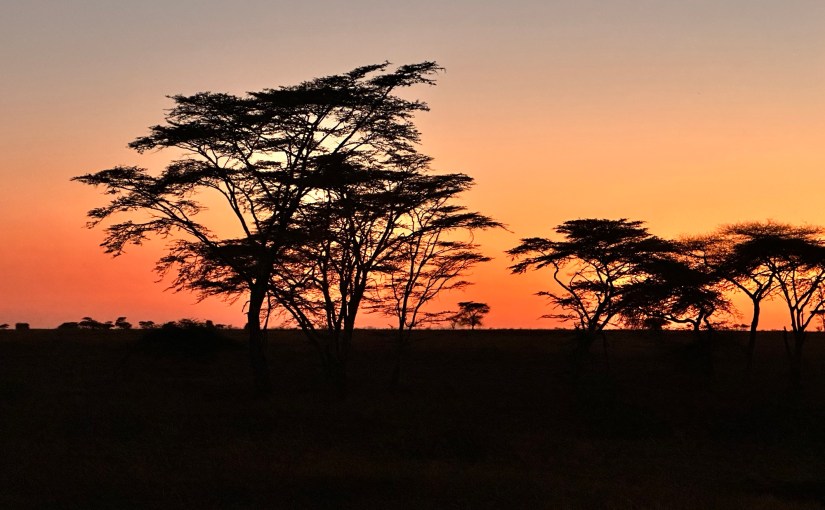
Up, up and away…

Sometimes when things don’t go according to plan, you end up with something even better. That was definitely the case for me and my ballooning buddies.

We dutifully arose at 3:45 AM, to be ready for our 4:15 escort. Why would we need an escort to get from our tents to the balloon company van, you ask? Well, because after dark one night, 4 lions wandered into our camp and positioned themselves between two of the tents, staying until daybreak. My family won’t be surprised to learn that I completely slept through their snorting and huffing.

Our 90 minute drive to the balloon launch site turned into a game drive, because while our driver Simon ( pronounced SEE-moan) was zipping along the bumpy roads, he was also on the lookout for critters.

The high point was when Simon spotted this young leopard easin’ on down the road. When he crossed in front of the jeep, a passenger in the front seat quickly snapped this photo. I just as quickly conducted an impromptu class on airdropping, so we could all share this reminder of our encounter.

We were hopeful as we settled into the basket, lying on our backs.

Okay, so maybe my selfie skills need a little work.
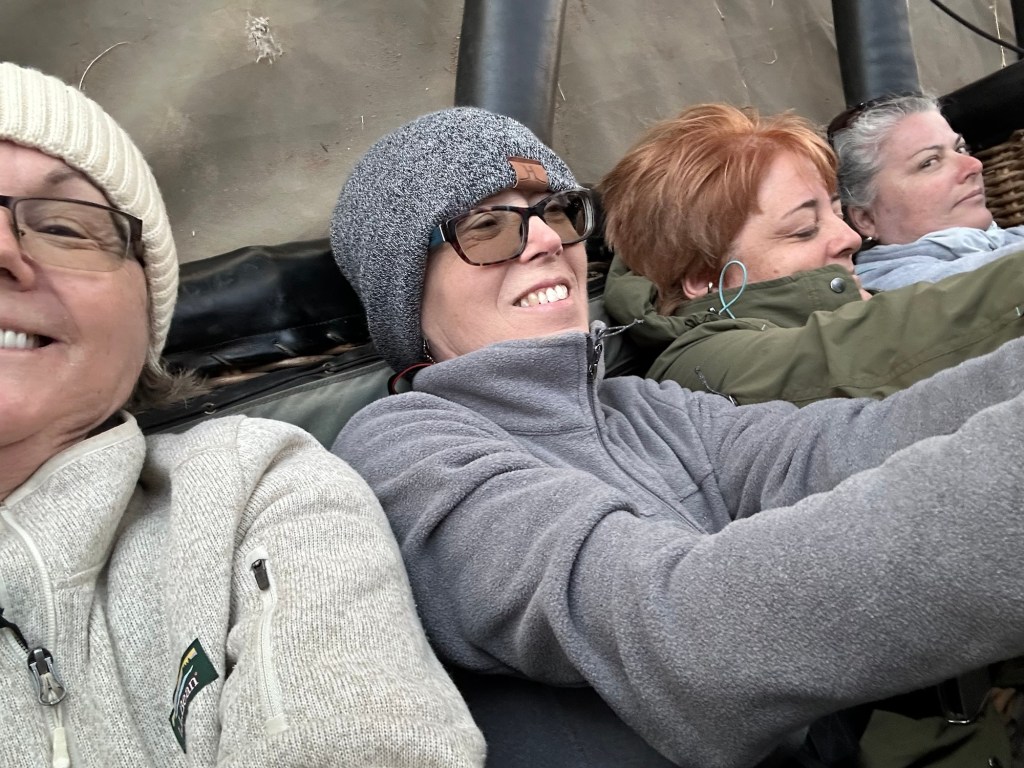
After being loaded into the balloon basket, “snug as bugs in a rug” ( as my mother used to say) the pilots decided it was too windy to fly.

We were given a choice of either trying again the next day or getting our money back. Hell, yeah, we’re all gonna try again. So what if we had to get up at 3:45 AM two days in a row? We got to see spectacular sunrises, drive with Simon again and scarf down yet another breakfast at the Miracle Experience camp. What’s not to like?

Besides, we already posed for this photo, so we felt committed.

Rachel, the youngest, Sue and Hannah, and me, the oldest (and biggest—I scrunched a lot) of our group.

On day 2, we already knew the drill. THIS time, I got a photo BEFORE we entered the basket, so the friends back home could see what I was trying to describe. Our new pals from the OAT group traveling a day behind us were in the “mezzanine”, while we scored the balloon’s “orchestra” seats on the bottom level.
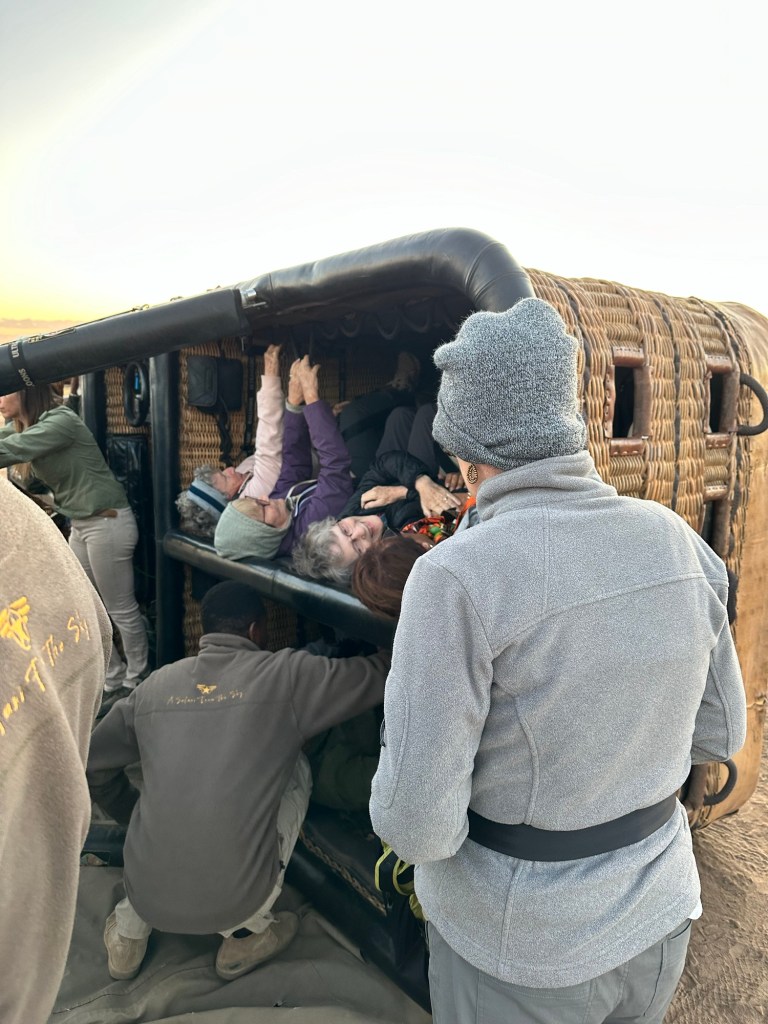
This was our last chance for a balloon ride because the following day we were leaving the Serengeti. Fortunately, we all were chillin’, having a “que será, será” attitude. Whatever happened, we were good with the outcome. That’s what made these ladies such great travel companions.

Rosa, our Spanish pilot explained that there are three types of landings: smooth, bumpy, and drag. The first two terms are self explanatory. DRAG is when you bump several times before coming to a stop with the basket on its side, the way we started. Bet you can’t guess which one WE experienced.

What Rosa neglected to mention was that sometimes take off can also be a “drag”. We bounced up and down a couple of times before the balloon righted itself. Rachel, our selfie queen, captured our happy faces during our glorious lift off.

When we got completely upright, our new OAT friends took this one.

yes, it was cold at daybreak.

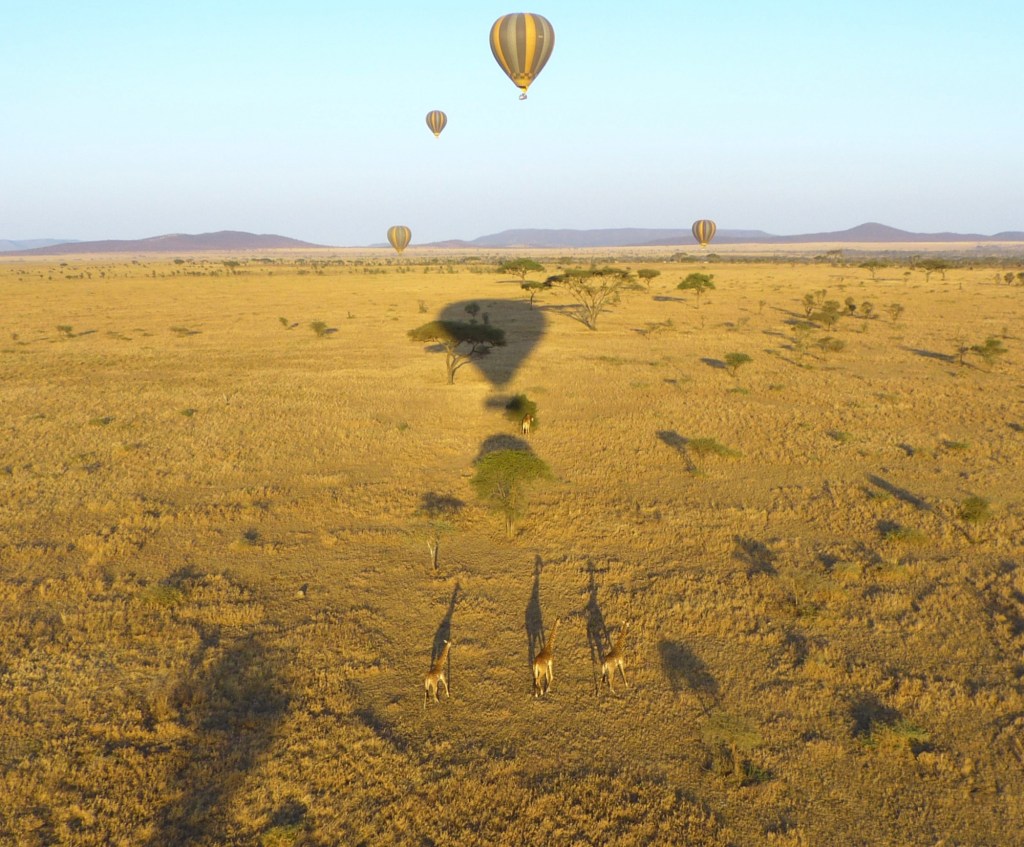
So what was it like? Pretty damn magnificent. It is very apparent that our eyes are indeed miraculous. My photos in no way do justice to what we viewed on the “Endless Plain”, which is the English translation of the Maasai word Serengeti.
Two last game drives, then on to my solo trip to Istanbul.

It may LOOK like rocks, but those are all hippos, including the butt pillow.

It took a group effort to bring this Cape buffalo down.
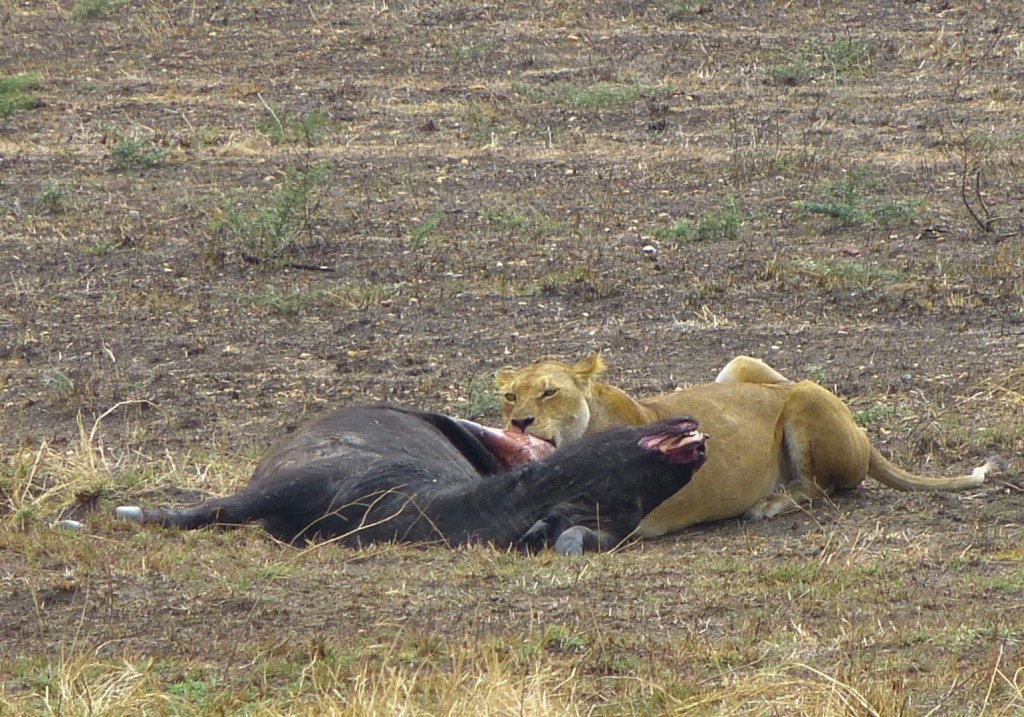
Now what made me think of Thanksgiving dinner? Except WE all gorge ourselves together. Lions take turns. See, one has been patiently waiting her turn, and now it’s time.

It was clearly worth the wait.

I’ll end this post with a shot of Mount Kilimanjaro for Tom, Jean’s husband. It was taken in Kenya, earlier in the trip. I had hoped to get a better shot from the Tanzania side, but my only view was from an airplane, and the propeller was in the way.

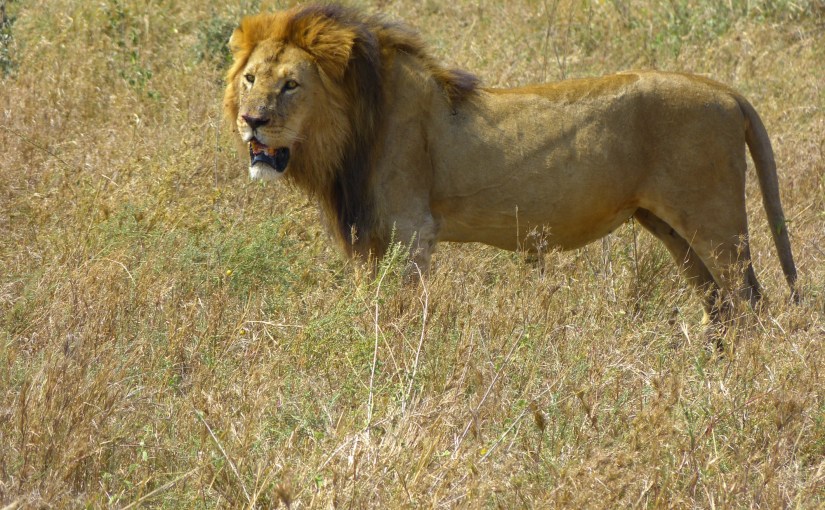
Serengeti Animals

It’s just as well that I had to abruptly end my last post before all of the photos uploaded, because my Serengeti pictures are so much better than the ones from the Ngorongoro Crater.

We left the beautiful Tloma Lodge in Karatu at 7 AM for an all day drive to our tented camp deep within the Serengeti.

I’ll be honest. I was NOT looking forward to 8 hours of rockin’ and rollin’. The road along the dusty, misty rim of the Ngorongoro Crater was very narrow, the drop into the caldera was steep, and visibility was poor. We were ALL very grateful that our drivers (Freddie and David) were experienced and skillful.

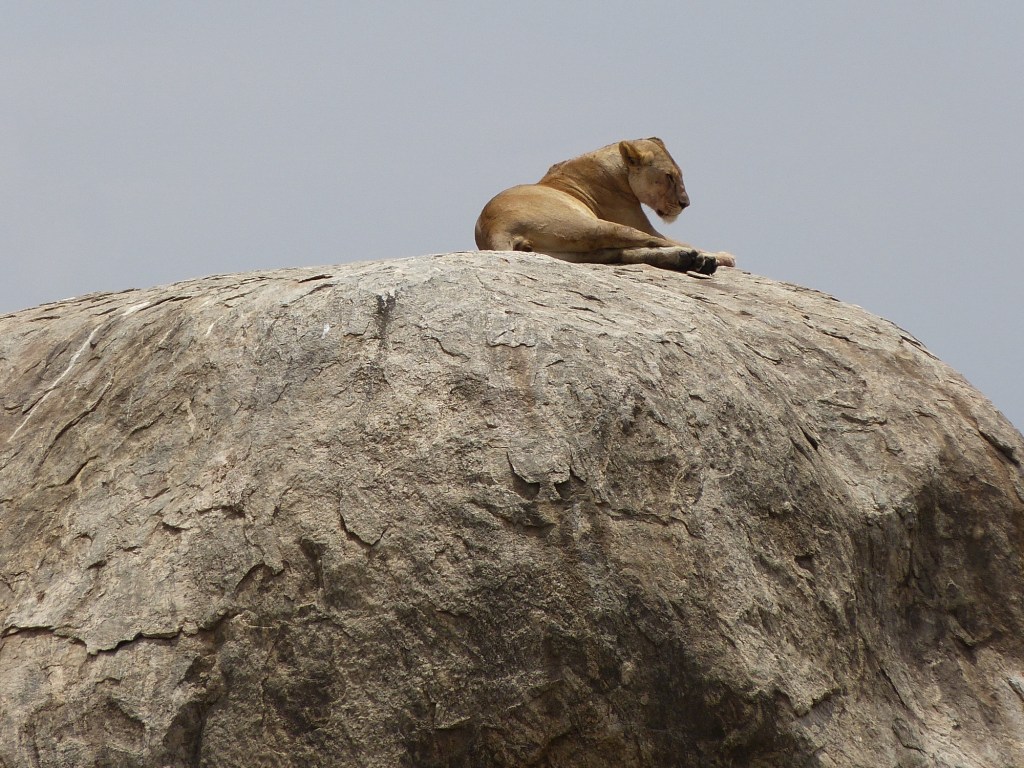
After a few stops and a picnic lunch, things started to get interesting. When we spotted a lioness standing guard on a big rock, we figured she must be protecting SOMETHING, but what?

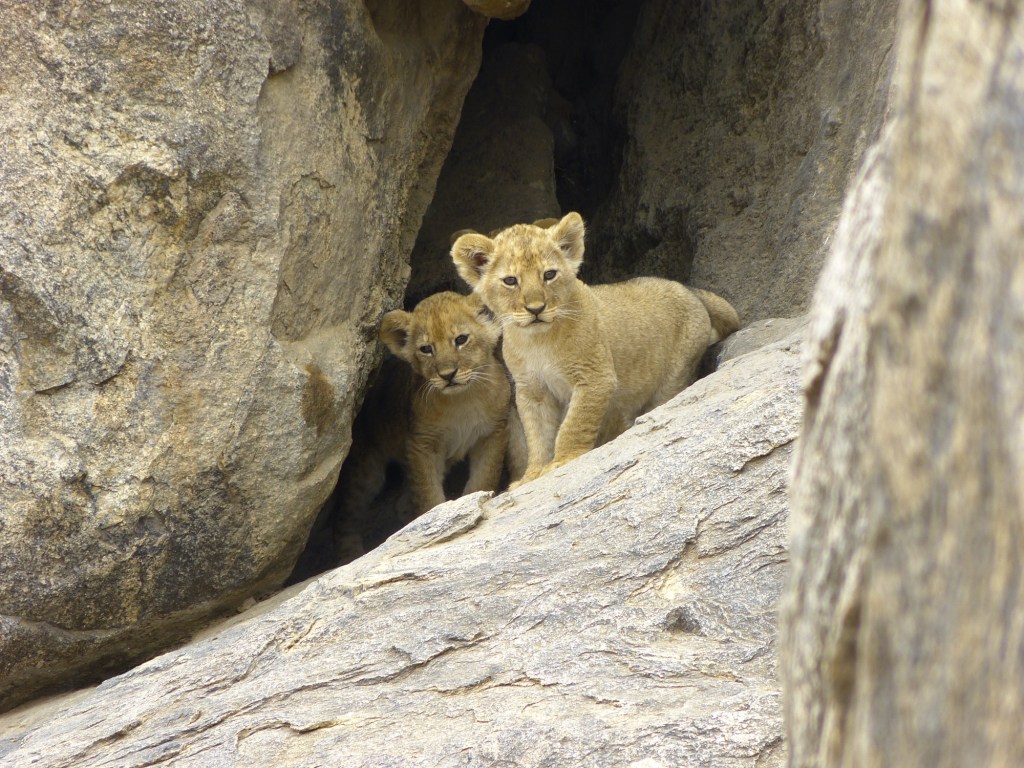
First, one little head popped out in the crevice.

then a second one,

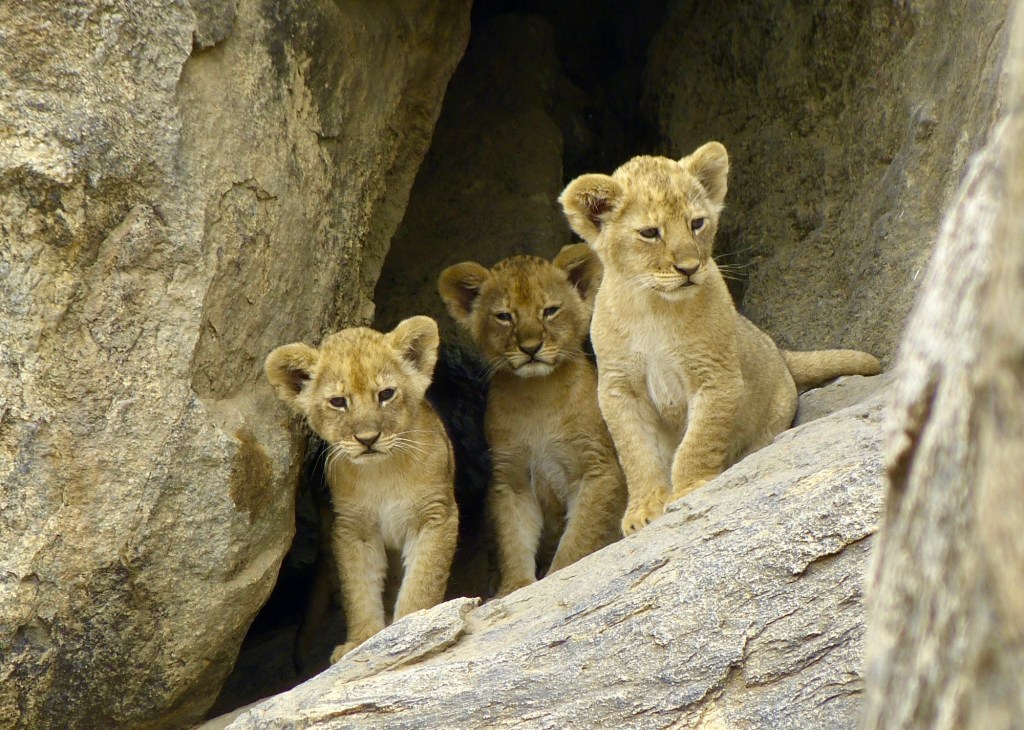
JACKPOT! We couldn’t believe our luck.

That must have been auntie on lookout duty, because here comes mom.

But wait…it gets better.

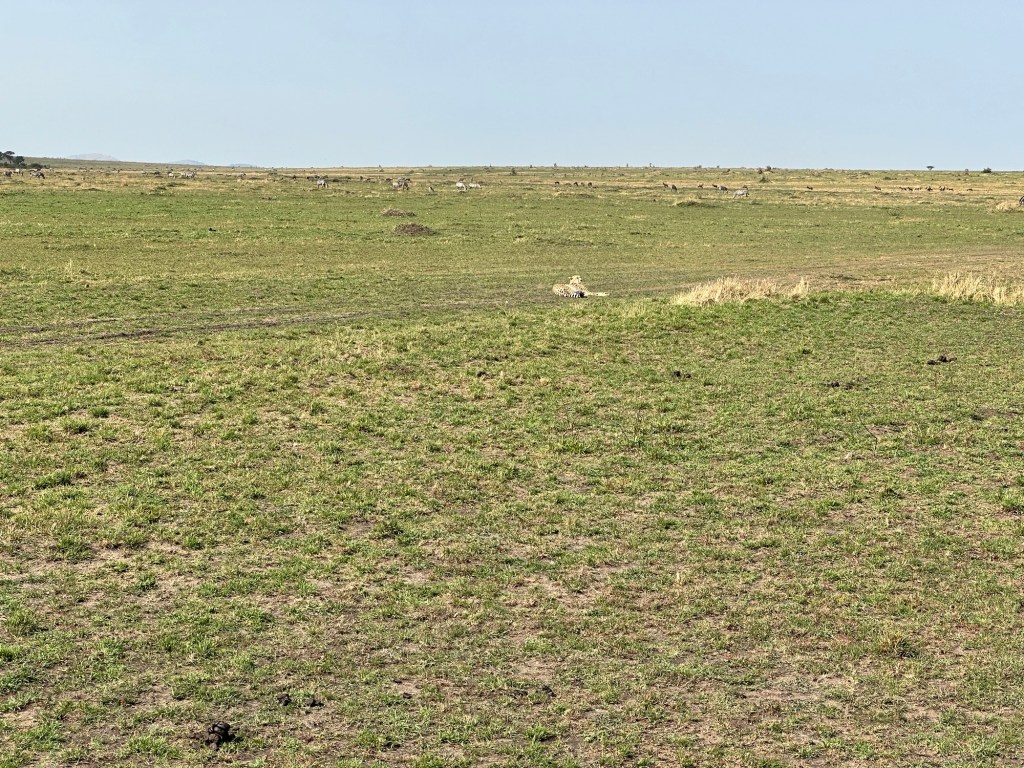
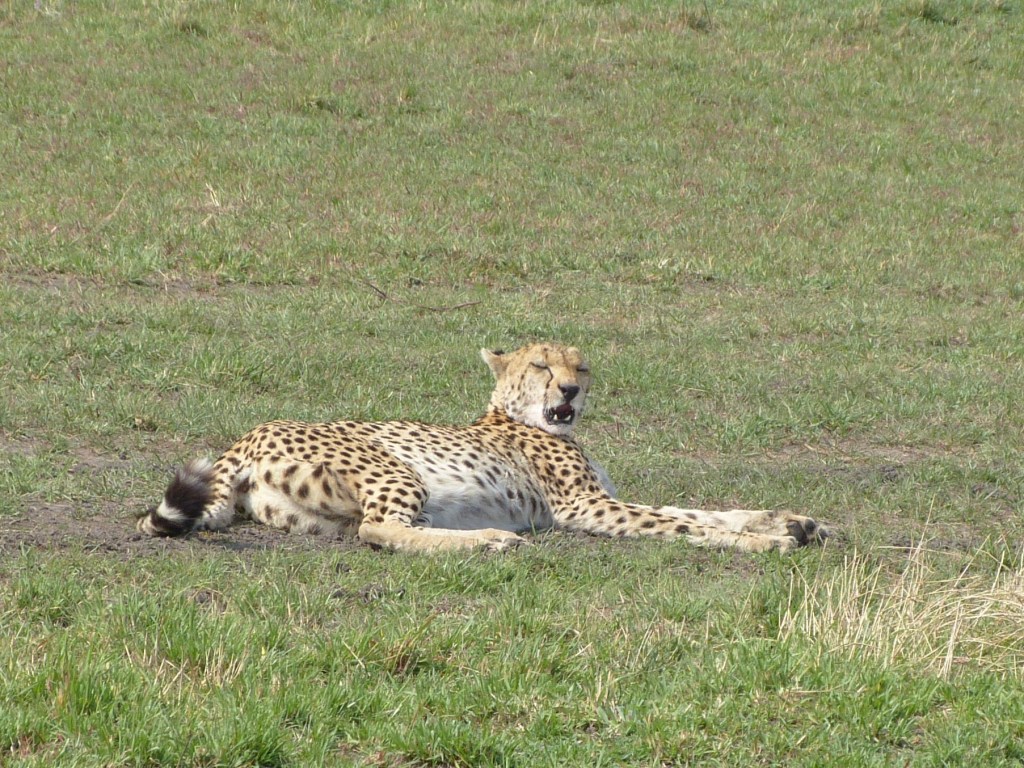
Remember the discussion about the differences between cheetahs and leopards a few posts earlier? Which one is this?

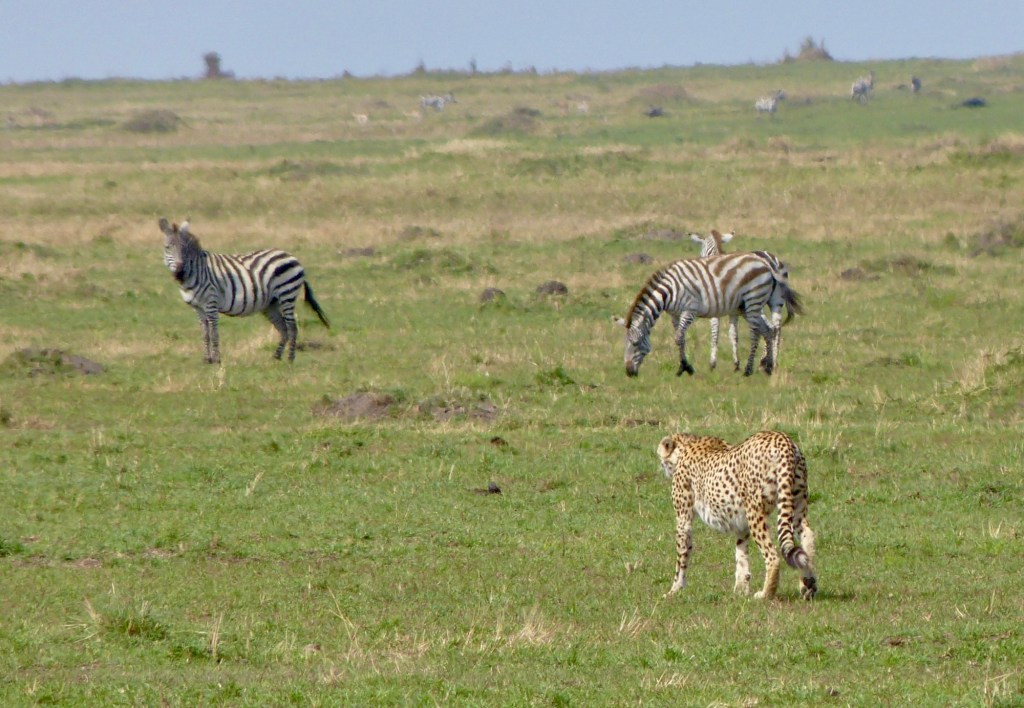
What about this one? It was REALLY far away, so the photo may be pixilated, still, you might be able to figure it out.

Suddenly the drive didn’t seem long, or bumpy or dusty. We were ALL thrilled.

Despite being out in the middle of nowhere, our tents are quite comfortable. Best of all, the bucket showers are so easy to operate, compared to some of the complicated faucet configurations we’ve encountered.

You pull the one with the wooden handle to get the water flowing, and pull the metal one to make it stop. The temperature is Goldilocks perfect, because the camp staff has heated the water to baby bear “just right”.

If you need more than 5 gallons, you yell and a staff member will bring it to you, but I didn’t ever use all 5 gallons. Hey, water is a precious resource, so when I was clean, I pulled that metal chain.

My tent was the next to the last one, right beside the party animals, Rachel and Hannah, two of my new best friends. Their tent was the gathering spot for those who wished to drink wine before happy hour.

But let’s get back to the animals:

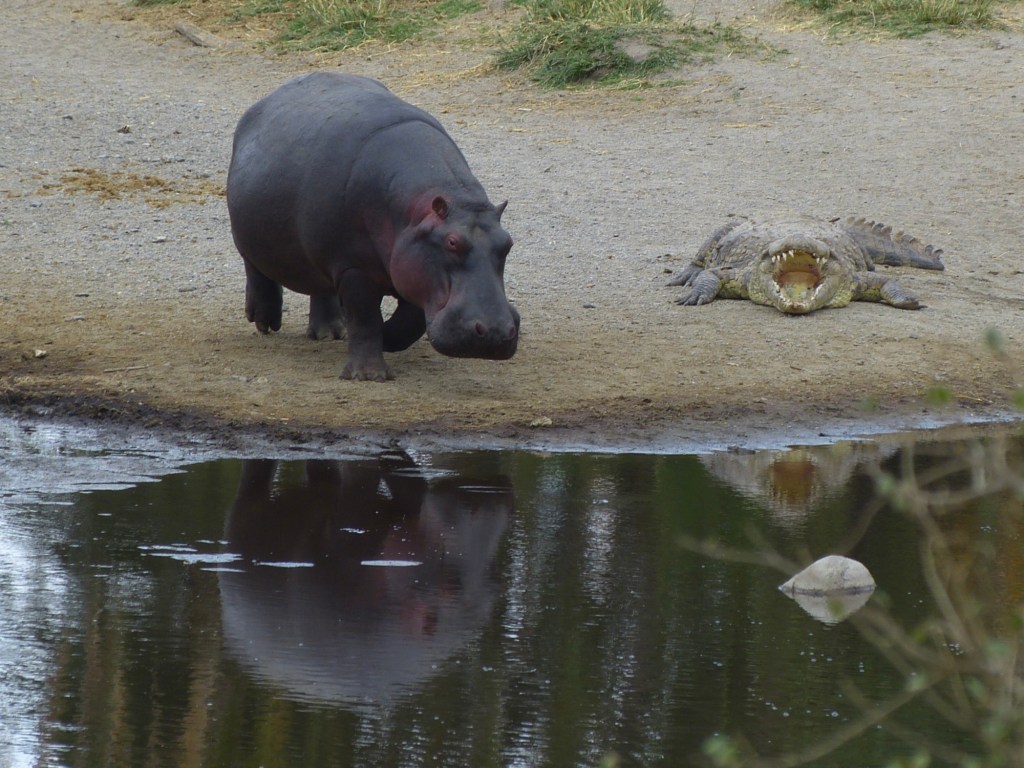
There were so many great hippo shots, I struggled to choose just one, but settled on the one that captured both the hippo AND the crocodile.

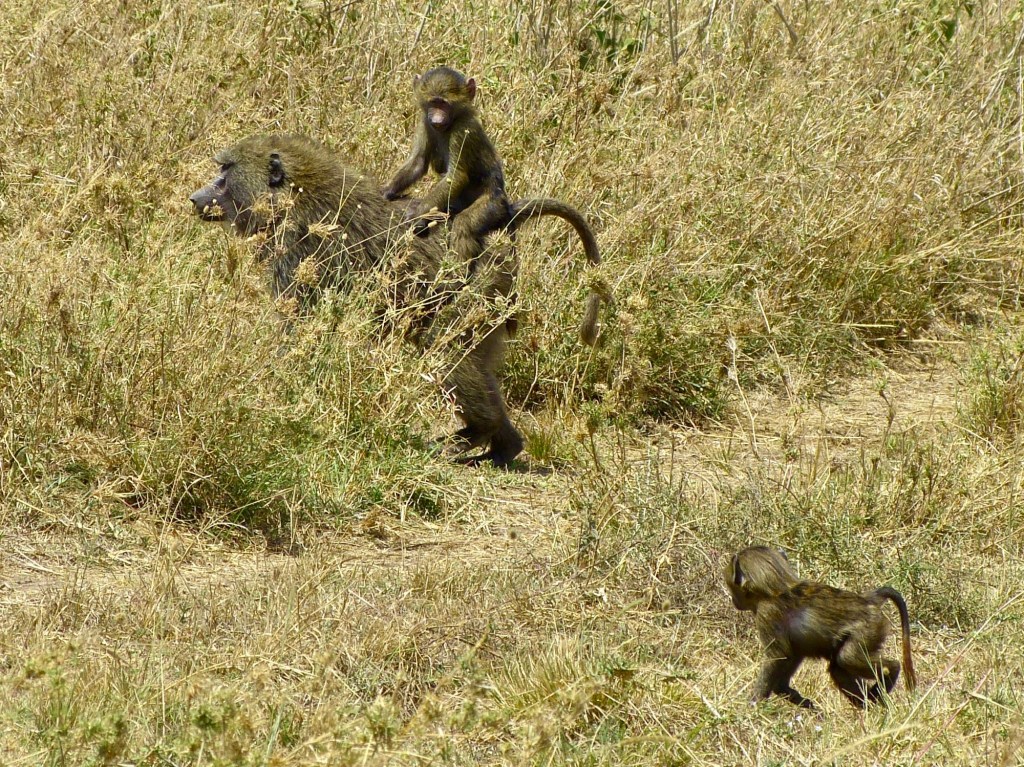
Babies are always popular, so here’s one hitching a ride on mom, with the second one shouting “hey, wait for meeee”.

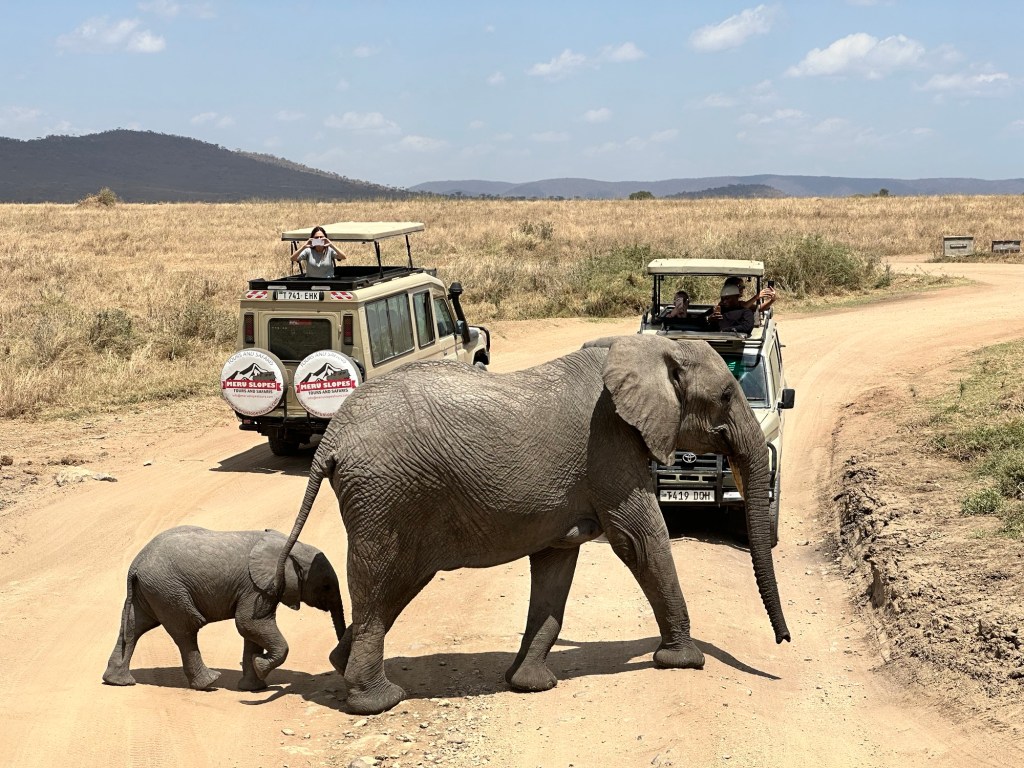
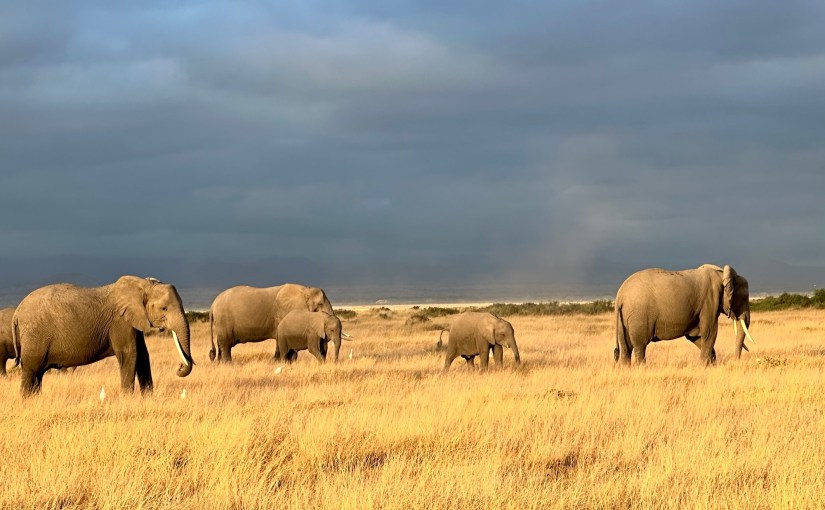
Mom and baby elephant walked right in front of us.

We can’t forget about the birds. I don’t have time to look up the name but it is a lilac something or other.

We are at the airstrip waiting to board our flight from the Serengeti airstrip to Arusha, so forgive any typos or autocorrect. I’m pressing publish without proofing.

Animals of Kenya and Tanzania

Is that not the most fascinating creature you’ve ever seen? Its official name is “secretariat” but Frederick, one of our drivers, calls it “the waiter” because of its black pants and white jacket.

Despite its weight, I decided to bring my Panasonic LUMIX with its zoom lens and not rely solely on my iPhone 14. Good thing.

Fellow traveler Sue’s IPhone 15 Pro had some amazing zoom capabilities, as evidenced by her “unicorn” shot.

Clearly, there’s a big difference between the iPhones.

My Lumix is great for distance shots,

but it also allows me to eliminate distractions, like this jeep jamboree.

After being in Rwanda, where contact with animals was tightly controlled, we were horrified that the jeeps were allowed to get so close to this animal, but the lion didn’t seem to mind.

Although we would have liked to have had the animals to ourselves, as was the case in Rwanda, we also recognized how positive it is for their economy to have so many tourists visiting Kenya and Tanzania.

Sometimes the two legged creatures are every bit as fascinating as the four legged ones. Gotta have that Instagram shot for the friends back home.

I promised you animals in this post, so here goes— a tiny sample of what we have seen so far.

Our first hyena,

mom and baby baboon, (notice the red butt? It functions like a red light hung in a window.)

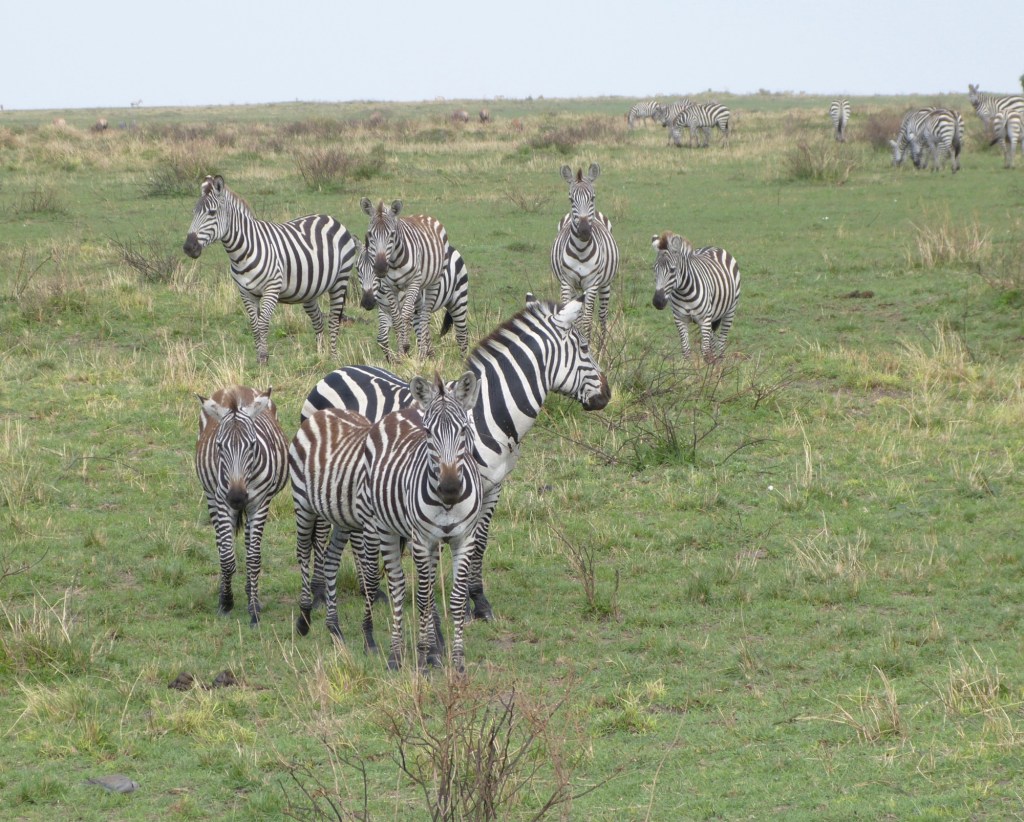
We’ve seen thousands of zebras. I like this photo because their stripes make it seem like an optical illusion.

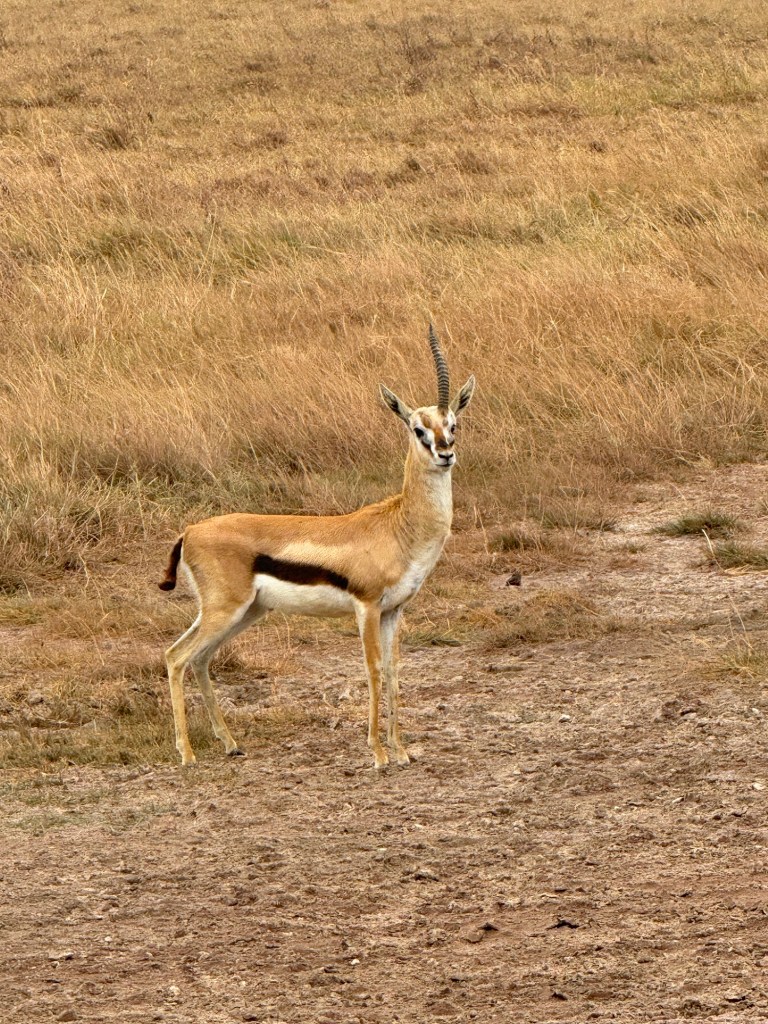
This baby antelope was only minutes old. We just missed witnessing the birth.

Although it might not be apparent in the photo, WE could all see the afterbirth dangling from mom. She was cleaning off her newborn so predators couldn’t smell it.

Do you know the differences between a cheetah and a leopard?

The cheetah’s spots are all the same color; a leopard’s spots are rosettes with two colors. The cheetah has a black line from its eye to its mouth, and they are the fastest animals on this planet, but leopards are stronger, bulkier and great climbers. But the biggest difference? So far, we’ve seen a cheetah, but haven’t seen a leopard.

I never get tired of watching the big cats doing their grocery shopping.

Like the cheetah, these lionesses are on the hunt, but for them, it’s a group activity.

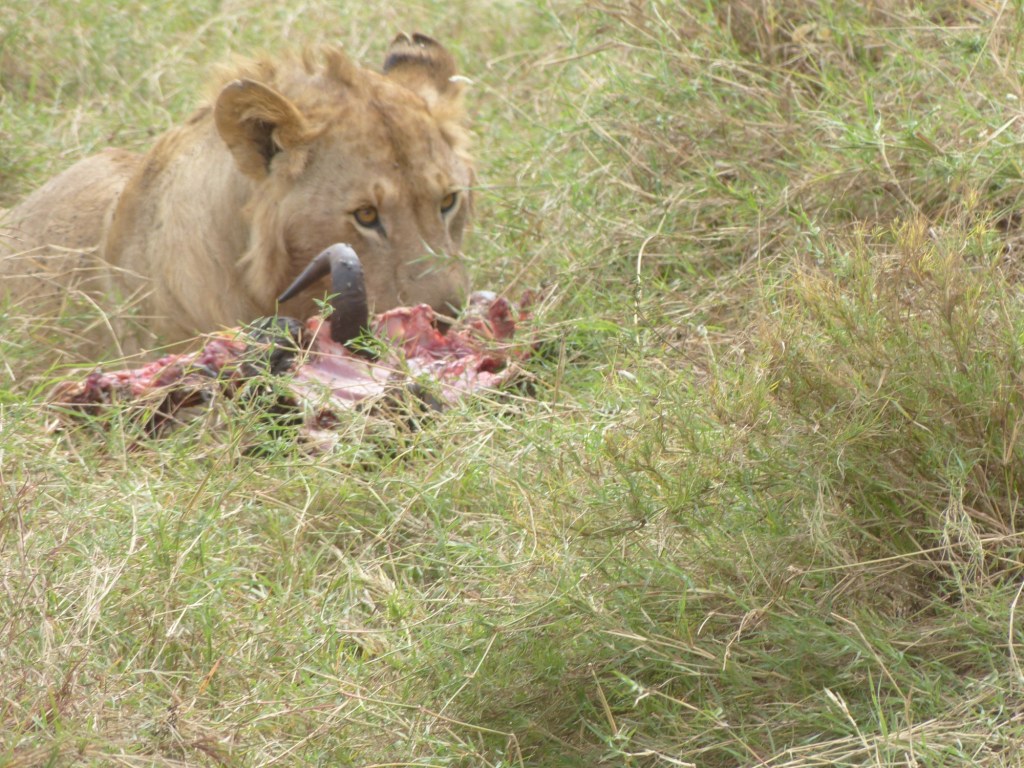
We didn’t witness the kill, but we DID see what happens after. Although HE had nothing to do with the meal prep, the dominant male eats first, then the lionesses, then the kiddies, then the oldest and weakest members of the pride.

We watched this young male chase his smaller brother away so he could fill up in peace. After he’s satiated, little brother is welcome to the leftovers.

See that horn sticking up? That identified the victim as a wildebeest. Theses guys were as numerous as the zebras, and we frequently saw them traveling together.

On this trip we have 5 full day game drives, (leaving between 6:30 and 7:30 AM, returning between 3:30 and 5PM), and 10 drives split between morning and afternoon. Believe it or not, I opted to sit out one full day and one afternoon drive, choosing instead to hang out by the pool, watching the black faced monkeys and the beautiful birds.

Here’s the thing. The roads are extremely dusty and incredibly bumpy. Sometimes you’re bumped and jostled for over an hour in search of elusive game. Because of the dust, the windows of the safari vehicle have to stay closed. And the afternoons are hot.

Hot, dusty, bumpy drive or an afternoon sitting by a pool in a beautiful hotel, reading a fascinating book about the Kibera slums (“Find Me Unafraid“ by Kennedy Odede and Jessica Posner)? Knowing there would be abundant opportunities to see animals made my decision easy.

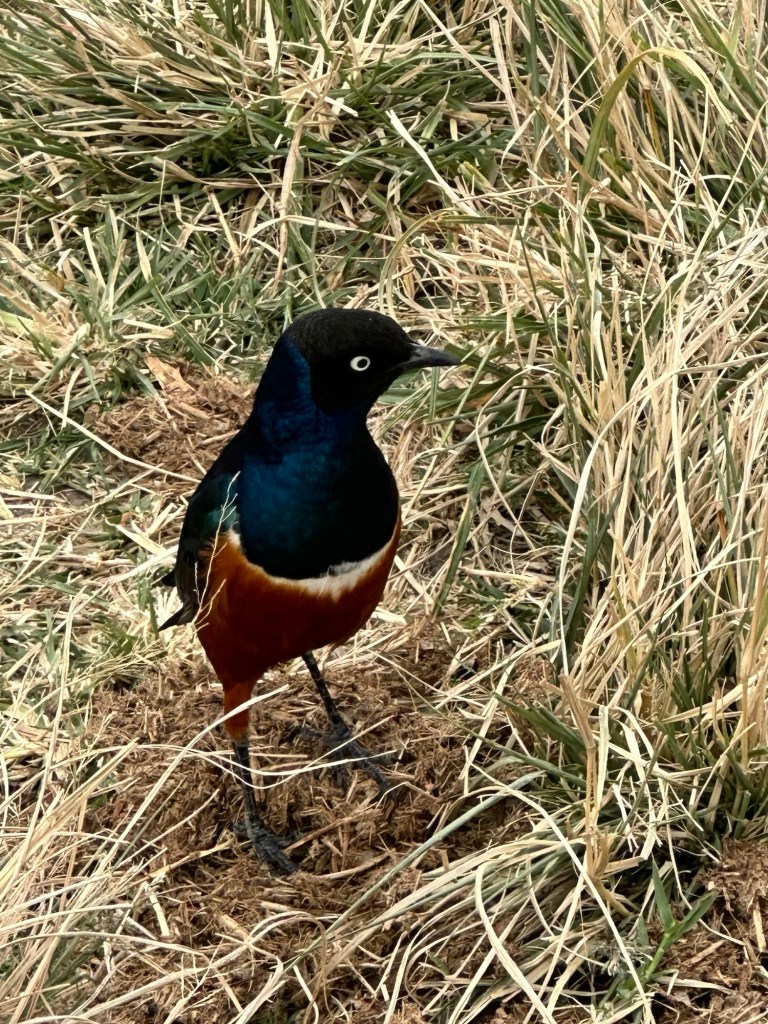
These starlings are iridescent.

Tomorrow we leave for four days in the Serengeti, where we will have NO connectivity, so here are a few quick photos before we go “off the grid”.

Crown cranes,

There’s more, but it will have to wait for Arusha, because of the wonky internet.

Maasai Culture

Warning: This might not be a good post to read to children.

Yet another reason I choose to travel with OAT is the opportunity to learn about the culture of the places we visit. I also love that a portion of our payment for the trip goes back to the communities with whom we interact.

Our morning in a Maasai village was VERY educational. So, of course I feel compelled to share what I learned with you.

Did you ever wonder how you get goats to practice birth control? Let this Maasai chief show you. That yellow barrier strapped behind the goat’s forelegs stops his “love potion” from reaching its intended target.

I confess that I was slightly confused. I thought it was a GOOD thing to have lots of goats and sheep. Seleman, our wonderful trip leader, explained that for goats, like humans, timing is everything in life. The Maasai want to make sure baby goats are born when their likelihood of survival is maximized, so when the timing is right, the shield comes off.

Next the Assistant Chief explained (in perfect English) the tribal hierarchy. He described some of the Maasai rituals, the most memorable (to me) being circumcision. It is performed in public, without anesthesia, on a group of 12 to 14 year old boys. If they don’t cry out or even flinch, they are deemed worthy to become warriors. After surviving the ritual, the group goes into the bush for three months. When they return to the tribe they are then considered to be men.

Before climate change decimated their herd of cattle, reducing it from 290 to 10, the Maasai used to drink cow’s blood every morning. They made a shallow incision into the cow’s jugular, collecting at least a liter before they stuffed the cow’s wound with herbs.

If you ever doubt the impact that one amazing woman can have, let me introduce you to Lucy. For the past 13 years, Lucy has visited over 100 villages, providing health education, including speaking out against what WE call FGM ( female genital mutilation). What THEY call “the cut” was deeply imbedded in the culture and traditions. They believed undergoing this public procedure transformed a girl into a woman, and thus enabled her to be married. Like circumcision, removal of the clitorus and labia was done without anesthesia, by a “midwife” and women were expected to endure the pain without crying out. Lucy underwent “the cut” when she was 14. (She admitted to crying and screaming).

Although the government banned FGM in 2003, there was no follow up, so the practice continued. It certainly wasn’t easy, but after years of hard work, Lucy succeeded in eliminating FGM for about 99% of the girls in the villages she visited.

Lucy understood she had to “humble herself” in order to get her message across. To ME, however, Lucy is the embodiment of Katy Perry’s song “Roar”, especially these lines:

“ You held me down, but I got up, already brushing off the dust, I went from zero to my own hero…

I am the champion and you’re gonna hear me ROAR”

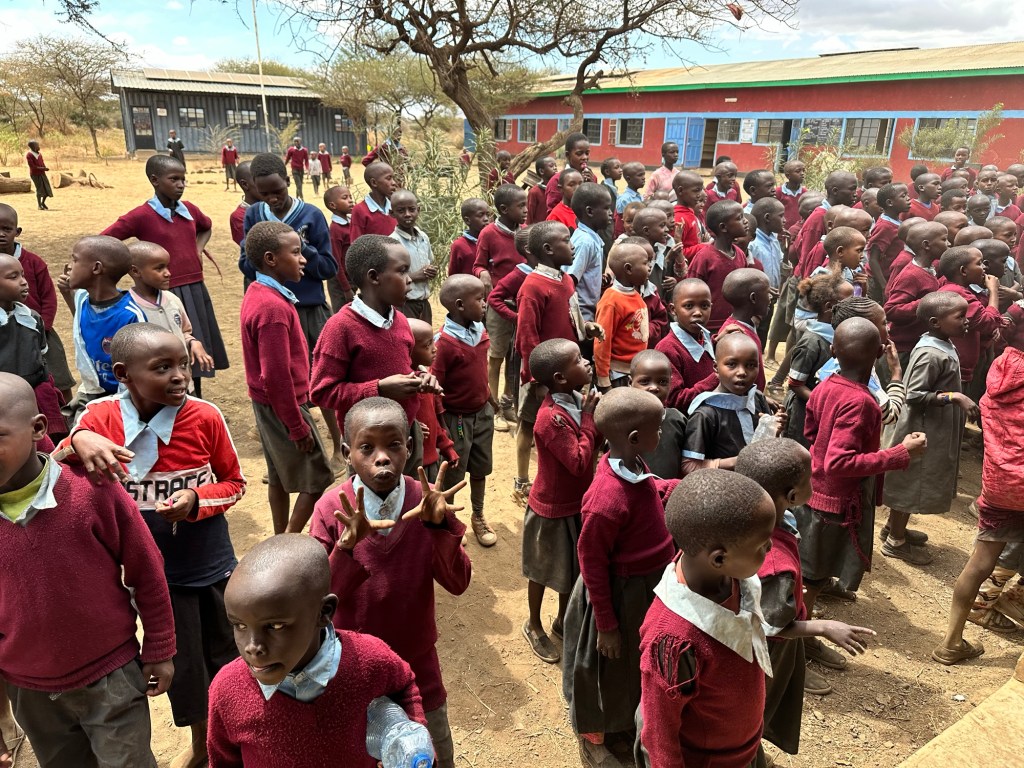
After the Maasai village visit, we headed to an elementary school that has been a recipient of funds from OAT’s Grand Circle’s foundation.

There are only 12 teachers for 183 girls and 230 boys. That’s quite a teacher/student ratio! .

While there, we learned how the Foundation‘s money was used. The first purchase was a copy machine, so the teachers wouldn’t have to walk for 45 minutes to the closest copier.

Under construction were bathrooms with flush toilets that will replace the two squat toilets currently being shared by all the students (and that some of us used during our visit).

During our interaction with the children, we told them a little about ourselves, where we were from (notice the map of the USA on the wall) and what our occupations were.

Fellow traveler Kalpana was by far the most inspirational. She told the students that she had attended a school just like theirs when she was growing up in India. Her hard work enabled her to become a doctor. Kalpana encouraged the kids to study, work hard and dream big.

I know, I know. I lured you in with that elephant photo atop this post. We will get to the elephants, cheetahs, lions and monkeys…and that post WILL be suitable to read to the kiddies. I promise, but first I wanted to share these meaningful and inspiring moments.

I’ll end this post with a photo of our group hanging out in a baobab tree.

Nairobi, Kenya

Okay, I’ll admit it. I came perilously close to becoming an “ugly American”. When I saw that the itinerary included a morning spent in the Kibera Slum, I seriously considered sitting out the visit. Why would I want to spend time in an area inhabited by 1.5 million people, jammed into a space smaller than New York’s Central Park?

Fortunately, the wonderful travelers on the Friends of Overseas Adventure Facebook page set me straight, and I’m so glad they did.

The area certainly has its share of the usual social problems. Blackie, our escort and Kibera guide, told us that when the police refused to safeguard the inhabitants, some members of the community administered “street justice”, which proved to be quite effective in reducing crime and violence.

The community has created their own schools and has organized programs to help their children make the right choices.

What we experienced during our visit was truly inspiring. Although the slum residents had few material possessions, no running water and lived in tiny shacks, they had a real sense of community, tremendous support for one another, and amazing resilience.

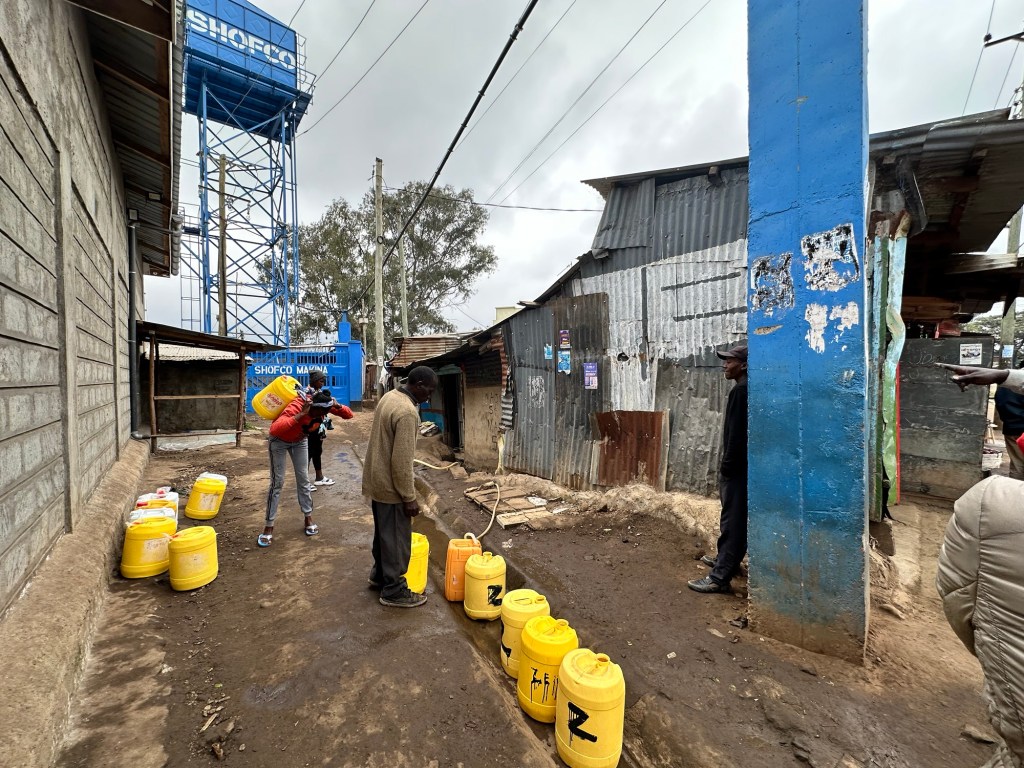
This is how you get water in Kibera.

The friendly and curious children LOVED getting their picture taken-especially when I showed them their photos.

During our visit we were welcomed into two homes. In the first, three people (mom, dad and teenaged daughter) shared ONE tiny room. The daughter was sitting on the bed, because there was no place else to sit, playing a game on her cell phone. I continue to be amazed by the impact Steve Jobs’ “invention” has had on our planet. This device, which didn’t even exist 30 years ago has become essential to us all.

The second visit was to the home of Blackie, a three room hut that he shared with his wife, youngest son and grandson.

Kalpana and Ahit, two members of our group viewing the photo of our host’s grandson.

The grandson was so pleased with the photo that I took of him that he showed everyone, exclaiming “ that’s me”!

He was fascinated with my hat’s badges

One of the many reasons I continue to travel with OAT is because of experiences like these. I never would have done them on my own, either because I didn’t know they existed, or my prejudgement was so very wrong.

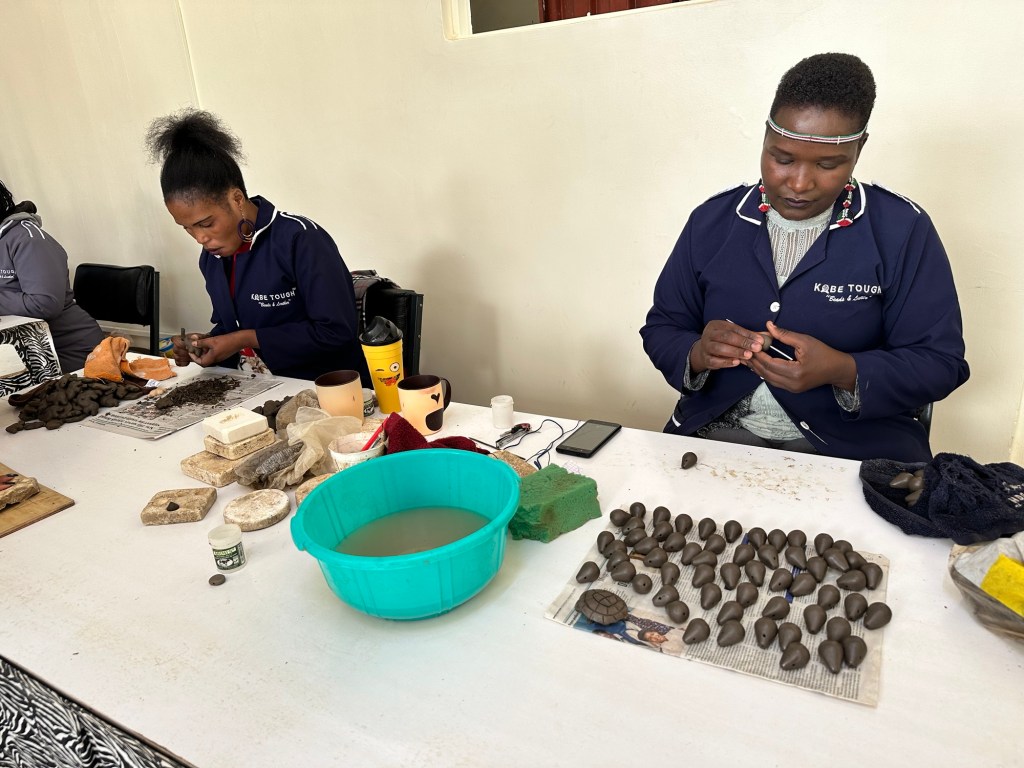
Kobe Tough, our afternoon destination, exists because of the devastating impact climate change has had on the Maasai. Any American who doesn’t “believe” in climate change should come to Africa and speak to the people to whom it is a daily reality.

Successive years of drought killed the cattle the Maasai women depended on as their sole source of income, so they needed to find an alternate way to earn money.

They now make beautiful ceramic beads, which are hand painted and made into jewelry. I felt good buying bracelets, earrings and rings from their on-site store, knowing that the money will help these women support their families. The header for this post is a photo of some of their beautiful jewelry in their on site store. But you don’t need to go to Nairobi to own one of these unique pieces — you can buy direct from their website.

https://kobetough.com

If you visit Kobe Tough, you will meet the bead makers, who then entertain you with a wonderful rendition of “Jambo Bwana” ( hello, sir). And when they invite you to dance, I hope you’ll join them!

Another highlight of our stay in Nairobi was our visit to its national museum. I could have spent the entire day there! Did you know there are 1,500 different bird species in Kenya? I sure didn’t. You can see 900 of them displayed in the museum.

Who knew that hippos were related to dolphins and whales?

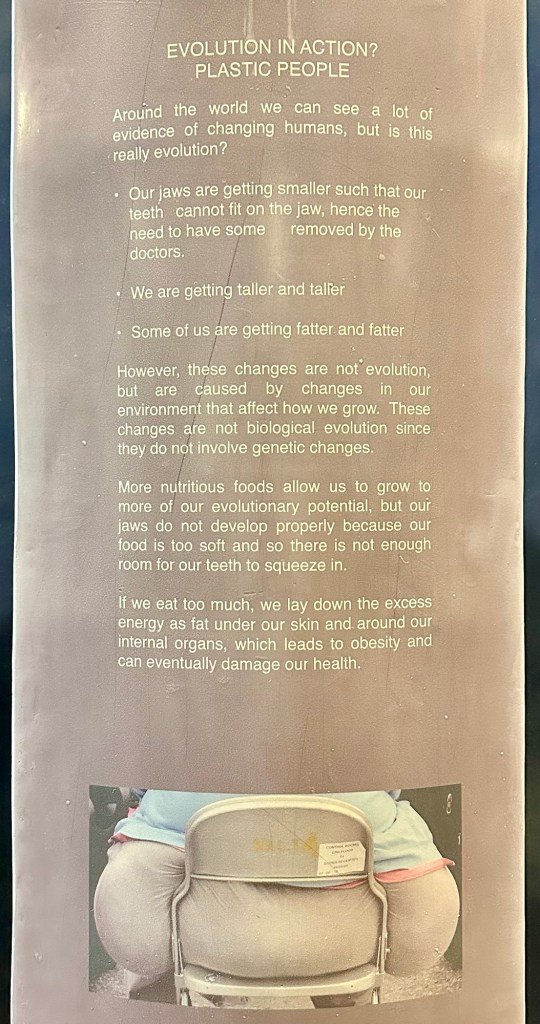
I wasn’t able to get a good shot of the remains of Turkana boy, which isn’t surprising, given that he’s 1.6 million years old. His skeleton was discovered in 1984, on the shores of Lake Turkana, giving us valuable insight into the evolution of Homo sapiens.

There is so much more to say about Nairobi, but this post is already getting long, so I’ll end with one final thought from the museum.

Next stop will be Maasai Mara National Reserve.

Rwandan Mountain Gorillas

Our 5 days in Rwanda have been absolutely glorious. Believe me, I KNOW how extremely fortunate I am to be able to have these amazing experiences and I am so very, very grateful.

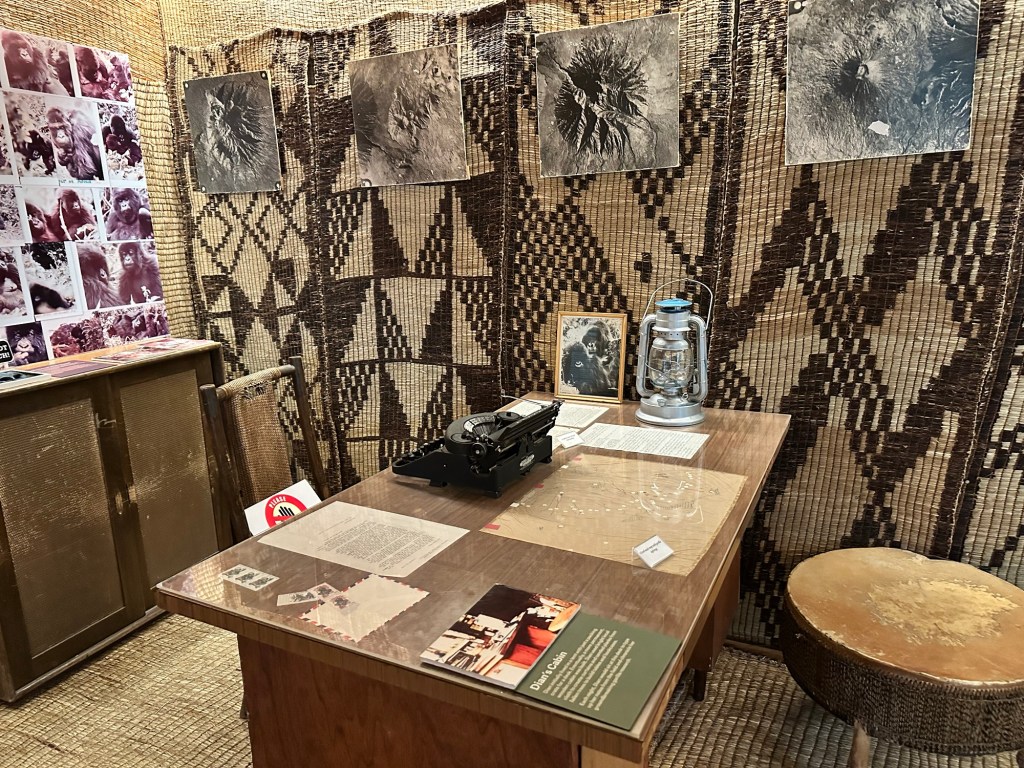
We were able to see first hand the difference one person can make when we visited the Ellen DeGeneres Center, which honors the work of Dian Fossey.

Prior to Dian’s arrival in 1966, the mountain gorillas were close to extinction. Thanks to her tireless work and advocacy, which continued until her murder in 1985, these magnificent creatures have been protected.

Sigourney Weaver’s generous donation made it possible for us to view Dian Fossey’s cabin—sorta like Julia Child’s kitchen in the Smithsonian.

The center has fantastic hands on exhibits, a 360 degree theater, and virtual reality.

I’m VERY glad that I had the virtual reality experience AFTER the REAL gorilla trek because the virtual reality trip had a silverback coming right up into my face, and let me tell ya, it was SCARY.

For the ACTUAL trek, I thought I was prepared. I had spent many hours at the YMCA, because I expected to be walking uphill, at a high altitude, for several hours. The weather could have been hot and humid … or cold and damp. It was actually all of the above, and then some.

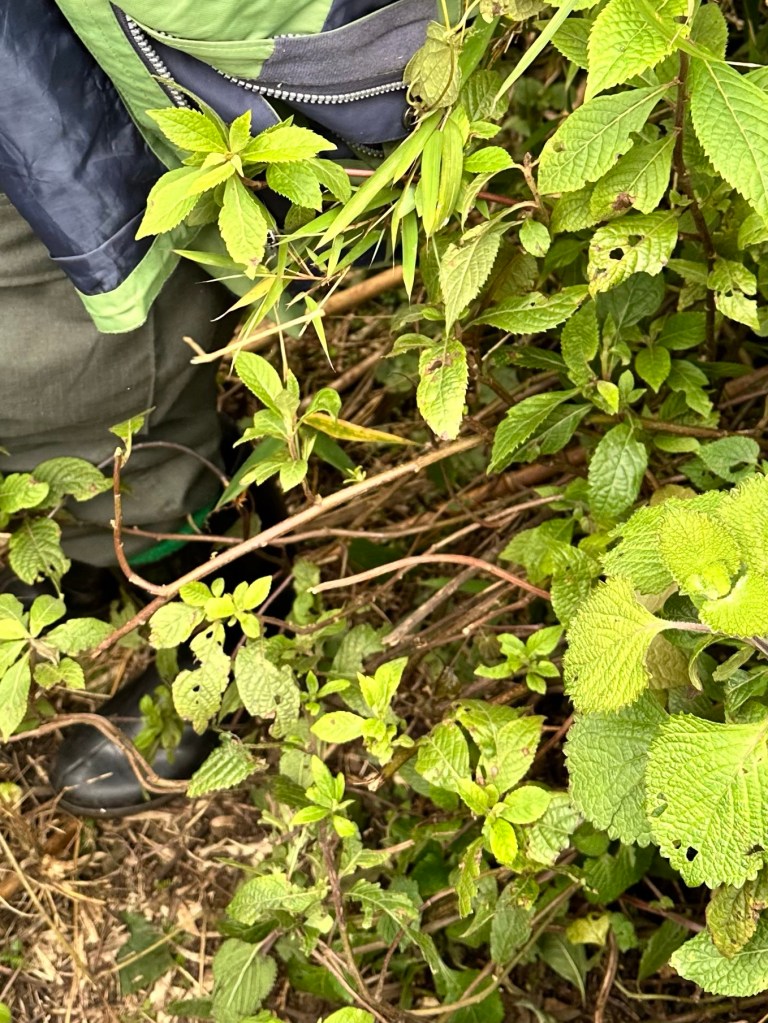
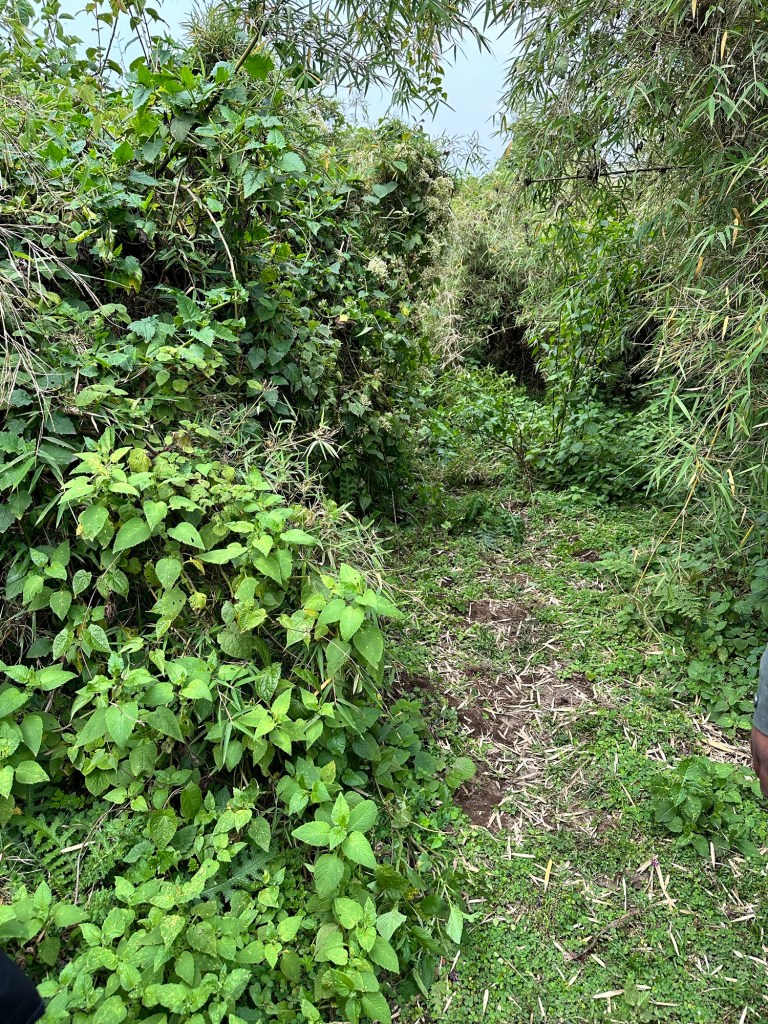
What I was NOT prepared for were the vines that grabbed my shoes and wouldn’t let go without a fight. This was not a photo of MY foot, but it gives you the idea of what walking along the “trail” was like. (Yes, that was the trail).

Okay so I’ll confess that more than once during our 2 hour trek, I had a “ what the hell was I thinking” moment. It also occurred to me that after we found the gorillas and spent our hour with them, we would have to walk DOWN the exact same way we had come.

Our porters did much more than carry our packs. They also held our hands during particularly treacherous stretches, for which I was especially grateful. There are no hand rails in the jungle, folks! Or bathrooms either.

Would I recommend gorilla trekking? HELL YES! I realize how incredibly fortunate I was to be able to spend an hour watching these majestic creatures in their natural habitat.

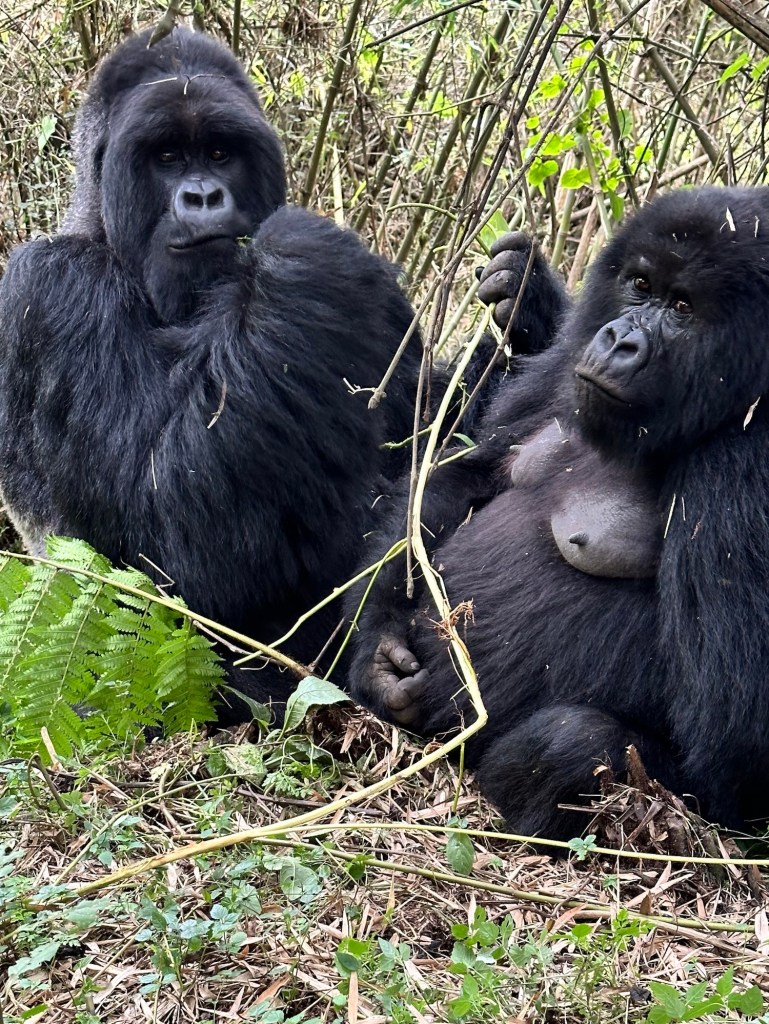
We spent the full hour with the “Lucky” Family, so named because their group included twin boys.

There are currently 24 “habituated” families living in Volcanoes National Park. Although there are several more families living on the mountain, the remainder are not used to human contact. It takes about 5 years of gradual exposure before tourists can spend time with them.

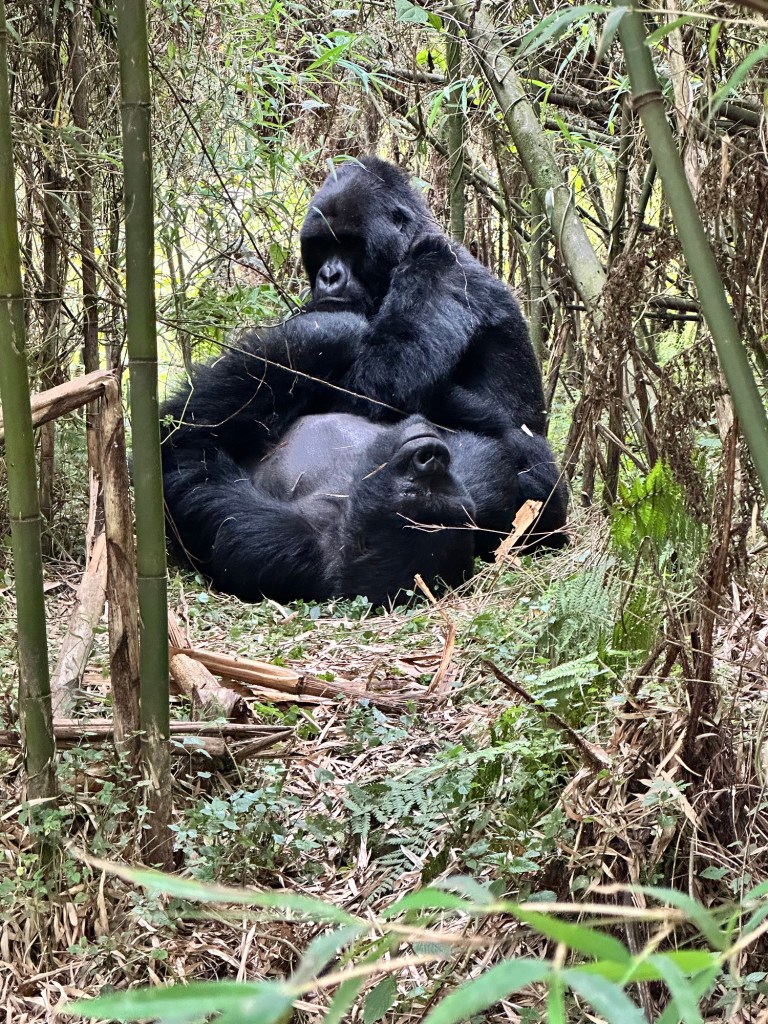
Was the experience worth it? You be the judge. How many people get to watch a silverback twerk?

Eventually we met most of the family: here’s one of the moms and her baby,

the twins, doing what brothers tend to do,

If you’d like to see them in action, just hop on over to YouTube.

https://youtu.be/fS1dMFJPgWU

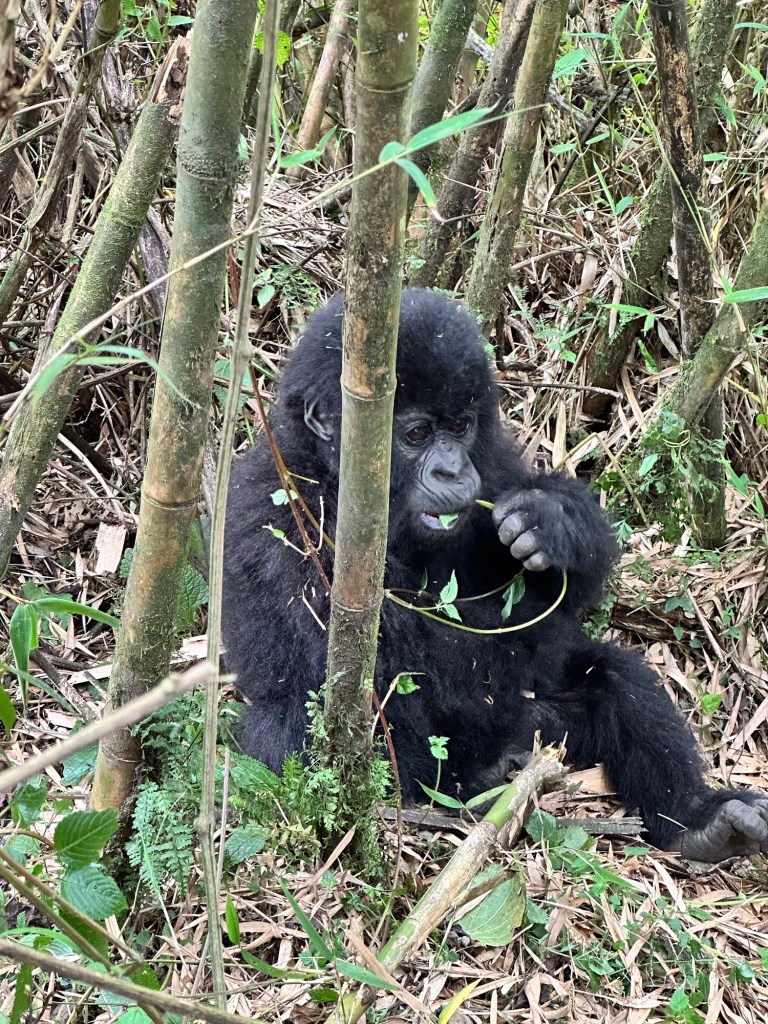
And the adventurous toddler, exploring on her own.

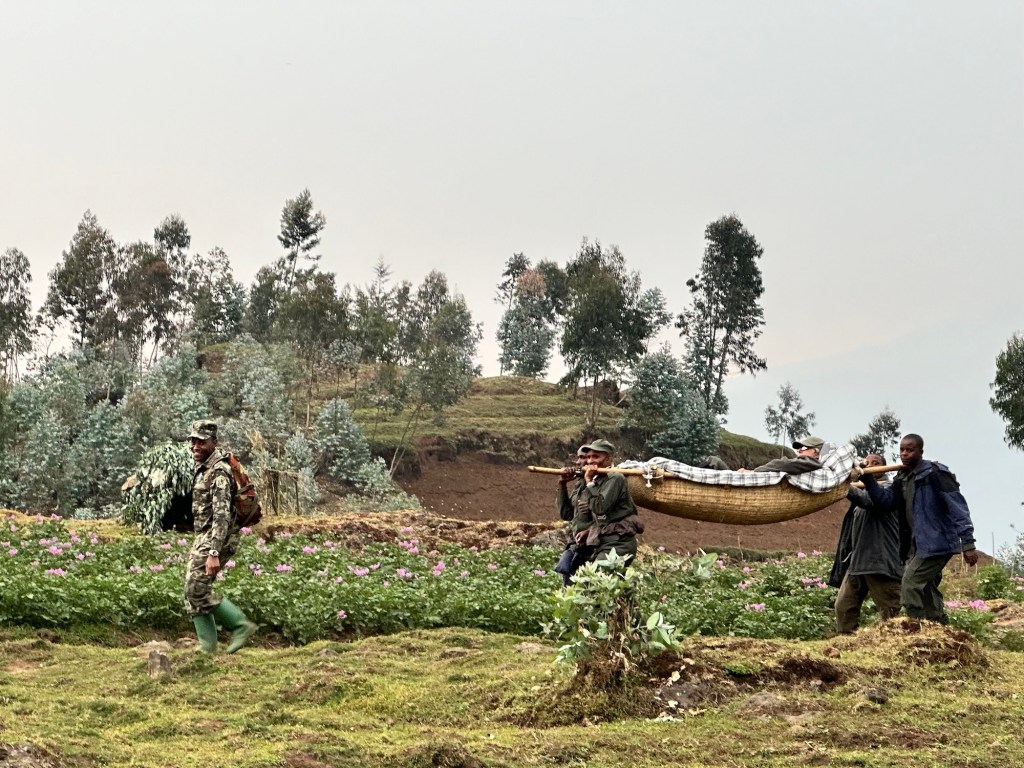
If you think this trek would be too arduous for you, fear not. Rwandans have a solution that a member of our group used. Take a look at this alternative mode of transportation.

Not surprisingly, you pay extra to be carried like royalty, but for a once in a lifetime experience like this, I think it would be well worth the extra money.

My family would not be shocked to learn that I got lost while on the trail. Fortunately, one of my new best friends heard me calling out, and helped me find my way back to the group.

I know. I get lost a whole lot. But come on. Take a look at this trail.

As we were preparing to leave at the end of our hour, the family was also (as the Billy Joel song went) “movin out” .

So what else was memorable?

Seeing women work as porters, trackers, and protectors. Just in case we encountered an angry buffalo or rogue elephant, this beautiful young woman was prepared to guard us,

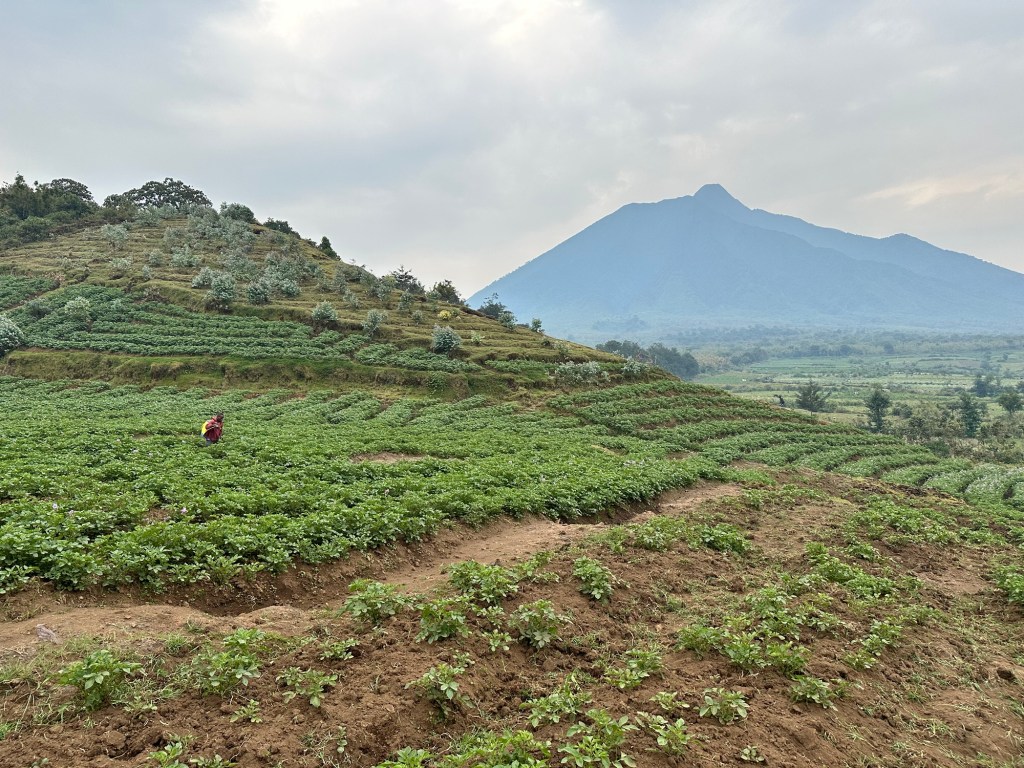
the gorgeous scenery on our way to the mountain,

returning to our fantastic hotel,

and best of all, being able to share the experience with a wonderful group of people, my new friends.

Next stop, Kenya, where our group will gain an additional member.

Rwanda

I had been dreading the long flight to Rwanda, especially because it departed from Newark after midnight. Surprisingly, it wasn’t too bad. Thanks to zolpidem, I was able to sleep on the plane, despite a whole lotta shakin’ going on.

I would have given myself the “seasoned traveler” award for anticipating that my luggage would be left behind in Istanbul. Upon landing in Kigali, I checked my AirTag and learned my luggage was 2,975 miles from me. So, I wasted no time watching other people’s bags pop out of the chute. Nope. I immediately took myself to the lost luggage desk to complete the necessary paperwork.

My backpack contained one change of clothes, my Jammie’s, chargers and toiletries, plus my credit card, cash and camera. Everything I needed for a couple of days.

Did you notice I said I WOULD have given myself the award? That’s because it got snatched away when I made the rookie mistake of putting a tube of toothpaste (big enough to last the entire trip) in my backpack. The toothpaste, plus my seasoned traveler award, got tossed in a trash bin at Newark Airport.

That AirTag was worth every penny I paid for it. I was able to watch my luggage travel to Lebanon, then Ethiopia, till it eventually showed up in Kigali a day later. Although airport staff had my phone number, email and hotel info, no one ever contacted me. Thanks to my AirTag, I didn’t waste time on the phone making international calls, trying to find someone who could give me information about my bag.

As they say in OAT world, this was a learning and discovery experience. I learned that the airline would not deliver my bag to the hotel. Instead, I had to drag my sorry ass to the airport, and then discover how very tight Rwandan security is. We had to get out of our vehicle, which was thoroughly inspected by people plus a sniffing dog, then once I got to the terminal, I had to go thru security AGAIN and visit 3 different places before my bag and I were joyously reunited. Fortunately, Fred( my hero and our driver) guided me thru the entire process.

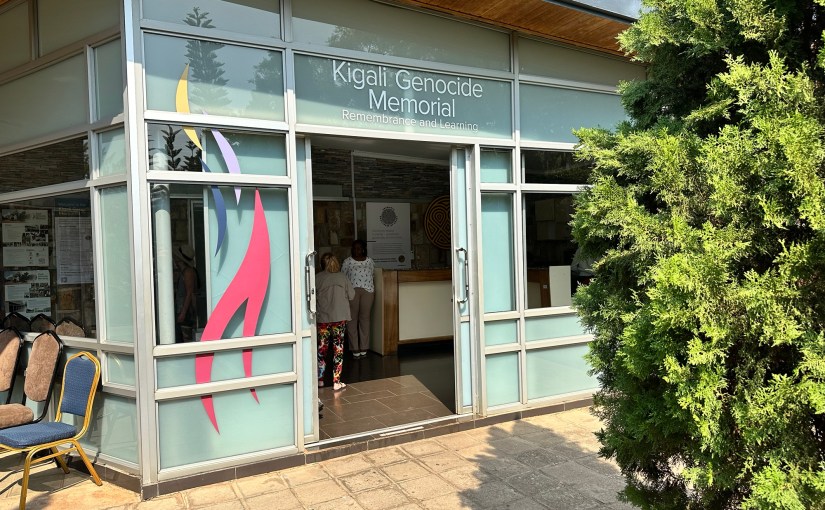
The best thing about travel is it gives you perspective. After visiting the Kigali Genocide Memorial, delayed luggage becomes a teeny, tiny, minor irritant.

30 years ago, over the course of 100 days, more than a million Rwandans were murdered. The victims were mostly Tutsi, but Hutus who refused to go along with the killing were also massacred.

Believing that churches were safe havens, many Tutsi sought shelter in the Nyamata Catholic Church. Shamefully, the Catholic priest did nothing to stop the slaughter. The perpetrators threw grenades inside the packed church, then attempted to finish off anyone still alive, with machetes and guns.

Nayamata Churcb is now a UNESCO site and burial place for thousands of victims. Particularly heartbreaking are the coffins for infants and children.

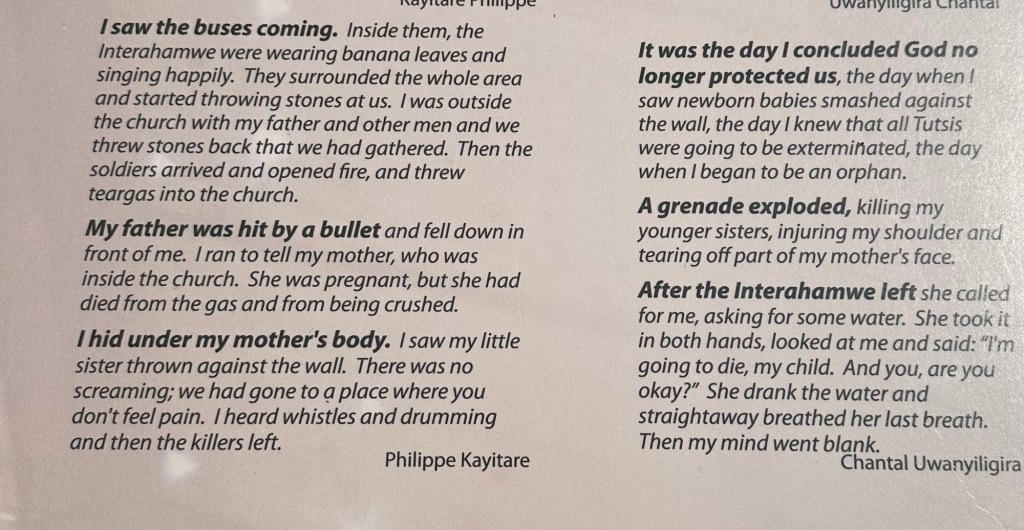
Luckily the attempt to slaughter everyone inside the church was not successful. The stories of those who survived are displayed outside the church to bear witness to what had happened. Here’s a short sample:

As terrible as the massacre was, Rwanda’s story is one of hope for the future.

We visited one of the “reconciliation villages” where perpetrators and survivors now live side by side in harmony. Naturally, it took a considerable amount of time for everyone to heal and to learn to trust one another. The perpetrators had to confess to what they had done, serve their time in prison and ask the survivors for forgiveness.

At the village, both a survivor and a perpetrator told their stories. We learned that those who committed the atrocities had been fed a steady stream of propaganda and misinformation. Agitators whipped up hatred for people who had previously been friends and neighbors.

Janet, one of the survivors with her daughter. Janet was our hostess for lunch at the village.

We have so much to learn from Rwandans, who exhort us to practice ubumuntu.

Perhaps Africans have a huge capacity for forgiveness? I recall Nelson Mandela didn’t seek revenge against his white captors, but urged the nation toward reconciliation.

America is now going thru a very divisive time. Maybe we can learn to speak to each other, listen carefully and exhibit “greatness of heart”.

RWANDA, KENYA & TANZANIA

I have wanted to see gorillas in their natural habitat for decades, ever since I saw the movie about Dian Fosse’s life. If I’m lucky, my dream will soon be coming true.

In a few weeks, I’ll be leaving for five days in Rwanda. This is the pre-trip OAT offers before their main trip to Kenya and Tanzania. The maximum amount of time that any group is allowed to spend with the gorillas is one hour. But that’s not guaranteed. If the gorillas become agitated, they could retreat into the bush before the hour elapses.

According to the documentation that I received from OAT, there are eight of us on the pre-trip. A ninth traveler will be joining us in Nairobi at the start of the main trip, so it’s a nice small group, composed of two couples and four women traveling solo. At least that’s what I’m guessing, from last names and geographic areas.

I have to tell you, getting to and from that part of Africa is not easy. My flight from Newark to Kigali leaves after midnight, stops for about an hour in Istanbul, and doesn’t arrive in Kigali until 1 AM the following day.

Okay, confession time. I screwed up. Originally I booked a one night early arrival into Kigali. When I got my flight information and saw I was landing the next day, I canceled the early arrival. It took me a while to realize that I HAD to book that early arrival, otherwise I’d be sitting in the lobby from around 1 AM until a room for that day was available. Not fun. By the time I figured this out, it was less than 90 days before departure, so I called OAT to rebook that room. That’s when I learned that OAT doesn’t allow changes within the 90 days before departure. Internet to the rescue. I booked directly with the hotel. They are going to keep me in the SAME room that I would get with OAT (which happens to be an upgraded room, at no additional cost), AND they are meeting me at the airport and transporting me to the hotel at no additional charge. I love it when my stupidity actually turns into a good thing.

For the return trip, I will be flying out of Kilimanjaro, Tanzania, leaving at 2:30 AM, and arriving in Istanbul around noon. Because I’m hoping to sleep on the plane for BOTH flights, I decided to fly business class with Turkish Air. The OAT flight department was able to find me a reasonably priced flight as long as I stayed two nights in Istanbul. Such a deal!

While in Africa, we will be flying in small planes, so OAT supplied us with duffles, specially constructed to ensure that everyone’s luggage can fit onto the plane.  When Mike and I went on OAT’s Ultimate Africa trip in 2014, we received similar duffels, which I decorated with sharpies, including–much to his surprise– Mike’s.  After the trip, I gifted my duffel to my sister, Sandy, so new project!

The decorations made it easy to spot our bags, which was very helpful, because other OAT trips were leaving from the same hotel. Not only were we able to differentiate our bags from others in the trip, we were also able to make sure OUR bags were on the RIGHT trip!

Yes, I know it looks like the bag was decorated by a not very talented six year old. But you have to admit, no one else will have a duffle that even REMOTELY looks anything like this.

OAT’s documentation included confirmation of the hotels and lodges, so I checked them out on line. I couldn’t believe that almost all accommodations have swimming pools, so I added a bathing suit to my packing list.

I am beyond excited about this trip! I hope you’ll travel vicariously with me. The next post will be from Africa. The map at the top of this post shows where we will be visiting.

Homeward Bound

I know, after EVERY place we’ve stayed, I’ve said that it was the best place ever, and I didn’t want to leave, but THIS time, I really, really mean it. The Aswan Cataract Hotel made me feel like we were in an episode of Lifestyles of the Rich and Famous, probably because this is exactly where the rich and famous HAVE stayed. 

The Cataract Hotel is actually made up of two separate buildings. The “old” section was built in 1899, then in 1961, the “new” building was added. In a country that has existed for more than 5 centuries, “new” is definitely a relative term.

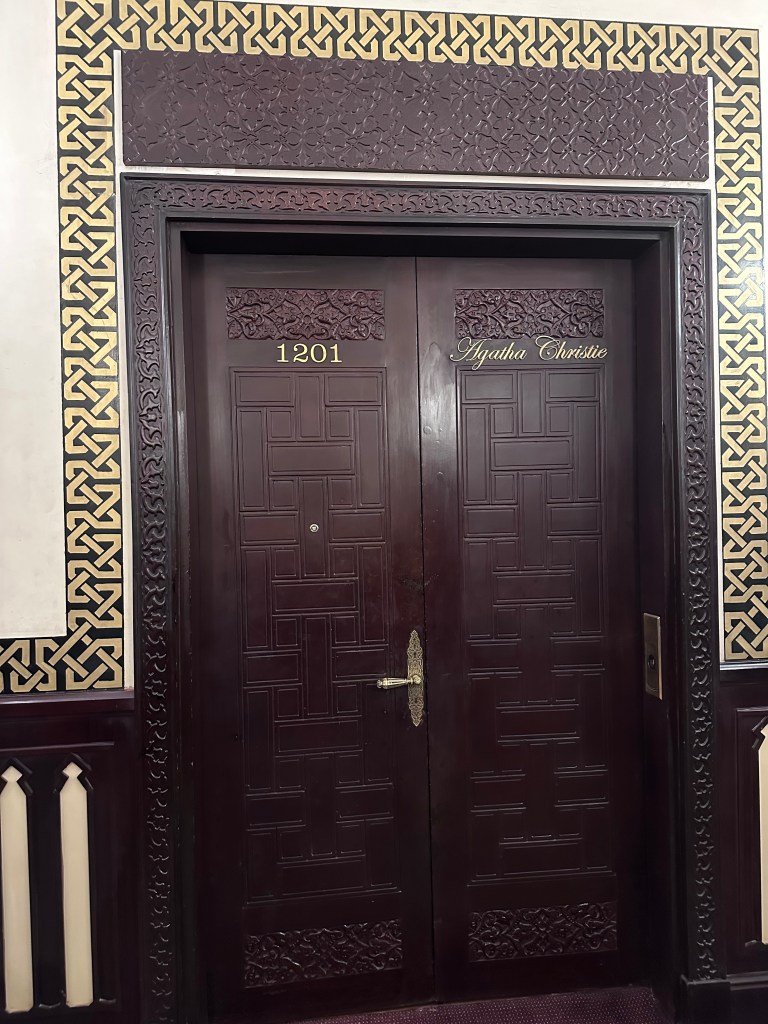
Although our rooms were in the “new” building, we were able to tour the “old” building. Portraits of the many famous visitors, like Princess Diana, Queen Nur, Henry Kissinger, Omar Sharif, Howard Carter line the corridors. But two of the many impressive guests were special enough to have had their names emblazoned on their suite door: Agatha Christie and Winston Churchill.

Agatha Christie wrote Death on the Nile during her one year stay in “her” suite. It has all the comforts of home and then some, complete with dining room, office and chandelier over her bed.

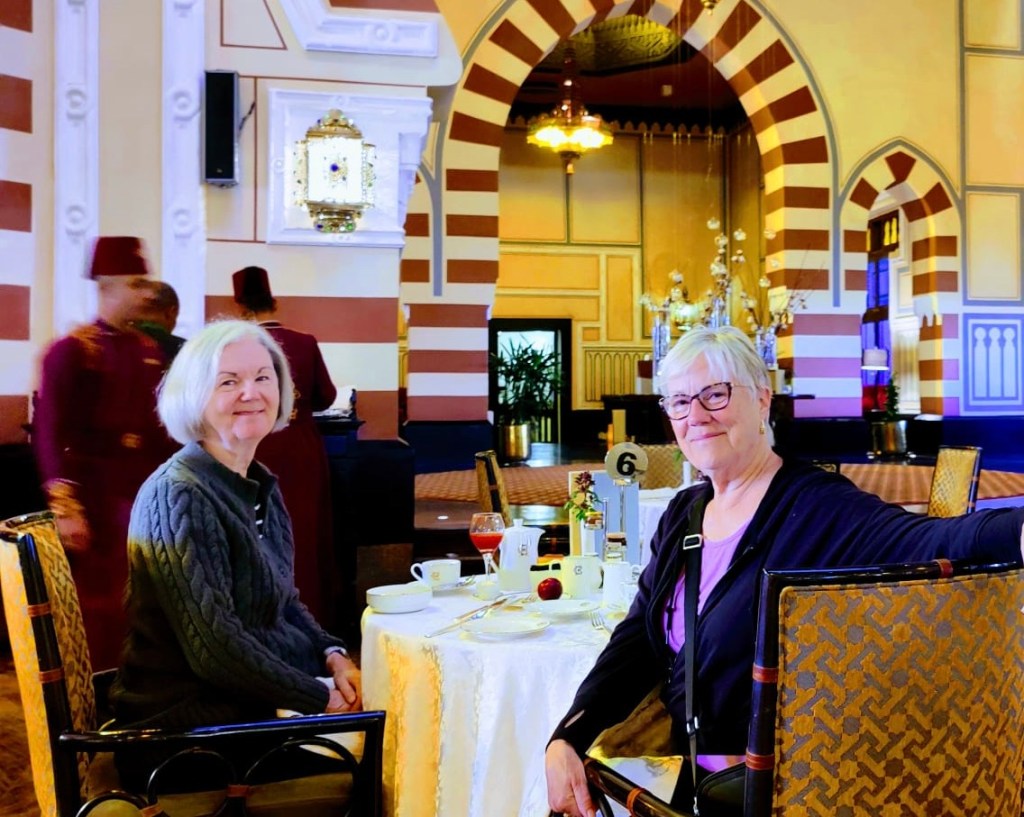
She was so inspired by her surroundings that she set some of her novel in the hotel. I haven’t seen the recent remake, but some of the scenes of the 1970’s movie were shot at the hotel. It was fun trying to figure out what scene was shot where. Hint: I’m convinced the dance scene was shot in the room where we had breakfast.

As impressive as it was, I actually preferred the Winston Churchill suite because of the balcony. I could easily envision Winston standing on it, drink in one hand, cigar in the other, watching the sun set. That’s exactly what I did, minus the cigar and whiskey.

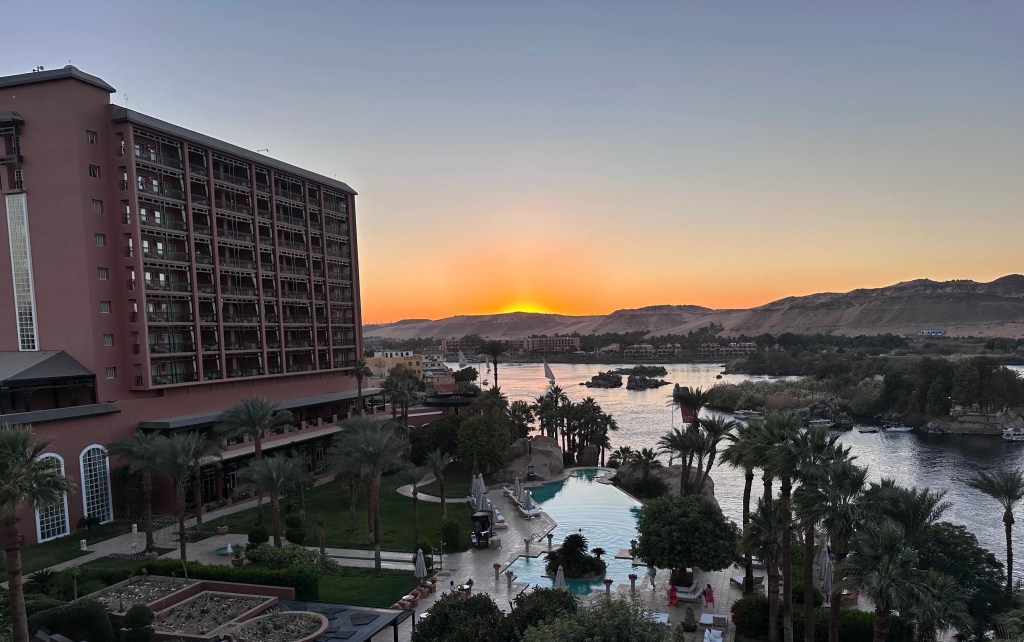
See that building on the left? That’s where we stayed –in the“new” building. My room is on the 4th floor, the first one, with the huge balcony. I know, it looks a bit like a Holiday Inn from the exterior, but wait till you see the interior.

The following photo is the view of Churchill’s huge “balcony” from MY balcony. His sits atop the restaurant’s terrace, which is the ideal place for sharing a bottle of wine and a cheese platter. (The terrace, not Winnie’s balcony, although both would certainly work).

That’s just what what Jeanne and I did. We loved the hotel so much we decided to skip the evening’s planned activities: a visit to the market and dinner outside the hotel. It was the right decision…perfect weather, great food, drink, and conversation, plus a wonderful night time view of the Nile.

I promised a peek at my interior, so here you go. Agatha and Winston aren’t the only ones with a chandelier above their beds. You’re looking at only about half of my suite. It took a while for me to locate the entrance to the bathroom, because it was hiding behind a huge dressing room. Honestly, at this stage of my life, I prefer something smaller, with a bathroom a bit closer. I needed roller skates to get from my bed to the bathroom!

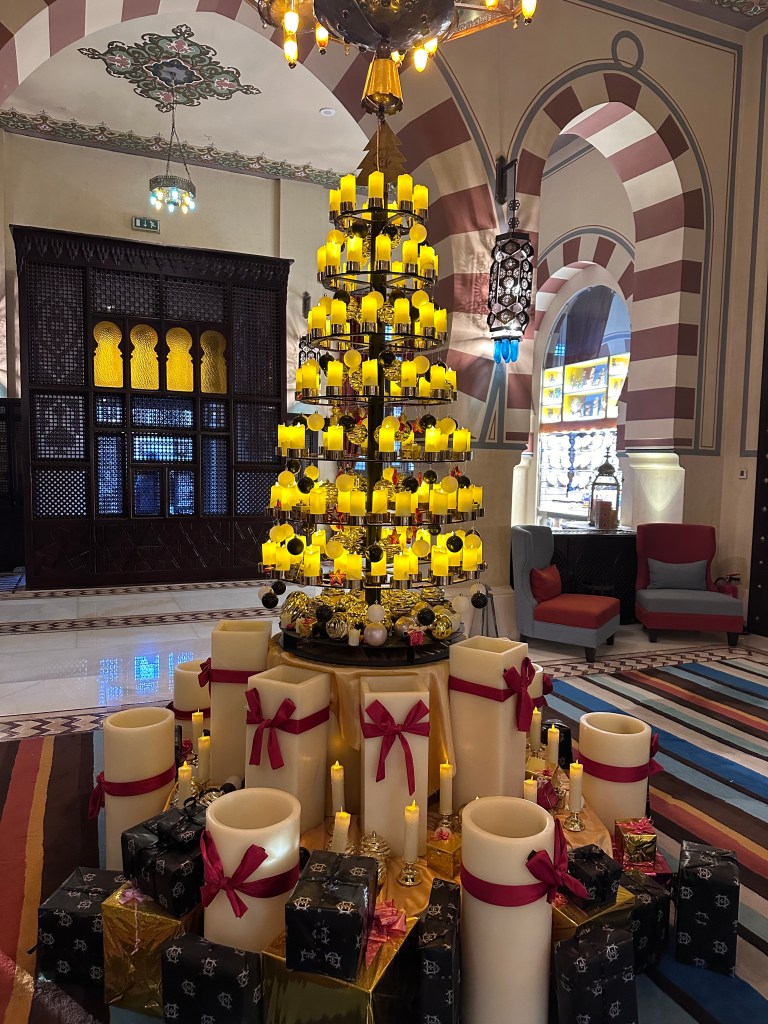
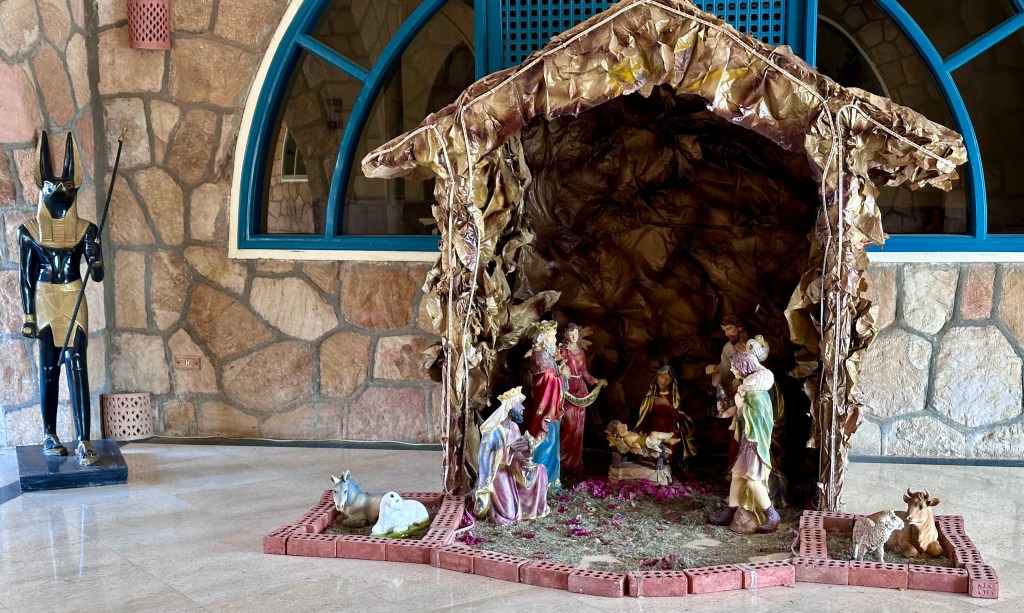
Here are some more shots of the hotel.  Notice the painted arches? They reminded me of the Mosque in Cordoba, Spain–the one that the Christians repurposed as a church. Despite that, (and the Crusades), none of the Muslims I met appeared to have had any hard feelings toward the Christians, as evidenced by the abundance of Christmas decorations in this predominantly Muslim country.

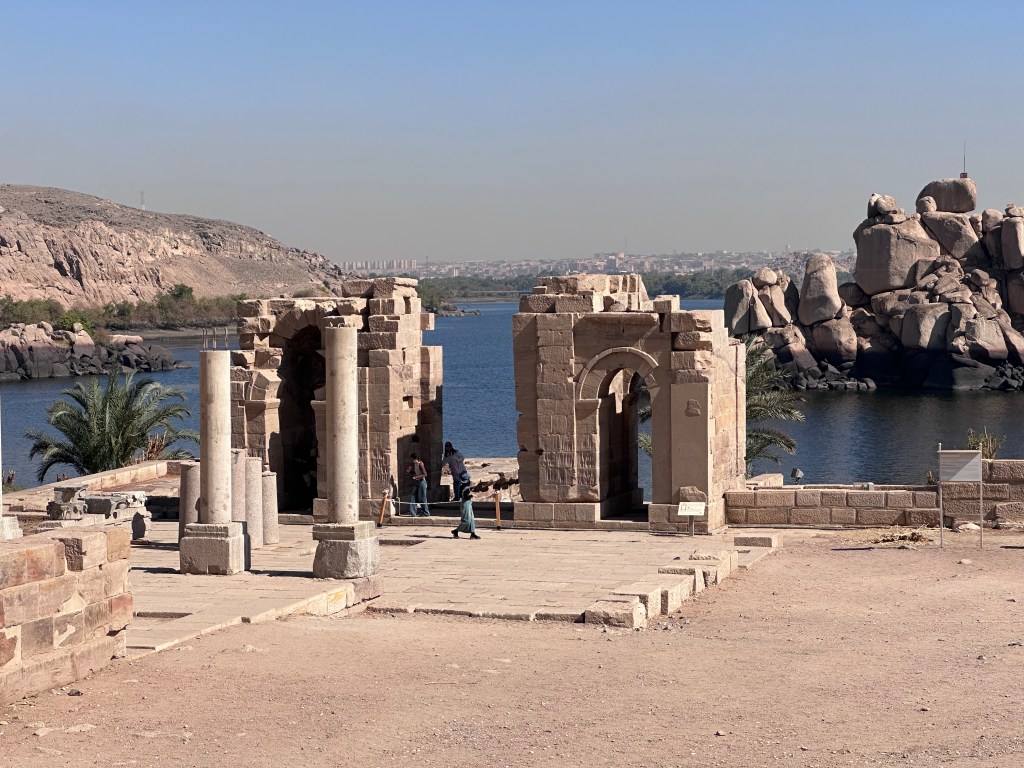
Have you seen enough temples yet? There’s one more, located on an island in the middle of the Nile. Like the Temples at Abu Simbel, the structures at Philae were moved from their original location to save them from the rising waters of the Nile. Unfortunately, not soon enough. The structures were partially submerged by the time the rescue was initiated. 

I’m so grateful that spray paint wasn’t available in the 1800’s. If it had been, then the French visitors wouldn’t have needed a chisel to leave their marks.

Lunch was at a colorfully decorated Nubian restaurant, right on the water. The Nubians love bright colors, as you can see from the joyous decorations on the exterior.

I’m not going to lie. Getting on and off the boat was a little tricky. That low canopy meant that you had to duck your head and leap onto the slightly wet rocks while the boat was doing its own rocking and rolling. Once again, I gave thanks to the Somerset Hills YMCA for keeping me in shape.

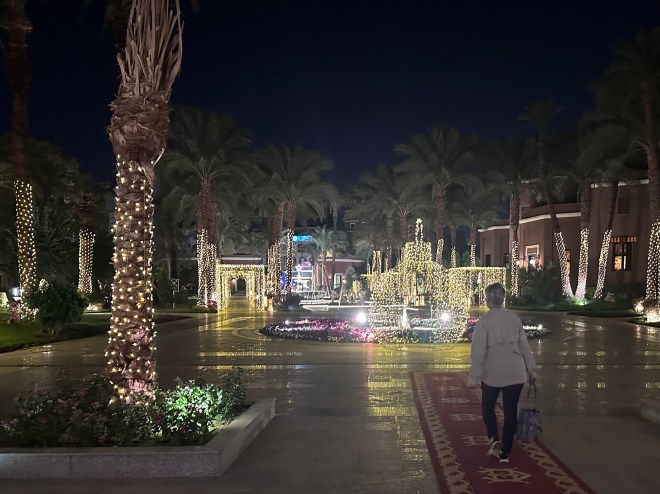
We couldn’t get too wild and crazy at our last dinner at the Cataract Hotel, because we had yet another early morning flight. Our departure was doubly painful–we were leaving this mini Paradise, plus we had to be on the bus at 5:45 AM. On a positive note, it DID allow us to have the beautifully illuminated gardens all to ourselves. They even rolled out the red carpet. 

And now a word about airport security: in both Jordan and Egypt, you get to go through it twice. The first time, both your checked and carry on luggage are examined. THEN you get your boarding pass at the counter, and drop off your luggage. THEN you go through security yet again, with your carry on AND even if you don’t “beep” when going through the metal detectors, you STILL get thoroughly patted down, which is why women have to make sure there is a woman security guard waiting for you at the end of the line. But I will say that Egypt was much easier than Jordan. In Jordan, I was held up both coming and going, because I had binoculars, which are considered “military equipment”. It was actually worse leaving the country. One guy took my passport, photographed it, then walked around with it in his hand while he talked on the phone–to whom, we don’t know. Meanwhile another guard was switching my flashlight on and off. It looked like he was sending a message in morse code! And here I was worried that my husband’s ashes might have been problematic. They were fine–safely tucked away amidst my underwear.

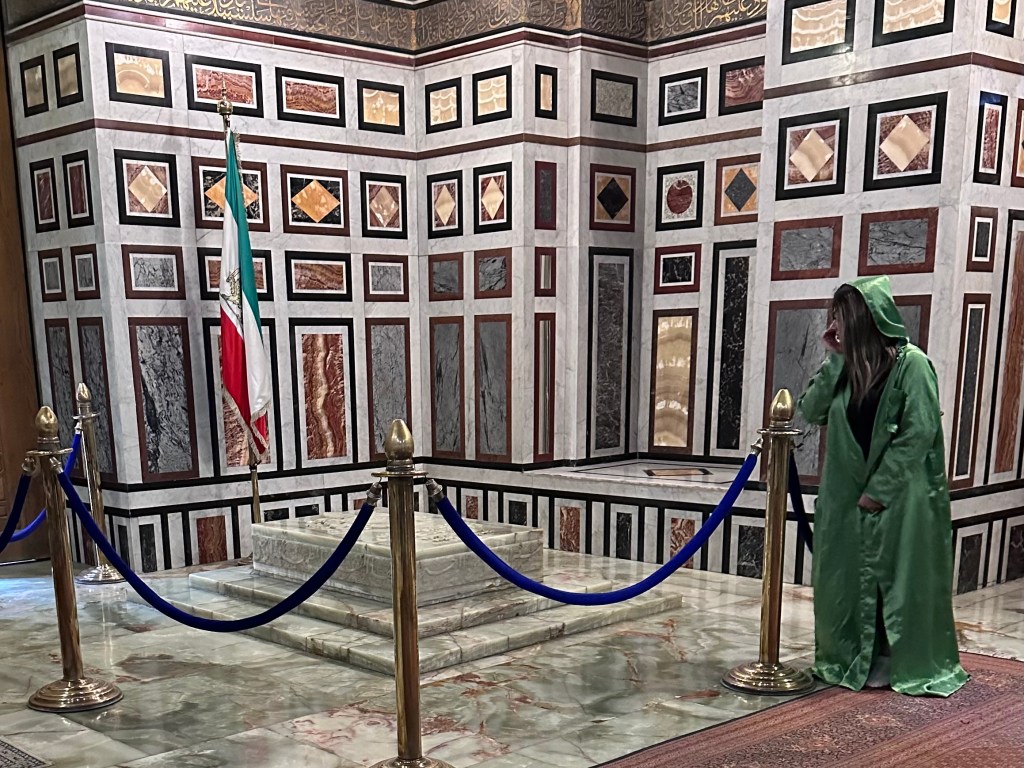
Eventually we made it through and were able to visit two historic Cairo mosques. One doubles as the grave site for the former Shah of Iran. Remember him?

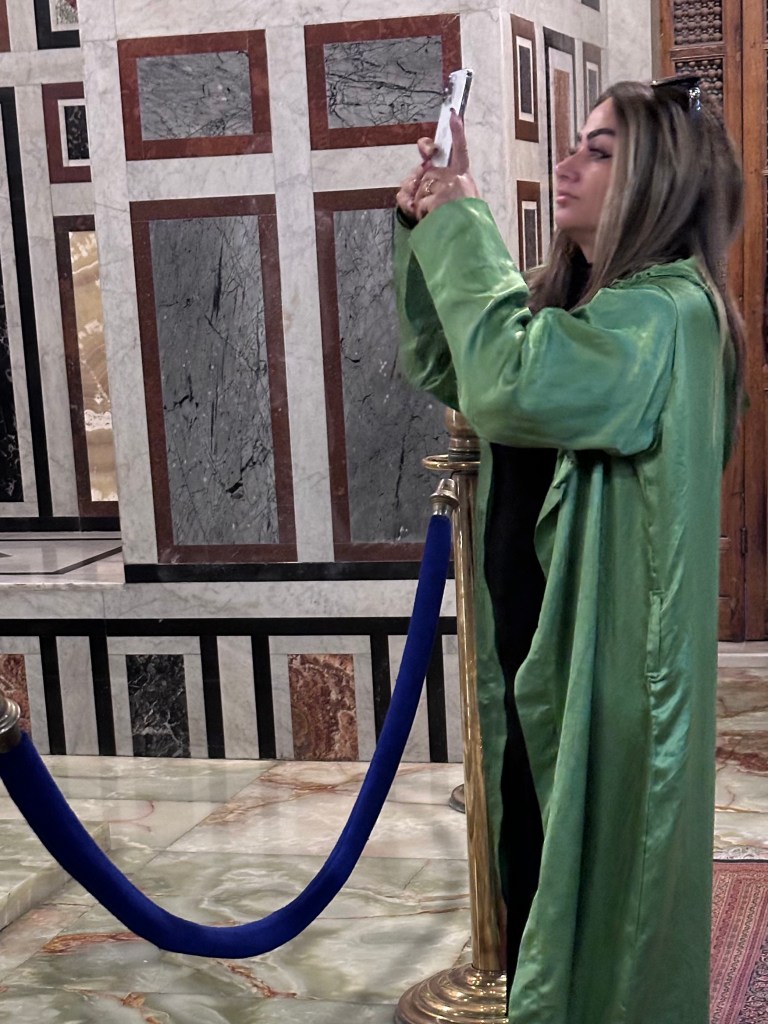
Are you curious about that green Jedi? So was I. I surreptitiously took this photo of the very beautiful young woman as she was photographing the grave site. Yes, I know it’s a bit blurry. That’s what you get when you are sneaking a shot. 

I’m home now, dealing with jet lag and a cold. But I won’t be here for long. I hope you’ll come along on my spring adventure — Japan. 

On the Road to Abu Simbel

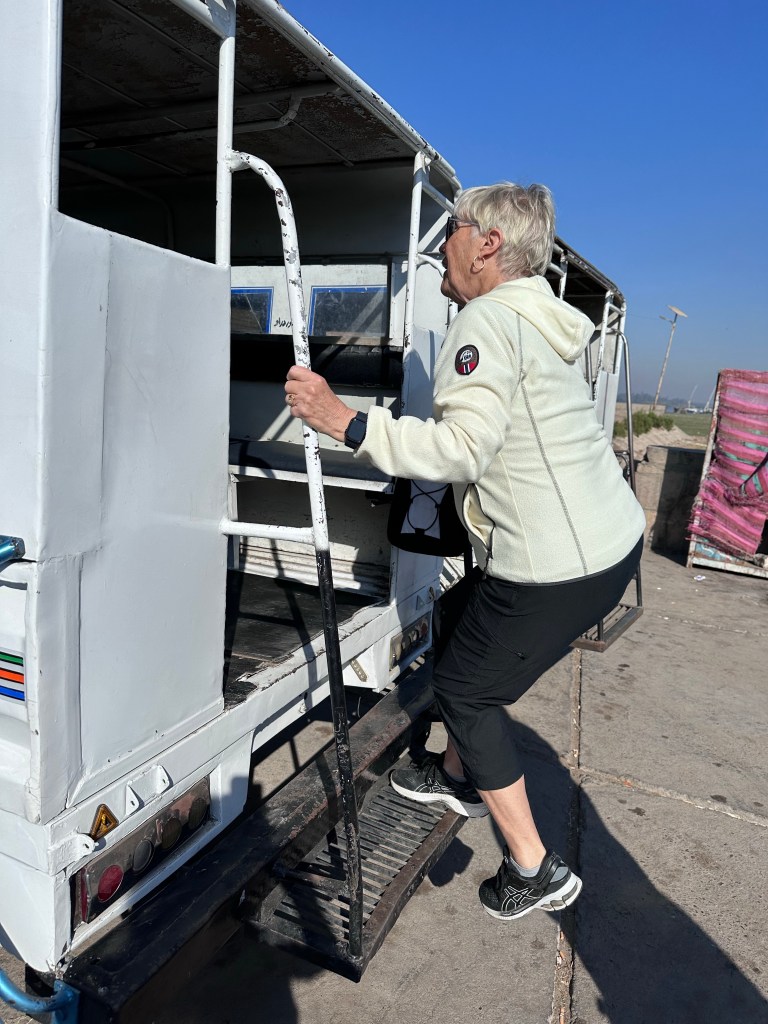
To acclimate us for the end of our leisurely float up the Nile, we used less luxurious modes of transportation to visit the town of Daraw. We’d been ferried across the Nile by small boats before, but this was our first time in the back of a pick up truck. The truck was covered, but there was such little headroom, I could barely sit upright. And no, that’s not a canvas top to the truck. It’s metal. If you’re wondering how I know, let’s just say there were more than a few bumps in the road.

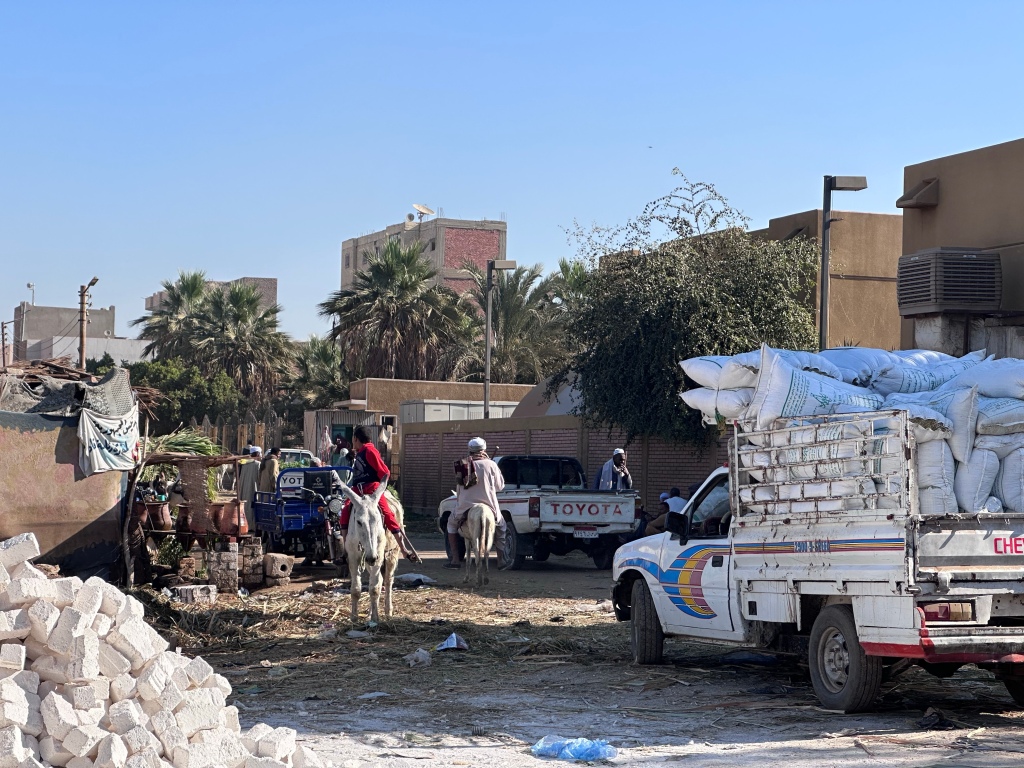
You see all modes of transportation in Daraw: bikes, motorcycles, trucks, donkeys, tuk tuks, just about everything except cars.

Most OAT groups tour the livestock market, but because there are no markets on the day we were there, we visited the local entrepreneur. One of his many businesses is a “livestock hotel”. Hey, if you don’t sell all your animals on the first market day, you need someplace for them to stay, right?

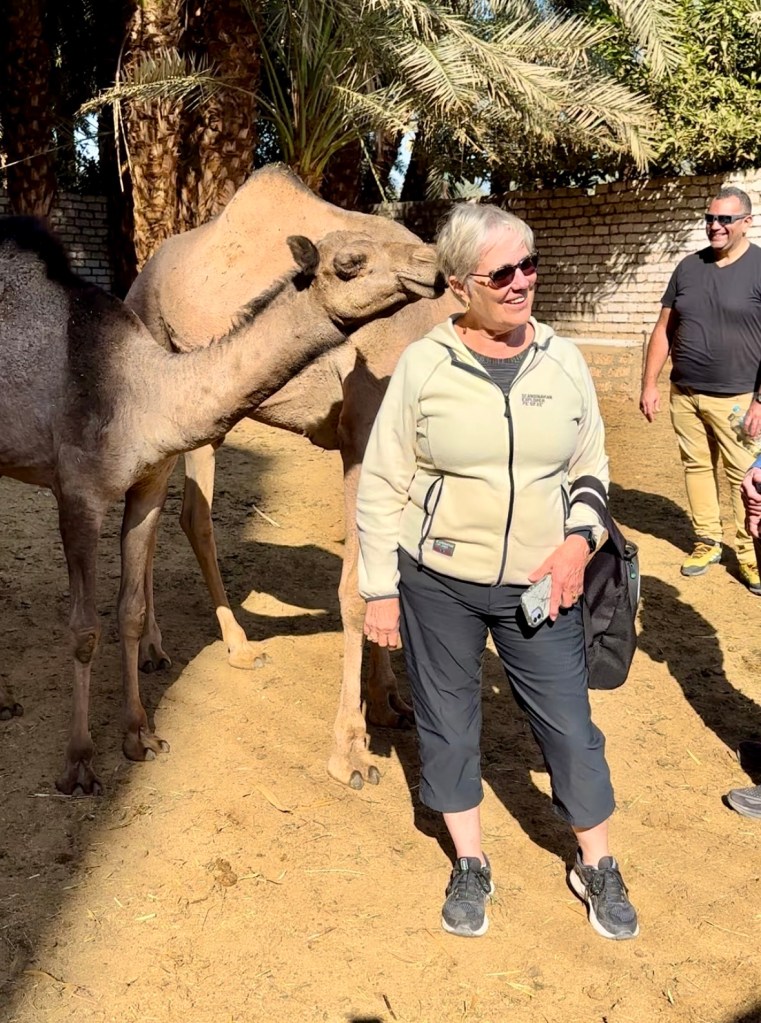
Another of his businesses resembled a mini petting zoo, which we greatly enjoyed. I’d been warned that camels spit. After being taught a lesson by that rambunctious water buffalo a few days earlier, I kept my distance. Bobbie and I decided it was time to let others interact with the babies.

This camel bumped Jeanne in the head multiple times
There was significant bonding between Bill and baby donkey. We expected him to start negotiating a purchase price.

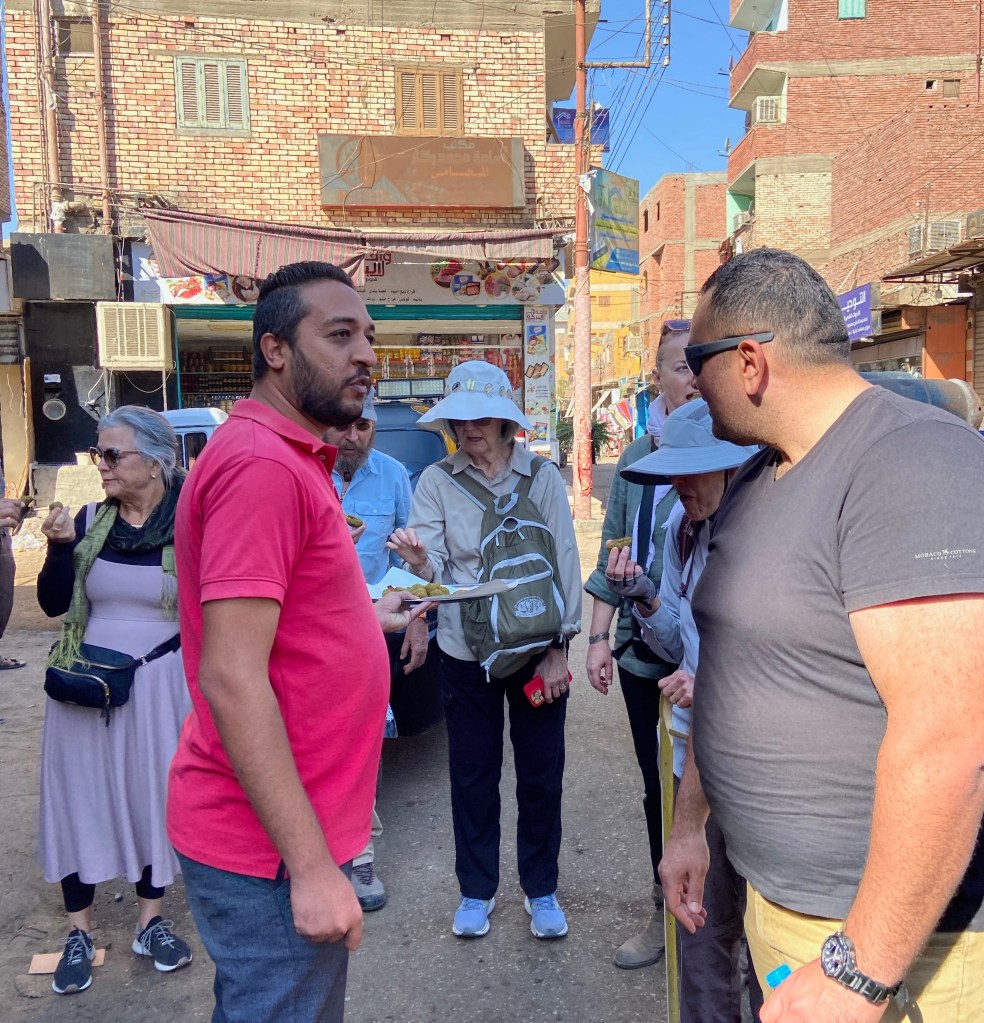
Next stop, shopping—and eating—in the marketplace. Mohamed purchased Falafel for us to sample. We had just watched as the street vendor was making it. I don’t know that I would have been brave enough to eat food from a street vendor if I were on my own, but with Mohamed choosing the vendor, I felt perfectly safe.

It felt like we were on the Amazing Race when Mohamed instructed us to search for, and purchase, specific fruits and vegetables with the 20 Egyptian pounds, (about $.62 in US currency) he gave us. We were all so focused on our task, there were no photos of the adventure. I foolishly pointed at potatoes and waved my 20 pound note. Any idea how many potatoes that amount would buy? A whole lot. A whole HEAVY lot. Good thing I’ve been going to the Y.

Bobbie, on the other hand, was a smart shopper. She purchased the required peppers, but she negotiated skillfully enough to be able to buy bread for us all. It was delicious and still warm from the oven.

Our last stop before leaving our beloved dahabiya was “Nile Beach”, where are some of us were perfectly content to just stick our feet in the water. Others, namely, Marianne and John, were far more adventurous.

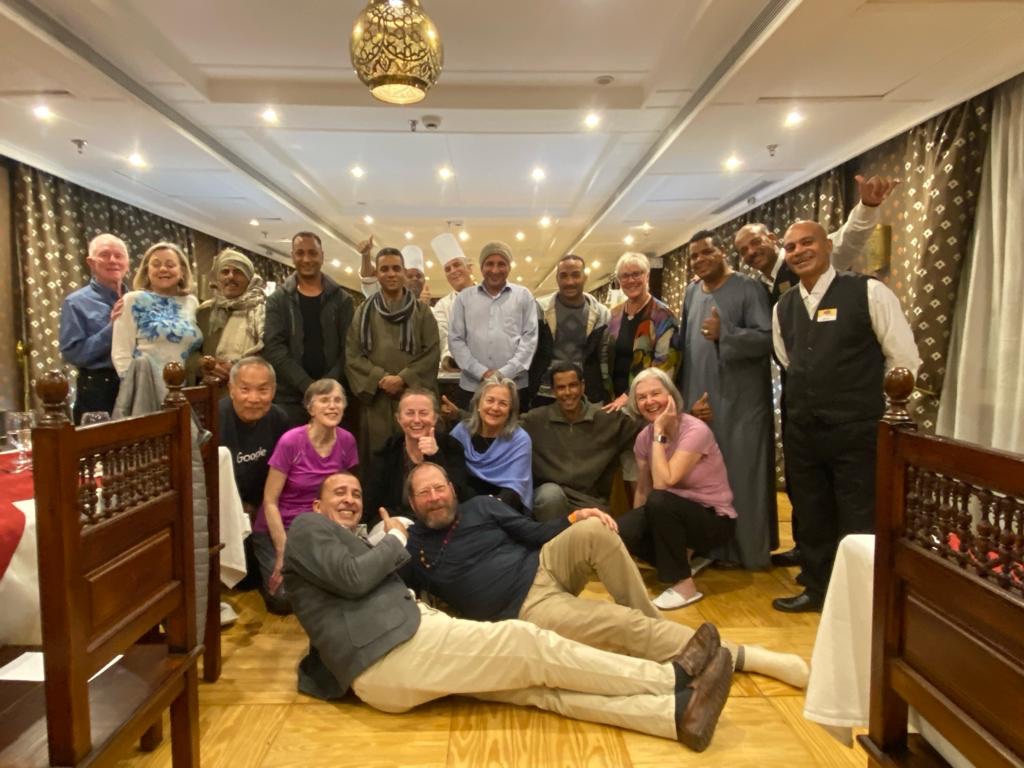
Our “farewell” dinner was even more spectacular than the other meals we’d enjoyed. We were sad to say goodbye to the crew that took such good care of us.

16 crew members for 9 passengers. Was the service outstanding? You bet!

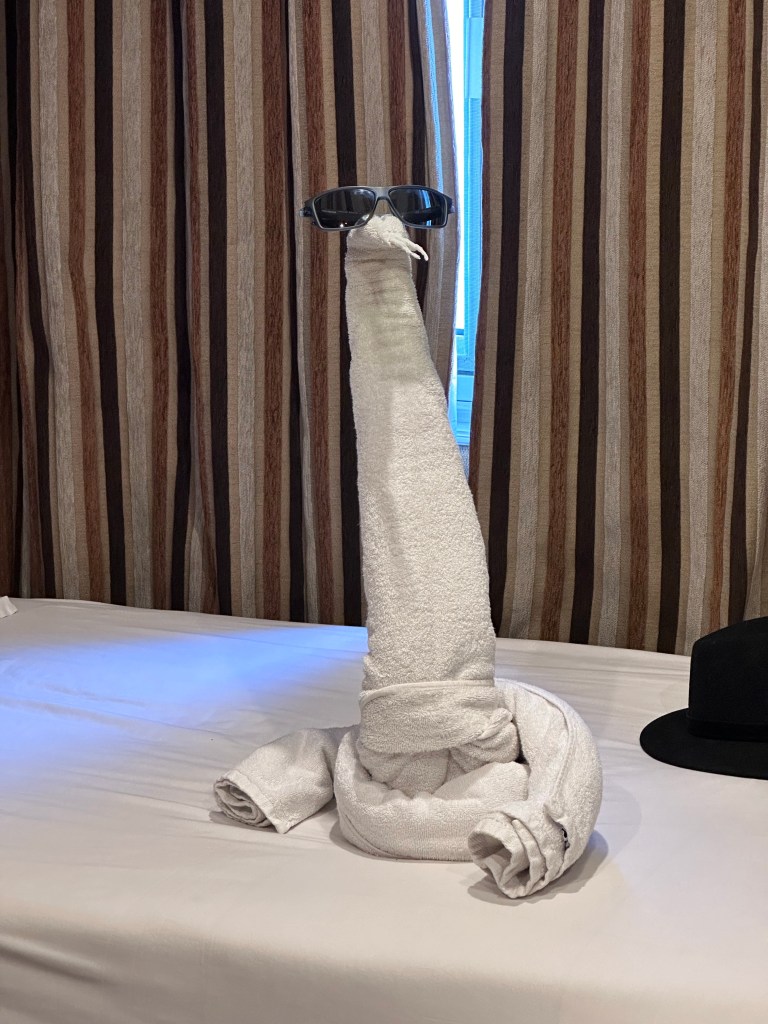
We all got a surprise when we returned to our cabins. We each got a unique Egyptian creature waiting for us on our beds. I’ve seen towel art before, but these were, by far, the most creative. My favorites were the crocodile and the cobra. ( I got a scorpion).

How to describe the ride from Aswan to Abu Simbel? Three hours of sand, sand, and more sand with high tension wire strung along the roadside, delivering electricity from the dam to the populations further north. We needed to get closer to Abu Simbel for the landscape to change.

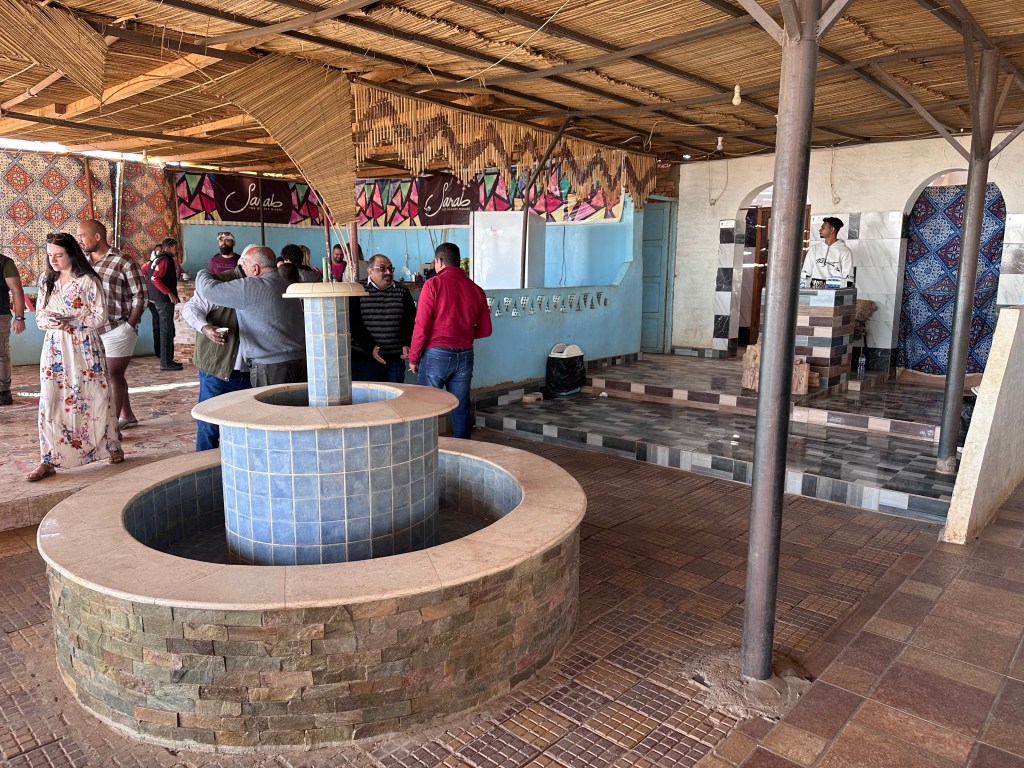
We stopped midway in our journey for a bathroom break. I think the term “food desert” was coined here. If it wasn’t, then it should have been. The “snack bar” could be best described as “selection-challenged”, but if you’re looking for potato chips, or packaged mystery snacks, you’ll be very happy.

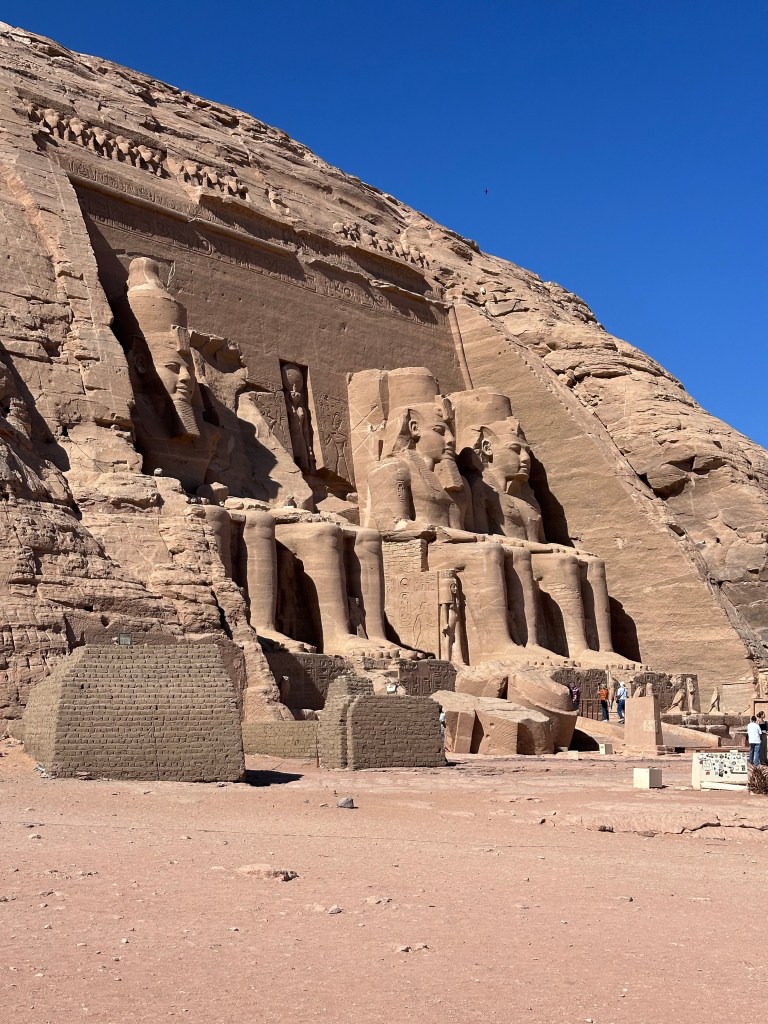
Our group thought we’d seen so many temples and tombs, there was little left for us to see. Boy, were we wrong! The size of the 4 statues of Ramses 2’s temple ALONE was jaw dropping. But to think that this entire temple was MOVED block by block to the higher ground on which it currently stands, is truly hard to believe. Why is as that done? If it hadn’t been moved, it would now be well below the waters of Lake Nassar.

Back in the 60’s, 50 nations cooperated to rescue several temples threatened to be submerged by the creation of the High Dam at Aswan. To me, the engineering that went into the move was as awe inspiring as the temples.

But wait—there’s more to say about this temple. The ancient Egyptians were so knowledgeable about engineering and astronomy that in the 1200’s BC, they were able to construct this temple so that twice a year, on February 22 and October 22, the sun shone all the way through the temple to illuminate three of the four statues in the inner sanctum. The fourth statue is of Ptah, the god of the underworld, who was intentionally left in darkness. Two of the others represent different versions of Ra, the son god. Bet you can’t guess who was the last statue to be bathed in sunlight. None other than Ramses 2. Clearly he didn’t have a self esteem problem.

That black area falling across their laps is a shadow

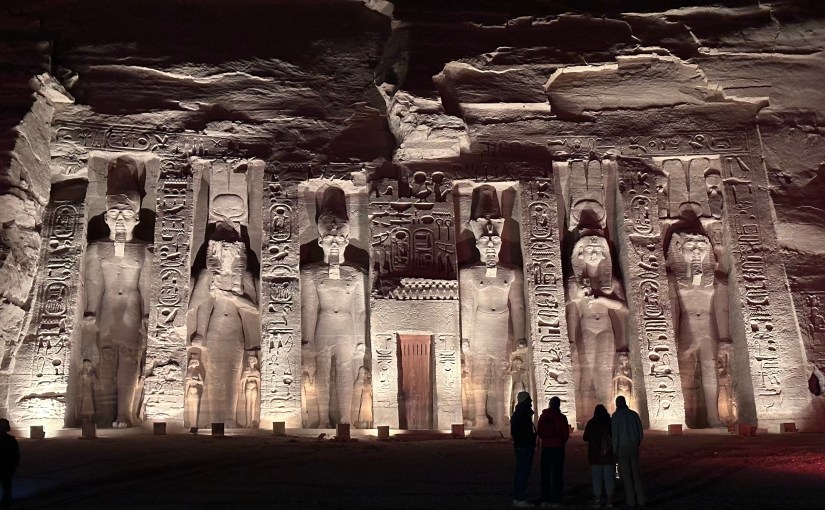
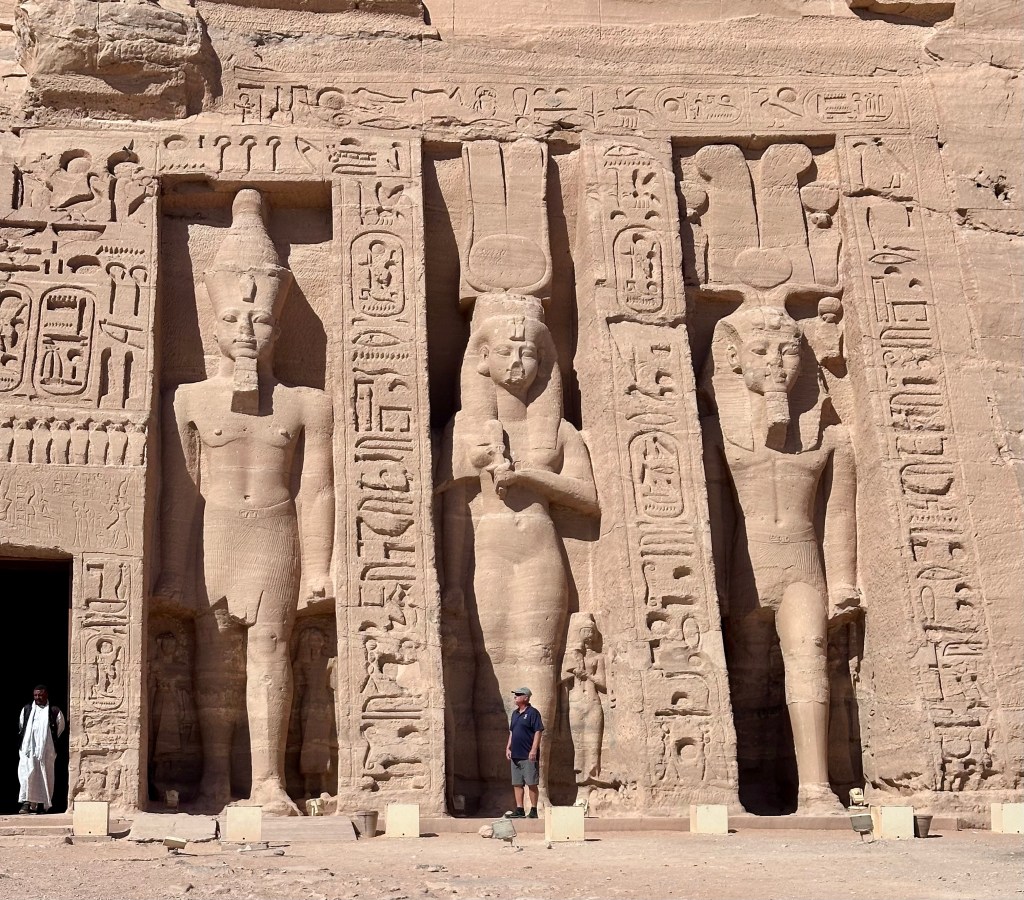
Next to Ramses 2’s monument to himself, he built a temple honoring his favorite wife, Nefertari. Remember her? We visited her tomb in the Valley of the Queens.

That old goat lived well into his nineties, acquiring wives and children ( rumored to number approximately 200) along the way. Good thing he lived BEFORE viagra was invented! Of all his women, (thought to number about 100, if you include concubines and mistresses) Nefertari was his favorite—the only one who got her very own temple next to his. There is only one statue of her on the facade. The other five are, of course, of her husband, who was also known as “the Great” (probably self proclaimed).
That random guy standing in front of Nefertari gives you an idea of the scale of these statues.

We only spent one night at the beautiful Seti Hotel in Abu Simbel. Can you see why we were reluctant to leave? The multi-level pool had a swim up bar; each room had a private balcony facing the Nile. It was SO very peaceful.

Before we left for the light show at the temples, we met Hassan, who enlightened us about Nubian culture and history. He also entertained us by playing instruments that were the forerunners of our guitar, banjo and harp.

In 1976, when Hassan visited his cousin in San Francisco, he was invited to play with what he described as “ a small folk group” —the Grateful Dead.

Once again, you had to be there to appreciate how wonderful it was to be sitting under the stars, watching a multimedia show projected onto the temple walls. I didn’t take any shots while the show was ongoing, but did so after, and used that shot the heading for this post.

I truly appreciate everyone’s comments on my blog posts. It almost feels like I’m having a conversation with my friends. Although I know who comments on Facebook and Linked in, many of the comments on WordPress are coming through anonymously. If I didn’t respond to you, that’s why.