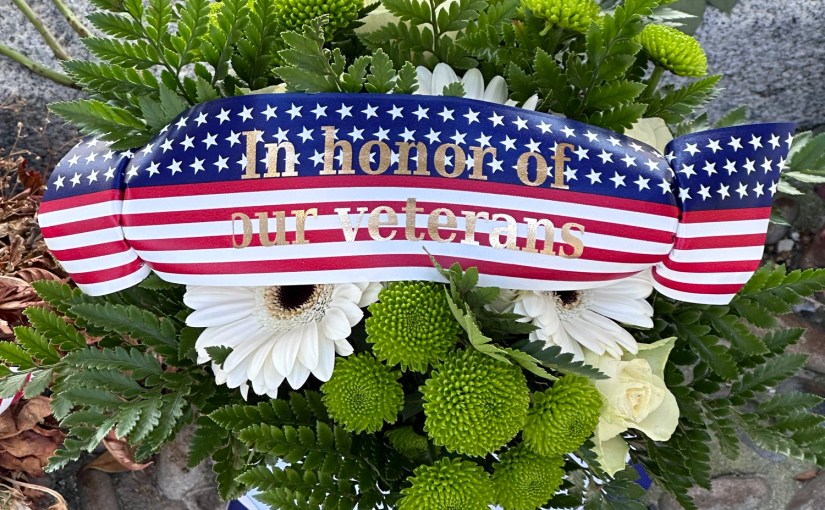
For many Americans, Memorial Day signifies the start of beach and barbecue season. After visiting Normandy, however, Memorial Day will forever retain its original significance for me. Henceforth, it will always be a solemn day of remembrance for those who have fallen in battle. Because of them, I’m allowed to live the life of freedom that I treasure.
Here’s Eisenhower’s message to the troops, which was reproduced in the museum at the American Cemetery.

The amount of creative thinking and planning that went into the invasion was mind boggling. We learned that the BBC sent out a request for photos taken during vacations on the coast of France, plus any maps or post cards that could help create visuals of the coastline. They received over 10 million responses, but these obviously had no information about the fortifications, so pilots were sent on reconnaissance missions. The local resistance, in addition to blowing up bridges and messing up supply routes, also provided key information to the allied forces.
Before going into battle, soldiers were given three options for their dog tags: they could declare themselves Christians or Jews, or leave the designation blank. If Christian or undeclared, their graves were marked with a cross. Jews were designated by a star, however many Jews chose to be undeclared in case they got captured. The fear was if it was known they were Jewish, they’d be less likely to survive.

At the American Cemetery, preparations were underway for the 80th anniversary commemoration ceremony, which will be attended by dignitaries from around the world. I was surprised to see that the American Cemetery will be part of the upcoming Olympics.

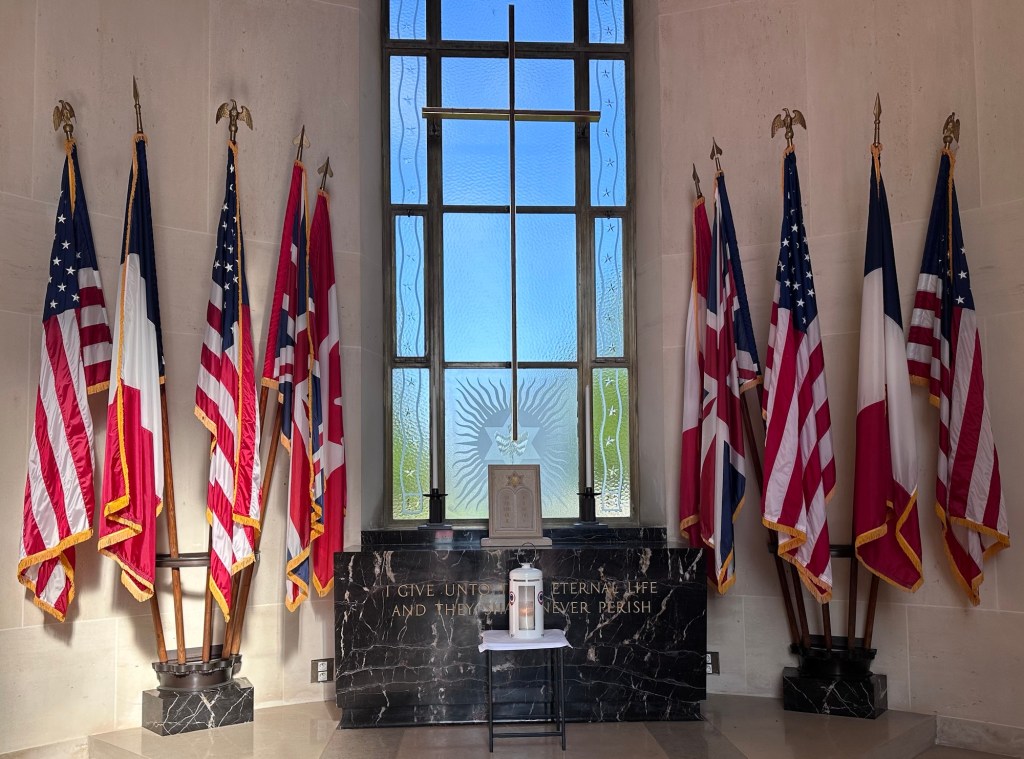
The eternal flame at the cemetery
The weather was perfect during our visit to Omaha Beach. The Allies weren’t as lucky.
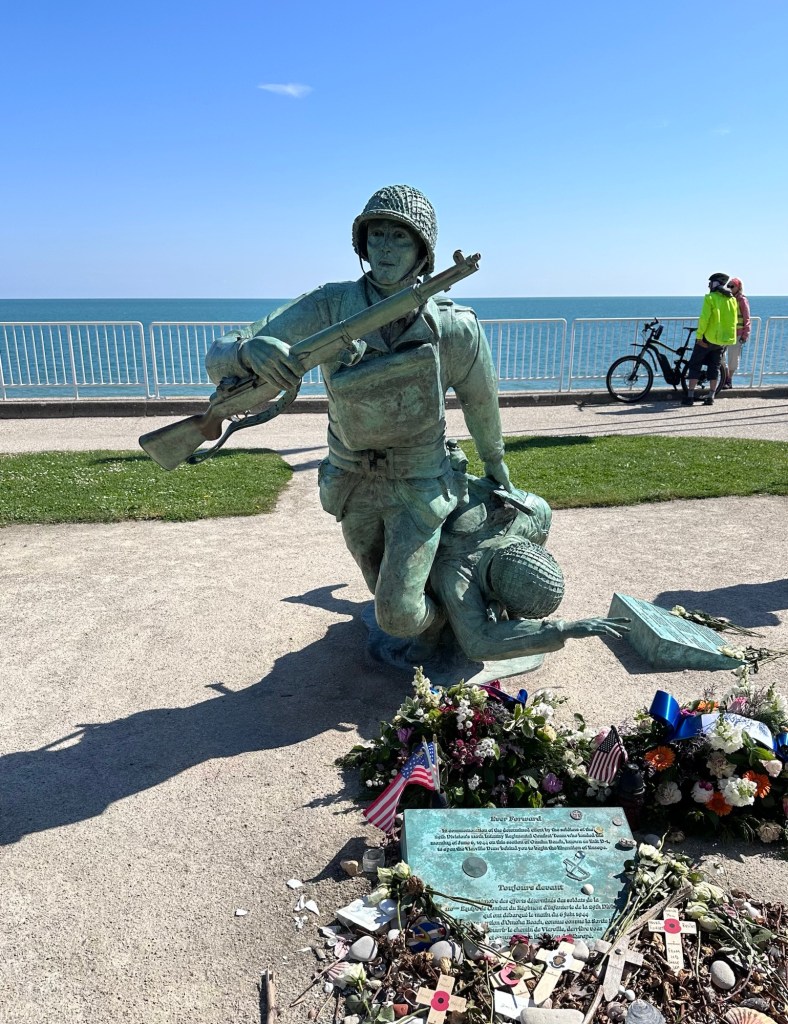
The plan was to have paratroopers and Army Rangers land behind German fortifications when the troops arrived at the beach, but gale force winds blew them off course. Instead they ended up being targets for both enemy and friendly fire.

These are exhibits in the Airborne Museum.

OAT arranged for us to have time with the museum curator, who showed us this violin one of the German soldiers made for the American in charge of the prison camp.

Knowing what goes into making a violin, I was incredulous. Clearly, this skilled woodworker had an excellent relationship with the camp commander, because he was allowed access to sharp instruments that could have served as weapons.
Add this to one of the MANY things I didn’t know before this trip: Germans remained in the POW camps till 1948. Most of the prisoners either stayed in France, and married their French girlfriends or emigrated to the USA.
I’ll end with a happy story. The parachutist shown hanging from the church steeple survived. He was cut down by German soldiers hiding in the church, and held as a hostage so the church wouldn’t be bombed.

No time to proof read, so fingers crossed that my iPhone didn’t make any crazy substitutions.

 Destination NOW
Happy Memorial Day Shelley – our freedom is indeed precious & we must protect true democracy. Fascinating about violin making by a prisoner. Guess it was better there than outside fighting the war.
LikeLike
I’m learning so much
LikeLike
How poignant to be in Normandy on Memorial Day and to share it with us as we at home, because of the time change, are starting to celebrate ours. Thank you!
LikeLike
Thanks for your comment, Esther. I was very moved by the American Cemetery.
<
div>We are
LikeLike