Thanks so much for the words of encouragement from all who commented on my last post, either here, on Facebook or on LinkedIn. It was great to hear from so many friends. I had no idea you were reading my blog, because unless someone comments, I don’t know who my audience is. Your very kind messages motivated me to continue writing about October’s trip.
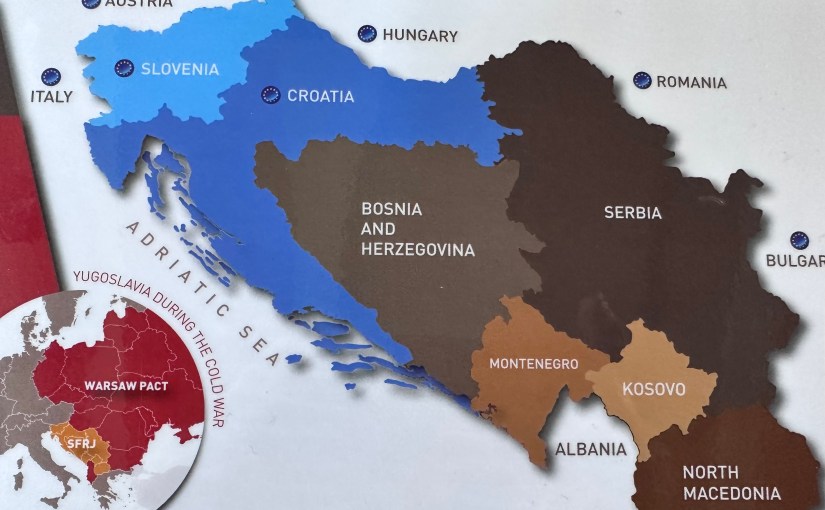
Yugoslavia was once made up of 6 countries, and on my recent Overseas Adventure Travel (OAT) trip, I visited four of them: Croatia, Montenegro, Bosnia &Herzegovina and Slovenia. I tell you–we are SO very lucky to be able to travel in the USA for thousands of miles without ever having to show our passport. On this trip, we had multiple border crossings, and although our guides knew the tricks to make it as painless as possible (which crossing was less busy, what time is best to cross), it still was an inconvenience that I’m glad is not part of our daily lives.
After 7 of us finished the pre-trip to Albania, we drove through Montenegro to a parking lot by the border where our Albanian guide said goodbye, and Antonia, our guide for the main trip, greeted us (literally) with open arms. How lucky were we to get this dynamo for our tour leader! She was funny, creative, attentive, and so very joyous. She started out by giving us the good news that we were staying at a different hotel in Dubrovnik, a five star, because our original (4 star) hotel was still being renovated. As the millennials would say, “OMG”! The Valamar President Hotel was truly magnificent–right on the ocean, with spectacular views of the sunset. Here’s an example of one.

Prior to embarking on the trip, I had googled the original hotel’s location (I know, I’m obsessive/compulsive) and was slightly disappointed because it seemed quite far from the old city. I got over that disappointment real fast, because it was so easy to get to and from our new, improved hotel, (which happened to be in the same area as the original one). We were given a free pass, the buses ran frequently, and we got off right in front of our hotel. By the way, did I mention our hotel was magnificent?
When we arrived at the hotel, we were joined by the 9 remaining members of our group who opted not to take the pre-trip, including my dear friend Augusta.
One of Dubrovnik’s big attractions is walking along the city walls, which we did on our second day in the old town.
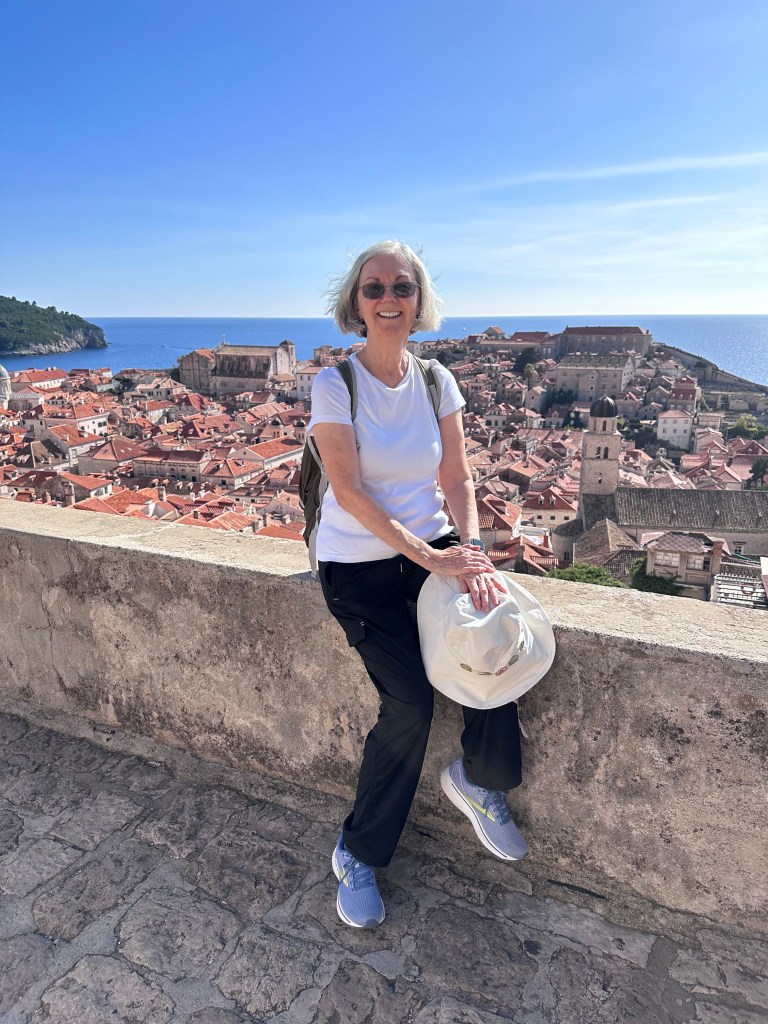
It isn’t obvious from this photo, but there was a lot of up and down along the wall, with very uneven steps. But don’t let the following photo dissuade you from exploring the ramparts. One of our fellow travelers, who is in her 80’s, managed to climb up and down without a problem. I found that truly inspiring–and very encouraging for someone who is hoping to be traveling well into HER 80’s. (In case you have’t guessed, that someone would be me).

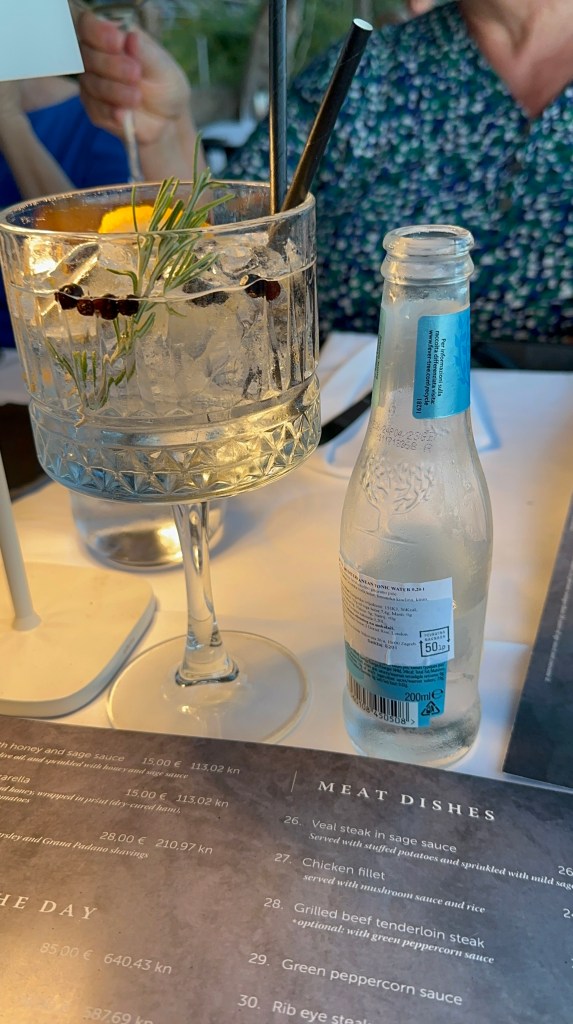
That evening, dinner was “on our own”. Antonia walked us along a beautiful path that hugged the ocean which was lined with fantastic restaurants, telling us a little about each as we passed. When she said, “This one makes the best gin and tonics in all of Croatia”, Augusta and I knew we had found our place. What made it the best? Not only was the drink served in a beautiful glass, but the creation of it was something to behold. (click on the underlined words if you want to watch our waiter construct that masterpiece).
Dinner by the sea was delightful, and the Croatian sunsets were consistently magnificent.

But the most memorable part of our time in Croatia was the talk given by a woman who had lived in Dubrovnik during the Balkan war. At that time, she was in her early 20’s. Overnight, her life changed. She had been a carefree young woman until, after a night on the town with friends, she was awakened by the sound of bombs dropping. One might expect her talk to have been depressing. It was not. It was actually an inspiring story about the resilience of the Croatian people as they learned how to survive for three months without water and electricity. She told us she quickly learned what was really important, and it wasn’t money. ”What good was it to have money, if there was nothing you could buy”, she asked.

Her talk took place in what was once Napoleon’s fort, and is now a museum housing memorabilia and information about the Serbian and Montenegrin attacks on Dubrovnik, a World Heritage site.
In case you’re wondering about the picture of the soldier on her right, that’s Orlando. His statue currently is located in the main square, where in days of old, decrees were read and citizens would gather to be entertained by watching the bad guys get their just punishment. (Don’t judge–they didn’t have TV or the internet back then).
This is what Orlando looks like now. It’s hard to see him, or his all important elbow, because there is a protective barrier surrounding the statue. At some point, he will be removed to have the statue version of a spa treatment, and will be returned, thoroughly restored and rejuvenated..
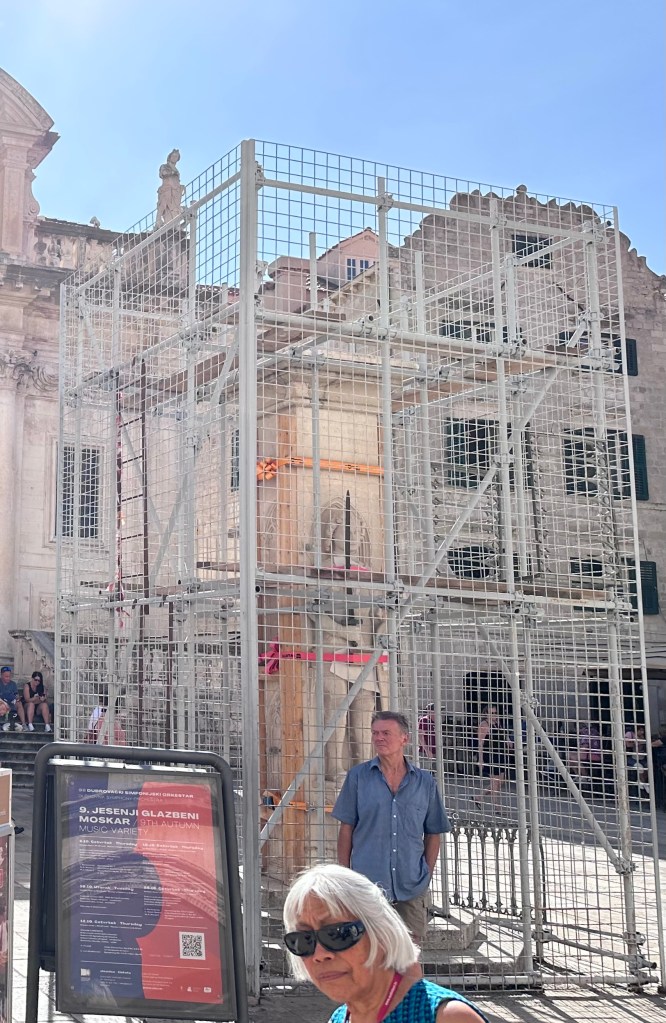
So who was he, and why did I mention his elbow? Well, legend has it that Orlando was a nephew of Charlemagne. Perhaps you know him by his alias, Roland? More importantly, his right arm, from fingertip to elbow, was used to measure fabric, which was traded in that very square. Why his forearm? I have no idea. It certainly makes as much sense as the inches, feet and yards WE use. By the way, there are only three non-metric countries on this planet: the USA, Liberia and Myanmar (so we are in good company, indeed). Saturday Night Live did a hilarious skit about our use of the “imperial” system. But I digress…
Our return to Dubrovnik’s center via the tram gave us this phenomenal view. By the time we made it to town, however, I had seen enough of the walled city and was more than ready to return to relax on our hotel’s private beach. Little secret: it’s hot in town, and crowded, so I was grateful for free time, my bus ticket and my luxurious hotel.

It may be difficult to see on the map atop this post, but Croatia is rather oddly shaped. The non-French say it is shaped like a bird in flight. To the French it looks like a croissant. To me, it resembles a gerrymandered voting district. Can you see that little gap that gives Bosnia & Herzegovina access to the ocean? Because of that gap, someone traveling just a few miles north from Dubrovnik could be subject to TWO border crossings: leaving Croatia to enter Bosnia, then again when reentering Croatia, and it would happen again when they did their return trip.
While in Dubrovnik, we took a day trip to lovely Kotor, Montenegro, then headed for three nights in Sarajevo, Bosnia, after which we returned to Croatia for 6 more days before heading to Slovenia, for three nights, then heading home. Got that? I don’t have the energy to fit all of that into one post, and you probably wouldn’t want to read one that long anyway, so this post only focuses on Croatia and Montenegro.
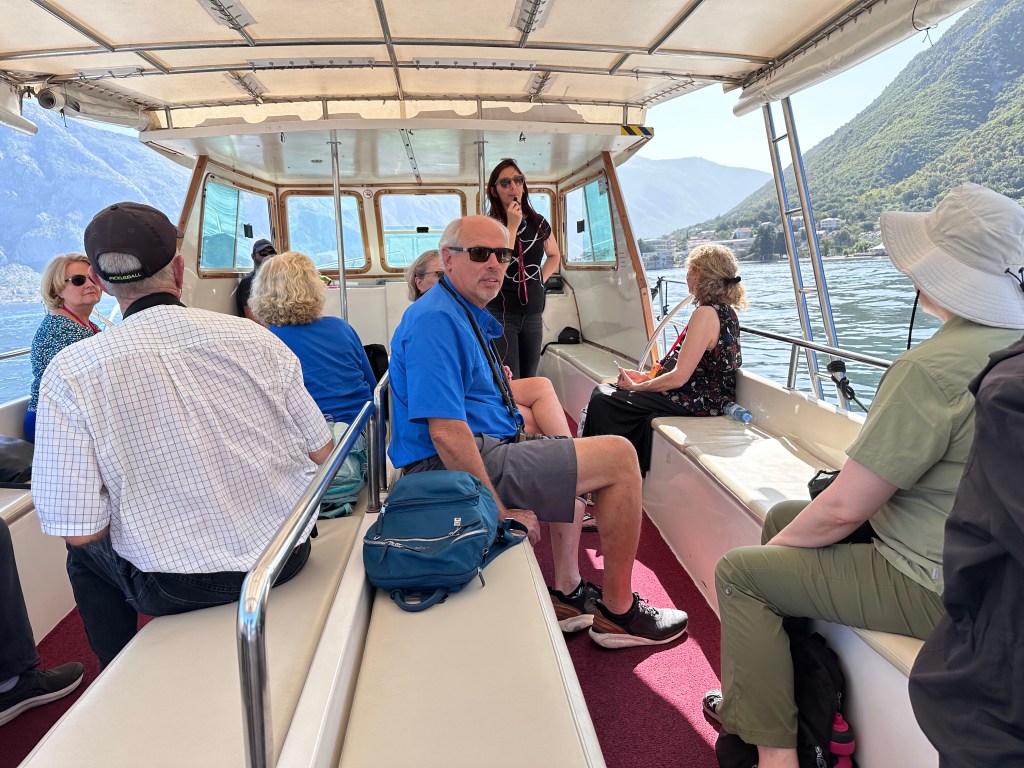
Our day trip to Kotor started with a breathtakingly beautiful ride on our private boat. I think it was during that ride that someone dubbed Antonia “the child with power”.
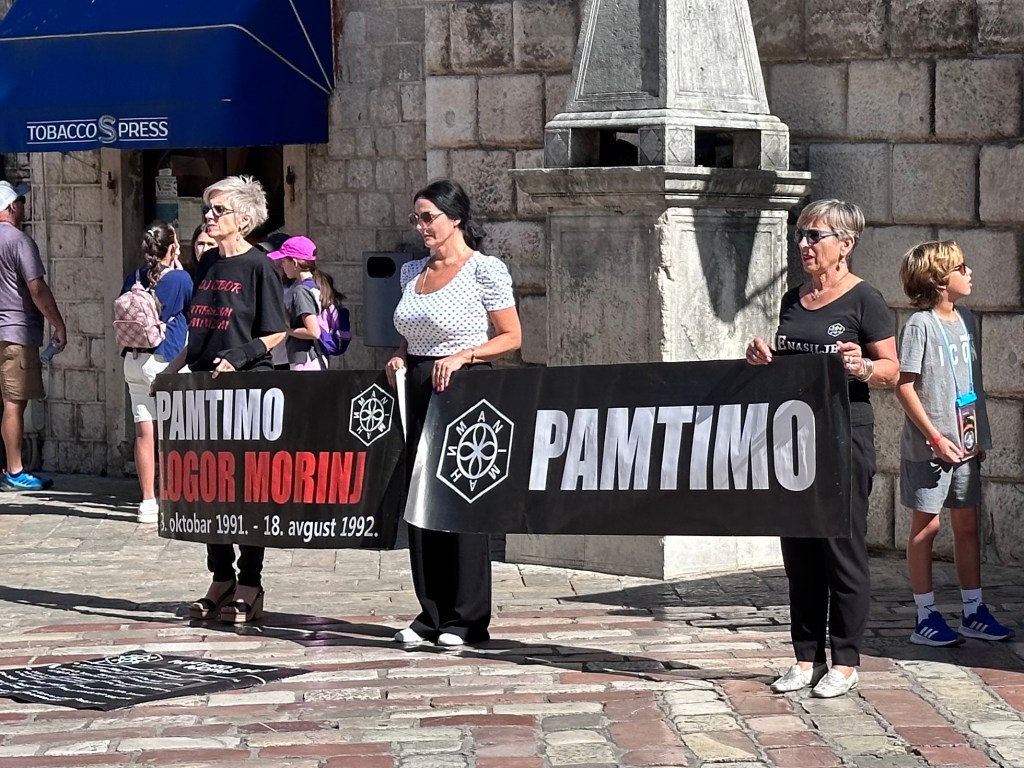
Kotor is a lovely medieval city with palaces, restaurants, gift shops, and like other medieval towns, it had its share of stories and legends, which I promptly forgot. What I didn’t forget was the women we encountered, holding the banner that says “We remember the Morinj camp”, which is where Croatian prisoners were held in deplorable conditions from 1991 until 1992. The banners act as an acknowledgement and an apology for Montenegro’s role in the Balkan War. I found that rather refreshing.
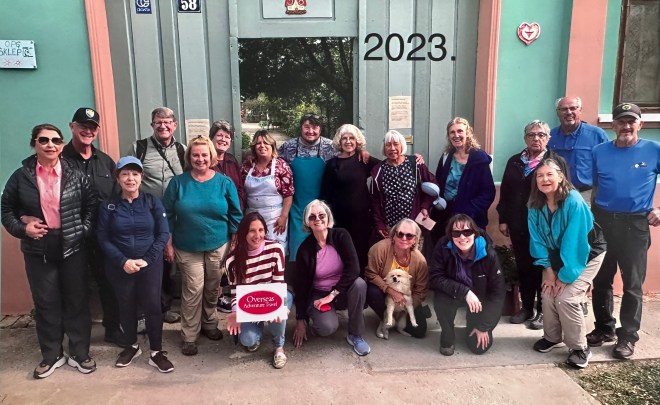
Are you ready for a break from war talk? Instead, let me tell you about Karanic, the Croatian village we visited on our way to Zagreb. OAT trips usually include”a day in the life” of the country’s inhabitants, but this was the first time the “day in the life” included an overnight stay. These encounters are designed to provide an opportunity to see non-tourist areas and get exposure to different aspects of the local culture.
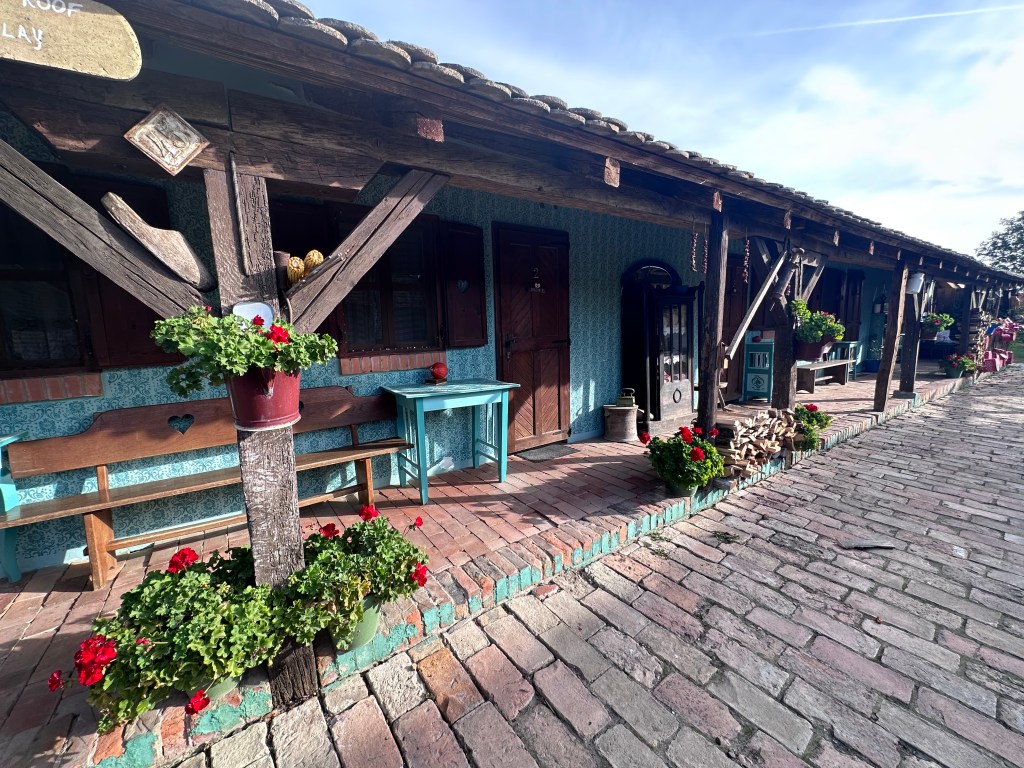
I wasn’t quite sure what to expect, but our accommodations exceeded anything I could imagine. The home had sufficient rooms for us all, each with a private bath (whew).
The food was delicious. Some of us helped with the cooking–others captured the moments via cell phone photography.

Karanac was a nice interlude before our stay in Zagreb. When we arrived at our hotel, we noticed it was filled with men wearing team shirts. Unbeknownst to me, we were sharing the lobby with the 2018 World Cup champion football team. This became apparent when we passed a building that was plastered with a photo of the guys we had just seen in the lobby. If only I were a sports fan…

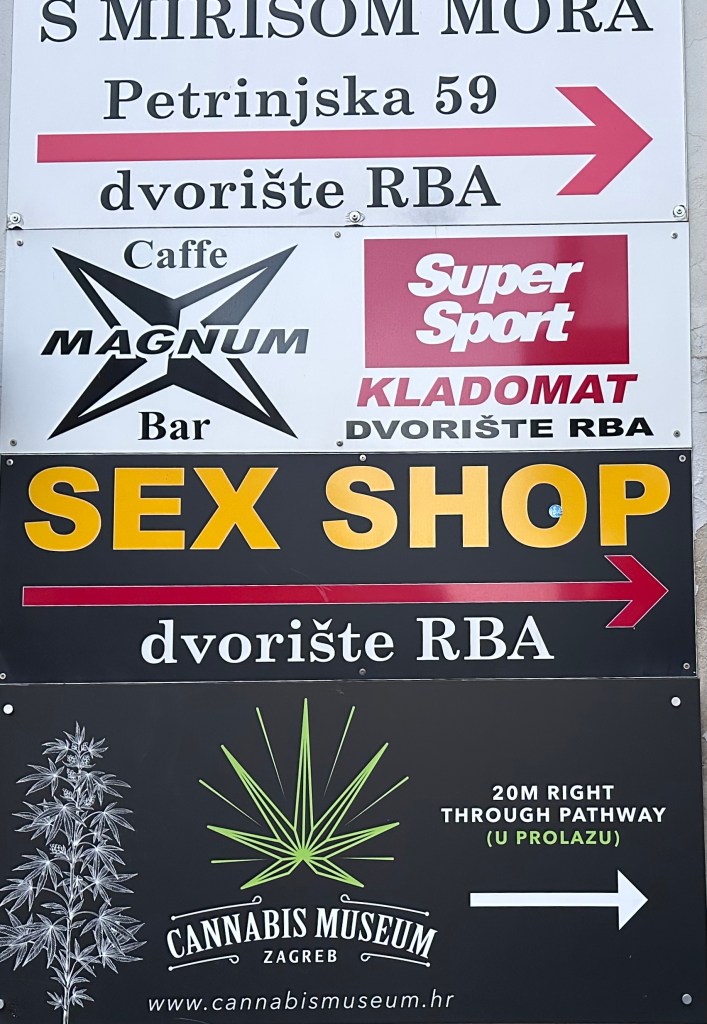
Zagreb had experienced an earthquake in 2020, so some of the buildings were still being repaired. Still, as you can see, the city offers something for everyone. I can’t offer commentary on these attractions, because I didn’t sample any of them.
What I CAN tell you is the Bornstein Winery is not to be missed. It was educational, delicious, and oh so much fun! Six of us visited there during our free time. Who knew that a Croatian immigrant took zinfandel vines to California many years ago?


There is a whole lot more I can say about Croatia, and the other countries on this fabulous trip. Maybe someday I will, but right now, it’s time to prepare for the next adventure. I hope you’ll come along!

 Destination NOW
An excellent job of summarizing an amazing experience! Have fun on your next adventure
LikeLike