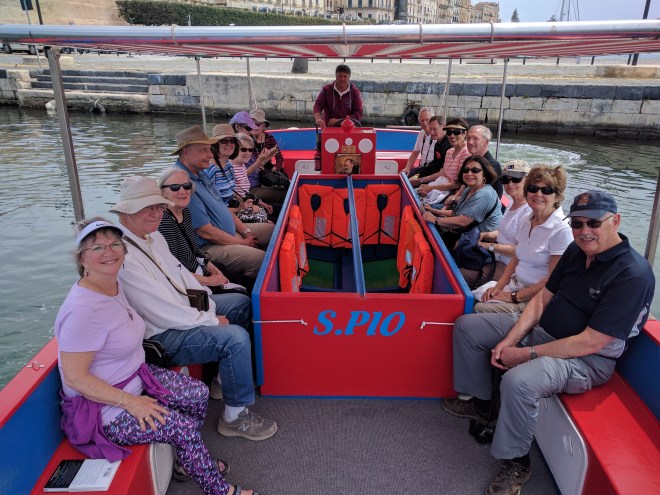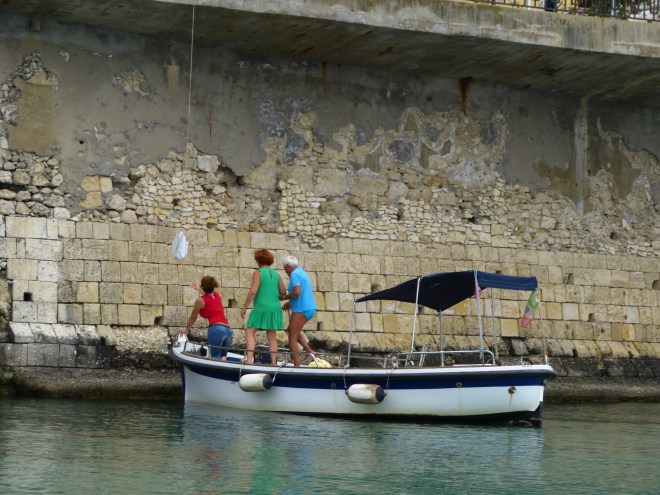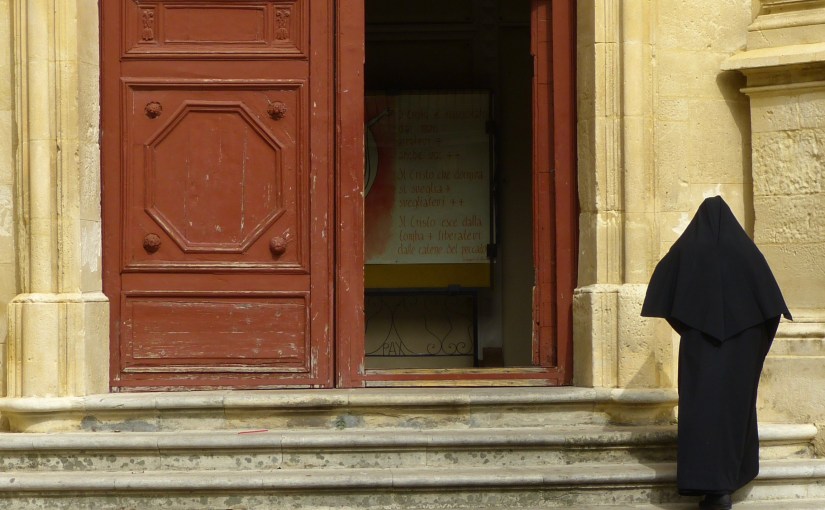
Ragusa

Full disclosure.  This is no longer coming to you “live”.  We have been home for a week.  My blogging just couldn’t keep pace with our activities.  We were BUSY!  And when we weren’t busy, we were recuperating from the busyness… and drinking…and eating…and drinking.

Speaking of recuperation, the good news is that our friends recovered in time to join us the evening before we left for Ragusa.  Daniel, our wonderful guide (We all love you, Daniel!) sent a doctor to the hotel in Palermo, then arranged for a driver to pick them up and bring them to our next lodging–the beautiful Agriturismo Berlingeri.  AND while they were in Palermo, he had them moved to a larger room so they could be more comfortable.  Pretty thoughtful!

Looking good after taking advantage of the Italian medical system!

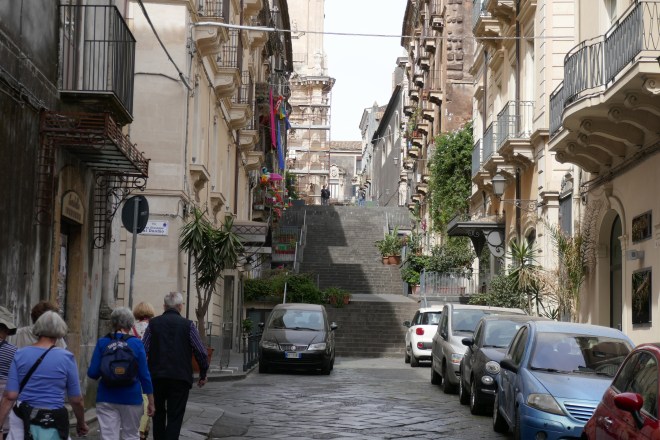
So, about Ragusa. It is actually TWO towns–lower and upper Ragusa.  After the earthquake in 1693, the majority of the population moved upward, but fortunately, some stayed behind to rebuild what is now Ragusa Ibla, the old town.

The two towns are connected by a LOOONG staircase. Graciela, our local guide, packed us onto a bus (and we were indeed packed) to the upper city so we could walk DOWN, which gave us ample opportunity to take in the panoramic views.

I didn’t count the steps, however it was NOT a strenuous stroll, especially given our frequent pauses–bathroom break, cold drinks, ogling everything.  Graciela’s interesting stories kept us entertained and engaged all the way down.

P1180370
See, not too bad.

Take a look at the underside of this balcony.  Graciela pointed out that the top figure on the left is asking the top figure on the right for more food and drink.  The figure on the left is responding with the universal hand signal for “go do something unmentionable to yourself.” Too bad the central figure is missing.  Wonder what HE would have had to contribute to this interaction.

Lesson learned: take time to look UP.  Cool things are EVERYWHERE!

P1180386.jpg
Is it just me, or are some of these characters in dire need of dental care?

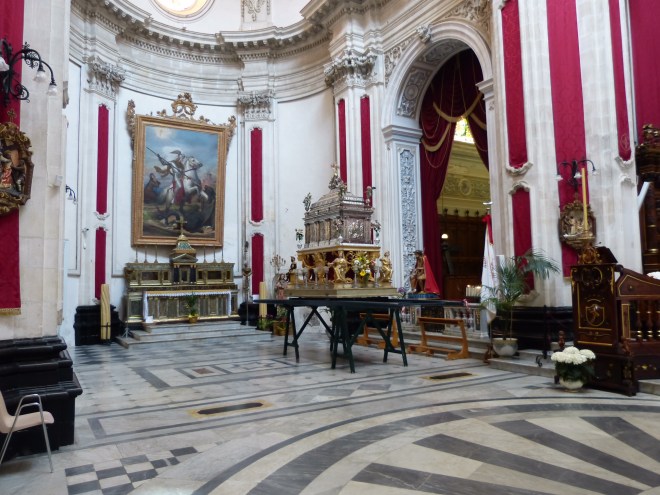
Our walk ended at the cathedral, where St. George plays a prominent role. Here’s HIS story.  Initially, St. George was portrayed as a Roman soldier, who saw the light and ended up slaying the dragon.  Graciela explained the dragon symbolized the pagans who were threatening the Christians.

P1180463

Sometime during the middle ages, St. George got a make-over, becoming a medieval knight.  This time the dragon was more specific; he represented the Muslims and Turks who were battling the Christians for control of the holy land.  THAT St. George is portrayed in the huge painting on the cathedral wall.  Nobody seemed bothered that George was killing dragons in two different centuries!

P1180388.JPG

I bet you’re wondering what that silver and gold box in the middle of the cathedral is all about.  Nope, it doesn’t hold the 10 Commandments and it isn’t a casket–but close.   It holds 32 relics!  Fingers, toes, pieces of the original cross–who knows?  We didn’t get the specifics.  One of our guides later commented “How many fingers and toes do you think the saints had?”  Let’s ponder that for a while, and commend the entrepreneurs of the middle ages.

After our tour ended, we had free time to enjoy this lovely little mountain town.

P1180342.JPG

Although there is a little trolley that can take you on a tour, we decided to walk off some of the great food and wine we had been consuming.  Good thing, because the next day we headed off to a farm for a “Day in the Life” of a Sicilian family.

All OAT trips include a home visit or some kind of cultural exchange, and this trip was no exception.  Here are Maria and her son John Baptiste, welcoming us to the family farm.  John Baptiste, an archaeologist by training, is restoring the farm, which was his mother’s childhood home.  P1180424.jpg

I know this looks like it could be an instrument of torture from the Spanish Inquisition, but it is actually the original wine press.

P1180442.jpg

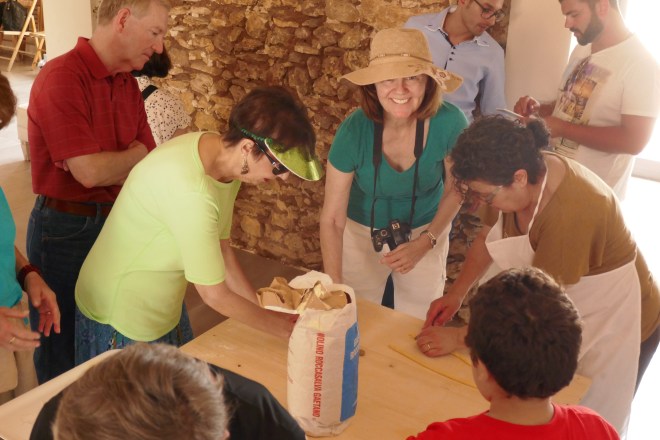
We didn’t make wine, but we DID help with the cooking, sorta the way my little 3 and 4 year old nieces help with cooking.  The woman in the brown shirt and white apron?  If it weren’t for her, the result would have been VERY different!

P1010478.JPG

The food was magnificent!  We could even tell ourselves that WE did some of the cooking.

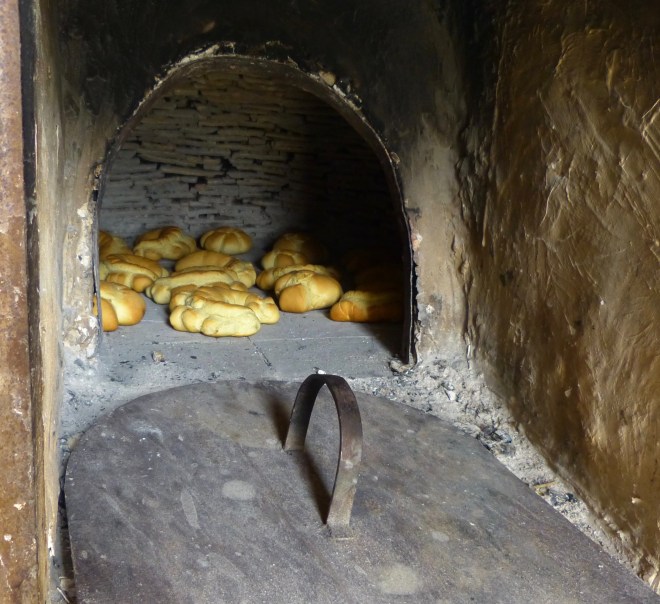
Check out the oven.  Doesn’t get more authentic than this.

P1180451.jpg

So what else would you need to know if you are going to visit Ragusa?  Well, the hotel we stayed at–the San Giorgio Palace Hotel– is ideally located.  It is at the edge of town, carved into the hillside, and is within walking distance of everything — all of the restaurants, shops, cathedral and park.  There is a nice patio on the 4th floor, where you can sip a glass of wine and watch the sun go down over the hillside.  It was quite wonderful.

Next stop–Catania.


Oh, To Be Rich in Ancient Sicily! 

No one knows for sure who lived in the Villa Romana del Casale.  Some think it might have been the country home of Roman Emperor Marcus Aurelius; others theorize a provincial governor lived and conducted administrative duties here.

It was constructed in the middle of the 4th century AD, and owes its remarkable preservation to the mudslide that covered the villa in the 12th century.  The building remained hidden until the 1950’s excavations.

Katya, our local expert, explained that we were going to view some of the finest examples of Roman mosaics in all of Europe, with scenes ranging from Homeric escapades to depictions of daily life, at this UNESCO World Heritage Site.

Katya was excellent, and that was true of all the local guides on our trip.  We learned that our main guide, Daniel, had a choice of 4 or 5 different local guides for each site, and I have to say, he chose very well. Katya was interesting and so informative, a delight to listen to.

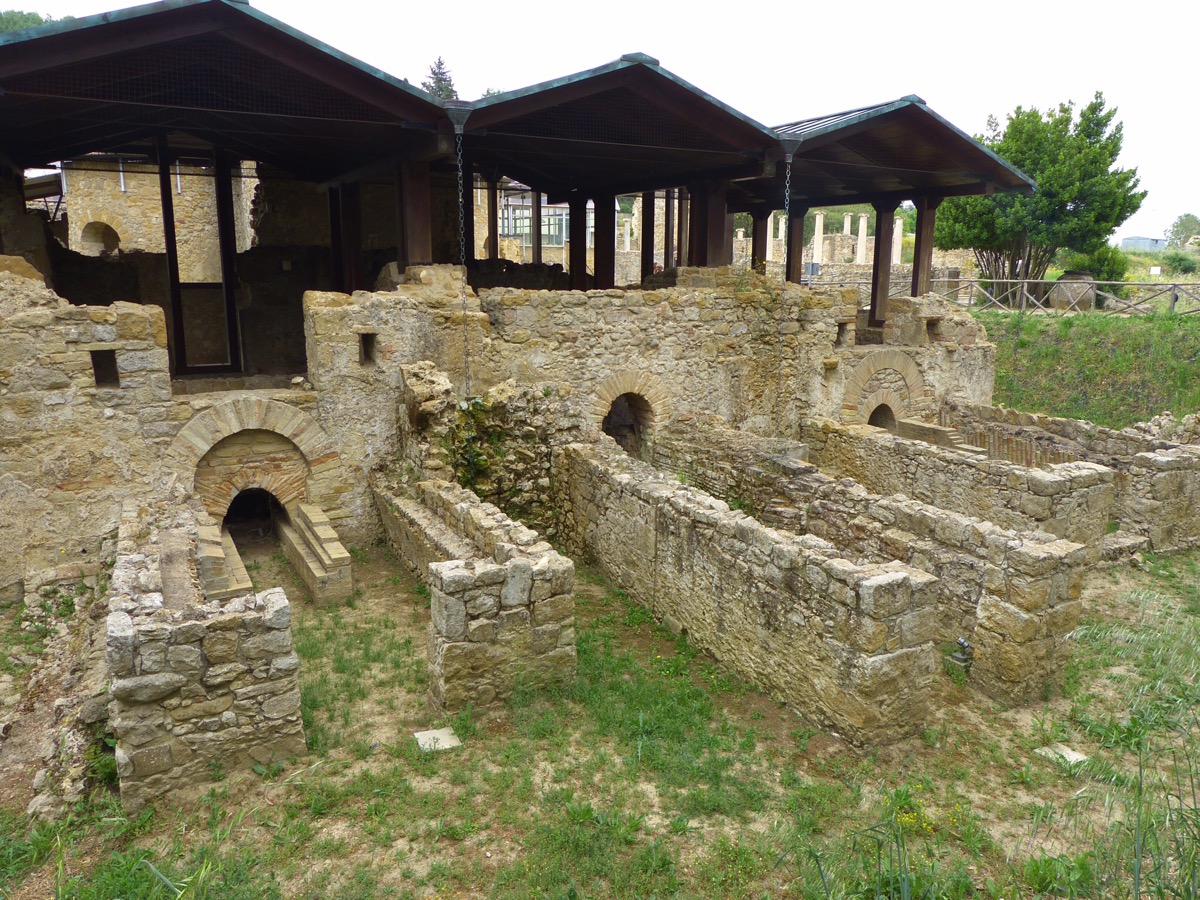
We began our tour by the aqueduct, which was the source of water for the baths–starting with the hot bath, and ending with the frigidarium, the cold bath.

The slaves kept the fires going in these ovens so that the baths were at the proper temperature.
I wasn’t taking notes, so don’t hold me to it, but I THINK this was the frigidarium.  Or it was something else.  Whatever.  It was impressive.


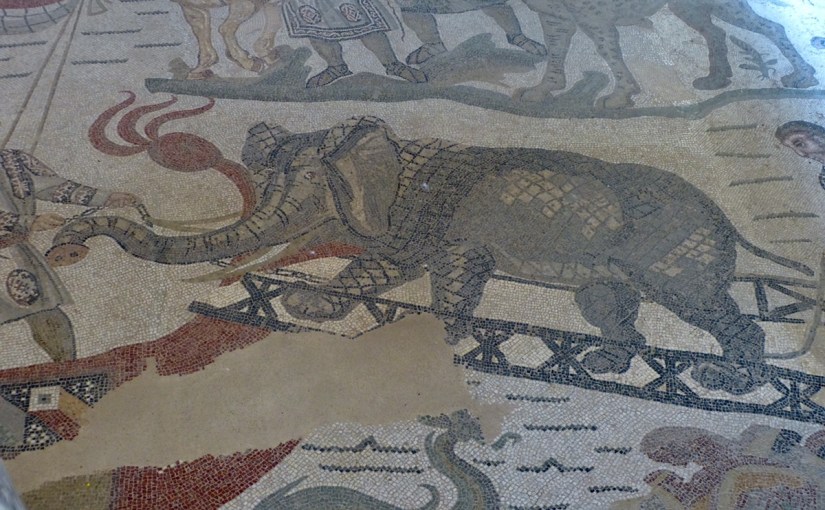
The main attraction of the villa is the floor mosaics, and they are absolutely magnificent.

Probably the most famous room, the 10  maidens are exercising, wearing the ancient version of bikinis.  And look, someone appears to have won the swimsuit competition, earning her a crown and a palm leaf to wave around.


Not quite so famous, but certainly as intriguing were these: one  example  of the many scenes of a hunt.

This woman’s clothing indicates she was from the eastern empire, possibly Muslim.  There is another mosaic of a similarly attired woman, being carried off by soldiers.   It isn’t hard to imagine what that mosaic was illustrating.

No commentary necessary for this one.


I particularly liked the depiction of the theater.  Looks like the legend of the Cyclops was being featured.

Those white squares on the mosaic–I thought someone had been littering, but no.  They were placed there intentionally to absorb moisture.


Here’s a close up of Cyclops.  I really DID like that mosaic!  Isn’t it amazing what the craftsmen were able to do with little colored stones?

One last look at the countryside and we’ll be on our way.  Our timing was fantastic.  We were leaving, just as hoards of tourists were arriving!

On the Road to Piazza Armerina 


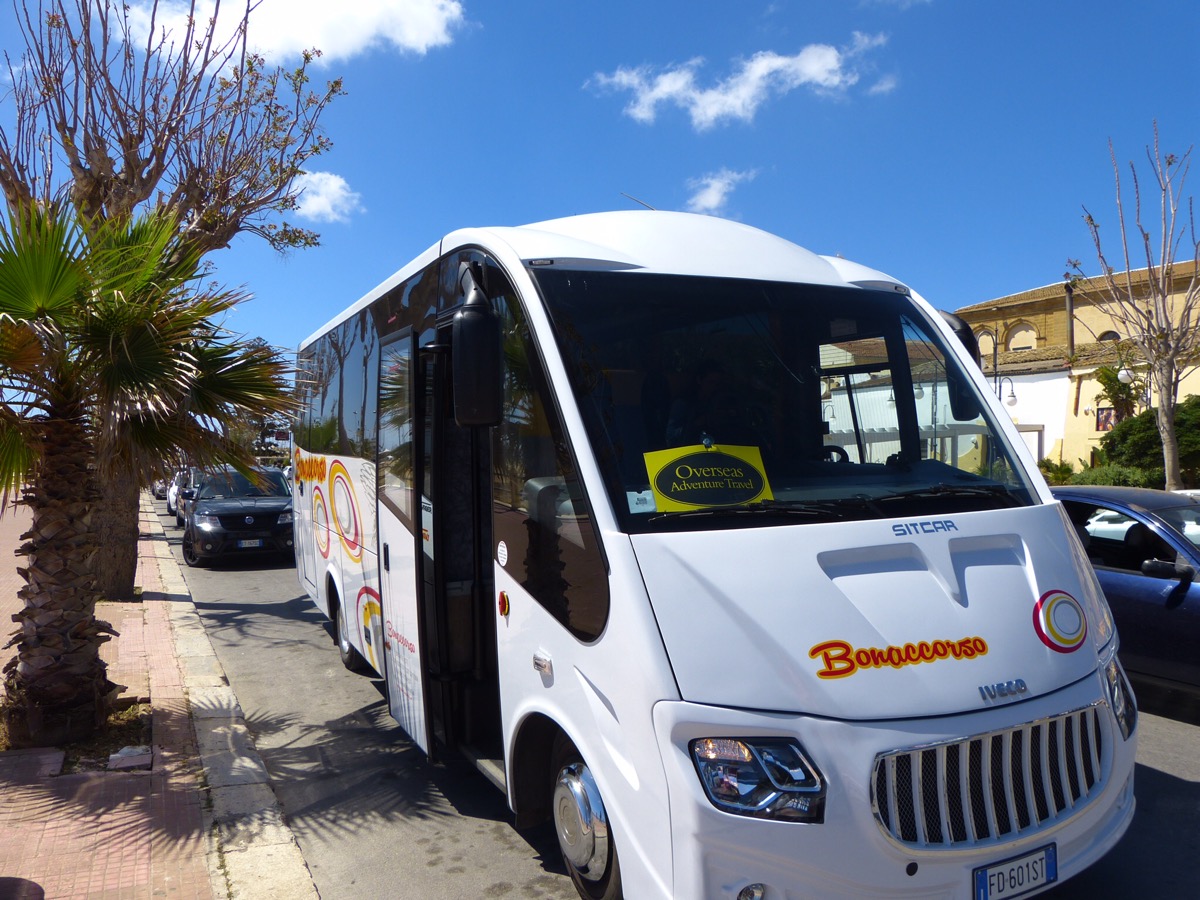
I know.  You are all just itchin’ to find out how we are getting from point A to point B on this island.  Well, itch no more, because not only will I  TELL you, I’m also giving you the visual.  We have been traveling in comfort on this lovely bus.  There are only 16 of us, plus our guide, so we have LOTS of room to to spread out.  

The view from these huge windows has been amazing.  We definitely chose the right time to visit Sicily–the wild flowers are blooming, everything is lush and green, and the temperature has been perfect! 

We are all so grateful that Marco, our bus driver,  is manouvering along these winding, VERY narrow roads, up and down the hillsides.   All we had to do is sit back, relax and take it all in.  

Once again, we will be time traveling, all the way back to Ancient Greece.  I don’t know why, but I just got a flash back to Mr. Peabody and his boy, Sherman, of the Rocky and Bullwinkle Show.  (“Every dog should have a boy”. God, I loved that show! ) How sad that so much of my knowledge of history, at least what stuck,  came from cartoons and Walt Disney!  But I digress. 

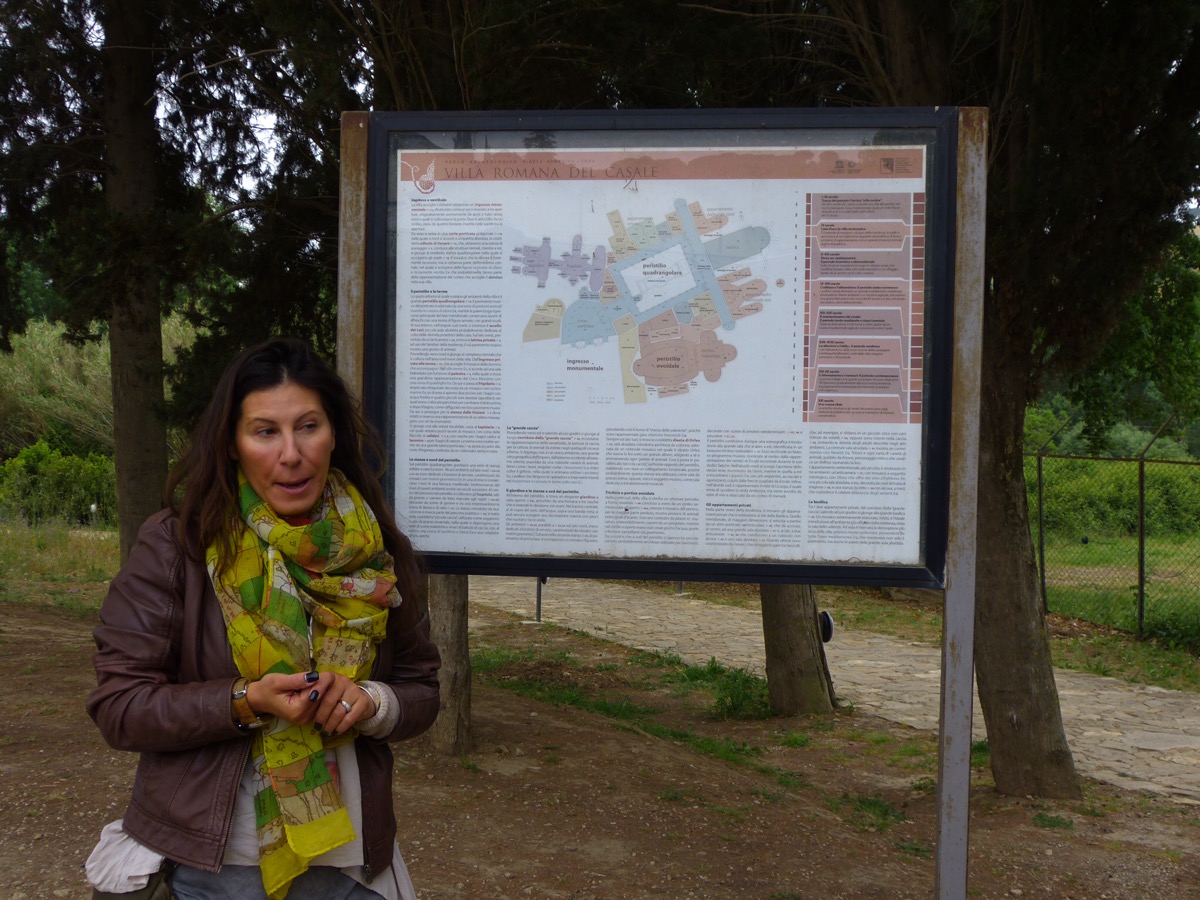
When we arrived at the Valley of the Temples, we were greeted by another Marco, our guide for the site.  An archaeologist,  he came equipped with maps, diagrams, and an abundance of enthusiasm.  

Sadly, the site had been picked clean by those successive waves of conquerors, so it was difficult to extract much information about the lifestyle of the original Greek inhabitants of Akragas (as the area was once known) from artifacts, bones, shards, etc.  

Fortunately, though, eight Greek temples remain at this UNESCO site, all built between 510 and 430 BC.  The best preserved temple, called “Concordia” by the non-archaeologists, (because the archaeologists didn’t have sufficient info to determine the correct names of the temples) was saved from being scavenged by the locals because it was transformed into a church by the Normans.  Walls were built between the pillars, and the entrance was changed, then at some point (and yeah, I forgot what Marco said.  Sorry!) it was all changed back.


From the valley, you can see the modern city of Agrigento, just beyond Greek temple F (the archaeologists’ name for Concordia. ) 

What Marco COULD tell us was that these arches were once the entrance to Greek tombs, that were later repurposed by the Normans for shelter, with the actual grave used as a manger for their animals.  The Greeks dug shallow graves — only about a foot and a half deep– and covered the hole with rocks.  Who knows what the Norman’s did with the remains they found when they moved those rocks! 


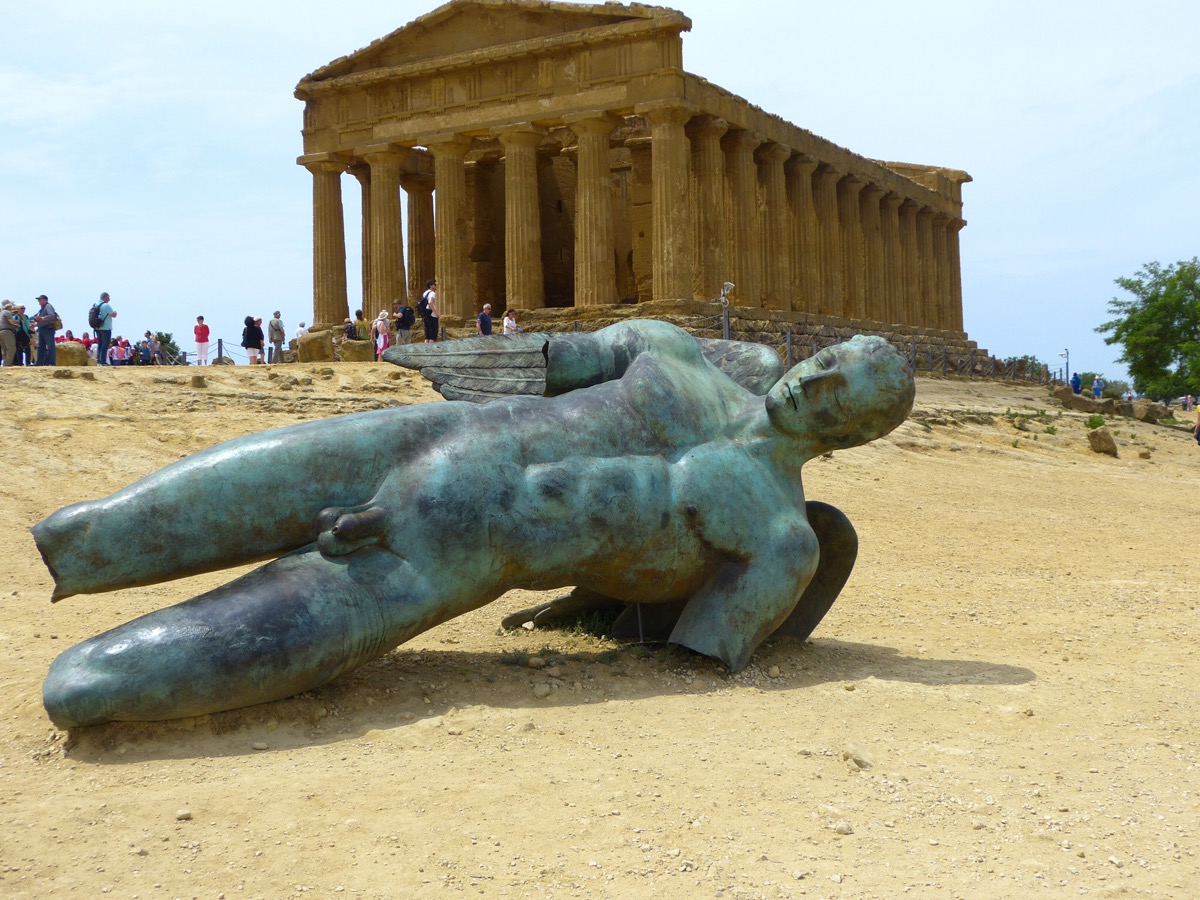
My favorite part of the site, however, was this incredible sculpture of Icarus, who fell from the skies because he flew too close to the sun.  Clearly, HE hadn’t been under water for 2,000 years!  Also clear was that he was a modern addition to the site.


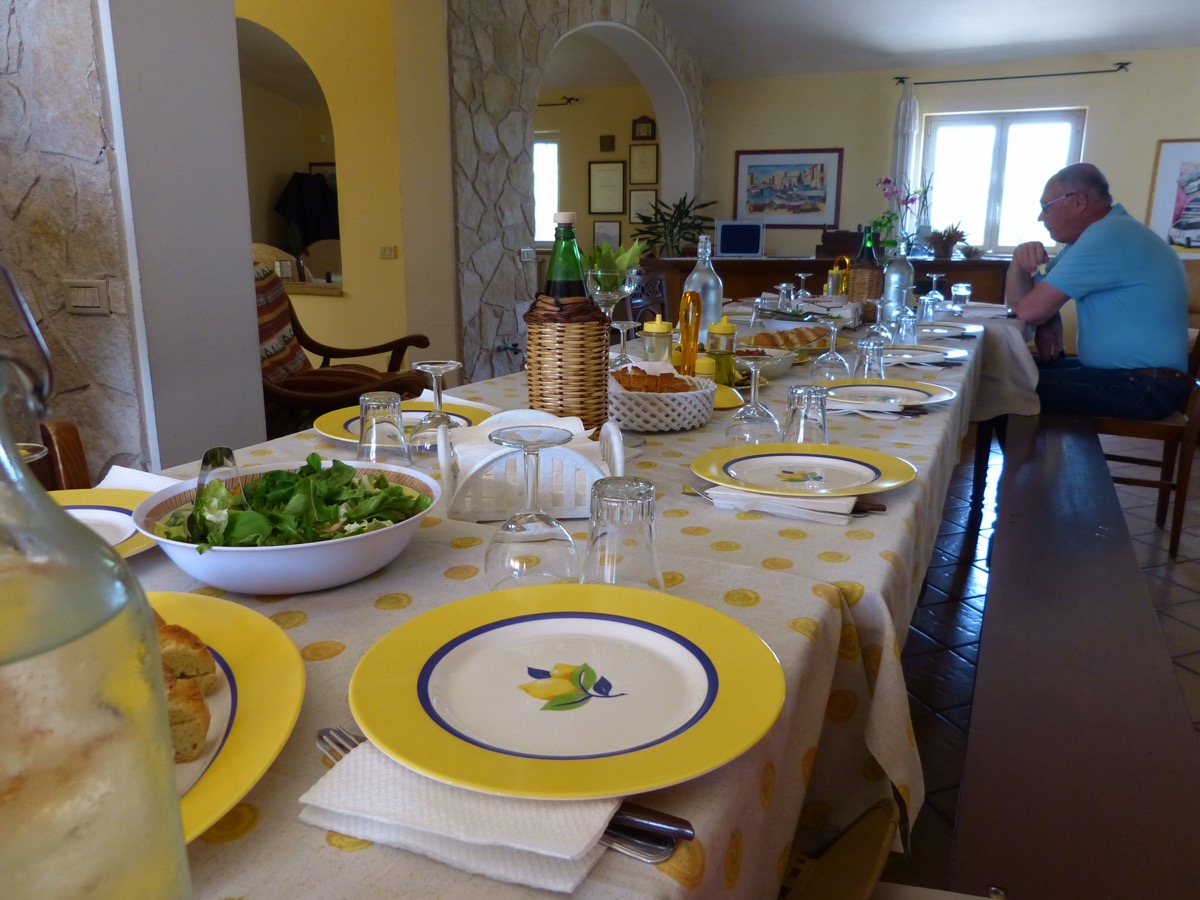
After our tour, it was time for lunch at this lovely private home.  


You’d think we would have figured it out by now.  What we THOUGHT was the lunch, was actually just the antipasto, followed by several other courses.  We have concluded that we need to get much better at pacing ourselves!  But if the food wasn’t enough, there was yet another surprise in store for us:  The owner’s grandfather had been a renown craftsman, creating donkey carts that were truly works of art.  

The paintings on the sides of the carts were of historical events, like this one depicting the assassination of Julius Caesar.


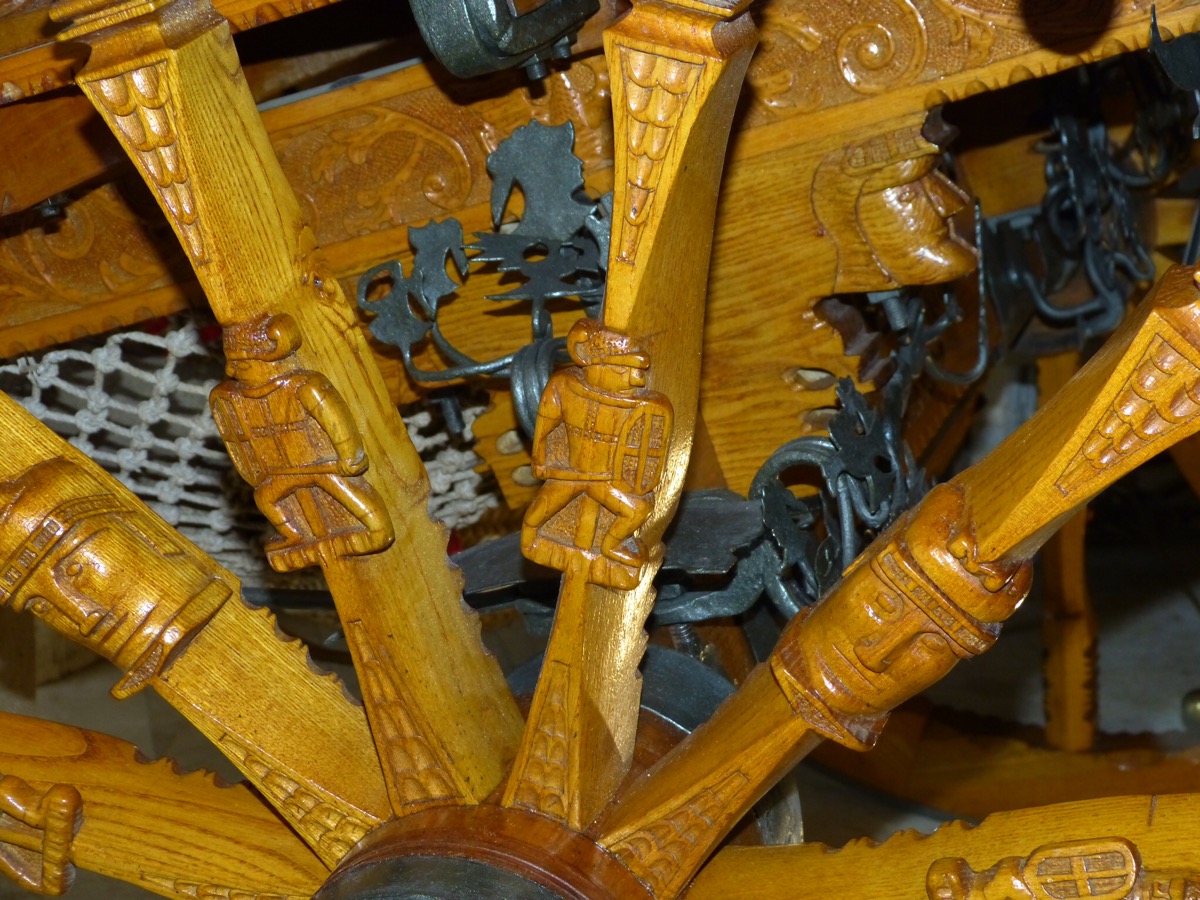
Even the spokes on the wheels were intricately carved.  


Here’s our hostess, who also functioned as guide, cook and server.

These magical interludes are a big reason that Mike and I travel with OAT.  We NEVER would have been able to arrange for some of these fascinating encounters on our own!  

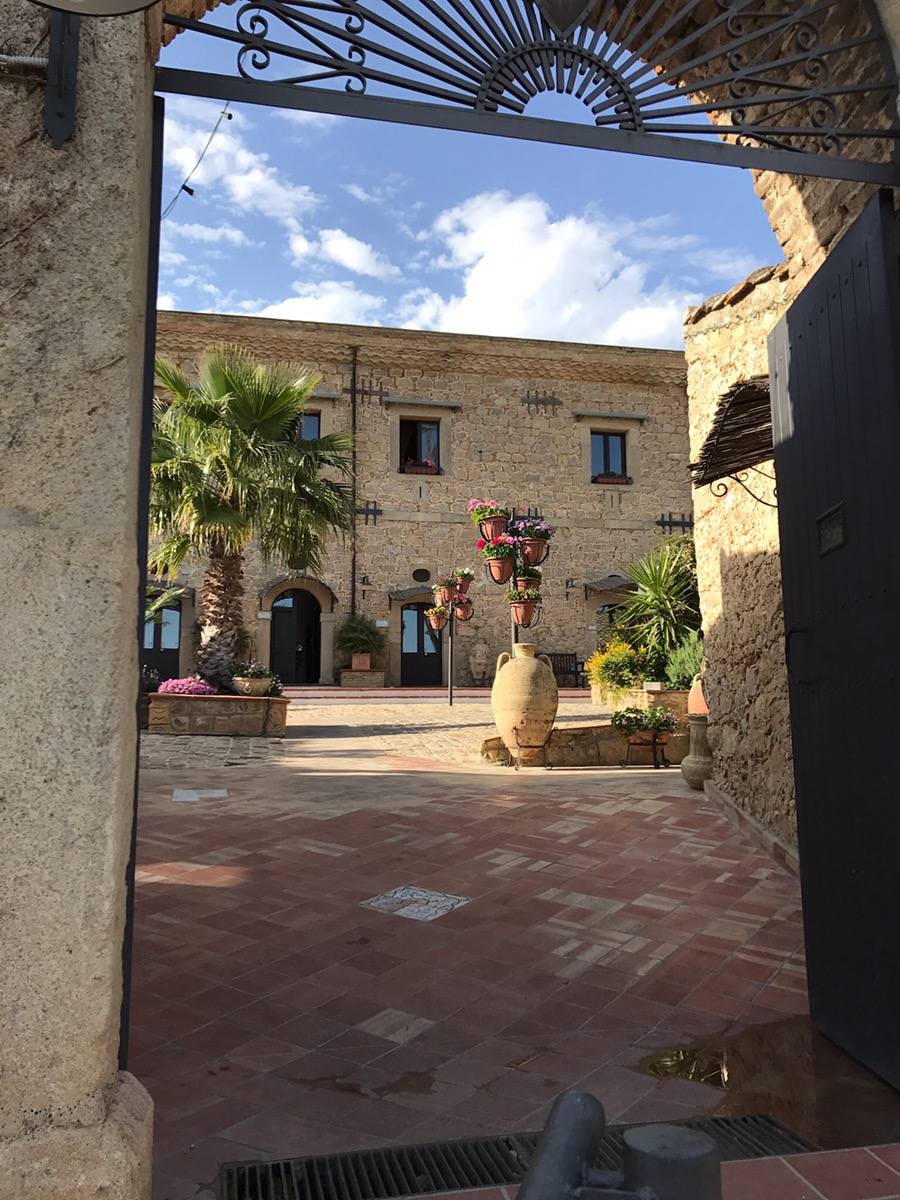
By now, we were completely sated with food and culture, ready for our one night stay at Vecchia Masseria in Piazza Amerina.  

And yes, it really WAS that beautiful.  Another agritourismo, in a pastoral setting with delicious,  locally sourced food.  Life is good.  

Phoenicians, Salt and The Port of God

What an island!  Strategically placed between Africa and Europe, the east and the west, Sicily was home to successive waves of conquerors, and for our second day, we visited one of the conquering heroes’ settlements.  The Phoenicians, originally from the area that is now Lebanon, were among the first waves.

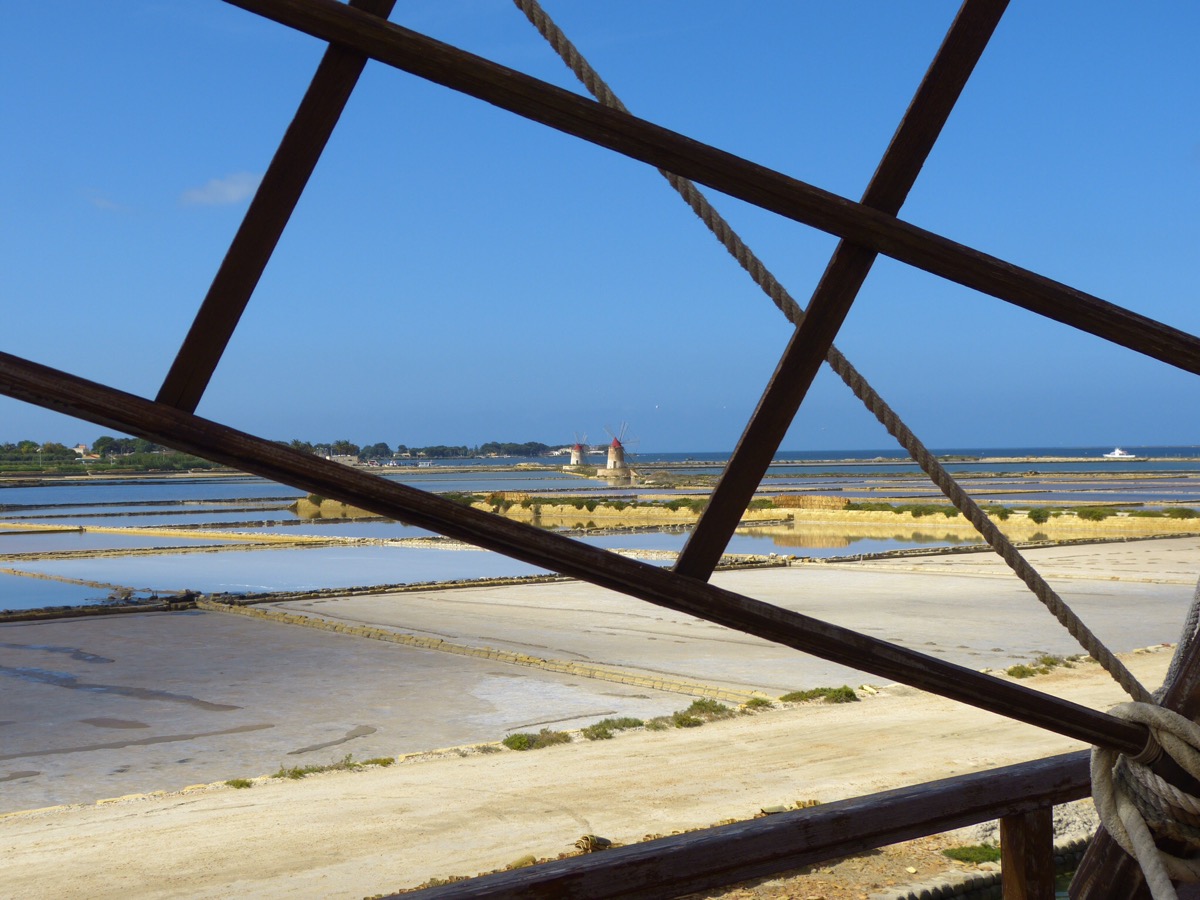
But first,  we took a close look at the commodity that gave us the word “salary”.  Sal (salt) was once used by the Romans as currency.  Unlike other parts of the world, where salt is mined, the salt here is extracted from the sea.  The water evaporates from shallow beds, leaving behind a substance that is low in sodium, high in potassium and magnesium.  The Trapani salt is practically a health food!  The sea, the wind, the sun all work together, with a little help from human workers, to create this miracle ingredient.  Doesn’t get more natural than that.


After learning more than I ever thought possible about salt, we boarded a boat for the little island of Mothya, where almost 3000 years ago,  Phoenicians built a fortress and a settlement.


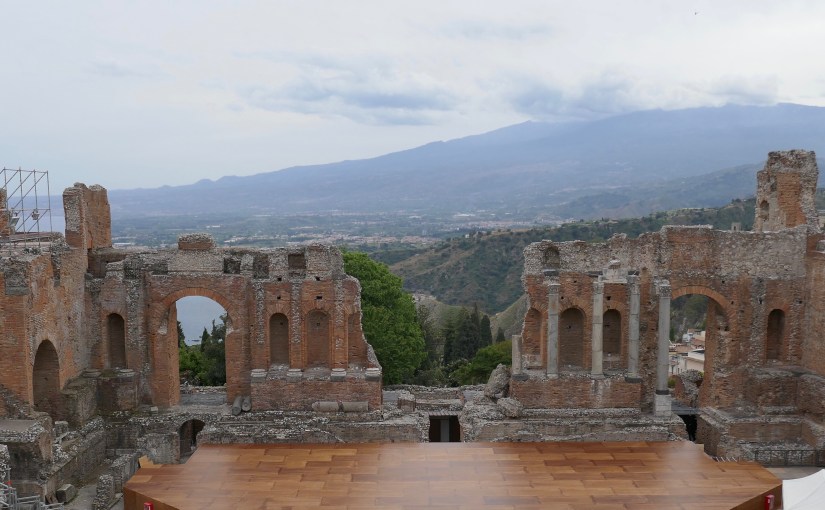
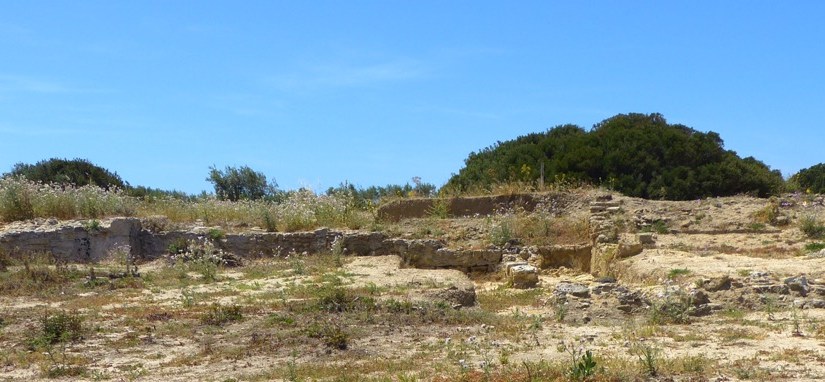
There’s not much left on Mothya, just some walls, (header photo) and a museum that once was the home of Giuseppe Whittaker.  Whittaker, in fact, owned the entire island.  Fortunately, he was interested in archaeology and history, left his home and property to the public.

The salt museum contained this rendition of what the settlement was imagined to be.


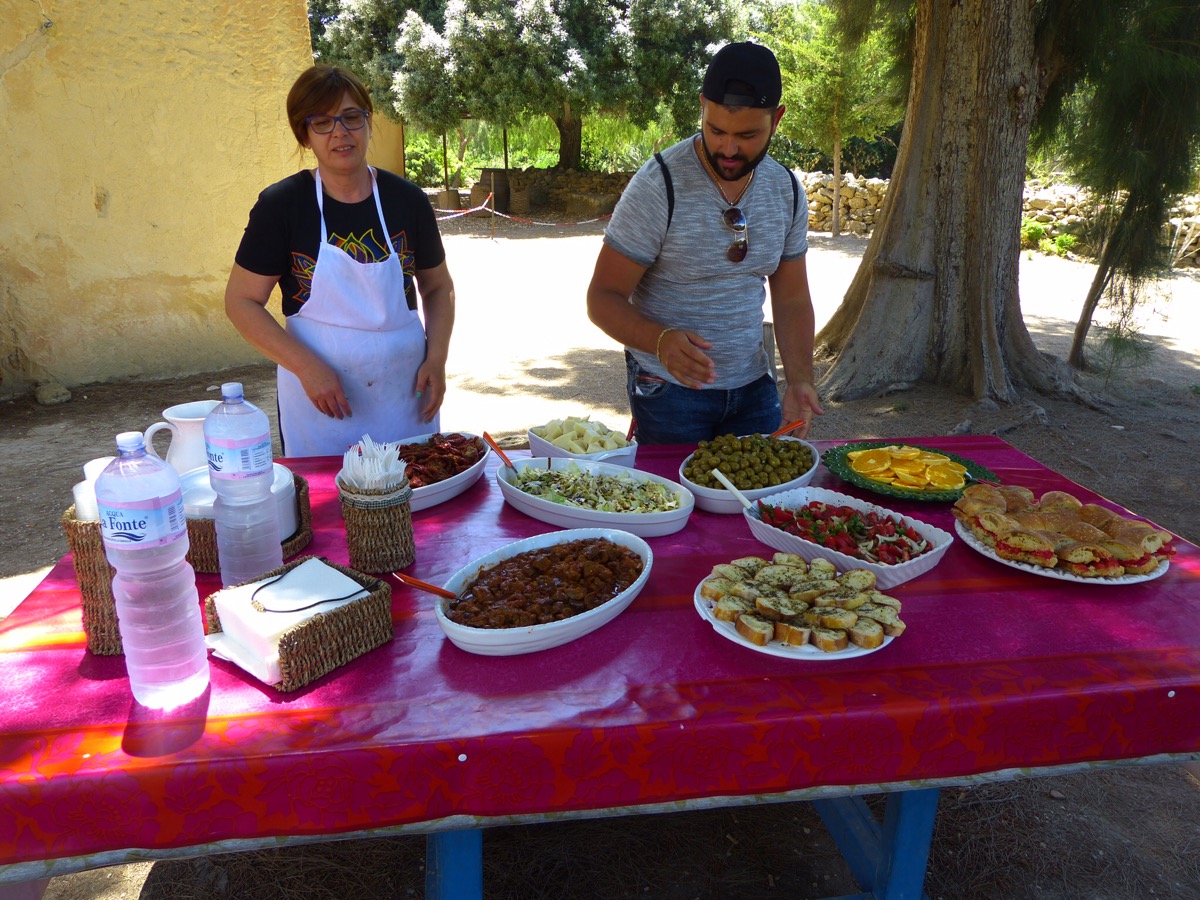
It’s not a big island; we were able to walk from one end to the other, working up an appetite for this amazing feast!


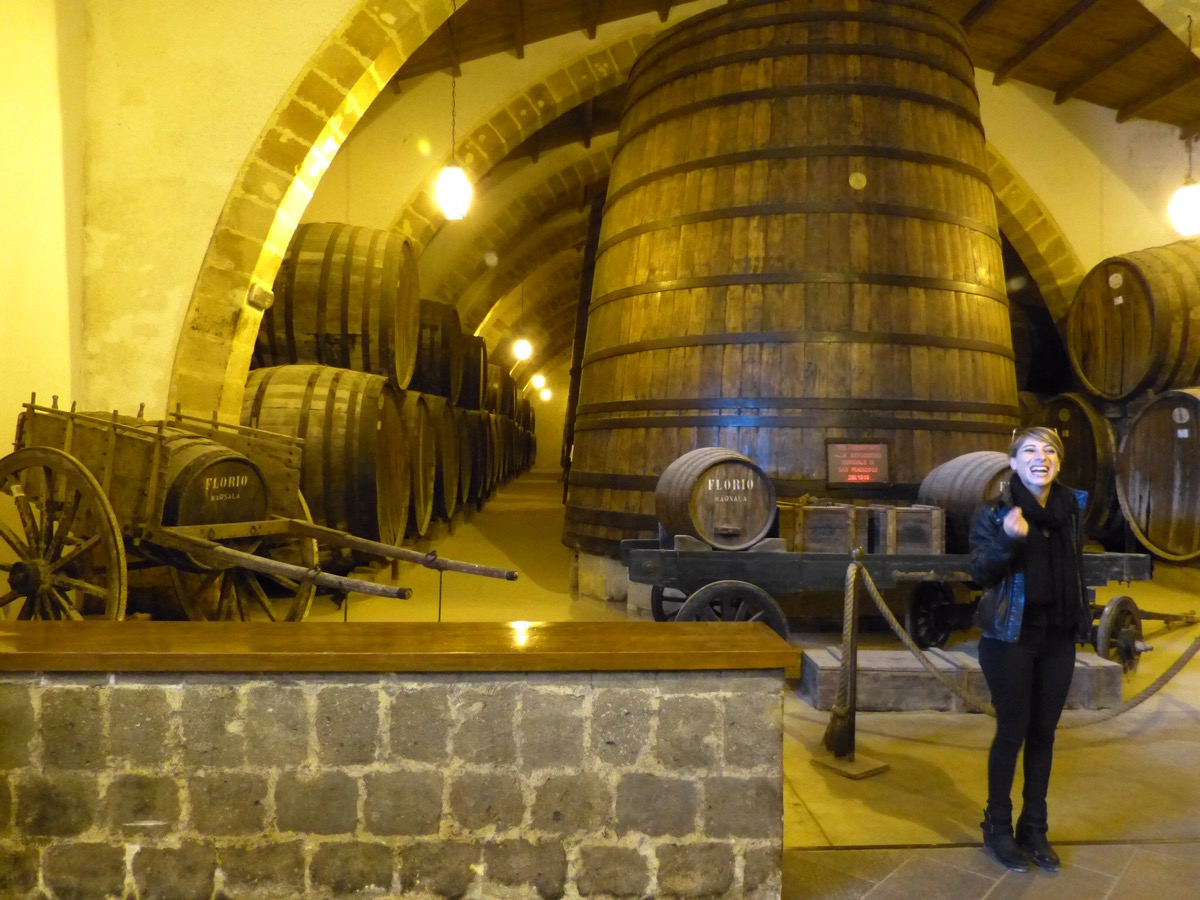
Our last stop was at the place the Arabs called “Marsa Allah”, the Port of God, now known as Marsala, for wine tasting.   Check  out the size of those barrels.  That’s a whole lot of Chicken Marsala!


It is rare indeed that my wine glass is still full after a wine tasting.  In fact, I would say that this was a first.  To me, Marsala is way too sweet.  Okay for cooking, but definitely not my choice for drinking.

Next stop, the Valley of the Temples.

Palermo, Sicily

Once again,  my best laid plans have gone a bit astray.  Somehow I managed to come down with a raging cold on the day we departed for Sicily.  That undoubtedly earned me the hotly contested title of the flight’s Most Hated Passenger as I coughed my way across the Atlantic Ocean.

Ah well, one of the clear advantages of being older is you have learned to roll with whatever comes your way.  Although, truth be told, there wasn’t much rolling, or any other kind of movement going on for the first two days we were in Palermo.  I pretty much took to my bed, being unwilling to share whatever I had acquired with my fellow travelers.   One definite advantage to group travel is Mike was able to enjoy sightseeing with the others while I rested up.

By day 3 (Saturday), I was able to venture forth, so we decided to strike out on our own.


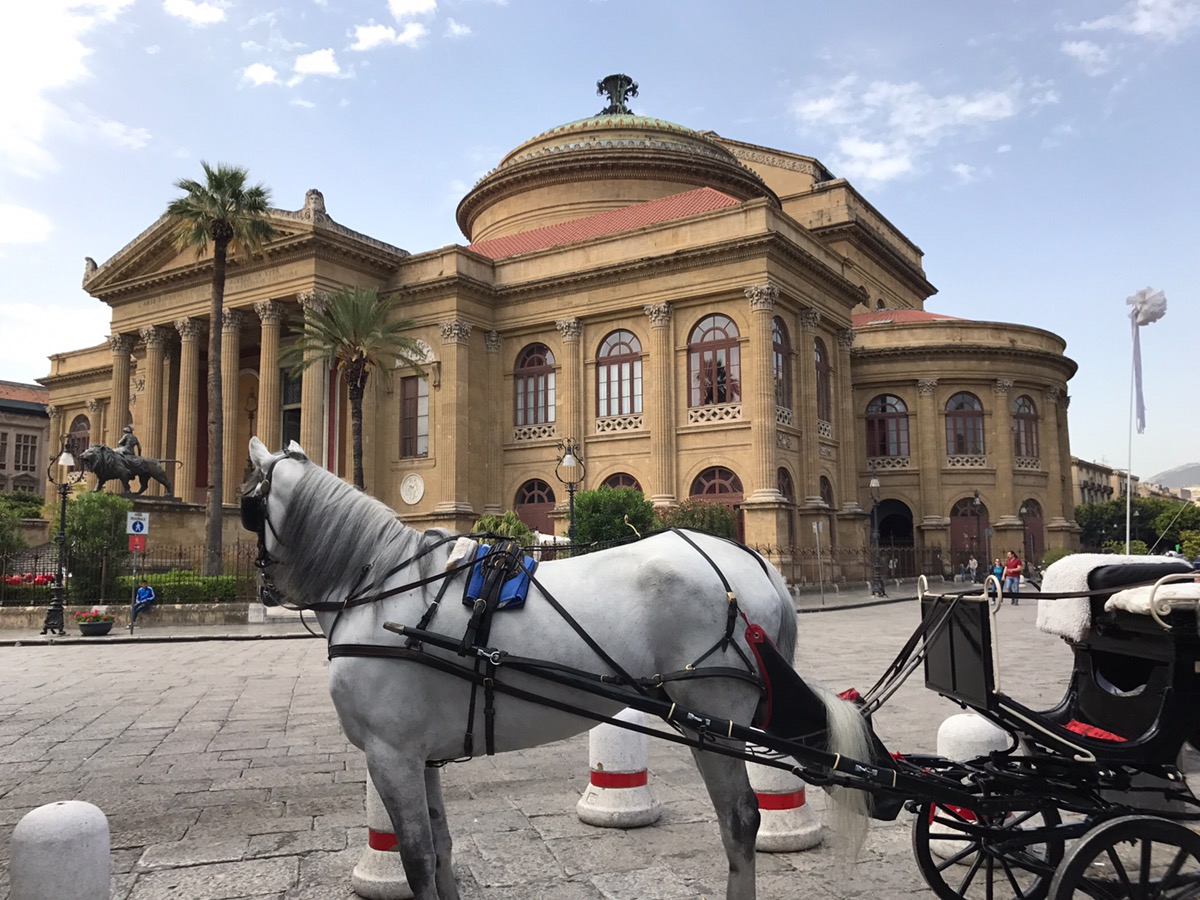
Right by the opera house, we hopped aboard the free trolley, to one buggy driver’s disappointment.  Pretty amazing that Palermo offers free transportation around the city to everyone!

Our first stop was what is now known as the Norman Castle, which started out as an Arab fortress.  In the 1100’s it became King Roger 2’s humble abode.  King Roger 2 was quite an impressive guy.  This Norman ruler managed to pull off what current world leaders haven’t been able to accomplish: Christians, Jews and Muslims coexisted in harmony during his reign, melding together the best of their cultures.

The geometric designs in the ceiling of his bedroom have a definite Islamic flavor.  This is one small section of a very elaborate design.  I wonder if those gold mosaics glow in they dark.  Does the beast in the center remind you of Maurice Sendak’s book ” Where the Wild Things Are”?   I guess that’s one way to prevent your kids from crawling into bed with you.  Now why didn’t WE think of that?

To get to that royal apartment, you had to climb up several massive staircases.  I counted 100 steps!    No gym membership required for Roger.   But he didn’t have to travel far for church services.  The Palatine Chapel is on the floor below, so he could roll out of bed and be at mass in less time than it took to place his crown on his head.  Like the Royal Apartment, the chapel  is shiny and bright, with Christian and Muslim motifs covering every surface.


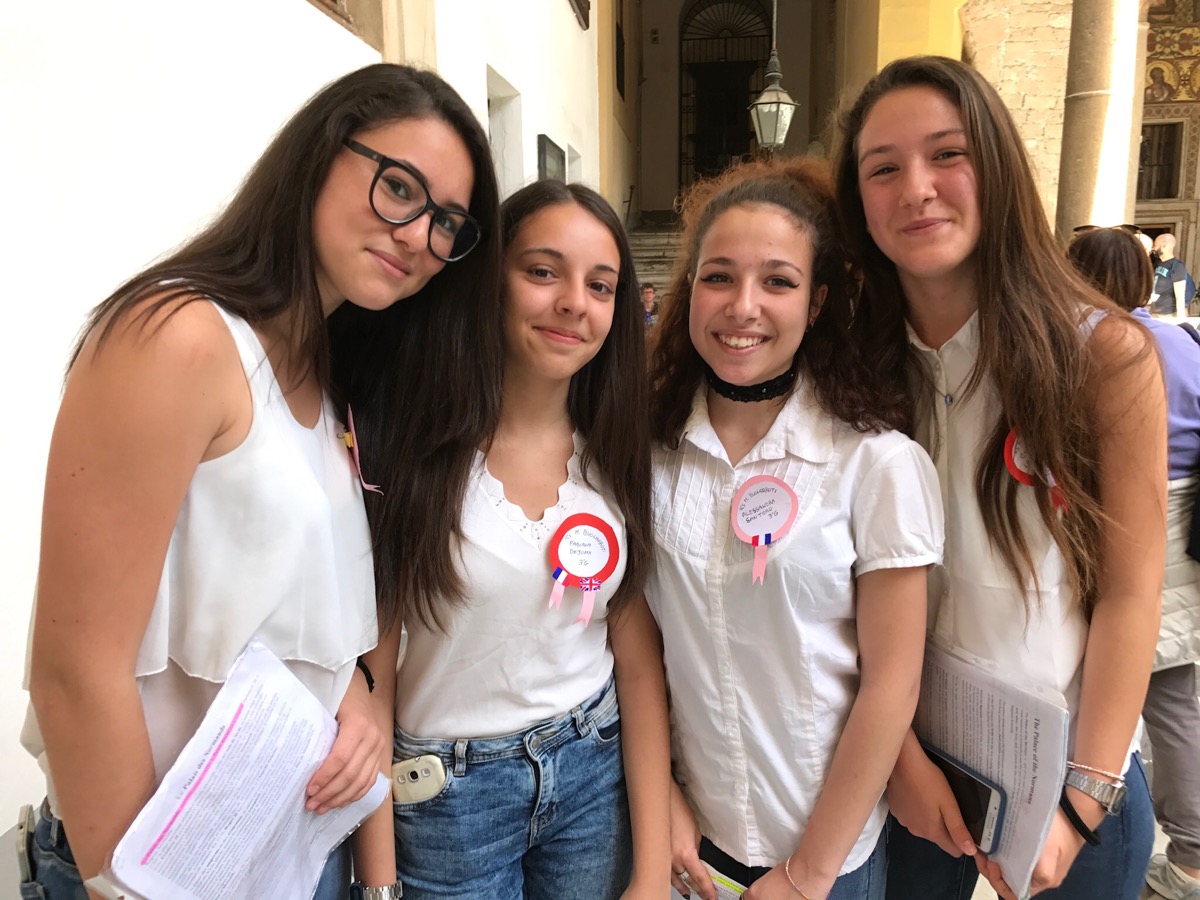
At the start of our visit, we were approached by a woman who asked if we would like a free guided tour in English.  Her students, these four young girls, were eager to practice their English on us and earn extra credit.   What a nice idea!

The building has been remodeled multiple times over the years.  The courtyard outside the chapel, for example, was redecorated around 1600.


Pay close attention to the portraits on the bottom.  They form a border around the perimeter of the courtyard.  These were notable saints…every last one of them male. So, either there were no women saints deemed worthy of a spot on the wall OR women’s virtue was so taken for granted that it didn’t seem they had to put any effort into attaining sainthood.  So why make a big deal about it?  You decide which explanation rings true to you.
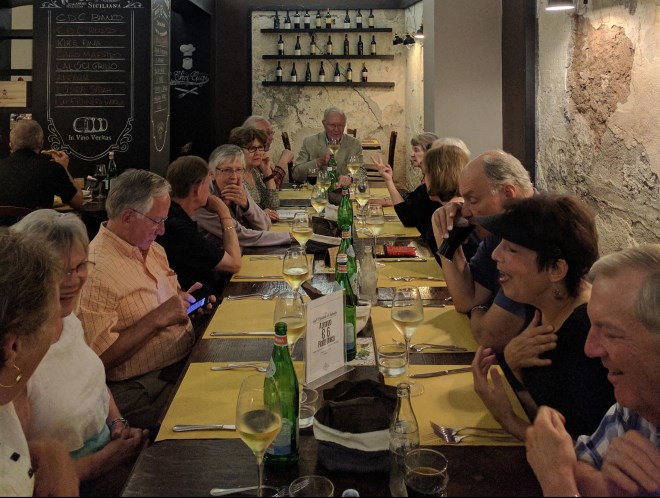
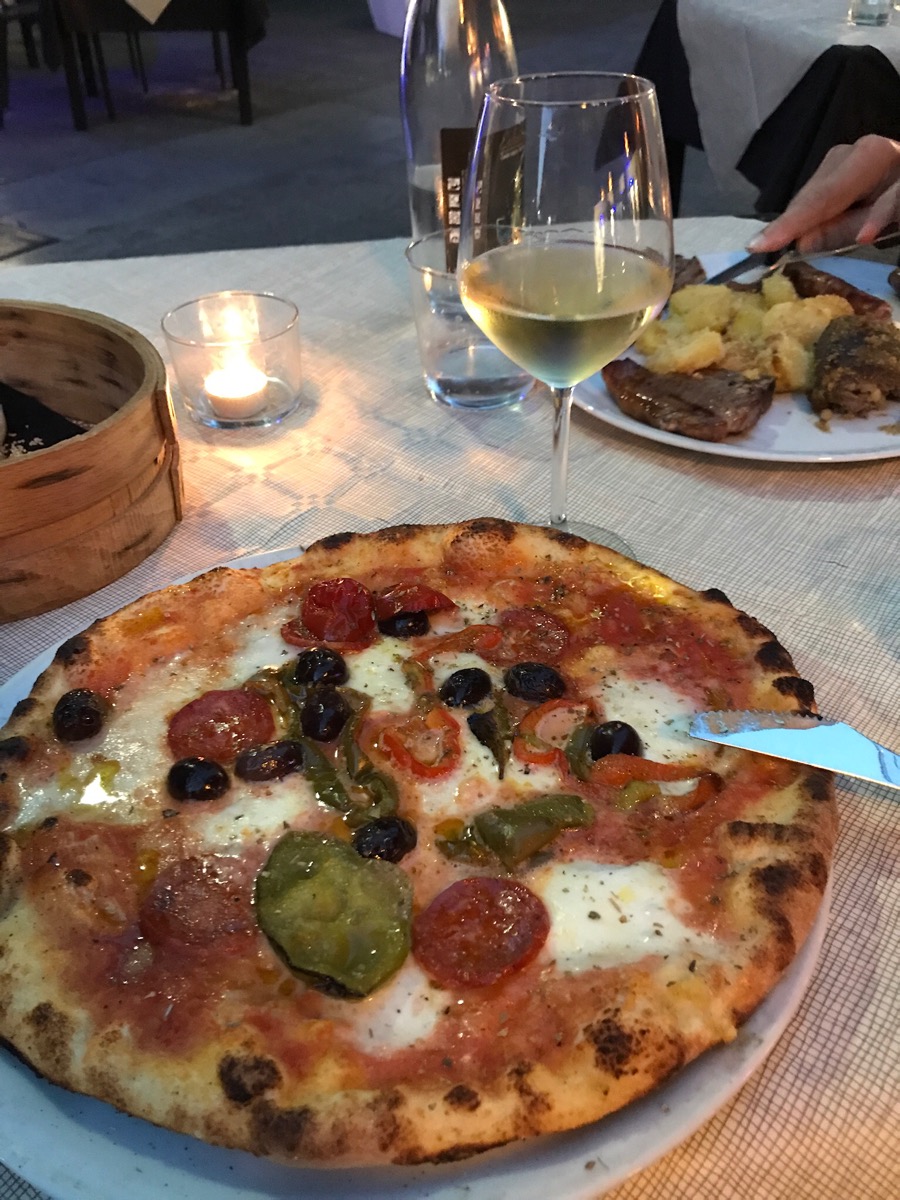
Rather than go into culture overload, we decided not to overdo it, so headed back to rest up before dinner at Vino y Pomadoro, a wonderful restaurant close to our hotel. The menu had English “subtitles” so I was very relieved. I have this fear that I would accidentally order something that would horrify me, like pizza with rabbit and horseradish. Here’s what I got.

Next stop,  Mazara.

Sicilian Celebration

Mike and I stopped giving each other “stuff” years ago.  We already have more than enough future yard sale items.  No more birthday, anniversary, Valentine’s, Christmas or Groundhog’s Day presents for us. Instead, we mark life’s milestones by making memories, mostly through traveling.  Refusing to succumb to the tyranny of the calendar, we are free to celebrate whatever we want, whenever we want.  If we happen to be traveling during an anniversary or birthday month, well then, that’s just a bonus.  THIS year is one of those bonus years.

We will be in Sicily during May, our anniversary month,  hoisting our glasses to toast 41 years of wedded bliss.  Okay, full disclosure.  Those years haven’t ALL been blissful (my sisters would add ” especially for poor Mike” ) but on the whole, it’s been pretty darn great!

We will be embarking on an OAT (Overseas Adventure Travel) trip with our good friends, Shirley and Owen.  Two years ago we spent  two weeks wandering through Tuscany and the Amalfi coast with OAT’s sister company, Grand Circle.  They had never been on an organized tour before, but had such a wonderful time, it was not difficult to persuade them to come along again. What’s especially exciting is that Shirley’s grandfather hails from a small village two hours from Palermo.  She and Owen plan to make their way to the village on one of our “free” days.  

This is what our OAT itinerary looks like.  As you can see, we are covering quite a lot of ground.

We will be staying for three nights in four of the cities: Palermo, Mazara, Ragusa and Catania, with a single night in Piazza Armerina.  At the end of the OAT tour, the four of us will head to Malta.  From Catania, we will fly to Valetta and will use that as our base during our five days in Malta.  

As usual, I’ve been learning the history of the places we’ll be visiting, and I have to tell you, theose poor inhabitants of Sicily did not have an easy time of it.  Here’s the Cliff’s Note version:  There was a lot of fighting and conquering going on–with Greeks, Romans, Carthaginians, Arabs, Normans, and Spaniards taking turns raping, pillaging, plundering and selling inhabitants into slavery.   Sicily isn’t at the bottom of “the boot” for nothing.  It sure got kicked around a lot!

Augustus, Hannibal, Constantine, Archimedes, and several Williams, Charles and Fredericks all had starring roles in Sicily’s narrative.  (Don’t you just hate it when the rulers all have the same name and you need to remember their numbers?  At least for the Williams there was William the Bad and William the Good.)  Throw in a couple of popes, an emperor or two, some knights plus a couple of earthquakes and an active volcano and you are guaranteed some interesting stories with even better ruins.

What fascinates me  more than the political history is the mythology.  Unlike the kings, whose moms sorely lacked imagination when it came time to name their offspring, the mythological figures have double names:  Zeus and Jupiter, Ulysses and Odysseus, Venus and Aphrodite.  So confusing to an already confused American, but that’s what happens when Greek and Roman cultures share the same territory.  

For now, that’s all you need to know about Sicily’s history.  More will be forthcoming, and there’s always the possibility of a pop quiz or two.

Preview of coming attractions:

  • Lots of cathedrals, temples, palaces, amphitheaters plus a dancing satyr
  • Eye popping mosaics, fit for an emperor, like maybe Marcus Aurelius?
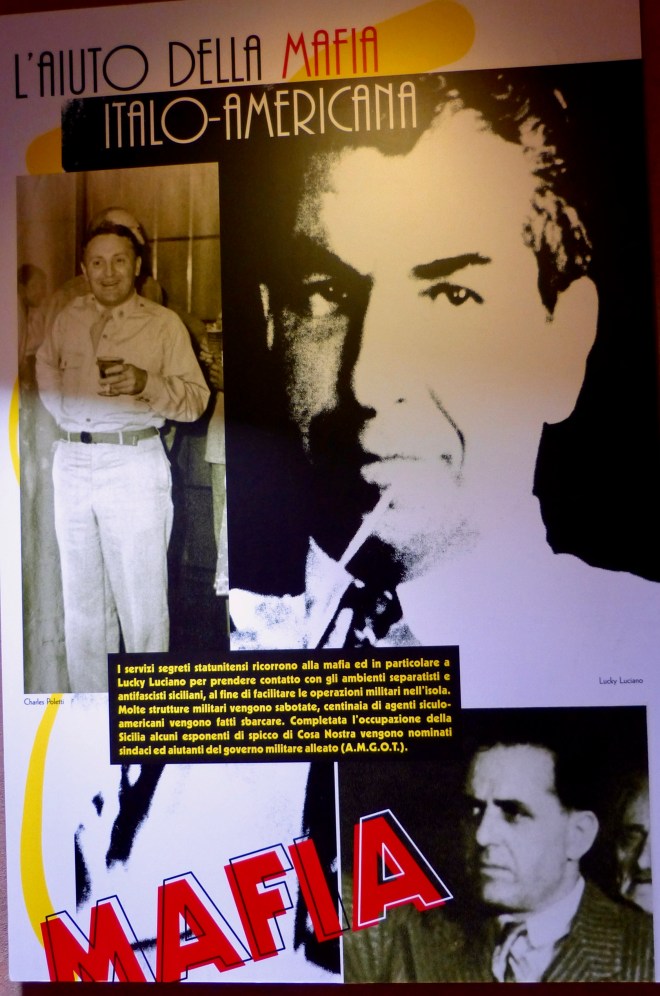
  • an educational encounter with a member of the Mafia
  • a cooking class (hope we do better than the last time we tried this!)
  • “Come with me to the kasbah, where we will make ” whatever they make there.  (If you got that reference, you are probably as old as I am!) 
  • wine tasting at a Marsala vineyard
  • a day in the life of a Sicilian dairy farm family
  • a visit to Mt Etna to watch the volcano do its thing

Please join us for some armchair traveling.  I’ll be posting whenever wi-fi and my energy levels allow.  But I have to warn you, I plan to be toasting those 41 years a whole LOT!  Expect typos.  

Oh yeah, about that photo at the top of this post.  It’s actually Sorrento, from our 2015 trip.  I just wanted a little visual to start us all off.  


Bergen, Norway

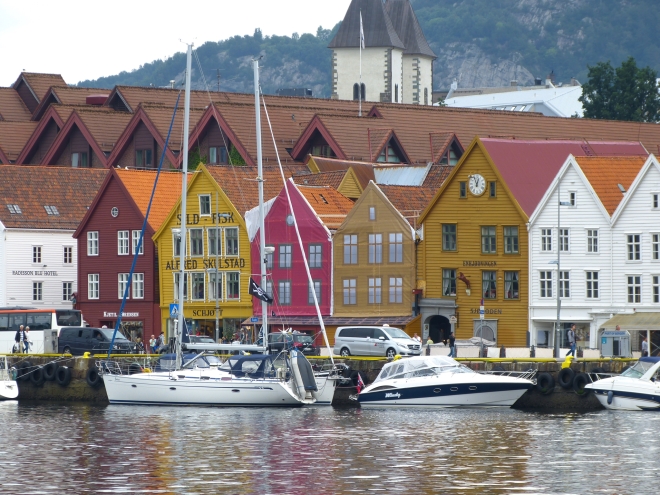
I am ending my Viking Ocean Cruise narrative the way I started it oh so many months ago, with a photo of Bergen’s  colorful harbor houses.

p1170136

What wasn’t apparent to me when I downloaded Viking’s promotional photo was that some of the facades were fake.  See the red and tan canvas coverings draped over two of the building fronts?  They are concealing  extensive restoration work currently taking place. What an ingenious way to preserve the beauty of the waterfront!

img_2895

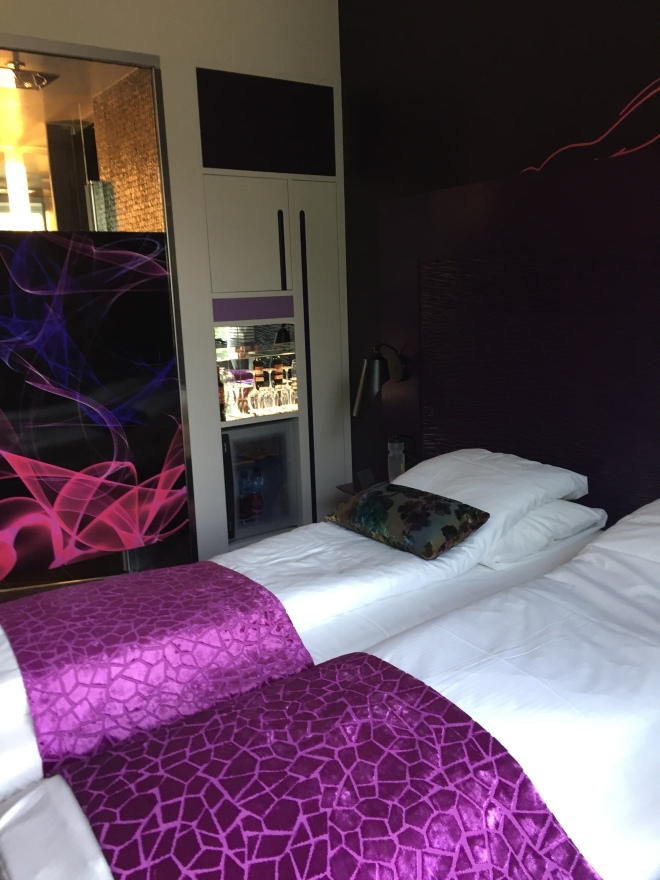
We had decided to extend our stay in Bergen for two post-cruise days.  Trip Advisor helped us find the Oleana, a wonderful little boutique hotel just a couple of blocks from the waterfront.  It was compact, but very well designed.  That area to the left of the refrigerator and bar, behind the colorful, abstract graphic, is the bathroom.  The graphic hides the more interesting parts of your anatomy from any viewers in the room while you are showering, but you can still smile and wave.

img_2909

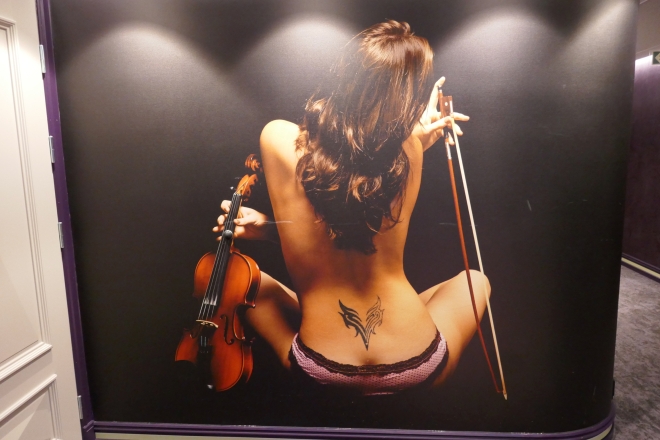
In addition to the delicious free breakfast, The Oleana offers afternoon waffles.  Wifi is free, the port is just a couple of blocks away, it is reasonably priced, and it has character, full of memorable art–see for yourself.  What’s not to like?

p1000814

Bergen is a lovely town, but I was unable to fully enjoy it because I was very concerned about my main man.  He was badly bruised from the the spill he took coming down the mountain in Flam, however the worst part was what was unseen, and not discovered till we got home.  He managed to crack three ribs when he fell, which made him quite uncomfortable–no only for our three days in Bergen,  but also for the following several weeks.  Although we DID manage to get out and about, we were not able to explore to the extent that we had in other ports.

Normally, we hit every possible overlook wherever we go.  But not this time.  We didn’t make it to the top of Mount Floyen on the Floibanen.  Instead, we took short walks in the port area.

p1170126
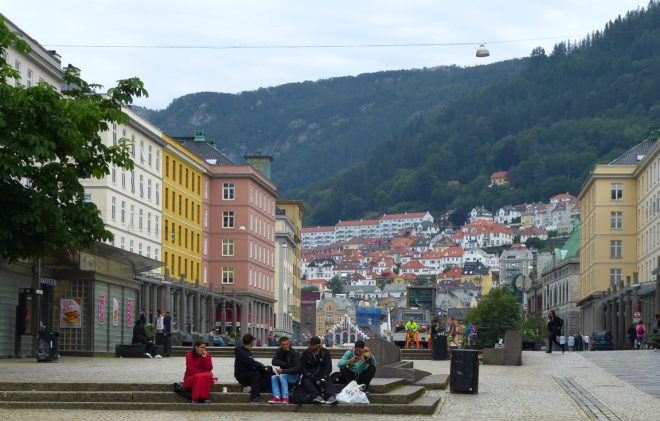
Notice the funicular at the top of the photo. Also notice how clean the streets are!

Fortunately, it is great place to hang out, full of little shops and restaurants, plus a huge outdoor market.  There is something for just about every taste.

p1170145

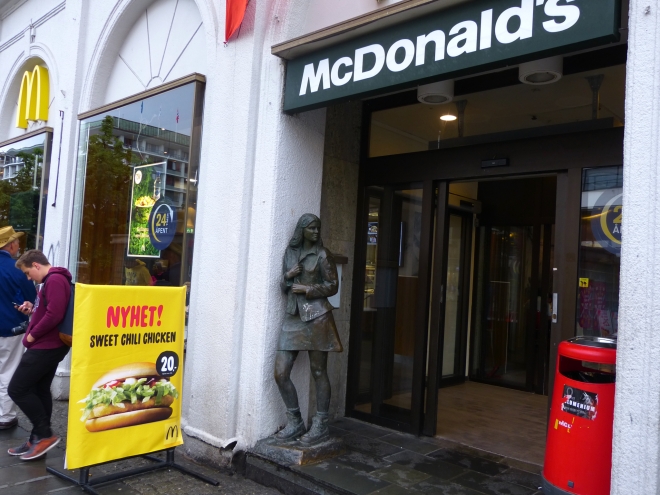
For those with less adventurous palates, not to worry.  You can always dine in splendor at what our Danish guide called “the American embassy”.

p1170157
Believe it or not, we passed up eating at Mickey D’s
img_2912
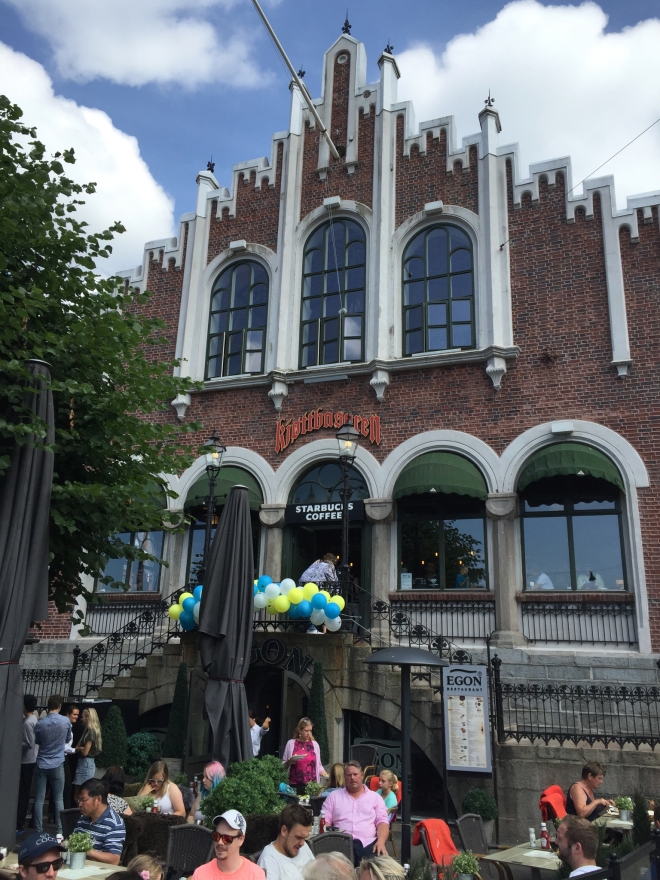
We DID visit Starbucks. It provided the perfect shelter when we got caught in a brief cloudburst.

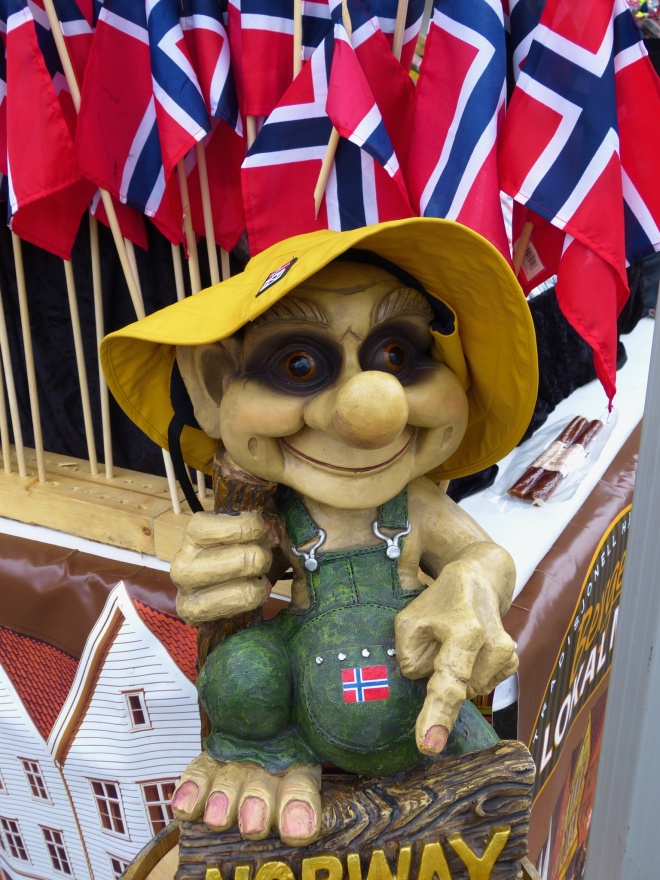
The outdoor market was quite colorful, with lots of flags and trolls.  I wish I could have brought this guy home with me.  I know two little girls that would have loved to have him in their back yard!

p1170146

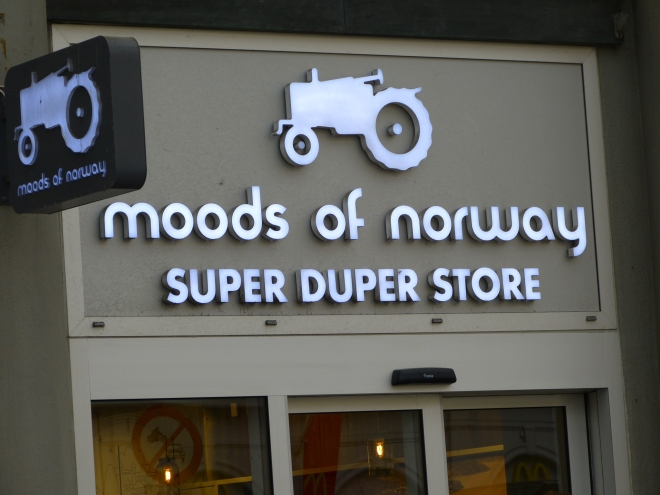
The side streets have stores with more traditional goods, just in case you are in the market for a new tractor.

p1170127
Only kidding. This “super duper” store actually sells clothing. Sorry, I have NO idea why there is a tractor on their sign!

Just a few more photos from our rambles before we bring  our Viking Adventure to a close.

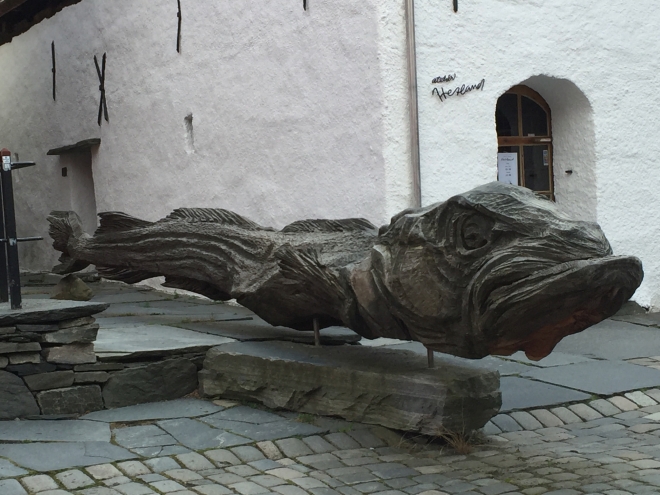
Bergen’s public art pays tribute to an important source of the population’s livelihood.img_2894

p1170130
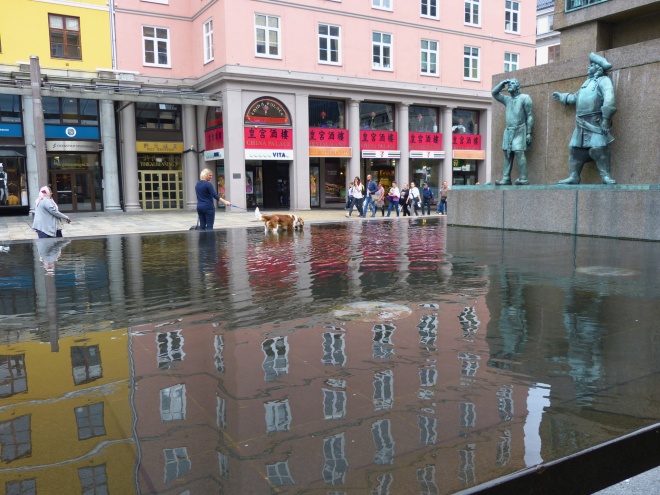
Another lovely, clean side street in the port area.
img_2924
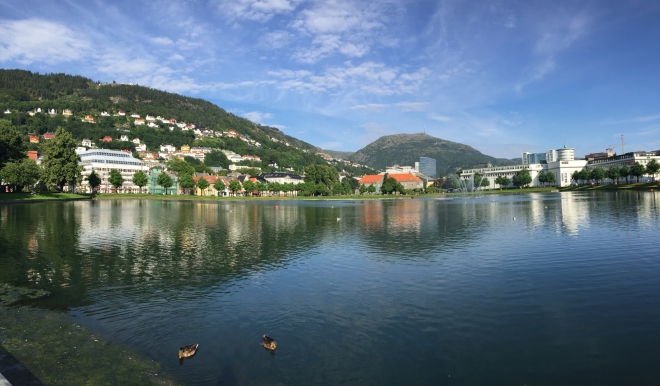
The lake and park near the port

What better way to sign off, than with a photo of two of travel buddies modeling their St. Petersburg purchases at our last dinner on board the Viking Star?

img_2904

Flam, Norway

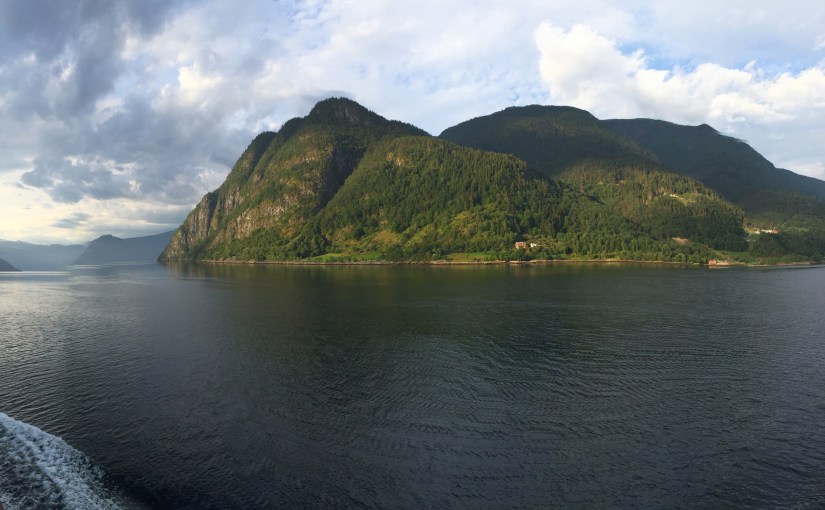
Imagine waking up to THIS spectacular scenery!  Ahhhh…

p1000774

If you did, you would be just outside the little village of Flam.  It is peaceful, majestic, quiet and breathtakingly beautiful.

There isn’t much in the center of town–just a few shops and a train station, where you can buy tickets for one of the most scenic rides on this planet.

p1170081

Viking offered a combined bike/train experience for $179 per person.  You take the train up the mountain and part way down, then get on a bike and glide the rest of the way into town.

I tried repeatedly to enroll us in that excursion, but the website consistently listed it as sold out.   Damn, I was deeply disappointed.  That disappointment lasted about 15 minutes.  Then I decided to do something about it, so I took to the internet.

Eventually, after much hunting and more than a few pokes around Trip Advisor and Cruise Critic, I discovered Cafe Rallaren.  Located in Myrdal, the last stop for the Flamsbana train, it not only supplies food (that’s the cafe part), but also offers bikes for rent.  You can ride the 12.5 miles down the mountain, then leave the bike in town.   No need to lock the bike, you just leave it there.  In town.  What a concept. Try THAT in Boston or San Francisco!

Total cost for the train ticket plus bike (and helmet) rental for both of us was $161.50.  Sold!

A closer look at Flam

We chose the 11:05 departure, which gave us time to enjoy a leisurely breakfast on the ship, and wander through the town. We would arrive in Myrdal at noon, just in time for lunch at the cafe.  We were the only ship in port that morning, so Flam wasn’t crowded at all.  That was about to change.

When our train pulled into Flam, literally thousands  of tourists came rushing off–perhaps heading for the bathrooms?  To get a window seat on one of the tour buses in the parking lot?  Who knows?  It was a Chinese tour group, so we weren’t able to ask anyone why they were in such a hurry or where they were coming from.

The good news is OUR ride up the mountain wasn’t crowded at all, and we all had our choice of seats.

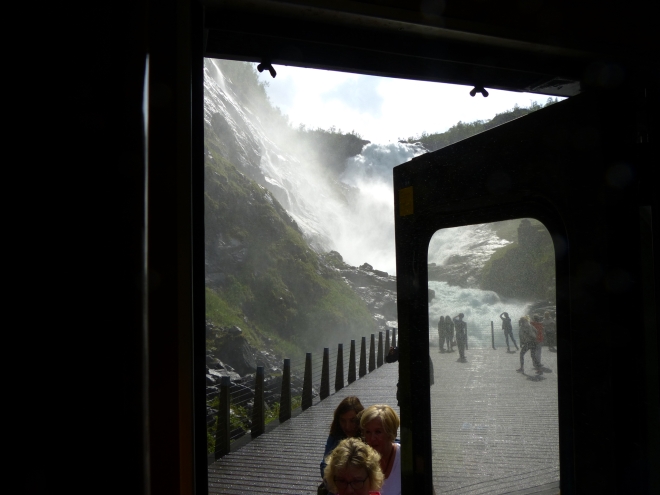
The train makes a stop at a waterfall,  so the obligatory photos can be taken.  That spray was COLD and powerful, so after about 10 seconds spent admiring the falls’ grandeur (and getting damp), I quickly reboarded the train to photograph the waterworks from the doorway.   I know.  I’m a wimp.  I just hate discomfort of any kind.  Especially when it is self inflicted.

p1170092

What I didn’t see, but Mike (who is made of much stronger stuff) did, was the water nymph who appeared alongside the falls, waving her arms to the tourists. He took the next two photos.

Can you spot her?

p1000788

p1000790
How about now?  Don’t you love a zoom lens?

Getting our bikes and helmet at the cafe was easy and uneventful.  Not so for the rest of the trip.  So how was it?  It was incredibly beautiful.

img_2887

It was incredibly steep, and rather rocky, for the first mile,

p1000799
One of the many hairpin turns on our ride
p1170097
We are smiling now, because we are standing on one of the flatter stretches during that first mile.
p1170096
Check out the rocks and ruts.  Hitting one of those the wrong way while hurtling down a steep slope could be quite uncomfortable.  See the drop on the left side of the road?

Best strategy?  Walk your bike down the steep sections of that first mile.   Unfortunately, Mike didn’t, and took a bad spill.  He injured himself enough to made him uncomfortable for the rest of the cruise.  To make matters worse, shortly thereafter, his bike got a flat tire.  He soldiered on, NOW walking the bike.  What else could he do?  You don’t see any cell towers in these photos, do you?  No houses or cars either.  Put it all together and you end up with no bloody way to get help.   It was bad, but it would have undoubtedly have been far worse if the drama queen member of our duo had gone down.  (That would be me.  Mike, on the other hand, never complains…)

Eventually we reached a more inhabited area, where both Mike and the bike were rescued and given a ride back to the ship.

The ship sponsored bike trip started at the flatter, paved section, about half way down the mountain.  That’s something to keep in mind for the less adventurous.  Unfortunately, I can’t give future Flam visitors any information on how THEY could get in touch with that particular bike vendor.   I just spotted a trailer by the side of the road, with lots of bikes loaded onto it, but no signs or identifying information.

Of course, if you decide to do it on your own from the top of the mountain, you DO have the option of walking your bike down and around the hairpin curves.  That worked quite well for other bikers (such as me).

I was in a bit of a hurry to get back to the ship to make sure my guy was doing okay, so I didn’t take many more photos.

In the US, we have speed bumps.  Here in Flam, they have speed goats.

p1170101
Although we didn’t encounter any Trolls, we met more than three Billy Goats Gruff

This guy either took a shine to me, or thought I was the “other” character in the fairy tale.  All I know is he was repeatedly butting against my leg and followed me a while!

p1170102

img_2888
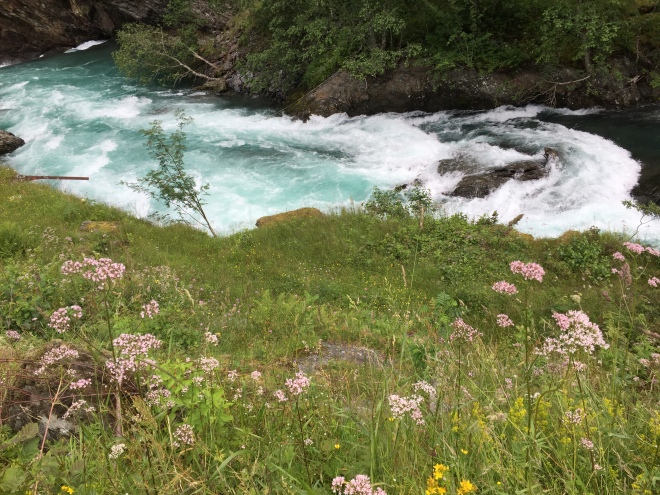
Beautiful flowers and clean water along the way.  The perfect photo for a happy ending

Yes, there was a happy ending.  Mike visited the ship’s doctor, who after determining that nothing was broken, sent him on his way with some happy pills.

Next stop, Bergen.


Berlin or Rostock and Warnemunde?

Berlin showed up on our Viking itinerary as one of the ports of call.  Geography never was my strong suit, but even I knew that Berlin has no oceanfront property.   Although Viking arranged free transportation by train to Berlin, we decided that we didn’t want to spend approximately 6 hours traveling back and forth.  Besides, we will probably never get back to Rostock and Warnemunde, but a few days in Berlin may indeed be in our future.

We did not regret our decision.  Our day started with a German breakfast of pretzels and “liquid gold”, the German invention we Americans call beer.

Our brewery tour included a choice of light or dark beer.

Our guide,  Enrico, shared lots of fun facts about 9th century beer consumption:

  • Beer was given to children because it was cleaner than the available water
  • It was drunk warm, like soup from a bowl
  • The monks consumed beer during their fasts; apparently it didn’t count because you didn’t chew it?
  • Beer was also thought of as liquid bread.

Fast forward to modern times:

  • Germans consume approximately 30 gallons of beer per person per year.  
  • You can buy beer anywhere and consume it anywhere.  It is okay to be intoxicated in public, just as long as you don’t do something stupid.   (A drunk person doing something stupid?  How often does THAT happen?)
  • Beer isn’t taxed, and the drinking age is 16.  Sorry kiddies–that’s the down side of having access to clean water.
  • The last two weeks of September is Oktoberfest in Munich, where the locals don their Bavarian costumes and yodel a lot.  If Enrico explained why Oktoberfest occurred in September, I have completely forgotten it.  That’s what happens when you write a post months after a trip occurred!
  • The beer labels at this brewery were quite interesting
p1160648
Clearly this beer is not one that would be a huge success in the USA

Next stop was the lovely little town of Rostock,  formerly part of  East Germany.  Enrico told us that on November 9, 1989, the citizens of Rostock danced on the wall in celebration of the peaceful revolution.  Germans commemorate October 3rd, 1990 as their reunification date, with a festival at the Brandenburg Gate.

We didn’t see the Brandenburg Gate on THIS trip, but we DID see Rostock’s Stone Gate.  p1160664

Enrico pointed out that there are no pigeons hanging out in this particular tower.  The reason?  The bricks were drenched with bulls’ blood.  Why that makes a difference, I don’t know.  I also don’t know whether cow’s blood–or any other animal’s blood would also do the trick.  After my beer breakfast, my mind wasn’t sharp enough to ask such insightful questions.

Other highlights of Rostock were its public University

p1160675
Enrico in front of Rostock University, which was established in 1419.

Its lovely town square, surrounded by beautiful medieval buildings,

p1160679

and playful fountains.

Kids enjoying the fountain in the town square

The Germans, like many Europeans, have a more open attitude about bodies and sexuality, as demonstrated by this bench in the fountain. (Yes indeed, it was IN the fountain)

p1160691

What better way to follow up our time by the fountain than with a visit to St. Mary’s Church?   Construction of this church initially took place in the 13th century, with renovations and restorations repairing subsequent damage that war and religious differences wreaked.

p1160715
This was the first time we saw a ship dangling from a church ceiling, but it wasn’t the last.
p1000540
This clock inside St. Mary’s Church is incredible. The craftsman ship is amazing. So much detail!

We were fortunate to have a guide who is getting his degree in education.  And what a wonderful teacher he will be.  He shared information about German culture and society.  Food in German is inexpensive, education is free and health care is free.  The state pays 185 Euros per child per month to parents.  All this is funded by a 35% income tax, with additional funding from taxes generated by exports.

One of the advantages of travel is learning how different societies address their problems.  Enrico’s thesis is on what he termed America’s fascination with guns.  As a contrast, he explained that 95% of the German police never fire their guns during their entire career.  When they do, they aim for the culprit’s leg.

Our return to Warnemunde was via a ferry.  Although the weather wasn’t the best, we wandered around this little seaside town, enjoying the sights.

img_2753
Warnemunde
img_2763
With skies like these, we decided not to linger

The best part of our decision to stay local was we had the rest of the afternoon to enjoy the beautiful Viking ship.   We were welcomed back with open arms, and with glasses of champagne.  p1000567

Another bonus?  It was easy to get a reservation at The Chef’s Table, our favorite specialty restaurant.

Okay, just ONE food photo.  This first of five courses, beef carpaccio, gives you an idea of the artistry of the Chef’s Table’s offerings.  And yes, that red goblet by the plate is indeed a paired wine.

img_2775

Because we weren’t exhausted from a long trip to Berlin, we had enough energy to visit  Torshaven, Viking’s cozy little nightclub.   Here’s the band belting out some Gloria Estevan songs that they learned at the request of our friend, Jeanne.

img_2778

Gdynia and Gdansk, Poland

Our Viking tour had us scheduled for only a half day in Poland.  We docked in Gdynia, which just happened to be the departure port for my husband’s grandmother, who was pregnant with his mother when she left Poland in 1923, searching for a better life in the USA.  So that was kinda cool.

The tour choices were limited–a free city tour of Gdansk, or the optional tours to Stutthof Concentration Camp or Malbork Castle.  Given that we had never been to Poland before, we chose the Gdansk city tour.

I’ll confess that I didn’t expect much.  Squished between the two warring superpowers of Germany and Russia, it had been a battleground more times than I cared to count. Here’s what Gdansk looked like in 1945, after the Russians got through with it.gdnsk

First surprise was the 45 minute ride to Gdansk.  The main road was clean and green, with lovely trees, flowers and public buildings along the way.  We stopped briefly at the Oliwa Cathedral, (which didn’t much impress me), drove by Lech Walesa’s house (I don’t think he was home), then arrived at the city that for a brief period was known as Danzig.  (Until we arrived there I hadn’t made the connection.  I really should have paid closer attention in World History, Freshman year.)

“Amazed” doesn’t quite capture what I felt when I saw how this city had been restored to its former glory.  It is incredibly beautiful!

I love the pedestrian walkways in the old section of the city.

img_2738

It was not too crowded, because it was relatively early on a Sunday morning

I also wasn’t aware that Daniel Farenheit was born in Gdansk– are we starting to see a trend here?  In my defense, however,  he lived most of his life in the Dutch Republic.  Still, Gdansk is where he got his start and the city is rightfully proud of him.

farenheit
Tribute to Farenheit in Gdansk

Another of Gdansk’s claims to fame is the 14th century human powered crane that was used to load and unload cargo, and is still in working condition.  If you walk along the  river, you will come to the brick building that houses the crane and its giant treadmill.

mill

scale-mill
Here’s a scale model of the crane, the way it would appear from the river, a vantage point I didn’t have for my photographs.
wheel
Workers would be strutting their stuff, inside this giant wheel shaped treadmill, which powered the crane.  Am I the only one that sees a great opportunity for an exercise video?  Just add music and spandex!

I loved the architecture–the attention to detail.  Check out these beautiful buildings.

bldg
The building fas seen from a distance
detail
A up close view
The scales of justice appear atop several buildings

Everywhere you looked, you saw something beautiful.  Even the sewer covers were artistic!  If you click on the individual photos you should be able to get it to enlarge.

cover

p1160579
This restored building was originally built in 1605.


gate
One of several gates to the city

And if you don’t think all of this is pretty bloody amazing, take another look at the 1945 photo to see the city after the Russians got through bombing it to kingdom come.  The Poles have a lot to be proud of.  (And I have a lot of Polish friends and relatives!)

Despite being well fed on the ship, we stopped in a little outdoor cafe, where I had the most incredible hot fudge sundae EVER.  Now I’m regretting not taking a picture of it — it was so gorgeous, not to mention delicious.  Oh well, you’ll just have to trust me on that one–till you can visit Gdansk and experience it for yourself.

One last sight before I end this post.  Neptune’s fountain.  It is definitely worthy of multiple views.

neptune-full

neptune

neptune-close

One thing about the free Viking tours–it truly is the luck of the draw.  We drove right by the Solidarity Monument without stopping.  Friends that were on a later tour were able to get off the bus for a closer look, something that I would have liked to have done.

The take away?  I have a much greater appreciation for Poland and all it has to offer.  The great thing about a cruise is it helps you identify the places you want to visit again and linger.