Santiago de Compostela

I didn’t know until I got there that Galicia normally gets an abundance of rain, which is why it is such a lush, green region. I THOUGHT I was adequately prepared for wet weather, because I had packed two hooded jackets, fleece lined pants and silk long underwear, but I forgot the most important item: zapatos impermeables (waterproof shoes). Luckily, our hotel was across from a sports store that carried waterproof sketchers in my size. Prior to that purchase, however, (as I mentioned in an earlier post), we walked the last five kilometers of the Camino in a downpour. Let me tell ya, medieval cobblestone streets retain lots of water between those rocks!

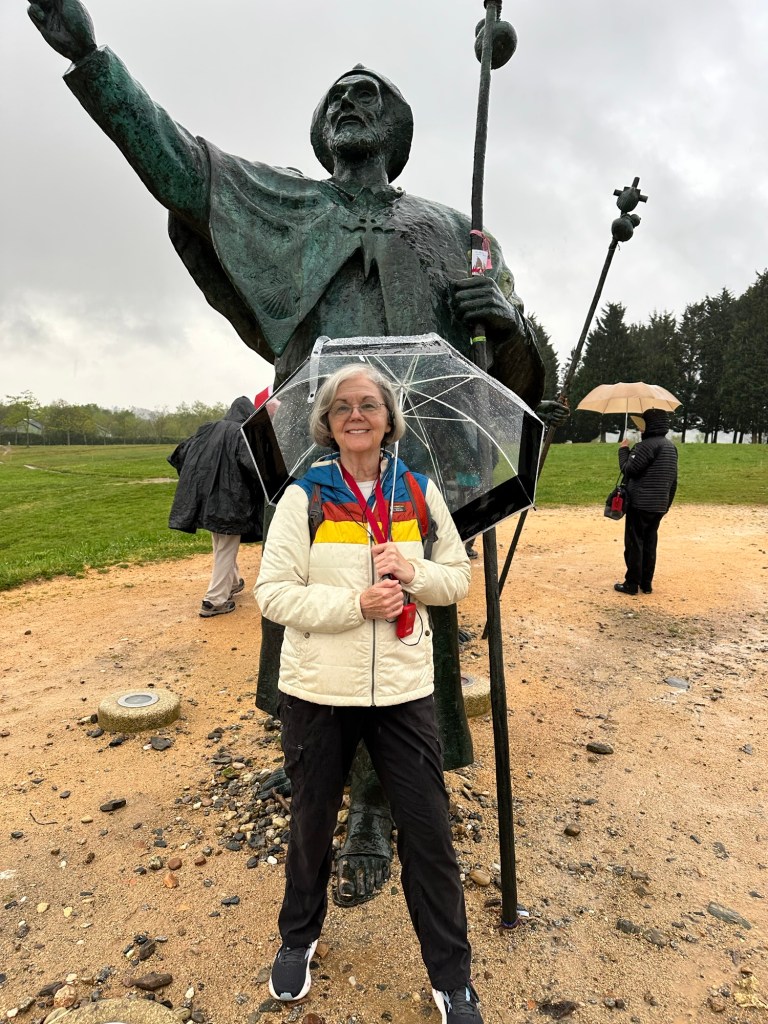
I bought the umbrella in Bilbao when my luggage was lost.

I had the full Pilgrim experience; I was soaked and completely miserable. It was definitely NOT one would consider a spiritual feeling. By the time we got to the hotel, my feet were so wet, I had to dry them with a towel. On a positive note—the hotel had a heated towel bar in the bathroom, but sadly it only functioned between 7 and 11 pm. Still, that was long enough to dry out my sodden socks, clothes and backpack.

If someone forced me (at gunpoint) to choose between walking El Camino or running with the bulls, that day I would have taken my chances with the bulls. (I would have carefully chosen a stretch that allowed for a speedy exit.) But, then again, if I had done so, I would not have earned the right to sport one of these lovely pilgrim tattoos.

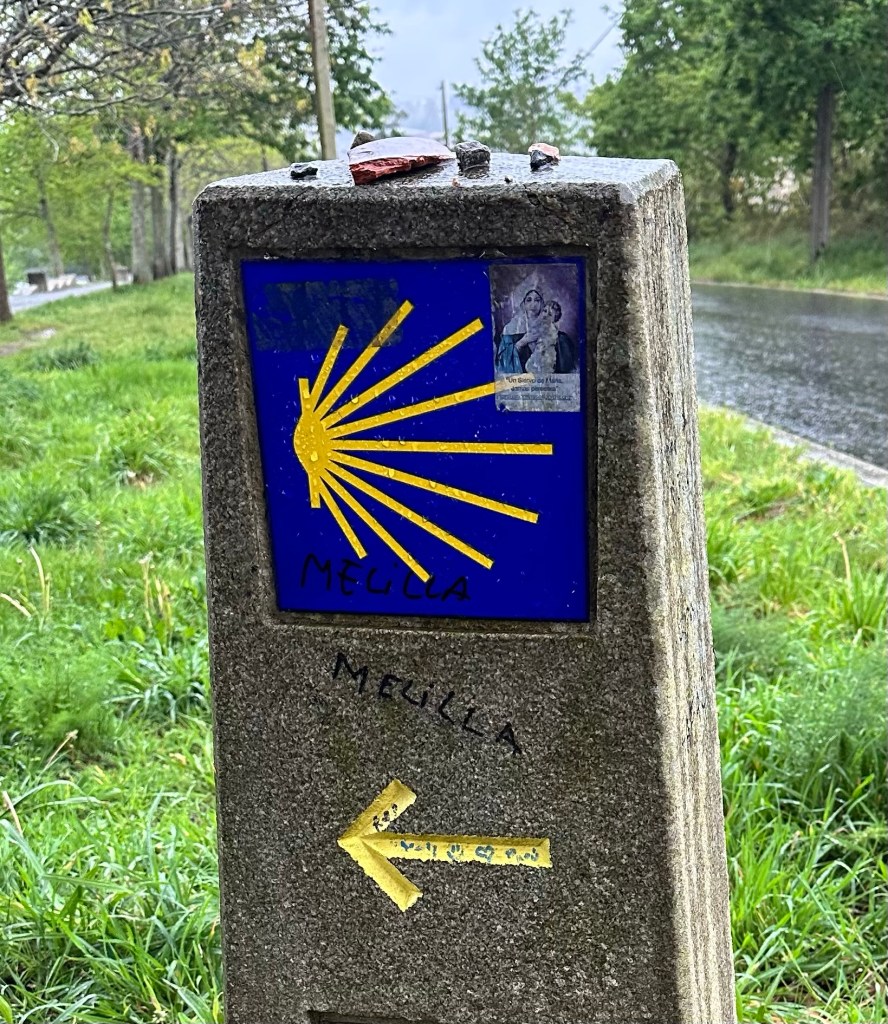
Before this trip, I had thought that there was ONE El Camino. NOW I know there are several: The French, the Portuguese, — we walked segments of both—the Via de la Plata (silver way), the Camino del Norte, the Primitive Way, to name a few. Regardless of which Camino you select, the destination is the same, the Cathedral of Saint James (Santiago).

Beneath that yellow umbrella is our local guide, Marian, regaling us with the legend of St James. WE were a shivering mass, huddled together under a nearby portico.
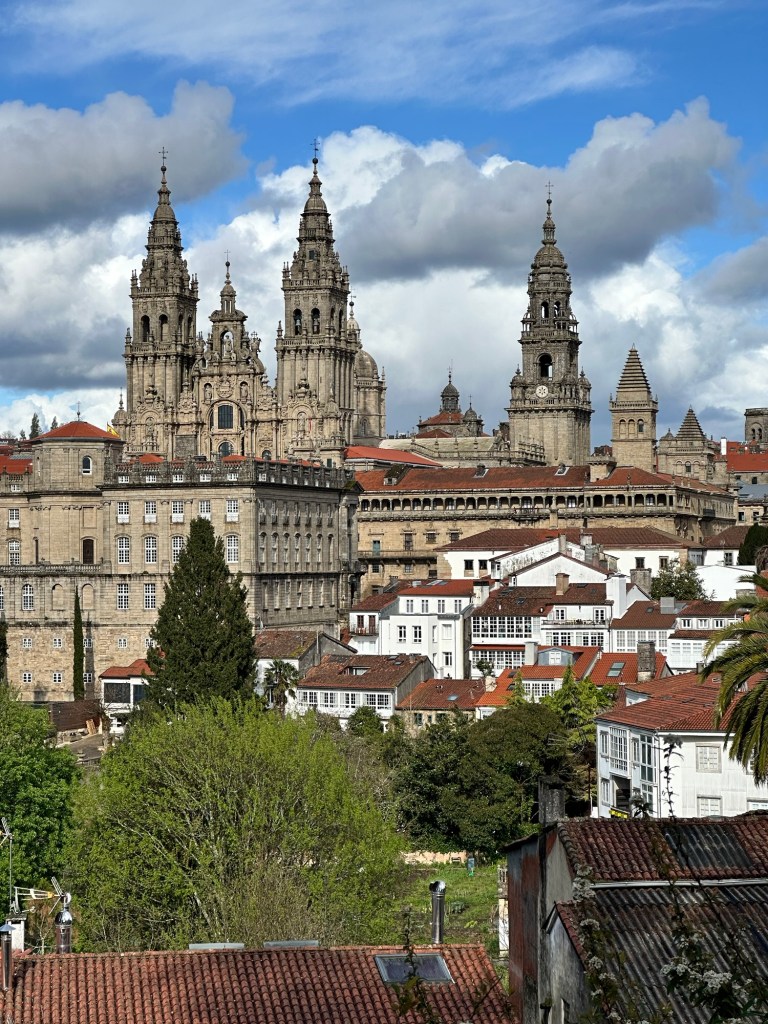
The cathedral from a different vantage point, a public park. Photo taken in between showers.

With all the wind and rain, I couldn’t take notes, so I’m operating strictly on memory. Here’s the part of the legend that I recall: a peasant (fisherman? shepherd? Some random guy?) in the first century (around 820 AD) saw a light shining down from the heavens several nights in a row, in the exact same spot. He recognized it as a message from God instructing him to dig, and when he did, he discovered the bones of a skeleton who had been beheaded. The church leaders made a rather large leap of faith and deduced that since St James had been beheaded, the skeleton must be that apostle. Over the ensuing centuries a cathedral was built and over time, the city of Santiago de Compostela grew around the cathedral.

Back then, pilgrims made the journey for religious reasons, to get a plenary indulgence (skip purgatory) or to avoid jail time. Yes, you read that right. Marian explained that people who committed minor crimes back then were given a choice…walk several hundred miles or go to jail.

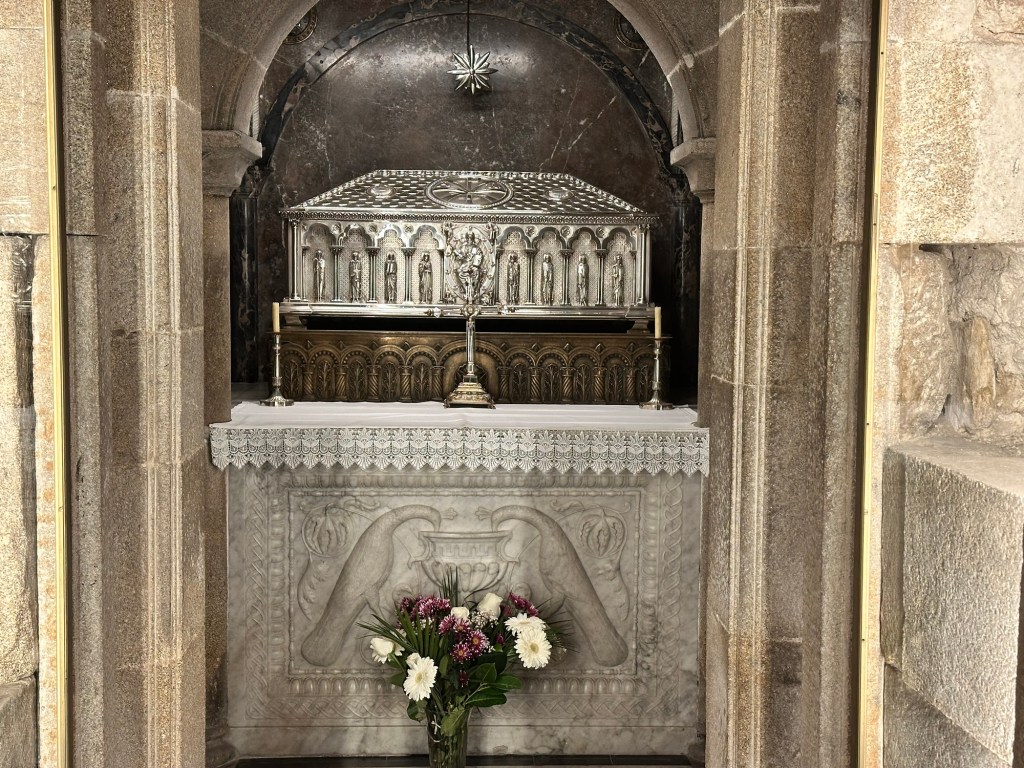
Fast forward a few centuries—today’s visitors can view this silver box that contains what the faithful believe is St James bones,
and can admire the cathedral’s beautiful interior.

My cell phone’s zoom isn’t very powerful, so I’ll describe the central image of the main altar. It’s St. James, riding a horse and brandishing a sword, which wasn’t exactly how the apostles were described in the Bible.

Santiago’s old town is a maze of narrow cobblestone streets, filled with restaurants, bars and souvenir shops, so after our first day in Santiago, I’d seen enough of the city. I welcomed the opportunity to spend the day in Pontevedra and Combarro on an optional trip OAT offered.
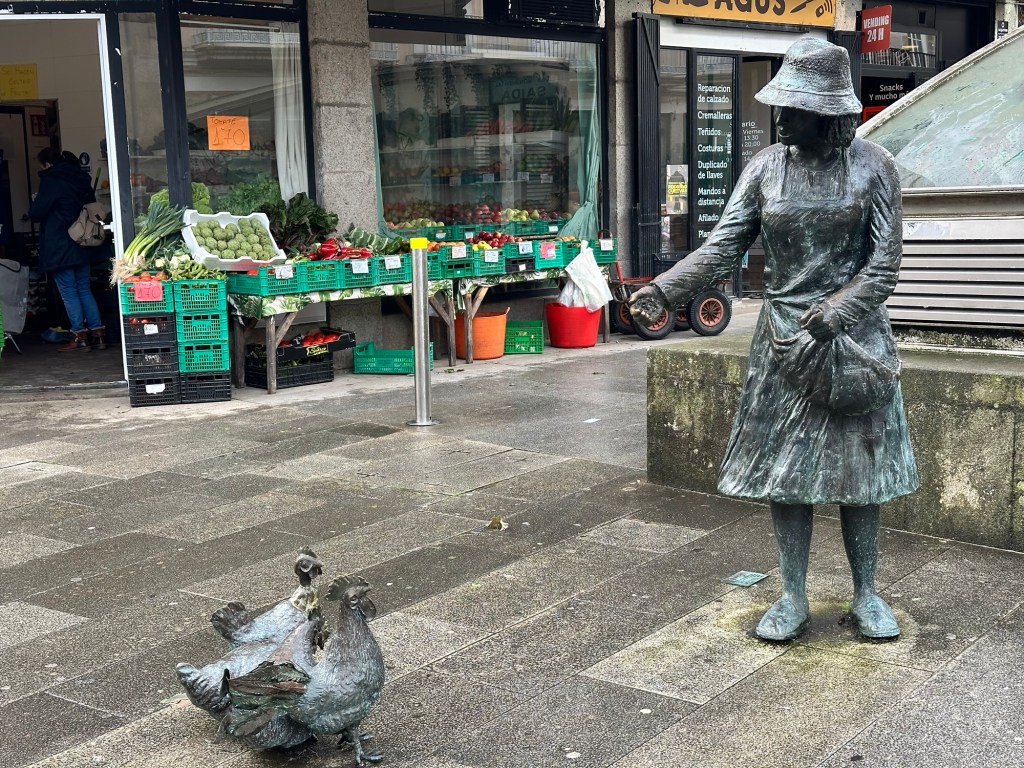
Pontevedra, founded by the Romans, gave us a break from the crowded streets of Santiago. It is also the site of an unusual church, with a floor shaped like a scallop shell. Or so I was told.
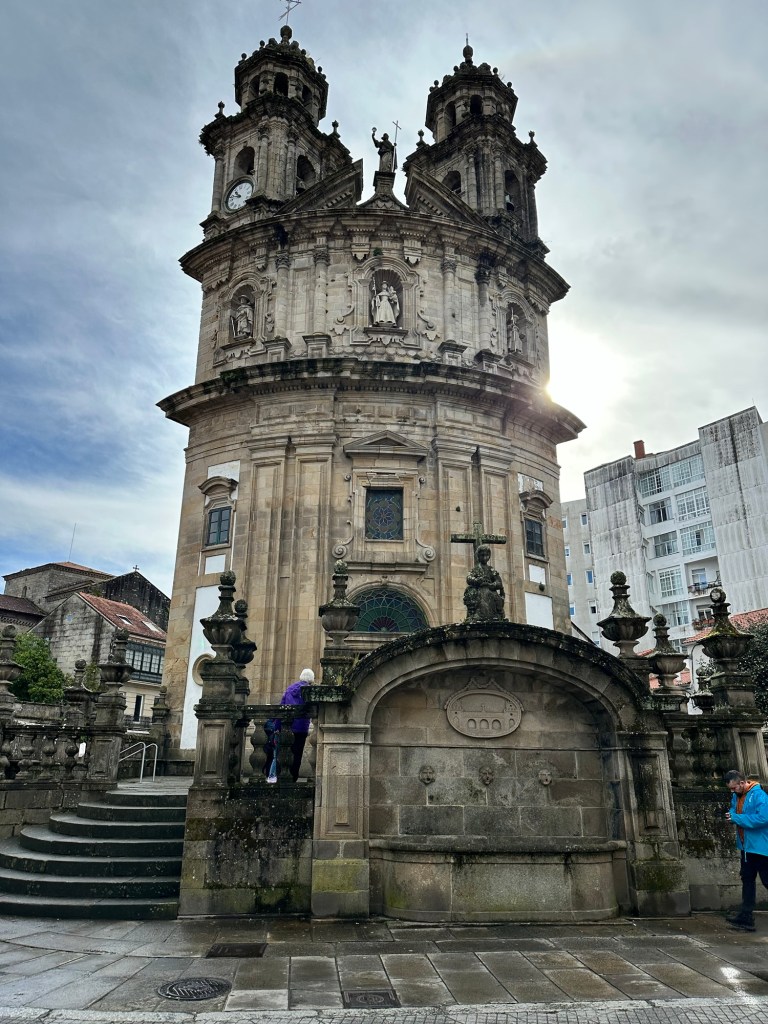
I’ll be honest. The church was clearly round, unlike any I’ve ever seen before. But I wasn’t able to pick up any resemblance to a scallop shell in the interior. Take a look. Maybe you’ll have better luck.
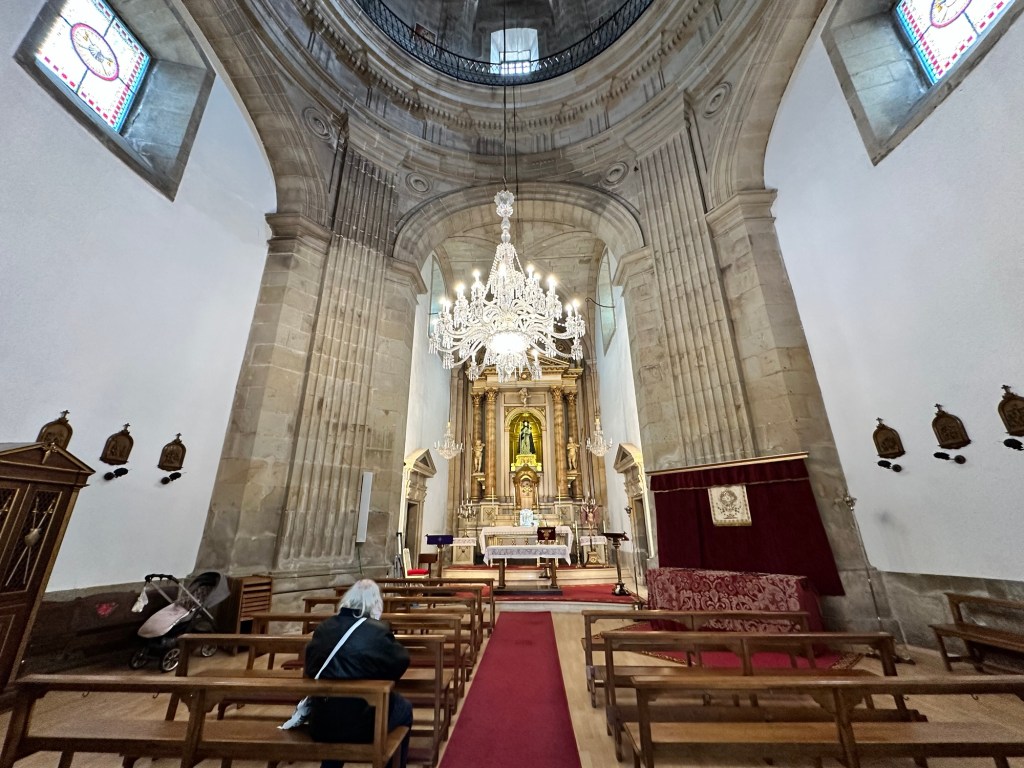
Despite the intermittent showers, it was a delightful day.

Combarro reminded me of Southeastern Massachusetts. I recall watching Sandy, my sister, digging up clams and quahogs with her toes in Mattapoisett bay.
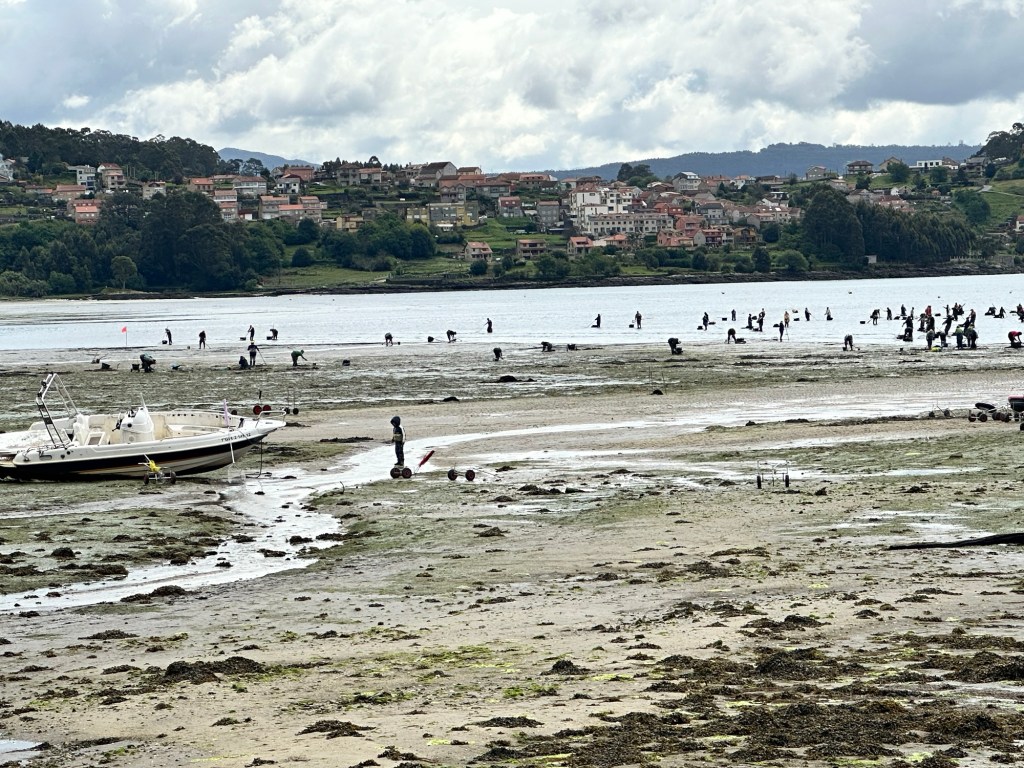
Here in Combarro, it’s a highly regulated business, with strictly enforced limits on what can be harvested.

Our day ended with a pleasant surprise—a procession outside our hotel. I was already in my jammies, but when I heard the drums, I dashed onto my balcony to take this photo.
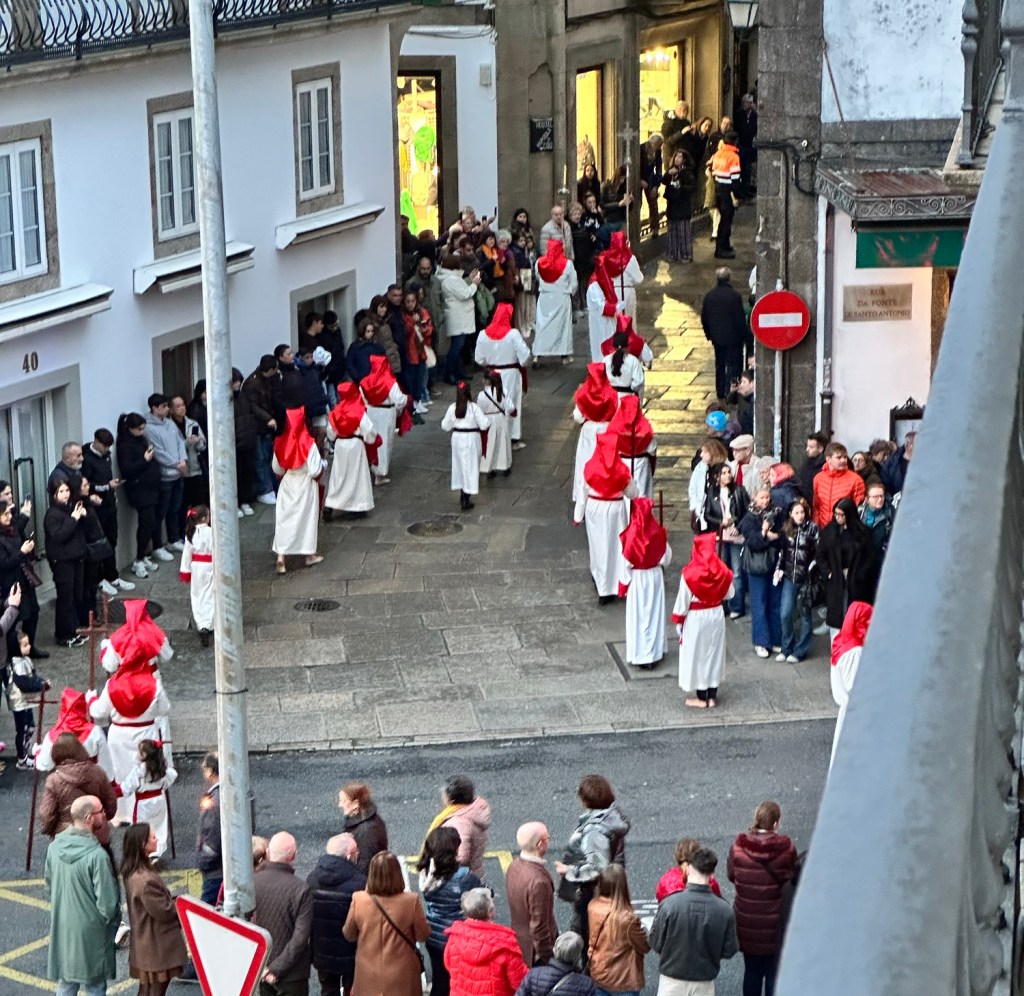
Fortunately, our trip leader was on the street and sent us a video.

Is it just me or does that statue of Jesus make it look like he needs a foundational garment?

Next stop, Portugal for 5 days, then home.

Stops Along the Way

One of the many reasons I absolutely love traveling with OAT is the company finds experiences I would never have discovered on my own.

For example, en route to León we made two delightful stops. The first was at an archaeological lab in Ubide, where Michaela, an Australian osteoarcheologist, fascinated us with stories about her dig at the Roncesvalles burial pit.

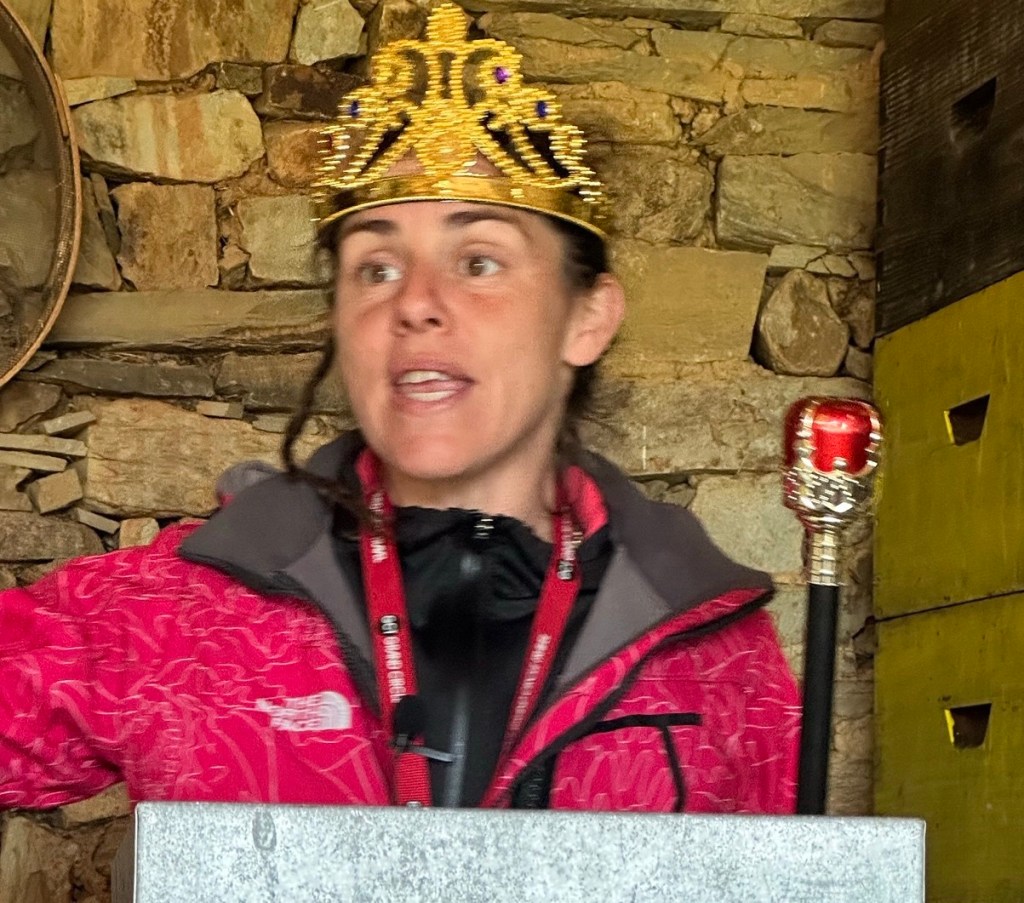
Can you figure out which one is Michaela?
Hint: she doesn’t have gray hair.
She’s in the back row, directly behind me.

It was truly amazing how much can be learned from bones. So far, they have dug down to the level of the Napoleonic wars, where they found an older soldier, whose jacket was used as a shroud. His jacket’s button is shown in the top right of the following photo. Can you see the Spanish word “Rey” (king)?

Because of his skeleton’s position in the pit, his age, his wound and the button, the archaeologists deduced the bones belonged to a high ranking member of the Spanish army who died fighting against Napoleon.

When the archaeologists reach the bottom of the pit, legend has it they will find a horse, a horn and the exploded head of Roland, a member of Charlemagne’s army, who was immortalized in the “Song of Roland”.

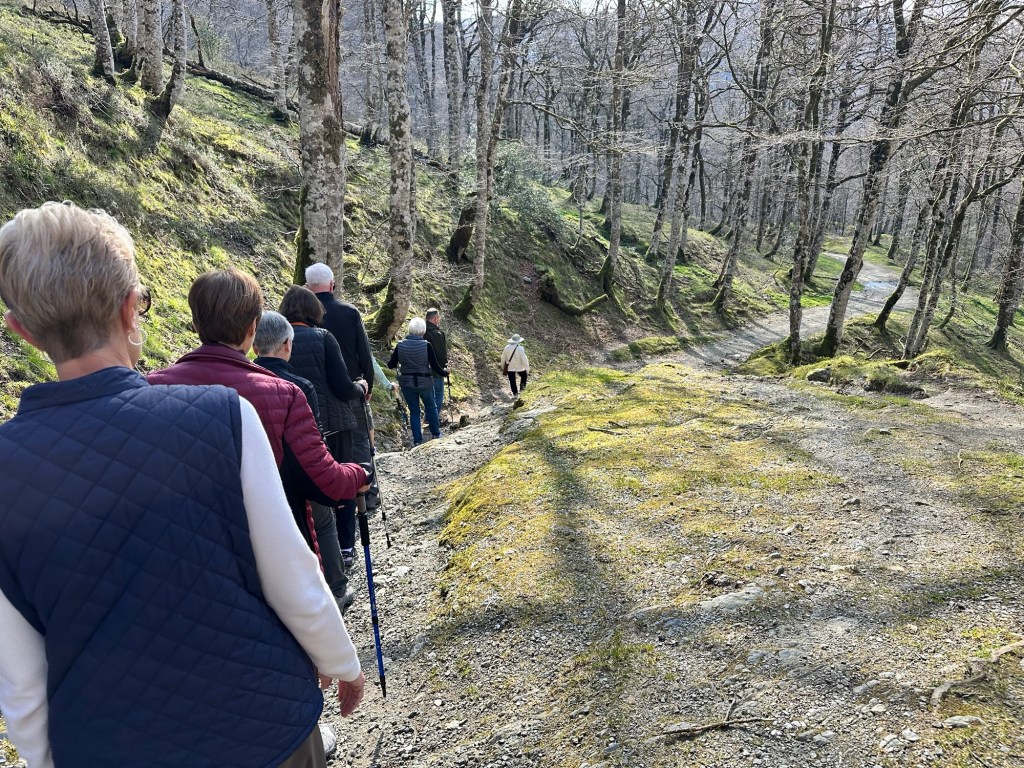
After he sacked Pamplona, Charlemagne headed back to France, using the route we followed through Roncesvalles (now part of El Camino). As you can see, the path through the forest is very narrow, so the soldiers had to travel single file, making them easy targets for the more than slightly annoyed Saracens.

For those of you who never read “The Song of Roland” and have no desire to ever do so, here’s the scoop. When Roland sounded the horn to warn Charlemagne of the attack, he blew so hard, the legend claims that he literally blew his brains out.

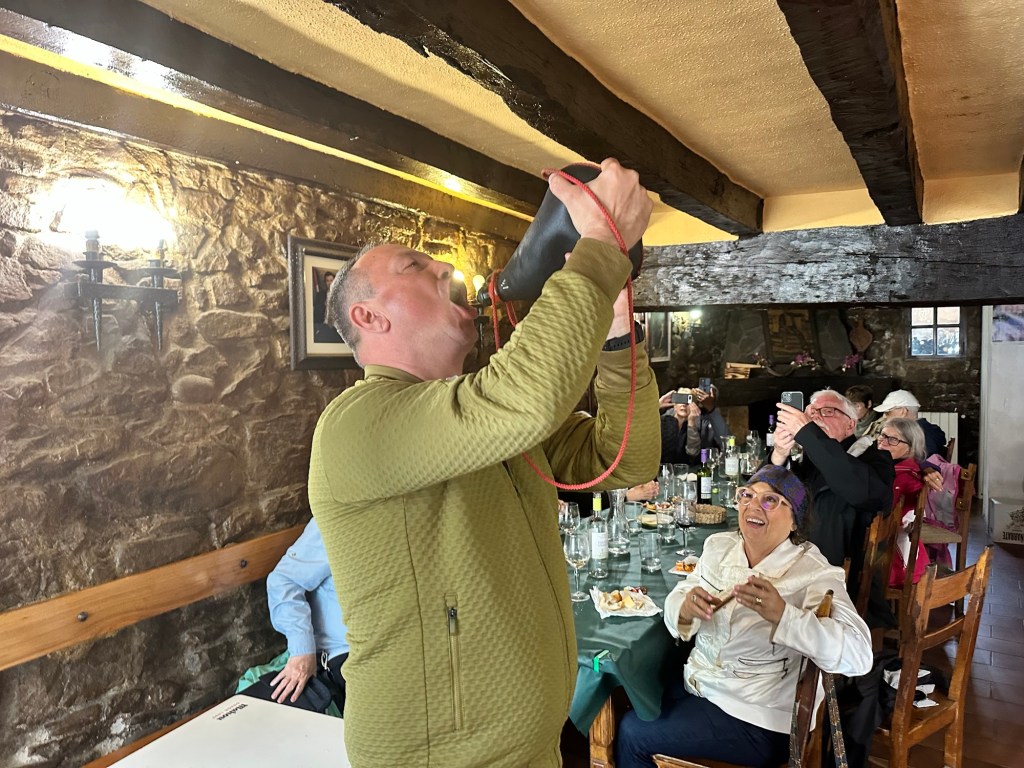
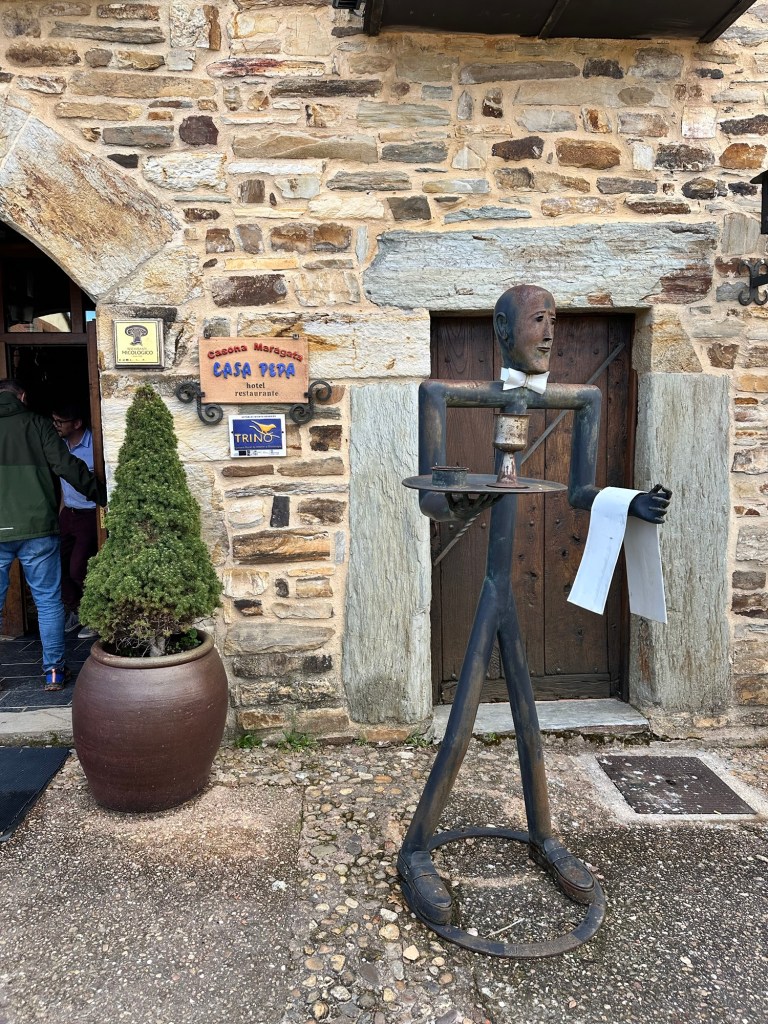
Our lunch was at a charming tavern along our route. This trip IS turning me into a “day drinker”, but it hasn’t come to THIS, at least not yet.

Shahin, demonstrating how to shoot red wine directly into your mouth

We were able to walk off some of our lunch’s calories when we reached the next stretch of our “El Camino” experience. This time, we walked through the medieval village of Castrojeriz, population about 100.

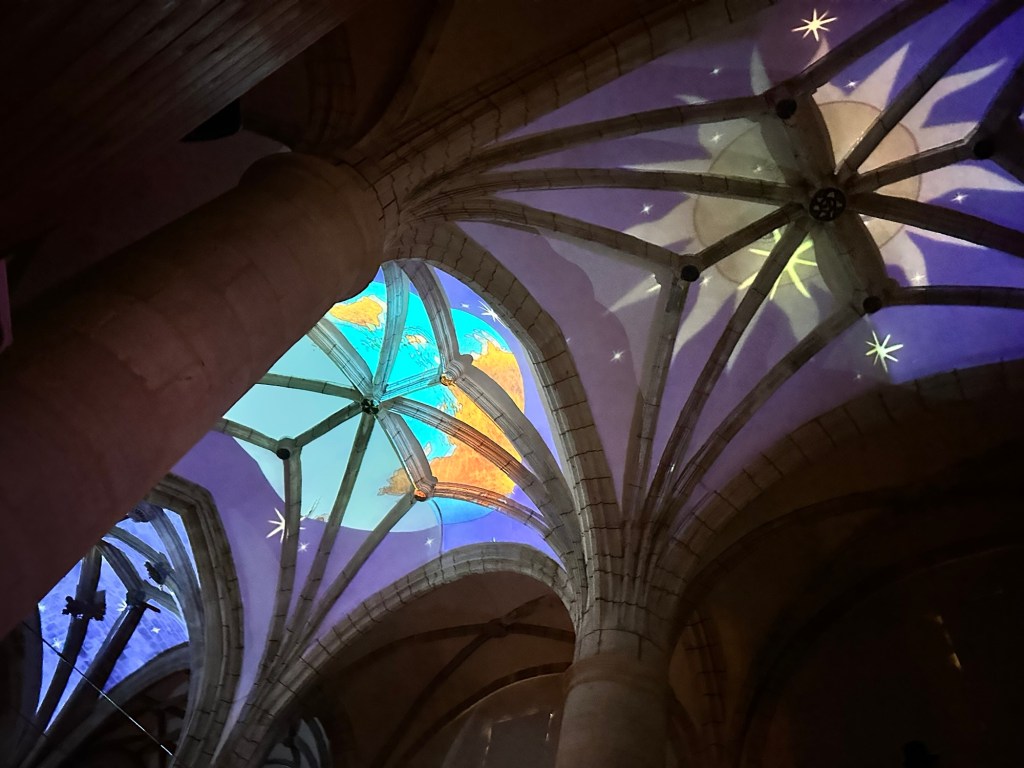
Had I been on my own, I would have walked right by this church and missed its amazing multimedia shows, including the story of creation, which was projected onto the ceiling.

If we were REAL pilgrims, walking El Camino, it would have taken us anywhere from three to about seven days to walk from León to Santiago. Instead, the 3.5 hour bus ride took us a day, because of our multiple stops.

The first stop was in Astorga, to view the castle and cathedral designed by Gaudi.

Unfortunately, the building didn’t open until 10, so we weren’t able to go inside, but don’t you agree that the outside was pretty spectacular?

The entrance to the palace is on this side. Can you believe the number of windows?
On the left (barely visible) is the cathedral.

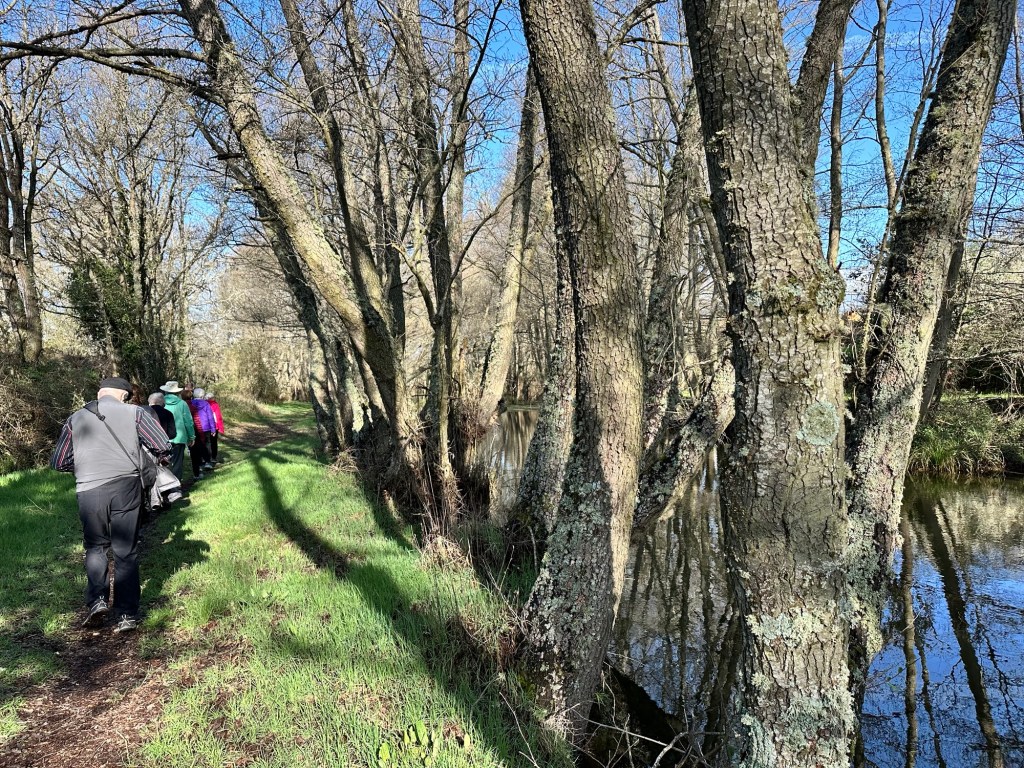
We weren’t able to linger because we didn’t want to be late for our visit to the beekeeper. To get to there, we strolled along the river for about a half a mile.

This very animated and entertaining young woman gave us the adult version of her presentation for school children.

Did you know that you should never put honey in the microwave because it destroys the beneficial enzymes? Or that you should never use a metal spoon to remove honey from its container— only use wood? (sorry, I don’t remember the reason).

After all that learning, we were ready for lunch in the village.

This building dates back to the 1750’s; it was the home of a merchant who conducted trade between the coast and León.

We were very fortunate to have such great weather during this area’s rainy season.

But our luck was about to end. For the last stretch of El Camino, we had an “authentic” pilgrim experience. We walked to the cathedral in a downpour.

That smile on my face was VERY short lived. I neglected to pack waterproof shoes, so by the time we finished our 5 kilometer walk and got to our hotel my shoes, socks and all 10 toes were soaking, sopping wet. Good thing I know how to say “I want to buy waterproof shoes” in Spanish!

Looks like the weather goddess is sending more of the same for our time in Santiago and Portugal. But at least with my new 100% waterproof Sketchers, my feet will be dry!

After the day we had, we decided we all needed at least one glass of wine — perhaps more. How lucky am I to be with such a great group of people!

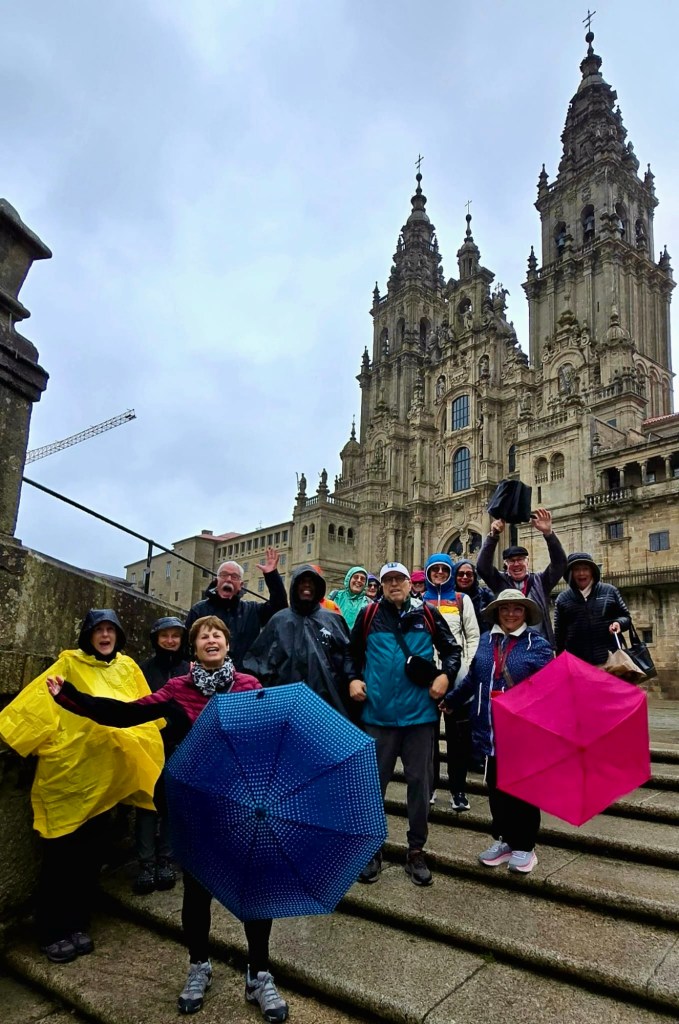
Briefly, the rain stopped, allowing Shahin to take this group photo.

Santiago, Day Two

We started our second day in Santiago by congratulating ourselves on our wise decision to take it easy on day one. It’s amazing what a good night’s sleep can do for a pair of weary travelers.

First on our list was La Chascona, one of the three homes of Pablo Neruda. Don’t feel bad if you don’t know who he is. I certainly didn’t, and this is the second time I’ve been in Santiago. Not only was he a Nobel prize winning poet, but he was also a politician, and a very quirky collector. What did he collect, you ask? Well, clearly houses, given that he had three of them, all kinds of art, books, knickknacks and women. I’ll let you read about the women and all the steamy stuff on your own. I’m doing this post on an iPhone so have to stick with the essentials, because I am so high minded.

La Chascona is now a very well run museum, complete with a short, but very informative video about Neruda’s life. You also get one of those “press the button” audio guides, which explains what you are seeing as you move from room to room. What makes this house so fascinating is it was built according to Neruda’s specifications and it is multi level.. Big deal, you might be thinking. LOTS of houses are multi level. Yes, but do you have to go outside to get from one level to the next?

No ranch style living for THIS aging Chilean!

We weren’t allowed to take photos inside the house, but I was able to get this shot of the dining room from outside. The table is very narrow, to facilitate conversation and extends almost the entire length of the room.

What I loved most about the dining room is something I unfortunately couldn’t photograph—the back wall. The left side was occupied by a hutch containing china and crystal. what looked like paneling on the right was actually a door to a secret passageway, with a spiral staircase leading to Neruda’s bedroom. The treads on the staircase were so small, I was afraid by very tall, very big footed husband wouldn’t be able to climb it, but he did. For him, the outside staircases were far easier to navigate.

See, I wasn’t kidding about multiple levels!

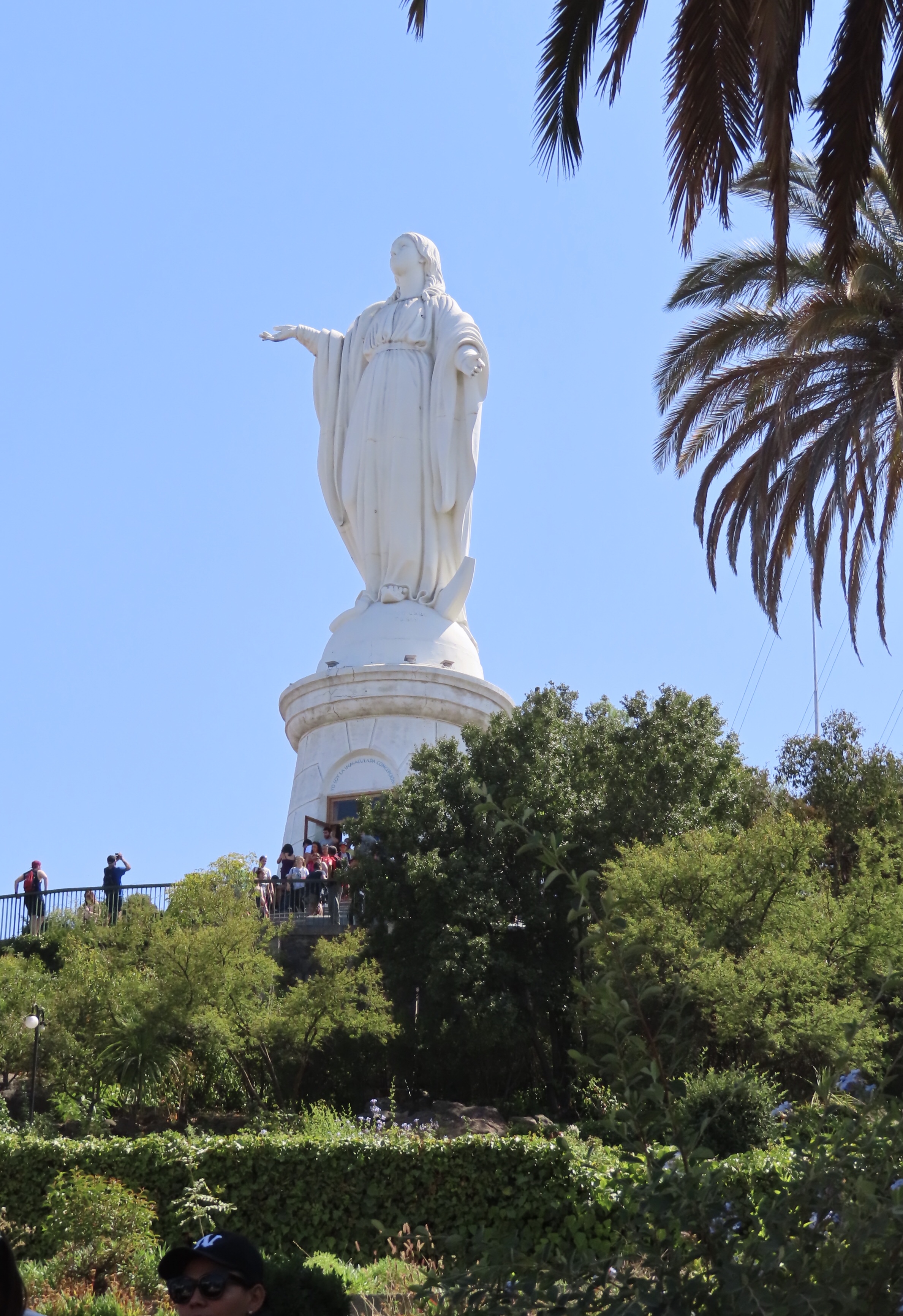
La Chascona is close to Cerra San Cristóbal, so even though we fully expected it to be a tourist trap (thank you, Esther, for the warning)it made sense for it to be our next stop. We rode the funicular to a viewing area for a look at the HUGE metropolitan area of Santiago. I knew the city was big, but didn’t know HOW big till then.

At the summit is an enormous statue of Mary. It appeared some sort of religious service was taking place there, so we climbed the 6o steps (yes, I counted) to ride the cable car. Although you get even more views of the city, to me it wasn’t worth waiting in line. And yes, the hill IS a bit of a tourist trap, although most of the tourists appeared to be South American.

On our return trip, I noticed a couple of clearly North American ladies in our funicular car. What are the odds, that among all the thousands of visitors to Cerra San Cristóbal, those two random strangers we encountered would be two of the other five travelers on our OAT trip? A quick question got us the answer. It was 100%. They too had come in a day early, and had been touring via the Hop on Hop Off bus.

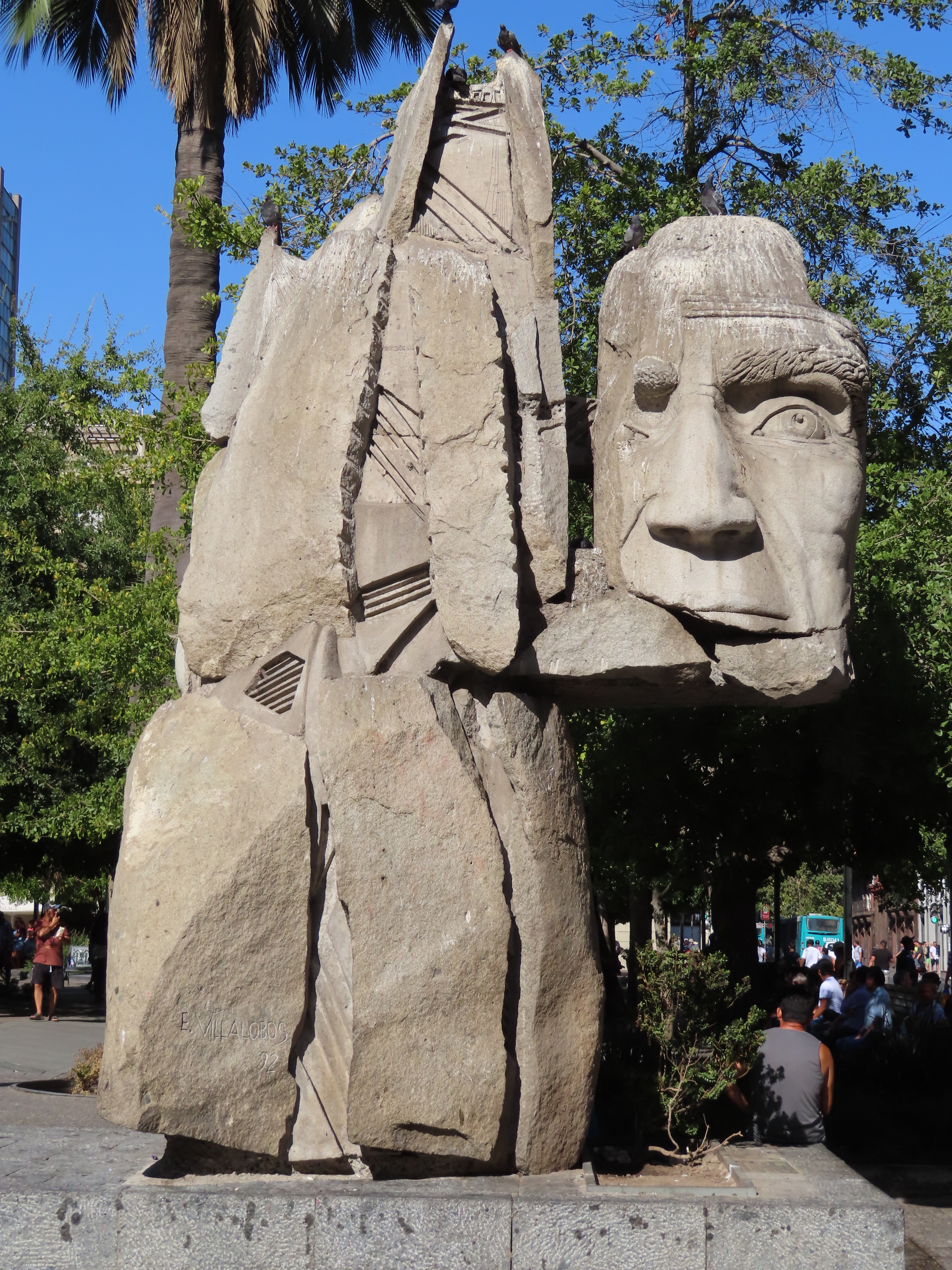
Returning to the hotel, we met the remaining three OAT travelers who had arrived at the normal start date. Our guide took us on a short walking tour, which ended at Chile’s “ground zero”, the Plaza de Armas, where the Spaniards initially settled. At one corner of the square is a statue of the Moche’s leader, Caupolicán,

and diagonally across is Pedro de Valdivia, the Spanish conquistador.

Isabel Allende’s wonderful book “Inés of My Soul”, gives a historically accurate, but fictionalized account of the founding of Chile, as told by Inés Suárez, the only known female conquistador, and mistress of de Valdivia. It is well worth reading.

Our day ended with a fabulous welcome dinner at Casa Lastarria. We were the only patrons because we were dining at the ridiculously early hour of 7 PM, to make it easy to get up for our 6:45 AM departure for Easter Island.

Pisco Sours for all!

And if all goes well, my photos will upload.

Santiago, Chile

Expect to find these words carved on my tombstone: “She never passed up the opportunity to use a clean bathroom”. Good thing, because it took us two and a half hours to get our butts off the plane, thru Santiago airport and into a taxi. The airport’s long lines would have been even more of a challenge with a full bladder.

One reason it took so long was the computers at passport control went down for 30 minutes. Can you imagine what the crowd would be like if that happened in a NY airport? But here, everyone chilled. No groans, cursing or eye rolls. Free Wi-Fi helped. It gave everyone an opportunity to check in with friends and family.

Was this a regular occurrence? We will soon find out, because over the next six days we will be experiencing Santiago airport three more times: back and forth to Easter Island and to Buenos Aires.

Another reason for the long lines is Chile seriousness about not allowing agricultural products into the country. If the dogs don’t get you, the scanning equipment will, so there were no nuts or granola bars in OUR luggage.

We followed our tour guide’s instructions, paying for our taxi inside the airport. 20,000 pesos sounds like a lot, but it is only about $30, and they accept credit cards, so I didn’t need to stop at the ATM to the right of immigration, but I did anyway.

Although we don’t usually stay at Crowne Plaza Hotels, I signed up for their loyalty program when I made our on line reservation. Not only do loyalty members get free Wi-Fi, they also can request early check in. By the time we arrived at 10 AM, we were pleasantly surprised to learn that our room was ready.

A less pleasant surprise was how very tired we were. Or maybe we are just having to acknowledge that we no longer have the stamina that we did in our younger days. Back in “the day”, we would have ignored our weariness and started checking things off our (actually MY) list. Instead, our goals for day 1 are: eat, walk a bit, rest, get acclimated to the new time zone. That was ONE To-Do list we completely accomplished!

By 1 PM, we were so hungry that we ended up having pizza and beer at La Junta, a bar with outside tables. I tell you the name so that if you are ever in Santiago, you will avoid it. The only problem with outside dining—that’s where all the smokers hang out. We ate inside.

Yeah, it was every bit as bad as it looks.

Thanks to the OAT Forum and Trip Advisor, we fared MUCH better for dinner. Both recommended Boca Nariz, a wine bar offering tapas and entrees.

If you don’t have the time or the energy to tour a Chilean vineyard, this is a great alternative. Here, you can choose from a wide variety of wine flights. We opted for wines from the Pacific coast and were pleased with our choice.

Although it looks empty, that appearance is deceiving. Those empty tables are reserved. If you plan to visit, it is wise to make a reservation. We lucked out. Initially the hostess seated us at the only available table, one designed for munchkins. Poor Mike looked like he was at an elementary school parents’ night, sitting at his kid’s desk. The hostess took note and moved us to the big kid’s table as soon as one opened up.

Once again, my blogging is lagging behind our experiences. More about Santiago next time we encounter cooperative Wi-Fi