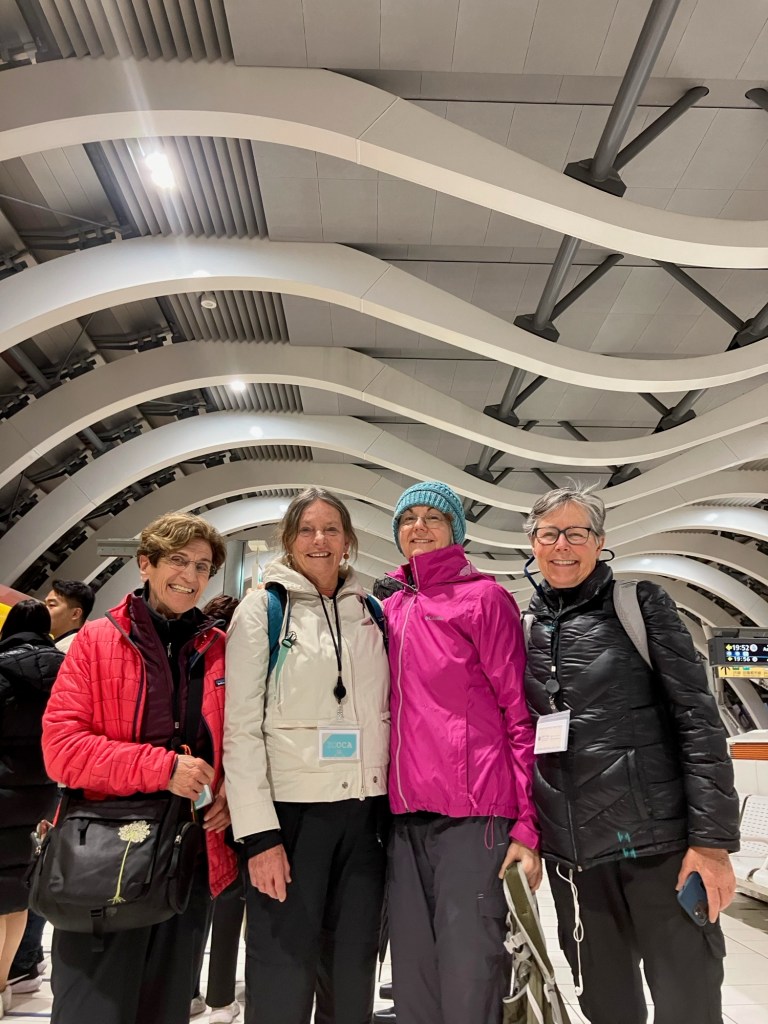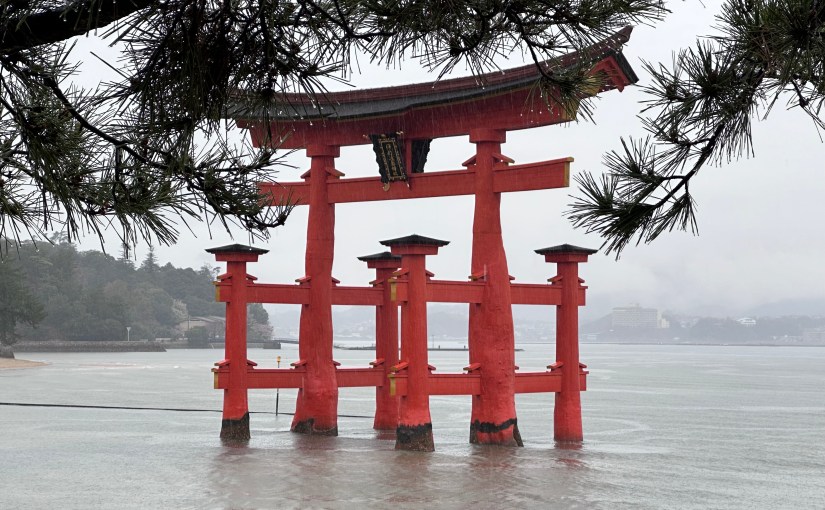
Helpful Hints For Travel to Japan

I am extremely grateful for the assistance I’ve received from the “Friends of Oat” Facebook page. This post is my way of giving back. Although I wrote it primarily for OAT travelers, I hope that others planning to visit Japan might find some of these hints helpful.

Packing

Pack light: Hotel rooms are TINY, so there really isn’t much room to store clothes or luggage. Here’s another reason to pack light–there are no porters in Japan, so you will be handling your own bags.
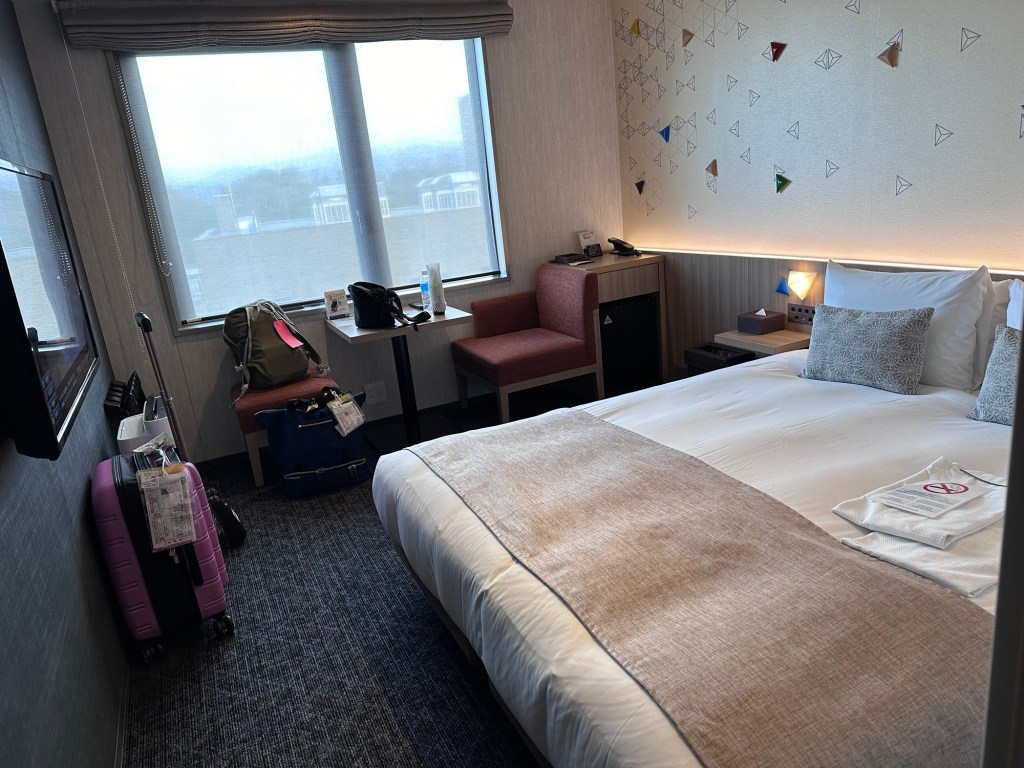
My room in Kanazawa , which was actually quite a bit larger than the ones in Tokyo and Kyoto

Doing Carry-on Only isn’t as hard as it might seem, because every hotel had laundry facilities on site. In our Tokyo hotel, you could watch your laundry’s progress on your room’s TV. Which I did. From my bed. I wasn’t worried that someone would take my laundry out and dump it on the floor, because first, the Japanese are way too polite to do something like that and second, the machine locked with a code that you input.

The Kanazawa hotel had a washer and dryer in the room, complete with a squirt bottle loaded with detergent. Despite the plastic card with instructions in both English and Japanese, it was a slight challenge for me to figure out how the damn thing worked. In fact, I’m not exactly sure what I did, but hey, the clothes came out clean.

You don’t have to pack pajamas, because Japanese hotels provide them. At least the ones OAT uses did. Every day there would be fresh pajamas neatly folded on my bed. Although I had a single room, I still got two pairs of pajamas!

Every hotel had a REAL hair dryer…not one of those awful ones attached to the wall. You know, the ones that you have to keep a finger on the button or else it shuts off?

I had heard that some hotels have onsens, which are sorta like hot tubs/whirlpools except the source of water and heat is the naturally occurring hot springs. I definitely wanted to experience THAT, so I dutifully packed a bathing suit and cover up. That was totally unnecessary, because the onsens have many rules, one of which is you either go naked or you don’t go. Take a look.
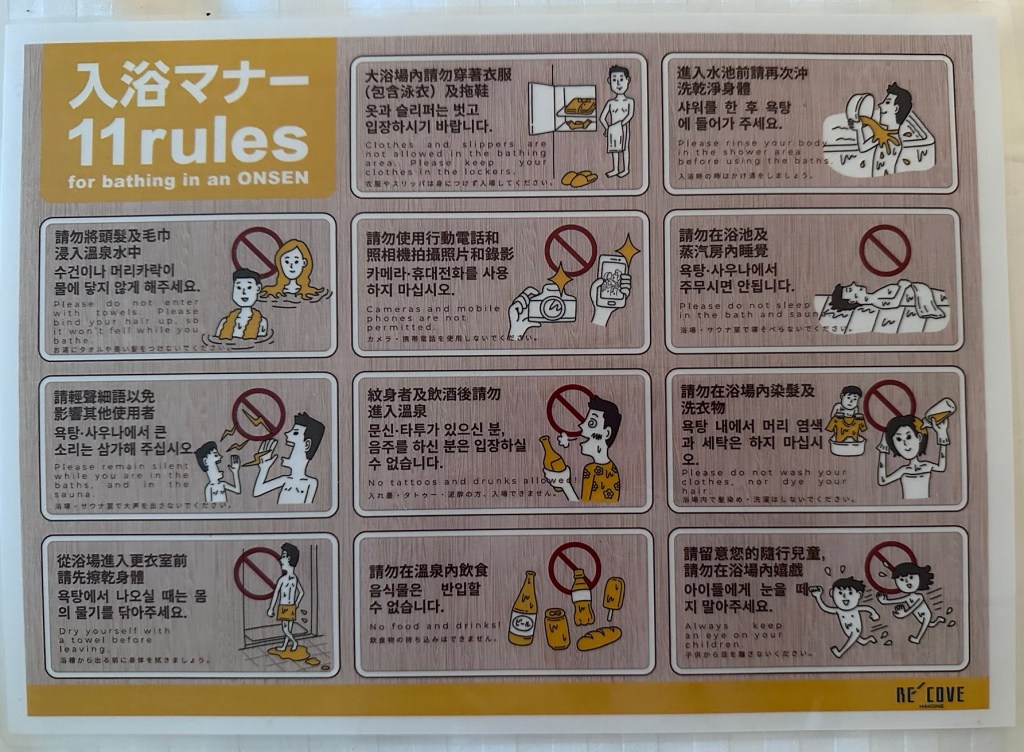
I guess at some point, someone must have tried to dye their hair or wash their clothes in the onsen, otherwise why the need to print the prohibition?

Another unnecessary item that I packed was a water bottle. All the hotels provided bottled water, plus the water in Japan is not only safe to drink, it also tastes good. I simply refilled the hotel’s water bottles from the tap, and never used the one I brought.

Gadgets

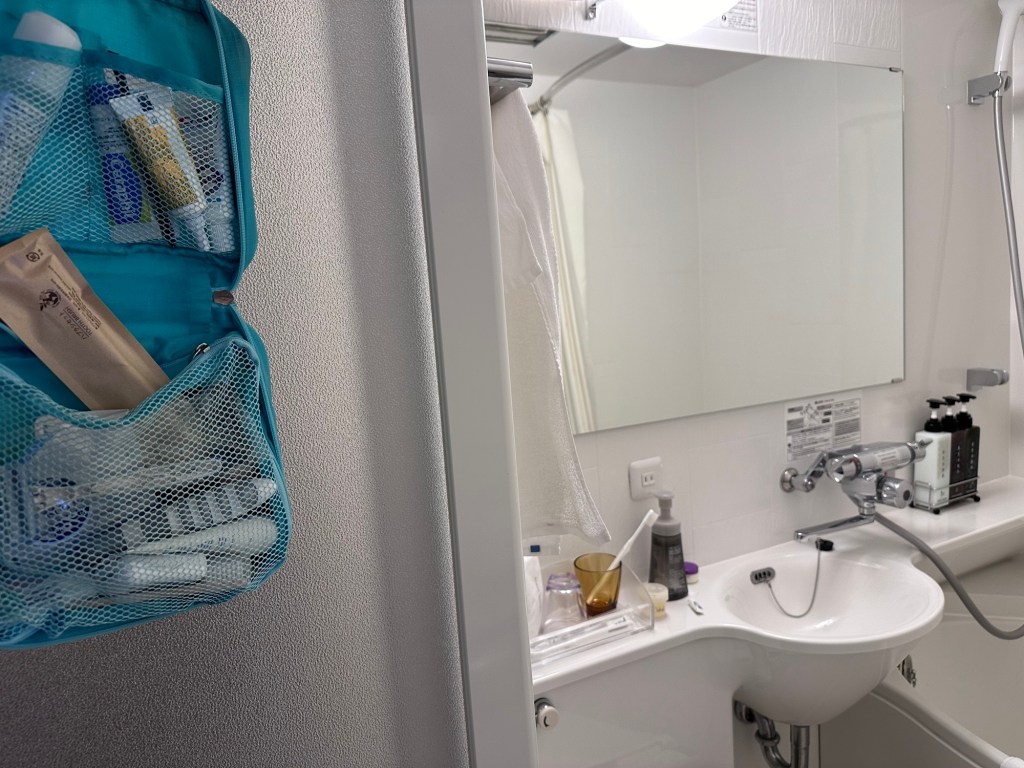
There isn’t much counter space in the bathrooms so hanging toiletries bags make life easier, at least while using the bathroom.
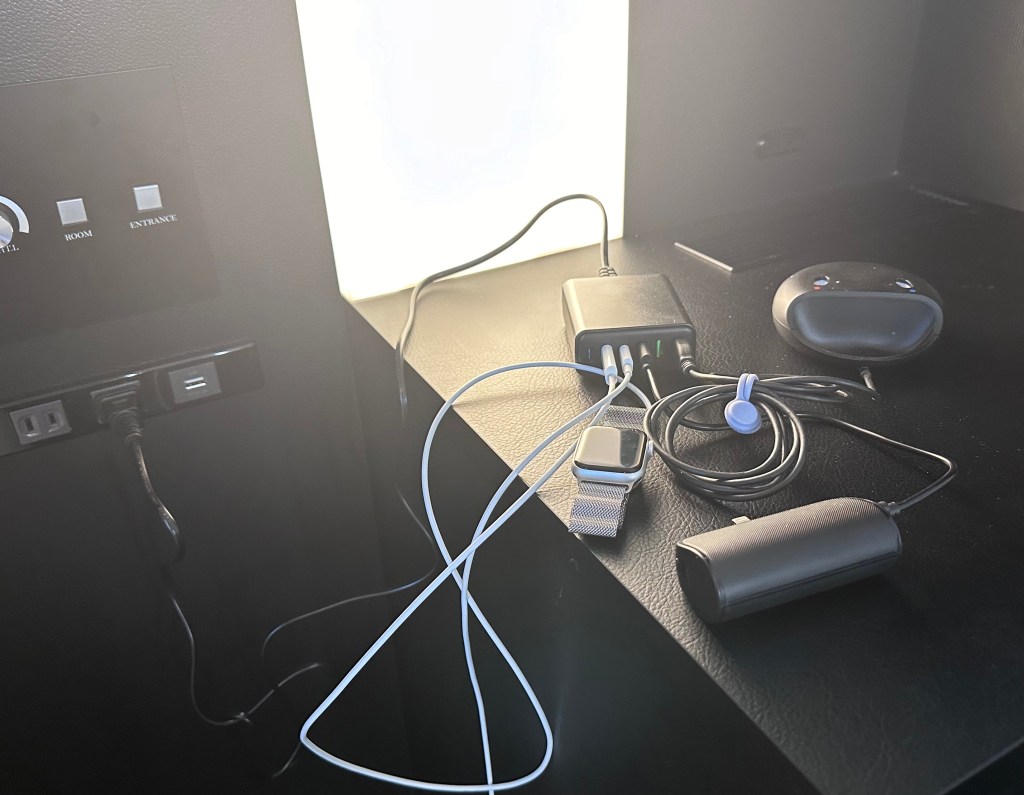
Although some hotels had conveniently located outlets, that was not universally true, so I was glad that I brought my handy dandy plug thingie that I got from Amazon. Because my phone is now my camera, the battery doesn’t last all day, so I bought that black mini portable charger, also from Amazon.
The manicure scissors I brought were useful for cutting off the plastic ties that were affixed to our luggage every time we had our bigger bags shipped. The bullet train doesn’t have much storage space, so we were told to pack a small bag to tide us over until the rest of our luggage arrived. That happened twice on the main trip and once on the post trip. Additionally, some of the plastic packaging on snacks was difficult to open, so my manicure scissors spared my teeth!

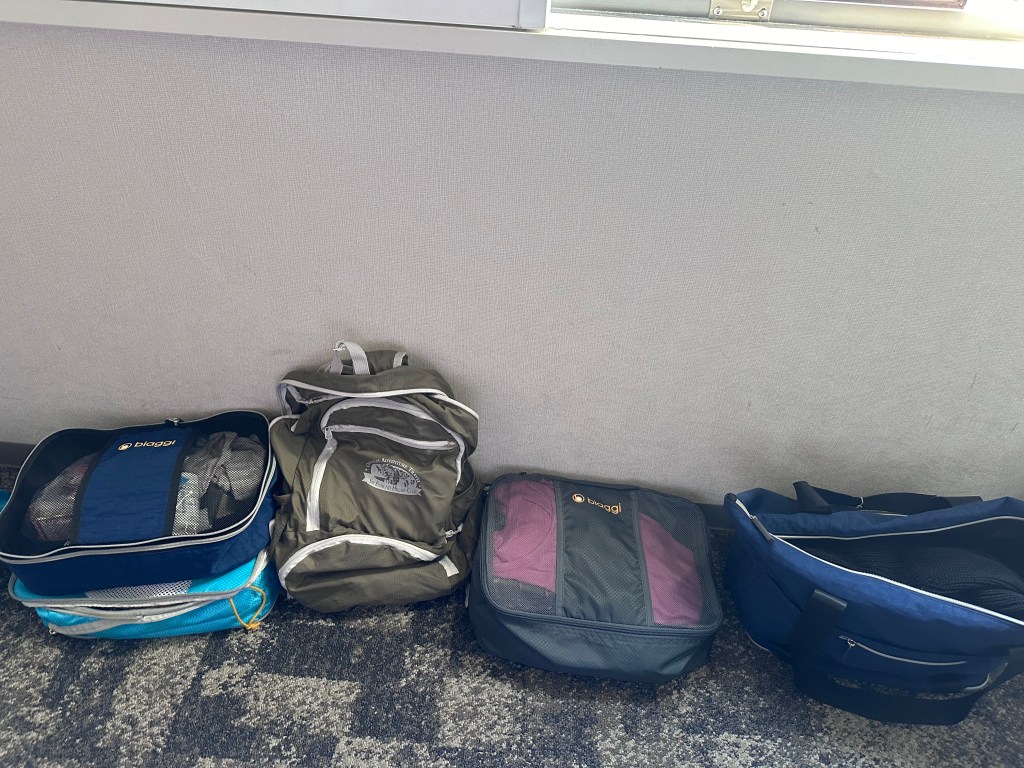
My packing cubes functioned as bureau drawers in these bureau-less and closet-less rooms. Yep, I just put them on the floor. in the narrow space between the bed and the window.
The OAT backpack folded up to almost nothing in my carry on. It made a great day pack, and provided extra space for purchases.

Shopping

I normally don’t shop while I am on a trip, but the exchange rate was so favorable, and the items were so unique, I found myself buying lots of little gifts — in department stores, in little handicraft shops, you name a place and it is highly likely that I found something interesting to buy there.

Language

English is not commonly spoken, but Google translate made it much easier to communicate. I simply typed in what I wanted to say and showed the Japanese translation when I needed help. In museums without English explanations, I pointed the camera at the Japanese words and Google delivered a translation like the one below.

Screenshot

Money

I learned from the Friends of OAT Facebook page not to bother with Japanese Bank’s ATMs when I needed cash. Instead, I went to either Lawson’s or 7 11, which are EVERYWHERE. I was beyond relieved when I saw that English instructions are provided. The exchange rates are good, and the cost for withdrawing money is reasonable. Although you can use your credit card in most places, it is good to have cash for the markets and smaller gift shops. A bonus–both places sell ice cream, chocolate and other snacks.

Mass transit

I’m sure that once you get the hang of it, mass transit is easy to use. Let’s put it this way, I was VERY grateful that our guide took care of determining how we would get from point A to point B. What is wonderful about Japan is one transit card can be used on just about everything: buses, trams, trains (but not bullet trains). The neck holder our guide gave us made getting through the turnstiles VERY easy.

It’s a wonderful trip. Rumor has it that OAT is developing another trip to Japan. I certainly am considering a return trip, but in the fall to see the gorgeous colors that were displayed in this photo of a poster.

Happy travels!

OAT’s Kyoto Itinerary

There was so much to see and do in Kyoto, I decided Kyoto required two posts. This one describes the “official” OAT activities. The next post is all the “extras” sweet Mori made sure we experienced.

After Covid cancelled my 2020 Japan trip, I comforted myself with an on-line “tour” of Kyoto. From that, I got the mistaken impression that Kyoto was a rather compact city with all of the sights clustered together.

I was TOTALLY unprepared for how big Kyoto is and how scattered the points of interest are.

My iPhone photos will give you a rough idea of how much ground OAT’s itinerary covered during our 5 day stay. I was very grateful that Mori handled all of the logistics.

The Shinkansen brought us swiftly and smoothly to Kyoto. Because we had ridden the bullet train from Tokyo to Kanazawa, we were familiar with the drill: you pack a small overnight bag to tide you over until the larger luggage ( which was shipped) arrives a day later. The bullet train is super comfortable, but storage space is quite limited.

I was glad that I was traveling with only a backpack, because unlike our arrival in Kanazawa, in Kyoto we had to swim through an ocean of humanity to get through the train station.

I’m wondering what was easier to follow—Taco, or my gray head sticking up above the crowd.

What a multisensory extravaganza the Kyoto train station was! We were bombarded with sounds, sights and wonderful smells, but as you’ll see in a later post, it is even more thrilling at night, so no more daytime station photos.

But first, here’s a whirlwind tour of my favorite things on OAT’s itinerary, which successfully hit Kyoto’s traditional hot spots.

The majestic Arashiyama Bamboo Forest

It is hard to describe the peaceful feeling one gets while walking through these towering plants.

Cemetery beside the bamboo forest

The Tenryu-ji Temple

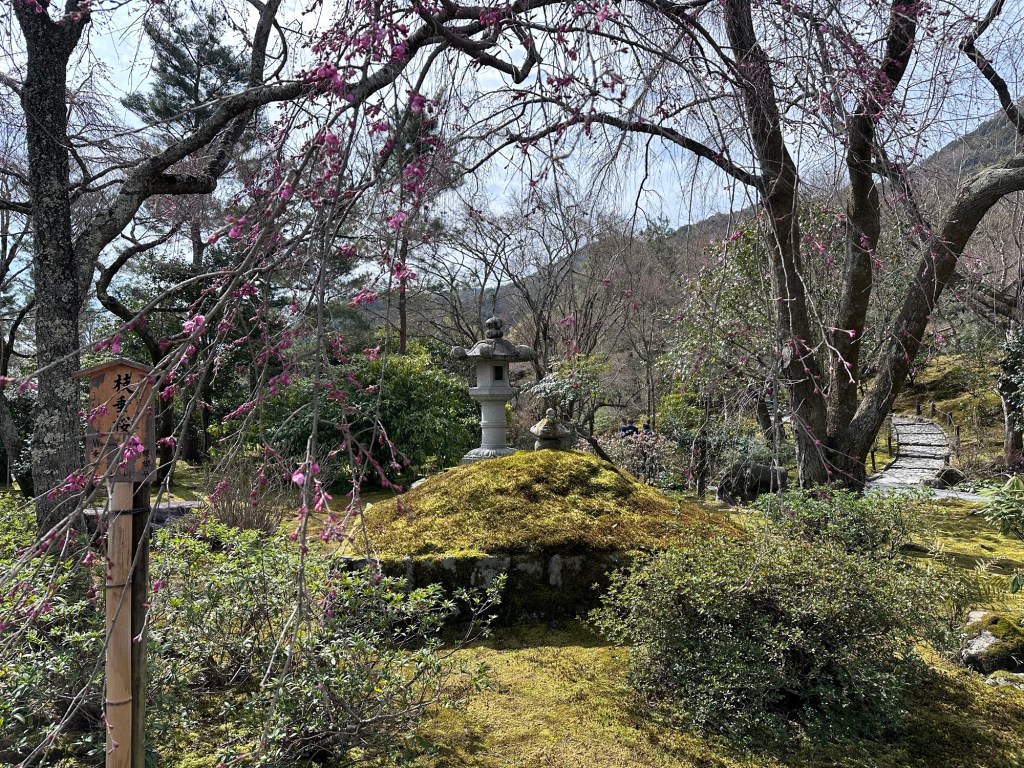
A brief stroll away from the forest was a beautiful garden and Buddhist temple. We were so excited to see the cherry blossoms were starting to open.

I managed to pitch a coin right into the ring in front of the frog. I keep making the same wish. One of these times it should work.

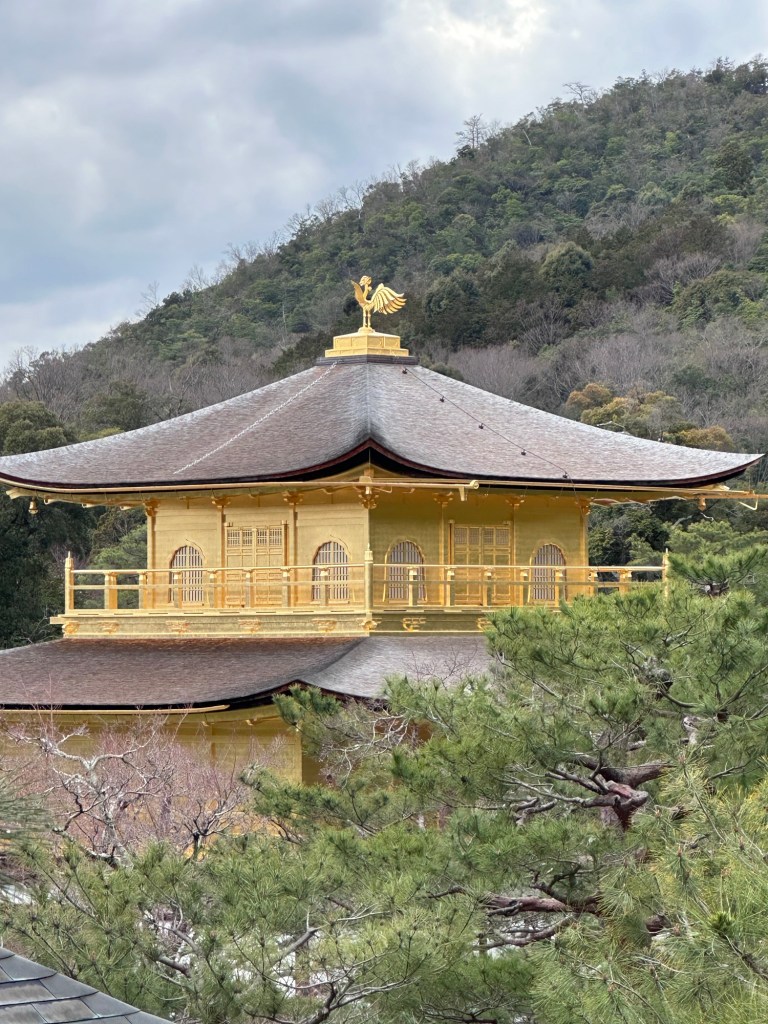
Kinkaku-ji Temple (Temple of the Golden Pavilion)

The original temple was constructed around 1400, but was rebuilt in the 1950’s after it was burned to the ground by a crazed monk.

Wasn’t it fitting that the phoenix atop the temple was the only part of the original that managed to arise from the ashes of the burned building?

Nijo Castle

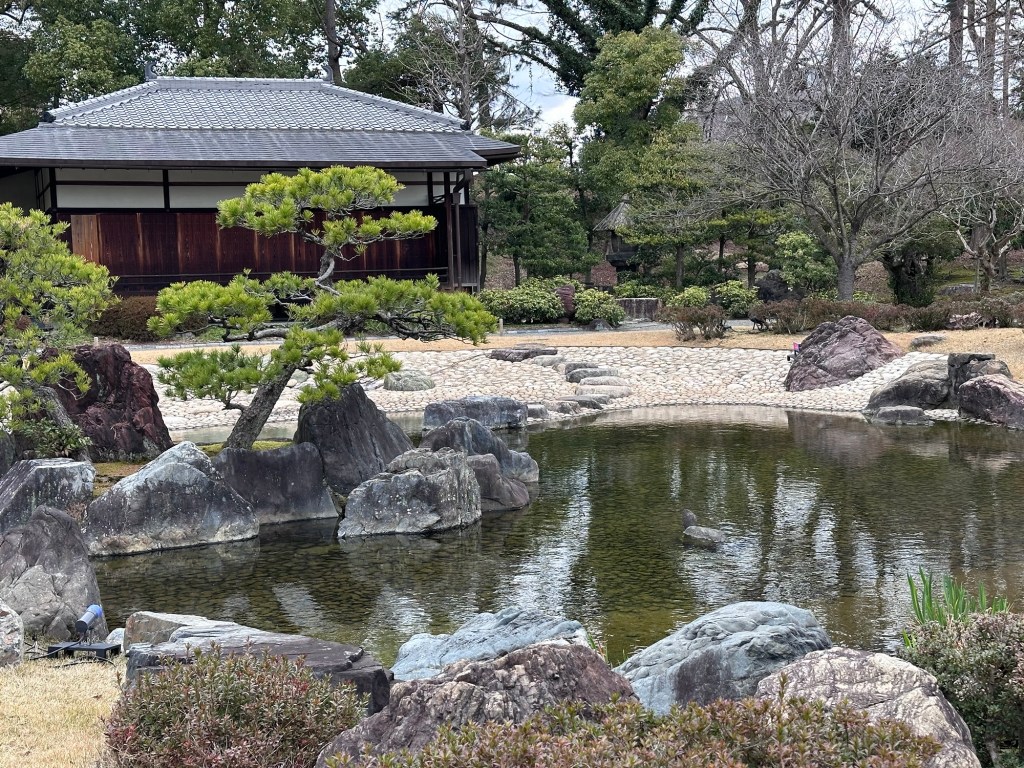
We toured the interior of Nijo Castle, but we weren’t allowed to take photos. That’s okay. I found the exterior far more compelling—especially at night (and yes, you are going to have to wait for a future post to see how glorious it is).

Nara

India has its sacred cows; Japan has its deer.

Kathleen is bowing to the sacred deer

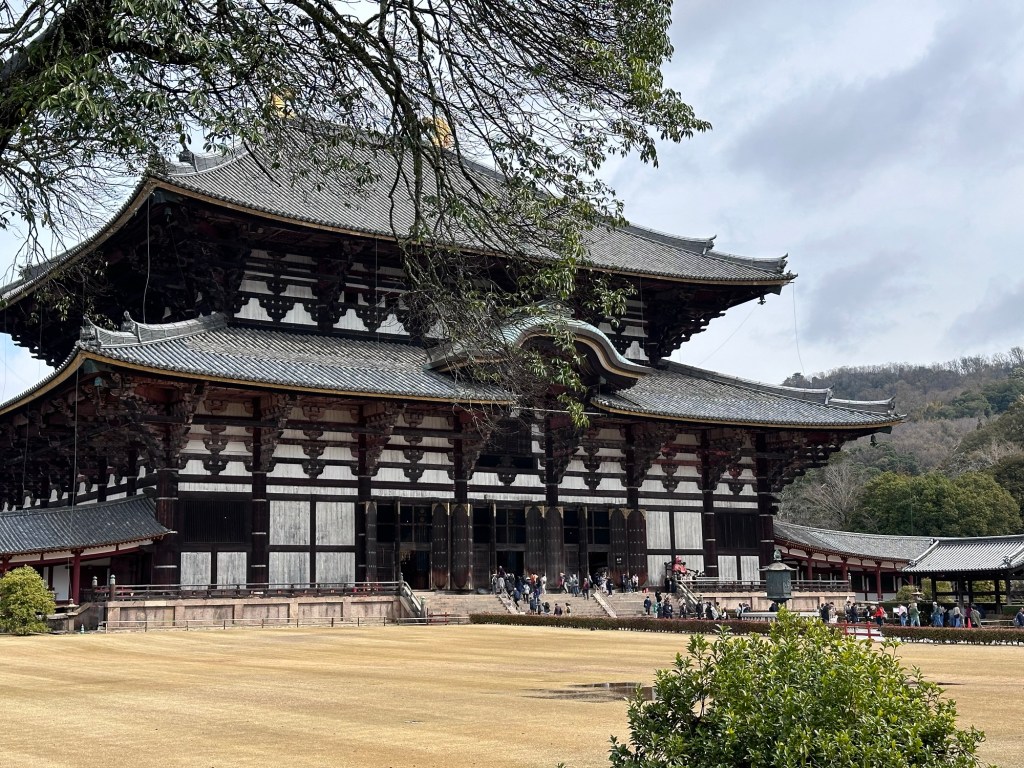
Todaiji Temple

This is the home of the world’s largest wooden Buddha.

He was so enormous, it was difficult to photograph him. Besides, we’ve all seen Buddha photos.

As you may have noticed from earlier posts, I’m rather fond of the Guardians. Even though this one has a fierce facial expression, he’s holding a scroll and pen, so how scary can he be? Maybe his message is “the pen is mightier than the sword”?

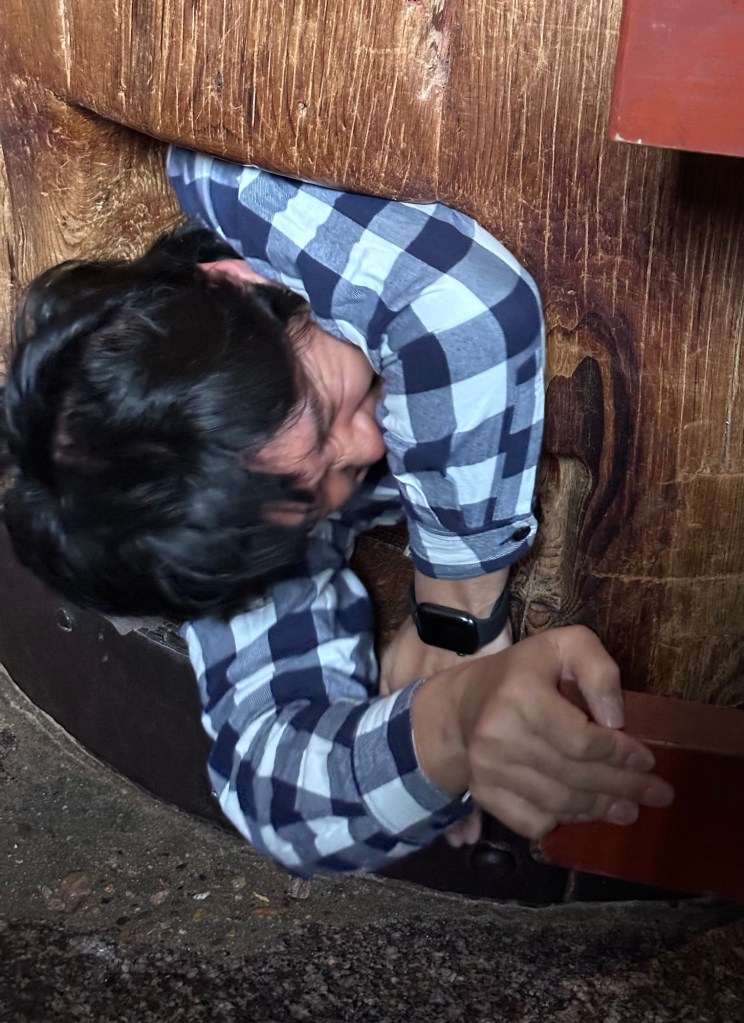
This next photo requires an explanation, but first take a look and see if you can figure out what is happening.

There is a wooden block in the temple, with an opening that supposedly is the size of Buddha’s nose (the statue, not the human). The belief is that anyone able to squeeze through Buddha’s nose (or the passage) would have a good life. I’m pleased to say that although he initially struggled, Mori made it thru.

Zen Temple

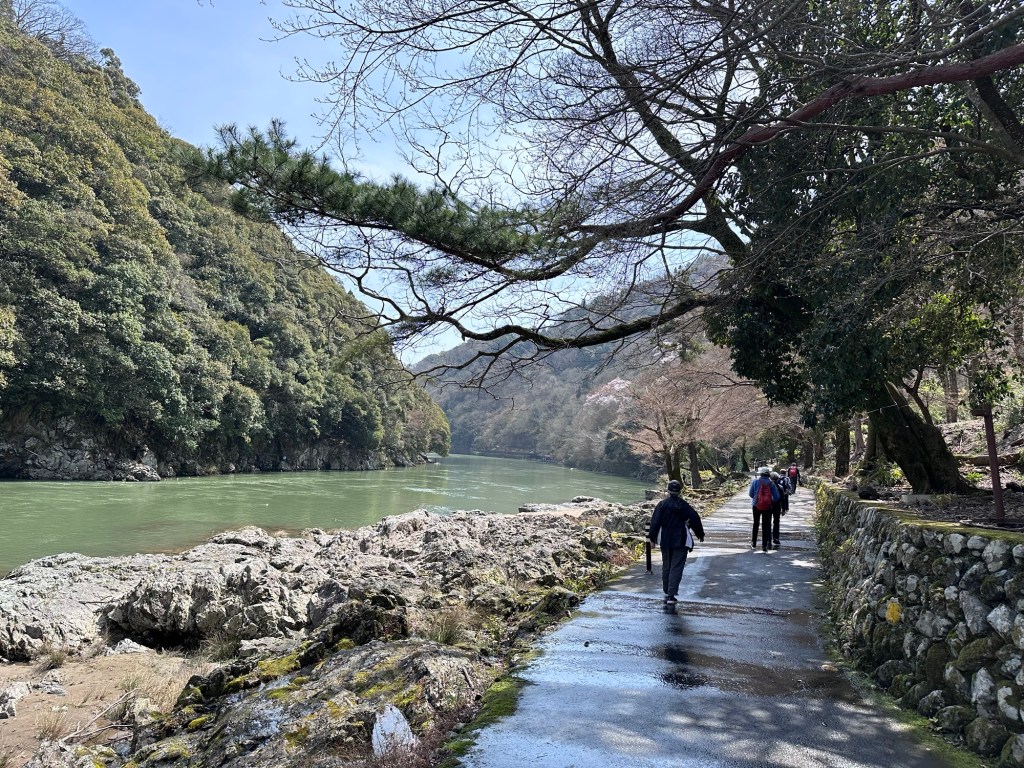
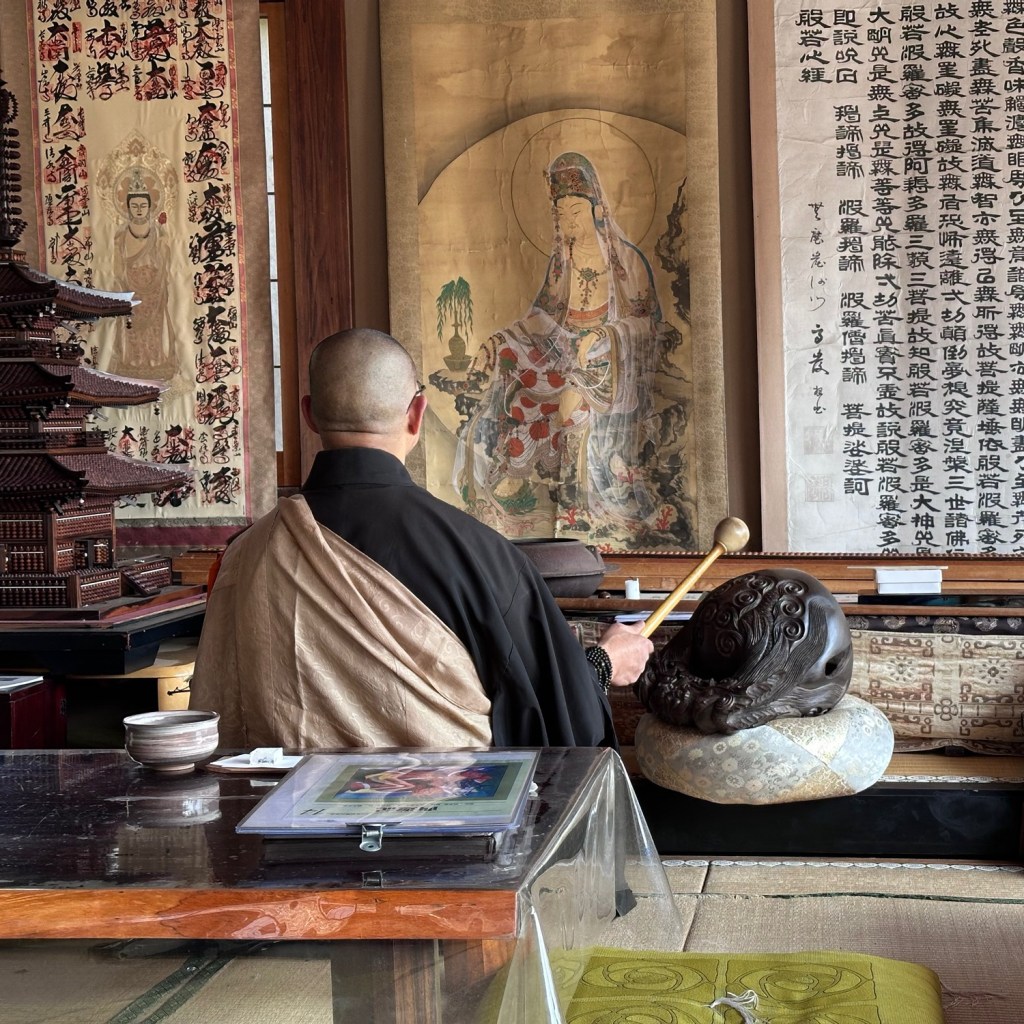
After walking alongside this beautiful river, we climbed 200 steps ( I didn’t count; I took Mori’s word for it) to meet a zen master, with whom we meditated.

We left, totally at peace, feeling “zero”. It’s fortunate that l learned to let go, because that hat on my head and I were soon to go our separate ways.

Fushimi Inari Shrine

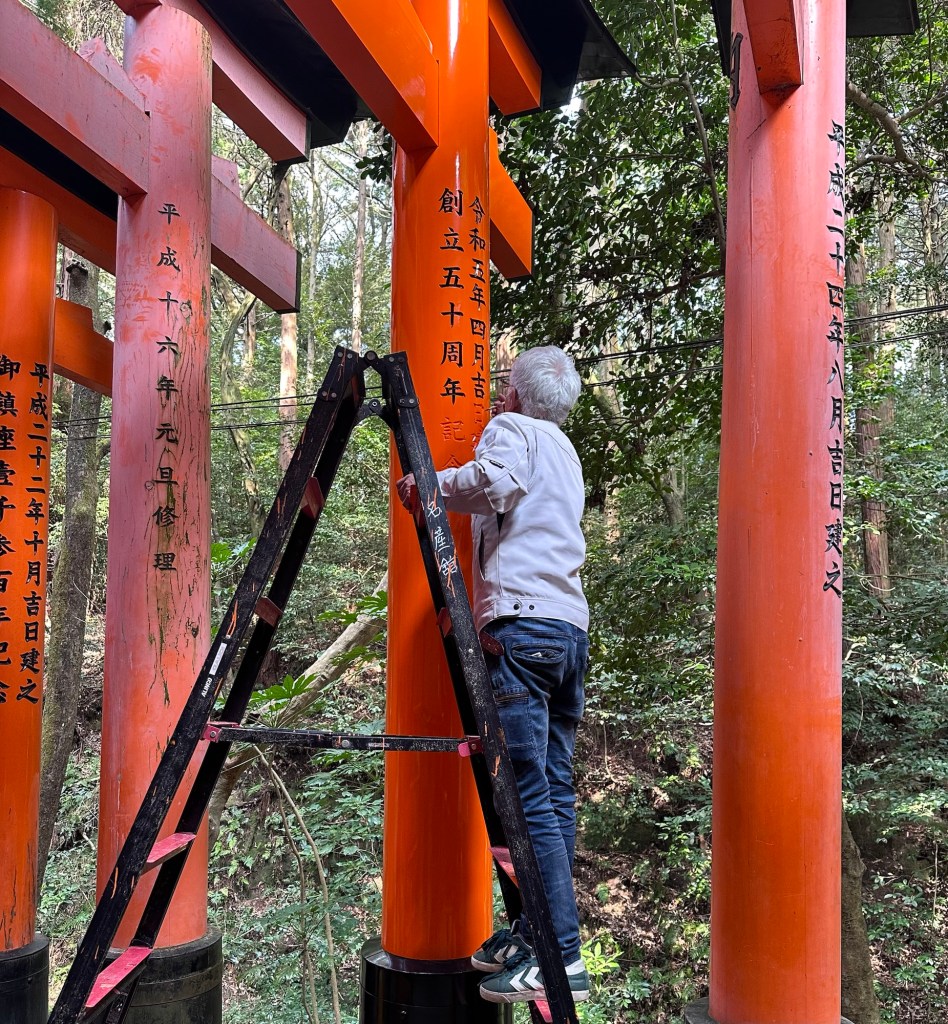
After experiencing Buddhism, we moved on to the famous Shinto shrine with its beautiful vermillion Torii Gates.

We didn’t have time to climb to the top, so this map will have to suffice to give you an idea of the immensity of the shrine.

When Christo did “The Gates” in NYC’s Central Parking 2005, Mike and I spent an enjoyable February afternoon strolling through them. Could Christo have gotten his inspiration from Japan? I think he did.

Sushi Making

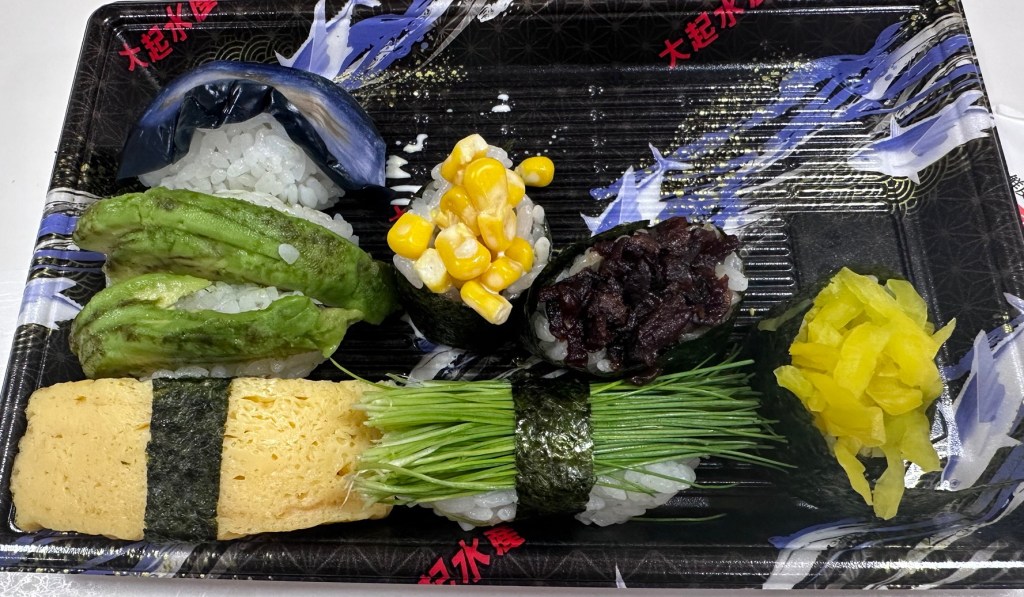
I will say up front that raw fish wrapped in seaweed does not meet my definition of delicious. Still, I was determined to keep an open mind. I was quite happy to learn that we had a vegetable option.

My son Greg would have loved the discussion about knives and whet stones.

Okay, so maybe it didn’t look like much, but it sure was tasty.

What better way to end this post than with a photo of a beautiful blossom…

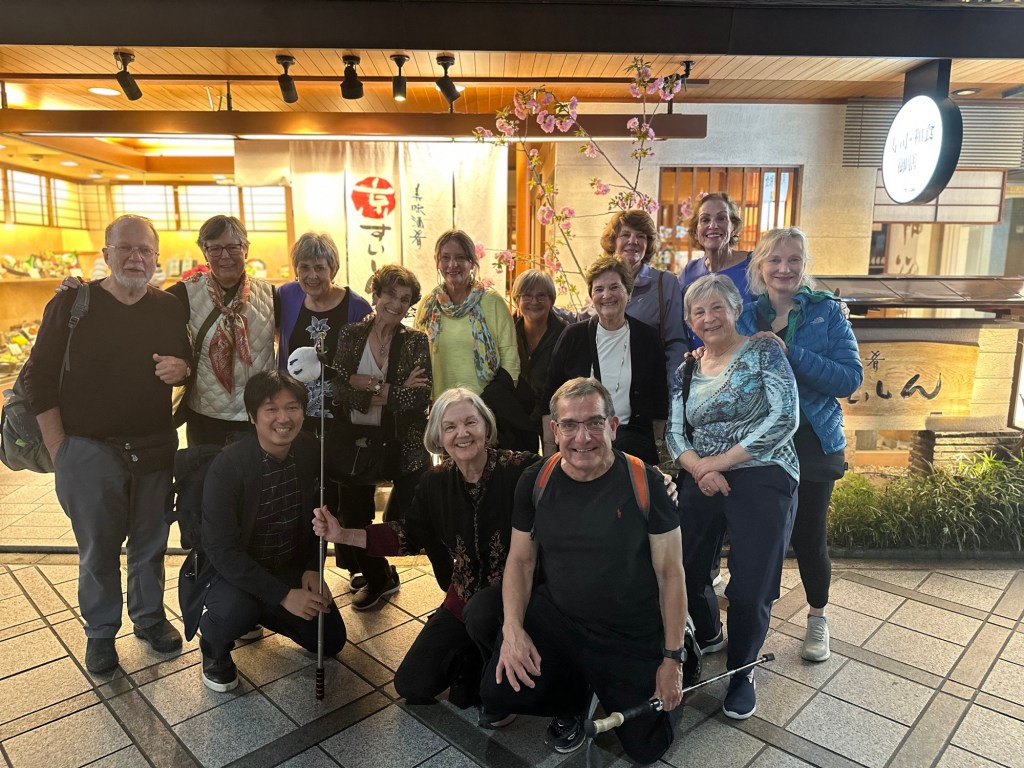
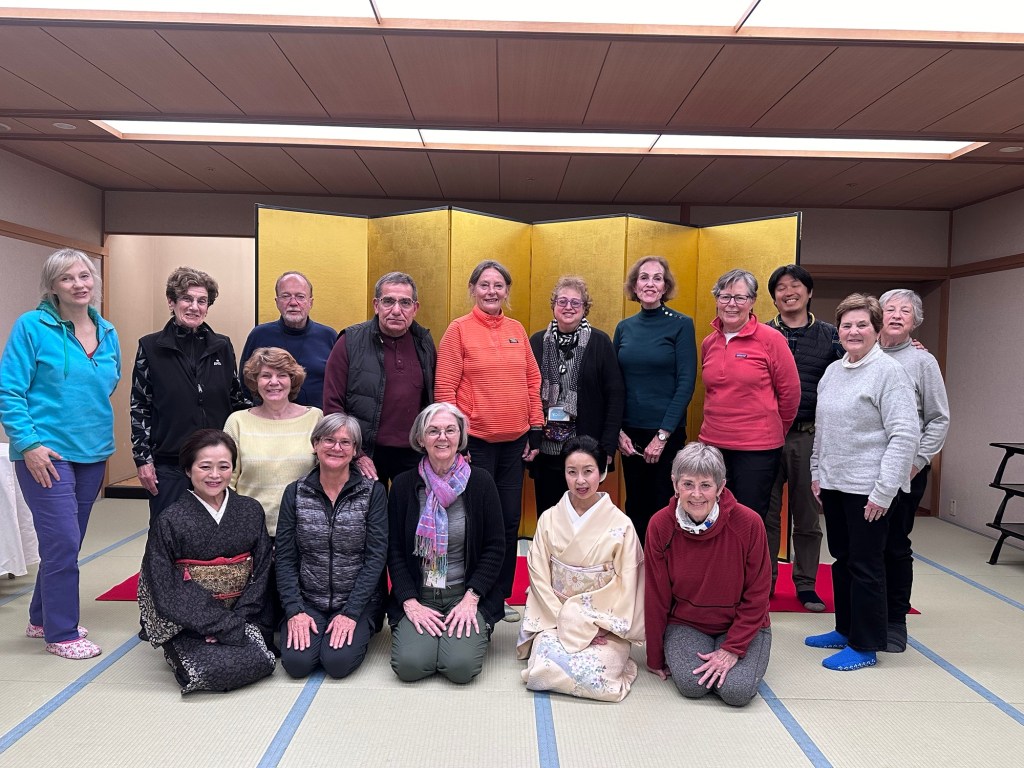
and a group shot taken after our farewell dinner. Sadly, Mary, Jim, Kathleen and Cathy, weren’t joining us on the post trip to Hiroshima.

Three Nights in Kanazawa

Initially, I expected to do one post for both Kanazawa and Kyoto. I had never heard of Kanazawa before, so hadn’t realized how much there was to see in that lovely little town. Everywhere I looked, there was something that was jaw dropping gorgeous.

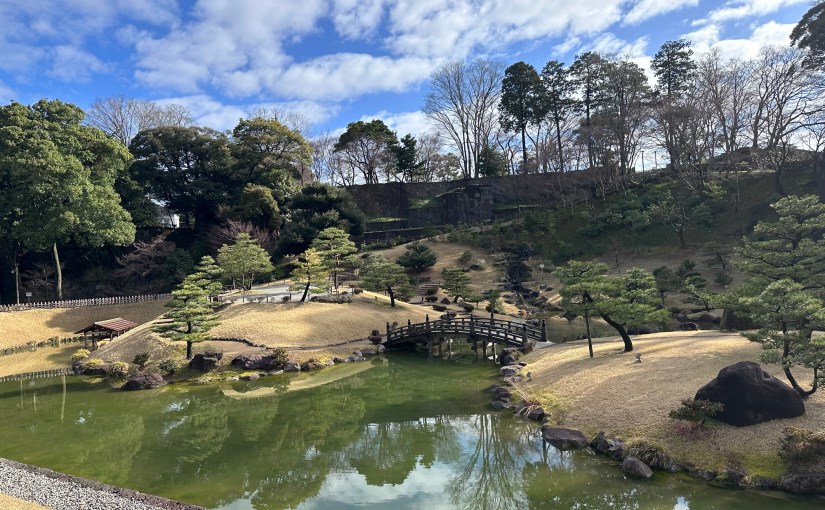
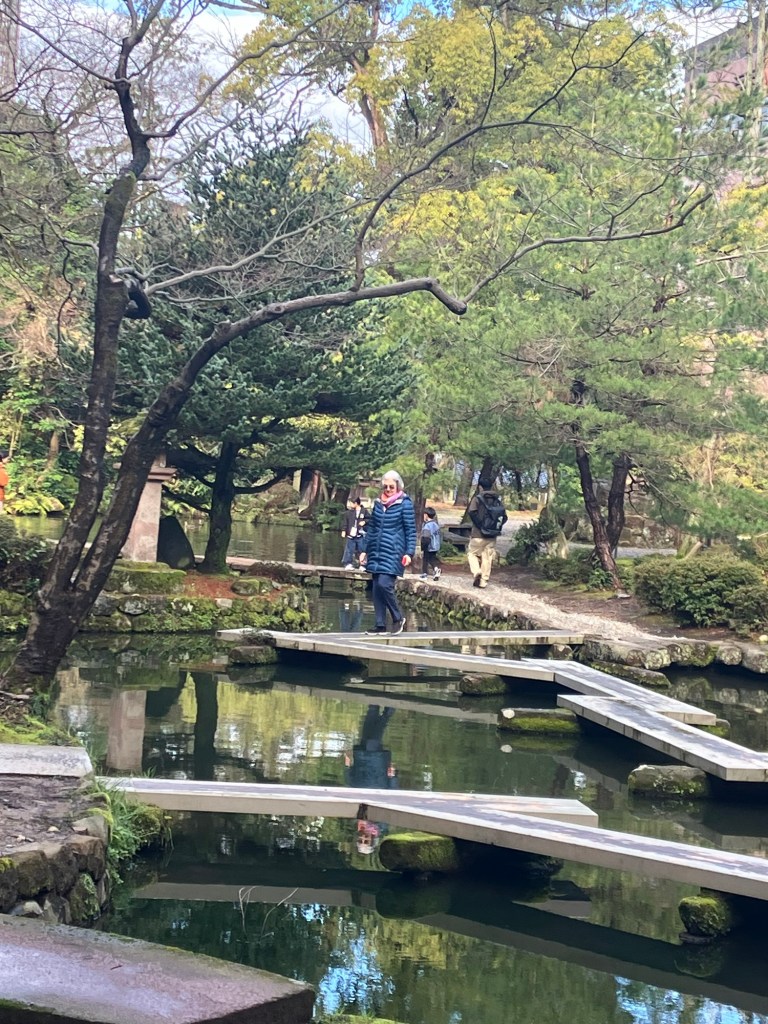
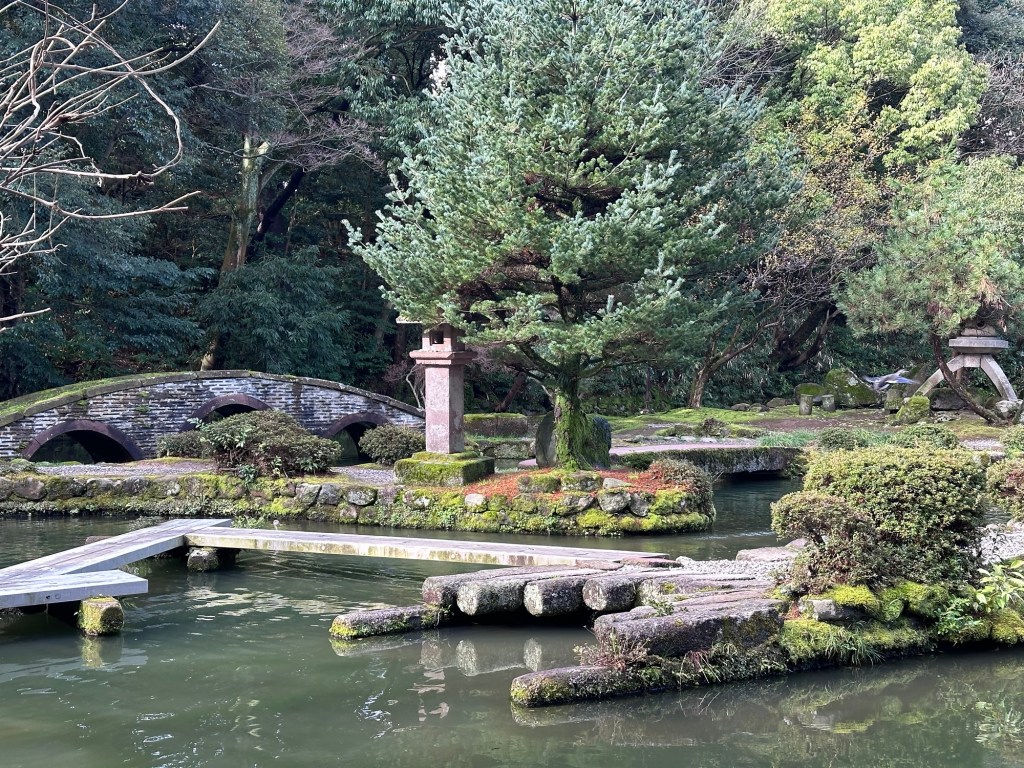
It was raining off and on, but that minor inconvenience didn’t dampen our enjoyment of the beautiful Kenrokuen Gardens.

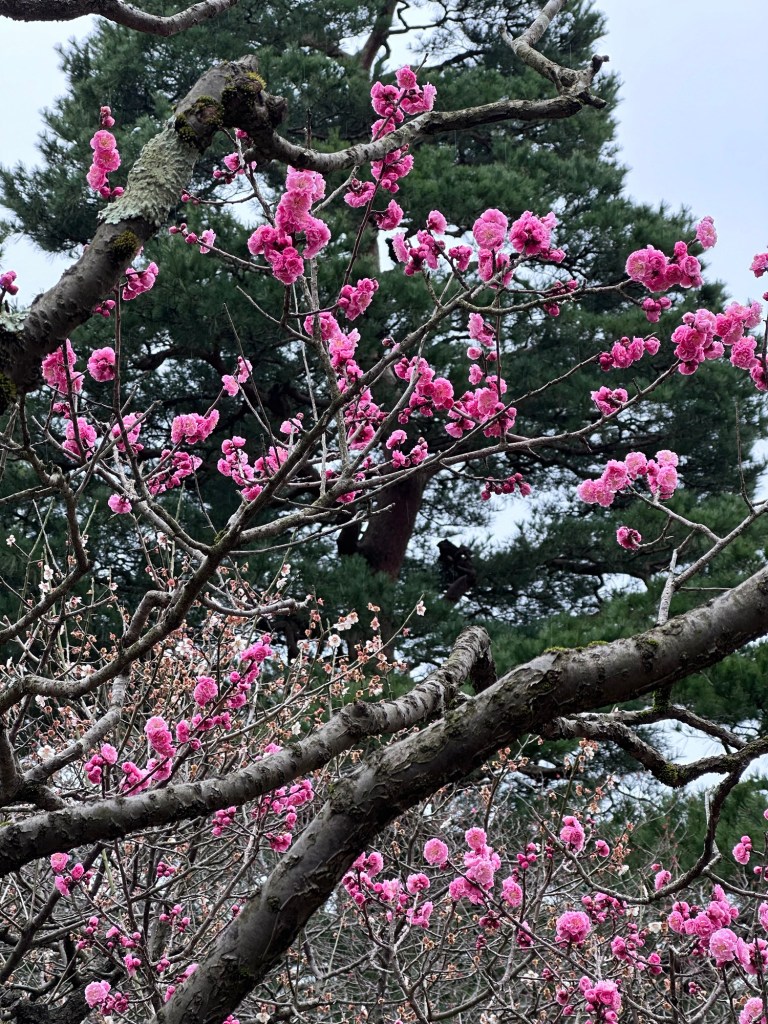
Although it was too early for Kanazawa’s cherry blossoms, the plum trees were a brilliant rosy pink, contrasting nicely against the gray skies.

We realized how lucky we were to view the gardens with such perfect lighting. A sunny day would have washed out the contrast.

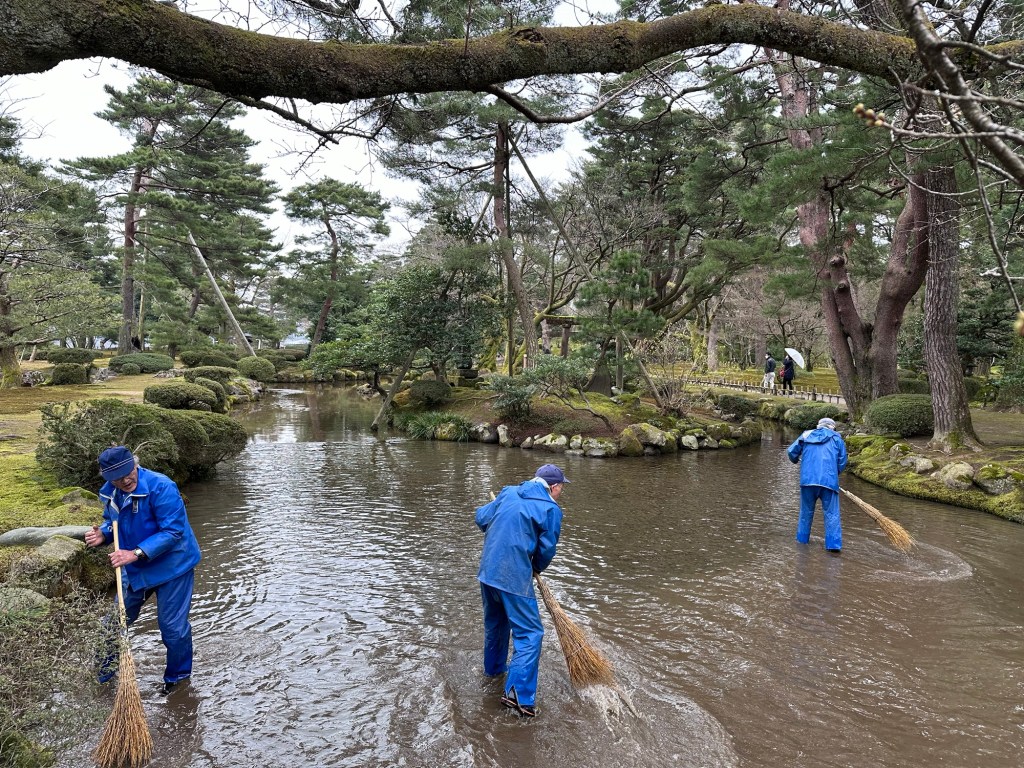
How does it stay so pristine, you ask? Different cultures have different priorities. The Japanese value beauty, harmony, and cleanliness. Shared spaces are important to them. As you can see, their resources align with their values.

We are lucky that photography is one of Mori’s interests. He was always scouting out great locations for group photos.

One of the many things I love about our group is the way we all look out for each other. Notice how Mike and Bobbi are making sure Cathy doesn’t fall off the bridge. At least I think that’s what they were doing. Either that, or their attempt to push her into the water was unsuccessful.

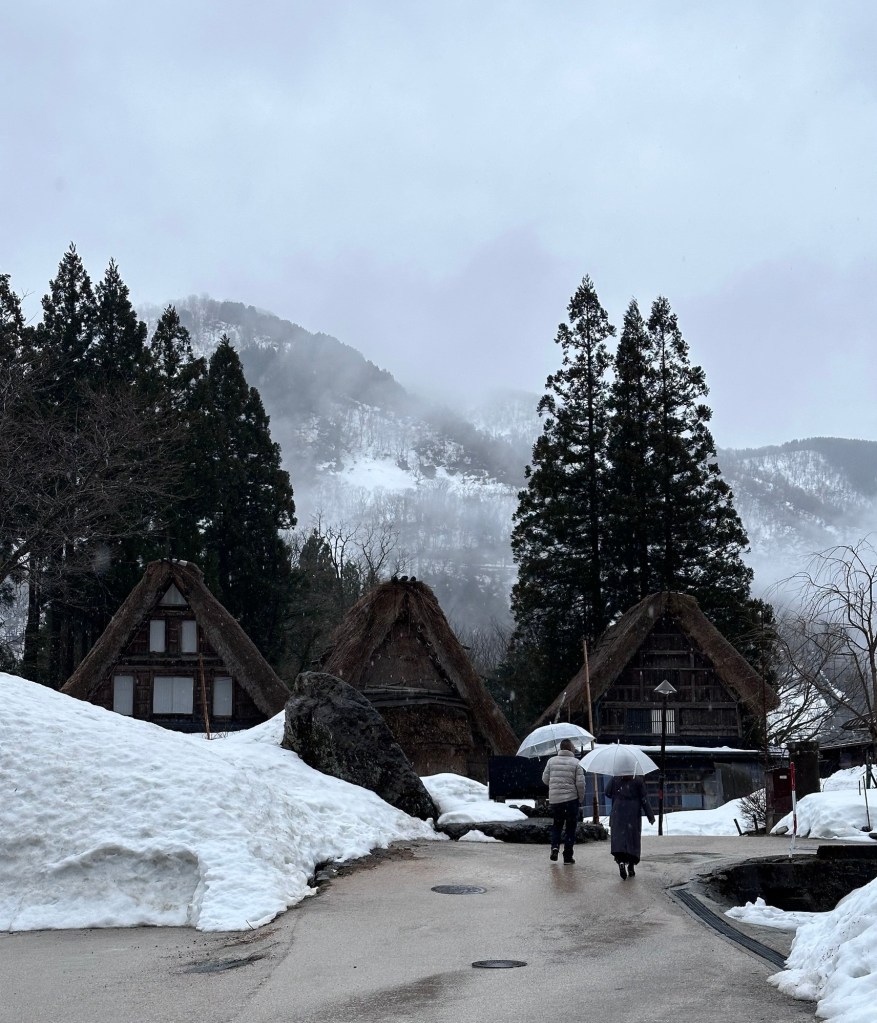
For one of our “Kanazawa” days, we were given the option to visit Gokayama, which is about an hour’s drive away, up into the snowy mountains. The view was lovely and the gift shop was even lovelier, which is good news for the folks back home.

After visiting this village, we spent the rest of the day making ( and eating) mochi, learning how to make traditional Japanese paper, and watching a traditional dance.

I hope my exquisite creations survive the trip home.

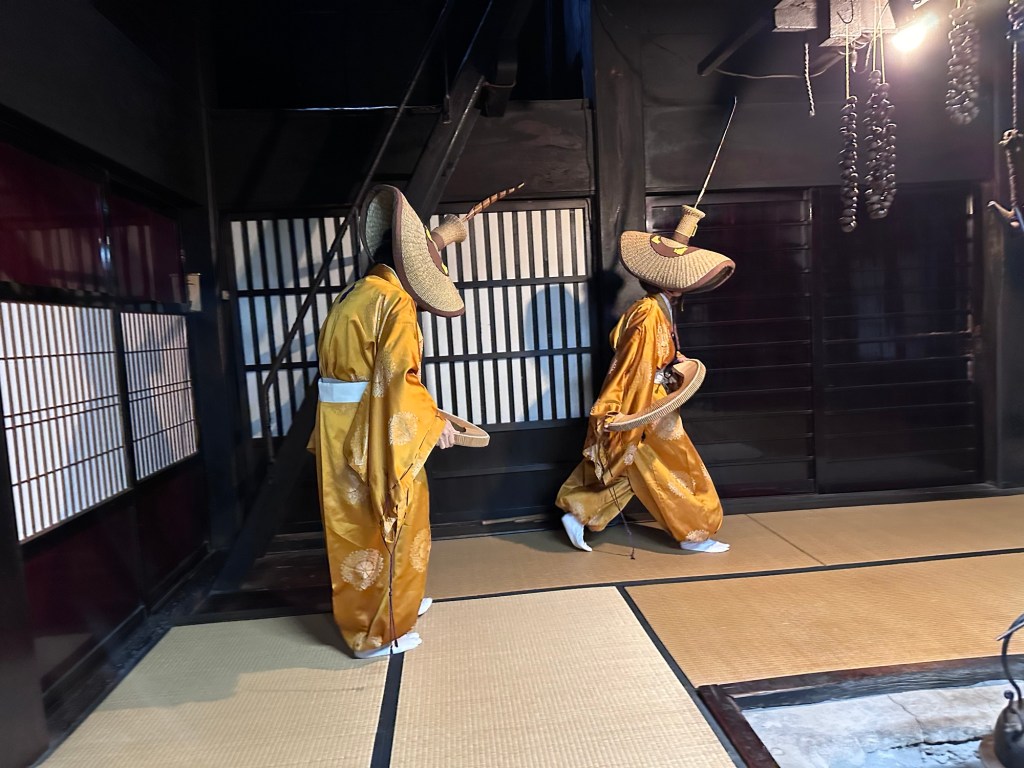
The traditional dance performance was set in an authentic, historic Japanese house. Yes, I know that house had an intriguing history, however, it was so bloody cold in there, all I could think about was getting back on the bus. Sorry. You’re not getting any house history from me.

The traditional dance

Mori managed to find us fantastic restaurants everywhere we went, and Kanazawa was no exception. We liked shabu shabu so much, we were delighted to experience it again. This sweet TINY restaurant was quiet, beautiful, inexpensive, and best of all, the food was delicious.

Ruth, Renee, Janis and I had this little alcove all to ourselves.

That evening was an “on your own” dinner, so feeling adventurous, Kathleen and Cathy opted for a restaurant with a more esoteric menu.

Before leaving Kanazawa, we split into four groups to visit the home of a Japanese family, where we were treated to different activities, like calligraphy, and origami. Some groups sampled saki and tried on kimonos. The luckiest groups managed to do all of the above.

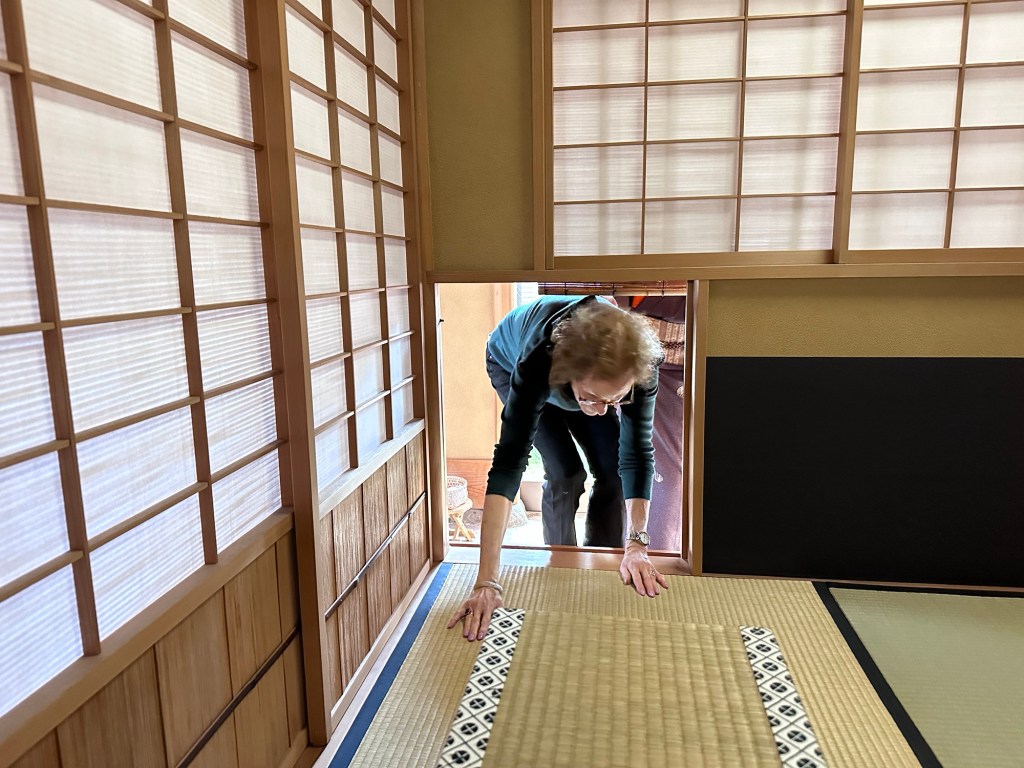
My group experienced the formal tea service at an authentic tea house. We entered the room the way the samourai did, crawling through a tiny space that we dubbed the “doggie door”.

Here’s Patsy, demonstrating the graceful way to enter the tea room. Like the Samourai, the door’s size forced her to leave all her weapons behind.

We had just enough time before we took the bullet train to Kyoto to visit the shrine a few blocks from our hotel. As usual, the paparazzi was stalking me as I strolled the park.

Photo by Bobbi

Some of the group went with Mori to visit the shrine the night we arrived. I was too exhausted, so I was glad that I had time for this early morning visit.

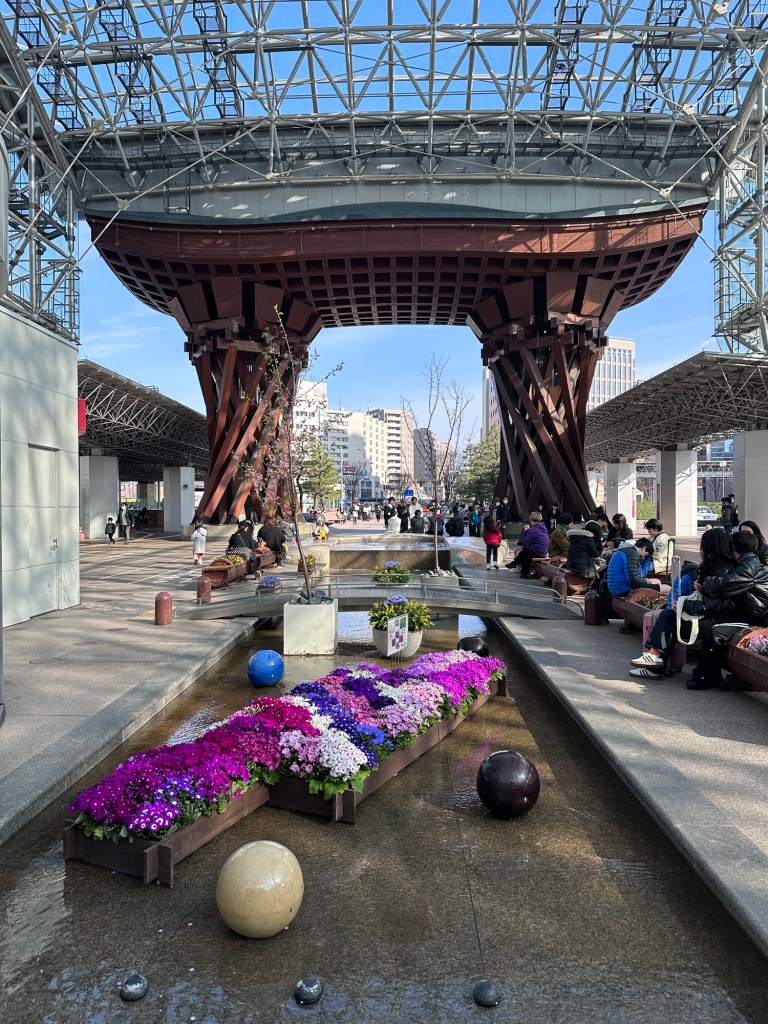
I’ll end with this photo of the Kanazawa train station. and if you think this station is beautiful, you ain’t see nothin yet! Just wait till my Kyoto post!
Japanese Cultural Experiences in Tokyo and Hakone

When you think of Japan, what comes to mind? For me, it was all about the cherry blossoms and the Geishas. Sumo Wrestling? Drumming? Karaoke? Not so much. But I kept an open mind, and I’m so glad I did. Frequently, on OAT trips, I didn’t know I wanted to see something until I got there.

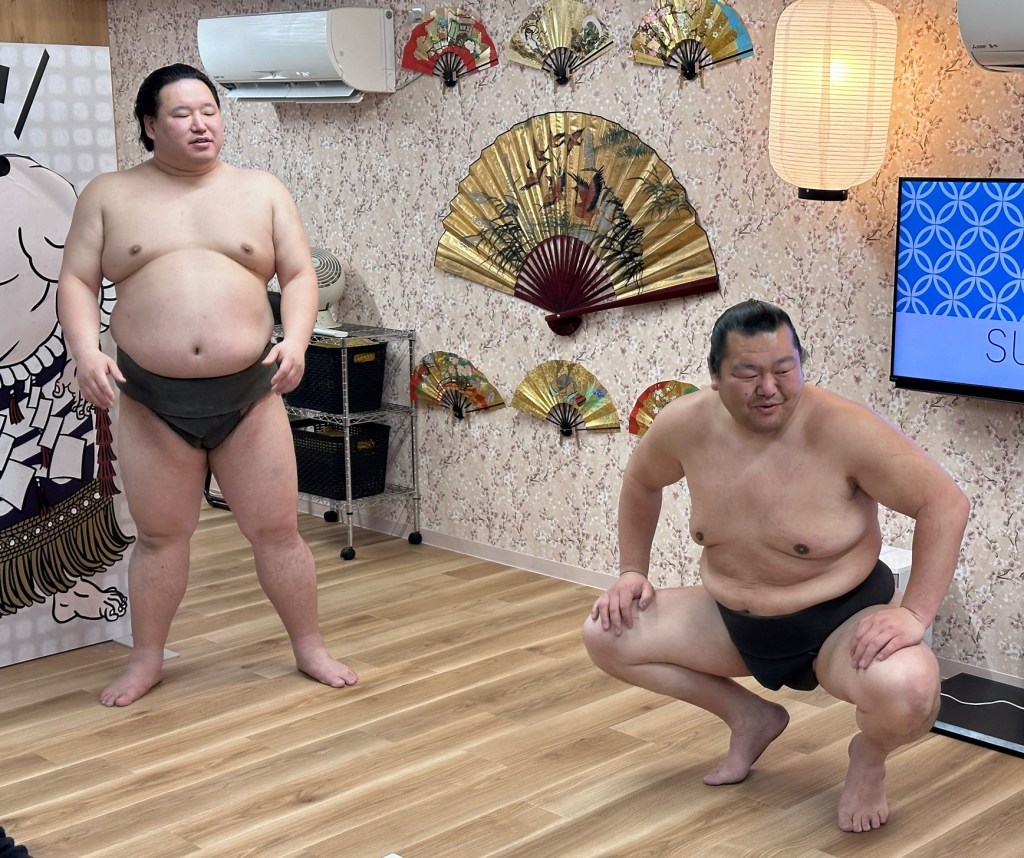
Take, for instance, sumo wrestlers. These guys put on quite a show for us. I hadn’t expected them to be so funny! While demonstrating the forbidden moves—poking their opponent’s eyes—a fake eyeball popped out and rolled on the floor.

It wasn’t just laughs, though. We also learned quite a bit about the sport. Some of the sumo wrestlers are recruited from the ranks of “troubled” boys, usually around the time they turn 15, providing a constructive use of all that testosterone.

Their careers last about 20 years, which means they retire from wrestling in their mid to late 30’s, similar to the career span of professional athletes in the USA.

Renee and I (because of our insurance backgrounds) immediately had questions about the impact of all that extra weight on life expectancy. We learned that sumo wrestlers, on average, live 10 years less than most Japanese. As one would expect, diabetes, joint problems, head injuries and other medical issues are responsible for decreased longevity.

Like our time with the wrestlers, we were offered a “hands on” experience at a subsequent cultural event —drumming. And boy, did we get into it! We were like a bunch of pre-teen boys, wildly pounding away.

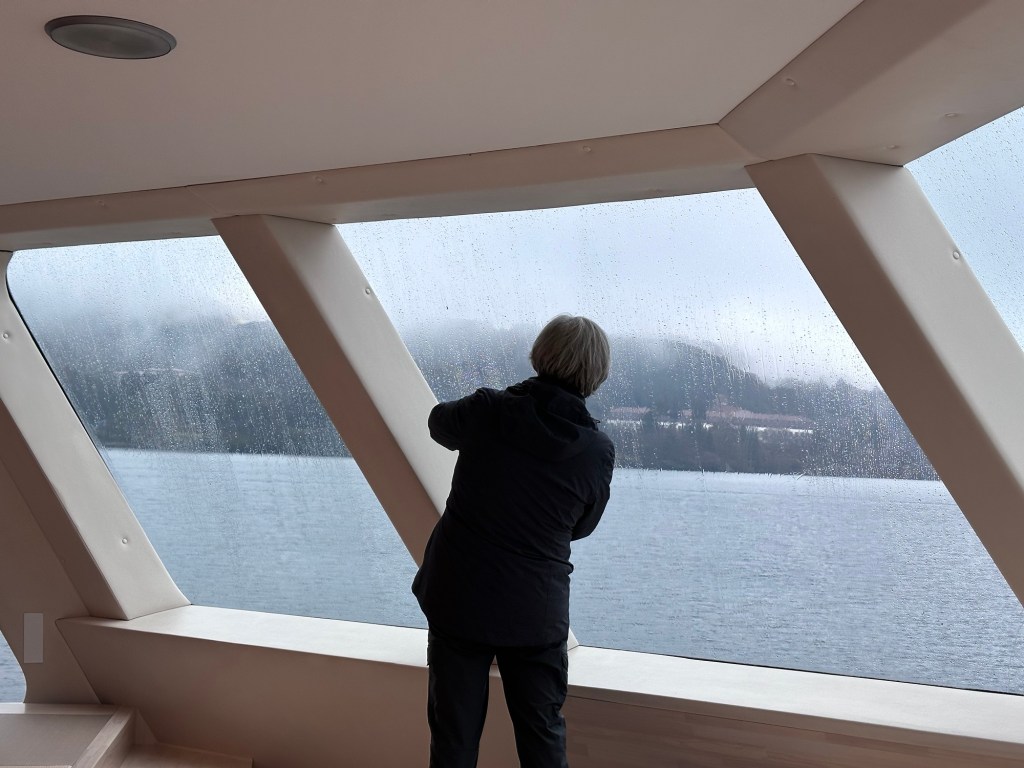
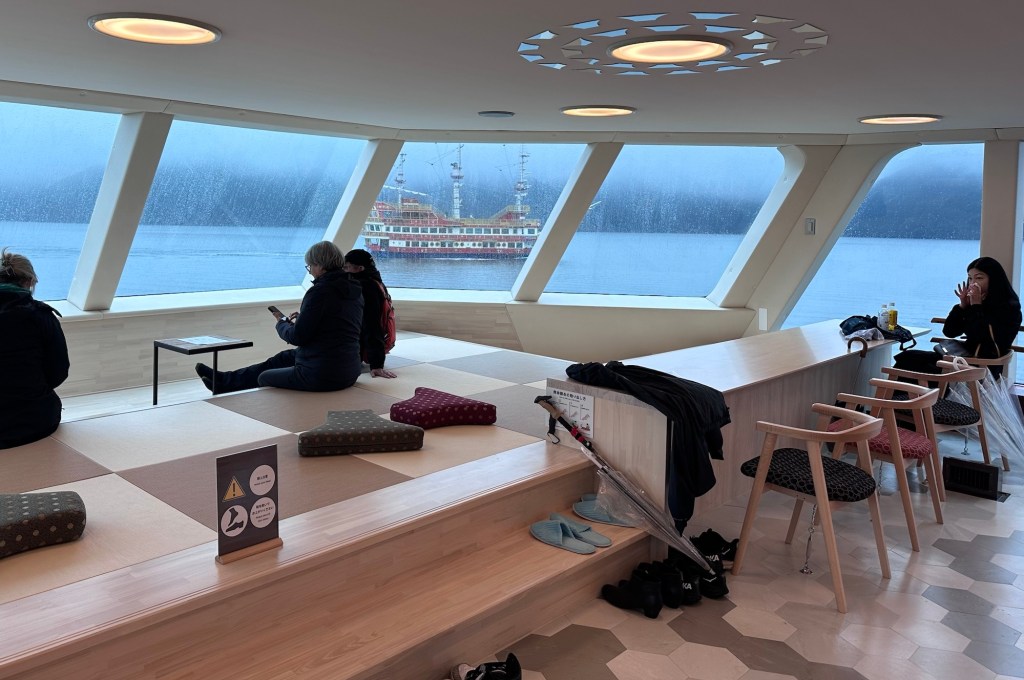
It was raining off and on during our second day in Hakone, but we didn’t mind. Our day was filled with indoor cultural experiences, starting with a boat ride across the lake to visit a woodworking master.

I’m not normally a shopper, but this master craftsman’s work was so exquisite and so unusual, I had to buy a couple of his smaller pieces. Partly because of the prices and partly because traveling with carry on, my purchasing power was severely limited.

Next up was shabu shabu for lunch ( Japan’s version of fondue),

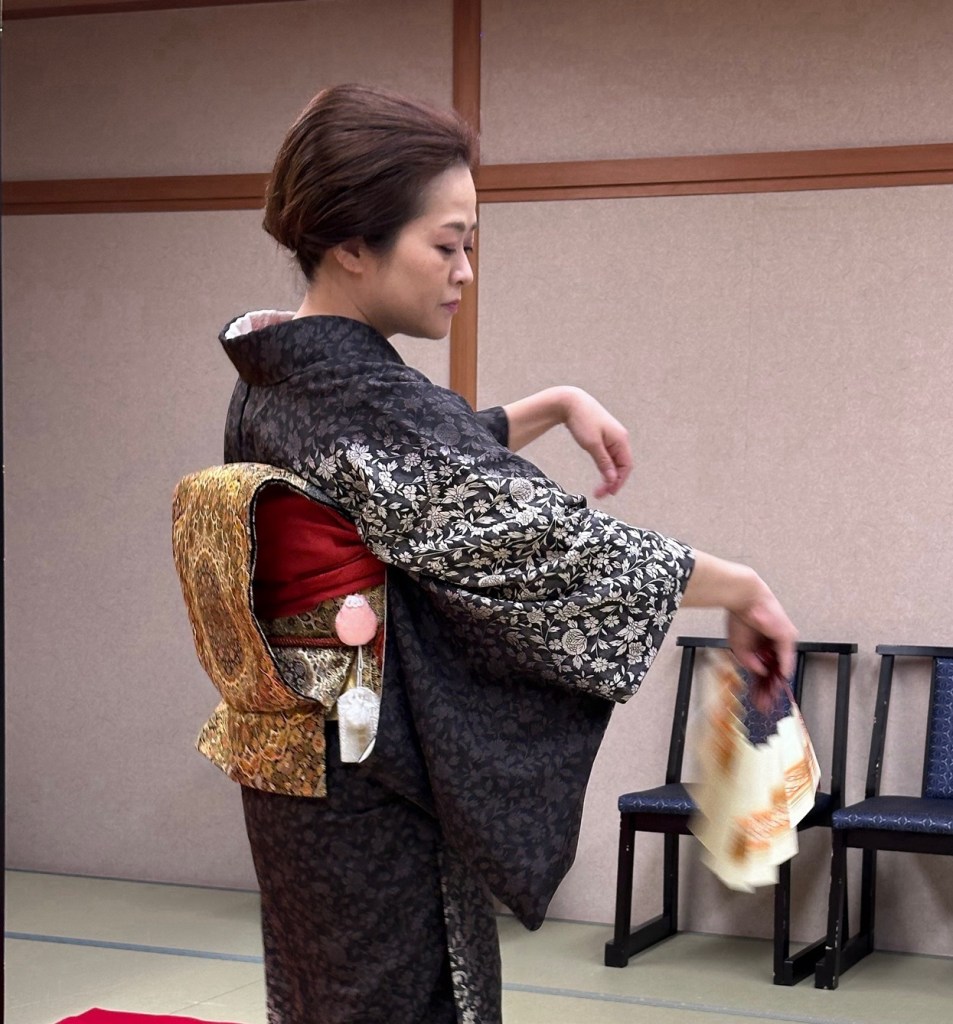
followed by a delightful encounter with these two lovely geishas, who danced and played a traditional instrument to demonstrate how they entertain clients.

During the question and answer period, they dispelled many misconceptions about geishas.

Unlike the book and movie “Memoirs of a Geisha” would have you believe, geishas are not prostitutes, nor are young girls sold to geisha houses. Although they admitted those things might have happened many years ago, the practice was not widespread even back then.

I never would have guessed there is a geisha union that clients contact when they want to book a geisha for an event. Geisha musicians are the highest paid, and if a client wants them to paint their faces white, and don wigs to create that traditional hairdo, it costs extra. An event normally lasts about two hours, with geishas sometimes attending two parties per night.

Curious about that big padded thingie on their back? I sure was. Well, they don’t carry a purse, so they need SOME PLACE to store their cell phone, right? Think of it as a Geisha backpack. I couldn’t believe all the stuff they pulled out to show us!

Because Hakone is noted for its hot springs, many hotels have onsens on site, and our hotel was no exception.

Men and women have separate areas, because everyone is naked in the onsen. During our stay, Kris , Janis and I experienced different pools, both inside and out, during our multiple visits. Since this is not an X-rated blog, there are no photos of the three of us frolicking in the onsen. Plus it’s against the rules. . .

Did I mention Japanese are very good at following rules? They are much better than Americans, which is probably why the laminated card in our rooms included English translations.

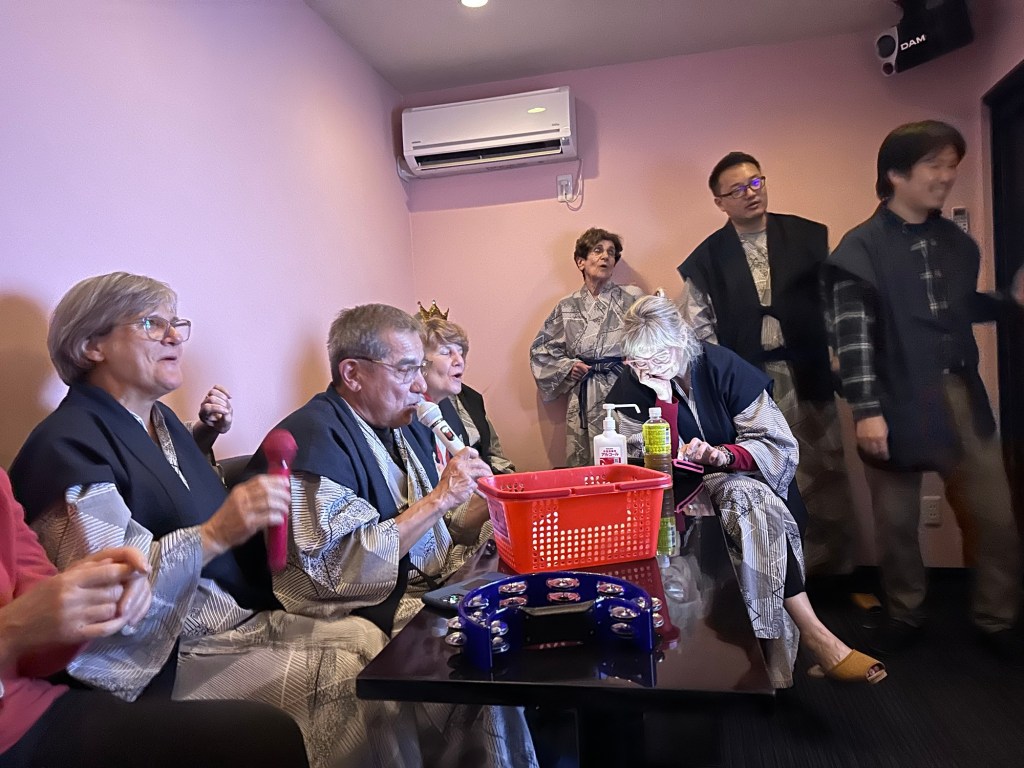
I’m going to end this post with our final Hakone activity—karaoke. My only prior experience with karaoke was at a bar, where individuals performed solo. The Japanese do it differently. It’s a group sing-along in a tiny room. Yep, the room isn’t much bigger than what you see in the photo below.

What a bonding experience! I’ll admit, it helps if you downed some sake (or wine) beforehand, which we all did, to celebrate Kathleen‘s birthday.

Wondering about that red basket? It held the microphones.

Hakone, Part 1

Every time I think this trip couldn’t possibly get better, it does.

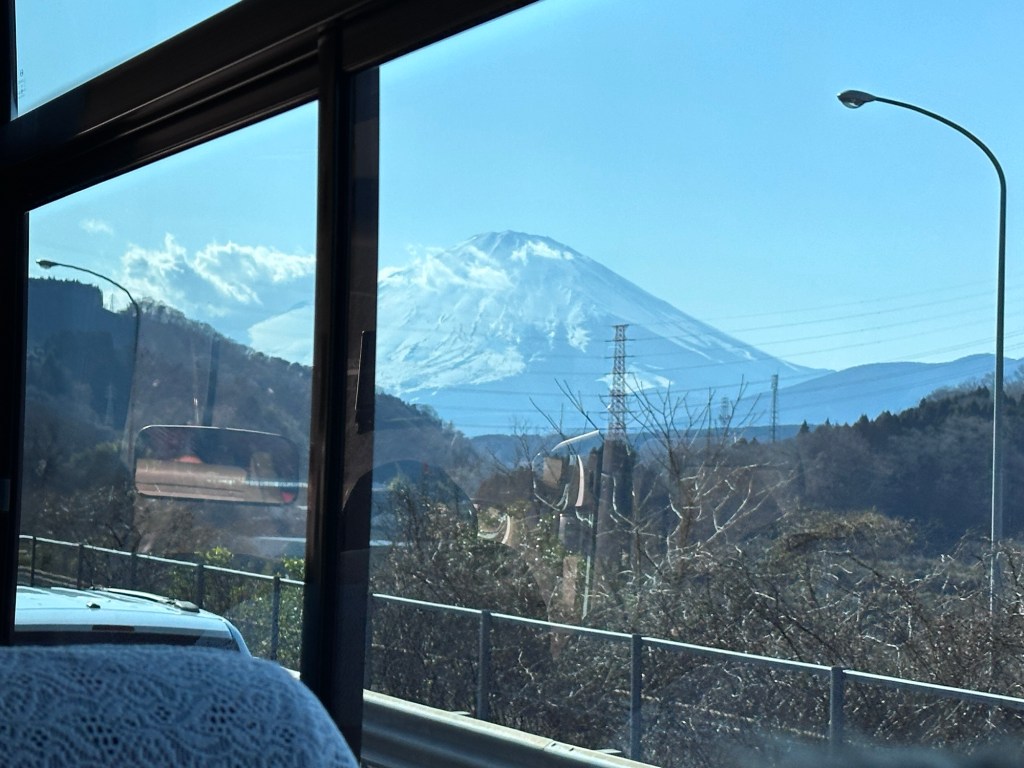
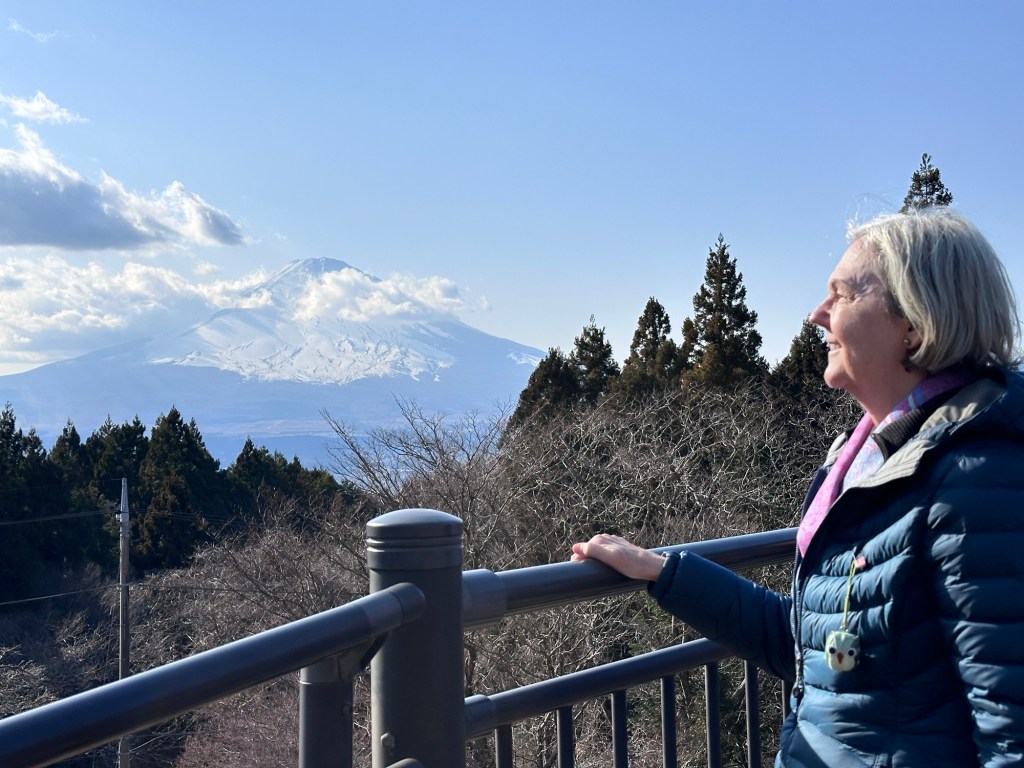
On our bus ride to Hakone, we were treated to multiple views of the elusive Mt Fuji. We watched as it progressed from crystal clear to cloudy.

10:30 AM at the rest stop
The clouds started rolling in around 3 PM.
3:30 PM. Our driver took us to this special look out that gave us a phenomenal view of the mountain.

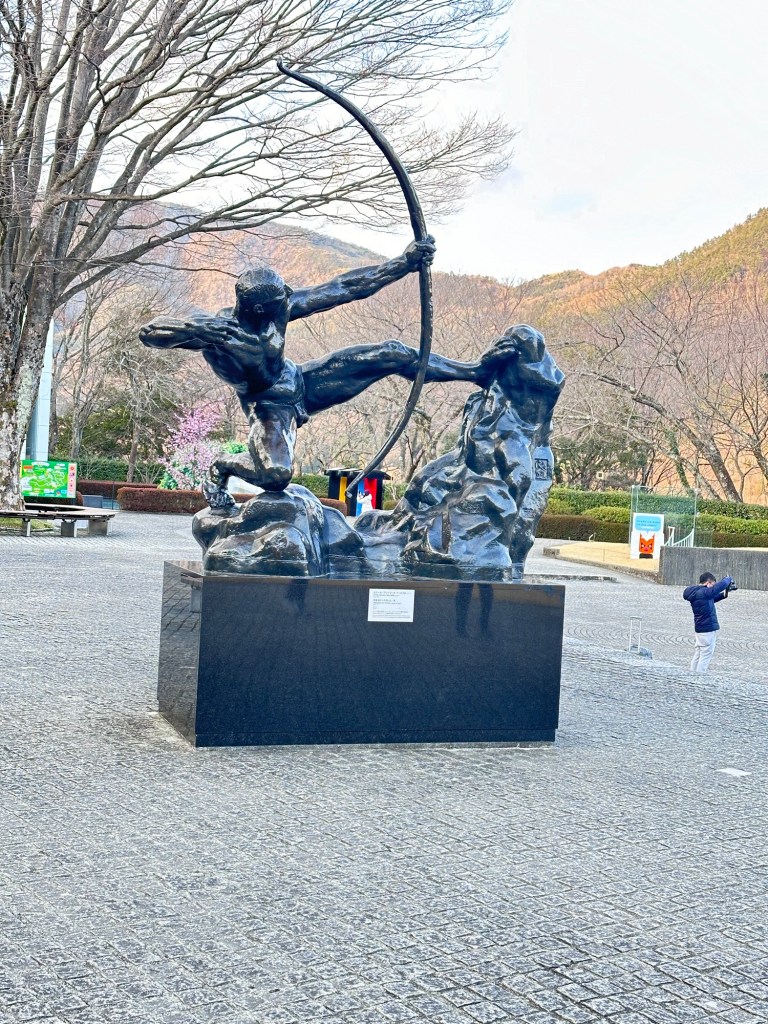
Although it is wasn’t on the itinerary, I had told Mori I really wanted to experience the Open Air Museum in Hakone and he made it happen. Turns out 12 out of the 14 of us wanted to visit. We made the most of our hour at the museum. Here are a few of my favorites.

It may not look like much from the outside but wait till you step inside.

But there was so much more to see, like this piece which was inspired by the myth of Narcissus.

The sculpture was trying to view her reflection in the water, but her tears were blurring her image.
Can you believe how perfectly balanced that sculpture is? And check out the gorgeous setting.

We lucked out with the weather because our second day in Hakone was rainy.

Highlights: Tokyo at Night

Let’s get real here. After action packed days, how much night life do you think this jet lagged group experienced? If you’re looking for bar hopping photos, you’ve come to the wrong blog. At our ages, we are quite abit more sedate—at least so far. But we did still manage to pack in quite a bit AND be in our jammies before 10:00 PM. Here are just a few highlights.

Shopping Centers

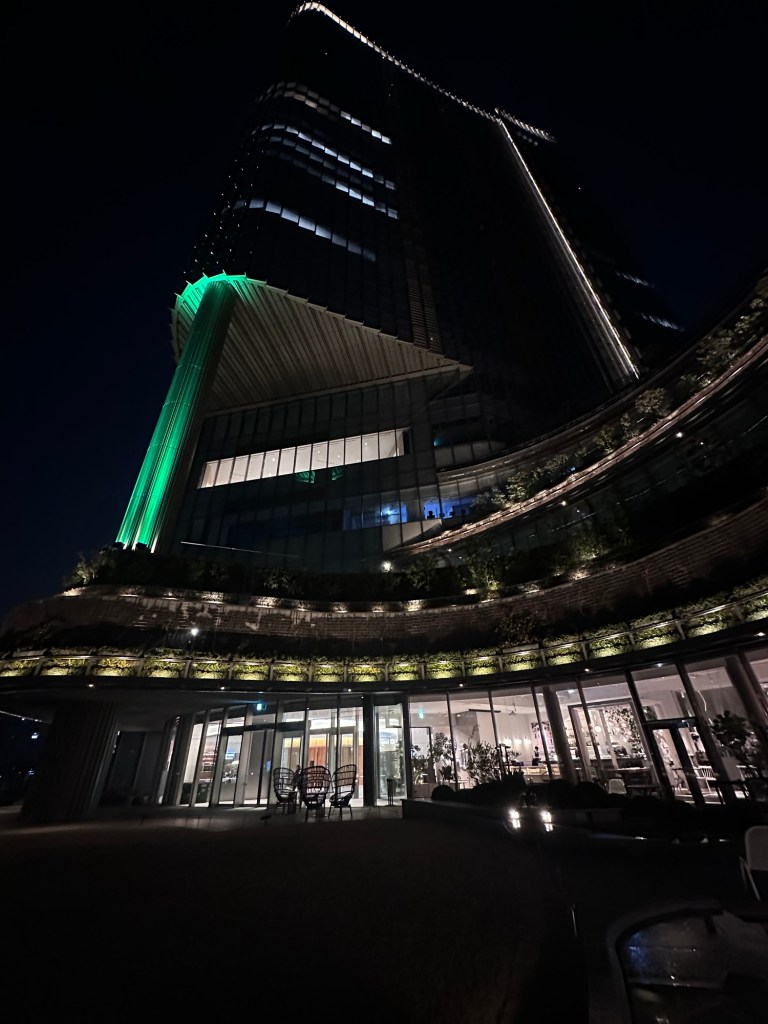
You might think shopping centers are not very exciting. I would encourage you to think again. You see, SOME shopping centers in Tokyo have outdoor platforms which offer SPECTACULAR views, like this one, which overlooks the Imperial Palace.

Although can’t see the Imperial Palace, it is just inside that white wall and moat.
Do a 180, and THIS is what you see.

A vertical mall is the best way I can describe Tokyo’s shopping centers.

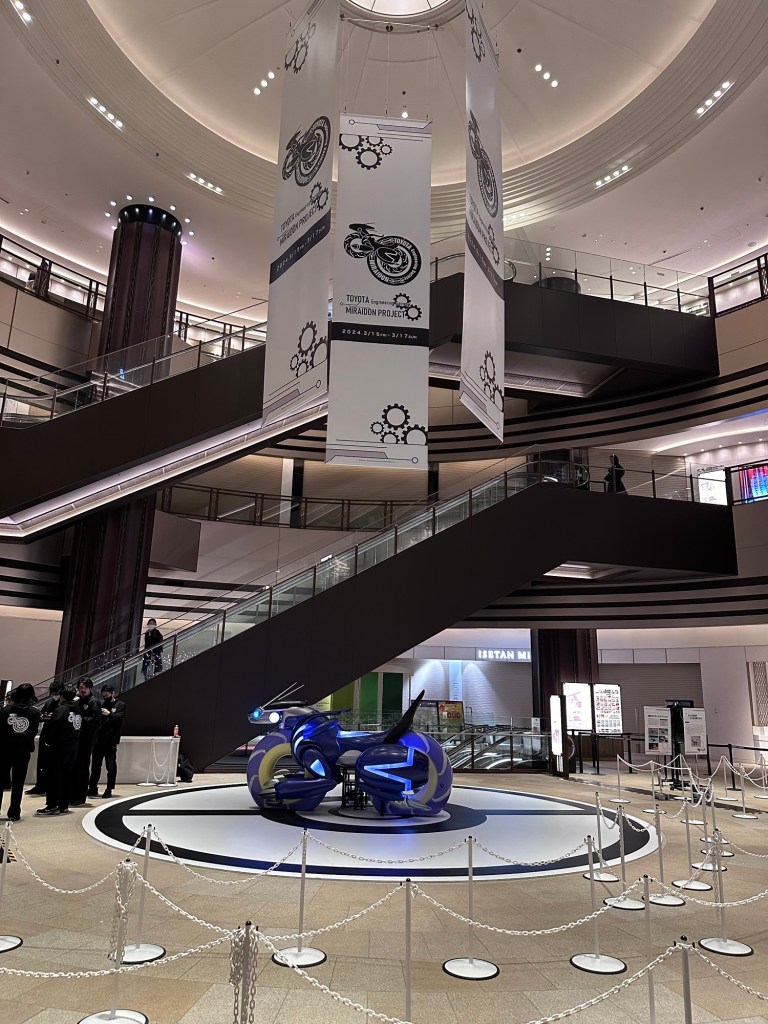
This one featured a particularly eye-catching mystery object. (At least it was a mystery to ME)

Having no clue what it was, I reached out to my Japan expert, 9 year old Oliver, who knew immediately that it Miraidon. Still in the dark, I consulted Ms Google, who offered further enlightenment. You are looking at a Pokémon character, which is also a drivable vehicle!

An up close view of Miraidon.

For those who wish to learn more, here’s the link.

https://www.japantimes.co.jp/business/2024/03/15/companies/toyota-pokemon-mobility/

The “malls” also house an abundance of restaurants. Our very congenial group has gotten quite efficient at selecting dining venues despite what has been a mind boggling selection. One night we had one of our best meals ever—delicious Wagyu beef. With our beverage of choice (mine was an alcoholic lemonade) my cost was $20.20 TOTAL ( I already checked my credit card online).

Sorry, no food photos. Did I mention my lemonade had alcohol in it? Knowing that, what do you think are the odds that I forgot a few possessions in the restaurant? Fortunately, a member of our group was on “baby sitting” duty that night.

I DID grab a quick shot of one of the floors while riding the escalator down. Why? Who knows. Blame it on the lemonade.

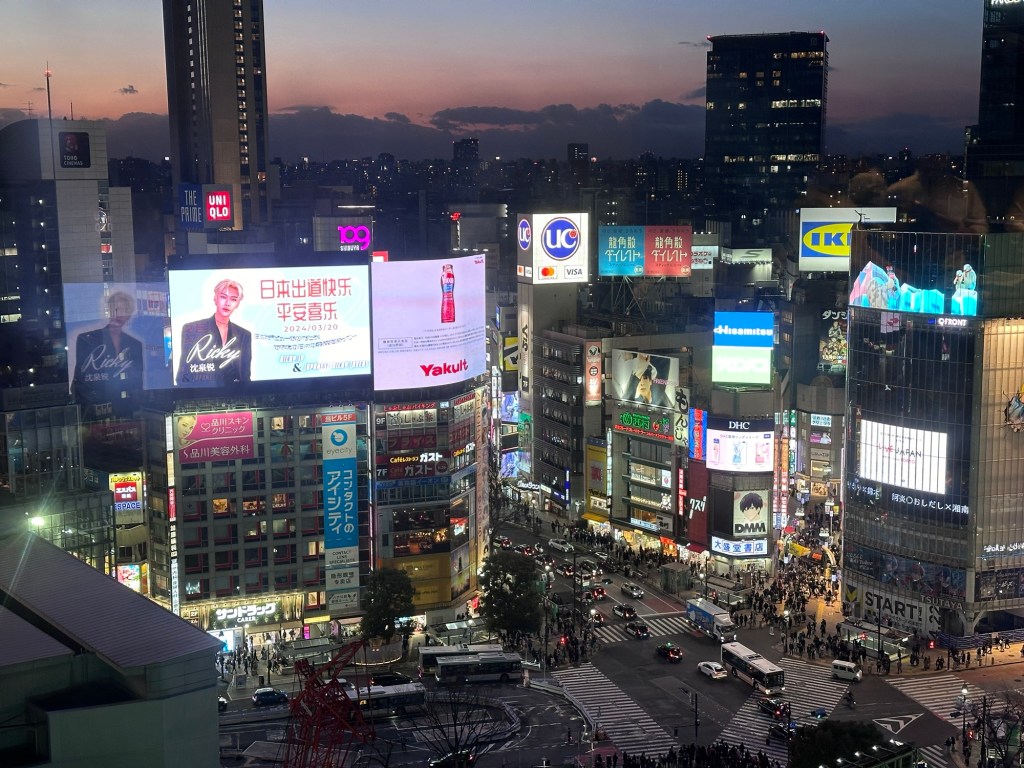
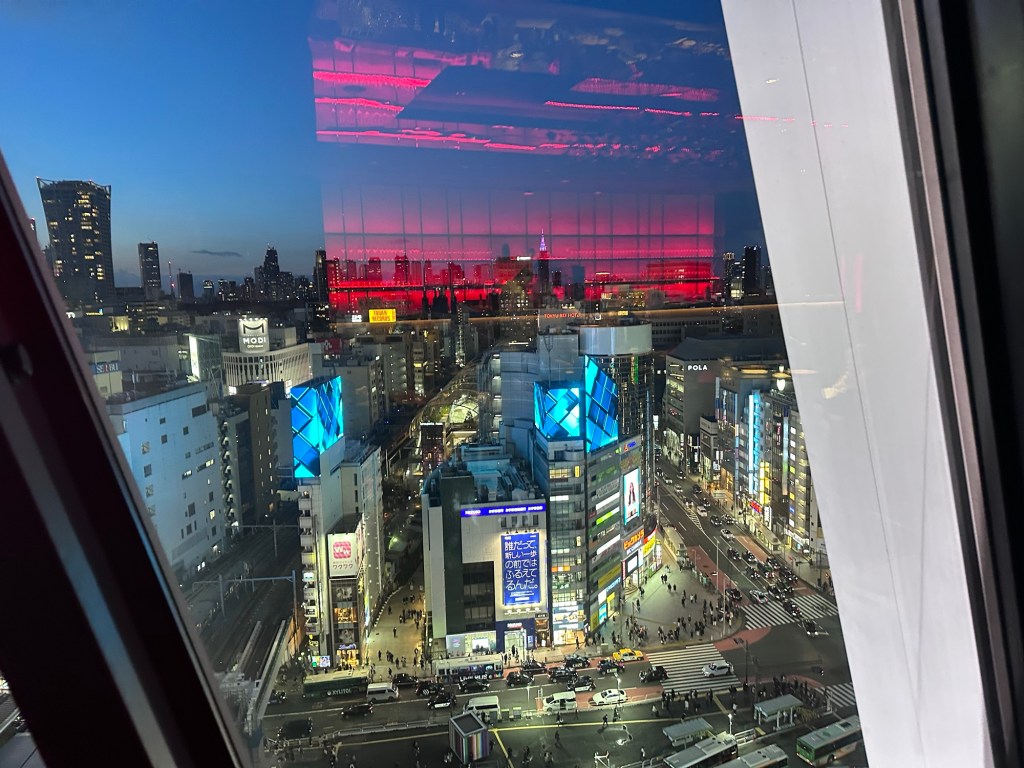
After visiting the famous Shibuya Crossing, four of us decided it was time for some fine dining, so we chose a restaurant with great food AND an equally wonderful view.

5 PM
6 PM
6:30 PM, with restaurant’s interior reflected on glass

Mass transit experiences

I’d heard that Tokyo’s system is easy to use. Maybe it is, if you have no other options, but WE were lucky to have Mori, who gave us a tutorial on how to get from point A to point B. ( if truth be told, he needed to do it more than once for our group).

Mori very thoughtfully purchased subway cards for us, preloaded with enough credits to allow multiple subway rides. The expandable carrier he gave us is a major stress reducer for someone like me. Without it, I would have been frantically searching through purse and pockets every time I approached the turnstile.

Light show

Tokyo’s government building in Shinjuku is the largest projection mapping site in the world. It’s a free 10 minute show, playing every night between 7 and 9 PM.

Cruising the streets

Streets are clean and safe and the architecture is breathtakingly beautiful at night.

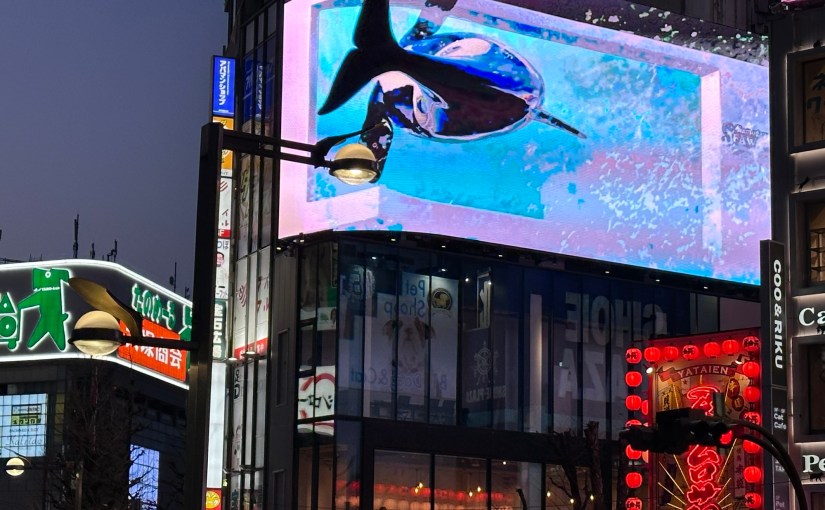
It might not be obvious from the photo below and the header on this post, but the video playing on the billboard is three dimensional. I was so mesmerized, it was time to cross the street before I thought “ Damn, I should video this for the folks back home”.

Remember the splurge meal I mentioned earlier in this post? What better way to end than with a photo of my dessert and Sally’s empty champagne glass? Maybe a photo of the 4 party girls taking mass transit home might be better, so I’ll throw them both in.

No only does Mori make sure we take the right train, he also is our photography pro.