Santiago de Compostela

I didn’t know until I got there that Galicia normally gets an abundance of rain, which is why it is such a lush, green region. I THOUGHT I was adequately prepared for wet weather, because I had packed two hooded jackets, fleece lined pants and silk long underwear, but I forgot the most important item: zapatos impermeables (waterproof shoes). Luckily, our hotel was across from a sports store that carried waterproof sketchers in my size. Prior to that purchase, however, (as I mentioned in an earlier post), we walked the last five kilometers of the Camino in a downpour. Let me tell ya, medieval cobblestone streets retain lots of water between those rocks!

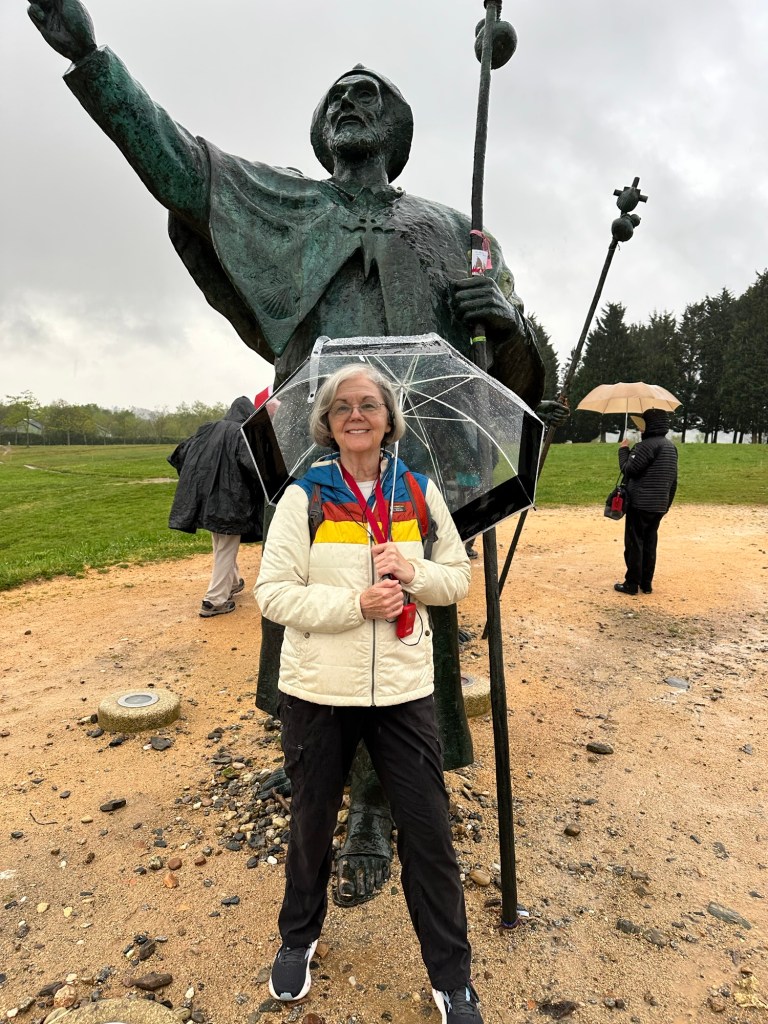
I bought the umbrella in Bilbao when my luggage was lost.

I had the full Pilgrim experience; I was soaked and completely miserable. It was definitely NOT one would consider a spiritual feeling. By the time we got to the hotel, my feet were so wet, I had to dry them with a towel. On a positive note—the hotel had a heated towel bar in the bathroom, but sadly it only functioned between 7 and 11 pm. Still, that was long enough to dry out my sodden socks, clothes and backpack.

If someone forced me (at gunpoint) to choose between walking El Camino or running with the bulls, that day I would have taken my chances with the bulls. (I would have carefully chosen a stretch that allowed for a speedy exit.) But, then again, if I had done so, I would not have earned the right to sport one of these lovely pilgrim tattoos.

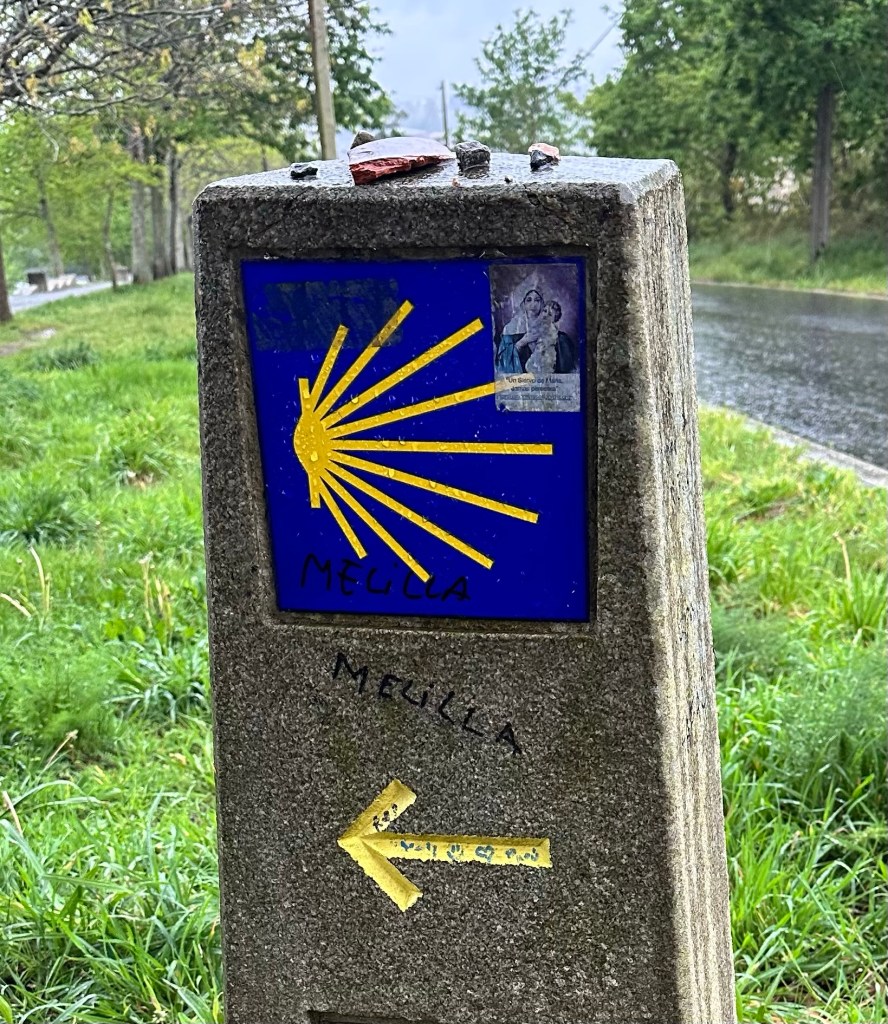
Before this trip, I had thought that there was ONE El Camino. NOW I know there are several: The French, the Portuguese, — we walked segments of both—the Via de la Plata (silver way), the Camino del Norte, the Primitive Way, to name a few. Regardless of which Camino you select, the destination is the same, the Cathedral of Saint James (Santiago).

Beneath that yellow umbrella is our local guide, Marian, regaling us with the legend of St James. WE were a shivering mass, huddled together under a nearby portico.
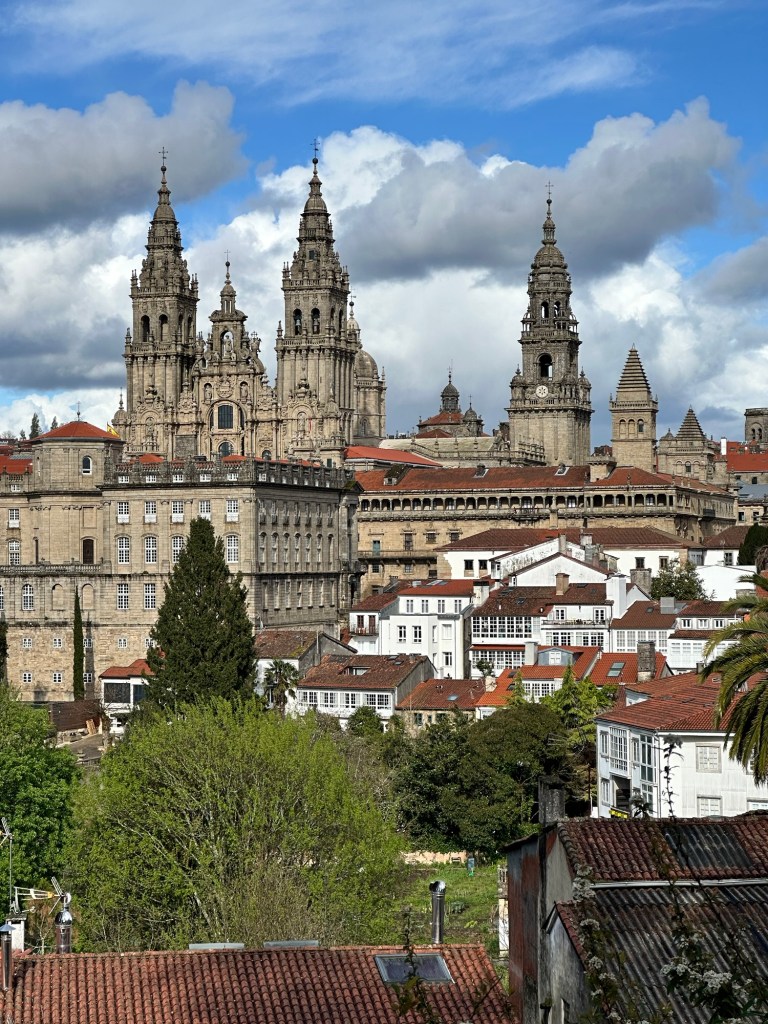
The cathedral from a different vantage point, a public park. Photo taken in between showers.

With all the wind and rain, I couldn’t take notes, so I’m operating strictly on memory. Here’s the part of the legend that I recall: a peasant (fisherman? shepherd? Some random guy?) in the first century (around 820 AD) saw a light shining down from the heavens several nights in a row, in the exact same spot. He recognized it as a message from God instructing him to dig, and when he did, he discovered the bones of a skeleton who had been beheaded. The church leaders made a rather large leap of faith and deduced that since St James had been beheaded, the skeleton must be that apostle. Over the ensuing centuries a cathedral was built and over time, the city of Santiago de Compostela grew around the cathedral.

Back then, pilgrims made the journey for religious reasons, to get a plenary indulgence (skip purgatory) or to avoid jail time. Yes, you read that right. Marian explained that people who committed minor crimes back then were given a choice…walk several hundred miles or go to jail.

Fast forward a few centuries—today’s visitors can view this silver box that contains what the faithful believe is St James bones,
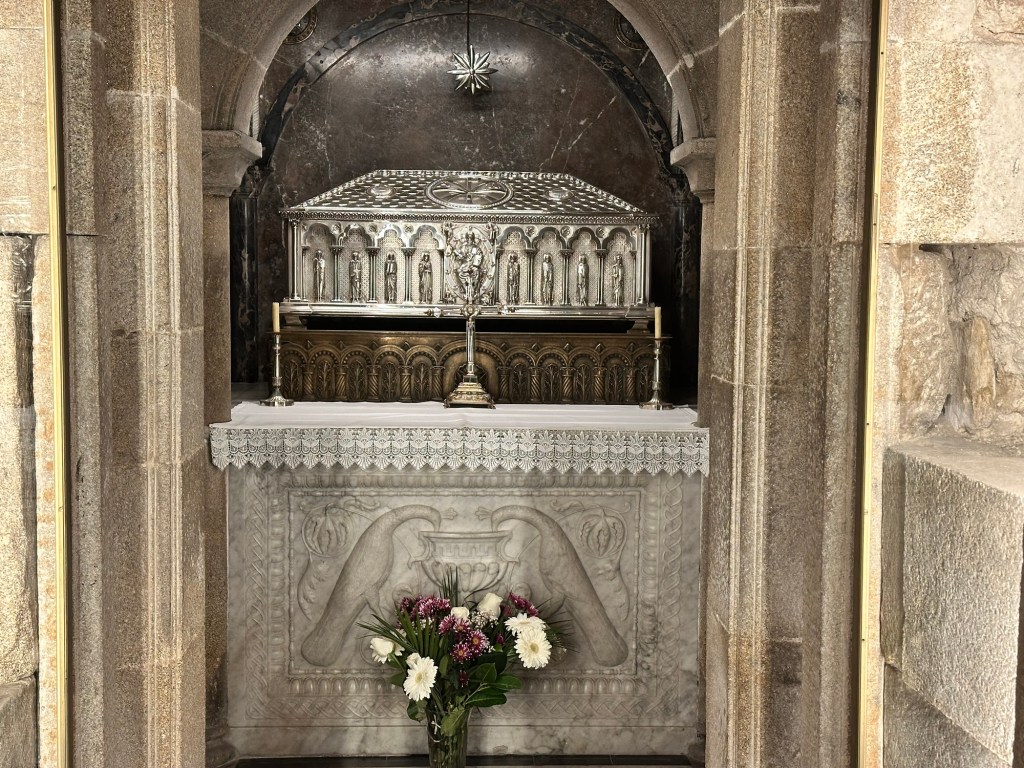
and can admire the cathedral’s beautiful interior.

My cell phone’s zoom isn’t very powerful, so I’ll describe the central image of the main altar. It’s St. James, riding a horse and brandishing a sword, which wasn’t exactly how the apostles were described in the Bible.

Santiago’s old town is a maze of narrow cobblestone streets, filled with restaurants, bars and souvenir shops, so after our first day in Santiago, I’d seen enough of the city. I welcomed the opportunity to spend the day in Pontevedra and Combarro on an optional trip OAT offered.
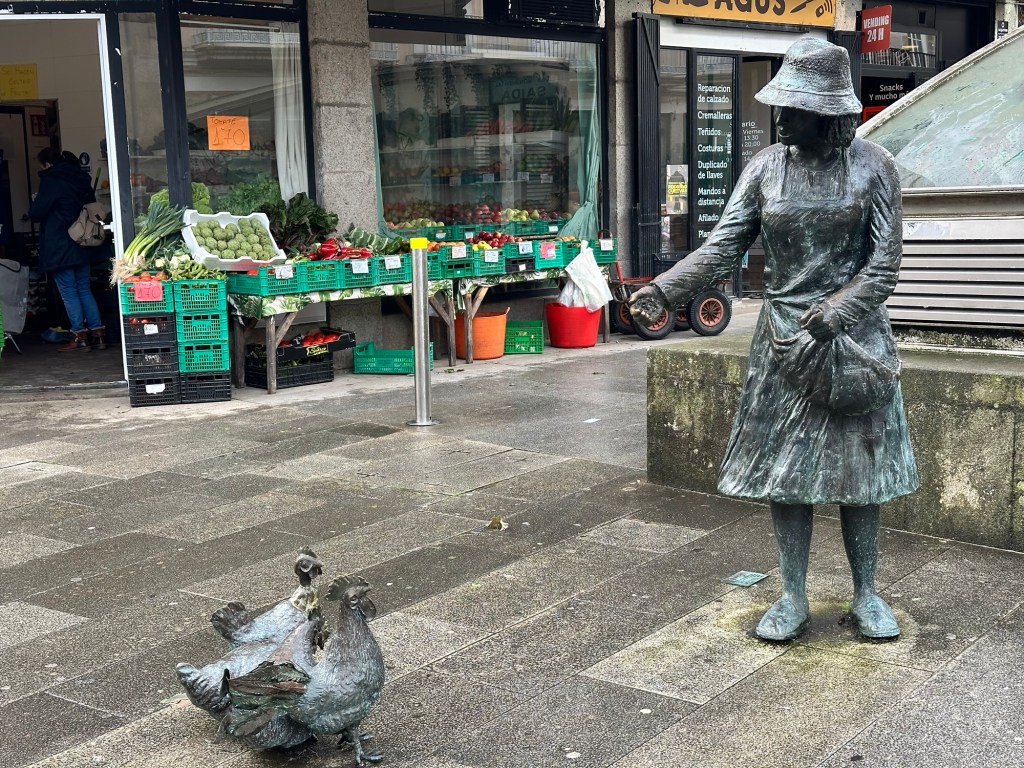
Pontevedra, founded by the Romans, gave us a break from the crowded streets of Santiago. It is also the site of an unusual church, with a floor shaped like a scallop shell. Or so I was told.
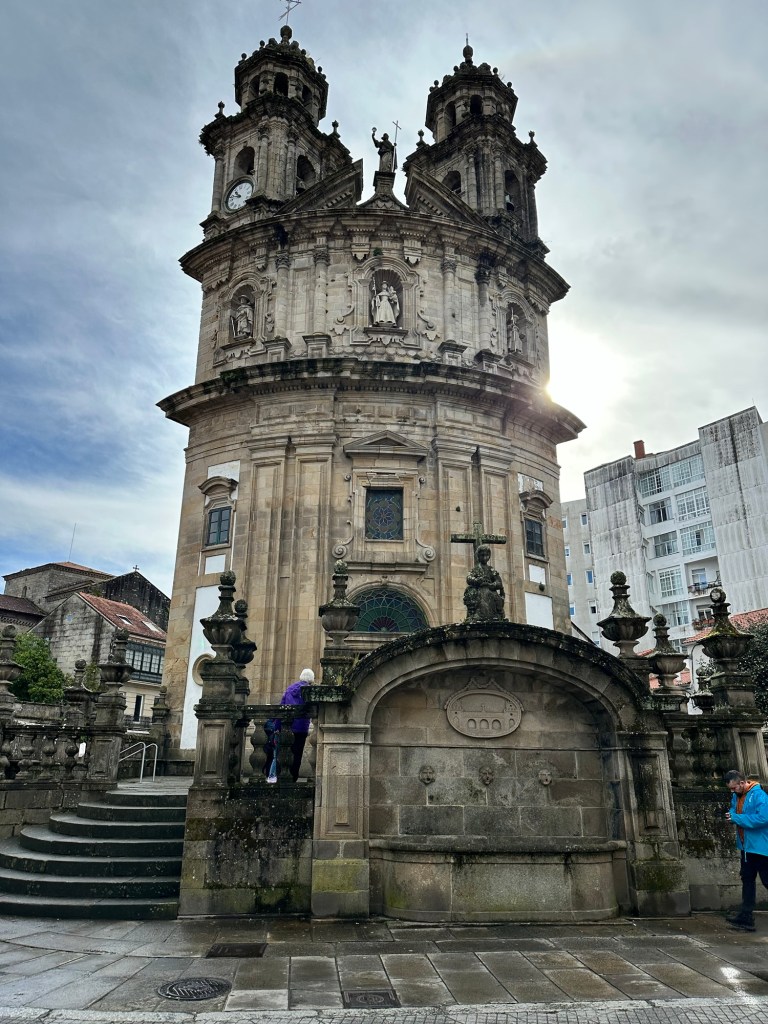
I’ll be honest. The church was clearly round, unlike any I’ve ever seen before. But I wasn’t able to pick up any resemblance to a scallop shell in the interior. Take a look. Maybe you’ll have better luck.
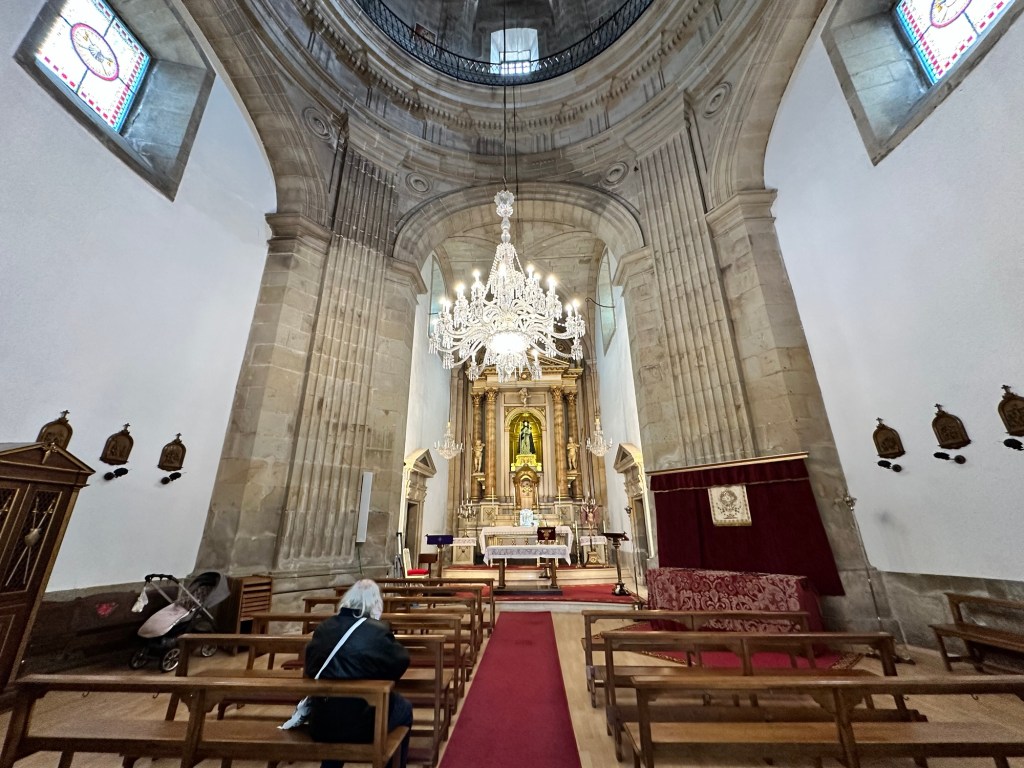
Despite the intermittent showers, it was a delightful day.

Combarro reminded me of Southeastern Massachusetts. I recall watching Sandy, my sister, digging up clams and quahogs with her toes in Mattapoisett bay.
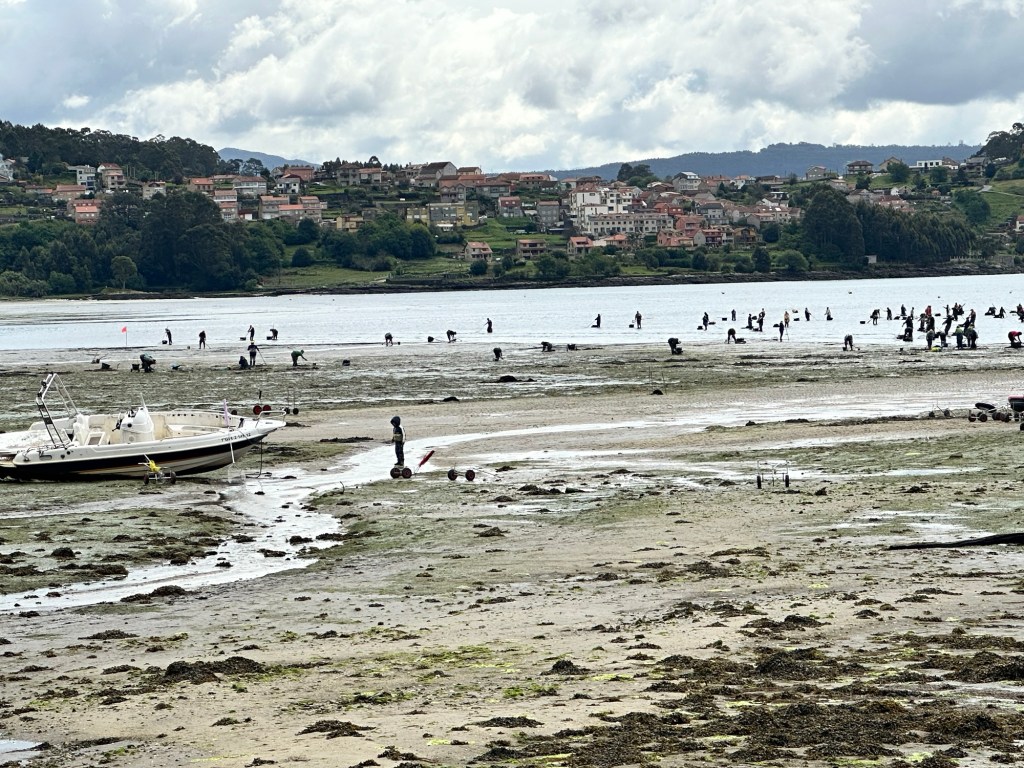
Here in Combarro, it’s a highly regulated business, with strictly enforced limits on what can be harvested.

Our day ended with a pleasant surprise—a procession outside our hotel. I was already in my jammies, but when I heard the drums, I dashed onto my balcony to take this photo.
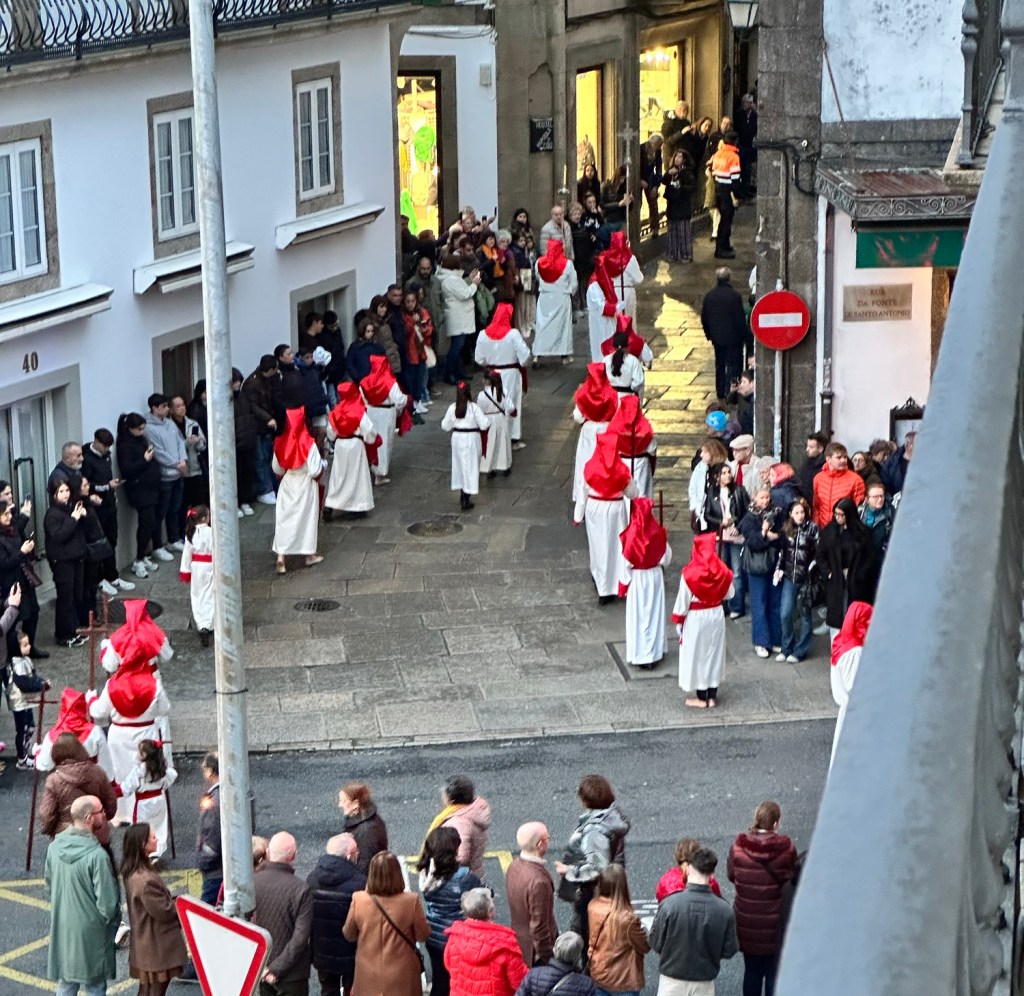
Fortunately, our trip leader was on the street and sent us a video.

Is it just me or does that statue of Jesus make it look like he needs a foundational garment?

Next stop, Portugal for 5 days, then home.

Leon, Spain

When I booked this trip, I had no idea that I’d be in Spain for Semana Santa, or as we call it in the USA, Holy Week.

I will confess our group was more than a little surprised to see what looked like (to us) the Ku Klux Klan everywhere. But no, these are the different “brotherhoods” who hold processions every evening during Holy Week.

Their version of action figures were in shop windows.

Members of my family will not be shocked to learn that I accidentally stumbled into a church where one brotherhood was assembling. I had wanted to see the interior of the Church of San Isidoro after I learned this door was where you entered to get “indulgences”.

For those who didn’t spend your youth in Catholic school, I will explain. Indulgences are sorta like a “get out of jail free” card. You give the church a sum of money, and regardless of the sins you committed, indulgences get you on the escalator to heaven. Fortunately, the middle ages were chock full of sinners. How else do you think the church could afford all that art and gold stuff?

Can you imagine my surprise when I opened the door to find a PACKED church? EVERY bloody pew was filled with people wearing the same color coordinated outfit. My cream jacket stood out in a sea of purple, so when the door creaked open, and the assembled all turned to stare, it was easy to figure out who really didn’t belong.

I wasn’t gauche enough to take a photo then. I waited till they were all almost out the door. Hey, I wanted my friends back home to share in the experience. So here ya go.

Notice that THIS brotherhood allowed sisters to join in the fun, but instead of hoods, they wore a “thingie” to hold their mantillas high atop their heads. Also notice, they were at the very end of the procession.

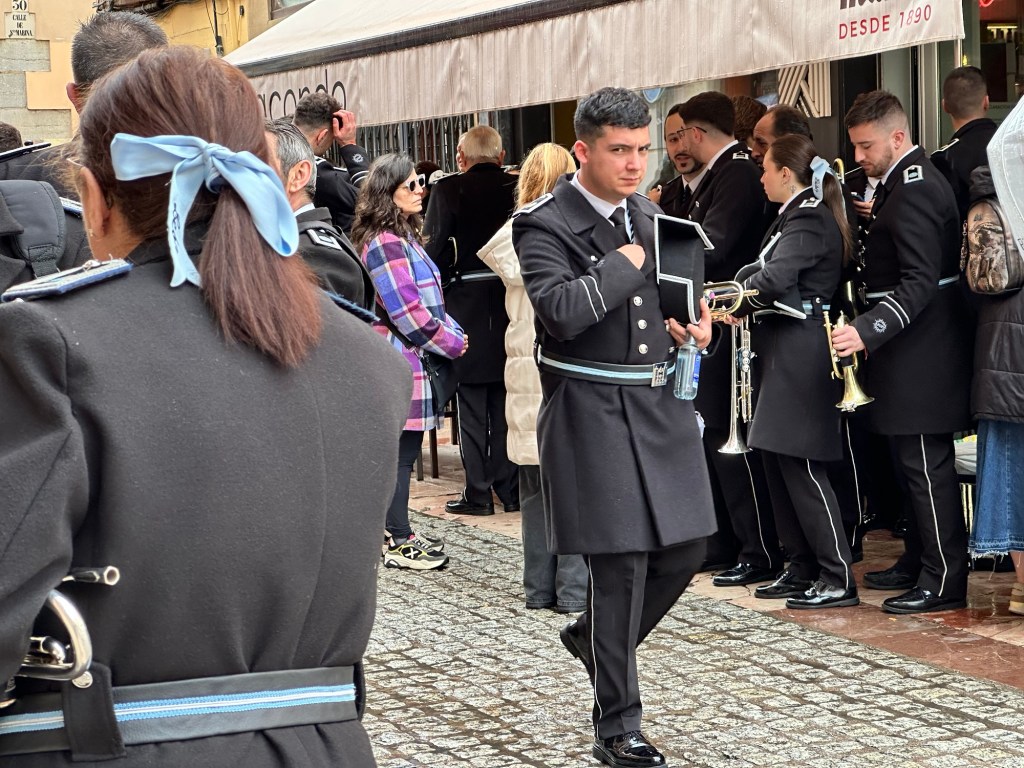
As I exited the church, I spotted some people wearing uniforms, carrying instruments, so I followed them to their assembly point — a bar.

Doing so earned me a primo spot when they started to play. I haven’t quite mastered the ability to imbed a link, but if you click below you should get a feel for Holy Week in Leon.

Despite the mob scene, fellow traveler Camille managed to spot me in the crowd. Equally surprising, I heard her call my name.
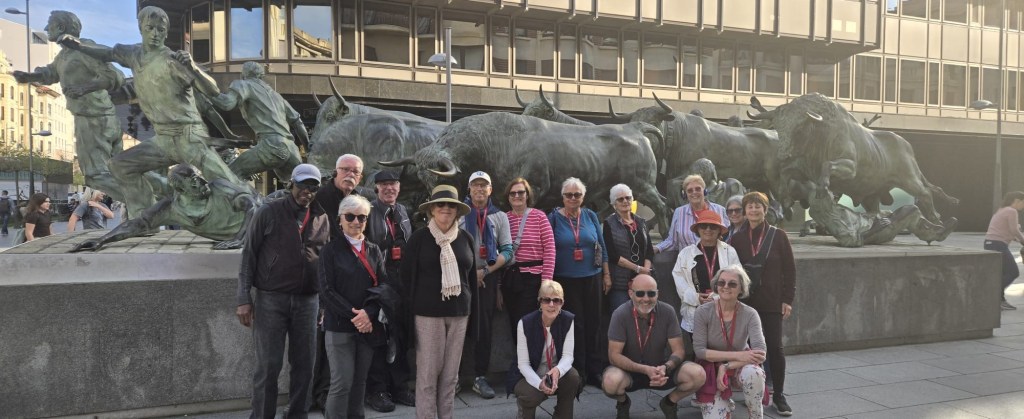
Somehow, in spite of the madness, four of us managed to link up with Shahin, our trip leader, who took the photo of Loren, me, Sheldon and Camille atop this post.

Before we went bar hopping, we saw a man standing in front of a building, swinging around a silver incense container, so we HAD to go inside. Much to our surprise, we found these elaborate “floats” that the devout carry on their shoulders during processions.
This is only ONE of many floats stored in the building

Sorry, there are no photos of our bar hopping extravaganza. We were far too busy drinking “lemonada”— red wine, lemons, cinnamon and seltzer water— León’s official “Holy Week drink, to take pictures

Our second day in the area was spent outside of León in the little village of Morgovejo, for what OAT calls a “Day in the Life” , another unique feature of OAT travel. We spend time with local inhabitants, visiting them in their homes, sometimes participating in their daily activities.

Carmín teaching us how to make cheese

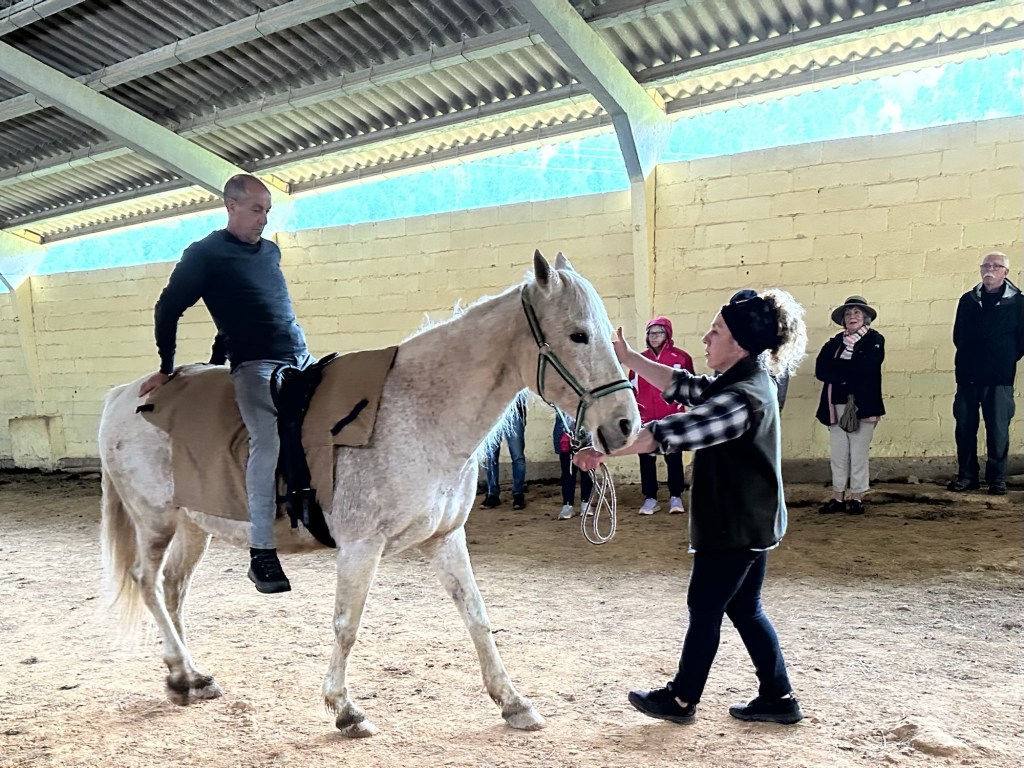
During our visit, Carmen showed us how she works with disabled children and adults, using a horse she rescued and trained. Her partner, Emelio demonstrated the various exercises that can be done by riding bareback .

Emilio demonstrating stretches.

The farm has horses, sheep, goats and dogs. Some of us were thrilled to be able to hold this baby lamb.

León was a fantastic stop, and it was over far too quickly. Next stop — Santiago de Compostela, the final destination of pilgrims on “The Way”.

Stops Along the Way

One of the many reasons I absolutely love traveling with OAT is the company finds experiences I would never have discovered on my own.

For example, en route to León we made two delightful stops. The first was at an archaeological lab in Ubide, where Michaela, an Australian osteoarcheologist, fascinated us with stories about her dig at the Roncesvalles burial pit.

Can you figure out which one is Michaela?
Hint: she doesn’t have gray hair.
She’s in the back row, directly behind me.

It was truly amazing how much can be learned from bones. So far, they have dug down to the level of the Napoleonic wars, where they found an older soldier, whose jacket was used as a shroud. His jacket’s button is shown in the top right of the following photo. Can you see the Spanish word “Rey” (king)?

Because of his skeleton’s position in the pit, his age, his wound and the button, the archaeologists deduced the bones belonged to a high ranking member of the Spanish army who died fighting against Napoleon.

When the archaeologists reach the bottom of the pit, legend has it they will find a horse, a horn and the exploded head of Roland, a member of Charlemagne’s army, who was immortalized in the “Song of Roland”.

After he sacked Pamplona, Charlemagne headed back to France, using the route we followed through Roncesvalles (now part of El Camino). As you can see, the path through the forest is very narrow, so the soldiers had to travel single file, making them easy targets for the more than slightly annoyed Saracens.

For those of you who never read “The Song of Roland” and have no desire to ever do so, here’s the scoop. When Roland sounded the horn to warn Charlemagne of the attack, he blew so hard, the legend claims that he literally blew his brains out.

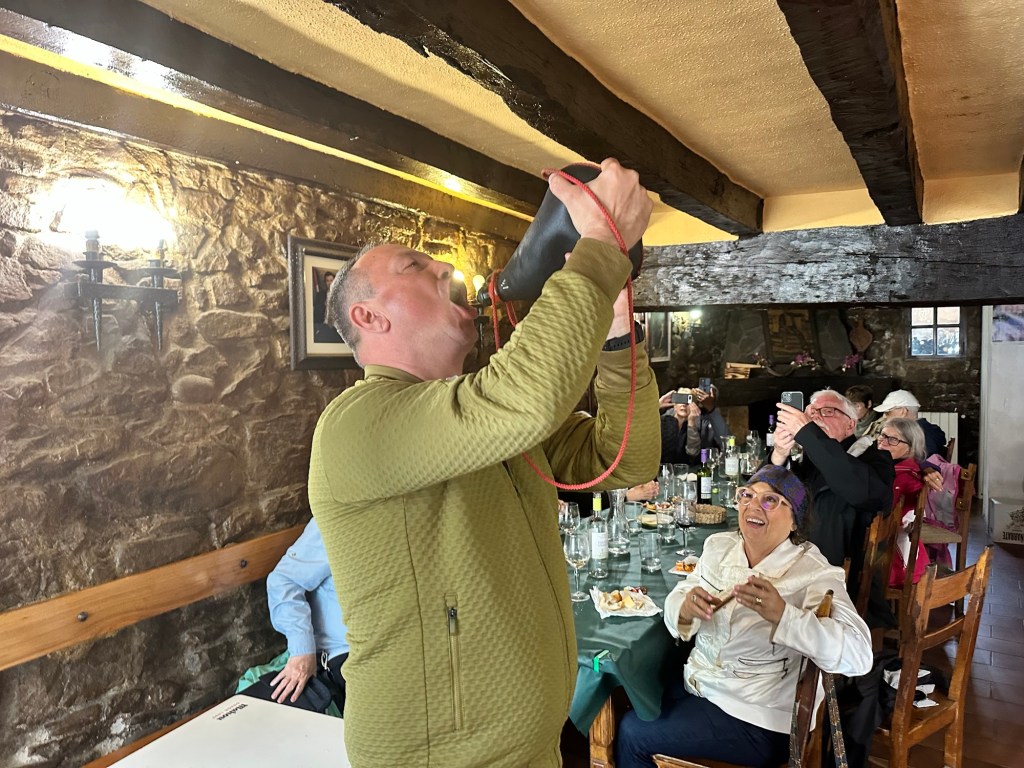
Our lunch was at a charming tavern along our route. This trip IS turning me into a “day drinker”, but it hasn’t come to THIS, at least not yet.

Shahin, demonstrating how to shoot red wine directly into your mouth

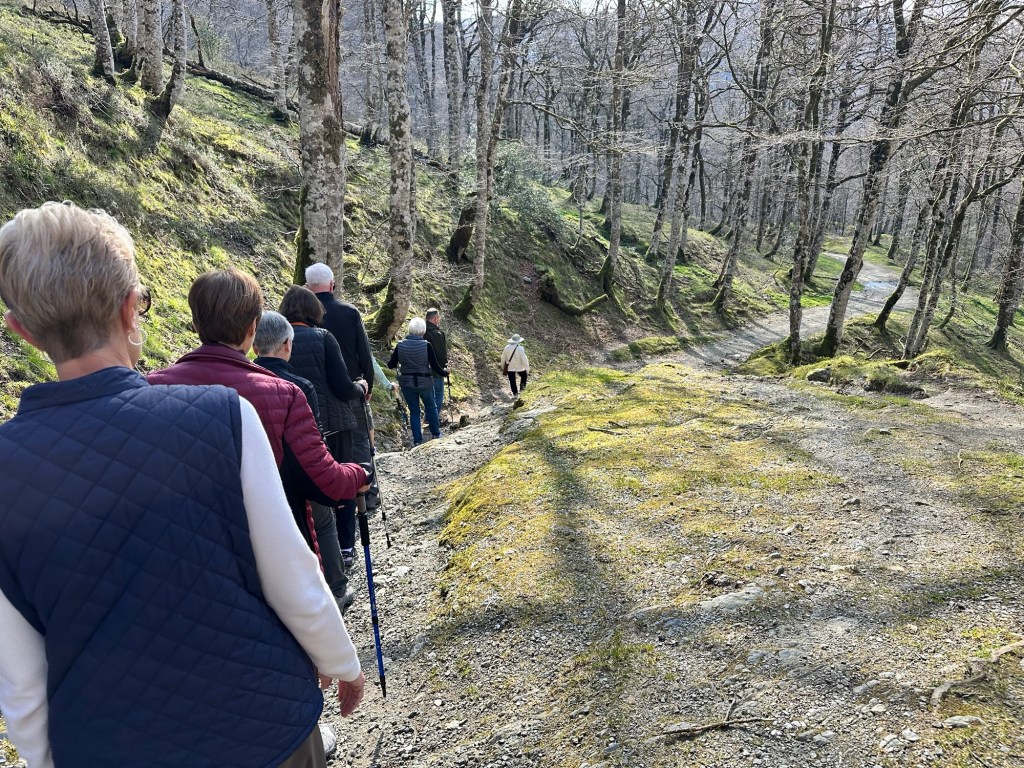
We were able to walk off some of our lunch’s calories when we reached the next stretch of our “El Camino” experience. This time, we walked through the medieval village of Castrojeriz, population about 100.

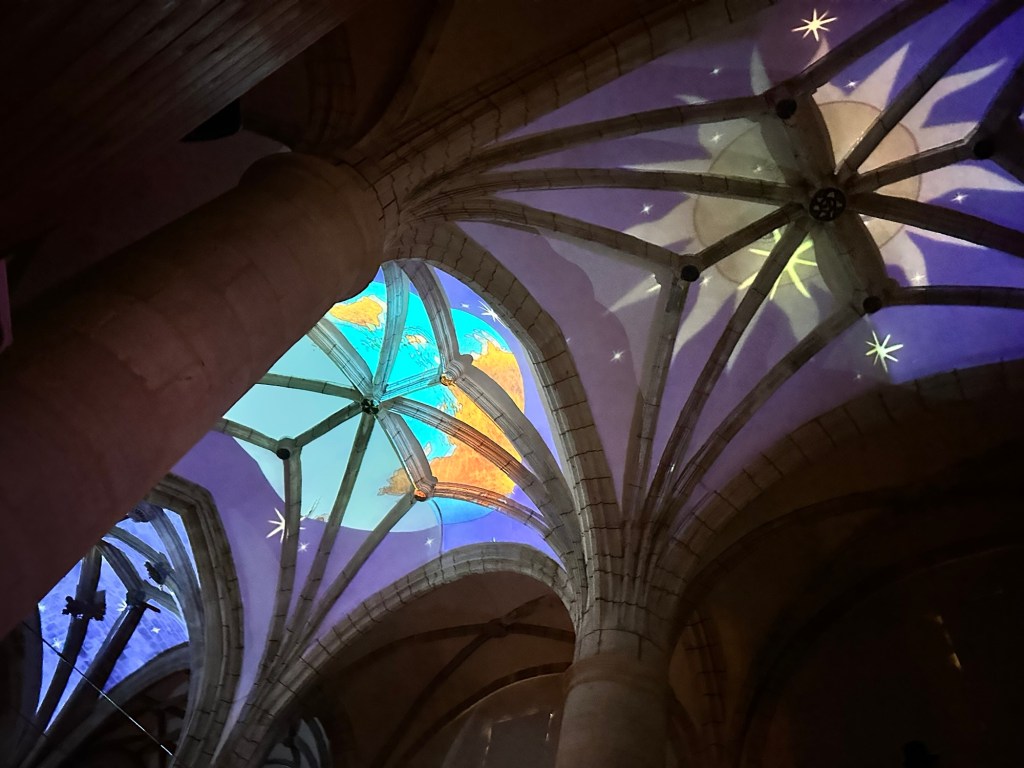
Had I been on my own, I would have walked right by this church and missed its amazing multimedia shows, including the story of creation, which was projected onto the ceiling.

If we were REAL pilgrims, walking El Camino, it would have taken us anywhere from three to about seven days to walk from León to Santiago. Instead, the 3.5 hour bus ride took us a day, because of our multiple stops.

The first stop was in Astorga, to view the castle and cathedral designed by Gaudi.

Unfortunately, the building didn’t open until 10, so we weren’t able to go inside, but don’t you agree that the outside was pretty spectacular?

The entrance to the palace is on this side. Can you believe the number of windows?
On the left (barely visible) is the cathedral.

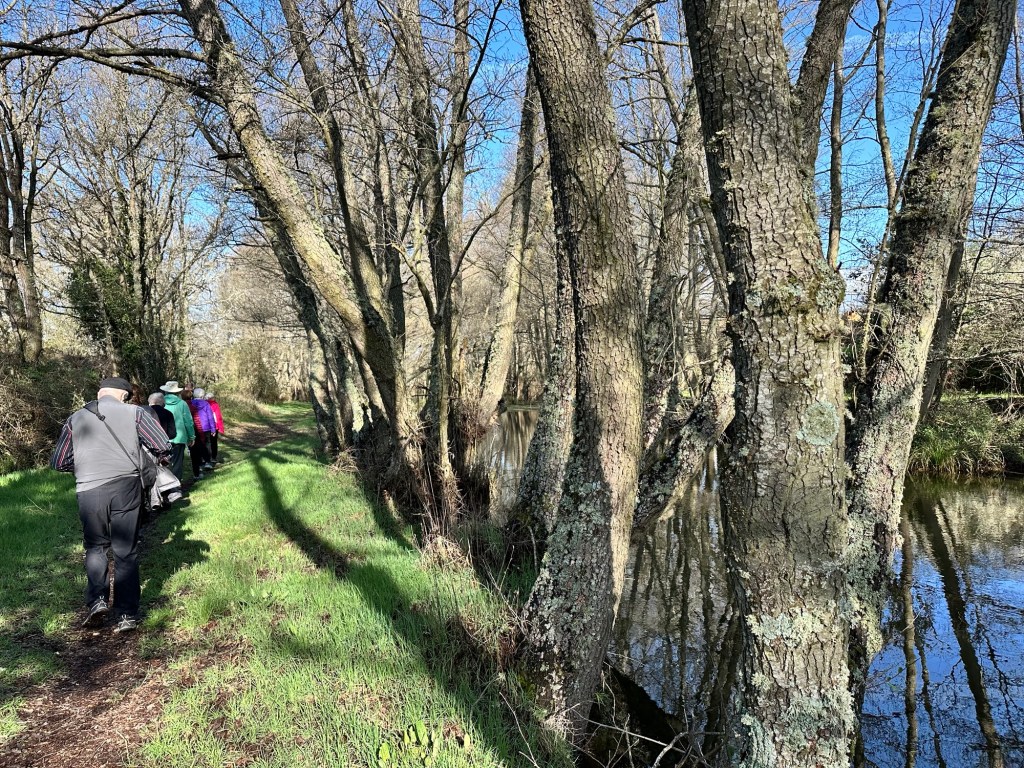
We weren’t able to linger because we didn’t want to be late for our visit to the beekeeper. To get to there, we strolled along the river for about a half a mile.

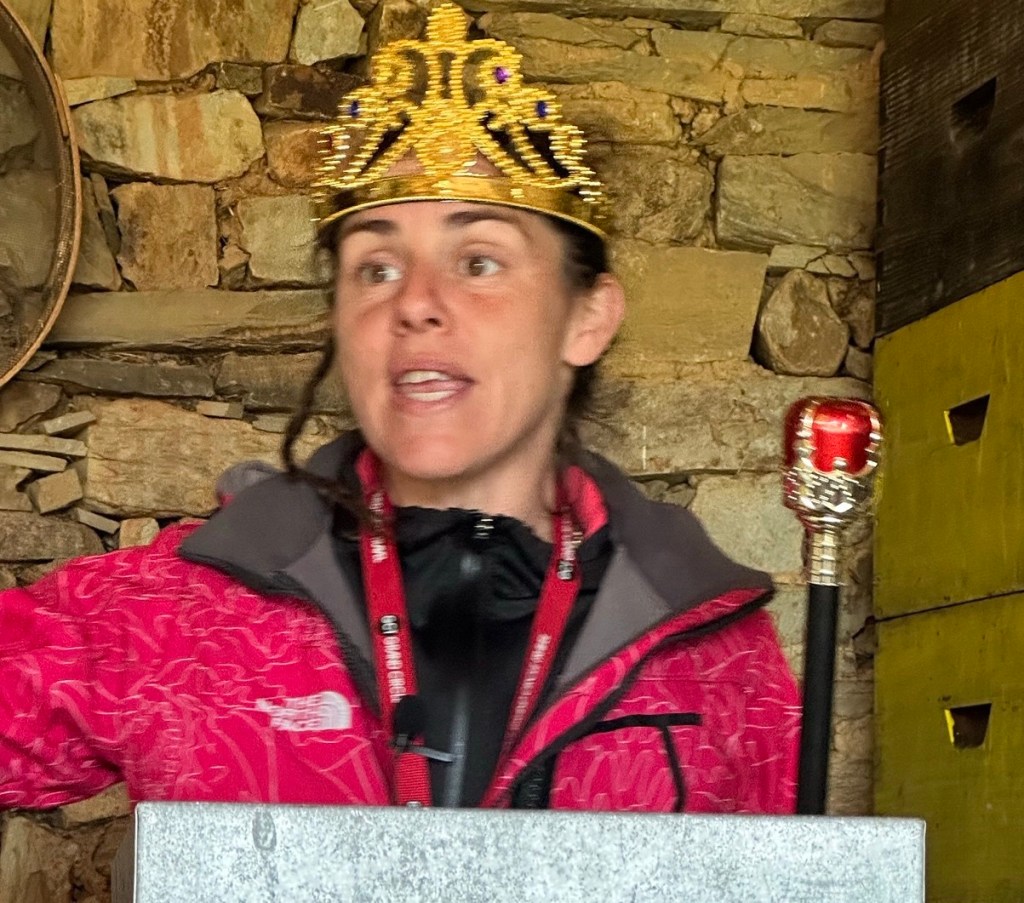
This very animated and entertaining young woman gave us the adult version of her presentation for school children.

Did you know that you should never put honey in the microwave because it destroys the beneficial enzymes? Or that you should never use a metal spoon to remove honey from its container— only use wood? (sorry, I don’t remember the reason).

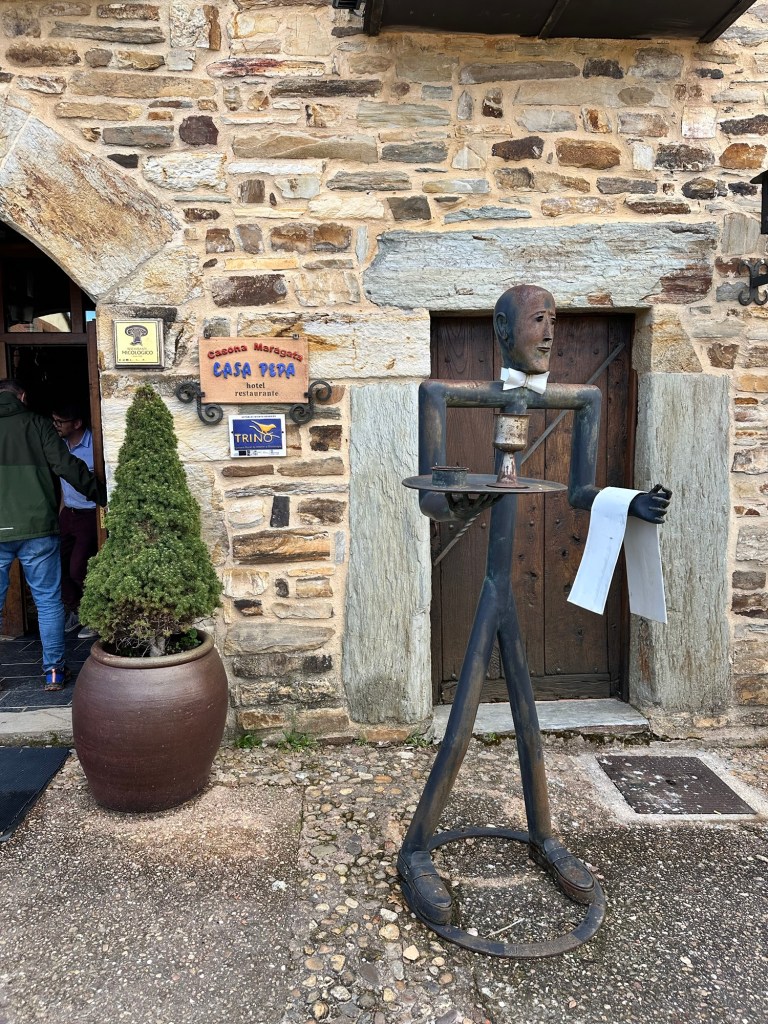
After all that learning, we were ready for lunch in the village.

This building dates back to the 1750’s; it was the home of a merchant who conducted trade between the coast and León.

We were very fortunate to have such great weather during this area’s rainy season.

But our luck was about to end. For the last stretch of El Camino, we had an “authentic” pilgrim experience. We walked to the cathedral in a downpour.

That smile on my face was VERY short lived. I neglected to pack waterproof shoes, so by the time we finished our 5 kilometer walk and got to our hotel my shoes, socks and all 10 toes were soaking, sopping wet. Good thing I know how to say “I want to buy waterproof shoes” in Spanish!

Looks like the weather goddess is sending more of the same for our time in Santiago and Portugal. But at least with my new 100% waterproof Sketchers, my feet will be dry!

After the day we had, we decided we all needed at least one glass of wine — perhaps more. How lucky am I to be with such a great group of people!

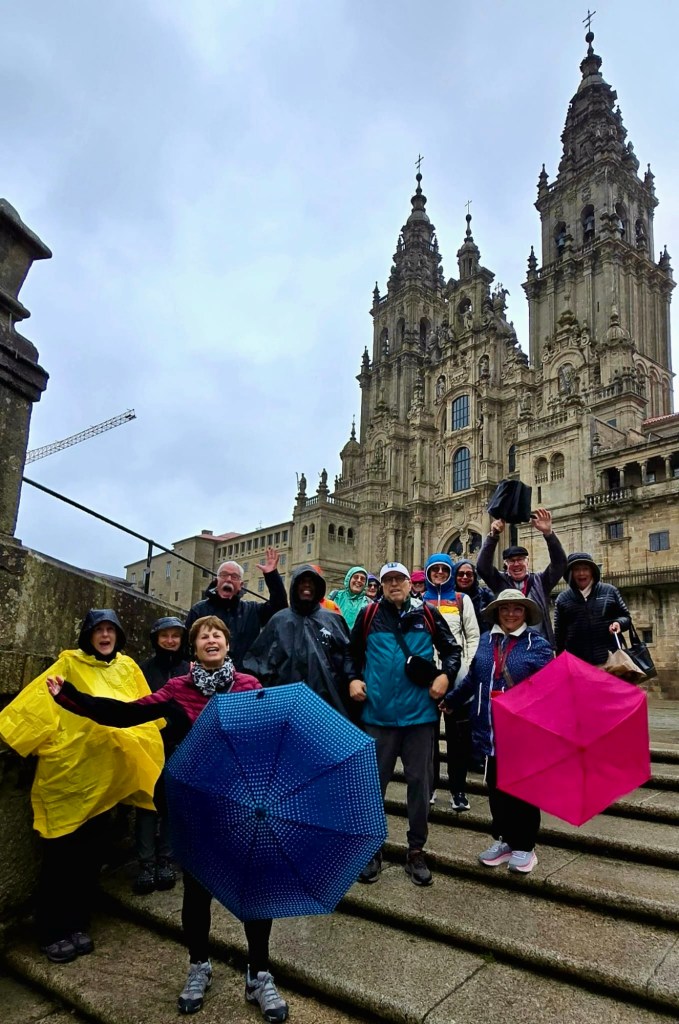
Briefly, the rain stopped, allowing Shahin to take this group photo.

San Sebastián, Pamplona and Roncesvalles

If you think this post is covering a lot of ground, you’d be right. In just two days, we have visited three very different locations! The header of this post is a photo of the group as we started our walk on el Camino, but I’m getting ahead of myself. Before that…

En route to Pamplona, we stopped in the charming seaside town of San Sebastián.

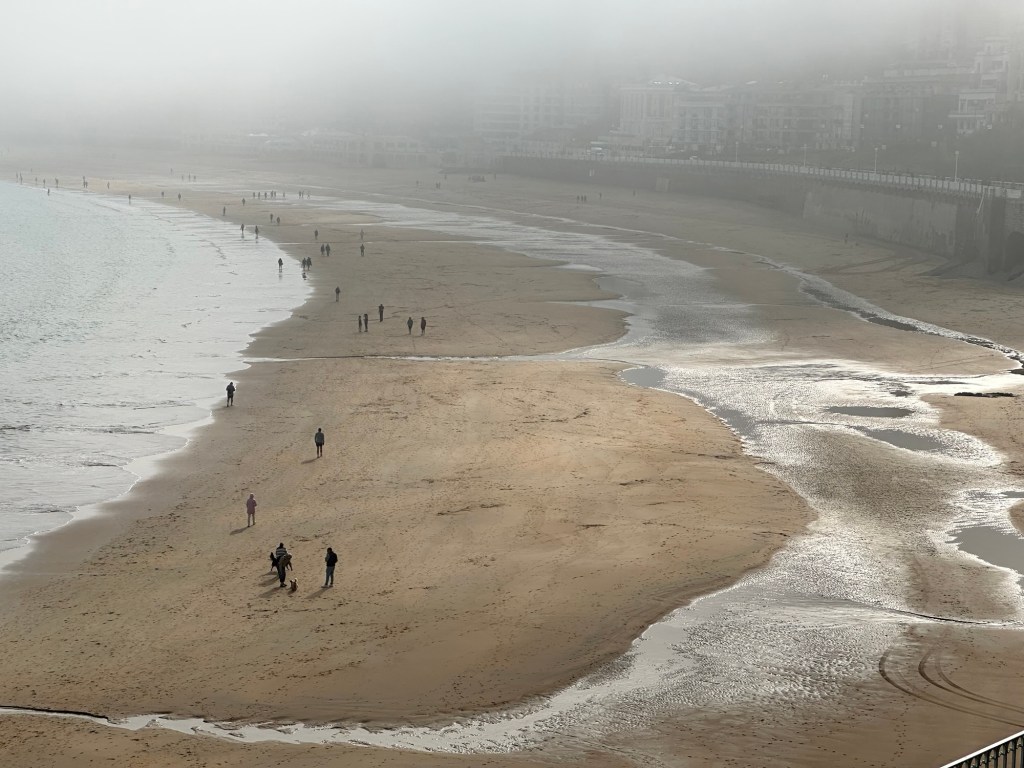
Although the morning started out cloudy, before too long, the mists disappeared, just in time for us to thoroughly enjoy our walk along the beach.

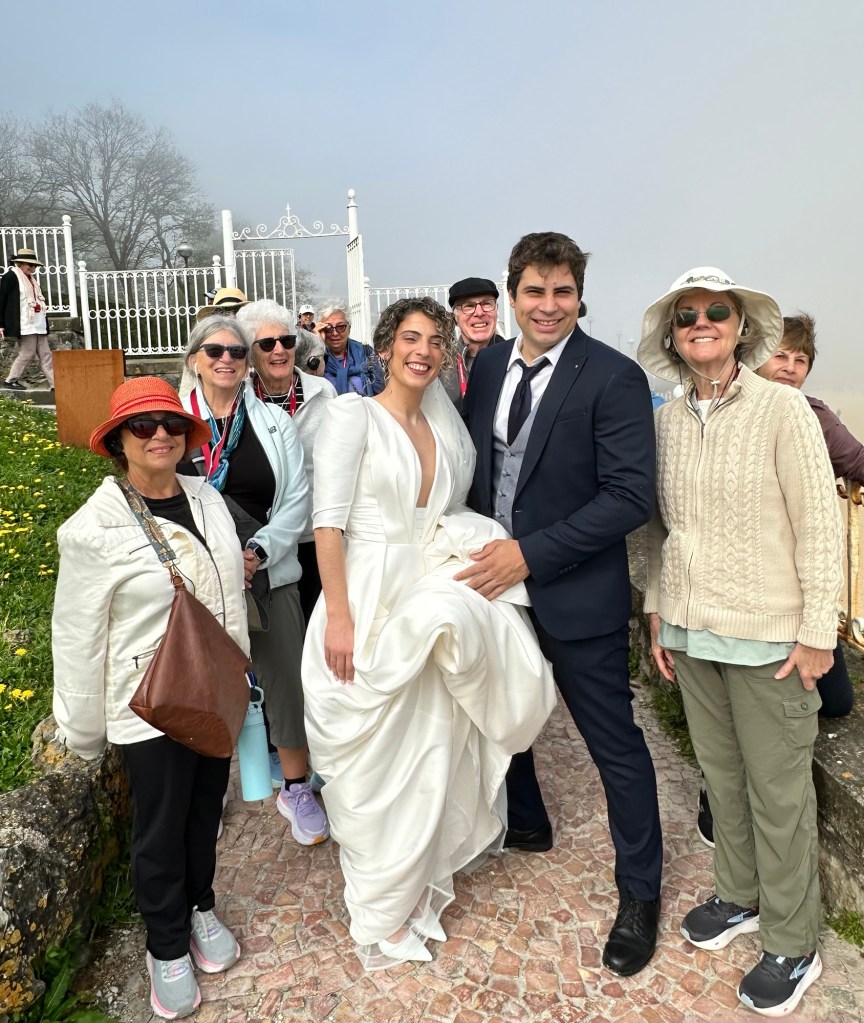
The Miramar Palace, where former kings and queens spent their summers, overlooks this big, beautiful beach, and is now an events center for weddings and conferences.

I’ve seen elaborate sand sculptures, but this was the first time I saw sand “art” being created.

We had just enough time in San Sebastián for a delightful multi-course lunch at The Morgan Kompany, ( no, that’s not a typo, and yes, it is a restaurant). I barely had enough time to find a Christmas ornament for my sister. It’s one of my travel traditions— to find something Sue can hang on her tree from every country I visit.

We arrived in Pamplona late in the afternoon, checked in to the hotel, then walked through the nearby gardens. Notice how clean everything is?

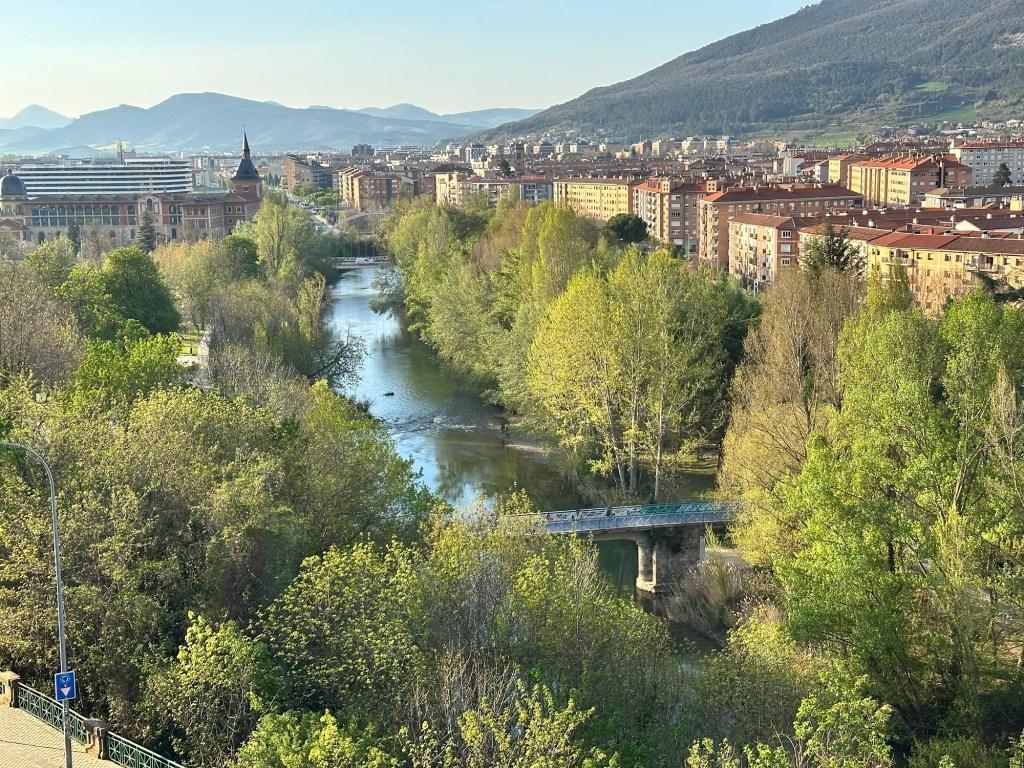
Our stroll took us to the city wall, where we were able to enjoy this panoramic view.

Spaniards eat dinner around 9 or 10 PM, which according to my American digestive system is FAR too late.

We didn’t spend much time in Pamplona, because the next morning we traveled to Roncesvalles, where we started our El Camino experience. The mountains in the background of the header photo are the Pyrenees which form a natural border between France and Spain. In that photo, some of us are holding our El Camino passports aloft. We collected three stamps on this walk.

I didn’t have a walking pole, so I brought my umbrella, which helped me cross a muddy, slippery stream.

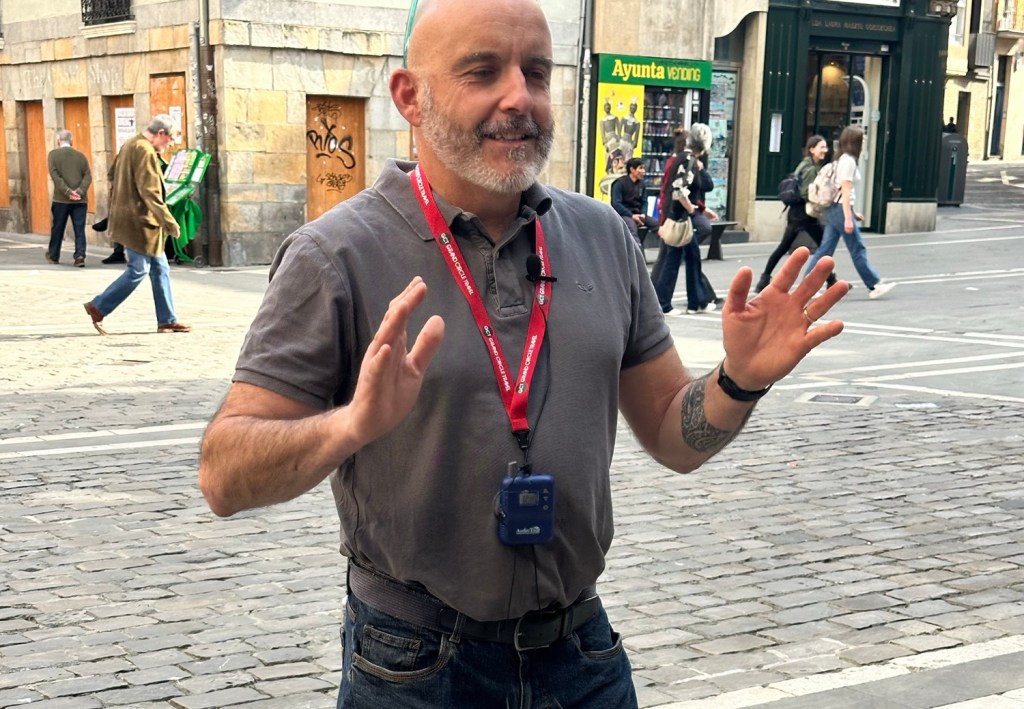
For our last afternoon in Pamplona, we met Gonzalo,

who has run with the bulls multiple times. He finally hung up his running shoes after his injuries resulted in a 10 day coma.

As we walked the half mile route from corral to bull ring, he filled us in on little known facts (at least to me) about the Festival of San Fermin. That’s the official name for the insane practice known as running with the bulls.

  • Six bulls per day do the run, accompanied by six steer ( castrated bulls)
  • The same six steer do the run for SEVEN consecutive days, but the six bulls change every day, because they get finished off when they reach the bull ring. This festival is the only time bull fights are held in Pamplona.
  • Before 7 AM, runners congregate in front of the statue of Saint Fermin (maybe he existed, maybe he didn’t) to sing a song three times at prescribed intervals before the bulls are released at 8 AM.
  • According to Gonzalo, runners need to arrive early to get a good spot for the run. If you are interested in viewing the madness, and hearing the song, here’s the link to the YouTube video. https://youtu.be/hDyQ0cUXk9g?si=rN20ZM45hAZ_CW_i
  • During the 7 day festival 42 bulls run. Each one costs between nine and fifteen THOUSAND Euros.
  • It takes the frightened bulls about two minutes to run the half mile route. No runner is fast enough to do the entire route, because once the bulls get in front of you, you’re done with the race.
  • If a runner gets gored or trampled all medical care is free. If you are NOT a runner and fall down because you’re drunk, you are responsible for the medical costs. And let me tell ya, there is a whole lot of drinking during those seven days!

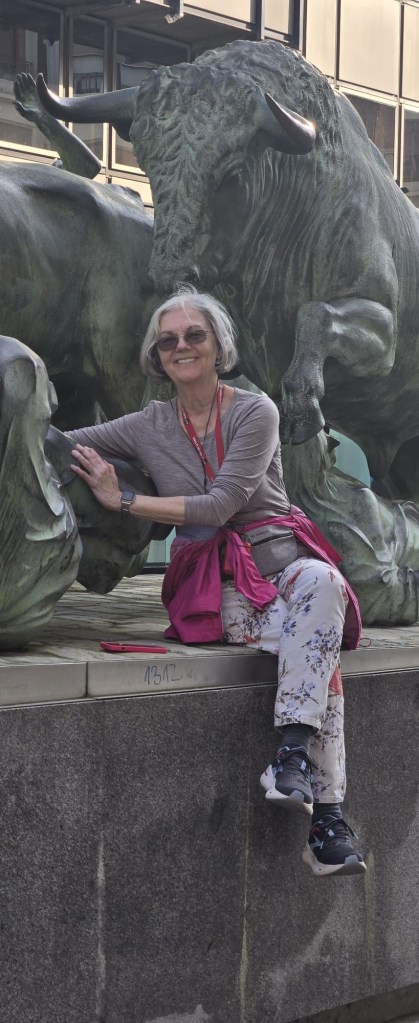
This is as close as I will ever get to a bull run, because I KNOW what would happen!

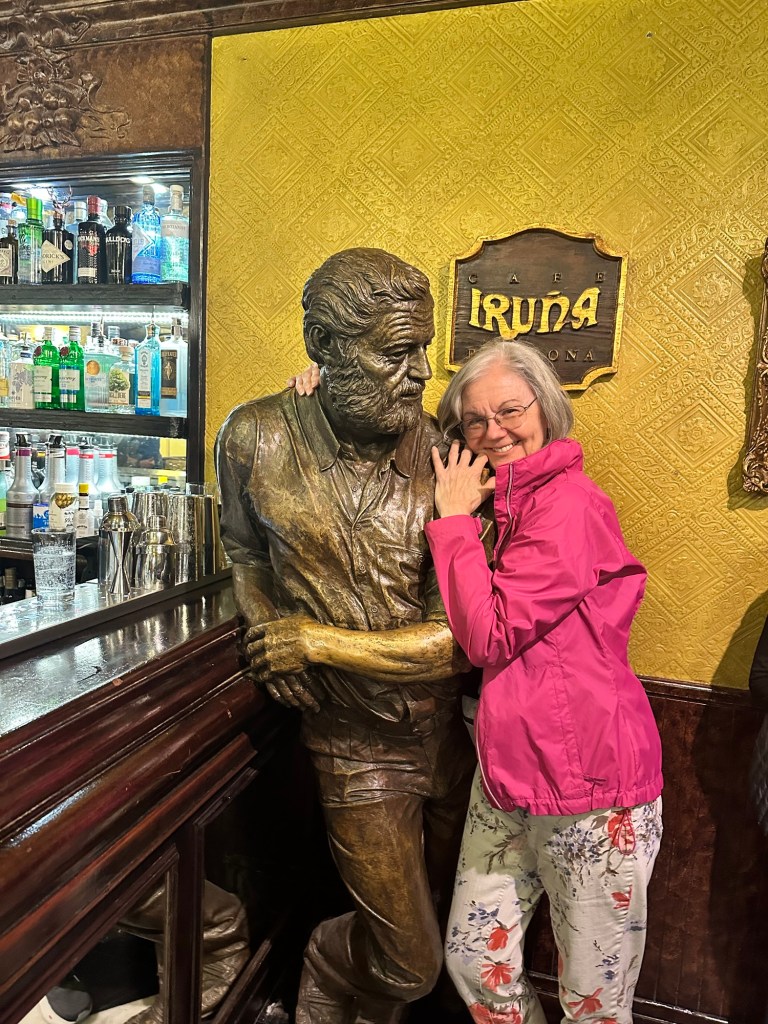
Our last stop was at Hemingway’s favorite bar, where we enjoyed churros and chocolate.

Yes, it was a VERY full day!