Bogotá, Colombia, Part 2

I wish my memory functioned the way it used to. I’m lucky if I retain 20% of what I’ve learned, and boy, have I ever learned a lot during my four days in Bogotá!

On our walking tour, our local guide shared interesting facts about Simon Bolivar that didn’t quite make it into our history books. He was only 19 when his wife died; she made him promise never to marry again, but she forgot to mention lovers. That was probably a good thing, because one of his lovers, Manuelita Saenz saved his life. Her house was down the street from his, close enough to allow them to use candles to schedule rendezvous times. She was watching for his signal when she saw a large group of heavily armed men in the mountains heading toward his house, so she quickly rushed Bolivar to safety. Manuelita’s house is now a museum very close to our hotel, but unfortunately, I didn’t have enough time to visit it.

Instead, I spent some of my “on your own” time in two of the several free museums in Bogotá funded by the National Bank. The original source of that money, however, was the USA. No, not from foreign aid money. It was from a lawsuit Colombia initiated against USA over the Panama Canal. And we lost so we had to pay just under $ 30 million to Columbia. At one time, thanks to Simon Bolivar, Colombia included what is now Panama, Venezuela, Ecuador and Peru.

Both museums had beautiful central courtyards surrounded by exhibition rooms.

Botero definitely had a fascination with big butts and legs.
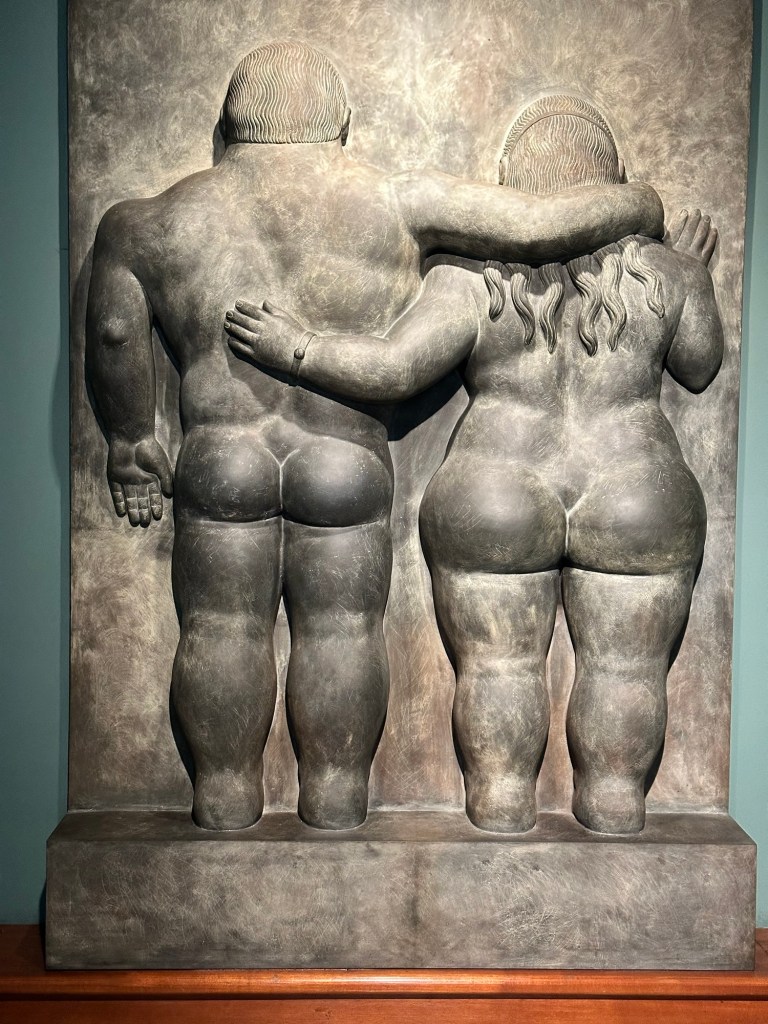
In fact, ALL of his subjects were very well fed. The painting that follows is entitled “Woman with a parrot” which was not the first thing I noticed.
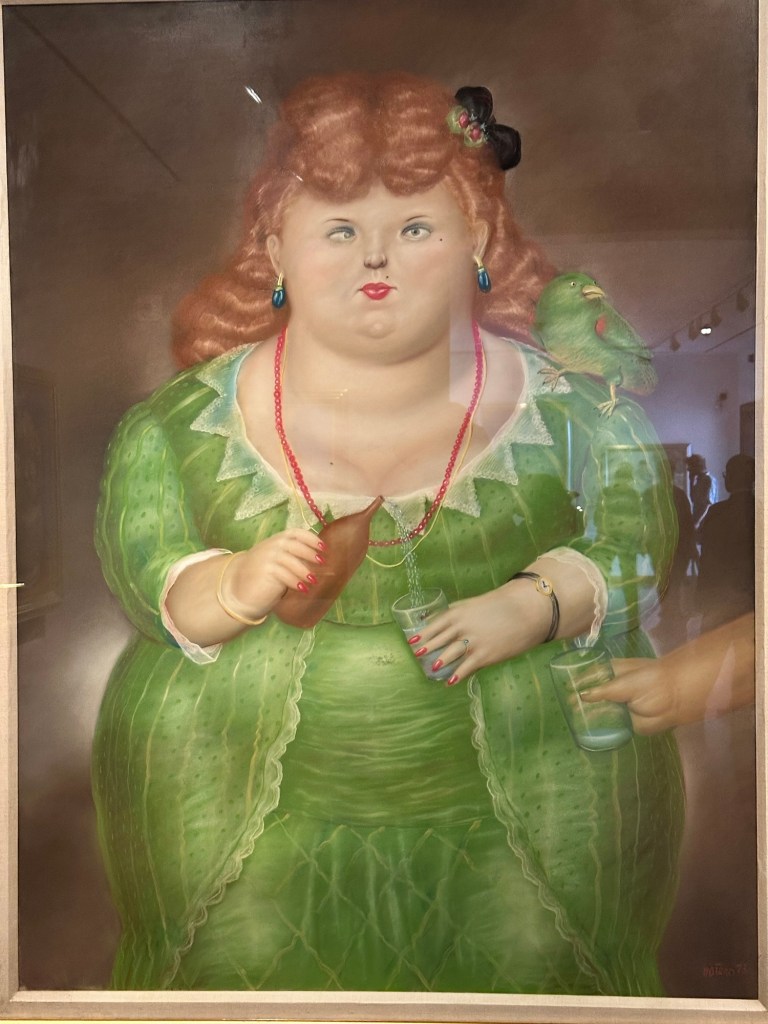
But I digress. Back to the walking tour. Cama, our local guide, took us to the Gold Museum, where we learned that back in pre Spanish times, gold was valued for spiritual reasons. Like many other cultures, the indigenous people were sun worshipers. They believed the more gold you could load onto your body, the closer you were to the sun god.

The object below is considered one of the most important in the museum. It shows the leader on a raft, surrounded by followers who were tossing gold objects into the lake as offerings to the sun god.

Many of the objects in the gold museum were saved from the Spaniards because they had been tossed into bodies of water. Others were discovered in gardens because the owners buried them to keep them from being stolen and after they were killed, if there were any survivors, they couldn’t find the buried “treasures”.

Although we were supposed to be on our own after lunch, Alejo had thoughtfully arranged transportation to Monserrate and Cama graciously accompanied us.

In my opinion, Monserrate is a much better choice than the salt cathedral. We rode a cable car to the summit. Although there weren’t many people at the bottom of the mountain, Cama asked the cable operator about the number of people at the summit, and wisely advised us to purchase “skip the line” tickets. Good thing, because the line to descend was so long, we would have been standing there for hours!

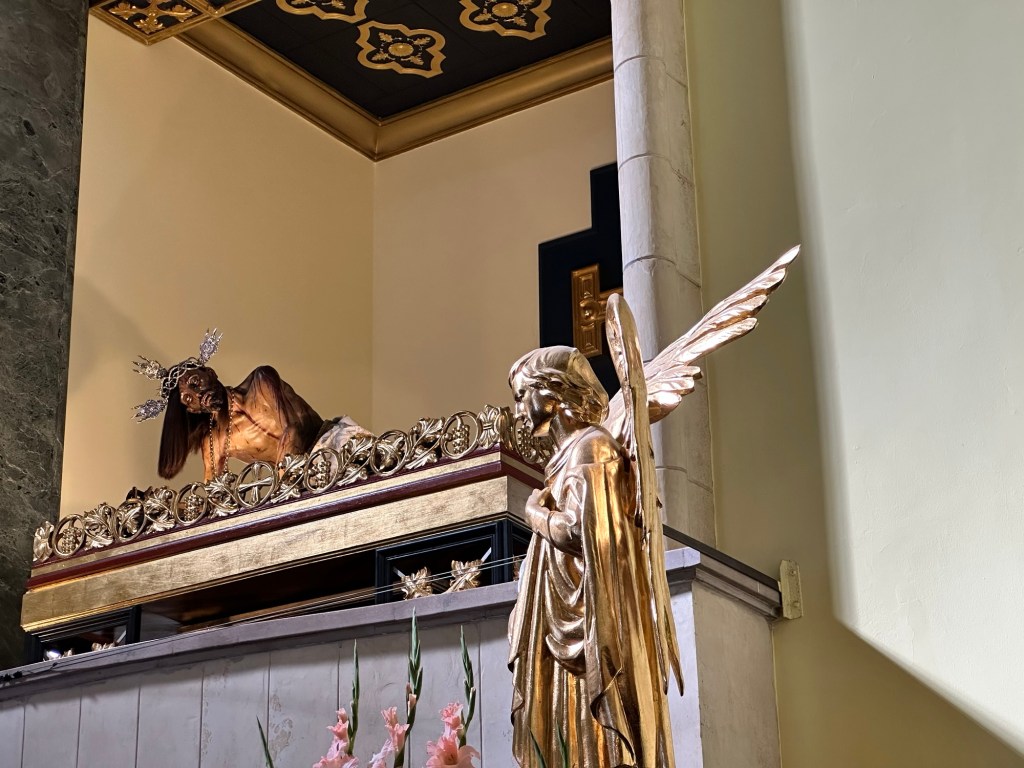
At Monserrate, we got a spectacular view of the city. But wait, there’s more! The church was very different from any that I had ever been in. When you enter a church, what do you normally see? A huge cross, with a very European Jesus hanging from it, right? Take a look at THIS church.
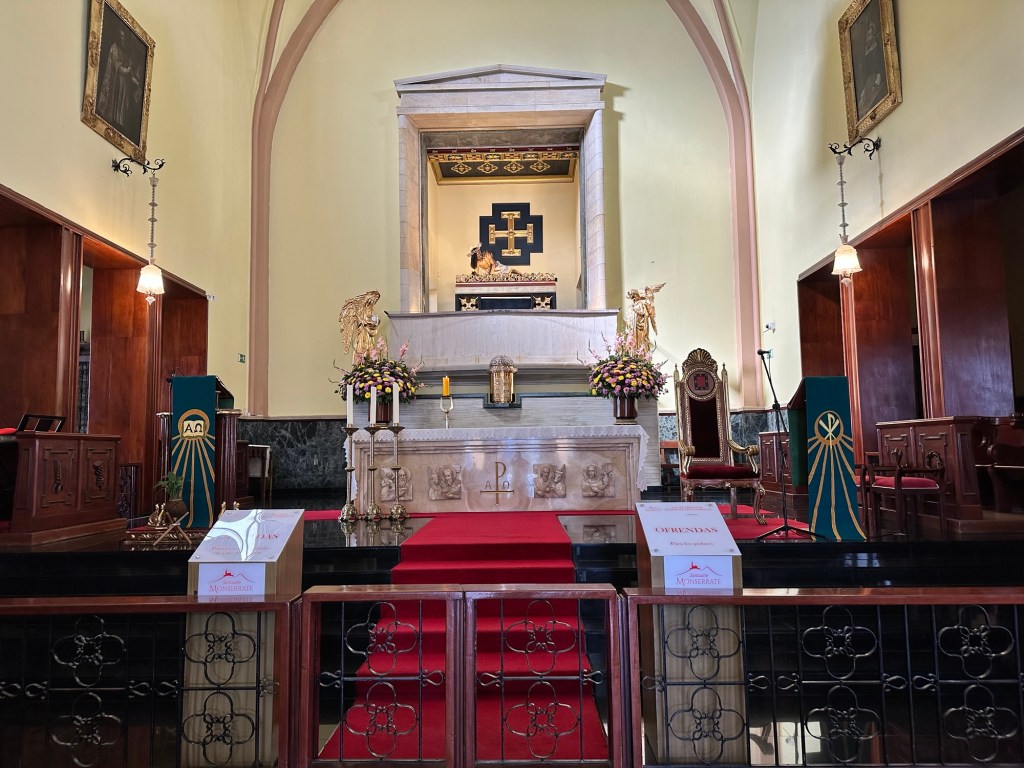
Here’s a close up. Don’t you think it’s far more realistic depiction of Jesus? I suspect back then, his skin was more of a Middle Eastern color.
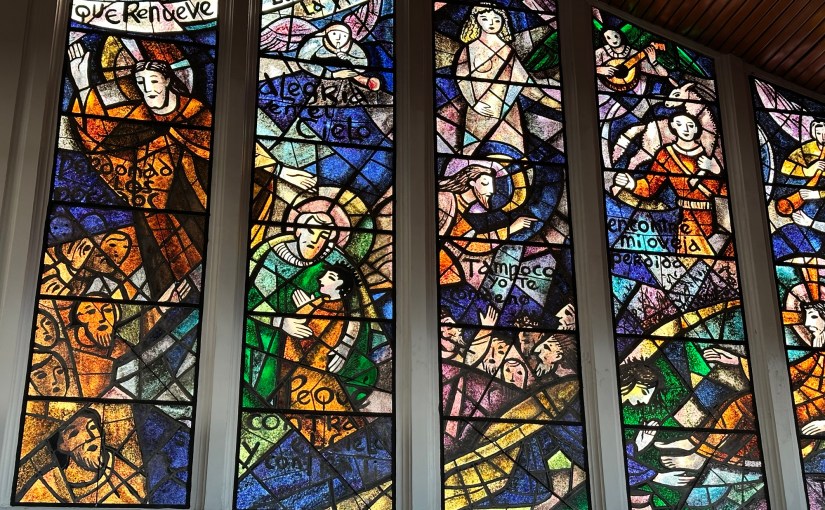
The photo for this post’s banner is one of the church’s stained glass windows. Take a close look, because it has something I have never, ever seen on ANY church’s window (trust me, I’ve visited countless churches) and don’t expect to ever see it again. Who can spot it? I’ll give you a hint. Look near the top.

The LAST unique aspect of the church that I noticed was the “miracle area”, where people thanked “El Señor” for granting their wishes by buying a plaque. Notice the one from Luis Fernando Rendón thanking El Señor for making it possible for him to move to New York and for giving him health and strength to care for his family. It’s the gold one in the photo below.

Here’s a photo that Cama took of 11 of the 15 of us on the tour.

Although OAT offered an optional tour, not enough of the group chose to take it, so instead, we got another unstructured day. Elsie and decided to take the free graffiti tour, and it was FANTASTIC!

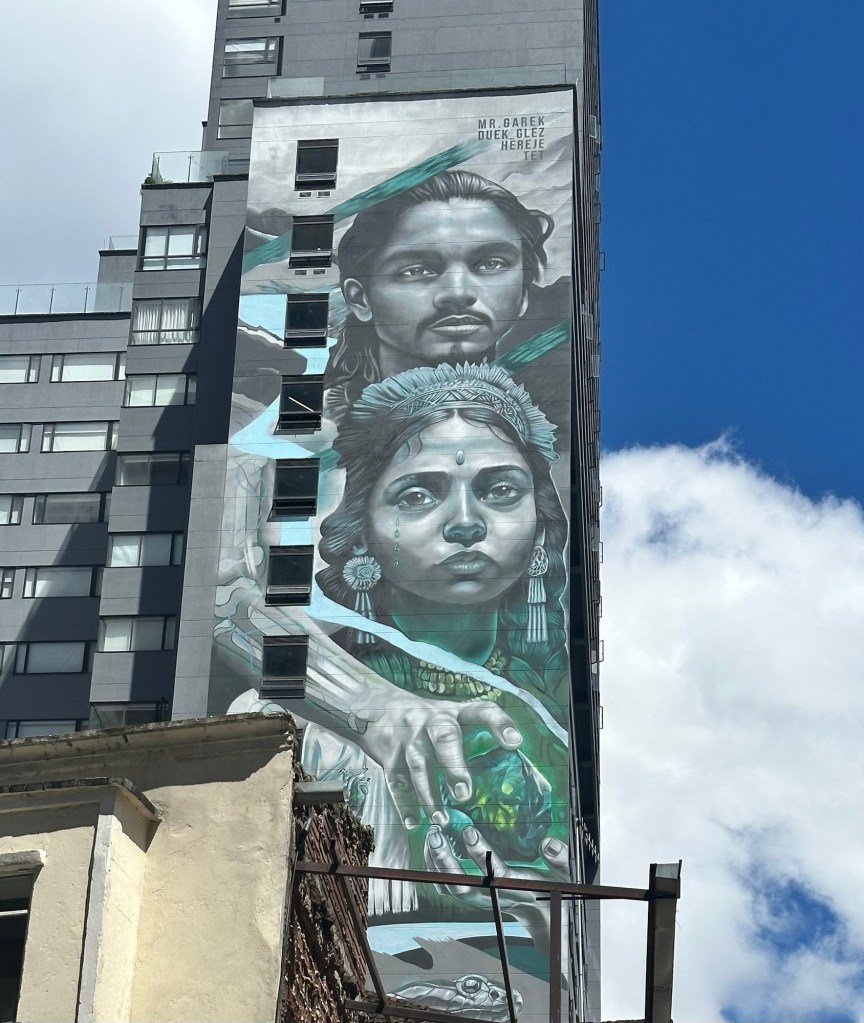
I had no idea that Bogotá has 6000 kilometers of “legal” street art, with another 1000 of “illegal” (unapproved). The tour was conducted by an artist who showed us one of his works. It depicts a creation myth. I don’t remember ALL of the story, but here’s the gist.

These two will be perpetually young so long as they stay faithful. When the man notices his skin is getting wrinkled, he realizes he’d been betrayed, so he killed his rival. Sorry, I don’t remember how the emerald and the snake tied in to the myth, but they did. And I remember the man ultimately committed suicide. Once again, it was all HER fault.
The next one was commissioned by Peru, as an act of reconciliation. For what, I don’t recall.

The words read “No one is illegal. Strength in unity”.

I love this next one of five young indigenous girls (I could only get four into the photo).
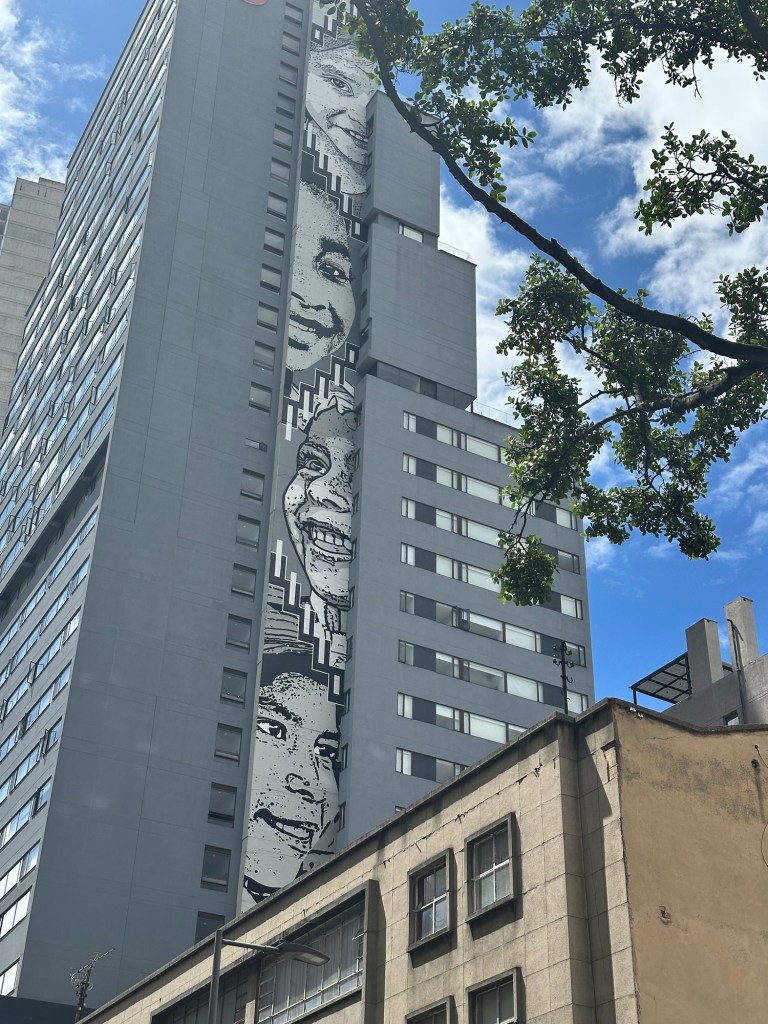
The artists asked them about their hopes for their future, and as they were thinking about their dreams, they smiled. The artists captured that moment in a photo and that became their model for this mural.

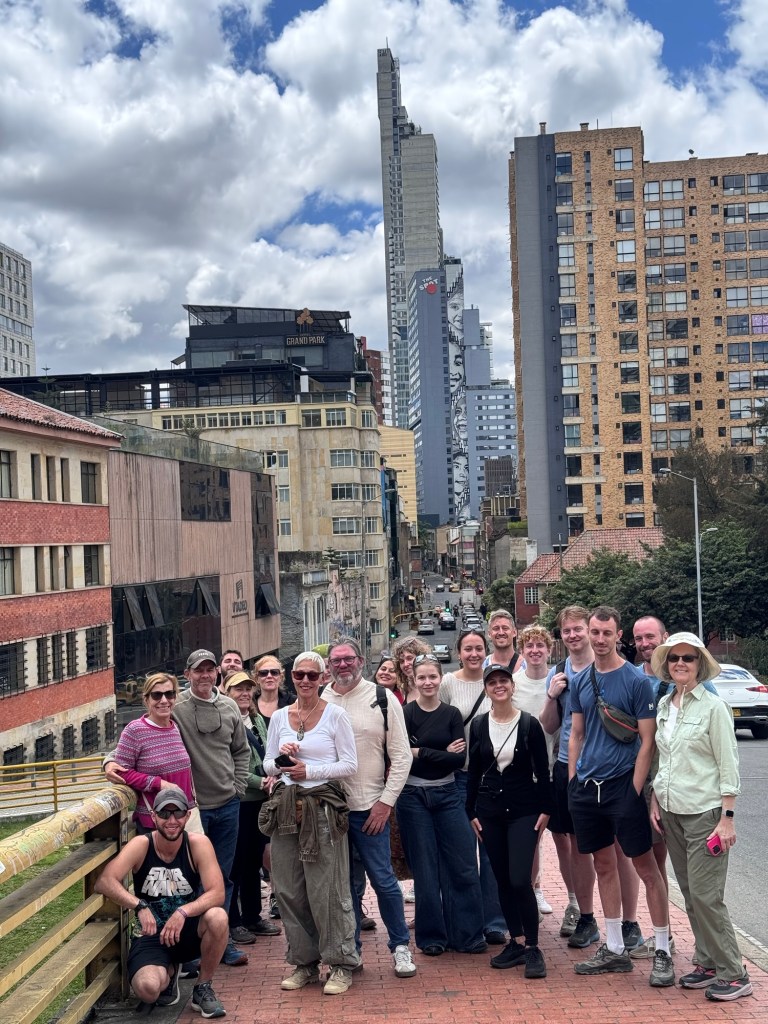
There was a whole lot more art, and MUCH more interesting narrative, but this post is getting rather long. Our next to the last stop was on a bridge, where our artist guide took this photo. The tall structure in the background is significant because it is the highest building in Colombia, completely empty, because it is tilting, like the tower in Pisa. It is also significant because a graffiti artist has placed his “tag” on the very top of the building. And if you want to know more about the interaction among graffiti, music, and common words in our culture, you’ll just have to take the tour.
I’ll close with photos of the newest artists
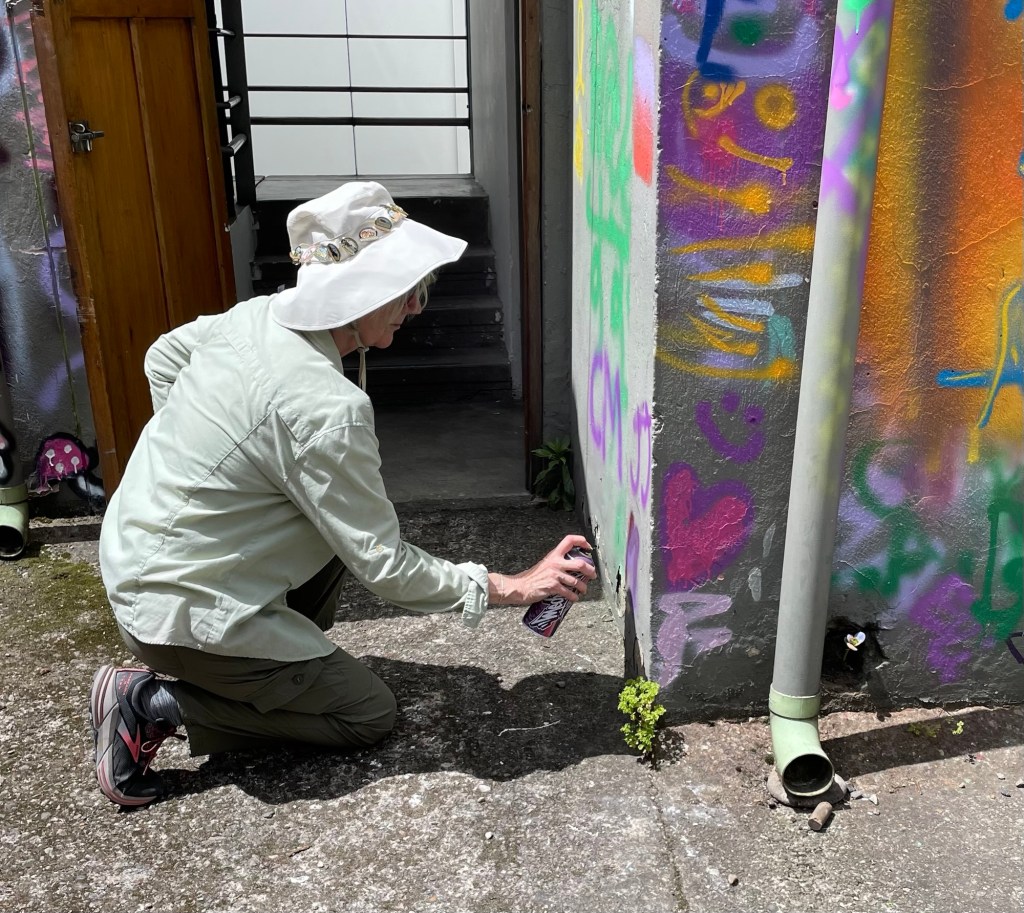
And their work

Hey, it ain’t as easy as you might think!
Maasai Culture

Warning: This might not be a good post to read to children.

Yet another reason I choose to travel with OAT is the opportunity to learn about the culture of the places we visit. I also love that a portion of our payment for the trip goes back to the communities with whom we interact.

Our morning in a Maasai village was VERY educational. So, of course I feel compelled to share what I learned with you.

Did you ever wonder how you get goats to practice birth control? Let this Maasai chief show you. That yellow barrier strapped behind the goat’s forelegs stops his “love potion” from reaching its intended target.

I confess that I was slightly confused. I thought it was a GOOD thing to have lots of goats and sheep. Seleman, our wonderful trip leader, explained that for goats, like humans, timing is everything in life. The Maasai want to make sure baby goats are born when their likelihood of survival is maximized, so when the timing is right, the shield comes off.

Next the Assistant Chief explained (in perfect English) the tribal hierarchy. He described some of the Maasai rituals, the most memorable (to me) being circumcision. It is performed in public, without anesthesia, on a group of 12 to 14 year old boys. If they don’t cry out or even flinch, they are deemed worthy to become warriors. After surviving the ritual, the group goes into the bush for three months. When they return to the tribe they are then considered to be men.

Before climate change decimated their herd of cattle, reducing it from 290 to 10, the Maasai used to drink cow’s blood every morning. They made a shallow incision into the cow’s jugular, collecting at least a liter before they stuffed the cow’s wound with herbs.

If you ever doubt the impact that one amazing woman can have, let me introduce you to Lucy. For the past 13 years, Lucy has visited over 100 villages, providing health education, including speaking out against what WE call FGM ( female genital mutilation). What THEY call “the cut” was deeply imbedded in the culture and traditions. They believed undergoing this public procedure transformed a girl into a woman, and thus enabled her to be married. Like circumcision, removal of the clitorus and labia was done without anesthesia, by a “midwife” and women were expected to endure the pain without crying out. Lucy underwent “the cut” when she was 14. (She admitted to crying and screaming).

Although the government banned FGM in 2003, there was no follow up, so the practice continued. It certainly wasn’t easy, but after years of hard work, Lucy succeeded in eliminating FGM for about 99% of the girls in the villages she visited.

Lucy understood she had to “humble herself” in order to get her message across. To ME, however, Lucy is the embodiment of Katy Perry’s song “Roar”, especially these lines:

“ You held me down, but I got up, already brushing off the dust, I went from zero to my own hero…

I am the champion and you’re gonna hear me ROAR”

After the Maasai village visit, we headed to an elementary school that has been a recipient of funds from OAT’s Grand Circle’s foundation.

There are only 12 teachers for 183 girls and 230 boys. That’s quite a teacher/student ratio! .
While there, we learned how the Foundation‘s money was used. The first purchase was a copy machine, so the teachers wouldn’t have to walk for 45 minutes to the closest copier.

Under construction were bathrooms with flush toilets that will replace the two squat toilets currently being shared by all the students (and that some of us used during our visit).

During our interaction with the children, we told them a little about ourselves, where we were from (notice the map of the USA on the wall) and what our occupations were.

Fellow traveler Kalpana was by far the most inspirational. She told the students that she had attended a school just like theirs when she was growing up in India. Her hard work enabled her to become a doctor. Kalpana encouraged the kids to study, work hard and dream big.

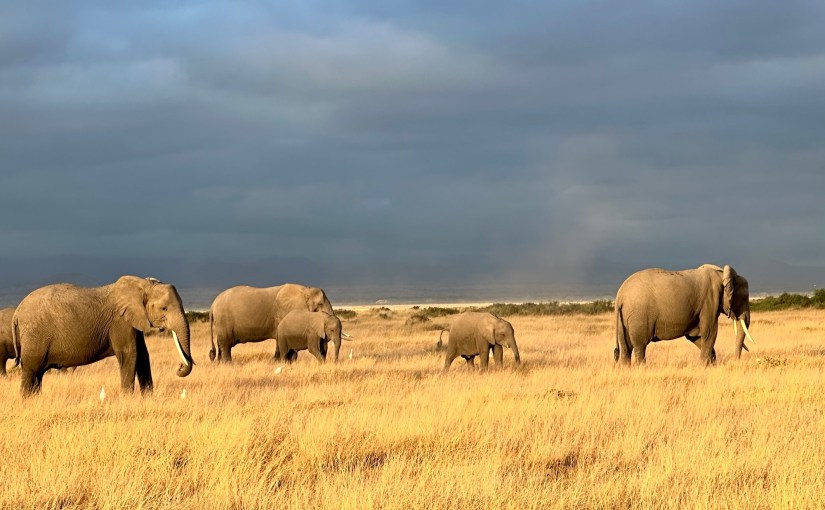
I know, I know. I lured you in with that elephant photo atop this post. We will get to the elephants, cheetahs, lions and monkeys…and that post WILL be suitable to read to the kiddies. I promise, but first I wanted to share these meaningful and inspiring moments.

I’ll end this post with a photo of our group hanging out in a baobab tree.

Nairobi, Kenya

Okay, I’ll admit it. I came perilously close to becoming an “ugly American”. When I saw that the itinerary included a morning spent in the Kibera Slum, I seriously considered sitting out the visit. Why would I want to spend time in an area inhabited by 1.5 million people, jammed into a space smaller than New York’s Central Park?

Fortunately, the wonderful travelers on the Friends of Overseas Adventure Facebook page set me straight, and I’m so glad they did.

The area certainly has its share of the usual social problems. Blackie, our escort and Kibera guide, told us that when the police refused to safeguard the inhabitants, some members of the community administered “street justice”, which proved to be quite effective in reducing crime and violence.

The community has created their own schools and has organized programs to help their children make the right choices.

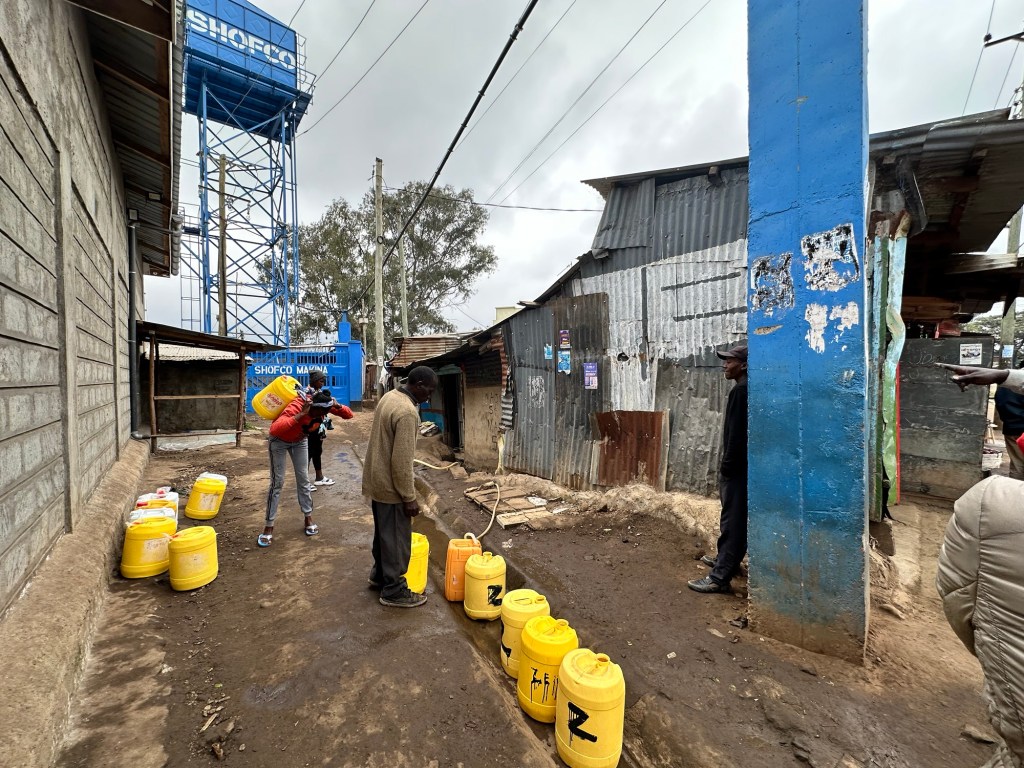
What we experienced during our visit was truly inspiring. Although the slum residents had few material possessions, no running water and lived in tiny shacks, they had a real sense of community, tremendous support for one another, and amazing resilience.

This is how you get water in Kibera.

The friendly and curious children LOVED getting their picture taken-especially when I showed them their photos.

During our visit we were welcomed into two homes. In the first, three people (mom, dad and teenaged daughter) shared ONE tiny room. The daughter was sitting on the bed, because there was no place else to sit, playing a game on her cell phone. I continue to be amazed by the impact Steve Jobs’ “invention” has had on our planet. This device, which didn’t even exist 30 years ago has become essential to us all.

The second visit was to the home of Blackie, a three room hut that he shared with his wife, youngest son and grandson.

Kalpana and Ahit, two members of our group viewing the photo of our host’s grandson.

The grandson was so pleased with the photo that I took of him that he showed everyone, exclaiming “ that’s me”!

He was fascinated with my hat’s badges

One of the many reasons I continue to travel with OAT is because of experiences like these. I never would have done them on my own, either because I didn’t know they existed, or my prejudgement was so very wrong.

Kobe Tough, our afternoon destination, exists because of the devastating impact climate change has had on the Maasai. Any American who doesn’t “believe” in climate change should come to Africa and speak to the people to whom it is a daily reality.

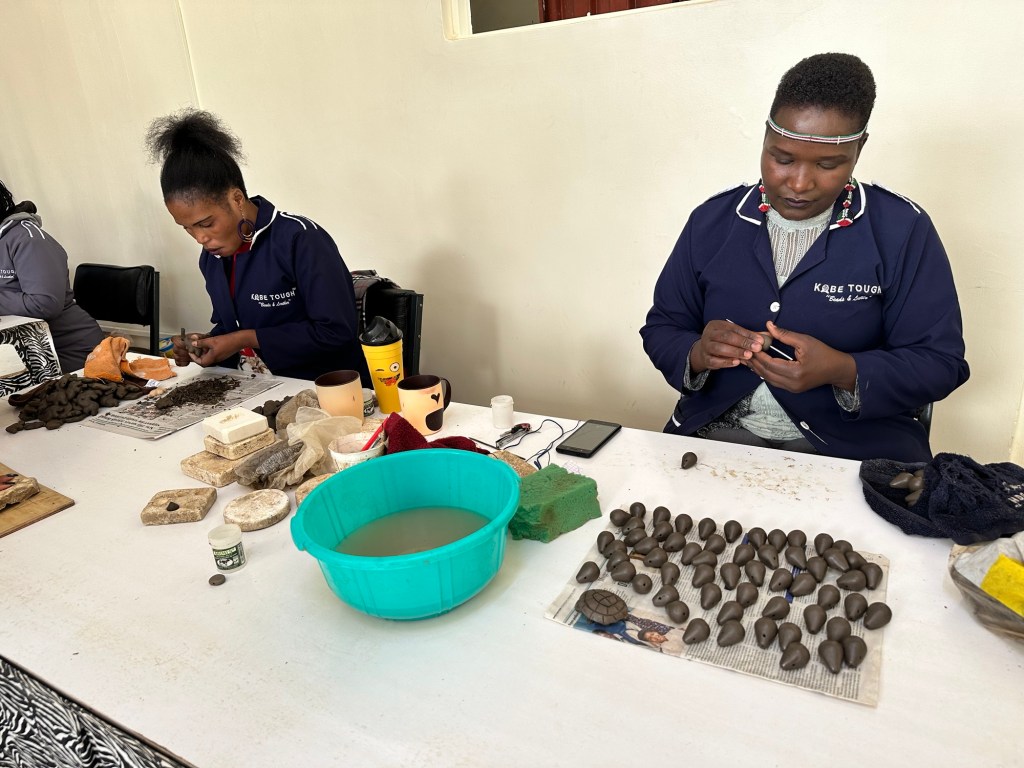
Successive years of drought killed the cattle the Maasai women depended on as their sole source of income, so they needed to find an alternate way to earn money.

They now make beautiful ceramic beads, which are hand painted and made into jewelry. I felt good buying bracelets, earrings and rings from their on-site store, knowing that the money will help these women support their families. The header for this post is a photo of some of their beautiful jewelry in their on site store. But you don’t need to go to Nairobi to own one of these unique pieces — you can buy direct from their website.

https://kobetough.com

If you visit Kobe Tough, you will meet the bead makers, who then entertain you with a wonderful rendition of “Jambo Bwana” ( hello, sir). And when they invite you to dance, I hope you’ll join them!

Another highlight of our stay in Nairobi was our visit to its national museum. I could have spent the entire day there! Did you know there are 1,500 different bird species in Kenya? I sure didn’t. You can see 900 of them displayed in the museum.

Who knew that hippos were related to dolphins and whales?

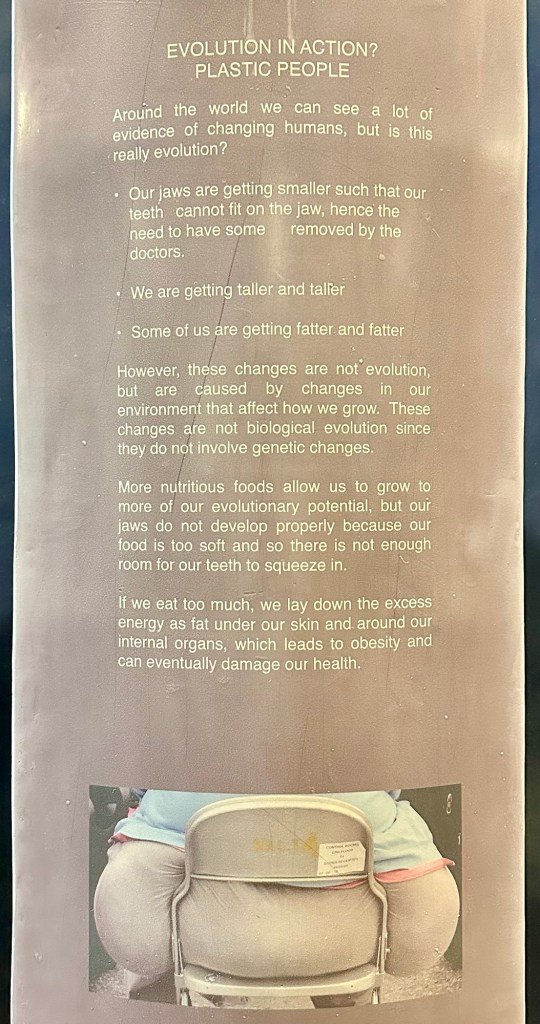
I wasn’t able to get a good shot of the remains of Turkana boy, which isn’t surprising, given that he’s 1.6 million years old. His skeleton was discovered in 1984, on the shores of Lake Turkana, giving us valuable insight into the evolution of Homo sapiens.

There is so much more to say about Nairobi, but this post is already getting long, so I’ll end with one final thought from the museum.

Next stop will be Maasai Mara National Reserve.

Rwanda

I had been dreading the long flight to Rwanda, especially because it departed from Newark after midnight. Surprisingly, it wasn’t too bad. Thanks to zolpidem, I was able to sleep on the plane, despite a whole lotta shakin’ going on.

I would have given myself the “seasoned traveler” award for anticipating that my luggage would be left behind in Istanbul. Upon landing in Kigali, I checked my AirTag and learned my luggage was 2,975 miles from me. So, I wasted no time watching other people’s bags pop out of the chute. Nope. I immediately took myself to the lost luggage desk to complete the necessary paperwork.

My backpack contained one change of clothes, my Jammie’s, chargers and toiletries, plus my credit card, cash and camera. Everything I needed for a couple of days.

Did you notice I said I WOULD have given myself the award? That’s because it got snatched away when I made the rookie mistake of putting a tube of toothpaste (big enough to last the entire trip) in my backpack. The toothpaste, plus my seasoned traveler award, got tossed in a trash bin at Newark Airport.

That AirTag was worth every penny I paid for it. I was able to watch my luggage travel to Lebanon, then Ethiopia, till it eventually showed up in Kigali a day later. Although airport staff had my phone number, email and hotel info, no one ever contacted me. Thanks to my AirTag, I didn’t waste time on the phone making international calls, trying to find someone who could give me information about my bag.

As they say in OAT world, this was a learning and discovery experience. I learned that the airline would not deliver my bag to the hotel. Instead, I had to drag my sorry ass to the airport, and then discover how very tight Rwandan security is. We had to get out of our vehicle, which was thoroughly inspected by people plus a sniffing dog, then once I got to the terminal, I had to go thru security AGAIN and visit 3 different places before my bag and I were joyously reunited. Fortunately, Fred( my hero and our driver) guided me thru the entire process.

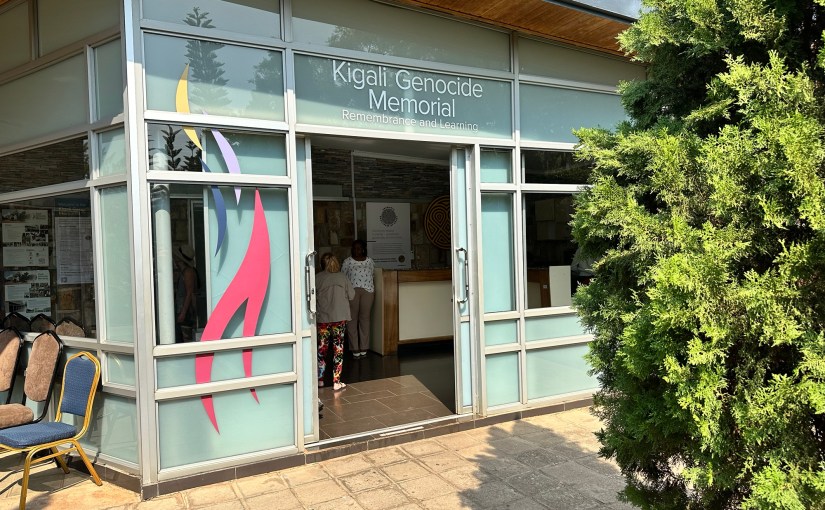
The best thing about travel is it gives you perspective. After visiting the Kigali Genocide Memorial, delayed luggage becomes a teeny, tiny, minor irritant.

30 years ago, over the course of 100 days, more than a million Rwandans were murdered. The victims were mostly Tutsi, but Hutus who refused to go along with the killing were also massacred.

Believing that churches were safe havens, many Tutsi sought shelter in the Nyamata Catholic Church. Shamefully, the Catholic priest did nothing to stop the slaughter. The perpetrators threw grenades inside the packed church, then attempted to finish off anyone still alive, with machetes and guns.

Nayamata Churcb is now a UNESCO site and burial place for thousands of victims. Particularly heartbreaking are the coffins for infants and children.

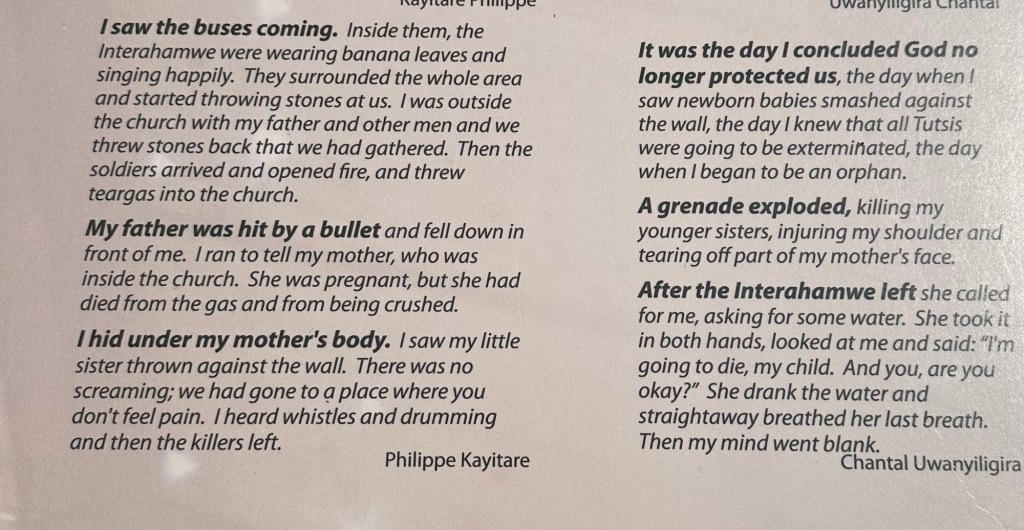
Luckily the attempt to slaughter everyone inside the church was not successful. The stories of those who survived are displayed outside the church to bear witness to what had happened. Here’s a short sample:

As terrible as the massacre was, Rwanda’s story is one of hope for the future.

We visited one of the “reconciliation villages” where perpetrators and survivors now live side by side in harmony. Naturally, it took a considerable amount of time for everyone to heal and to learn to trust one another. The perpetrators had to confess to what they had done, serve their time in prison and ask the survivors for forgiveness.

At the village, both a survivor and a perpetrator told their stories. We learned that those who committed the atrocities had been fed a steady stream of propaganda and misinformation. Agitators whipped up hatred for people who had previously been friends and neighbors.

Janet, one of the survivors with her daughter. Janet was our hostess for lunch at the village.

We have so much to learn from Rwandans, who exhort us to practice ubumuntu.

Perhaps Africans have a huge capacity for forgiveness? I recall Nelson Mandela didn’t seek revenge against his white captors, but urged the nation toward reconciliation.

America is now going thru a very divisive time. Maybe we can learn to speak to each other, listen carefully and exhibit “greatness of heart”.

Lyon

Mike and I visited Lyon and Paris in 1976. Although I vividly remember Paris: visiting the Louvre, Napoleon’s Tomb, Notre Dame and the Eiffel Tower, I have absolutely NO memory of Lyon. There was never anything that kindled even a little spark of recognition.

Looks like I’m not the only one with a memory problem.

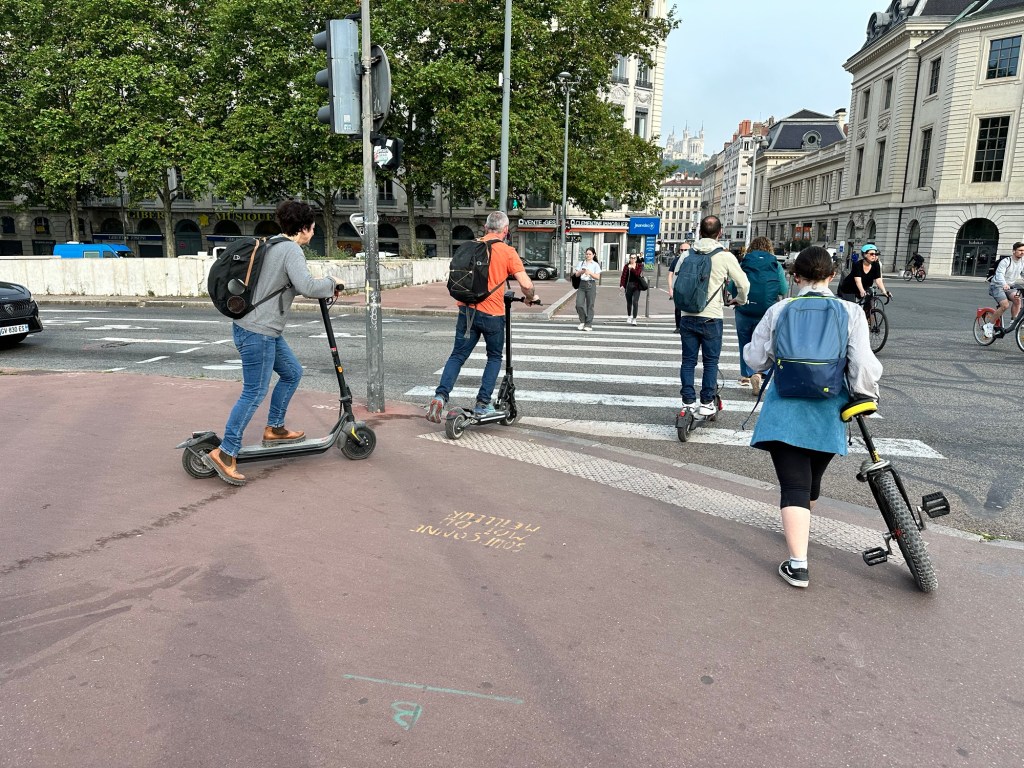
Our hotel is a short block from the Rhône River, and within walking distance to the old city. People in Lyon use EVERY mode of transportation—bikes, unicycles, scooters, so you aren’t just dodging cars, buses and motorcycles when you cross the street.

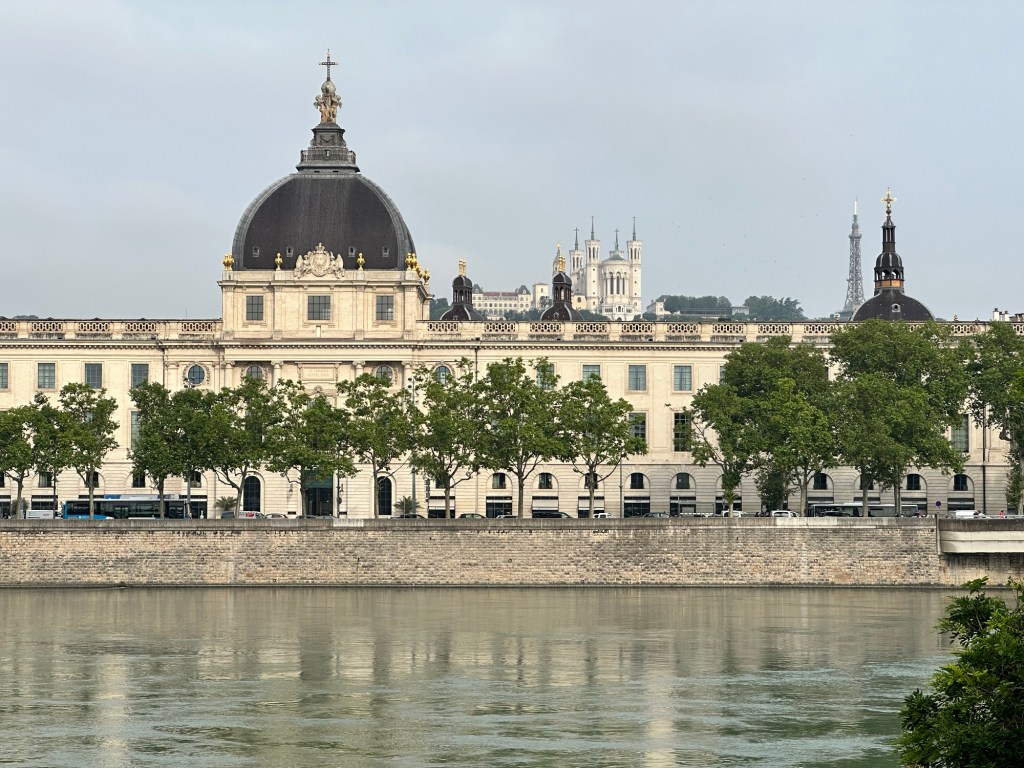
It is difficult to get lost in Lyon, even for me. From the river banks, it is easy to find three important landmarks. The black domes are atop the Hotel Dieu. Now a luxury hotel, from the late 1400’s until 2010, that large building was a hospital. The white building to the right (in the distance) is the cathedral and barely visible, on the far right, behind the dome is a fake Eiffel Tower.

Now why would there be a second Eiffel Tower? Well, back in the day, tourists would visit the outskirts of Lyon, but never bothered to visit the city proper. So, knowing how poorly educated people are about geography, the town fathers rightfully guessed that people were aware that there was an Eiffel Tower in France, but had no idea in which city it was located. Voila! The tourists did indeed come into the city center to view the “imposter” tower. And a tourist trap was born. Clearly that was well before the advent of Ms Google.

The “tourist trap” needed a better photo, so here it is.

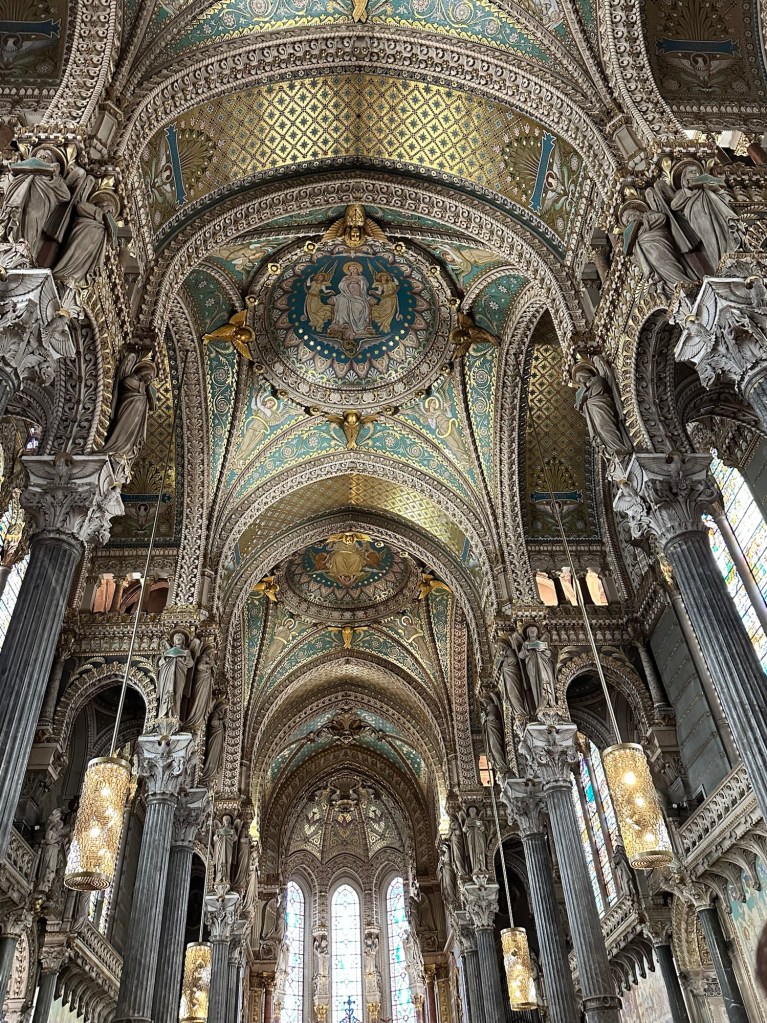
We took the funicular up to the cathedral. I know, yet ANOTHER church. But this one had some rather interesting features.

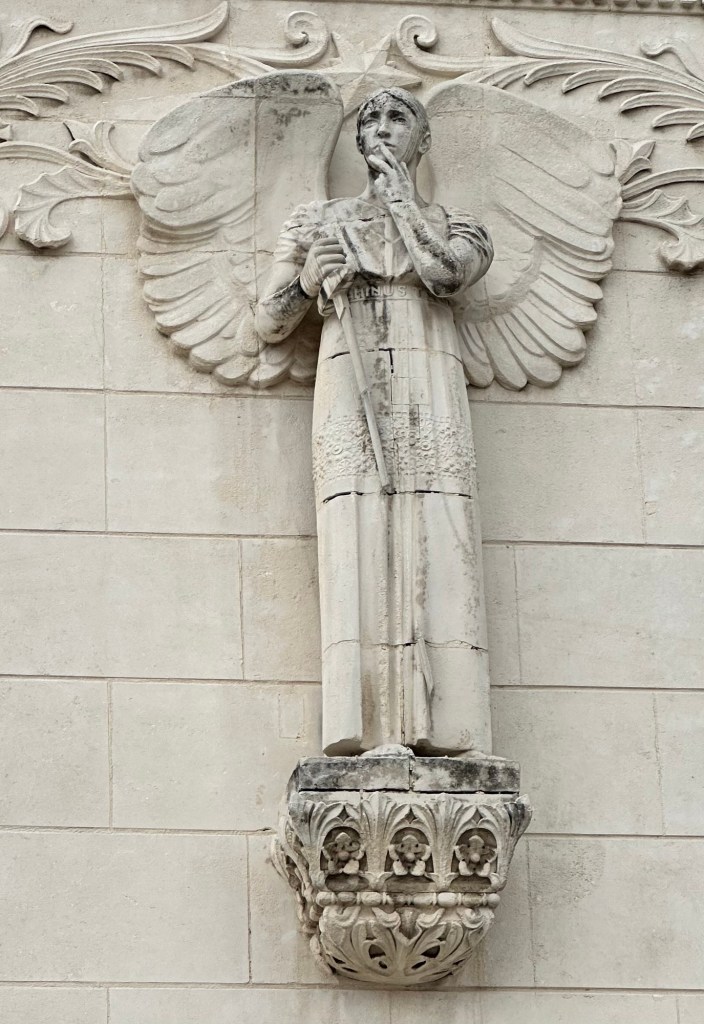
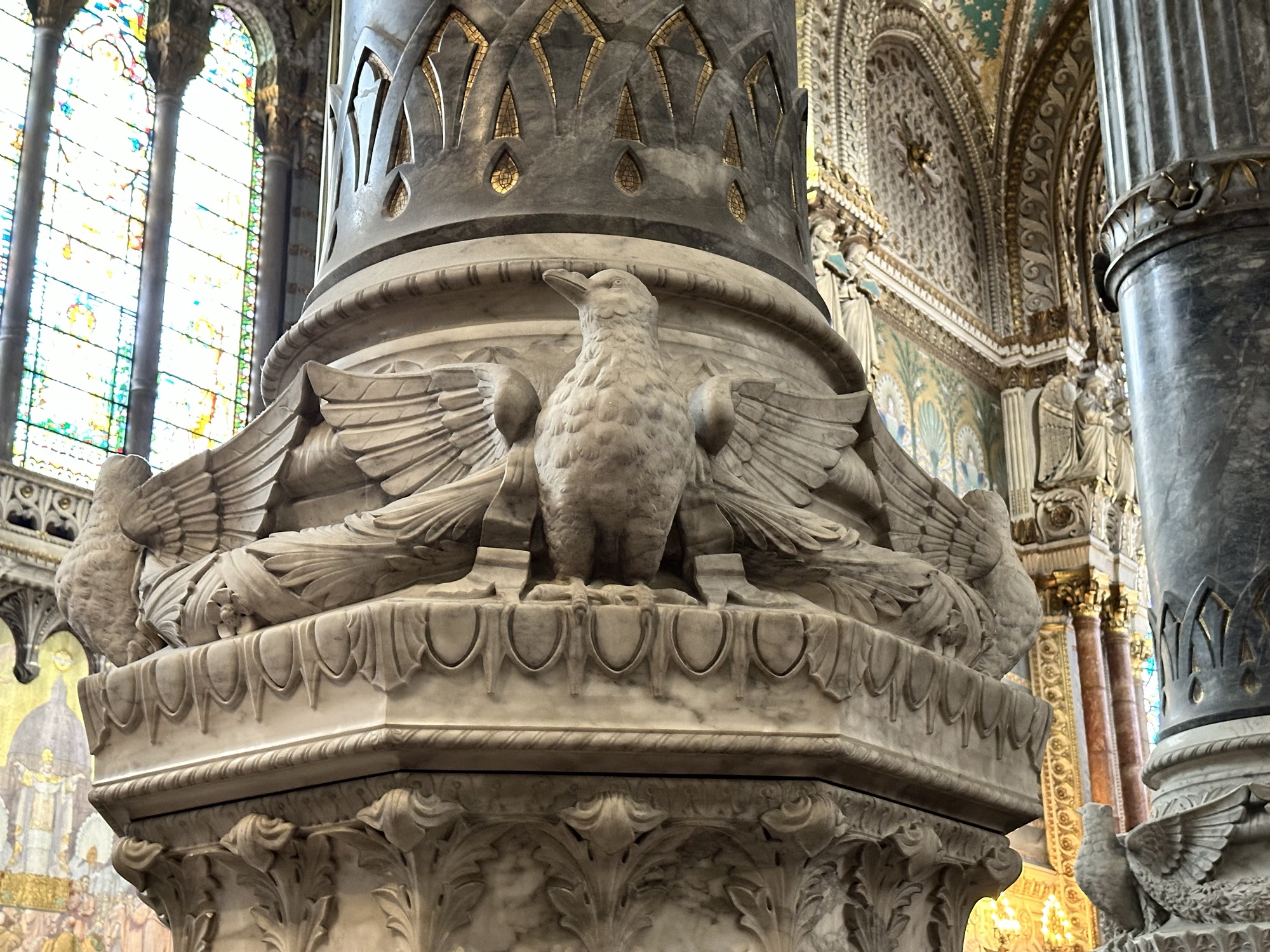
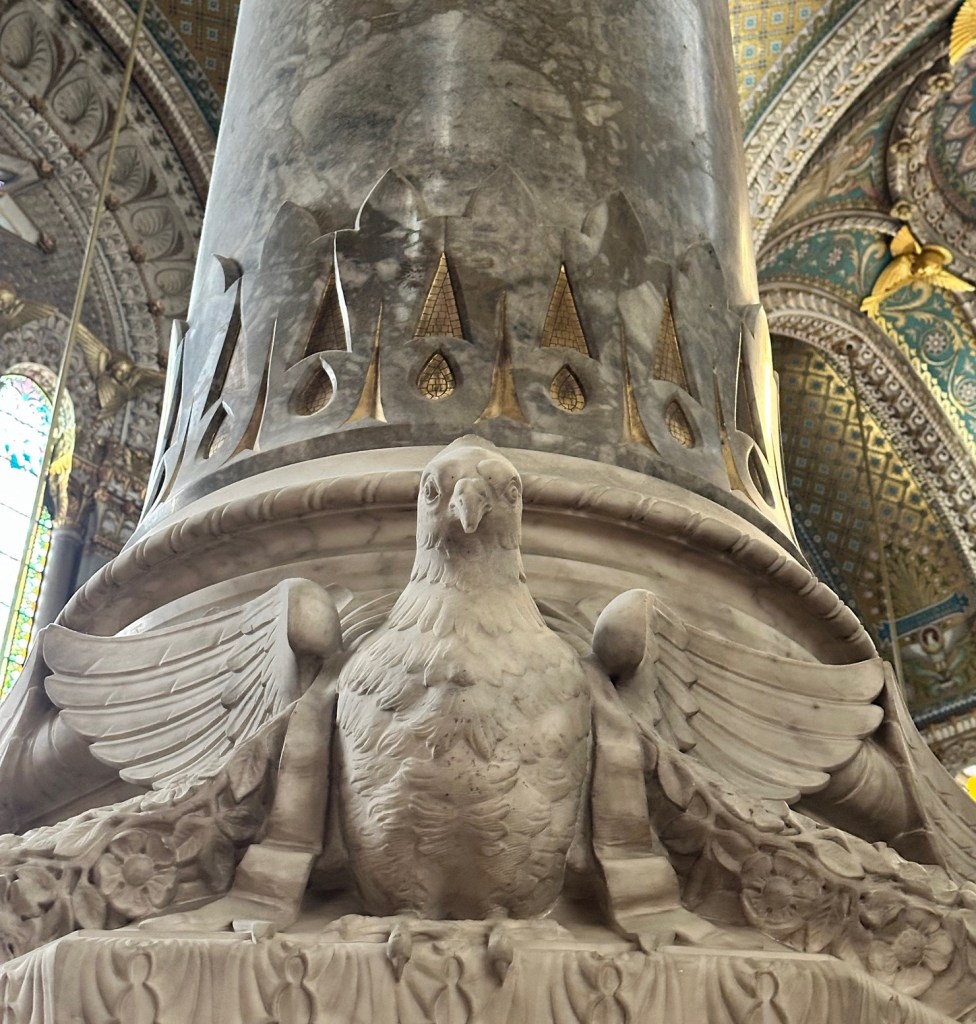
Check out the number of columns in this cathedral—and how ornately decorated they are, with different statues standing on the top. At the base of each pillar are birds, all slightly different. Some of them are looking straight at you, others have their beaks lifted at varying angles. Admit it—have you EVER seen birds on a church column? On the INSIDE of a church, that is. I sure hadn’t. Perhaps they symbolize the Holy Ghost?

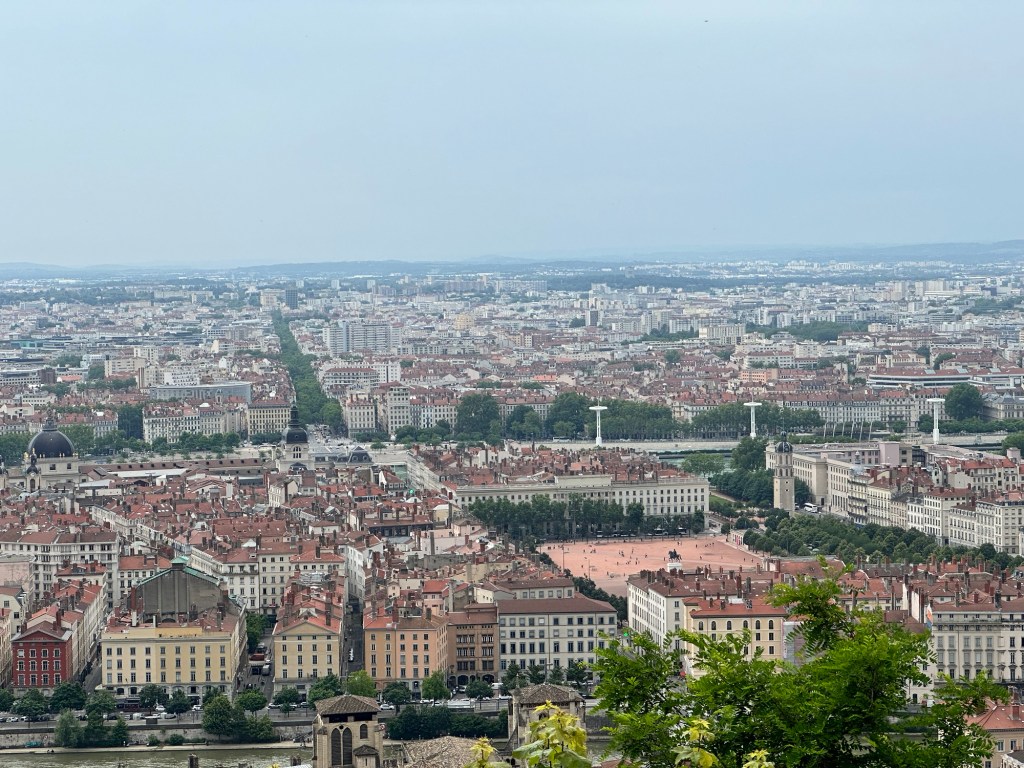
Before we descended, we had to check out the incredible view. More later about the three white towers in the distance .

During our time in Lyon, we had two scheduled activities. The first, a food tour, brought us through the old city, and consisted of tasting stops at a chocolate shop, a bouchon and a pastry store. The food wasn’t wonderful ( fish soufflé at the bouchon, overly sweet pie at the pastry stop) but the guide was.

Our local guide explained that the hospital (now Hotel Dieu) was located at what was once the border to France. At that time, our hotel would have been in Germany! Why was a hospital located there? So that the medical team could examine all travelers before they were allowed to enter France.

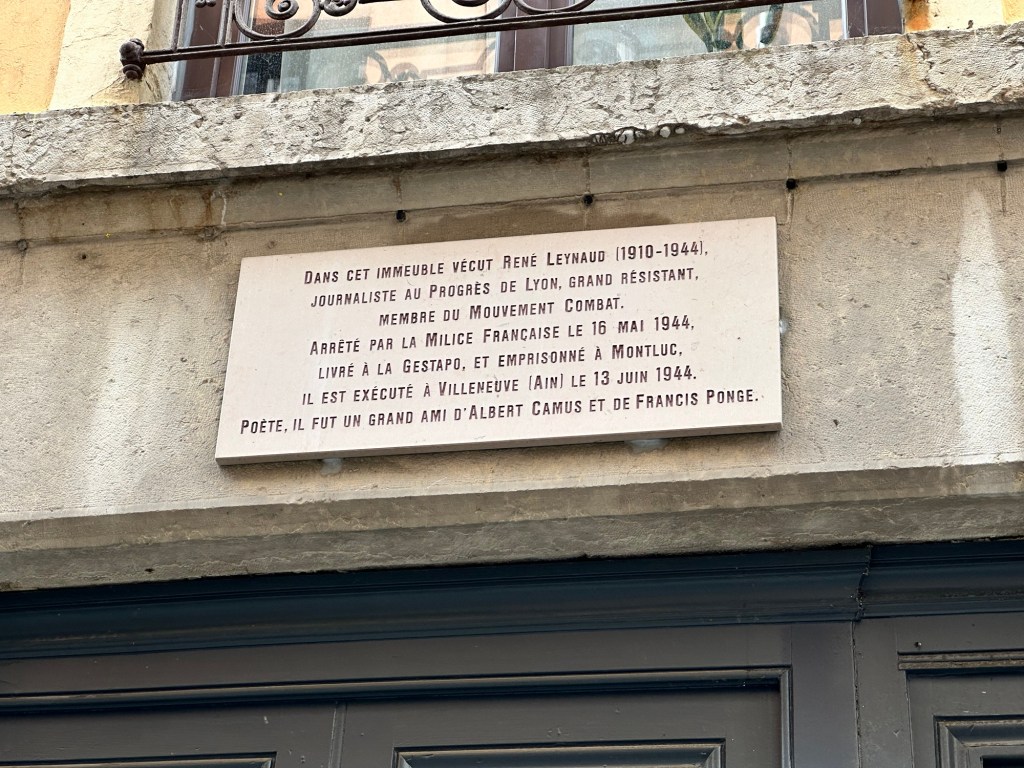
The second tour which focused on the Resistance, took us to a different part of Lyon. This tour consisted of walking up and down narrow cobblestone streets to view plaques affixed to various buildings.

We also went thru passages the resistance workers took to evade the Gestapo. Now the buildings are covered with graffiti and the passageways are entrances to apartments and function as storage areas for trash cans. The walk was uninspiring, however once again, the guide was great. Although I was listening intently to her description of the mind sets of the French during World War II, I found myself more interested in the abundant street art than the plaques.

Take a look.

I initially thought someone stuffed a funky gorilla into a hole in this building, so of course I had to examine more closely. This very talented artist somehow achieved a three dimensional effect on a flat building wall. Wow.

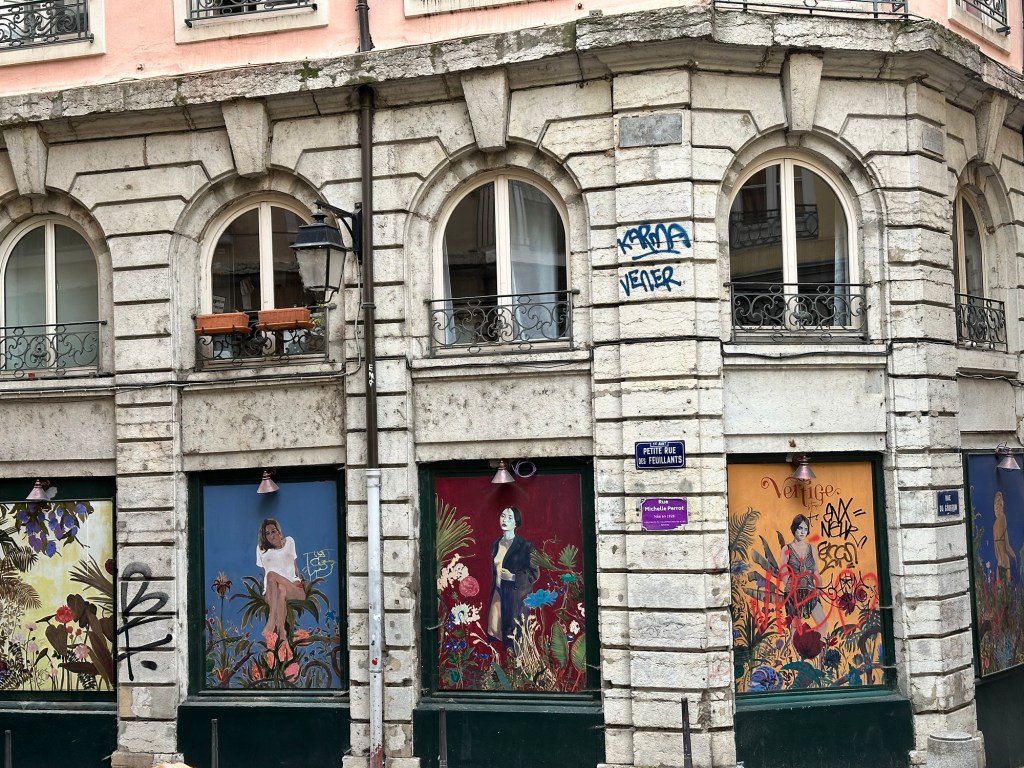
When the guide asked if there were any questions, did I ask about Marshall Petain or the Vichy French? Hell no, I wanted to know what kind of business had paintings of “come thither” women in the windows.

The answer: a strip club. And now more street art.

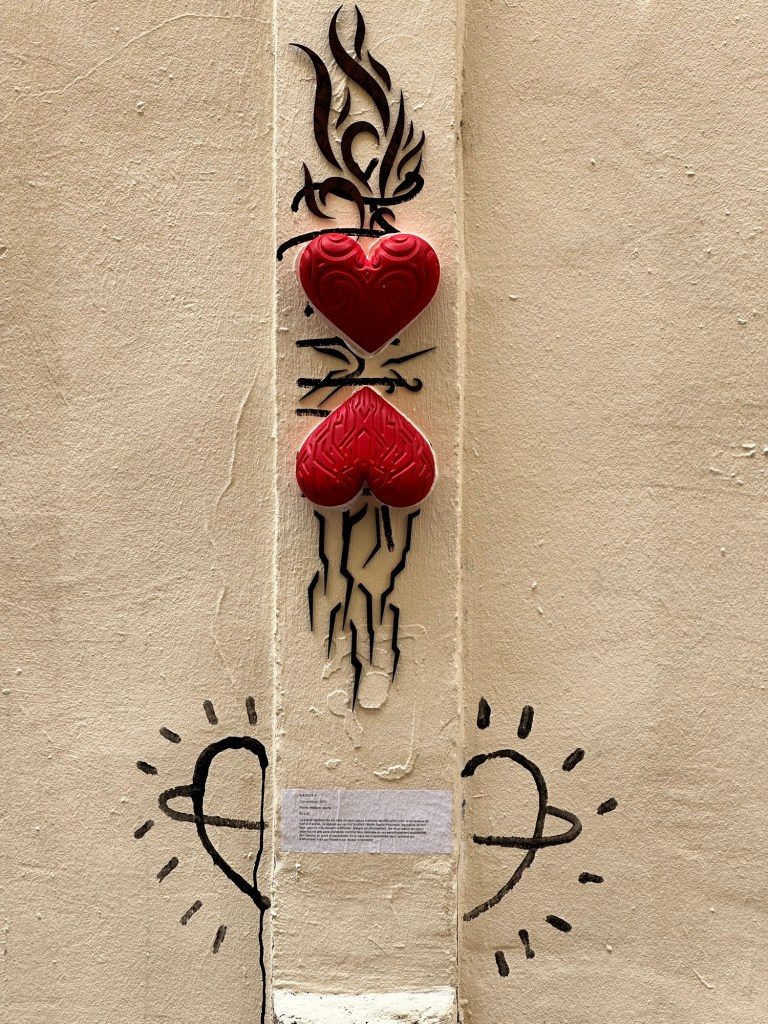
Ms Google translated the artist’s intent, which was written in French below the artwork. Here’s the “ readers digest” version. The hearts, facing each other, have different motifs. Despite differences, the two hearts can find understanding and coexist.

Believe it or not, the above is a message to Macron. The words “straight into the wall” doesn’t mean anything to me, but apparently the French get it.

Lyon is a very walkable city so I did some solitary exploring. Remember those white towers visible from the Cathedral ? Lyon had hoped to be selected to host the Summer Olympics, so a swimming complex was built. I’m not sure what the function of the towers was because they seemed too high ( to me ) to be diving platforms. But then, I’ve never seen Olympic diving platforms other than on TV, so maybe they were.

Unfortunately, Lyon wasn’t chosen, but at least the residents ended up with a great place to cool off during the hot summer months.

In front of the towers is a skate park, where I watched a young man perform amazing feats on his bicycle.

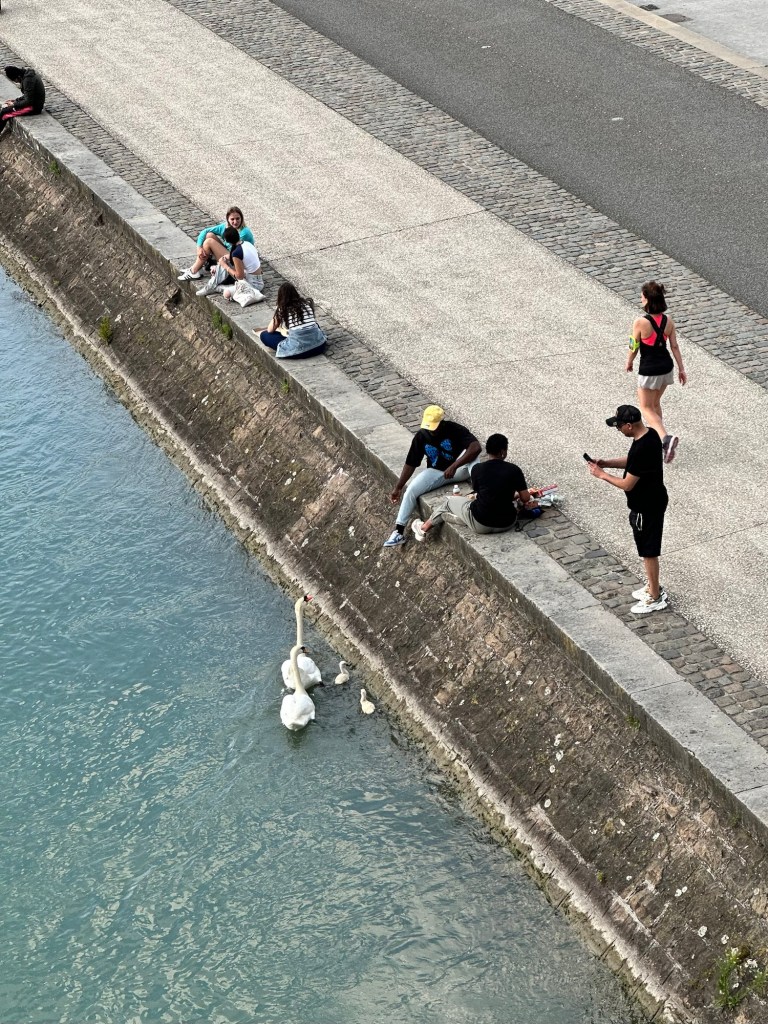
The river banks were a favorite gathering spot for people AND swans.

Next stop, Paris, via the high speed train.

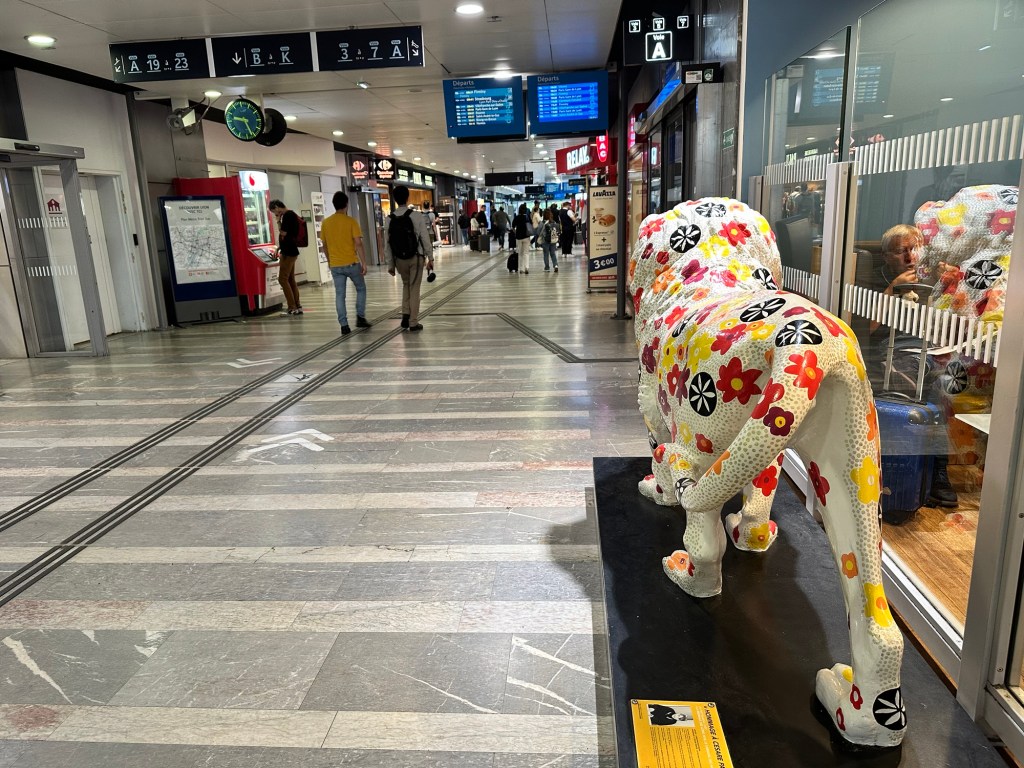
Lyon train station

Carcassonne

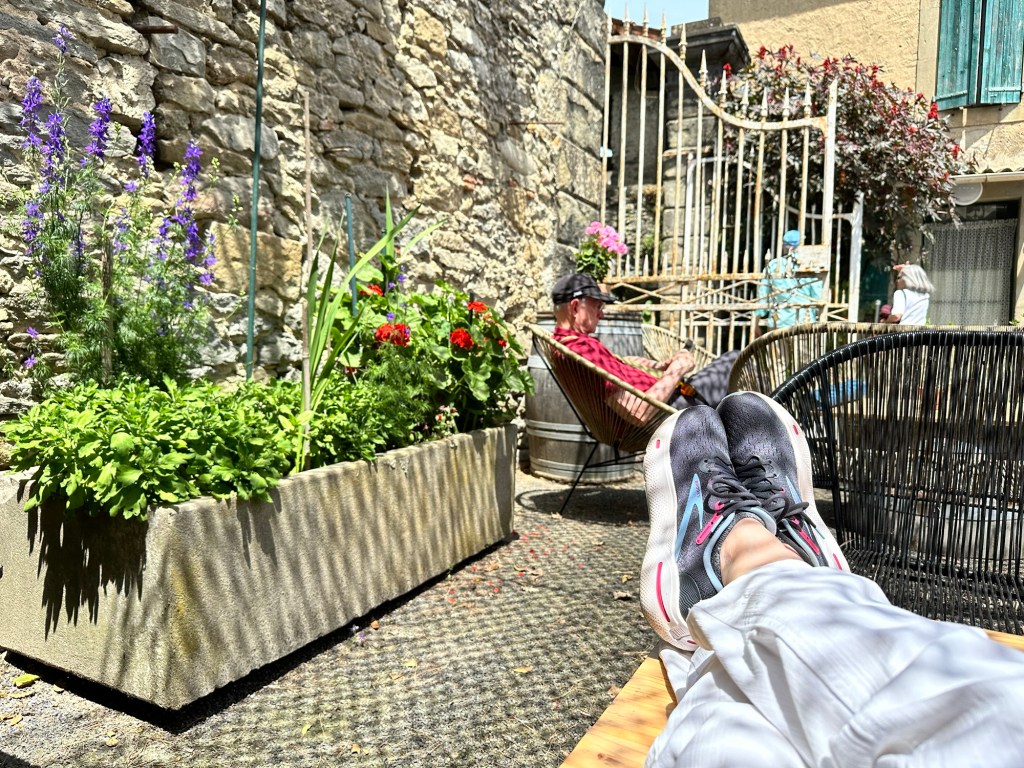
Sometimes you need to let the bliss sink in, and boy oh boy, am I ever blissful right now!

Yes, we’ve done a lot during our stay in Carcassonne, and I will eventually talk about that, but right now I am thoroughly enjoying the perfect weather and the after effects of a wonderful lunch in a nearby French vineyard/winery, Chateau Auzias.

After the vineyard tour, we were given 4 bottles of wine to taste, plus measuring equipment so that we could concoct our own blend using whatever combo of the 4 we desired. When departure time rolled around, we were presented with our blended wine to take home. I liked their Cabernet franc so much, I decided not to muck it up with Merlot or either of the two Syrah varietals, so I was glad that taking one of the vineyard’s regular products was an option.

As you can see from all the smiling faces, a good time was had by all. Especially me.

Okay, so that was the sum total of YESTERDAY’S blogging.

TODAY we are leaving the countryside, traveling by train to spend three days in Lyon, then finishing the trip in Paris. But before we move on to the big cities, let me tell you about our last medieval town.

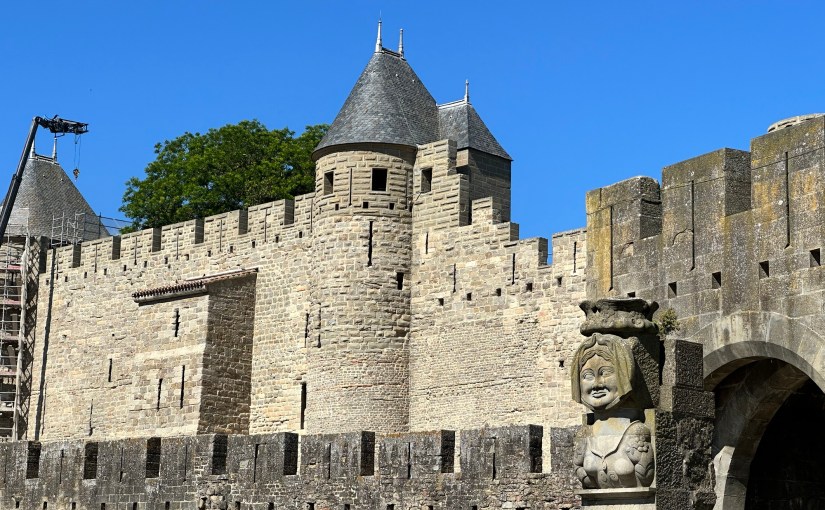
Carcassonne’s most prominent feature is its huge castle, which dominates the landscape.

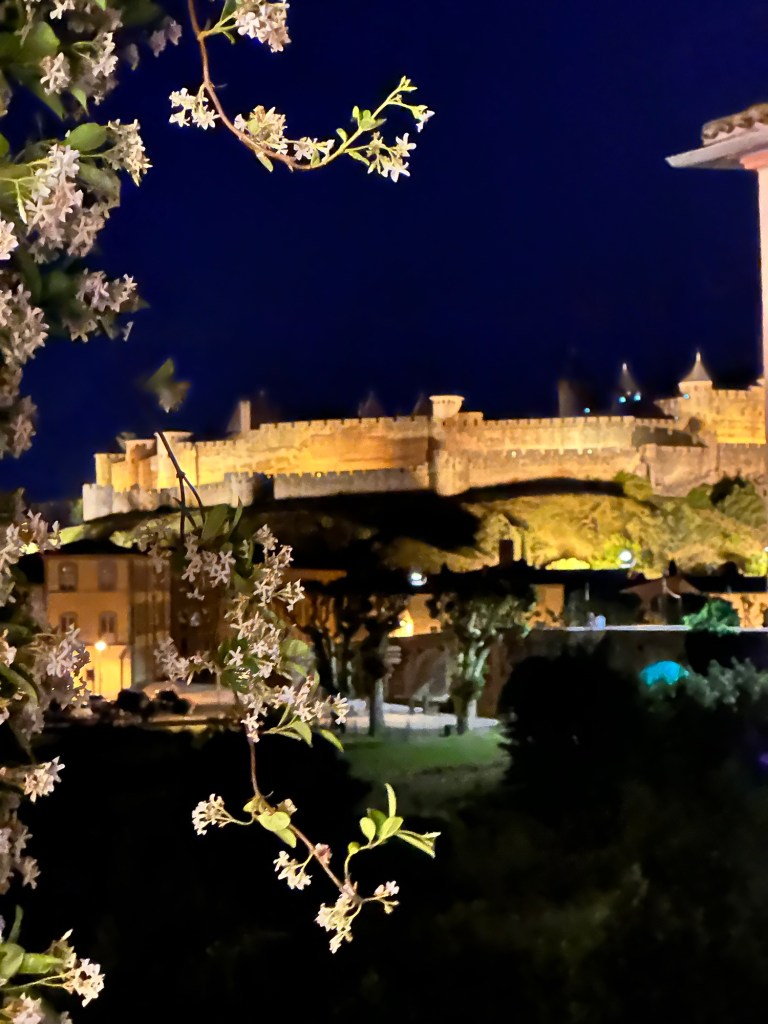
I was lucky enough to score a hotel room with a balcony, so I was treated to this spectacular view (of a portion) of the castle, which is beautifully illuminated at night. The plant you see in the following photo is the wonderfully scented jasper hanging from my balcony. ( my cell phone’s zoom can only do so much…)

The castle is so enormous, it was difficult to fit it all into one photo, until I visited Tribe restaurant during one of our “free” evenings. The food was every bit as great as its view. A bonus: the restaurant is owned by an Australian, so they have both French and English menus, AND it is really close to Les Chevaliers, our hotel.

Every castle should have a good story and this castle is no exception. Let me introduce you to Lady Carcas, whose statue at the main entrance greets visitors.

This Saracen princess is credited with saving the city from Charlemagne, who tried to starve the inhabitants into submission by surrounding it for five years. Although they were almost out of food, Princess Carcas decided to feed the remaining wheat to their last pig, then catapult the fattened animal over the city walls into the enemy camp. According to the legend, when Charlemagne saw the splattered remains of the well fed pig in the middle of his camp, he figured the Muslims still had plenty of food. What’s a warrior to do but pack up and head for home, which is exactly what he did. Lady Carcas was so excited by their departure, she ordered all the church bells to be rung. Upon hearing the bells, a soldier exclaimed “Carcas rings”, but he said it in French “Carcas sonne”, and that’s how the city got its name. Or so the legend claims.

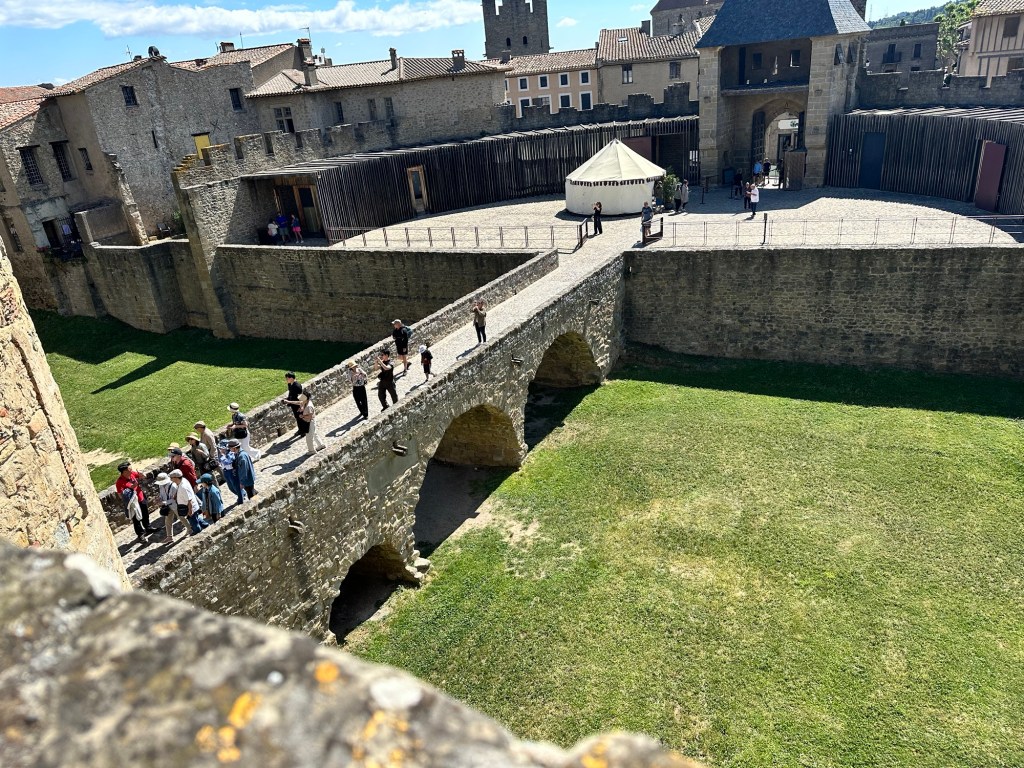
Check out the fortress’s outer ramparts. This photo was taken from the inner, and higher, protective wall.

If the invaders are able to breach the first wall, they still have to make it over the moat and past the aptly named “kill hole” .

You can see why a siege was preferable to a full blown attack on what sure looks like an impenetrable fortress.

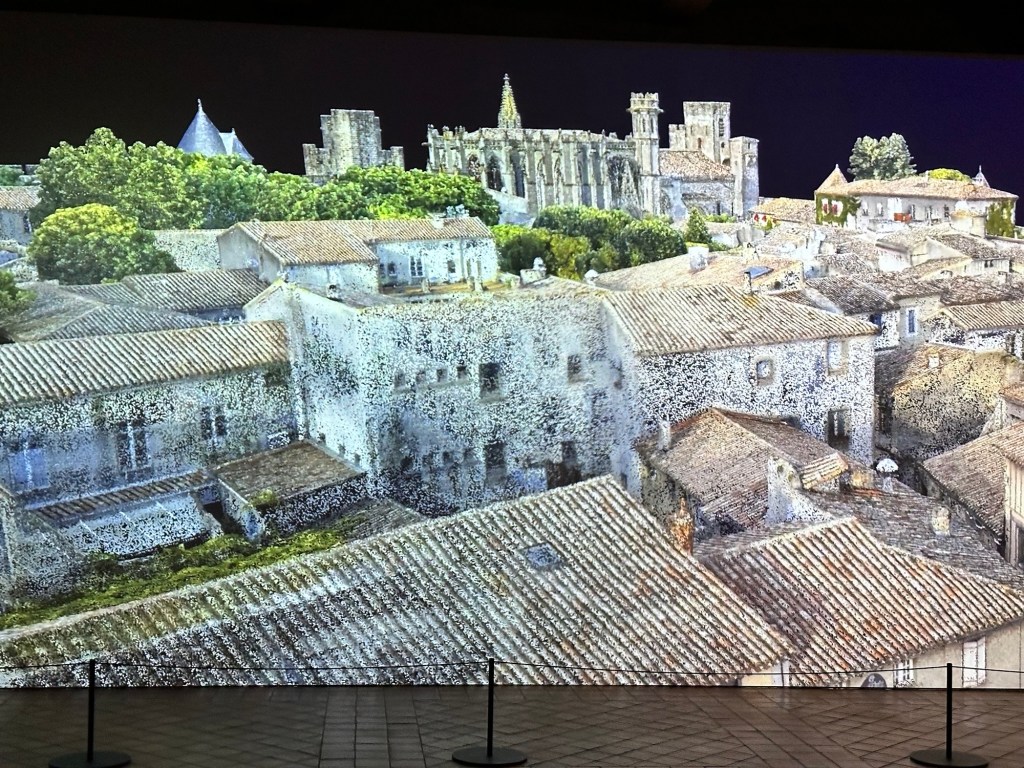
At the start of the tour, you are given an audio guide, then watch an introductory multi media show projected onto a wall.

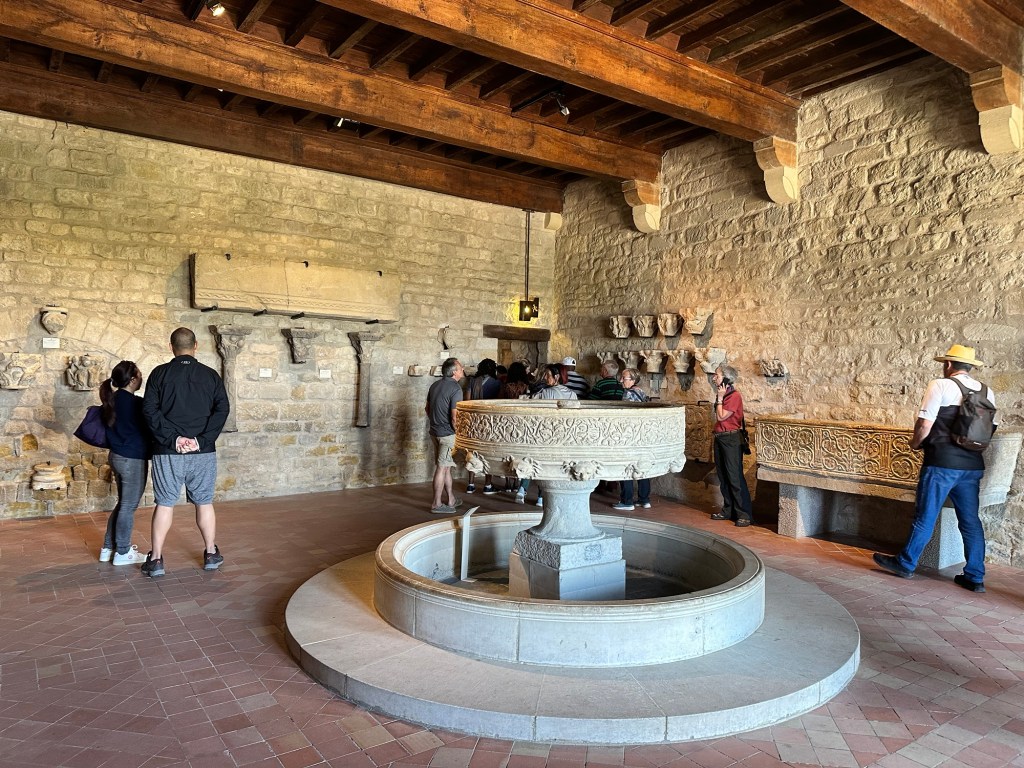
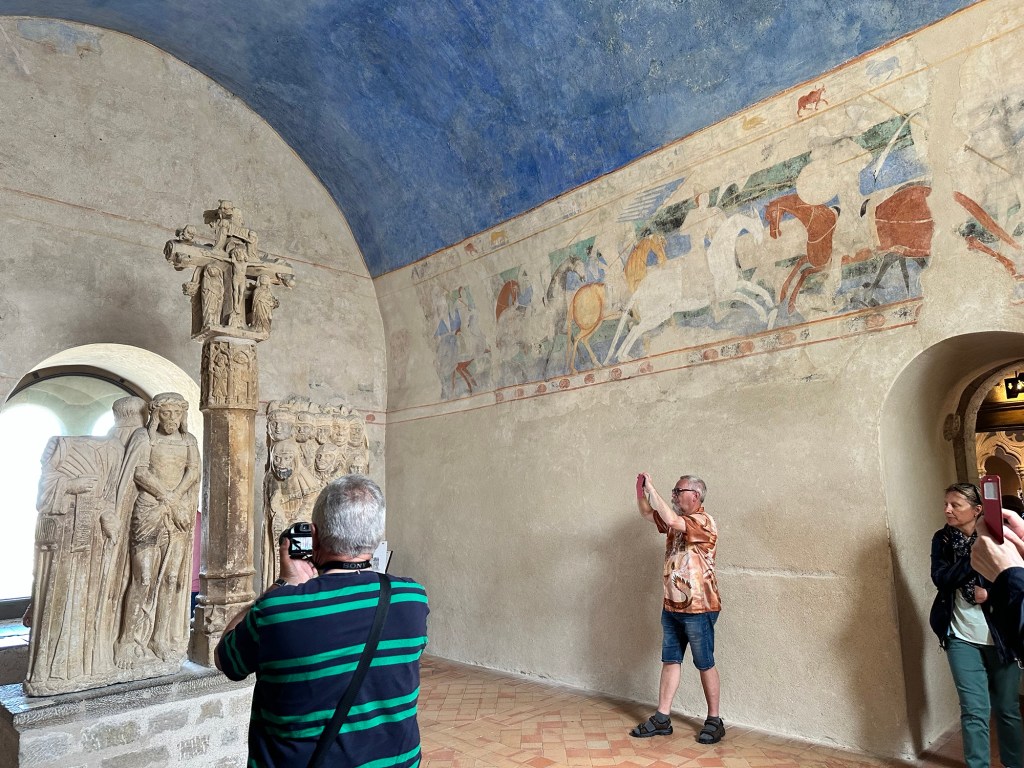
The rooms inside the living quarters were transformed over the centuries by its various inhabitants: Romans, Saracens, and Christians.

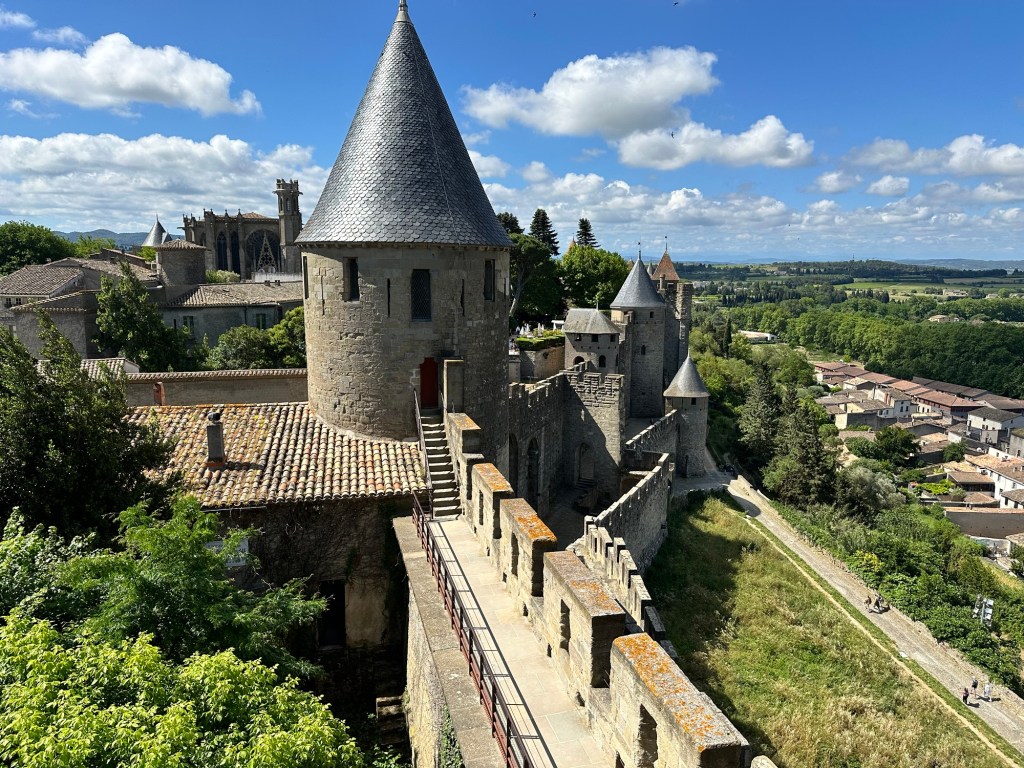
We ended our visit with a walk around the ramparts, which was an excellent vantage point for viewing both the countryside and the interior of the fortress.

Our guide told us the fortress currently has 55 inhabitants. Although during our ramparts walk, we viewed several lovely residences, with gorgeous gardens, I certainly wouldn’t want to live in a place overrun by tourists. (Do they even have WiFi?)

Laetitia cautioned us that there was some up and down on uneven steps on the ramparts walk, but Nancy and I didn’t find it at all challenging.

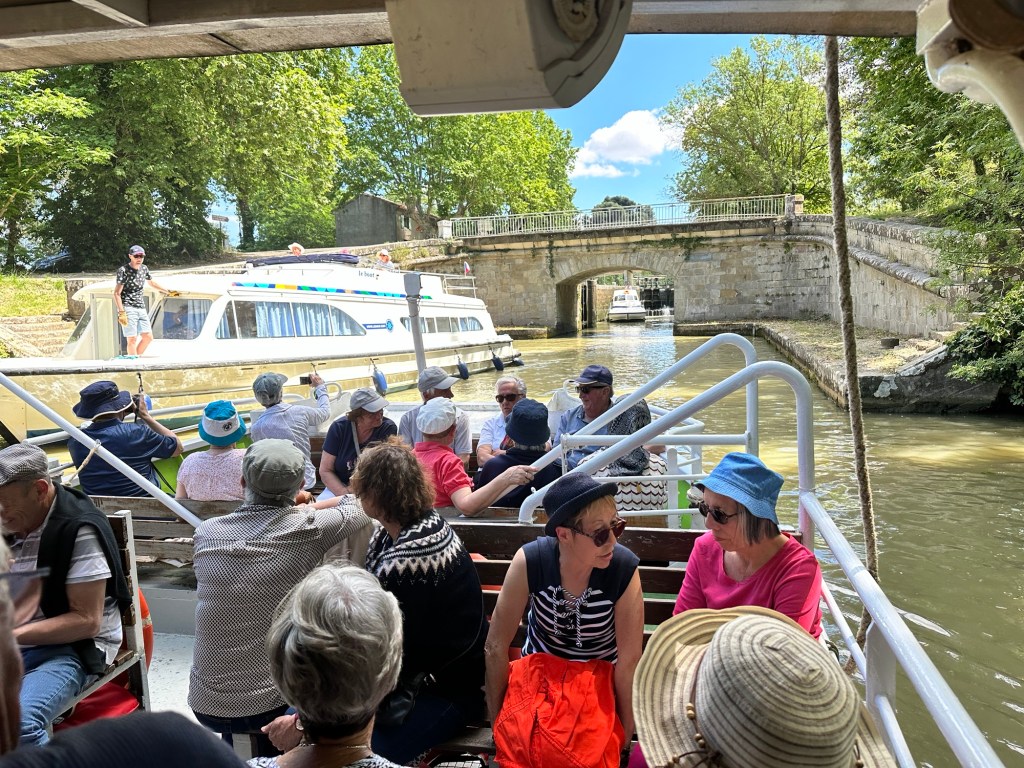
In retrospect, I wish I had spent most of the day within the castle walls, but we had so much fun on our boat ride in Angers, we decided to give the afternoon Carcassonne canal ride a try. Big mistake. It was crowded, hot, and boring. The lack of photos from the boat ride tells you everything you need to know.

But that happens with travel. Sometimes you hit and sometimes you miss.

On to the cities…

Albi, On the Way to Carcassonne

There is no end to the surprises on this trip. Our itinerary indicated that we would stop for lunch along the way to Carcassonne, in Albi, another town I’d never known existed prior to this trip.

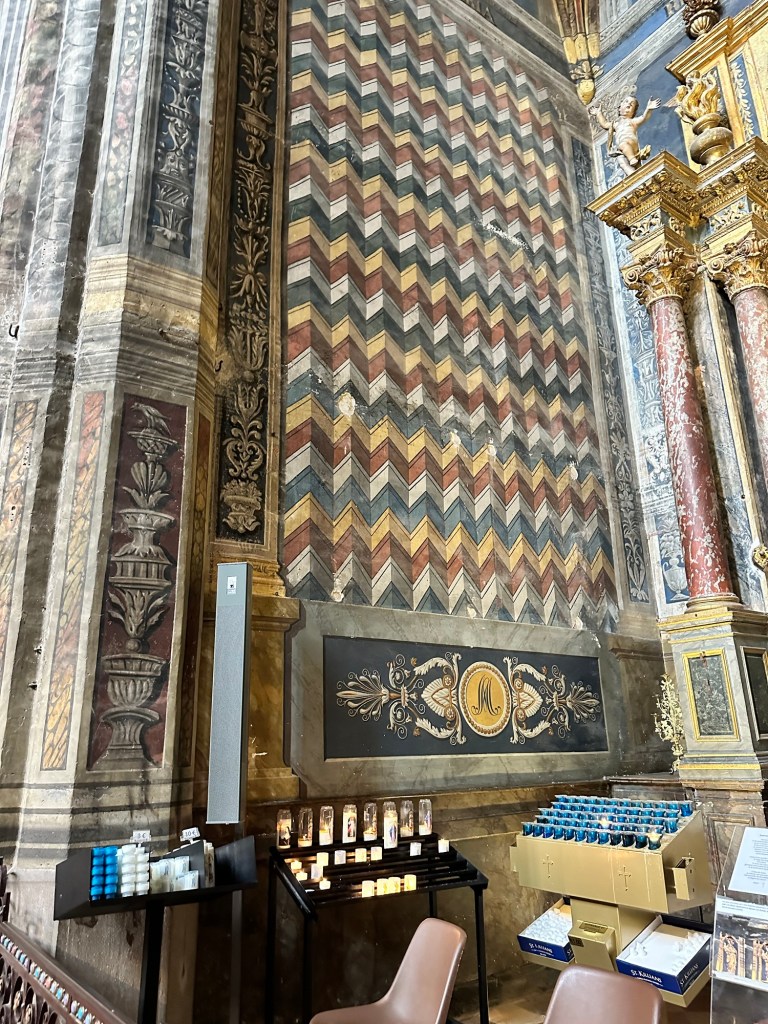
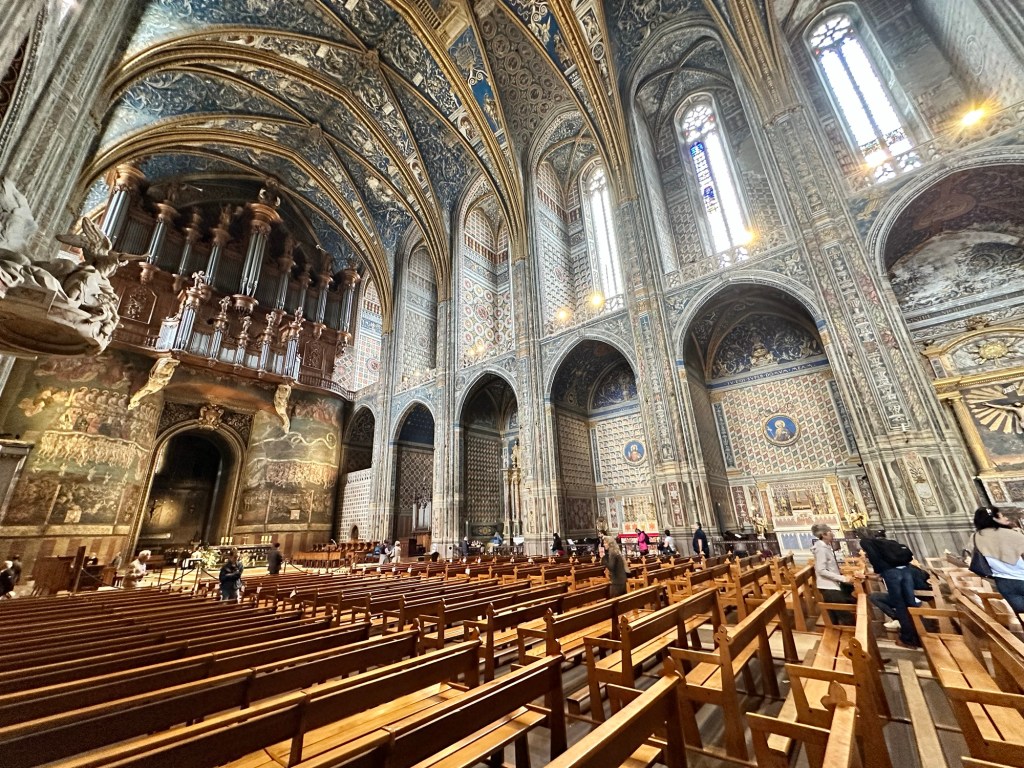
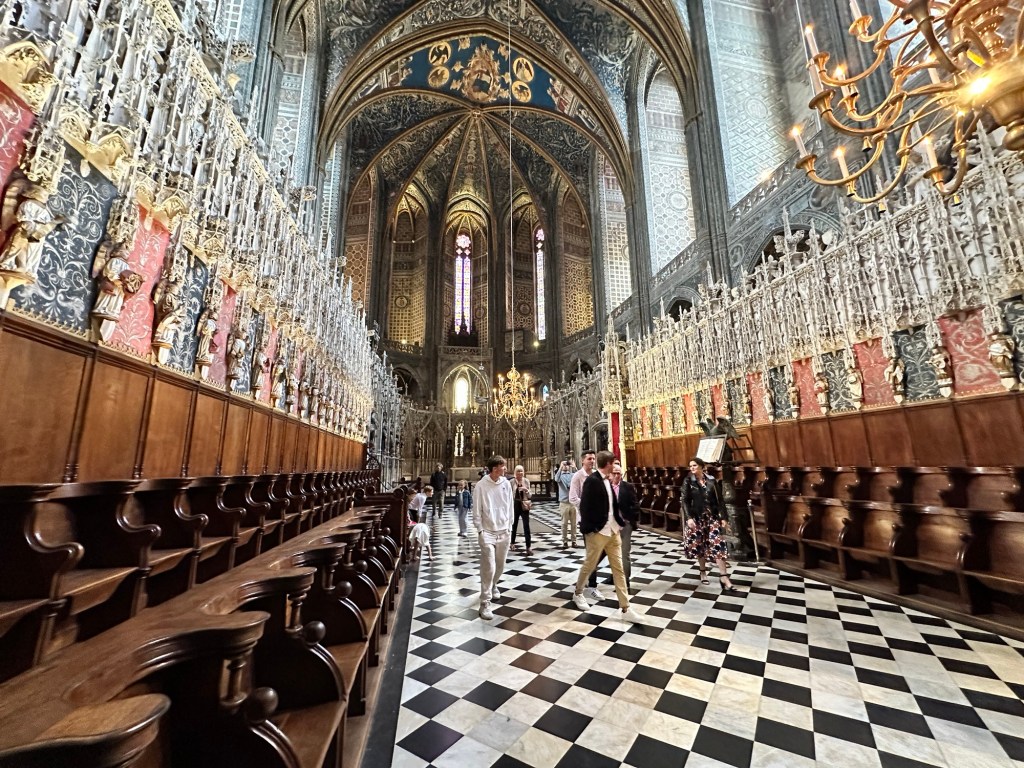
It was no surprise to find a cathedral in a small town, but what WAS jaw dropping was the artwork on the walls. Let me tell you, I’ve certainly seen more than my fair share of churches, chapels and cathedrals, but I have never, EVER seen artwork quite like this!

Every square inch of this massive building was covered with art. What caught MY eye were the geometric optical illusions. I tried to find out when they were painted, but the internet let me down.

If you’d like a better view of any of the photos, just click on it, but I’m telling you right now, you really DID have to be there. It was impossible to capture the grandeur of St Cecelia’s cathedral.

Cecelia, by the way, is depicted by the statue in the bottom photo. She was one of the virgin martyrs, forced to marry a pagan. Unlike the other virgin martyrs, she converted her husband by convincing him that an angel was standing over him, and would punish him if he tried to consummate the marriage. It isn’t clear who killed her, but it wasn’t her husband.

More surprises: the town created a Toulouse Lautrec museum out of what was once a fortress/ bishop’s residence/ inquisition site. That’s what happens when something in Europe is built in the 1200’s. It gets repurposed multiple times.

As with other fortresses, the site was originally chosen for its altitude and its proximity to water.

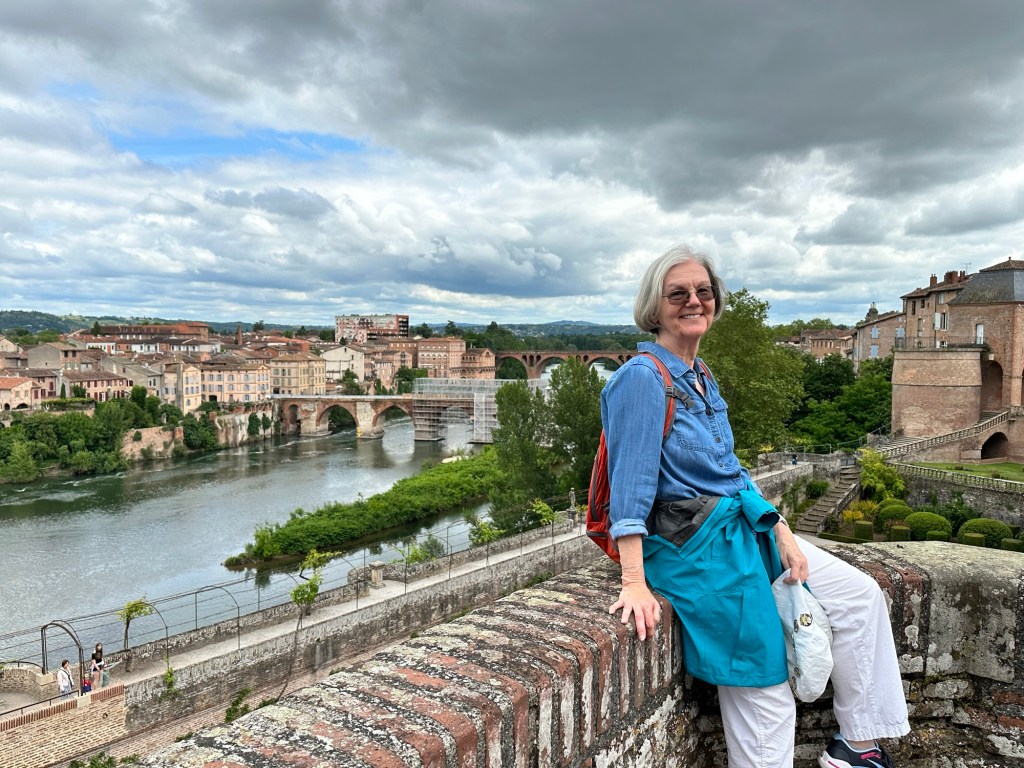
(My friend Jean requested more people photos, especially ones with me in them, so the above shot’s for her.)

Check out the sky if you want an explanation for my wardrobe: I was ready for ANYTHING: rain, sun, wind, pestilence…

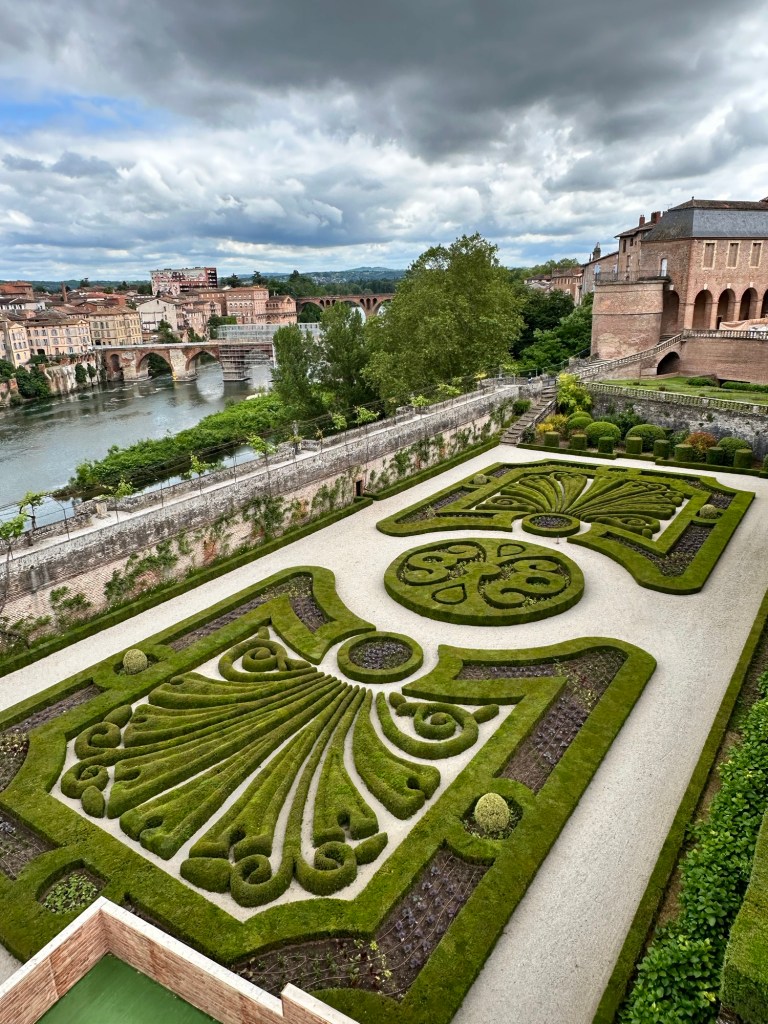
Now take a look at what was under the wall I’m sitting on. Pretty magnificent, wouldn’t you say?

The museum doesn’t look that impressive from the outside. In fact, it looks a little strange, but I guess that’s to be expected for an 800+ year old building that has served so many different purposes.

But inside is quite a WOW.

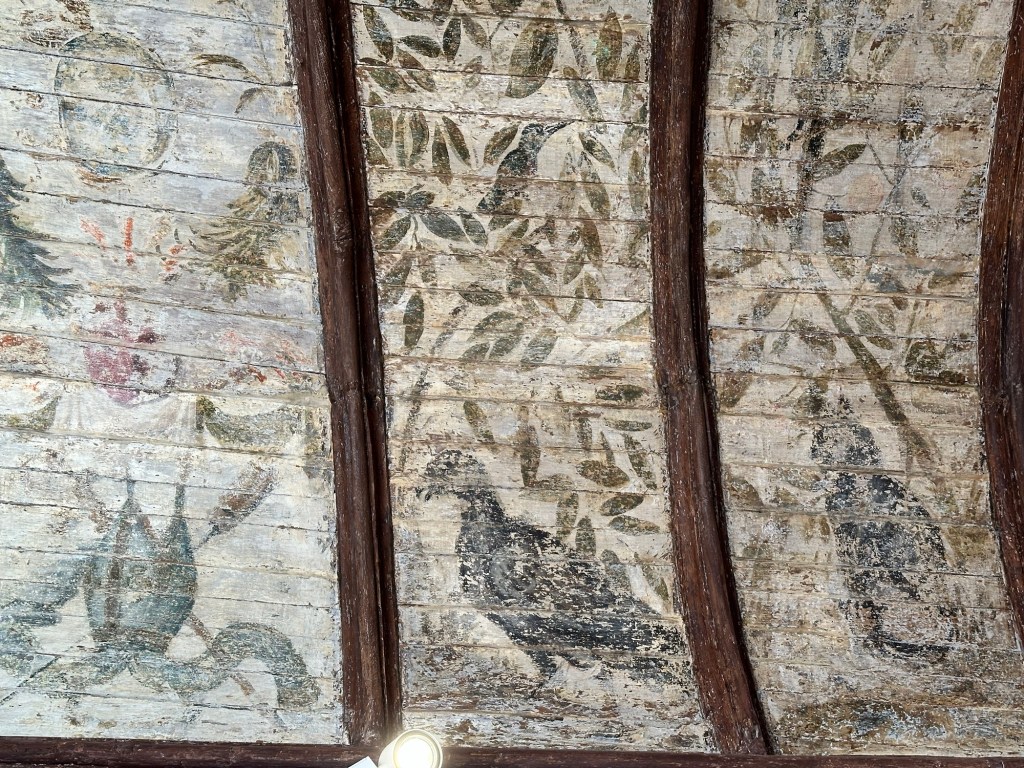
I was particularly taken with this passageway built to link two buildings together. The ceiling creates another optical illusion when you stand at one end and look up. I got a little dizzy trying to make this shot come out straight!

Each section was covered with images of plants and animals.

This artwork was a bit faded, probably because the passage was lined with windows on both sides, but you get the idea.

I couldn’t help but wonder whether the victims of the inquisition marched through this hallway on their way to the torture chambers, or whether this hallway was part of the bishop’s commute between his residence and the courts, where he decided which punishment to mete out to the infidels, in God name, of course.

I’ve rambled on and on about the building, but haven’t talked much about the art inside. There’s a reason. I’ve seen better Toulouse Lautrec artwork in New York, Boston, and in art books, so the art display was a bit disappointing. I did find one that I particularly liked.

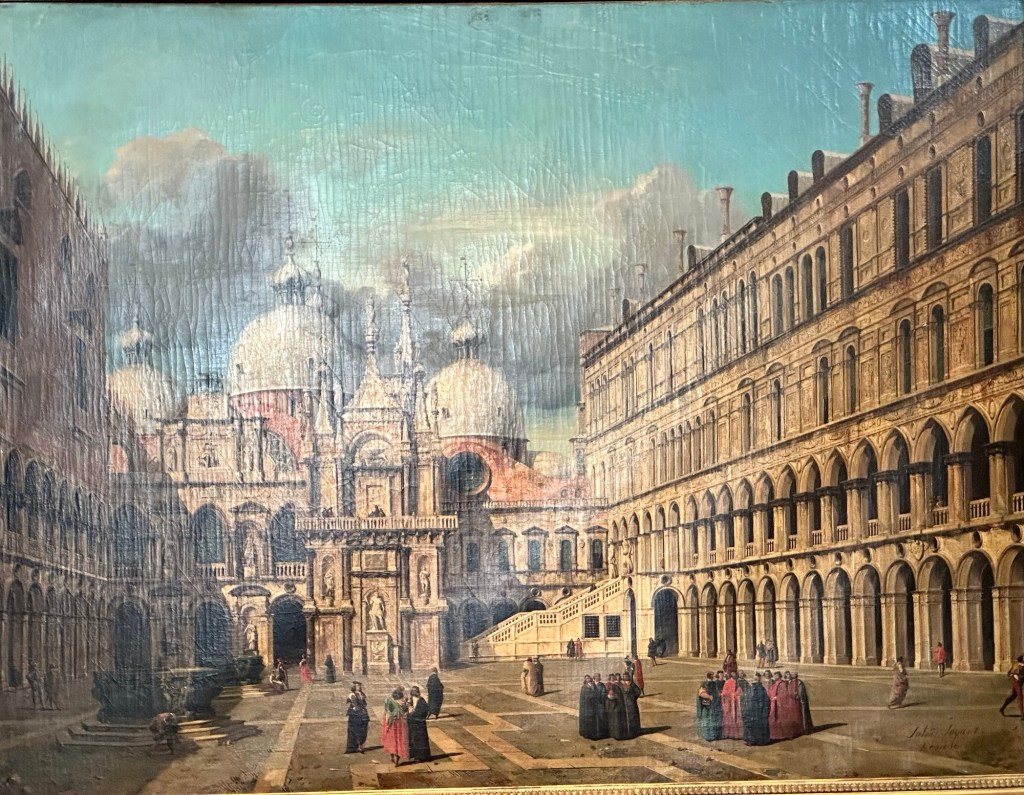
The museum contained OTHER artists’ work, including this one that I found rather captivating.

We only had less than an hour after lunch to check out the museum ( and revisit the cathedral, if so inclined), so I didn’t buy the audio guide, which means I have absolutely no idea where this painting was meant to represent. But I liked it, and that’s enough for me.

Looks like Carcassonne is going to get its OWN post, yet another surprise, at least to me. I never imagined I’d have so much to say about a lunch stop!

Here’s a sneak preview— the view from my Carcassonne hotel room’s balcony.

Angers

Sometimes I don’t know I want to visit a place until I get there. That certainly was the case for Angers. I know, I know, the name of the city sounds like a hostile emotion. But the French don’t say it the way it’s spelled. THEY say “Ahn-geee”. Better, right?

Our three days in this very walkable city whipped by, and was a very nice balance between included activities and free time. After a guided tour of the city, during our free afternoon several of us decided to go rollin’ on the river.

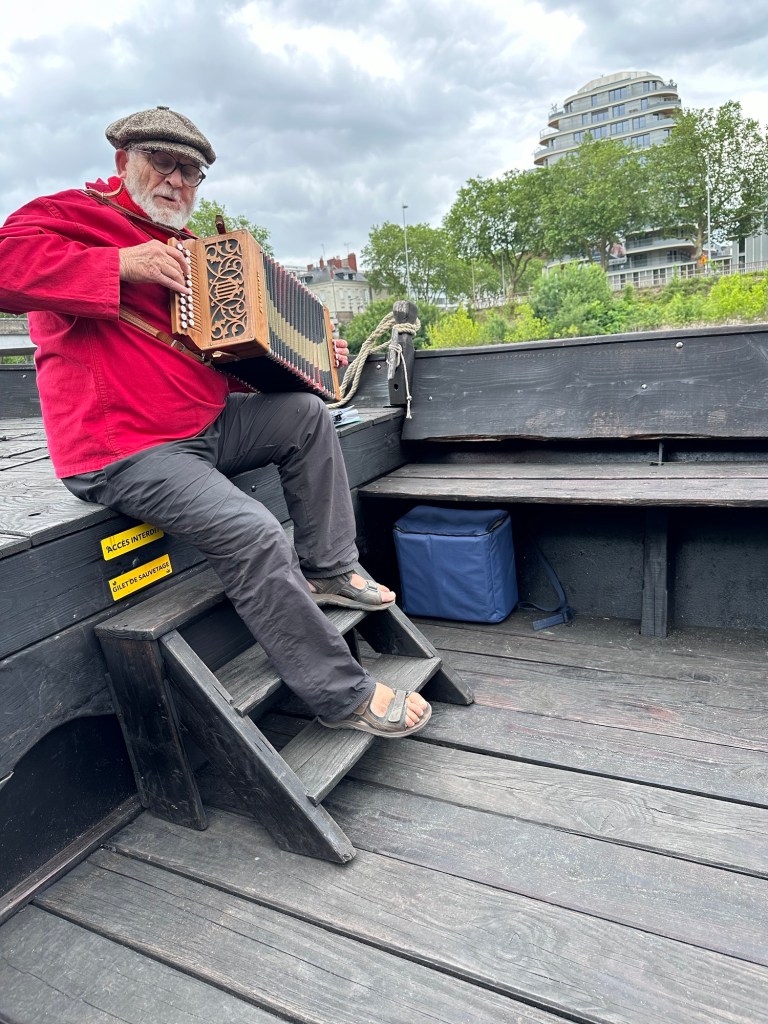
In addition to champagne (some of us had TWO glasses) our ride included entertainment. This fine fellow serenaded us while playing his vintage accordion.

We didn’t have the river to ourselves. Because the Olympic Torch was passing thru the city, four military boats were on patrol. We saluted each and every one of them with champagne glasses held aloft.

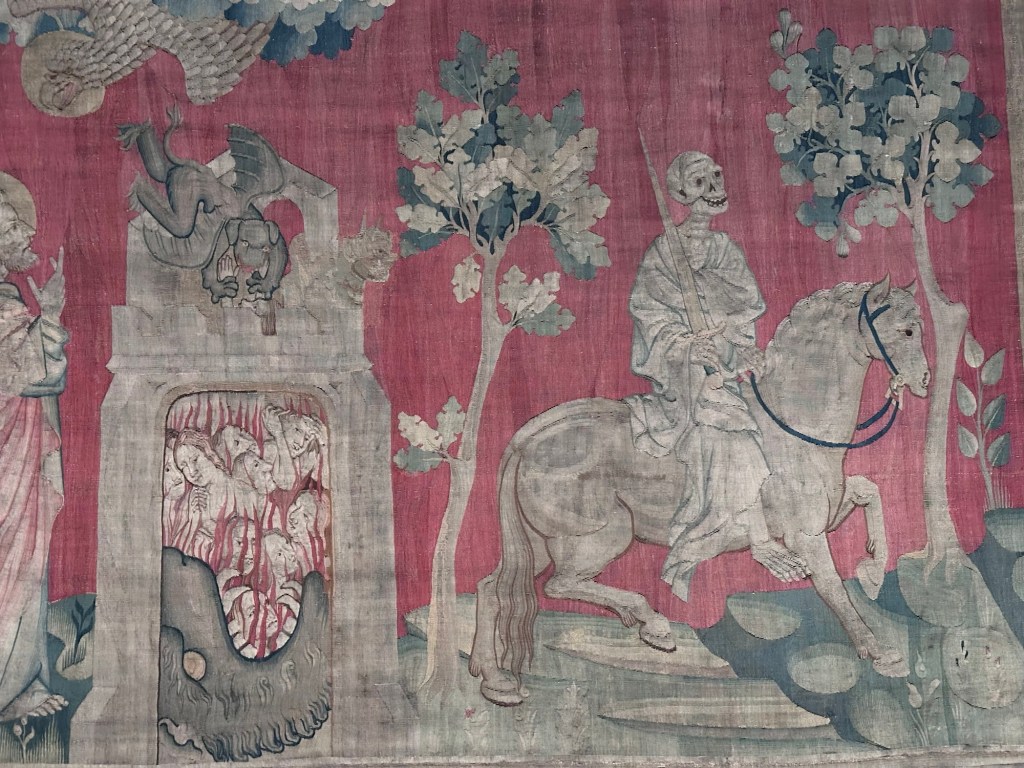
Finishing our ride across from the fortress/ castle, made it very easy for us to fit in a visit to the famous Apocalypse Tapestry.

Yes, another huge tapestry, but this one really IS a traditionally constructed piece, unlike the one in Bayeux. A predecessor to today’s comic books and graphic novels, it relates the battle between good and evil from the last book of the Old Testament to a largely illiterate population.

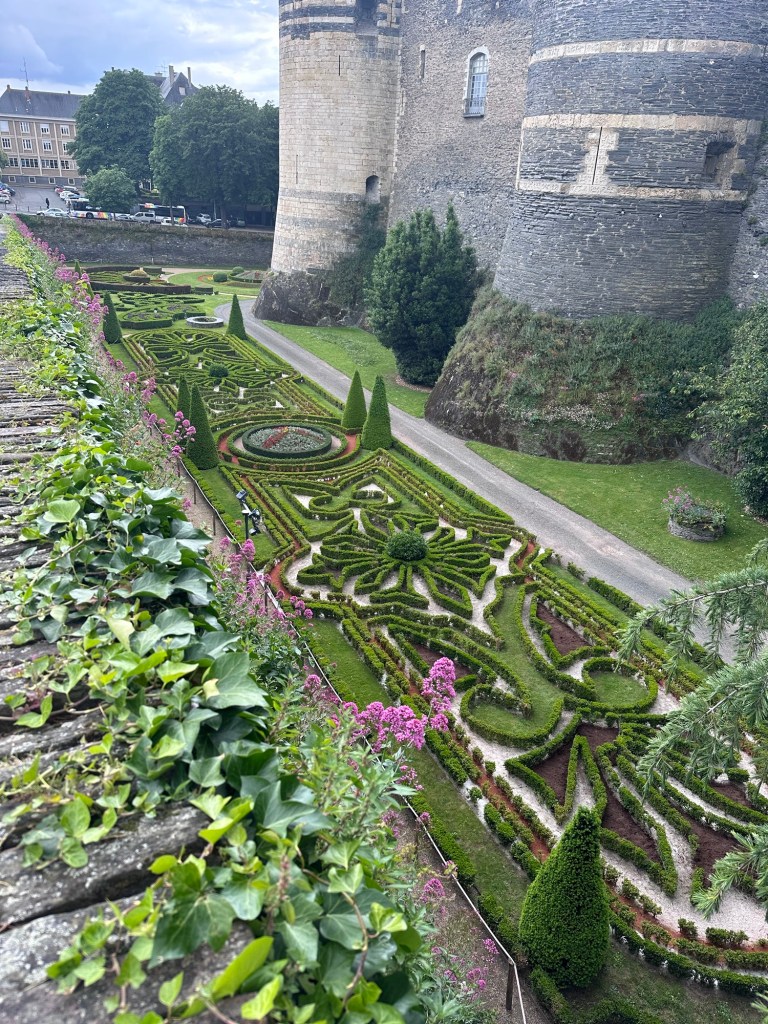
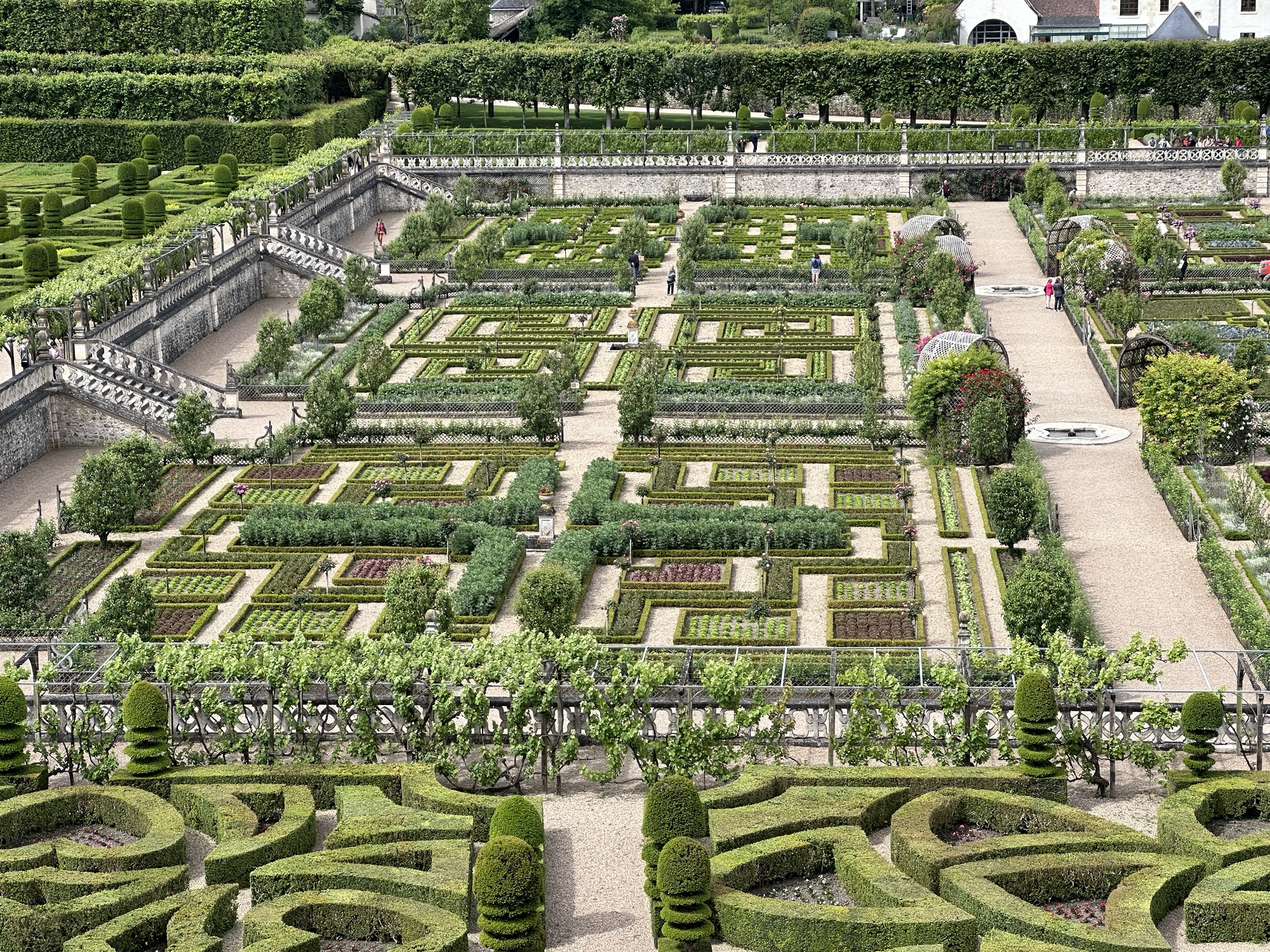
I was impressed with the beautiful gardens surrounding the castle, but these were nothing compared to the ones at the Chateau Villandry. The following photo shows only a small portion of the Chateau’s beautiful gardens.

If given the choice, I think I would have much preferred to be a Noble instead of a king. The nobles and ministers’ homes were much more “livable”, at least to me.

Although it isn’t obvious from the above photo, the Chateau de Villandry is surrounded by a moat.

Villandry has been in the same family since 1906, when it was purchased by Joachim Carvallo and wife Ann Coleman Carvallo. They met in a Paris research laboratory. Ann, an American heiress from Lebanon, Pa, supplied the funds for the purchase and modernization of the chateau.

Unlike Fontainebleau, you didn’t walk through one room to get to another, and this one was modernized to include bathrooms off the bedrooms.

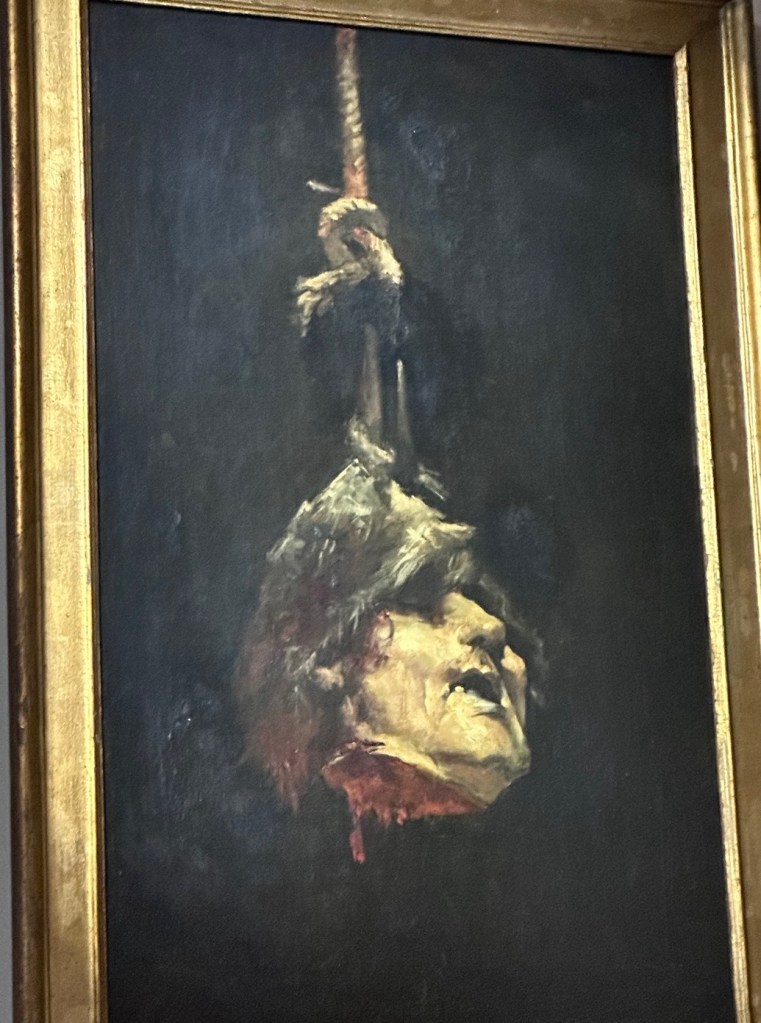
Art from Joachim’s homeland, Spain, was exhibited throughout the chateau. How many museums have portraits of a severed head? Fortunately, this picture was not hanging in a bedroom!

Before we departed Angers, we were able to witness the Olympic Torch being carried through the city.

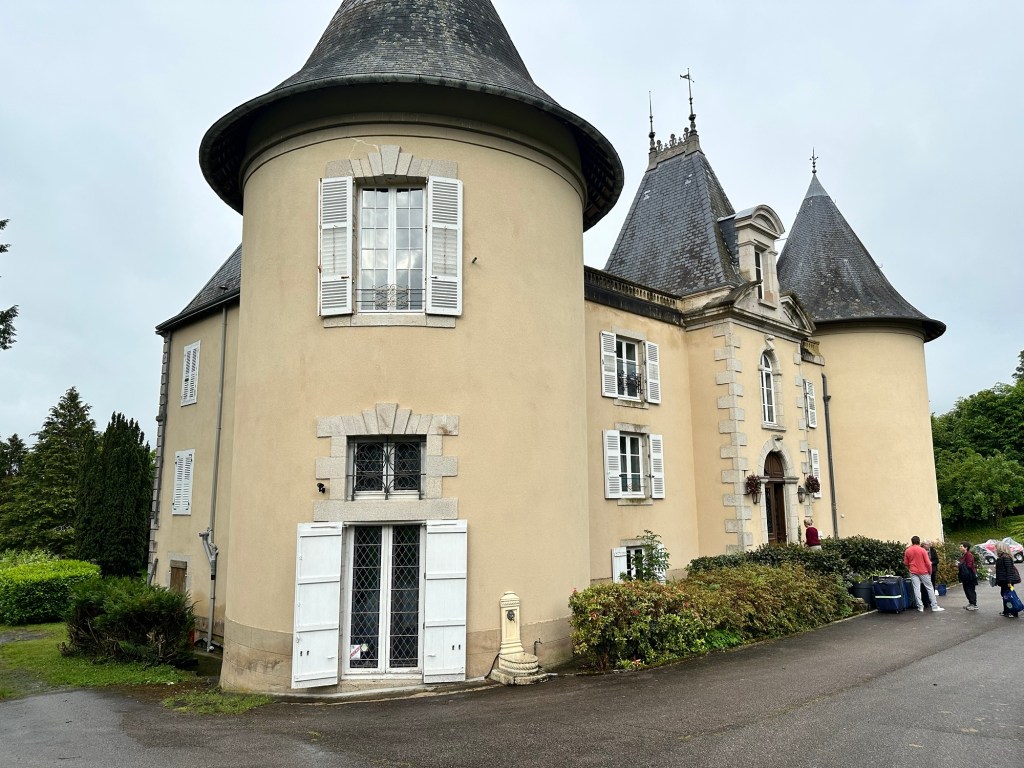
Our luck continued… we got to stay overnight in an honest to goodness, genuine chateau that was built in 1790 by the Duke of Limousin!

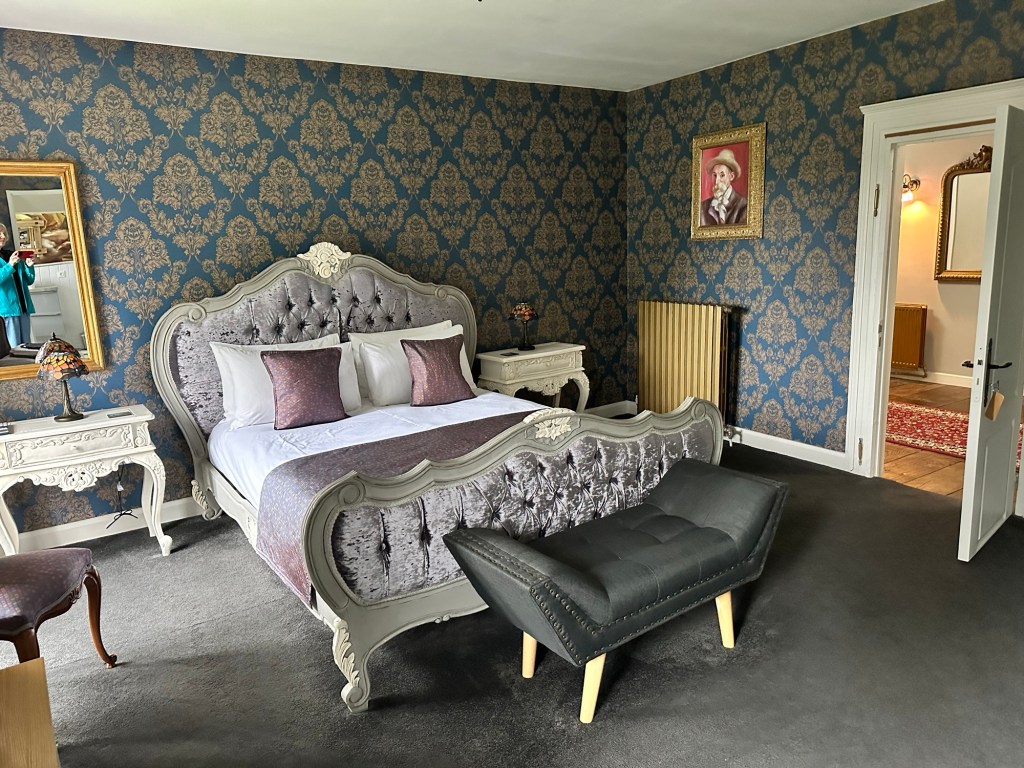
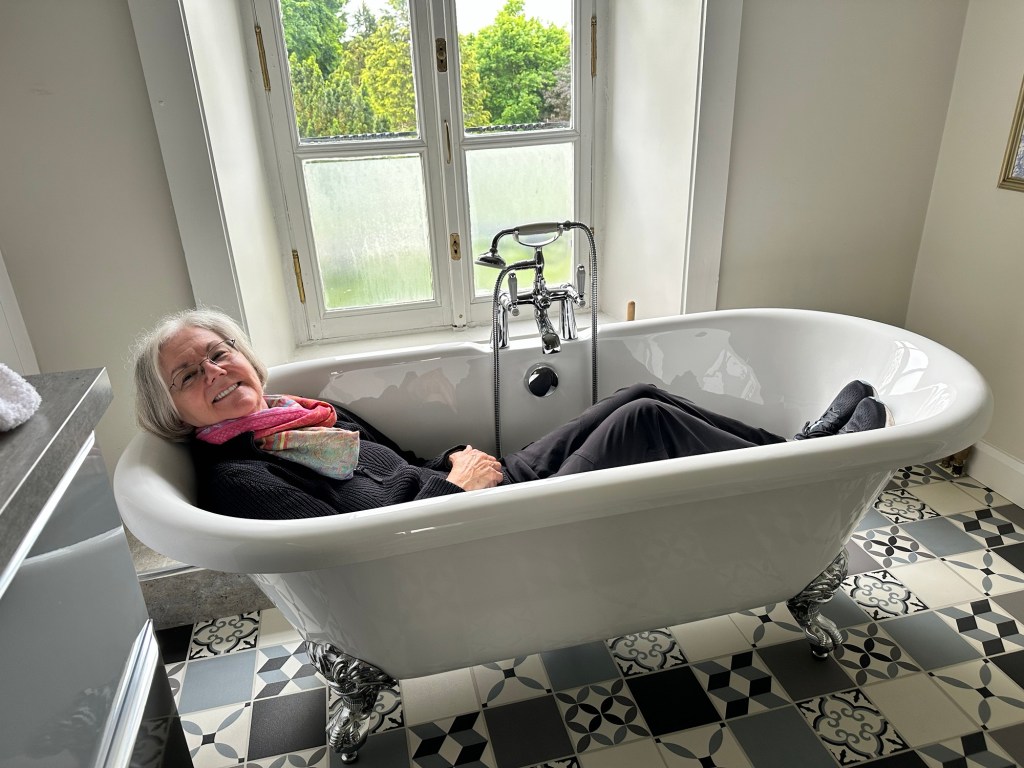
My room was the very comfortable Renoir Suite on the third floor. How gorgeous is that?!

Fortunately, the suite was updated to include walls and a door, plus a modern bathroom with both tub and shower.

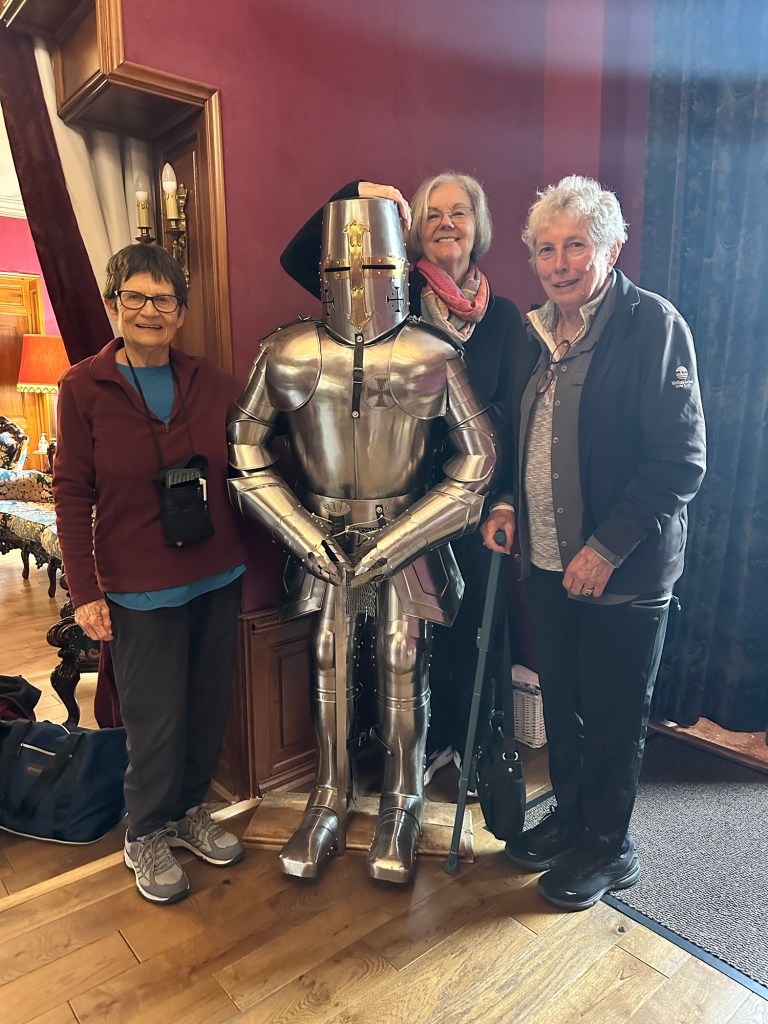
My new friends, Garry and Donna posed with me for a photo with our knight in shining armor. I decided to name him Walter the Bold, although Walter the short would have worked too.

This was our only “one night stand”. We are now on our way to Sarlat, a medieval town known for great food and fine wine.

Fontainbleau

I was totally surprised by how much I am loving OAT’s pre-trip to Fontainebleau and Bayeux. We spend three nights in each place, at centrally located hotels. Both are very walkable, and the best part? Even I haven’t gotten lost!

Obviously, the draw for Fontainebleau is the chateau. One of many royal residences, it is the biggest, with 1,500 VERY ornate rooms spread over three floors. Just about every square inch of the areas open to the public —parts of the first and second floors of the main building — is completely covered with some form of art work.

Check out the chateau’s floor plan: you walk THROUGH each room to get to the next. This was similar to the design of Schonbrunn, the Hapsburg’s summer palace in Vienna. I guess royalty didn’t mind a lack of privacy. Yes, there are huge doors on either side of the room, but think about this: What happens if you need to get to a room, but the door to the room before it is closed? Do you have to go all the way around? Those hallways are really, really LONG!

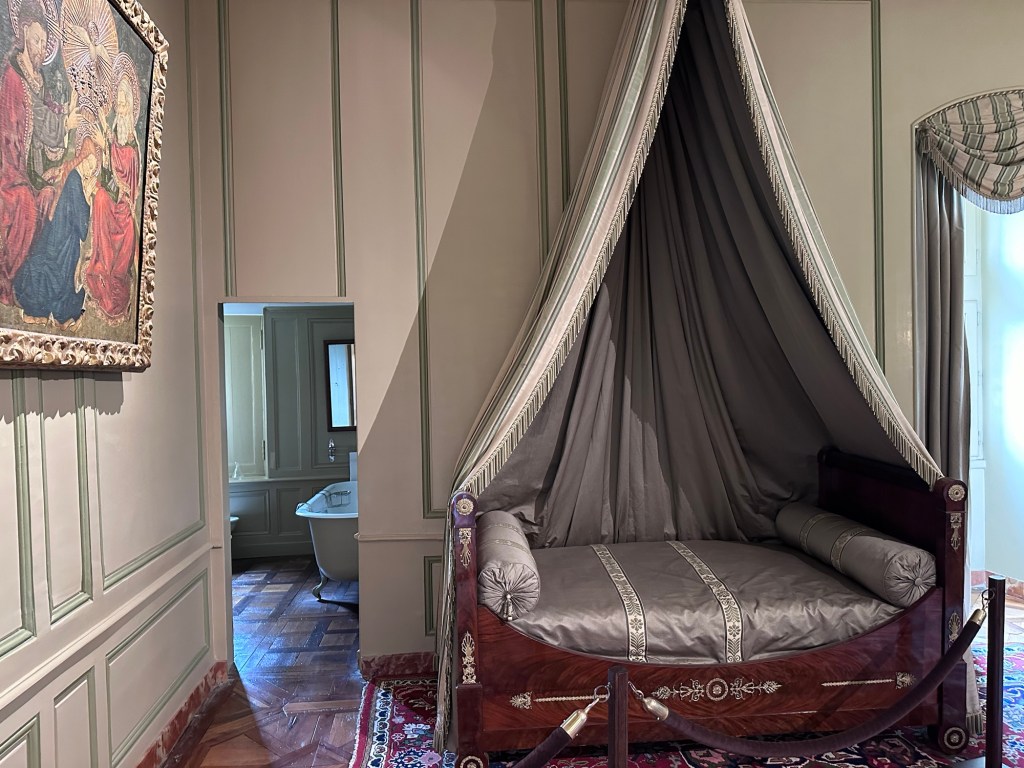
Take a look at Napoleon’s second wife’s bedroom—Marie Louise, the Austrian princess he married after he dumped Josephine. You see that railing around the bed? No one was allowed inside the railing, without her permission. I guess the doors weren’t enough.

Napoleon’s bedroom was a few rooms down from Marie Louise’s. His was the only one of the MANY beds I saw that had steps along side it. Was the precursor of today’s doggie stairs?

The library was my favorite room.

Are you wondering how people were able to find each other? They didn’t have intercoms or cell phones, which is probably a good thing. I have enough trouble finding mine and I have 1,490 fewer rooms.

One last room before we head outside: the ballroom. Notice the balcony at the back. I’ll bet that’s where the moms sat so they could keep an eye on their daughters. The alcoves, I suspect, was where the ladies sat, waiting to be asked to dance.

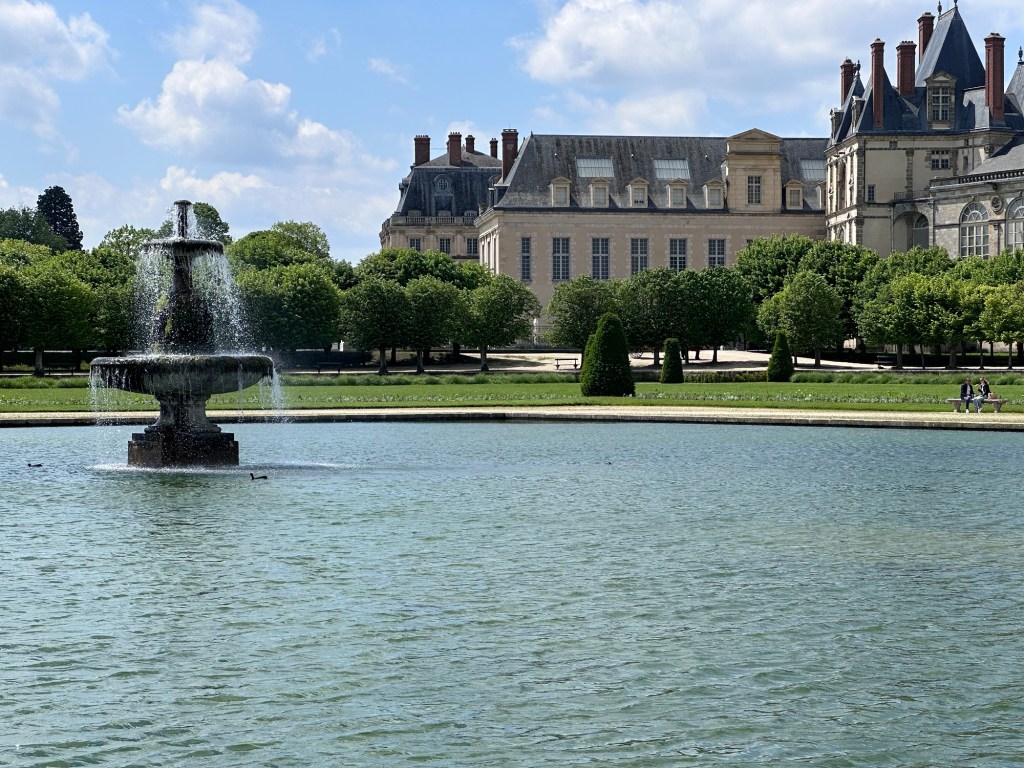
Although the weather report predicted rain, we were unbelievably lucky to have perfect weather, which allowed me to thoroughly enjoy the wonderful grounds surrounding the chateau.

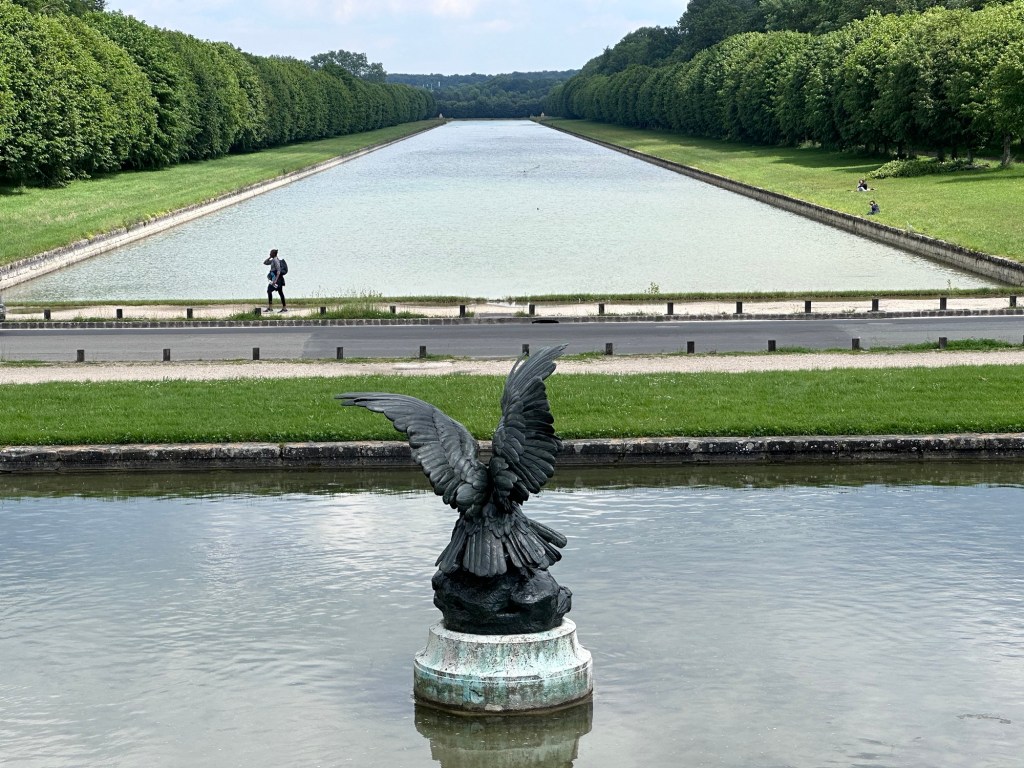
The gardens stretch as far as I could see, until they reach the forest.

After all that opulence and sensory overload, the serenity of the English and French gardens provided a needed respite.

I loved the whimsical statues scattered throughout the gardens.

This, I was told, is a sphinx. It was quite unlike anything I’d seen in Egypt, but our guide explained that the French take inspiration from other countries, then add their own touches.

Garry took the group photo of Marie, Susan, me, Jim and James. Donna and Kathy didn’t join us during our free afternoon.

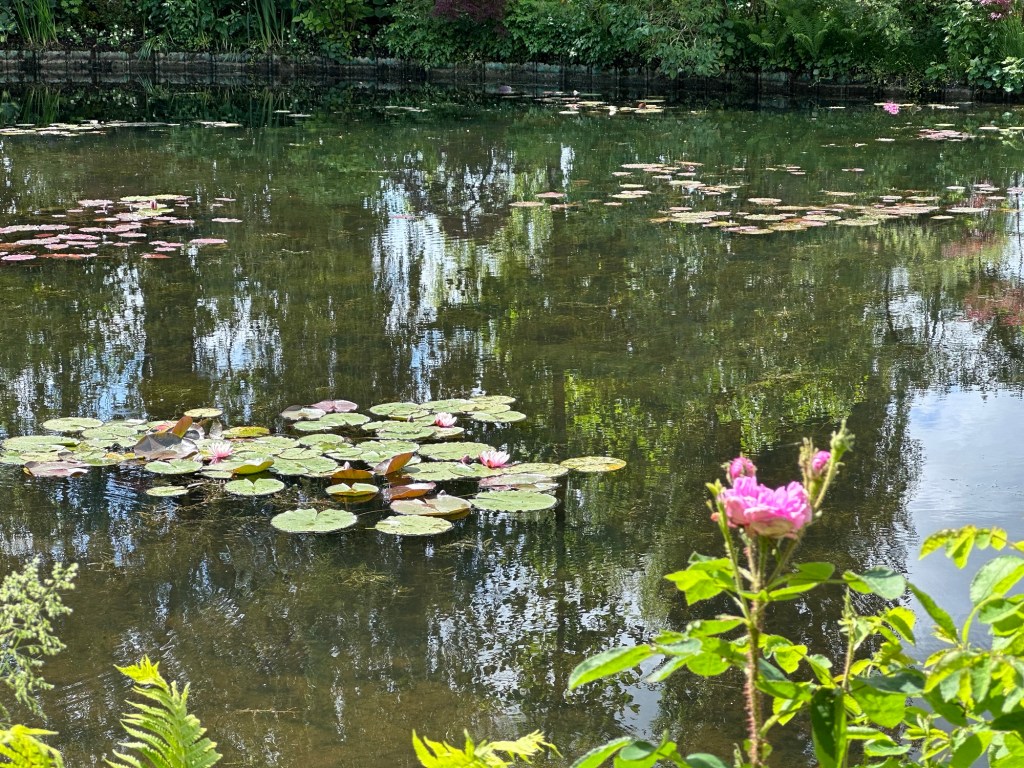
On the drive to Bayeux, we stopped at Giverny, home of Claude Monet. Like Barbizon, it is a tiny village that art enthusiasts visit. Unlike Barbizon, it was really crowded.

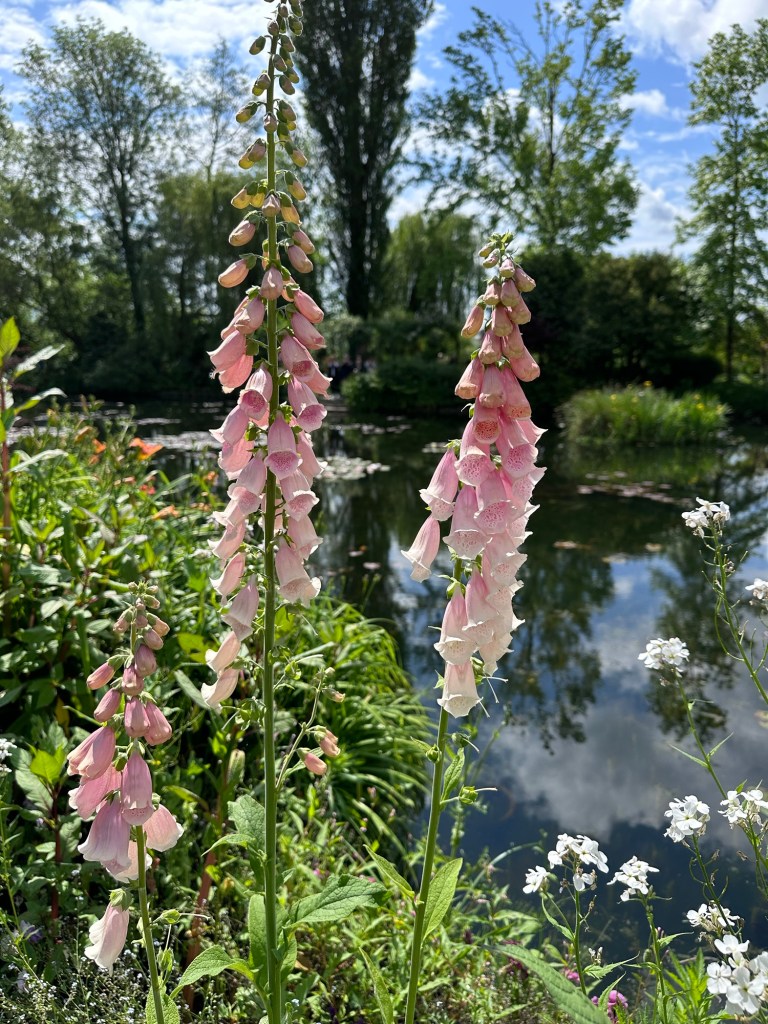
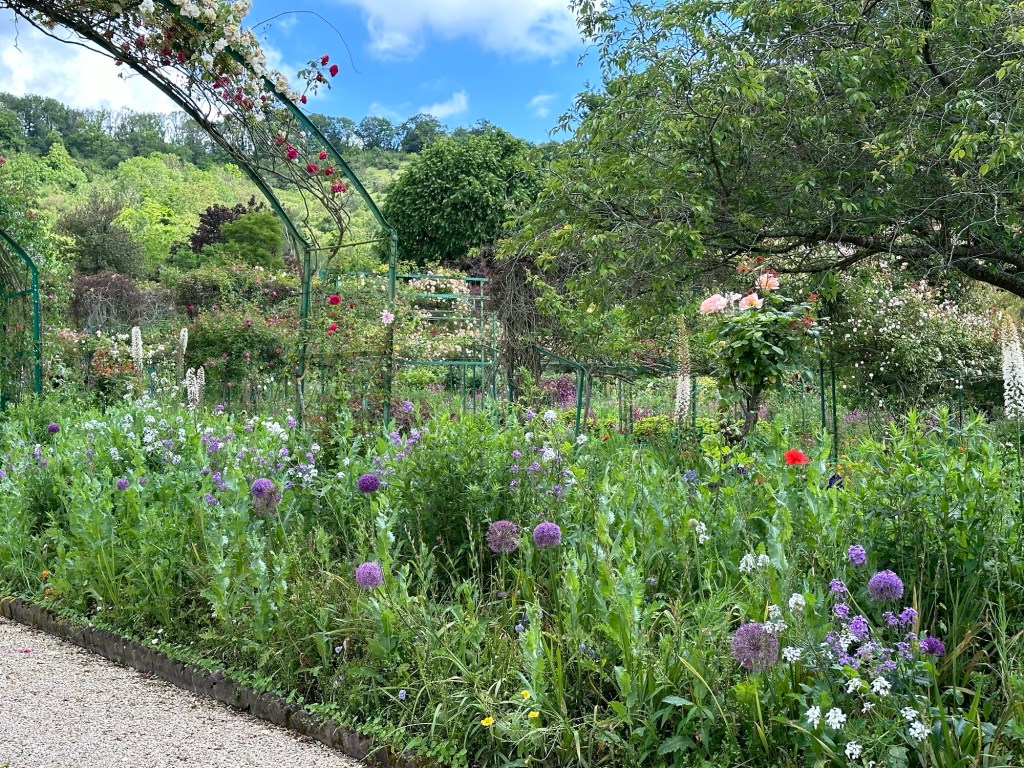
Although it was too early in the season for many water lilies to be in bloom, there were plenty of other gorgeous perennials to enjoy.

It is easy to see where Monet found inspiration for his art.

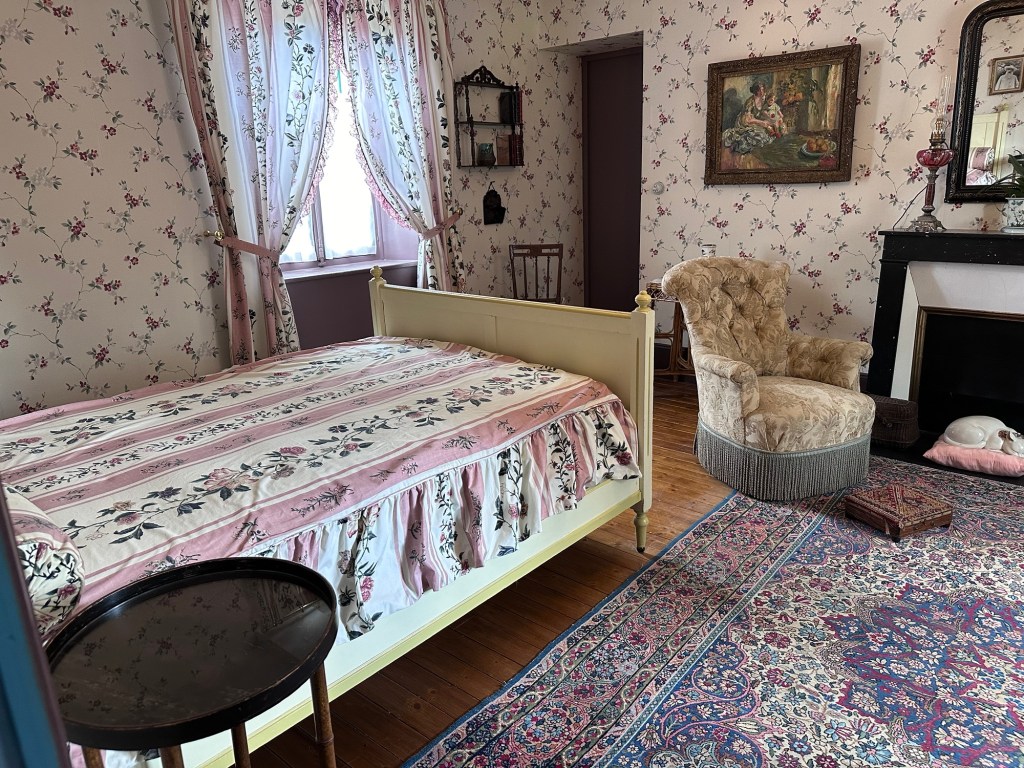
After enjoying the lily pond and the gardens, we were able to tour Monet’s home.

Like Fontainebleau, the walls were covered with artwork.

For some reason, however, I didn’t find the artwork overwhelming.

Clearly, I prefer the simple life. I’d much rather wake up in a bedroom like Monet’s than any of the ones I saw in Fontainebleau!

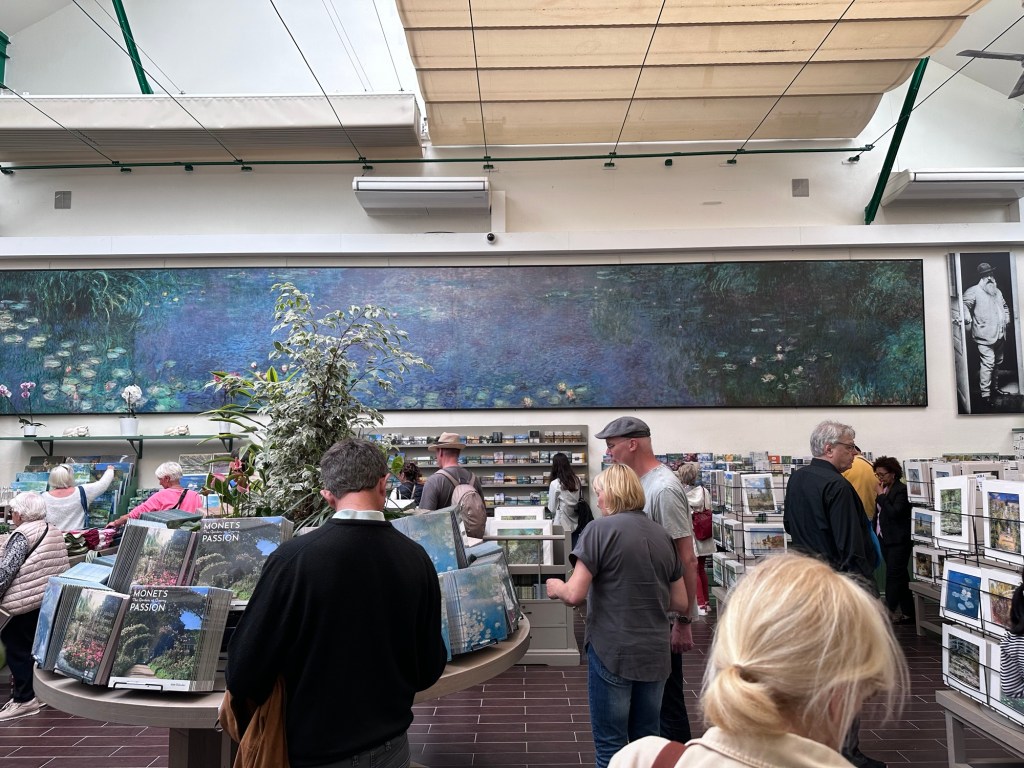
Monet’s studio is now the gift shop. It was huge, with lots of natural light. Reproductions of his water lilies were stretched across two of the walls.

Next post—Bayeux.

Helpful Hints For Travel to Japan

I am extremely grateful for the assistance I’ve received from the “Friends of Oat” Facebook page. This post is my way of giving back. Although I wrote it primarily for OAT travelers, I hope that others planning to visit Japan might find some of these hints helpful.

Packing

Pack light: Hotel rooms are TINY, so there really isn’t much room to store clothes or luggage. Here’s another reason to pack light–there are no porters in Japan, so you will be handling your own bags.

My room in Kanazawa , which was actually quite a bit larger than the ones in Tokyo and Kyoto

Doing Carry-on Only isn’t as hard as it might seem, because every hotel had laundry facilities on site. In our Tokyo hotel, you could watch your laundry’s progress on your room’s TV. Which I did. From my bed. I wasn’t worried that someone would take my laundry out and dump it on the floor, because first, the Japanese are way too polite to do something like that and second, the machine locked with a code that you input.

The Kanazawa hotel had a washer and dryer in the room, complete with a squirt bottle loaded with detergent. Despite the plastic card with instructions in both English and Japanese, it was a slight challenge for me to figure out how the damn thing worked. In fact, I’m not exactly sure what I did, but hey, the clothes came out clean.

You don’t have to pack pajamas, because Japanese hotels provide them. At least the ones OAT uses did. Every day there would be fresh pajamas neatly folded on my bed. Although I had a single room, I still got two pairs of pajamas!

Every hotel had a REAL hair dryer…not one of those awful ones attached to the wall. You know, the ones that you have to keep a finger on the button or else it shuts off?

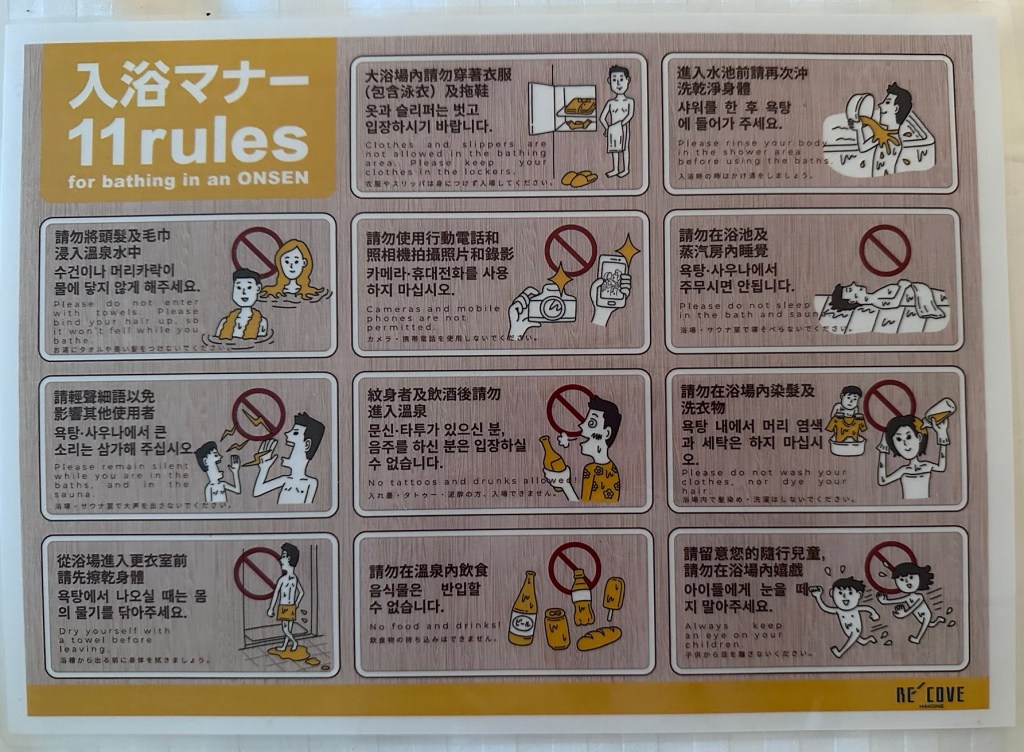
I had heard that some hotels have onsens, which are sorta like hot tubs/whirlpools except the source of water and heat is the naturally occurring hot springs. I definitely wanted to experience THAT, so I dutifully packed a bathing suit and cover up. That was totally unnecessary, because the onsens have many rules, one of which is you either go naked or you don’t go. Take a look.

I guess at some point, someone must have tried to dye their hair or wash their clothes in the onsen, otherwise why the need to print the prohibition?

Another unnecessary item that I packed was a water bottle. All the hotels provided bottled water, plus the water in Japan is not only safe to drink, it also tastes good. I simply refilled the hotel’s water bottles from the tap, and never used the one I brought.

Gadgets

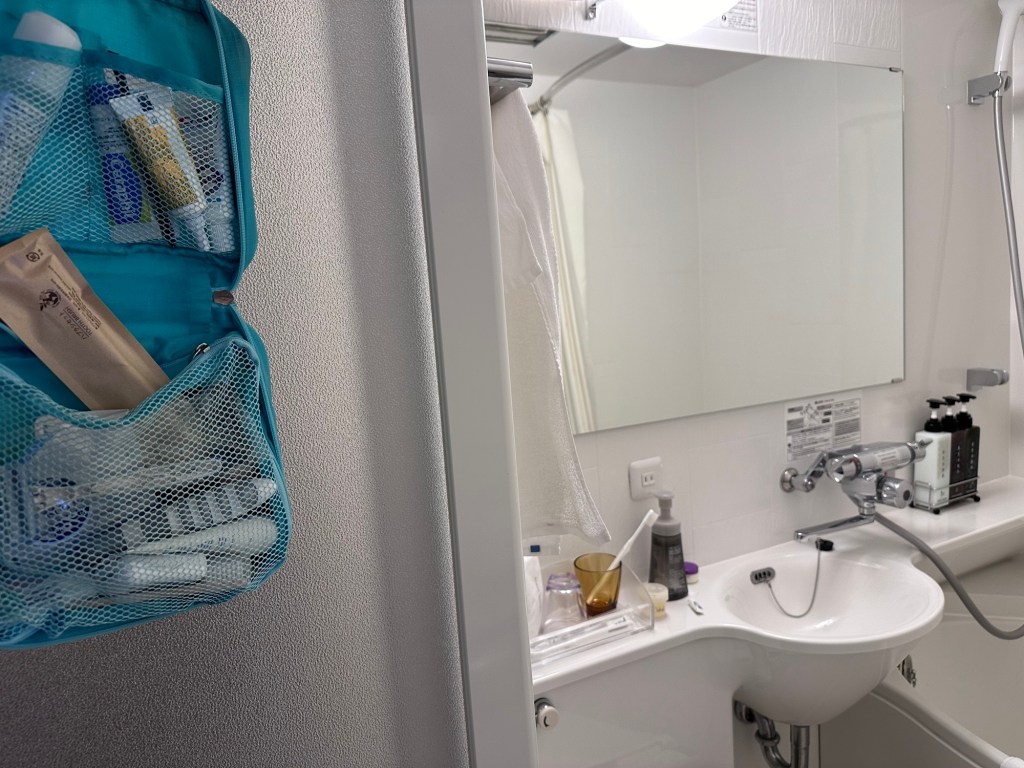
There isn’t much counter space in the bathrooms so hanging toiletries bags make life easier, at least while using the bathroom.

Although some hotels had conveniently located outlets, that was not universally true, so I was glad that I brought my handy dandy plug thingie that I got from Amazon. Because my phone is now my camera, the battery doesn’t last all day, so I bought that black mini portable charger, also from Amazon.

The manicure scissors I brought were useful for cutting off the plastic ties that were affixed to our luggage every time we had our bigger bags shipped. The bullet train doesn’t have much storage space, so we were told to pack a small bag to tide us over until the rest of our luggage arrived. That happened twice on the main trip and once on the post trip. Additionally, some of the plastic packaging on snacks was difficult to open, so my manicure scissors spared my teeth!

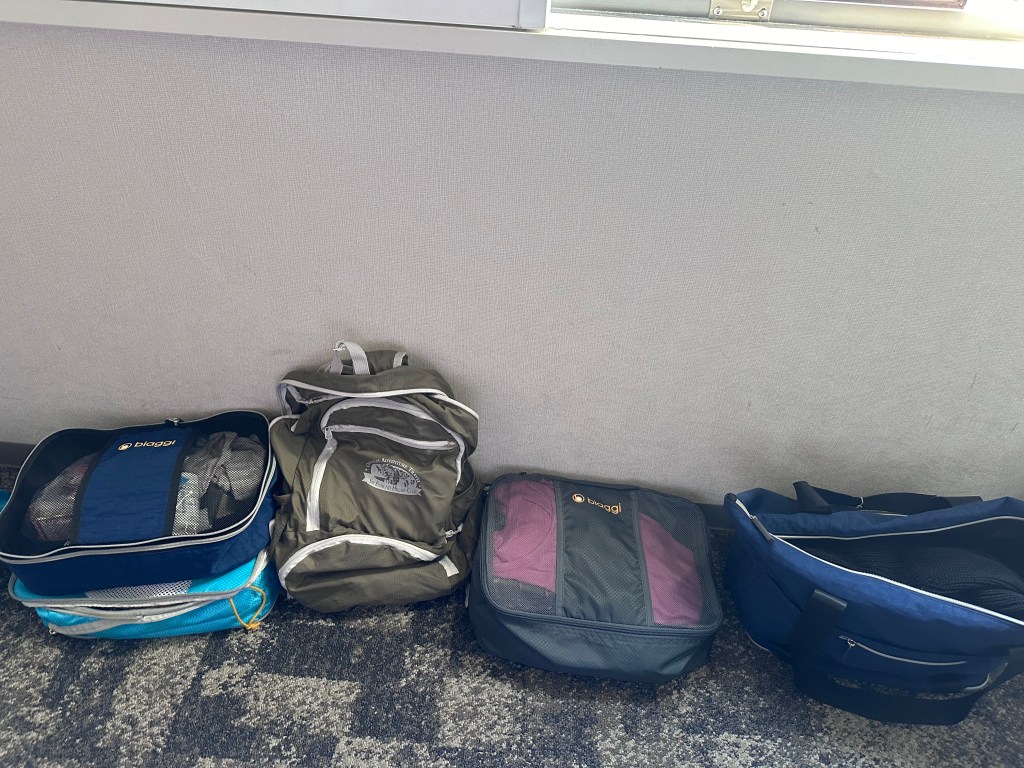
My packing cubes functioned as bureau drawers in these bureau-less and closet-less rooms. Yep, I just put them on the floor. in the narrow space between the bed and the window.

The OAT backpack folded up to almost nothing in my carry on. It made a great day pack, and provided extra space for purchases.

Shopping

I normally don’t shop while I am on a trip, but the exchange rate was so favorable, and the items were so unique, I found myself buying lots of little gifts — in department stores, in little handicraft shops, you name a place and it is highly likely that I found something interesting to buy there.

Language

English is not commonly spoken, but Google translate made it much easier to communicate. I simply typed in what I wanted to say and showed the Japanese translation when I needed help. In museums without English explanations, I pointed the camera at the Japanese words and Google delivered a translation like the one below.

Screenshot

Money

I learned from the Friends of OAT Facebook page not to bother with Japanese Bank’s ATMs when I needed cash. Instead, I went to either Lawson’s or 7 11, which are EVERYWHERE. I was beyond relieved when I saw that English instructions are provided. The exchange rates are good, and the cost for withdrawing money is reasonable. Although you can use your credit card in most places, it is good to have cash for the markets and smaller gift shops. A bonus–both places sell ice cream, chocolate and other snacks.

Mass transit

I’m sure that once you get the hang of it, mass transit is easy to use. Let’s put it this way, I was VERY grateful that our guide took care of determining how we would get from point A to point B. What is wonderful about Japan is one transit card can be used on just about everything: buses, trams, trains (but not bullet trains). The neck holder our guide gave us made getting through the turnstiles VERY easy.

It’s a wonderful trip. Rumor has it that OAT is developing another trip to Japan. I certainly am considering a return trip, but in the fall to see the gorgeous colors that were displayed in this photo of a poster.

Happy travels!