
I didn’t know until I got there that Galicia normally gets an abundance of rain, which is why it is such a lush, green region. I THOUGHT I was adequately prepared for wet weather, because I had packed two hooded jackets, fleece lined pants and silk long underwear, but I forgot the most important item: zapatos impermeables (waterproof shoes). Luckily, our hotel was across from a sports store that carried waterproof sketchers in my size. Prior to that purchase, however, (as I mentioned in an earlier post), we walked the last five kilometers of the Camino in a downpour. Let me tell ya, medieval cobblestone streets retain lots of water between those rocks!

I had the full Pilgrim experience; I was soaked and completely miserable. It was definitely NOT one would consider a spiritual feeling. By the time we got to the hotel, my feet were so wet, I had to dry them with a towel. On a positive note—the hotel had a heated towel bar in the bathroom, but sadly it only functioned between 7 and 11 pm. Still, that was long enough to dry out my sodden socks, clothes and backpack.
If someone forced me (at gunpoint) to choose between walking El Camino or running with the bulls, that day I would have taken my chances with the bulls. (I would have carefully chosen a stretch that allowed for a speedy exit.) But, then again, if I had done so, I would not have earned the right to sport one of these lovely pilgrim tattoos.

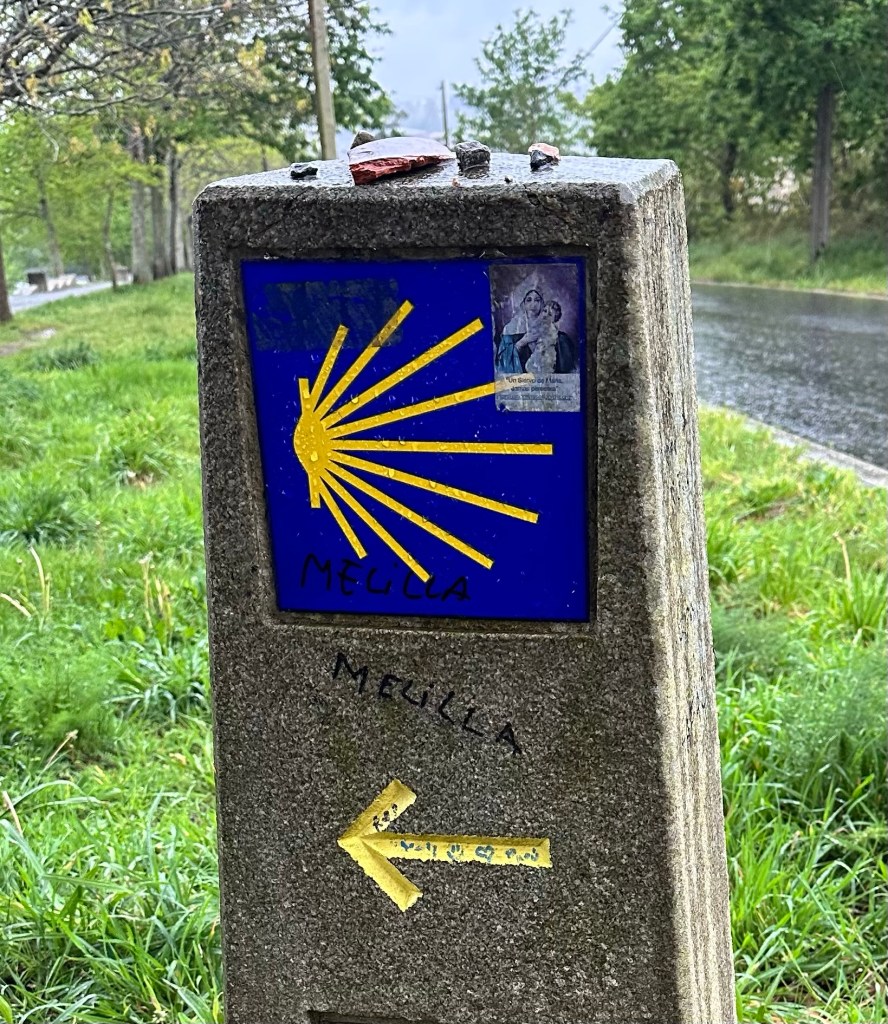
Before this trip, I had thought that there was ONE El Camino. NOW I know there are several: The French, the Portuguese, — we walked segments of both—the Via de la Plata (silver way), the Camino del Norte, the Primitive Way, to name a few. Regardless of which Camino you select, the destination is the same, the Cathedral of Saint James (Santiago).

Beneath that yellow umbrella is our local guide, Marian, regaling us with the legend of St James. WE were a shivering mass, huddled together under a nearby portico.
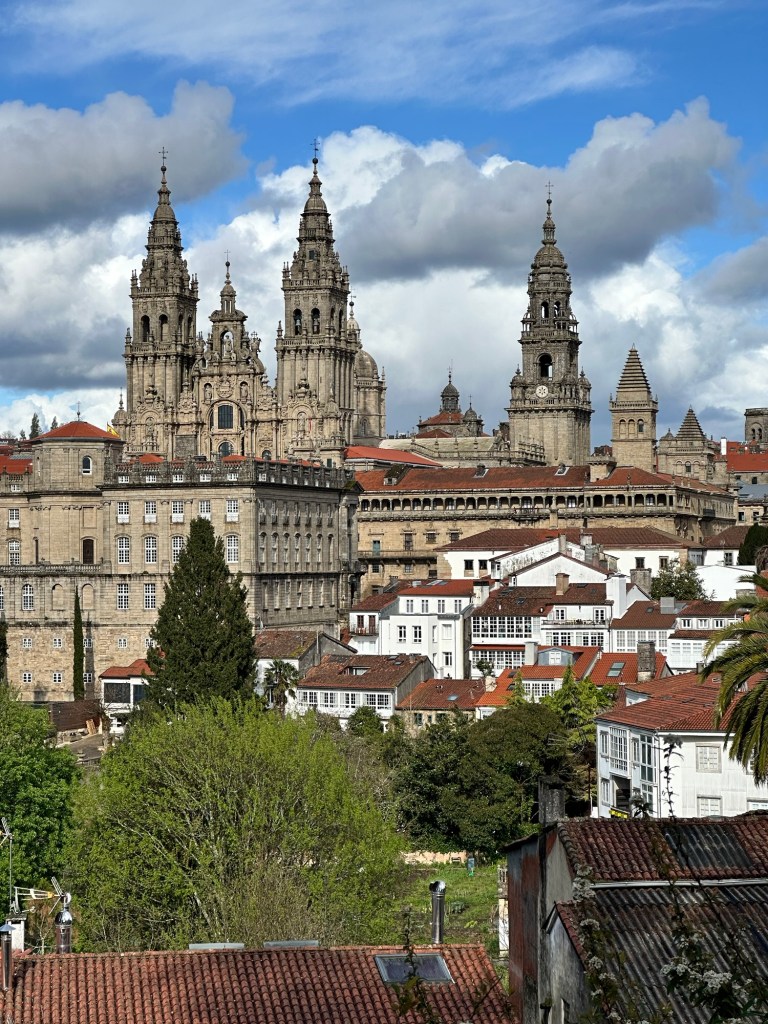
With all the wind and rain, I couldn’t take notes, so I’m operating strictly on memory. Here’s the part of the legend that I recall: a peasant (fisherman? shepherd? Some random guy?) in the first century (around 820 AD) saw a light shining down from the heavens several nights in a row, in the exact same spot. He recognized it as a message from God instructing him to dig, and when he did, he discovered the bones of a skeleton who had been beheaded. The church leaders made a rather large leap of faith and deduced that since St James had been beheaded, the skeleton must be that apostle. Over the ensuing centuries a cathedral was built and over time, the city of Santiago de Compostela grew around the cathedral.
Back then, pilgrims made the journey for religious reasons, to get a plenary indulgence (skip purgatory) or to avoid jail time. Yes, you read that right. Marian explained that people who committed minor crimes back then were given a choice…walk several hundred miles or go to jail.
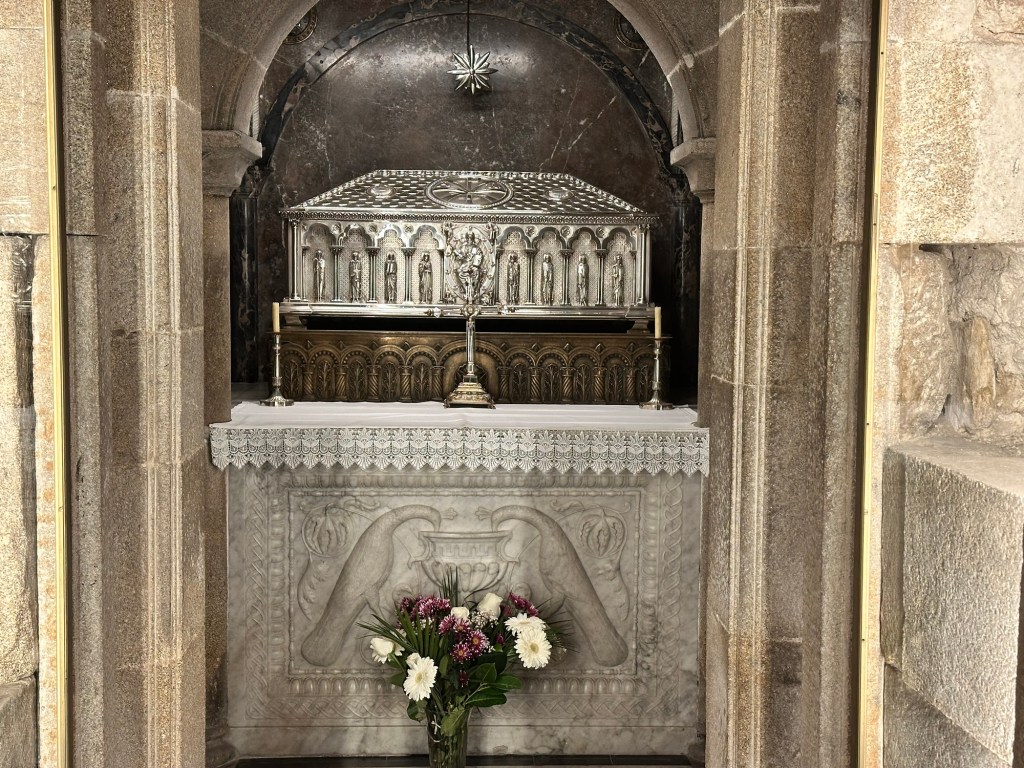
Fast forward a few centuries—today’s visitors can view this silver box that contains what the faithful believe is St James bones,
and can admire the cathedral’s beautiful interior.

My cell phone’s zoom isn’t very powerful, so I’ll describe the central image of the main altar. It’s St. James, riding a horse and brandishing a sword, which wasn’t exactly how the apostles were described in the Bible.

Santiago’s old town is a maze of narrow cobblestone streets, filled with restaurants, bars and souvenir shops, so after our first day in Santiago, I’d seen enough of the city. I welcomed the opportunity to spend the day in Pontevedra and Combarro on an optional trip OAT offered.
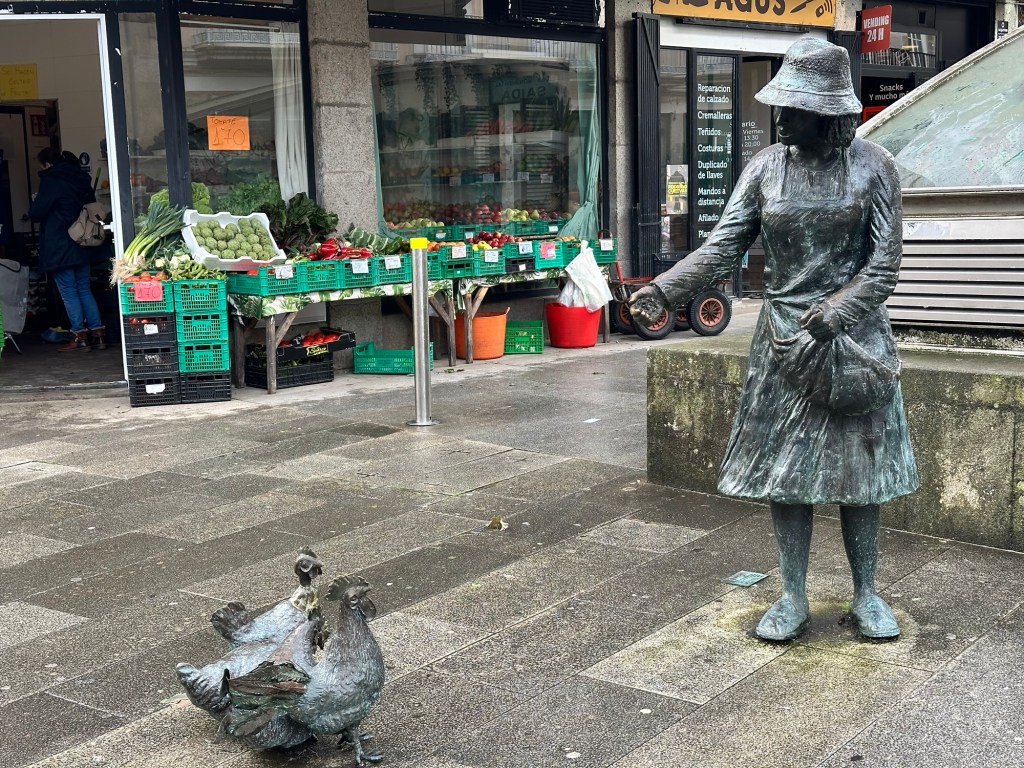
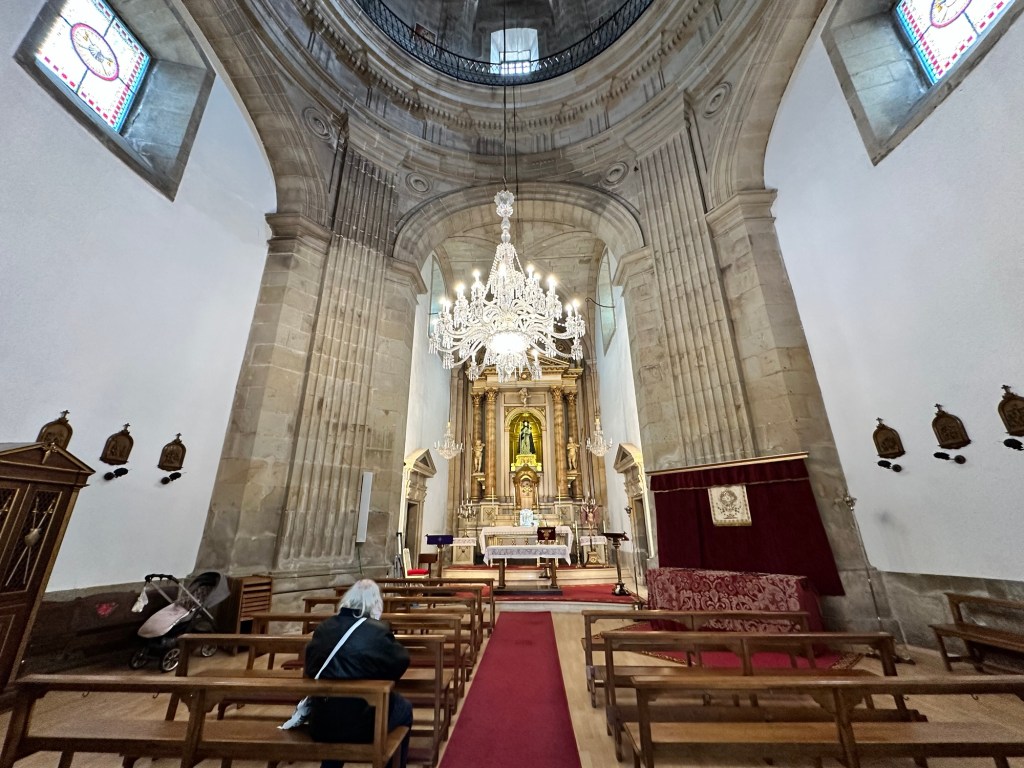
Pontevedra, founded by the Romans, gave us a break from the crowded streets of Santiago. It is also the site of an unusual church, with a floor shaped like a scallop shell. Or so I was told.
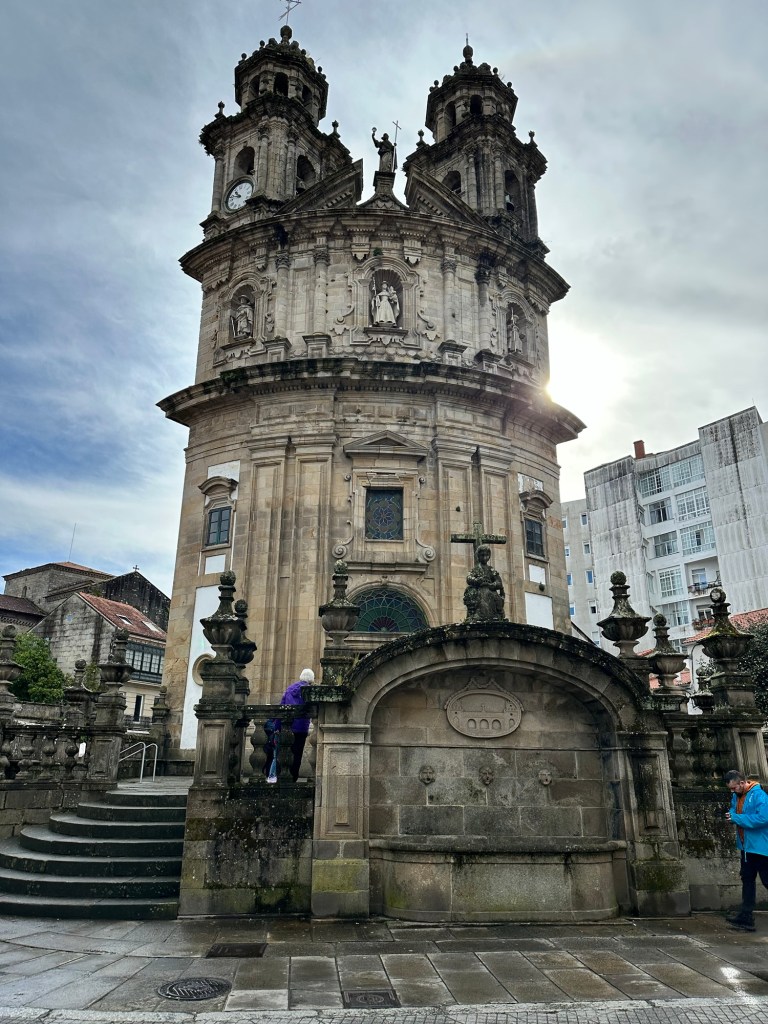
I’ll be honest. The church was clearly round, unlike any I’ve ever seen before. But I wasn’t able to pick up any resemblance to a scallop shell in the interior. Take a look. Maybe you’ll have better luck.
Despite the intermittent showers, it was a delightful day.
Combarro reminded me of Southeastern Massachusetts. I recall watching Sandy, my sister, digging up clams and quahogs with her toes in Mattapoisett bay.
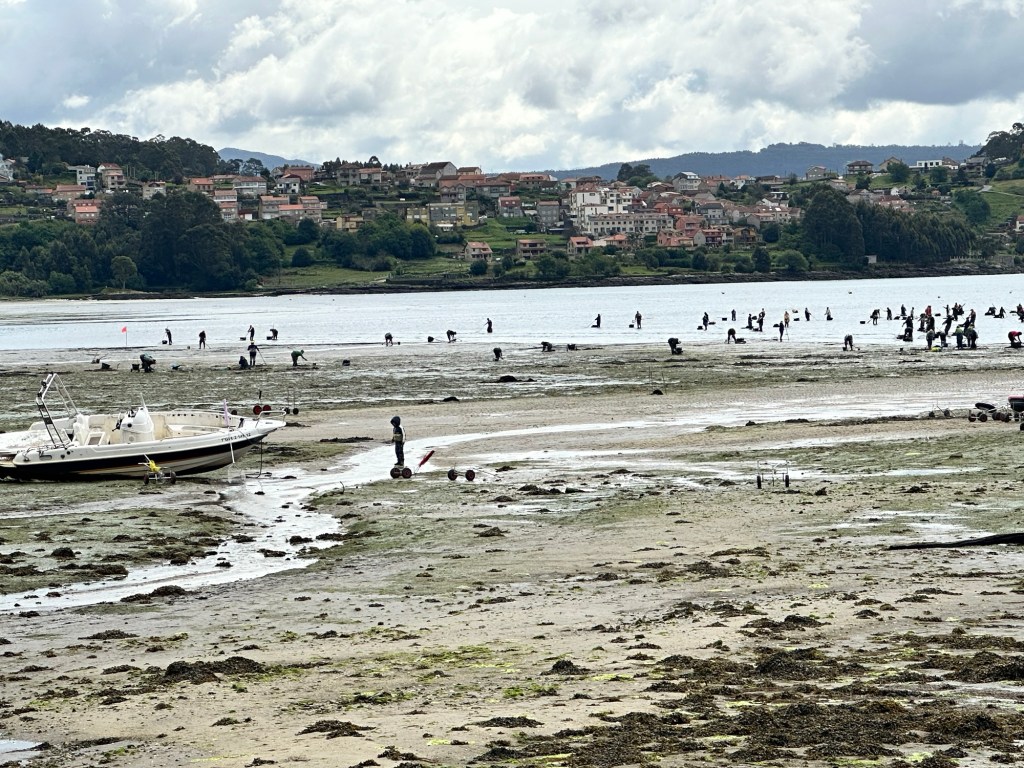
Here in Combarro, it’s a highly regulated business, with strictly enforced limits on what can be harvested.
Our day ended with a pleasant surprise—a procession outside our hotel. I was already in my jammies, but when I heard the drums, I dashed onto my balcony to take this photo.
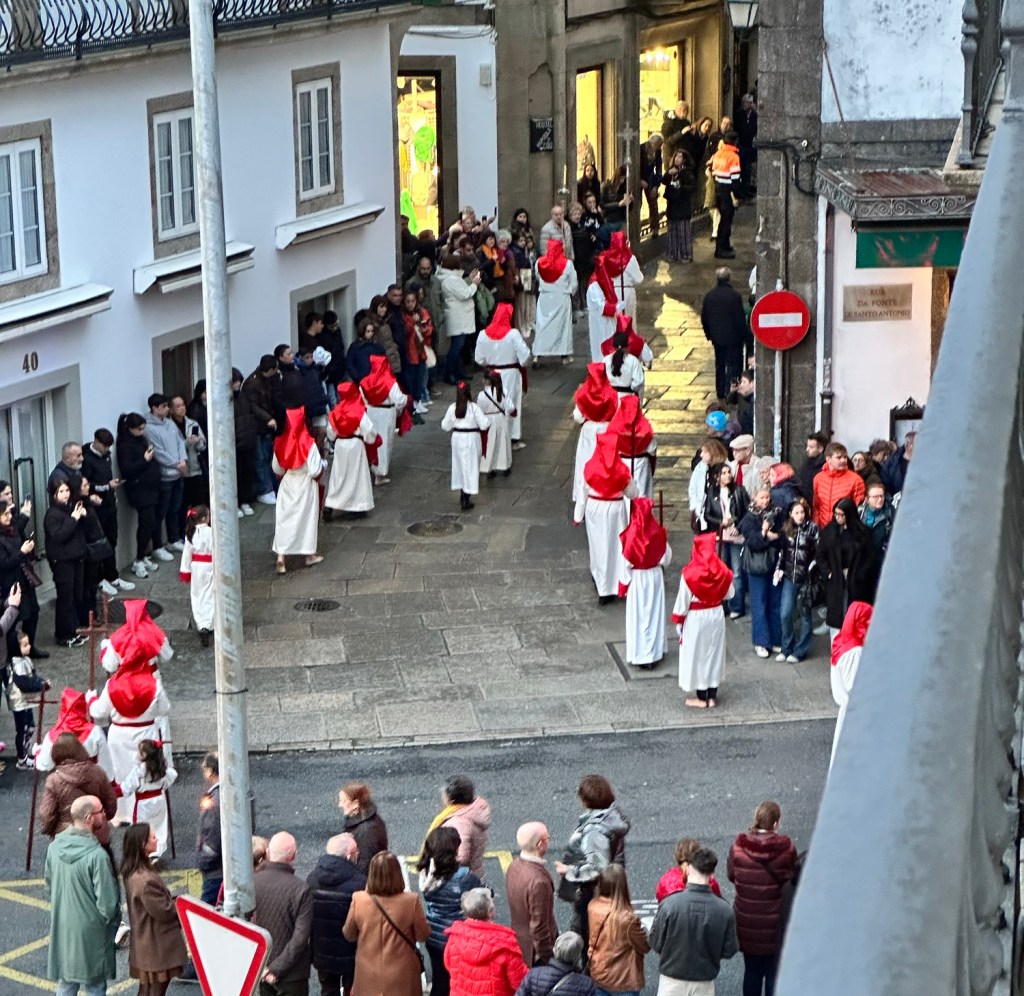
Fortunately, our trip leader was on the street and sent us a video.
Is it just me or does that statue of Jesus make it look like he needs a foundational garment?
Next stop, Portugal for 5 days, then home.



 Destination NOW