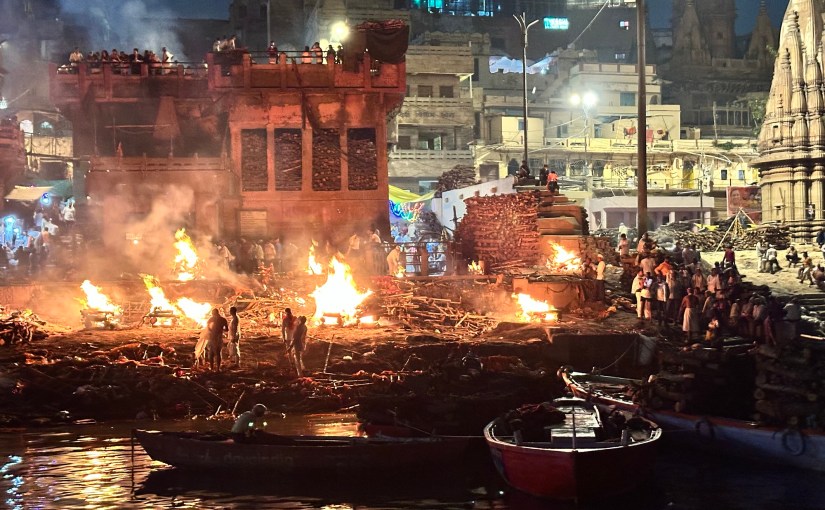
Initially I was NOT impressed with Varanasi, because of the crowds, traffic, trash in the streets, wandering cows and stray dogs. It was hard for me to believe that Varanasi is considered one of India’s most sacred cities. But after our evening and morning cruises on the Ganges, I changed my mind!

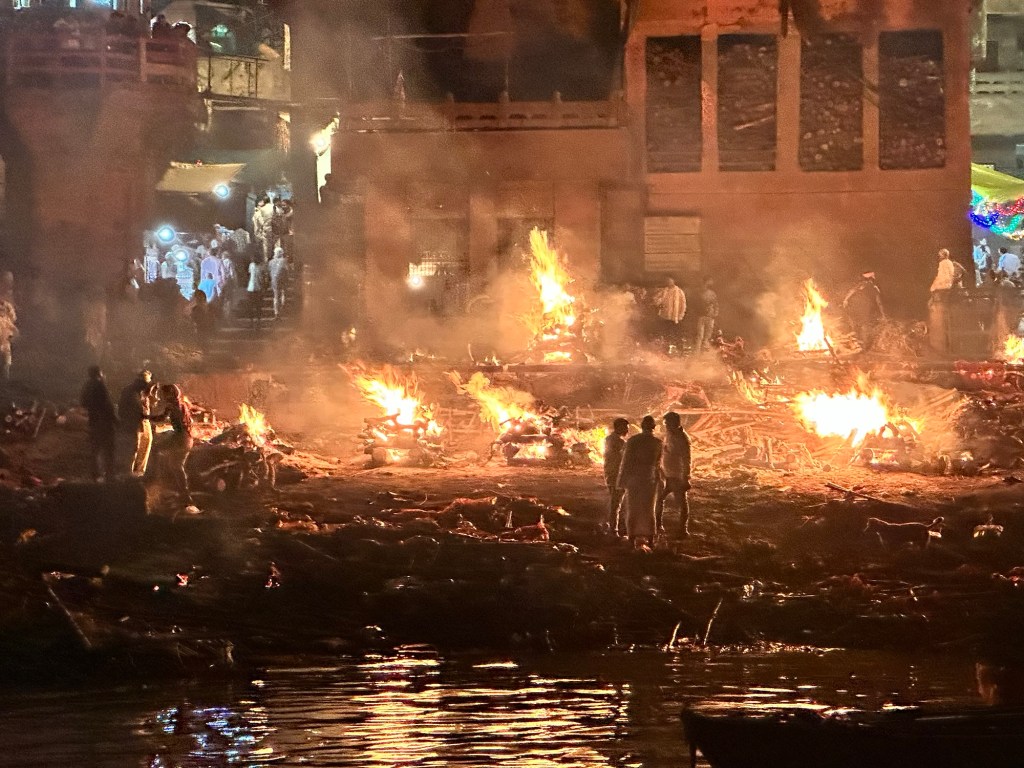
Hindus believe that if you are cremated on this special ghat ( the one with the “everlasting flame” ) by the Ganges, you are released from the cycle of death and rebirth, earning an “express pass” to nirvana. We witnessed the full cremation ceremony from our riverboat.

It reminded me of the Catholics’ belief in the 9 first Fridays. So, for those who didn’t go to Catholic school, here’s the scoop. If you go to mass and communion for the first Friday of the month, NINE times in a ROW, you are guaranteed that a priest would pop up just before you die to give you the last rites. That means you have the chance to confess your sins and be forgiven. You might have to spend a little time in Purgatory, but at least you won’t go to hell.
Varanasi is to devout Hindu what Mecca represents to Muslims, and Jerusalem to Jews. Supposedly, most Hindus want to make a pilgrimage to Varanasi, at least once in their lifetime, to take an early morning “dip” into the Ganges. For those unable to make the trip, perhaps they might persuade someone to do it for them; that person would have to go underwater multiple times to ensure their friends are completely purified.
After our flight from Delhi to Varanasi, and our evening cruise, I briefly considered skipping the sunrise rituals, which required getting up at 5 AM. I’m so glad that I didn’t!


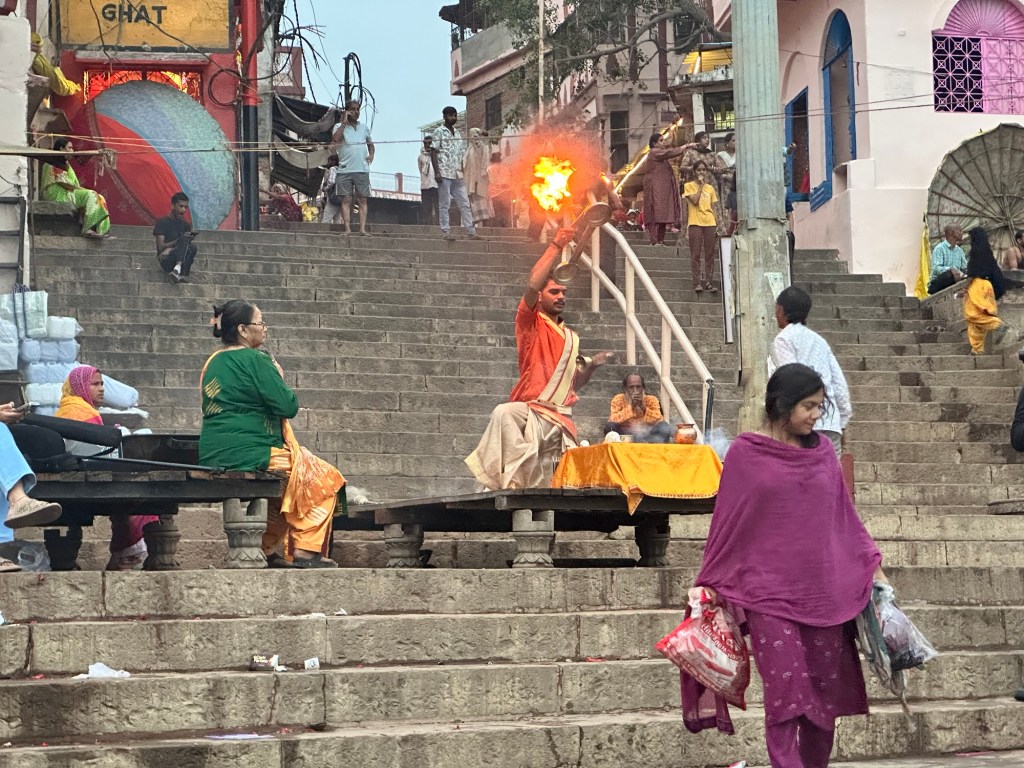
Twenty five years ago my friend celebrated her birthday by submerging herself in the Ganges. Back then, the river was polluted with dead animals, ashes, and miscellaneous bacteria floating along among the multitudes of humans bathing there. Since then, treatment towers ( the yellow structures) have been built, so the water is much cleaner.

Good thing, because water from the Ganges is considered “purifying” and holy. Devout Hindus sprinkle Ganges water in their homes first thing in the morning and again before sunset, then blow a conch shell to banish negativity.
During our college years, my friend (the Ganges bather) celebrated St Patrick’s day by skinny dipping in Boston’s Charles River. Of course, that was after she consumed prodigious amounts of green beer. Sorry, no iPhones back then, so no video of Boston’s “ finest” plucking her from the river.
But I digress. Let’s get back to Varanasi. Not only is the city sacred to Hindus, it is also important to Buddhists because Buddha gave his first sermon in Varanasi, at Sarnath.
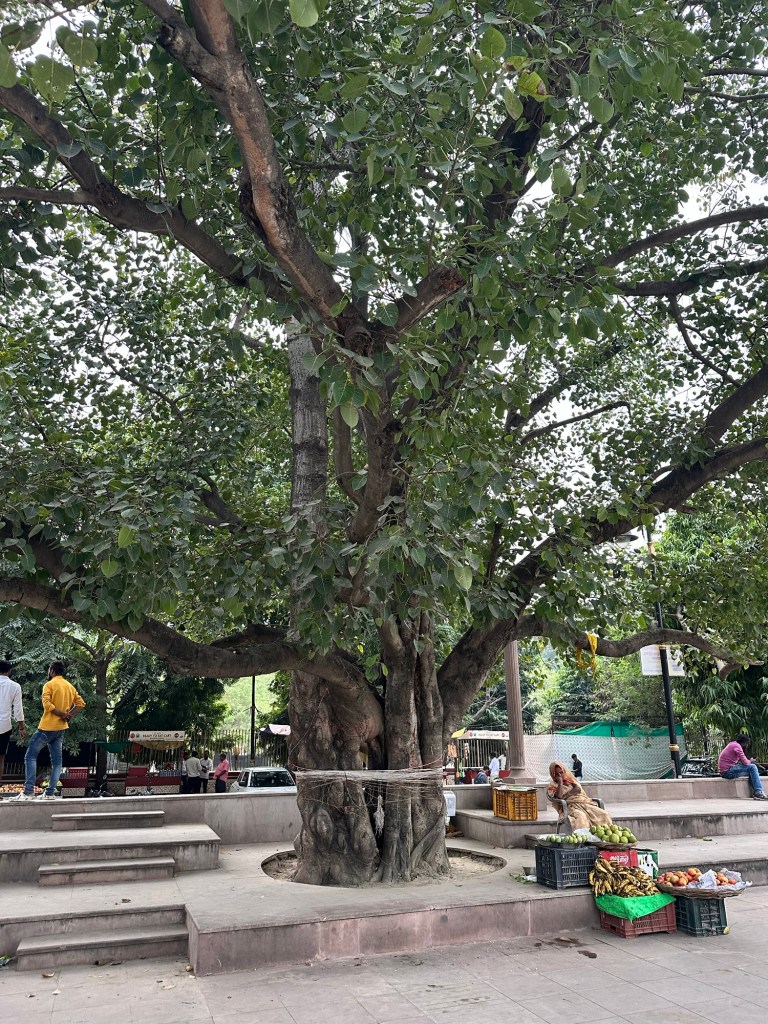
The following photos are of a Bodhi tree, which can be identified by its heart shaped leaves. When the Buddha stood underneath the Bodhi tree, he achieved enlightenment. Sadly, when I planted myself firmly under that same tree, no such thing happened to me. Maybe I needed to stand there longer?

The on site museum at Sarnath houses finds from Archaeological digs, including this statue of four lions.

Anyone who has visited the Alhambra in Granada, Spain might be reminded of the Lion Court which has similar statuary.
On the way to the sunrise ceremony, our guide warned us to be on the lookout for cow dung. He explained that the cows we have seen roaming the streets all have owners. The owners allow the cows to roam freely during the day, after they have been fed and milked. In the evening, the cows return home and are sheltered overnight.
Our guide told us the cows are fed during the day by some of the locals. If the cows are fed two or three times, they return to that house regularly, at the same time every day. If the residents aren’t waiting, with food, the cow uses its horns to knock on the door.
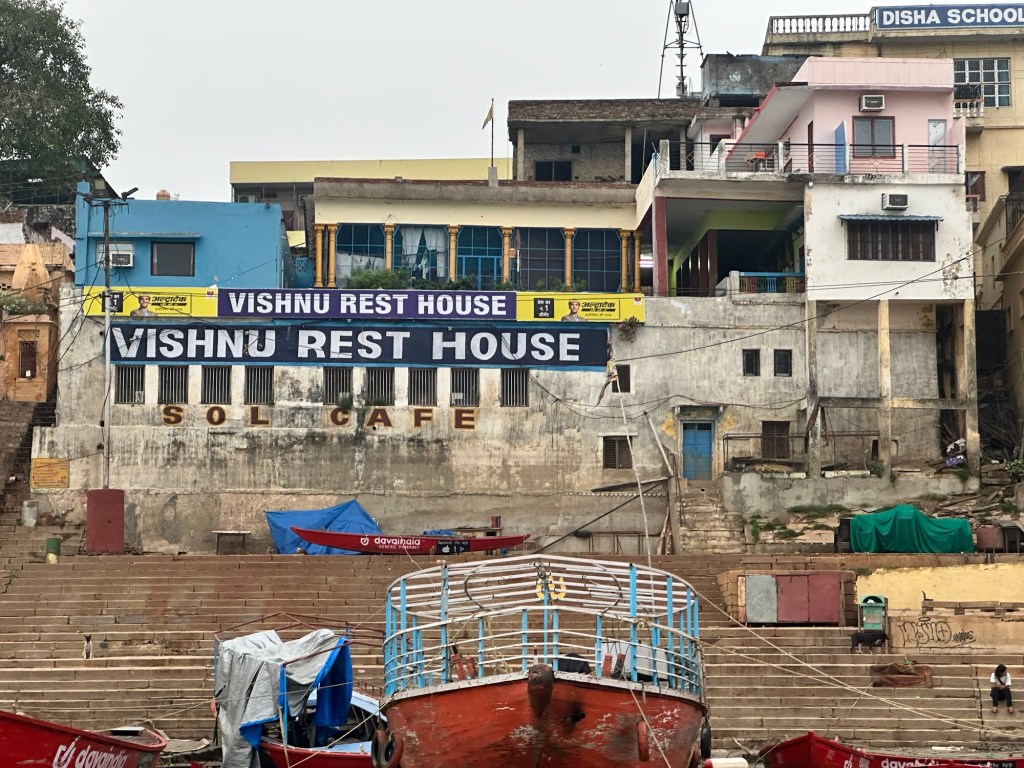
Sadly, it was a cloudy morning, so we didn’t get to see the sunrise. What I did get was a photo of the hotel where George Harrison stayed. He was there long enough to experience a gorgeous sunrise which inspired him to compose the song “ here comes the sun”. It was in Varanasi that Harrison met and collaborated with Ravi Shankar.
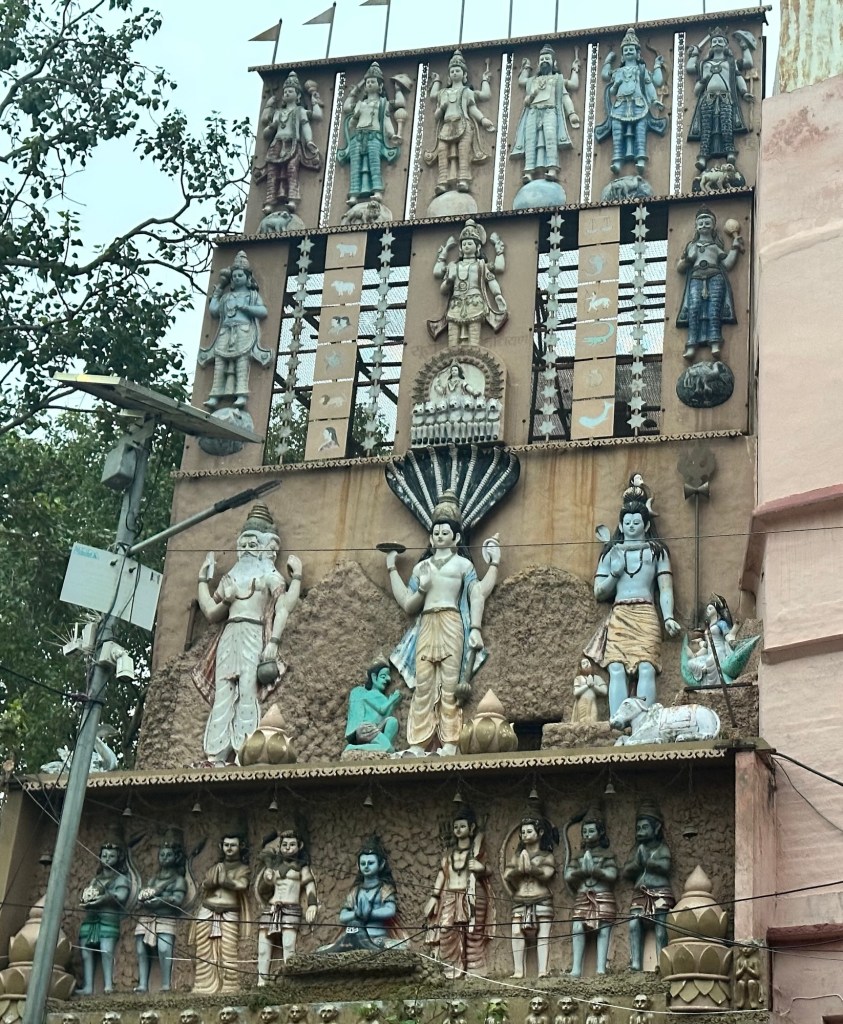
Our early morning walk through the center of Varanasi was a visual feast. The statues on the buildings presented opportunities for our guide to educate us about the three main Hindu gods: Brahma the creator, Vishnu, the maintainer and Shiva, the destroyer of evil.
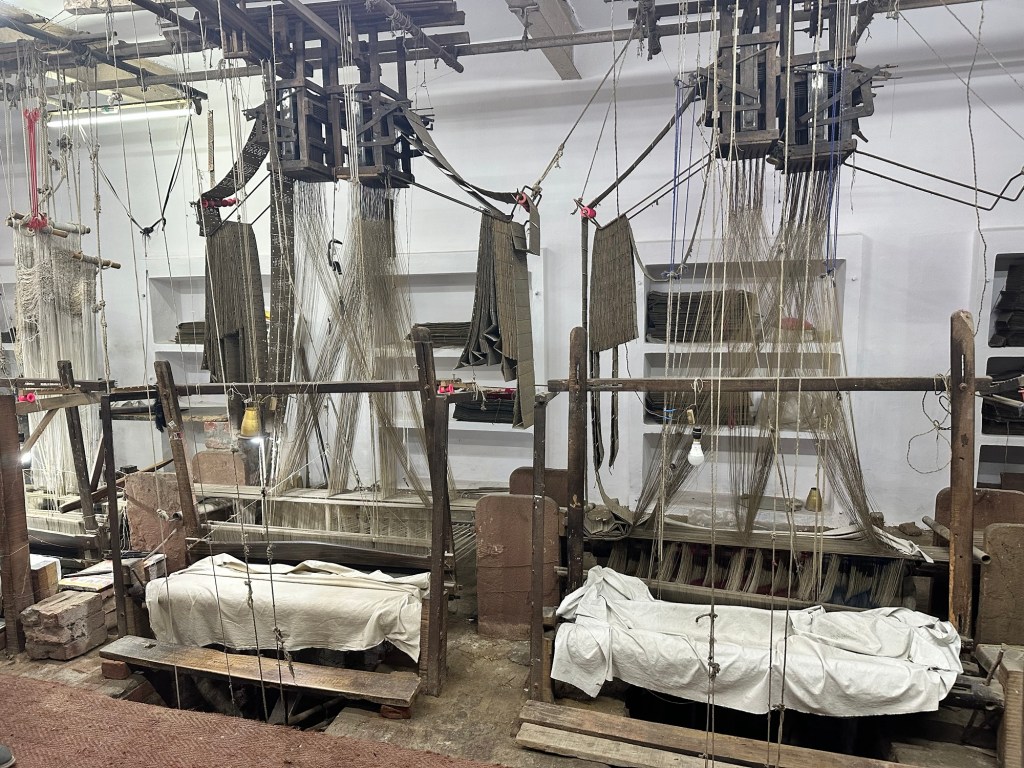
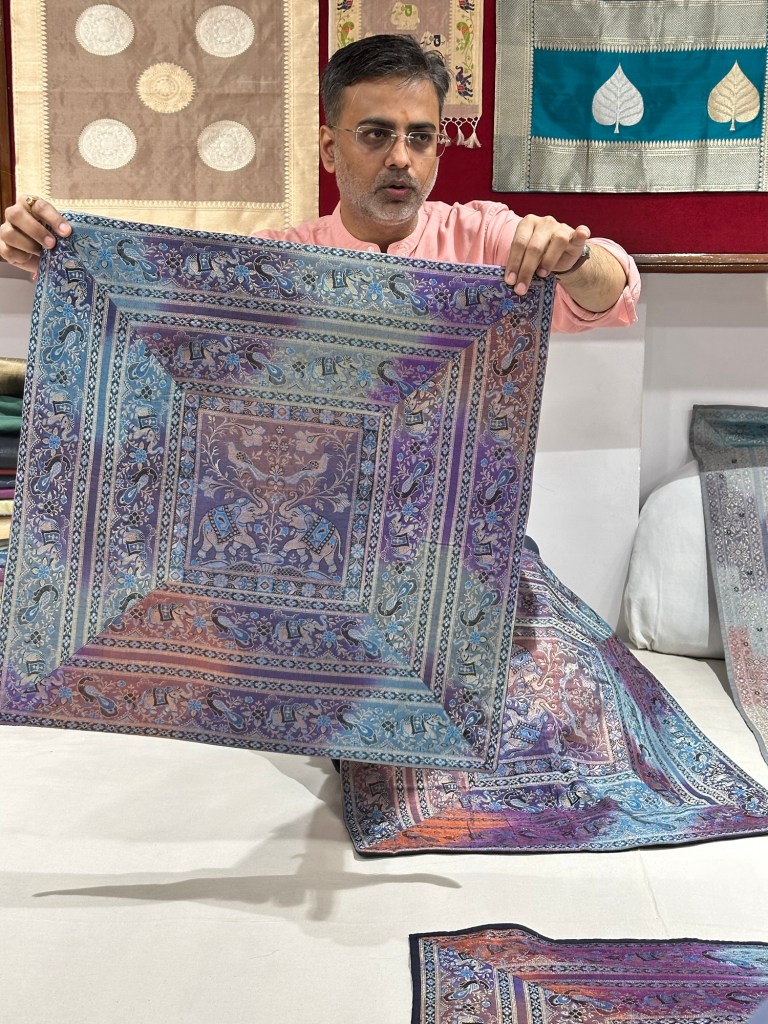
After returning to the hotel for breakfast, we departed to visit a silk production center where we were able to view looms and engage in retail therapy. We then headed to the airport for a return flight to Delhi, and a long drive to Agra. We arrived at our beautiful hotel around 8 PM, with barely enough energy to have dinner, and go to bed.
We saw and experienced a lot during our less than 24 hour stay in Varanasi!
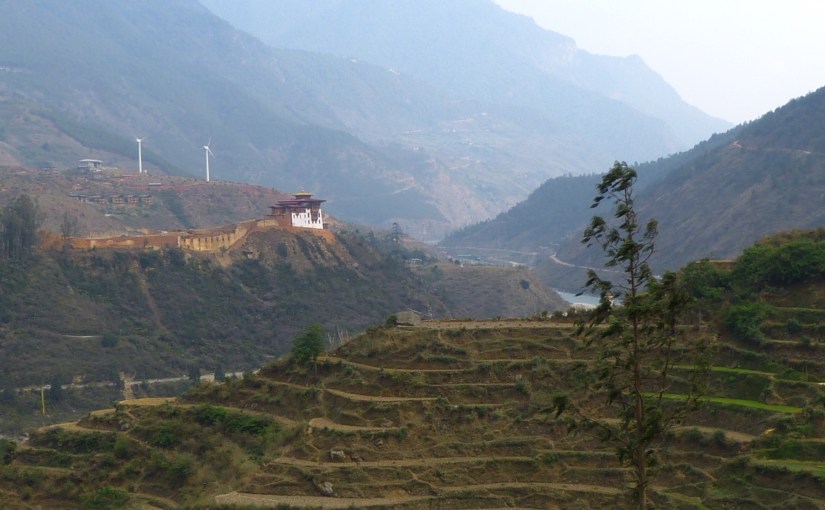

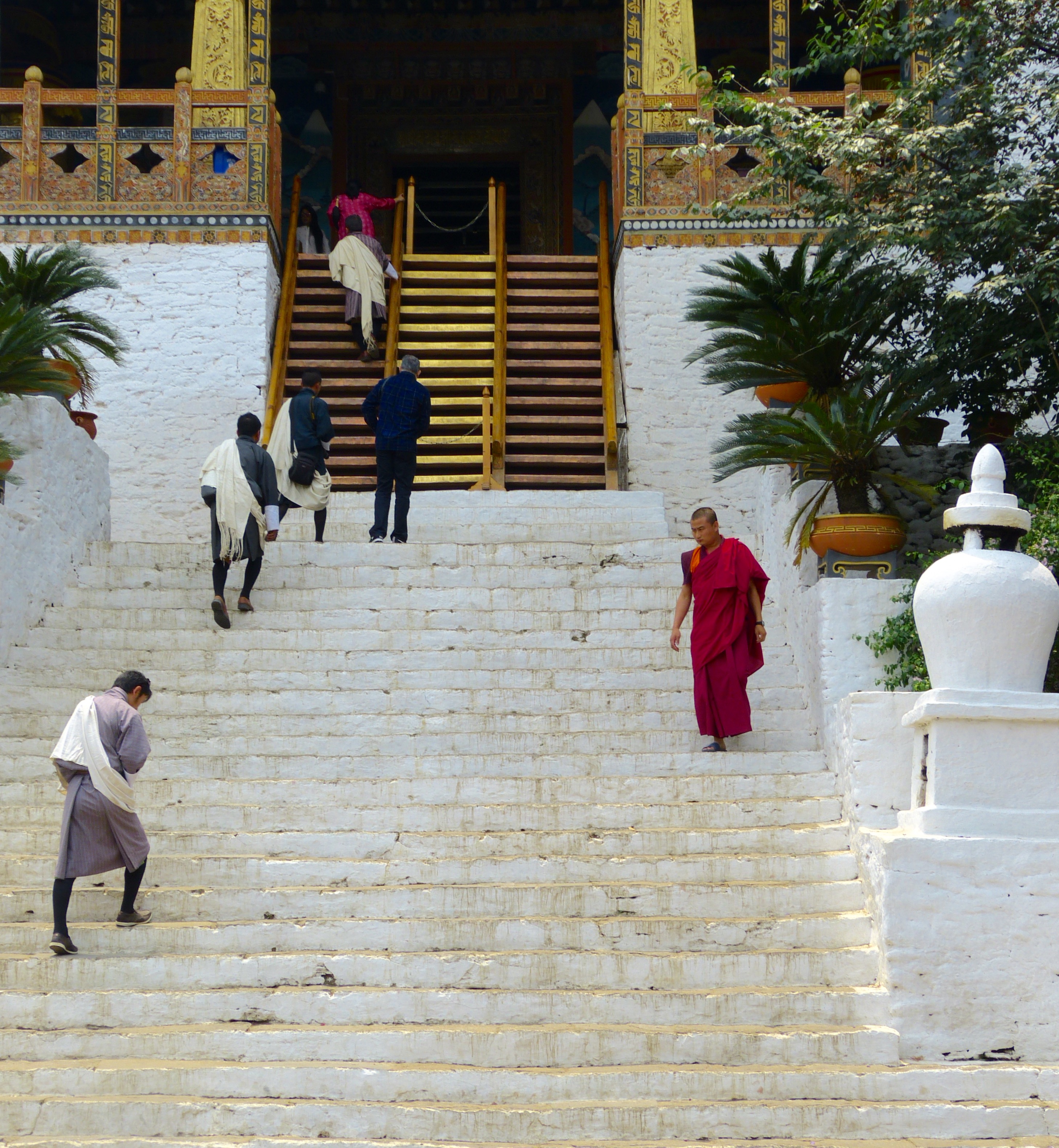
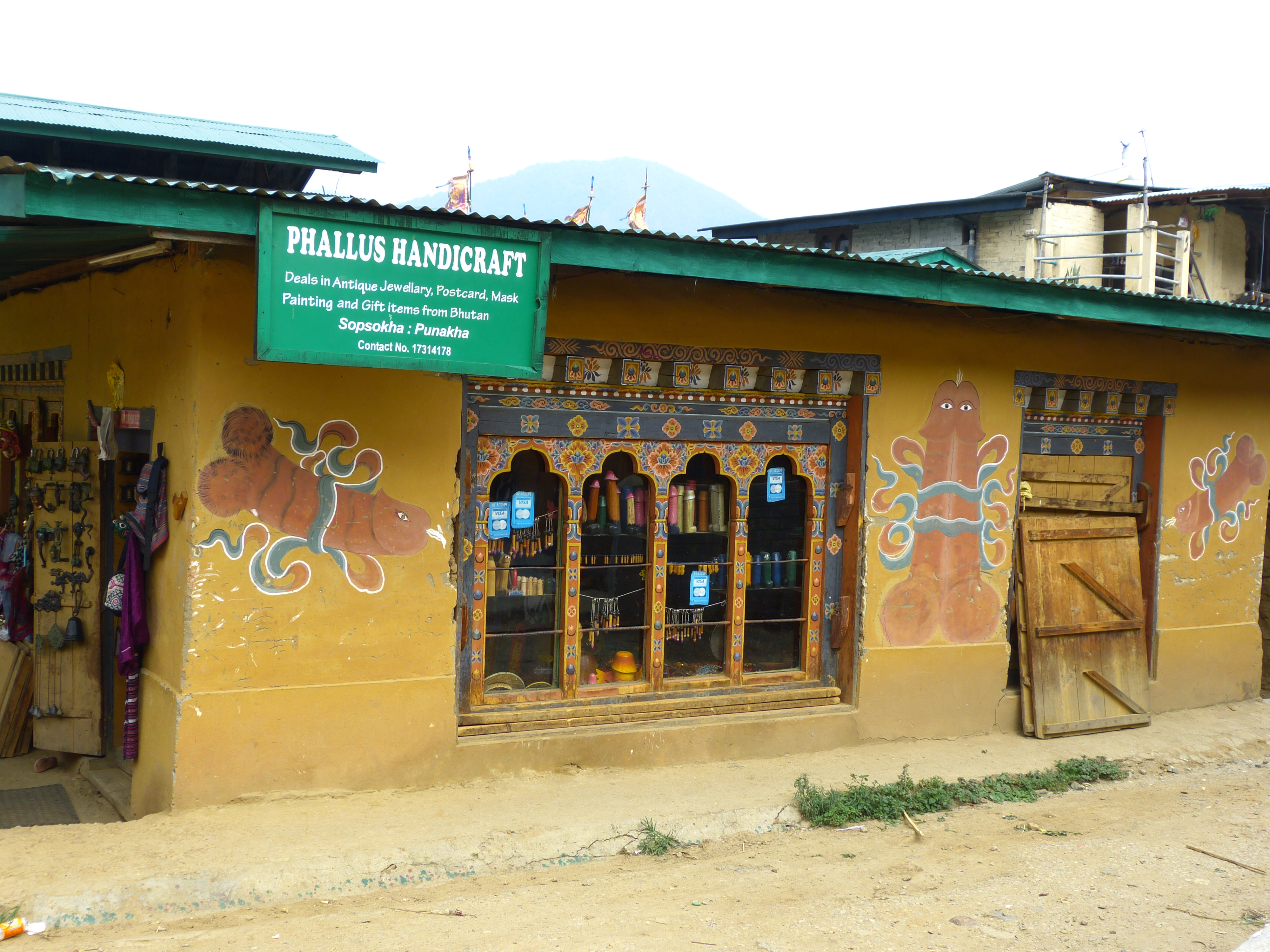
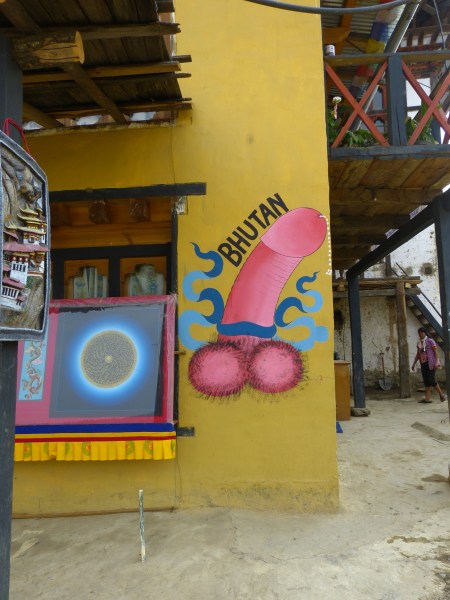 This monastery was founded by Drupka Kinley, the Divine Madman, whose “Thunderbolt of Wisdom”, also known as his “Flaming Thunderbolt” , brought his own special form of enlightenment to local women. Infertile couples visit the monastery where the woman is doinked on the head with a huge wooden “thunderbolt”. Could that be the Bhutanese version of IVF?


 Destination NOW