Remember how everyone tells new moms “once you see your new baby, you forget all about the pain of childbirth”? Yeah, well for me, THAT never happened — which is one of the reasons Greg is my only child.
The pain of getting to a trip, now THAT’S a different story. Once I arrive at my destination, any flight challenges — delays, cancelled flights, jet lag—all those “minor inconveniences” are instantly forgotten. (Thank you, Joann)
Our first day in Sarapiqui was picture perfect. The accommodations were a bit rustic, but comfortable, wildlife was abundant, and the location was ideal. I was able to walk to the nearby Sarapiqui River, which was FAR calmer than upstream, giving me a false picture of what our raft trip was going to be like.
Not too bad, right?
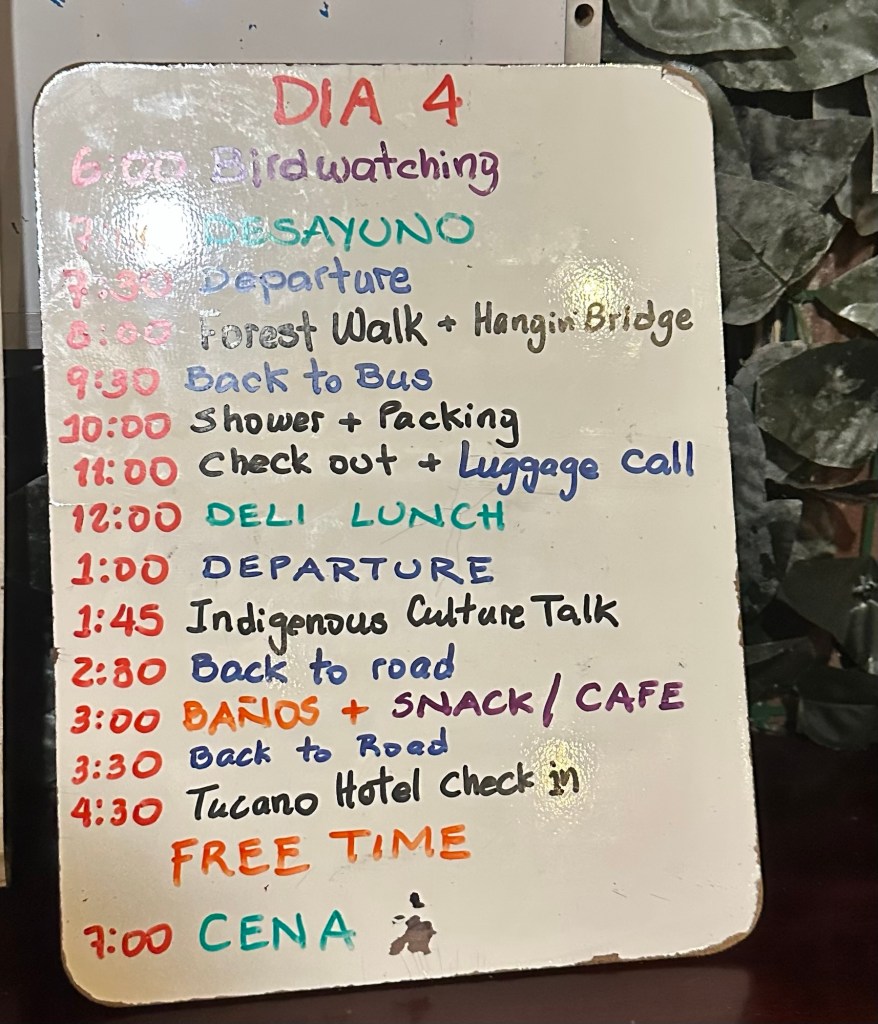
But let’s not get ahead of ourselves. Our morning began at 6AM with birdwatching and listening.
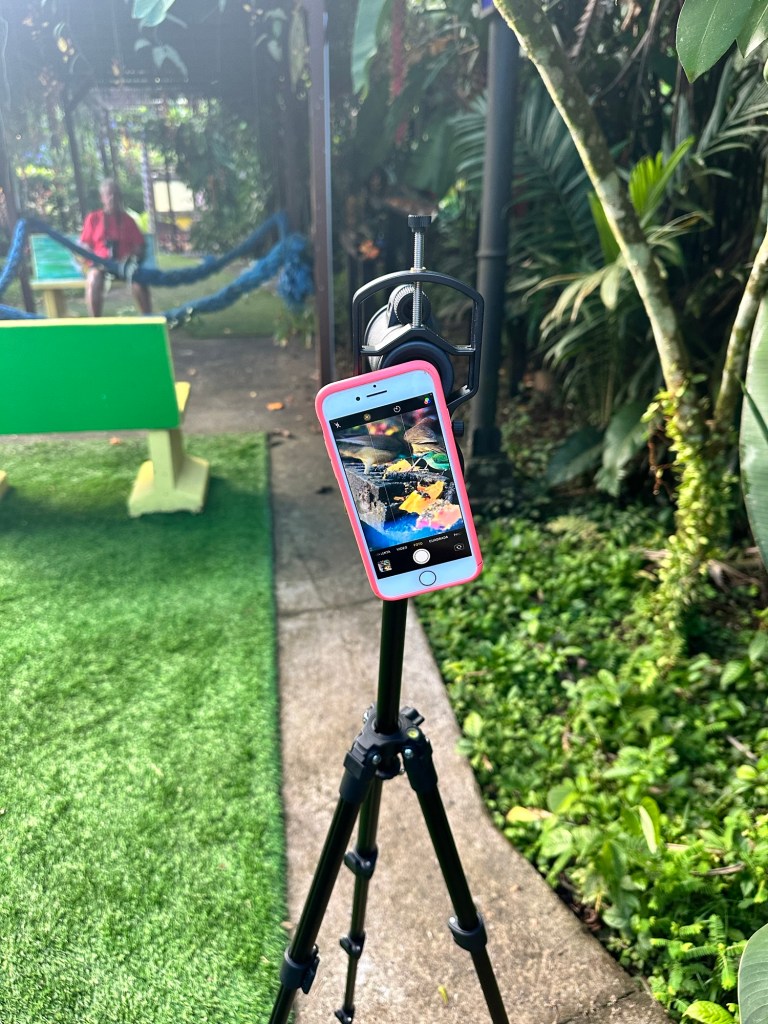
It made me regret that I hadn’t brought my camera, because a cell phone just doesn’t do it—unless, of course, you are as prepared as our guide, Malo was.
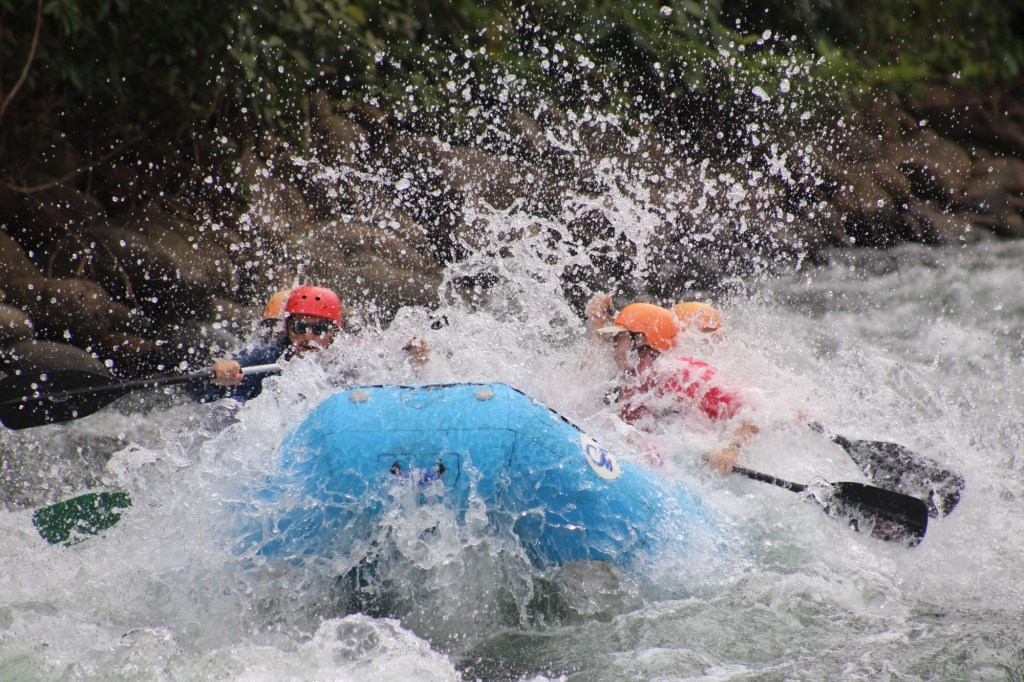
After breakfast, we were ready to start our rafting adventure. We expected to get wet, so I stored my cell phone with the change of clothes I brought. Not a problem, because the rafting company had photographers stationed along the river.
At the start of our trip, the water was moving fast, but the “rapids” certainly looked manageable.
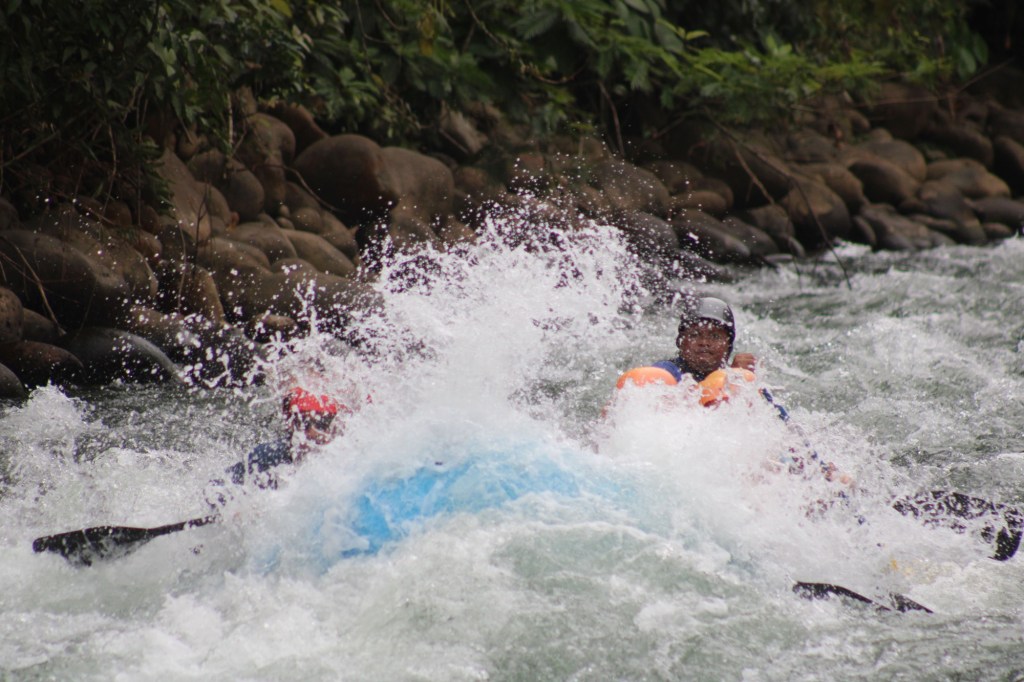
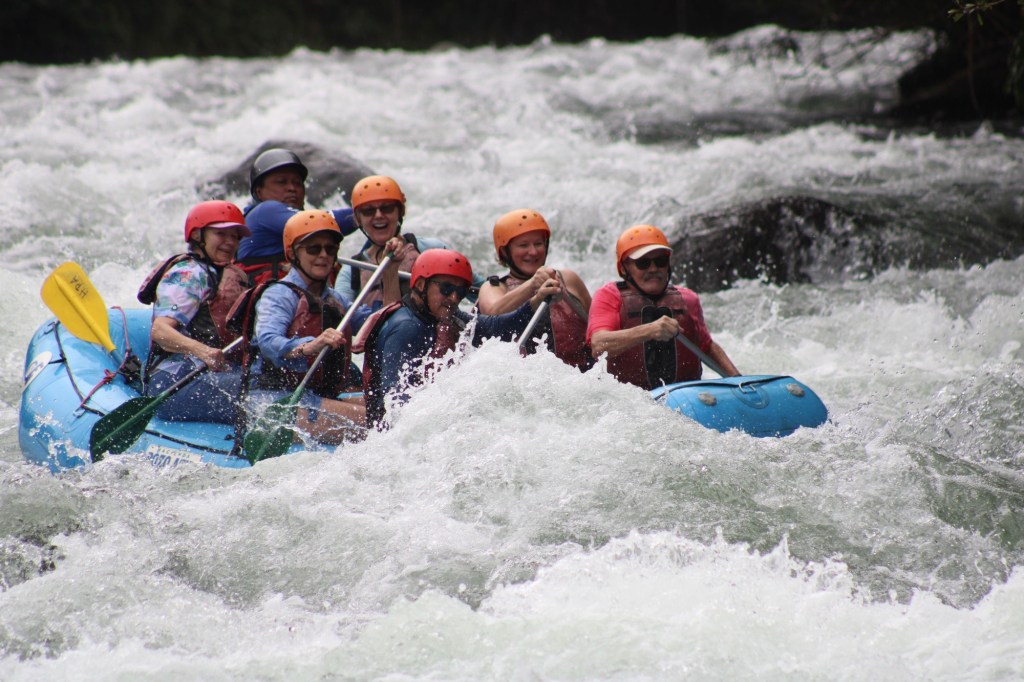
That quickly changed! The following photos were taken by the rafting company from their vantage point on dry land.
Yes, we were on that raft. Here’s proof.
We were quite pleased with ourselves that we had made it thru. What we DIDN’T know was there were many, many more rapids before our journey ended.
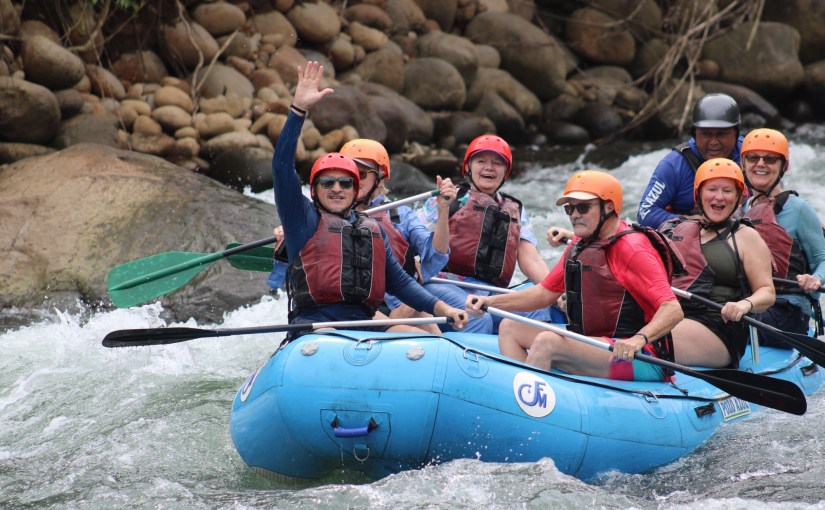
Across from me is 83 year old Esther, who was a trooper, smiling even though during our 1.5 hour journey, she almost fell into the river.
Her daughter Cindy is in front of me. We had quite a rhythm going, even after our helmets smashed together during our transit thru one of the rapids.
Although you can’t tell from the above photo, we were all completely soaked. We are smiling because we knew that dry clothes were waiting for us.
That was quite enough adventure for me, so I spent the afternoon hanging out by the pool, with Randy and Cindy, instead of touring a pineapple plantation.
This will give you and idea of what our second day in Sarapiqui will be like.
On to two days in Chachagua, where Malo tells us we will be able to enjoy the hot springs.
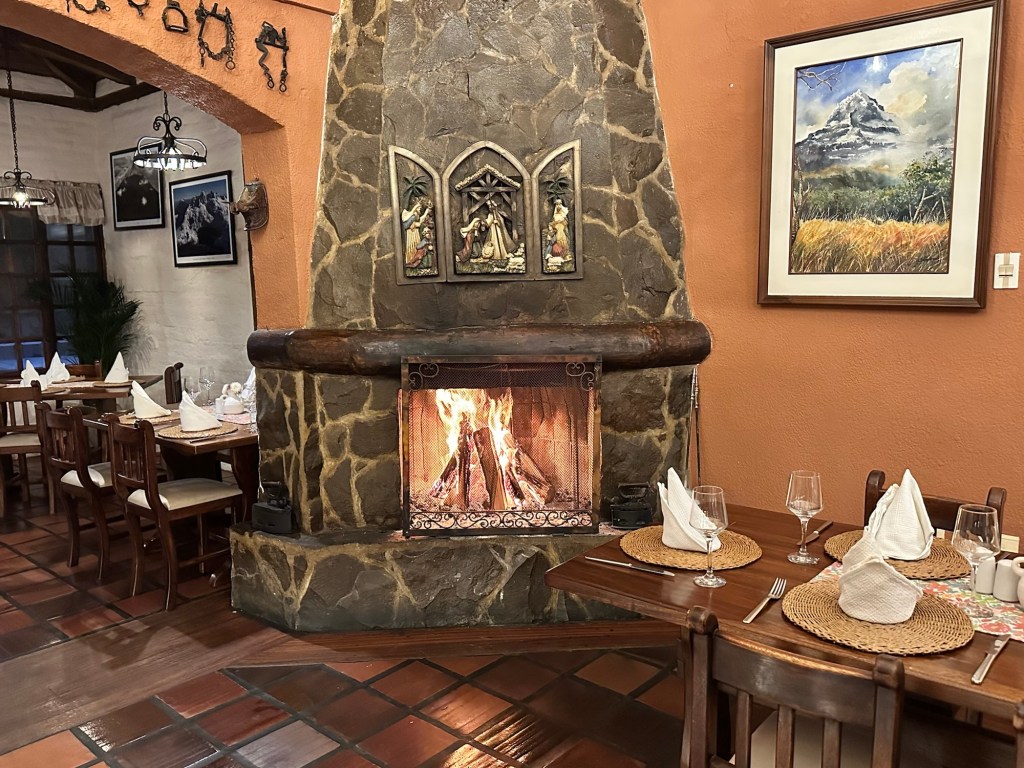
By the end of Day 2 of our Ecuador post trip, we had arrived at the Hacienda Abraspungo, the second of our one night stays—not to be confused with one night stands—which if that’s what you were expecting this post to be about, you’ll be very disappointed.
The restaurant at the hacienda
For the remainder of our week in Ecuador, we will be spending three nights in Cuenca, then flying back to Quito for our final two nights.
Getting from Cartagena to our hotel in Quito was a whole day slog, not made easier by our stop at Bogota airport, where clear signage in either language was sadly lacking.
At Bogota airport, I managed to get separated from my fellow travelers, however I know enough Spanish to say, “please, can you help me? Where is the gate for the flight to Quito”. The bad part was the people I asked thought I was fluent, so they launched into this rapid explanation, using BIG words. Fortunately, when I told them I only knew a few words and understood Spanish like a 3 year old child, they switched to body language, which I have completely mastered.
By the time we arrived at our Quito hotel, around 8 PM, we were all pretty tired, so barely had enough energy for dinner.
Although we had two more transit days, they have been in a very comfortable, small bus. We made multiple, interesting stops along the way, and the scenery has been spectacular.
We were incredibly lucky to be able to clearly see Cotopaxi, the highest active volcano in Ecuador. Much like Mt Fuji (and me) it usually has its head in the clouds. Our excellent bus driver knew the exact spot for a great photo op and that’s what you’re looking at atop this post.
Our drive along the PanAmerican Highway was lovely. Did you know you can get from Alaska to Tierra del Fuego by driving its full 16,000 miles? We are only doing a short stretch, along the Avenue of the Volcanoes (there are about 250 volcanoes in Ecuador; fortunately most are inactive).
The countryside is beautiful, but I was unable to capture the grandeur of the mountains, volcanoes and rolling emerald colored hills from the bus. Too many reflections from the windows. Just imagine driving through the Rockies on a perfect spring day.
This photo was taken when we stopped to get a shot of Chimborazo, which rises 20,000 feet above sea level. I know, it looks a lot like Cotopaxi, but for us, it was a real thrill.
Chimborazo
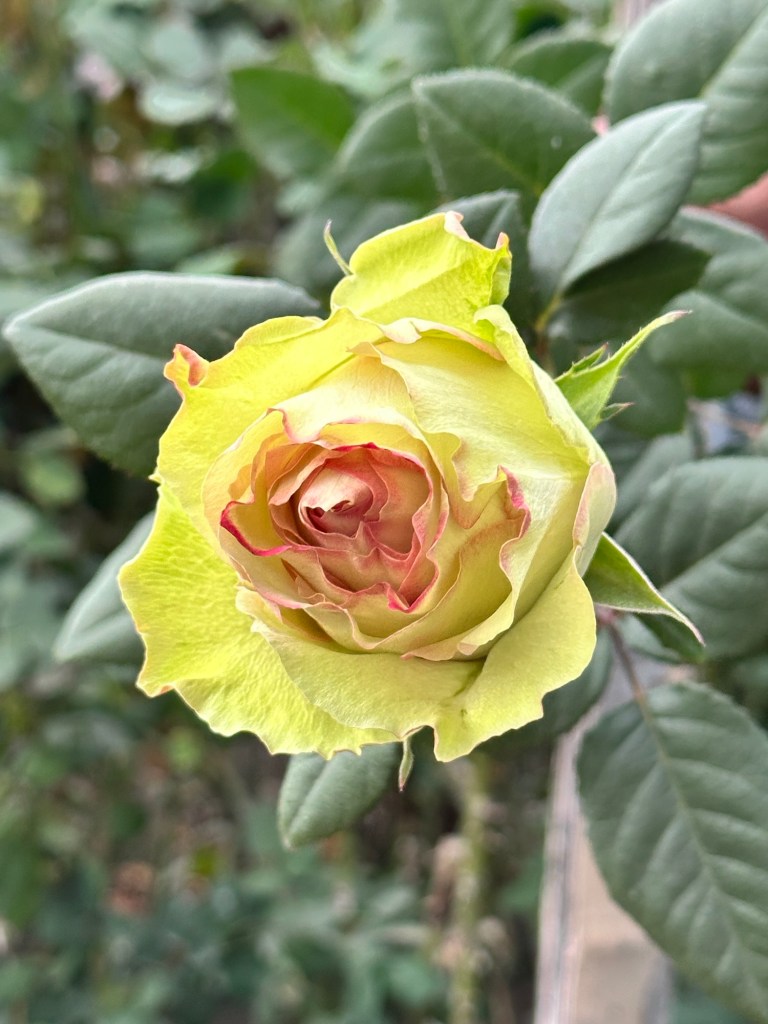
Like the Road Scholar trip Mike and I took to Ecuador in 2012, OAT itineraries include a visit to a rose farm. With 12 hours of direct sunlight most days, Ecuador is able to produce a mind boggling variety of incredible, long stemmed roses.
Rose exportation provided (for the first time) employment to many Ecuadorian women. They are able to bring their children to the worksite, which provides daycare. They are paid the minimum wage, which is $470 per month. The US dollar is Ecuador’s currency, so no “exchange math” is required to figure out that’s not a whole lot of money.
The first rose variety I saw on our tour was named Sandy, so I immediately thought of the wonderful sister I had lost, and although it was a struggle, I managed to hold back the tears.
Sandy
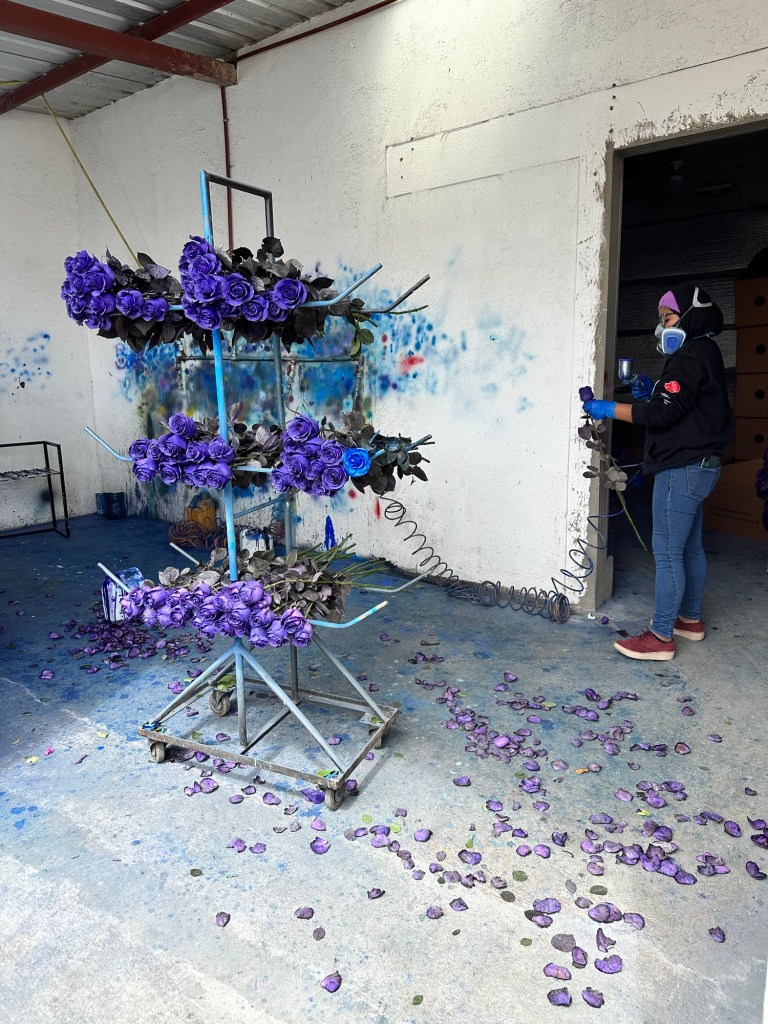
If you’re having a special event and can’t find a hue that compliments your color scheme, no problem. The roses can be sprayed to your specifications. Think I’m kidding? Take a look.
We met indigenous people at our next stops. The first is an artist, who, like Grandma Moses, is self taught. We were all given the opportunity to paint on goatskin, and once again, I produced a masterpiece I think is worthy to hang on the wall in any second grade classroom.
Notice the two condors, representing the heavens, and the snake, representing the underworld. Where’s the representative of the earth—the puma—you ask? Well, sadly the puma didn’t move fast enough, so he’s buried under the lava flow.
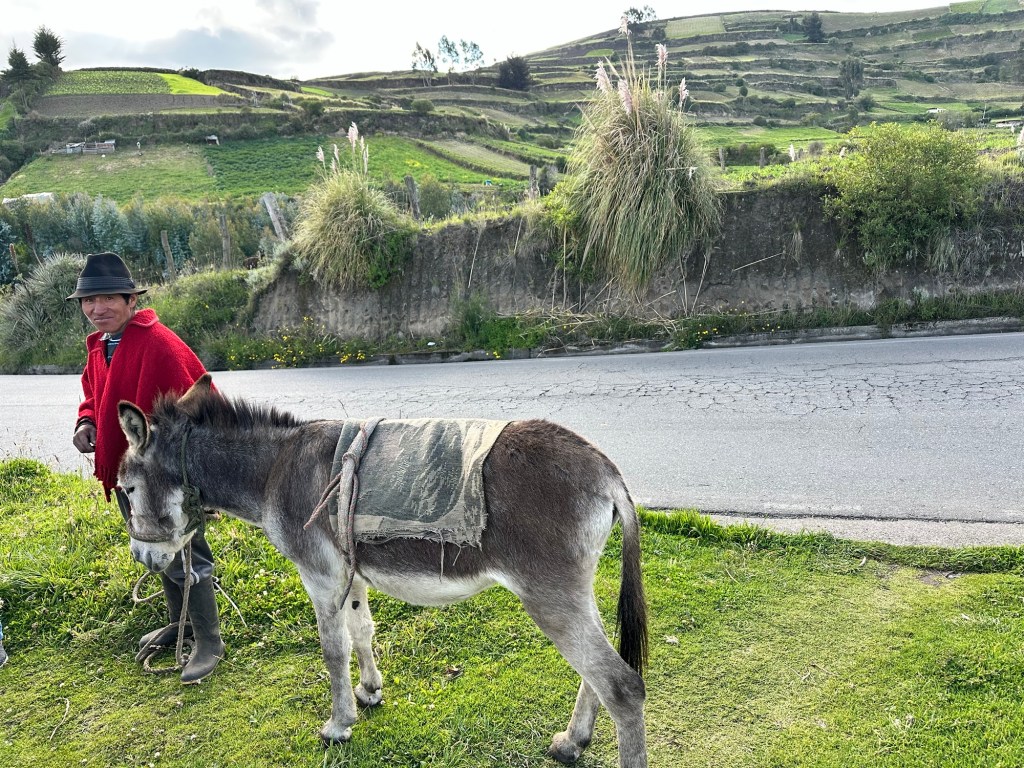
Take another look at the photo of Chimborazo. That’s where this man and his donkey climb twice a week to carve huge blocks of ice, which they carry down the mountain and sell to businesses in nearby Riobamba. When we were there, the volcano was hidden by the clouds.
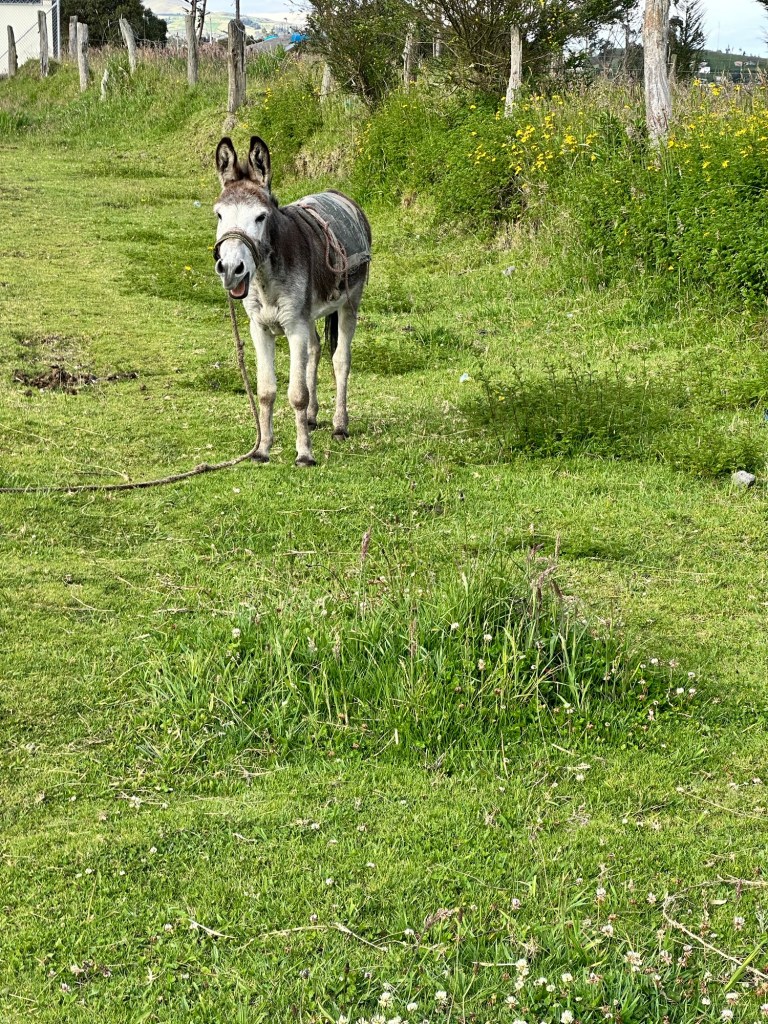
There is no such thing as too many donkey photos, is there? I should have done a video because he was braying loudly.
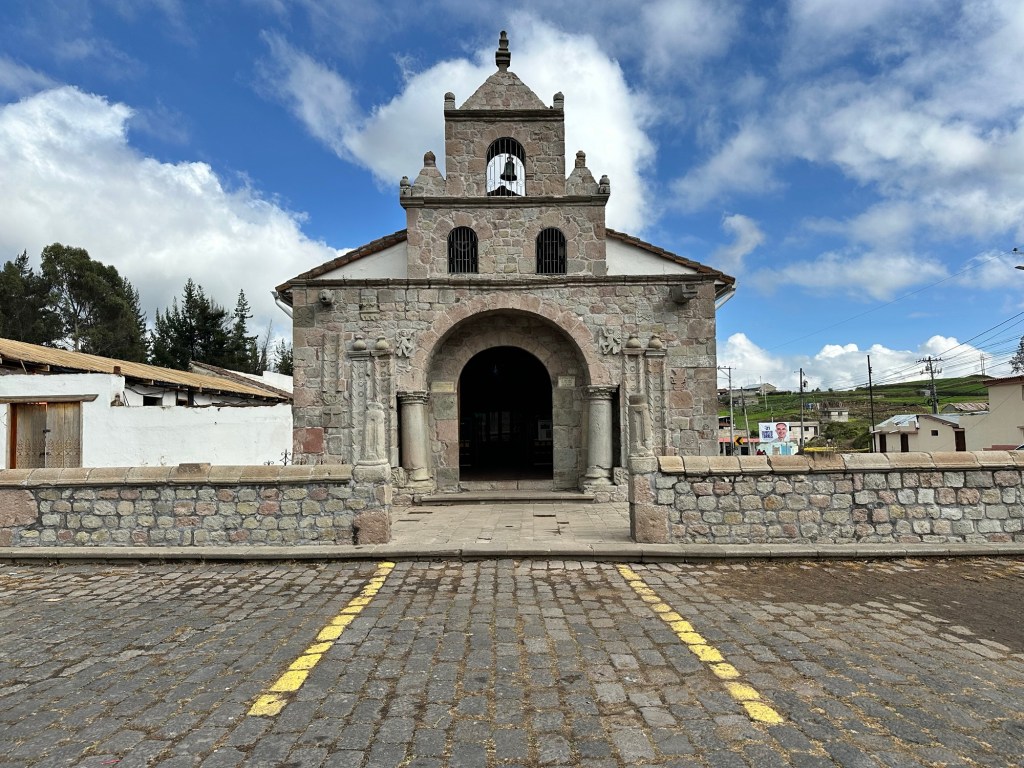
The Spaniards brought Catholicism to the areas they conquered, because that’s what Jesus told them to do in his sermon on the Mount. It went something like this:. “Blessed are they who steal the gold from the people they enslave, for they get to be heroes in their home land.”
Unfortunately, Jesus didn’t warn them about the Evangelicals from the US. The Evangelicals built schools and clinics; they translated the Bible into the native language. They also gave free radios to all indigenous, so they could easily preach and be heard by all. Most of the locals converted, which is probably why this church had to get creative when they found the collection plates contained more dust than dollars.
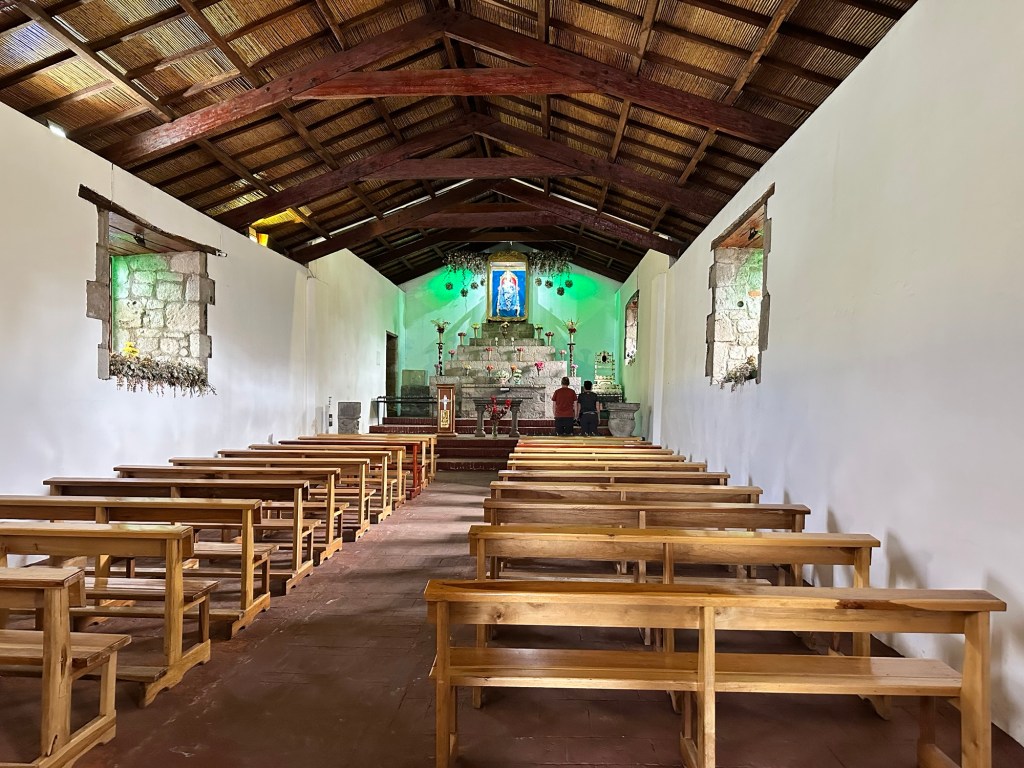
Built in 1534, it was the very first church the Spaniards built in Ecuador. Take a look inside.
Looks pretty standard, right? But wait. You haven’t seen the vestibule yet. This is the creative section.
Those of you with sharp eyes have probably noticed the coffee pot in the lower left hand corner. My lens wasn’t wide enough to capture the tables and chairs directly across.
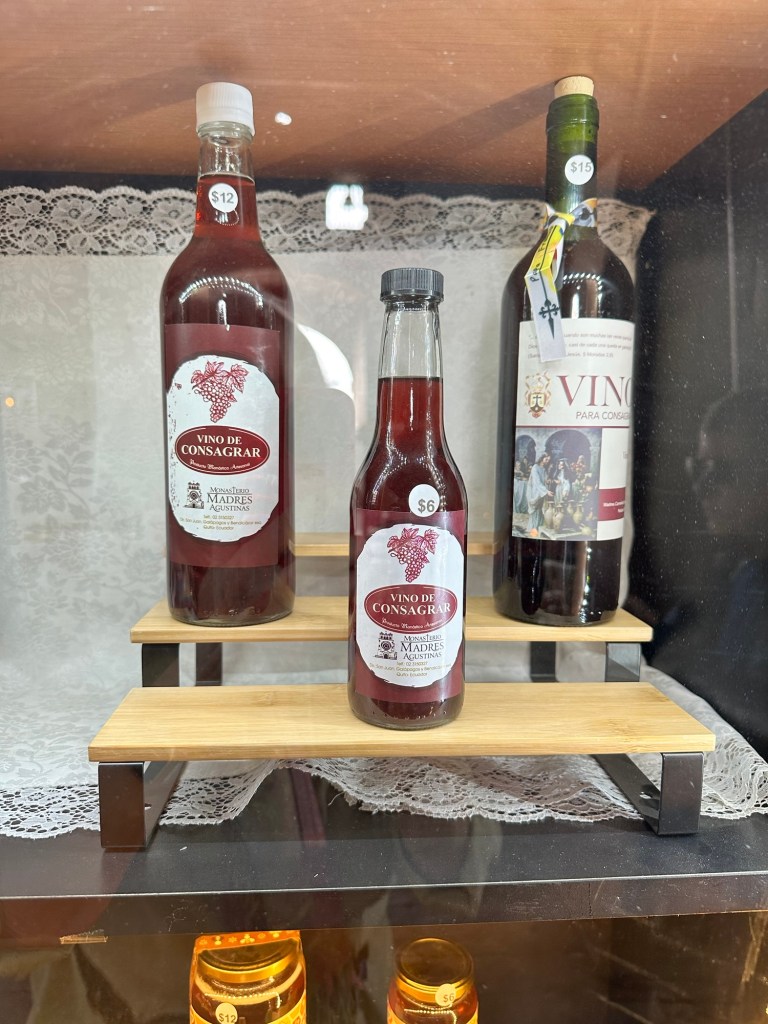
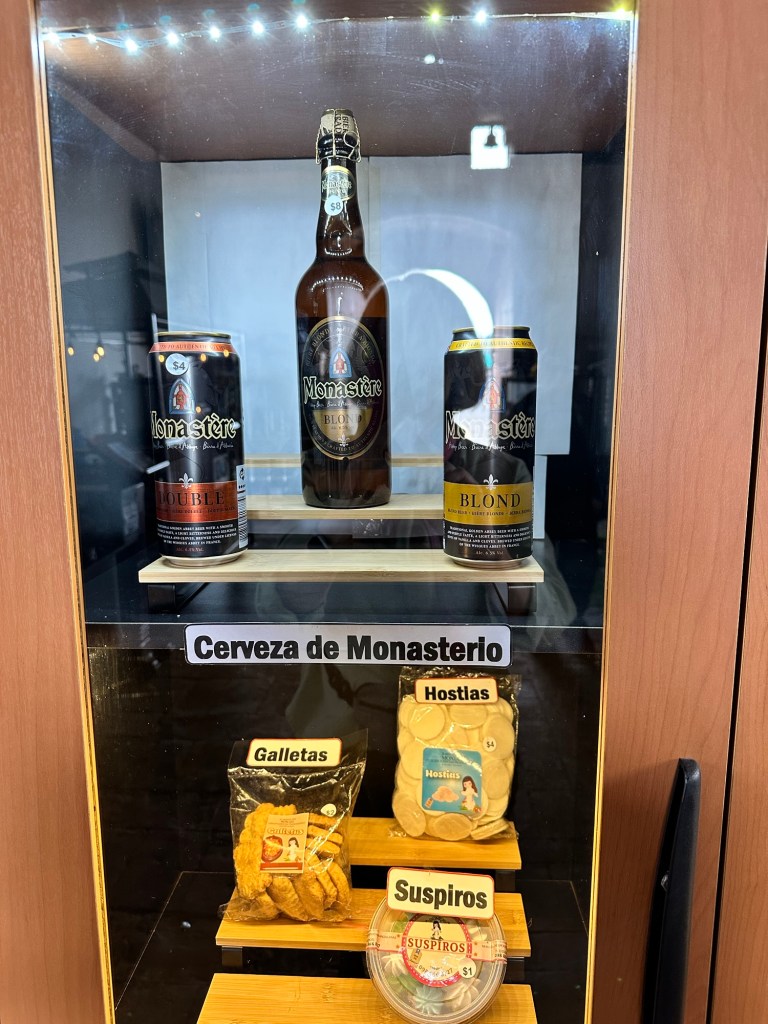
But if you need more than coffee to get you through Mass, not to worry. There are OTHER beverages from which you can choose.
In addition to beer and wine, you can also buy “holy water” . You all know what bottled water without a label looks like, so I didn’t bother to include a photo.
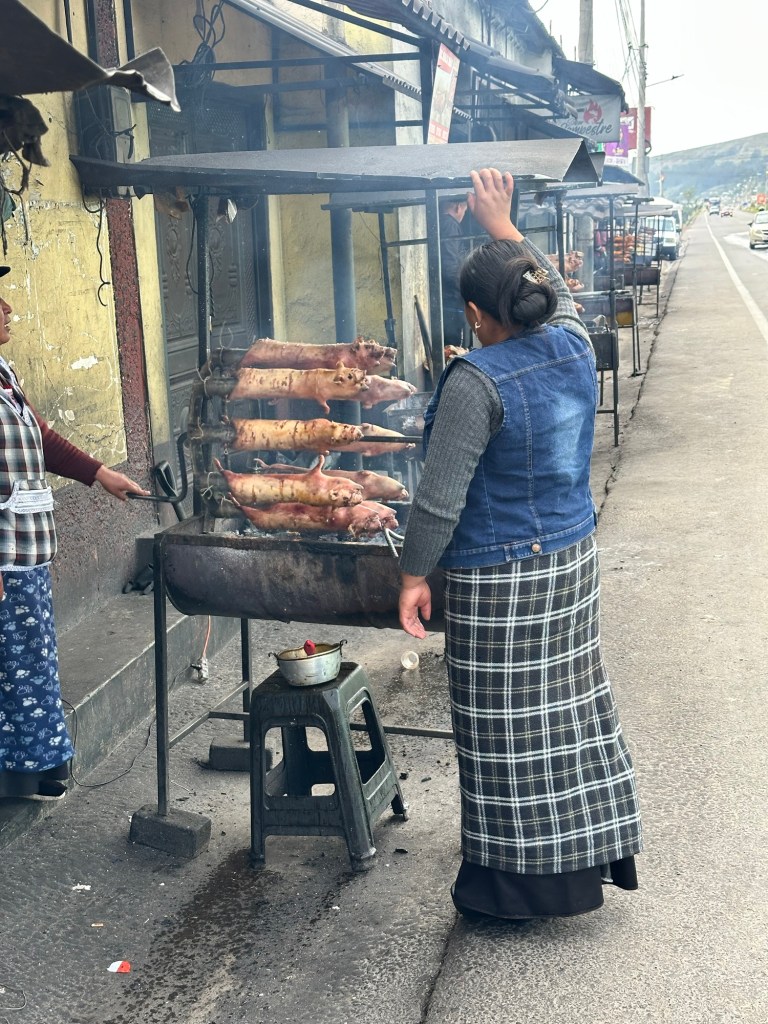
Before the animal lovers get their shorts in a knot over this next photo, let me remind you, Costco uses a similar cooking method, they just rotate chickens instead of guinea pigs. And they remove the heads first.
This road side cuy producer sells about 40 cooked guinea pigs a day! Cuy is considered a delicacy here in Ecuador, and will set you back about $50 if you ordered it in a restaurant.
After Covid, Ecuador’s railroads went out of business, including the famous one that traveled up the devil’s nose.
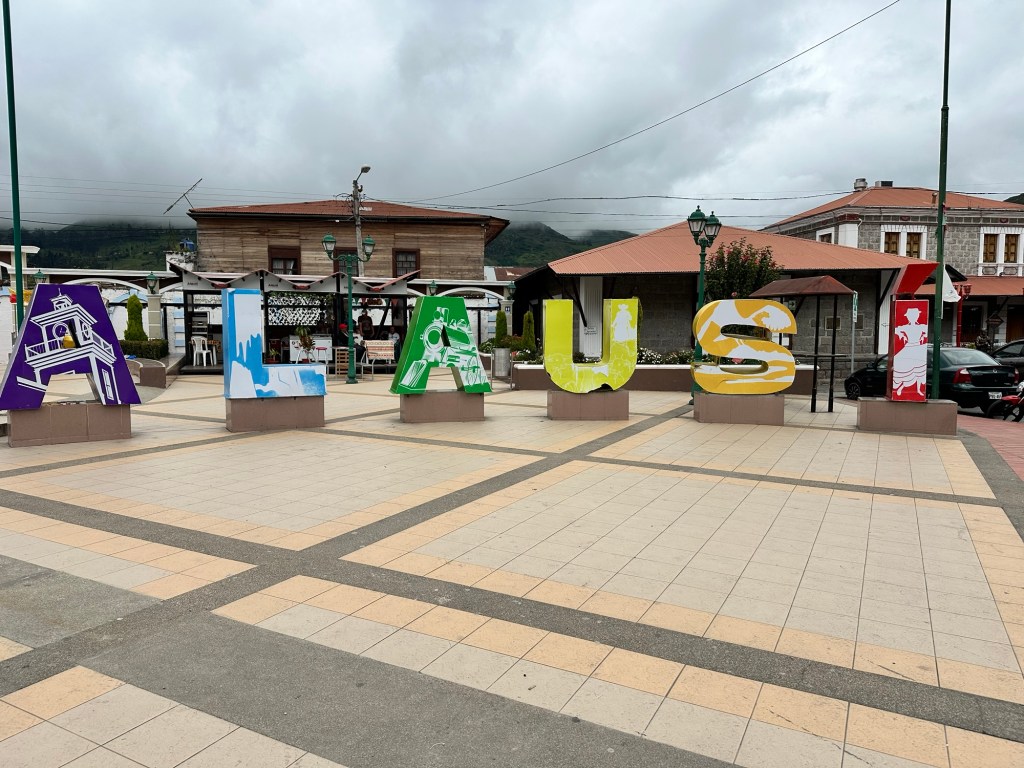
We visited the now closed train station in Alausi, then proceeded up the mountain, into the clouds, for lunch with the indigenous people.
As we climbed higher and higher, the cloud cover was so complete, I was convinced we wouldn’t be able to see El nariz del Diablo (the devil’s nose), but we continued to have phenomenal luck. Not only did we see the Devil’s schnoz, ( it’s the mountain on the right)
we also saw the train tracks leading up to the zig zag route.
We have been rocking and rolling along mountain roads, so once again, I will push PUBLISH and hope for the best.
Mike and I spent our three week honeymoon traveling thru Europe, and then stayed within the USA’s borders until our 25th wedding anniversary in 2001. To celebrate that milestone we took our first cruise, which started with two days in Istanbul.
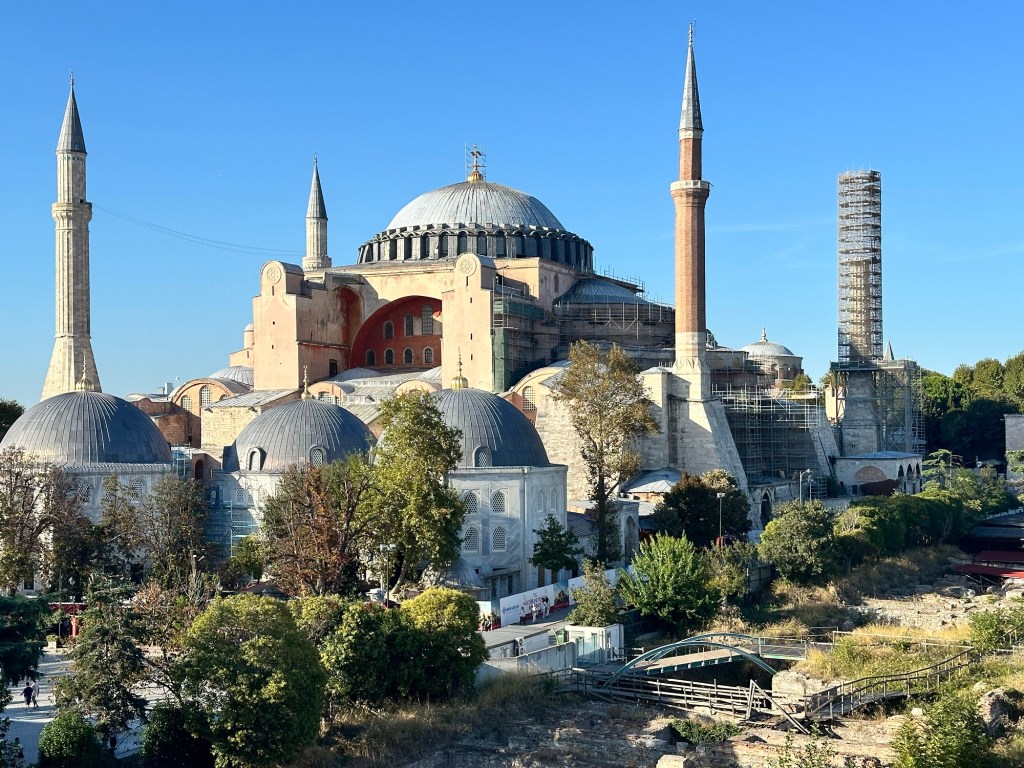
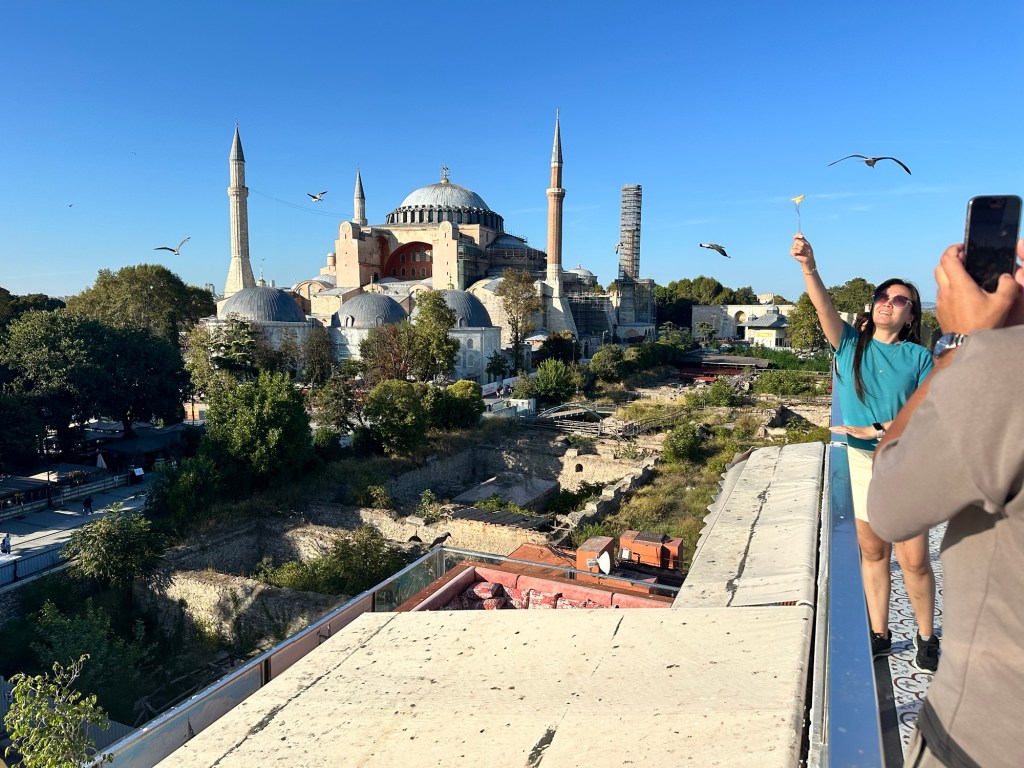
View of Hagia Sophia from the terrace of the Seven Hills restaurant
I had thought that we would return to Turkey to celebrate our 50th, but as the John Lennon song goes “Life is what happens to you when you’re busy making other plans”.
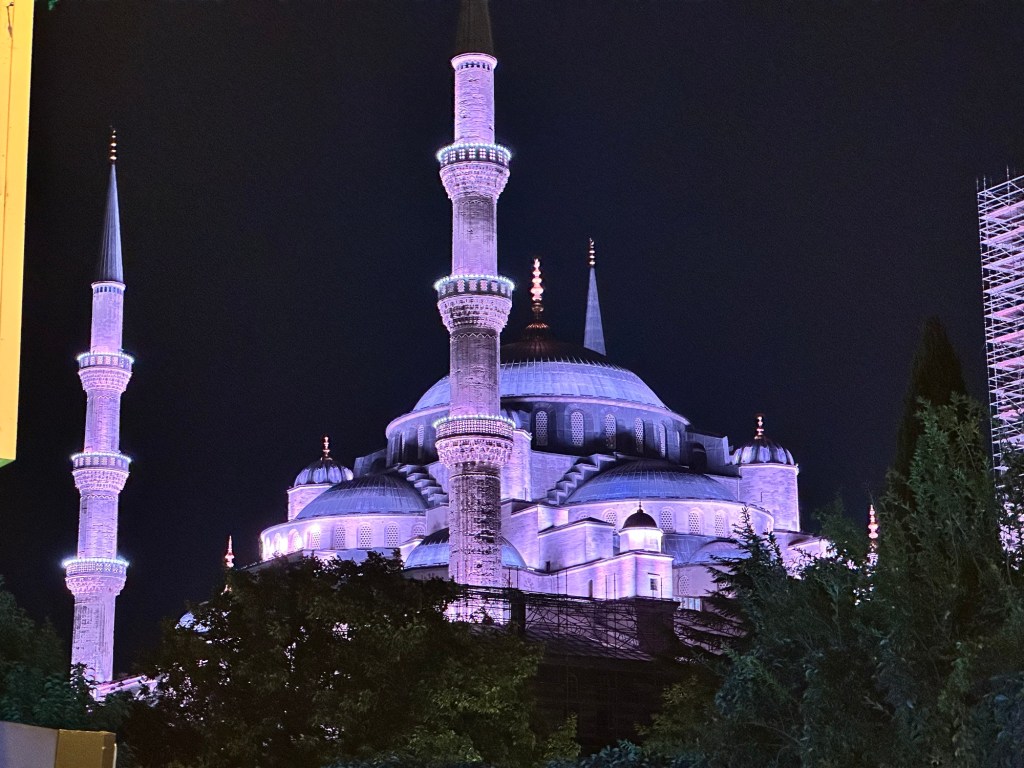
Night view of the blue mosque.
Instead, I’ll be visiting Turkey on Mike’s and my anniversary accompanied by Janis, Shirley, Renee and Renee’s husband Mike, all friends I met on prior OAT trips.
Ahmed III‘s Fountain, built in 1729.
On the way home from my Africa trip, I opted to stop in Istanbul for two nights. I’m not seeing many of the usual tourist sights—I either saw them in 2001 or will see them when I visit in May of 2026. Instead, I’ve primarily been on a recognizance mission, checking out restaurants and the hammam, so I can make “free time” recommendations for my travel companions.
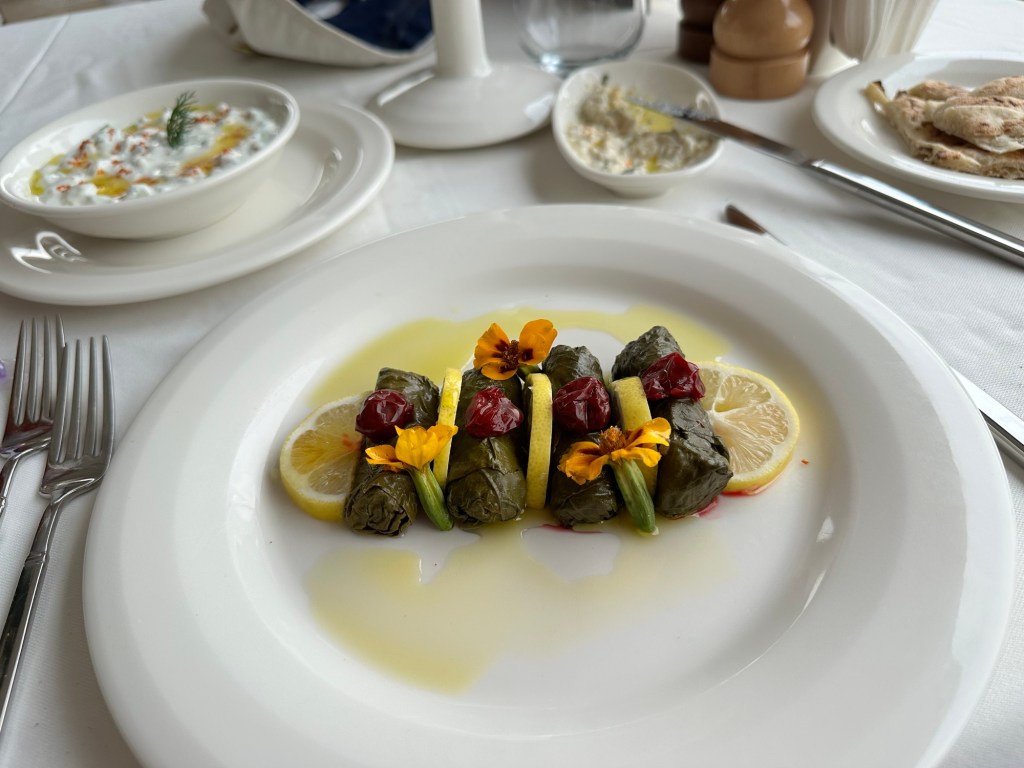
The lunch at Matbah was WONDERFUL! I opted for an appetizer (grape leaves and sour cherries) and the yogurt and cucumber salad. The complimentary baba ganoush, warm pita bread and pomegranate juice were an unexpected treat. I can fully understand how this place got its Michelin rating.
Last night I visited Seven Hills restaurant. The terrace has a spectacular view BUT stupid people were feeding the seagulls. Don’t they understand that what goes in eventually must come OUT? I happen to know that the poop doesn’t necessarily land on the head of the person feeding the gulls; sometimes it’s an innocent bystander that’s the target.
There’s a French fry on the end of the fork she’s holding aloft.
I decided to patronize the Seven Hills restaurant on the floor below the terrace, which was MUCH quieter and had an equally compelling view of the Bosporus. The food? Well, it was expensive and average. I wouldn’t go back the next time I’m in Istanbul.
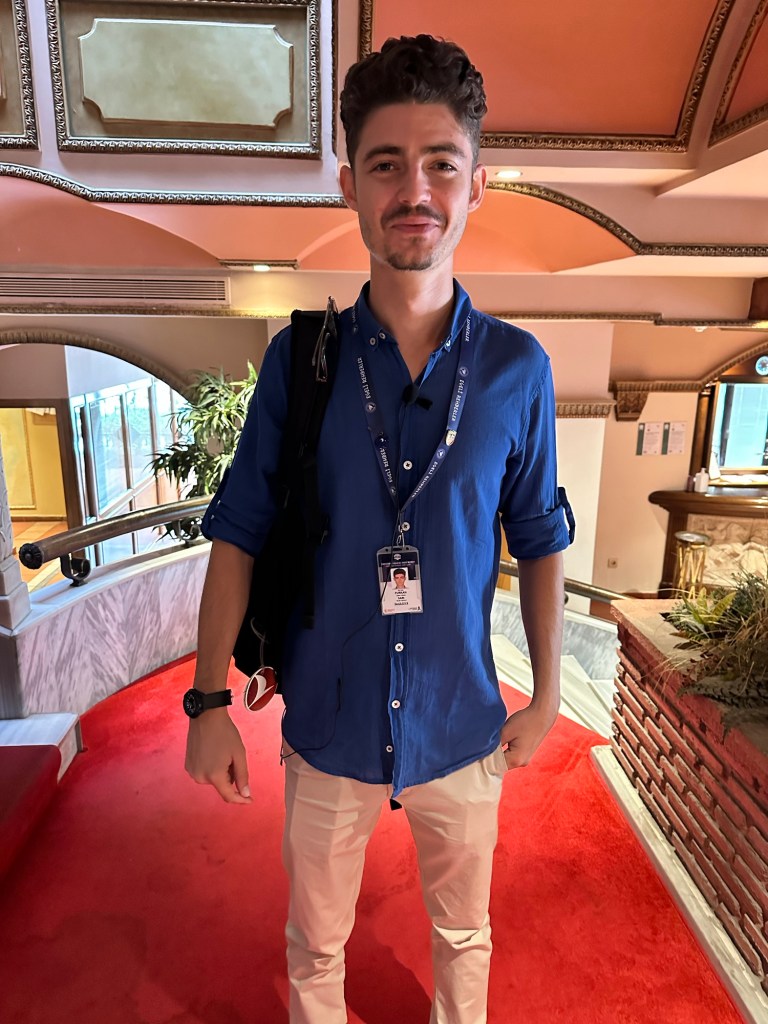
On the morning of my only full day in Istanbul, I encountered an OAT group taking Turkey’s Magical Hideaways (my 2026 trip) in the hotel lobby. I decided to eavesdrop as Sari, the trip leader, held the morning briefing. After he finished, I introduced myself and asked if I could have a copy of the four pages of helpful hints that he’d handed out to the group.
Sari. Maybe he’ll be my trip leader in 2026?
And let me tell you, they came in VERY handy.
For example, I hate to be rude, so I find it impossible to ignore someone who is talking to me. One of the hints said “Do not be polite”, and told us to walk away from offers for help or invitations to shop.
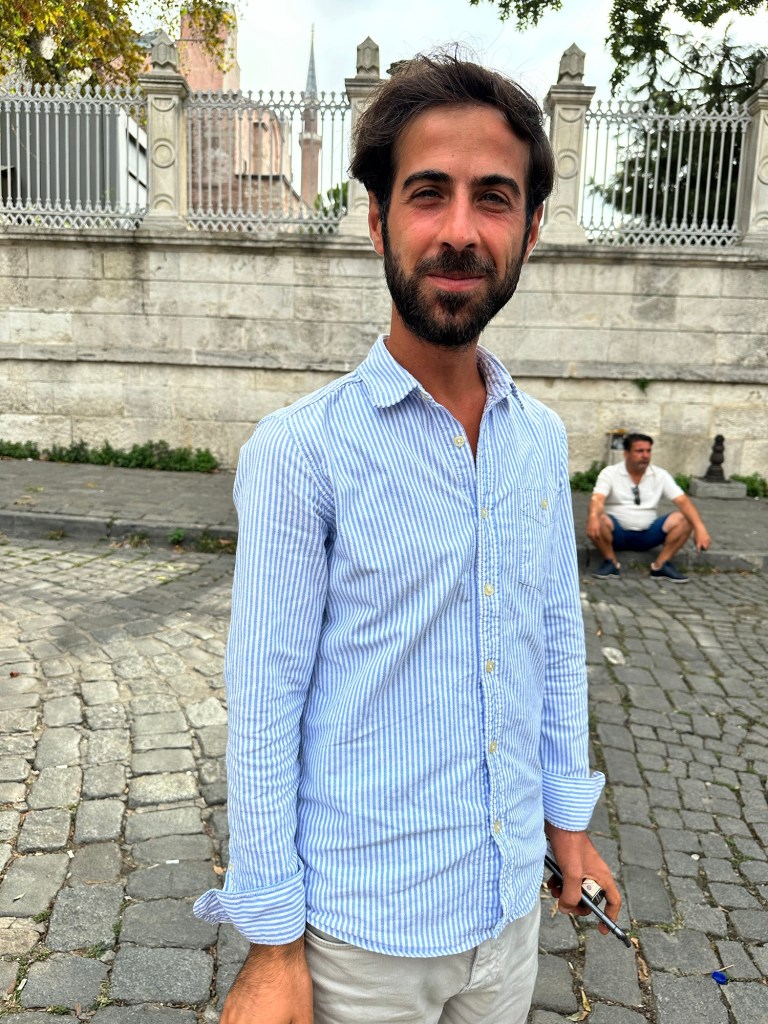
Despite being cautioned, I still engaged in conversations. It seems I can’t help it. This young man tried more than once to get me to visit his shop, calling “Hey, New Jersey” when he encountered me the second time. Yes, I DID tell him where I was from the first time we met. AND I took his picture.
I keep telling the young men (and it’s ALWAYS young guys) “I’m old. I’m not acquiring stuff any more—I’m getting RID of stuff. Go after the young ‘uns. They’re more likely to buy from you”. That seems to work rather well.
So my morning was spent crashing a meeting, hanging out, and wandering aimlessly. For the afternoon, I fruitlessly searched for gifts for the boys in my life. Gifts for girls abound, but boys? I came up empty.
My trip to the Hamam, on the other hand, was a smashing success. Not only was I in a historic building, but I also managed to shed about a pound of dead skin cells and African grit.
I’m usually not a fan of massages, but this experience was incredible. I immediately checked the OAT itinerary, and was glad to see that we are going to have a free afternoon in Istanbul on our 2026 trip. You better believe I’m coming back!
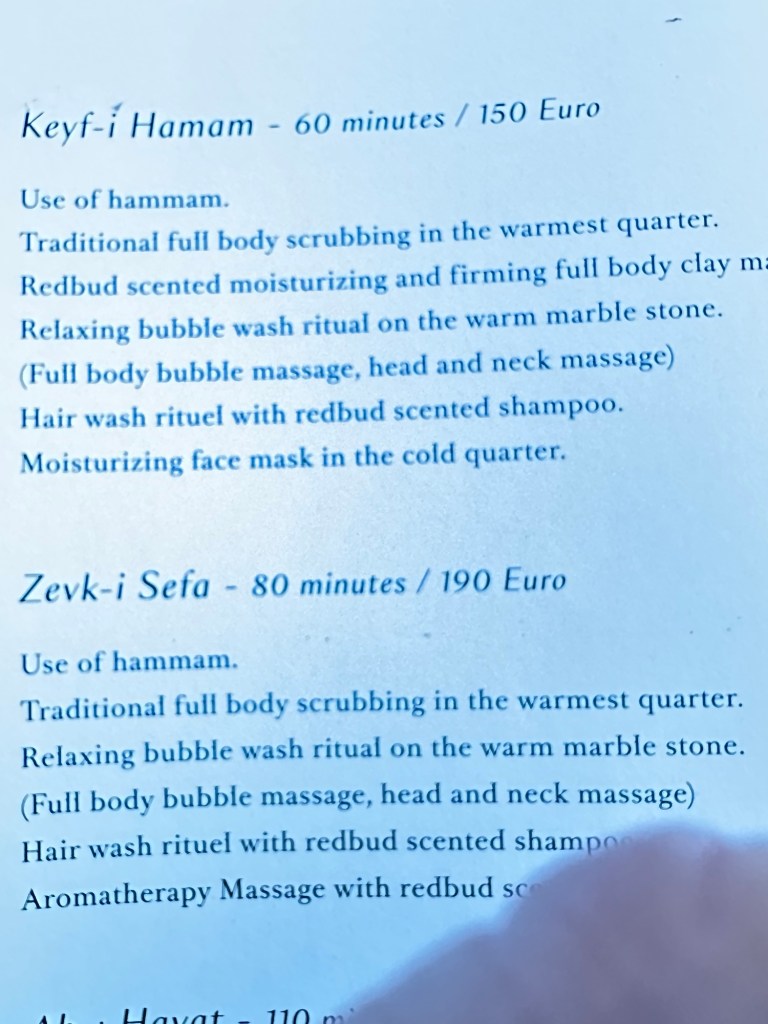
I can’t tell whether the description of the hammam is readable, but just in case it isn’t, here’s the gist.
The “Hagia Sophia bathhouse” as it was called back then, was built in 1556. Over the centuries, it was repurposed, then restored in 1957. So why didn’t I delete the photos of the description after I wrote the summary? Because I found the description absolutely charming—incomprehensible, but charming.
Fortunately, the photo of the available services came through clearly. I bought the one hour of services and it was worth every Euro!
I wasn’t sure whether the “warmest quarter” referred to my body or the section of the building. It was the latter.
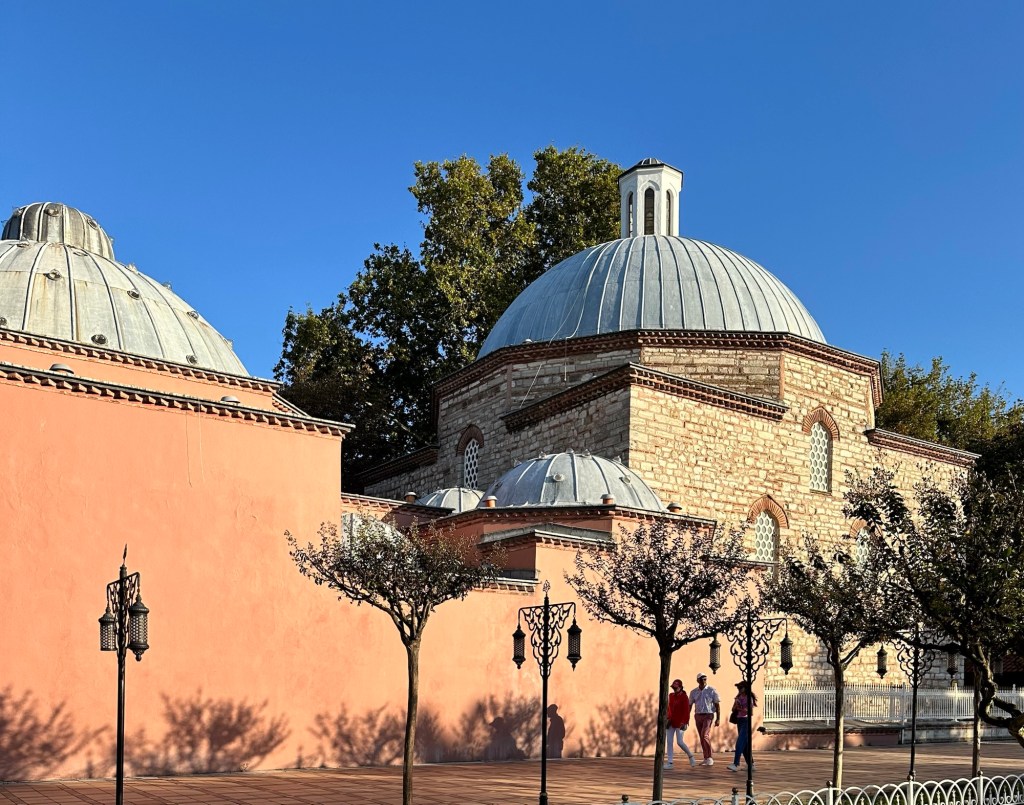
The photo atop this blog post shows what’s under the huge dome on the right, in the photo below. The little domes are private areas where you get covered with mud, then rinsed off. After that, you mosey on over to the dome on the left to get enveloped in bubbles (it was fantastic) and massaged.
You start and end up in the room under the big dome on the right
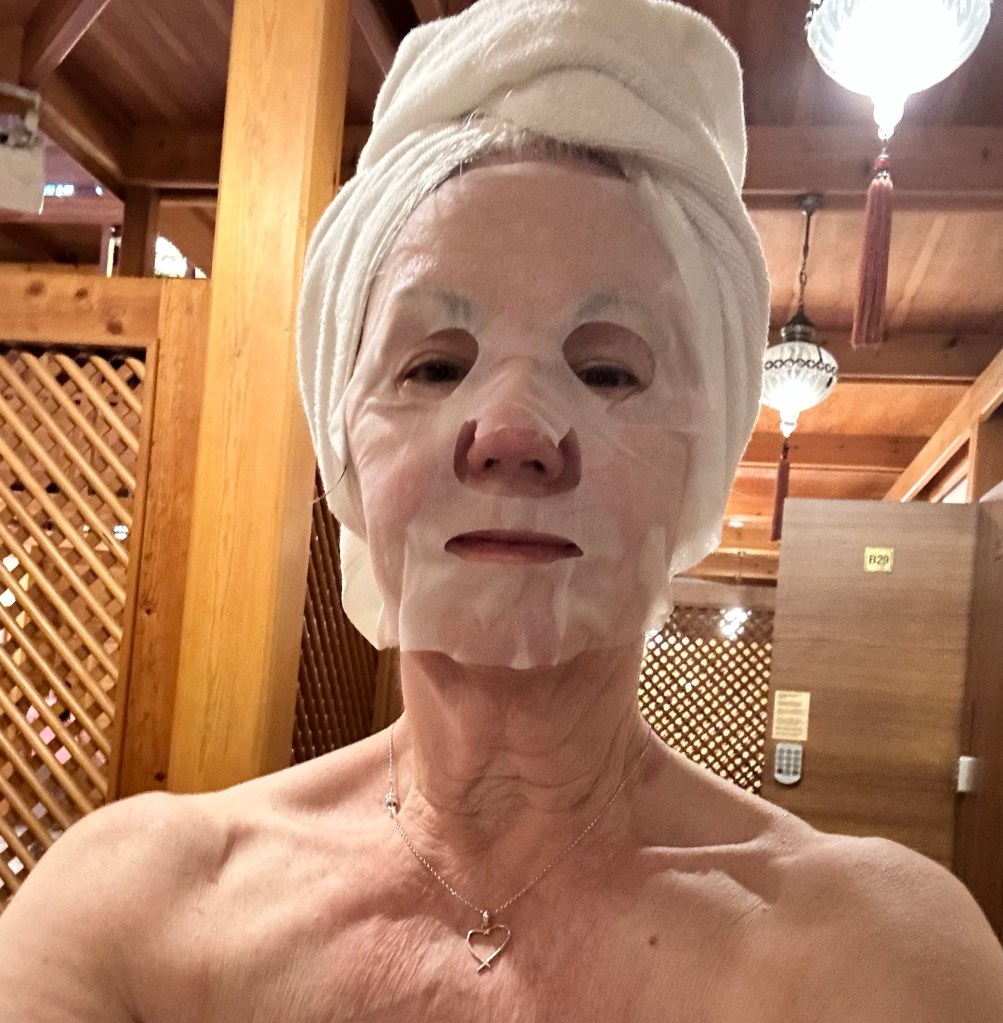
That’s where you sip your tea, while wearing your Hannibal Lecter mask.
The ONLY photo taken of me in the hammam.
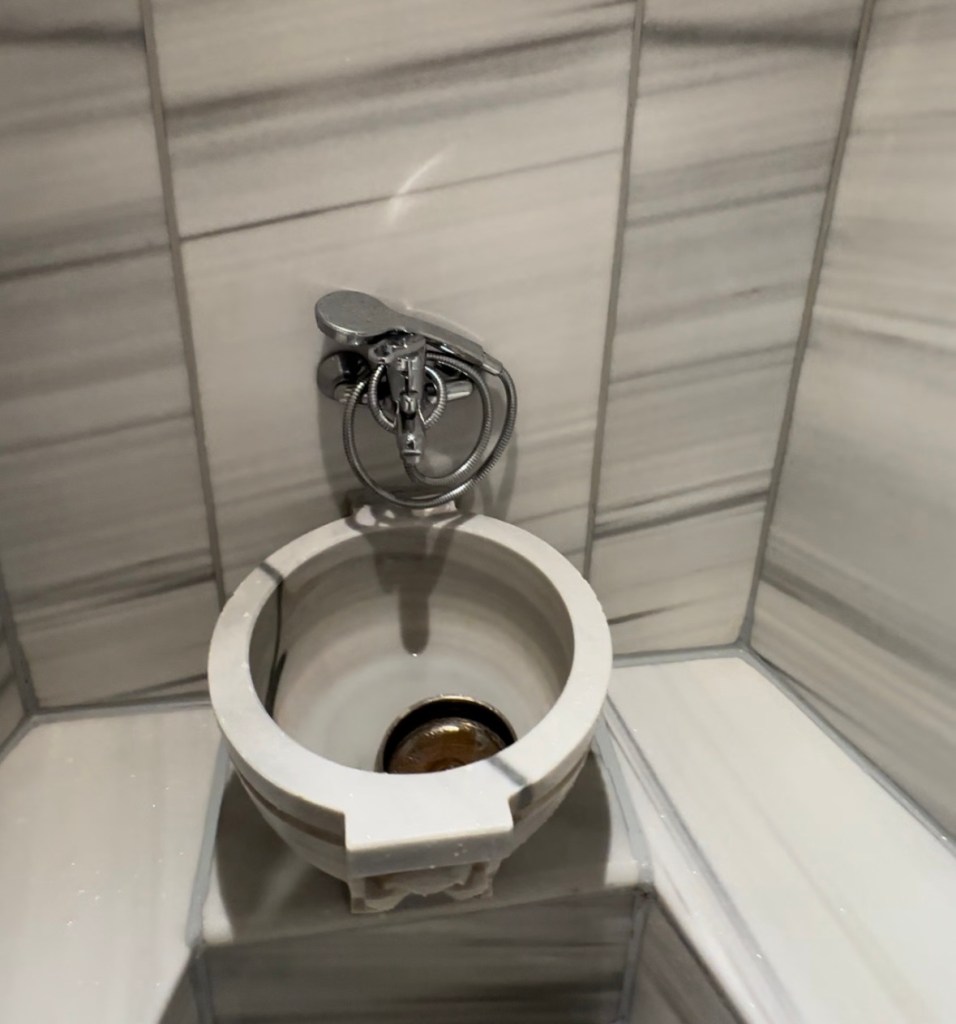
I’ll admit to being so puzzled by my hotel’s bathroom configuration that I actually did a video of it for the folks back home.
The mystery of the basin and round metal bowl was solved during my visit to the hammam, because the private spaces were similarly constructed. One exception— the ones in the hammam didn’t have a showerhead. That was probably a concession to the western guests.
But back to the basin, bowl and bench.
Here’s what you do. You fill the basin with water heated to your desired temperature. You sit on the bench and use the small metal bowl to dump water all over your body. Now, why didn’t I figure that out?
For my last morning in Istanbul, I visited the Topkapi Palace, which was within walking distance of our hotel. It is on 2026 itinerary, but sometimes it’s nice to take your time, wandering unescorted. This was definitely not one of those times. I kept getting lost. (I know, hard to believe…) I was especially sorry that I wasn’t with a guide who would steer me away from the boring and depressing areas and focus solely on what was worth seeing.
On a positive note, I left the “palace“ convinced that I am currently living better — and more comfortably —than yesteryear’s Ottoman Empire sultan. We ALL are.
Check out the throne room, theoretically the best digs in the palace. I’ll take my living room over this one, ANY day!
I DID like the library, but I’ll bet my iPhone has a better selection of reading materials.
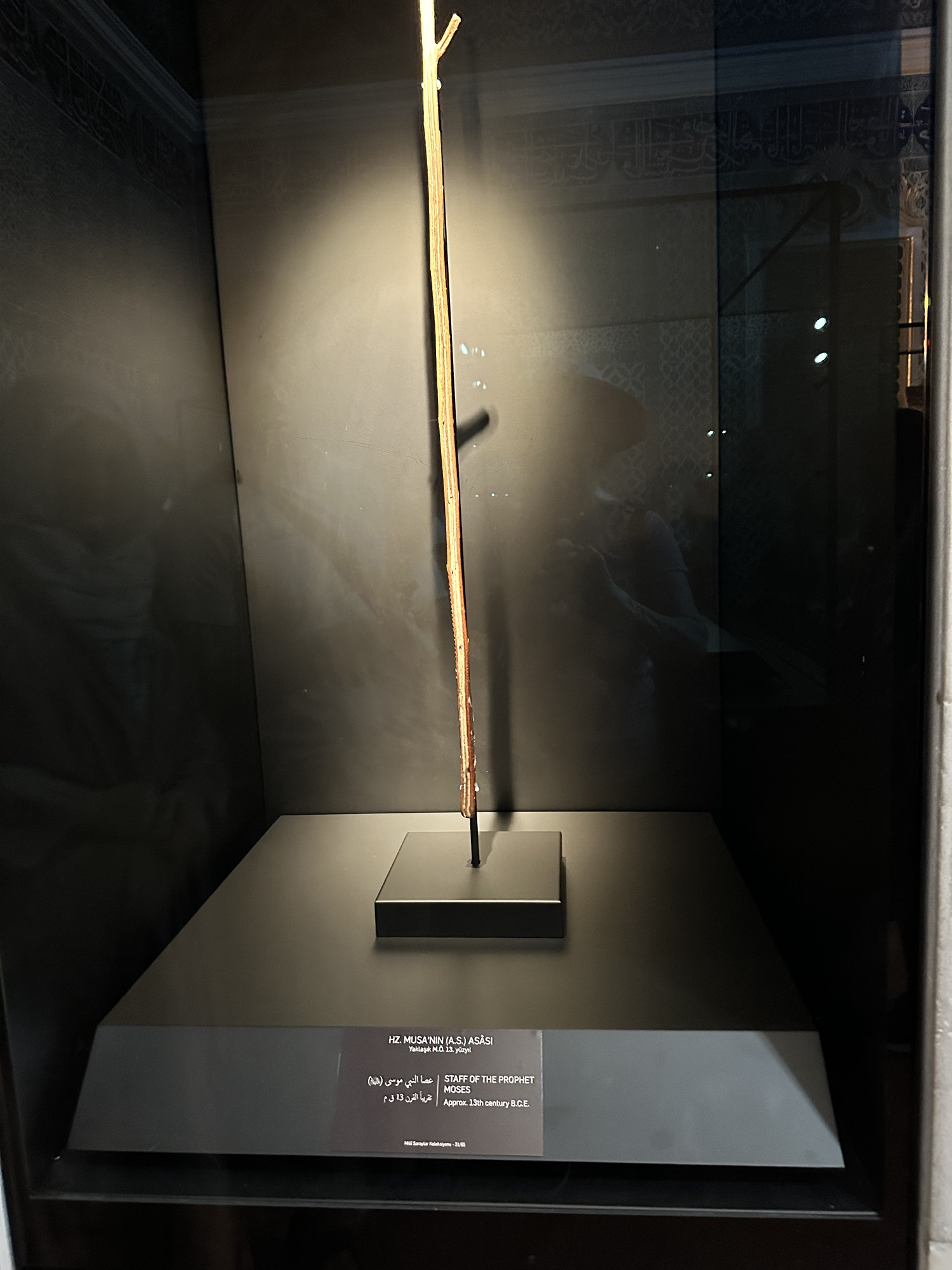
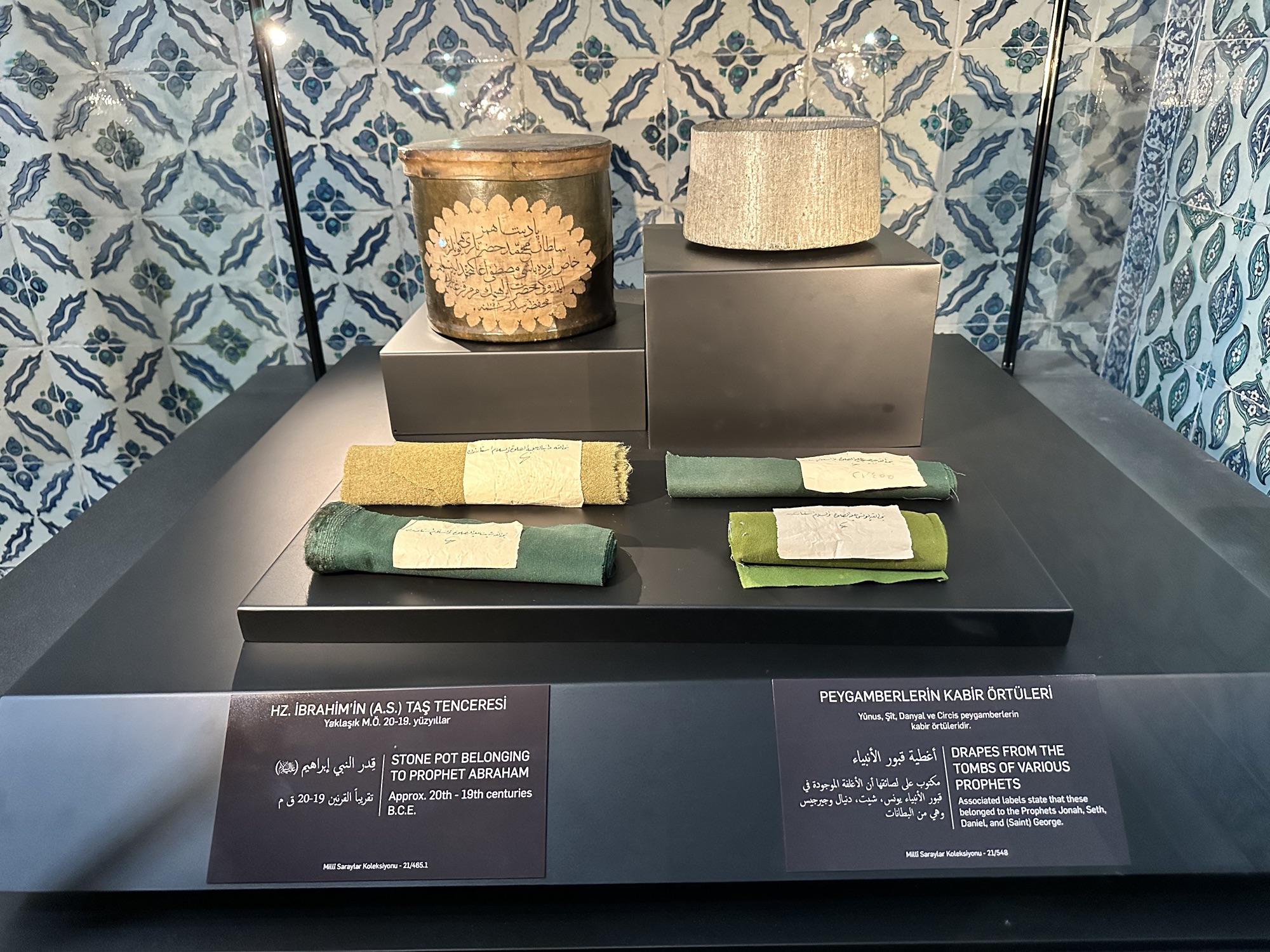
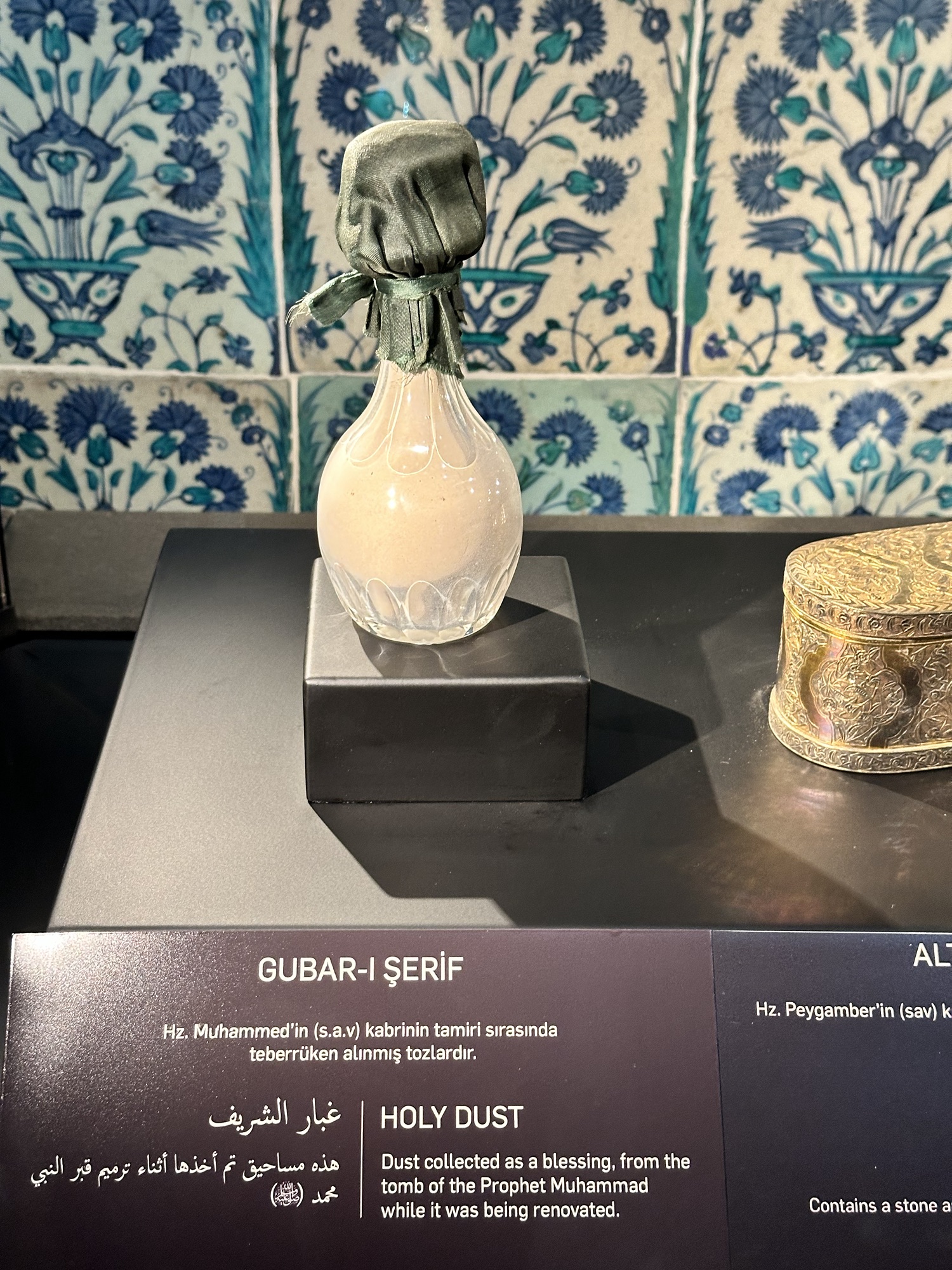
What I don’t have is a room housing relics, at least not yet. The Chamber of the Sacred Relics is purported to contain the staff that Moses used to part the Red Sea, a pot that once belonged to Abraham (probably it was Sara’s, but back then, I’ll bet women weren’t allowed to own anything), bones from St John the Baptist’s skull and forearm, and dust from Mohammed’s tomb.
Moses’ rodAbe’s potJohn the Baptist’s bonesMohammed’s tomb dust
As it got closer to noon, the palace became hot and crowded. It took a while, but eventually I found my way out of the maze, checked out of the hotel, and made my way to the airport, which was a little over an hour’s taxi ride away.
This will be my last blog post for a while. No more international trips till 2025.
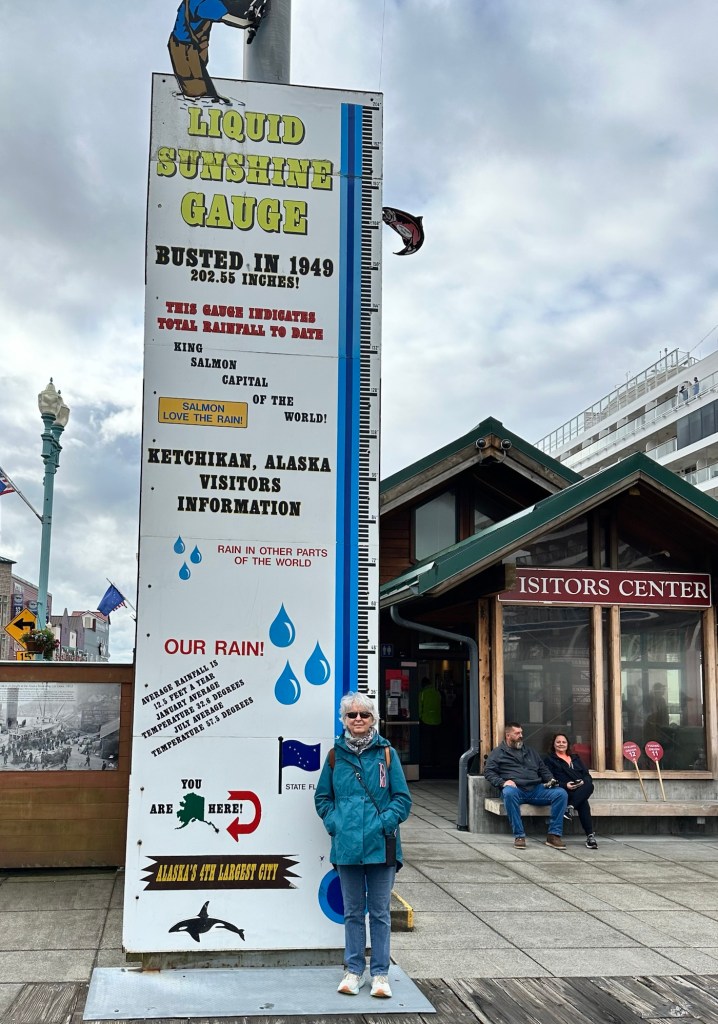
Although I took this photo in Ketchikan, it really is applicable to ALL of the cities along Alaska’s south coast: Juneau, Sitka and Ketchikan. If it’s simply cloudy, and not raining heavily, well, that qualifies as a great day.
In Sitka the probability of rain was quite high so we were glad we had opted for a whale watch. Marine life doesn’t care whether it’s raining or not, so we figured we’d get some good viewing.
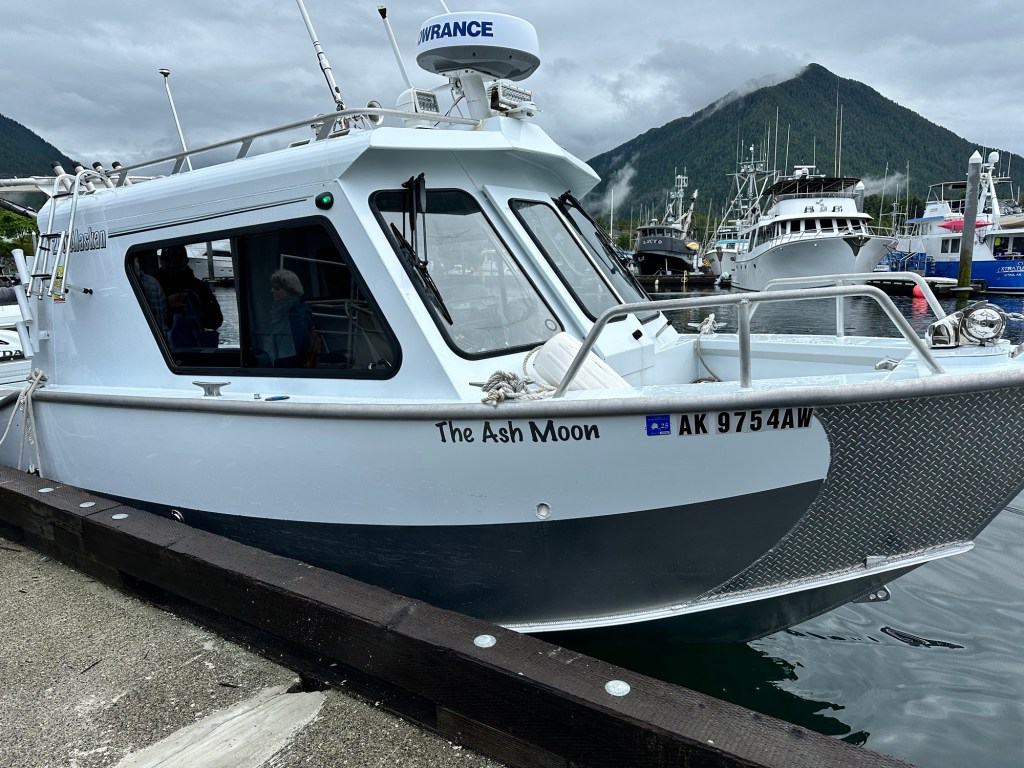
When I booked, I had NO idea that we were going on a VERY small boat. I THOUGHT it would be like the one in Seward. Nope.
Our vessel could only hold 6 passengers. Okay, maybe that meant we could get closer to the wildlife. Nope again.
I’ll be honest, the marine life viewing was disappointing. These next photos are about as good as it got.
We DID see some sea lions hanging out on a buoy, but the viewing was MUCH better in Seward.
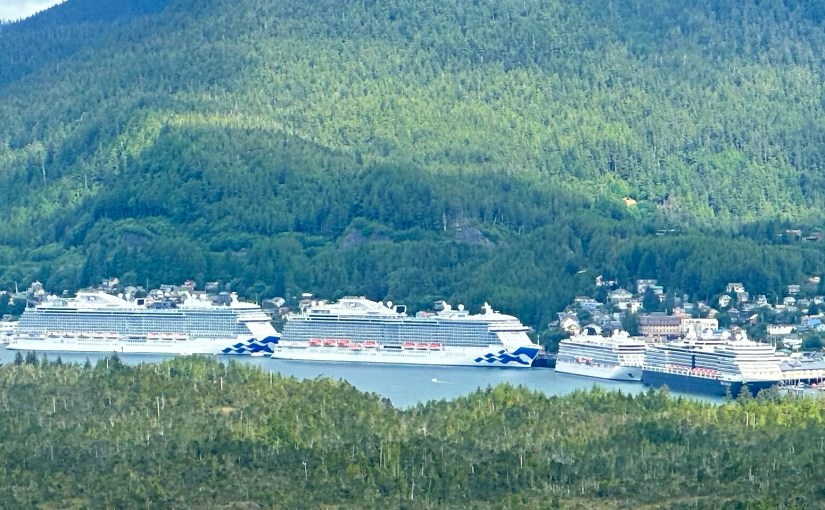
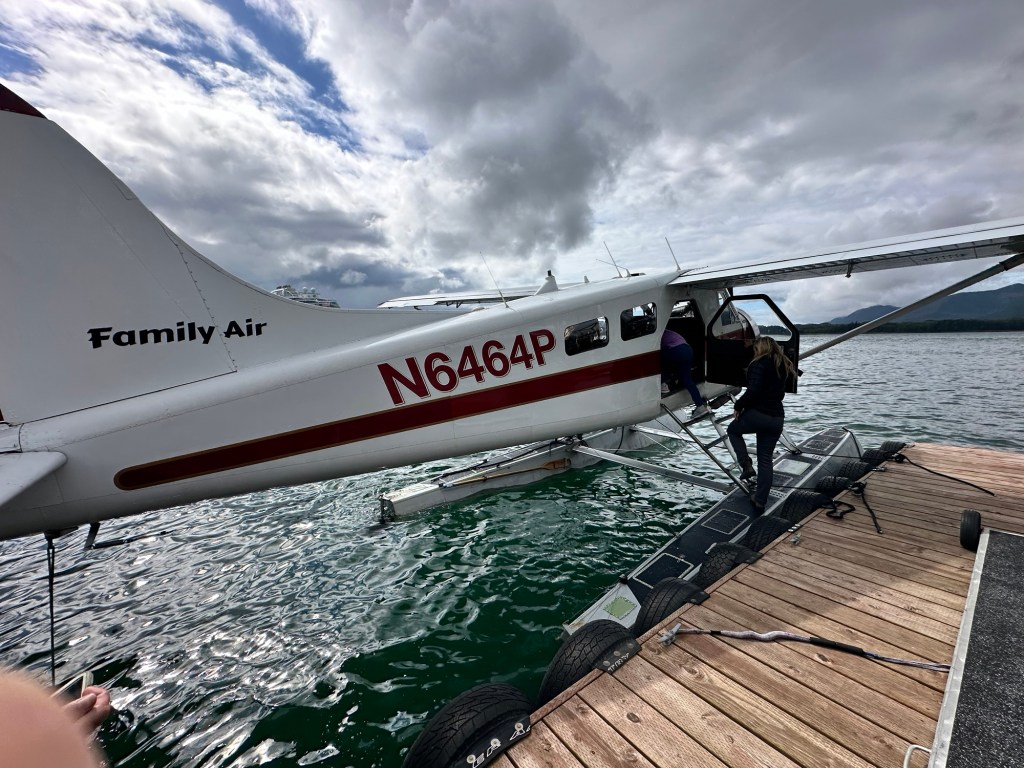
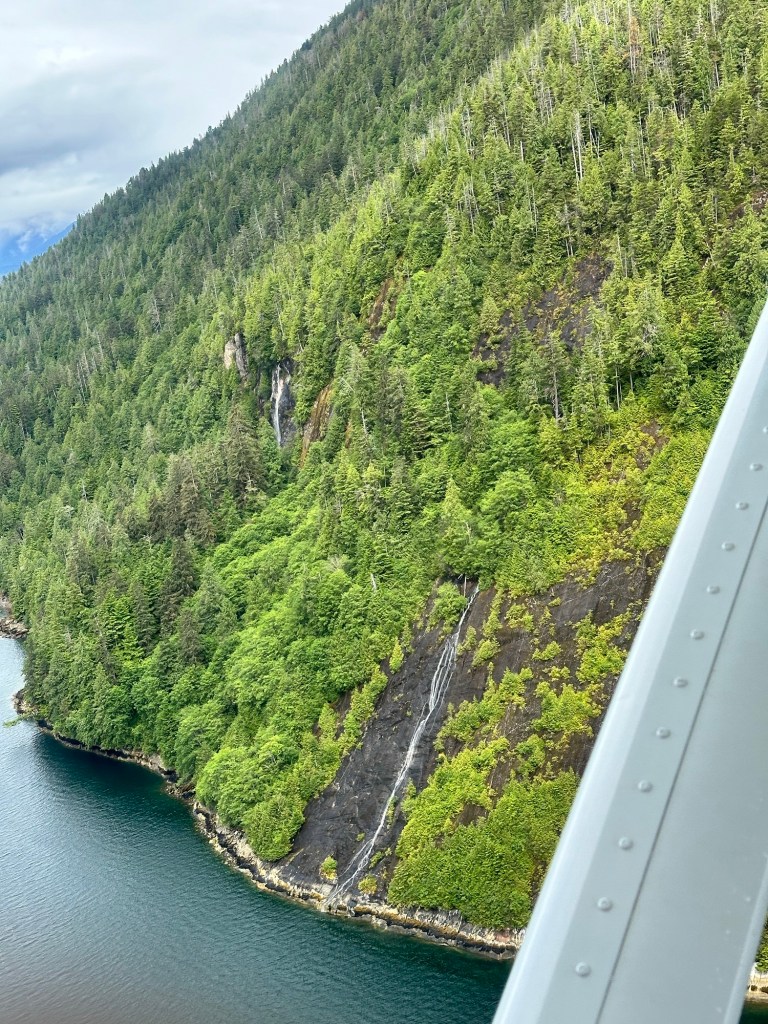
For our last excursion, we chose the sea plane to Misty Fjords National Monument. Well you know what they say about the best laid plans…like women, they sometimes go astray. And THESE women, PLUS their plans did exactly that.
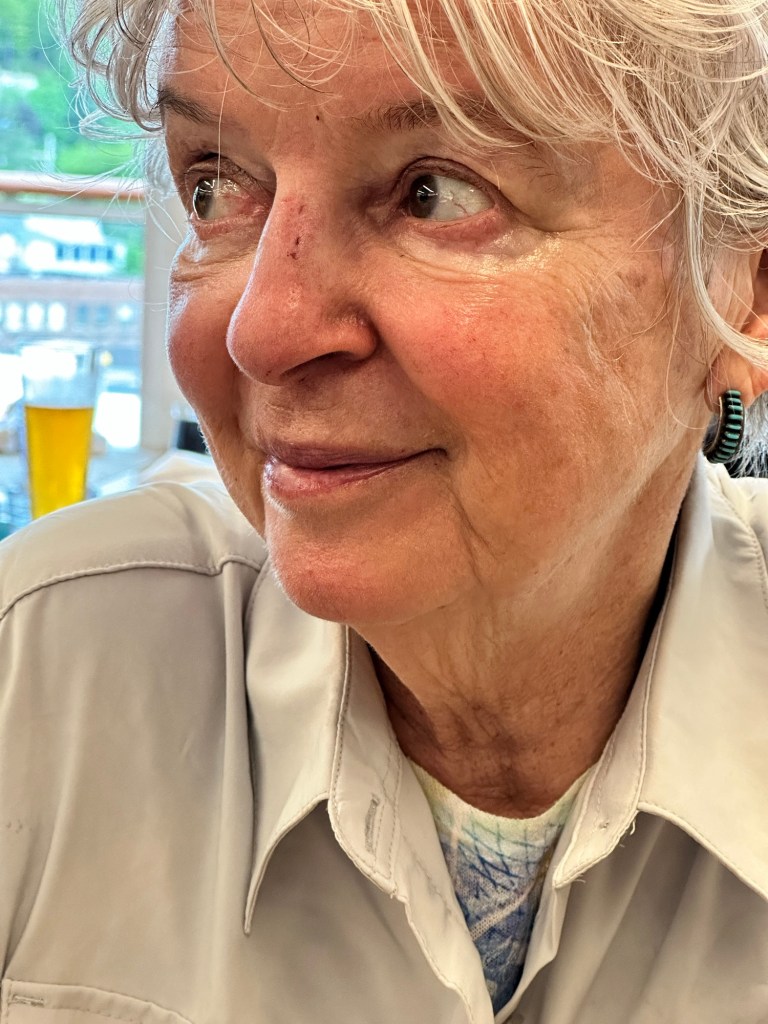
Shortly after I took the photo of her by the “liquid sunshine” sign, Jean tripped, managed to land on her nose, and proceeded to bleed profusely. Fortunately, it happened right next to the ship, so Viking’s excellent staff immediately sprang into action. She was whisked down to the medical center where they quickly staunched the bleeding. Their rapid treatment probably prevented Jean from returning home with a huge black eye.
That meant that I would be “float planing” solo. At least THIS time, I knew what I was getting into. Sorta.
I knew the plane was going to hold no more than 6 passengers, and that it would briefly land somewhere. I just didn’t realize that “somewhere” was on the water, and that we wouldn’t be getting out on land at all!
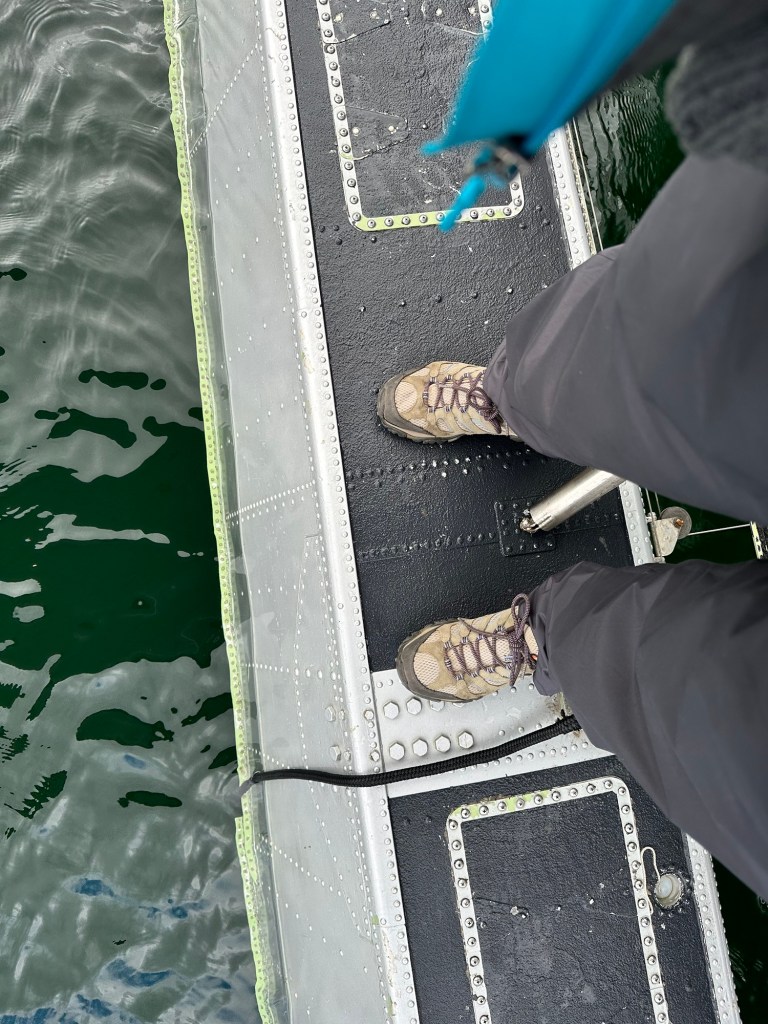
The waiver I signed before boarding specifically absolved the company of any liability should I fall in. I had thought that applied to getting into and out of the plane at the dock! I didn’t realize there would be OTHER opportunities to fall into the water…without a life jacket…with no life preserver or a potential rescuer any where in sight.
As you can see, there wasn’t much of a margin for error!
But hey, our young female pilot walked what looked like a tightrope to get from one side of the plane to the other. The line is so thin, it’s barely visible in the photo, thus, the red arrows. Those thin boards in yellow and black were the ladder into the plane.
Spoiler alert, I managed to complete the flight without mishap, but you probably already figured that out…otherwise I wouldn’t be writing this blog, right?
The scenery was beautiful, but I have to be honest. It wasn’t as much fun without my buddy by my side.
I’m pleased to say that Jean’s spending the day resting paid off, so we were able to party hearty for the celebratory “next to last night” on the ship.
The last day is spent sailing thru the inside passage to Vancouver, then back to reality.
I’m so glad I was able to make so many wonderful memories with my bestie.
Sometimes I’m delighted when the weather report is wrong, and that was clearly the case when we visited Valdez. The probability of rain was pegged at an unambiguous 100%. Luckily, the only thing that was 100% was the inaccuracy of that report!
Jean and I decided to forgo the recommended visits to the museums and convention center, opting instead to walk to a viewing platform in what turned out to be a rather futile attempt to see some wildlife.
Because both of us are “map challenged”, we checked with a local guide to make sure we were heading in the right direction. His tone of voice when he told us the viewing platform was a MILE AND A HALF away clearly expressed his doubt in our ability to go the distance. (What the hell? TWICE in two days?! Are we looking particularly decrepit??)
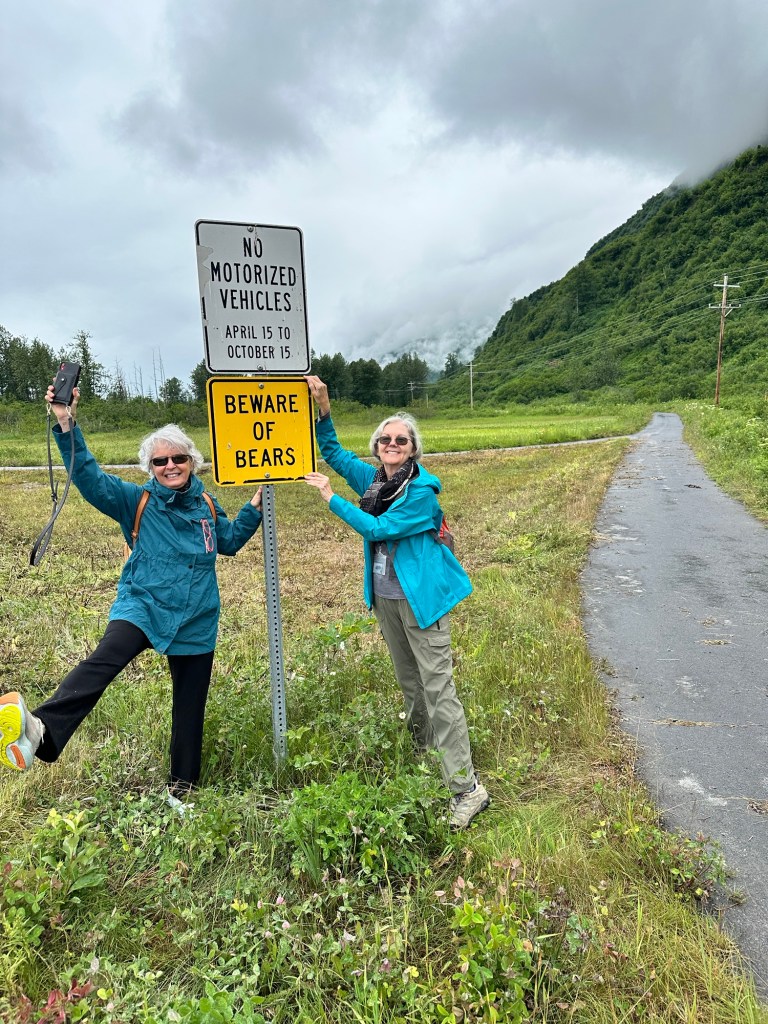
We learned from the lovely ladies at the cute little visitors’ center that we were a few weeks ahead of the bears, but we thoroughly enjoyed the 3 mile walk (round trip) under the cloudy, but rain free skies.
Visitors’ center
Sadly, when most people hear of Valdez, the Exxon Oil Spill immediately comes to mind, so let me give you an alternative image for this lovely area.
The balance of the day was spent enjoying Viking’s incredible spa. All guests can take advantage of the sauna, steam room, snow cave, whirlpool, cold plunge pool and hot tub at no additional charge. I decided to “detoxify” the way the Scandinavians do, so dutifully sat in the sauna, spent about 20 seconds in the snow cave, followed by the steam room, before experiencing the whirlpool. I’m not sure I was “ detoxified” or even what that is supposed to feel like, but I DID very much enjoy the experience.
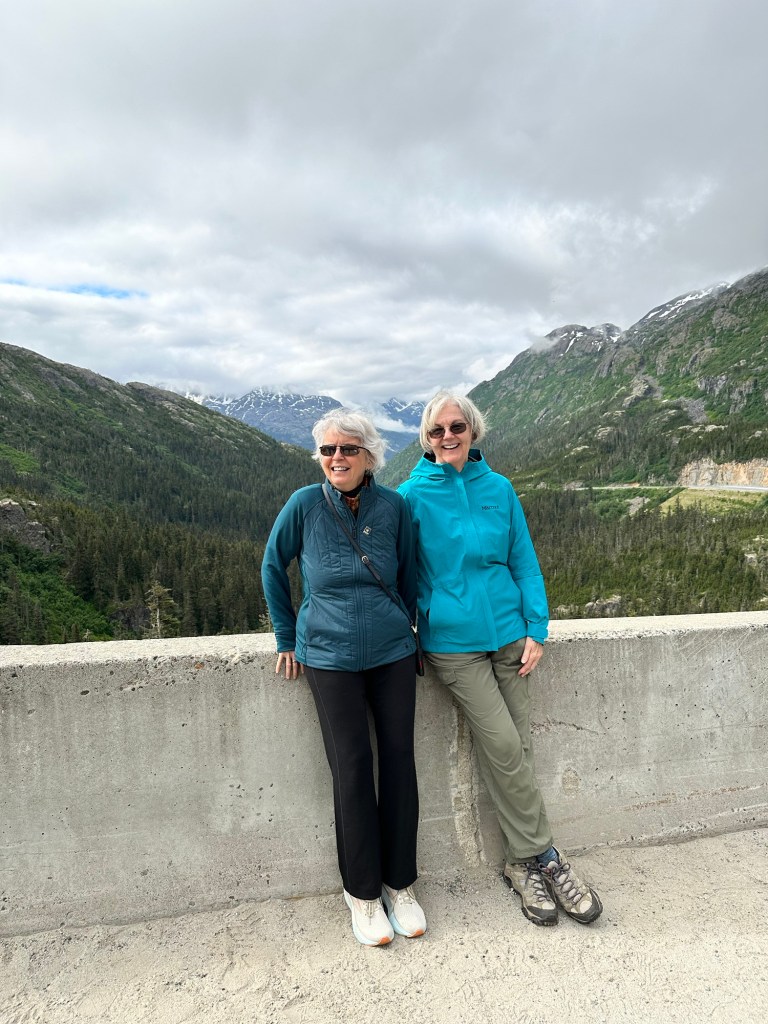
On Sunday, we spent the morning on one of Viking’s included Skagway tours—a very beautiful bus ride to White Pass Summit.
Although Valdez had a bear deficit, we spotted one on our Skagway excursion . He was outside the range of my iPhone and by the time I got my camera zoomed out, all I got was a butt shot. That’s okay. The image of him sauntering through the rocks was permanently imprinted on our brains. It was truly thrilling.
I did much better photographing Skagway’s more stationary subjects. It’s hard to believe that beautiful flowers bloom between rocks in this cold climate.
Our bus driver//guide saved us from horrible selfies.
We weren’t all that impressed with the town of Skagway.
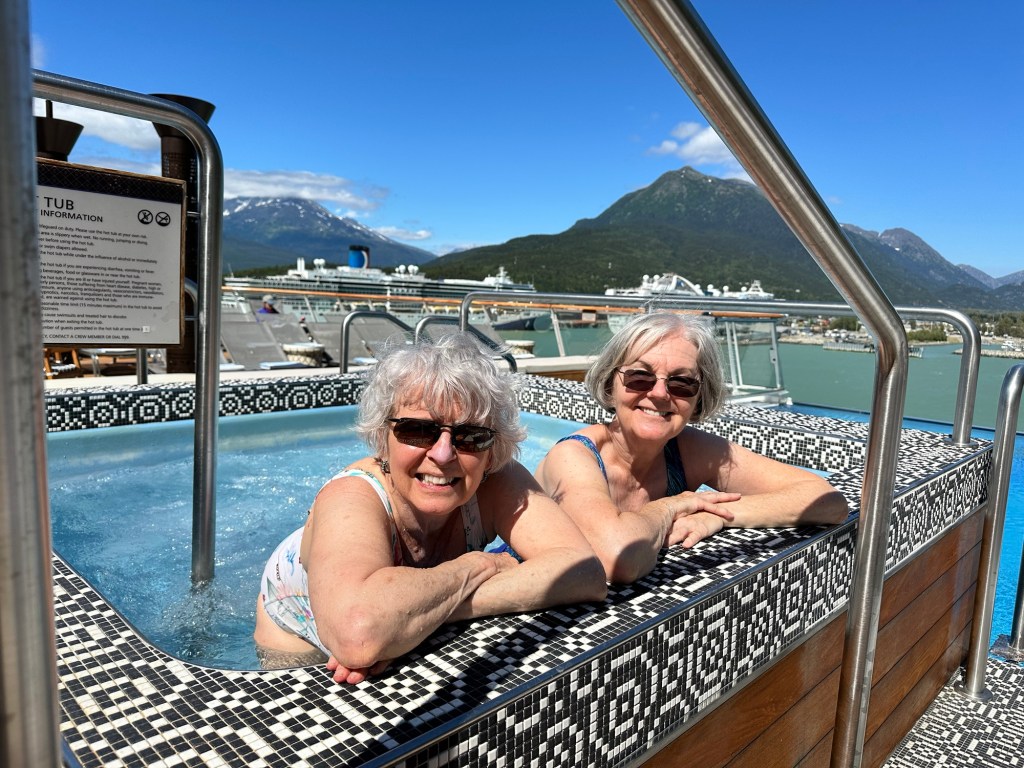
The lure of craft beer, tee shirts, and gold mining memorabilia wasn’t strong enough to keep us from the ship’s outside hot tub. Hard to believe that there are over 900 guests on this cruise. We had the hot tub completely to ourselves.
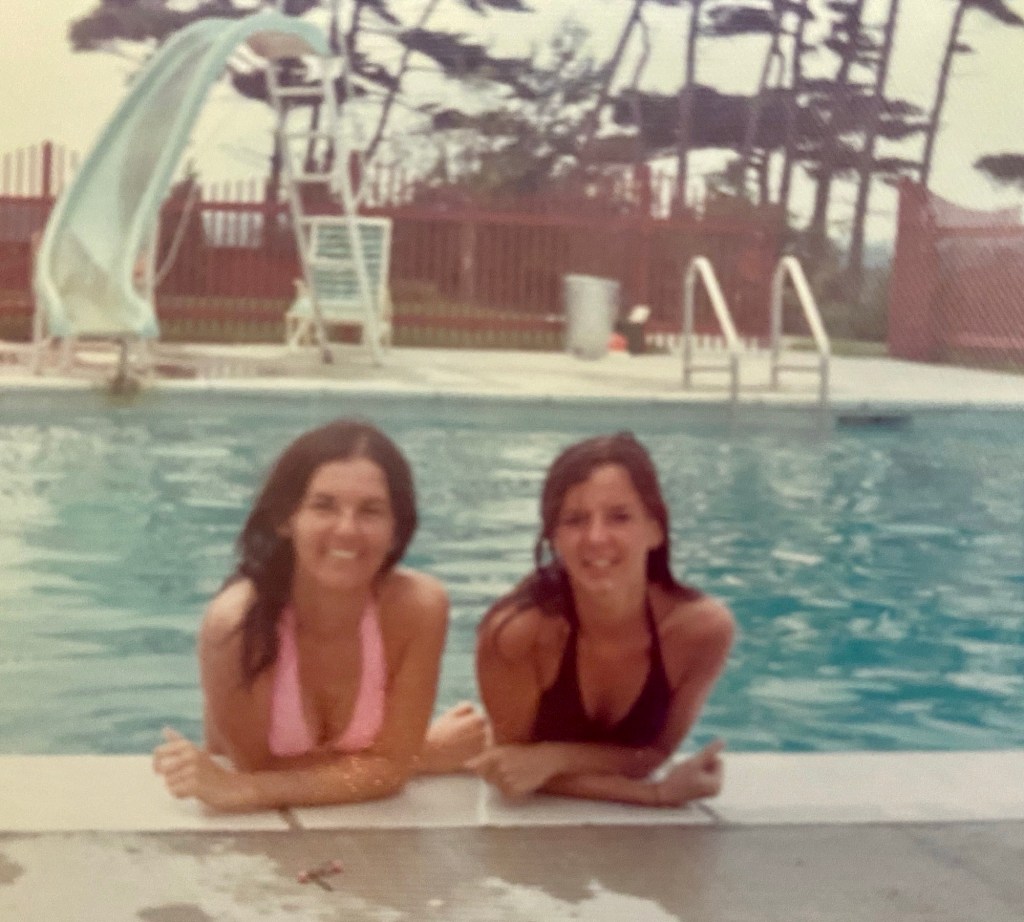
Here’s to long term friendships. We’ve been doing the pool scene for more than a half a century, and I have the photo to prove it!
Jean’s and my Alaskan adventure is off to a fantastic start. Our direct flight from Newark to Anchorage was exactly what we hoped it would be—uneventful. Best part: the seat between us was unoccupied, which, for an 8 hour flight is a real bonus.
We spent the night at the Historic Anchorage Hotel, chosen because of its proximity to the train station. When I asked the 30-something woman at the front desk for directions to the train station, she said “it’s either a short cab ride or an ARDUOUS walk to the train station and you need to be there an hour before your 6:45AM departure.” Well, the last thing Jean and I wanted at 5:45 AM was anything that could even remotely be described as arduous. That morning, when I spotted the taxi outside our hotel, I told the 60-something driver we wanted to go to the train station. She pointed to a building in the distance and said, “ There it is”. Talk about an “ah ha moment”! The young clerk looked at us and saw two feeble old ladies incapable of walking very far. The taxi driver, who was closer to our age, saw two competent, healthy women perfectly capable of handling our luggage the .4 mile (I googled it) between hotel and station. And we did. So there, young desk clerk!
And what a train ride it was. Absolutely spectacular! We opted for the gold dome service, which was $129 more expensive than the adventure class, but it was SO worth it.
Not only do you get an almost 360 degree view, you also get a fantastic sit down breakfast, with a choice of four entrees, and access to a viewing platform that allows you to take “glass-free” photos.
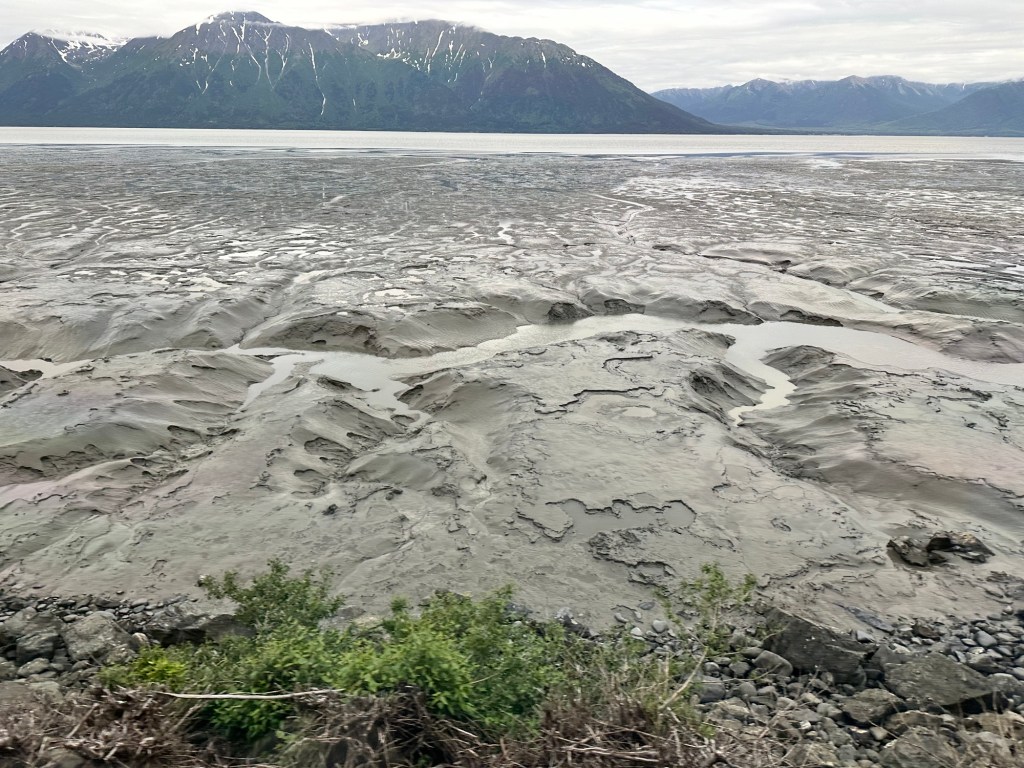
Who knew? Those innocent looking mud flats are actually quite dangerous. The volcanic soil acts like quicksand, then turns into a concrete- like substance, trapping the unwary.
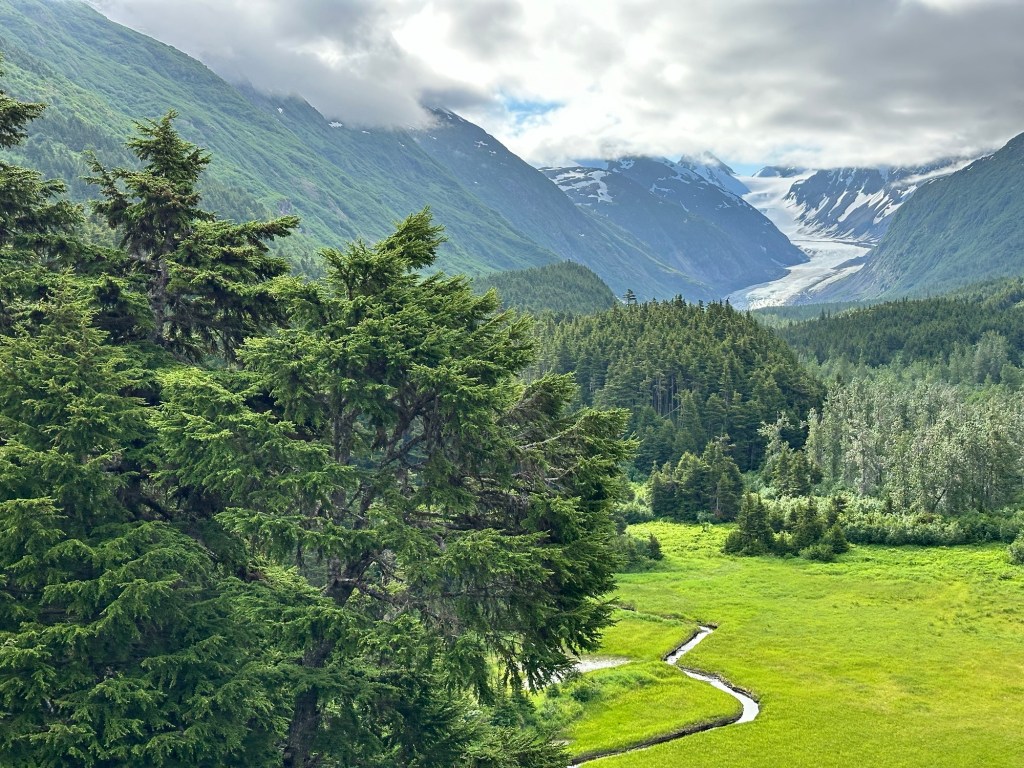
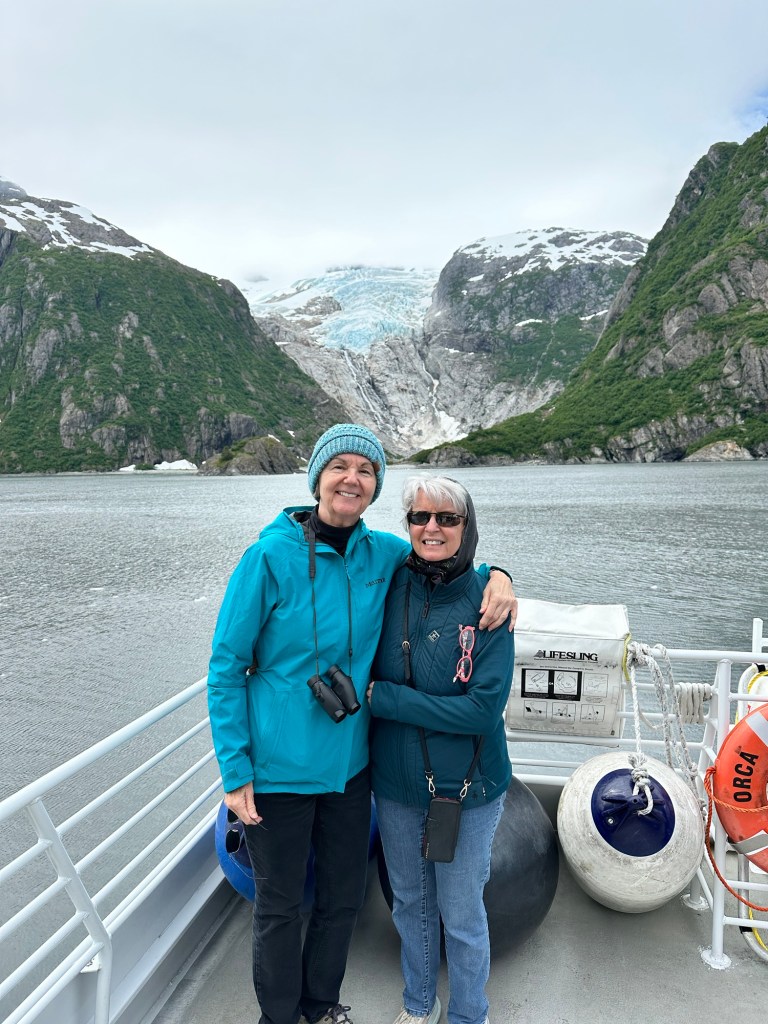
We saw our first glacier on our train ride.
Yet another welcome surprise—the train and Viking coordinated delivery of our luggage, so we were able to walk from the train to the ship unimpeded.
Check in was a breeze. Viking allowed us to print a boarding pass before we left home, so we were aboard the ship in a matter of minutes.
We quickly made an early dinner reservation at the Chef’s Table, one of Viking’s two specialty restaurants, for our first night on board.
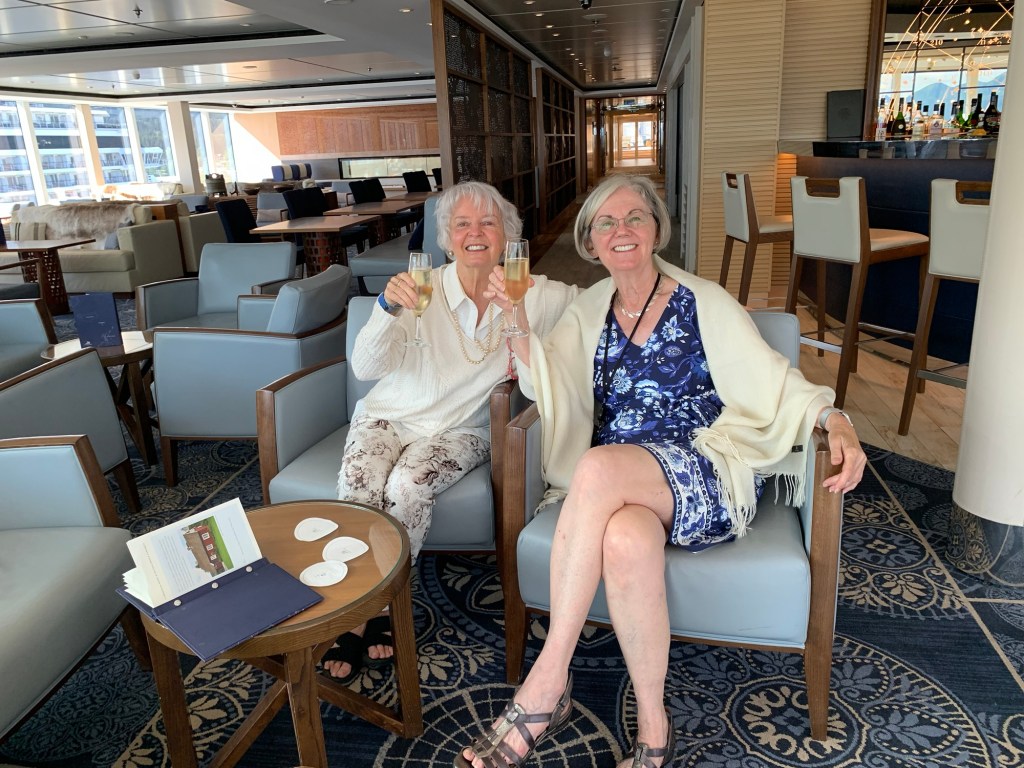
Maybe we shouldn’t have had that glass of Prosecco before dinner…
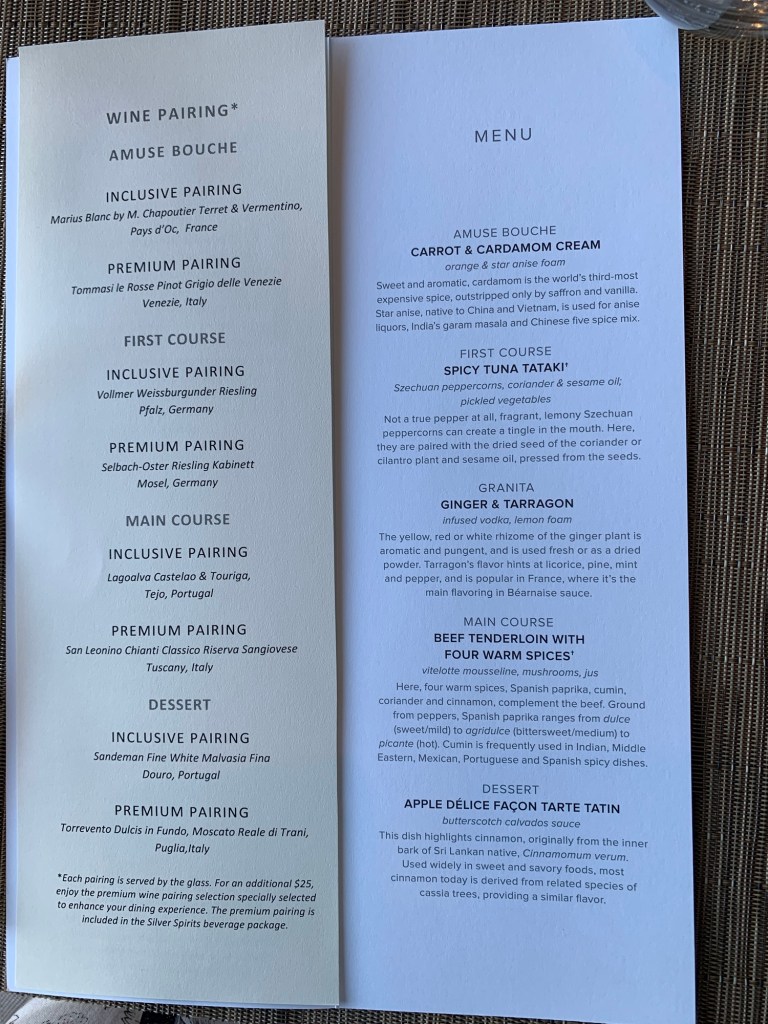
It is a 5 course, fixed menu with every entree paired with a complimentary wine. Obey, our waiter from Zimbabwe, described each course and explained that the accompanying wine heightens the dining experience.
I won’t bore you with too many food photos, but I HAD to show one example of how beautifully the courses are presented.
We had an early morning departure for Wednesday’s Kenai (pronounced KEEN-eye) Fiords cruise so we were in bed by 8 PM.
Most of Wednesday was overcast and chilly, but we didn’t mind because we were dressed appropriately.
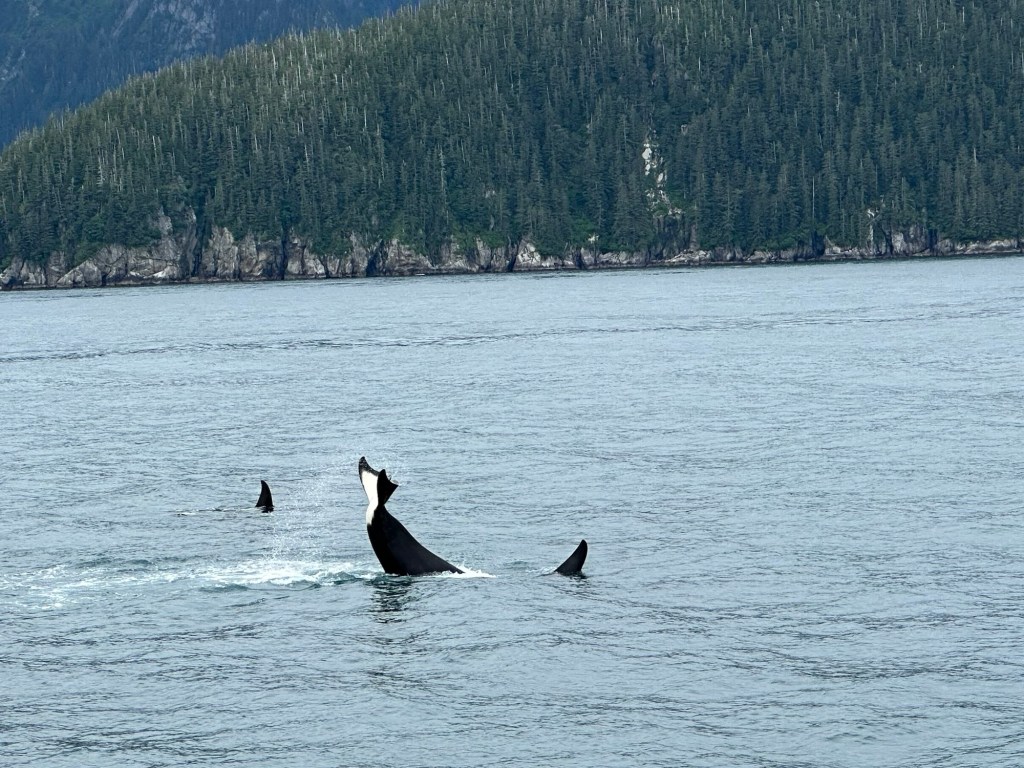
We saw humpbacks and orcas,
sea lions, puffins, otters and bald eagles.
Unfortunately, I wasn’t fast enough to capture the whales breaching, but I got a lot of good tail shots.
Not everyone was as fascinated by the wildlife. While I was outside, trying to get the perfect shot, Jean photographed this woman taking what our Dutch table mates described as a “very expensive nap”. But she wasn’t the only entertaining Homo sapiens on the cruise.
We all loved watching this young man groovin to music only he could hear. What was he listening to, we all wanted to know. Beyoncé ( Jean asked…)
All in all, it was a tremendous first day.
We had heard about the Seward Mountain Marathon, so expected to see crowds of people after we got off the ship at 2 PM, but nope. We walked from the dock to the cruise terminal without seeing many people at all.
Thursday in Valdez, will be a “self guided” tour, so Jean and I decided to stay up late, to enjoy the fantastic music (and dance) on the deck, by the pool.
Mike and I visited Lyon and Paris in 1976. Although I vividly remember Paris: visiting the Louvre, Napoleon’s Tomb, Notre Dame and the Eiffel Tower, I have absolutely NO memory of Lyon. There was never anything that kindled even a little spark of recognition.
Looks like I’m not the only one with a memory problem.
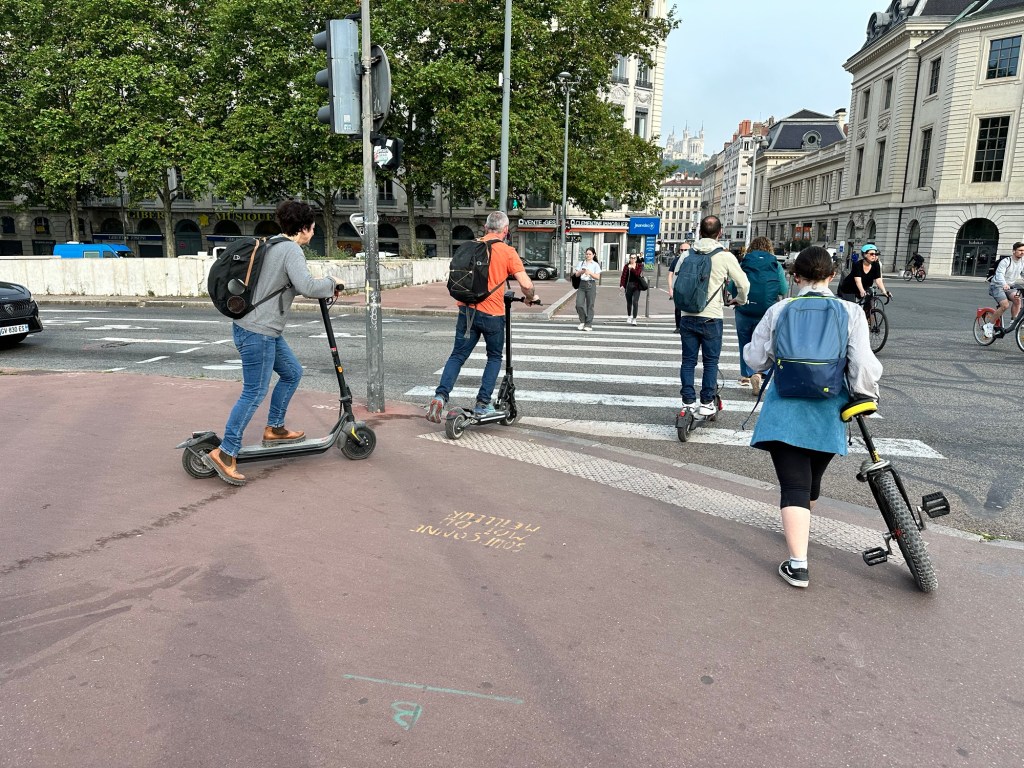
Our hotel is a short block from the Rhône River, and within walking distance to the old city. People in Lyon use EVERY mode of transportation—bikes, unicycles, scooters, so you aren’t just dodging cars, buses and motorcycles when you cross the street.
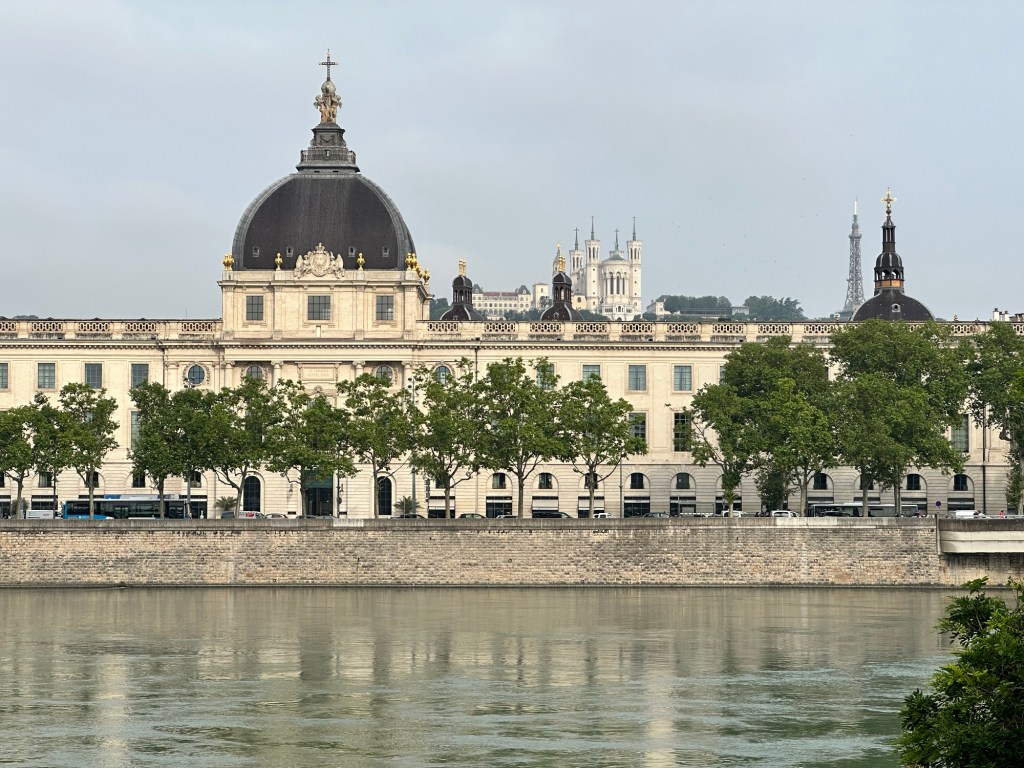
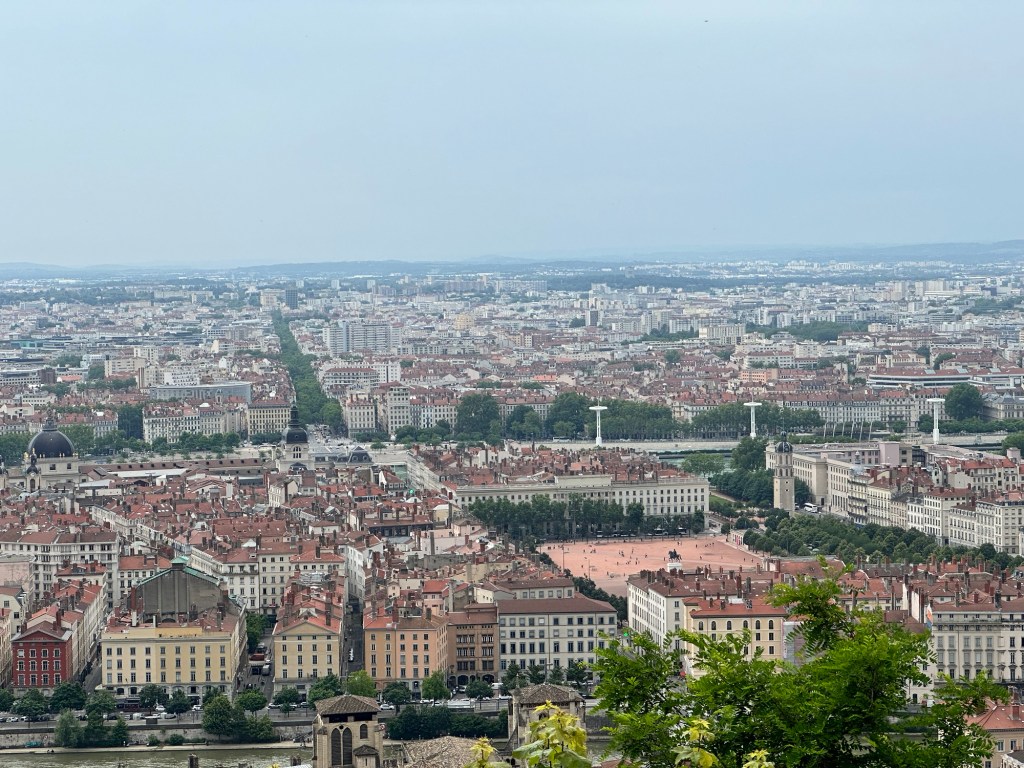
It is difficult to get lost in Lyon, even for me. From the river banks, it is easy to find three important landmarks. The black domes are atop the Hotel Dieu. Now a luxury hotel, from the late 1400’s until 2010, that large building was a hospital. The white building to the right (in the distance) is the cathedral and barely visible, on the far right, behind the dome is a fake Eiffel Tower.
Now why would there be a second Eiffel Tower? Well, back in the day, tourists would visit the outskirts of Lyon, but never bothered to visit the city proper. So, knowing how poorly educated people are about geography, the town fathers rightfully guessed that people were aware that there was an Eiffel Tower in France, but had no idea in which city it was located. Voila! The tourists did indeed come into the city center to view the “imposter” tower. And a tourist trap was born. Clearly that was well before the advent of Ms Google.
The “tourist trap” needed a better photo, so here it is.
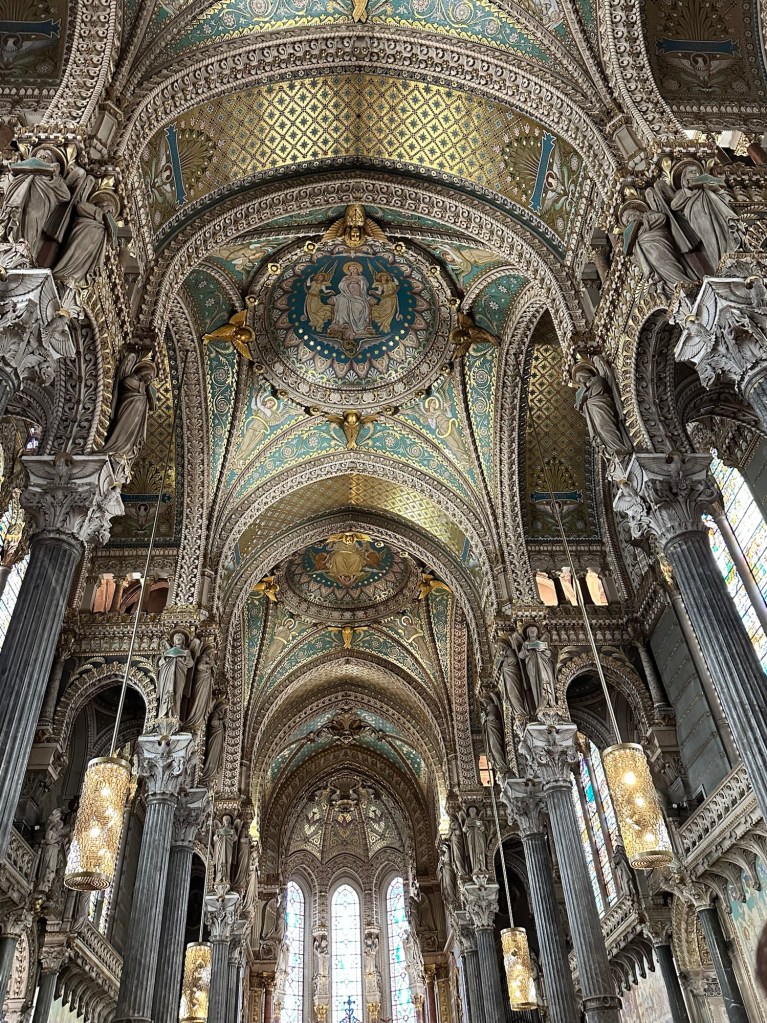
We took the funicular up to the cathedral. I know, yet ANOTHER church. But this one had some rather interesting features.
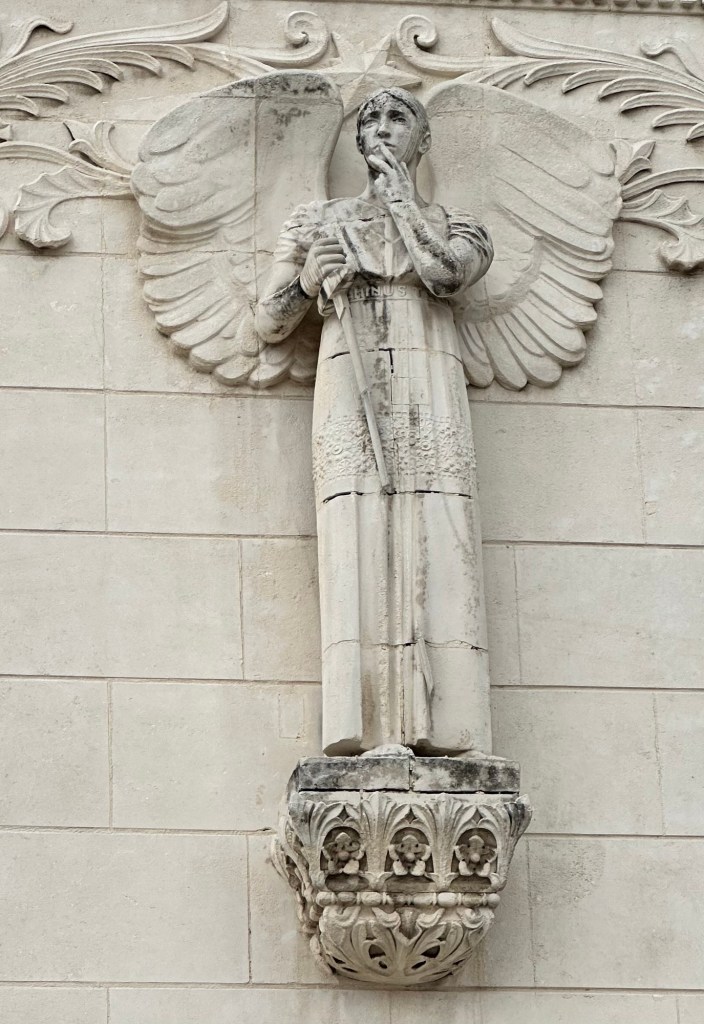
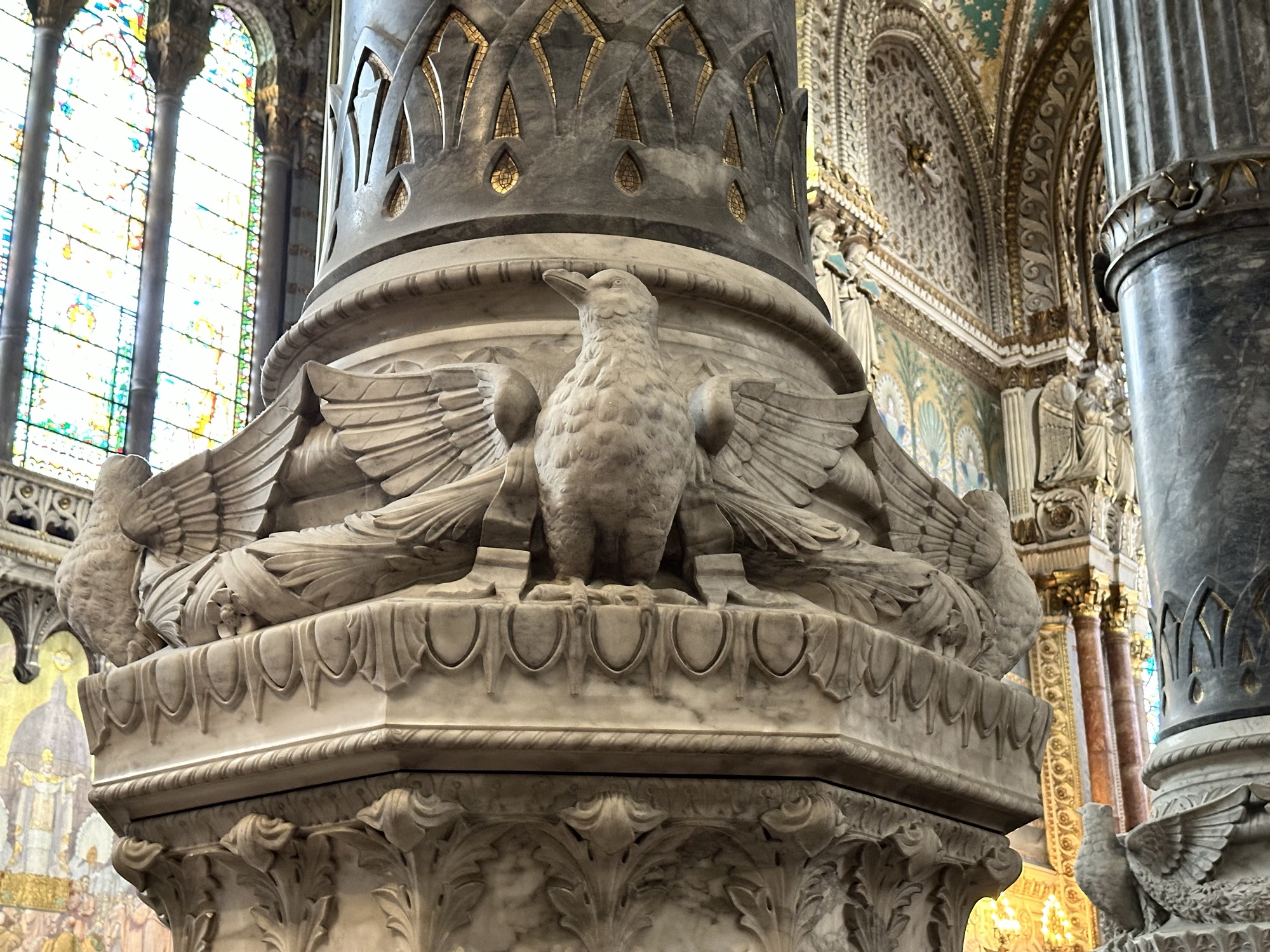
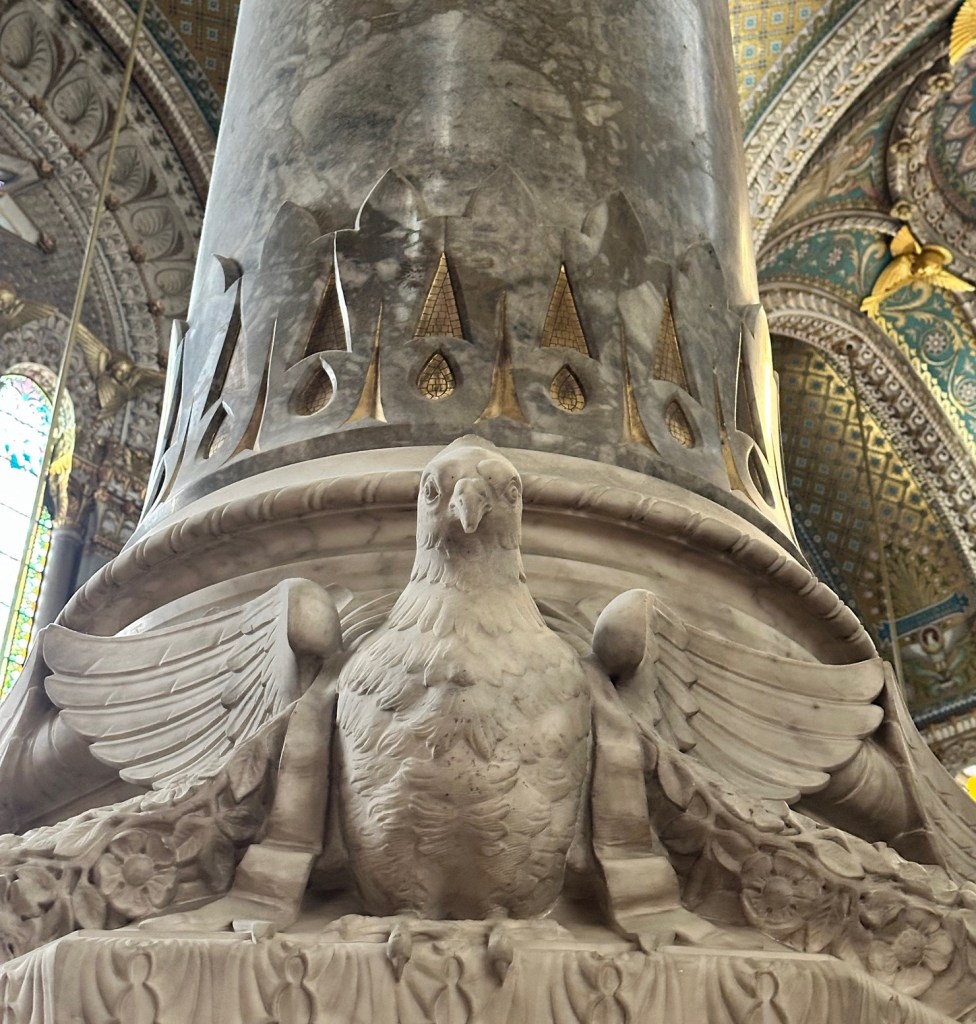
Check out the number of columns in this cathedral—and how ornately decorated they are, with different statues standing on the top. At the base of each pillar are birds, all slightly different. Some of them are looking straight at you, others have their beaks lifted at varying angles. Admit it—have you EVER seen birds on a church column? On the INSIDE of a church, that is. I sure hadn’t. Perhaps they symbolize the Holy Ghost?
Before we descended, we had to check out the incredible view. More later about the three white towers in the distance .
During our time in Lyon, we had two scheduled activities. The first, a food tour, brought us through the old city, and consisted of tasting stops at a chocolate shop, a bouchon and a pastry store. The food wasn’t wonderful ( fish soufflé at the bouchon, overly sweet pie at the pastry stop) but the guide was.
Our local guide explained that the hospital (now Hotel Dieu) was located at what was once the border to France. At that time, our hotel would have been in Germany! Why was a hospital located there? So that the medical team could examine all travelers before they were allowed to enter France.
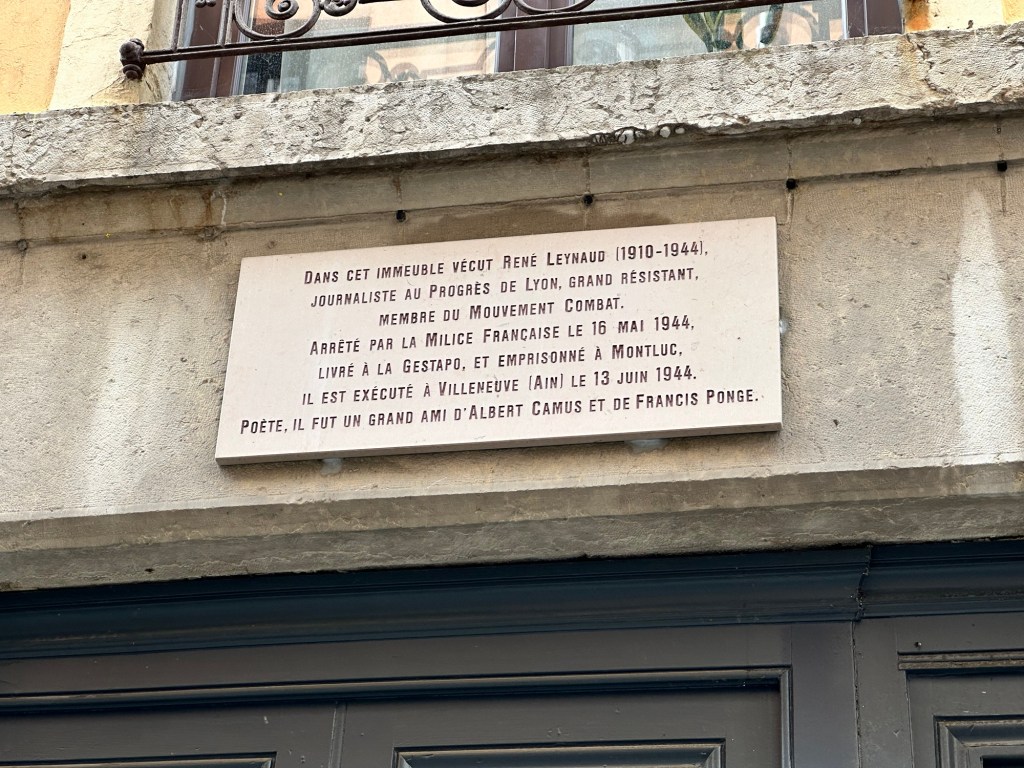
The second tour which focused on the Resistance, took us to a different part of Lyon. This tour consisted of walking up and down narrow cobblestone streets to view plaques affixed to various buildings.
We also went thru passages the resistance workers took to evade the Gestapo. Now the buildings are covered with graffiti and the passageways are entrances to apartments and function as storage areas for trash cans. The walk was uninspiring, however once again, the guide was great. Although I was listening intently to her description of the mind sets of the French during World War II, I found myself more interested in the abundant street art than the plaques.
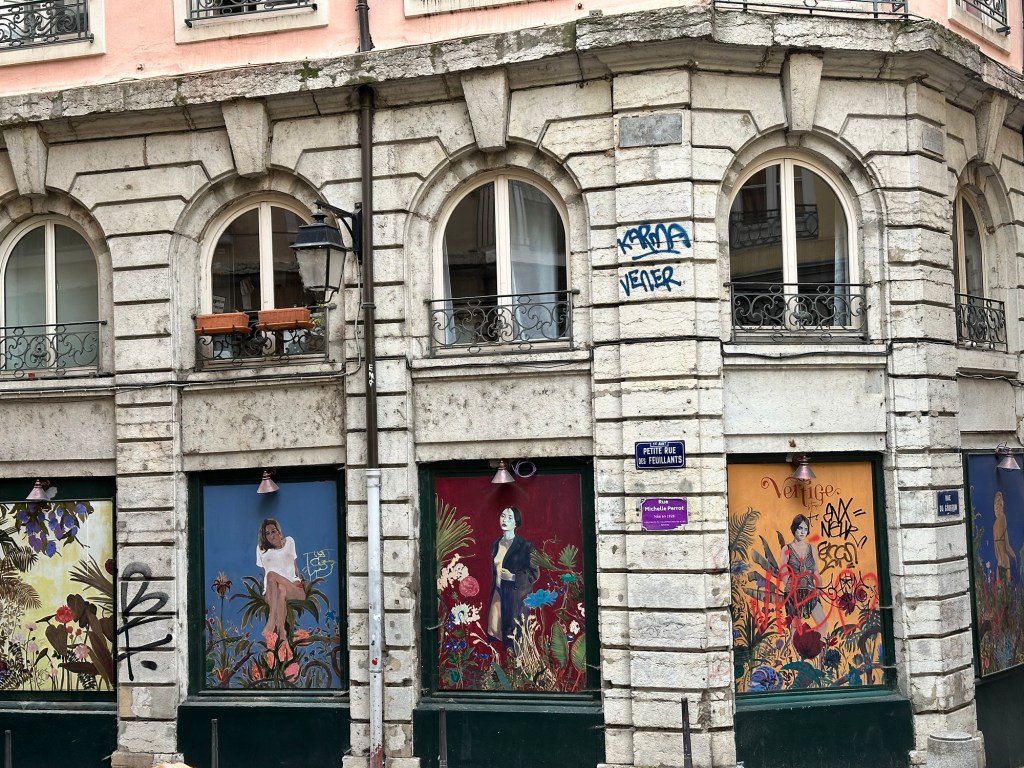
Take a look.
I initially thought someone stuffed a funky gorilla into a hole in this building, so of course I had to examine more closely. This very talented artist somehow achieved a three dimensional effect on a flat building wall. Wow.
When the guide asked if there were any questions, did I ask about Marshall Petain or the Vichy French? Hell no, I wanted to know what kind of business had paintings of “come thither” women in the windows.
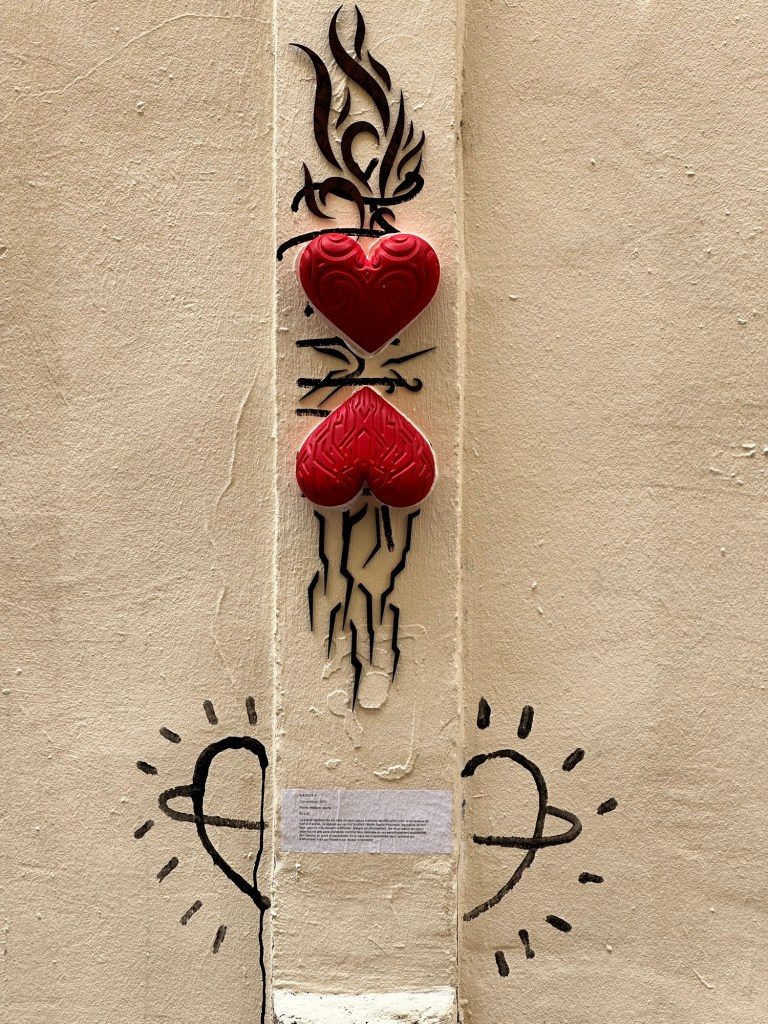
The answer: a strip club. And now more street art.
Ms Google translated the artist’s intent, which was written in French below the artwork. Here’s the “ readers digest” version. The hearts, facing each other, have different motifs. Despite differences, the two hearts can find understanding and coexist.
Believe it or not, the above is a message to Macron. The words “straight into the wall” doesn’t mean anything to me, but apparently the French get it.
Lyon is a very walkable city so I did some solitary exploring. Remember those white towers visible from the Cathedral ? Lyon had hoped to be selected to host the Summer Olympics, so a swimming complex was built. I’m not sure what the function of the towers was because they seemed too high ( to me ) to be diving platforms. But then, I’ve never seen Olympic diving platforms other than on TV, so maybe they were.
Unfortunately, Lyon wasn’t chosen, but at least the residents ended up with a great place to cool off during the hot summer months.
In front of the towers is a skate park, where I watched a young man perform amazing feats on his bicycle.
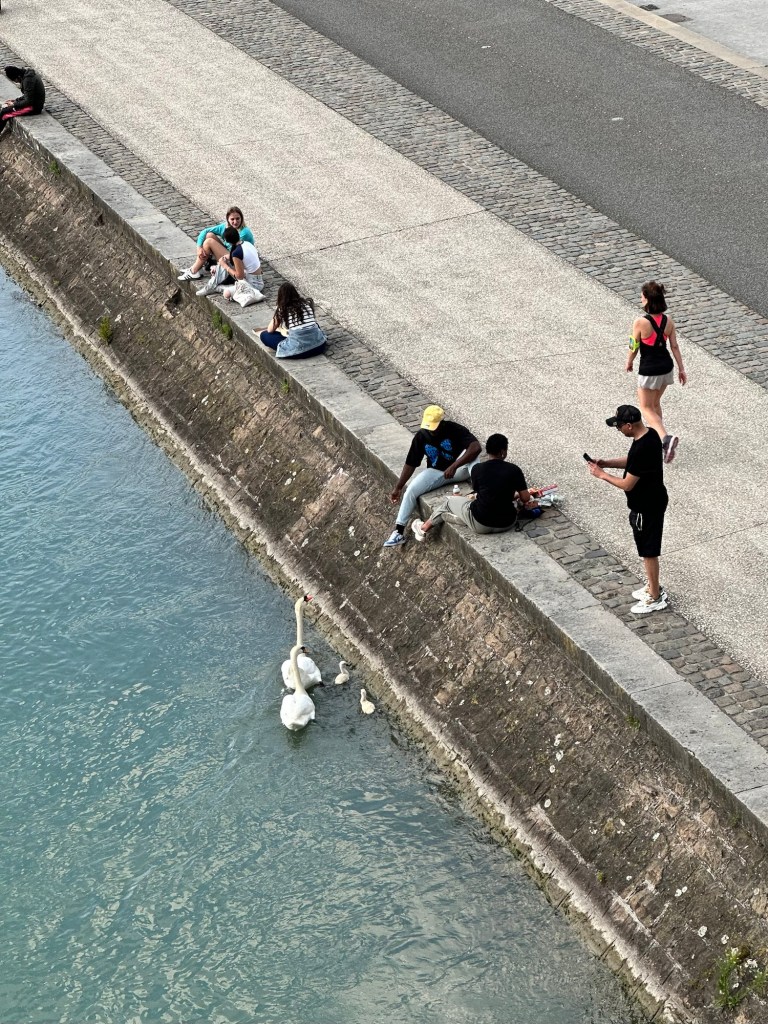
The river banks were a favorite gathering spot for people AND swans.
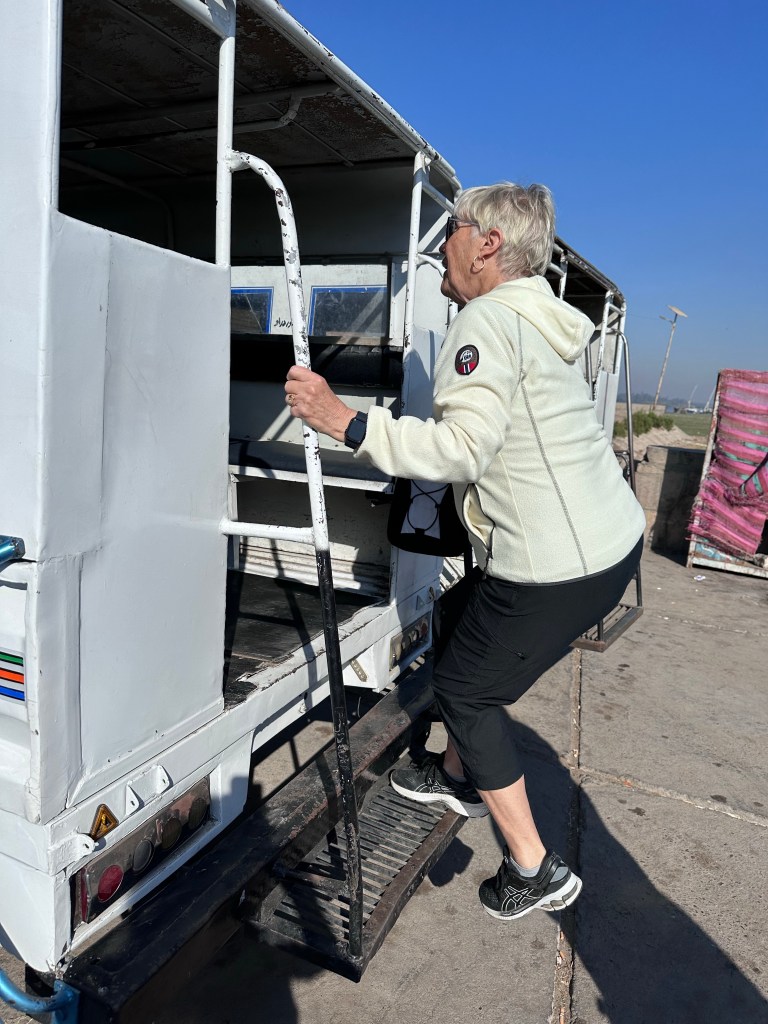
To acclimate us for the end of our leisurely float up the Nile, we used less luxurious modes of transportation to visit the town of Daraw. We’d been ferried across the Nile by small boats before, but this was our first time in the back of a pick up truck. The truck was covered, but there was such little headroom, I could barely sit upright. And no, that’s not a canvas top to the truck. It’s metal. If you’re wondering how I know, let’s just say there were more than a few bumps in the road.
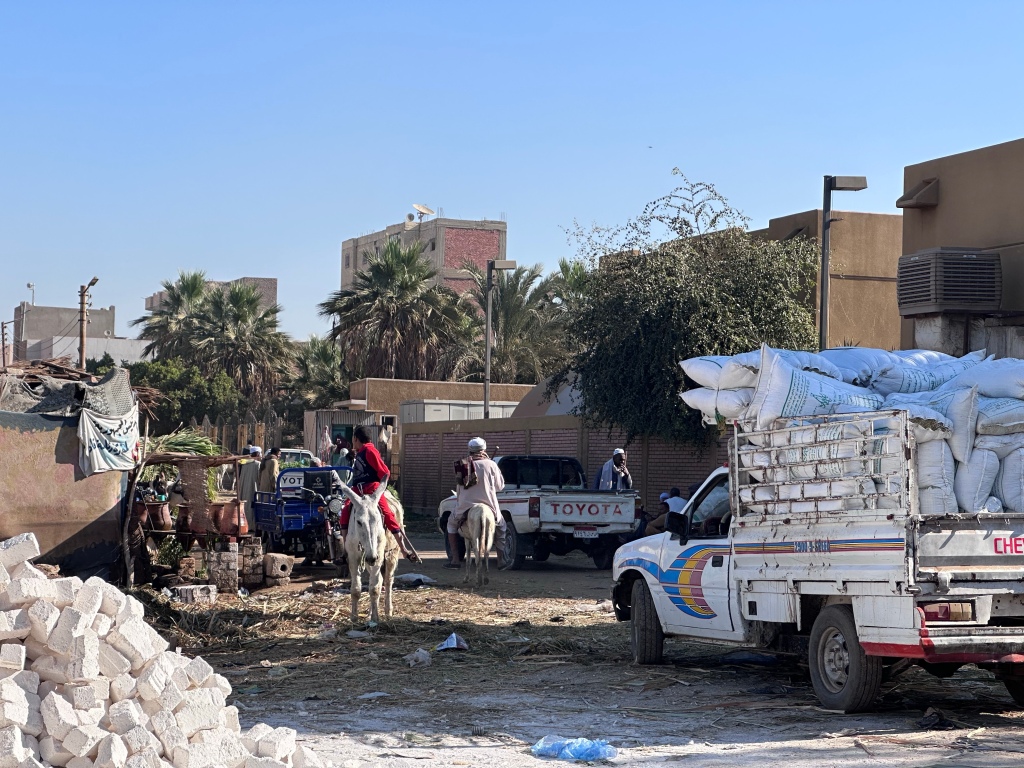
You see all modes of transportation in Daraw: bikes, motorcycles, trucks, donkeys, tuk tuks, just about everything except cars.
Most OAT groups tour the livestock market, but because there are no markets on the day we were there, we visited the local entrepreneur. One of his many businesses is a “livestock hotel”. Hey, if you don’t sell all your animals on the first market day, you need someplace for them to stay, right?
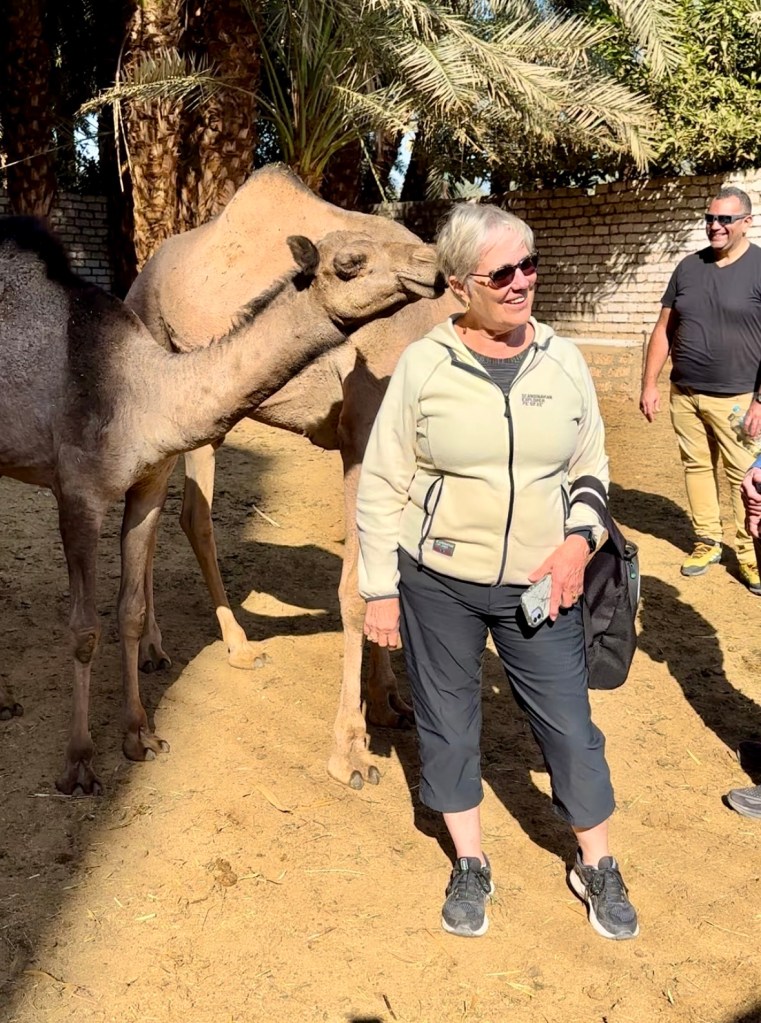
Another of his businesses resembled a mini petting zoo, which we greatly enjoyed. I’d been warned that camels spit. After being taught a lesson by that rambunctious water buffalo a few days earlier, I kept my distance. Bobbie and I decided it was time to let others interact with the babies.
This camel bumped Jeanne in the head multiple timesThere was significant bonding between Bill and baby donkey. We expected him to start negotiating a purchase price.
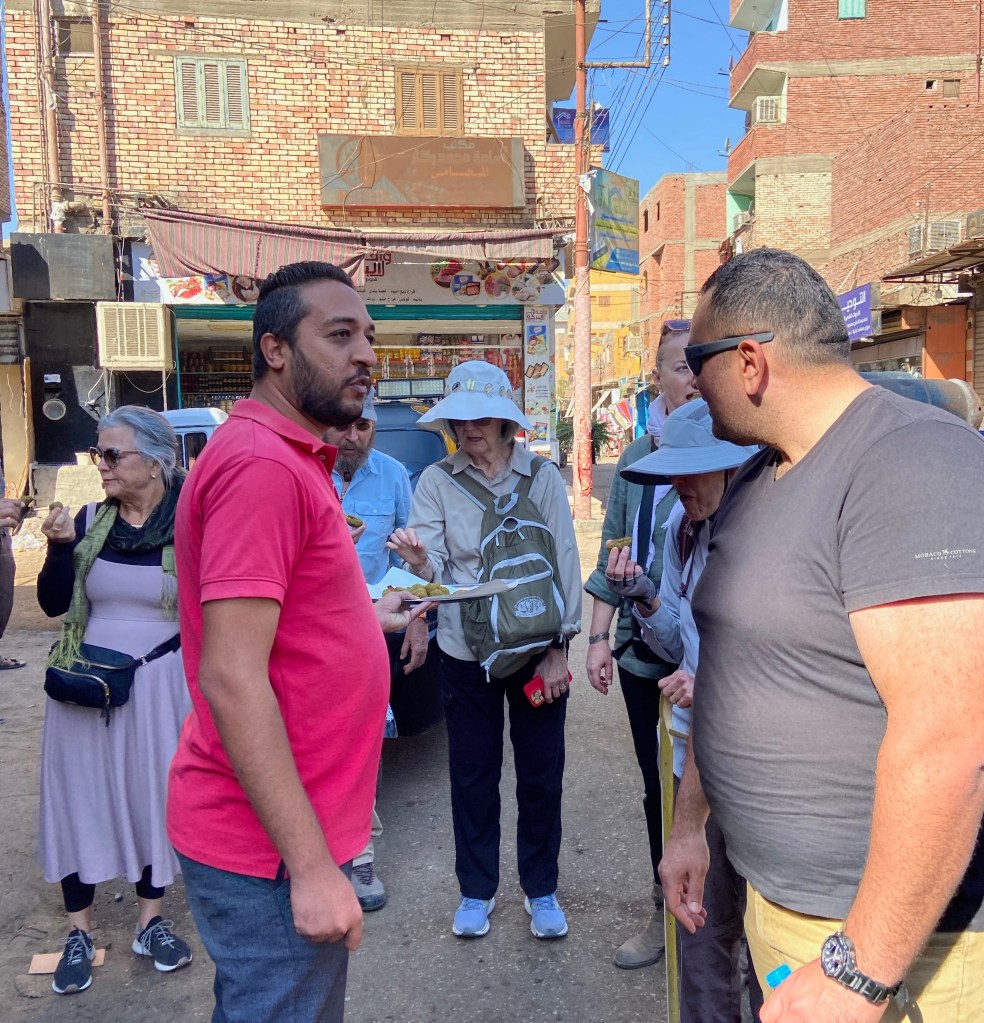
Next stop, shopping—and eating—in the marketplace. Mohamed purchased Falafel for us to sample. We had just watched as the street vendor was making it. I don’t know that I would have been brave enough to eat food from a street vendor if I were on my own, but with Mohamed choosing the vendor, I felt perfectly safe.
It felt like we were on the Amazing Race when Mohamed instructed us to search for, and purchase, specific fruits and vegetables with the 20 Egyptian pounds, (about $.62 in US currency) he gave us. We were all so focused on our task, there were no photos of the adventure. I foolishly pointed at potatoes and waved my 20 pound note. Any idea how many potatoes that amount would buy? A whole lot. A whole HEAVY lot. Good thing I’ve been going to the Y.
Bobbie, on the other hand, was a smart shopper. She purchased the required peppers, but she negotiated skillfully enough to be able to buy bread for us all. It was delicious and still warm from the oven.
Our last stop before leaving our beloved dahabiya was “Nile Beach”, where are some of us were perfectly content to just stick our feet in the water. Others, namely, Marianne and John, were far more adventurous.
Look how clear the water in the Nile is! Marianne and John are going skiing after they leave us. Photo by Susan Burke
Our “farewell” dinner was even more spectacular than the other meals we’d enjoyed. We were sad to say goodbye to the crew that took such good care of us.
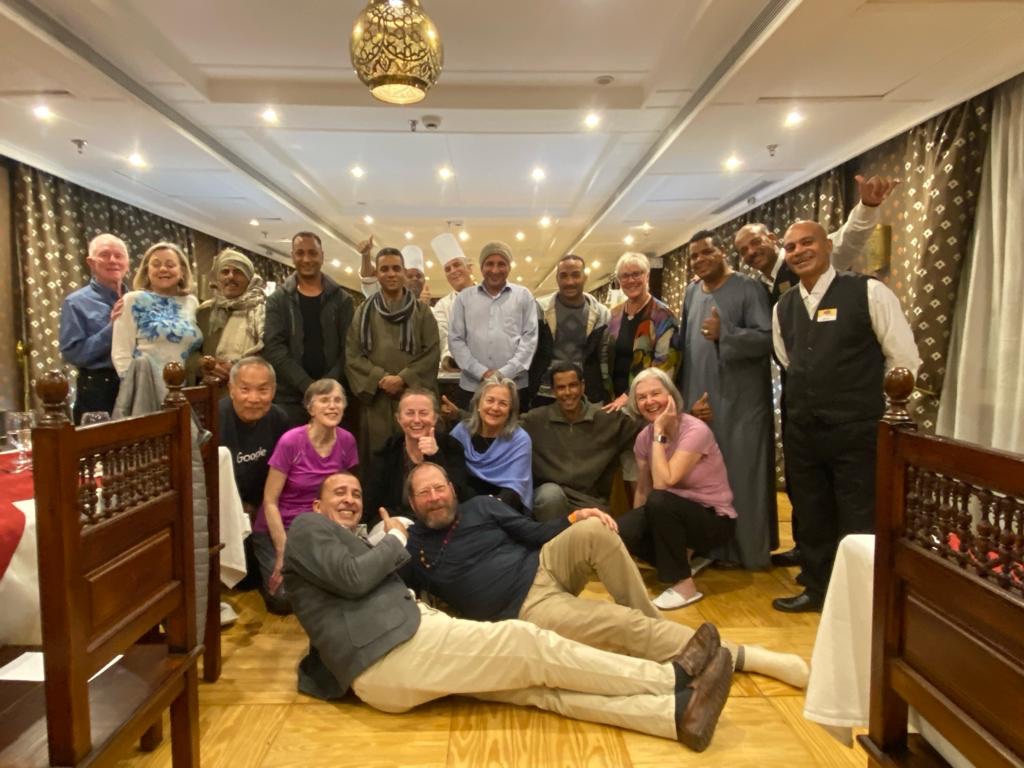
16 crew members for 9 passengers. Was the service outstanding? You bet!
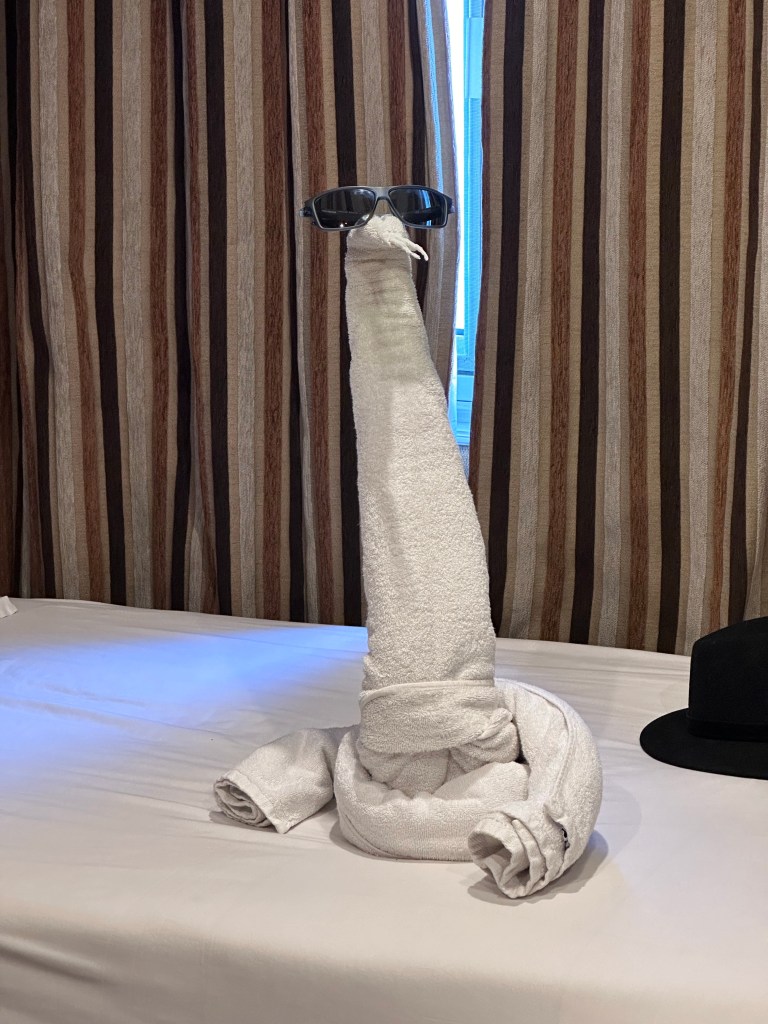
We all got a surprise when we returned to our cabins. We each got a unique Egyptian creature waiting for us on our beds. I’ve seen towel art before, but these were, by far, the most creative. My favorites were the crocodile and the cobra. ( I got a scorpion).
Crocodile Cobra
How to describe the ride from Aswan to Abu Simbel? Three hours of sand, sand, and more sand with high tension wire strung along the roadside, delivering electricity from the dam to the populations further north. We needed to get closer to Abu Simbel for the landscape to change.
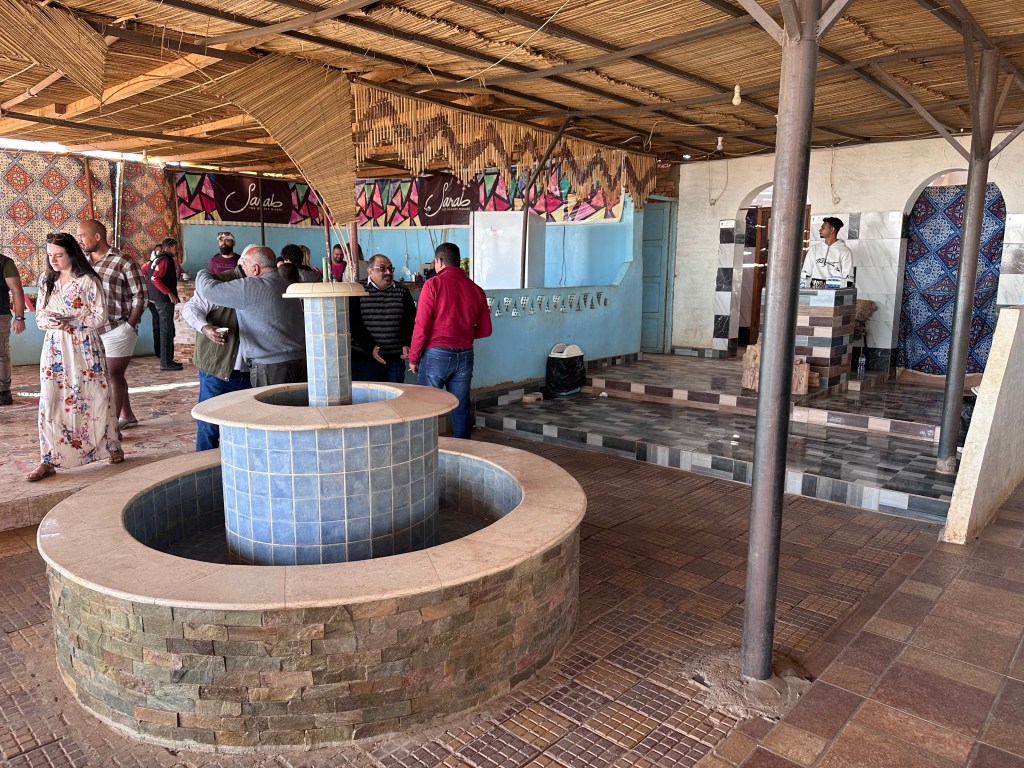
We stopped midway in our journey for a bathroom break. I think the term “food desert” was coined here. If it wasn’t, then it should have been. The “snack bar” could be best described as “selection-challenged”, but if you’re looking for potato chips, or packaged mystery snacks, you’ll be very happy.
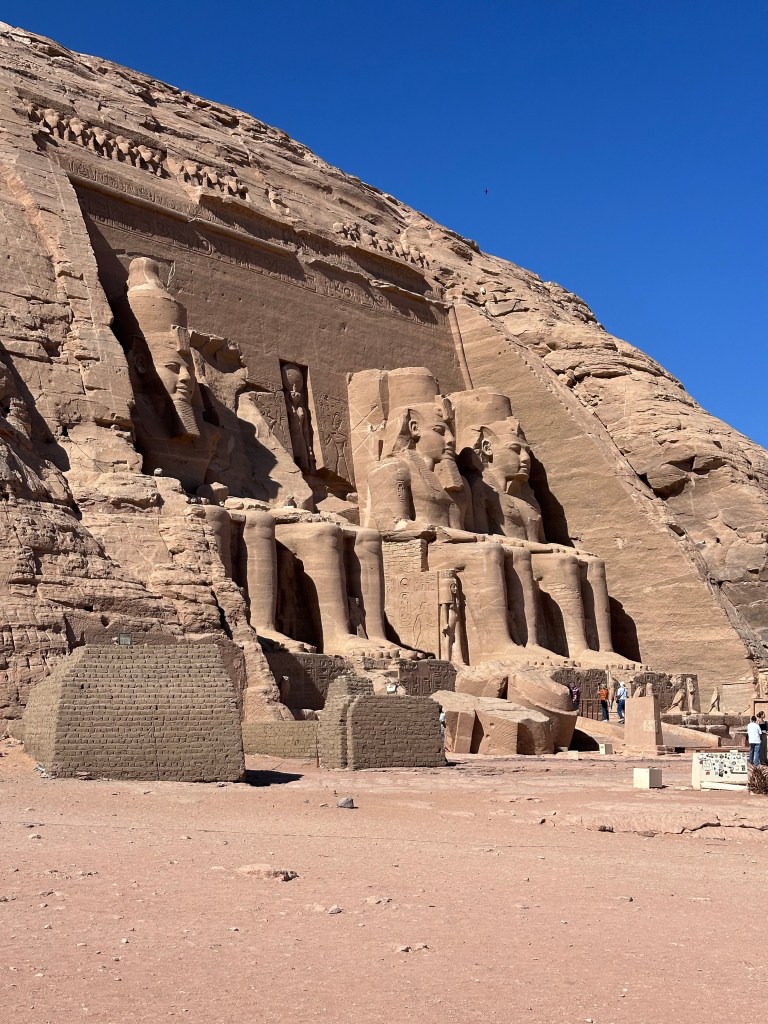
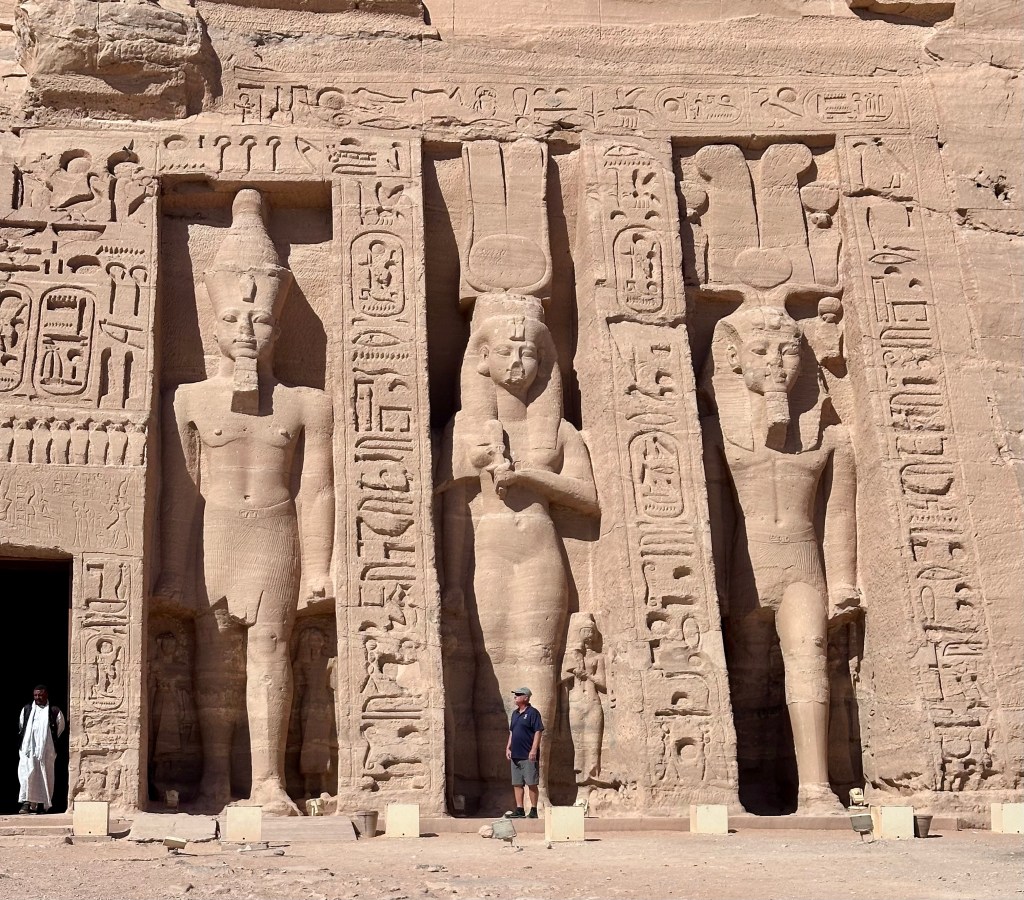
Our group thought we’d seen so many temples and tombs, there was little left for us to see. Boy, were we wrong! The size of the 4 statues of Ramses 2’s temple ALONE was jaw dropping. But to think that this entire temple was MOVED block by block to the higher ground on which it currently stands, is truly hard to believe. Why is as that done? If it hadn’t been moved, it would now be well below the waters of Lake Nassar.
Back in the 60’s, 50 nations cooperated to rescue several temples threatened to be submerged by the creation of the High Dam at Aswan. To me, the engineering that went into the move was as awe inspiring as the temples.
But wait—there’s more to say about this temple. The ancient Egyptians were so knowledgeable about engineering and astronomy that in the 1200’s BC, they were able to construct this temple so that twice a year, on February 22 and October 22, the sun shone all the way through the temple to illuminate three of the four statues in the inner sanctum. The fourth statue is of Ptah, the god of the underworld, who was intentionally left in darkness. Two of the others represent different versions of Ra, the son god. Bet you can’t guess who was the last statue to be bathed in sunlight. None other than Ramses 2. Clearly he didn’t have a self esteem problem.
That black area falling across their laps is a shadow
Next to Ramses 2’s monument to himself, he built a temple honoring his favorite wife, Nefertari. Remember her? We visited her tomb in the Valley of the Queens.
That old goat lived well into his nineties, acquiring wives and children ( rumored to number approximately 200) along the way. Good thing he lived BEFORE viagra was invented! Of all his women, (thought to number about 100, if you include concubines and mistresses) Nefertari was his favorite—the only one who got her very own temple next to his. There is only one statue of her on the facade. The other five are, of course, of her husband, who was also known as “the Great” (probably self proclaimed).
That random guy standing in front of Nefertari gives you an idea of the scale of these statues.
We only spent one night at the beautiful Seti Hotel in Abu Simbel. Can you see why we were reluctant to leave? The multi-level pool had a swim up bar; each room had a private balcony facing the Nile. It was SO very peaceful.
Before we left for the light show at the temples, we met Hassan, who enlightened us about Nubian culture and history. He also entertained us by playing instruments that were the forerunners of our guitar, banjo and harp.
In 1976, when Hassan visited his cousin in San Francisco, he was invited to play with what he described as “ a small folk group” —the Grateful Dead.
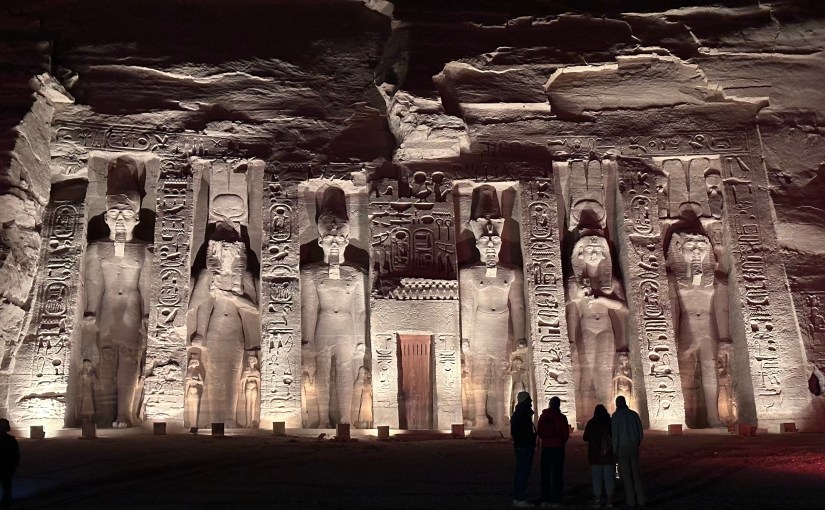
Once again, you had to be there to appreciate how wonderful it was to be sitting under the stars, watching a multimedia show projected onto the temple walls. I didn’t take any shots while the show was ongoing, but did so after, and used that shot the heading for this post.
I truly appreciate everyone’s comments on my blog posts. It almost feels like I’m having a conversation with my friends. Although I know who comments on Facebook and Linked in, many of the comments on WordPress are coming through anonymously. If I didn’t respond to you, that’s why.
We’ve thoroughly enjoyed our time in this island’s two capitols: Dublin and Belfast. But now it’s time for a change of pace, so we hit the road to experience the castles and cliffs of the beautiful Irish countryside.
We departed from Belfast by way of the “leafy suburbs”. As is the case in most countries, the wealthier areas were spared the violence and disruption of “the troubles” discussed in earlier posts. The beautiful homes facing the water were much like those in many of the wealthier neighborhoods in the USA.
At one time, oh so many years ago, I could never have imagined that I’d be taking a bus tour. But let me tell you, at this stage in my life, it’s a great way to travel. No getting lost, no speeding tickets, no fruitless searches for rest rooms. It’s all taken care of. All I have to do is sit back, gaze out the window and chat with my fellow travelers.
Our group
We really lucked out, with a huge, comfortable bus for only 11 of us, and a delightful driver, Michael, who clearly loves his job. The repartee between Joe and Michael keeps all of us entertained and laughing.
Our drive to Ballycastle was broken up with multiple stops. At the first one, Joe, our guide, pointed out that this white rock is composed of the exact same material as the White Cliffs of Dover. About 350 million years ago, this very rock was being formed somewhere south of the equator. I don’t know about you, but I find that little fact fascinating. I’m sure my geologist neighbor, Ed, would agree. He would undoubtedly have been able to identify the dark streaks in the rock as flint, which was highly prized for its sharpness, and its fire making properties.
Our route along the Antrim coast took us past picturesque little fishing villages like this one.
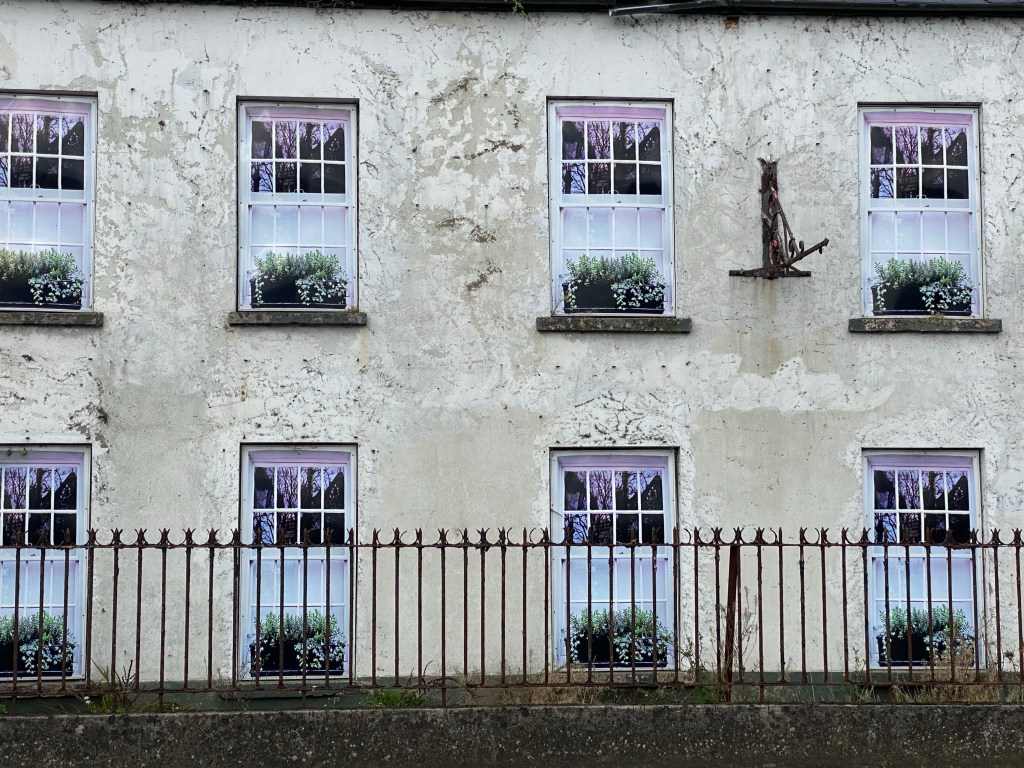
I loved that the windows of this vacant building were painted to look like they were festooned with flower boxes.
Our final stop before Ballycastle was at the Glenariff Forest Park, which gave us the opportunity to get out of the bus and stroll along the river to our restaurant.
One of the waterfalls in Glenariff Forest
Ballycastle’s Marine Hotel was a bit quirky, but the entire staff was so friendly and accommodating, and the location across from the beach was fantastic.
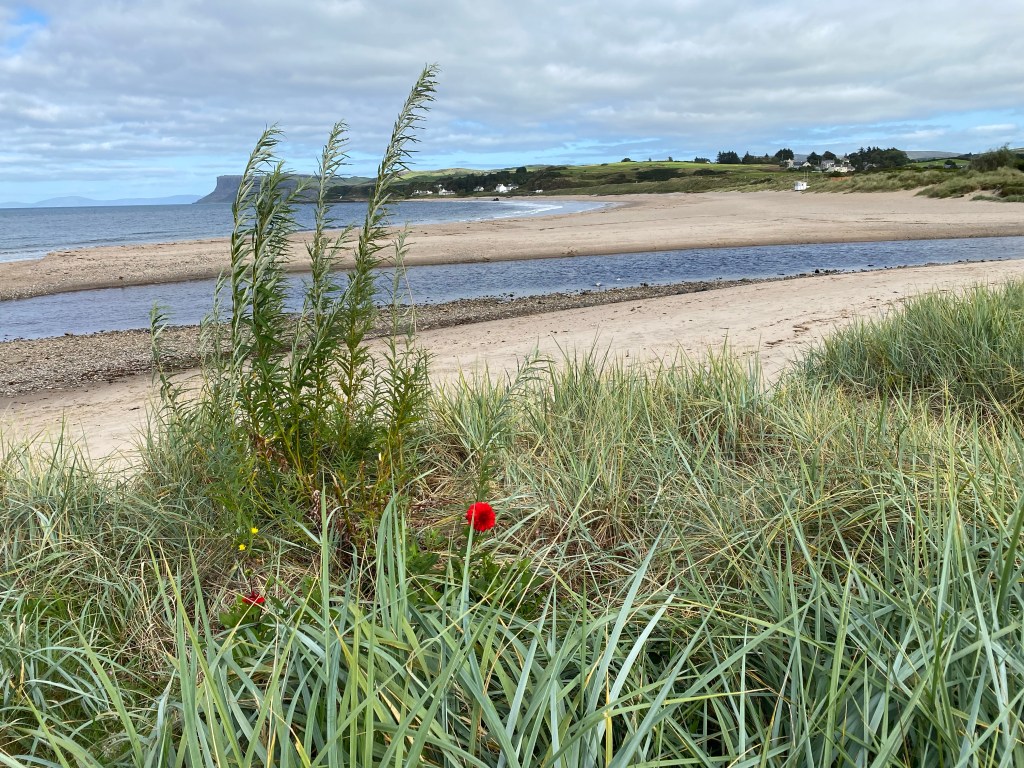
Because the weather was so wonderful, we couldn’t resist a walk along the beach, before we strolled into town for a delicious and inexpensive dinner at the Anzac Restaurant.
Ballycastle was the perfect jumping off point for the following day’s excursions to Dunluce Castle and The Giants Causeway. Although Dunluce Castle is in ruins, you get a feel for what life was like way back in the 1600’s. The castle was built high on a cliff, surrounded by water, with access only via a drawbridge. Clearly, those were scary times!
Joe quickly figured out that Janet and I are the walkers in this group, so he always made sure to tell us about more challenging hikes. The Giant’s Causeway offers several trails, plus a shuttle bus for those who prefer to ride. We chose the red course, labeled the most difficult, because of the spectacular views Joe promised us. He was right!
Even if you do opt for the easier trail, the scenery is still pretty dramatic, especially if you are intrigued by rocks, volcanic activity and ocean views.
Our last stop in Northern Ireland will be Derry —or Londonderry, if you are aligned with the British, or the Protestants, before heading back into the Republic of Ireland and to our hotel in Donegal.
This fall, I will be experiencing three different kinds of travel: a sixteen day OAT trip to Ireland, two weeks with friends at two different vacation rentals in England and eight days on my own in London and Paris. After reading about the problems with lost luggage and flight cancellations, it seems prudent to forgo checking luggage.
It can be done. I know, because I’ve done it before, but the aging process has killed a whole lot of memory cells. (Or was it copious amounts of wine? Or both?) Covid has put a damper on the frequency of our travel, and climate change has made it very difficult to predict what weather will be like in September and October. All of the above has made me feel like a travel newbie, so this blog post is primarily for me (as a memory aid) and for my travel buddy, Sally, who asked for packing tips. Okay, so that was fair warning that this will be a stream of consciousness post–but I hope others will find the information helpful.
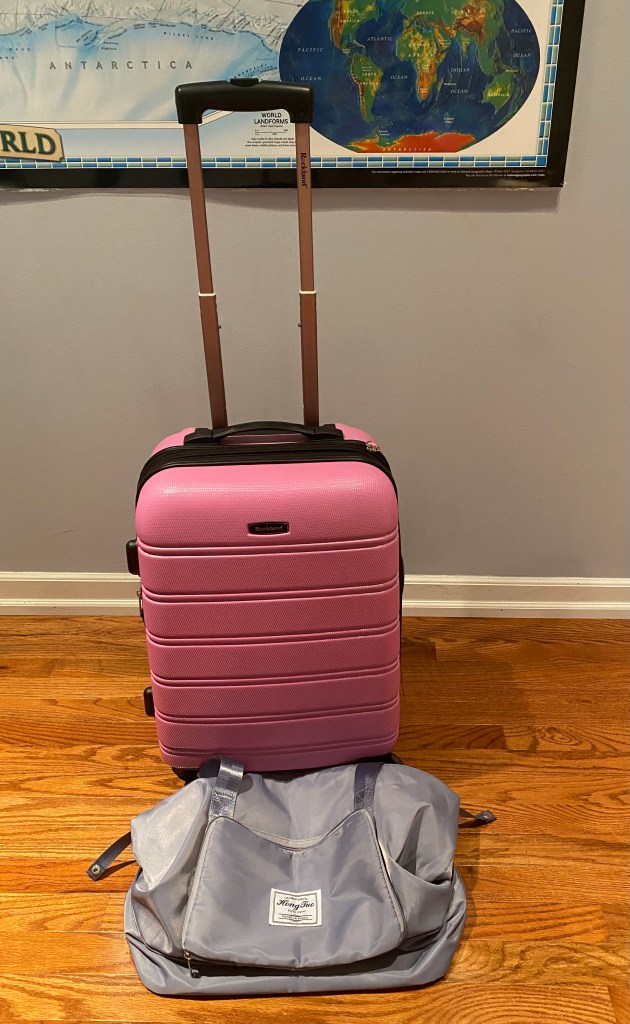
It all starts with the right luggage. Back in the day when I was traveling regularly, I saw many travelers using a 4 wheeled clamshell carryon, so I ordered a cheap one from Amazon, in a very distinctive color. I’ve used it many times since my 2018 purchase and have been very pleased with the amount of stuff it can hold.
The blue bag was a recent purchase, made after I saw it demonstrated on a very misleading Facebook video. The video showed the bag standing upright, which made it very easy to pack, with double zippers on the bottom, so it could be compressed and used as a shoulder bag. You’ve probably seen it too. Take a look at what it REALLY is like. Although the photo doesn’t show there is no 2nd zipper on the bottom (so no shoulder bag option), trust me. It doesn’t have one. You CAN see that it CLEARLY is incapable of standing upright. Having said that, I’m finding its light weight and many pockets make it an attractive 2nd bag. Plus I discovered a “work around”. If you stick a full packing cube in the bottom compartment, the bag WILL stand upright (sorta), making it much easier to load. That bottom compartment is jammed with clothing that I don’t expect to use during my first 8-10 days traveling.
Okay: Luggage chosen. Everything I take has to fit into those two bags. Next step: what are the airline rules? For the international flight, I decided to cash in my miles and fly business. Ordinarily, I would have saved those miles for a much longer flight, but during covid, I figured the additional space business offers was worth using those miles, plus two carryons will be no problem. My regional flight from Dublin to Newquay, however, is a different story. The best I could do was buy a slightly more expensive ticket that allows one carry on and one checked bag, so I just need to make sure that my carryon is not too heavy. With less than 80 people on the flight, a small destination airport, and a little luck, all should go well, but just in case, I have purchased an Apple Air Tag so, if necessary, I can hunt down my checked luggage.
I always make a packing list, which helps me remember what I need to pack, what I HAVE packed, and serves as an inventory for insurance purposes should my luggage get lost or stolen. I start laying out everything in the guest room a couple weeks before departure. I sort items into two piles: need to have, nice to have. I won’t insert everything into my luggage until the day before departure, but this advanced gathering helps me identify any gaps that a shopping trip needs to rectify.
In addition to packing cubes, I also use jumbo zip lock bags, which allow me to see the contents AND if you sit on them, they compress very nicely. Jumbo zip lock bags also can be used as a washing machine. All you need is a little soap and water, some dirty clothes, then zip and shake, shake shake. My OTHER friend named Sally recommended the various clips and hangers–all available through Amazon. The microfiber towel is a “nice to have” that may or may not make it past the final cut.
I expect that I will only have to hand wash during the 16 day OAT trip, because the following two weeks will be spent in vacation rentals (one with VRBO and one with AirBNB, so I will have access to washers and dryers.)
Dressing in layers is always good advice, especially for longer trips and particularly with the climate changes we have been experiencing. Although I’ll do a last minute weather check before packing, with a trip this length, it makes sense to be prepared for warm, cool and wet weather.
Because my iPhone 11 takes photos that suit my purposes (internet posts, memory jogs, and photo book creation), I no longer carry a camera. But my electronic devices keep increasing, along with their various cables and connectors. My Apple Watch and iPad both use the new USB C, while my iPhone uses the Lightening charger, which has a USB A dangling on the end of it. And of course, because I will be in the UK and Northern Europe, I need two different types of plug adapters–a G for the UK (that sucker is HUGE) and an F for France. I have those. But what if I want to charge multiple devices? I don’t want to carry an adapter for each. And what if there aren’t a lot of outlets in the room? Well, take a look at this very cool, very compact “power strip” that accommodates both kinds of USBs. And it only requires ONE G plug. Being obsessive compulsive, I had to try it out at home to make sure I could fit everything in, and that I had the correct combo of electrical “thingies”. It may look like spaghetti to the untrained eye, but to ME it looks like success. (I took the photo with my iPhone, which is why the lightening cable is just dangling there.) Best of all–these plugs and wires take up less room than my camera did.
So now that I have space efficient charging equipment–the next step is finding affordable internet connections. In the past, I have used a variety of plans: for short trips, I used Verizon’s Travel Pass, which charged $10 for every 24 hours you accessed the internet. For our trip to Australia in 2019, I purchased a local plan, which required me to install a different physical SIM card on my phone. That was much less expensive than the $100 Verizon monthly international plan with 5 GB.
Now there is a MUCH better option that Ann Bouey (who I’ve never met) posted about on the Friends of OAT Facebook page. She suggested that I check out Airalo. For $20, I was able to purchase an eSIM with 5 GB of data that would work in 39 European countries (I only need 3!) for 30 days. Best of all, I will be able to “top up” another GB for $5 to have access for 7 more days– all for 1/4 of the cost of a monthly Verizon plan.
Here’s the catch: You have to have an unlocked phone that will accommodate an eSIM. Airalo only provides access to the internet, no phone line. I rarely use voice while traveling anyway, but if the need arises, I can use WhatsApp or some other application–like FaceTime, or Google Duo.
Remember a few sentences ago, I mentioned that I used a physical SIM card in Australia? I knew that the iPhone 11 allows owners to have two different phone numbers via a physical SIM and an eSIM. So, I figured I’d set the phone up so that I could add a physical SIM card when traveling, with my Verizon phone and internet connection utilizing the eSIM slot. (Yeah, I don’t know what it is either–I just know the words and what it does). That caused a bit of a kerfuffle when I downloaded the Airalo eSIM. After consulting with Airalo customer service, then spending time in both the Apple and Verizon stores, the Verizon rep finally figured out that she had to replace my current SIM card and start again. If that all sounds like technical mumbo jumbo, it is. Here’s hoping that it is information you never need! If you don’t, then the Airalo download is very, very easy. The 30 days don’t start until I arrive in one of the European countries, and turn it on.
What else have I learned during my trip preparation? I discovered the Rick Steves app, which allowed me to download talks, including, for example, a guided tour of the Orsay Museum, and a Dublin City Walk, complete with a map–and a whole lot of other stuff.
Well, the consciousness lingers, but the stream has run dry.






















































 Destination NOW