Comunas 8 and 13: A Tale of Two Neighborhoods

Well, for the very first time, Alejo has given us misinformation. He told us we wouldn’t have internet access in the coffee triangle because WiFi comes and goes. That may be true for some of my fellow travelers, but so far, the WiFi in my room has been great. If it weren’t, I would use my T-Mobile connection to access the internet. It is excellent and, unlike Verizon, it’s FREE.

Before I launch into the stories of two neighborhoods, a little background information is necessary.

Colombia organizes its cities into “levels” for economic reasons. Those having the poorest infrastructure, generally also have the poorest residents. Their neighborhoods are designated levels 1 and 2. These residents don’t have to pay taxes or for utilities, mass transit or public education. Sometimes subsidies are provided. Those who live in levels 3 and 4 pay taxes, are charged for utilities and may have access to both private and public schools. Levels 5 and 6 are the richest areas, with the best infrastructure—the best roads, hospitals, shopping centers, private schools etc. Although these residents could send their children to free public schools, none are located there nor do mass transit lines go to those areas, because the people living there wouldn’t use it.

Unlike the US, where the rich live at higher elevations to take advantage of better views, in Colombia the poor live up the sides of the mountains. It is difficult to get emergency vehicles into those neighborhoods because roads are either poor or nonexistent.

Both comuna 8 and 13 are level 1 areas. Both have been affected by the extreme violence that has plagued Colombia. We visited The Hill of Values, which is in a level 1 area. It’s a recycling plant organized by former paramilitary members. We met one of the founders, who after he demobilized, wanted to “make amends” to the community he once terrorized. Take a look at what he and other former paramilitary members have created.

This terraced garden produces food that is free to the neighborhood. People are allowed to help themselves to fresh vegetables and herbs.

In addition to the recycling center and the garden, the group hosts educational events. Its goals are to raise awareness about environmental best practices, offer local youths an alternative to drugs and violence and foster understanding between Colombians and visitors.

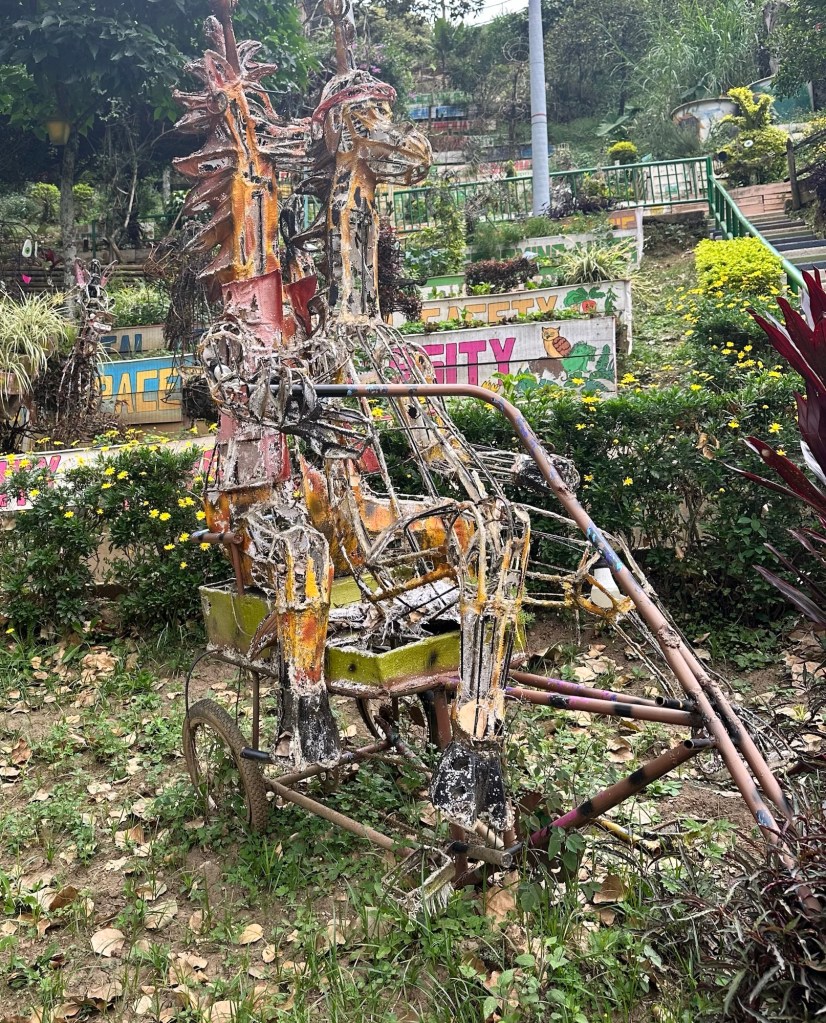
Look at the whimsical creatures they made from collected materials they transformed into sculptures. I was awed by their creativity and artistic ability. The photo below doesn’t do justice to the magnificence of the two giraffes on a bicycle. Just looking at it made me smile.

The recycling center receives funding from the OAT Foundation, which allowed the organization to purchase a solid waste compactor. Bundles of compacted trash are not visually appealing, instead I’ll share another photo of the very charming garden.

After our tour, we had a delicious lunch at the recycling center’s community room with some of the workers.

I’m not confident that I’m getting everything 100% right—hey, I already admitted in an earlier post that my memory sucks— but I think the most salient points are pretty accurate.

Comuna 13 was not on the itinerary, but Alejo made schedule changes to make time to visit an area that has been transformed into an incredible community. Not only that, but he also asked his friend Christian to be our guide,starting with a visit to Christian’s home.

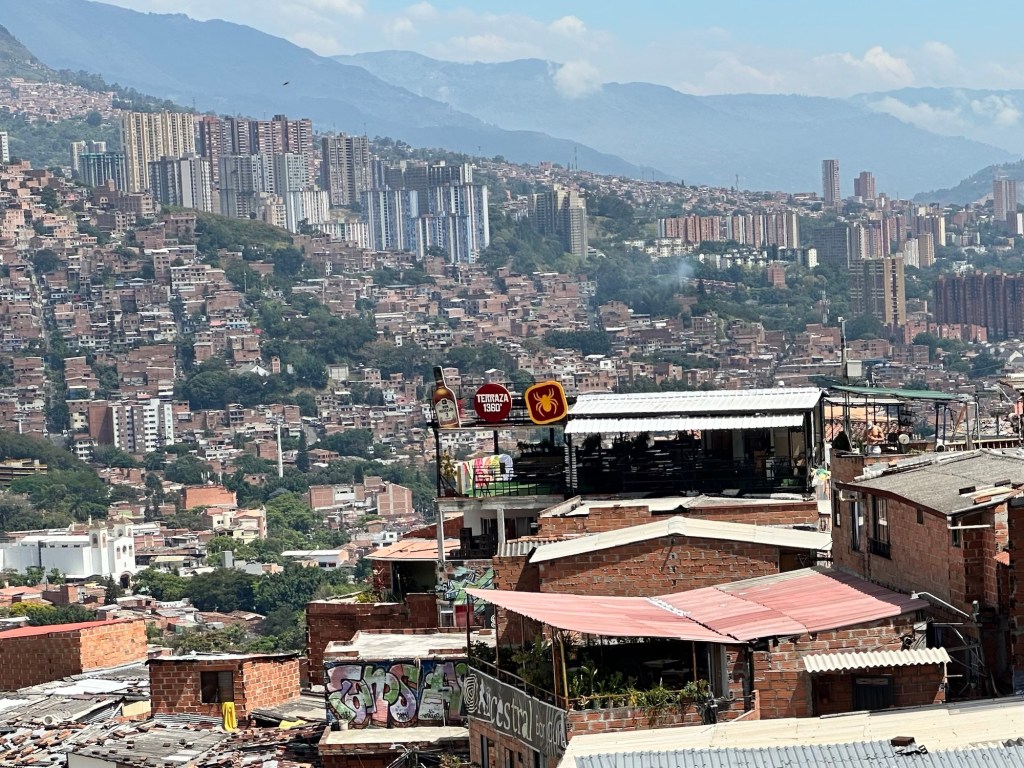
Colombians add floors to their dwellings when they have the money and the time to do so. Christian and his wife and son live here with Christian’s parents occupying the floor below. The recently added top floor is a cafe with a spectacular view.

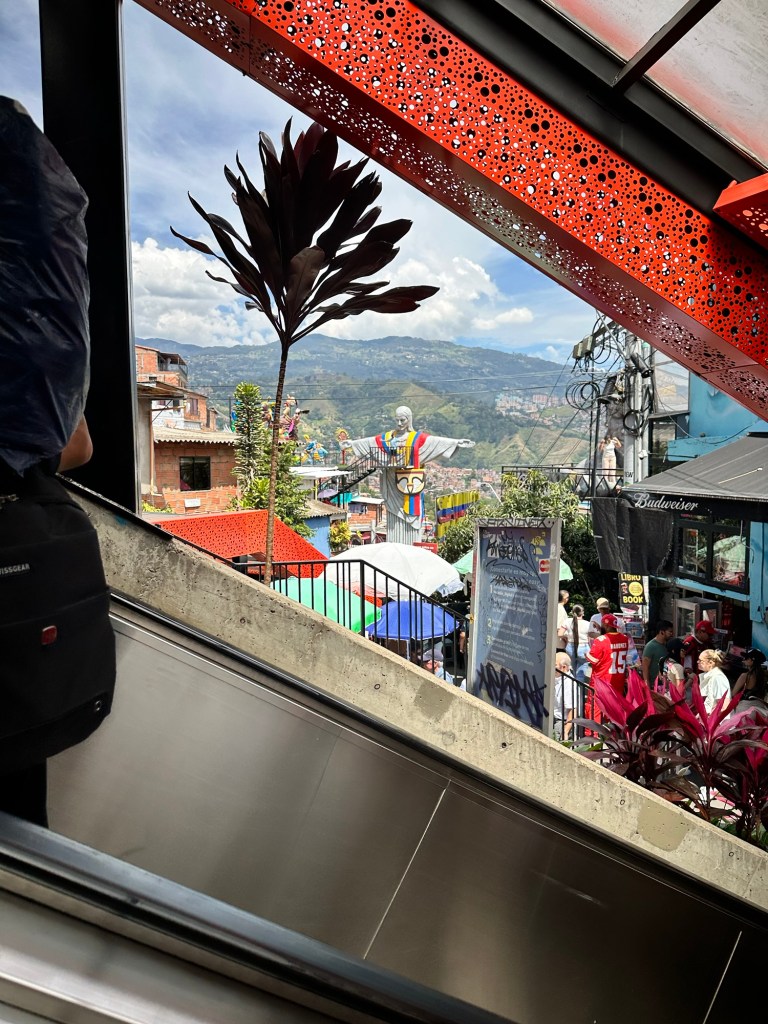
The red roof on the lower right is the cafe. Photo taken from comuna 13 escalator.

The Wall Street Journal sponsored a contest in which they searched for the most innovative city in the world. The three finalists were Medellín, Tel Aviv and NYC. One of the key criterion was the use of technology to help poor residents.

Although we all heard about the violence and terrorism in Medellín, what was not as widely publicized was the election of a former math professor as the mayor in 2003.

The mayor recognized that most of the terrorists were people without opportunities. In fact, comuna 13 was one of Pablo Escobar’s favorite areas for recruiting teenagers. When you feel isolated, are struggling to survive, and have no hope for the future, you become very vulnerable. Plus, if you got killed, Pablo promised to take care of your family, which was not the case if you joined the guerillas, paramilitaries or gangs.

The mayor started a program of social inclusion by building cable cars so that the people on the mountainside could have transportation to the jobs on the flat, lower part of the city. Working with an architect to create green areas for “library parks” in the lowest income areas, where computers and classrooms were made available.

Because there were some suicides from the cable car stations, Colombia established on site counseling centers, staffed with professionals who offered free sessions. We have so much to learn from other cultures!

What probably helped Medellín to win the contest were the external escalators. Has anyone seen escalators outside of a building before? I sure hadn’t until I watched the 2024 amazing race episode. On the show, it looked like there was only one escalator. Nope. There are countless escalators, so described because I forgot to count them. Covering the escalators are solar panels which provide protection from the elements and produce the energy to run the escalators.

The view from one of the escalators

These escalators were funded by Colombia’s Utility Company, EPM, which pays for other social projects.

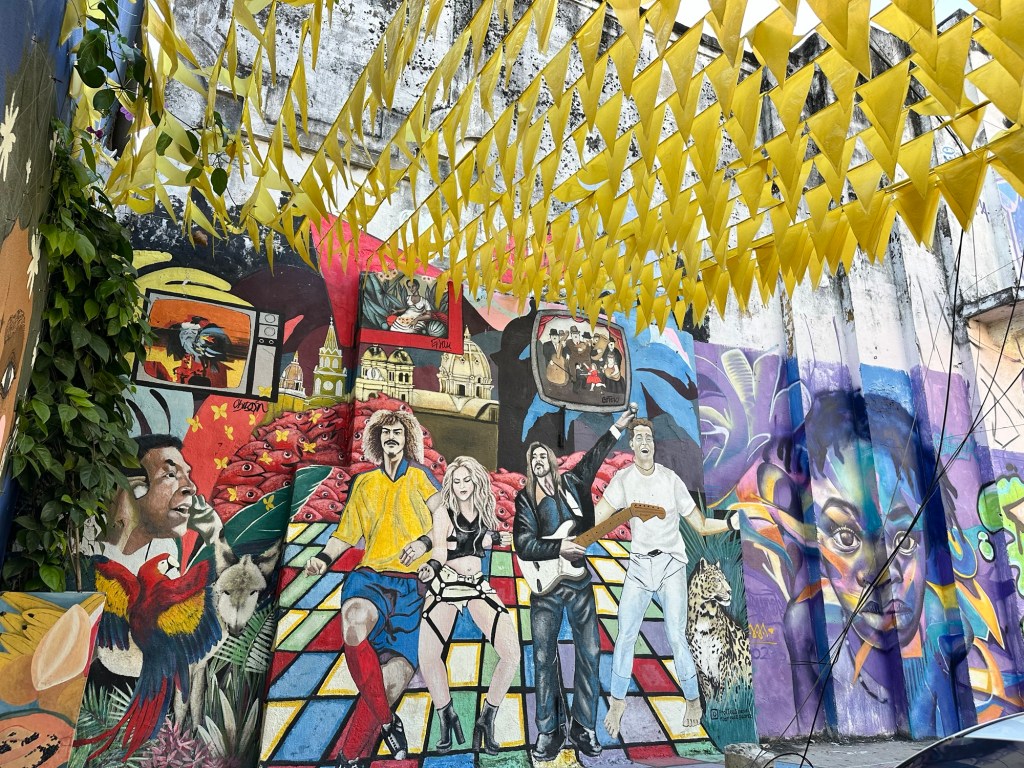
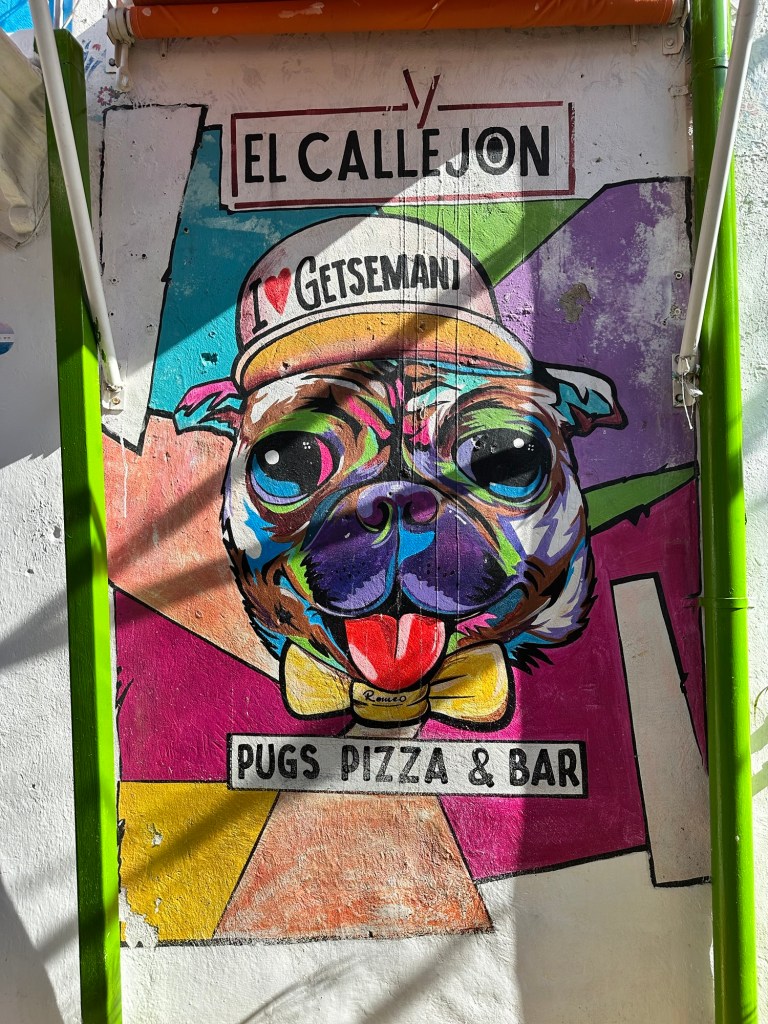
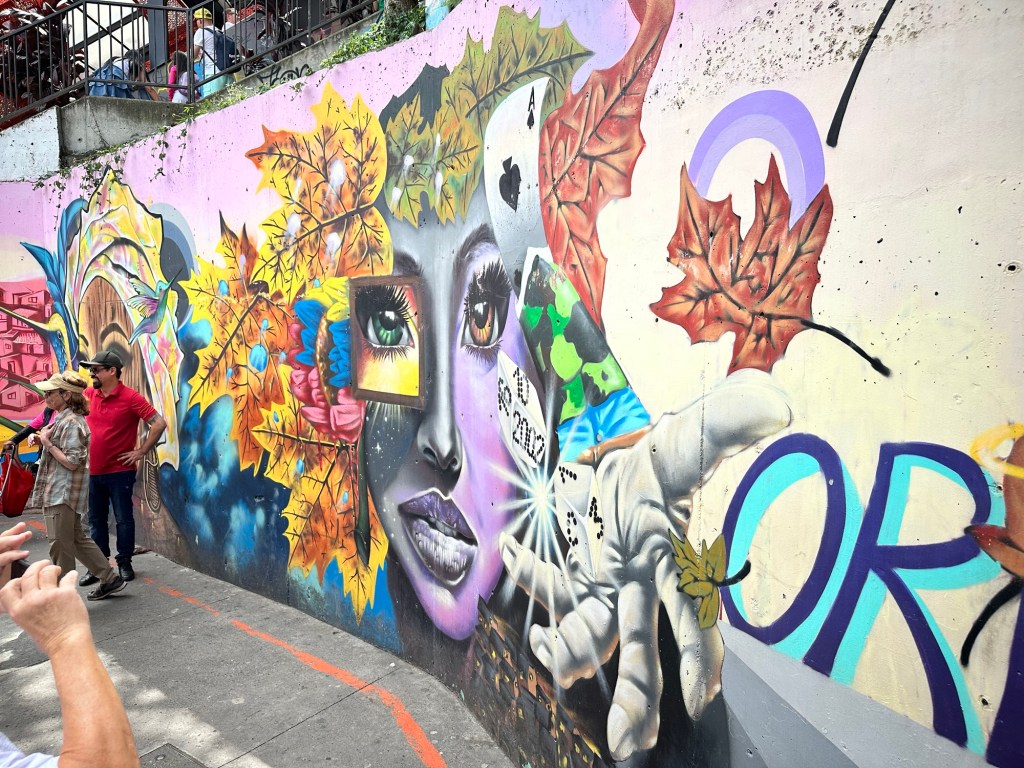
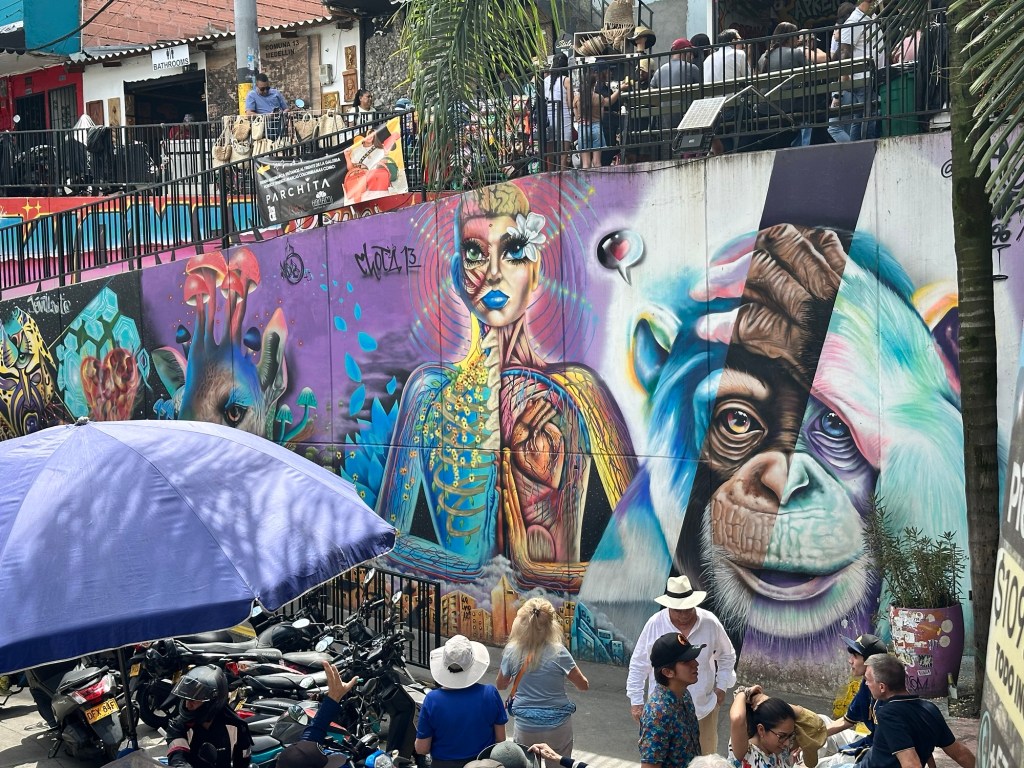
Although we didn’t see the “Amazing Race mural” we saw lots and lots of exquisite street art, with Pachamama featured on several.

We are at the airport now, so once again, I will press “publish” and hope for the best.

By the way, Alejo was right about the WiFi. I was the only one with good connectivity. I must have just got lucky.

Bogotá, Colombia, Part 2

I wish my memory functioned the way it used to. I’m lucky if I retain 20% of what I’ve learned, and boy, have I ever learned a lot during my four days in Bogotá!

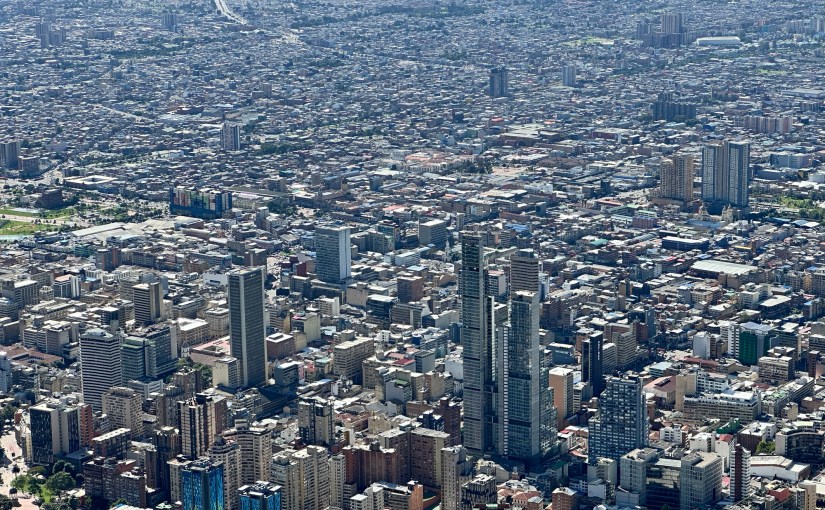
On our walking tour, our local guide shared interesting facts about Simon Bolivar that didn’t quite make it into our history books. He was only 19 when his wife died; she made him promise never to marry again, but she forgot to mention lovers. That was probably a good thing, because one of his lovers, Manuelita Saenz saved his life. Her house was down the street from his, close enough to allow them to use candles to schedule rendezvous times. She was watching for his signal when she saw a large group of heavily armed men in the mountains heading toward his house, so she quickly rushed Bolivar to safety. Manuelita’s house is now a museum very close to our hotel, but unfortunately, I didn’t have enough time to visit it.

Instead, I spent some of my “on your own” time in two of the several free museums in Bogotá funded by the National Bank. The original source of that money, however, was the USA. No, not from foreign aid money. It was from a lawsuit Colombia initiated against USA over the Panama Canal. And we lost so we had to pay just under $ 30 million to Columbia. At one time, thanks to Simon Bolivar, Colombia included what is now Panama, Venezuela, Ecuador and Peru.

Both museums had beautiful central courtyards surrounded by exhibition rooms.

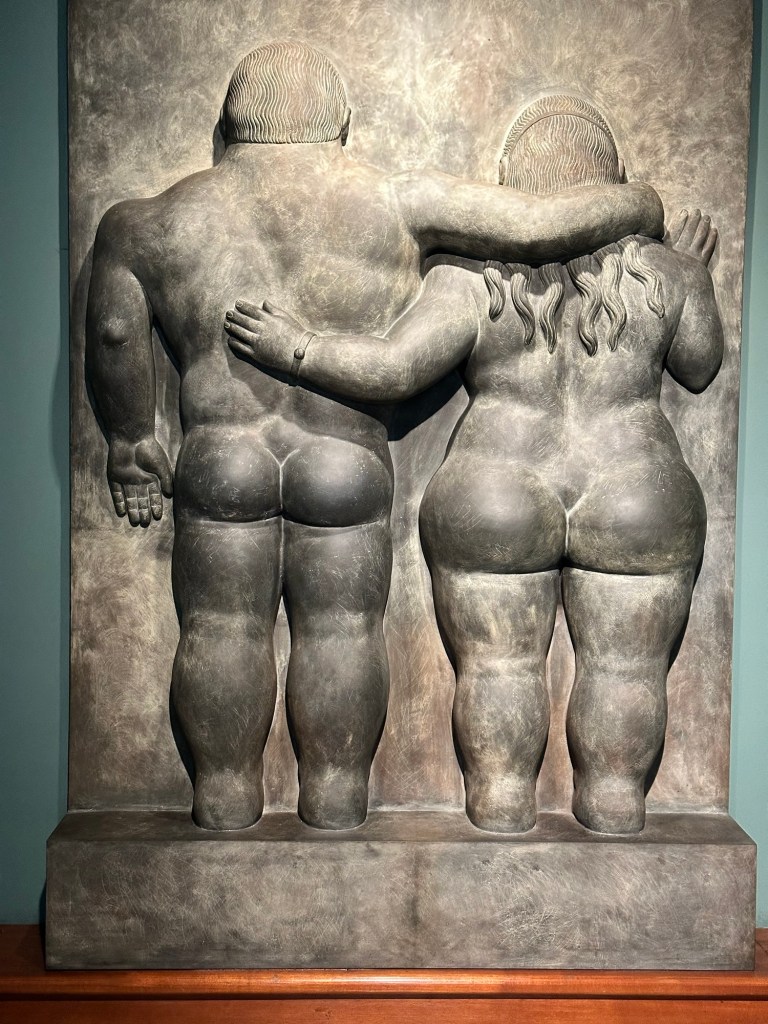
Botero definitely had a fascination with big butts and legs.

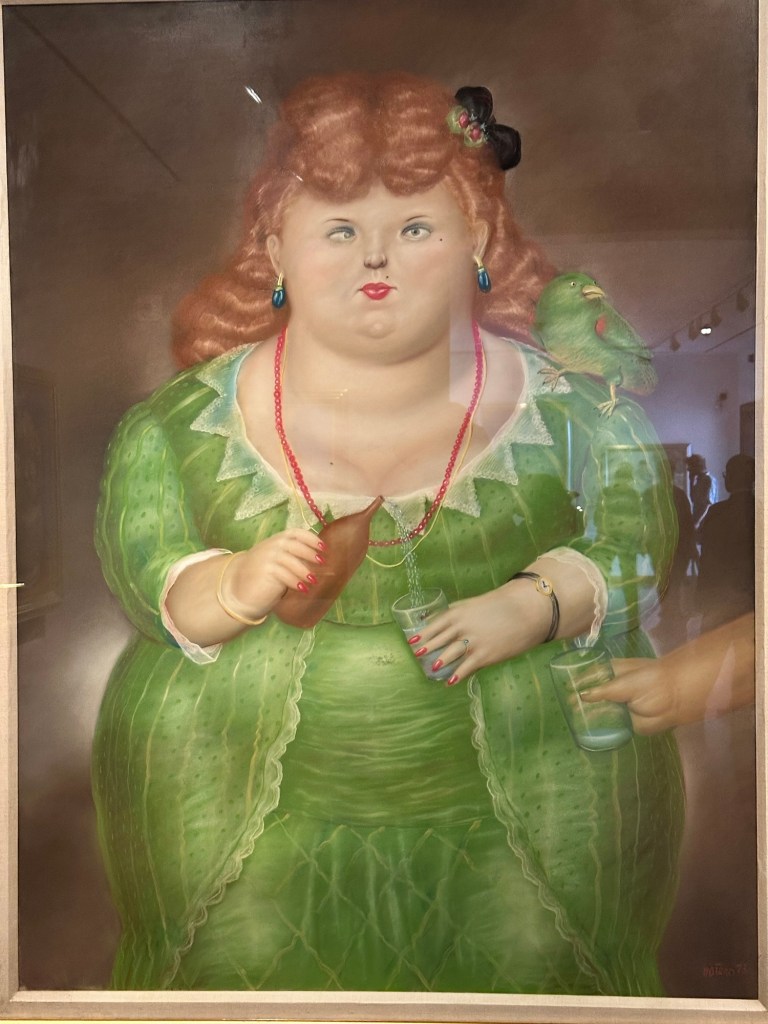
In fact, ALL of his subjects were very well fed. The painting that follows is entitled “Woman with a parrot” which was not the first thing I noticed.

But I digress. Back to the walking tour. Cama, our local guide, took us to the Gold Museum, where we learned that back in pre Spanish times, gold was valued for spiritual reasons. Like many other cultures, the indigenous people were sun worshipers. They believed the more gold you could load onto your body, the closer you were to the sun god.

The object below is considered one of the most important in the museum. It shows the leader on a raft, surrounded by followers who were tossing gold objects into the lake as offerings to the sun god.

Many of the objects in the gold museum were saved from the Spaniards because they had been tossed into bodies of water. Others were discovered in gardens because the owners buried them to keep them from being stolen and after they were killed, if there were any survivors, they couldn’t find the buried “treasures”.

Although we were supposed to be on our own after lunch, Alejo had thoughtfully arranged transportation to Monserrate and Cama graciously accompanied us.

In my opinion, Monserrate is a much better choice than the salt cathedral. We rode a cable car to the summit. Although there weren’t many people at the bottom of the mountain, Cama asked the cable operator about the number of people at the summit, and wisely advised us to purchase “skip the line” tickets. Good thing, because the line to descend was so long, we would have been standing there for hours!

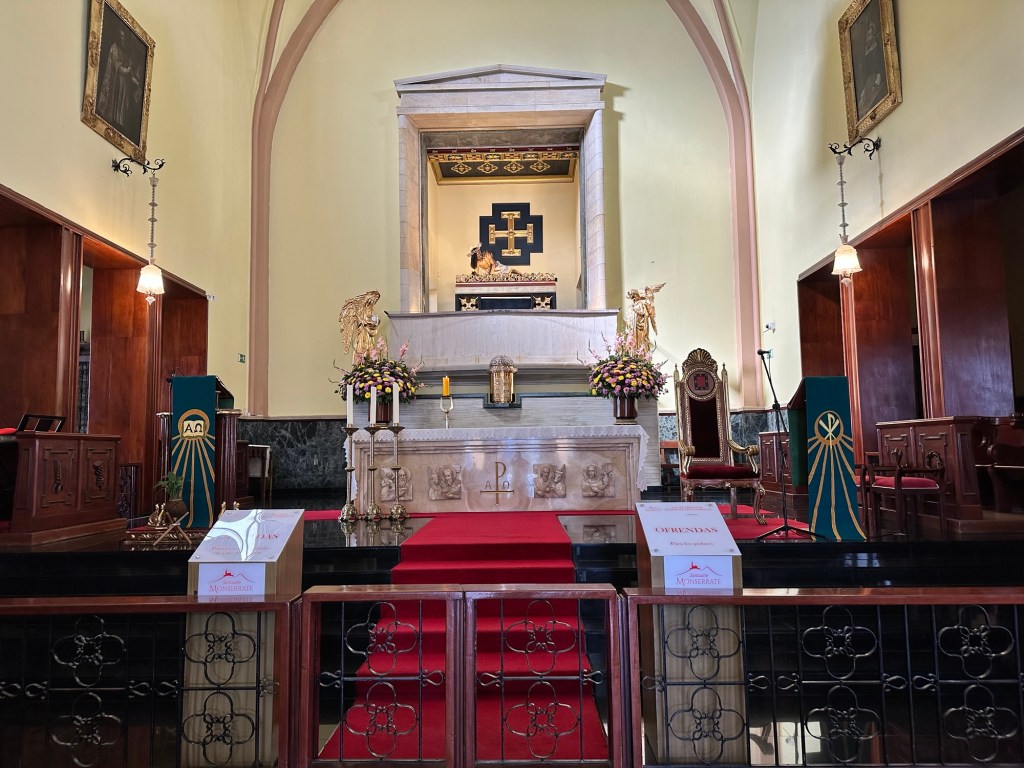
At Monserrate, we got a spectacular view of the city. But wait, there’s more! The church was very different from any that I had ever been in. When you enter a church, what do you normally see? A huge cross, with a very European Jesus hanging from it, right? Take a look at THIS church.

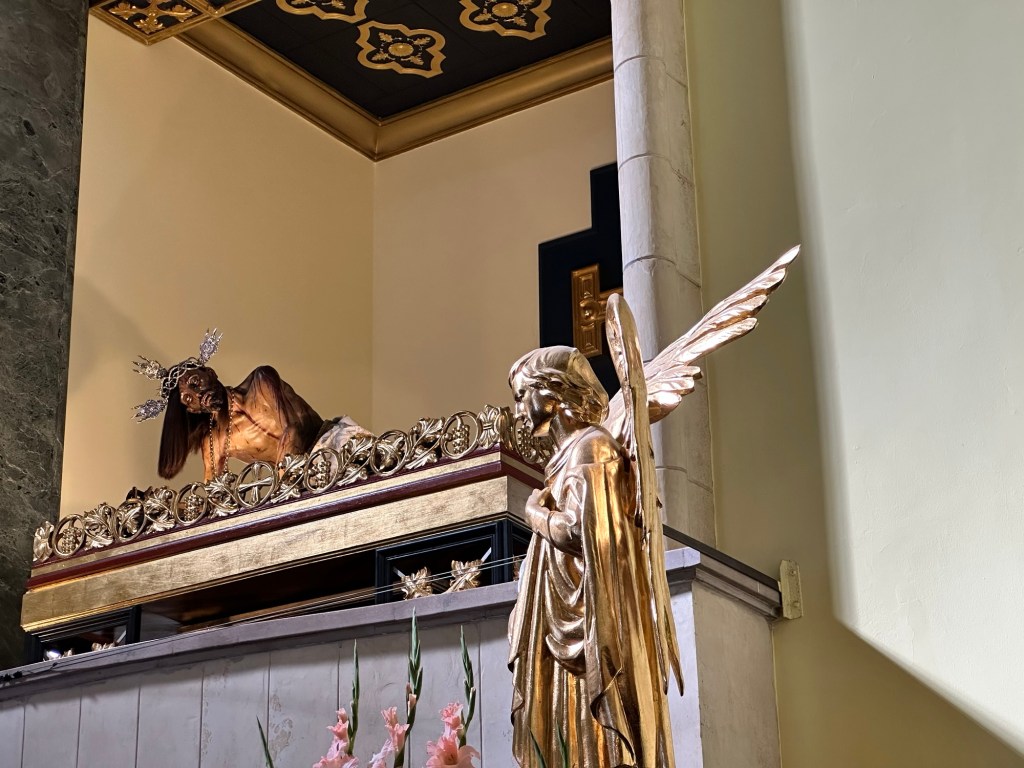
Here’s a close up. Don’t you think it’s far more realistic depiction of Jesus? I suspect back then, his skin was more of a Middle Eastern color.

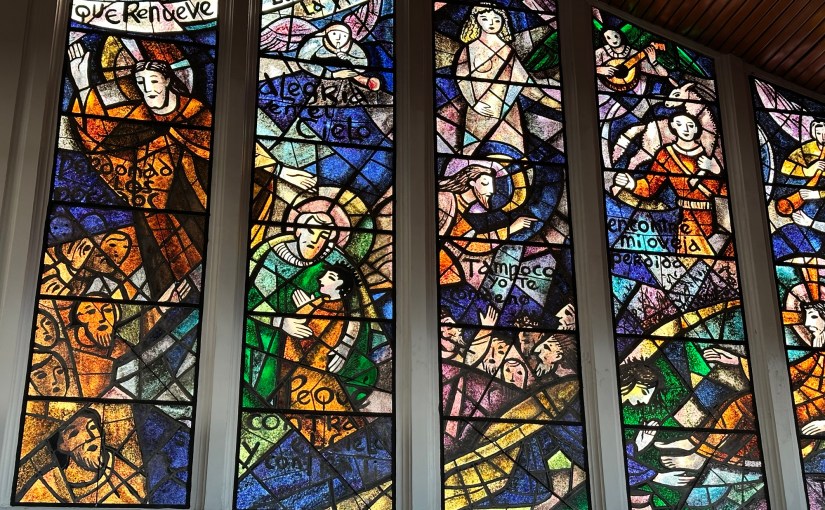
The photo for this post’s banner is one of the church’s stained glass windows. Take a close look, because it has something I have never, ever seen on ANY church’s window (trust me, I’ve visited countless churches) and don’t expect to ever see it again. Who can spot it? I’ll give you a hint. Look near the top.

The LAST unique aspect of the church that I noticed was the “miracle area”, where people thanked “El Señor” for granting their wishes by buying a plaque. Notice the one from Luis Fernando Rendón thanking El Señor for making it possible for him to move to New York and for giving him health and strength to care for his family. It’s the gold one in the photo below.

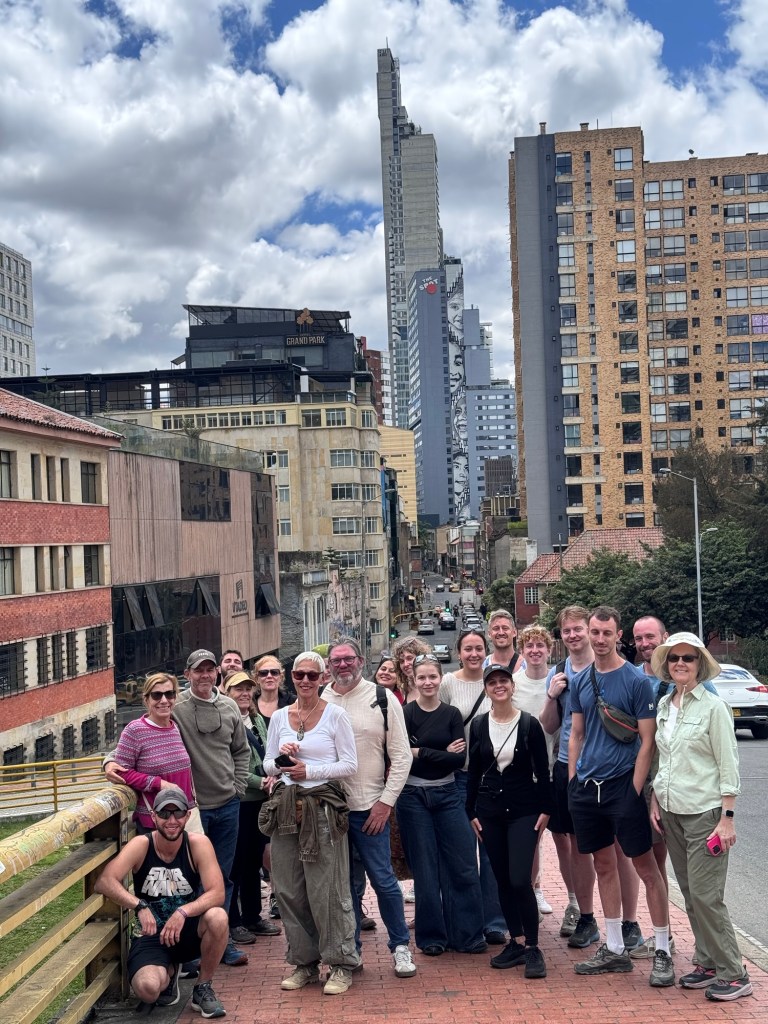
Here’s a photo that Cama took of 11 of the 15 of us on the tour.

Although OAT offered an optional tour, not enough of the group chose to take it, so instead, we got another unstructured day. Elsie and decided to take the free graffiti tour, and it was FANTASTIC!

I had no idea that Bogotá has 6000 kilometers of “legal” street art, with another 1000 of “illegal” (unapproved). The tour was conducted by an artist who showed us one of his works. It depicts a creation myth. I don’t remember ALL of the story, but here’s the gist.

These two will be perpetually young so long as they stay faithful. When the man notices his skin is getting wrinkled, he realizes he’d been betrayed, so he killed his rival. Sorry, I don’t remember how the emerald and the snake tied in to the myth, but they did. And I remember the man ultimately committed suicide. Once again, it was all HER fault.
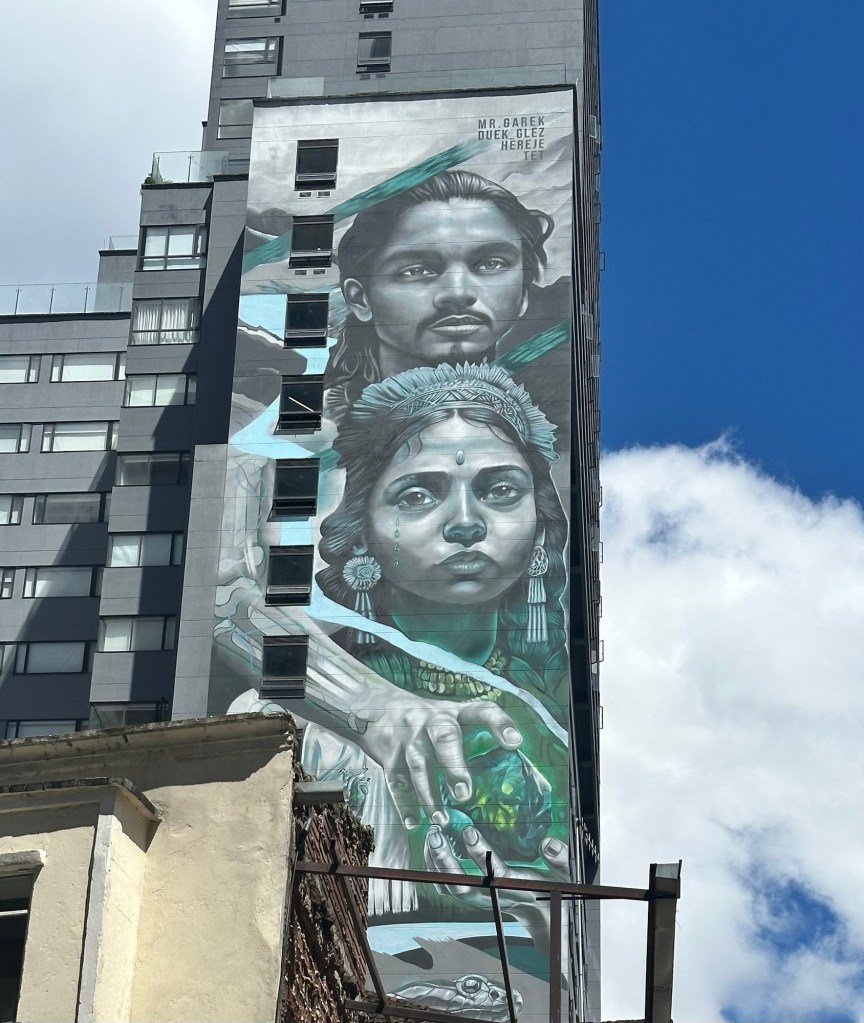
The next one was commissioned by Peru, as an act of reconciliation. For what, I don’t recall.

The words read “No one is illegal. Strength in unity”.

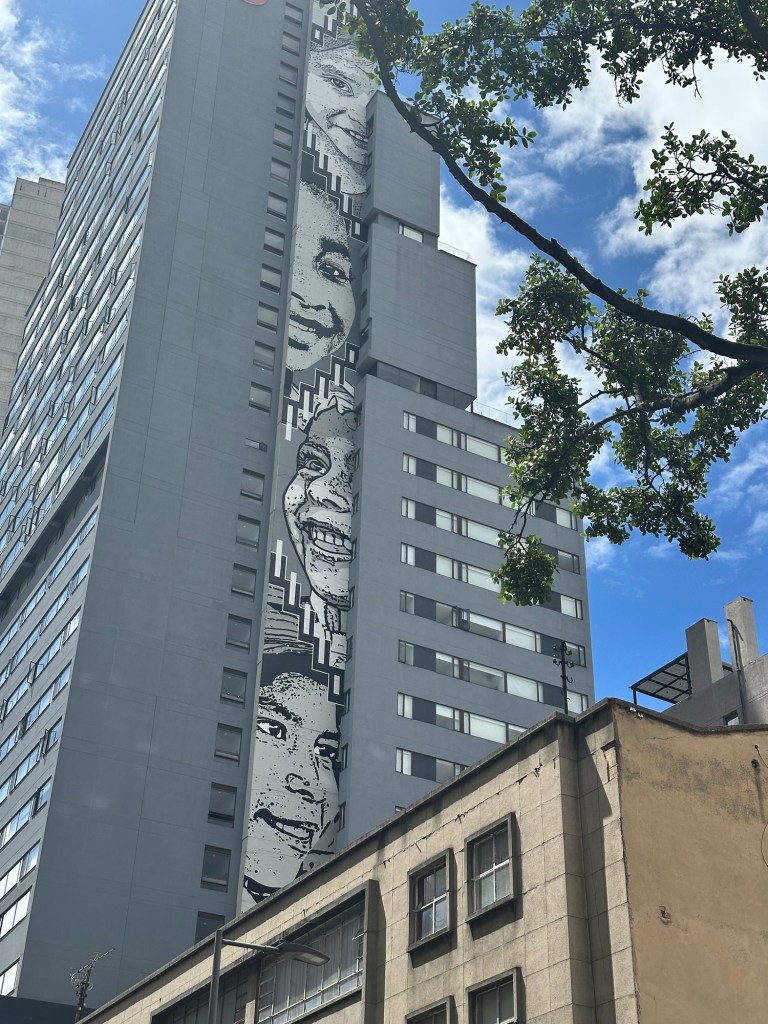
I love this next one of five young indigenous girls (I could only get four into the photo).

The artists asked them about their hopes for their future, and as they were thinking about their dreams, they smiled. The artists captured that moment in a photo and that became their model for this mural.

There was a whole lot more art, and MUCH more interesting narrative, but this post is getting rather long. Our next to the last stop was on a bridge, where our artist guide took this photo. The tall structure in the background is significant because it is the highest building in Colombia, completely empty, because it is tilting, like the tower in Pisa. It is also significant because a graffiti artist has placed his “tag” on the very top of the building. And if you want to know more about the interaction among graffiti, music, and common words in our culture, you’ll just have to take the tour.

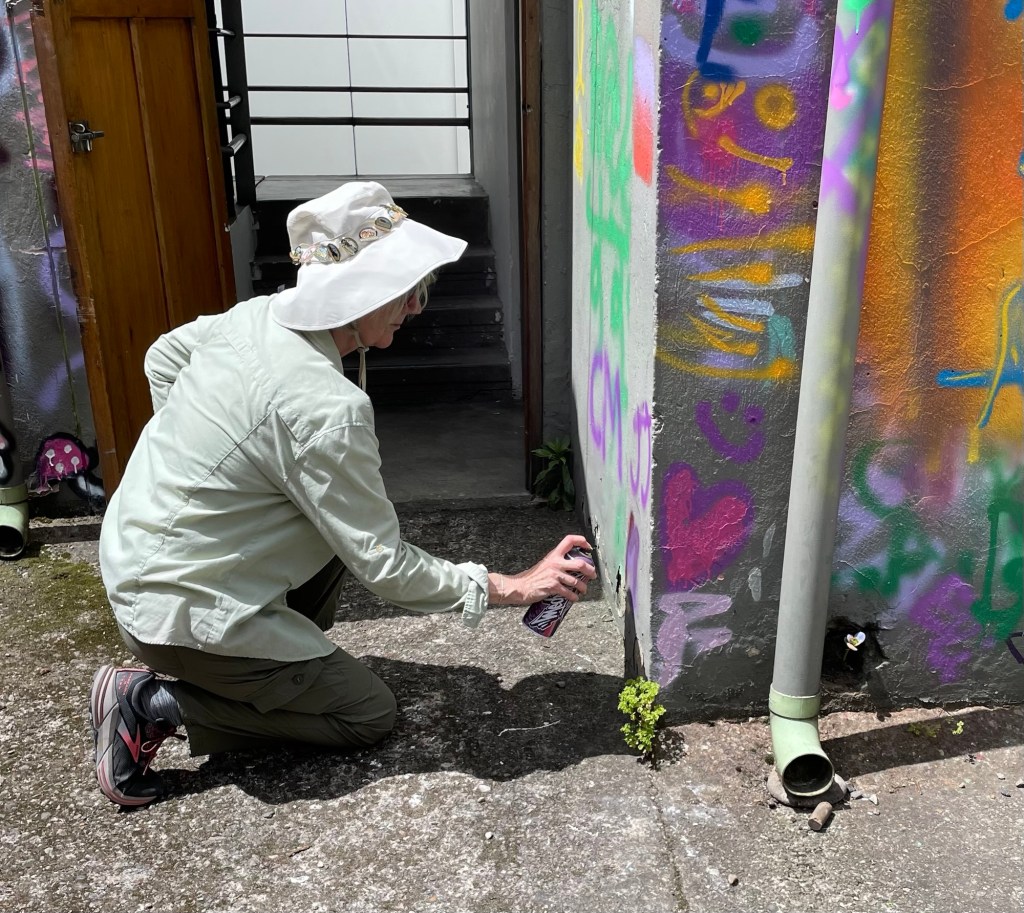
I’ll close with photos of the newest artists

And their work

Hey, it ain’t as easy as you might think!

Bogotá, Colombia – Arrival

After I learned our governor had declared a state of emergency, because of the anticipated snowstorm, I was very glad I had booked a room at the Hampton Inn near JFK. My reason? My flight was scheduled to depart at 6:30 the following morning. Why JFK and why so early? It was a direct flight and whenever possible, I avoid changing planes.

I wanted to increase the odds that my driver would get home safely, so I had him pick me up two hours earlier than originally planned.

Despite my earlier departure, I still had sufficient time to fix my clogged toilet, thanks to a tip my friend Susan gave me: fill a container with really hot water, then dump it fast and hard, and although it wasn’t part of her instructions, I kept working that damn plunger till all was right with the world…and my toilet. Bet you weren’t expecting a plumbing tip in a travel blog. You’re welcome.

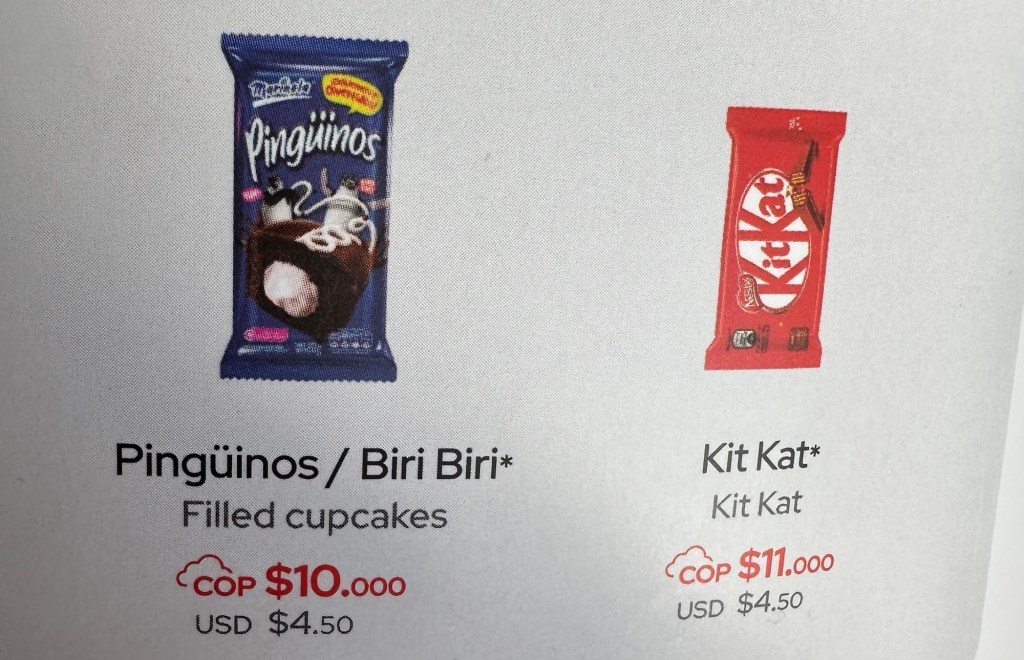
About the surprisingly “low cost” to upgrade to Avianca’s business class, I mentioned in my last post? After having experienced it, I’d say “fairly priced” is a more accurate description. Think economy, but with bigger, more comfy seats in the first three rows of the plane. Had I known the food was going to be so bad, I would have packed more than a bag of cashews and chocolate. But look at what you could choose to buy if you were flying in economy. Hostess cupcakes have been revived and given a new name!

To me, what the upgrade offered that was more valuable were the priority lines for check in and security. I couldn’t believe how crowded Terminal 4 was at 4:15 AM!

Although business class ordinarily comes with lounge access, the earliest opening time was 5 AM. I had just received an email from Avianca telling me boarding started at 5:31AM. Wrong! The plane was late, and there were no updates from Avianca until we were told to board at 7:30. Damn. I could have been in the lounge, having breakfast after all.

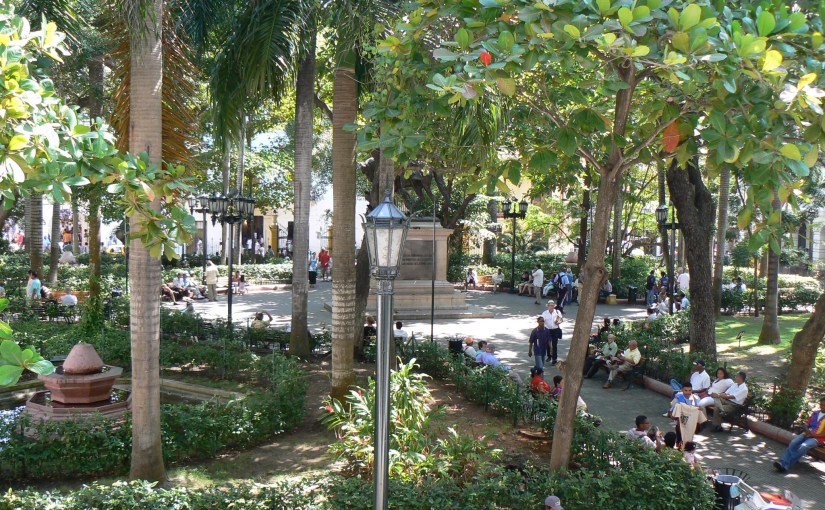
There is something exhilarating about flying into sunshine after leaving a frigid, snow covered area. The traumas of travel just melt away. All is forgiven once you reach your destination and you find it is even better than the photos portrayed. Our hotel, De La Opera, is in Candelaria, a delightful section of Bogota.

On my first night in Columbia, my new friend, Elsie, and I walked to dinner at Aquelarria, which is about 6 blocks from our hotel. I’m so glad she also chose to arrive before the tour started because it gave us a chance to get acquainted. She has her PhD in Cultural Anthropology, is fluent in Spanish, and lives near Carlsbad (where my brother John lives).

Dinner was delicious and SO inexpensive. If you like murals of bare breasted women frolicking on the walls, this is the place to be.

So what did I do on my early arrival day, you ask? Before leaving home, I booked a tour through “Get Your Guide” to the Salt Cathedral, which has been described as Columbia’s first (and so far, only) wonder of the world. To get to this “wonder” , you’re looking at about a two hour drive EACH way in heavy traffic.

I didn’t realize it was a private tour, with a young woman whose English is about as advanced as my Spanish. Needless to say, conversation was extremely limited on our 2 hour drive. Did I mention that Bogotá is enormous and the traffic is much like what one encounters in most big cities?

Although I was promised a guide, what I actually got was a driver, because that’s about all she did. But she did it extremely well, which is something, given Bogotá’s traffic (and other drivers). The online description said the tour included “skip the line” tickets, which sounded good to me. What it meant was we stopped at a little gift shop near the attraction where I got to pay about three times the price I would have paid. When I arrived at the Salt Cathedral, I discovered there was no line and I saw what the price should have been. Okay, so I contributed to the local economy.

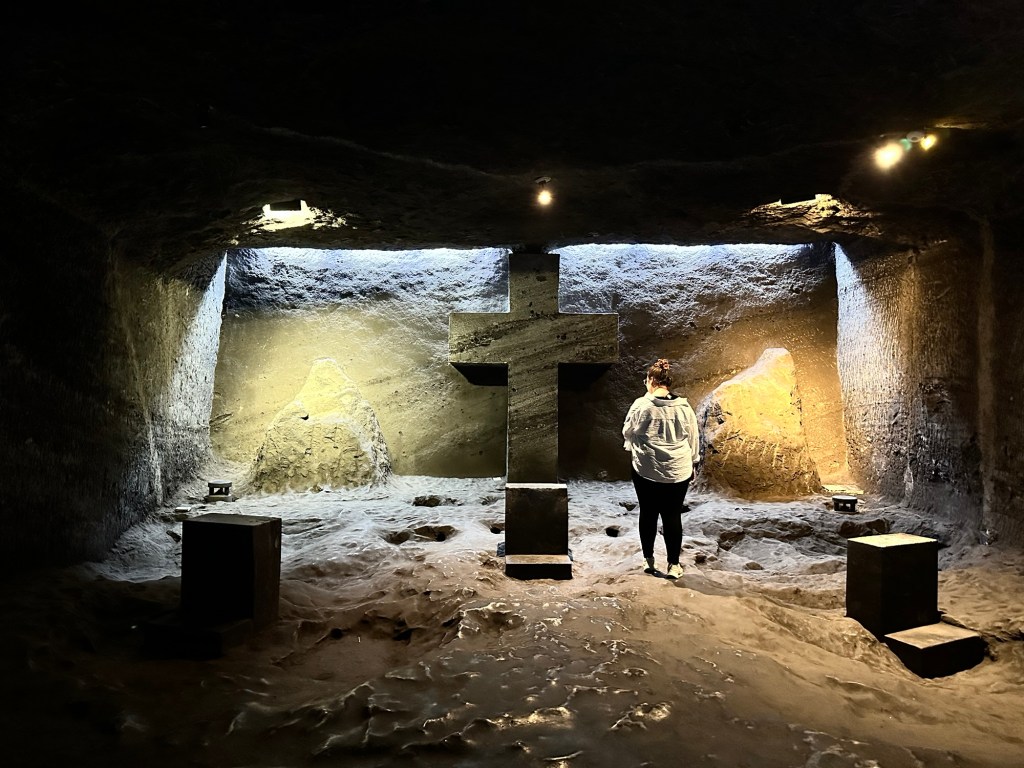
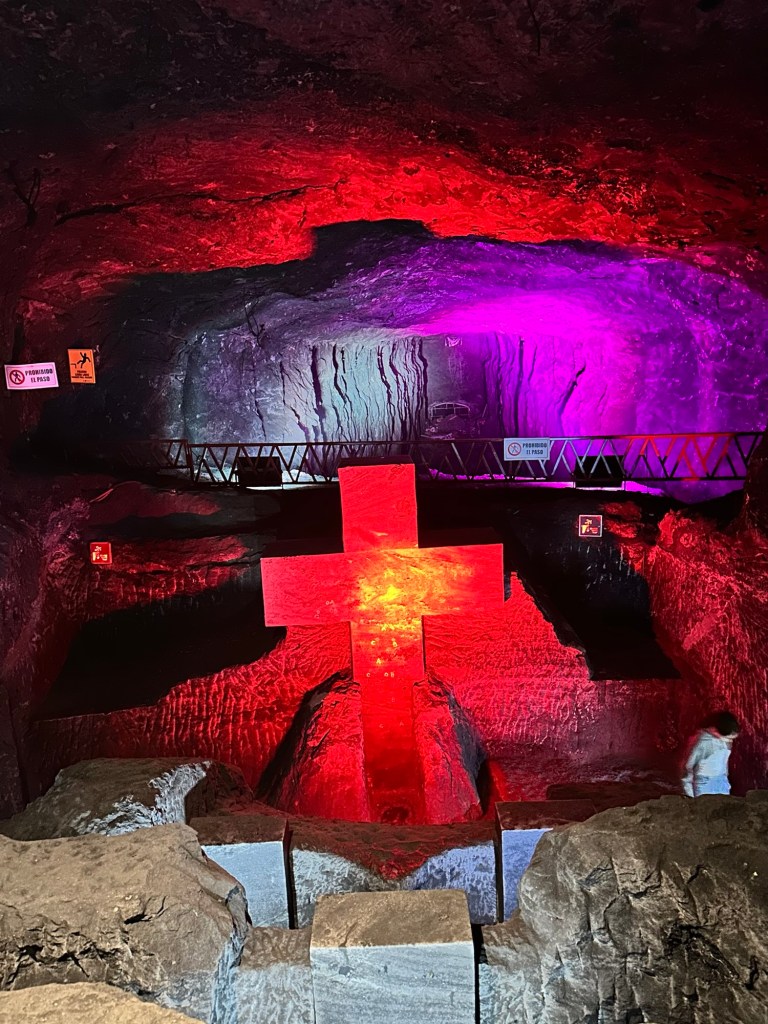
After all that, I expected the Salt Cathedral to be breath taking. It wasn’t. Of course, if your thing is walking along dimly lit corridors on the uneven ground of an old salt mine, you’ll be enthralled. Before you get to the “cathedral”, you walk along “stations of the cross” that are essentially stone crosses carved in alcoves.

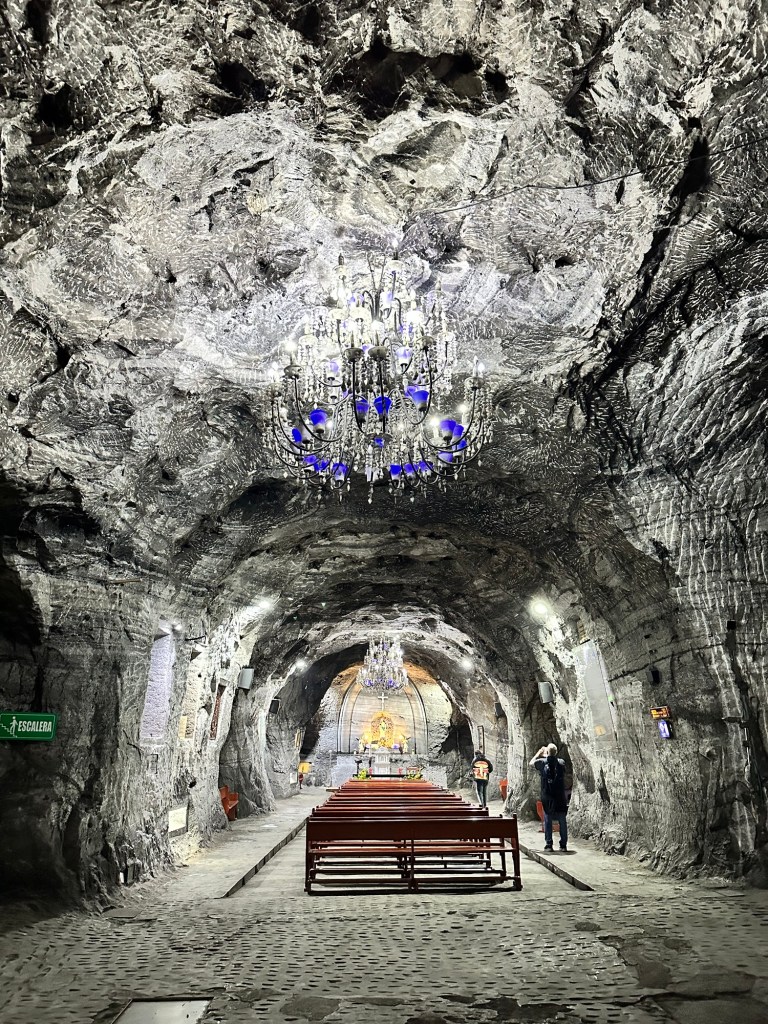
Occasionally the lighting in the alcove varied. But that was it. Eventually you got to the main event, the cathedral, and it was indeed lovely.

Had the cathedral been a 15 minute drive away, I would have given it a rave review. But it wasn’t, so I didn’t.

To me, the best part of the experience was the 3D video about the history of the salt mine near the very end of the corridors.

The rest of the tunnel was jammed packed with souvenir shops and places to get snacks. I skipped the gift shops ( sorry, Sue), but bought an ice cream cone at one of the snack alcoves.

After 2 hours in the salt mine, I was ready to emerge, but how? The signage can best be described as fairly nonexistent, so I asked someone. In Spanish. Yes, those on line lessons really paid off. I even understood her when she told me I could either go back the way I came or wait for the train. Given that I had taken multiple wrong turns on the way down, the train was clearly the best option for me. I even was able to ask someone if I was in the right line, and he understood me!

By the time I got back to the hotel, it was too late to do anything other than get ready for dinner. Elsie, with the help of Alejo, our guide, had organized dinner at a nearby restaurant. Most of the group had arrived and decided to join us for what turned out to be a delightful evening.

Our first official day will include a walking tour of Bogotá, then free time in the afternoon during which we can either go off on our own or visit Monserrate, which our guide thoughtfully arranged transportation for us.

South American Travel Therapy

How will I fill the hole in my heart from losing Mike and Sandy? It was unwitting, but the healing process has been helped by my book club’s selection of “The Collected Regrets of Clover”. The main character (Clover) is a death doula. Although I didn’t relate to her personality, I definitely DID appreciate her discussion of death and what to do to make that inevitable passage more comfortable for a loved one. How I wish I had read it two years ago!

Here are some lines that really resonated for me: “When someone has always been there for you, it’s easy to assume they always will be. And then, one day, they’re not.”
“Some people believe that the spirits of loved ones stay with you even after they die, so you can still chat with them whenever you like.”

Whenever I find myself regretting things that I should have done differently during my 47 years with Mike, the following line brings me comfort. “You know, from what you’ve told me about him, it doesn’t sound like there’d be any issue of him forgiving you. Maybe it’s more a question of you forgiving yourself?”
Like me, Clover discovers traveling can help her assuage her grief. That’s how I’ll be spending a good part of 2025, as you’ve probably guessed from the title of this post. Some of my travel will be to places I’ve already visited with Mike, as is the case with my first trip in 2025, to Columbia and Ecuador.

Okay, I’ll admit it. I’m very excited about this trip, which is why I’m blogging about it pre-departure. In January of 2010, Mike, Greg and I took an Oceania cruise through the Panama Canal. Our only stop in Columbia was in Cartagena. As is the case with many cruises, we were only in port for less than a day, which was definitely not enough time to savor this lovely city. But one advantage to traveling by ship is the spectacular view of the city as we pulled into and out of the harbor. Here’s a photo from a vantage point that I don’t expect to replicate on my land trip with OAT.

One of the many reasons I continue to choose Overseas Adventure Travel is the ability to customize my tour by adding pre and/or post trips. Initially, I had considered taking the pretrip to Bolivia, but the flights and connections were pretty dreadful, and I learned from the very helpful Facebook page “Friends of Overseas Adventure Travel” that some people struggled with altitude sickness while in Bolivia. Bogota is fairly high up too, but by arriving a day before the tour starts, I figure I can load up on coca tea. Yes, you can make cocaine from those very same leaves, and no, I’m not bringing any home with me. During our trip to Peru in 2009, we discovered the miraculous properties of coca tea, which helped us adjust to the altitude in Machu Picchu and Cusco. Before departure, OAT’s trip leaders always send us an email chock full of helpful information. Alejo also sent a second email to the five of us that are arriving early with suggested activities, restaurant recommendations and he confirmed that coca tea is available at our hotel.

I love OAT’s small group size. Of the 15 of us on the main trip, 5 are men and 10 are women. Three have matching last names, and although the remainder don’t, that doesn’t necessarily mean they are all traveling solo. Sometimes two friends are traveling together, and if it is a relatively new relationship for a man and a woman, they tend want to go off by themselves. Fortunately, at least so far, I’ve encountered a number of interesting, friendly OAT travelers who have been excellent travel buddies, which makes the trip far more fun. Some that I’ve met (both when Mike and I traveled together and since I’ve traveled solo) continue to be friends. In fact, some will be with me on trips planned for 2026. But let’s not get ahead of ourselves. Back to 2025.

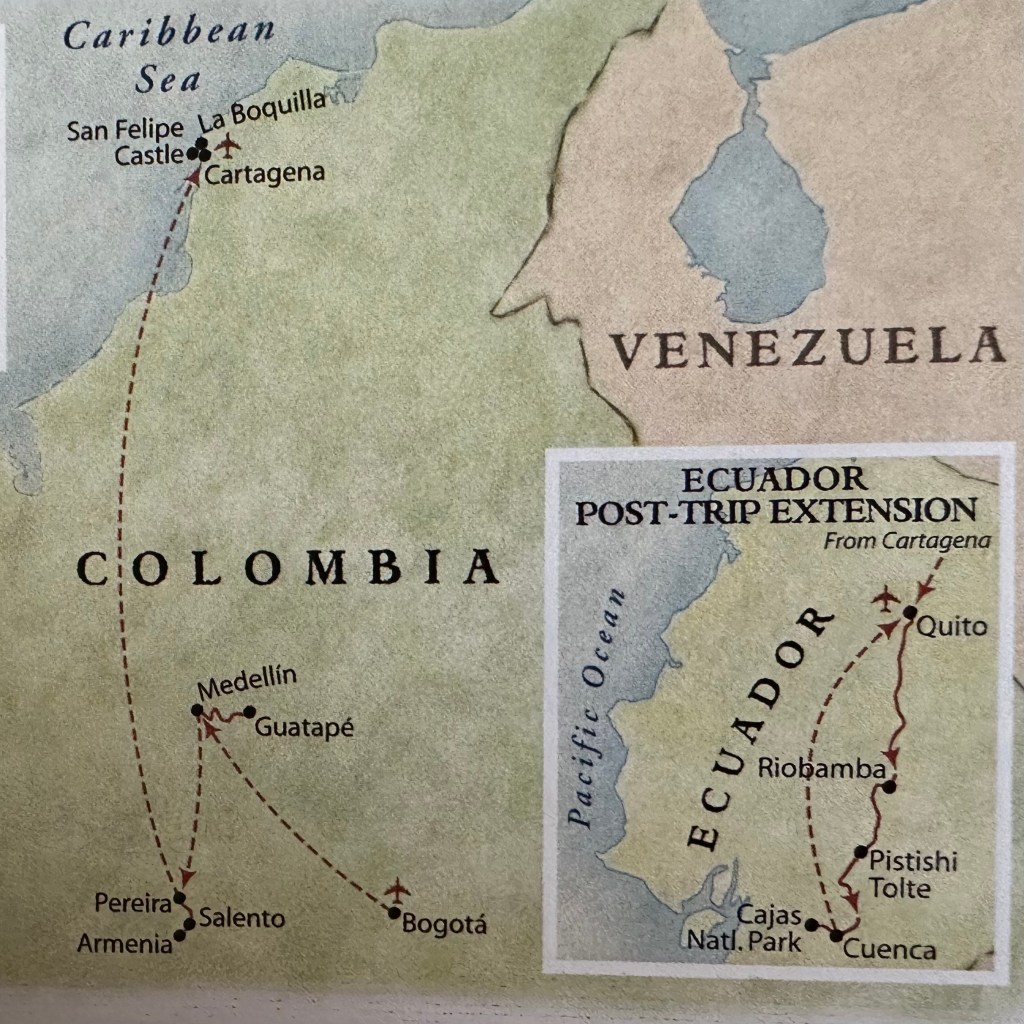
When I learned that Columbia was one of the countries featured on the 2024 Amazing Race, I streamed those two episodes to get a sneak peek at what I might expect. Like the contestants, we will be traveling to Bogota, Medellin, Guatepé and the coffee growing area. I double checked the OAT itinerary, and sure enough, we will also hit many of the same highlights. For the map enthusiasts (and Mike turned me into one…) here’s where we will be, starting in Bogota.

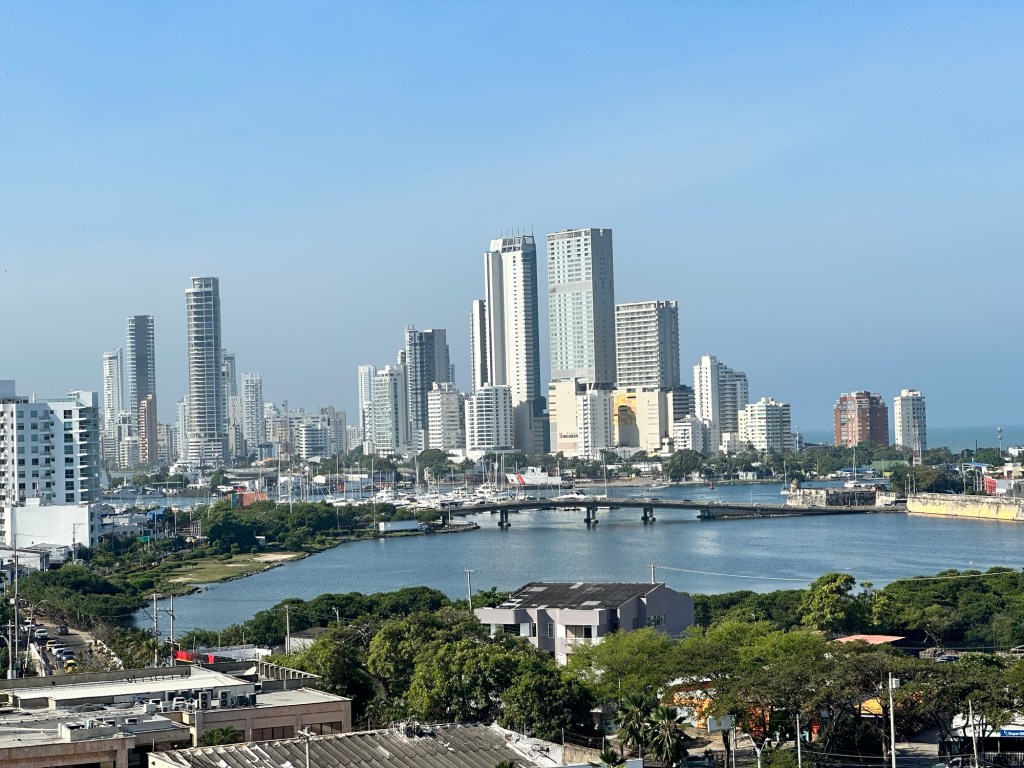
Luckily, we have three nights in Cartagena, so this will be my chance to get that “savoring’ in that I missed during our brief time in port. The photo atop this post I took when we were in Cartagena 15 years ago. Not what you envision when you think of Columbia, is it?

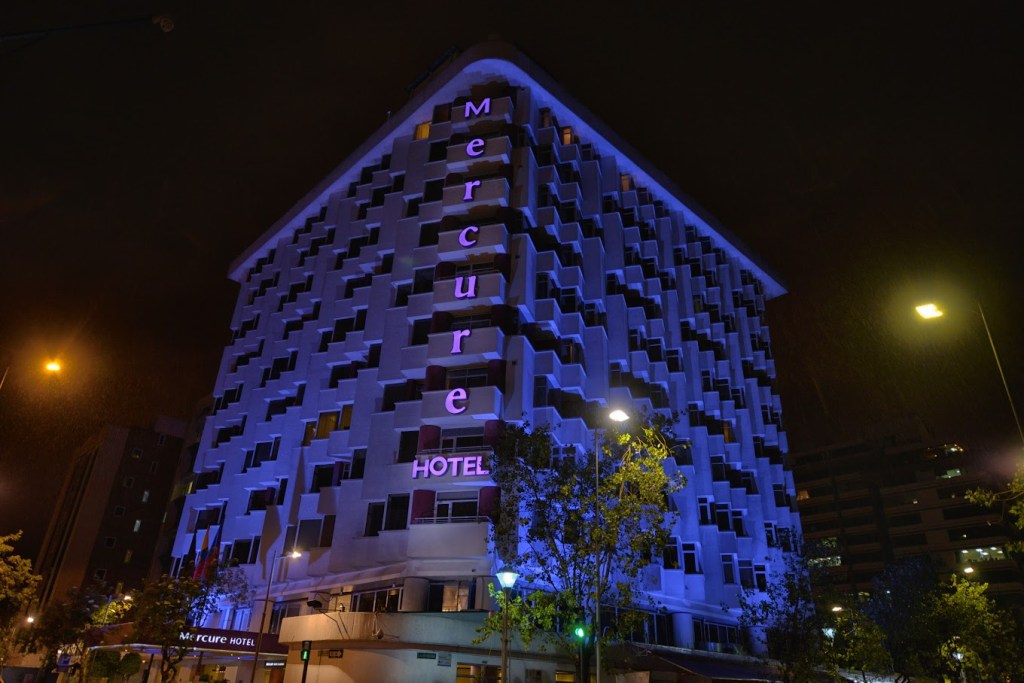
Our hotels are a nice mix of big city locations and smaller boutiques. Because so many people have warned me about the dangers of traveling in Columbia, I thought I’d share photos of where we will be staying. Our hotel in Bogota appears to be centrally located, in a lovely walkable area.

Hotel de la Opera
Bogota

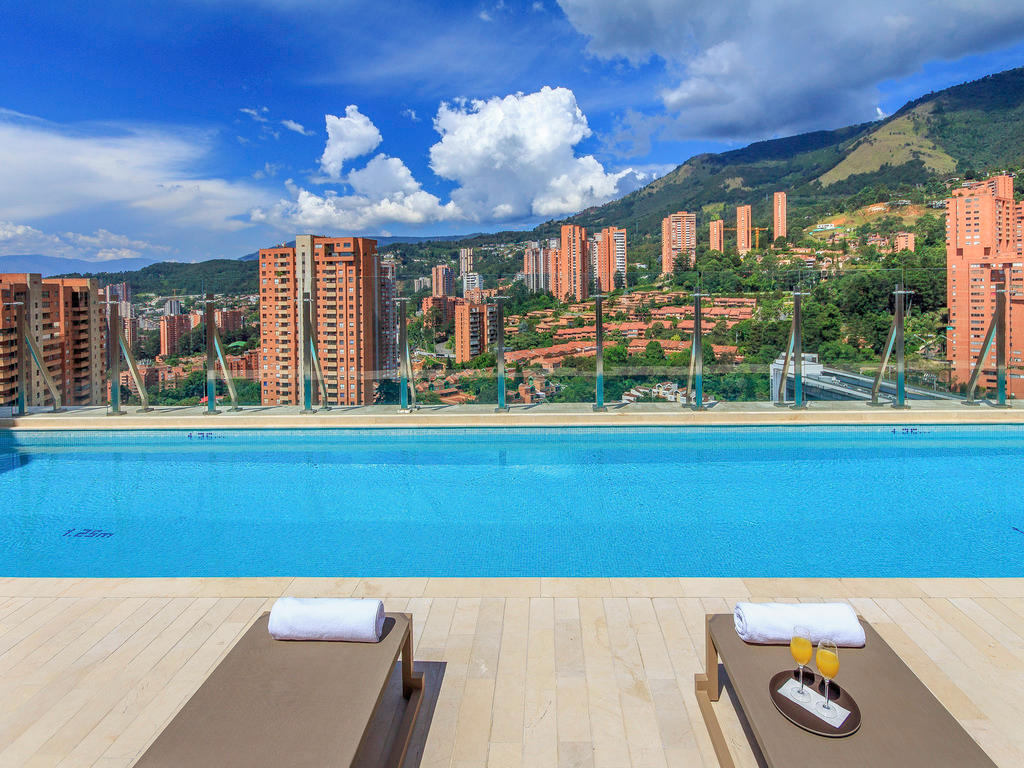
All of our hotels have pools; the ones in Medellin and Cartagena are on the rooftop, affording guests a panoramic view of the surrounding area.

Novotel Medellin

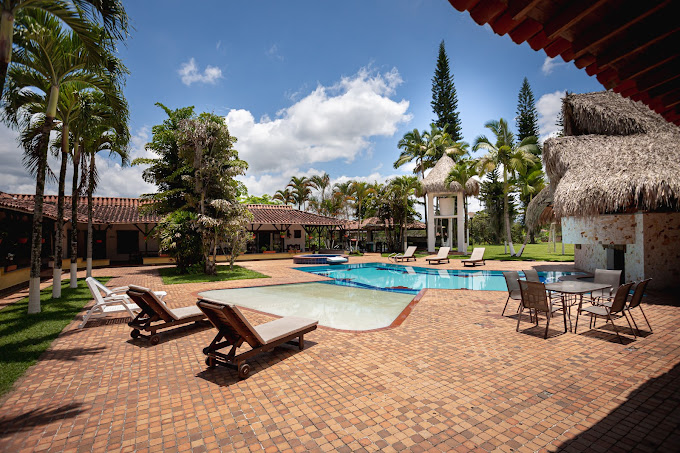
Our small boutique hotel in the coffee triangle will be a nice change from the two big cities, as you can see from the photo below. We will spend three nights in Pereira. Bosques, by the way, is the Spanish word for forests. I have no idea what Saman means. Probably just the name of the area.

Hotel Bosques del Saman

I don’t know if you can tell from the photo below, but the ocean is visible from Cartagena’s rooftop pool. An additional claim to fame for the Bantu Hotel is that it is just 300 meters from the Hotel Santa Clara. (For those who don’t relate well to the metric system, Ms Google tells us that 300 meters equates to a 4 minute walk ) . Why is that important? Well, in 1621 The Hotel Santa Clara was a convent for the nuns known as the Poor Clares. When Sofitel transformed it into an upscale hotel in the 1990’s, they wisely kept the crypts, wells, confessionals and gardens which should make their “30 minute free legendary tour with the hotel Butlers” really interesting. Is the tour only available to hotel guests? I don’t know, but I can assure you that I WILL find out, and I’ll certainly report back.

Bantu Hotel

As one would expect, the Santa Clara Hotel has world renown restaurants. The 1621 is reputed to have a “creative” tasting menu –(is that a synonym for really, really expensive? )– but I expect I will only be able to afford a drink at the hotel bar. Check out the hotel’s on-line description of this “magical” bar:
The atmosphere becomes more magical when the sun begins coming down and the golden and orange sunlight offers an unrepeatable spectacle for your senses.
This place, surrounded by an enchanting aura, welcomes its visitors with shelves full of old jars. Upon arrival, the outpours of exotic herbs and spices mix in the air, taking you to a time of ancient secrets and forgotten magic. The menu is truly a masterpiece, offering a selection of potions and concoctions carefully prepared. You can find a wide variety of “Elixir” –a mix of ginseng and lavender– as well as the “potion of remedies for the soul”. Each drink is a unique sensorial experience with dazzling presentations and seducing flavors. The bar is located outdoors on the terrace of the hotel’s third floor, offering the best view of the Caribbean Sea. Botika Bar recreates the concept of the old pharmacies, where artisans would experiment and prepare medicines by combining plants and minerals to discover masterful formulas with healing properties.

How could I pass up such a spiritual experience? I sure hope I’ll be able to entice at least ONE of the “friends I haven’t met yet” to join me for a “unique sensorial experience with dazzling presentations”.

After imbibing potions that will heal the soul, I and 6 fellow travelers will be flying to Quito for the 7 day post trip. Although Mike and I had been to Ecuador in January of 2012, we stayed at an ecolodge in the Amazon jungle and then were on a boat traveling from island to island in the Galapagos. The only overlap between the two trips will be our time Quito.

While in Columbia, I will be spending 13 nights in 4 hotels; In Ecuador, it will be 7 nights in 3 hotels, but our time in Quito will be split into a 1 night stay, upon arrival, and a 2 night stay upon departure. Let’s see how THAT shakes out. It will definitely be a test of my packing skills!

To prepare for my visit, I have been taking language lessons through two on line apps. Although Duolingo’s app is helpful, I found that Busuu (recommended by my multi-lingual friend Chris) teaches me words and phrases that I am more apt to use. Here are some examples of actual lessons:
“Dar la vuelta al mundo” means to travel around the world, but a literal translation is something like “to give the return to the world”, which would have completely befuddled me. Duolingo tends to introduce phrases that can easily translate into English like “mi tio estudia la actividad del cerebro de los gatos”, which means “My uncle studies the activity of the brains of the cats”. I’m just guessing that the idioms from Busuu will be used more frequently. But we shall see. One can never predict how many cat brain enthusiasts one might meet!

Busuu has me engaging with native speakers in Spain who are learning English. I correct their work and they correct mine. Of course, some of my teachers are young kids, but hey, that way I’ll learn all the cool words! Should I teach them “yo mama”? Both apps have free and paid versions. Busuu wears you down with lots of advertising on their “free app”, but I kept ignoring the invitations to buy until the price reduced to about $60 for the year.

Time to get back to trip details. The participants on the OAT Facebook page frequently ask questions about whether it is better to purchase air through OAT or to book your own flight. I’ve done both, but this time, I discovered that if I booked directly with Avianca, for a mere $427 more, round trip, I could upgrade to business class AND choose my seat AND get direct flights from and to JFK! I’ll be flying for the first time with Avianca, so I have no idea what business class is like, but I certainly will let you know.

Adios por ahora.

Patagonia – Our Final Days

I’ll admit it. I am a lazy blogger. It seems it always happen this way. I start out with great intentions, keeping friends and family updated as to our whereabouts, but toward the end of every trip, I run out of steam. Then, re-entry into our world takes a few weeks. So here we are, back home, reliving our wonderful time in Patagonia via photos.

Our last several days have not been recorded, so let’s start there. If you recall the map from the Punta Arenas post, you’ll remember that we had some very long travel days.

With a bus like this, however, you travel in comfort, and you really get to experience the countryside. There were only 12 travelers (plus guides) on a bus that could carry over 40 passengers! With multiple interesting stops along the way, time passed quickly.

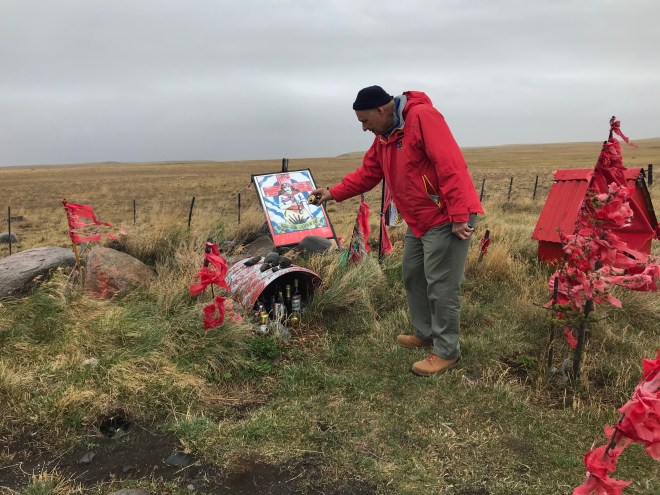
On our way to cross the border back into Argentina, we stopped to pay tribute to Gauchito Gil.

Here’s his story: Gil joined the Argentinian army to fight against Paraguay. He returned to his village as a hero, but soon after, the Argentine Civil War broke out. He refused to fight against his countrymen, so he deserted. He was found in the forest, by the police, who tortured him and hung him upside down from a tree. As a policeman was about to kill him, Gil said, “your son is very ill. If you give me a proper burial and pray to me, your son will live. If not, he will die.” Despite the prediction, the policeman cut Gil’s throat. When he arrived home, the policeman discovered his son was indeed very ill, so he heeded Gil’s prophecy–gave him the proper burial, said a prayer or two, and (wait for it–dramatic pause) the son was CURED!

SO, today’s travelers offer a beer or some other tribute to Gil, as an extra insurance policy for a safe trip. As you can see, we were no exception. Hey, why not.


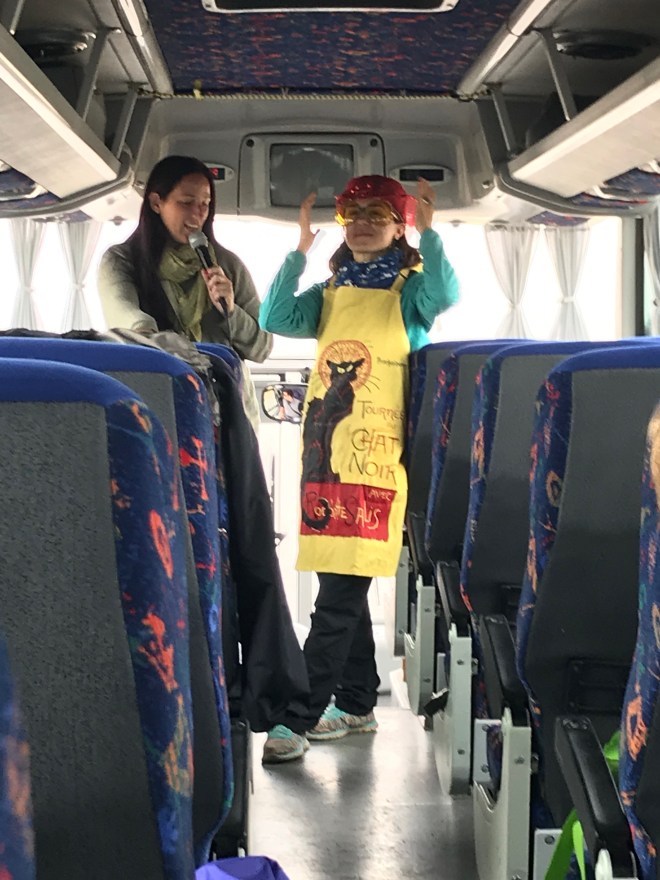
In addition to educational stops along the way, our guides kept boredom at bay by entertaining and feeding us. Laura, our guia excelente, donned that costume before she served us a wonderful treat. Yeah, I forgot what it is called, but I certainly remember the wonderful taste.

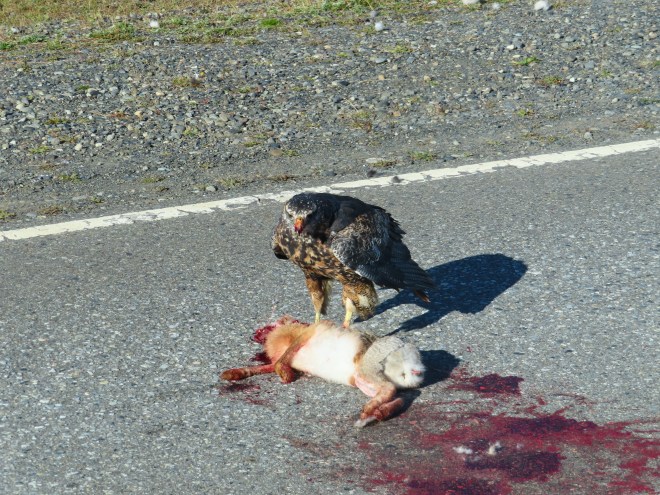
We were not without our national Geographic moments. As we drive the highways and by ways, we noticed several eagles and other large birds of prey sitting on fence posts. Were they watching the cars go by, as an avian form of TV? No, they had figured out that it was just a matter of time before some tasty road kill would make their grocery shopping much easier. Take a look.

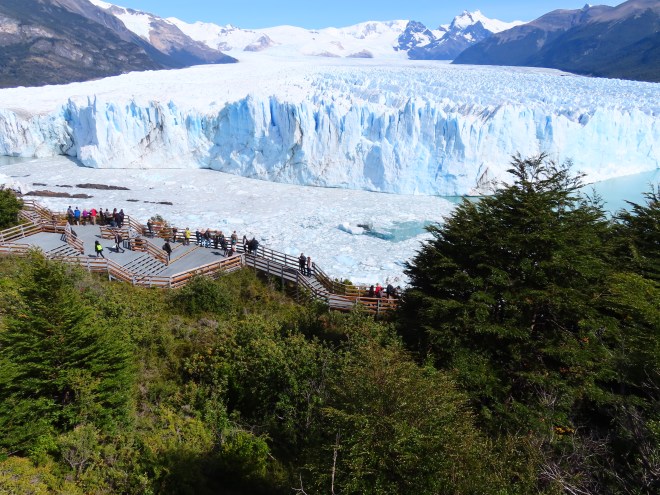
Before we knew it we were in El Calafate, Argentina. The main purpose of our 2 night stay here was to view the Perito Moreno Glacier in the National Park.

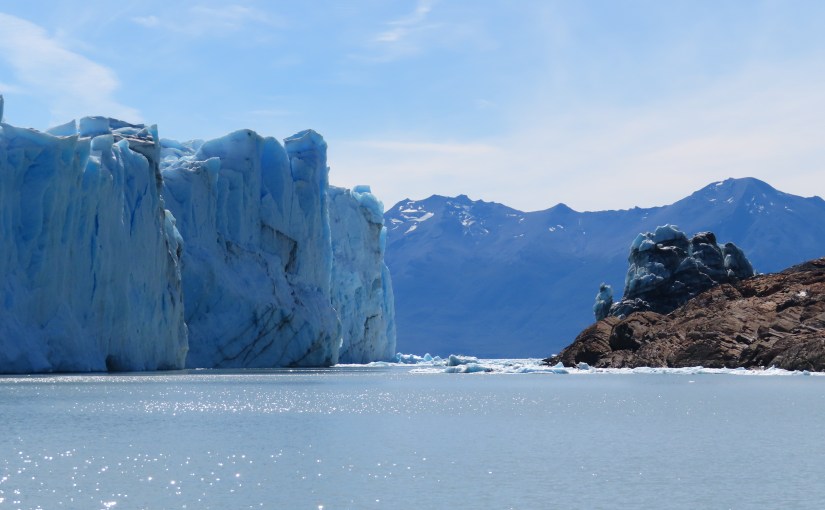
We certainly did that, both from a ship and from land. It was quite a majestic sight. The experience wasn’t just visual, however. It was also auditory. We could actually hear the glacier groan and thunder, as parts of it crashed off into the sea below.

While in El Calafate, we stayed at the Kauyatun, a gorgeous hotel reincarnated from a former sheep ranch. Best of all, it is within walking distance of El Calafate’s charming center.

Our trip ended in Buenos Aires, where we had our farewell dinner, then flights home the next afternoon.

A toast to Laura

Saying goodbye is never easy, especially when you have such an interesting, caring, informed, fantastic guide like Laura. We all truly appreciated how hard she worked to make this trip extra special for all of us. Her energy was amazing!

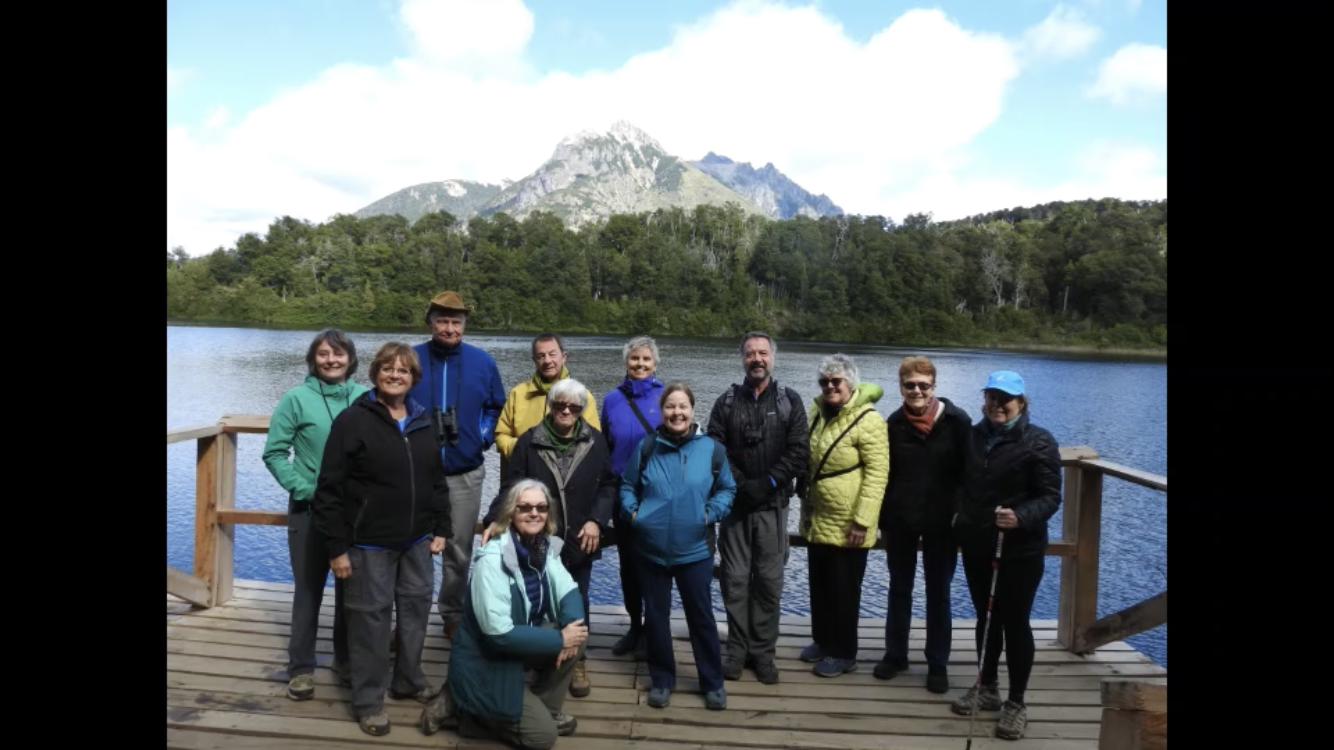
We also felt so fortunate to be a part of an extraordinarily compatible group. Our hope is that this will not be the last time we see these wonderful, smiling faces!

The terrific twelve

Towers of the Emerald Blue

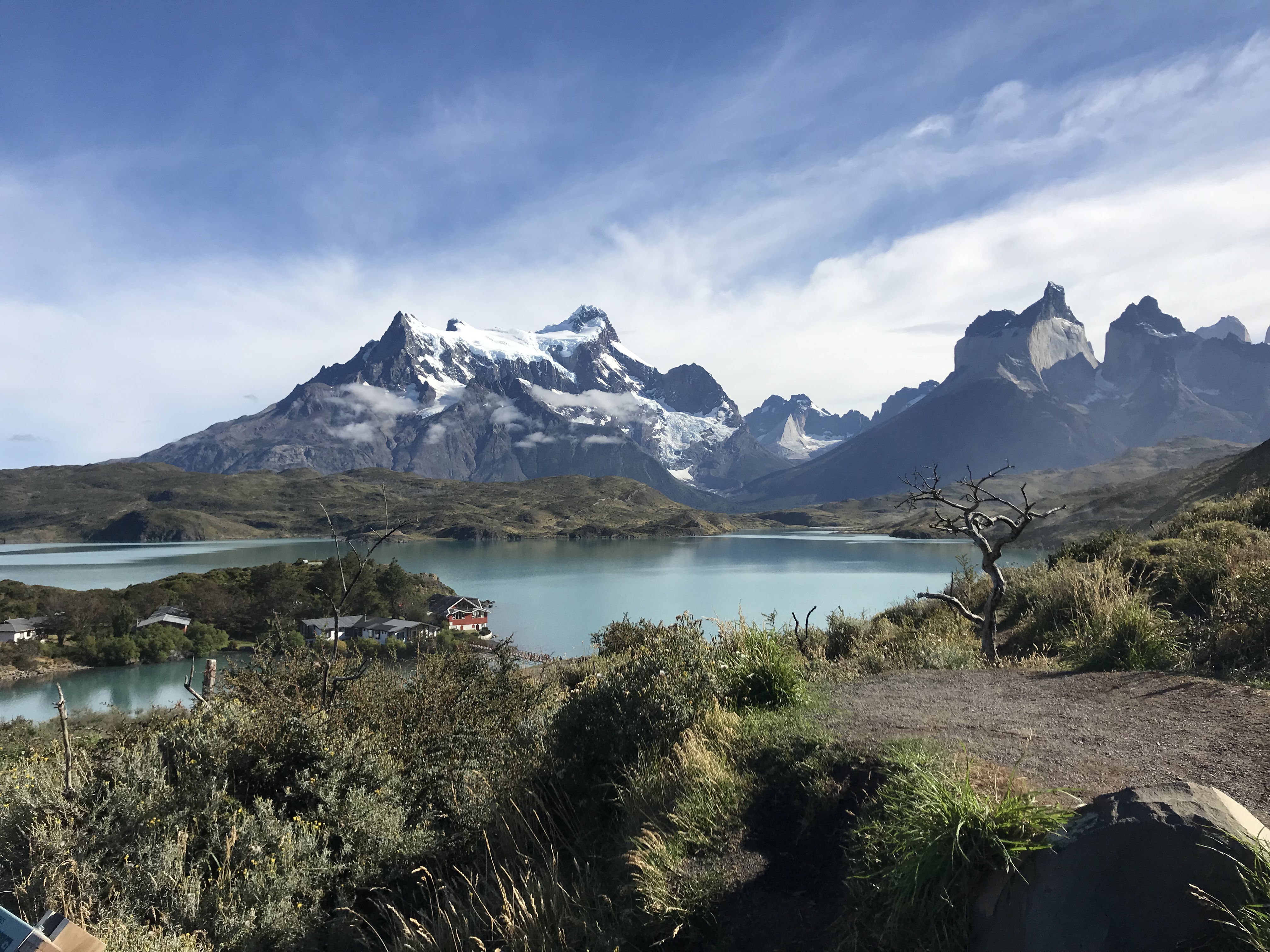
“Paine” is a Mapuche word meaning emerald blue, or, if you prefer, blue green. So “Torres del Paine” gets its name from the towering, unusually shaped mountains and the icy clear Lake Pehoe.

Normally, this area is buffeted by high winds and lots of rain. Laura and Maria, our guides, have reminded us how very fortunate we are to be experiencing this incredible weather. It could change at any moment, but so far we have beaten the odds.

Last night we took advantage of having an astrophysicist in our midst and persuaded Mike to give the group an impromptu lecture on the southern skies. We were so very lucky: the phase of the moon was perfect for viewing. It wasn’t so bright that it obscured the stars. We saw the Milky Way and the Magellanic Cloud, a rare treat. Too dark for photos–you just have to take my word that it was magnificent. And Mike was really pretty amazing too.

I DO have other photos that will give you an idea of the grandeur and beauty of this National Park.

During yesterday afternoon’s first hike, we battled head winds that made those two miles feel a whole lot longer.

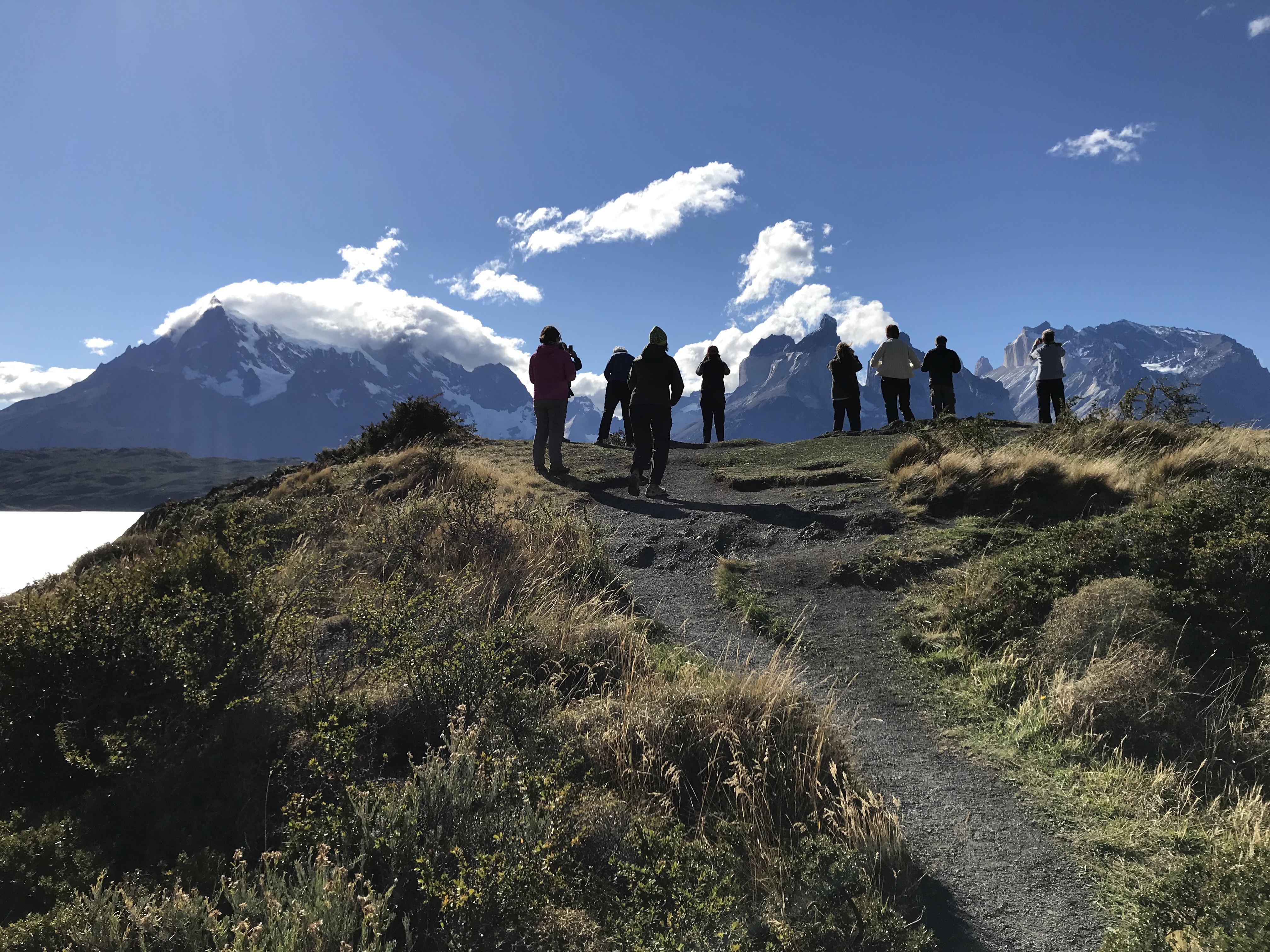
The sun wasn’t in the best position for photos, but I liked this shot of some of our group admiring the view.

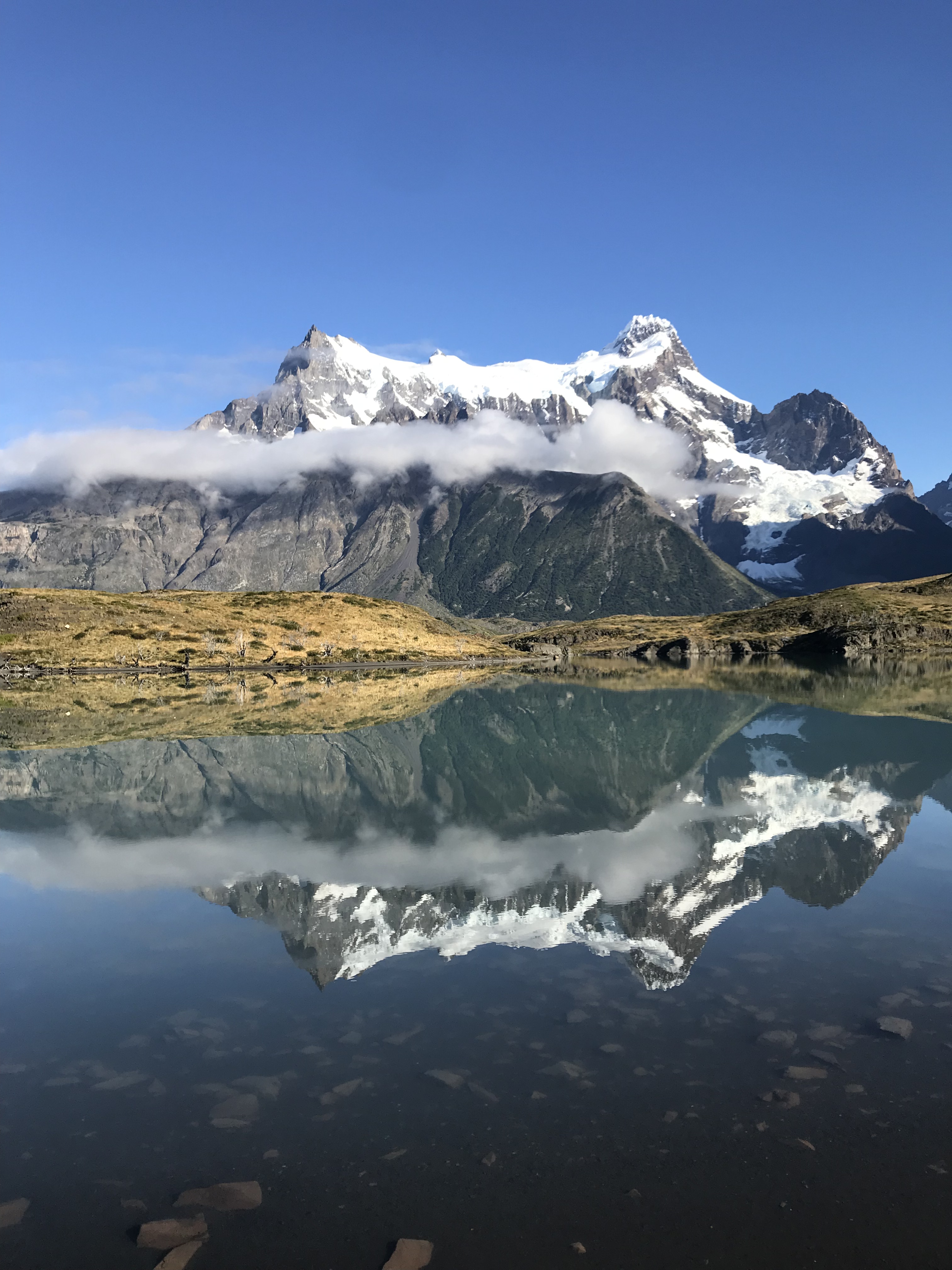
One advantage of staying at one of the three hotels within the park was getting an early start. THAT allowed us to hike to the perfect spot so we could catch this gorgeous reflection on the lake.

It was a 4 mile hike that, according to my Fitbit, was the equivalent of climbing 43 flights of stairs. Believe it or not, it was a much easier than yesterday’s shorter hike because the wind wasn’t blowing.

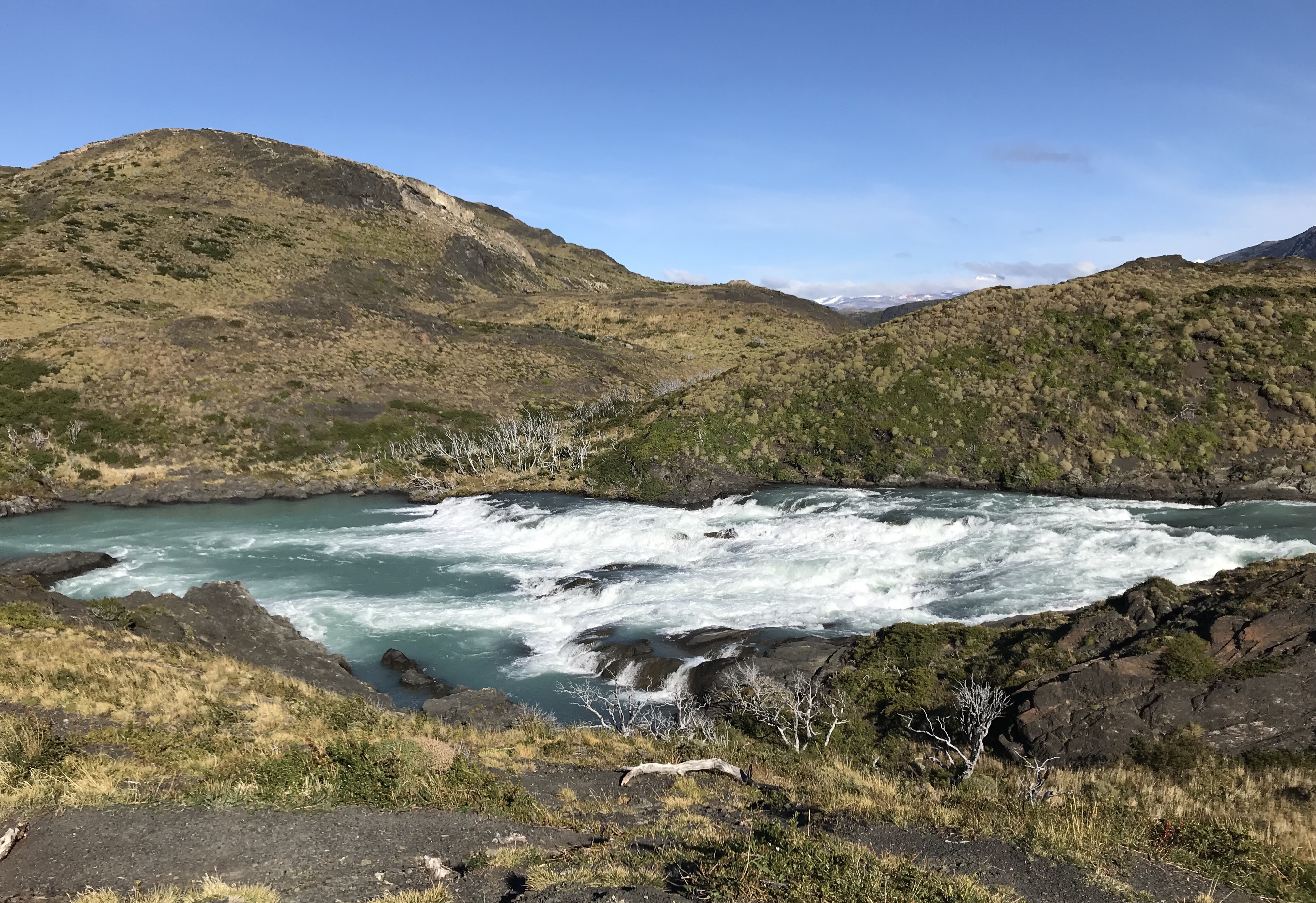
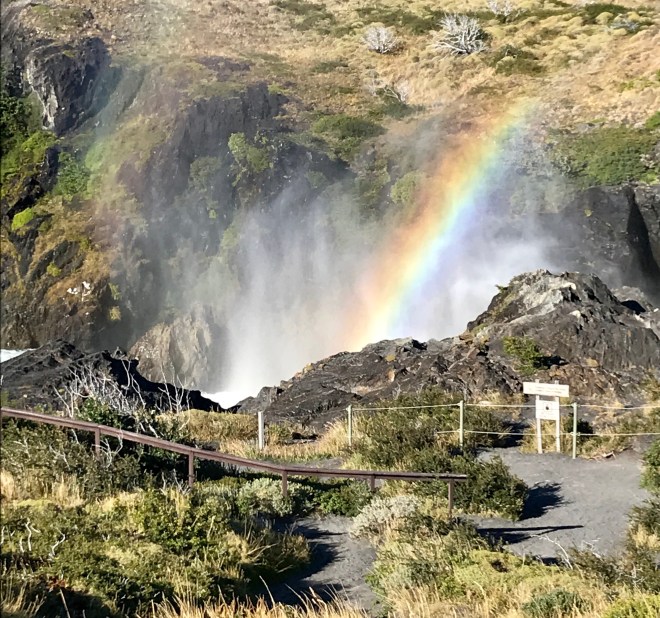
We were able to see this waterfall from a distance AND up close.

Once again, our timing was perfect. On our return trip the light was just right for the mist to create rainbow after rainbow.

Okay, so the surrounding area wasn’t picture perfect, but that was the best angle to capture the rainbow.

Another amazing day in Patagonia, and it’s not even over yet. One more hike this afternoon.

Punta Arenas

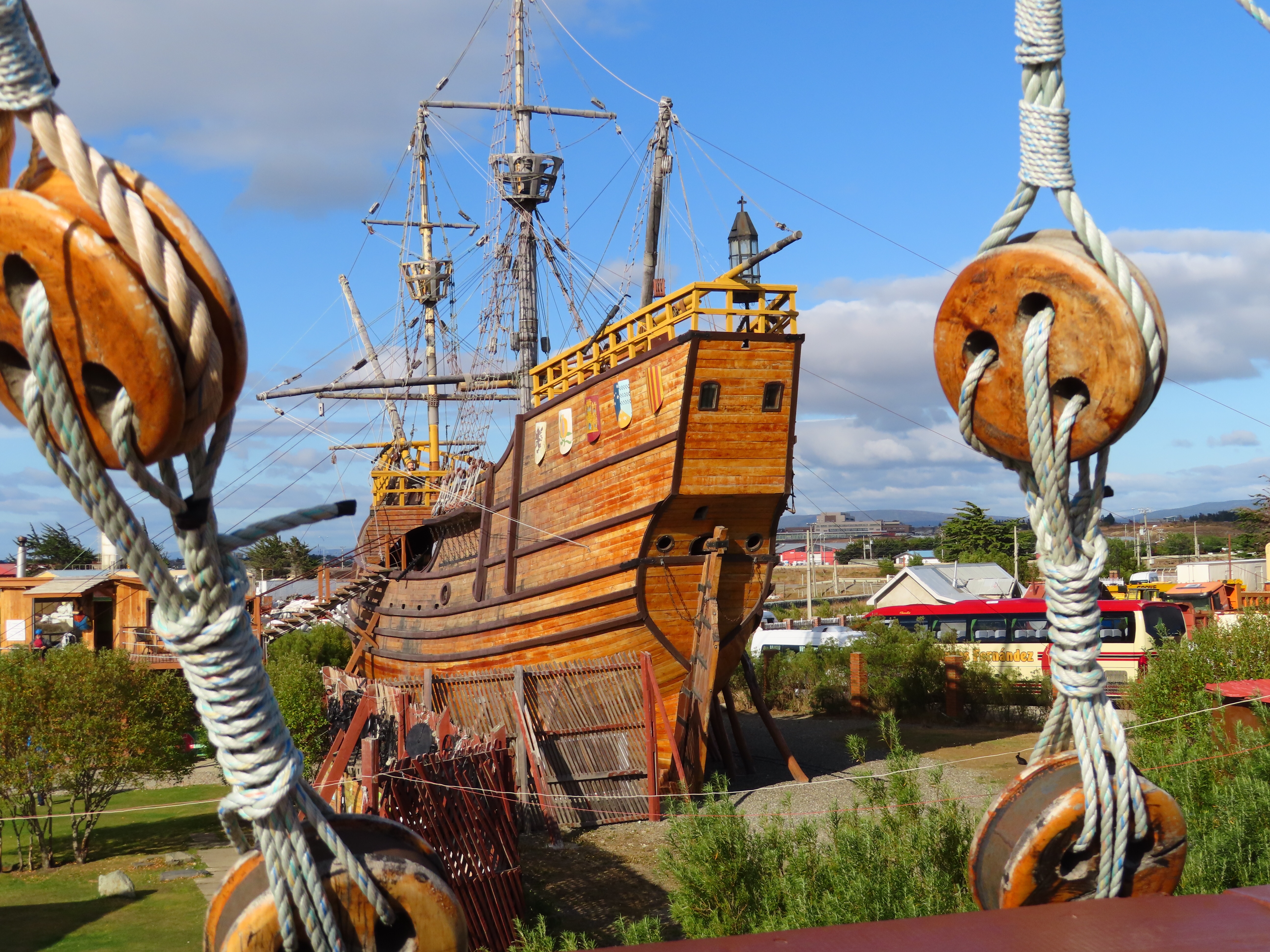
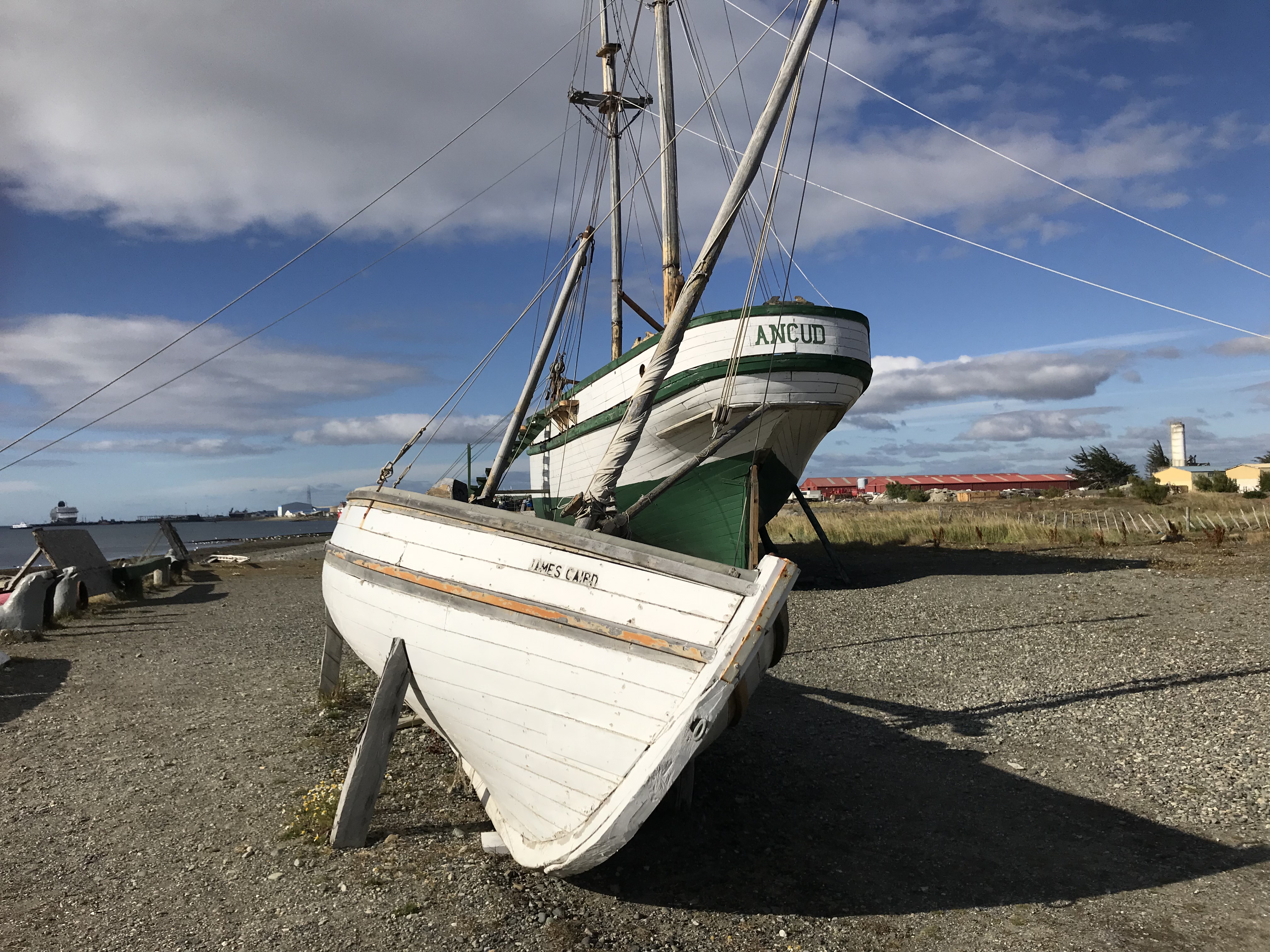
Trivia question for you. Where can you find replicas of the ships of Magellan and Darwin, the ship used to claim this area for Chile, and the lifeboat that Shackleton used to get to the mainland to get help for his crew stranded in Antarctica? I’ll give you a hint. It’s the title of this post.

Magellan’s ship, Victoria

Darwin’s ship, The Beagle.

The small boat in the foreground was the one Shackleton used after The Endurance sank. The bigger one got the Chileans to this area so they could claim it for Chile.

Other notable images from Punta Arenas follow:

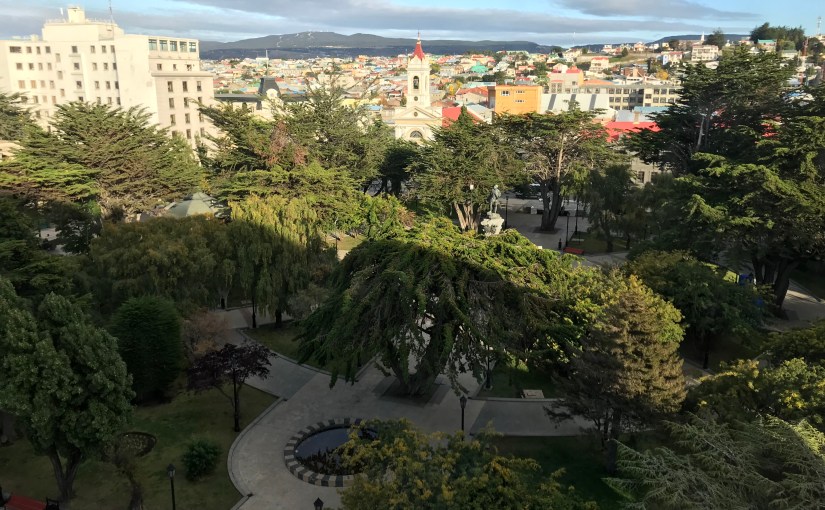
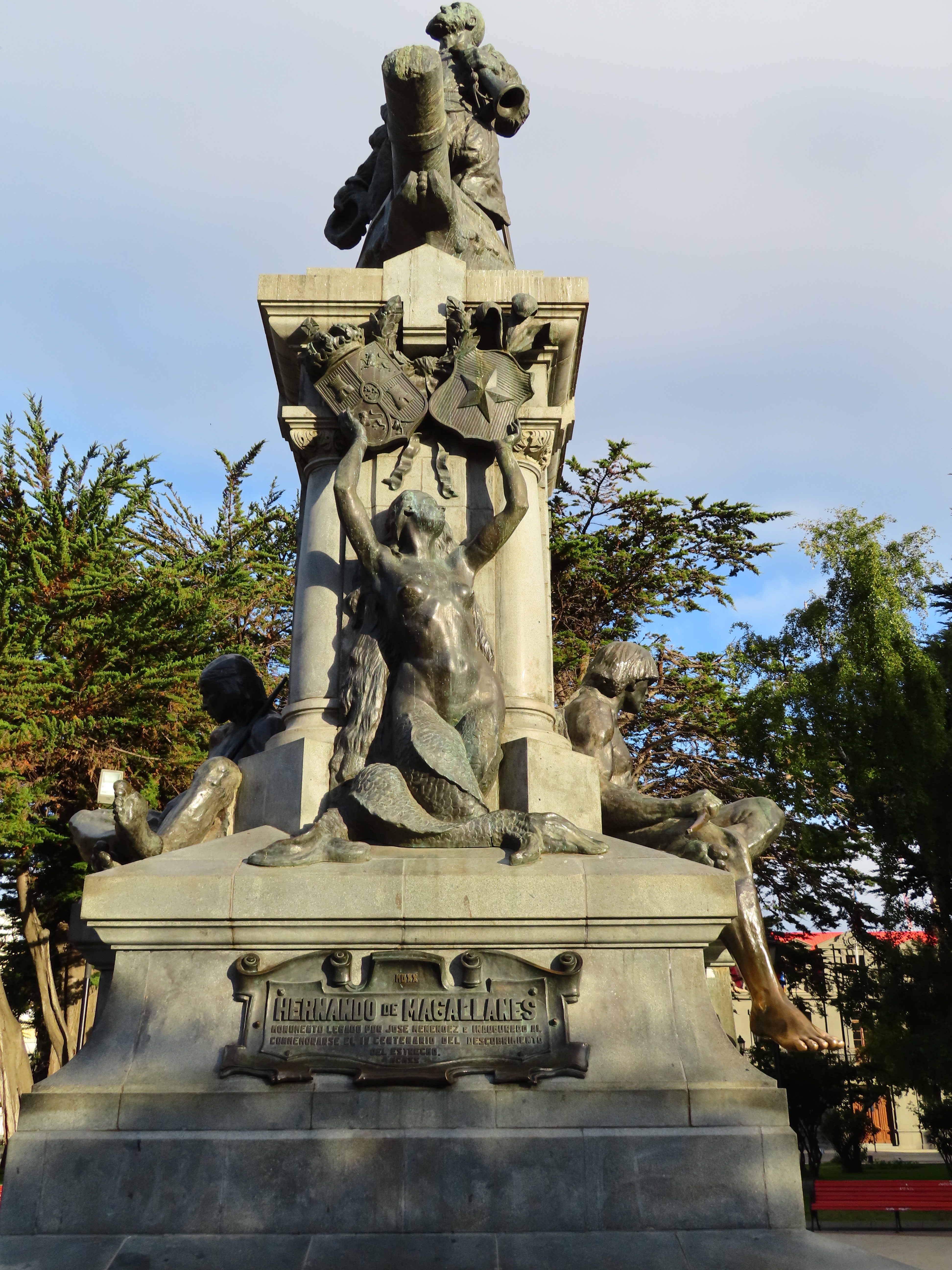
The huge monument to Magellan in the main square across from our hotel has carvings on all four sides, with a rather arrogant Magellan atop.

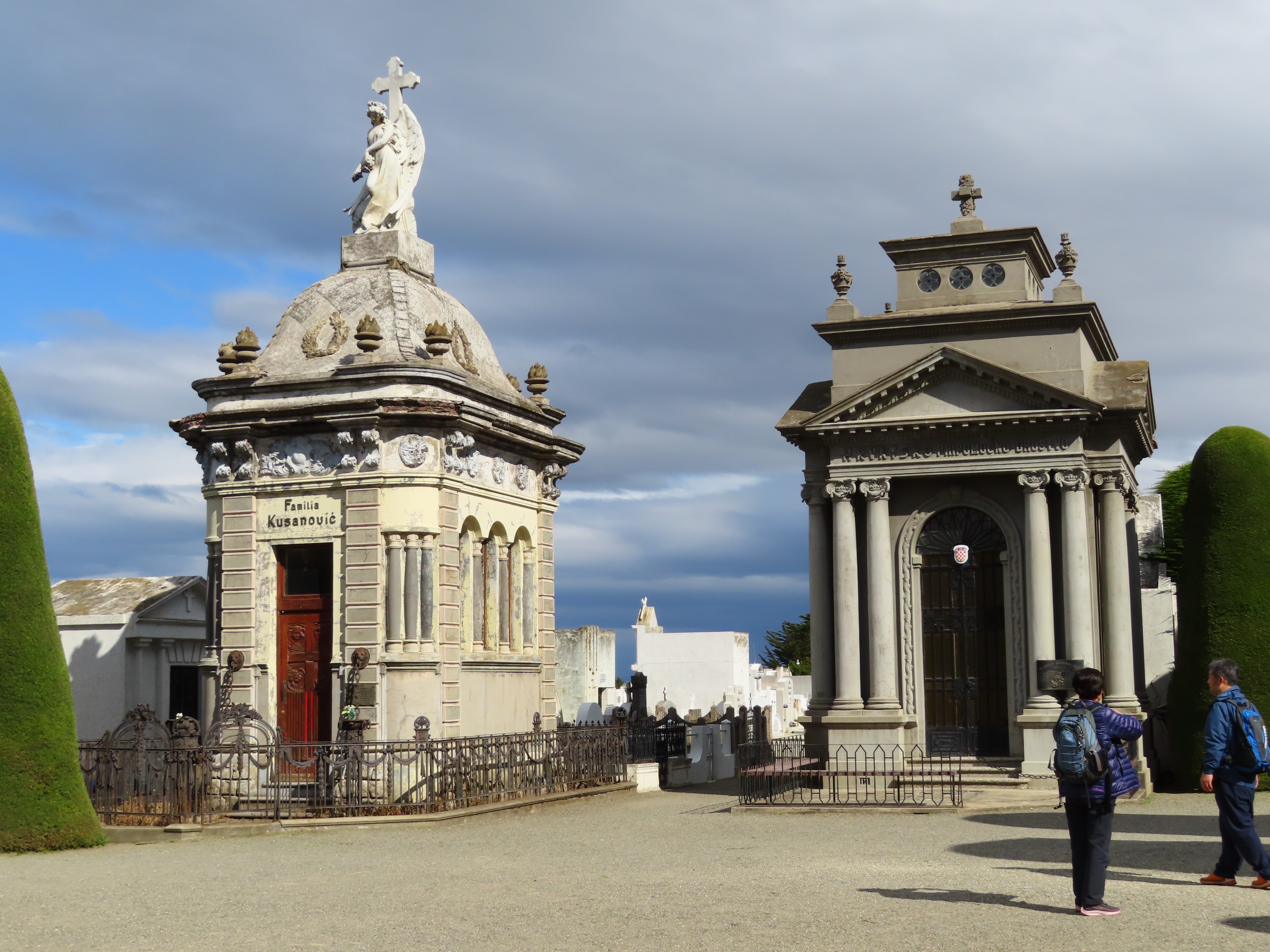
Punta Arenas was a very wealthy area at one time, and the cemetery reflects that abundance.

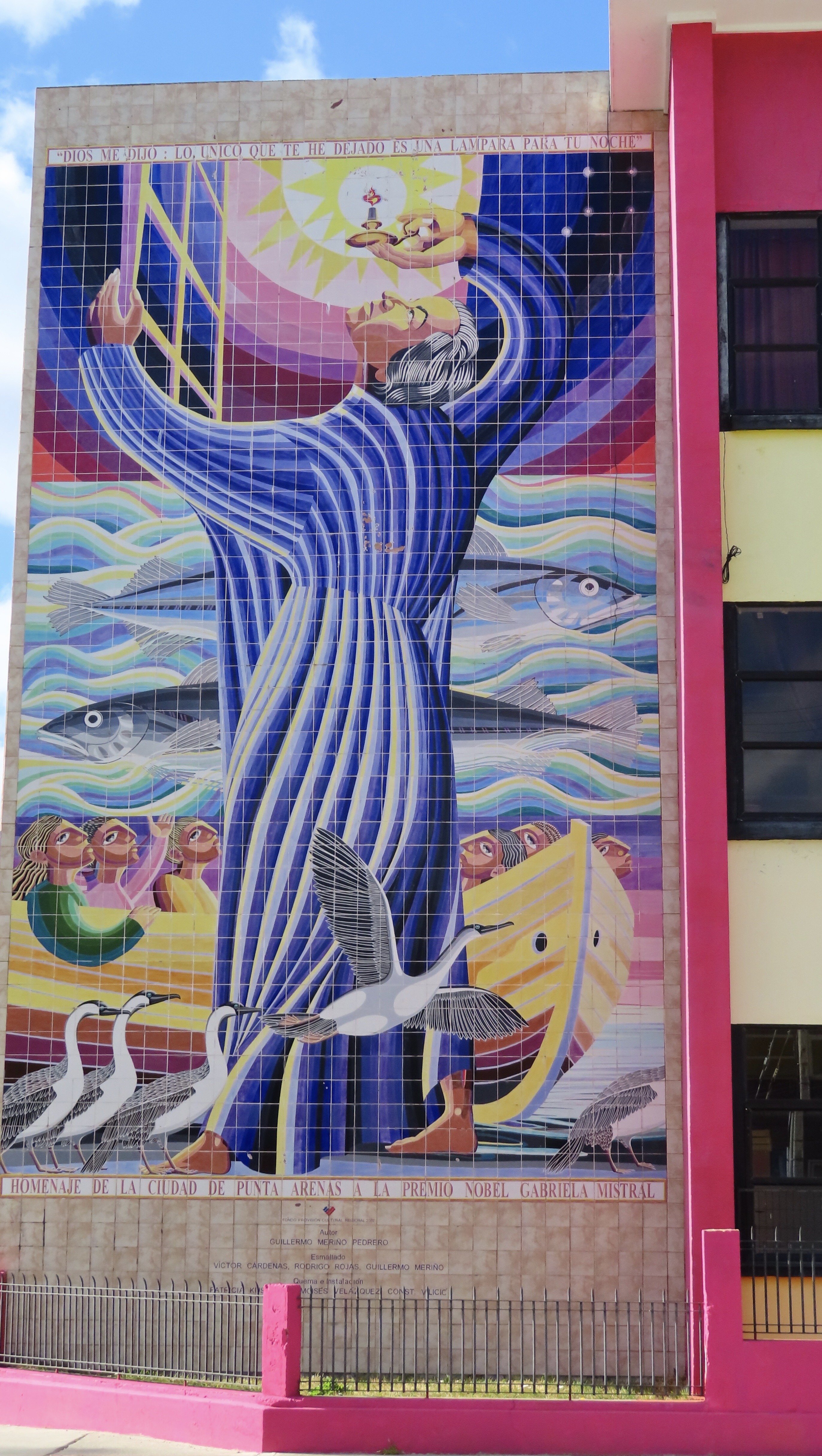
This mural honoring Gabriela Mistral is on the side of the school she founded (more about her later)

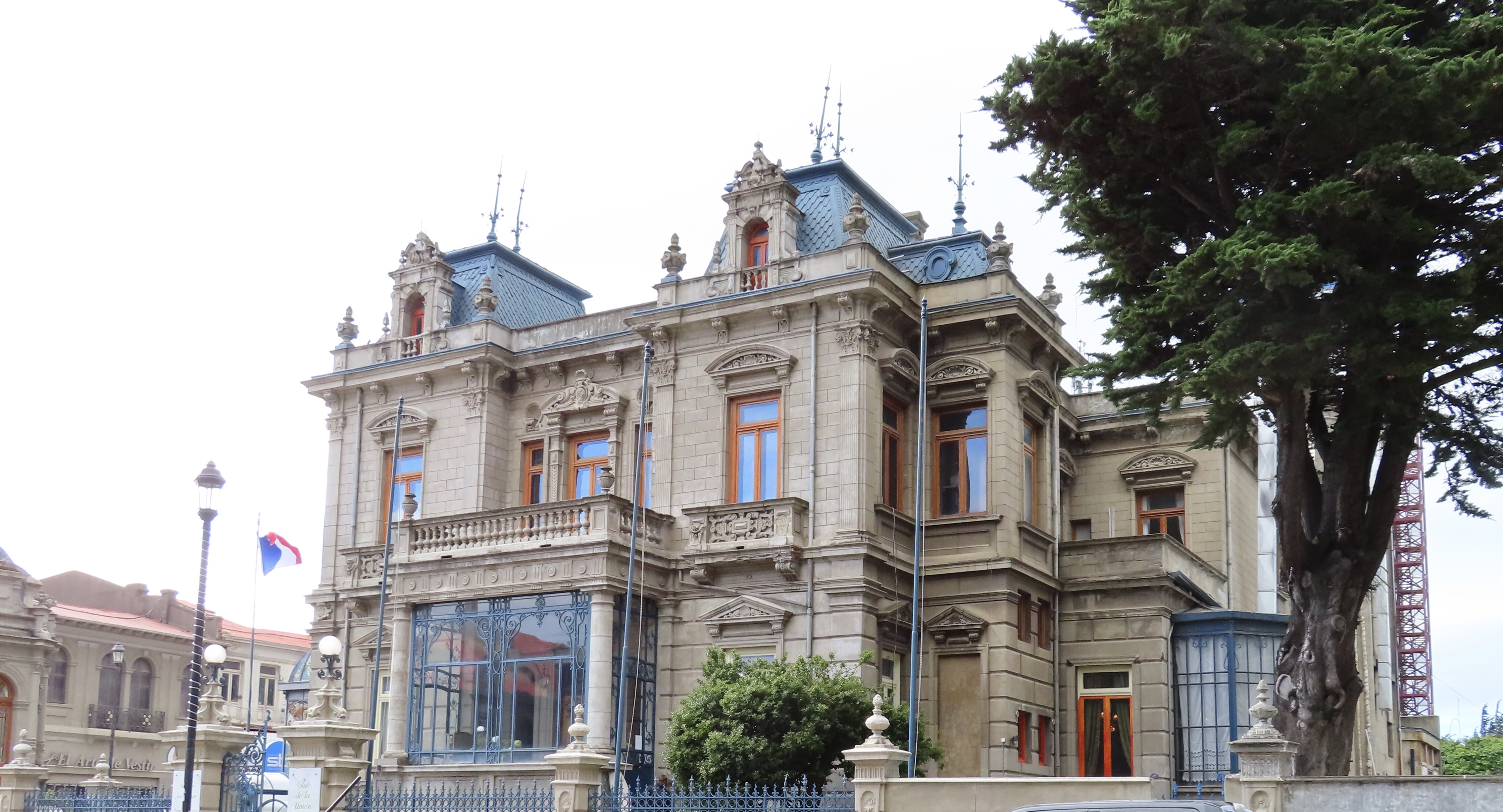
Sara Braun’s mansion faces the main square. This is ANOTHER good story that has to wait till I get home.

This morning, we are heading to remote areas where Wi-Fi could be nonexistent.

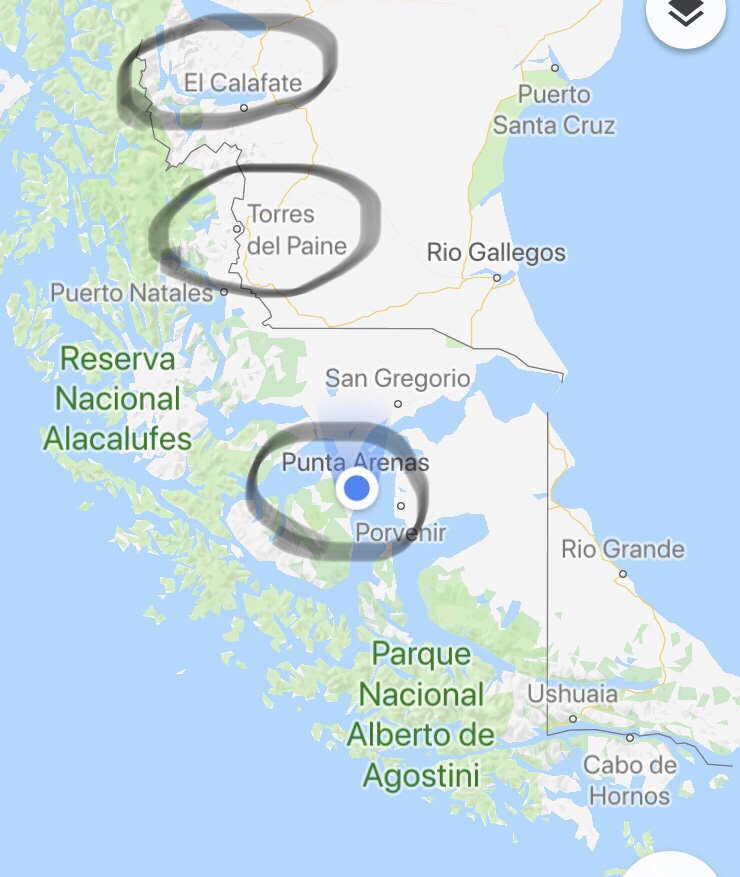
Although the distances don’t appear to be great, this appearance definitely IS deceiving. We will spend most of today traveling to Torres del Paine, stopping along the way for a hike, weather permitting.

Two days later, we will be on a longer drive, to El Calafate. From there we fly to Buenos Aires.

For all the map lovers, that one is for you. ❤️

Chiloe Island

How often does one get to photograph a sunrise without getting out of bed?

For me, the answer is probably once in my lifetime. (If all goes well, my iPhone will upload the photo and I’ll be able to share the view).

The “Enjoy Chiloe” Hotel in Castro, the capital of Chiloe Island, makes the most of its spectacular location. All rooms have floor to ceiling windows facing the bay. And the bay experiences spectacular tides. That photo was taken during low tide. During high tide, the inhabitants are grateful their houses were built on stilts!

The hotel has a spa, a casino and a nightclub. The casino held zero appeal for me, but the night club definitely had potential, until I saw the sign posting the hours it was open. Midnight to 5 AM??!! Not for this girl. That left the spa. The choice was between pool and hot tub versus drinking pisco sours and wine on the terrace.

Here’s what I chose.

Yes, each region has its own take on pisco sours. Chiloe Island adds a berry that only grows locally, which gives it the unusual color.

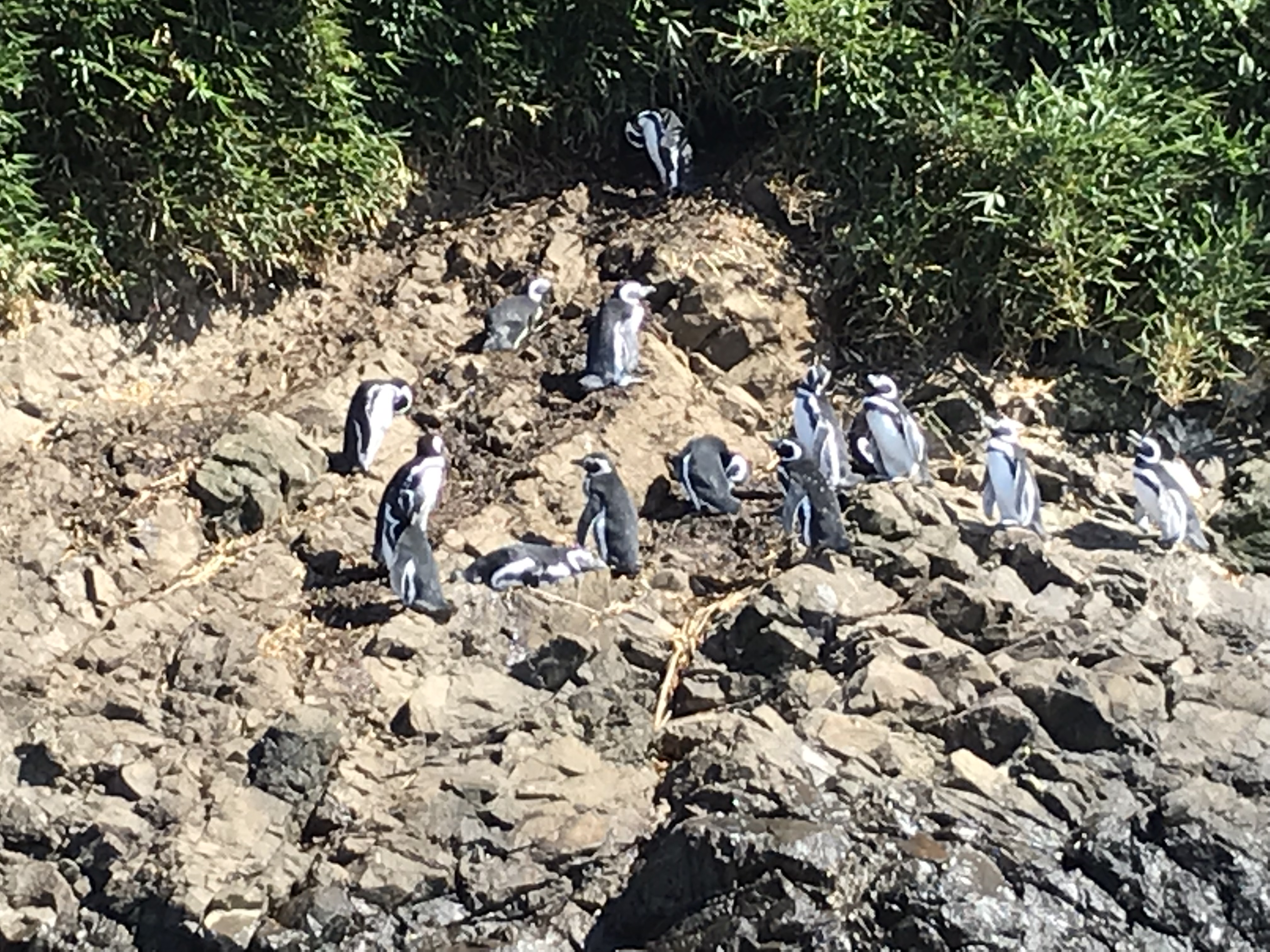
We were blessed with perfect weather, which made our boat trip to view the Magellanic penguins delightful.

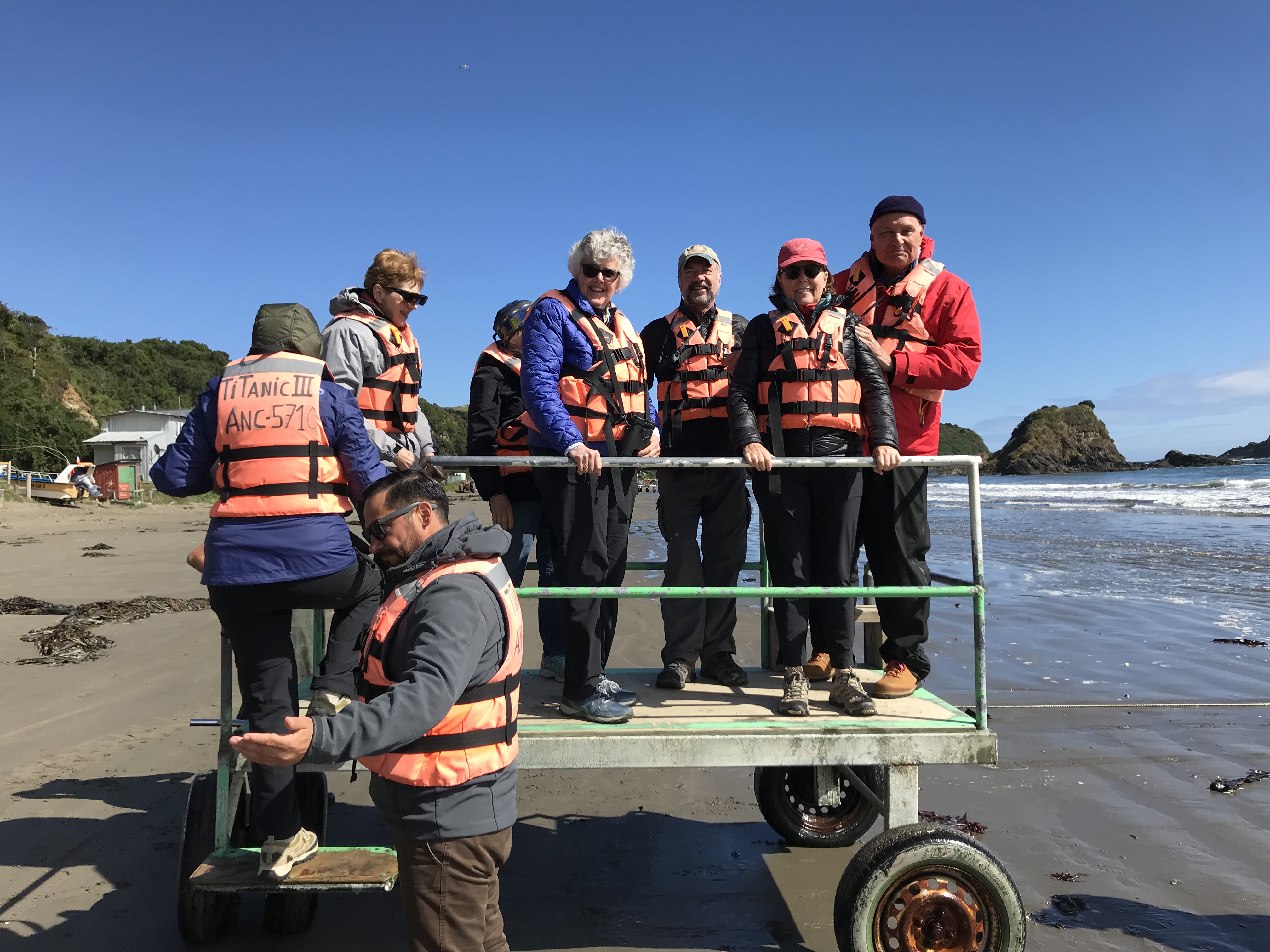
We had a unique way to board our boat. What looked like a shopping cart was pulled into the bay.

No need to get our feet wet.

There is so much more to say about this wonderful island, but it is time to leave for Puerto Montt.

The ADVENTURE part of Overseas Adventure Travels

There is no such thing as bad weather, only bad clothing” according to Laura, our wonderful guide.

Were we prepared for our walk in the rain forest? Thanks to Laura’s excellent instructions, we most certainly were.

We are wearing our waterproof pants, boots, ponchos and parkas.

Puerto Montt is usually very rainy, and today was no exception. That means we had an authentic experience, which got even MORE authentic as the day wore on.

First, we had an interpretive walk through Chile’s first National Park, Vicente Perez Rosales. The water is normally a clear blue, but rain and wind has carried volcanic ash into the water resulting in this brown color.

My new partner in crime, Janis, is another Massachusetts gal.

In other parts of the park, however, the water was a beautiful clear greenish blue.

While we were sauntering through the park, a light rain was falling. That changed to a torrential downpour while we were at lunch. But I’m getting ahead of myself.

Lunch was quite a novel experience. First, it was a short boat ride away.

Second, lunch was in a private home in the middle of the National Park. How a private home ended up in the middle of a private part, I could probably remember if I hadn’t had that second glass of wine. But the “how” is not essential to the rest of our story.

What started as an Overseas Adventure Travel home hosted meal became so successful, the host built this addition on to his home, and transformed the addition into a restaurant, now open to other travelers.

Third, the menu consisted of whatever our host caught. For us, today it was rainbow trout.

And yes, it was every bit as good as it looked.

By the time lunch was over, the rain had let up a bit, but our adventure was far from over. You see, there is only ONE road into and out of the park, and when there are torrential rains, THIS is what could (and did) happen.

The guys in the foreground are on OUR side of the street. The ones in the background are where we need to be. And in between? Well take a good look.

Remember our motto “expect the unexpected”? Well, once again, we weren’t disappointed.

My new friend Janis, also known as my “partner in crime” and I were first off the bus to size up the situation. Braving rain and wind, we returned with this video.

Fortunately, heavy equipment magically appeared to do whatever heavy equipment does,

and within two hours we were on our way. I’m thinking Janis and I have a future in cable news. Whadda ya think?

What a great group to travel with! No one complained. Here are some of fellow travelers’ comments: “How lucky are we to be in such a warm, comfortable bus”, ” Good thing we used the baño before we left the restaurant”,”It’s an adventure!”

I LOVE this group!

Here’s how our day ended.

The lake across the street from the Radisson Hotel.

Tomorrow we hit the road again, so I will hit “publish” and hope for the best!

From Bariloche to Puerto Varas

We were forewarned: this OAT trip would include several long travel days, some by plane, some by bus. Today’s transfer from Bariloche to Puerto Varas was expected to take from 8 AM to 4 PM, including the border crossings. We need to pass thru security for BOTH Chile AND Argentina, and depending on the mood of the guards, that could be brief or it could take hours.

Our route. Laura thoughtfully marked it with yellow “stickies” We started in the lower right hand corner and ended in the left lower corner, going up and around.

But that’s okay. Days in transit allow us to see the country and decompress. Our time in Bariloche was so jam packed, a day to chill was most welcome. The beautiful pool, spa and terrace at our hotel? I had no opportunity (and no energy) to try them

During our stay, we were treated to two very interesting lectures. The first, a talk by Hans Schultz about Nazis in Patagonia, was fascinating. The second took place the next morning. We learned about the “people of the land” from a member of the Mapuche tribe.

I can’t do either speaker justice blogging from my iPhone, so those stories will have to wait till I get home. I’ll also be sure to include the stories our local guide, Fernando, told us during our bus ride. Coming attractions include highlights of those two lectures plus stories about a Texas cowboy (Jarod Jones) the famous bandits, (Butch and Sundance)and a local boy(Ernesto Che Guevara).

But let’s get back to our second day in Bariloche . After the Mapuche talk, we ALL decided to take the optional trip: a float down the Limay (Crystal) River. Our group of 12 is very cohesive and very active. We all are opting to do EVERYTHING together!

Could that be a Moai atop that mountain?

Mike and I went in different rafts so we could photograph each other and our friends.

In addition to gorgeous scenery and crystal clear water, we also saw beautiful birds, like this kingfisher that Mike photographed.

I was never fast enough. My bird photos are mainly empty branches!

We were told that at the end of the trip, we would have a “snack”. Well, that “snack” turned out to be delicious quiche, the very best empanadas we’ve had (so far), delicious fried dough pastries, breads and jams, AND a wine tasting.

Next stop, horseback riding at a family owned ranch.

Mike’s horse allergy meant that we had a skilled photographer taking shots of our group.

By the end of our ride, we were all pretty hungry. What could be better than authentic Argentinian barbecue of beef, lamb and chorizo.

What is Mike doing? He’s throwing meat on the roof of the barbecue.

Why? To get this bird to come out of the tree so we could photograph it.

Fortunately, he stayed still long enough so that even I could photograph him!

By the time we returned to the hotel, I was as too tired to take advantage of the two for one drinks at the hotel bar!

What about that long ride to Puerto Varas? It wasn’t boring at all. The scenery was beautiful, plus Laura had a few surprises for us.

First was our celebratory drink when we crossed the border into Chile. Their Dulce de Leche is their equivalent to our Bailey’s Irish Creme.

Then, our lunch stop provided more than just great food. It was also the site of a self described car museum.

But it was so much more! There was also a model train village and ancient household tools that made out grandmothers’ lives “easier”

An old fashioned wringer washing machine

My favorite part, however, was hanging with this sweet little guy who wanted me to admire his hot wheels collection.

Can you figure out why I decided to end this post?