Jewels of Bohemia

As usual, I was so busy having fun that my blogging got WAY behind my travels. I’m home now, getting ready to hit the road again, and I realized that if I don’t do a post about this trip, I will probably forget where I was and what I did. I have lost count of the number of times I’ve had to look up something on my blog to jog my memory. Oh, a mind is a terrible thing to lose.

As I mentioned in earlier posts, the pre-trip to Berlin was fantastic. We had one more stop, in Dresden, before we joined the rest of the group in Prague for the main trip.

It was hard to believe that so much of Dresden was destroyed by Allied bombs during WWII.

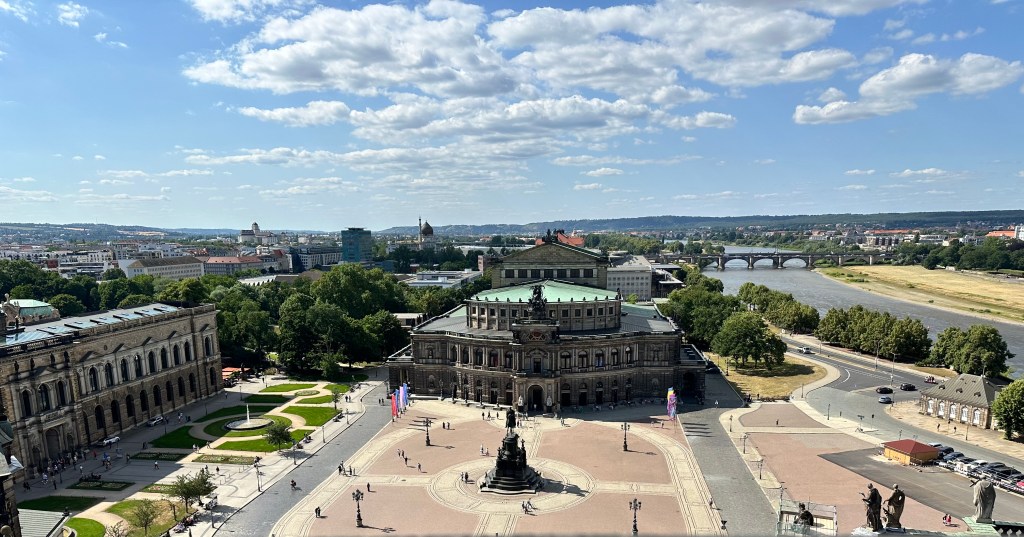
As usual, Barb and I found a high point in the castle that afforded us an excellent panoramic view of this delightful city.
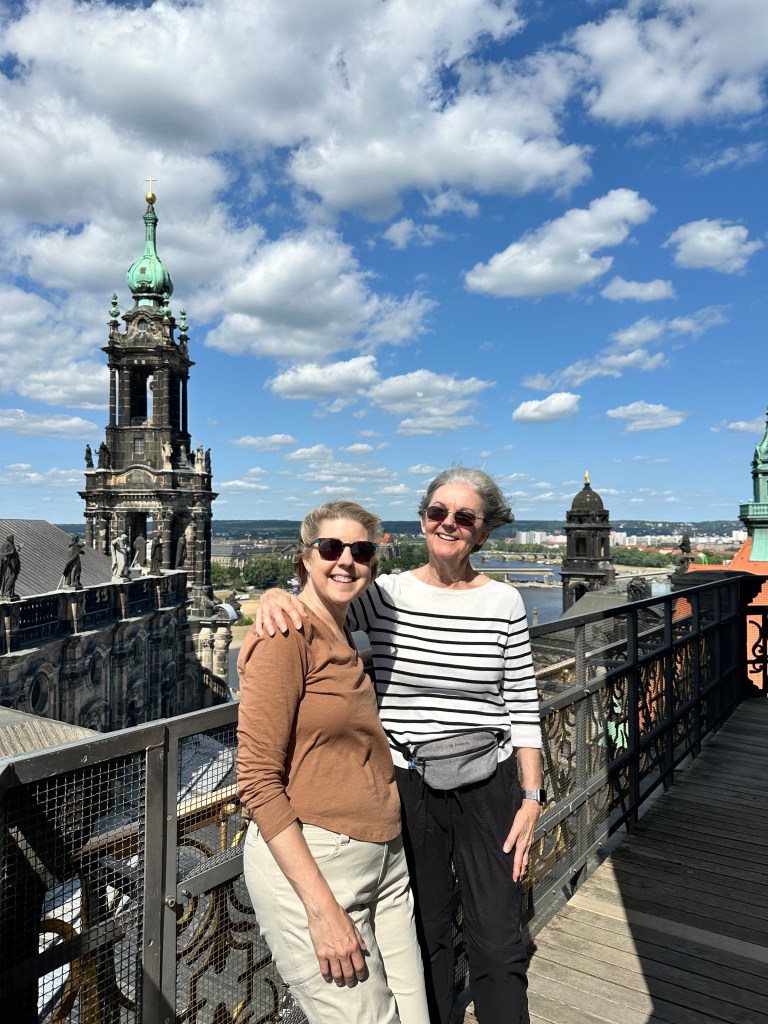
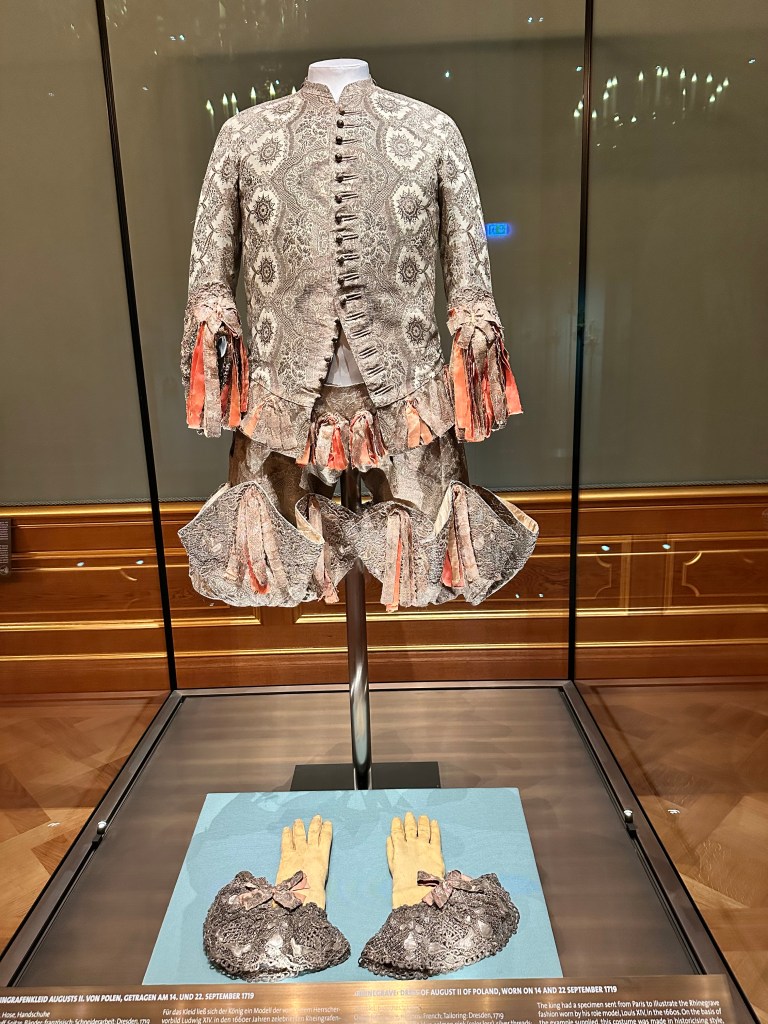
In addition to climbing the Castle tower, we also toured the Castle Museum. All I could think about when I saw the exhibits, was how many people must have died, either from starvation or in battle, for royalty to collect all these gold do-dads and fancy clothes.

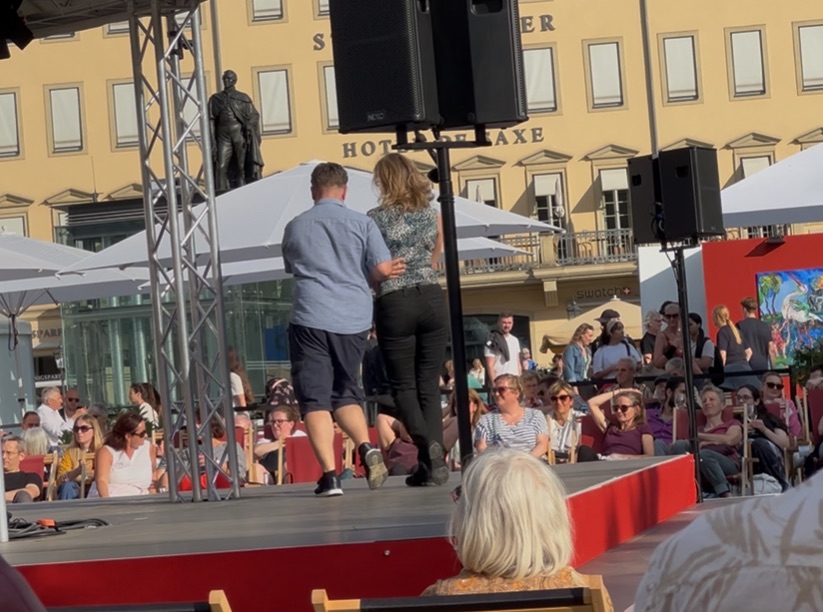
During the two evenings that we spent in Dresden, we enjoyed people watching in the main square, where there was live music and dancing.
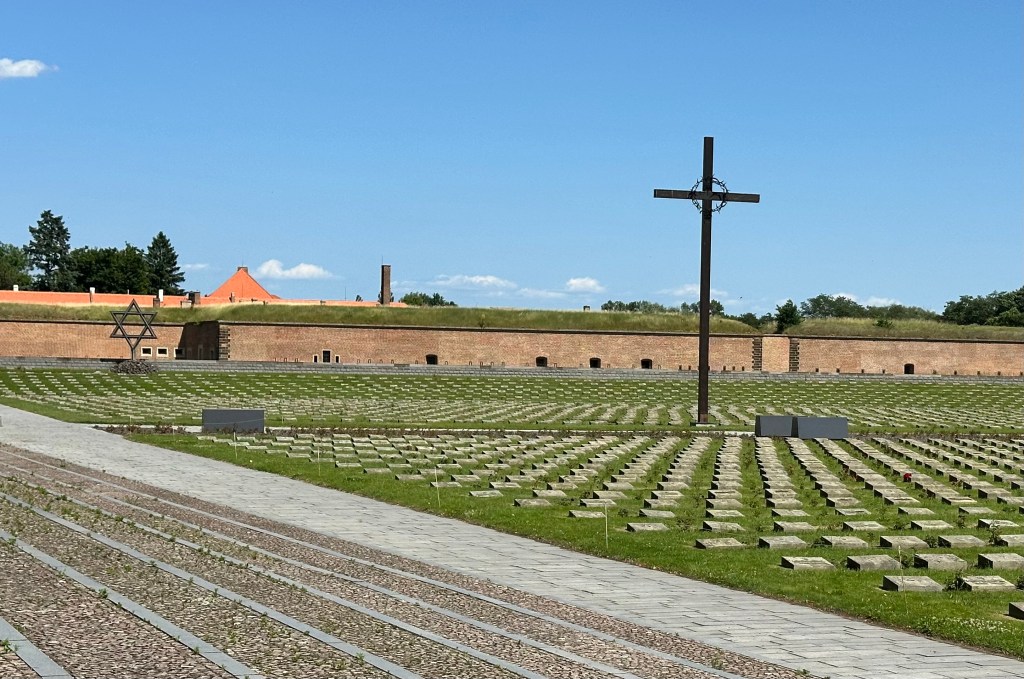
On our way to Prague, we stopped at Terazin, which was a Gestapo prison during WWII. It was sobering to see how widespread cruelty to other humans is.
Prague
I visited Prague for the first time in 2014 with Vermont Bike Trips. Although I did see some of the same sights again, like the Charles Bridge, the astronomical clock and the castle,
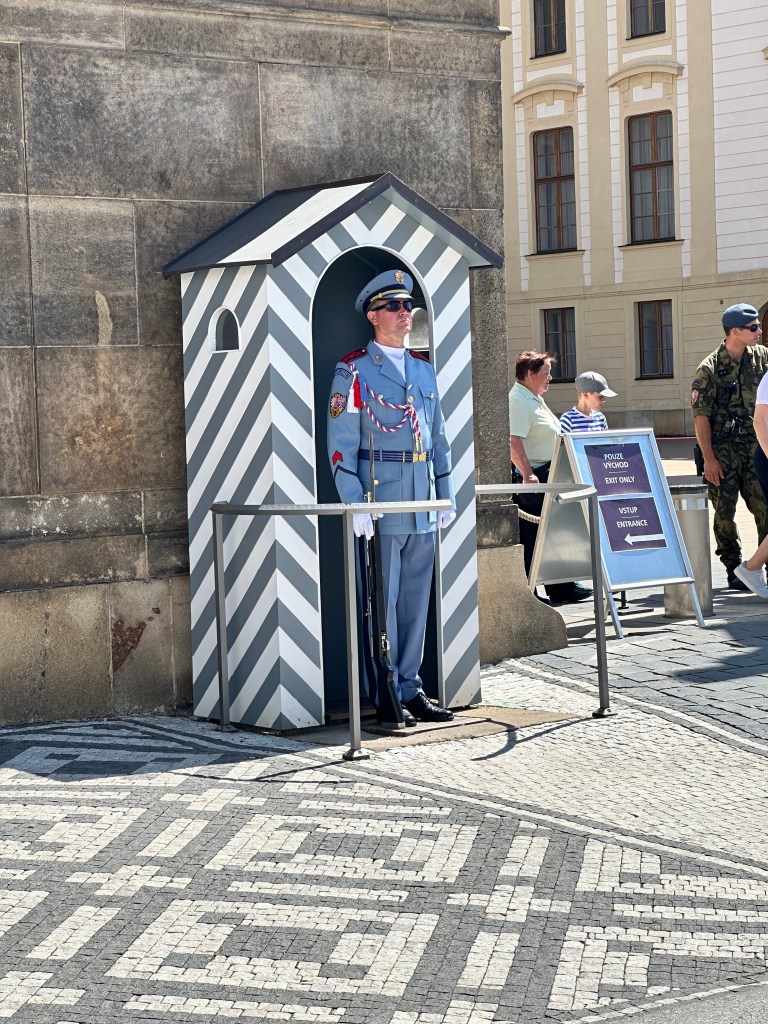
This soldier didn’t move at all, which led us to question whether he was real, or a mannequin. Turns out, he was VERY real, but capable of complete stillness.

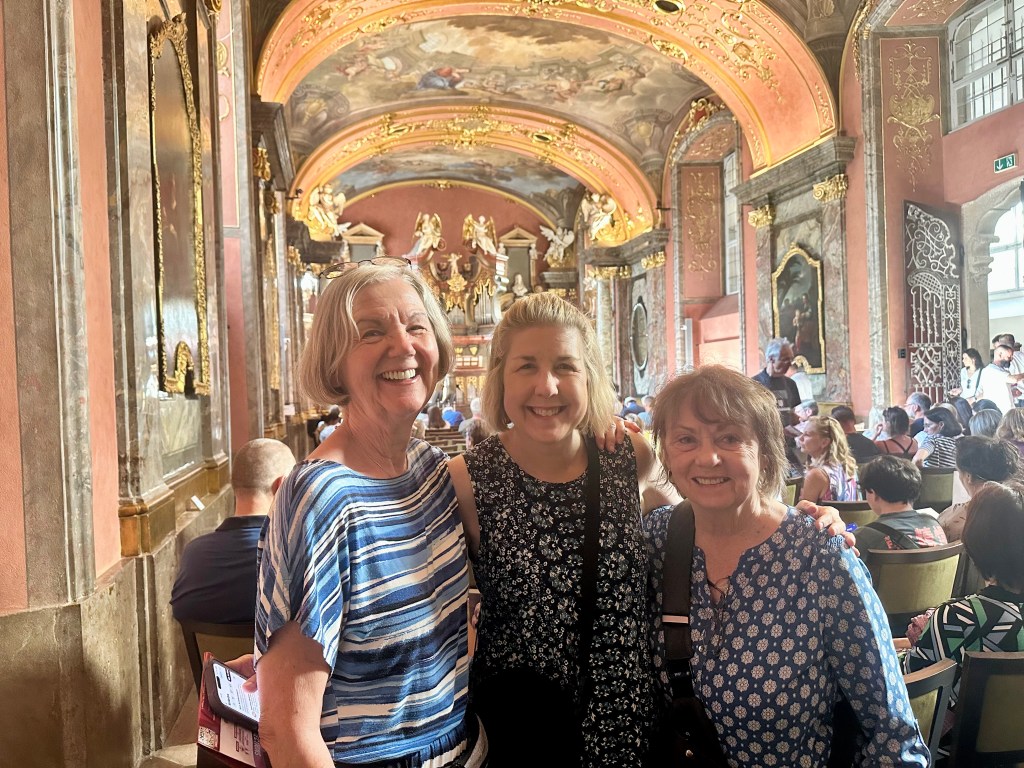
there were many new experiences, such as the delightful concert in the Mirror Chapel.

I love the blend of scheduled and unscheduled time on OAT trips.The free time allowed us to attend the concert and have dinner at the Blue Duckling, which was recommended by our dear friend Elena.

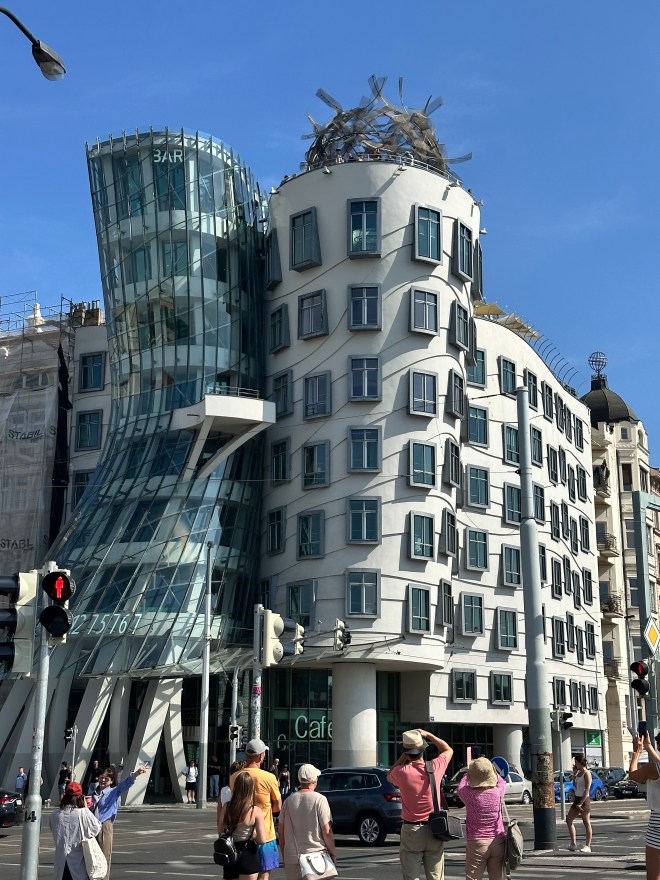
I recalled visiting the “Fred and Ginger” building on my VBT trip, and I enjoyed it enough to return. It has since been renamed The Dancing House. (Fred and Ginger was deemed “too American” a title).
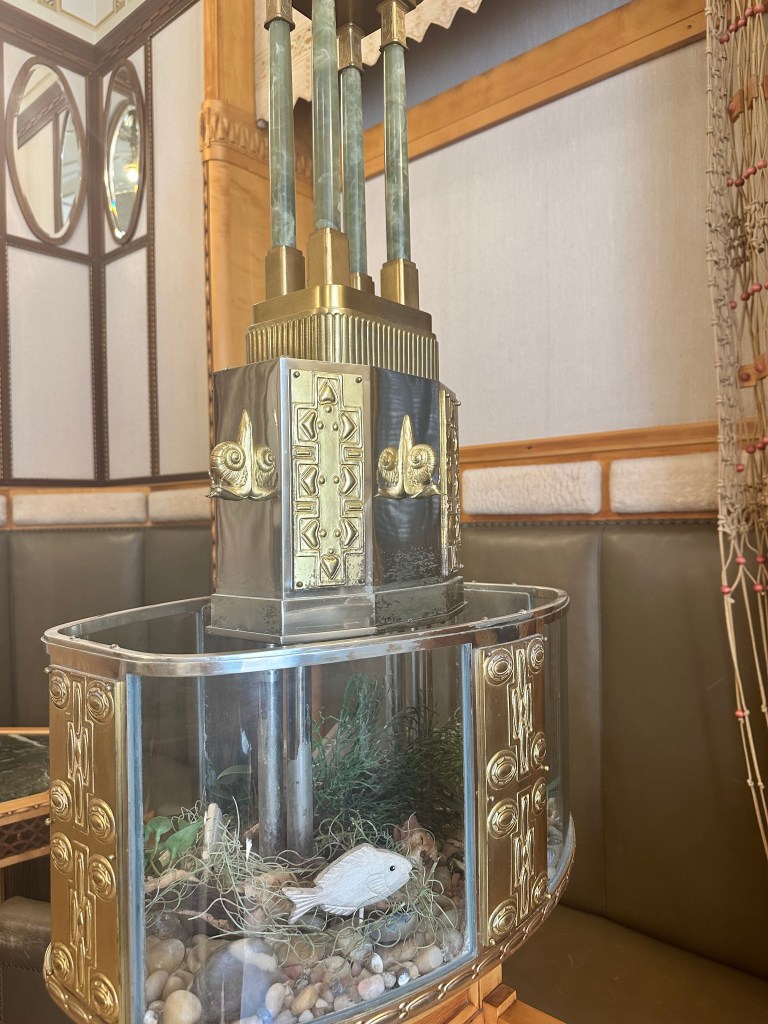
When I visited in 2014, There was no elevator–but the walk up the stairs had lots of “interesting” art on the walls, such as this magazine cover.

Now, an elevator whisks you to the bar on the top floor, and if you want to go into the “hat” to enjoy the view, you now have to pay for that privilege.

The hotel that OAT chose, the K+K Hotel, was centrally located and was quite beautifully decorated, with a quirky elevator that motivated me to take the stairs.

If Art Deco is your “thing” be sure to tour the Municipal House, which is LOADED with art deco treasures.

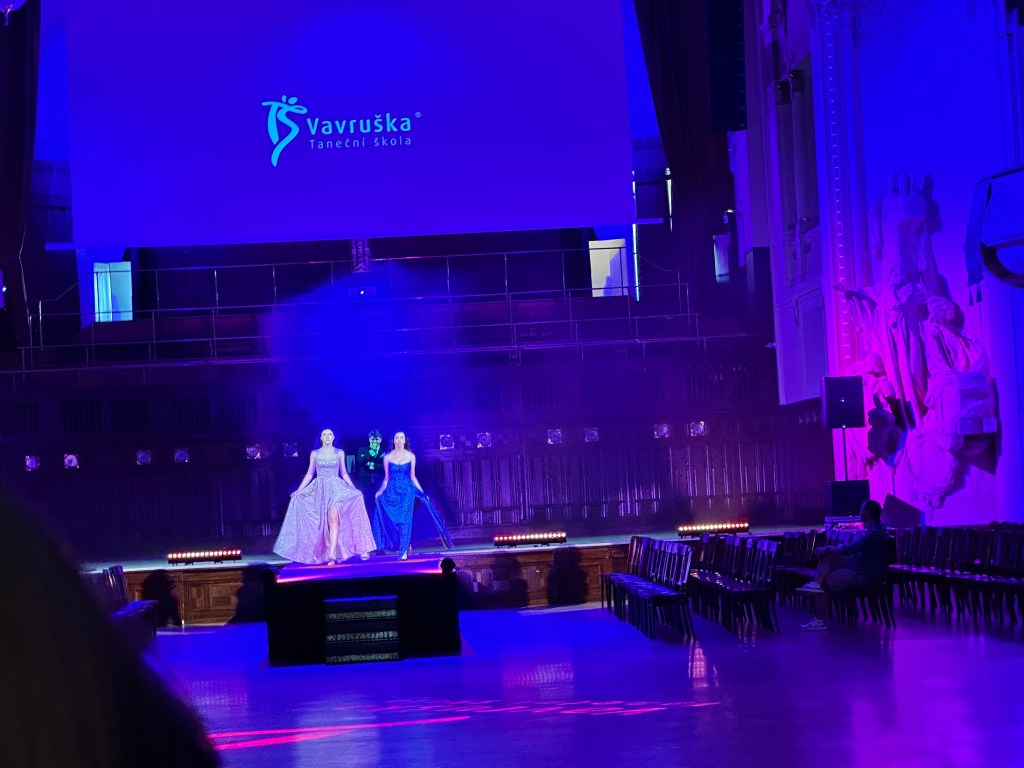
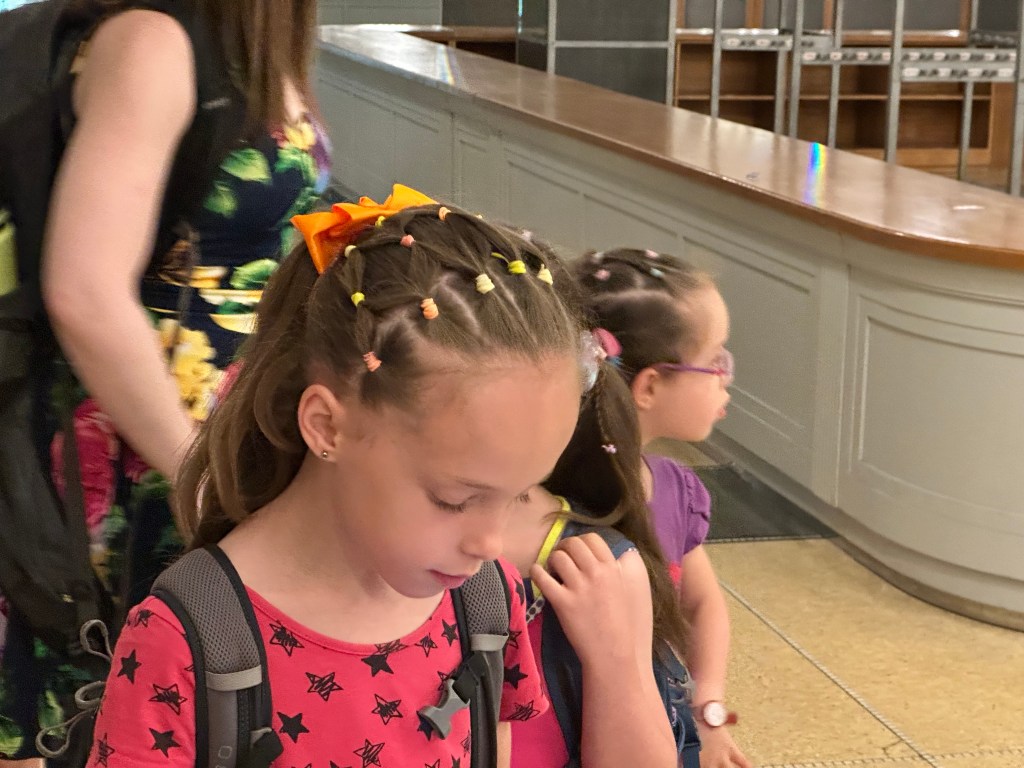
We were lucky enough to be there to catch a fashion show rehearsal, but I found the hairdos of the three little girls on the tour equally fascinating. I can’t imagine how long it took their mom to create those designs on her little girls’ heads!
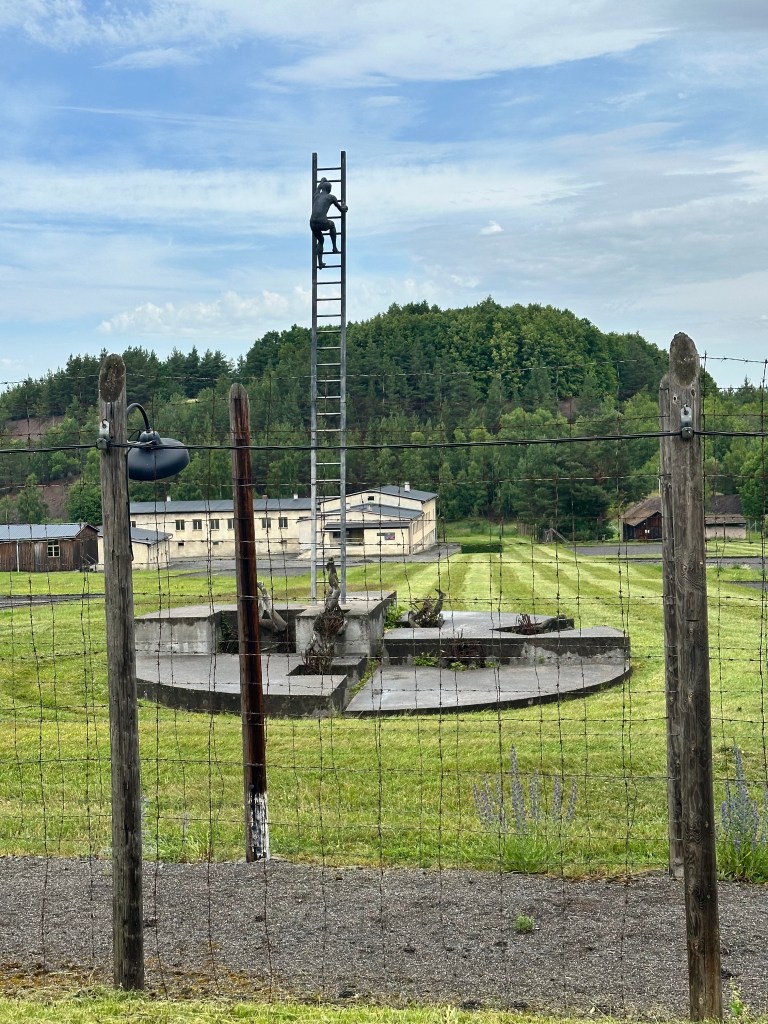
After three days in Prague, it was time to move on to Cesky Krumlov, but on the way, we had another grim stop, this time to a Soviet prison camp in Vojna. It was originally build by German POWs as a labor camp near the uranium mines, but then transitioned into a Communist labor camp for political prisoners. The poor Czech people were getting hammered from extremes on the left and the right!
I visited Cesky Krumlov with VBT, but the emphasis was clearly on biking. It was nice to have time to explore the city on foot. Because I have discovered I have a strong preference for the OAT itinerary, I’ve decided that my biking days are over.

The hotel that OAT chose, the Ebersbach was perfectly located, so that we could walk everywhere. The included breakfast sucked, but the location was perfect and my room was lovely.

OAT gave us a voucher for entry into 5 area museums and enough free time for us to enjoy them on our own. Barb and I visited four of them, skipping the monastery.
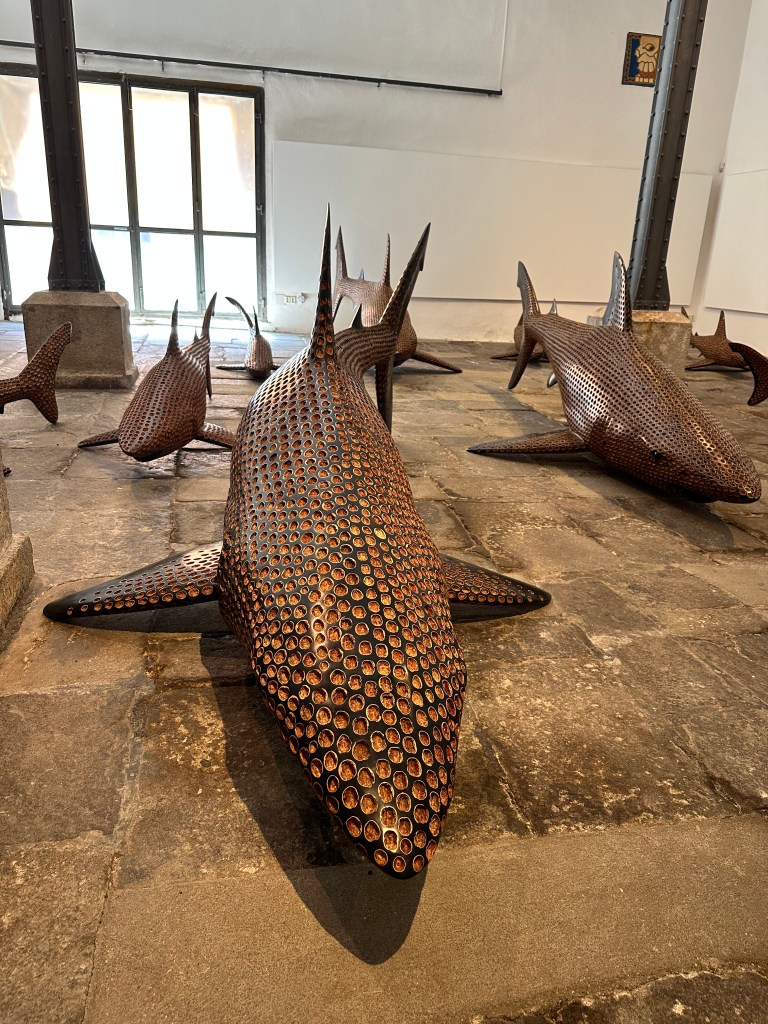
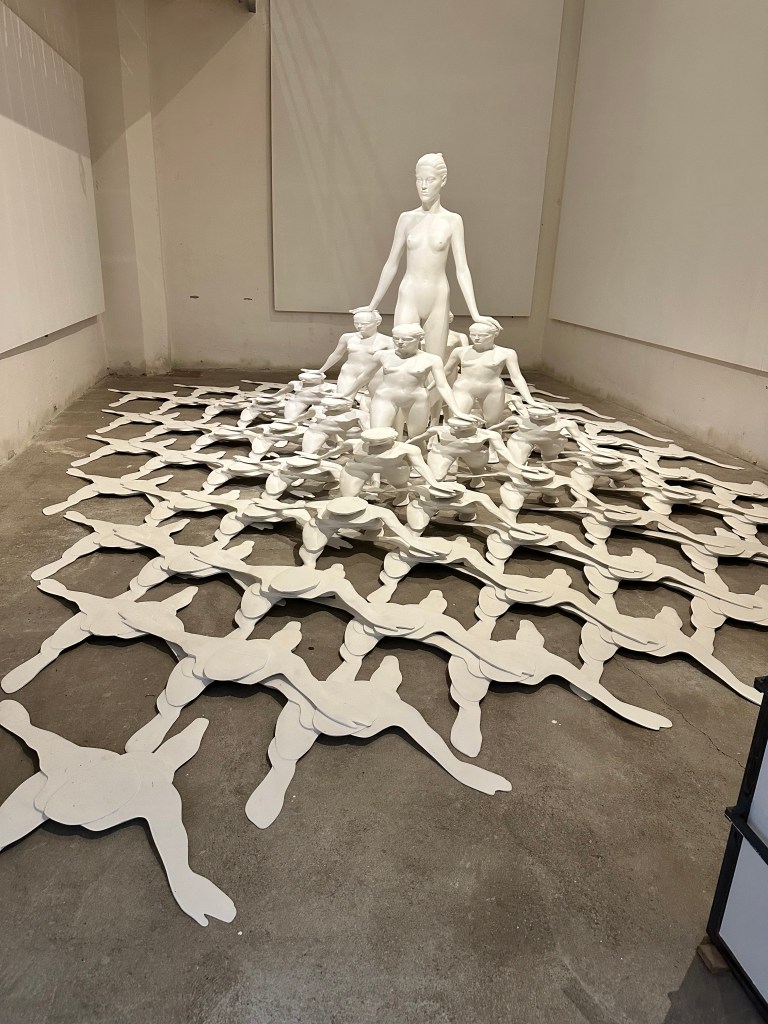
Of course, after we had visited the Castle Museum, we had to climb to the top of the tower for a panoramic view.

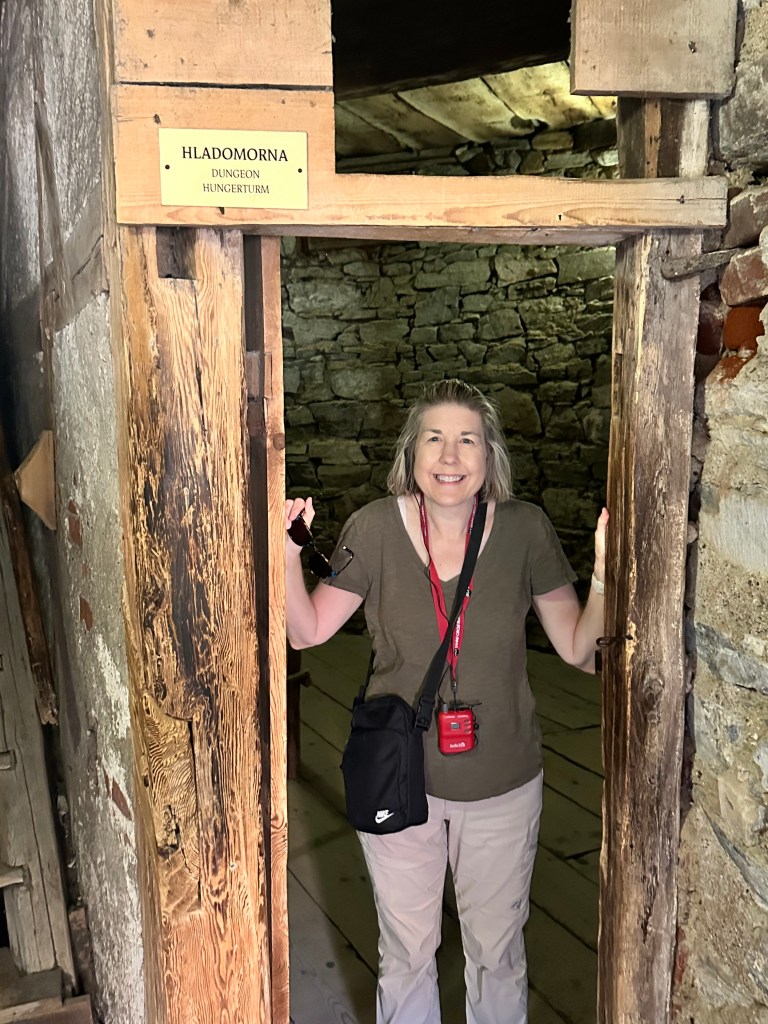
Let me tell ya, it was NOT an easy climb up those narrow, uneven stairs. Barb stopped to explore the dungeon and I caught my breath while I was taking her photo.

Bratislava
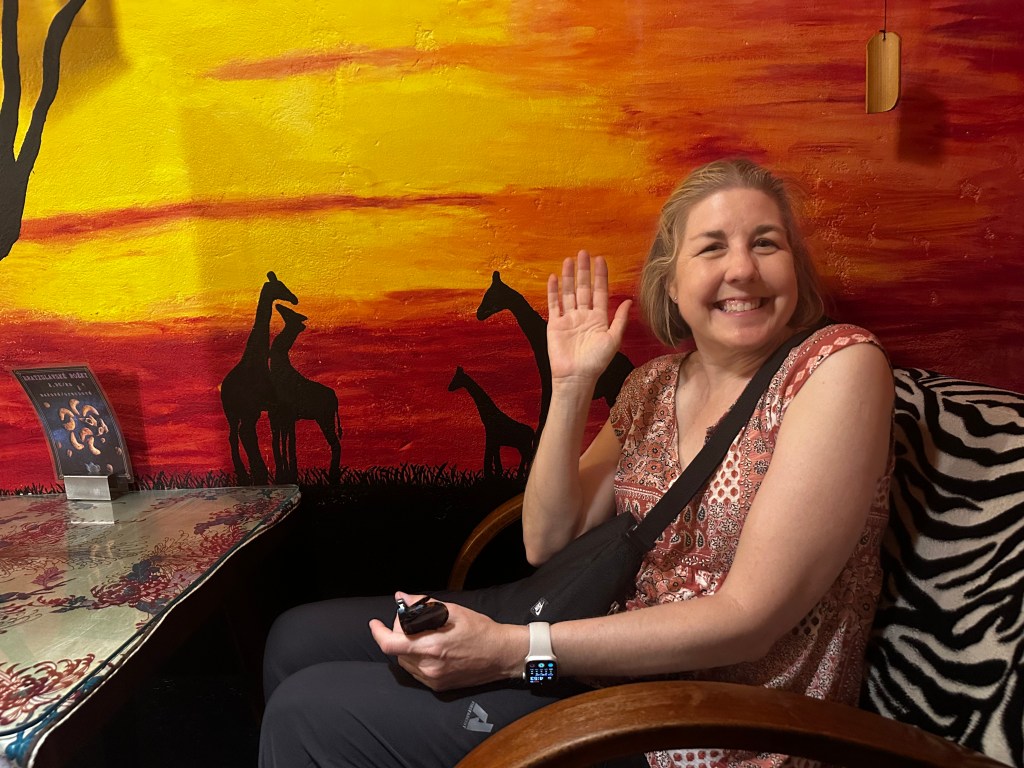
The next country we visited after our adventure in Slavonice, was Slovakia. I absolutely LOVED Bratislava. Where else can you have tea in a bomb shelter that has themed rooms? Can you tell that Barb and I were in the “Africa” room?

Whimsical art was EVERYWHERE in Bratislava. Check out their postal box. Now THAT’S creative.
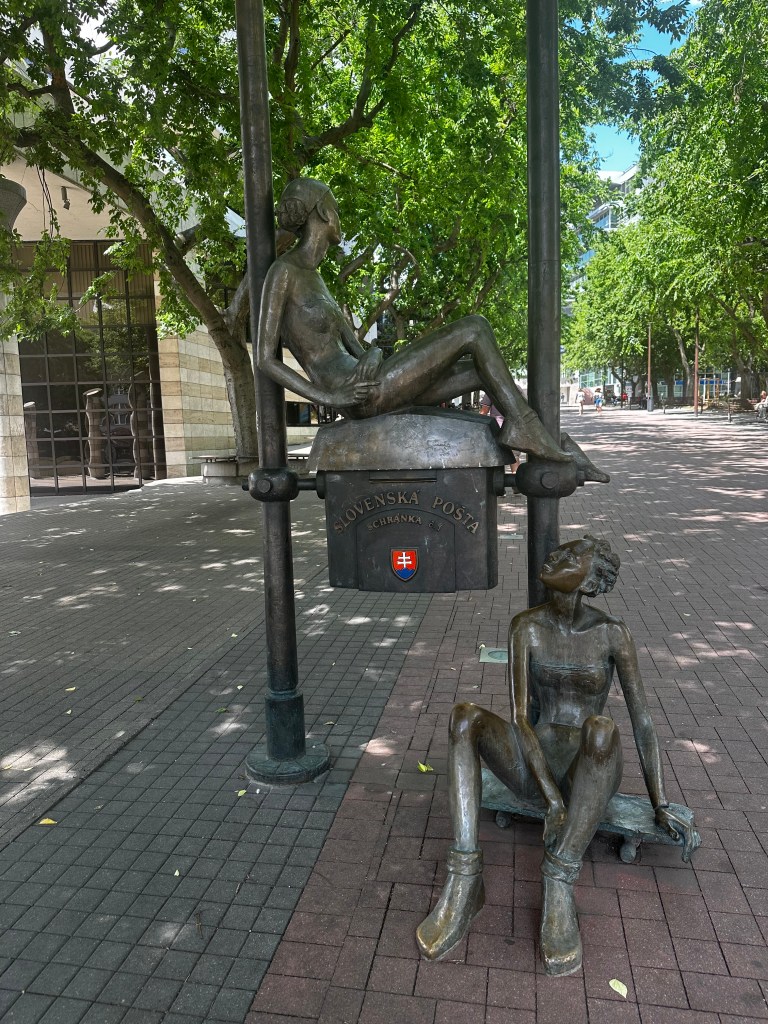
I LOVED the Slovakian sense of humor!

As usual, our drive to Budapest was broken up by an interesting stop. This time, we visited Roman ruins at Carnuntum. Mike would have been in his glory here, but since I didn’t have him to explain the historical impact of this site, I had to rely on our guide and the signage.

Budapest
It is almost time for me to leave for the airport for the next trip, so Budapest will not get the attention it deserves. What a wonderful city! Not only was the Hotel President Budapest well located, but the delightful rooftop bar was the perfect gathering spot from which to watch the sun set.
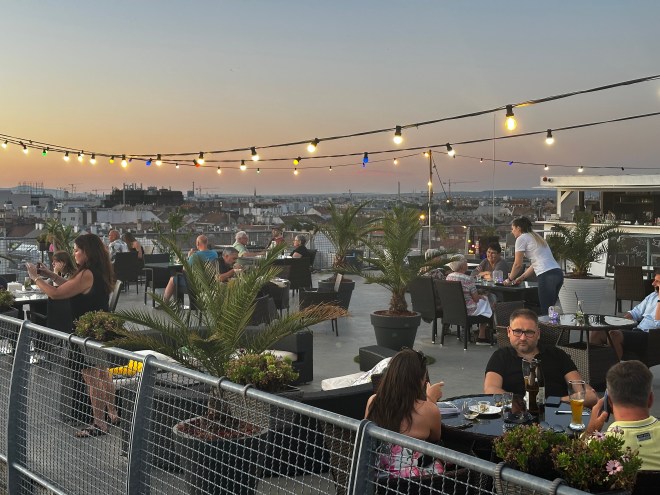
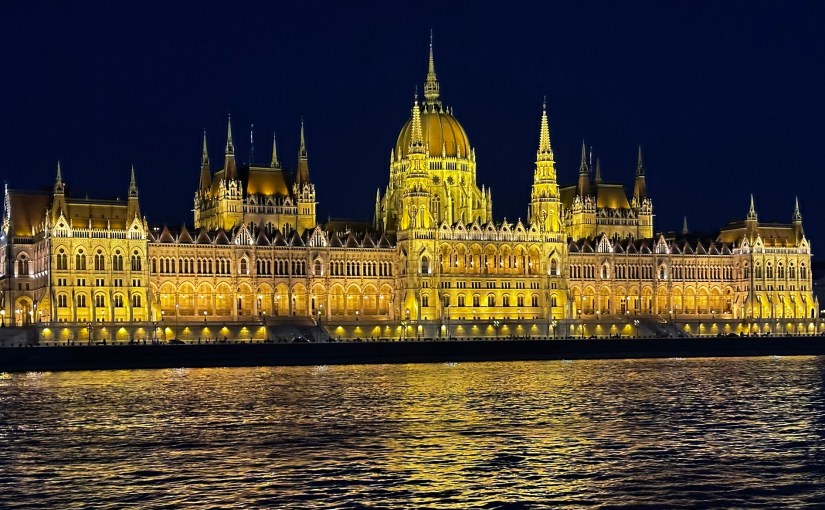
Speaking of sunset, we also experienced the Danube by night. The photo atop this post was taken on our evening cruise.

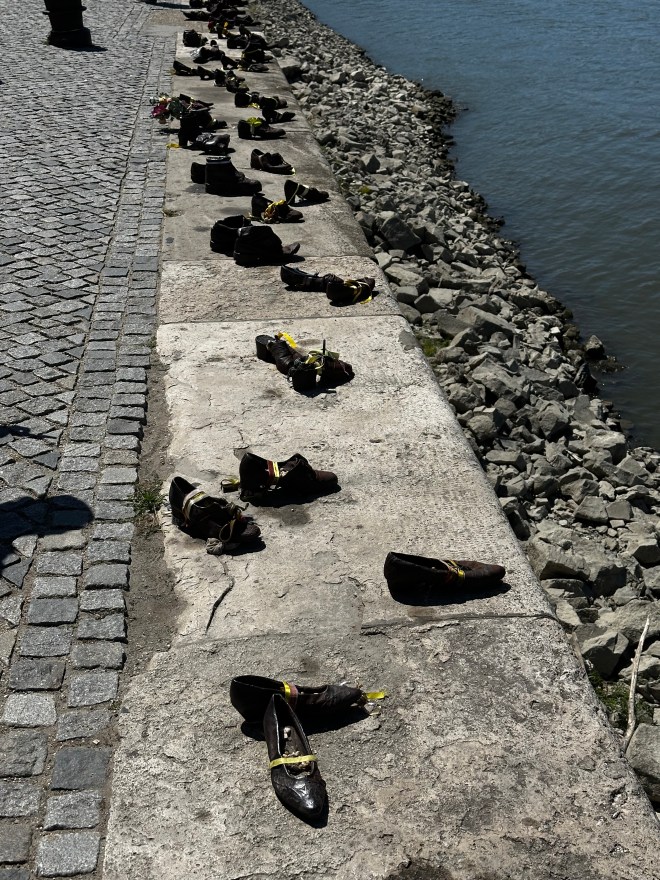
As was the case with the other countries we visited, Hungarians don’t shy away from the hard lessons of the past. This shoe monument memorializes the Jews that were forced to line up along the Danube, strip naked (during the winter) and hold hands. The Hungarian Nazis wanted to conserve bullets, so they only shot the second or third person, and because they were holding hands the others were pulled into the water by the ones that had been shot.
We were able to walk just about everywhere, which is probably why I didn’t gain my usual 5 “trip” pounds.
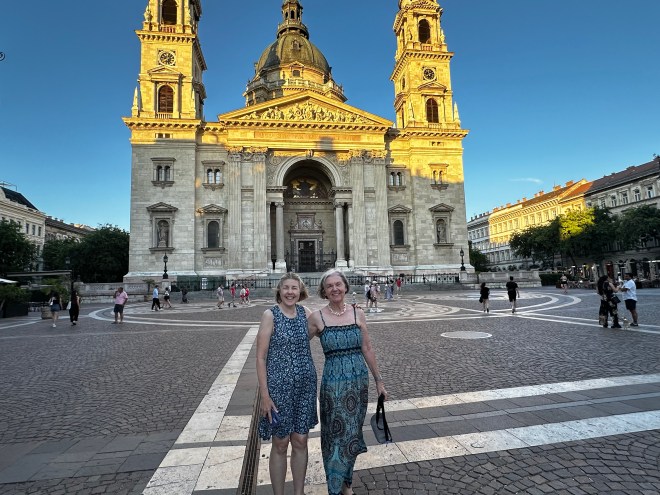
I have been lucky to find interesting companions on all my OAT trips. And this was no exception. For one of our nights in Budapest, Barb and I had dinner at a nearby restaurant with our new buddies, Linda, Marleen and Gail.

I had expected more reverence to be shown to Ronald Reagan because of his “Mr Gorbachev, tear down the wall”speech. FINALLY, as we were getting ready to head for home, we encountered a statue in his honor.

I’ll end this saga with a group photo. Next trip— Canada. I hope you’ll come along!
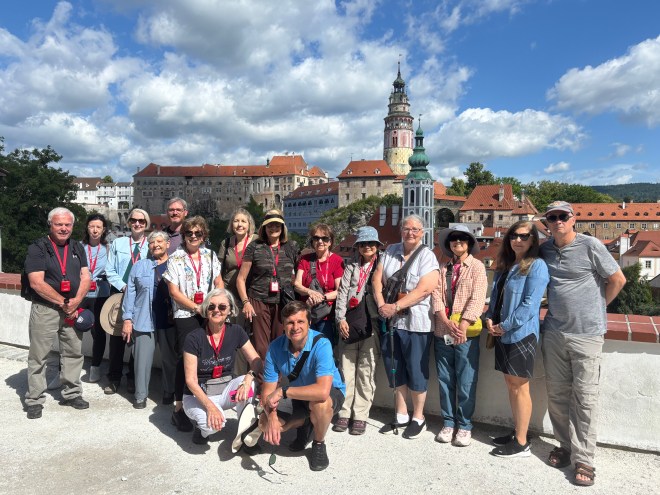
Our group: front me and Tomas Back row:Bill, Gail, Brenda, Jan, Brian, Diane, Barb, Marleen, Linda, Amy, Darlene, Patty, Lynn and Greg

Slavonice, Czech Republic

What? You never hear of Slavonice? Neither had I, until this trip. Centuries ago, however, Slavonice was a “happening” place. On the road between Prague and Vienna, it was a popular overnight stopping point for travelers.

Check out the “graffiti” that still exists on the buildings in “old town”.

One of the reasons I keep choosing to travel with OAT is because of hidden gems like Slavonice, places I would NEVER have discovered on my own.

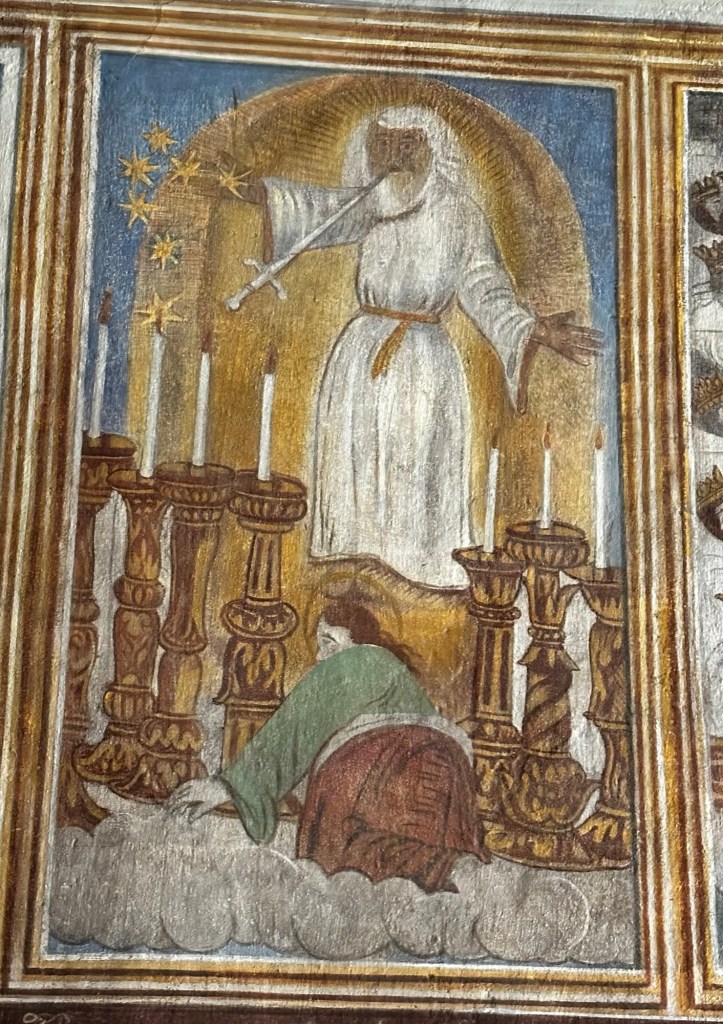
We were able to visit a beautiful restored building that was once used as a gathering place for the Lutherans. Supposedly this artwork illustrates that Jesus’ word is more powerful than the sword. Clearly this artwork was done well before both world wars.

Can you believe the ceiling in this building? How did they DO that?

We were the only guests in a lovely little hotel in old town, complete with a restaurant and wine cellar.

Here is Pavel, the owner, chef, wine merchant, cleaning crew, sommelier, ( he’s EVERYTHING!) greeting Tomas, our guide and welcoming us to his hotel.

Our first evening was memorable indeed. The town lost electricity during a hailstorm and with roads flooded, Pavel had to figure out how he was going to feed us. Fortunately, his wine cellar was very well stocked, so in addition to soup and bread we were offered unlimited beverages. SOME of us took FULL advantage of what life had thrown our way.

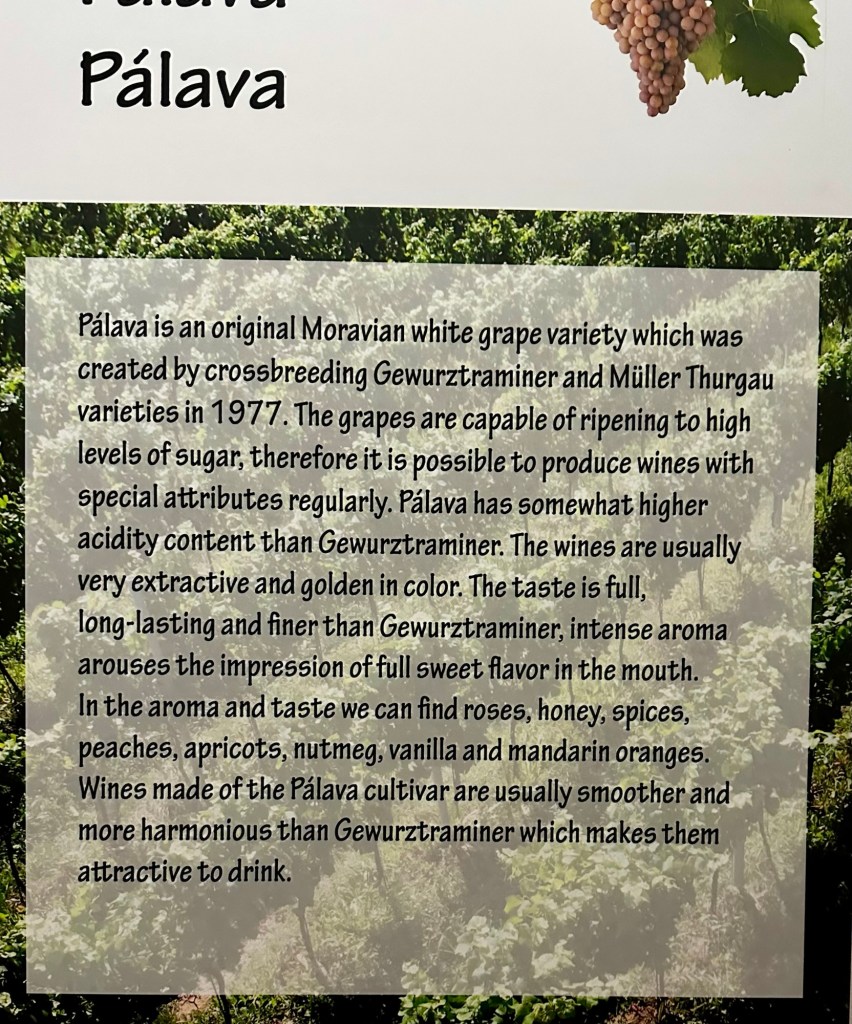
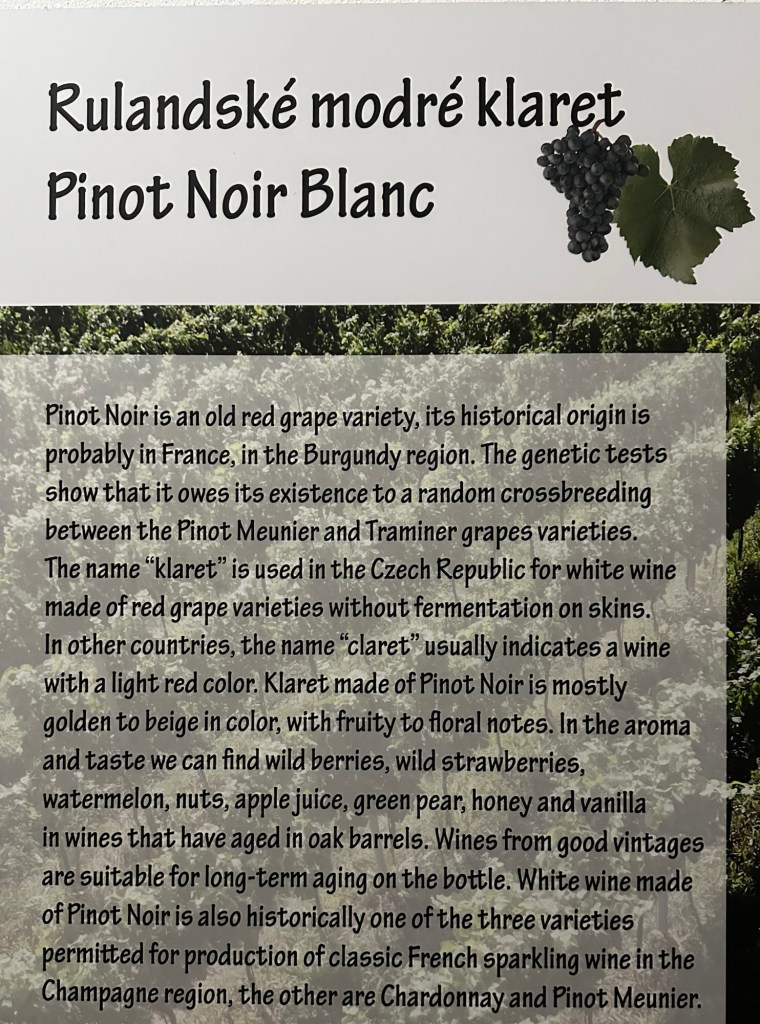
I took these photos of posters outside my room especially for my favorite sommelier (he knows who he is).

We were lucky that the 13th century wine cellar didn’t flood. The water from the storm that DID make it into the building had receded enough for us to enjoy a wine tasting on the second night of our stay.

The fact that the ceiling was dripping on us didn’t dampen our spirits one bit.

Yes, we are all bundled up— it was COLD in the centuries old basement.

But once again, I’m getting ahead of myself, talking about dinner before describing our “day in the life” experience at a farm about an hour’s drive from Slavonice. Olga, our host, runs a horse farm.

Like my wonderful cousin Kristy, she provides a home for horses that can no longer be ridden. Her oldest horse is 30, which is significantly more than the average life span of a horse.

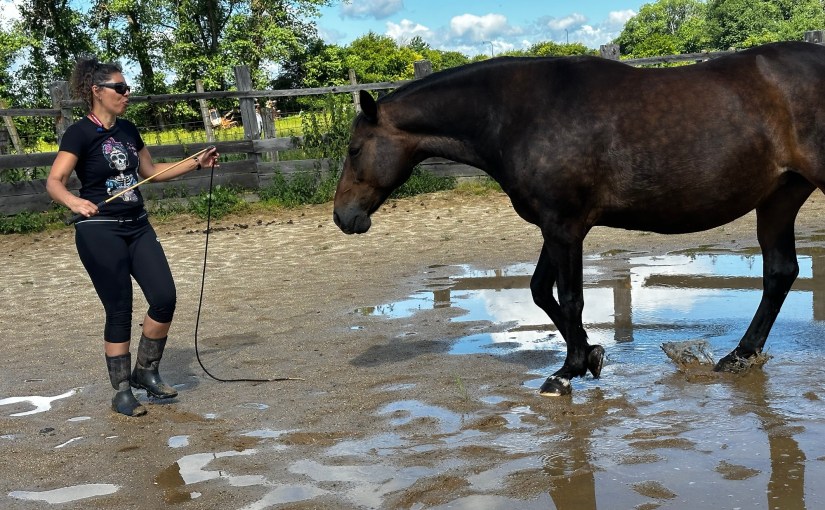
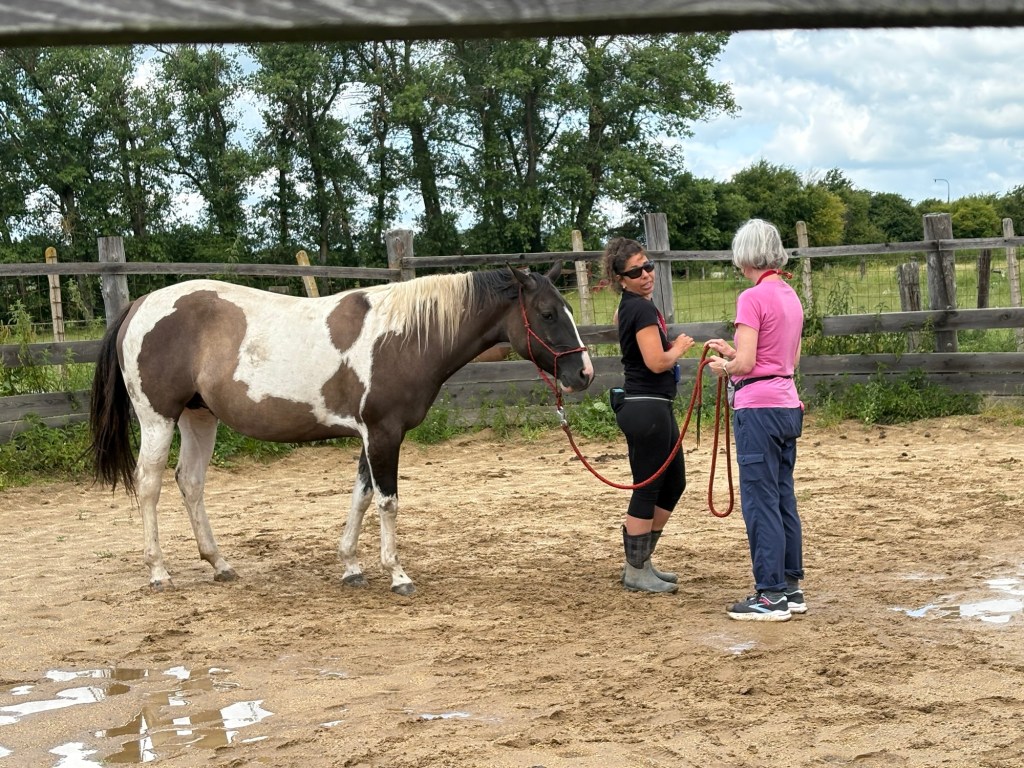
In addition to breeding horses, Olga also works with horses that are thought to be “difficult”. She demonstrated how she communicates with them using only her eyes and fingers. When she asked for a volunteer to learn the technique, I thought I was going to have lots of competition. I thought wrong.

Could the amount of water and mud have been the reason for my companions reluctance?

Being the ONLY volunteer, I got to get up close and personal with this magnificent creature, who was once thought to be “difficult”.

Olga is demonstrating the proper shoulder technique to get the horse to follow you. Nailed it!

Yes, our day time activities were fantastic, but there was even more awaiting us.

That night, we had the PLANNED dinner at the hotel,

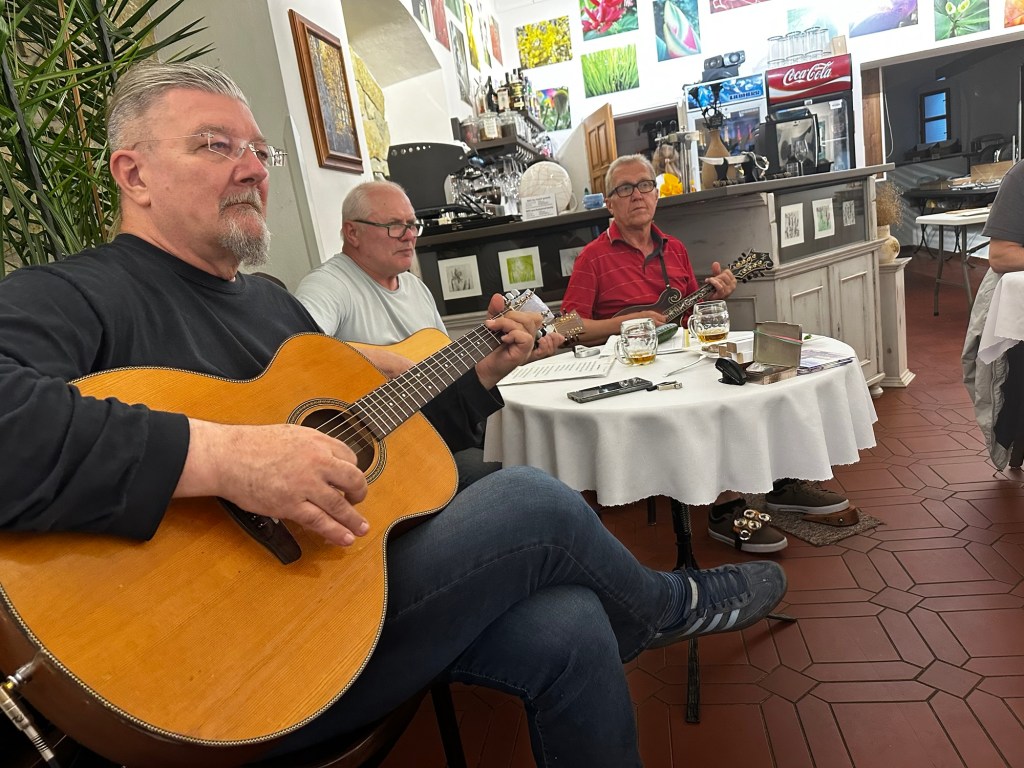
complete with local musicians who got us singing along to “Country Roads” and “Roll out the barrel”.

Of course, the wine flowed freely, but the show stopper was when our host used a sword as his bottle opener.

On to Bratislava. Yes, I know. Add Cesky Krumlov to the list of places I’ve skipped over.

Pisek, Czech Republic

What a delightful surprise our lunch stop in Pisek turned out to be!

This blog is not a chronological record of my OAT itinerary. It continues to be whatever I feel like writing about. And I feel like writing about this sweet little undiscovered town.

We’ve been to Dresden, which was our final stop on the pre-trip, then we spent the first three days of the main trip in Prague. Both of these fascinating cities deserve posts of their own, and I’ll get to them eventually. There have just been far too many distractions for me to give them the attention they deserve.

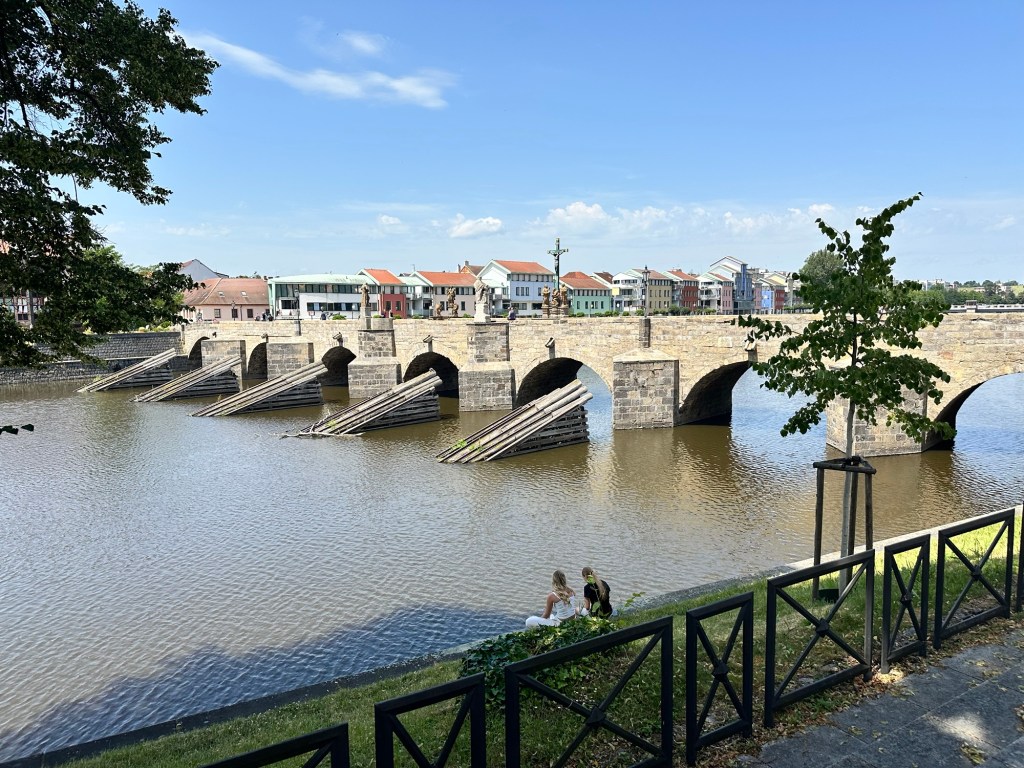
Pisek is quite beautiful. Its old stone bridge predates Prague’s Charles Bridge by at least a century. Somehow, the bridge managed to survive several centuries worth of floods. The statues on the bridge weren’t so lucky. The originals were damaged and have since been repaired or replaced.

Don’t be fooled. Pisak also has MODERN attractions, like this one. I’ve seen pedal bars in Nashville, but I never have seen a Prosecco van. What a great concept!

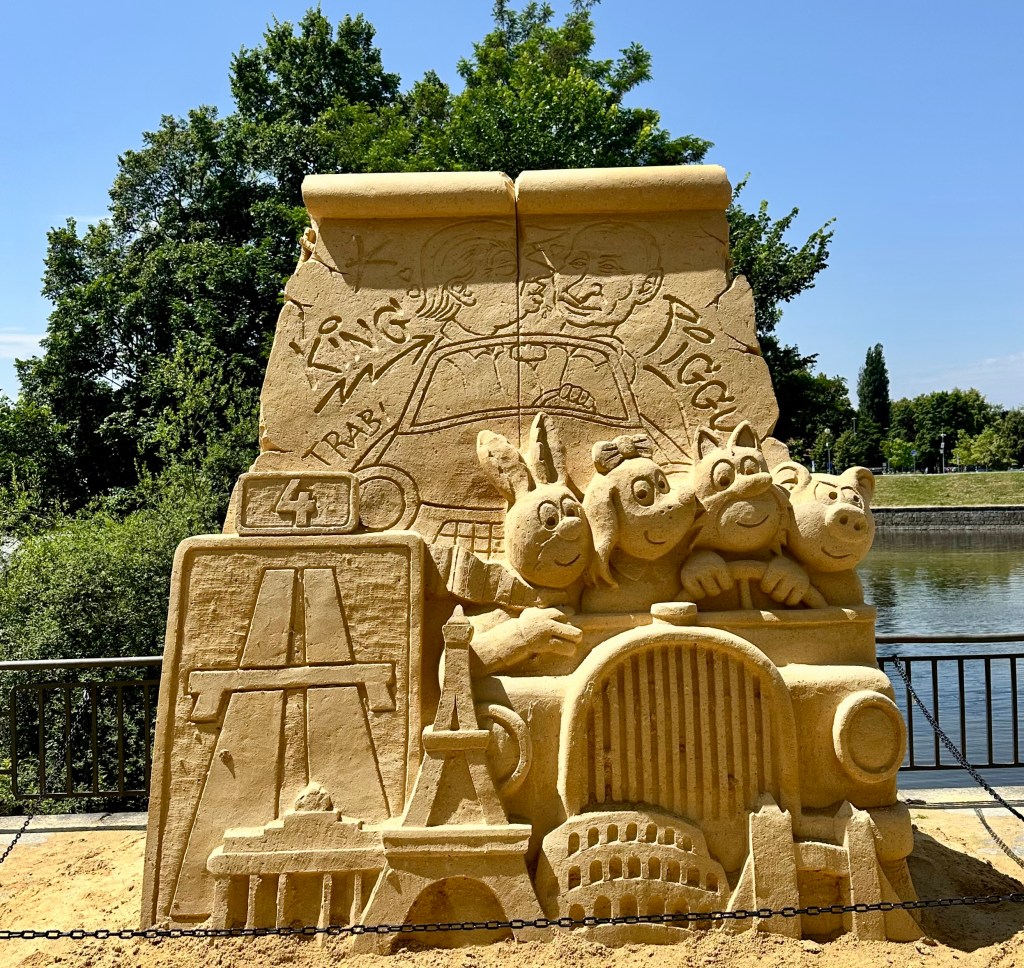
Despite this vehicle’s obvious appeal, I found the sand sculptures even more compelling.

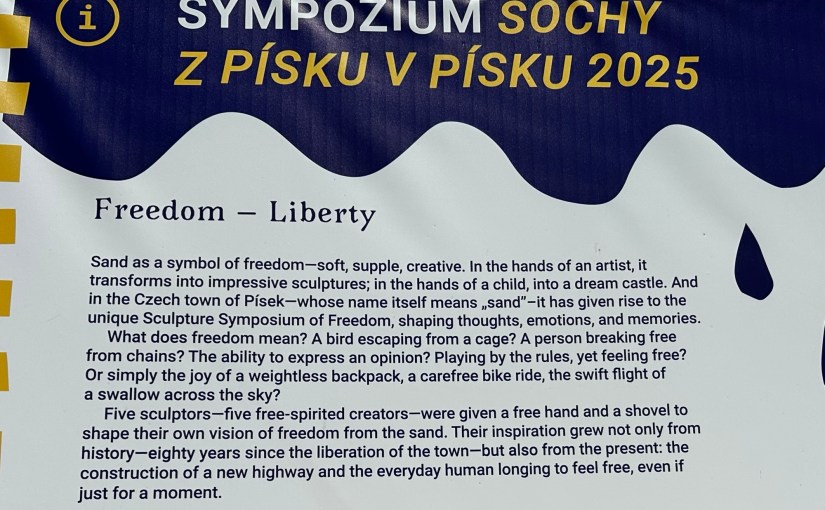
The header on this post describes the theme for this year’s sand sculptures — Freedom and Liberty, intended to commemorate the town’s 80th anniversary of their liberation after World War 2.

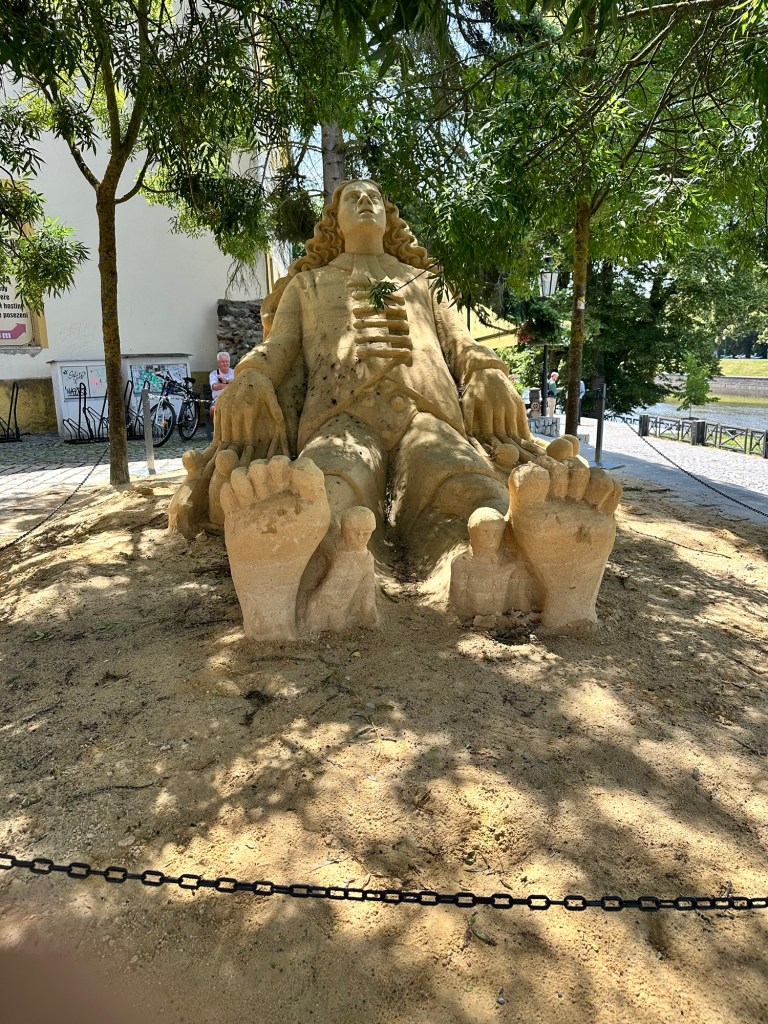
Did you recognize Gulliver, struggling to break free?

Lady Liberty has packed her bags. I’m hoping she’s not leaving the USA.

To me, the most compelling sculpture was this one, especially after being in Berlin. What a powerful demonstration of how much JFK’s words meant to the people in this part of our planet. .

Then I took a good look at the front of the sculpture. It shows Putin driving a car manufactured in East Germany by the Soviets. The Trabant had an engine that was likened to a lawn mower—about as powerful and just as smelly. East Germans would use trabants to escape to the Czech Republic, and then abandon the car in the street.

Take a close look at who is kissing up to Putin. Clearly he is not in the driver’s seat.

If you don’t recognize the iconic hair style, the sculptor has given us a hint. He has “king” written alongside his image. ( I would have added “wannabe” before the word “king”).

Why is it that Europeans can see so clearly what many Americans cannot? Perhaps because they have lived through Facism and Communism, they have a deep understanding of how fragile democracy can be and how important it is to preserve it, in every means possible, including the creation of sand sculptures.

Croatia, formerly part of Yugoslavia

Thanks so much for the words of encouragement from all who commented on my last post, either here, on Facebook or on LinkedIn. It was great to hear from so many friends. I had no idea you were reading my blog, because unless someone comments, I don’t know who my audience is. Your very kind messages motivated me to continue writing about October’s trip.

Yugoslavia was once made up of 6 countries, and on my recent Overseas Adventure Travel (OAT) trip, I visited four of them: Croatia, Montenegro, Bosnia &Herzegovina and Slovenia. I tell you–we are SO very lucky to be able to travel in the USA for thousands of miles without ever having to show our passport. On this trip, we had multiple border crossings, and although our guides knew the tricks to make it as painless as possible (which crossing was less busy, what time is best to cross), it still was an inconvenience that I’m glad is not part of our daily lives.

After 7 of us finished the pre-trip to Albania, we drove through Montenegro to a parking lot by the border where our Albanian guide said goodbye, and Antonia, our guide for the main trip, greeted us (literally) with open arms. How lucky were we to get this dynamo for our tour leader! She was funny, creative, attentive, and so very joyous. She started out by giving us the good news that we were staying at a different hotel in Dubrovnik, a five star, because our original (4 star) hotel was still being renovated. As the millennials would say, “OMG”! The Valamar President Hotel was truly magnificent–right on the ocean, with spectacular views of the sunset. Here’s an example of one. 

Scott and Gretta, two of my favorite fellow travelers. Scott had the foresight to bring a corkscrew and glasses on the bus so that we could enjoy the wine we bought along the way. It made those very long bus trips quite entertaining!

Prior to embarking on the trip, I had googled the original hotel’s location (I know, I’m obsessive/compulsive) and was slightly disappointed because it seemed quite far from the old city.  I got over that disappointment real fast, because it was so easy to get to and from our new, improved hotel, (which happened to be in the same area as the original one). We were given a free pass, the buses ran frequently, and we got off right in front of our hotel. By the way, did I mention our hotel was magnificent? 

When we arrived at the hotel, we were joined by the 9 remaining members of our group who opted not to take the pre-trip, including my dear friend Augusta.

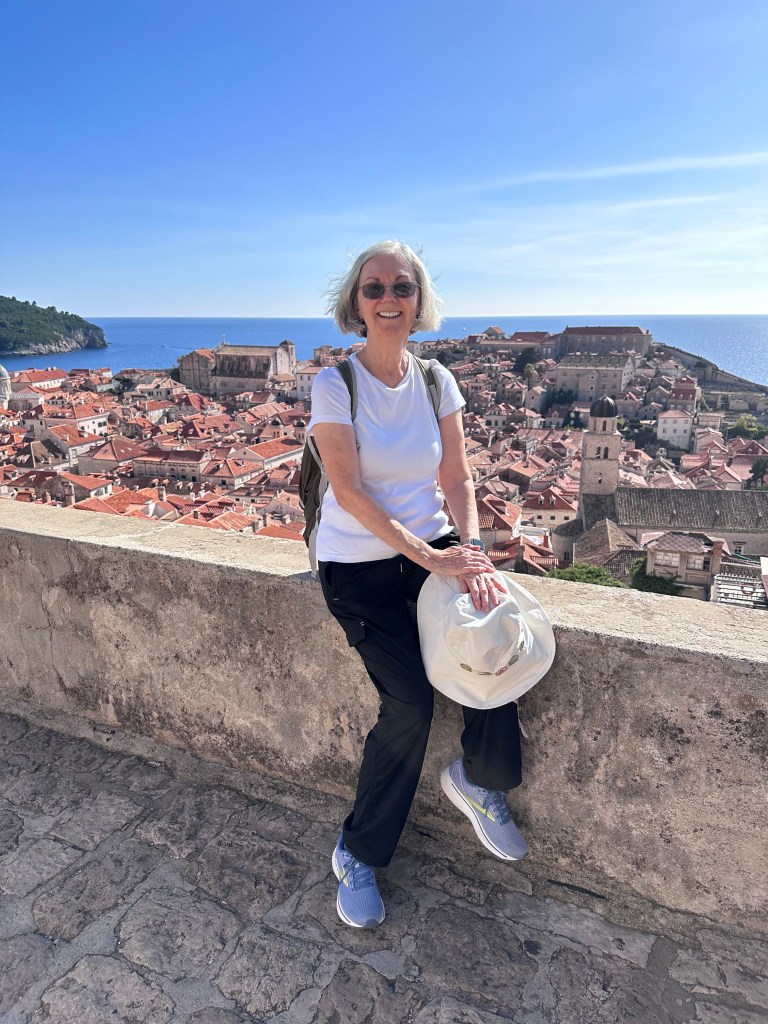
One of Dubrovnik’s big attractions is walking along the city walls, which we did on our second day in the old town. 

It isn’t obvious from this photo, but there was a lot of up and down along the wall, with very uneven steps. But don’t let the following photo dissuade you from exploring the ramparts. One of our fellow travelers, who is in her 80’s, managed to climb up and down without a problem. I found that truly inspiring–and very encouraging for someone who is hoping to be traveling well into HER 80’s. (In case you have’t guessed, that someone would be me).

walls 0f Dubrovnik

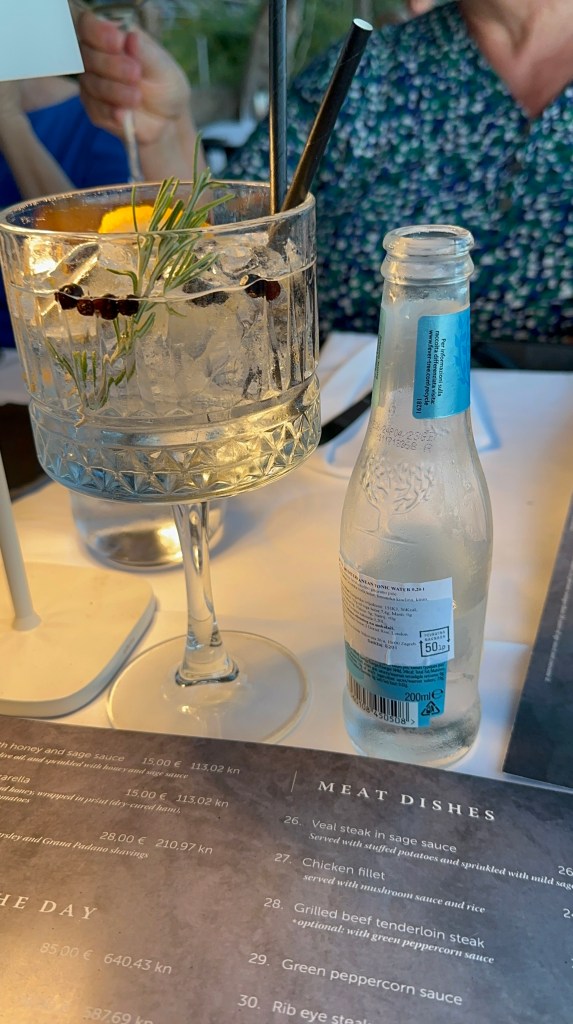
That evening, dinner was “on our own”. Antonia walked us along a beautiful path that hugged the ocean which was lined with fantastic restaurants, telling us a little about each as we passed. When she said, “This one makes the best gin and tonics in all of Croatia”, Augusta and I knew we had found our place. What made it the best? Not only was the drink served in a beautiful glass, but the creation of it was something to behold. (click on the underlined words if you want to watch our waiter construct that masterpiece).

Dinner by the sea was delightful, and the Croatian sunsets were consistently magnificent.

But the most memorable part of our time in Croatia was the talk given by a woman who had lived in Dubrovnik during the Balkan war. At that time, she was in her early 20’s. Overnight, her life changed. She had been a carefree young woman until, after a night on the town with friends, she was awakened by the sound of bombs dropping. One might expect her talk to have been depressing. It was not. It was actually an inspiring story about the resilience of the Croatian people as they learned how to survive for three months without water and electricity. She told us she quickly learned what was really important, and it wasn’t money. ”What good was it to have money, if there was nothing you could buy”, she asked.  

Photo by Mark Burgunder Sr.

Her talk took place in what was once Napoleon’s fort, and is now a museum housing memorabilia and information about the Serbian and Montenegrin attacks on Dubrovnik, a World Heritage site. 

In case you’re wondering about the picture of the soldier on her right, that’s Orlando. His statue currently is located in the main square, where in days of old, decrees were read and citizens would gather to be entertained by watching the bad guys get their just punishment. (Don’t judge–they didn’t have TV or the internet back then).

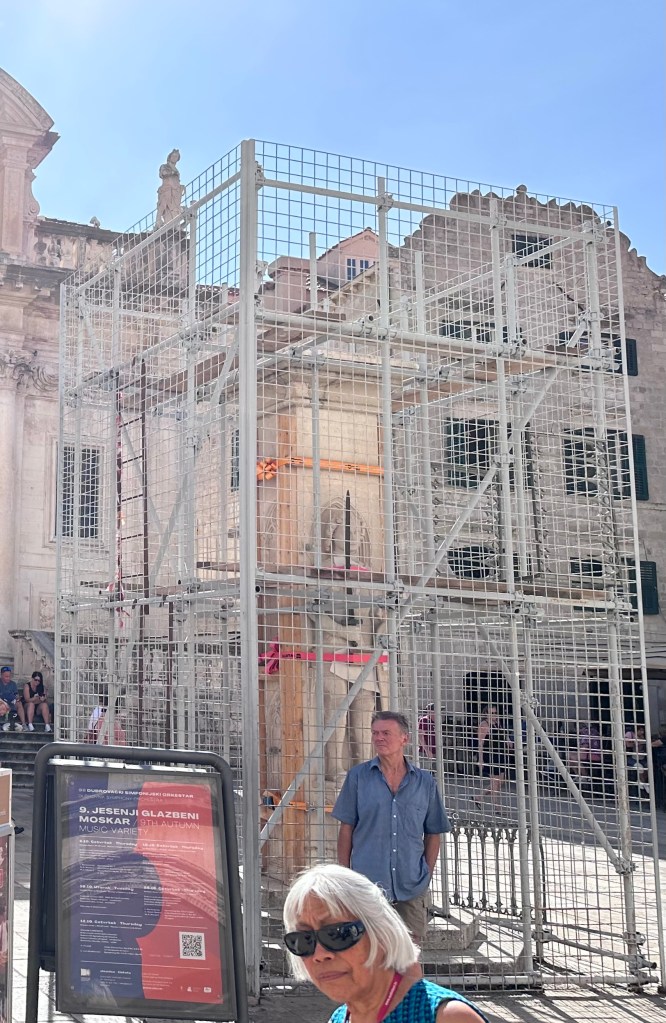
This is what Orlando looks like now. It’s hard to see him, or his all important elbow, because there is a protective barrier surrounding the statue. At some point, he will be removed to have the statue version of a spa treatment, and will be returned, thoroughly restored and rejuvenated.. 

So who was he, and why did I mention his elbow? Well, legend has it that Orlando was a nephew of Charlemagne. Perhaps you know him by his alias, Roland? More importantly, his right arm, from fingertip to elbow, was used to measure fabric, which was traded in that very square. Why his forearm? I have no idea. It certainly makes as much sense as the inches, feet and yards WE use. By the way, there are only three non-metric countries on this planet: the USA, Liberia and Myanmar (so we are in good company, indeed). Saturday Night Live did a hilarious skit about our use of the “imperial” system. But I digress…

Our return to Dubrovnik’s center via the tram gave us this phenomenal view. By the time we made it to town, however, I had seen enough of the walled city and was more than ready to return to relax on our hotel’s private beach. Little secret: it’s hot in town, and crowded, so I was grateful for free time, my bus ticket and my luxurious hotel.

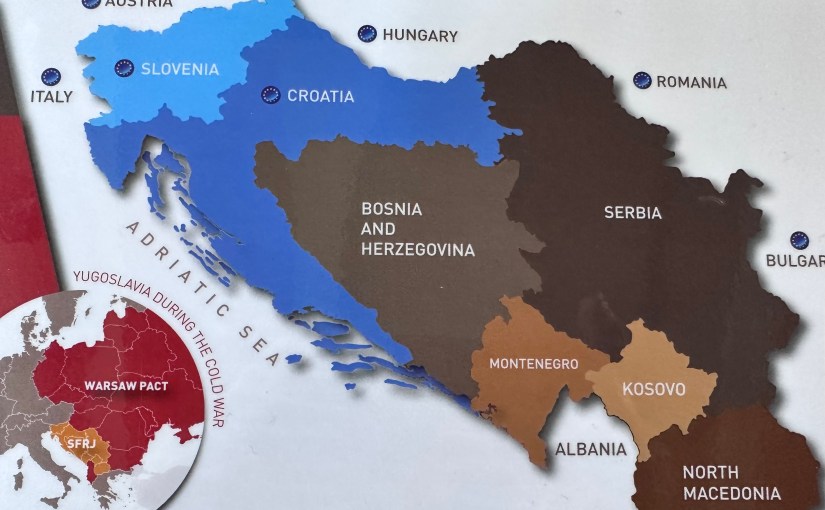
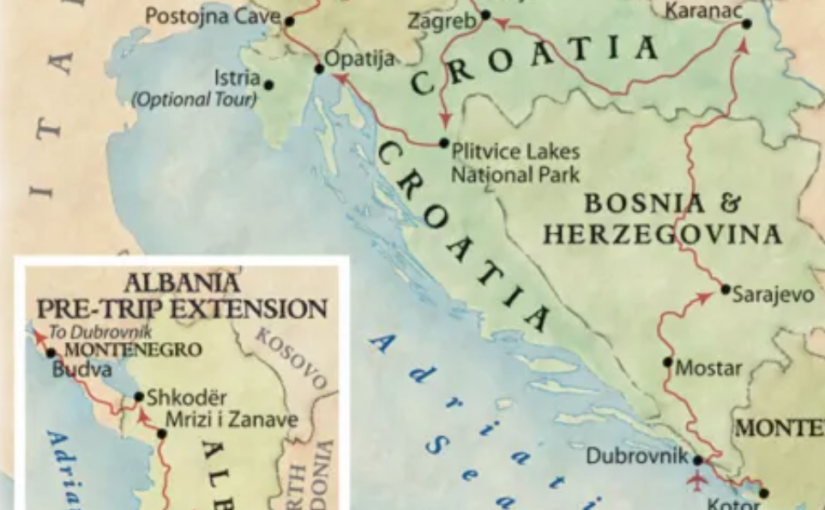
It may be difficult to see on the map atop this post, but Croatia is rather oddly shaped. The non-French say it is shaped like a bird in flight. To the French it looks like a croissant. To me, it resembles a gerrymandered voting district. Can you see that little gap that gives Bosnia & Herzegovina access to the ocean? Because of that gap, someone traveling just a few miles north from Dubrovnik could be subject to TWO border crossings: leaving Croatia to enter Bosnia, then again when reentering Croatia, and it would happen again when they did their return trip. 

While in Dubrovnik, we took a day trip to lovely Kotor, Montenegro, then headed for three nights in Sarajevo, Bosnia, after which we returned to Croatia for 6 more days before heading to Slovenia, for three nights, then heading home. Got that? I don’t have the energy to fit all of that into one post, and you probably wouldn’t want to read one that long anyway, so this post only focuses on Croatia and Montenegro.

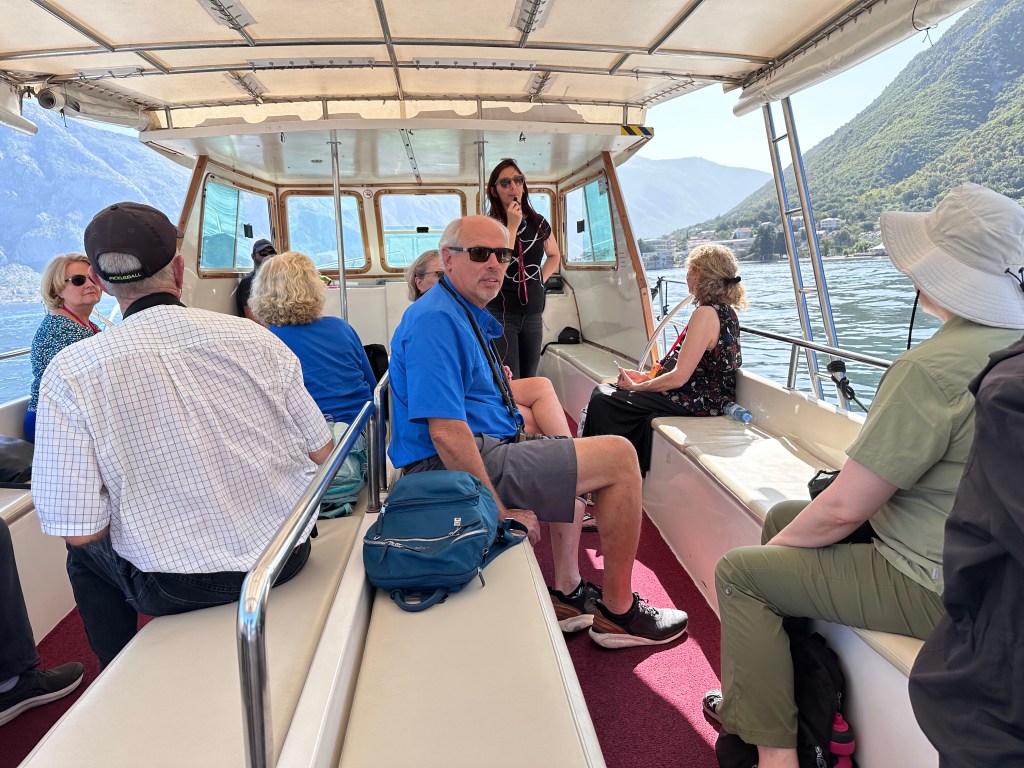
Our day trip to Kotor started with a breathtakingly beautiful ride on our private boat. I think it was during that ride that someone dubbed Antonia “the child with power”. 

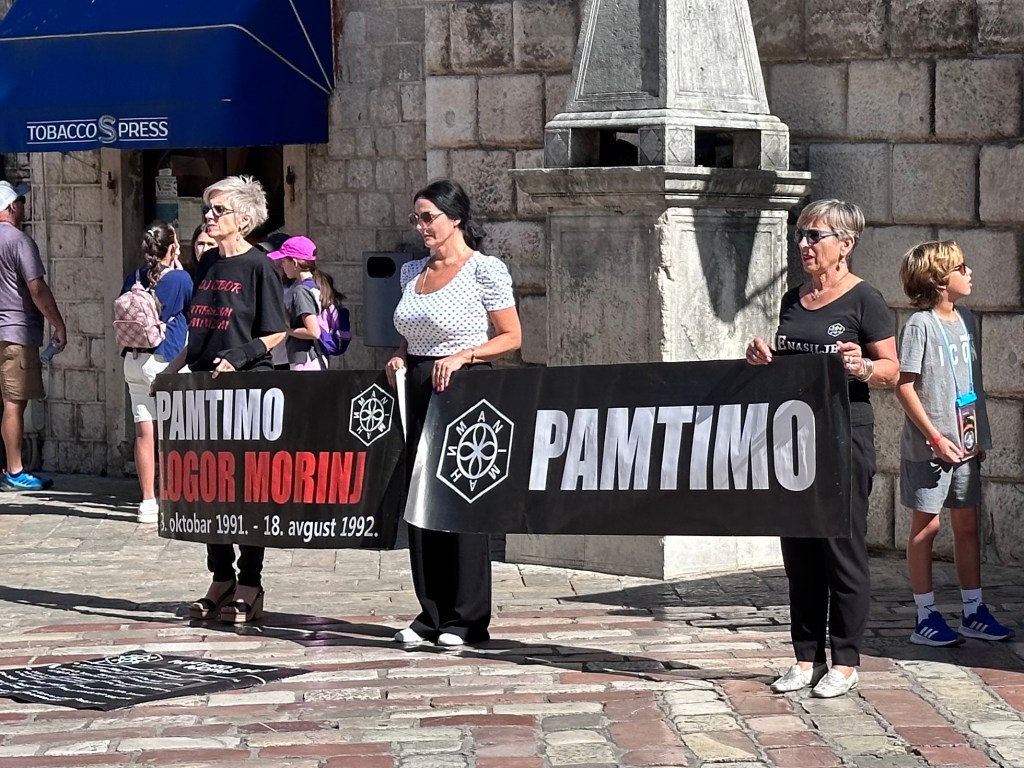
Kotor is a lovely medieval city with palaces, restaurants, gift shops, and like other medieval towns, it had its share of stories and legends, which I promptly forgot. What I didn’t forget was the women we encountered, holding the banner that says “We remember the Morinj camp”, which is where Croatian prisoners were held in deplorable conditions from 1991 until 1992. The banners act as an acknowledgement and an apology for Montenegro’s role in the Balkan War. I found that rather refreshing. 

Are you ready for a break from war talk? Instead, let me tell you about Karanic, the Croatian village we visited on our way to Zagreb. OAT trips usually include”a day in the life” of the country’s inhabitants, but this was the first time the “day in the life” included an overnight stay. These encounters are designed to provide an opportunity to see non-tourist areas and get exposure to different aspects of the local culture.

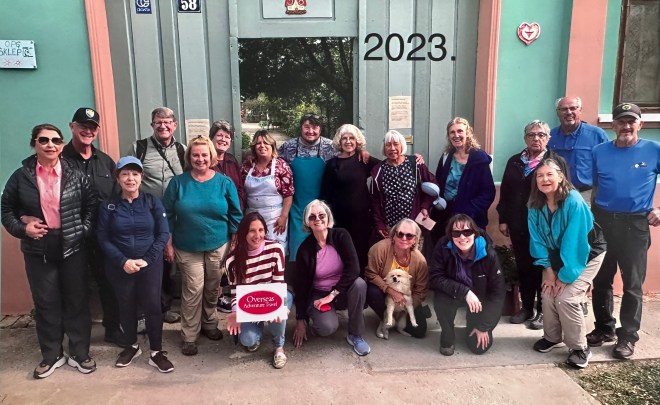
Our group, at Karanic, with Dennis, our host.

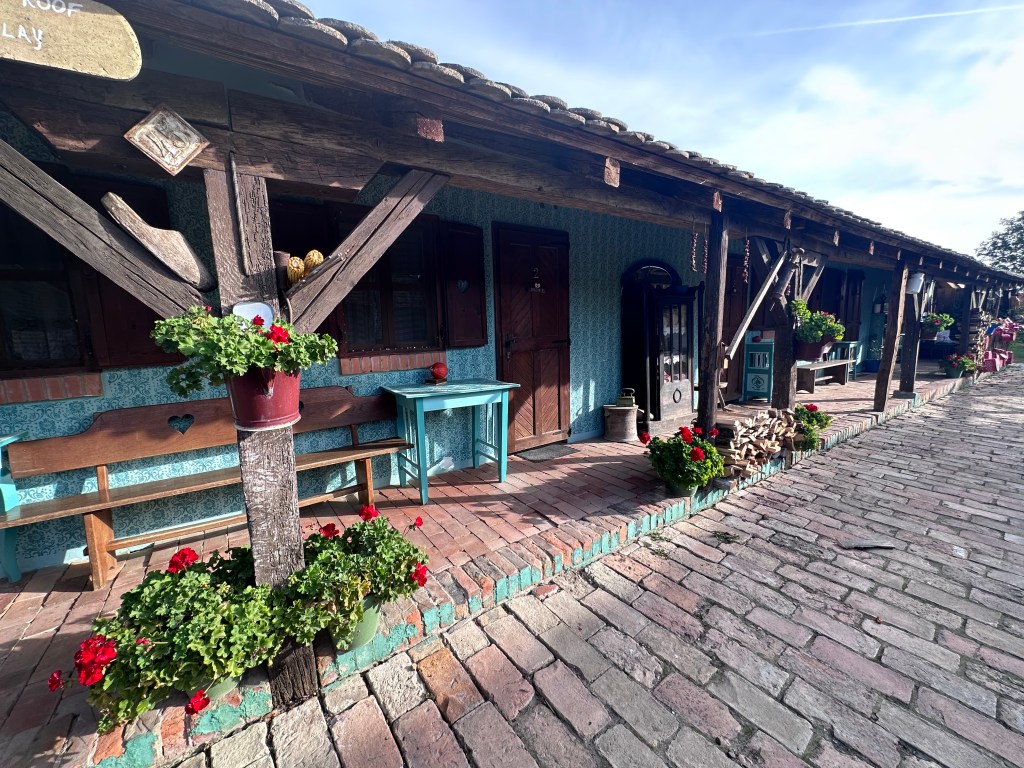
I wasn’t quite sure what to expect, but our accommodations exceeded anything I could imagine. The home had sufficient rooms for us all, each with a private bath (whew). 

The food was delicious. Some of us helped with the cooking–others captured the moments via cell phone photography.

Karanac was a nice interlude before our stay in Zagreb. When we arrived at our hotel, we noticed it was filled with men wearing team shirts. Unbeknownst to me, we were sharing the lobby with the 2018 World Cup champion football team. This became apparent when we passed a building that was plastered with a photo of the guys we had just seen in the lobby. If only I were a sports fan…


Zagreb had experienced an earthquake in 2020, so some of the buildings were still being repaired. Still, as you can see, the city offers something for everyone. I can’t offer commentary on these attractions, because I didn’t sample any of them. 

What I CAN tell you is the Bornstein Winery is not to be missed. It was educational, delicious, and oh so much fun! Six of us visited there during our free time. Who knew that a Croatian immigrant took zinfandel vines to California many years ago?

There is a whole lot more I can say about Croatia, and the other countries on this fabulous trip. Maybe someday I will, but right now, it’s time to prepare for the next adventure. I hope you’ll come along!

On My Own in Tirana, Albania

I spent the majority of my first full day in Tirana walking around the city, exploring two of the attractions recommended in my OAT Final Documents booklet. First stop was at the Komiteti-Kafe Museum for an “American coffee” and a look at what was described as Soviet Era artifacts. I don’t know whether what I found qualified as Soviet “stuff”. It appeared much too whimsical and colorful, two adjectives that I suspect were never used to describe the USSR.

I probably wouldn’t put the coffee shop on a list of top attractions, but the walk getting there and back was fun. Tirana has lots of green space, bike lanes and pedestrian walkways— and I do love to explore on foot.

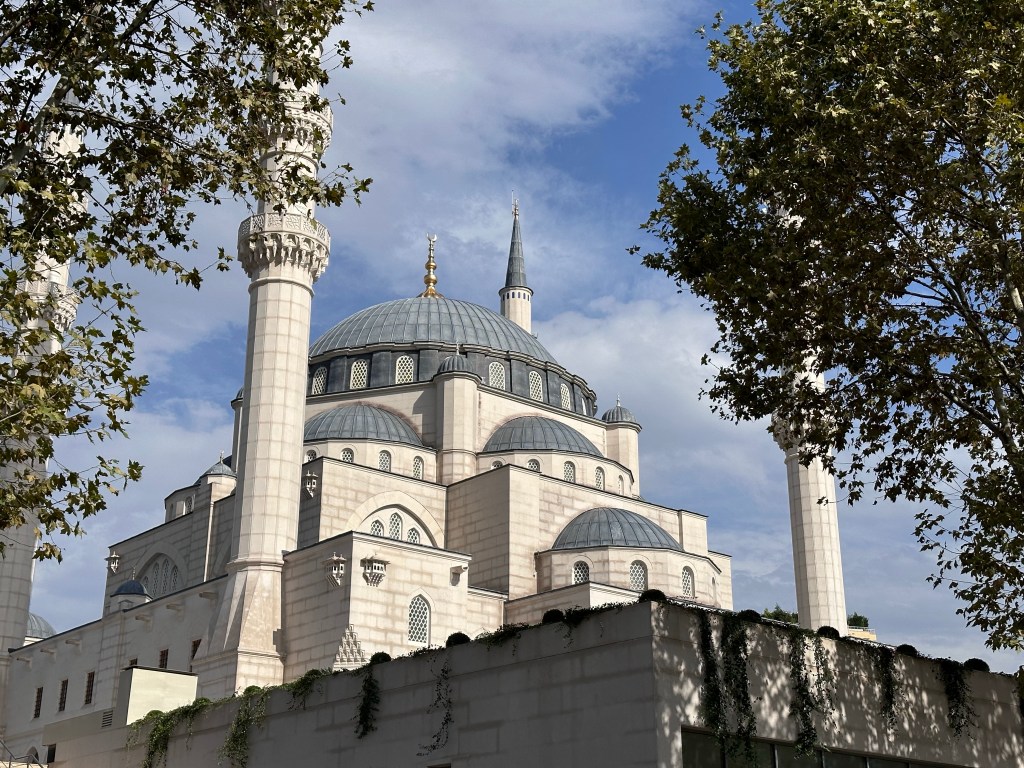
I had to get closer to the beautiful mosque appearing in the distance. A gift from the Turkish government, it is, and will remain, closed until Erdogan arrives for a dedication ceremony.

Man oh man, Tirana is BOOMING! Lots of new construction everywhere. During the ride from the airport, I noticed the very drab, but functional architecture, presumably from the Soviet era. The current construction is colorful, joyous and oh, so interesting!

I had no idea what this building would become until our tour on my second day with our pre-trip guide. Ilir took us along a different street. He told us the colored squares will become classrooms in this future digital center.

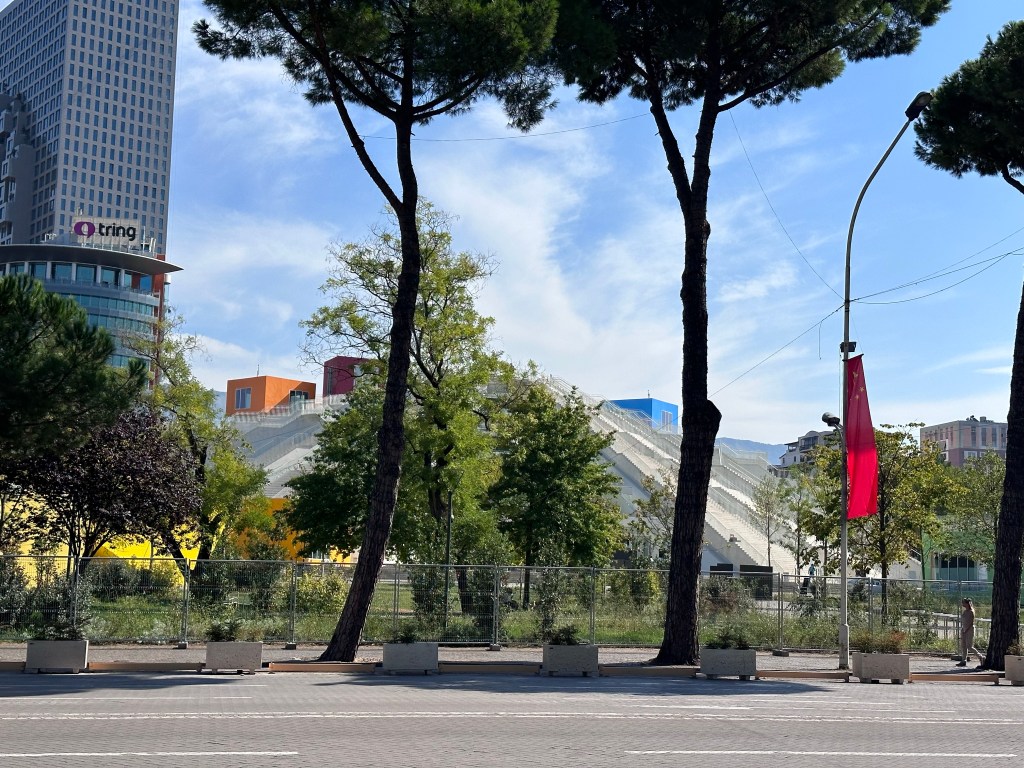
It is difficult to see the pyramid behind the trees. If you’d like a better view and a history of the pyramid, click here. https://en.m.wikipedia.org/wiki/Pyramid_of_Tirana. The steps were added to allow people to safely climb to the top. Previously they were clambering up the smooth sides, then sliding down!
One advantage to being on your own is you can stop to take photos whenever you like, and I liked to do that a lot. I loved this bridge. While on it, you have access to free wi-fi, which I didn’t need because I had switched to TMobile. Unlike Verizon, international access is free for everything except voice calls. (Thanks to the Facebook page “Friends of OAT” for educating me about internet access outside of the USA). Knowing I could consult google maps whenever I wanted enabled me to wander freely without fear of getting lost.

As I made my way to the Sali Shijaku House (OAT’s other recommendation), I walked thru Tirana’s Castle, which was taken over by the Topani family in 1798. I had seen the Topani name everywhere, most prominently at the nearby mall entrance, and wondered what the word meant. A plaque before the castle explained that Topani is the name of a noble family “rich and educated with strong ties to the Ottoman Empire and the west which they used to help the country while it took the independence road.” The plaque goes on to explain the rivalry between the Topanis and the Barginis which was ultimately resolved by intermarriage. Just think, if the Montagues and Capulets had used intermarriage to resolve their disputes Shakespeare wouldn’t have had material for Romeo and Juliet.

Not much remains of the original castle structure other than these walls and something called a “Bailey”. (You won’t see a photo of the Bailey because I have no idea what it is). Walking thru that arch brings you to a walkway with lovely shops and an abundance of restaurants, one of which I chose for lunch.

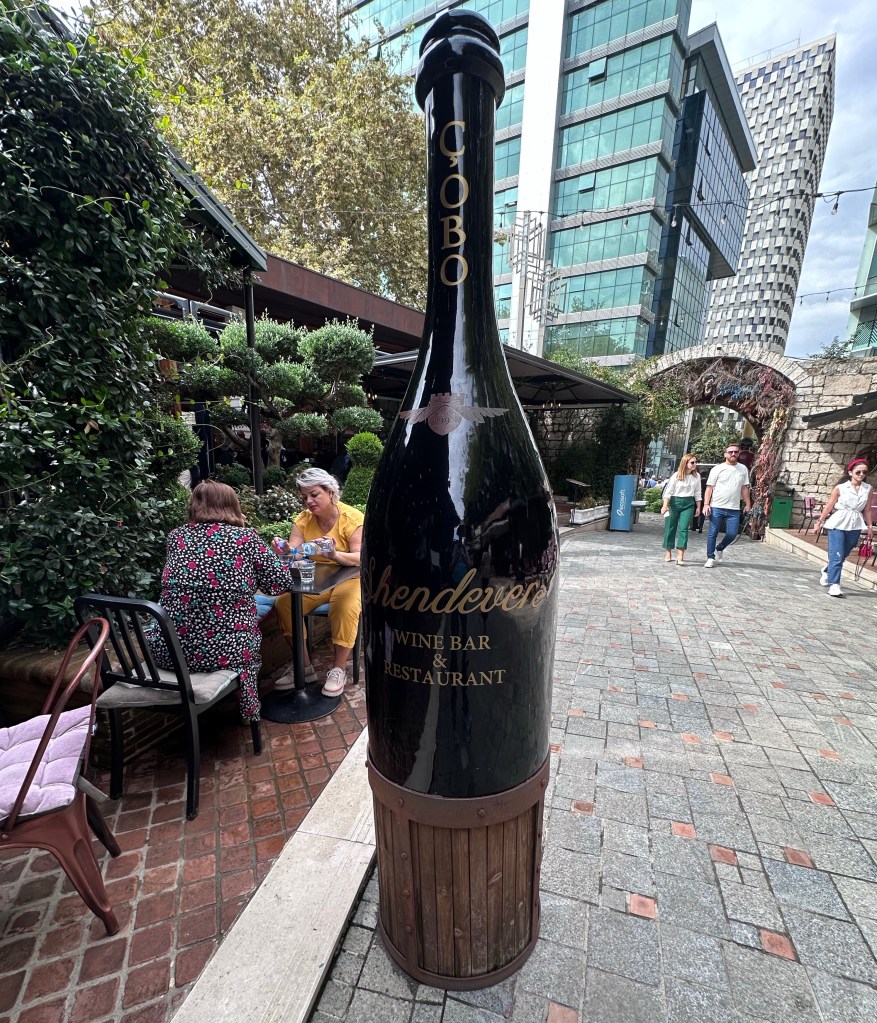
I had a wonderful inexpensive lunch with a glass of sparkling wine at this restaurant.

But back to the home of the artist Sali Shijaku, my second destination. After exploring his residence, which is filled with his paintings, I sat in the garden and enjoyed the ambiance while sipping a cup of tea. It’s hard to believe that over the years, this 300 year old structure has been a hospital, women’s prison and military building.

Some other sights from my walk thru Tirana:

Topani Mall across from our hotel.
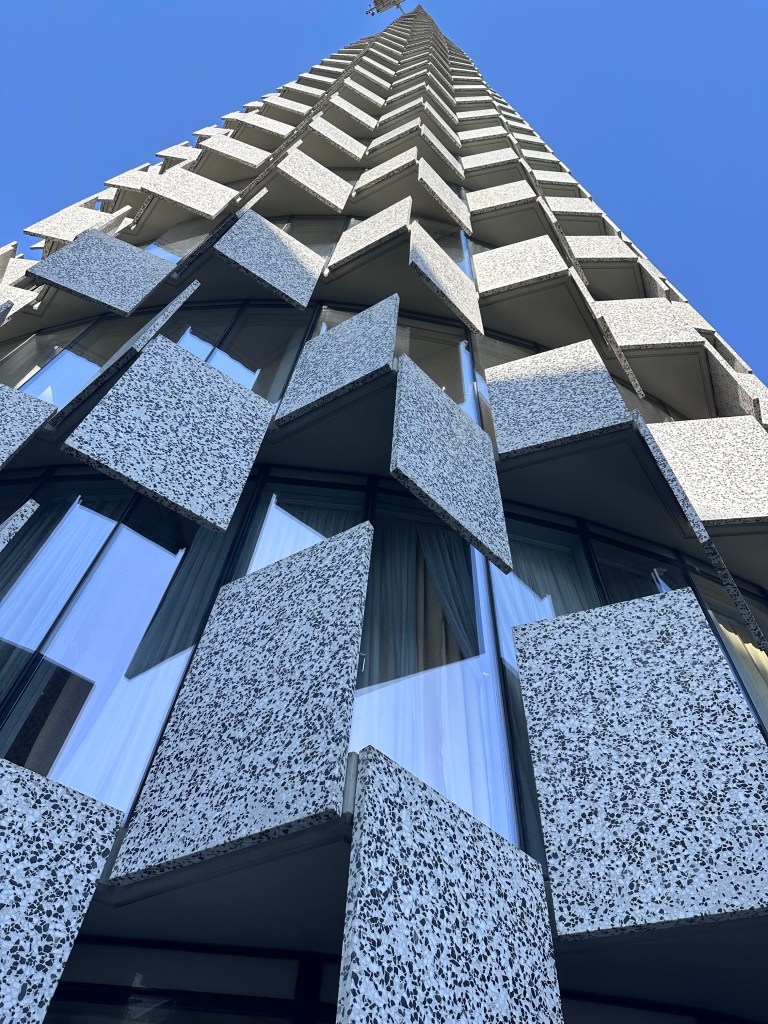
Although not colorful, this building’s three dimensional structure appealed to me.
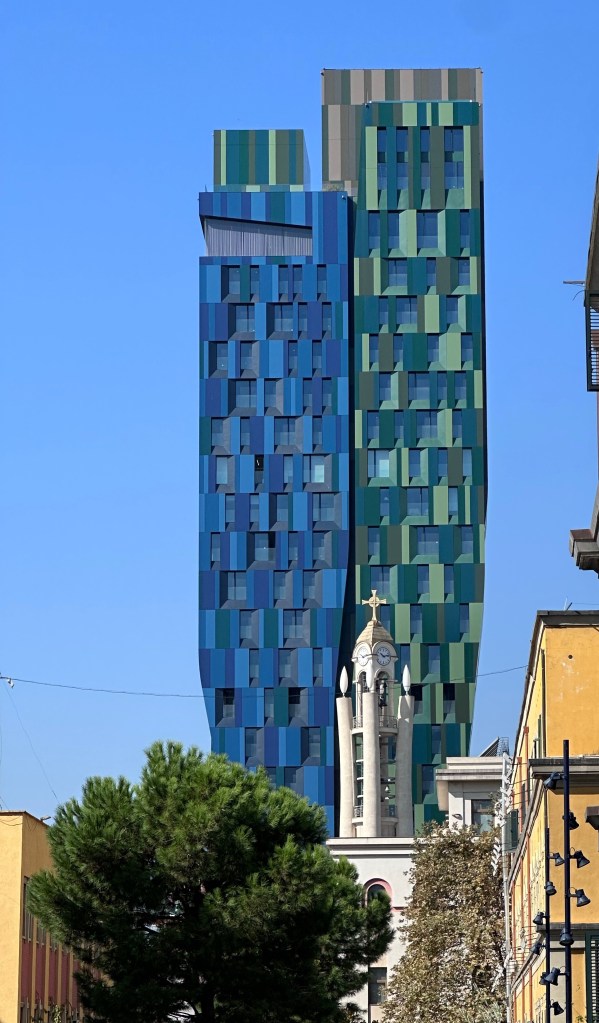
The new building towers over the old church tower.

After exploring, I returned to the hotel to meet 4 of my traveling companions. After a brief walk with our guide, we got to know each other over dinner at Roxana Tuna House. As is often the case on OAT trips, they are all friendly and so very interesting. That’s another reason I enjoy traveling with OAT—congenial companions. We will meet the last couple tomorrow because they encountered flight delays.

Time to stop babbling about this wonderful city and get some rest.

Tirana, Albania

2020 was supposed to be Mike’s and my biggest travel year ever. It feels like a lifetime ago that we booked trips to Croatia, Germany, Japan and Egypt. We (more likely the optimist of this twosome) were so confident that covid would be over in several months that we didn’t take a cash refund. Instead we opted for travel credits with bonus incentives.

Fast forward three and a half years. I’m now working my way through those credits, beginning with this trip to Eastern Europe, which starts with OAT’s pre-trip to Tirana, Albania.

One of the many reasons I enjoy traveling with Overseas Adventure Travel (OAT) is the ability to customize my trip. I figure if I’m going to subject my body and my money to a cross Atlantic flight, I’m going to stay for as long as I can, so in addition to the pre-trip, I decided to fly in a day early to get acclimated.

So far, everything has gone smoothly, starting with a great experience on Austrian Air. Passport control at Tirana’s airport was incredibly efficient. You scan your passport, which opens a gate, then get your picture taken, which opens a second gate and you’re DONE. It was so FAST. But the time I gained at passport control, I lost in bumper to bumper traffic on the way to the Oxford hotel. It took over an hour to go 11 miles, making me feel like I was back in Houston, Texas. The timing actually worked out fine, because by the time I got to the hotel, I only had to wait about 10 minutes for my room to be ready.

The room is small, but lovely, with a shower that makes the standard size in cruises look huge by comparison. I suspect I’ll be missing Mike even more than usual tomorrow morning, because when we traveled, he always showered first, figuring out how the fixtures worked, and setting the temperature just right for me. (It’s always those little things that do you in when you lose your spouse).

Take a look—no need for a bidet in this bathroom. All you have to do is swivel and lift your butt. That is, if you can figure out which faucet turns on which of the two shower heads. Yes, tomorrow will indeed be interesting because there’s not a lot of room for error. Fortunately we learned the ‘towel on the shower floor’ trick because I’ll bet that marble makes the floor extremely slippery when wet! I just hope that floor drain isn’t clogged!

But enough bathroom humor. What about the town, you ask? I remember Laura, our guide in Patagonia telling us, “There’s no such thing as bad weather; only inappropriate clothing choices.” Fortunately, I packed appropriately, and checked the weather so I wasn’t daunted by the rain. It also helps that the Oxford is perfectly located—right across from a mall ( where I bought 3 liters of water for less than $1), close to ATMS, cafes and restaurants, squares and sights. I love the art on the sides of buildings.

Wonder which of these books would be banned in America?
This is a very strange image. What is the artist trying to say?

I was surprised that George W Bush had a major street named after him in Tirana. I recall the people in Africa revered him because of his involvement during the AIDS crisis. But Albania? Clearly he has his admirers—and some detractors— who covered his name with stickers.

Tirana is full of surprises—here’s another: The Italian Institute of Culture building. I know from experience that Albanians make fantastic Italian food. My favorite Italian restaurant is run by Albanians. Clearly there is a bond between those two countries that I will explore with my guide when I meet him tomorrow.

What’s with that zig-zaggy structure in front of the building? Is it a picnic table? A runway? An altar for sacrificing virgins?

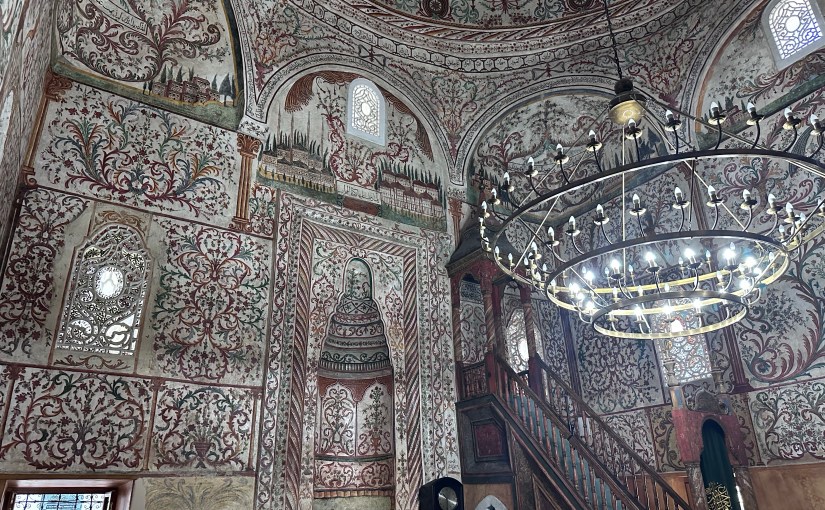
This area was once part of the Ottoman Empire, so I was not surprised when I passed a mosque just in time for the call to prayer. If you want to check out the weather and share in the mosque experience, here’s the YouTube link. I wasn’t successful uploading the video to WordPress. Maybe this will work. https://youtube.com/shorts/RXIjSq3ElqM?si=BxfwMJnXN6hBMHFd

On the MAIN trip, which starts on Sunday, we will travel to Croatia, Montenegro, Bosnia & Herzegovina, ending up in Slovenia. My friend Augusta will be joining me in Dubrovnik for the main trip. She frequently traveled with Mike and me in the past, prompting one of our fellow travelers to dub Mike “the man who travels with two wives”.

Below is a visual of our journey through some of the former Yugoslavian countries.

Tomorrow or Wednesday, I will connect with the 6 travelers that opted for the pre-trip, then on Sunday, we will join with the remaining 9 travelers in our group of 16.