Recycling in the old days

Question: What do you do with your defective porcelain?

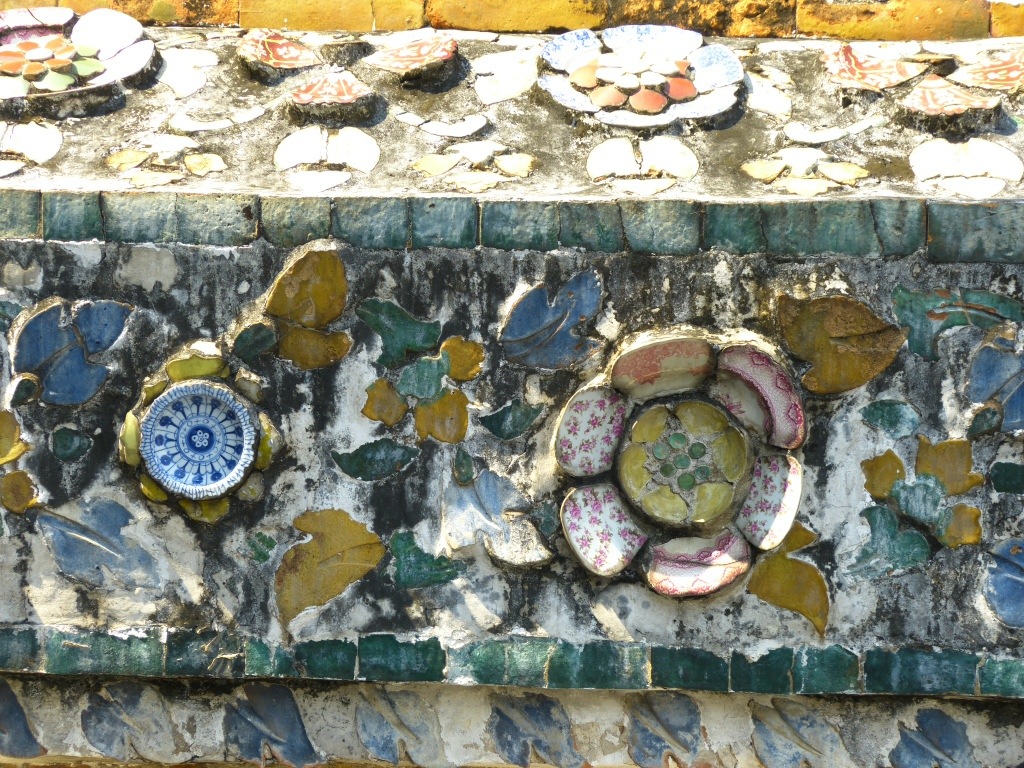
Answer: If you are Chinese, and it is the 1800’s, you use it as ballast in your cargo ships; however if you are Siamese, you realize it makes ideal building materials for your next temple.

20130207-061333.jpg
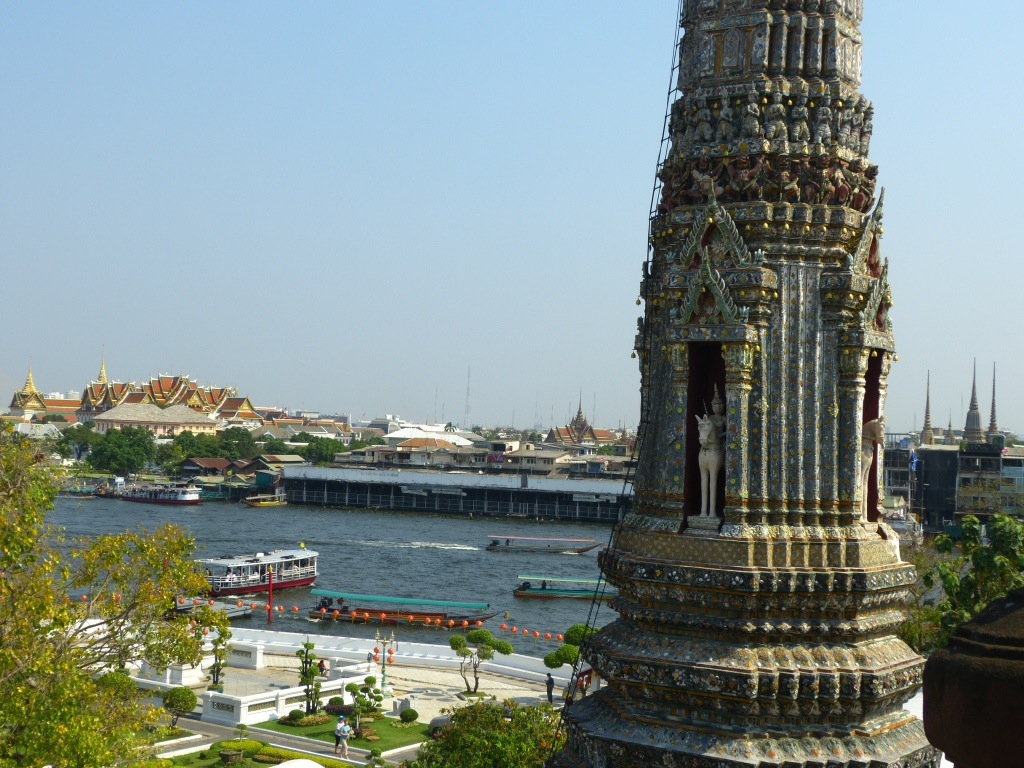
Although Wat Arun is called the Temple of the Dawn, supposedly it is best viewed at sunset, when the light makes all of the porcelain glow, and the temple slowly turns into a silhouette against the crimson sky. Mike and I had another location in mind for our sunset hours, so we visited in the morning. The view from across the river was spectacular enough for us, even without a dramatic sky.

20130207-062420.jpg
If you are game enough to climb the steep steps (check out the relationship between that guy’s leg and the step behind him to get a feel for it), you are rewarded with a spectacular view.

20130207-062939.jpg
Oh wait–those weren’t the steep steps, these are the steep steps, and someone thoughtfully left a bottle on one of them to provide scale. They are SHALLOW, steep steps, not designed for big western feet!

20130207-063205.jpg
Going up was like climbing a ladder; coming down was a bit harder, but the view was so worth it.

20130207-063600.jpg
On the top left, you can see the rooftops of the Grand Palace.

20130207-063833.jpg
The view looking up was pretty great too. Erawan, the elephant that the Hindu god Indra rides, is standing on the ledge above us. (Don’t see Indra, though).

20130207-065823.jpg
The grounds surrounding the temple, normally lovely, are even more so, because they are being decorated for Chinese New Year with red lanterns everywhere. Can you see the two Yakshas guarding the entrance? These spirit “monsters” were at the grand palace and also had green and white faces.

20130207-070317.jpg
I’ll end this post with a question:
What do Thais have in common with the Brits, Aussies, Kiwis (New Zealanders), Indians, Japanese and South Africans? This is a hard one. The answer will be in the next post.

The Grand Palace

Pick your favorite adjective: outstanding…awesome…fantastic…way cool. Regardless of the word chosen, I’m confident that it will in no way capture the beauty, the wonder, the glory of the Grand Palace.

Mike and I will be returning to the palace with our Road Scholar group, so we opted to wander around aimlessly, gawking and gasping at the explosion of color and art that surrounded us.

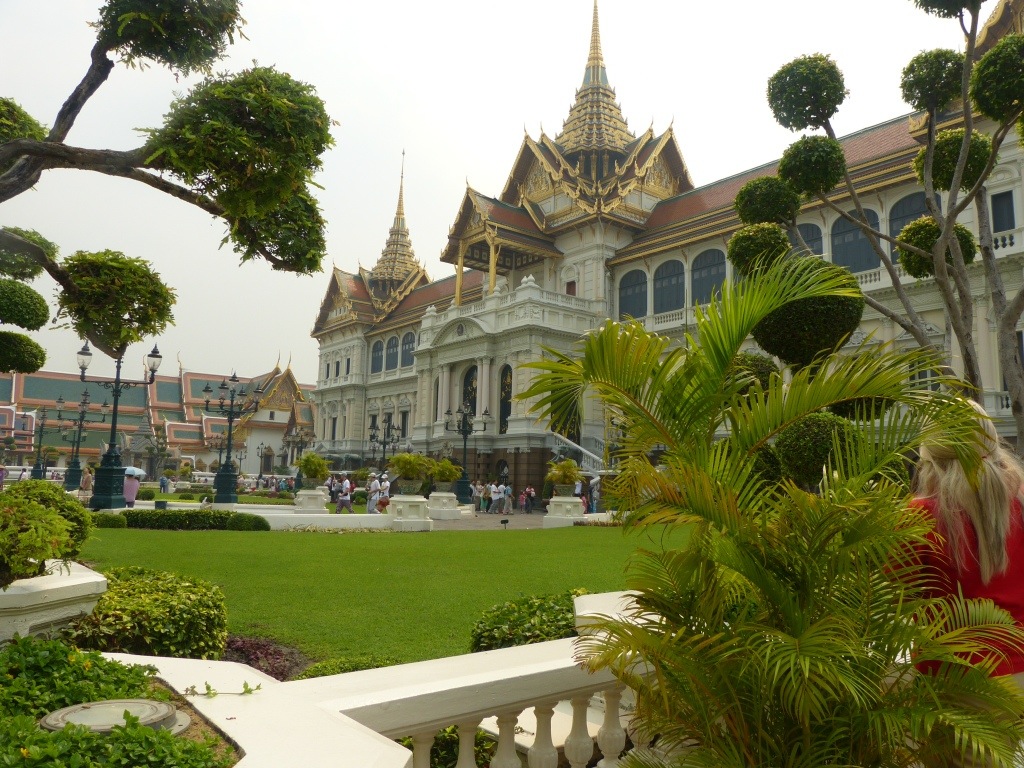
Here’s a look at royal housing in the Kingdom of Siam in the late 1700’s

20130206-082616.jpg

There was a bit of a dispute over what the palace should look like. The king wanted a western style palace, but his advisors thought a traditional building was more appropriate. The end result was a western bottom and an eastern top.

The complex includes the Royal Monastery, which was built to house the Emerald Buddha. Although photos are not allowed within the monastery, you ARE allowed to take photos outside. this young lady is standing at a window and my zoom is all the way out.

20130206-083315.jpg
The “emerald” Buddha is actually made of jade. Thailand and Laos both claim ownership of it, with Laos accusing Thailand of stealing it from them in 1778, when Rama I conquered the capital of Laos and brought the Buddha to Bangkok. The Thais claim it was rightfully theirs, and was moved to Laos in 1552 by the son of a Chiang Mai princess and Laotian King, when he succeeded his father as King of Laos. Are you confused yet? I sure was.

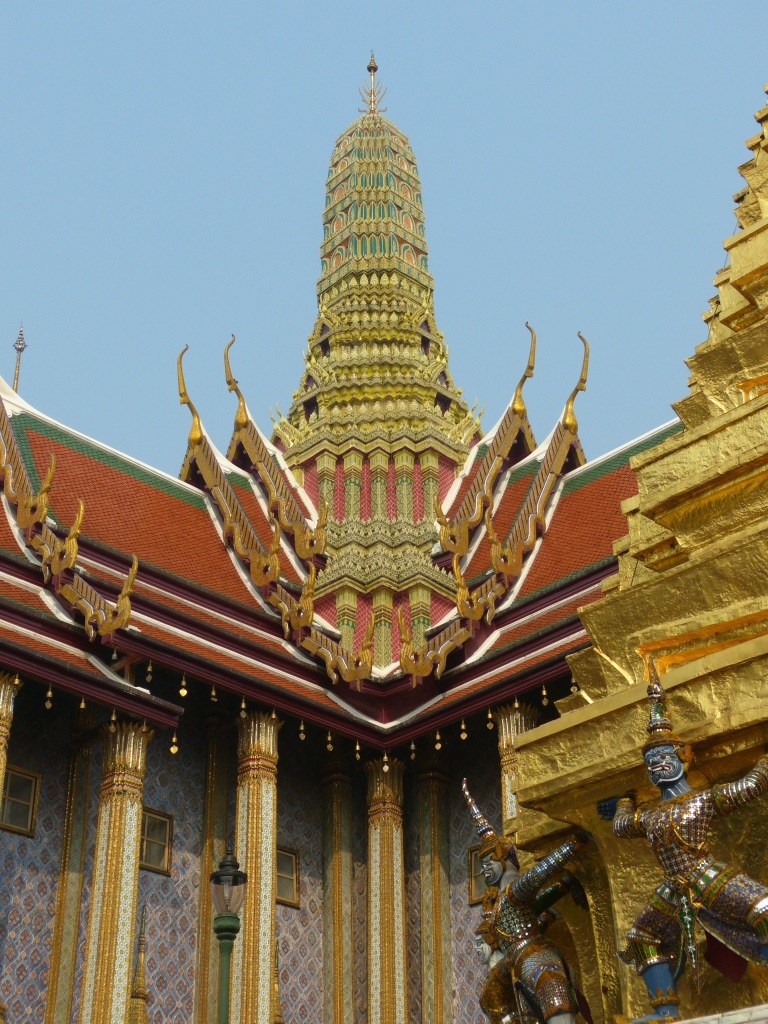
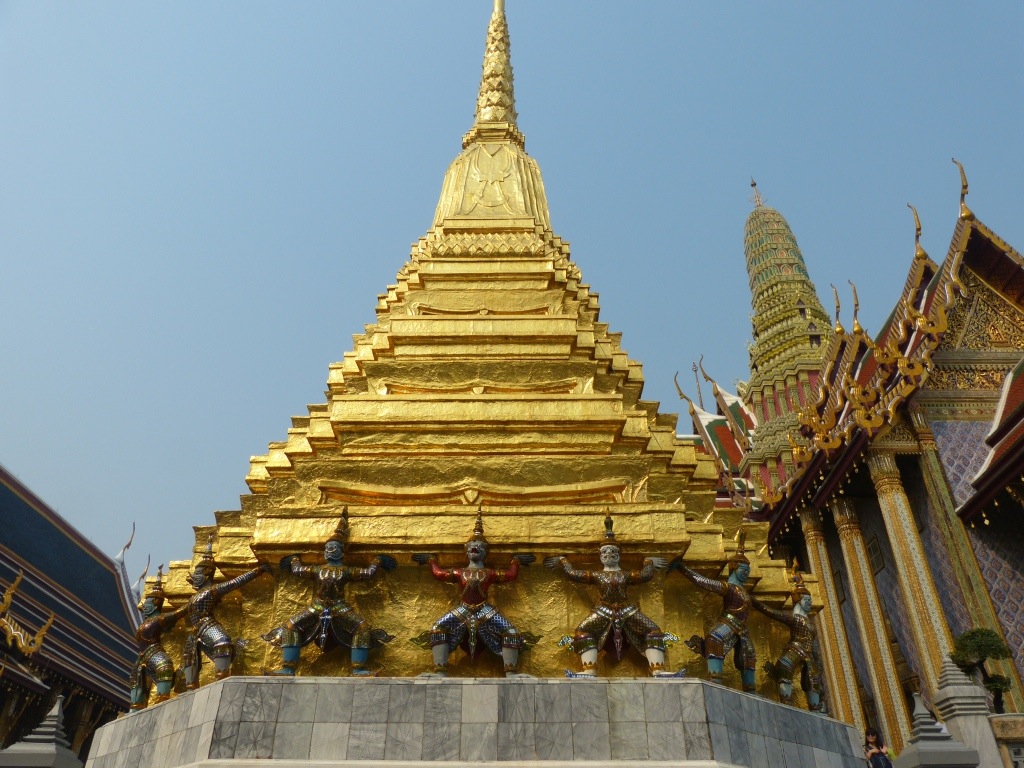
The Royal Compound felt like Disney world on steroids, except this fantasy land is REAL.

20130206-083908.jpg
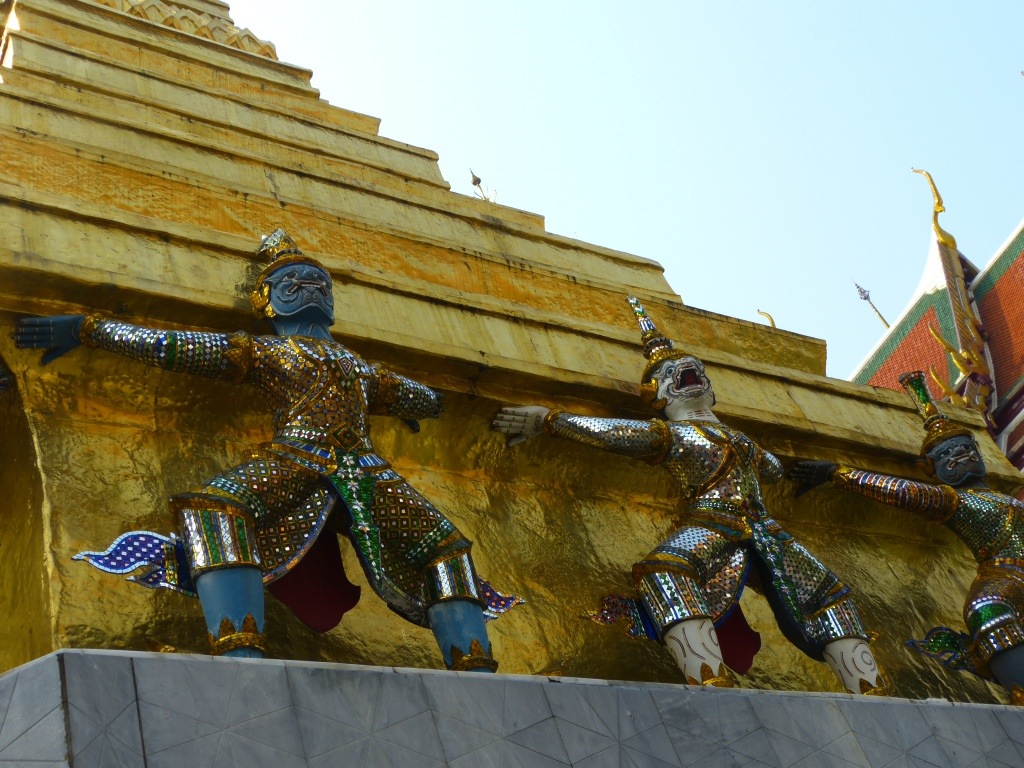
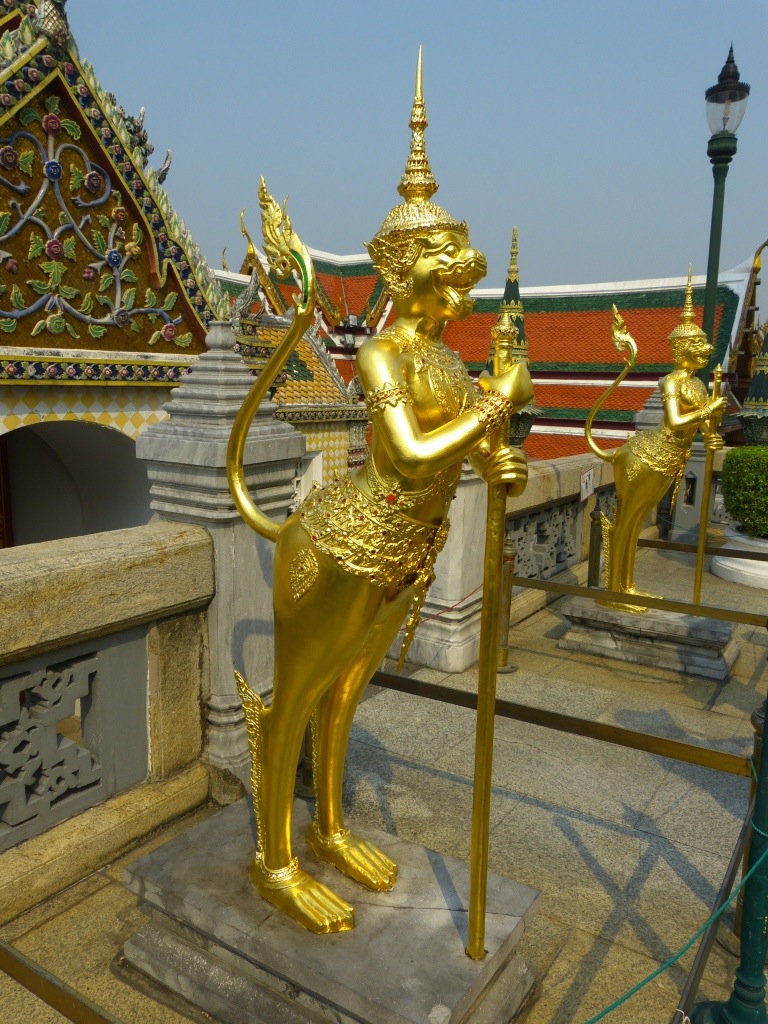
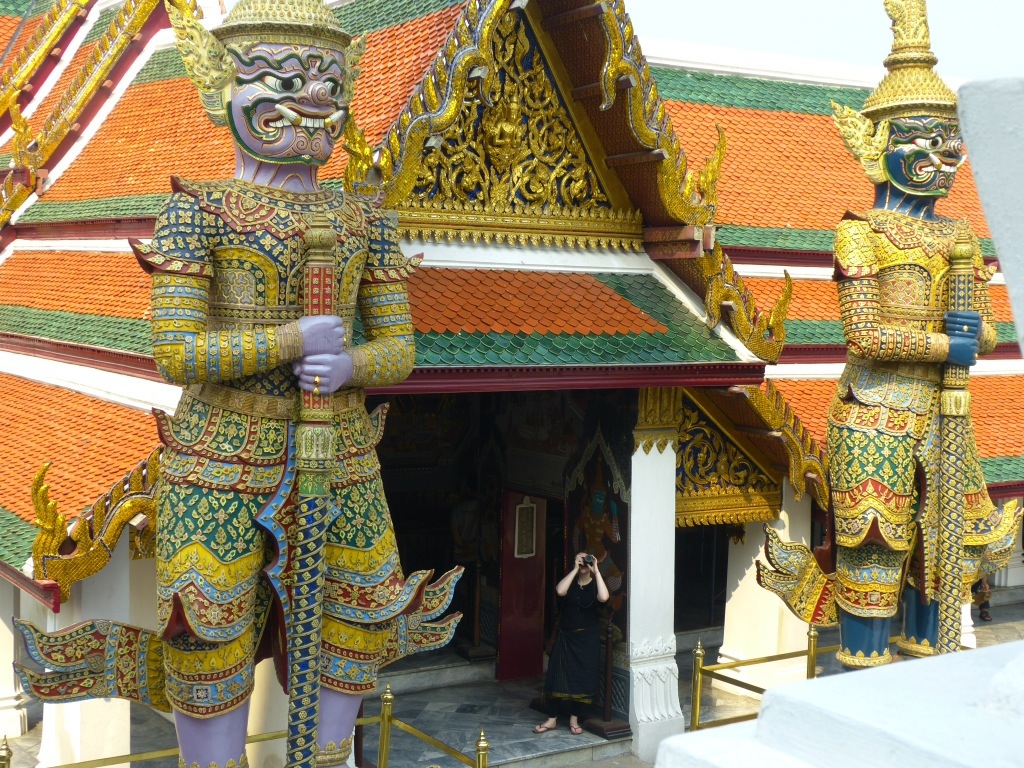
Every figure is unique. Check it out.

20130206-084039.jpg

20130206-085004.jpg

These guys made me think of the Wizard of Oz.

20130206-085117.jpg

20130206-085241.jpg
I leave Mike alone for 2 minutes, and look what happens.

20130206-085452.jpg
She was one of several women clamoring to have their picture taken with him. They also insisted on having their pictures taken with me. Since they didn’t speak English, I have no idea why, but my guess is they couldn’t get over how HUGE we are. “Look, I’m standing next to a giant!”
We were just another curiosity, sorta like this guard, who stood perfectly still, despite the steady stream of young women posing at his side.

20130206-085901.jpg
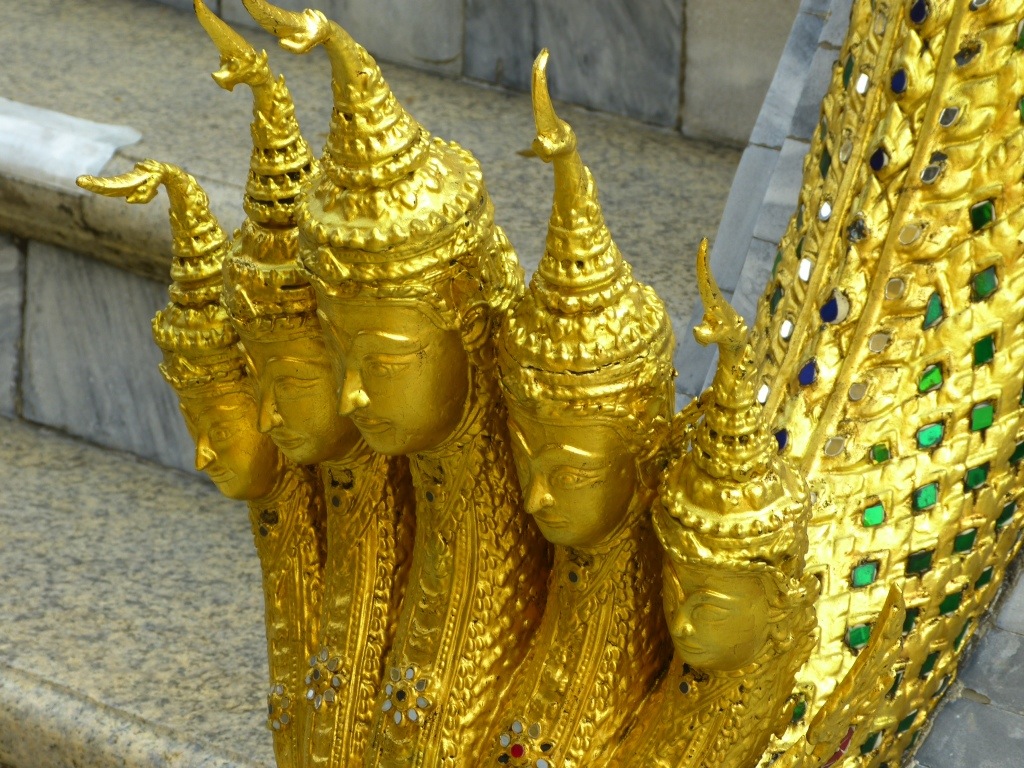
I had read about the Naga, snakes with multiple heads whose bodies are used as bannisters.

20130206-090146.jpg
This particular example has five, but there are also seven headed versions.

20130206-090249.jpg
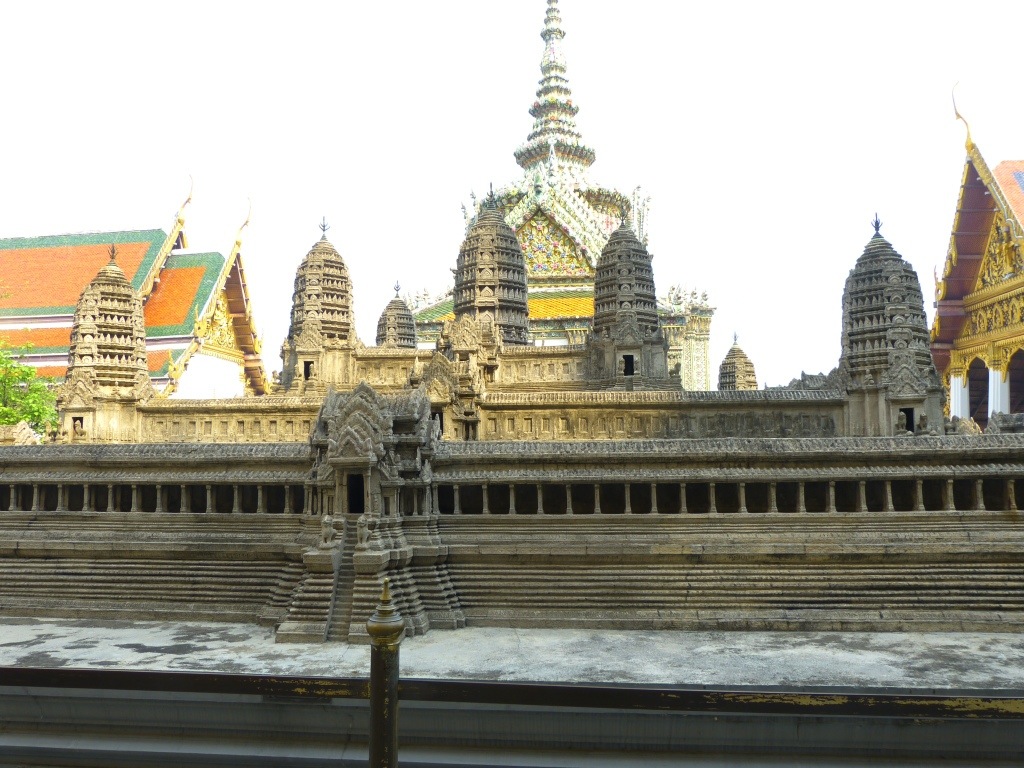
The complex includes a scale model of Angkor Wat, so large that I couldn’t get it all into one photo.

20130206-090739.jpg
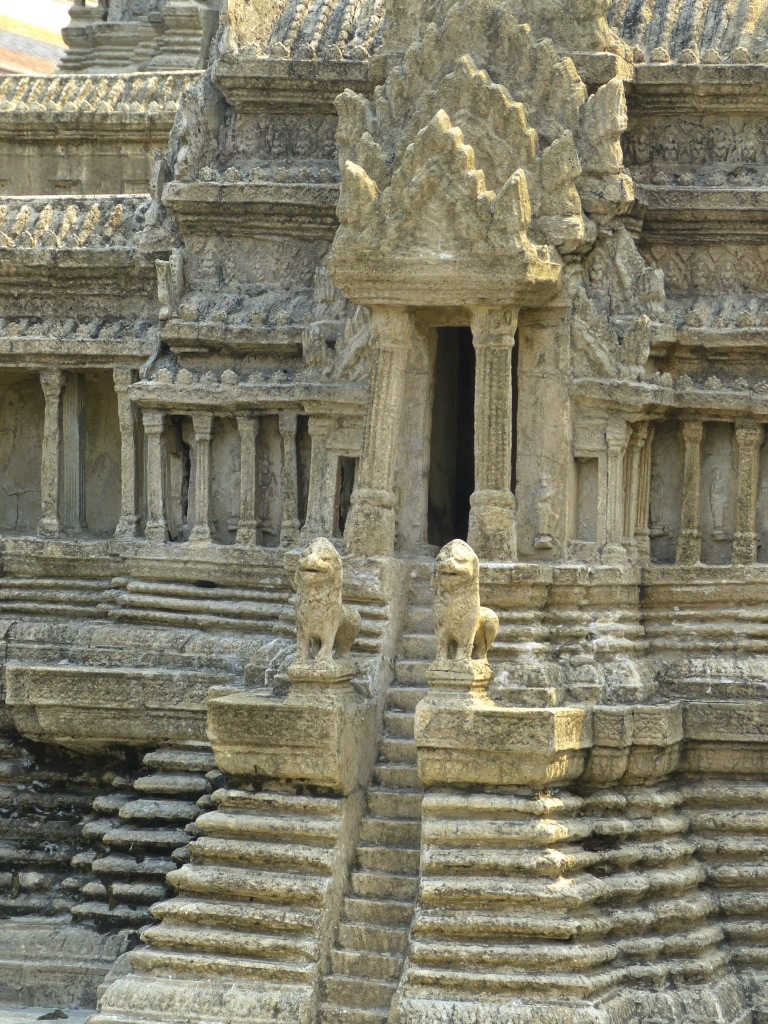
The attention to detail is amazing.

20130206-090838.jpg
Our last stop was Queen Sirikit Museum of Textiles, an air conditioned oasis. It contains clothing the Queen wore during official visits, beautifully displayed with photos of the queen wearing the displayed garments. Now 71 years old, she was movie star gorgeous. She married the king before her 18th birthday.

20130206-091309.jpg
I can’t resist a few more photos of this amazing complex.

20130206-092334.jpg

20130206-092423.jpg

20130206-092446.jpg

Let the adventure begin!

To my surprise and delight, I discovered that crossing twelve time zones while confined to a small space for twenty hours is not as awful as I thought it might be. I’m not sure whether it was yoga (“breathe into it”) or my Bose noise canceling headset and iPod, but something got me to my happy state of mind and kept me there!

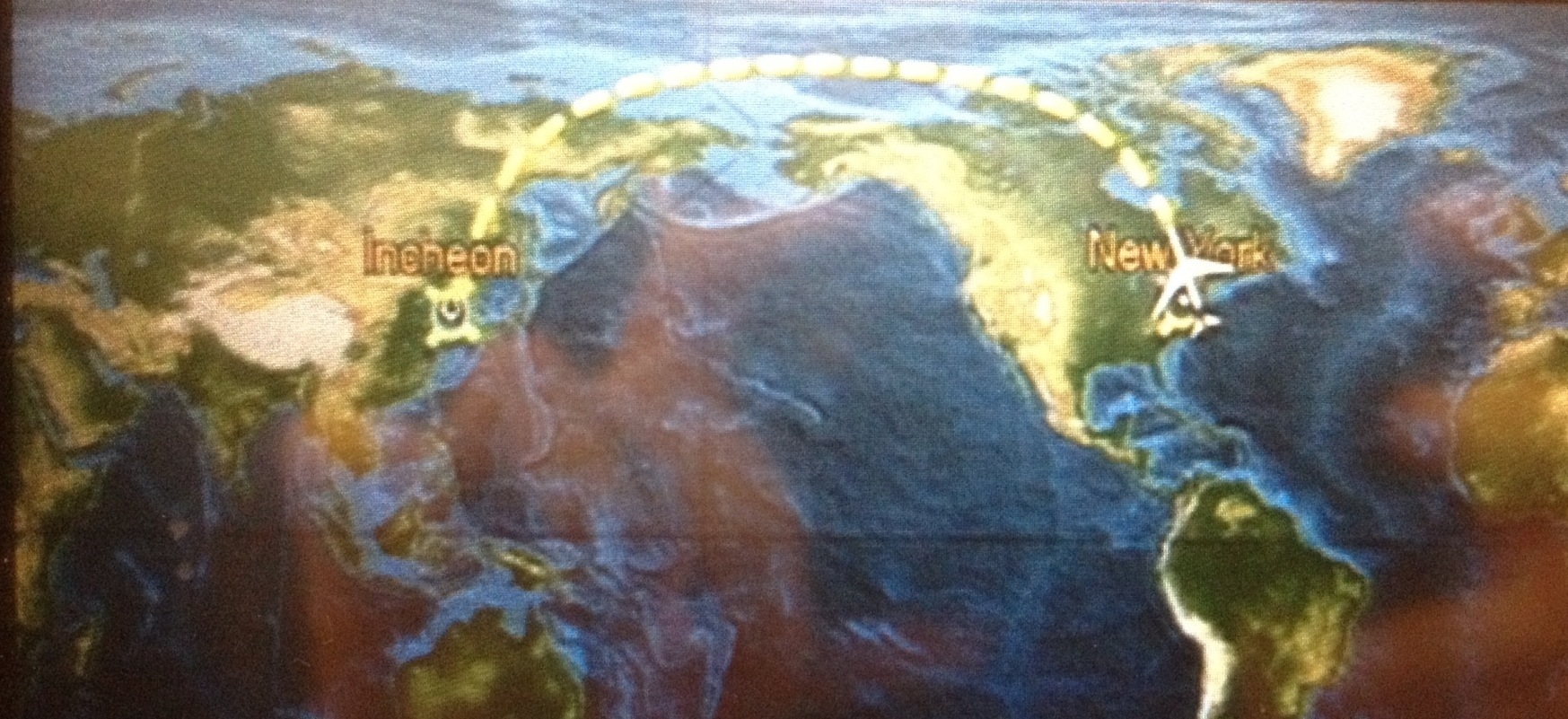
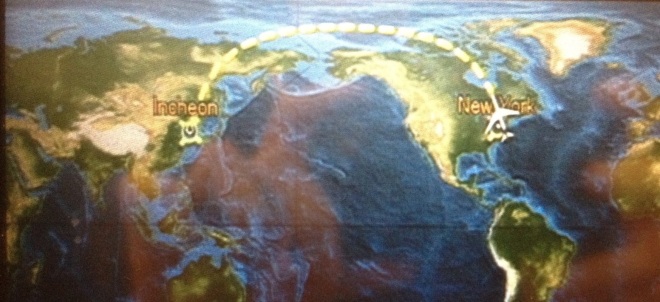
After flying over the Arctic, we landed at Incheon in South Korea. It is a gorgeous new airport built right on the water. With less than an hour to change planes, we quickly dashed from gate to gate, discovering just in time that our departure gate was one floor higher than our arrival gate. On our return, we’ll be spending five hours there, so our transit will be far more leisurely.

This was our flight path for the first 14 hours of our journey. We were literally on top of the world.
20130204-145632.jpg

<

Our plane landed an hour late, because the wings had to be de-iced. We went from a snow storm in Korea to 82 degree weather in Bangkok–at 11 PM, no less. Yikes! What will it be like in the afternoon?

By the time we got through immigration, collected our luggage and exited customs, it was midnight. We were a little concerned that our ride might have given up on us when we didn’t see anyone holding a sign with our name on it.

The Thais sure make it easy for tourists–staffing a help desk at the official meeting place (door 3 in the arrival hall), calling the hotel to make sure our ride was on his way to fetch us.

The airport is on the outskirts of Bangkok. With no traffic, the hotel was about 40 minutes away. We finally made it to bed a little after 1 AM Bangkok time, which was 1 PM our biological time, 24 hours after we took off from JFK.

Because of jet lag and the heat, we decided to take it really easy on our first day in Bangkok. Our big accomplishments were locating the SkyTrain station two blocks from our hotel, buying train tickets from the machine, touring the Jim Thompson House and having dinner at a restaurant on the river.

The Jim Thompson house is actually six separate teak buildings that he brought to the site in 1959 and combined. The buildings are at least two hundred years old and are filled with antique Buddhas, beautiful silk paintings and porcelains. Some of the buildings were moved from the ancient capital of Ayutthaya.

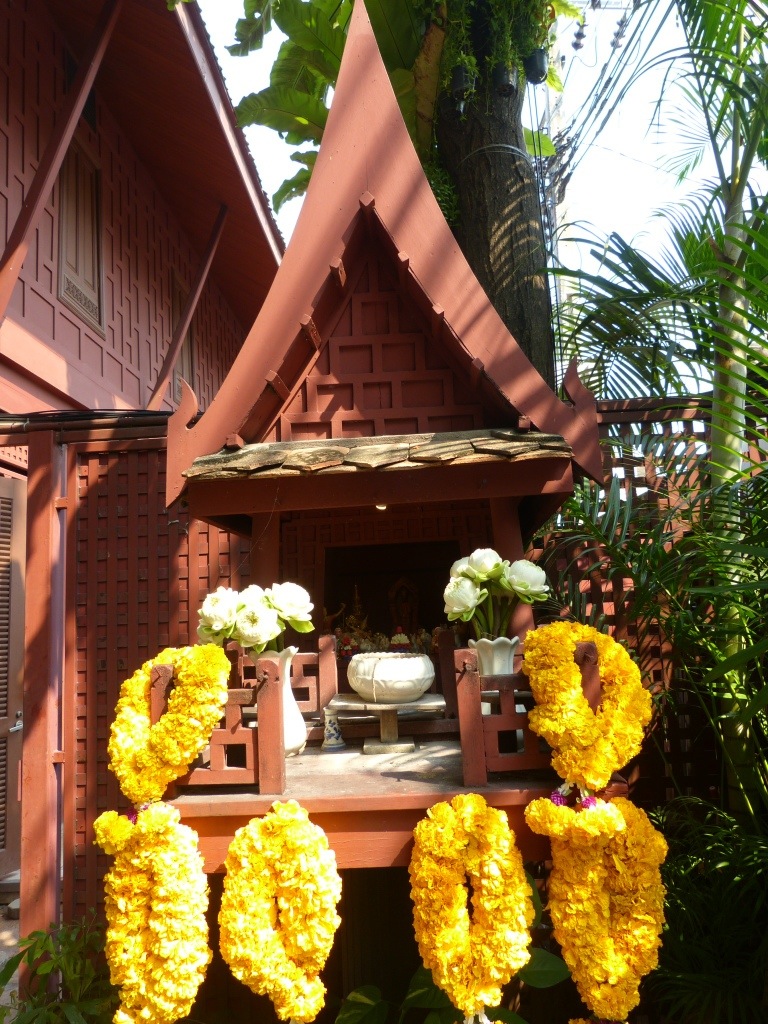
At the entrance to the house and museum complex, I saw my first Thai spirit house.

20130204-190457.jpg

Spirit houses are very common in Thailand and Cambodia. They are usually miniatures of the actual dwelling, and filled with offerings to the gods. Can you see the little figures inside?

Jim Thompson’s life story is quite interesting. He was born in 1906, and was an architect before
World War ll. During the war, he served in Thailand, as an officer with the OSS, the predecessor of the CIA. He fell in love with the country, moving to Thailand at the end of WWII.

He recognized the beauty and craftsmanship of handwoven silk, and did much to promote and popularize the industry.

In 1967, he went for a walk in the jungle of Malaysia and disappeared. No one has been able to determine what happened to him, although his astrology chart indicated that things would not go well for him after he turned 61, his age at his disappearance.

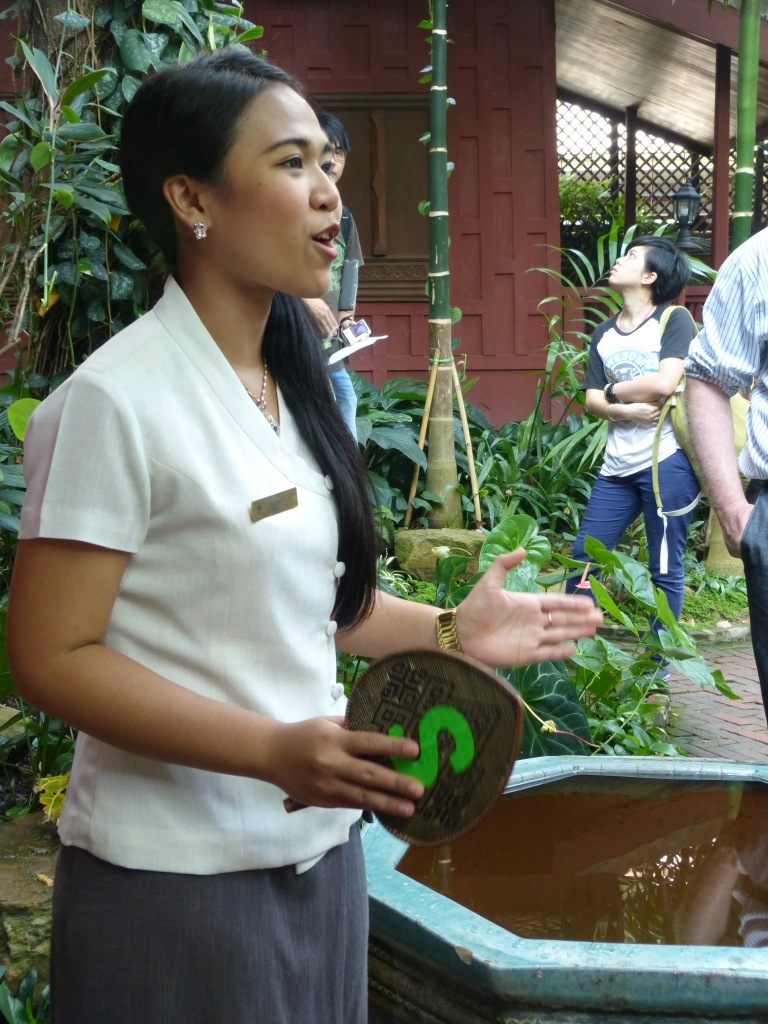
This beautiful young girl was our tour guide.

20130204-225718.jpg

She was full of interesting stories about the house, pointing out the previously mention
Astrological chart in his study and challenging us to find the children’s chamber pots in the guest bedrooms. Mike correctly identified the porcelain frog as the girl’s chamber pot, but no one spotted the boy’s–a cat, whose head came off. We weren’t allowed to take photos in the house. Too bad–those were quite cute.

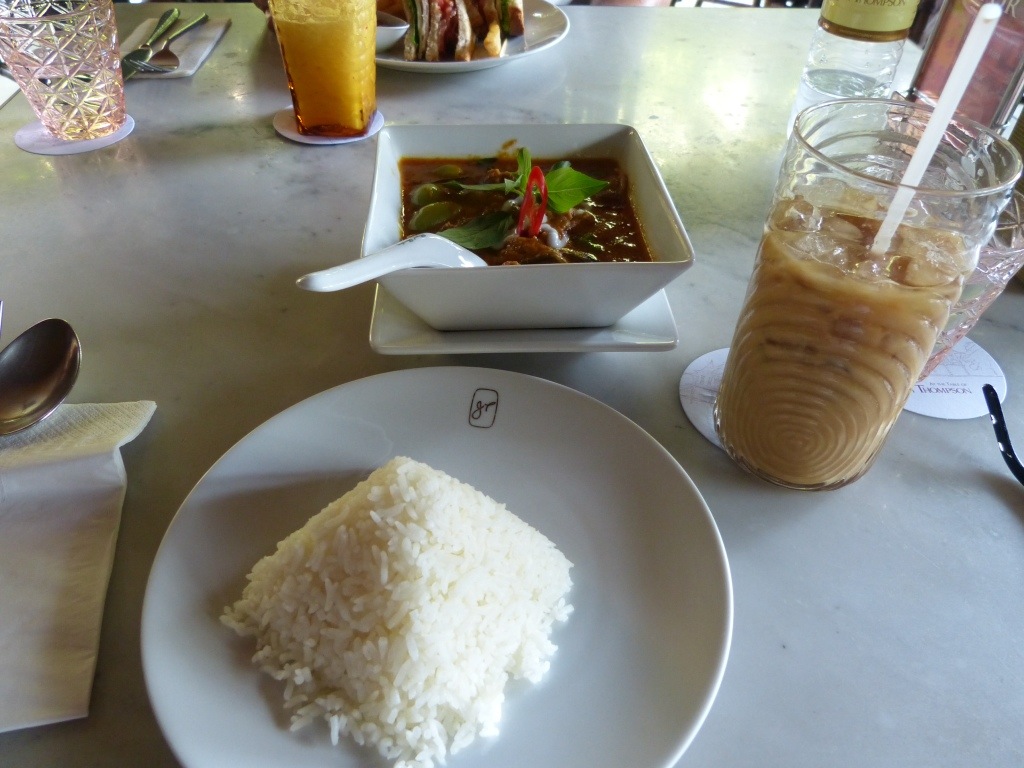
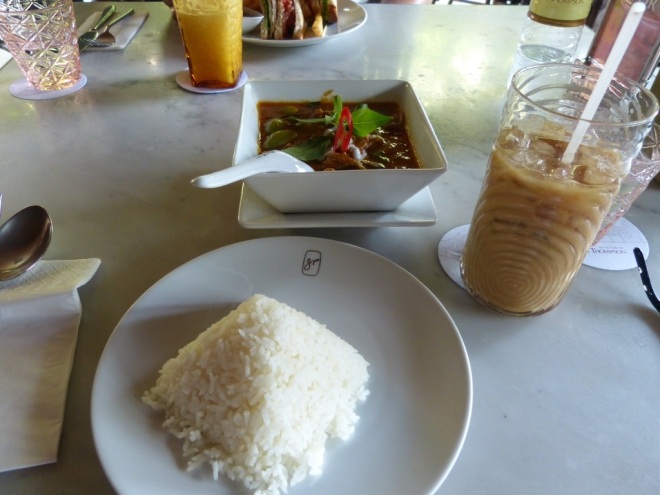
After the tour, we had lunch at the museum restaurant. I was uncharacteristically adventurous, going for the the spicy curry with grapes, duck and pineapple.
20130204-230216.jpg

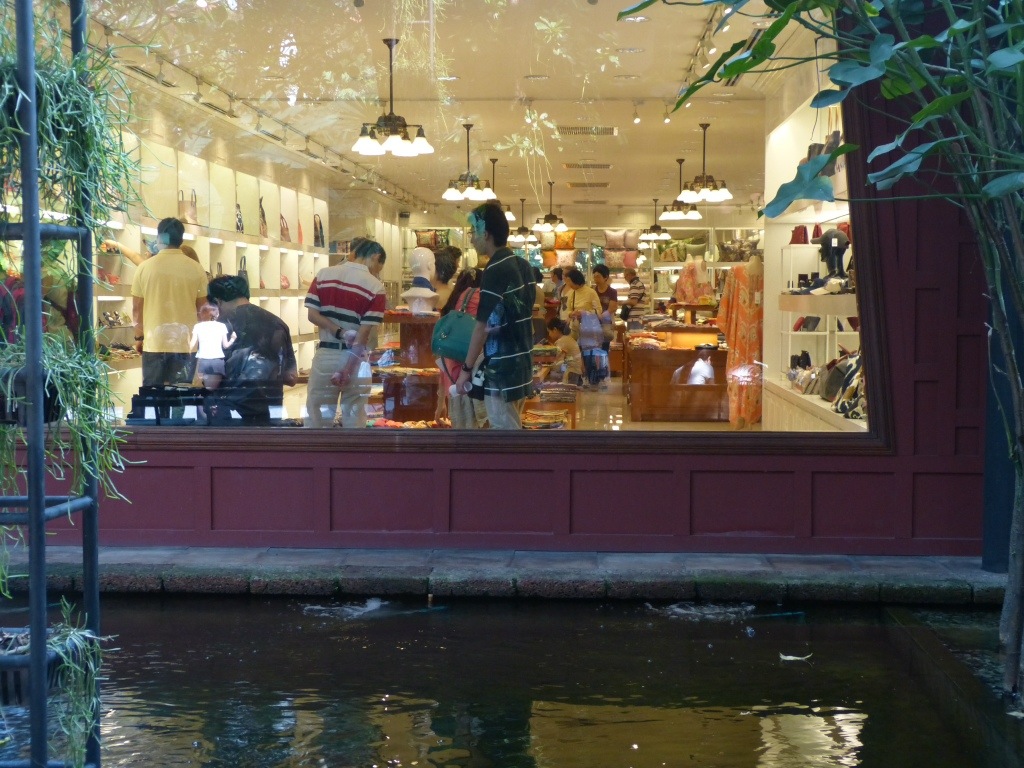
The gift shop was definitely worth a visit. They sold the cutest clothes for children. I may not be a grandmother, but I’m determined to be a great aunt, in every sense of the word…so there are some surprises for the little people in my life.

20130204-230437.jpg

Packing for a Six Week Asian Adventure

As I mentioned in an earlier post, our Asian Adventure will be our longest trip, both in weeks away and in flight time.  Packing for six weeks felt more than slightly overwhelming, so I decided to reframe my thinking.  Instead, I packed for TWO weeks, something I have done many times.  I reminded myself that there IS such a thing as hand washing in hotel sinks and/or laundry service.

I also needed to make sure I have enough toys in my carry on to keep me sane during our 20 hours in the air. I think I have it covered with my iPad and a paperback.

Normally I use a backpack as my carry on; it has just enough room for my camera, money, “toys” and snacks.  I usually don’t pack a change of clothes,  but we only have a one hour layover in Korea, so to lower my anxiety level, I’m taking a “real” carry on.  That way, I can  include some essentials,  just in case we get separated from our checked bags.

Checked luggage

  • 3 lightweight long pants (including one in carry on and one to wear on plane),  3 long skirts, 1 dress.  Asians dress more formally, so I am leaving shorts and capris at home.
  • 6 short sleeve shirts ( 2 in carry on), 4 long sleeve shirts to protect against mosquitoes (one will be worn on plane.)  No tanks or sleeveless tops.
  • 2 belts, sun hat, 1 scarf, 1 alpaca wrap, cheap jewelry (the only kind I own)
  • 1 Bathing suit, a bathing cap (Yes, I actually own such a thing to minimize the amount of chlorine in my hair), 1 cover up (doubles as bathrobe), 1 sarong, flip-flops
  •  2 sandals, 1 flats (I’ll wear my Merrill’s on the plane)
  • 2 pajamas (1 in carry on)
  • 7 changes of underwear, 6 socks (2 changes in carry on)
  • Lightweight rain jacket with hood (no umbrella needed), fleece, sweater for cool nights in Vietnam –these will all be worn to the airport, and if weight and space allow, will be stashed in luggage before it is checked.

There you have it–my entire wardrobe for 6 weeks.

Also in my checked luggage:

  • Electrical adaptor
  • hair dryer, brush and comb
  • Toiletries:  toothpaste & brush, floss, shampoo, conditioner, moisturizer, deodorant, razor, tweezers, scissors, kleenex
  • Sun screen, insect repellant, body lotion, baby powder
  • flash light
  • Materials for Global Volunteers work (photos, books, index cards, chalk, teaching aids-these are the heaviest items)
  • Starbucks Via.   I learned about these single serving packets of instant coffee from another blogger so decided to stock up,  just in case we need an early morning jolt.
  • my backpack
  • elastic bands, extra zip lock bags, a couple of packs of woolite
  • my medical stuff: band-aids, z-pack, Imodium, Neosporin, Advil.  I read somewhere that Asian diets are low in fiber, so fiber capsules were recommended.  We never needed them before, but there was room in the luggage, so what the heck.

Carry On

  • Credit card, bank card, local currency, singles
  • Passport, passport photos for visas, immunization card, global entry card
  • Etickets, travel info, notebook, pencil & pens
  • Camera, batteries, charger, photo cards and camera bag
  • Ipad and bose headset, cell phone
  • Water bottle and holder
  • “Comfort kit” (ear plugs, tiger balm, gum, cough drops, tissues, eye shade, sleep aid, airborne, wipes)
  • Glasses and case;
  • Paperback book
  • Snacks
  • Emergency contact list
  • Clothes listed above and change of clothes for Mike.  (He did his own packing–I don’t meddle.)
  • extra toothbrush and paste
  • Fanny pack and “Neck Wallet”

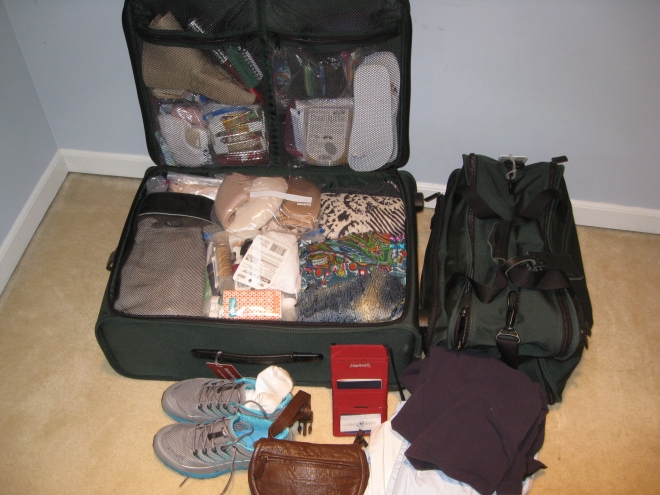
Believe it or not, it all fit.  Here’s what the packed bags and plane wardrobe looks like:

IMG_0002

I used lots of gallon zip lock bags and a packing cube to keep things organized.

In my never-ending quest to pack “smart” and to share what I have learned, upon return,  I will fess up to any items that I brought but didn’t need, and will also list anything that I didn’t have but wished that I had.

Only 72 hours till lift off.  Fellow travelers–have I forgotten anything???

On your mark, get set…

Twelve days till the Asian Adventure starts.  Phase One is in full swing!

I have benefited greatly from those that generously shared their travel tips and experiences, so this post is my attempt to do likewise.  Future travelers journeying to Thailand, Laos, Cambodia and Vietnam, this is for you.

Road Scholar sends out a terrific information package, but I almost screwed up big time because I under counted the number of passport photos needed.  As is usually the case, Mike was paying attention.  (I always knew there was a reason I married that man!)

Getting In and Out of Countries

  • Get three passport photos; four if you decide on a “loose leaf” visa for Vietnam.  Road Scholar takes care of visas for Laos and Cambodia, but we need to bring along the required photos.  No visa needed for Thailand.
  • I finally figured out the only advantage to the loose leaf visa was you didn’t need to mail your passport to the service.  The disadvantage was you had to keep track of that extra piece of paper.    No loose leaf visa for me!
  • Send away for Vietnam passport include photo (one or two depending on type of Visa chosen) with request; pack remaining two to ensure they don’t get left behind.  Did I mention that I tend to be absent minded?
    The service recommended by Road Scholar was excellent, and from my quick scan of the internet, appeared to be attractively priced.  I downloaded the application from their website and was pleased that sections that would have confused the hell out of me had been pre-filled for Road Scholar participants.  The cost was $129 per person, including the Road scholar discount.
  • If the passport has less than 4 blank pages, request additional pages from the state department.  It cost $82, and you DO need to send them the passport.
  • Both the visa and extra pages are more expensive if you need rush service, so it helps if you can plan ahead.

I dutifully copied the key pages of my passport and the Vietnam visa.  I also scanned a copy of my passport and emailed it to me.  (Hey, I actually lost my passport once–fortunately it was in Las Vegas.  No further explanation needed or forthcoming.)

Money
For this trip,  3 lunches and 3 dinners (out of the 18) are not included, so we will need to have funds for those, for our before and after travels, plus any purchases we make along the way.  Normally when we travel, we don’t bring cash, relying instead on ATMs and credit cards, but for Asia, that wouldn’t work well.  Here’s the scoop for Thailand, Laos, Cambodia and Vietnam:

  • Current Exchange rates: $1 US = 30 bhat; 7,941 kip; 4,000 riels; 20,840 dong
  • Credit cards are not accepted in Laos or Cambodia.
  • We get dollars in Siem Reap, Cambodia from an ATM, but not in Vietnam.  Those machines only dispense dong.
  • Dollars are accepted everywhere but any change you receive will be in the local currency, so…
  • I ordered 7,500 Bhats from my local bank.  That sounds like a lot, but it is only $250.
  • I’m not going to worry about dong.  We’ll be in Vietnam for over three weeks, so I’m sure I will be able to spend any dongs I get from ATMs.  Besides, my cousins are quite fascinated by that particular currency, so I might give them any leftovers.
  • Road Scholar recommended bringing about $300 in cash for 18 days on the trip, so we will follow their advice.

Security
Because Mike and I spend all of our discretionary income on travel, there is little in our house worth stealing–unless you are looking to stock up for a gigantic yard sale.  Our concern is that anyone foolish enough to break into our house would completely trash it looking for non-existent valuables! So we take all of the usual precautions with police, security, mail, and newspaper delivery.   Additionally, we always call our bank and credit card company to tell them when and where we will be traveling.

Health
The CDC website didn’t indicate any dread diseases were rampant in the Southeast Asia countries we’ll be touring, other than the usual mosquito warnings.  Our booster shots are up to date, and our “health kit” has been stocked with bandages, neosporin, advil, Immodium,  Z Pack, and for me–sleeping pills to knock me out on the flights to and fro.

Communications
Although I use Wi-Fi whenever possible, I like having my iPhone as an emergency backup, plus I use Trip Advisor and other apps when the need arises.  I have read horror stories about huge phone bills racked up unwittingly because of roaming charges, so I had a very productive chat with Verizon Wireless.  Their international data plan costs $25 per 100 MB per month.  If you go over, Verizon figures you would want to buy another 100 MB, so they automatically take care of that for you.  To avoid unwanted charges, you can turn off “cellular” (under settings-general) and turn it back on when you want to use the internet.  That way, your phone will search for any available wi-fi.

Voice calls are $1.99 per minute in Thailand and Vietnam, but are prohibitively expensive in Cambodia and Laos, plus there is a “per use” charge in those countries when you access the data plan.  The Verizon service rep was very helpful.  She also taught me how to get to the + on my iPhone key pad.  (That little + is needed for international calls.)  Since my memory isn’t want it used to be, this is as much for ME as it is for anyone that doesn’t already know the trick:  You hold down the “0” until the plus sign appears.

Attire
Asians are conservative dressers, so for this trip, I won’t be packing any shorts or tank tops, despite the heat.  Surprisingly enough, Vietnam CAN be cool in March, so I will be bringing along a sweater and fleece.  Next post will be all about the fascinating contents of my luggage.

Tourist or Traveler?

One of the blogs I follow, Where’s WiWi, recently posed the question “Tourist or Traveller: which are you?” I loved her conclusion–that our chosen style of travel is not what is important.   She asks “isn’t what really matters is that we’re actually there: seeing, doing, interacting, contributing to local economies? Even the most sheltered of tours will teach you something of where you are.”

She got me thinking about my travel style and after pondering deeply, or drinking wine (I forget which, but then, whenever I drink wine, I always think that I am pondering deeply) I came to the profound realization that I am indeed both. In addition to places noble and noteworthy, I have been known to seek out the tackiest, cheesiest tourist traps (as proven during Greg’s and my cross-country odyssey this past summer) with unbounded enthusiasm, loving every minute of it.

Whenever I contemplate leaving any of the lower 48 however, I go into “traveler” mode. That is the essence of my Phase One:  learning as much as I can about the country’s people, history, culture before I leave home.  Not only does it make the experience more enjoyable, but it also makes my trips feel like they last longer.

One of the many reasons I love traveling with Road Scholar is that in addition to the trip lectures, the pre trip materials always include a suggested reading list.  Additionally, their website now offers “social networking” features, such as trip blogs from prior participants.  As I type this, my new virtual buddy, Nancy from Canada,  is  on the  “Journey Into the Heart of Asia”, so  traveling along with her, gives me a sneak preview!

So, in the spirit of doing likewise for those future Road Scholar Asian Adventurers, I will attempt to be as helpful in my posts.

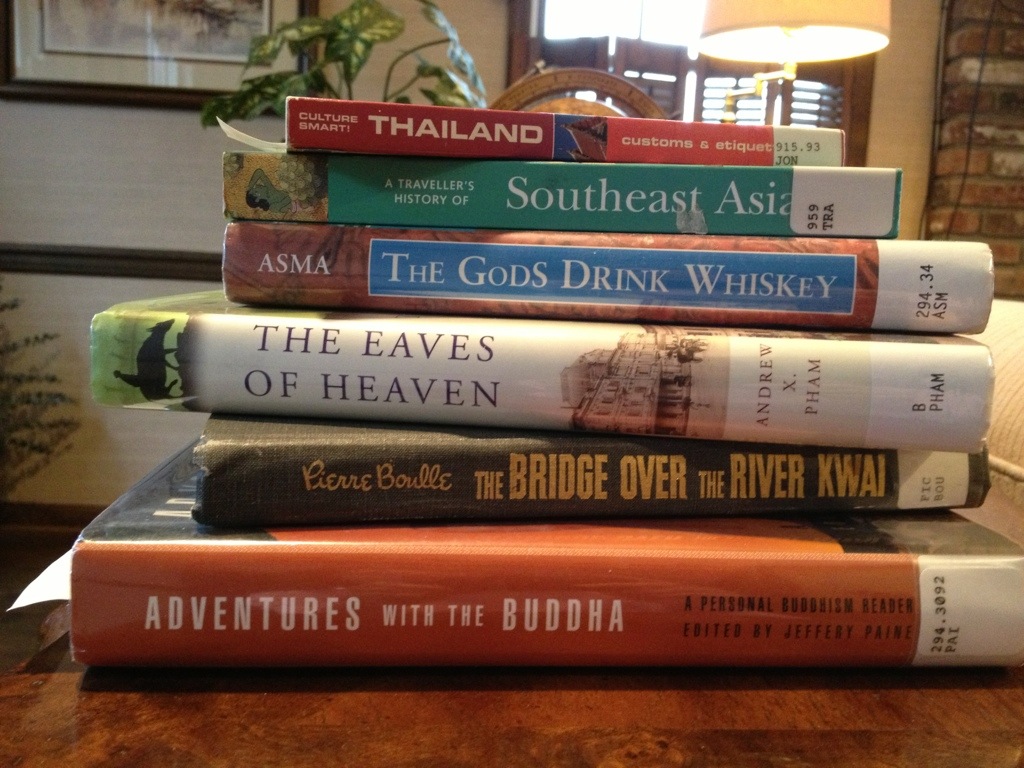
For starters, here is my opinion of some of the books on the reading list.  I didn’t buy any of them–fortunately I have access to an amazing library system here in New Jersey.  (Okay, so we do have high taxes, but we also have access to fantastic services).

20130113-114155.jpg

Mike and I will have some time in Thailand before the Road Scholar tour begins so although it was not on the list,  I’m reading “The Bridge Over the River Kwai”  just in case we decide to visit Kanchanaburi.

The Insight Guides (already back in the library) are a wonderful starting point, and provide a very useful overview of the countries we will be visiting.

I have finished  “Culture Smart Thailand”, “The Gods Drink Whiskey”, and “A Traveller’s History of Southeast Asia”.  If I only had time to read one, I’d pick The “Gods Drink Whiskey”.   I won’t even attempt to do a review of the book–why bother, because I could never improve on what Mindy McAdams wrote.

While meandering through the library stacks, I discovered four books about Vietnam that were not on the Road Scholar list and are worth mentioning.

  • Graham Greene’s novel “The Quiet American”, set in Vietnam, in the early ’50s, during the war with the French, before American involvement.  I also rented the movie, and as usual, found I much preferred the book.
  • “The Sorrow of War” a novel by Bao Nihn, a north Vietnamese who was one of the 10 survivors out of 500 boys that fought in the Glorious 27th Youth Brigade during the “American” war, as it is known in Vietnam.  I skimmed through sections of this book, which was quite sufficient to get a feel for what it was like for the typical young Vietnamese during and after the war.
  • Two non-fiction books:  “Seeing Vietnam” by Susan Brownmiller and “Vietnam Now” by David Lamb.  Susan was on assignment for a travel magazine in 1992, which was when travel restrictions for Americans were lifted.  David Lamb was first in South Vietnam as a journalist in 1968 then returned in 1997, to live for four years in Hanoi as a correspondent for the Los Angeles Times.

I’ll be spending two weeks in Hanoi, working as a Global Volunteer in a Vietnamese school, so I figured it would be very helpful to gain additional insight into the country by reading a few post war narratives.

So, three books  and sixteen days to go.  It feels like the best part of the college experience–the thrill of learning, with none of the pressures of exams!  Sorry to disappoint you,  if you thought I might be revealing some other college thrills.  Hey, that was a long, long time ago!

Speaking of “exams”, here are the answers to the last blog’s Quiz:

  1. Istanbul is split between the continents of Asia and Europe.  Unlike the Four Corners in the USA west, however, you can’t put a body part in each continent, because the Bosphorus River divides the city.
  2. Thailand is the only Southeast Asian country that was never ruled by a European power.
  3. True, all males in Thailand are encouraged to become monks for at least several months so that they can gain merit for their families.  King Mongkut, also known as Rama lV was a monk from the age of 20 until he became king at age 47.  By the time he died at age 64, he had accumulated 32 wives and 82 kids.  Talk about making up for lost time!
  4. I’d rather have $50 US dollars.  1,000,000 dong currently equals $48, and 1,000 Bhat is worth $33
  5. Thailand is the country formerly known as Siam, as in “The King and I ” fame, which by the way, was an unflattering and historically inaccurate portrayal of that very same King Mongkut mentioned earlier.

Asian Adventure – Phase One

Only three weeks until Mike and I embark on our Asian Adventure.  This trip will be a bunch of firsts for us:

  • It is the longest trip we have ever taken, both in time away (6 weeks) and in distance (12 time zones).
  • It is our first real trip to Asia. ( I don’t count a couple of days in Turkey, back in 2001, as an actual visit to that enormous continent, although technically it was, for those that count such things).
  • it will be our longest flight ever–20 hours total, with only one stop, in South Korea.  I am NOT looking forward to sitting on a plane all that time.
  • it is actually four different travel experiences wrapped into one trip.  We will be on our own for four days in Bangkok until we join a Road Scholar tour.  When that tour ends, Mike and I will explore Vietnam for five days, with a guide and driver.   Finally,  I spend the last two weeks working with Global Volunteers in Hanoi, and Mike heads  home.

I’m not sure how easy it will be to get internet access, so I figured I’d created a trip map before leaving home.  If you are really into it, you can click on the blue letters to get to the Travellerspoint.com site.  You can then click on the different stops to learn more about each location and, as a special bonus, what the numbers on the map mean.

asia

All of the tricky logistics are being handled by Road Scholar, during our Journey Into the Heart of Asia. (And yes, clicking on those blue letters will get you more information about Road Scholar AND the specifics of the trip.)  Although I am enough of a control freak to want to do my own flight arrangements to and from the United States, I am more than happy to turn over all other transportation details to the pros.

The private tour that Mike and I are taking after the end of the Road Scholar trip is being arranged by Ann Tours.  Ann Tours was created by Ann Tran in 1989 as an attempt to locate her two sons, from whom she had become separated in 1975 during the fall of Saigon.  Ann hoped that her travel agency would bring her in contact with enough Americans that eventually  someone would know something about Tony and Tim.  In 1991 an American traveler found one son’s name in a California phone book.  Mother and sons were soon reunited, with Tony now in Vietnam, arranging tours.  I love a happy ending–isn’t it nice to know they don’t just happen in movies?

About the title of this blog:
Phase One is what I call the planning part of any trip we take.  Once the logistics are squared away, it is time to learn about the places we are visiting.  I’ve been reading books and blogs, checking out Trip Advisor  and Fodors.  Knowledge is meant to be shared.  So  sisters, mi hermana preferida, cousins, friends (and anyone else who wants to play along)  here is a little quiz to get you started on this educational extravaganza:

1. What city is in two continents–Europe and Asia?

2. What country in Southeast Asia was never ruled by a European power?

3. True or false:  In Thailand, all Buddhist males become monks for a period of time, to earn merit for their families.

4.  What would you rather have:  a thousand Bhats, a million Dongs or fifty Dollars?

5. What was the country of Thailand known as before 1939?