What a delightful surprise our lunch stop in Pisek turned out to be!
This blog is not a chronological record of my OAT itinerary. It continues to be whatever I feel like writing about. And I feel like writing about this sweet little undiscovered town.
We’ve been to Dresden, which was our final stop on the pre-trip, then we spent the first three days of the main trip in Prague. Both of these fascinating cities deserve posts of their own, and I’ll get to them eventually. There have just been far too many distractions for me to give them the attention they deserve.
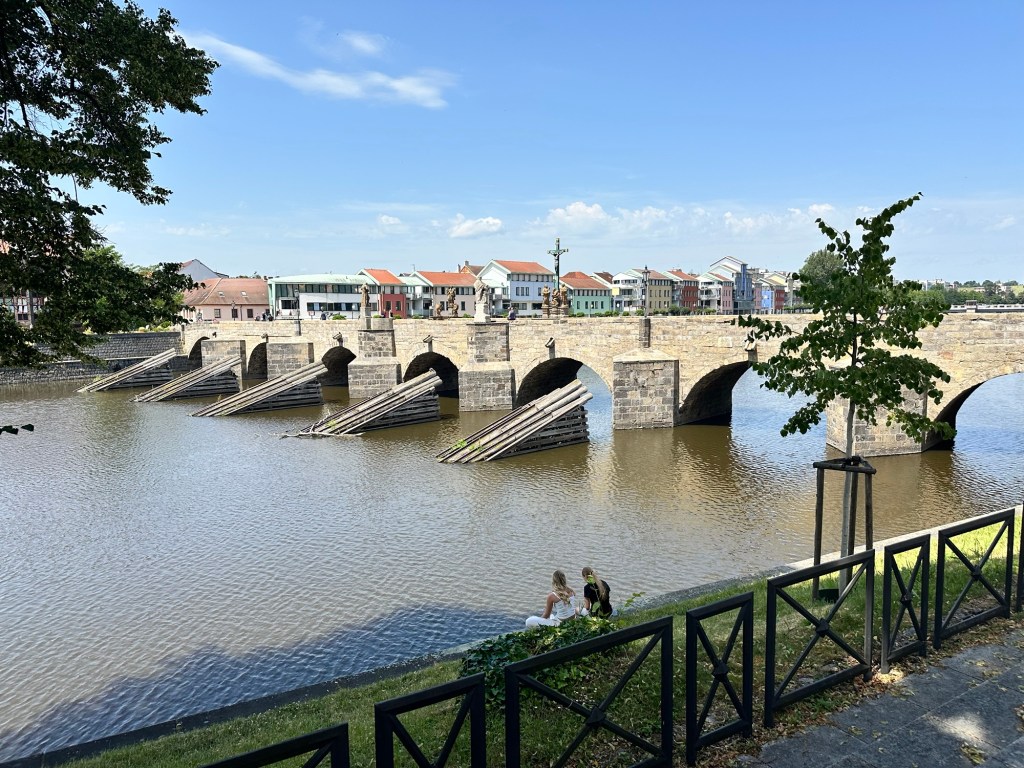
Pisek is quite beautiful. Its old stone bridge predates Prague’s Charles Bridge by at least a century. Somehow, the bridge managed to survive several centuries worth of floods. The statues on the bridge weren’t so lucky. The originals were damaged and have since been repaired or replaced.
Don’t be fooled. Pisak also has MODERN attractions, like this one. I’ve seen pedal bars in Nashville, but I never have seen a Prosecco van. What a great concept!

Despite this vehicle’s obvious appeal, I found the sand sculptures even more compelling.
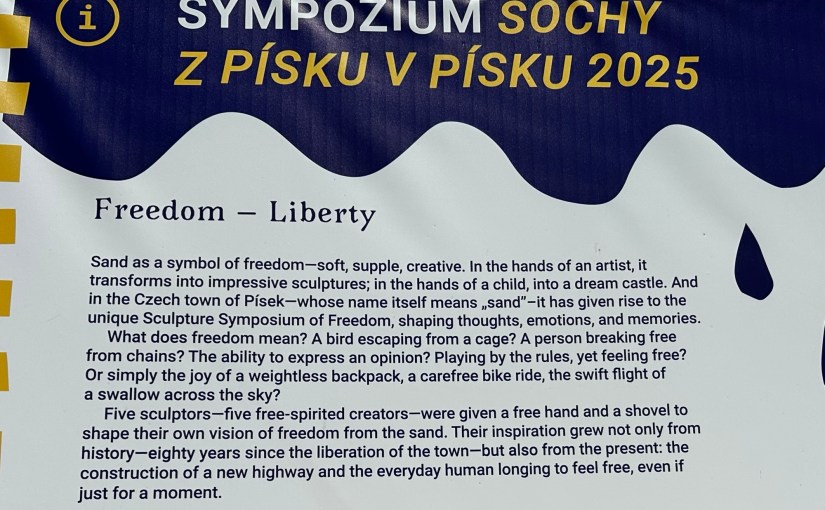
The header on this post describes the theme for this year’s sand sculptures — Freedom and Liberty, intended to commemorate the town’s 80th anniversary of their liberation after World War 2.
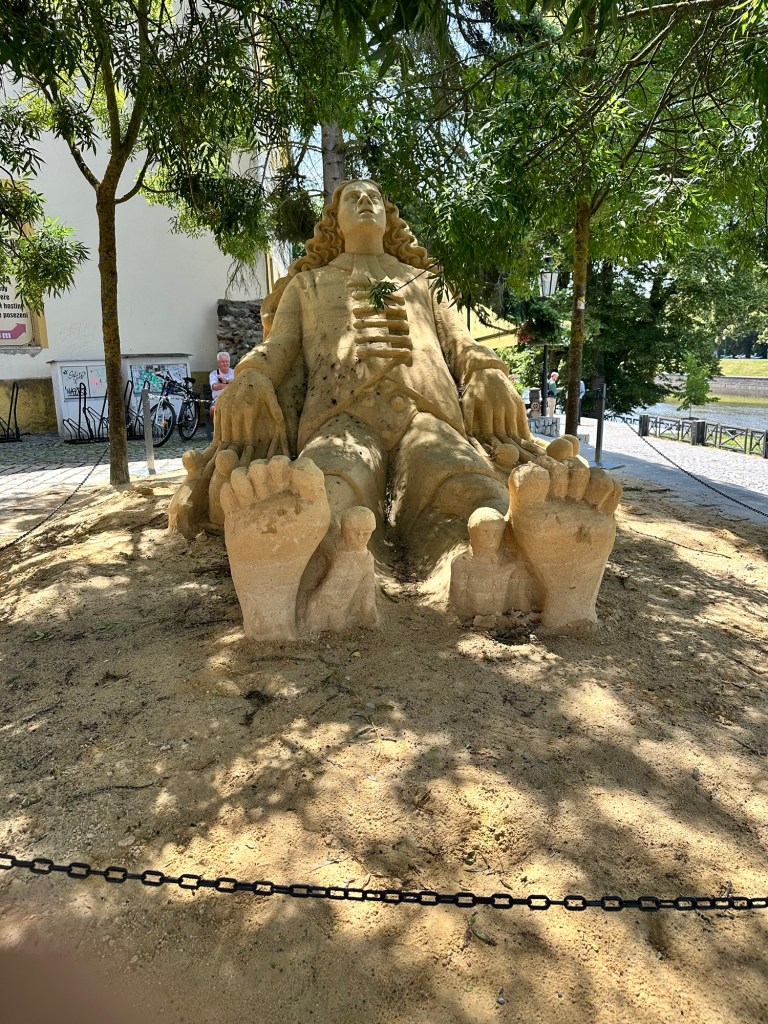
Did you recognize Gulliver, struggling to break free?

Lady Liberty has packed her bags. I’m hoping she’s not leaving the USA.


To me, the most compelling sculpture was this one, especially after being in Berlin. What a powerful demonstration of how much JFK’s words meant to the people in this part of our planet. .

Then I took a good look at the front of the sculpture. It shows Putin driving a car manufactured in East Germany by the Soviets. The Trabant had an engine that was likened to a lawn mower—about as powerful and just as smelly. East Germans would use trabants to escape to the Czech Republic, and then abandon the car in the street.

Take a close look at who is kissing up to Putin. Clearly he is not in the driver’s seat.
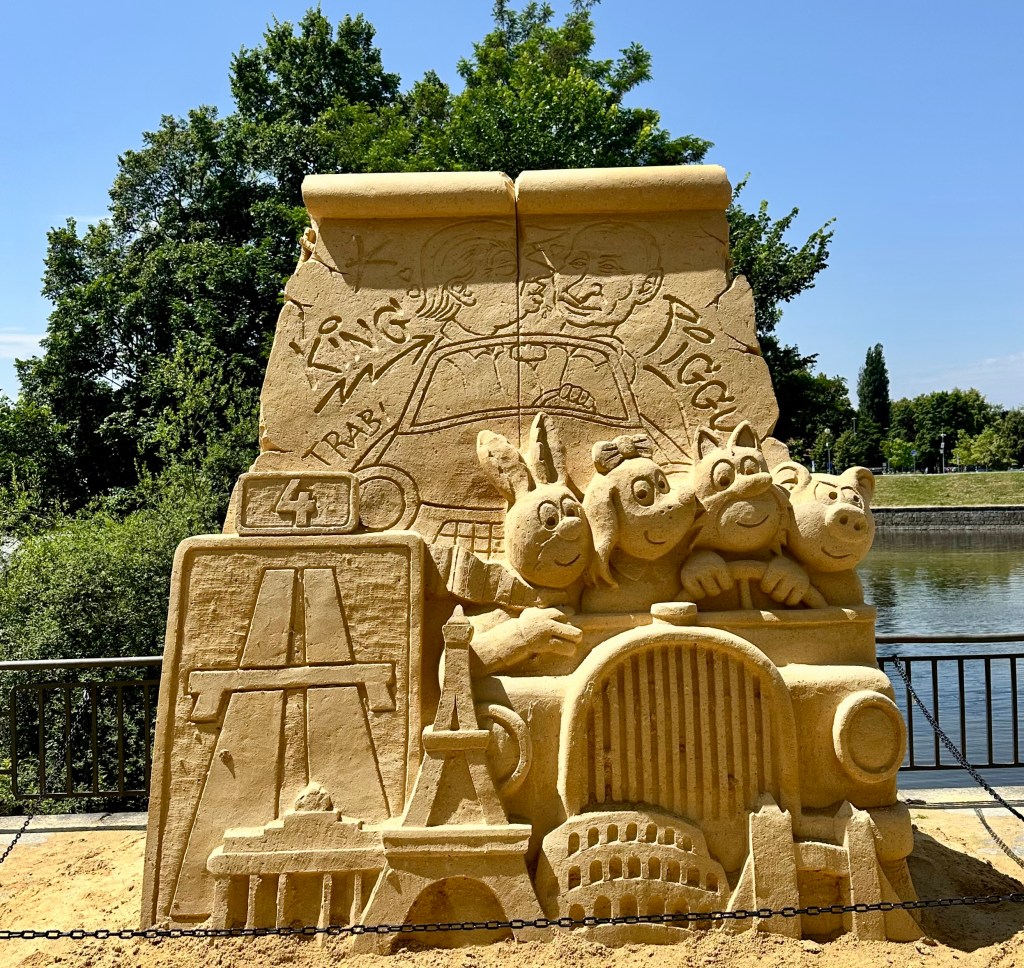
If you don’t recognize the iconic hair style, the sculptor has given us a hint. He has “king” written alongside his image. ( I would have added “wannabe” before the word “king”).
Why is it that Europeans can see so clearly what many Americans cannot? Perhaps because they have lived through Facism and Communism, they have a deep understanding of how fragile democracy can be and how important it is to preserve it, in every means possible, including the creation of sand sculptures.
 Destination NOW