Helpful Hints For Travel to Japan

I am extremely grateful for the assistance I’ve received from the “Friends of Oat” Facebook page. This post is my way of giving back. Although I wrote it primarily for OAT travelers, I hope that others planning to visit Japan might find some of these hints helpful.

Packing

Pack light: Hotel rooms are TINY, so there really isn’t much room to store clothes or luggage. Here’s another reason to pack light–there are no porters in Japan, so you will be handling your own bags.
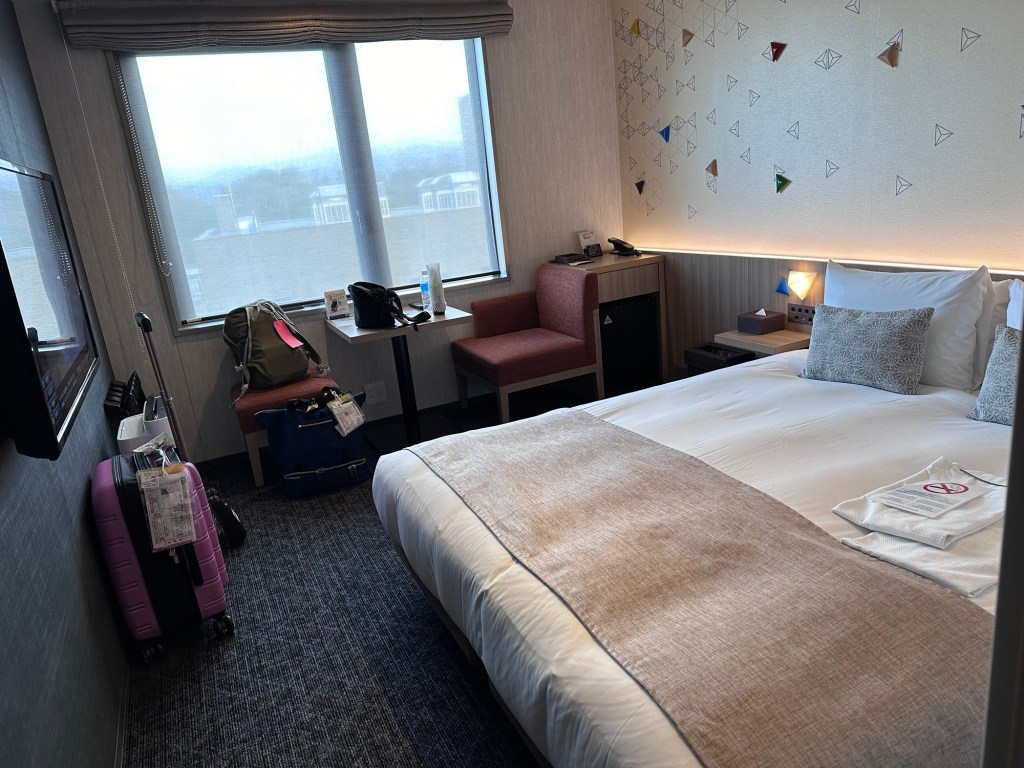
My room in Kanazawa , which was actually quite a bit larger than the ones in Tokyo and Kyoto

Doing Carry-on Only isn’t as hard as it might seem, because every hotel had laundry facilities on site. In our Tokyo hotel, you could watch your laundry’s progress on your room’s TV. Which I did. From my bed. I wasn’t worried that someone would take my laundry out and dump it on the floor, because first, the Japanese are way too polite to do something like that and second, the machine locked with a code that you input.

The Kanazawa hotel had a washer and dryer in the room, complete with a squirt bottle loaded with detergent. Despite the plastic card with instructions in both English and Japanese, it was a slight challenge for me to figure out how the damn thing worked. In fact, I’m not exactly sure what I did, but hey, the clothes came out clean.

You don’t have to pack pajamas, because Japanese hotels provide them. At least the ones OAT uses did. Every day there would be fresh pajamas neatly folded on my bed. Although I had a single room, I still got two pairs of pajamas!

Every hotel had a REAL hair dryer…not one of those awful ones attached to the wall. You know, the ones that you have to keep a finger on the button or else it shuts off?

I had heard that some hotels have onsens, which are sorta like hot tubs/whirlpools except the source of water and heat is the naturally occurring hot springs. I definitely wanted to experience THAT, so I dutifully packed a bathing suit and cover up. That was totally unnecessary, because the onsens have many rules, one of which is you either go naked or you don’t go. Take a look.
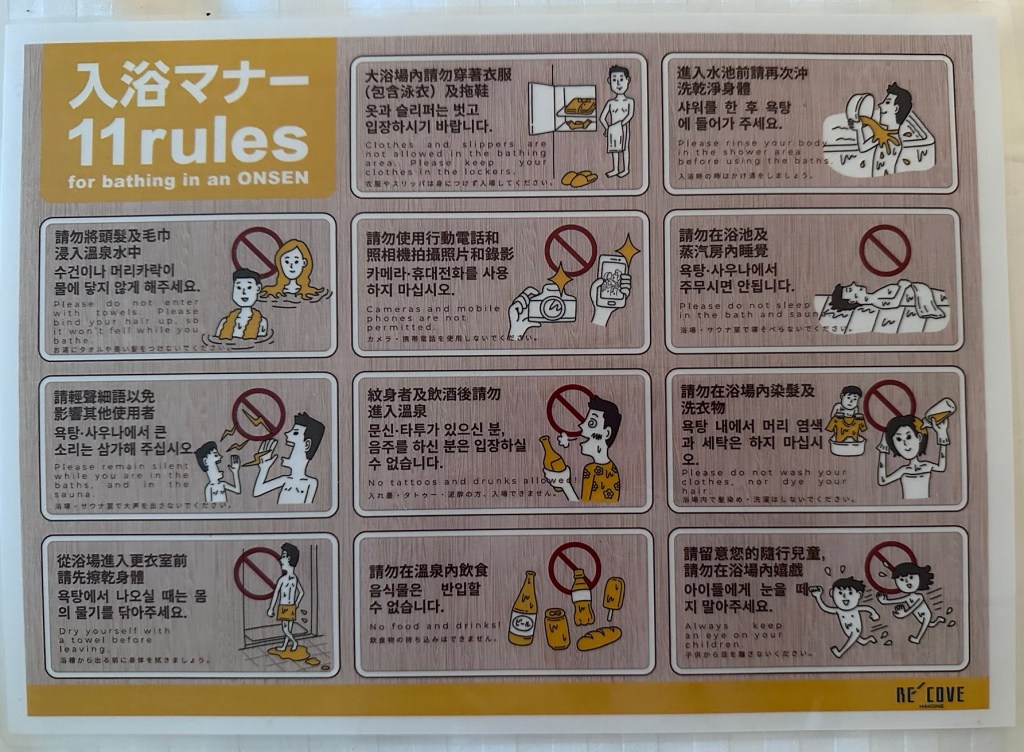
I guess at some point, someone must have tried to dye their hair or wash their clothes in the onsen, otherwise why the need to print the prohibition?

Another unnecessary item that I packed was a water bottle. All the hotels provided bottled water, plus the water in Japan is not only safe to drink, it also tastes good. I simply refilled the hotel’s water bottles from the tap, and never used the one I brought.

Gadgets

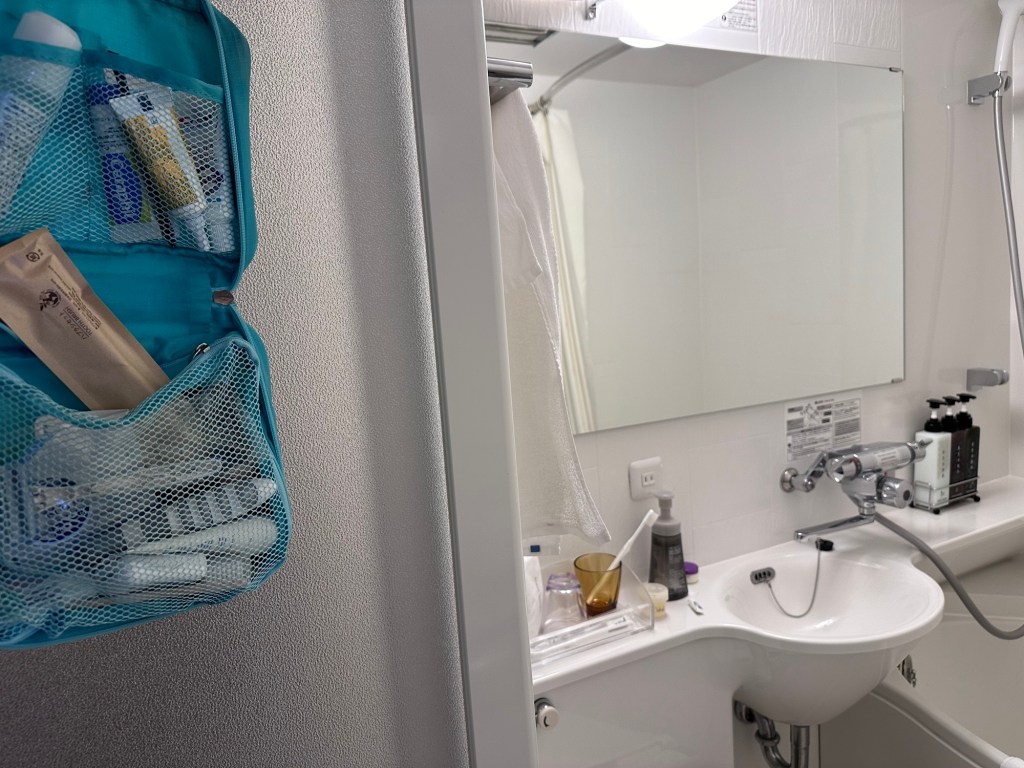
There isn’t much counter space in the bathrooms so hanging toiletries bags make life easier, at least while using the bathroom.
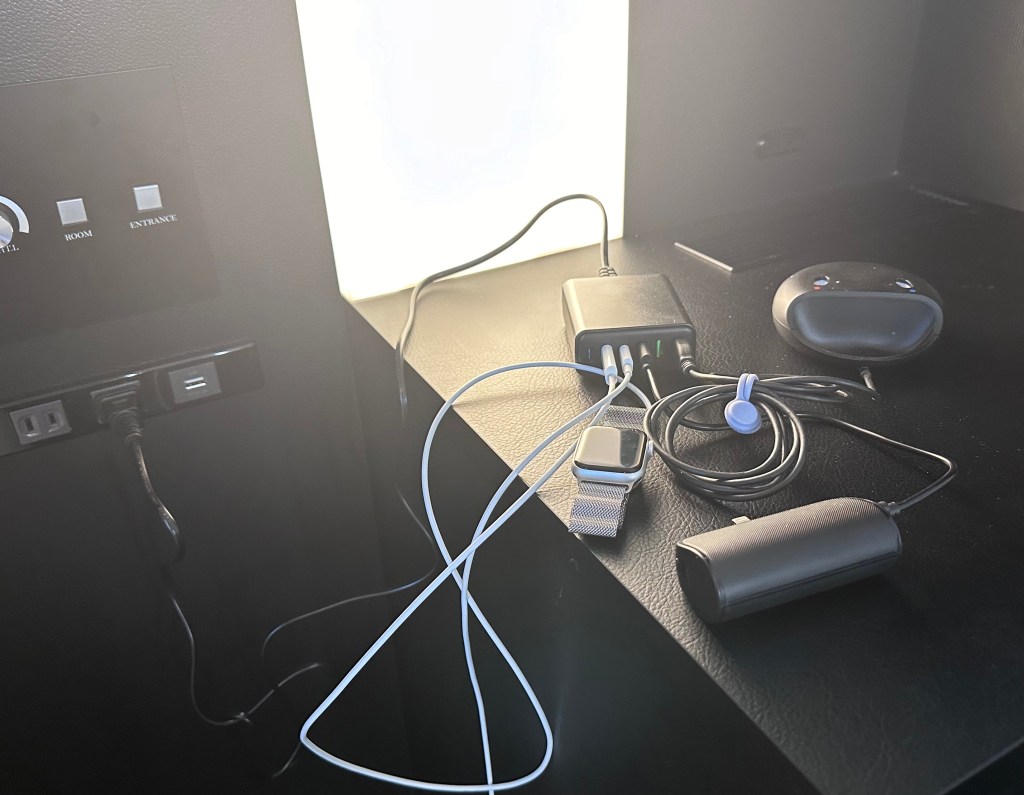
Although some hotels had conveniently located outlets, that was not universally true, so I was glad that I brought my handy dandy plug thingie that I got from Amazon. Because my phone is now my camera, the battery doesn’t last all day, so I bought that black mini portable charger, also from Amazon.
The manicure scissors I brought were useful for cutting off the plastic ties that were affixed to our luggage every time we had our bigger bags shipped. The bullet train doesn’t have much storage space, so we were told to pack a small bag to tide us over until the rest of our luggage arrived. That happened twice on the main trip and once on the post trip. Additionally, some of the plastic packaging on snacks was difficult to open, so my manicure scissors spared my teeth!

My packing cubes functioned as bureau drawers in these bureau-less and closet-less rooms. Yep, I just put them on the floor. in the narrow space between the bed and the window.
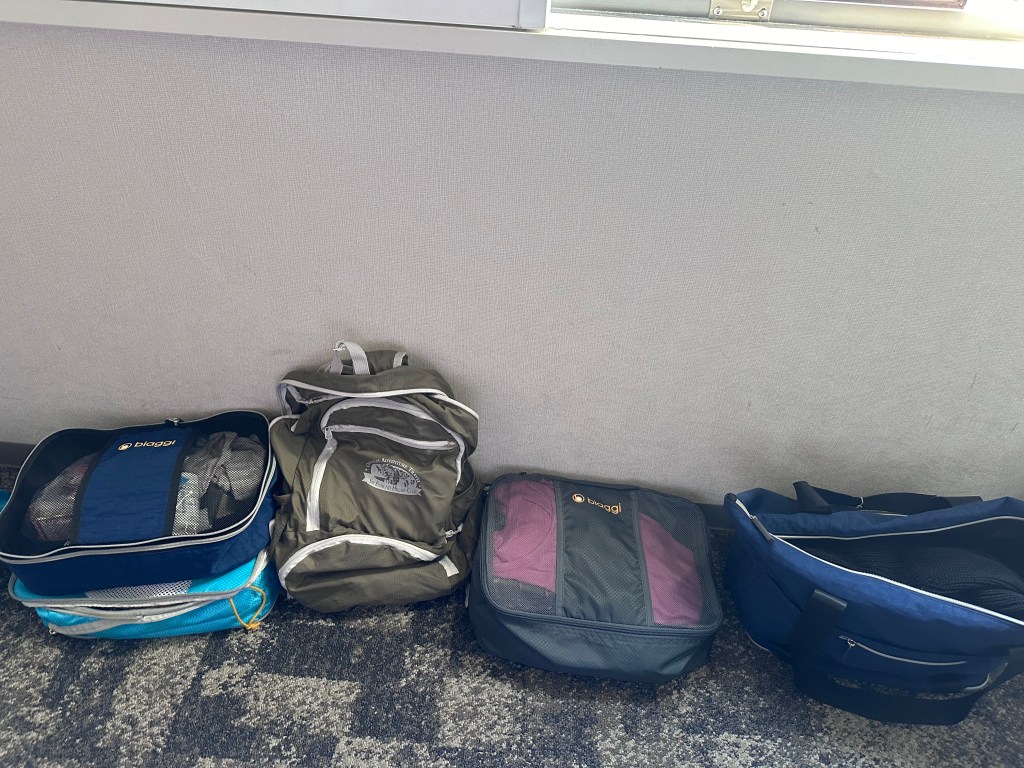
The OAT backpack folded up to almost nothing in my carry on. It made a great day pack, and provided extra space for purchases.

Shopping

I normally don’t shop while I am on a trip, but the exchange rate was so favorable, and the items were so unique, I found myself buying lots of little gifts — in department stores, in little handicraft shops, you name a place and it is highly likely that I found something interesting to buy there.

Language

English is not commonly spoken, but Google translate made it much easier to communicate. I simply typed in what I wanted to say and showed the Japanese translation when I needed help. In museums without English explanations, I pointed the camera at the Japanese words and Google delivered a translation like the one below.

Screenshot

Money

I learned from the Friends of OAT Facebook page not to bother with Japanese Bank’s ATMs when I needed cash. Instead, I went to either Lawson’s or 7 11, which are EVERYWHERE. I was beyond relieved when I saw that English instructions are provided. The exchange rates are good, and the cost for withdrawing money is reasonable. Although you can use your credit card in most places, it is good to have cash for the markets and smaller gift shops. A bonus–both places sell ice cream, chocolate and other snacks.

Mass transit

I’m sure that once you get the hang of it, mass transit is easy to use. Let’s put it this way, I was VERY grateful that our guide took care of determining how we would get from point A to point B. What is wonderful about Japan is one transit card can be used on just about everything: buses, trams, trains (but not bullet trains). The neck holder our guide gave us made getting through the turnstiles VERY easy.

It’s a wonderful trip. Rumor has it that OAT is developing another trip to Japan. I certainly am considering a return trip, but in the fall to see the gorgeous colors that were displayed in this photo of a poster.

Happy travels!
Kyoto, On Our Own

First, let me say “on our own” is a misnomer. I COULD have been on my own during “free” time, but Mori was working overtime, organizing wonderful activities for us. I will admit, I skipped two evening activities because I needed a rest. (Damn, we were ACTIVE during the day!) I believe the Energizer Bunny’s Team of Renee, Ruth, and Janis did EVERYTHING, but unfortunately they’re not writing this blog, so you’ll only see and hear about the activities I took part in.

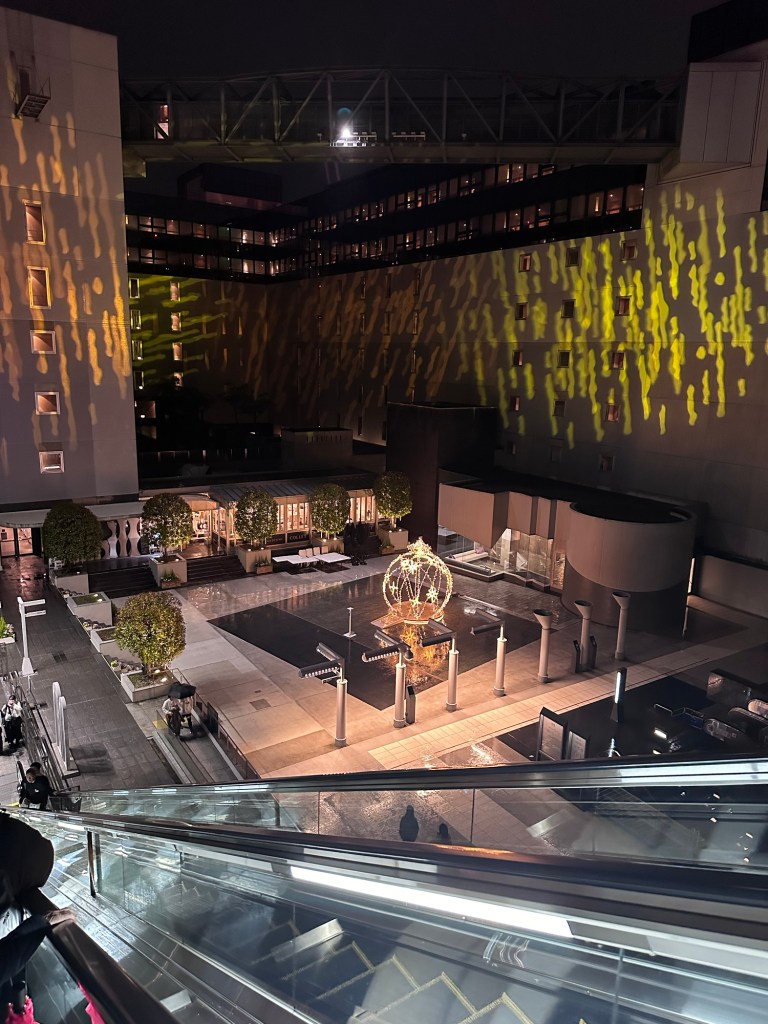
Our first night adventure in Kyoto started in the hotel bar. It was a rainy night, so we correctly figured we needed some fortifications before our tour of the train station.

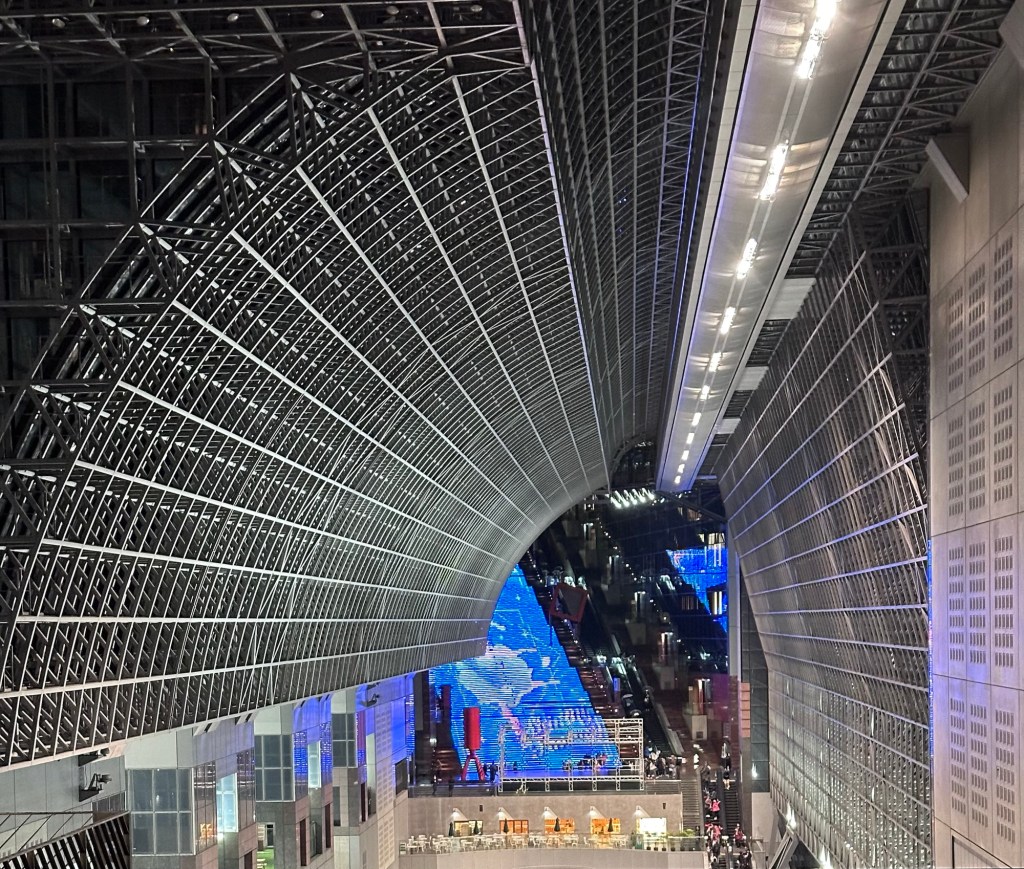
During my lifetime, I have certainly been in many train stations, but never have I seen seen anything quite like this one! The architecture is stunning, the lighting is spectacular—it is a visual feast!

Unlike most escalators, which require you to walk around to the opposite side on each floor, this one went straight up, and parts of it were outside the building.

Notice how clean everything is? No trash ANYWHERE!

We were able to see the Kyoto tower from the covered part of the rooftop. I thought that the raindrops on the window gave the tower an impressionistic feel.

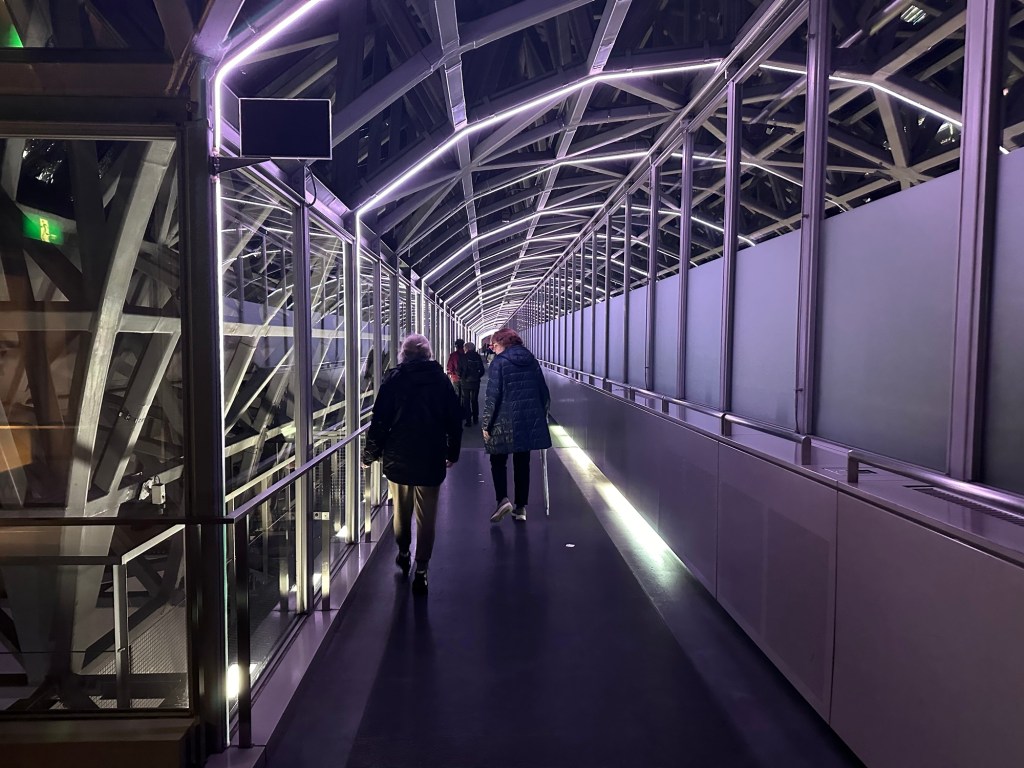
It isn’t obvious from the still photos, but we were treated to a light show as we walked along the corridor.

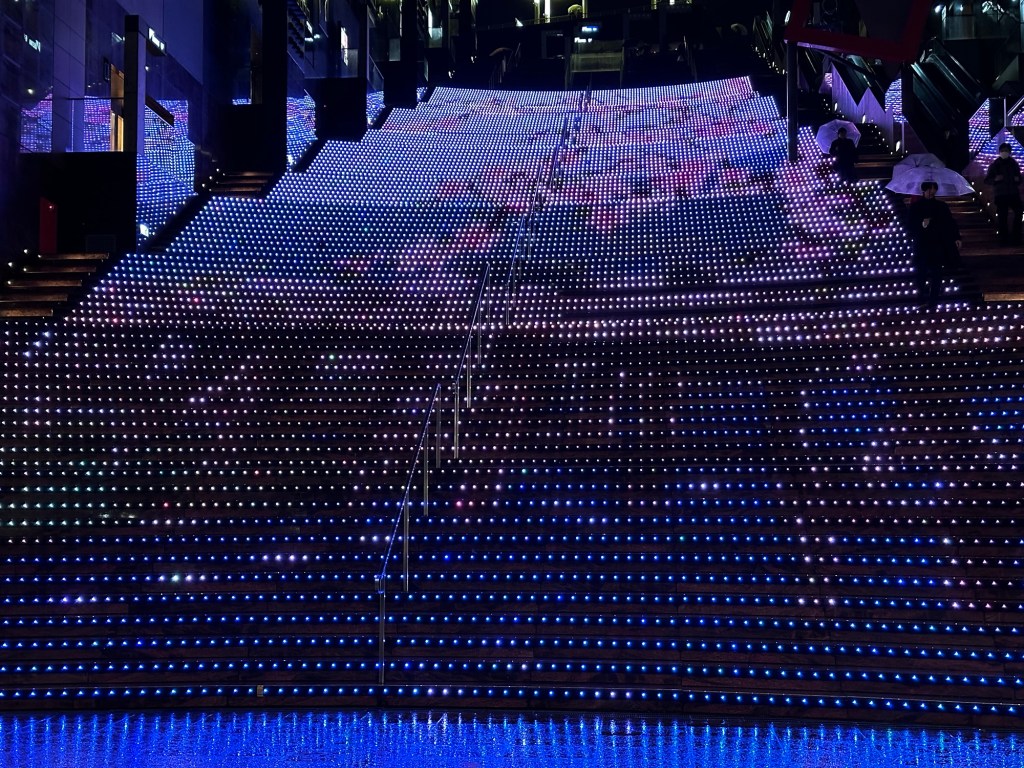
Can you see the two people walking down the stairway upon which images are being projected? Here’s a hint–look for the umbrellas.

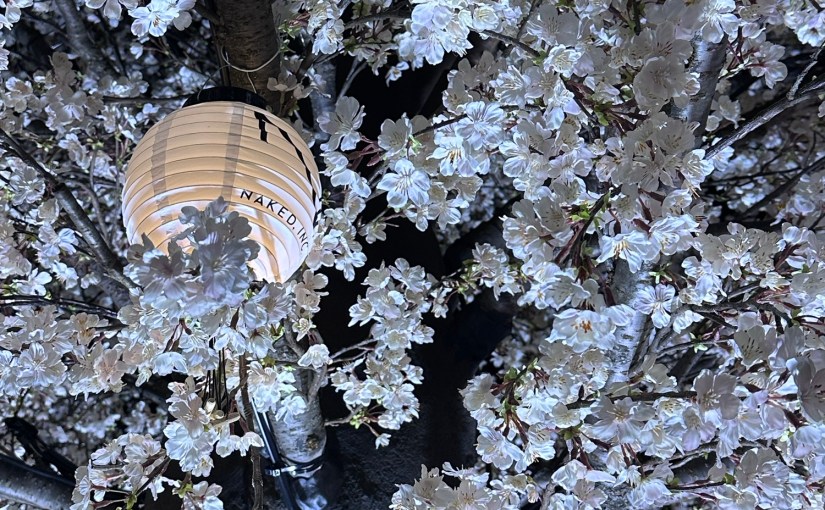
This is the site of one of twenty one immersive multimedia installations created by Naked, a digital art collective. If you want to learn more, check out their website: https://en.japantravel.com/kyoto/naked-garden-one-kyoto/69924

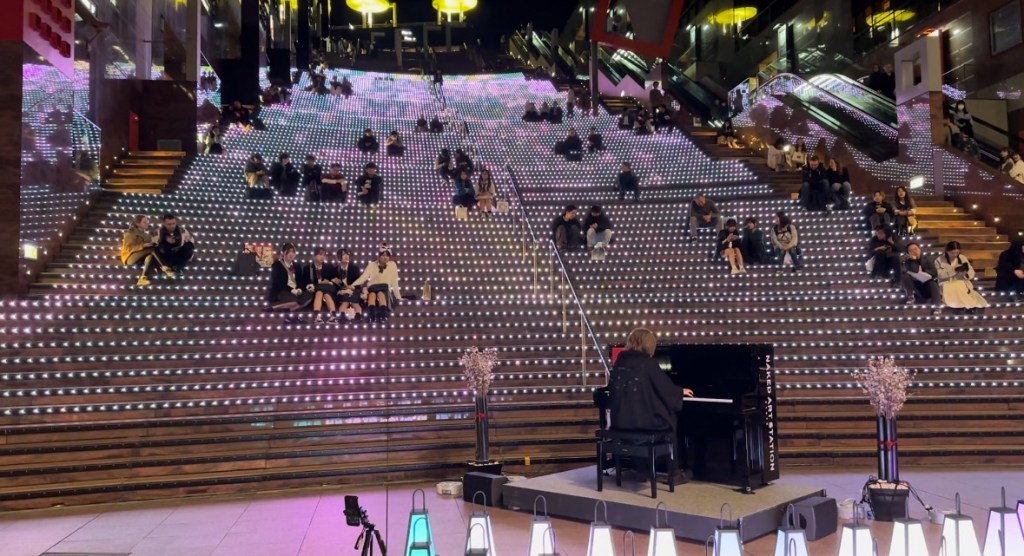
We returned the following night, when the weather was better, to listen to the pianist while we watched the light show. If you would like the full effect, just hop over to YouTube to watch and listen to the video. (Click on the underlined word)

The photo is a screen shot from the video and admittedly is a poor substitute, but uploading a video into WordPress takes forever.

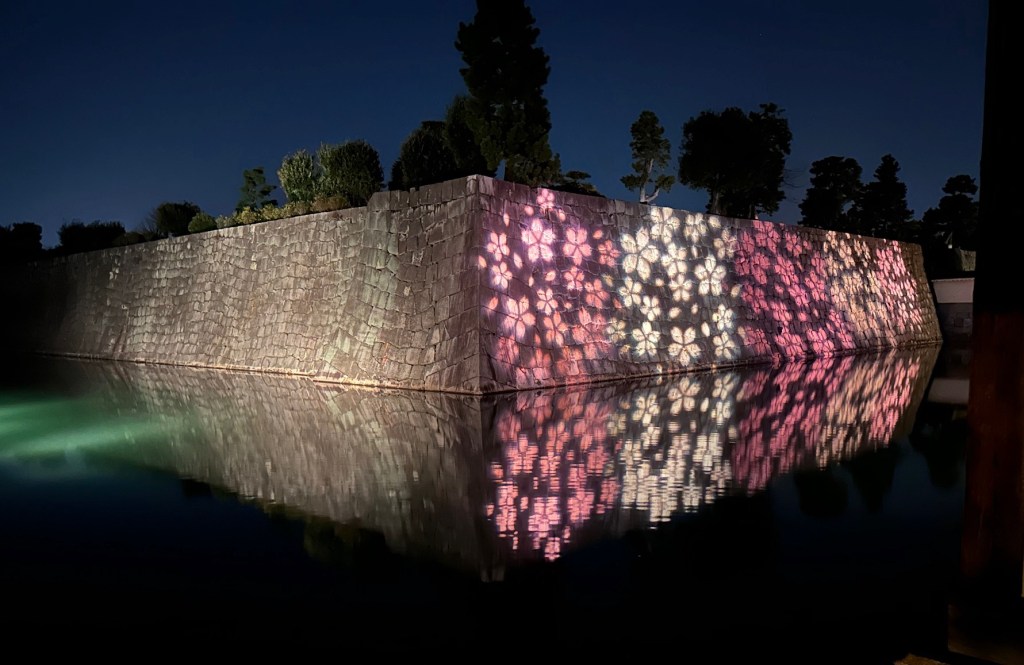
In the previous post I mentioned that Nijo Castle was also a site for a Naked installation, and THIS one was even more sensational!

The castle walls became digital displays with changing graphics. You know the drill: if you want to experience the full effect of the “Naked” show, click on YouTube.

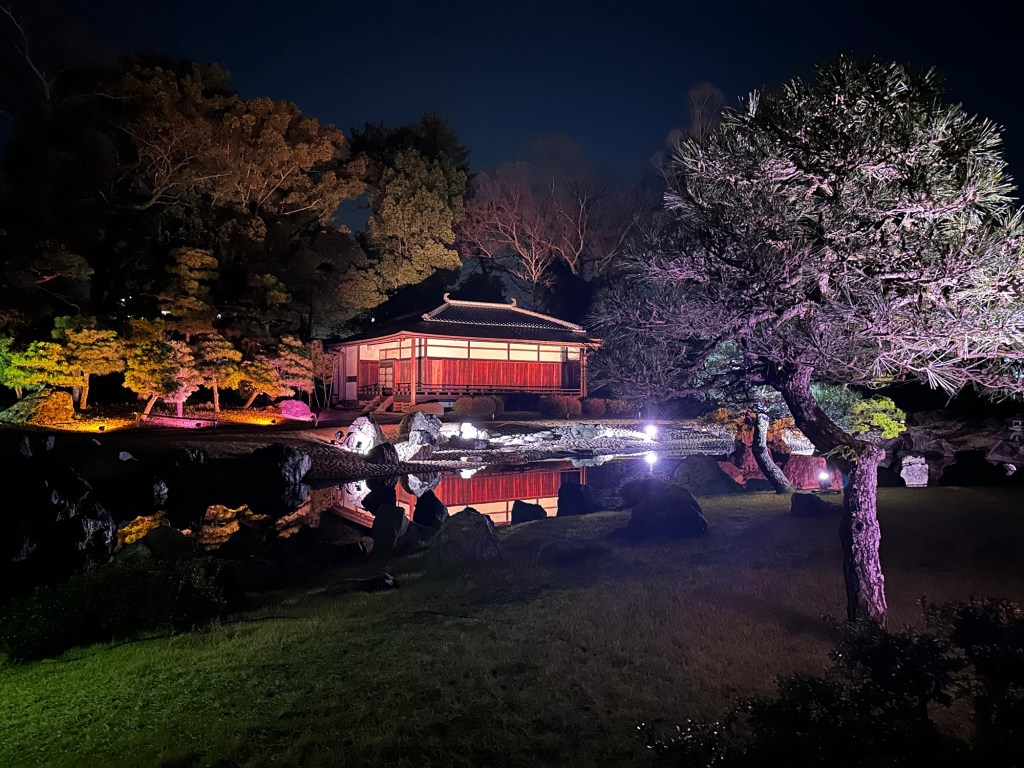
But wait— there’s more! The garden and the buildings were also beautifully illuminated.

There were so many gorgeous sights–it was hard to decide which ones to include in this post.

And if that wasn’t enough, there was even a “ special effects” machine, pumping out fog.

Our extras weren’t just limited to night time activities. We also had adventures with Mori during free afternoons. Sometimes, the bus drivers recommended stops along the way at places they thought we would enjoy.

That’s another wonderful aspect of Japanese culture. People take pride in their work, regardless of what it is. Everyone’s contribution is valued.

Earlier in the trip, we stopped at a store selling fruits and vegetables. On the wall were photos of the farmers who grew the store’s products. Talk about a personalized approach!

Notice the white gloves our bus driver is wearing and how he is dressed?

This particular driver suggested these two additional stops enroute to a planned activity. I won’t bother with the names of the temples because they are long and totally forgettable, at least by me. But what is seared into my brain are the temple grounds with its flowering trees.

We didn’t have time to participate in the Buddhist ceremony, but I peeked inside and was impressed that they thoughtfully provided chairs for those unable to sit on the floor.

The second temple contained 1001 statues of the Buddhist Deity Kannon. What is interesting is that all of the statues are slightly different, which initially led me to believe that the statues represented DIFFERENT Buddhas. Then I read the brochure.

Here’s what else I learned. 124 of the statues were made in the 12th century, when the temple was founded and the remaining 876 were made in the 13th century when the temple was renovated. The statues are all made of Japaneses cypress, so I’m guessing they have been covered with gold leaf.

We weren’t allowed to take photos inside the temple, but hanging on a wall outside was this poster,

which will give you a very rough idea of what the temple was like. It was slightly longer than a football field (According to the brochure, the length is 120 meters, for those of you fluent in metric). We walked in front of the statues, along a PACKED narrow corridor. It wasn’t tragic that I couldn’t take a photo inside–it would have been an impossible shot anyway.

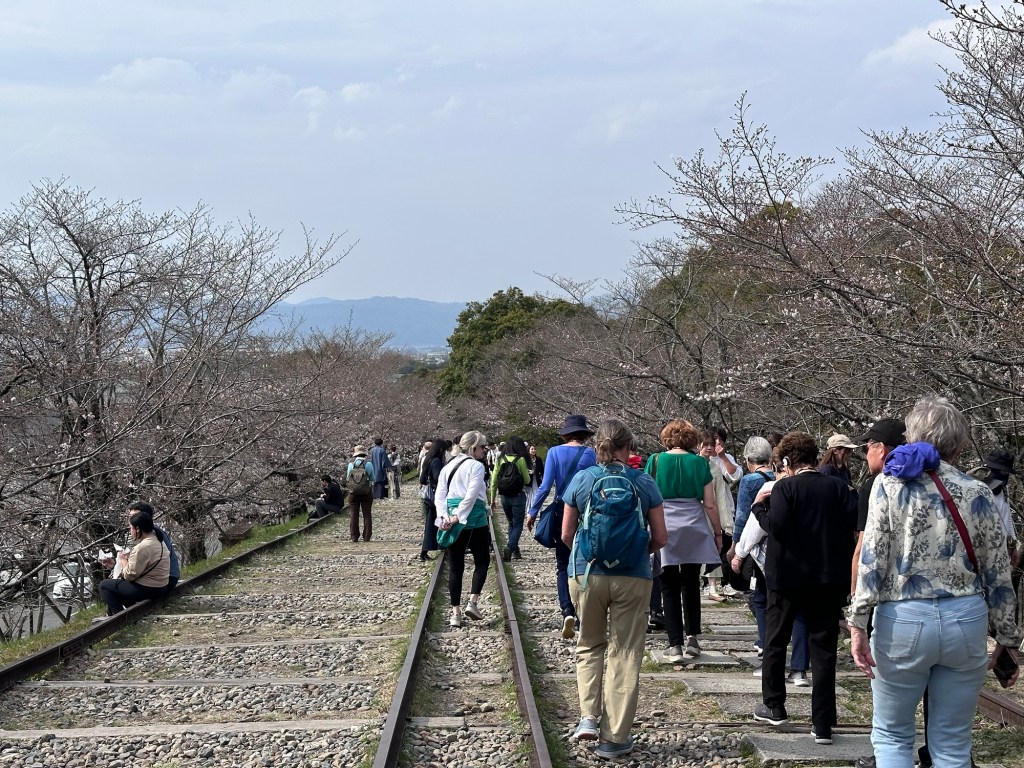
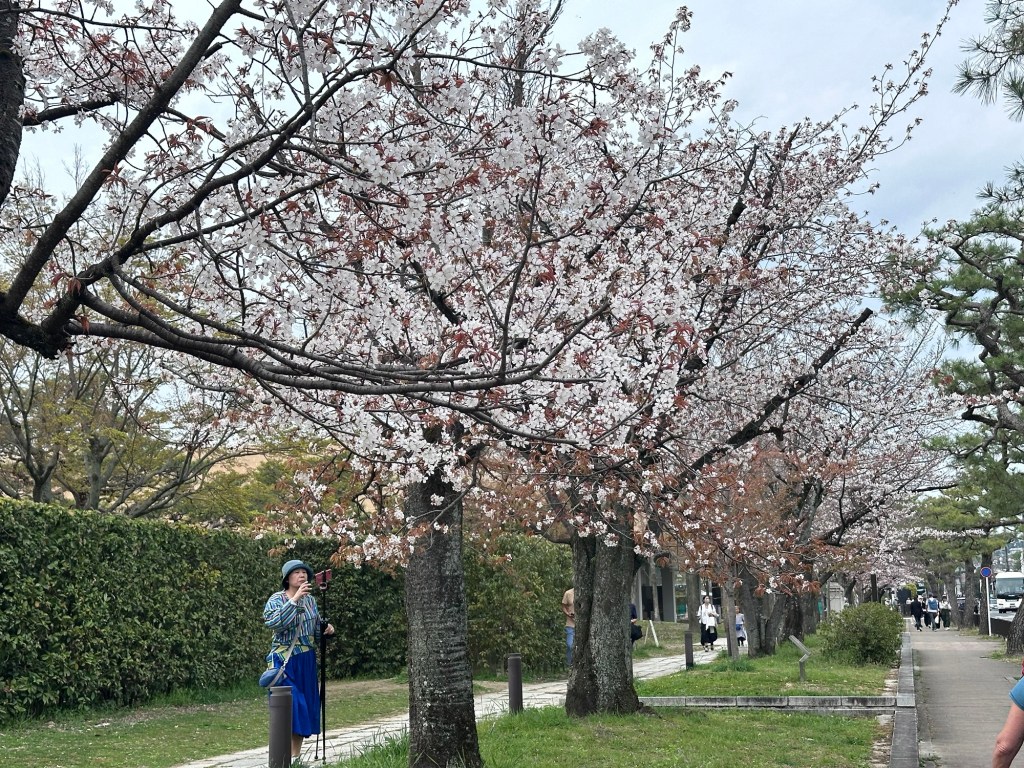
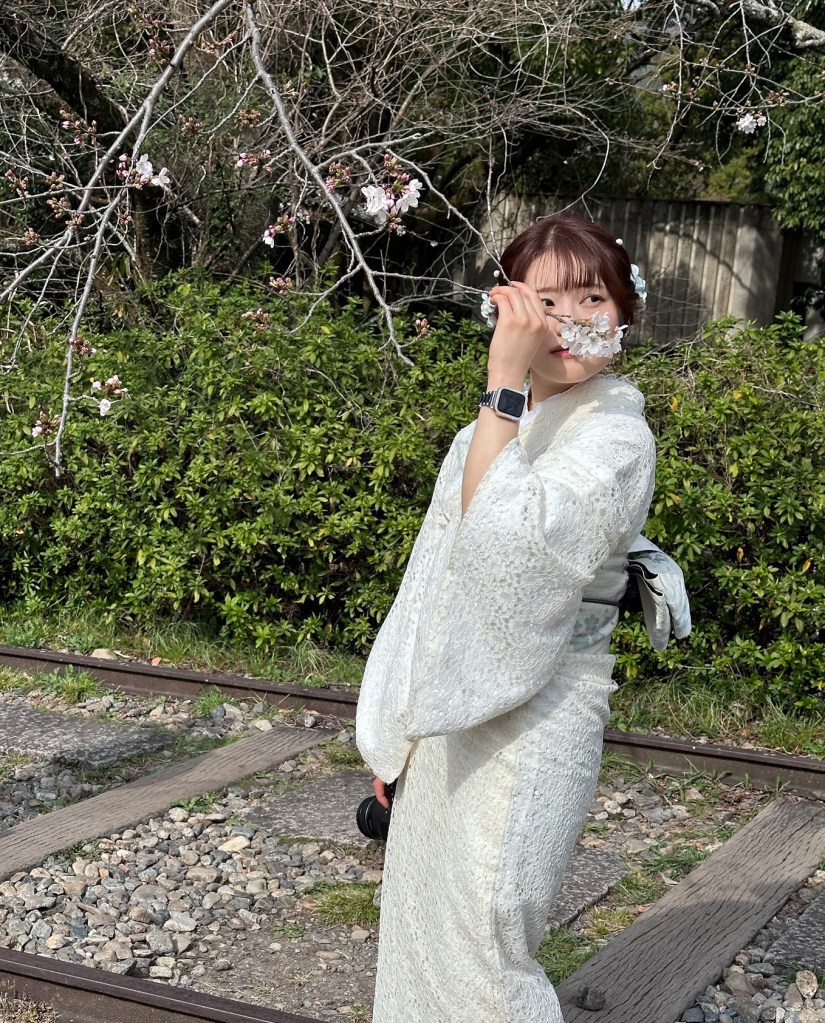
On our last afternoon in Kyoto, we set out for the Philosopher’s Path. Although we never made it there — we got a little lost– we instead had a had a delightful adventure, walking along an old railroad track, during which we saw an abundance of blooming trees and Japanese taking advantage of the photo ops the beautiful day offered.

As Mori was trying to figure out how to get us back to the hotel, some of us wandered around and discovered this rather unusual sculpture in front of one of the art museums. Sorry, there wasn’t enough time to figure out what it was trying to communicate, but then, it is ART. It can be anything you want it to be.

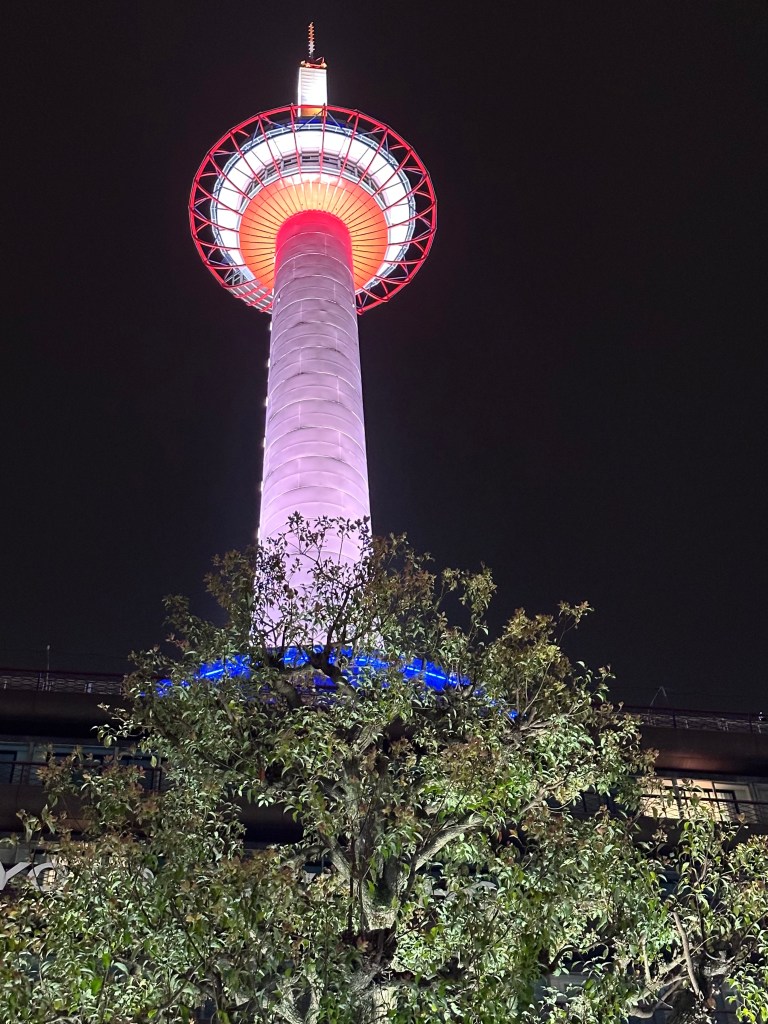
Next stop: Hiroshima, for the ten of us taking the post trip, but before we leave, here’s one last photo of the Kyoto tower when it WASN’T raining.

OAT’s Kyoto Itinerary

There was so much to see and do in Kyoto, I decided Kyoto required two posts. This one describes the “official” OAT activities. The next post is all the “extras” sweet Mori made sure we experienced.

After Covid cancelled my 2020 Japan trip, I comforted myself with an on-line “tour” of Kyoto. From that, I got the mistaken impression that Kyoto was a rather compact city with all of the sights clustered together.

I was TOTALLY unprepared for how big Kyoto is and how scattered the points of interest are.

My iPhone photos will give you a rough idea of how much ground OAT’s itinerary covered during our 5 day stay. I was very grateful that Mori handled all of the logistics.

The Shinkansen brought us swiftly and smoothly to Kyoto. Because we had ridden the bullet train from Tokyo to Kanazawa, we were familiar with the drill: you pack a small overnight bag to tide you over until the larger luggage ( which was shipped) arrives a day later. The bullet train is super comfortable, but storage space is quite limited.

I was glad that I was traveling with only a backpack, because unlike our arrival in Kanazawa, in Kyoto we had to swim through an ocean of humanity to get through the train station.

I’m wondering what was easier to follow—Taco, or my gray head sticking up above the crowd.

What a multisensory extravaganza the Kyoto train station was! We were bombarded with sounds, sights and wonderful smells, but as you’ll see in a later post, it is even more thrilling at night, so no more daytime station photos.
But first, here’s a whirlwind tour of my favorite things on OAT’s itinerary, which successfully hit Kyoto’s traditional hot spots.

The majestic Arashiyama Bamboo Forest

It is hard to describe the peaceful feeling one gets while walking through these towering plants.

Cemetery beside the bamboo forest

The Tenryu-ji Temple

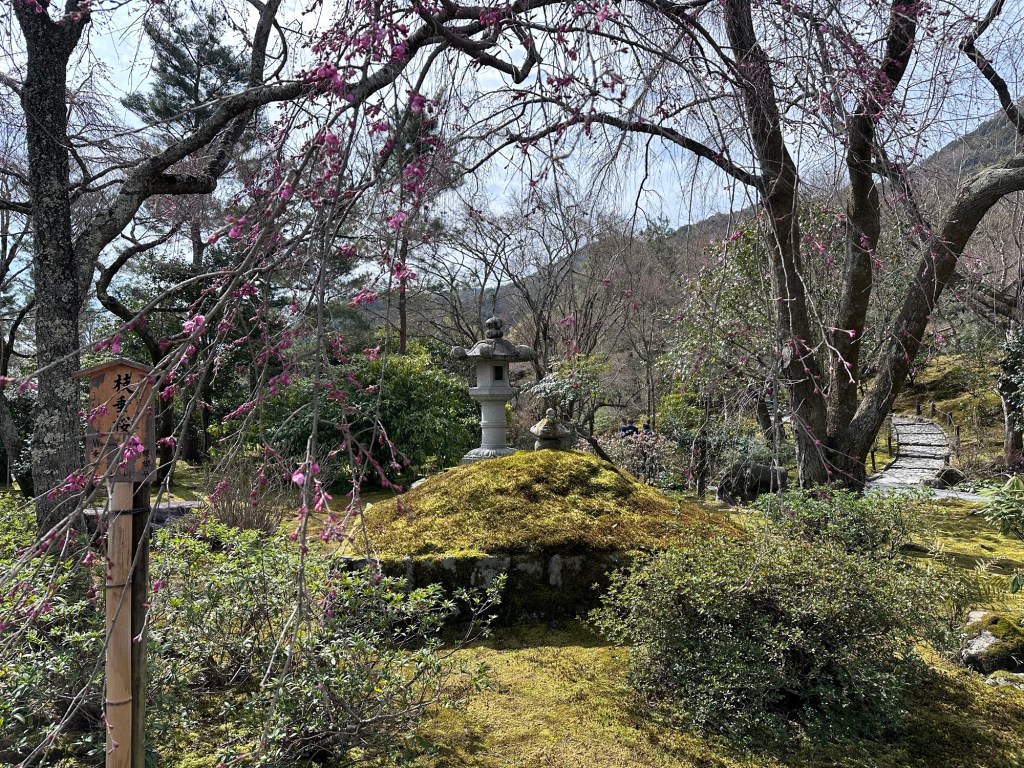
A brief stroll away from the forest was a beautiful garden and Buddhist temple. We were so excited to see the cherry blossoms were starting to open.

I managed to pitch a coin right into the ring in front of the frog. I keep making the same wish. One of these times it should work.

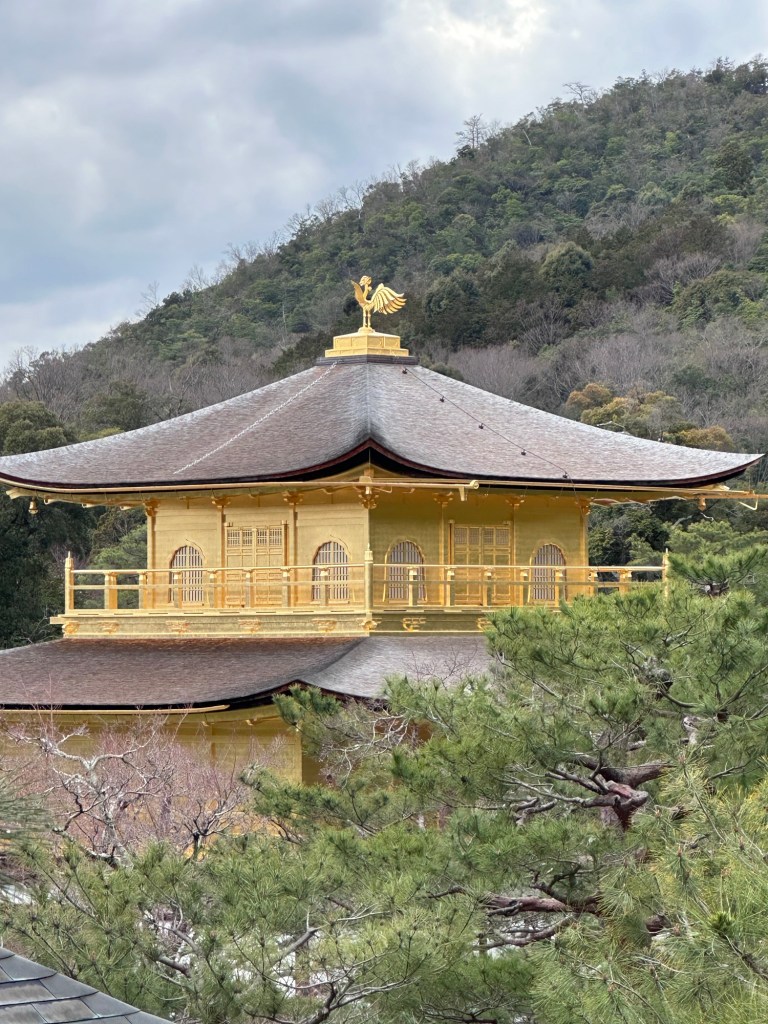
Kinkaku-ji Temple (Temple of the Golden Pavilion)

The original temple was constructed around 1400, but was rebuilt in the 1950’s after it was burned to the ground by a crazed monk.

Wasn’t it fitting that the phoenix atop the temple was the only part of the original that managed to arise from the ashes of the burned building?

Nijo Castle

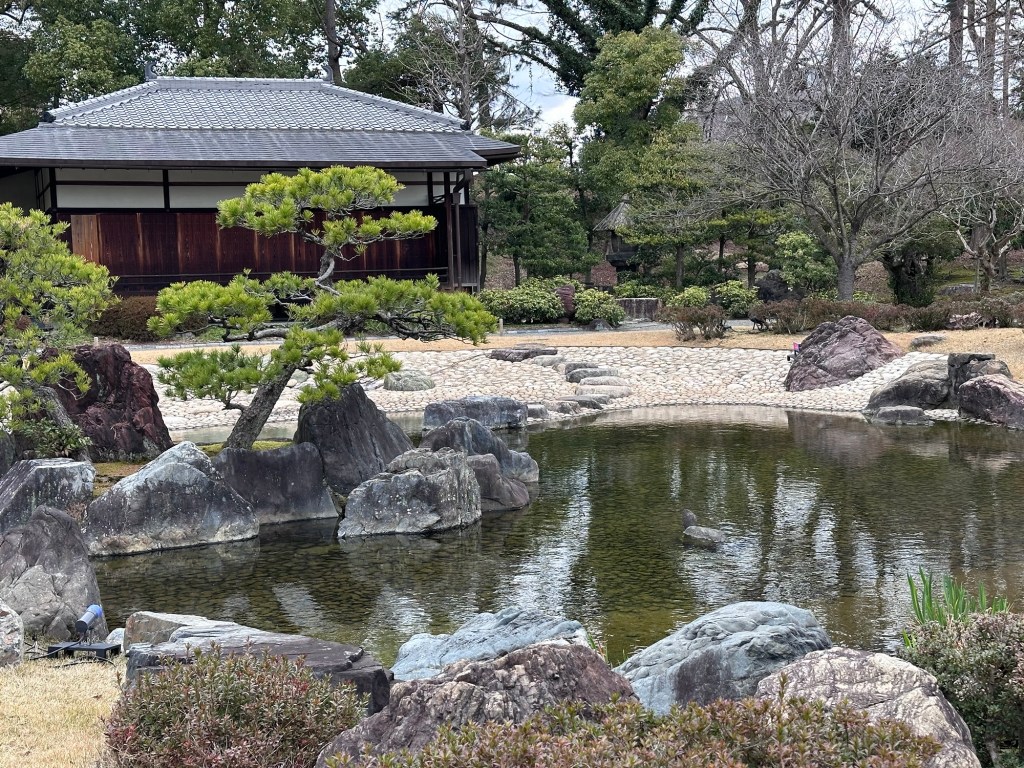
We toured the interior of Nijo Castle, but we weren’t allowed to take photos. That’s okay. I found the exterior far more compelling—especially at night (and yes, you are going to have to wait for a future post to see how glorious it is).

Nara

India has its sacred cows; Japan has its deer.

Kathleen is bowing to the sacred deer

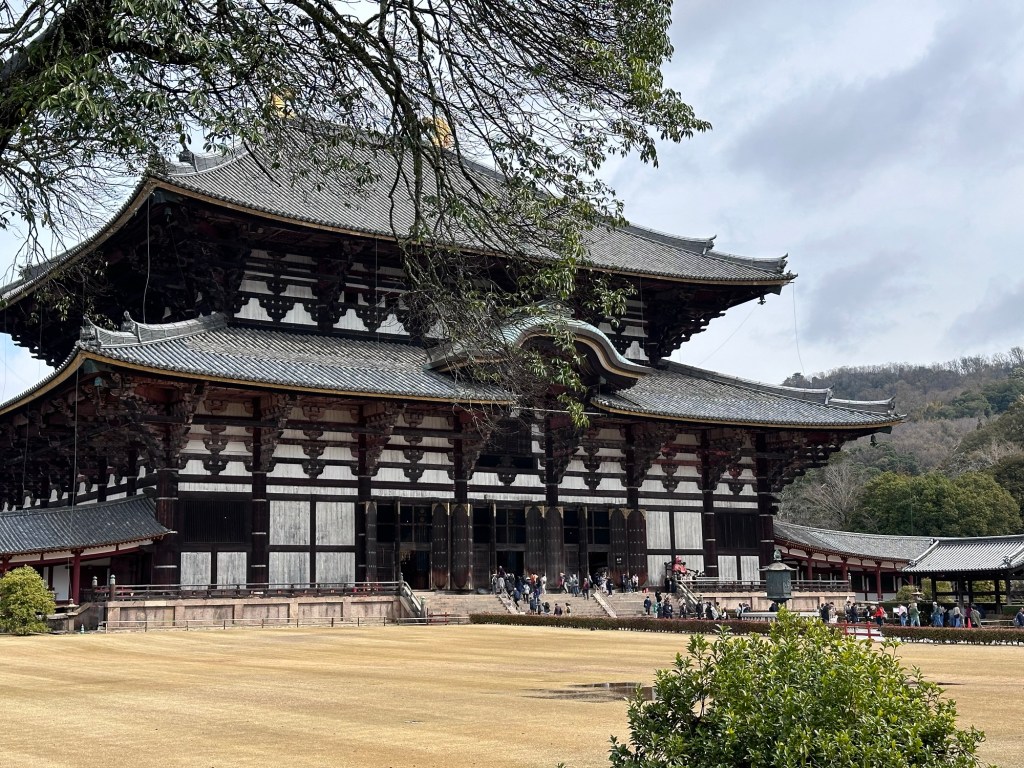
Todaiji Temple

This is the home of the world’s largest wooden Buddha.

He was so enormous, it was difficult to photograph him. Besides, we’ve all seen Buddha photos.

As you may have noticed from earlier posts, I’m rather fond of the Guardians. Even though this one has a fierce facial expression, he’s holding a scroll and pen, so how scary can he be? Maybe his message is “the pen is mightier than the sword”?

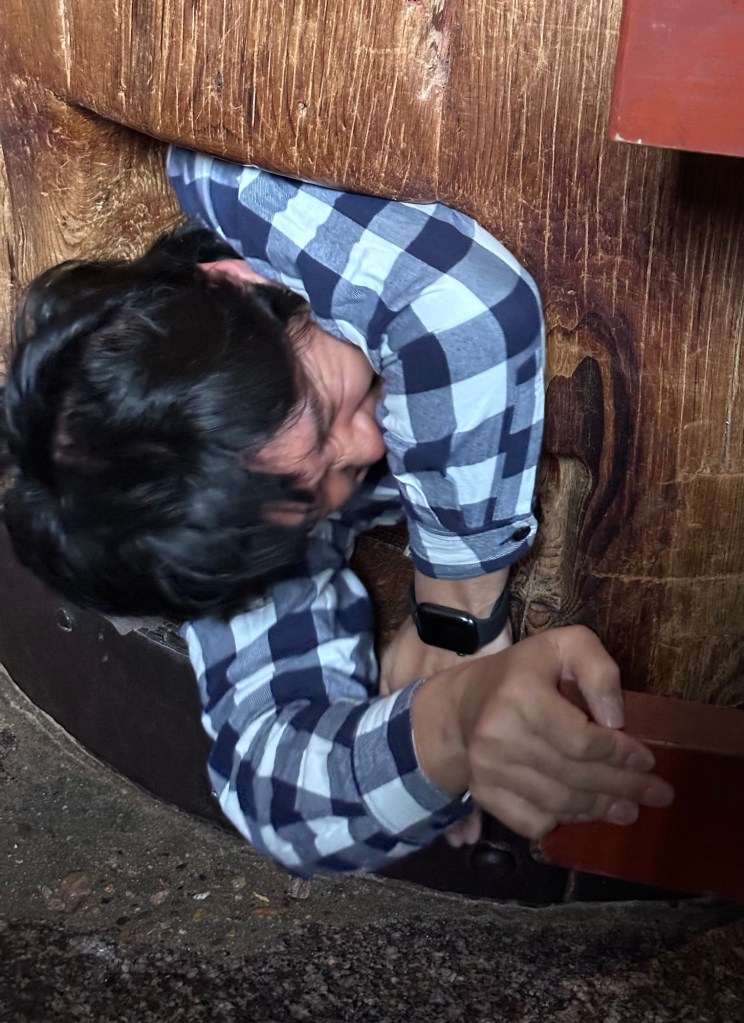
This next photo requires an explanation, but first take a look and see if you can figure out what is happening.

There is a wooden block in the temple, with an opening that supposedly is the size of Buddha’s nose (the statue, not the human). The belief is that anyone able to squeeze through Buddha’s nose (or the passage) would have a good life. I’m pleased to say that although he initially struggled, Mori made it thru.

Zen Temple

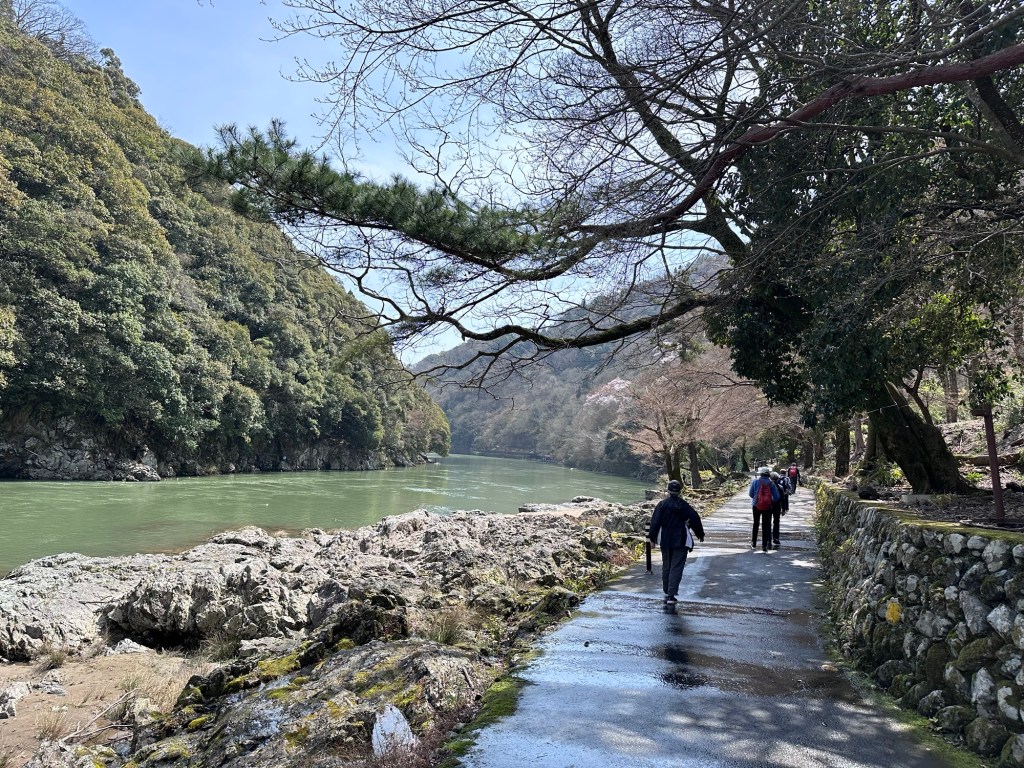
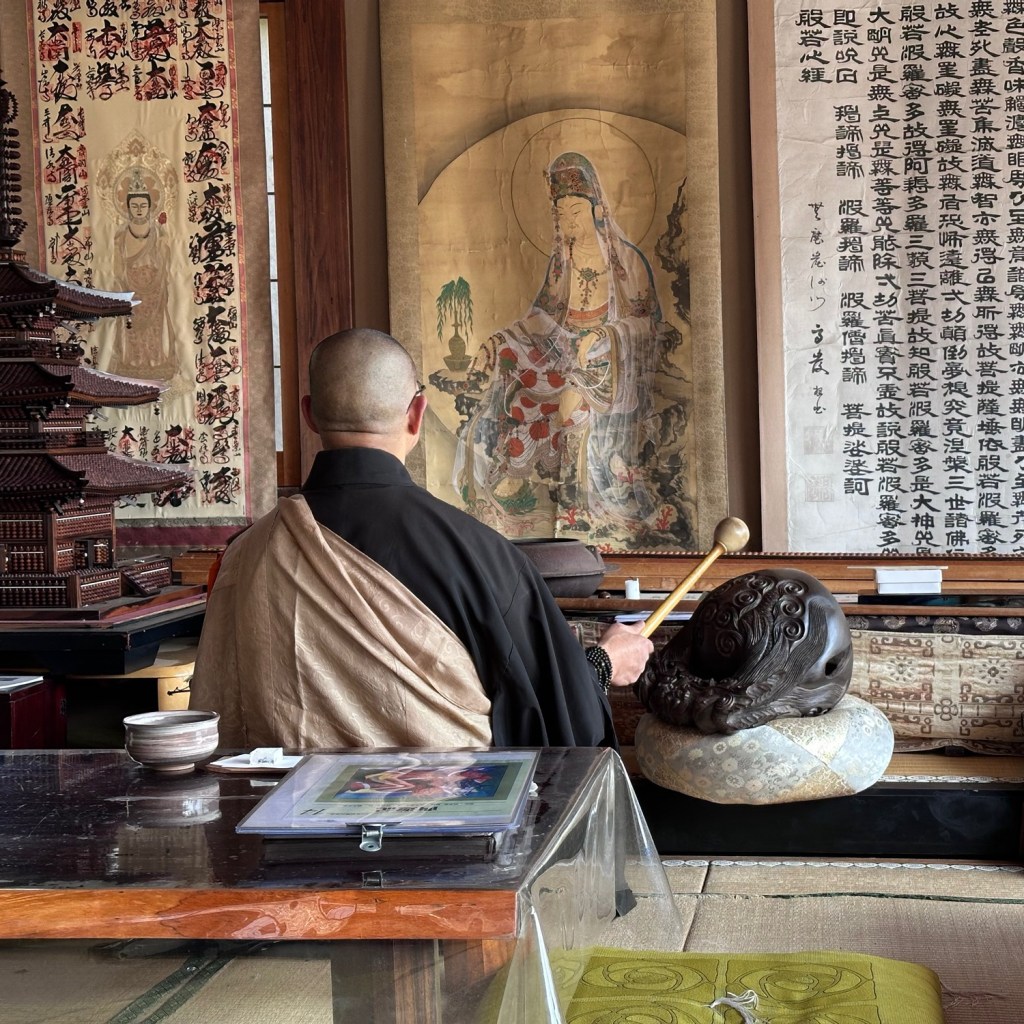
After walking alongside this beautiful river, we climbed 200 steps ( I didn’t count; I took Mori’s word for it) to meet a zen master, with whom we meditated.

We left, totally at peace, feeling “zero”. It’s fortunate that l learned to let go, because that hat on my head and I were soon to go our separate ways.

Fushimi Inari Shrine

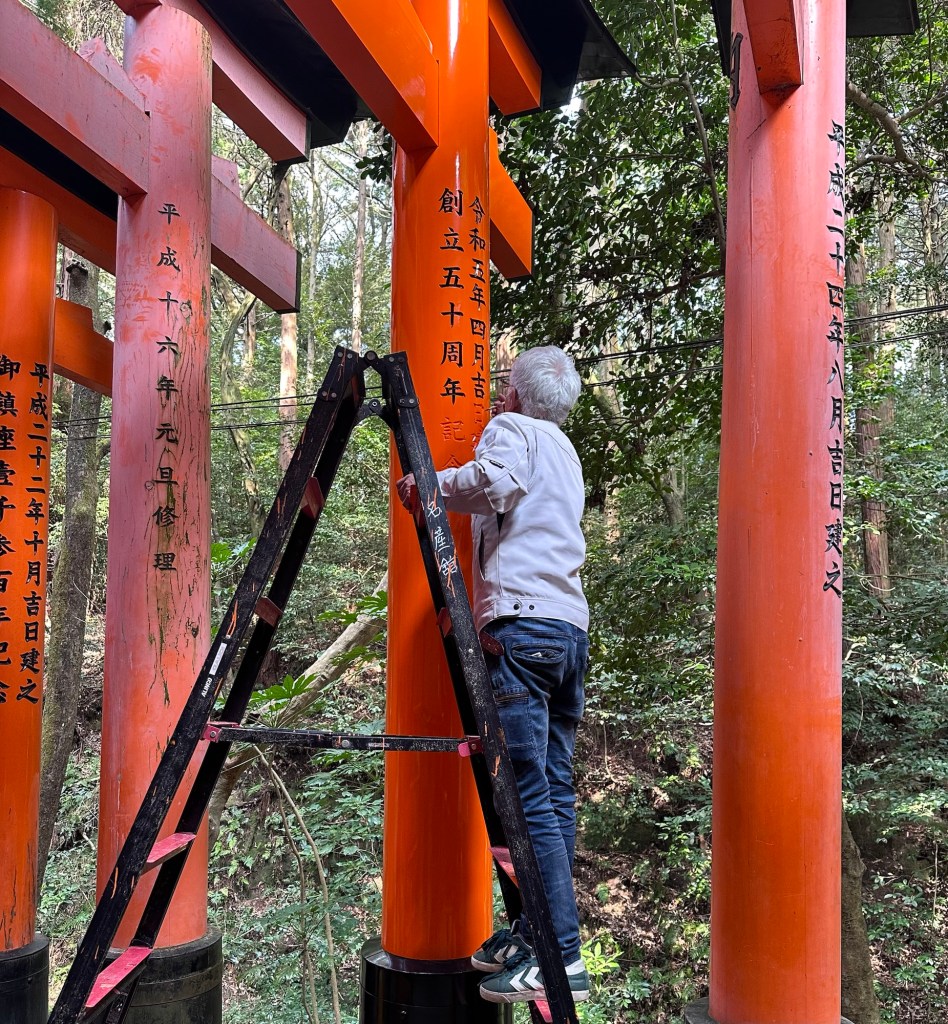
After experiencing Buddhism, we moved on to the famous Shinto shrine with its beautiful vermillion Torii Gates.

We didn’t have time to climb to the top, so this map will have to suffice to give you an idea of the immensity of the shrine.

When Christo did “The Gates” in NYC’s Central Parking 2005, Mike and I spent an enjoyable February afternoon strolling through them. Could Christo have gotten his inspiration from Japan? I think he did.

Sushi Making

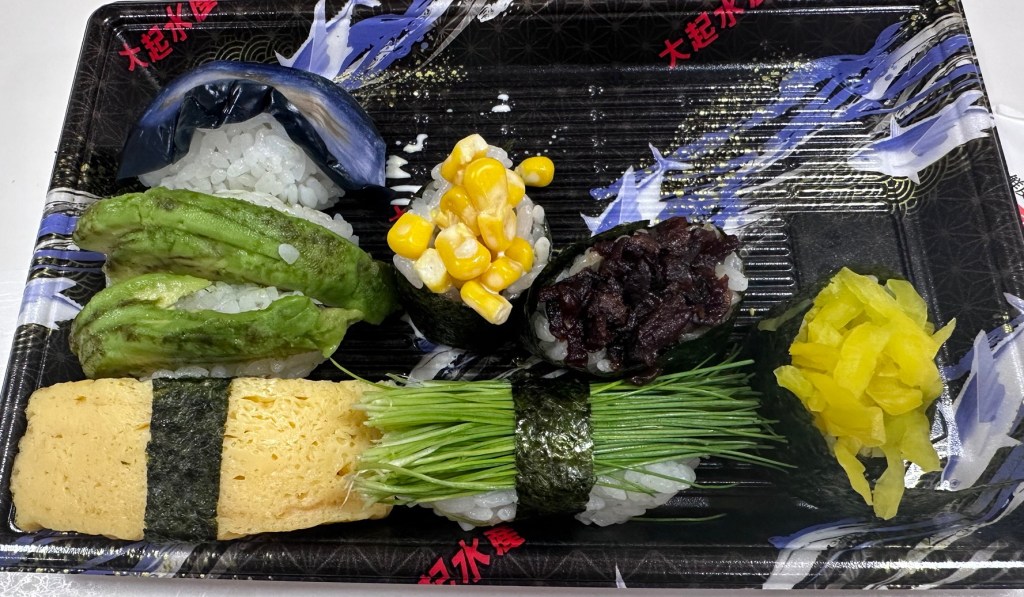
I will say up front that raw fish wrapped in seaweed does not meet my definition of delicious. Still, I was determined to keep an open mind. I was quite happy to learn that we had a vegetable option.

My son Greg would have loved the discussion about knives and whet stones.

Okay, so maybe it didn’t look like much, but it sure was tasty.

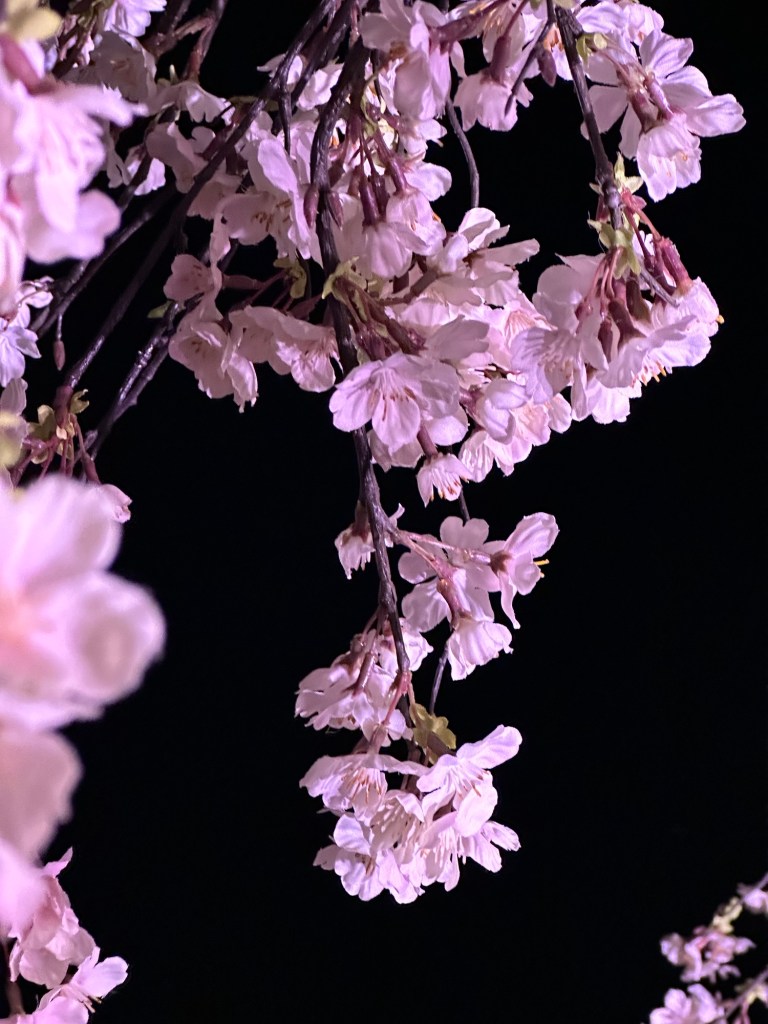
What better way to end this post than with a photo of a beautiful blossom…

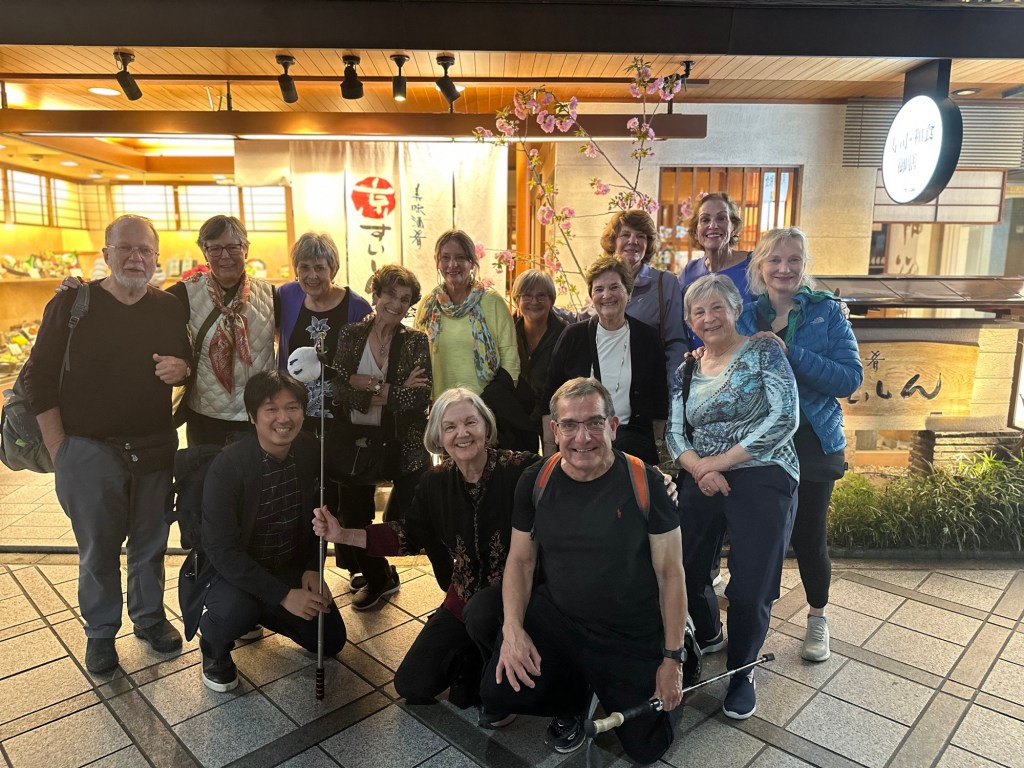
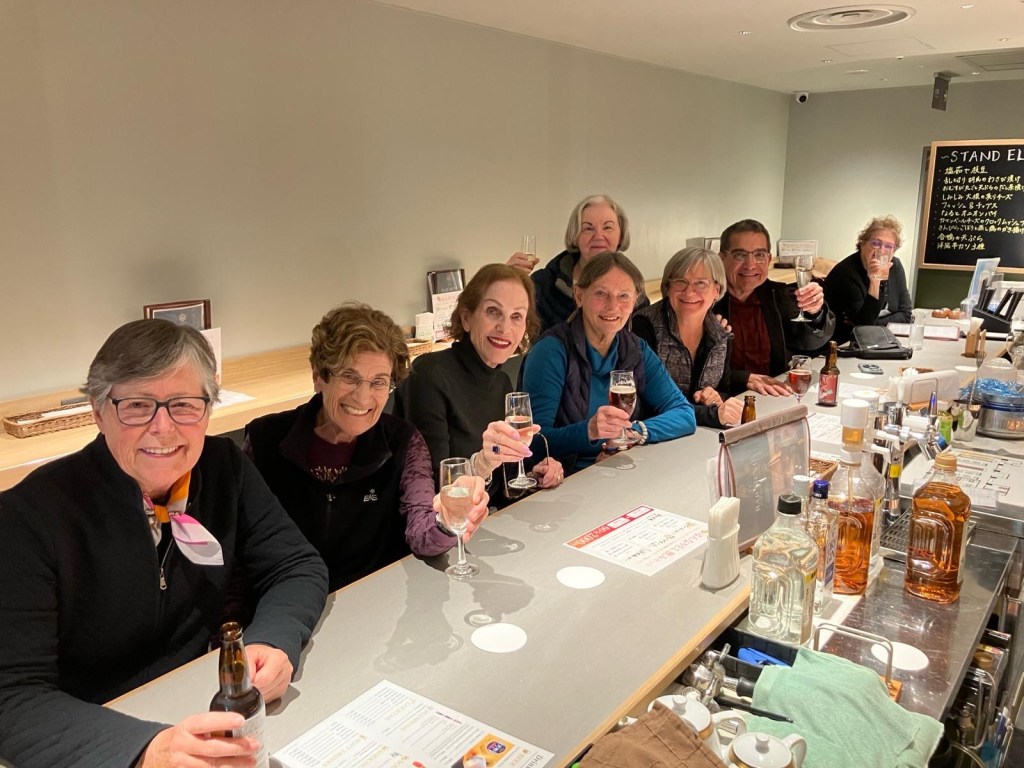
and a group shot taken after our farewell dinner. Sadly, Mary, Jim, Kathleen and Cathy, weren’t joining us on the post trip to Hiroshima.