
When you think of Japan, what comes to mind? For me, it was all about the cherry blossoms and the Geishas. Sumo Wrestling? Drumming? Karaoke? Not so much. But I kept an open mind, and I’m so glad I did. Frequently, on OAT trips, I didn’t know I wanted to see something until I got there.
Take, for instance, sumo wrestlers. These guys put on quite a show for us. I hadn’t expected them to be so funny! While demonstrating the forbidden moves—poking their opponent’s eyes—a fake eyeball popped out and rolled on the floor.


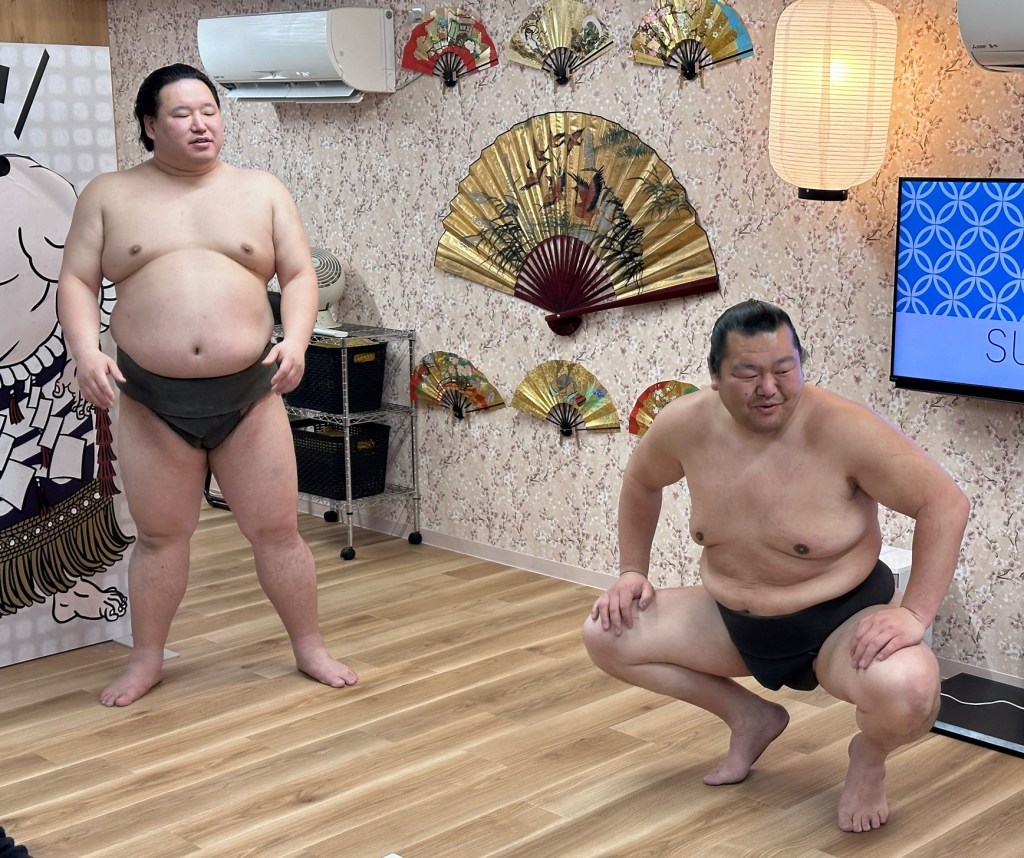

It wasn’t just laughs, though. We also learned quite a bit about the sport. Some of the sumo wrestlers are recruited from the ranks of “troubled” boys, usually around the time they turn 15, providing a constructive use of all that testosterone.
Their careers last about 20 years, which means they retire from wrestling in their mid to late 30’s, similar to the career span of professional athletes in the USA.
Renee and I (because of our insurance backgrounds) immediately had questions about the impact of all that extra weight on life expectancy. We learned that sumo wrestlers, on average, live 10 years less than most Japanese. As one would expect, diabetes, joint problems, head injuries and other medical issues are responsible for decreased longevity.
Like our time with the wrestlers, we were offered a “hands on” experience at a subsequent cultural event —drumming. And boy, did we get into it! We were like a bunch of pre-teen boys, wildly pounding away.
It was raining off and on during our second day in Hakone, but we didn’t mind. Our day was filled with indoor cultural experiences, starting with a boat ride across the lake to visit a woodworking master.
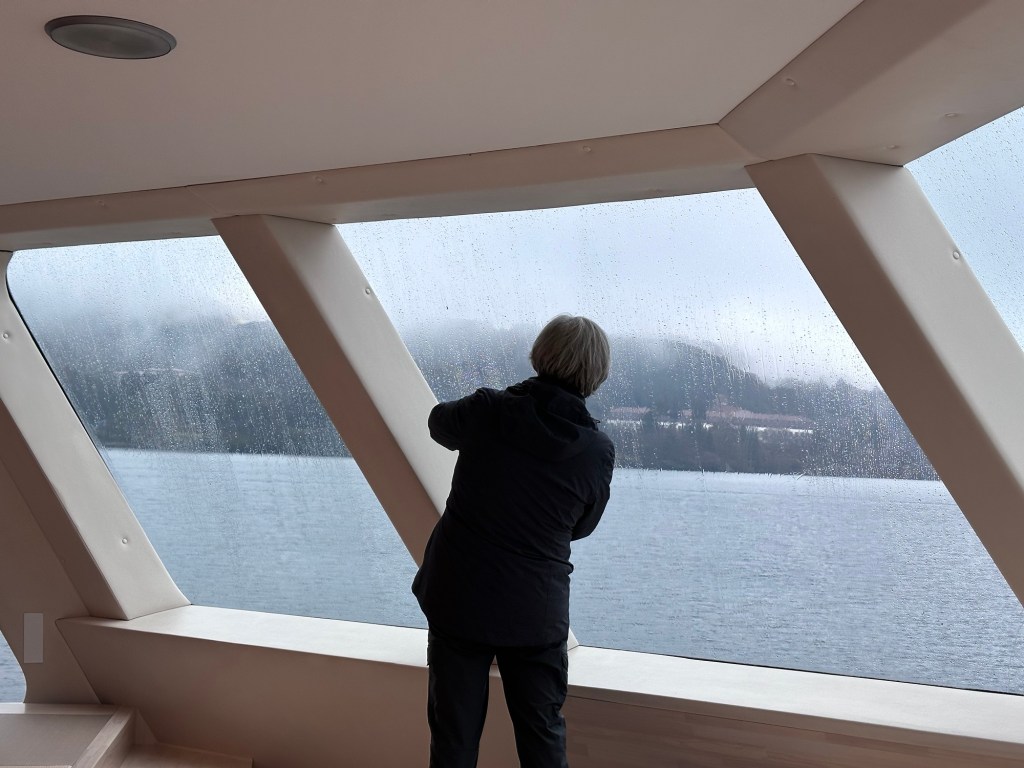
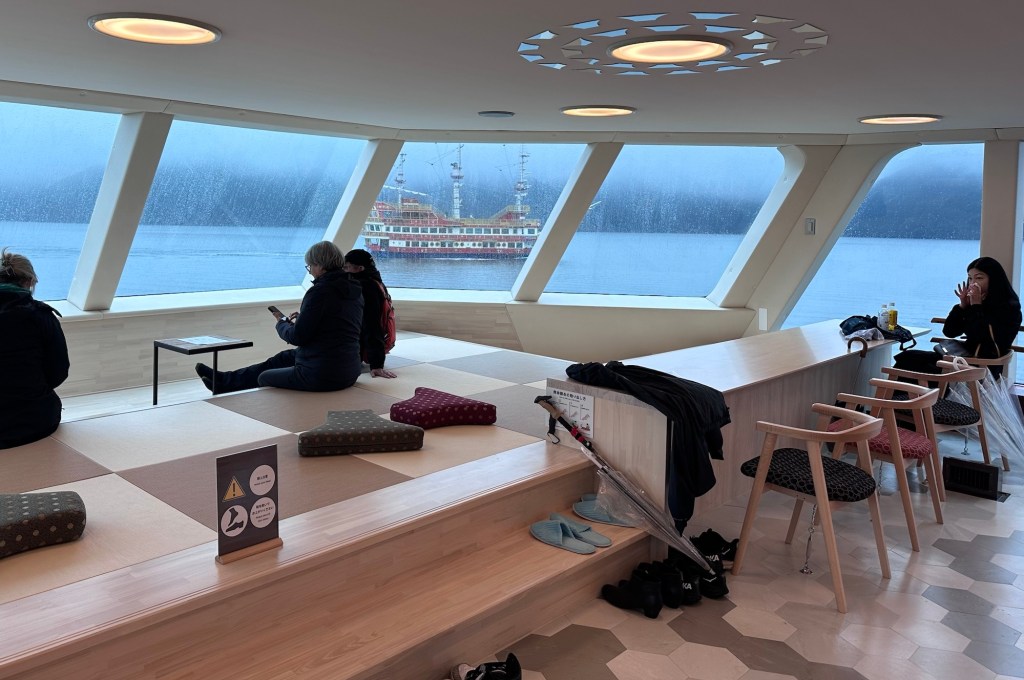
I’m not normally a shopper, but this master craftsman’s work was so exquisite and so unusual, I had to buy a couple of his smaller pieces. Partly because of the prices and partly because traveling with carry on, my purchasing power was severely limited.

Next up was shabu shabu for lunch ( Japan’s version of fondue),

followed by a delightful encounter with these two lovely geishas, who danced and played a traditional instrument to demonstrate how they entertain clients.

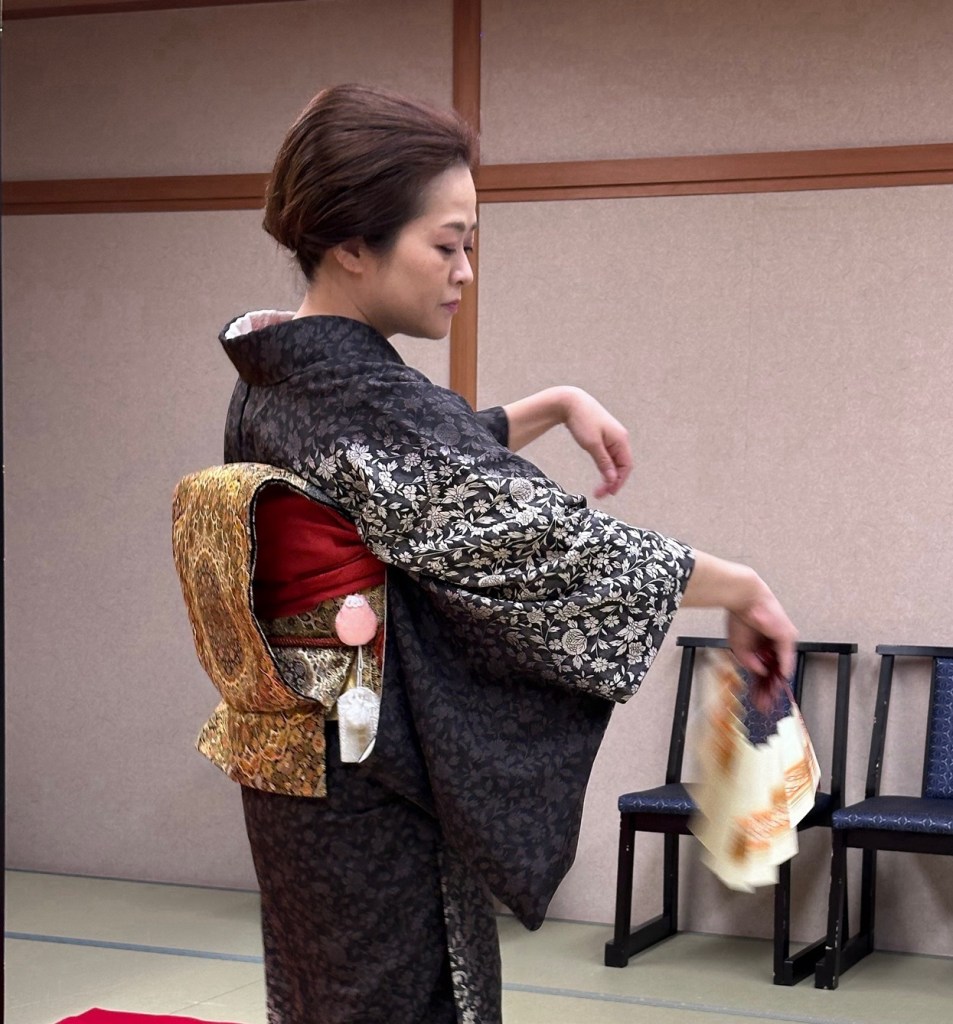
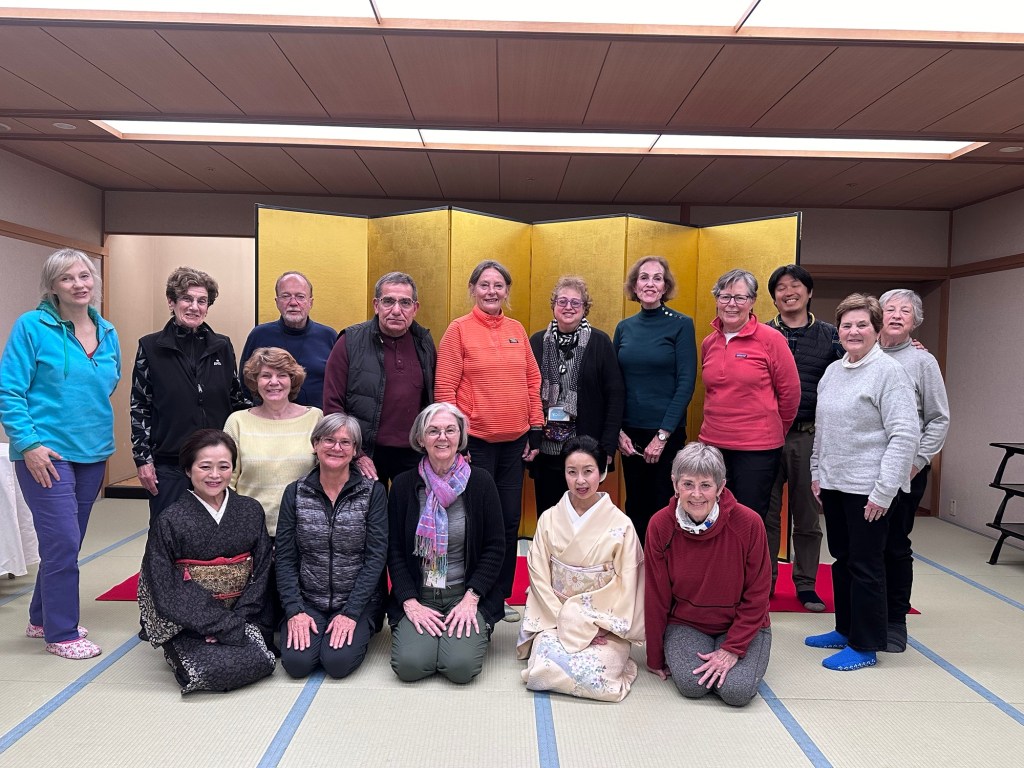
During the question and answer period, they dispelled many misconceptions about geishas.
Unlike the book and movie “Memoirs of a Geisha” would have you believe, geishas are not prostitutes, nor are young girls sold to geisha houses. Although they admitted those things might have happened many years ago, the practice was not widespread even back then.
I never would have guessed there is a geisha union that clients contact when they want to book a geisha for an event. Geisha musicians are the highest paid, and if a client wants them to paint their faces white, and don wigs to create that traditional hairdo, it costs extra. An event normally lasts about two hours, with geishas sometimes attending two parties per night.
Curious about that big padded thingie on their back? I sure was. Well, they don’t carry a purse, so they need SOME PLACE to store their cell phone, right? Think of it as a Geisha backpack. I couldn’t believe all the stuff they pulled out to show us!
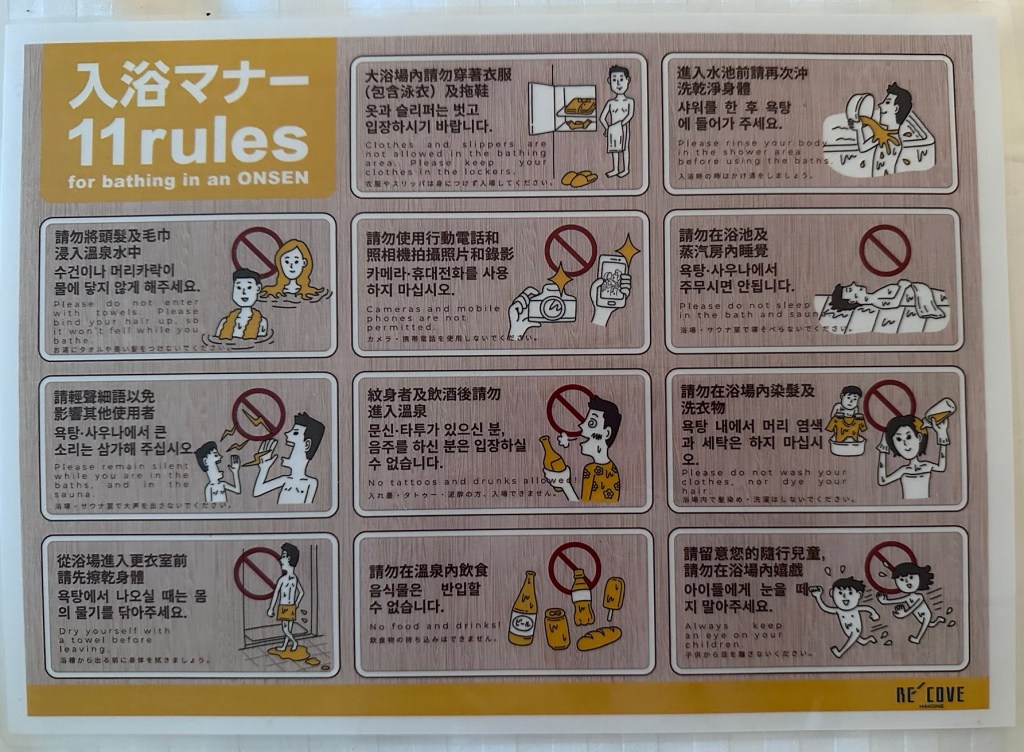
Because Hakone is noted for its hot springs, many hotels have onsens on site, and our hotel was no exception.
Men and women have separate areas, because everyone is naked in the onsen. During our stay, Kris , Janis and I experienced different pools, both inside and out, during our multiple visits. Since this is not an X-rated blog, there are no photos of the three of us frolicking in the onsen. Plus it’s against the rules. . .
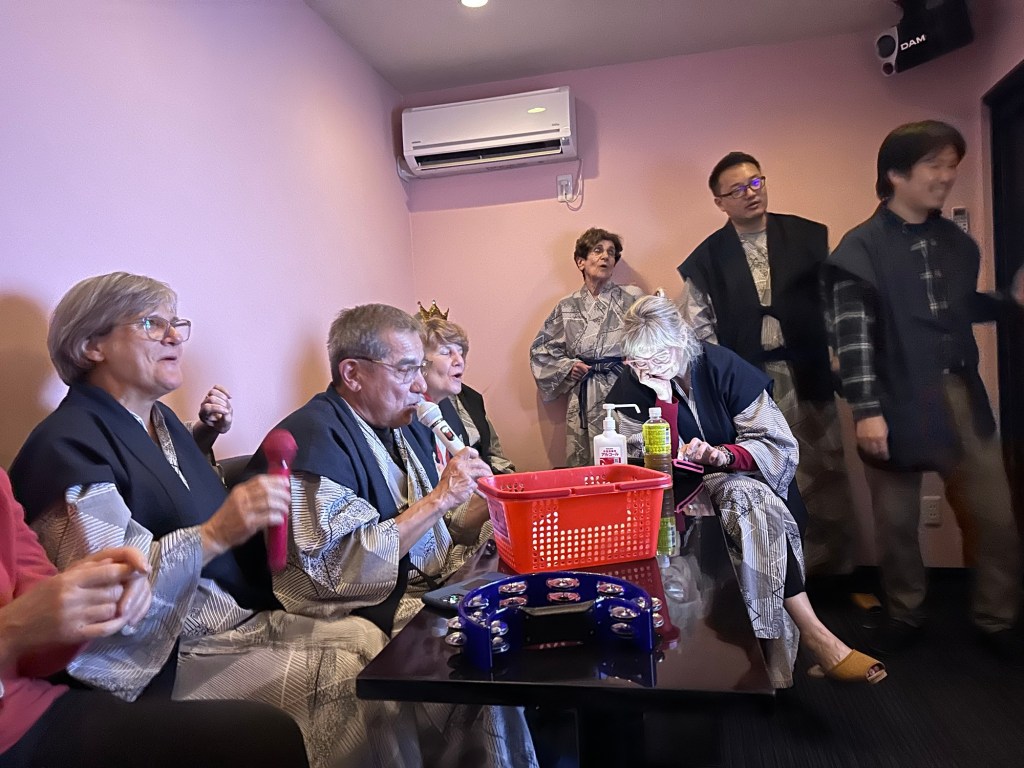
I’m going to end this post with our final Hakone activity—karaoke. My only prior experience with karaoke was at a bar, where individuals performed solo. The Japanese do it differently. It’s a group sing-along in a tiny room. Yep, the room isn’t much bigger than what you see in the photo below.
What a bonding experience! I’ll admit, it helps if you downed some sake (or wine) beforehand, which we all did, to celebrate Kathleen‘s birthday.




 Destination NOW