Normandy

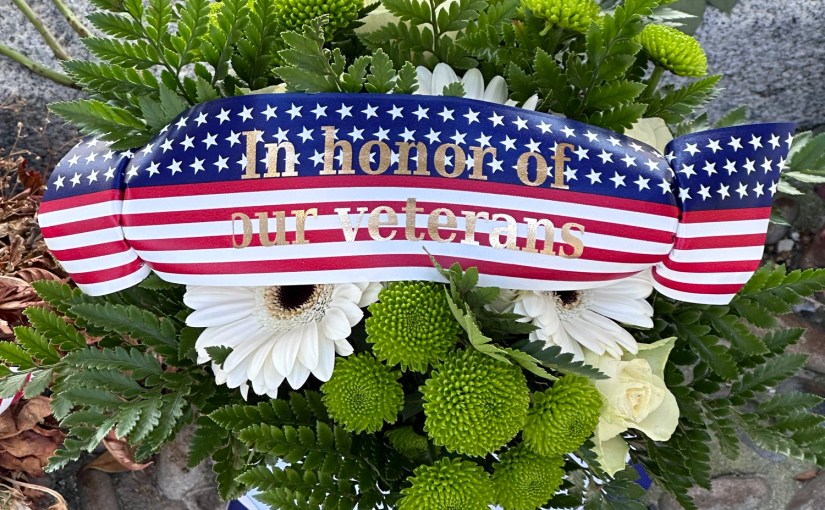
For many Americans, Memorial Day signifies the start of beach and barbecue season. After visiting Normandy, however, Memorial Day will forever retain its original significance for me. Henceforth, it will always be a solemn day of remembrance for those who have fallen in battle. Because of them, I’m allowed to live the life of freedom that I treasure.

Here’s Eisenhower’s message to the troops, which was reproduced in the museum at the American Cemetery.

The amount of creative thinking and planning that went into the invasion was mind boggling. We learned that the BBC sent out a request for photos taken during vacations on the coast of France, plus any maps or post cards that could help create visuals of the coastline. They received over 10 million responses, but these obviously had no information about the fortifications, so pilots were sent on reconnaissance missions. The local resistance, in addition to blowing up bridges and messing up supply routes, also provided key information to the allied forces.

Before going into battle, soldiers were given three options for their dog tags: they could declare themselves Christians or Jews, or leave the designation blank. If Christian or undeclared, their graves were marked with a cross. Jews were designated by a star, however many Jews chose to be undeclared in case they got captured. The fear was if it was known they were Jewish, they’d be less likely to survive.

At the American Cemetery, preparations were underway for the 80th anniversary commemoration ceremony, which will be attended by dignitaries from around the world. I was surprised to see that the American Cemetery will be part of the upcoming Olympics.

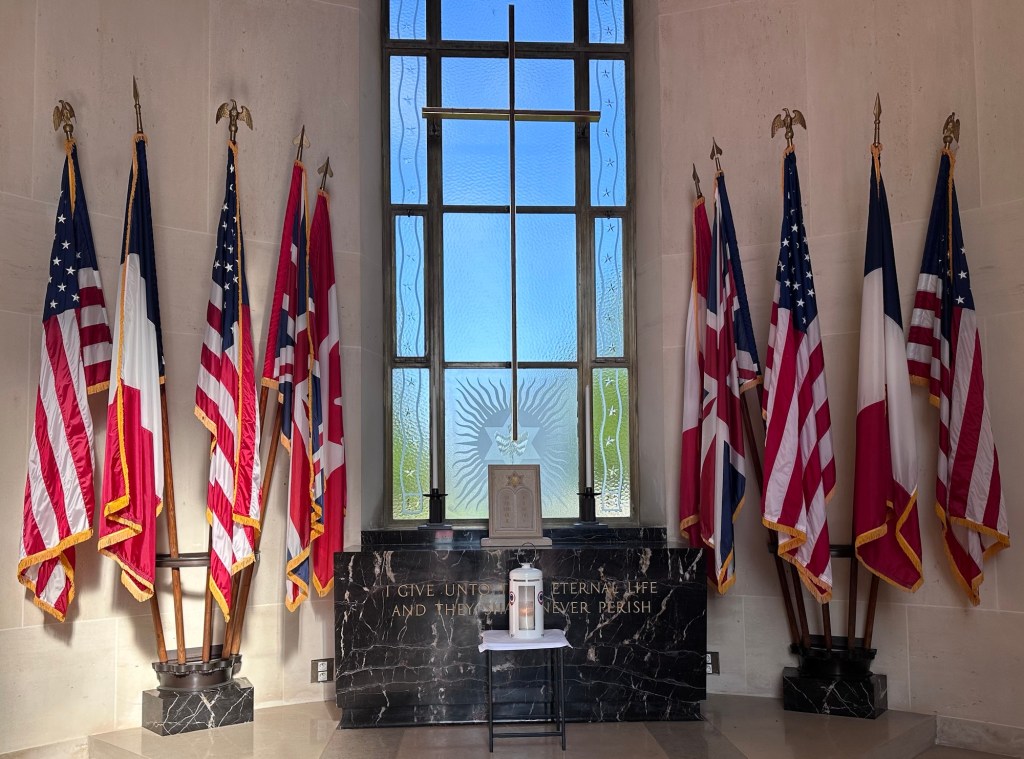
The eternal flame at the cemetery
The weather was perfect during our visit to Omaha Beach. The Allies weren’t as lucky.
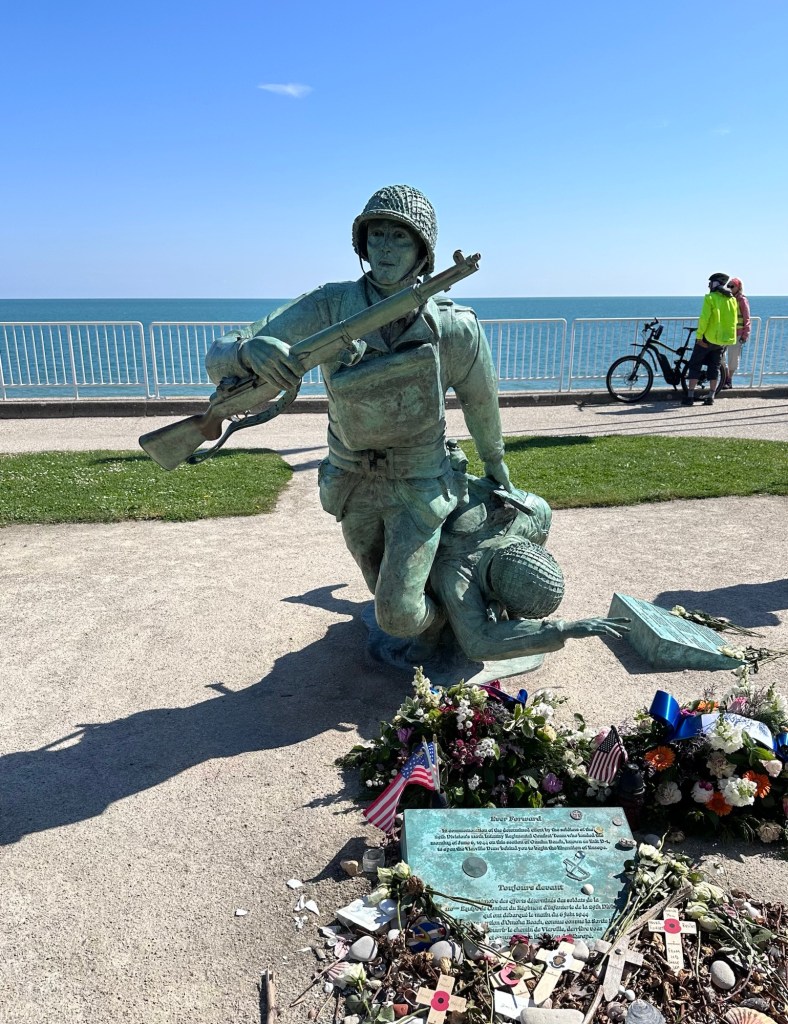
The plan was to have paratroopers and Army Rangers land behind German fortifications when the troops arrived at the beach, but gale force winds blew them off course. Instead they ended up being targets for both enemy and friendly fire.

These are exhibits in the Airborne Museum.

OAT arranged for us to have time with the museum curator, who showed us this violin one of the German soldiers made for the American in charge of the prison camp.

Knowing what goes into making a violin, I was incredulous. Clearly, this skilled woodworker had an excellent relationship with the camp commander, because he was allowed access to sharp instruments that could have served as weapons.

Add this to one of the MANY things I didn’t know before this trip: Germans remained in the POW camps till 1948. Most of the prisoners either stayed in France, and married their French girlfriends or emigrated to the USA.

I’ll end with a happy story. The parachutist shown hanging from the church steeple survived. He was cut down by German soldiers hiding in the church, and held as a hostage so the church wouldn’t be bombed.

No time to proof read, so fingers crossed that my iPhone didn’t make any crazy substitutions.

Fontainbleau

I was totally surprised by how much I am loving OAT’s pre-trip to Fontainebleau and Bayeux. We spend three nights in each place, at centrally located hotels. Both are very walkable, and the best part? Even I haven’t gotten lost!

Obviously, the draw for Fontainebleau is the chateau. One of many royal residences, it is the biggest, with 1,500 VERY ornate rooms spread over three floors. Just about every square inch of the areas open to the public —parts of the first and second floors of the main building — is completely covered with some form of art work.

Check out the chateau’s floor plan: you walk THROUGH each room to get to the next. This was similar to the design of Schonbrunn, the Hapsburg’s summer palace in Vienna. I guess royalty didn’t mind a lack of privacy. Yes, there are huge doors on either side of the room, but think about this: What happens if you need to get to a room, but the door to the room before it is closed? Do you have to go all the way around? Those hallways are really, really LONG!

Take a look at Napoleon’s second wife’s bedroom—Marie Louise, the Austrian princess he married after he dumped Josephine. You see that railing around the bed? No one was allowed inside the railing, without her permission. I guess the doors weren’t enough.

Napoleon’s bedroom was a few rooms down from Marie Louise’s. His was the only one of the MANY beds I saw that had steps along side it. Was the precursor of today’s doggie stairs?

The library was my favorite room.

Are you wondering how people were able to find each other? They didn’t have intercoms or cell phones, which is probably a good thing. I have enough trouble finding mine and I have 1,490 fewer rooms.

One last room before we head outside: the ballroom. Notice the balcony at the back. I’ll bet that’s where the moms sat so they could keep an eye on their daughters. The alcoves, I suspect, was where the ladies sat, waiting to be asked to dance.

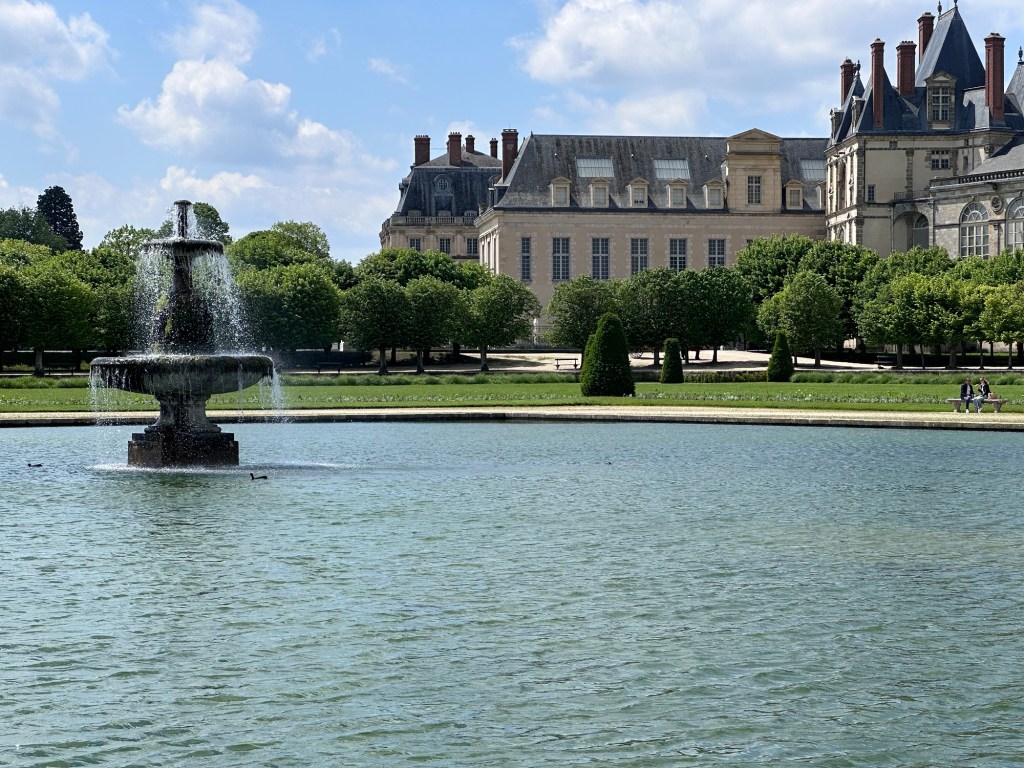
Although the weather report predicted rain, we were unbelievably lucky to have perfect weather, which allowed me to thoroughly enjoy the wonderful grounds surrounding the chateau.

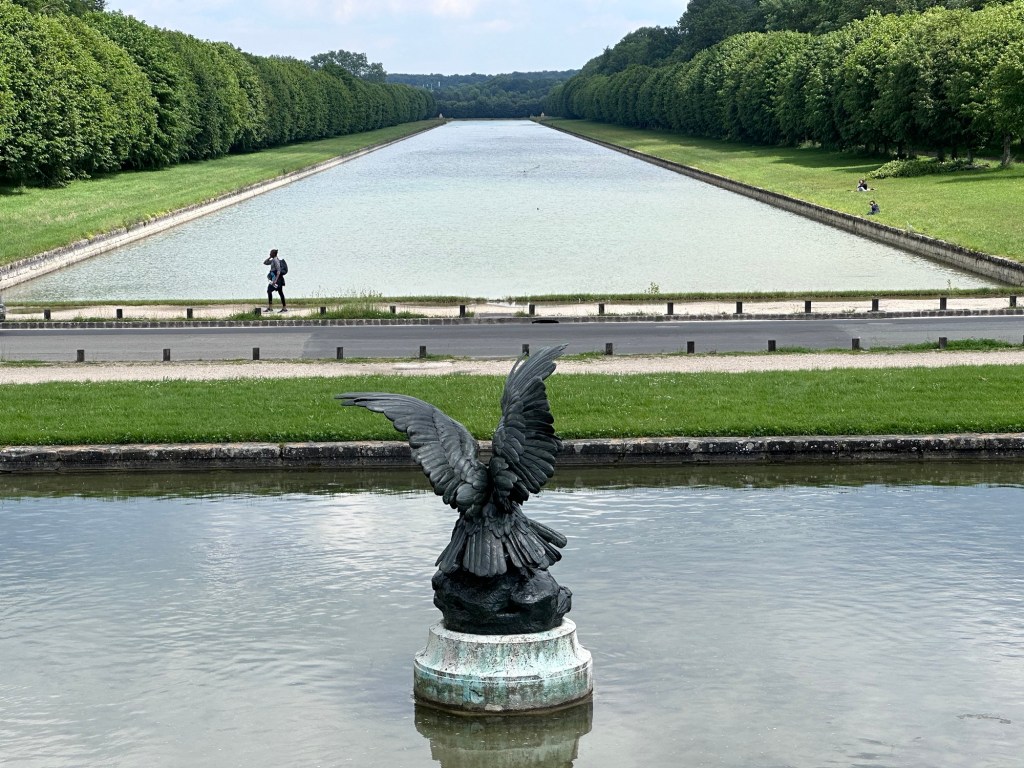
The gardens stretch as far as I could see, until they reach the forest.

After all that opulence and sensory overload, the serenity of the English and French gardens provided a needed respite.

I loved the whimsical statues scattered throughout the gardens.

This, I was told, is a sphinx. It was quite unlike anything I’d seen in Egypt, but our guide explained that the French take inspiration from other countries, then add their own touches.

Garry took the group photo of Marie, Susan, me, Jim and James. Donna and Kathy didn’t join us during our free afternoon.

On the drive to Bayeux, we stopped at Giverny, home of Claude Monet. Like Barbizon, it is a tiny village that art enthusiasts visit. Unlike Barbizon, it was really crowded.

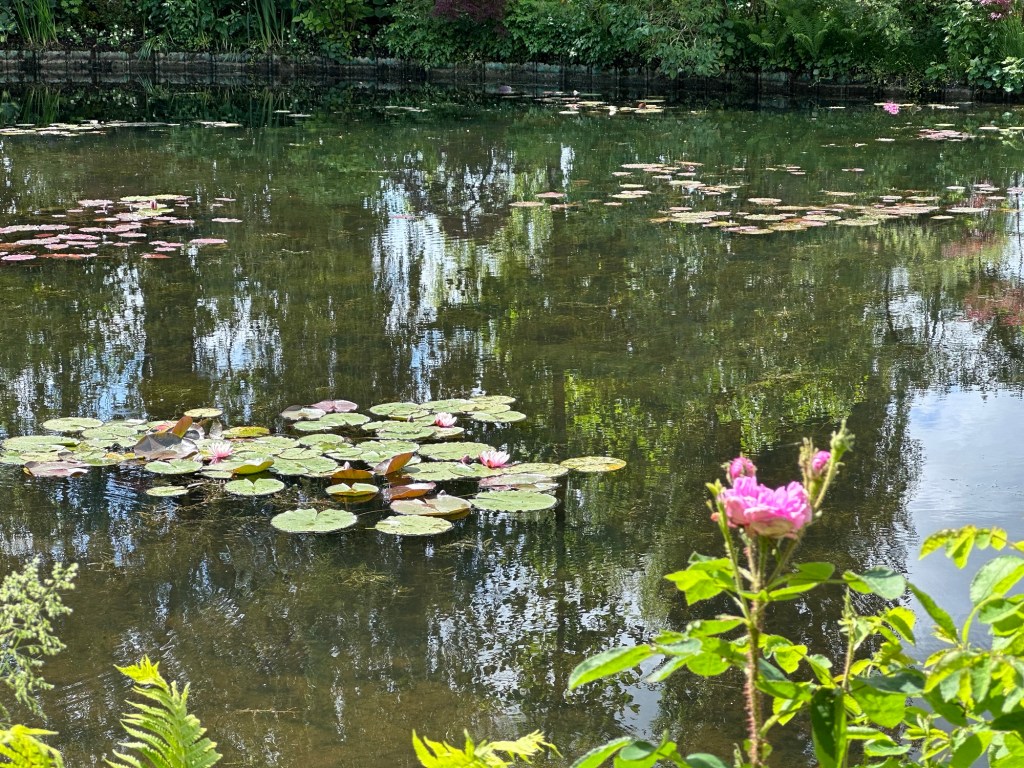
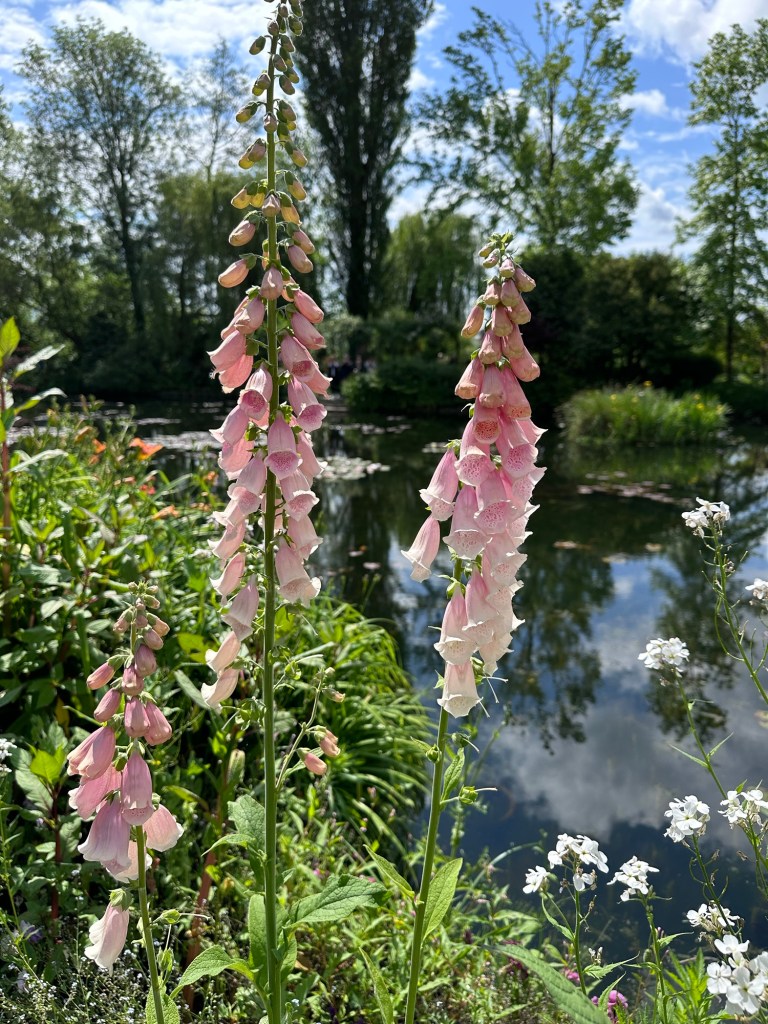
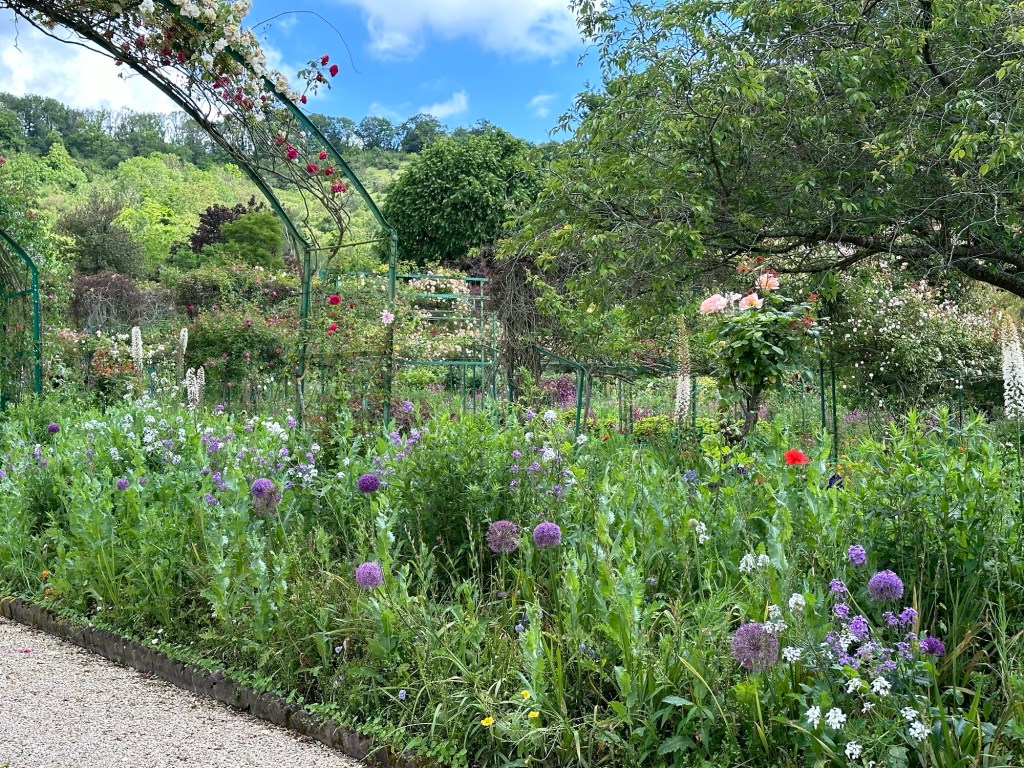
Although it was too early in the season for many water lilies to be in bloom, there were plenty of other gorgeous perennials to enjoy.

It is easy to see where Monet found inspiration for his art.

After enjoying the lily pond and the gardens, we were able to tour Monet’s home.

Like Fontainebleau, the walls were covered with artwork.

For some reason, however, I didn’t find the artwork overwhelming.

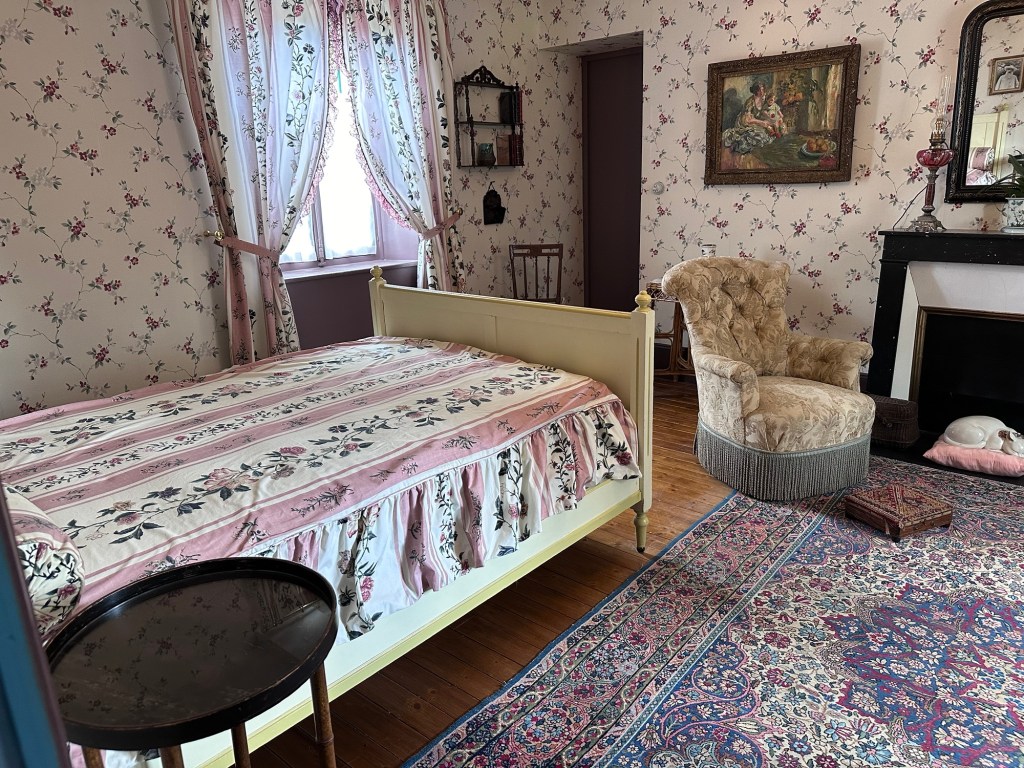
Clearly, I prefer the simple life. I’d much rather wake up in a bedroom like Monet’s than any of the ones I saw in Fontainebleau!

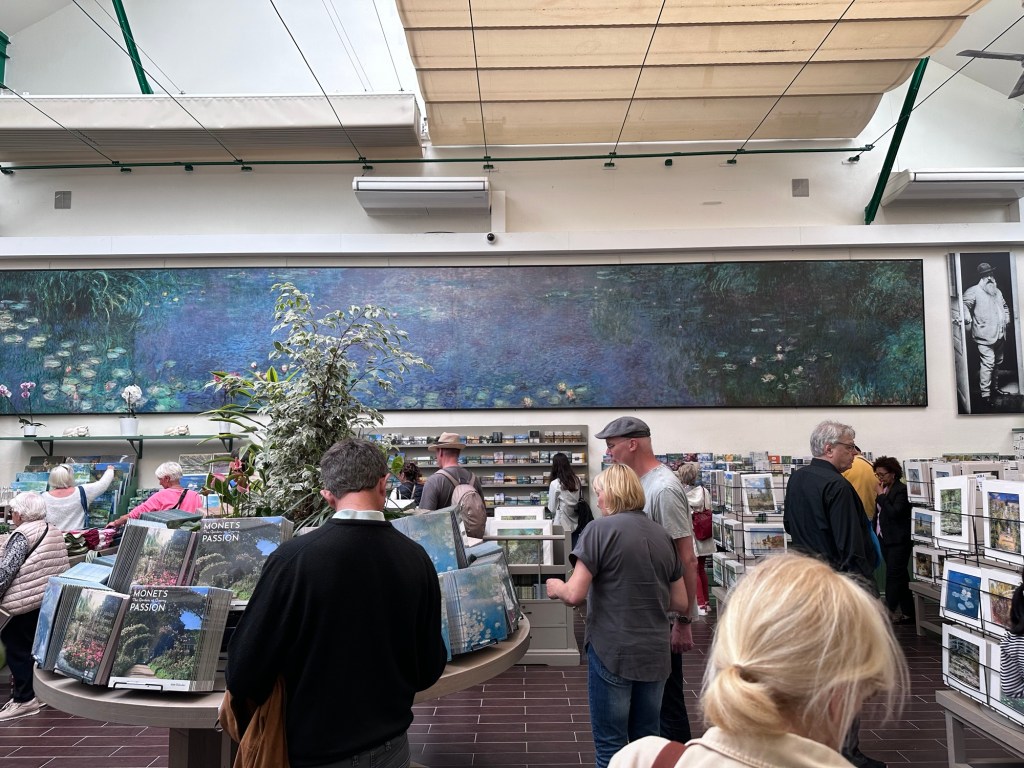
Monet’s studio is now the gift shop. It was huge, with lots of natural light. Reproductions of his water lilies were stretched across two of the walls.

Next post—Bayeux.