Puntarenas, Costa Rica

More sunshine!

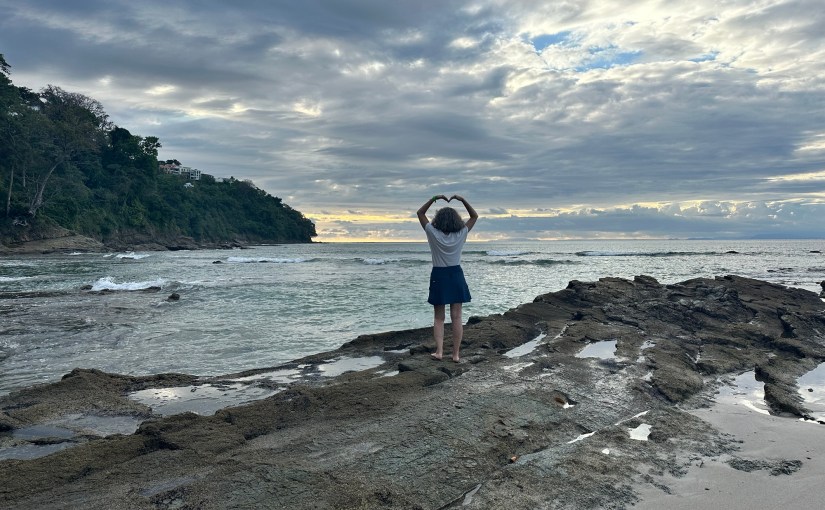
It’s hard to pick a favorite location, but Puntarenas would definitely be high up there on my list.

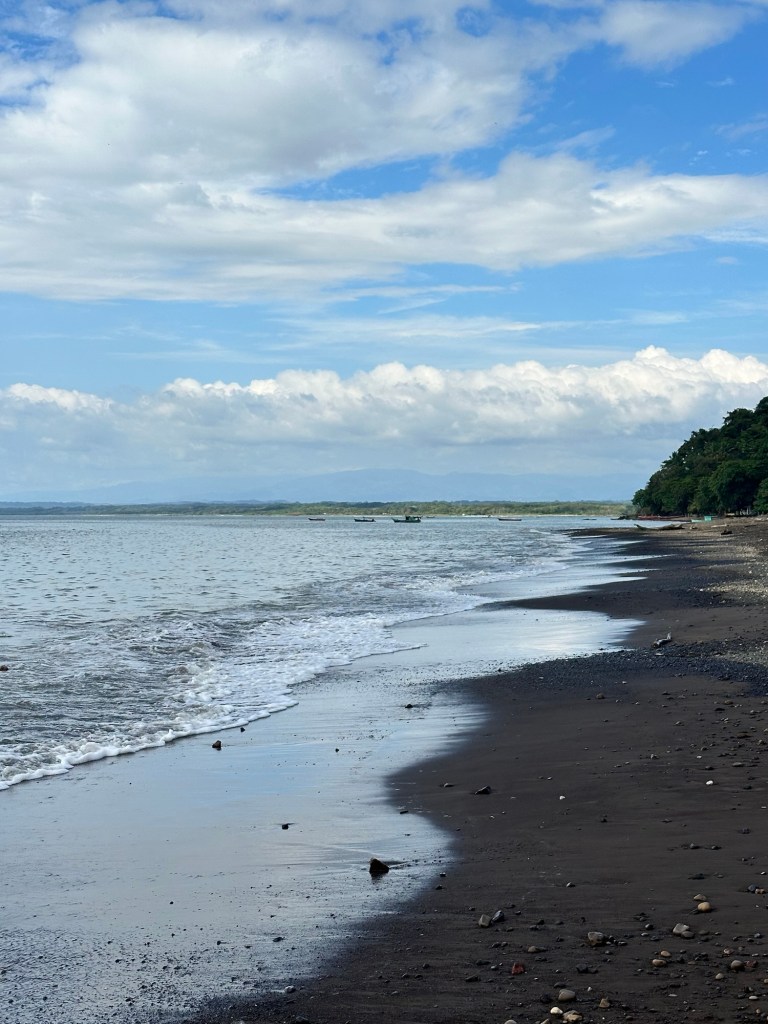
Malo had told us to expect rain when we moved from the Caribbean to the Pacific Coast. Boy, were we delighted that he was so very wrong about the weather. Both days were perfect; not too hot, and just enough sunshine to quickly dry us off after our water activities.

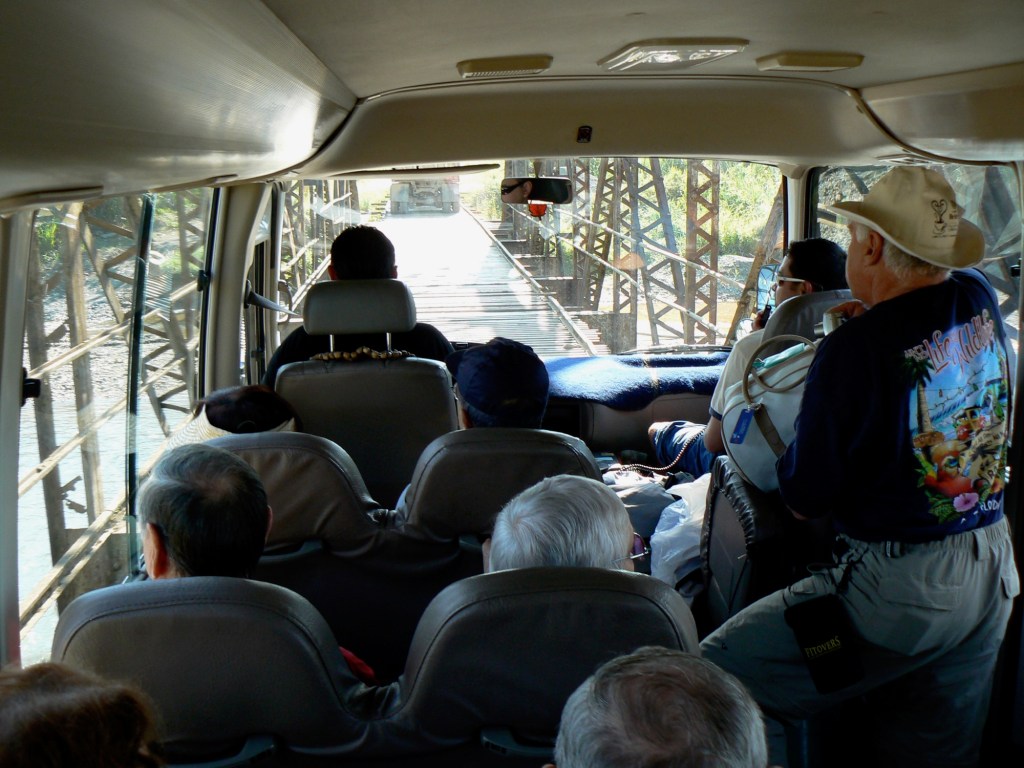
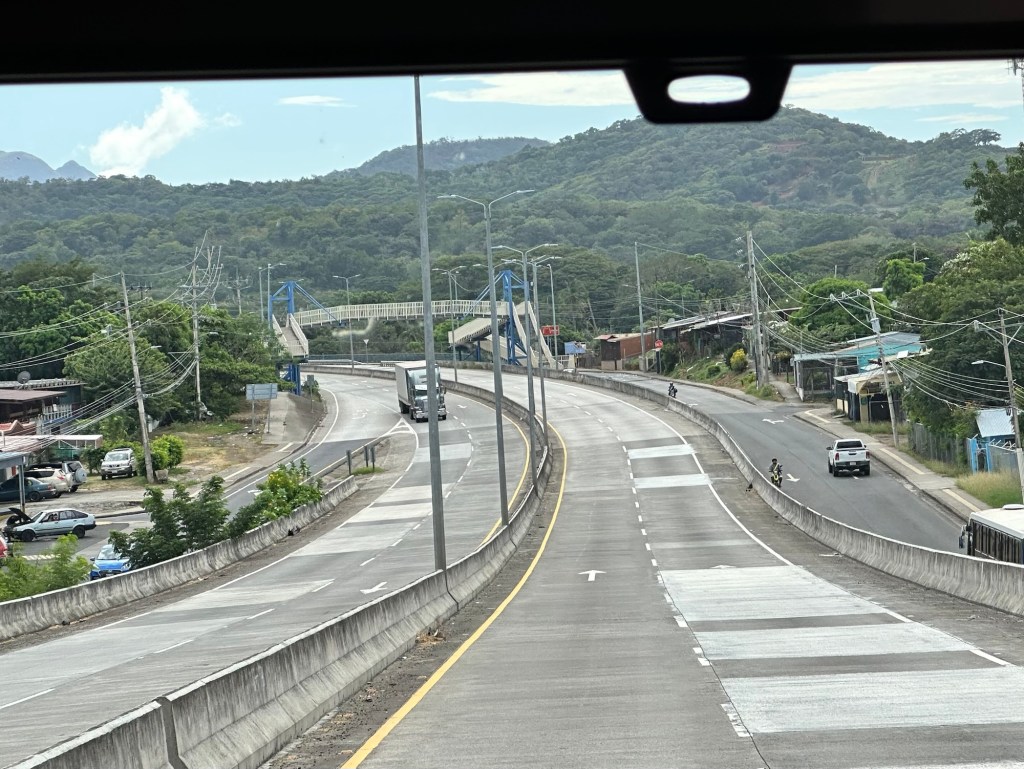
For the drive to Puntarenas, I sat in the front seat. It was truly amazing how much the roads had changed since our first visit in 2007.
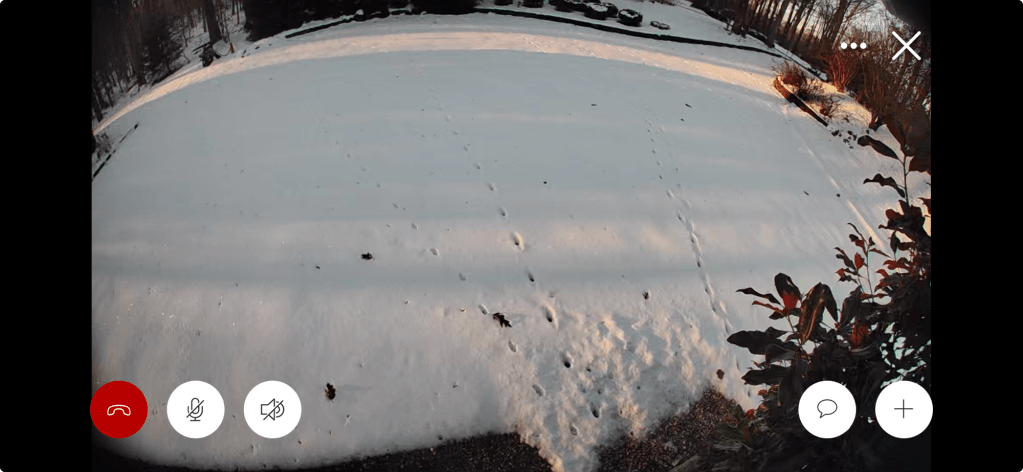
I was even happier to be here when I checked my driveway on the ring camera.
I texted my snow plow guy, who will make sure my driveway is clear by the time I return home. At that point, I may even be ready for some cold weather.

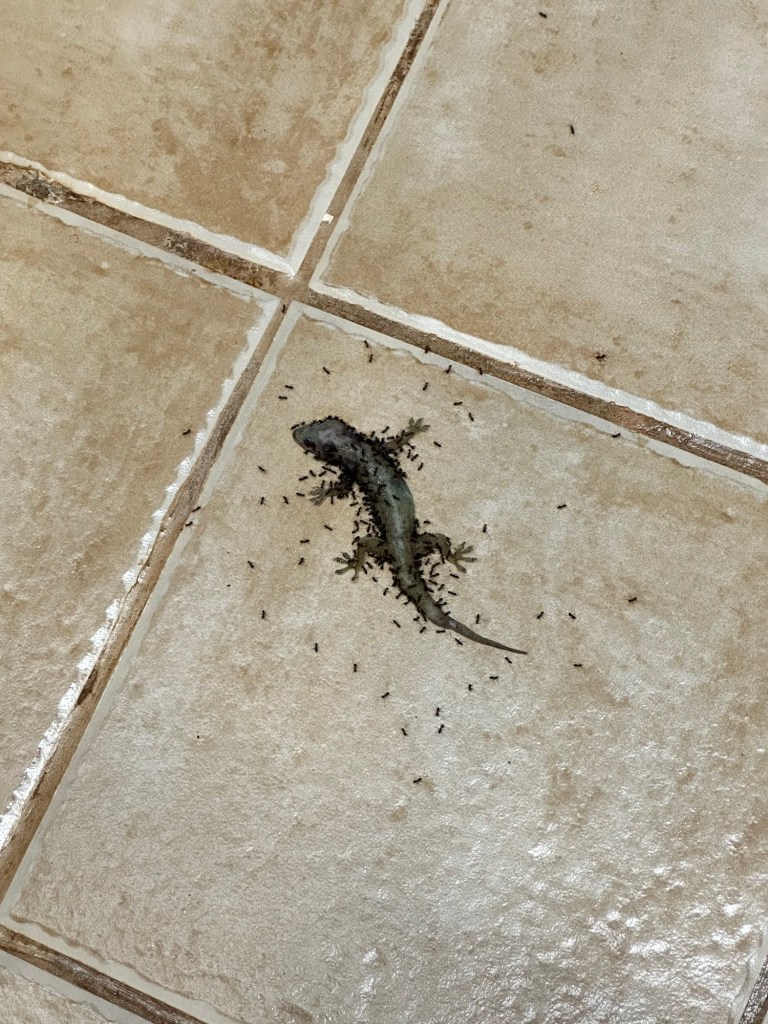
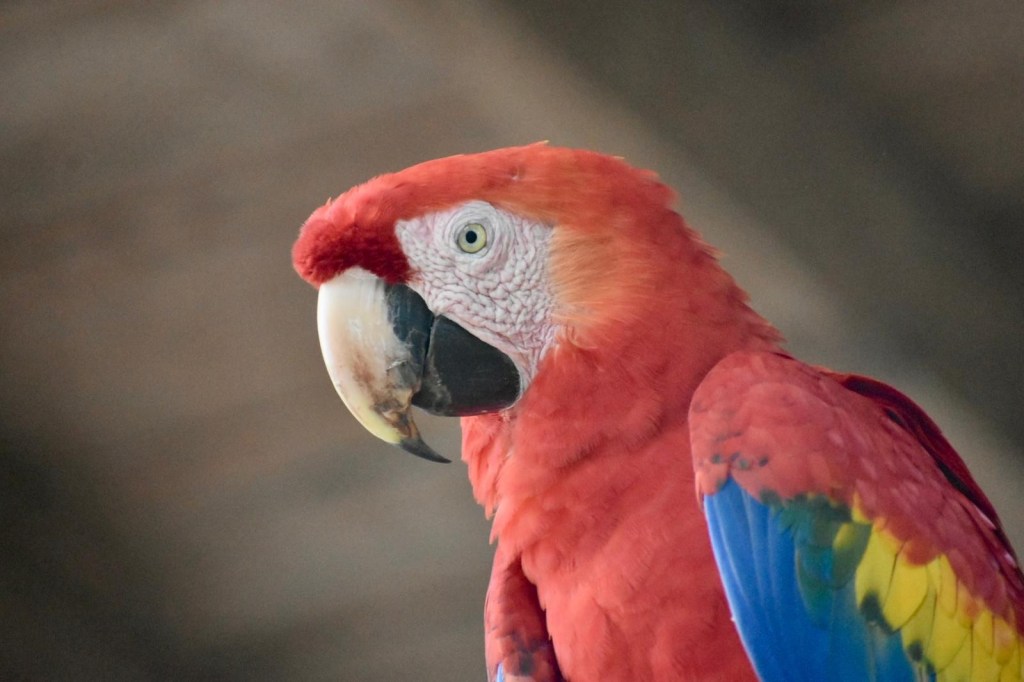
I used to think that traveling by bus would be tedious. That was before, when I had a mind that was partially closed. Now I am able to appreciate how surprisingly wonderful some stops can be. For example, on this bathroom break, we saw an iguana, macaws, and bats.

Malo changed our itinerary, moving Friday’s boat ride on the Tarcoles River to Wednesday afternoon so that we could maximize the probability that we would see birds. And we sure did!

An unexpected bonus? we didn’t need to be on the bus till 9 AM on Friday morning to return to San Jose.

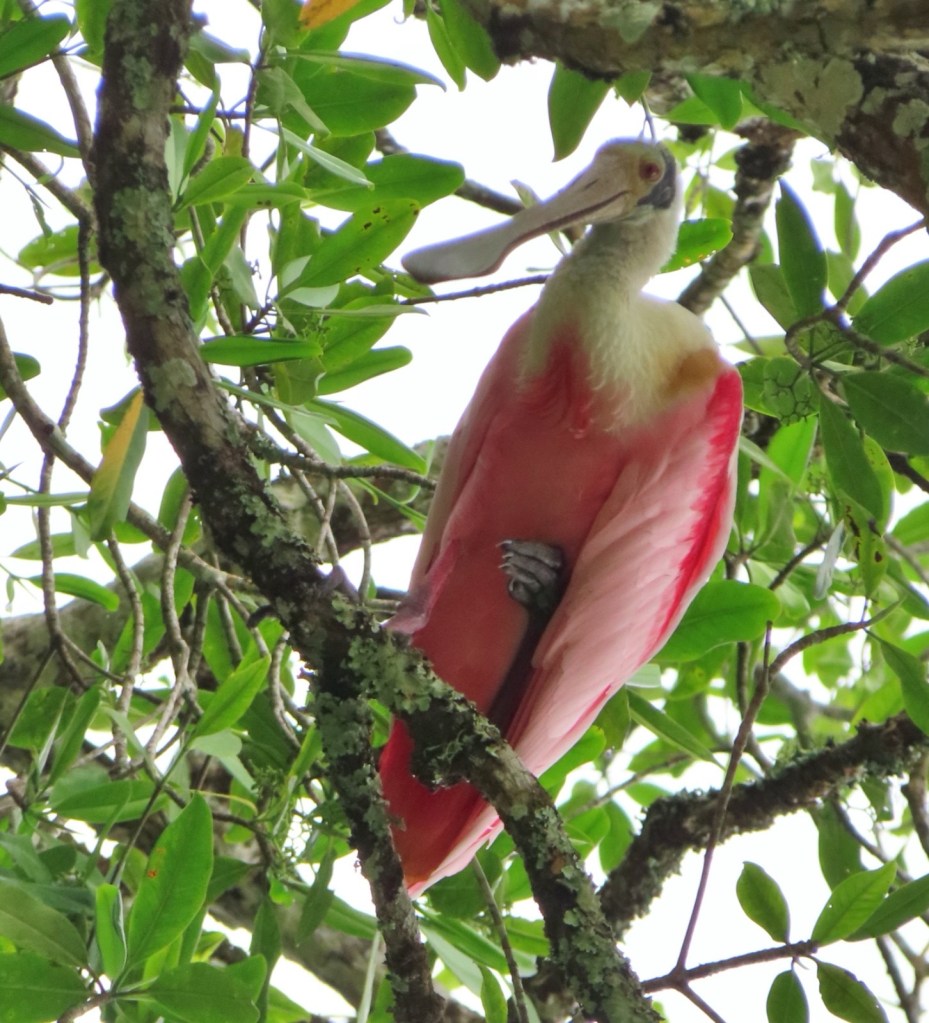
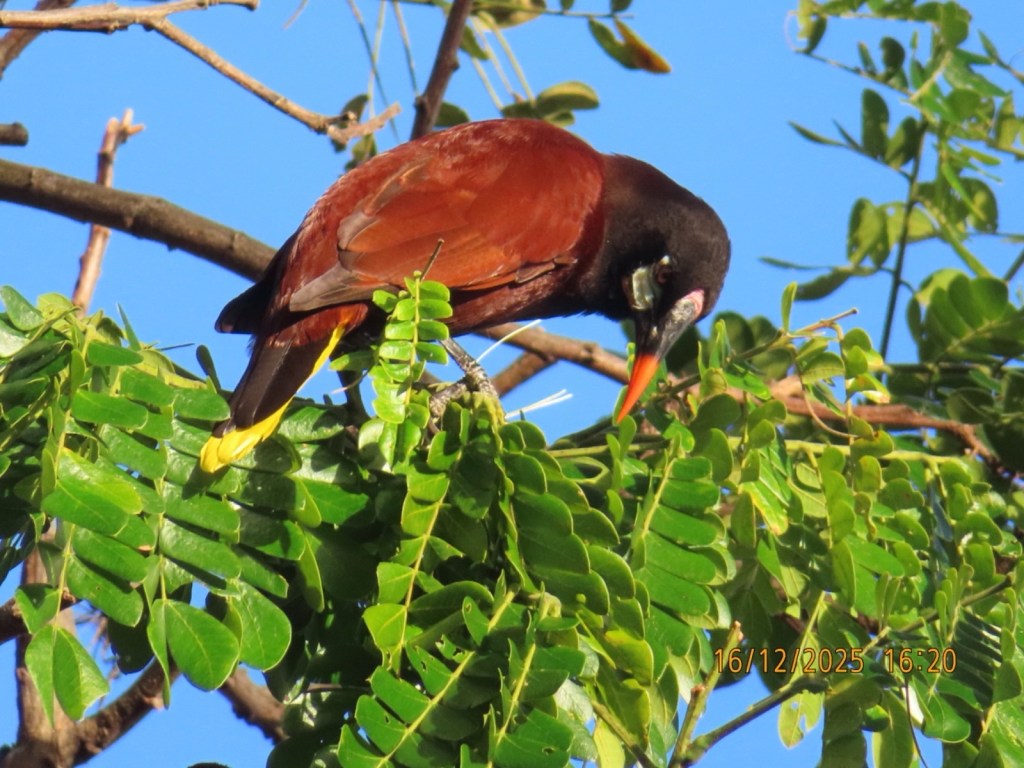
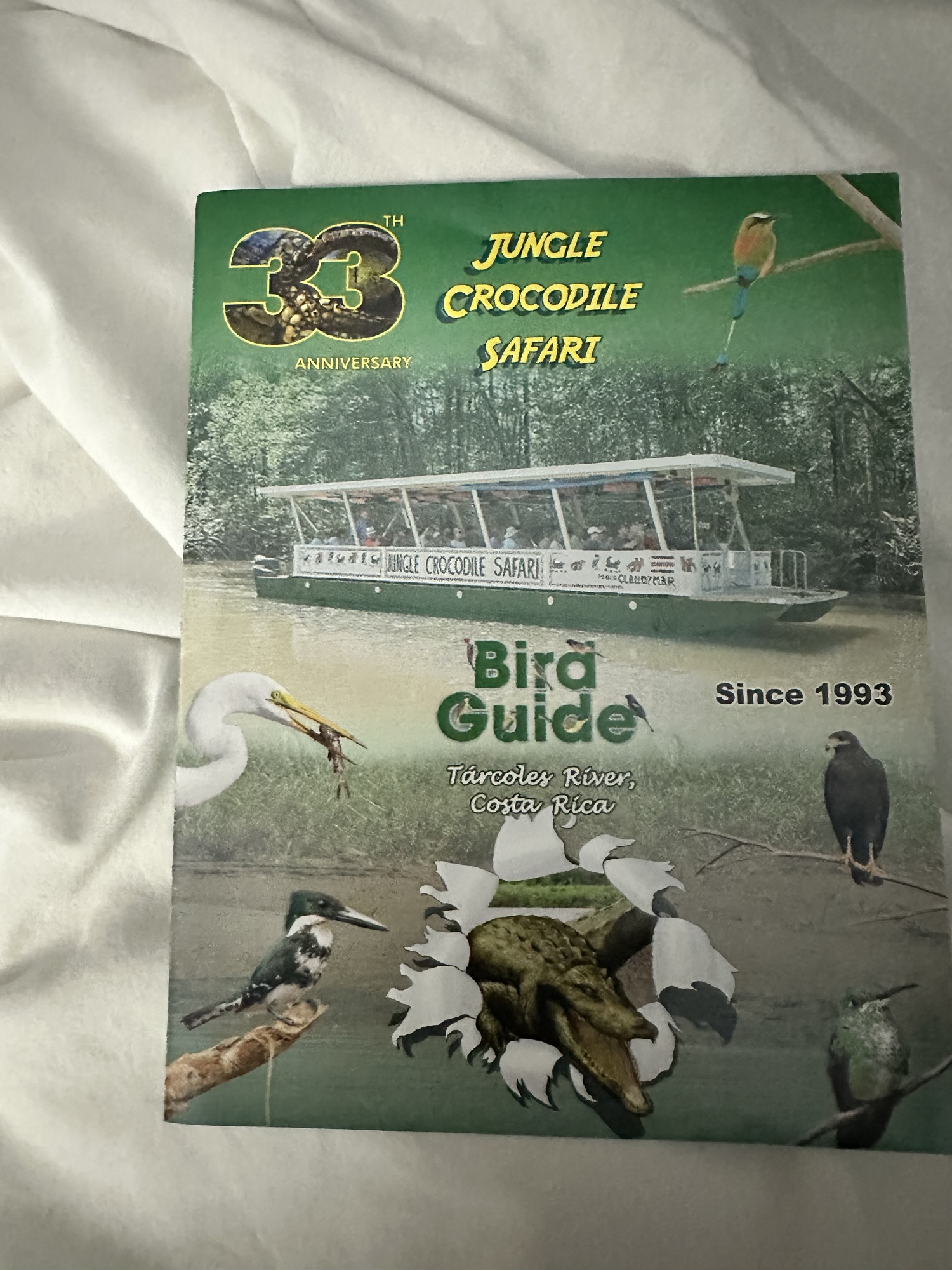
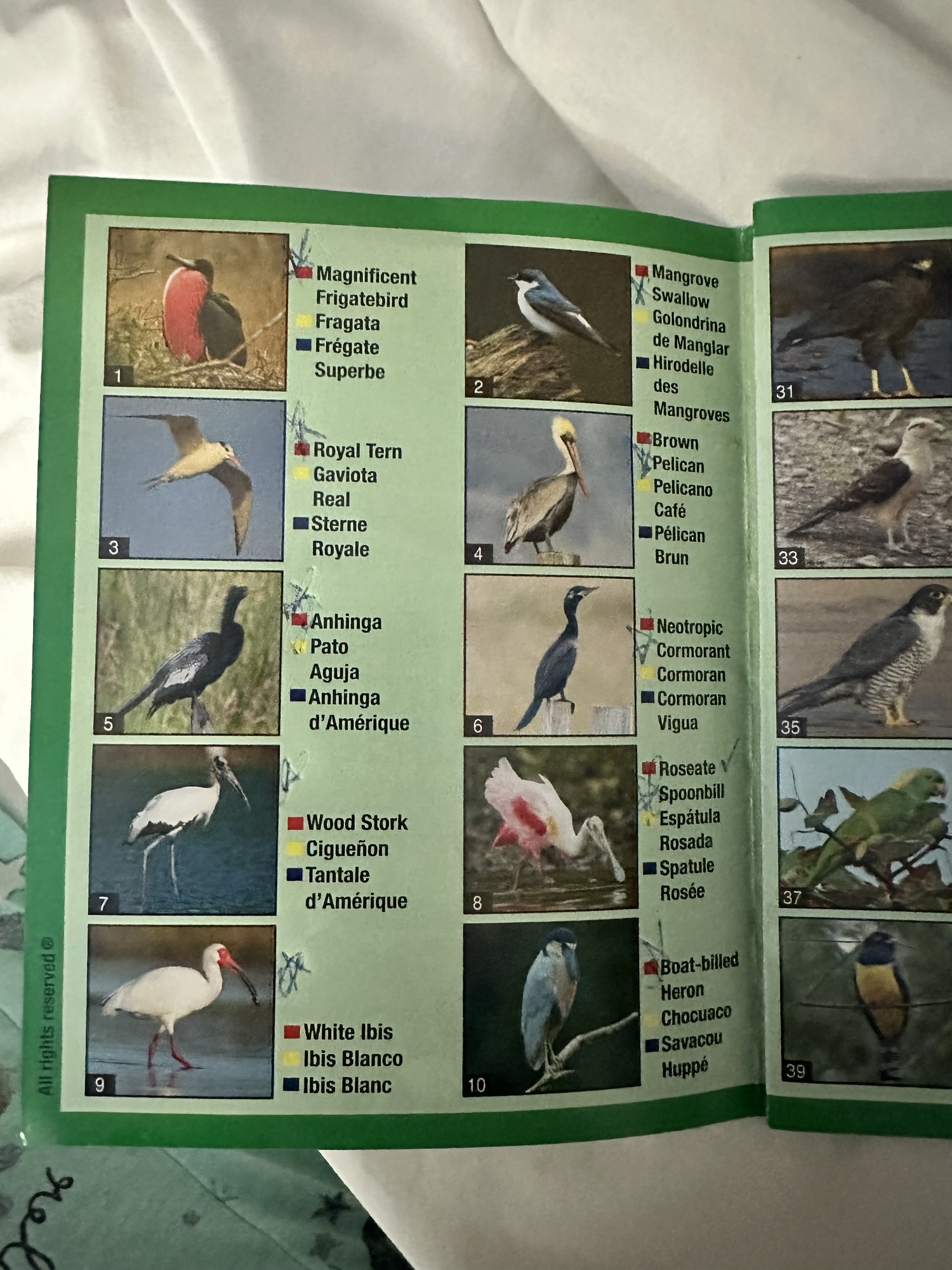
These are just a few of the birds along our “jungle cruise”. Mike and I took the very same cruise in 2007, which is when I took this photo with my Panasonic LUMIX.
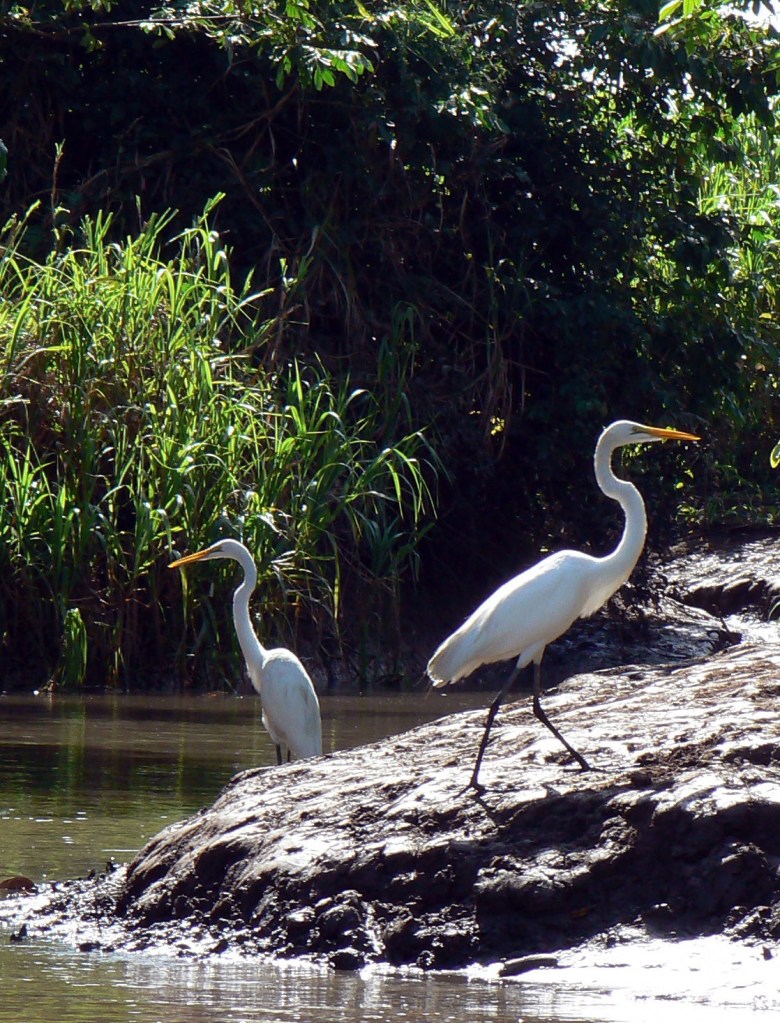
At one time or another, we spotted most of the 60 birds pictured in the guide we were given. How very lucky were we! Of course, Malo had a lot to do with our “luck”. The reason he modified our itinerary was to choose a time when the tides were at the optimum level for viewing wildlife.
Phil and Malo took great photos so I was able to gaze at the birds thru my binoculars, knowing that one, or both of them, would capture the moment.
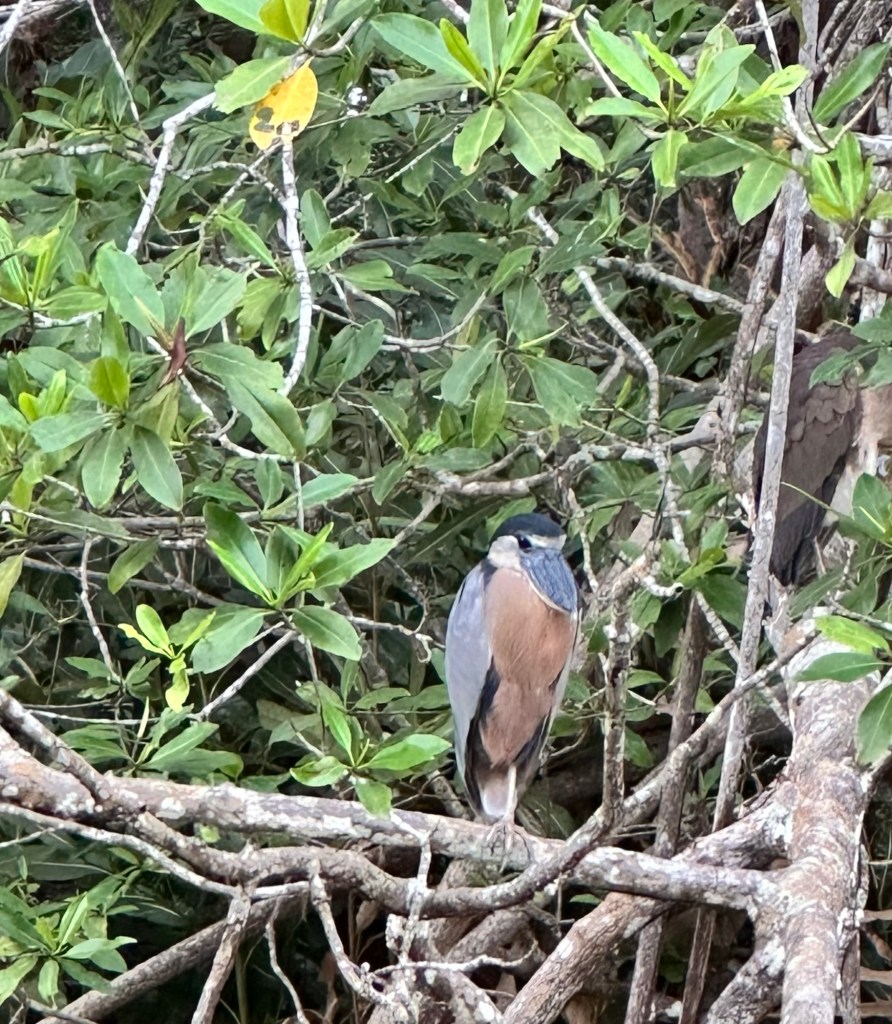
It’s pretty clear why I preferred their photos to mine, although I DO like this video that I took.
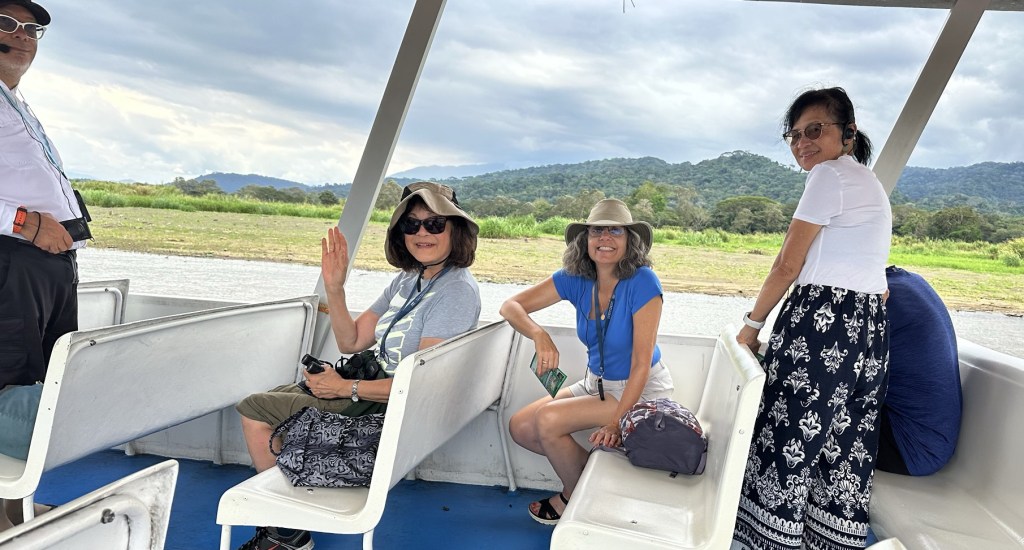
Jolene, Marianne and Lee Fah

But wait…there’s more! Our second day in this heaven on earth was jam packed with adventures.

We started by rowing our outrigger canoes to Limoncito Beach,
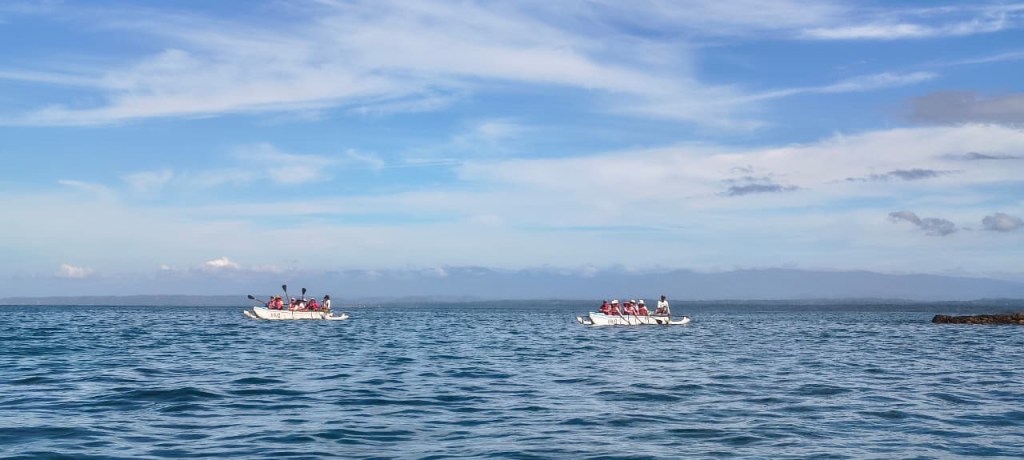
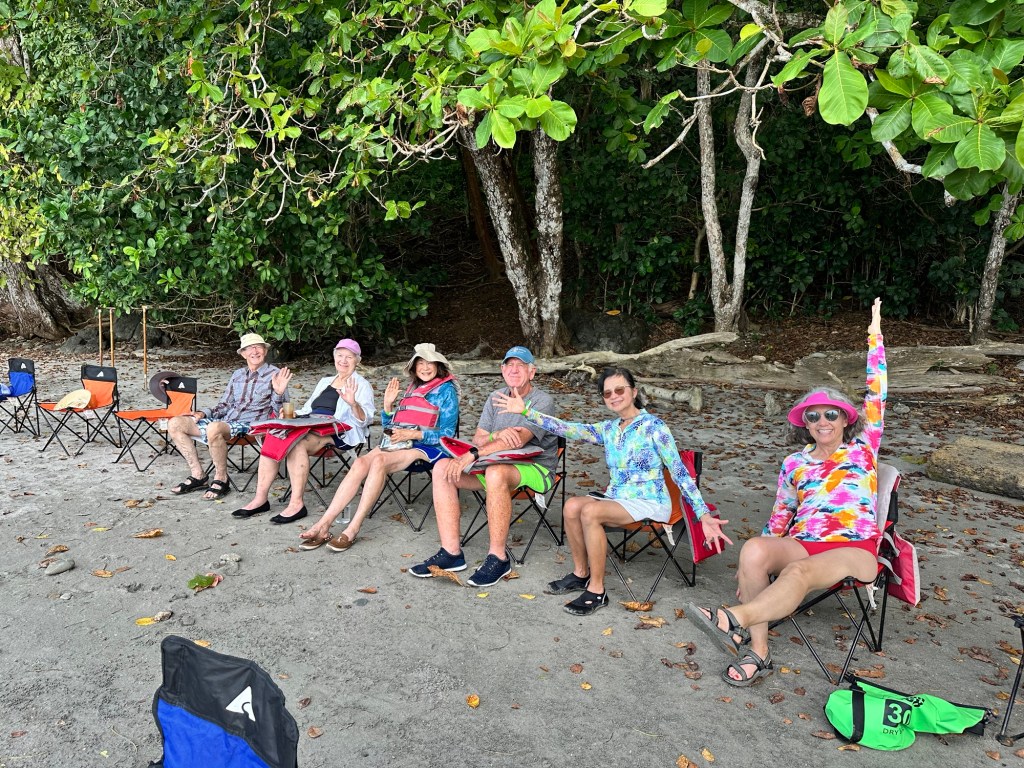
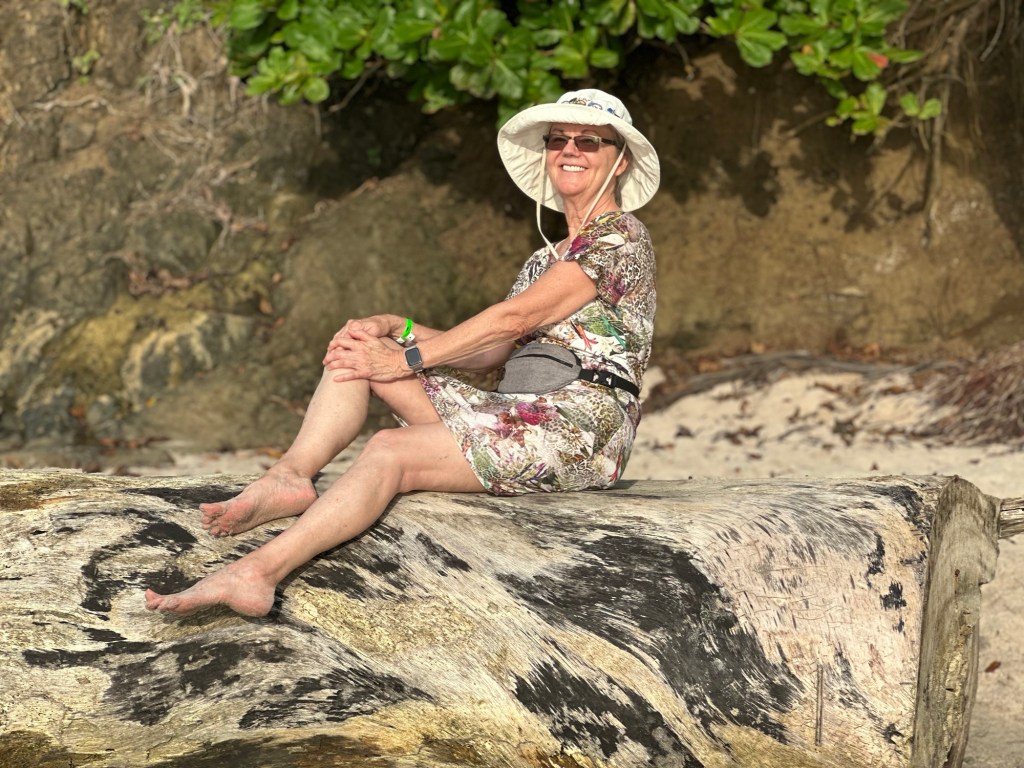
where we were able to splash around in the warm water, snorkel and enjoy lunch on the pristine beach
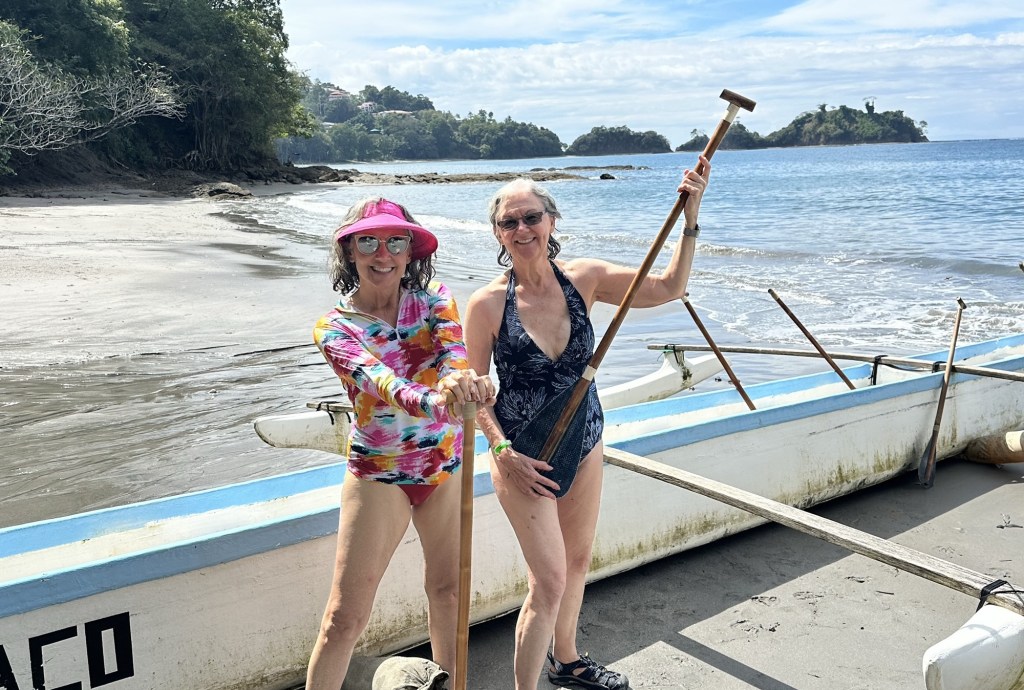
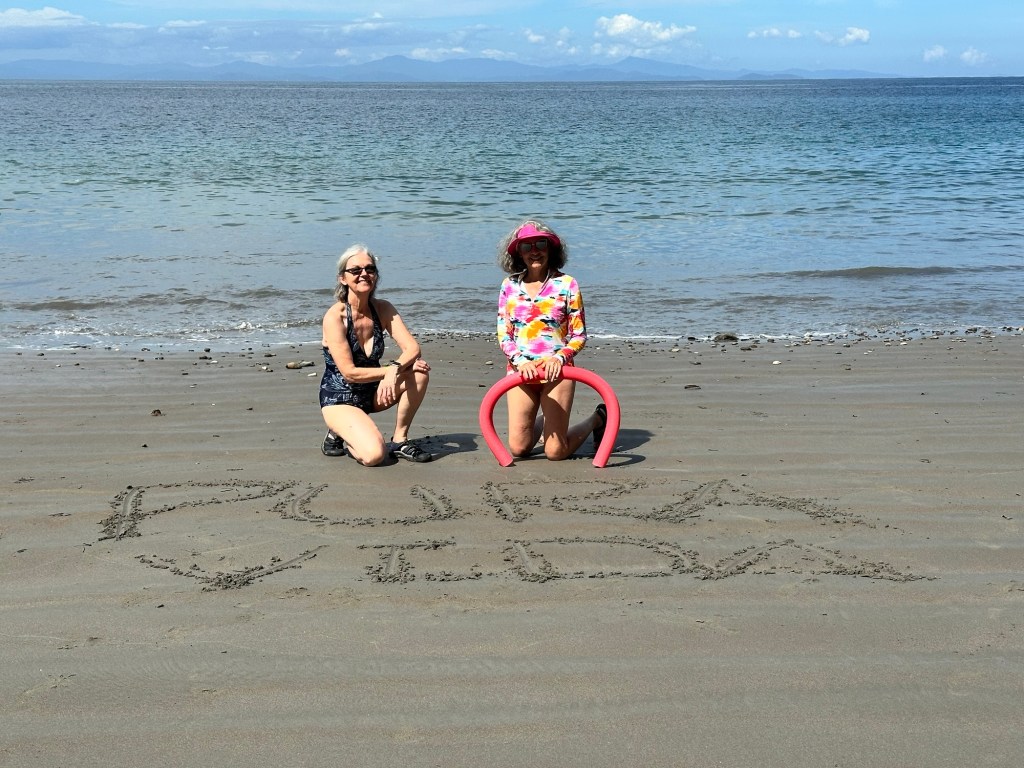
Our guides provided EVERYTHING! Lunch, chairs, snorkeling equipment, noodles. They even took photos of each of us.

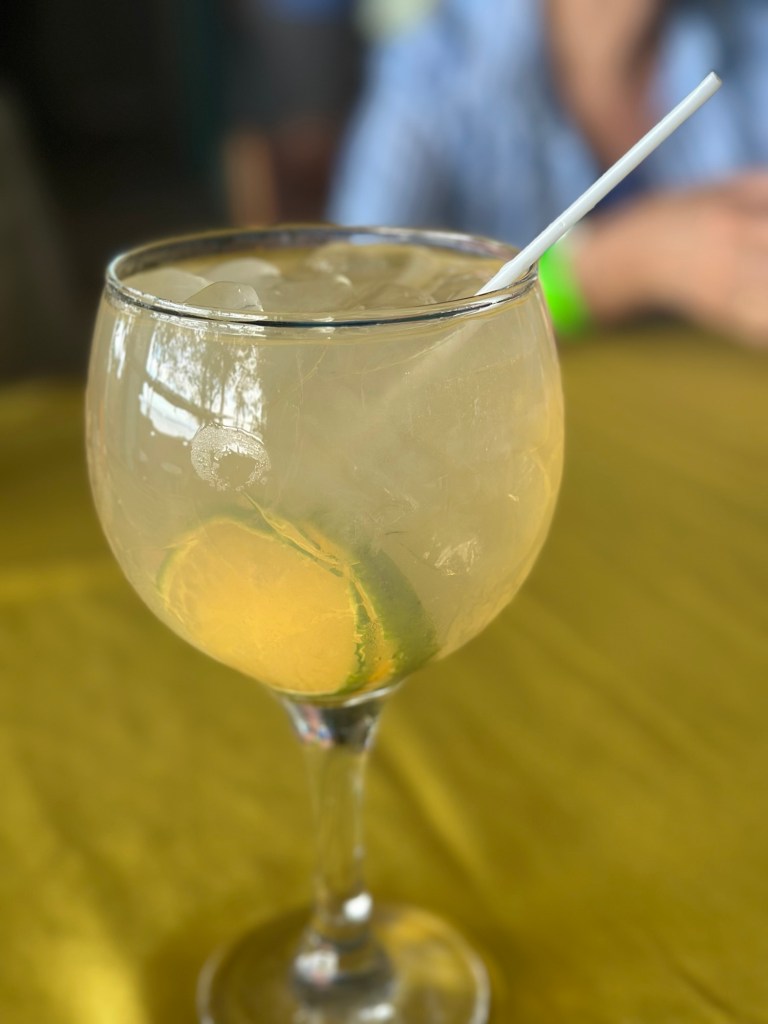
After we returned to Agujas Beach, Malo took us to the local bar, where he treated us to Chiliguaro, a local concoction consisting of moonshine, chilies and sugar cane. Did we like it? Well, you be the judge.

But wait…there is still more!

After fortifying ourselves with what could pass as a gin and something that slightly resembled tonic,
Marianne and I got the bright idea to walk (stumble) to Playa Blanca. We were soon joined by Cindy and Edwin, who were usually up for anything. Luckily the shuttle stopped to pick us up before we got to the steep part.
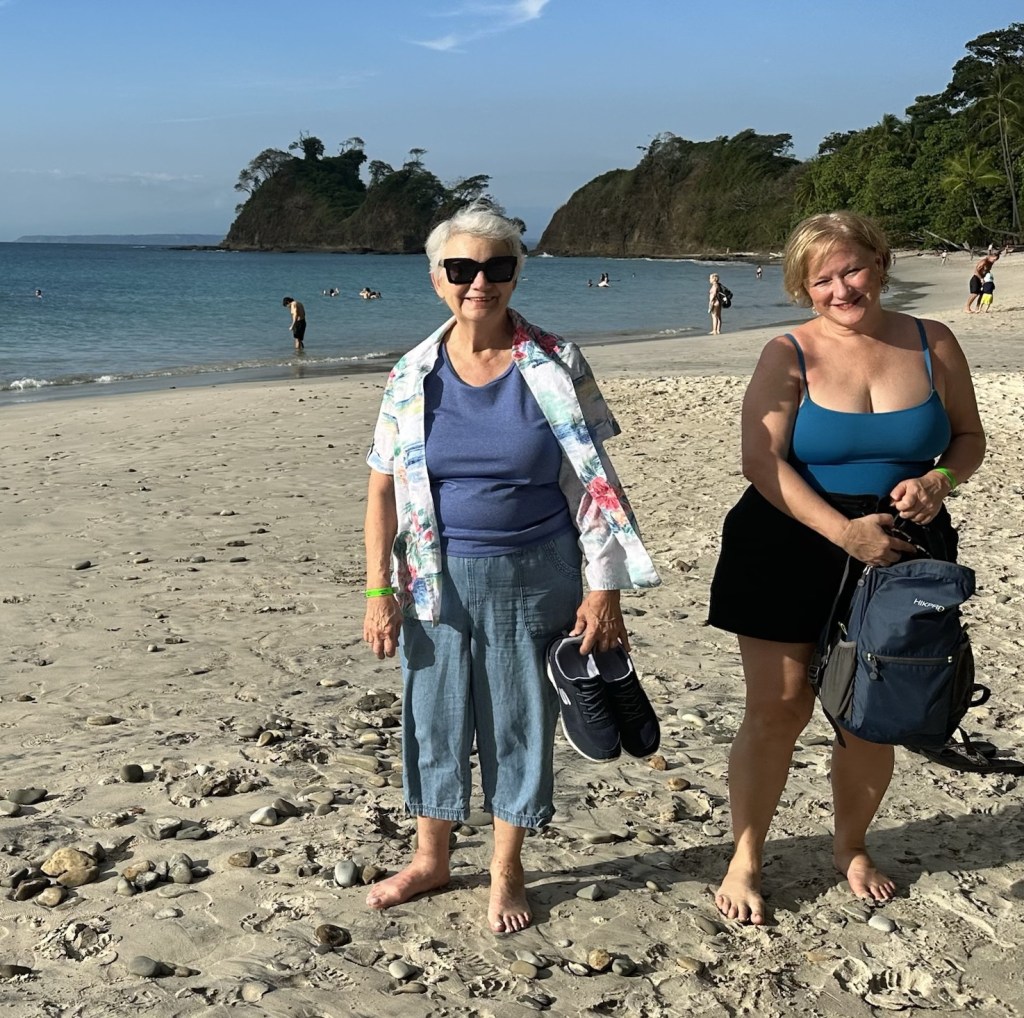
Edwin, our translator, comedian, and overall great guy!
Photo by my buddy, Marianne.

While on the beach, we were entertained by the capuchin monkeys. I wasn’t fast enough to get a video of one while he was stealing food. Man, they are FAST!

The shuttle stops running at 5, so we decided to grab the 4:30 one, to be able to make a final stop before heading to dinner. That’s where we found Mike and Jo-Lynne,

who responded to Edwin’s many personal and pretty hilarious questions about their relationship. The 6 of us going on the post trip to Tortuguero will definitely miss the 7 that will be returning home at the end of the main trip tomorrow.

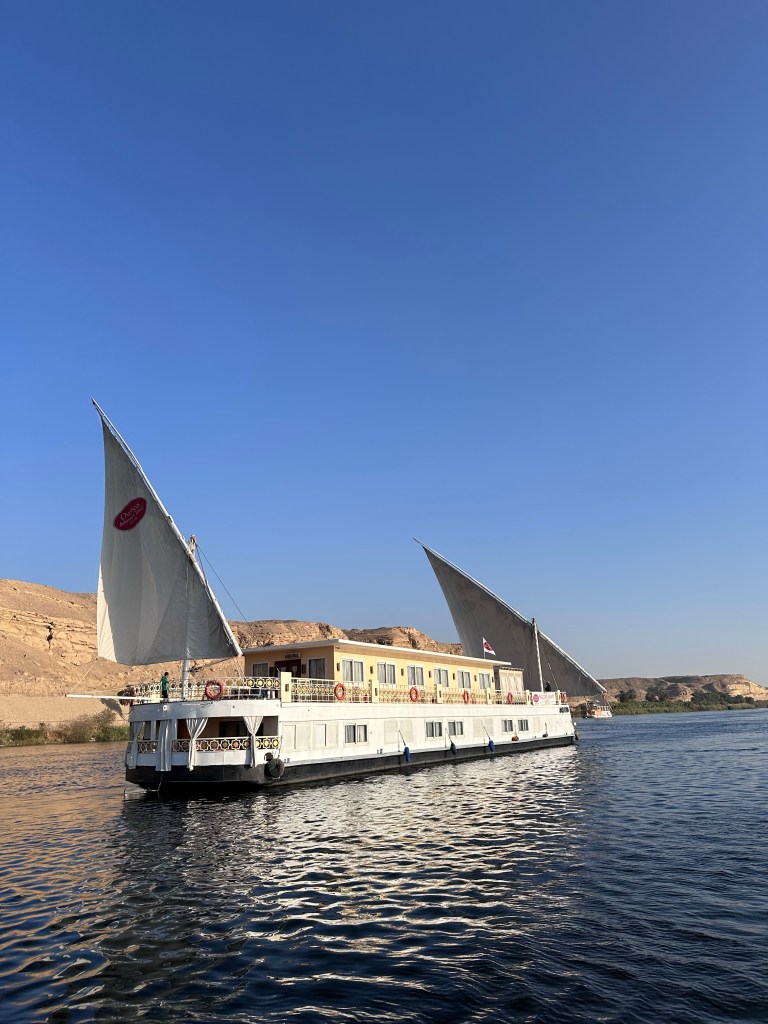
Floating on the Nile for Five Glorious nights

I felt like Egyptian royalty, floating up the Nile in our private dahabiya. It’s mind boggling to think that the pharaohs used this mode of transportation centuries ago, when they traveled between their two capitals. Memphis no longer exists, but Thebes still does, except the Greeks changed its name to Luxor.

The dahabiya is certainly is a very comfortable way to travel. Of course, the pharaohs took months to make their journeys, stopping to visit temples along the way. We also are visiting temples, but our river trip only lasts five days.

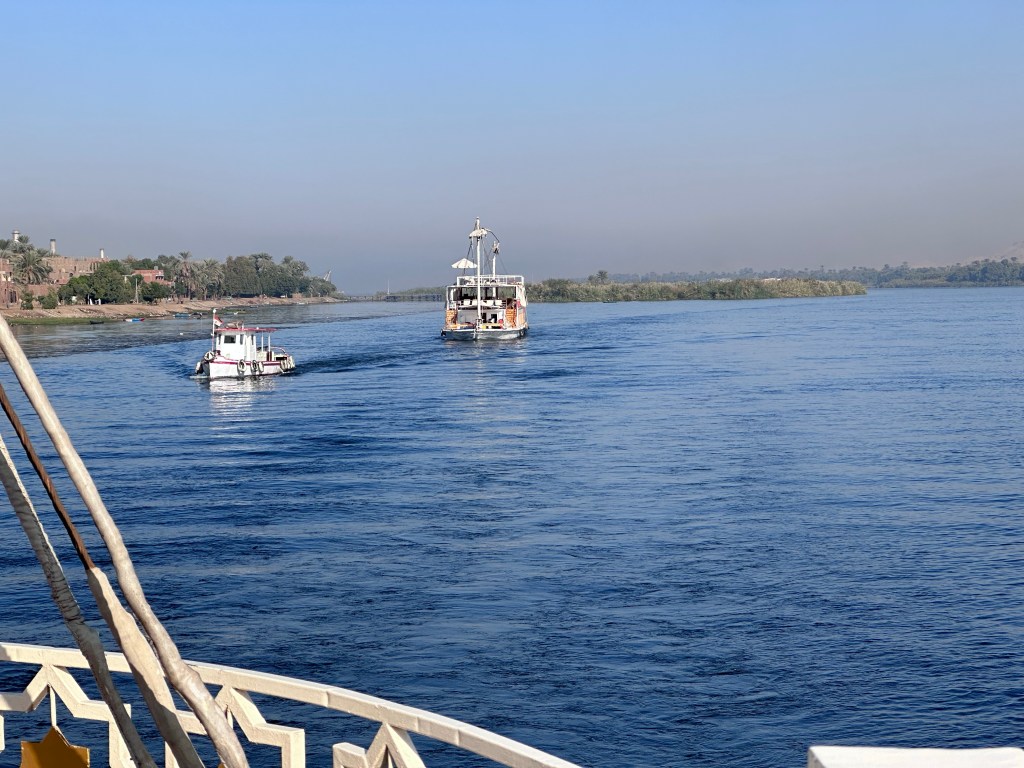
Although the sails of our boat were unfurled, it was strictly for a photo op. The photo above was taken from the tugboat that pulled us upstream. It is illegal for dahabiyas to have motors because the Egyptian government wants to preserve this ancient mode of transportation. I’m glad they didn’t insist that the tugboat be replaced by a rowboat!

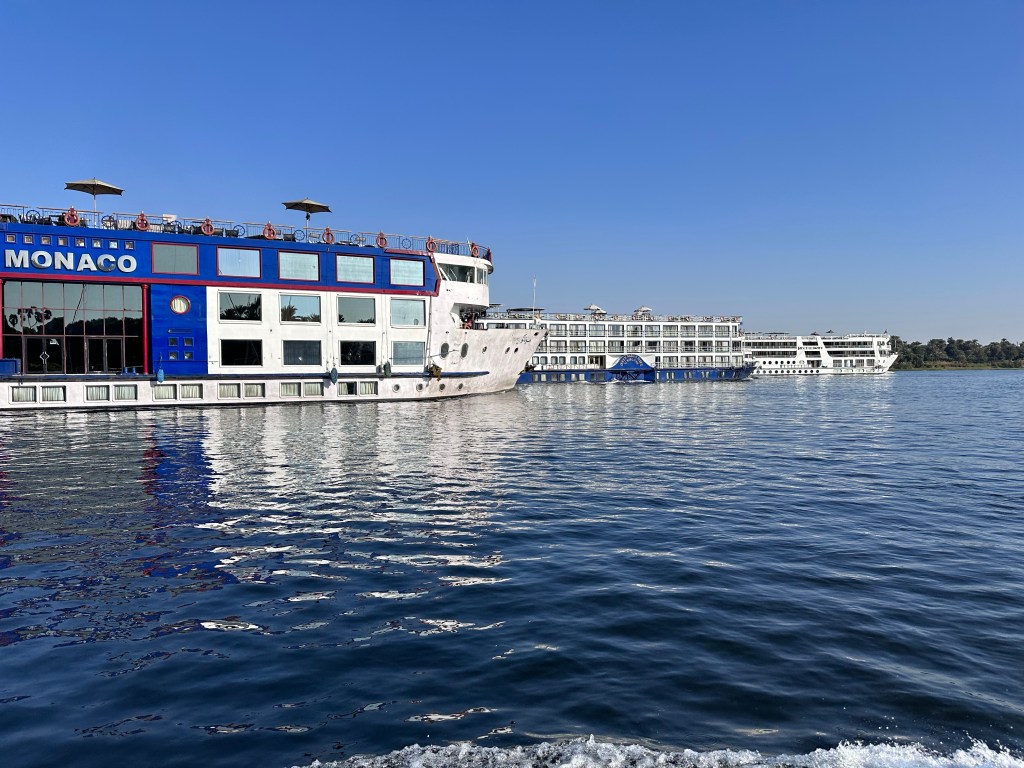
To show you what that looks like, I took the photo below from the back of our dahabiya. The larger boats, and we saw many of them on the river, are allowed to have motors.

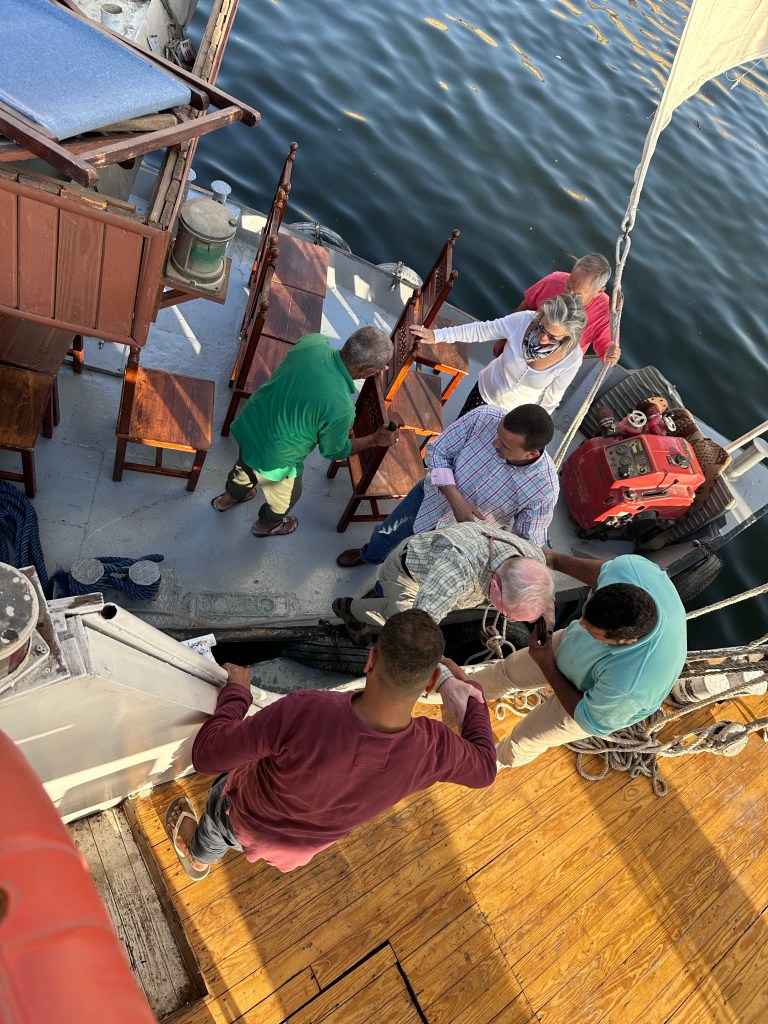
We had lots of help climbing from the tug back onto our dahabiya

The Nile starts in Lake Victoria, and flows into the Mediterranean. That means when we travel south, we are going up the river, the opposite of what we are used to. Back in the day, the southern part of Egypt was known as the Upper Kingdom, with the Lower Kingdom extending to the shores of the Mediterranean.

To visit the temples, we had to disembark and when we did it felt like we were walking the gauntlet. The street vendors were laying in wait. “Hey lady, only $5”,or “Welcome to Alaska” which we heard at multiple sites. I didn’t dare take a photo of the chaotic scene. Instead, I focused on walking quickly, avoiding eye contact. It was difficult. I felt I was being rude by ignoring their greetings. After being bamboozled once however, I toughen up.

Was it worth it? Yes! The temples were an oasis of serenity and peace. Although we saw other, larger ships on the Nile, we were the only ones visiting the small temple of Khnum in Esna. Mohammed, our guide, knew the schedule well enough to plan our arrival after the larger ships had departed and before the afternoon ones arrived.

.

We were able to watch centuries of dirt and muck being cleaned from the temple walls. Mohamed told us that only recently have women been allowed to do restoration work.

Yes, the Sistine chapel’s ceiling is a masterpiece, but the ceilings of Egyptian temples are equally breathtaking. Not only that, but they were painted centuries earlier.

If you were standing below, looking up, this is what you would see. Check out the tops of the columns. Each one is different. It’s difficult to see in the photo, but the hieroglyphics between the columns are depicting the various phases of the moon, something my astronomer husband would have greatly enjoyed.

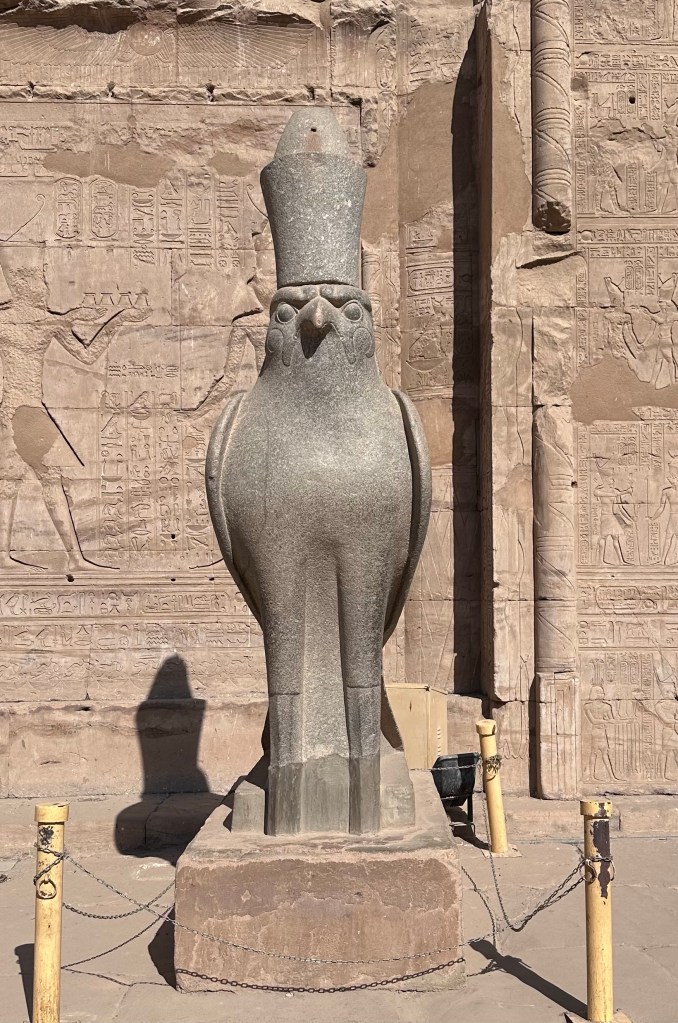
The next day’s temple was in Edfu. It is dedicated to Horus, the son of Isis and Osiris. Horus’ parents were both brother and sister and husband and wife, which might explain why their offspring had the head of a falcon. Sometimes, as in the statue below, he’s depicted as all bird, but on the temple walls, the carvings show him with a human body.

Horus, outside his temple’s inter sanctuary. His angry look was designed to keep the common folk out of the sacred spaces. On his head are the crowns of Egypt’s upper and lower kingdoms

Like medieval churches, the temple walls are used to tell a story. Here’s the Cliff Notes version of a rather long legend. Osiris was killed by his jealous brother Seth, who chopped him up and scattered the pieces all over Egypt, but Isis found the pieces and (unlike Humpty Dumpty) put Osiris back together again, except for one key piece—his most prized possession. (I hope I don’t have to spell it out for you. ) Anyway, Horus was determined to get revenge for his uncle’s dastardly deed. The two of them fought an epic battle. Although Horus won, during the battle he lost one eye, which then magically came to life. To this day, Horus’ eye is a symbol of healing and well-being.

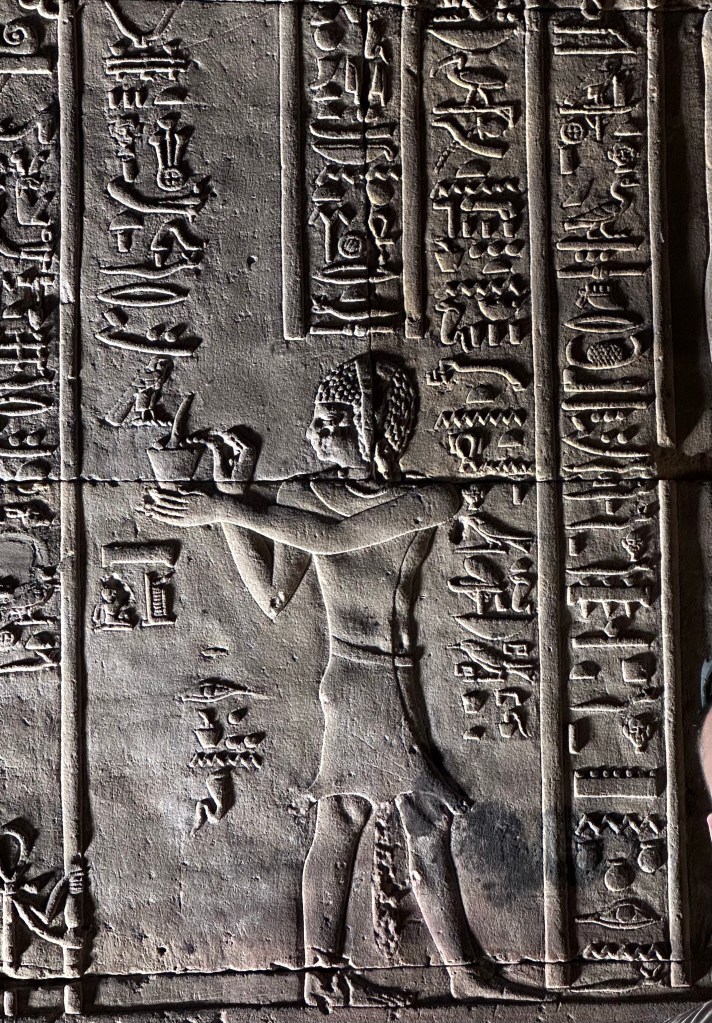
Our guide claims the following wall carving represents incense being burned. The ladies in the group decided it was actually Osiris’ missing member. You decide who had the better interpretation.

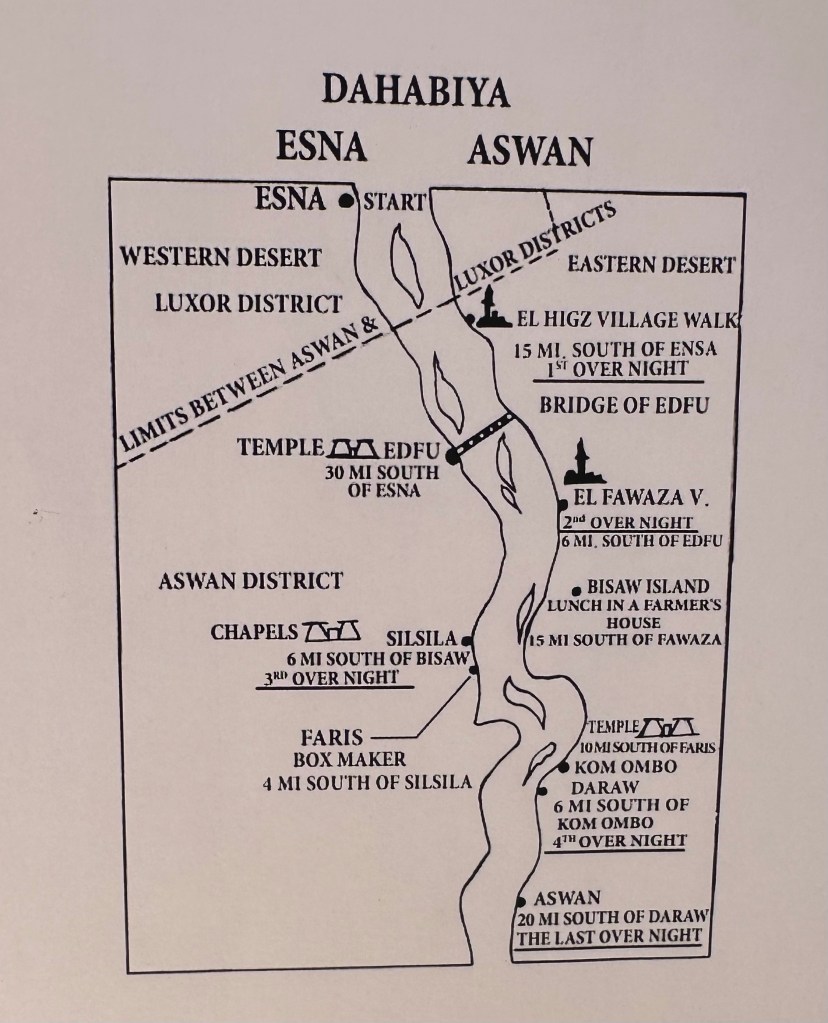
As you can see from the visual of our 5 day journey, we took a temple break to visit a farm on Bishaw Island, where we met members of the village and had lunch in the home of the very charming Sayed.

In the USA, we can step back in time by visiting Plymouth Plantation or Williamsburg, where people dress up in period costumes and demonstrate how different tasks were performed during colonial days.

THIS was authentic. It might look like the village women are making wood fired pizza, but they are actually baking a day’s worth of bread. Sour dough. The loaves all came out perfectly.

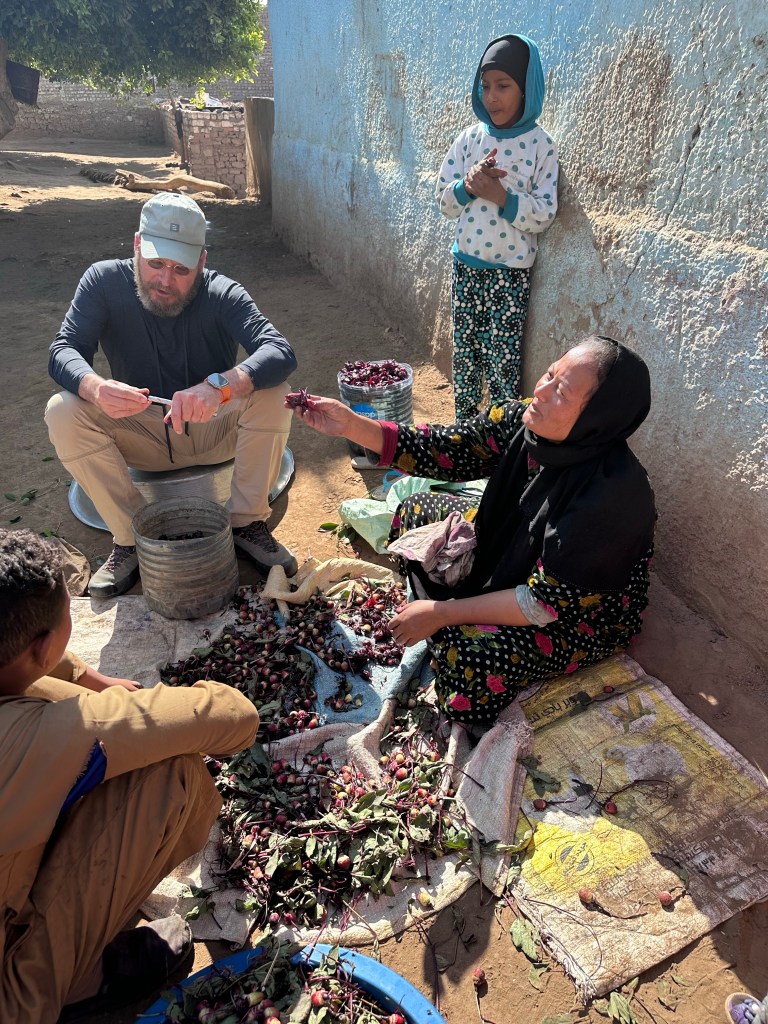
Bill was recruited to help remove seeds from hibiscus, which is used to make tea. He was a natural; in fact, he did such a good job, I was wondering if he’d be allowed to leave.

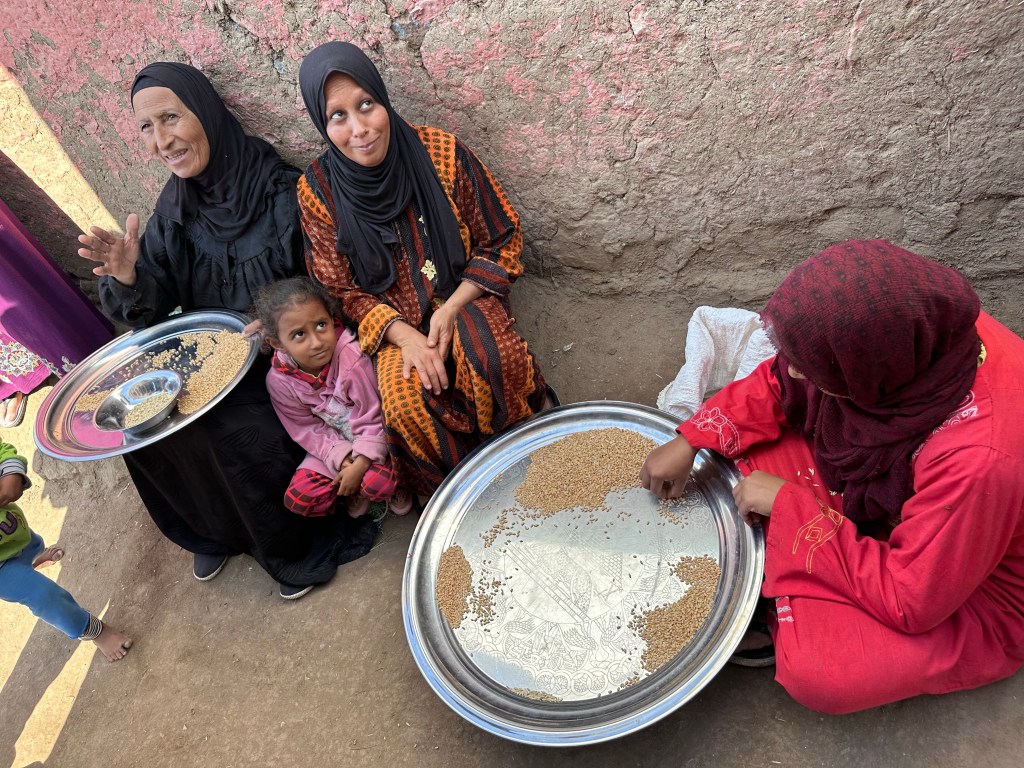
What are these women doing, you ask? Well, they are making sure there are no barley grains among the wheat. Why? I have no idea, and no one thought to ask.

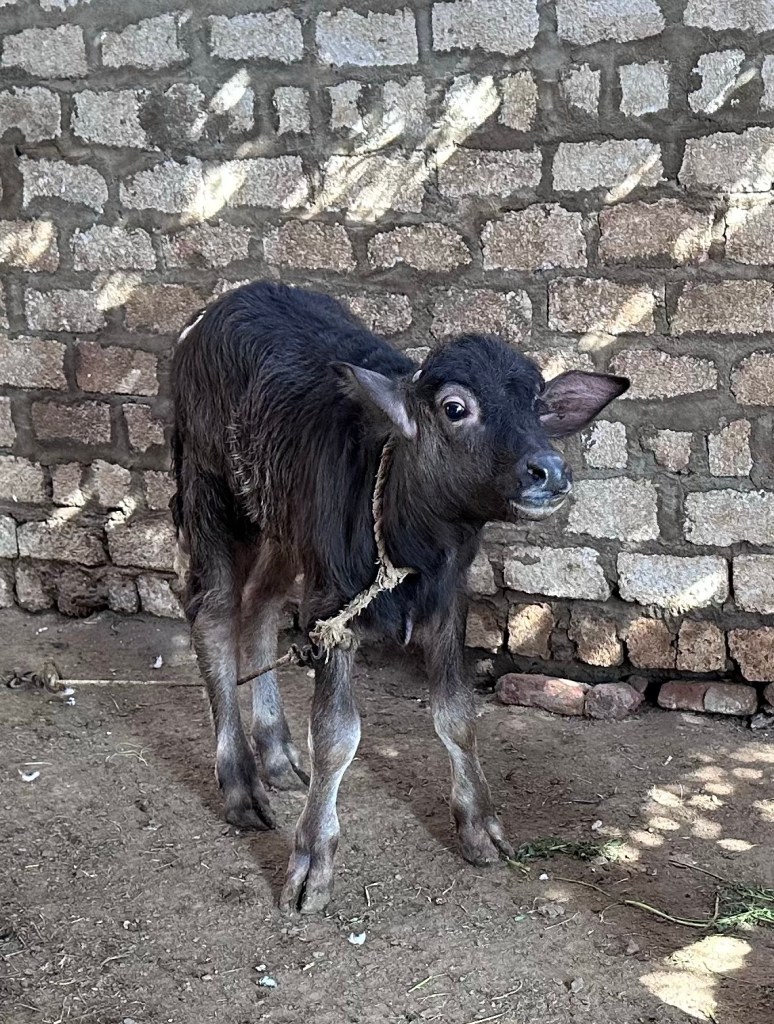
Yes, this baby water buffalo is adorable. Especially when he is tied up. He wasn’t when we entered the enclosure, so he was able to charge at us, first at Bobbie, then when she moved aside, he came at me, either trying to bite or kiss my leg. The only thing I know for sure is the Bobbie and I were left with water buffalo lip smears all over our pants.

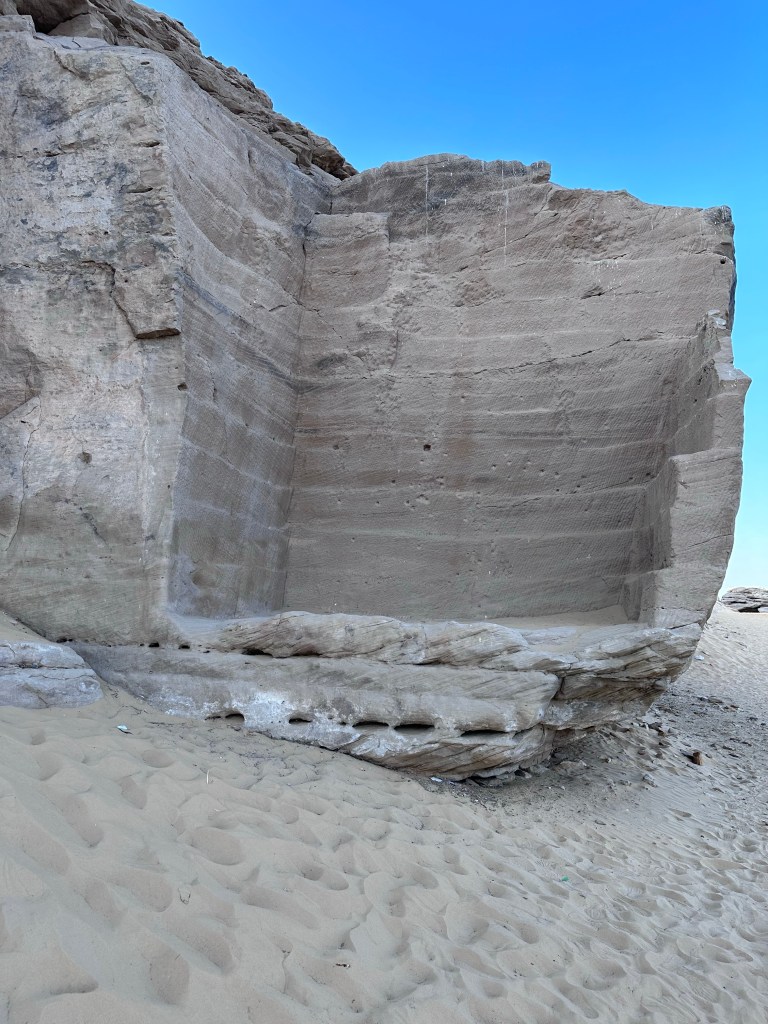
Our next stop was far more tame. We visited the quarry from which the pyramids’ sandstone building blocks were cut, then floated down the Nile. That block must have been enormous! I should have had someone stand beside it for scale.

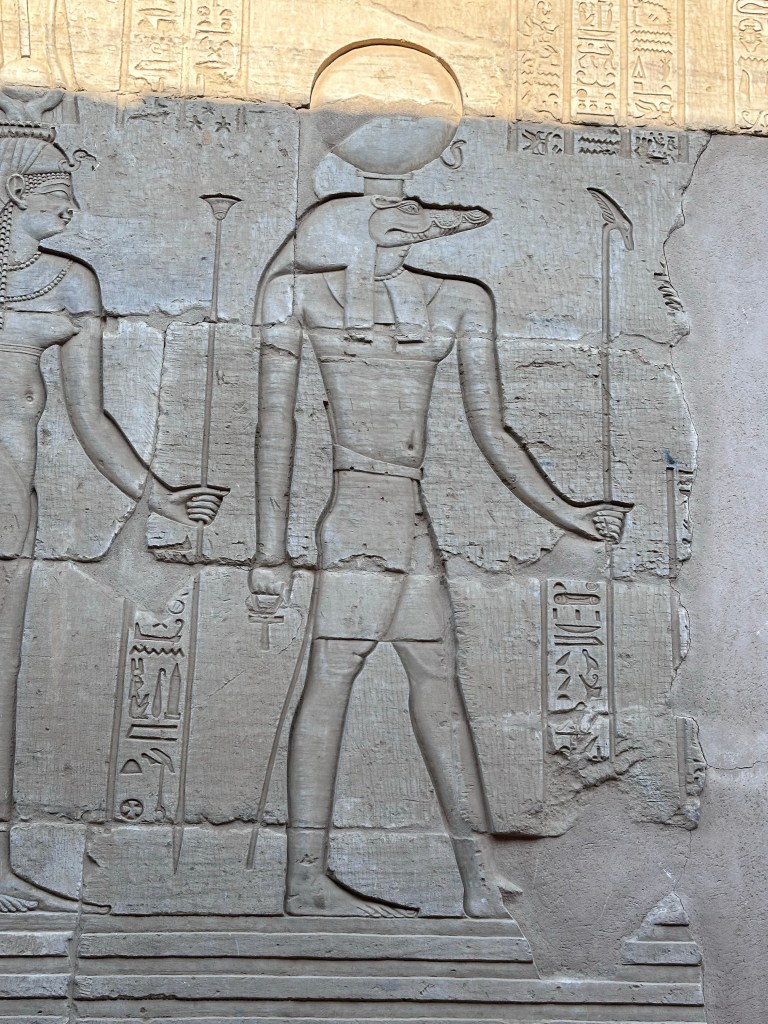
Our final temple (for the cruise part of our adventure) was Kom Ombo, which was again timed to ensure that we avoided the crowds (at least of tourists—not of street vendors). This temple is unique in that it was dedicated to two gods: Sobek, who has the head of a crocodile, and Horus, the falcon, shown here with his human body.

Now here’s something you don’t see every day— mummified crocodiles. A live crocodile, believed to be the earthly incarnation of Sobek, was kept in a pit in the temple. When it died, it was mummified and replaced with another.

Although we have another day on our wonderful dabahiya, this post is already quite long, so I’ll end it with a sneak preview of tomorrow’s activity. Not another temple—tomorrow we go to the livestock market. Let’s see if another animal wants to get up close and personal with me!